Call Us
+86 136 6007 9809
Call Us
+86 136 6007 9809

Aug. 30, 2026
Fasteners for EV Charging Equipment and Charging Infrastructure
Electric vehicle charging equipment combines electrical power systems, power electronics, protective enclosures, cable management, thermal management components and mechanical support structures.
These assemblies require fastening solutions that support reliable equipment installation, consistent production, maintenance accessibility and long-term mechanical performance.
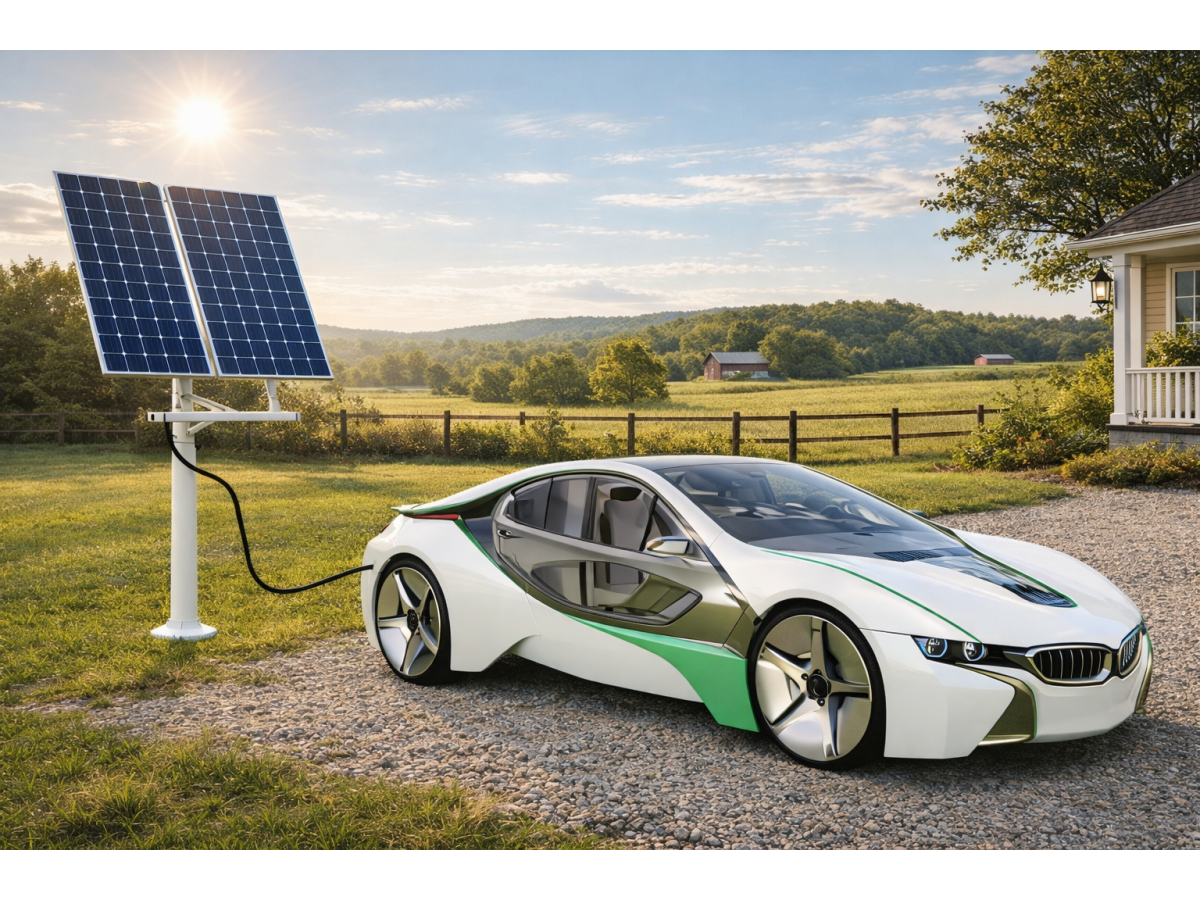
EV charging stations may operate indoors or outdoors.
Depending on the equipment design, fasteners can be exposed to moisture, temperature variation, vibration, repeated maintenance and different combinations of sheet metal, aluminum, stainless steel and engineered plastics.
For charger manufacturers, the correct fastener is not simply a screw or nut that fits an available hole.
The fastening system must be compatible with the enclosure material, panel thickness, mechanical loading, installation method and equipment service requirements.
JUXIN FASTENERS supplies industrial screws, bolts, nuts, rivet nuts, self-clinching fasteners, threaded inserts and custom CNC machined components for OEM equipment manufacturers and industrial supply chains.
Our fastening products can be evaluated for EV charging stations, DC fast charging equipment, charger enclosures, power module assemblies, cooling system supports, electrical cabinets and related charging infrastructure.
This engineering guide explains how design engineers, manufacturing engineers, production managers and procurement teams can select fastening components according to their mechanical function, installation requirements and purchasing specifications.
Why Fastener Selection Matters in EV Charging Equipment
EV charging equipment contains multiple assemblies with different fastening requirements.
An outdoor charger enclosure may need corrosion-resistant screws and reusable access-panel hardware.
An internal power module may require accurately positioned mounting points and controlled mechanical support.
A cable management bracket may need a fastening solution that tolerates repeated handling loads.
A liquid cooling assembly may require mechanical retention without compromising sealing interfaces or service access.
These applications should not automatically use the same fastener type.
The correct solution depends on the function of the connection.
Important engineering considerations include:
Mechanical loading
Enclosure material
Panel thickness
Thread engagement
Corrosion exposure
Thermal expansion
Installation accessibility
Vibration
Maintenance frequency
Electrical clearance requirements
Assembly process consistency
Applicable equipment standards
Fastener selection should be evaluated as part of the complete equipment design.
EV Charging Equipment Applications
AC Charging Stations
AC charging equipment typically contains protective enclosures, electrical components, mounting brackets, cable management features and serviceable panels.
Potential fastening applications include enclosure screws, mounting bolts, threaded inserts, rivet nuts and captive hardware.
The appropriate solution depends on the charger design and the material of each connected component.
DC Fast Charging Equipment
DC fast chargers may contain power conversion modules, cooling components, electrical cabinets and structural support assemblies.
These systems can introduce additional packaging, thermal management and maintenance requirements.
Fasteners may be used for:
Power module mounting
Cabinet assembly
Internal brackets
Cooling system supports
Cable management structures
Protective covers
Service access panels
Mechanical equipment supports
Fasteners used near high-voltage components must be evaluated within the complete electrical equipment design.
Outdoor Charging Station Enclosures
Outdoor chargers may experience rain, condensation, temperature changes and atmospheric contamination.
Enclosure fastening must account for corrosion protection, sealing interfaces, installation torque and service access.
The selection of stainless steel or coated steel fasteners depends on the environmental conditions and mechanical requirements.
Power Electronics Assemblies
Power electronics equipment may use standoffs, threaded spacers, mounting screws and custom CNC components.
These parts can establish mechanical mounting positions and maintain specified distances between components.
However, a metallic standoff does not automatically provide electrical insulation.
Electrical isolation, creepage and clearance requirements must be established separately.
Cable Management Systems
EV charging equipment may contain cable supports, routing brackets, strain-relief structures and serviceable mounting hardware.
Fastener selection should consider repeated handling loads, accessibility and the design of the connected components.
Cooling and Thermal Management Assemblies
Liquid-cooled or air-cooled charging equipment may require fasteners for pumps, fans, heat exchangers, support brackets and cooling module housings.
The selected fastener must be compatible with the mechanical assembly and operating environment.
Fluid sealing performance must be verified at the assembly level.
Electrical Cabinets and Control Enclosures
Thin sheet metal panels are common in electrical cabinets and charging equipment housings.
Self-clinching nuts, standoffs and rivet nuts may provide reusable internal threads where conventional tapping is impractical.
The correct fastening method depends on panel thickness, material hardness, hole geometry and installation access.
EV Charger Fastener Product Options
JUXIN FASTENERS supplies industrial fastening product families that may be evaluated for EV charging equipment.
Relevant products include:
Stainless steel screws
Carbon steel screws and bolts
Hex nuts
Lock nuts
Flat washers
Rivet nuts
Self-clinching nuts
Self-clinching standoffs
Captive panel screws
Threaded inserts
Custom threaded studs
Custom CNC machined spacers
Precision sleeves and bushings
Customer-specific fastening components
These products perform different functions and should not be treated as direct substitutes.
The appropriate fastener must be selected according to the approved equipment design.
Sheet Metal Fasteners for EV Charger Enclosures
Sheet metal fastening is particularly important in charger cabinets, inverter housings and electrical control panels.
Thin panels may not provide sufficient material thickness for durable tapped threads.
Specialized fasteners can create reusable attachment points without requiring thick mounting bosses.
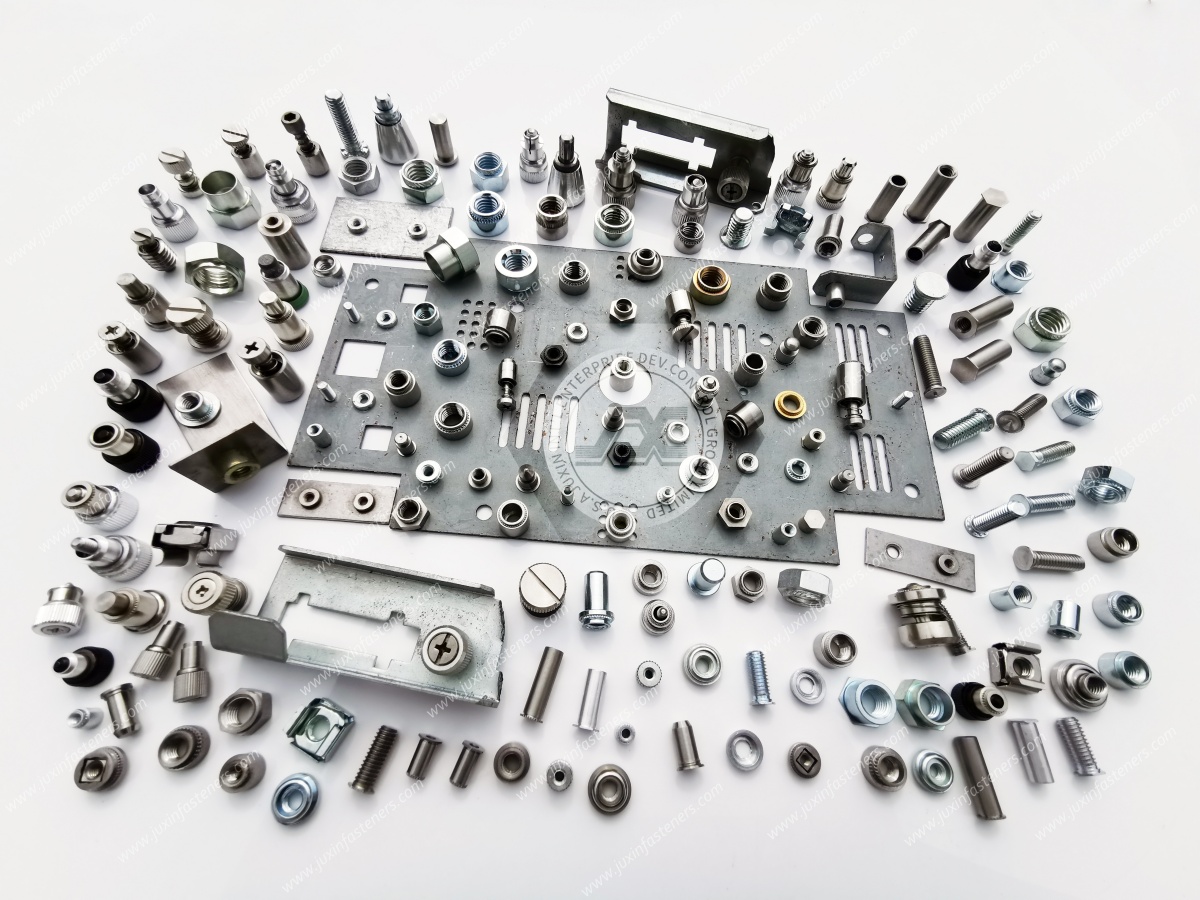
Self-Clinching Nuts
Self-clinching nuts provide captive internal threads in compatible ductile sheet materials.
During installation, controlled press force causes the sheet material to flow into the fastener's retention features.
The resulting mechanical interlock helps retain the fastener in the panel.
Selection depends on:
Sheet material
Sheet hardness
Minimum panel thickness
Mounting hole diameter
Hole-to-edge distance
Installation force
Required thread size
Push-out and torque-out requirements
Self-clinching nuts generally require suitable press access and installation support.
They should not be installed by simply tightening a bolt to pull the fastener into the sheet.
Self-Clinching Standoffs
Self-clinching standoffs provide threaded mounting points and mechanical spacing in suitable sheet metal panels.
They may be considered for control plates, equipment brackets and internal charger assemblies.
Engineers should specify the required standoff height, thread configuration, sheet compatibility and installation geometry.
A self-clinching standoff provides a mechanical spacing function.
Where electrical insulation is required, the insulating properties of the complete mounting arrangement must be separately evaluated.
Rivet Nuts
Rivet nuts, also known as blind rivet nuts or threaded rivet inserts, can provide internal threads in thin panels or hollow structures.
Many rivet nut designs can be installed from one accessible side of the workpiece.
This makes them useful where rear-side installation access is limited.
Potential applications include:
Charger cabinet panels
Internal mounting brackets
Equipment covers
Cable support brackets
Serviceable metal housings
Rivet nut selection should consider grip range, hole size, body style, installation stroke and the required resistance to rotation or pull-out.
A round-body rivet nut may behave differently from a knurled or hex-body design.
The appropriate geometry depends on the base material and mechanical requirements.
Self-Clinching Nuts Versus Rivet Nuts
These fastener types solve different installation problems.
Self-clinching nuts are generally suited to compatible sheet metal where controlled press installation is available.
Rivet nuts can be useful when one-sided access is required.
The decision should consider:
Panel material and hardness
Panel thickness
Access to the installation side
Available production equipment
Required thread strength
Torque-out resistance
Push-out or pull-out requirements
Assembly cycle time
Rework considerations
Neither method is universally superior.
The correct solution depends on the enclosure design and manufacturing process.
Captive Panel Screws for Maintenance Access
EV charging equipment often requires inspection and maintenance access.
Service technicians may need to remove protective covers or access internal modules.
Captive panel screws can help retain fastening hardware within the panel when the connection is released.
Depending on the selected design, this can reduce the risk of loose screws being misplaced during servicing.
Potential applications include:
Service access doors
Protective covers
Electrical cabinet panels
Cooling module covers
Control equipment housings
Engineers should consider panel thickness, screw retention, installation method, head accessibility and required service life.
Captive screws are not automatically suitable for every safety-related cover or enclosure.
The complete access-panel design must satisfy the applicable equipment requirements.
Threaded Inserts for Plastic and Composite Components
Some EV charger assemblies use molded plastic components or engineered polymer housings.
Threaded inserts can provide reusable metal threads in suitable plastic components.
Depending on the insert design and material, installation methods may include heat insertion, ultrasonic insertion or other specified processes.
Selection should consider:
Plastic material
Insert geometry
Boss diameter
Installation method
Thread size
Pull-out resistance
Torque resistance
Thermal exposure
Repeated assembly cycles
The insert and surrounding plastic boss must be designed as a system.
An insert with a strong internal thread cannot compensate for an undersized or unsuitable plastic mounting boss.
Material Selection for EV Charging Fasteners
EV charging equipment may contain stainless steel, carbon steel, aluminum and plastic components.
The correct fastener material depends on mechanical strength, corrosion exposure, temperature conditions and the connected materials.
Stainless Steel Fasteners
Stainless steel fasteners may be considered for outdoor enclosures, equipment covers and corrosion-exposed assemblies.
A2-type stainless steel fasteners are commonly used in many industrial corrosion-resistant applications.
A4-type stainless steel may be considered for more demanding environments, subject to the actual exposure conditions.
Stainless steel selection should account for localized corrosion, galling behavior and the required mechanical properties.
Stainless steel fasteners should not automatically replace high-strength carbon steel fasteners without engineering review.
Carbon Steel Fasteners
Carbon steel fasteners may be selected for mechanical assemblies requiring particular strength characteristics.
Their suitability depends on property class, dimensions, coating and the approved joint design.
For applicable bolts, ISO 898-1 provides mechanical property requirements for carbon steel and alloy steel fasteners.
Where corrosion protection is required, the surface treatment must be compatible with the fastener material and intended service conditions.
Aluminum Components
Aluminum is used in many industrial enclosures, brackets and thermal management assemblies.
When aluminum is connected to stainless steel or other metals, galvanic corrosion may need to be evaluated.
The risk depends on moisture exposure, contact geometry, coatings and the relative electrochemical behavior of the connected materials.
Material compatibility should be assessed at the joint level.
Corrosion Protection for Outdoor Charging Infrastructure
Outdoor EV charging equipment may operate in environments involving rain, humidity, condensation, road contaminants or salt-containing atmospheres.
The fastener coating should be selected according to the actual exposure conditions.
Zinc-Plated Steel
Zinc plating is commonly used for corrosion protection of steel fasteners.
Its suitability depends on coating thickness, passivation, environmental exposure and required service performance.
A standard zinc-plated fastener should not automatically be assumed suitable for severe coastal or chemically aggressive environments.
Zinc-Nickel Coatings
Zinc-nickel coatings may be considered for selected industrial applications requiring specified corrosion protection.
JUXIN FASTENERS can review customer-defined zinc-nickel coating requirements as part of an OEM inquiry.
The coating specification should identify relevant requirements for thickness, corrosion testing and acceptance criteria.
A salt-spray test duration should not be treated as a direct prediction of actual outdoor service life.
Stainless Steel Surface Condition
The corrosion performance of stainless steel is influenced by alloy composition, surface condition and environmental exposure.
Manufacturing contamination or unsuitable handling can affect corrosion resistance.
Where required, the purchasing specification should define appropriate surface condition and inspection requirements.
Hydrogen Embrittlement Considerations
Certain high-strength steel fasteners can be susceptible to hydrogen-related cracking under particular manufacturing, coating and service conditions.
Surface treatment selection must therefore consider the fastener strength and applicable processing controls.
Corrosion protection should not be evaluated independently of mechanical integrity.
Thermal Cycling and Fastener Reliability in EV Chargers
EV charging equipment may experience repeated heating and cooling during operation.
Power electronics, cooling systems and outdoor enclosures can introduce temperature differences between connected components.
Thermal expansion and contraction may influence joint behavior.
The effect depends on:
Connected materials
Component geometry
Temperature range
Joint stiffness
Bolt preload
Mounting configuration
Thermal gradients
Operating cycles
For example, aluminum and steel have different thermal expansion characteristics.
Where components are constrained, differential expansion may introduce additional stresses or relative movement.
The joint design should accommodate the expected operating conditions.
Increasing tightening torque is not a universal solution for thermal movement.
The correct approach is to establish suitable mechanical geometry, preload and installation requirements.
Fasteners for Liquid Cooling and Thermal Management
High-power charging equipment may incorporate liquid cooling or other thermal management systems.
Fasteners may be used to secure:
Cooling module brackets
Pump mounting assemblies
Heat exchanger supports
Fan housings
Equipment frames
Protective covers
Mechanical interfaces
The correct fastening system should support the mechanical requirements of the cooling assembly.
Mechanical Retention Versus Fluid Sealing
A bolt can provide clamping force, but this does not automatically establish a leak-tight connection.
Fluid sealing depends on the complete interface design, including sealing materials, surface finish, gasket compression and assembly procedures.
Where a fastener is part of a pressure-containing or liquid-sealed assembly, the required testing and approval must be defined by the equipment manufacturer.
Thermal Interface Considerations
Some assemblies require controlled contact pressure between mechanical components.
However, the required clamping force must be established according to the actual thermal and mechanical design.
A general-purpose fastener specification cannot guarantee thermal performance.
Maintenance and Serviceability
Cooling assemblies may require periodic service or component replacement.
Engineers should consider tool accessibility, repeated disassembly and the risk of damaging threaded components during maintenance.
Where repeated access is expected, appropriate reusable threaded hardware can support serviceability.
Electrical Safety, Grounding and Fastener Selection
EV charging equipment contains electrical systems that may operate at hazardous voltages.
Fasteners used in or near electrical assemblies must be evaluated within the complete equipment safety design.
Mechanical fasteners can influence:
Equipment mounting
Protective enclosure retention
Electrical component spacing
Grounding or bonding interfaces
Service access
Insulation boundaries
However, a standard industrial bolt, screw or standoff should not automatically be described as an approved electrical grounding or bonding component.
Protective Bonding Connections
Where a fastener forms part of a protective bonding path, the connection must meet the applicable electrical design and verification requirements.
Coatings, surface preparation, contact pressure and corrosion can influence electrical contact behavior.
The appropriate requirements must be established by the equipment manufacturer.
Electrical Clearance and Creepage
Metallic fasteners positioned near live components may affect electrical clearance or creepage distances.
These distances depend on the electrical design, insulation system and applicable equipment requirements.
Mechanical fit alone does not establish electrical safety.
Relevant Equipment Standards
EV charging equipment may be subject to standards such as IEC 61851 series requirements and applicable regional electrical safety standards.
The relevant standards depend on the equipment type and target market.
Fastener dimensional or material conformity does not establish compliance of the complete charger.
Electrical safety and system certification must be evaluated separately.
Vibration and Mechanical Loading in Charging Equipment
Charging stations may experience mechanical loads from handling, installation, equipment operation and environmental conditions.
Some assemblies may also experience vibration from fans, pumps or nearby machinery.
Fastener selection should consider the actual loading conditions.
Preventing Joint Loosening
The risk of loosening depends on joint design, preload and relative movement between connected components.
Potential measures may include:
Appropriate preload
Suitable locking nuts
Mechanical retention features
Correct bearing surfaces
Controlled tightening procedures
Periodic inspection where required
The correct locking method must be selected according to the application.
Lock Nuts for EV Charging Equipment
All-metal prevailing-torque lock nuts and nylon-insert lock nuts may be considered for selected industrial assemblies.
However, their suitability depends on temperature, vibration, reuse requirements and the applicable product specification.
Nylon-insert lock nuts should not be selected for high-temperature applications without evaluating the polymer insert's temperature limitations.
All-metal locking nuts also require evaluation of prevailing torque and installation conditions.
Custom CNC Machined Components for EV Charging Equipment
Standard fasteners do not satisfy every charger design.
OEM manufacturers may require custom spacers, sleeves, bushings, pins, threaded components and precision-machined mounting interfaces.
JUXIN FASTENERS welcomes inquiries for custom CNC machined components based on customer drawings and technical requirements.
Potential applications include:
Power module spacers
Precision mounting standoffs
Custom threaded sleeves
Mechanical support bushings
Equipment mounting pins
Special nuts
Custom studs
Cooling system mounting components
Electrical cabinet mechanical interfaces
Design for Manufacturing
For custom CNC components, engineers should consider:
Material machinability
Thread geometry
Tool accessibility
Wall thickness
Tolerance requirements
Surface finish
Burr removal
Inspection accessibility
Production quantity
Assembly function
Tolerances should reflect the actual mechanical requirements.
Unnecessarily restrictive tolerances can increase manufacturing cost without improving the functional performance of the component.
Metric and Inch Thread Requirements
EV charging equipment manufacturers may specify metric or inch-thread fasteners.
Metric thread requirements may reference:
ISO 68-1 for the basic metric thread profile
ISO 261 for general-purpose metric thread combinations
ISO 724 for basic metric thread dimensions
ISO 965 for metric thread tolerances
Projects using UNC or UNF threads should specify the applicable ASME thread requirements.
For dimensional reference:
M3 has a nominal diameter of approximately 0.118 in.
M4 has a nominal diameter of approximately 0.157 in.
M5 has a nominal diameter of approximately 0.197 in.
M6 has a nominal diameter of approximately 0.236 in.
M8 has a nominal diameter of approximately 0.315 in.
M10 has a nominal diameter of approximately 0.394 in.
These values are reference conversions only.
Metric, UNC, UNF, BSW and BSF thread systems are not directly interchangeable.
A fastener should be specified according to the actual thread diameter, pitch, profile and tolerance requirements.
JUXIN FASTENERS can review customer drawings for the requested thread configuration, subject to manufacturing feasibility.
International Standards for EV Charging Fasteners
The applicable standards depend on the product type and intended application.
Relevant fastener standards may include:
ISO 898-1 for mechanical properties of applicable carbon steel and alloy steel bolts, screws and studs.
ISO 898-2 for mechanical properties of applicable carbon steel and alloy steel nuts.
ISO 3506-1 for mechanical properties of applicable corrosion-resistant stainless steel bolts, screws and studs.
ISO 3506-2 for mechanical properties of applicable corrosion-resistant stainless steel nuts.
ISO 965 for metric thread tolerances.
ISO 16047 for torque/clamp force testing.
ISO 4042 for electroplated coating systems for threaded fasteners.
Other ISO, DIN, EN, ASTM, ASME or JIS requirements may apply according to the customer's engineering specification.
The correct standards should be selected for the actual fastener and assembly.
General fastener conformity must not be confused with electrical equipment certification.
Engineering Selection: A Practical EV Charger Fastener Checklist
A useful selection process begins with the connection function.
Identify the Assembly
Determine whether the fastener is used in an enclosure, power module, cooling assembly, cable management bracket or structural support.
Confirm the Connected Materials
Identify the panel and mating component materials.
Evaluate material hardness, thickness and corrosion compatibility.
Define the Mechanical Requirements
Determine the expected loads, vibration conditions, required thread strength and any cyclic loading requirements.
Select the Fastener Type
Choose between screws, bolts, nuts, self-clinching fasteners, rivet nuts, threaded inserts or custom components.
Verify Installation Access
Determine whether the assembly permits two-sided press installation, one-sided rivet nut installation or another mounting method.
Specify the Material and Coating
Select the material and surface treatment according to mechanical and environmental requirements.
Define the Thread and Dimensions
Specify thread diameter, pitch, length, tolerances and required engagement.
Establish Installation Requirements
Define the installation tooling, tightening method and applicable inspection criteria.
Review Electrical and Thermal Boundaries
Where fasteners are used near electrical or thermal management components, ensure the complete assembly meets the applicable equipment design requirements.
Document the Approved Configuration
The engineering drawing and purchasing specification should identify the approved product requirements.
This process helps prevent the selection of a fastener that fits dimensionally but fails to meet installation or service requirements.
Production Efficiency and Assembly Cost
For production managers, fastener selection affects assembly time, tooling requirements, inspection and rework.
The total cost of a fastening solution is not limited to the unit purchase price.
Relevant production factors include:
Installation cycle time
Tool accessibility
Fastener feeding and handling
Press installation requirements
Rivet nut installation equipment
Tightening consistency
Rework frequency
Inspection time
Packaging presentation
Component standardization
Production scheduling
Self-Clinching Fastener Installation
Self-clinching hardware requires suitable press conditions and panel preparation.
Incorrect installation force or hole dimensions can compromise fastener retention.
The production process should follow the selected fastener's technical requirements.
Rivet Nut Installation
Rivet nut installation depends on the grip range, hole geometry and controlled deformation of the fastener body.
Insufficient or excessive installation stroke can affect performance.
The appropriate installation settings should be established for the selected product.
Reducing Assembly Variation
Consistent dimensions, materials and surface treatments help support repeatable assembly.
For high-volume charger production, the purchasing specification should clearly define the accepted product configuration.
Changes in coating, material or fastener geometry may require engineering review before production use.
OEM Procurement and Supplier Development
EV charger manufacturers often purchase multiple fastening product families for a single equipment platform.
Procurement teams may need standard screws, bolts, rivet nuts, self-clinching hardware and custom CNC components.
A coordinated sourcing approach can simplify purchasing when the supplier is technically qualified for the required products.
However, sourcing consolidation should not replace product-specific qualification.
Important supplier evaluation factors include:
Drawing compliance
Material requirements
Thread accuracy
Dimensional consistency
Surface treatment specifications
Installation compatibility
Inspection requirements
Lot traceability where specified
Custom manufacturing feasibility
Minimum order quantity
Production lead time
Packaging requirements
Annual demand
Delivery scheduling
Engineering change control
Supplier Qualification
Procurement teams should establish whether the proposed product meets the approved technical requirements.
For custom parts, the supplier should review the drawing and identify any manufacturing or inspection concerns before quotation.
Alternative Fastener Evaluation
A substitute fastener should not be approved solely because it has the same nominal thread size.
The complete specification must be compared.
For example, two M6 rivet nuts may differ in body geometry, grip range, installation requirements and torque-out resistance.
Similarly, two self-clinching nuts may require different sheet hardness or hole dimensions.
Long-Term OEM Supply Programs
For recurring charger production, purchasing teams should define the approved product configuration, order quantities and delivery expectations.
Where required, the purchasing agreement should also establish inspection documentation, traceability and engineering change notification procedures.
Common EV Charger Fastening Problems
Incorrect Panel Thickness
A fastener selected for the wrong panel thickness may not install or retain properly.
Verify the specified sheet thickness and fastener grip range.
Insufficient Thread Engagement
Insufficient thread engagement can increase the risk of thread stripping.
The required engagement must be established by the engineering design.
Incorrect Self-Clinching Installation
Improper hole dimensions, unsuitable panel hardness or incorrect press force can compromise fastener retention.
Use the installation requirements for the selected fastener design.
Rivet Nut Rotation
A rivet nut may rotate under tightening loads if its retention is inadequate for the application.
Body geometry, installation quality and panel material should be evaluated.
Stainless Steel Thread Galling
Certain stainless steel threaded connections may experience galling during assembly.
Material combination, lubrication and tightening procedures should be reviewed where relevant.
Corrosion at Dissimilar Metal Interfaces
Moisture and dissimilar metals may create galvanic corrosion risks.
Evaluate the complete joint and environmental conditions.
Inadequate Service Accessibility
A fastener may be difficult to remove if the tool cannot reach the head or nut.
Design for maintenance access where repeated servicing is expected.
Unverified Electrical Bonding
A mechanical connection should not be assumed to provide a qualified protective bonding path.
Electrical performance must be verified according to the equipment design.
Fastener Changes Without Engineering Approval
Changing material, coating, thread geometry or installation method may affect performance.
The customer should review changes according to the applicable approval process.
Custom EV Charging Fasteners and OEM Requirements
JUXIN FASTENERS welcomes inquiries for standard and customer-specific industrial fastening components.
Customization requirements may include:
Special screw lengths
Custom bolt dimensions
Nonstandard threaded studs
Stainless steel fasteners
Carbon steel fasteners
Customer-specified coatings
Custom rivet nuts
Self-clinching fasteners
Threaded inserts
Precision standoffs
CNC machined spacers
Custom sleeves and bushings
Special mounting hardware
Customer-defined packaging
All custom requests require technical review.
Manufacturing feasibility, material requirements, inspection methods, MOQ, pricing and lead time must be confirmed during the quotation process.
What to Include in an EV Charging Fastener RFQ
A technically complete RFQ helps reduce clarification time and improves quotation accuracy.
Recommended information includes:
Product description
Application or assembly function
2D engineering drawing
Available 3D CAD model
Drawing number and revision
Material specification
Thread diameter and pitch
Required dimensions
Dimensional tolerances
Panel thickness
Installation method
Surface treatment
Corrosion requirements
Mechanical property requirements
Applicable international standards
Inspection requirements
Documentation and traceability requirements
Order quantity
Estimated annual demand
Packaging requirements
Delivery destination
Requested delivery schedule
For electrical safety-related, structural or pressure-containing assemblies, include the applicable engineering approval and qualification requirements.
For custom CNC components, provide the required material, tolerances and surface finish.
Frequently Asked Questions
What fasteners are commonly used in EV charging equipment?
EV charging equipment may use stainless steel screws, bolts, nuts, rivet nuts, self-clinching fasteners, threaded inserts, captive screws and custom CNC machined components.
What is the difference between self-clinching nuts and rivet nuts?
Self-clinching nuts are press-installed into compatible sheet materials. Rivet nuts can provide threaded attachment points in thin materials, often with access from only one side.
Are stainless steel fasteners suitable for outdoor EV chargers?
They may be suitable where the selected stainless steel grade meets the mechanical and environmental requirements. Corrosion exposure and material compatibility must still be evaluated.
Can rivet nuts be used in EV charger enclosures?
Yes, where the panel material, thickness, hole geometry and required mechanical performance are compatible with the selected rivet nut.
Why are captive screws useful in charging equipment?
Captive screws can help retain hardware in frequently serviced panels and reduce the risk of loose screws being misplaced during maintenance.
Can metal standoffs provide electrical insulation?
Not by themselves. Metallic standoffs are conductive unless the complete assembly includes an appropriate insulating design.
What fasteners are suitable for EV charger cooling systems?
The correct fasteners depend on the cooling assembly design. Bolts, screws, threaded inserts and custom mounting components may be used for mechanical retention, but sealing performance must be validated separately.
Can standard screws be used for protective grounding connections?
Only where the complete connection design and verification requirements permit their use. Mechanical fastening alone does not establish electrical bonding compliance.
What is the best fastener for a thin sheet metal charger cabinet?
The choice depends on panel thickness, material hardness, installation access and mechanical requirements. Self-clinching nuts and rivet nuts are two possible solutions.
Can JUXIN FASTENERS supply custom EV charging components?
JUXIN FASTENERS welcomes drawing-based inquiries for custom industrial fasteners and CNC machined components. Manufacturing feasibility and commercial requirements must be confirmed.
What information should be included in an EV charger fastener quotation?
Provide the engineering drawing, material, dimensions, thread specification, coating, installation requirements, purchasing quantity and delivery expectations.
Related Industrial Fastening Solutions
For related EV charging equipment and power electronics applications, consider the following JUXIN FASTENERS product families:
Stainless Steel Screws and Bolts
High-Strength Industrial Bolts
All-Metal Lock Nuts
Nylon-Insert Lock Nuts
Self-Clinching Nuts
Self-Clinching Standoffs
Rivet Nuts
Captive Panel Screws
Threaded Inserts
Custom Threaded Studs
Precision CNC Machined Components
Sheet Metal Fastening Solutions
Electrical Equipment Fastening Solutions
Liquid Cooling Equipment Fastening Solutions
Power Electronics Fastening Solutions
These product families serve different mechanical and installation functions.
The correct product should be selected according to the approved engineering drawing and assembly requirements.
Request a Quote for EV Charging Fasteners and Custom Components
JUXIN FASTENERS supplies industrial screws, bolts, nuts, rivet nuts, self-clinching hardware, threaded inserts and custom CNC machined components for OEM equipment manufacturers and industrial supply chains.
We welcome inquiries from EV charger manufacturers, charging infrastructure equipment suppliers, power electronics OEMs,
enclosure manufacturers, mechanical engineers, design engineers, manufacturing engineers, production managers, purchasing managers and supplier development teams.
For standard or custom EV charging fasteners, please provide your 2D/3D drawings, BOM, material specifications, thread requirements, surface treatment details, expected purchasing quantities and delivery information.
For safety-critical, electrical bonding or pressure-containing assemblies, include the applicable engineering approval and qualification requirements.
Our team can review your fastening requirements, discuss suitable product options and evaluate customization feasibility before quotation.
Company: JUXIN FASTENERS
Website: www.juxinfasteners.com
Email: info@juxinfasteners.com
Send your engineering drawings, BOM or RFQ to JUXIN FASTENERS to discuss EV charging station hardware, charger enclosure fasteners and custom industrial fastening solutions for your next OEM project.
Contact Us
Tel.:
+86 020 8621 0320
+86 020 3121 6067
E-mail:
Technical Support:
Navigation
SEND INQUIREY