
Call Us
+86 136 6007 9809
Call Us
+86 136 6007 9809

Sep. 30, 2026
Electrical cables and wire harnesses rarely fail simply because they are electrically undersized.
In industrial equipment, mobile machinery, commercial vehicles, railway equipment, automation systems, battery systems,
telecommunications hardware, and power equipment, many harness failures begin as mechanical problems.
A poorly controlled cable bundle can move repeatedly against a bracket, enclosure edge, chassis member, or neighboring component.
Over thousands or millions of vibration cycles, this movement can damage the cable jacket, insulation, terminals, or conductors.
Heavy-duty cable clamps, nylon cable clamps, cushioned P-clips, cable retainers, and wire-routing hardware therefore perform an important mechanical function:
Control the harness without damaging it.
For design engineers, this requires balancing retention, vibration, bundle movement, temperature, material compatibility, installation, and maintenance.
For procurement teams, it means that two cable clamps with similar appearance are not automatically interchangeable.
JUXIN FASTENERS supplies nylon cable clamps, heavy-duty plastic cable-management components, P-clip-type hardware, plastic retainers, mounting fasteners,
and custom drawing-based components for industrial OEM applications.
Material, UV resistance, flame performance, chemical resistance, cushion material,
and other environmental properties should be specified according to the actual application rather than assumed from the generic product name.
A cable clamp may perform several functions simultaneously:
retain the cable or harness;
control routing;
restrict unwanted movement;
maintain clearance from sharp or hot surfaces;
reduce rubbing and chafing;
support bundle weight;
organize multiple harness branches;
provide electrical isolation;
simplify installation and maintenance.
The engineering objective is not necessarily to make the harness completely immovable.
In many assemblies, some controlled movement is necessary.
The real objective is:
Prevent Harmful Movement While Allowing Required Movement
That distinction affects clamp size, material, spacing, cushion design, and mounting strategy.
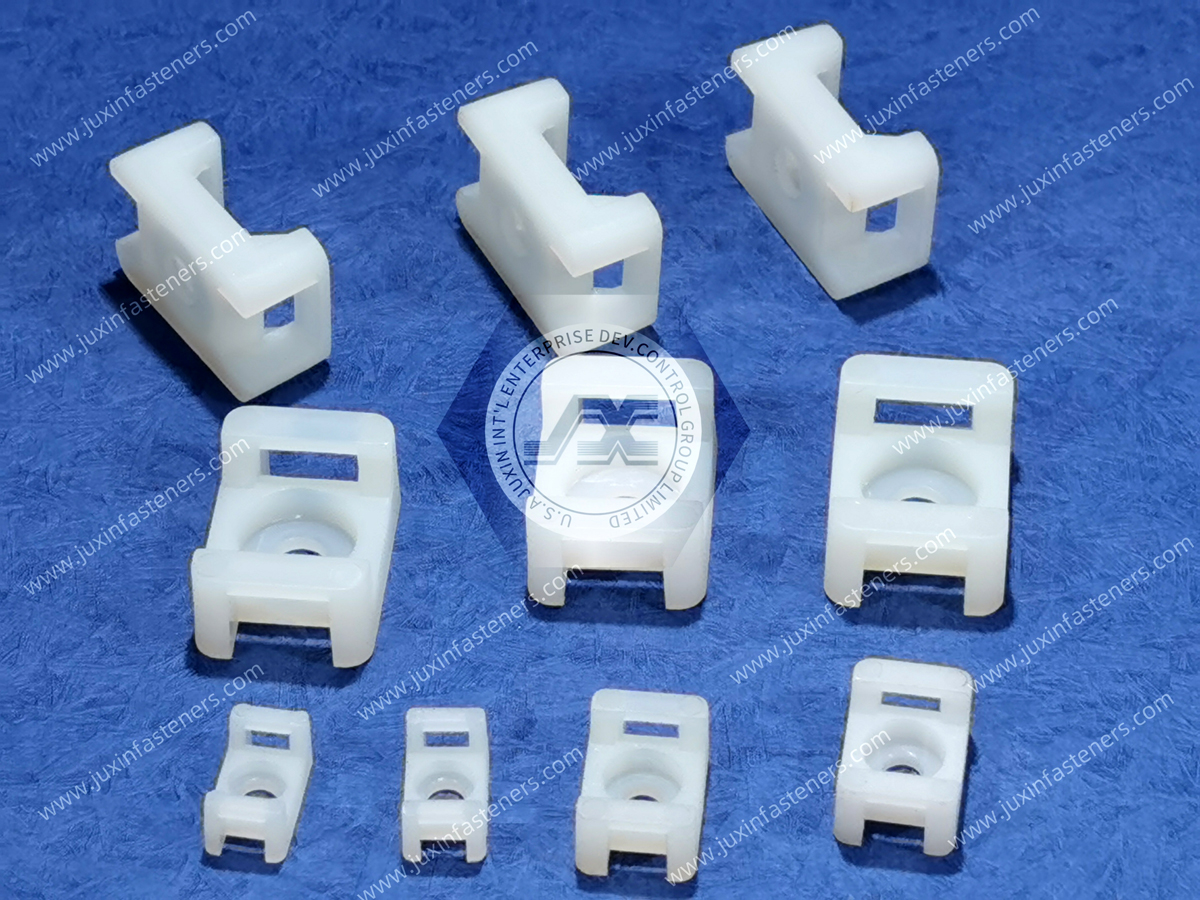
A wire bundle mounted to a vibrating machine experiences repeated relative motion.
Potential sources include:
engines;
motors;
pumps;
compressors;
vehicle chassis vibration;
railway vibration;
road shock;
agricultural machinery;
reciprocating equipment;
industrial automation.
If the harness is inadequately supported, repeated movement can concentrate at:
connector exits;
branch points;
clamp locations;
sharp bends;
enclosure penetrations.
This can create several failure modes.
Repeated rubbing can gradually remove the outer jacket or insulation.
Once the conductor becomes exposed, the result may be:
short circuit;
ground fault;
intermittent electrical failure;
corrosion.
Repeated bending can fatigue conductor strands, especially where motion is concentrated near a rigid termination.
An unsupported harness can transfer its weight and vibration directly into a connector.
Cable clamps can therefore protect not only the cable but also the electrical termination.
One of the most common cable-clamp design mistakes is assuming:
Tighter Clamp = Better Retention
Excessive compression can damage:
insulation;
shielding;
protective conduit;
fiber-optic cables;
sensor cables;
soft cable jackets.
The clamp should retain the bundle without creating harmful localized pressure.
This makes the relationship between:
Harness Outside Diameter ↔ Clamp Inside Diameter
a critical design parameter.
A cable bundle may not have a perfectly circular or constant outside diameter.
Actual bundle dimensions can change because of:
cable quantity;
wire gauge;
sleeving;
braided protection;
corrugated conduit;
tape;
branch transitions;
manufacturing tolerance.
Therefore, when selecting a heavy-duty cable clamp, engineers should evaluate the actual assembled harness rather than only the nominal diameter of one cable.
For custom or second-source projects, a physical harness sample can sometimes be useful alongside the clamp drawing.
Nylon cable clamps are widely used where lightweight construction, electrical insulation, corrosion resistance, and simple installation are important.
Potential applications include:
electrical cabinets;
automation equipment;
appliances;
telecommunications hardware;
railway electrical equipment;
lighting systems;
battery equipment;
machinery wiring.
Typical design variables include:
closed inside diameter;
mounting-hole diameter;
material thickness;
width;
overall geometry;
mounting orientation.
Material selection should follow the application.
A generic statement such as “nylon cable clamp” does not define:
polymer grade;
UV resistance;
flame performance;
operating temperature;
chemical resistance.
These characteristics should be confirmed separately when required.
Heavy-duty nylon cable clamps typically use larger or more robust geometries where increased bundle support or retention is required.
However, the term “heavy duty” is not itself a standardized mechanical rating.
Procurement teams should therefore avoid qualifying a clamp based only on a supplier calling it heavy duty.
Instead, compare:
dimensions;
material;
wall thickness;
mounting-hole geometry;
bundle size;
retention requirement;
environment;
application.
For critical applications, functional sample testing may be more meaningful than the marketing description.
Metal P-clips provide a strong mounting structure for cable, hose, tube, or harness retention.
Depending on the application, a resilient cushion may be added between the metal band and the routed component.
Potential cushion materials can include application-specific elastomers such as EPDM or silicone where their properties match the operating environment.
The cushion can help:
prevent direct metal-to-cable contact;
reduce abrasion;
accommodate dimensional variation;
isolate some vibration;
protect surface finishes.
But the cushion material should be selected according to actual service conditions.
Different elastomers have different performance profiles.
The correct choice can depend on:
temperature;
water exposure;
ozone;
oils;
fuels;
chemicals;
compression behavior;
required service life.
For example, an elastomer that performs well against weathering may not be the preferred material for continuous exposure to a particular oil or fuel.
Therefore:
Environmental Compatibility Must Be Evaluated Against the Actual Fluid and Temperature
Do not simply specify “rubber cushion.”
Outdoor cable-routing hardware may be exposed to sunlight for years.
Ultraviolet radiation can cause some polymers to:
discolor;
embrittle;
crack;
lose mechanical performance.
However, UV resistance cannot be determined solely from the word “nylon.”
Performance depends on factors such as:
polymer grade;
stabilizer package;
pigmentation;
exposure;
temperature;
part geometry.
If UV resistance is required, procurement teams should specify the requirement and request appropriate material or validation information.
Do not assume that every black nylon clamp is automatically UV stabilized.
Engineering polymers are viscoelastic materials.
Under sustained load, their dimensions can gradually change over time.
This behavior is known as creep.
For cable clamps, creep can affect long-term retention if the design places the polymer under continuous high stress.
Creep behavior depends on:
material;
temperature;
stress;
time;
humidity for moisture-sensitive polymers;
geometry.
Therefore, clamp design should avoid relying on excessive permanent deformation to maintain cable retention.
A cable clamp mounted inside an electrical cabinet may experience a very different temperature environment from one located near an engine, inverter, power electronics module, or outdoor enclosure.
Engineers should distinguish between:
ambient temperature;
continuous service temperature;
local component temperature;
temporary peak temperature.
A polymer's short-duration temperature capability should not automatically be treated as its continuous service rating.
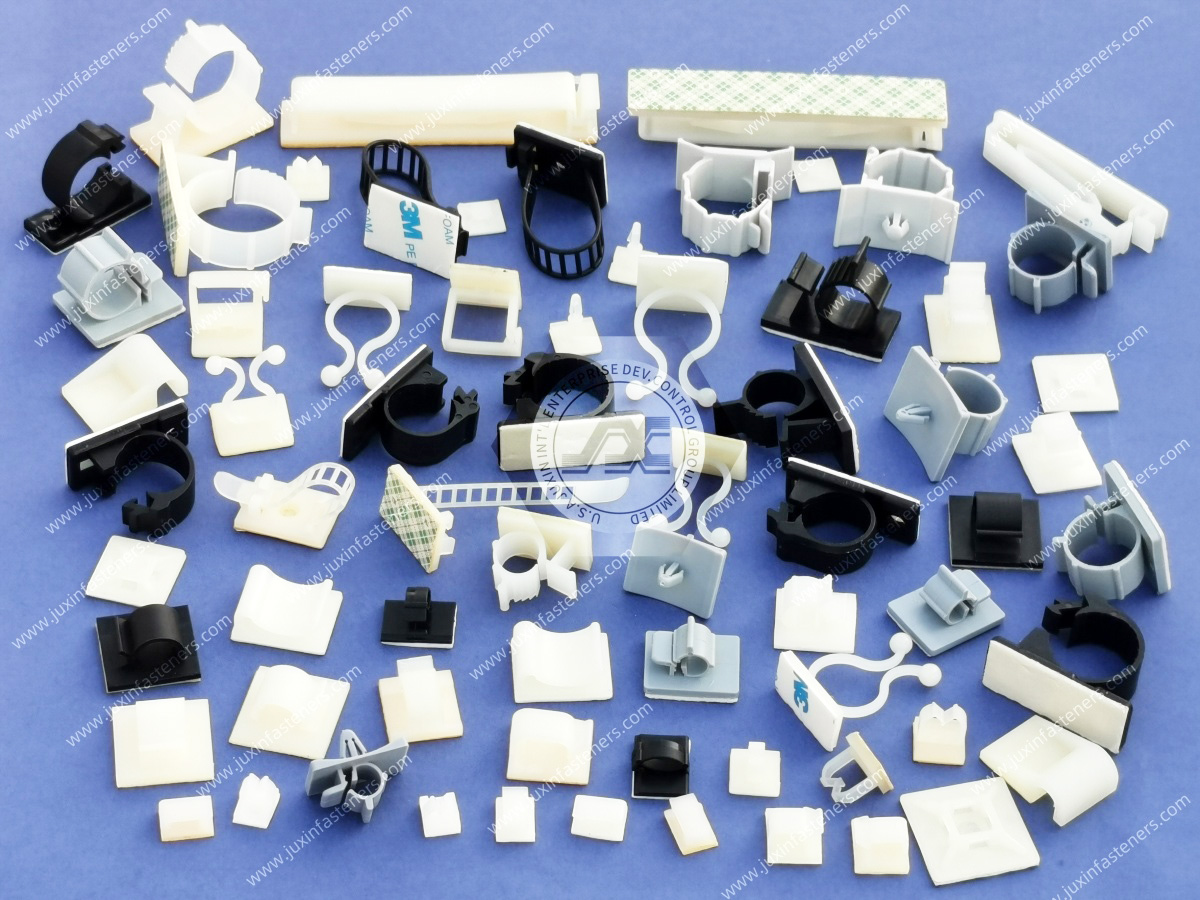
“Chemical resistant” is too broad for engineering specification.
Industrial cable clamps may encounter:
oils;
coolants;
cleaning chemicals;
hydraulic fluids;
fuels;
salt water;
detergents;
process chemicals.
Compatibility depends on the exact material and chemical.
For demanding environments, specify the actual substances and exposure conditions.
Designers frequently ask:
How far apart should cable clamps be installed?
There is no universal spacing value that applies to every harness.
Required support spacing depends on:
harness weight;
cable stiffness;
orientation;
vibration;
routing geometry;
nearby connectors;
branch points;
temperature;
equipment requirements.
A lightweight signal harness inside a stationary cabinet can require a different support strategy from a heavy vehicle harness exposed to chassis shock.
Clamp spacing should therefore be established from the application and validated where necessary.
Regardless of the final spacing, engineers should pay particular attention to locations where harness motion can concentrate.
These include:
connector exits;
sharp direction changes;
branch points;
moving interfaces;
enclosure penetrations;
transitions between flexible and rigid sections.
The objective is to prevent the cable itself from becoming the strain-relief mechanism.
Temperature changes can cause both cables and supporting structures to expand and contract.
The cable bundle and chassis may not move by the same amount.
If every clamp rigidly prevents longitudinal movement, thermal expansion can introduce unwanted stress.
In suitable applications, the routing strategy may therefore include:
fixed retention points;
controlled movement zones;
service loops;
bend allowances.
Not every clamp should automatically be designed as a sliding clamp, however.
Movement strategy should follow the actual harness design.
A cable-routing clamp supports and controls the harness.
A strain-relief feature is specifically intended to prevent mechanical load from reaching an electrical termination or entry point.
One component can sometimes contribute to both functions, but the terms should not be treated as interchangeable.
For connectors and enclosure entries, engineers should identify where strain relief is required separately from general routing support.
A cable clamp can be correctly selected and still fail if its mounting fastener loosens.
Mounting options may include:
machine screws;
bolts and nuts;
threaded studs;
rivet nuts;
self-clinching studs;
push-in plastic fasteners;
other application-specific retainers.
Selection should consider:
substrate material;
vibration;
access;
serviceability;
installation method;
corrosion;
required clamp load.
This creates an important design principle:
Cable Clamp + Mounting Fastener + Parent Structure = One Retention System
If a clamp is mounted to vibrating equipment using a threaded fastener, the anti-loosening strategy should be selected for the actual joint.
Potential approaches can include application-appropriate:
prevailing-torque nuts;
all-metal lock nuts;
nylon insert lock nuts;
thread-locking systems;
other locking technologies.
A split spring washer should not automatically be treated as the universal answer to vibration-induced loosening.
Construction and agricultural equipment can expose cable routing hardware to combinations of:
chassis vibration;
shock;
mud;
dust;
water;
temperature changes;
oils and other fluids.
Harness routing should prevent cables from contacting:
moving components;
sharp edges;
hot surfaces;
hydraulic components.
For these applications, clamp selection is part of the overall equipment reliability strategy.
Commercial vehicles contain harnesses for:
lighting;
sensors;
engine systems;
braking-related electrical equipment;
body equipment;
telematics;
auxiliary systems.
Clamp selection should consider the specific vehicle location because environmental exposure can vary significantly between cabin, chassis, engine-area, and body installations.
Automation equipment often contains high-density wiring for:
sensors;
motors;
servo systems;
safety equipment;
control cabinets;
machine vision;
communication networks.
Cable clamps and routing hardware help maintain organized separation and protect harnesses during long production cycles.
Where cables are intended to move continuously, however, fixed cable clamps should not be substituted for purpose-designed dynamic cable-management systems.
Railway vehicles contain extensive electrical harnessing for:
lighting;
passenger information;
doors;
HVAC systems;
communication equipment;
control systems;
electrical cabinets.
Potential fastening products include:
nylon cable clips;
cable clamps;
plastic retainers;
metal P-clips;
mounting fasteners.
For non-metallic components used in railway applications, applicable project fire-performance requirements should be reviewed.
A generic polymer flammability rating should not automatically be represented as railway-project compliance.
Battery enclosures and energy-storage equipment contain:
sensing wires;
low-voltage harnesses;
communication wiring;
power-related cable routes;
thermal-management system interfaces.
Cable retention can be important for preventing movement against enclosure edges or neighboring hardware.
Material selection may also need to consider:
electrical insulation;
temperature;
enclosure environment;
chemical exposure;
vibration.
Cable-management hardware in telecommunications and electrical enclosures may prioritize:
electrical insulation;
compact routing;
installation speed;
serviceability;
flame-performance requirements;
corrosion resistance.
Nylon cable clamps and molded plastic retention components can be useful where the material and geometry match the equipment specification.
Not every OEM harness can be routed effectively using a standard circular P-clamp.
Custom components may be required for:
unusual bundle geometry;
multiple cable paths;
integrated mounting features;
limited installation space;
special panel interfaces.
For higher-volume programs, custom molded plastic fasteners or cable-routing components can combine several retention functions into one part.
A custom RFQ should include both component geometry and application information.
Two clamps may have nearly identical shapes but different long-term performance.
Differences can exist in:
polymer grade;
elastomer grade;
metal band material;
material thickness;
clamp inside diameter;
mounting-hole diameter;
hardness;
UV stabilization;
flame performance;
temperature capability.
Therefore:
Visual Similarity ≠ Material Equivalence ≠ Environmental Equivalence ≠ Functional Equivalence
For an existing clamp, compare:
closed inside diameter;
band or body width;
material thickness;
mounting-hole diameter;
overall length;
mounting geometry;
cushion thickness where applicable.
Small dimensional differences can affect both installation and cable retention.
Do not approve a second source based solely on generic descriptions such as:
nylon;
stainless steel;
rubber.
Where material characteristics are important, specify the required:
polymer family or grade;
metal grade;
elastomer type;
environmental performance;
color where functionally relevant.
Not every cable clamp needs:
UV testing;
salt-spray testing;
chemical testing;
flame testing;
vibration testing.
But where these characteristics are critical, they should be explicitly defined in the RFQ and qualification plan.
This is better than requiring a generic collection of certificates that may not correspond to the actual application.
For an existing cable clamp or P-clip, an effective second-source process is:
Existing Sample → Dimensional Measurement → Material Requirement → Application Review
→ Drawing Confirmation → Sample Production → Assembly Evaluation → Qualification → Production
Providing the application helps prevent a supplier from matching the shape while missing the functional requirement.
For faster technical review, provide:
2D drawing or 3D model;
existing part number where available;
physical sample where available;
cable or harness outside diameter;
bundle shape;
clamp inside diameter;
mounting-hole diameter;
parent structure material;
mounting method;
polymer requirement;
metal band material where applicable;
cushion material where applicable;
continuous operating temperature;
peak temperature;
UV exposure;
chemical exposure;
moisture or salt exposure;
vibration condition;
flame-performance requirement where applicable;
required color;
sample quantity;
production quantity;
estimated annual usage;
inspection requirements;
material documentation requirements;
traceability requirements.
JUXIN FASTENERS can use this information to evaluate standard-product suitability, dimensional cross-reference,
material options, custom manufacturing feasibility, sample requirements, and the appropriate production sourcing route.
For engineering teams:
Harness Size → Routing Path → Vibration / Movement → Environment → Clamp Geometry → Material → Mounting Method → Spacing → Validation
For procurement and supplier-development teams:
Existing Part / Drawing → Dimensions → Material → Environmental Requirements → Sample Cross-Reference → Assembly Testing → Second-Source Qualification → Production RFQ
The central principle is:
A cable clamp should not merely hold a wire bundle—it should control movement without creating a new failure point.
Successful cable-routing design therefore requires engineers and procurement teams to evaluate the complete relationship between the
harness, clamp geometry, material, mounting fastener, parent structure, vibration, temperature, chemical exposure, and maintenance environment.
Email: info@juxinfasteners.com
Website: www.juxinfasteners.com
 MORE NEWS
Sep. 30, 2026
Sep. 30, 2026
Sep. 30, 2026
Contact Us
Tel.:
+86 020 8621 0320
+86 020 3121 6067
E-mail:
Technical Support:
Navigation
SEND INQUIREY