
Call Us
+86 136 6007 9809
Call Us
+86 136 6007 9809

Sep. 21, 2026
Commercial and industrial heating, ventilation and air-conditioning equipment relies heavily on formed sheet-metal construction.
Air handling units, blower housings, fan-filter units, ventilation equipment, filter compartments, control sections and service enclosures can contain numerous folded flanges,
removable covers, access panels and auxiliary brackets.
Where a threaded attachment point is located near an accessible sheet-metal edge or formed flange, HVAC clip-on nuts can provide a practical removable fastening architecture.
Flanged-edge U-nuts, J-nuts, strong-grip clip-on nuts,
enclosed-thread clips and tapping-screw spring clips can provide captive fastening positions without requiring an operator or field technician to hold a conventional loose nut behind the sheet-metal panel.
However, HVAC fastening introduces an important engineering boundary:
Mechanical Fastening ≠ Air Sealing
A clip-on nut can provide a mechanical threaded attachment point.
It does not independently create an airtight joint, waterproof joint or controlled enclosure leakage performance.
The complete assembly should instead be evaluated as:
Clip / Fastener + Screw + Flange + Cover + Gasket or Sealant Where Applicable + Fastener Spacing + Assembly Process
This distinction is particularly important for air handling units and other HVAC equipment operating across pressure differentials.
An HVAC clip-on nut is an edge-mounted spring fastener selected for an appropriate HVAC sheet-metal assembly.
Possible configurations include:
U-nuts;
J-nuts;
flanged-edge clip-on nuts;
strong-grip clip-on nuts;
enclosed-thread clip nuts;
tapping-screw spring clips;
low-profile clip nuts;
drawing-specific spring fasteners.
There is no universal fastener category called an “HVAC clip nut” that automatically provides:
vibration resistance;
air sealing;
water sealing;
corrosion resistance;
unlimited serviceability.
Performance depends on the actual assembly.
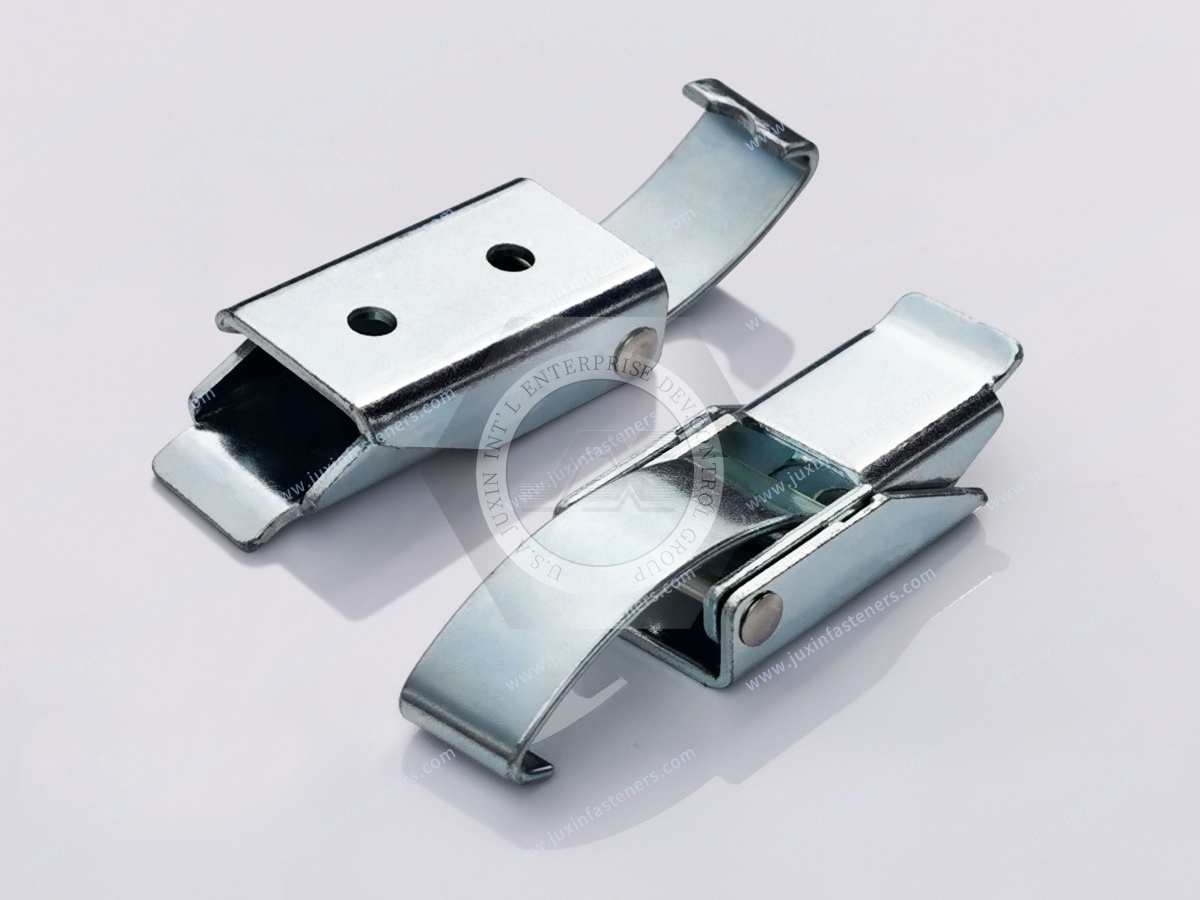
Potential applications include appropriate:
AHU service panels;
filter inspection covers;
blower housing covers;
fan-filter-unit housings;
ventilation equipment enclosures;
removable guards;
auxiliary sheet-metal brackets;
control-section covers;
service-access panels.
The suitability of a clip-on nut depends on:
flange geometry;
panel material;
panel thickness;
thread requirement;
screw;
mechanical load;
pressure differential;
gasket architecture;
vibration;
environment;
maintenance requirement.
An important sourcing distinction is the difference between:
Factory-Built HVAC Equipment
and
Field-Installed Duct Systems
Clip-on nuts can be particularly relevant to factory-built equipment containing repetitive:
covers;
access panels;
brackets;
housings;
formed flanges.
Field ductwork can use different joint systems, including application-specific:
flanges;
cleats;
drives;
sealants;
gaskets;
screws;
other duct-joining methods.
Therefore:
HVAC Clip-On Nut Application ≠ Universal Duct Joint Solution
This distinction helps prevent a fastener selected for an AHU access panel from being incorrectly generalized to an entire duct system.
A useful engineering approach is to divide potential applications according to function.
Examples can include:
guards;
secondary covers;
auxiliary equipment panels.
These are natural candidate applications where edge geometry permits.
Examples can include:
filter-access panels;
inspection covers;
service covers.
These applications introduce additional requirements for repeated removal and reinstallation.
Some panels separate regions with different air pressures.
Here the fastening system can influence:
gasket compression;
cover deflection;
local leakage paths.
The clip-on nut remains a mechanical component within a larger sealing system.
Heavy motors, fans or other major equipment can introduce substantially higher loads.
A generic clip-on nut should not automatically be selected for these load paths merely because the component fits the panel edge.
HVAC equipment frequently uses folded sheet metal to create:
stiffness;
edge returns;
mounting surfaces;
cover interfaces.
Clip-on nuts can convert appropriate flange locations into captive fastening positions.
This can reduce the need for a conventional loose nut during final screw assembly.
The clip does not interact with a theoretical flat sheet.
It interacts with an actual formed edge.
Relevant dimensions include:
sheet thickness;
flange width;
bend radius;
return geometry;
hem geometry where applicable;
hole setback;
throat depth.
For more detail, see Clip-On Nuts for Flanged Edges.
Two HVAC panels manufactured from the same sheet thickness can require different clip geometries if their:
flange width;
bend radius;
hole setback;
edge return
are different.
Therefore:
Same Sheet Thickness ≠ Same Clip-On Nut
A hemmed or multi-layer edge can create a substantially different effective grip condition from a single sheet flange.
The engineering team should define the actual stack rather than specifying only the base sheet gauge.
Clip-on nut grip should be matched to the actual panel interface.
Relevant factors can include:
base sheet thickness;
manufacturing tolerance;
paint;
powder coating;
galvanizing;
other surface treatments.
For detailed guidance, see Panel Thickness Selection Guide.
A procurement drawing may identify only nominal sheet thickness.
The clip, however, sees the finished assembly.
Therefore:
Nominal Sheet Gauge ≠ Automatically Effective Grip Thickness
This becomes particularly important when a fastener is operating near the edge of its grip range.
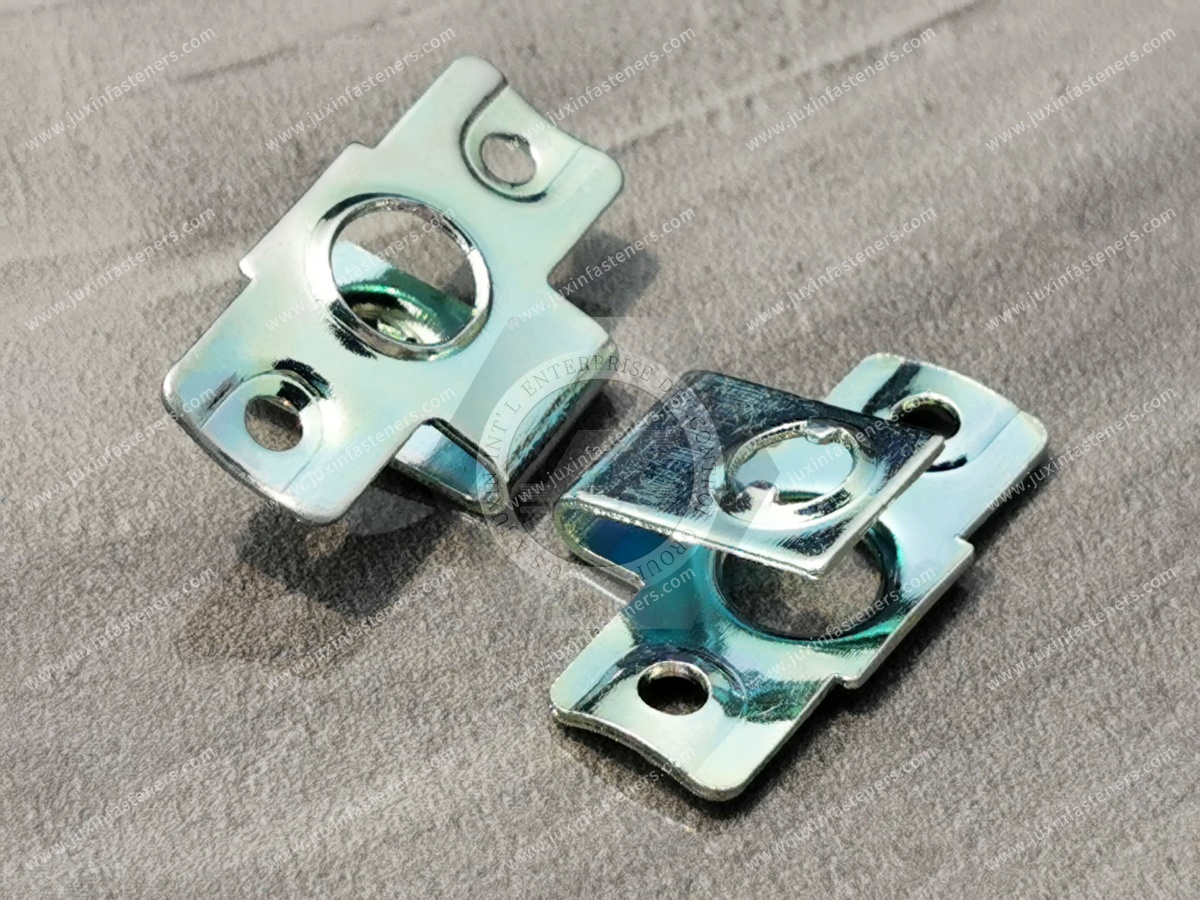
The distance between the panel edge and screw-hole center is critical.
Incorrect setback can create:
clip misalignment;
difficult screw starting;
cross-threading;
clip migration.
The panel drawing and fastener drawing should therefore be reviewed together.
Throat depth determines how far the clip reaches from the panel edge toward the threaded position.
Two M6 clip-on nuts can have identical thread sizes but completely different throat depths.
Therefore:
Thread Size Alone Does Not Define HVAC Clip Compatibility
A clip-on nut can eliminate the need to hold a conventional loose nut behind the panel during final screw assembly.
This can be particularly useful in enclosed HVAC housings.
However, a conventional edge clip still requires access to a suitable panel edge during clip installation.
Therefore:
No Backside Nut Handling ≠ Universal Blind-Hole Fastening
If a threaded point is required away from an accessible edge, another fastening architecture may be more appropriate.
HVAC equipment requires routine service.
Depending on the system, technicians may need access for:
filter replacement;
coil inspection;
drain-pan inspection;
sensor maintenance;
fan inspection;
control maintenance;
cleaning.
This makes serviceability an important fastener-selection variable.
One potential lifecycle advantage of a clip-on nut is replaceability.
If an appropriate clip thread becomes damaged, the clip may potentially be replaced without replacing the complete sheet-metal panel.
This can be useful in equipment designed for long maintenance lifecycles.
Repeated service can affect:
clip threads;
screw threads;
panel edge;
coating;
spring geometry.
If an access panel is expected to be removed frequently, the expected service cycle should be defined.
Where repeated maintenance matters, validation can examine the production assembly through the required number of service cycles.
Potential observations include:
screw-start behavior;
installation torque behavior;
thread condition;
clip retention;
panel-edge damage;
coating wear.
The required number of cycles should come from the equipment program rather than a generic marketing claim.
A common engineering mistake is to confuse panel grip with final joint performance.
Describes how securely the clip remains on the flange before and during assembly.
Depends on the complete:
Screw + Clip Thread + Flange + Cover / Component
system.
Therefore:
High Clip Retention ≠ Automatically High Joint Strength
Spring arms primarily retain the clip on the panel.
They should not automatically be described as preventing the screw from backing out.
Threaded-joint stability can depend on:
initial clamp;
friction;
joint stiffness;
transverse movement;
vibration;
thermal cycling;
locking feature where required.
Therefore:
Spring Grip on Flange ≠ Screw-Locking Function
Fans and blowers can generate mechanical excitation.
The resulting local vibration at a service-panel fastener depends on:
fan speed;
balance;
equipment stiffness;
panel stiffness;
mounting location;
resonance.
A standard clip-on nut should therefore not automatically be marketed as “vibration-proof.”
Panel rattle can be influenced by:
insufficient clamp;
flexible sheet metal;
clearance;
vibration;
gasket condition;
fastener spacing;
panel resonance.
Increasing clip grip alone may not solve the problem.
HVAC equipment can operate with a pressure difference across an access panel or housing wall.
The pressure can create distributed loading on the panel.
The total resulting force depends on:
Pressure Differential × Effective Panel Area
This is an important Information Gain point.
A relatively modest pressure acting across a large panel can create meaningful total load.
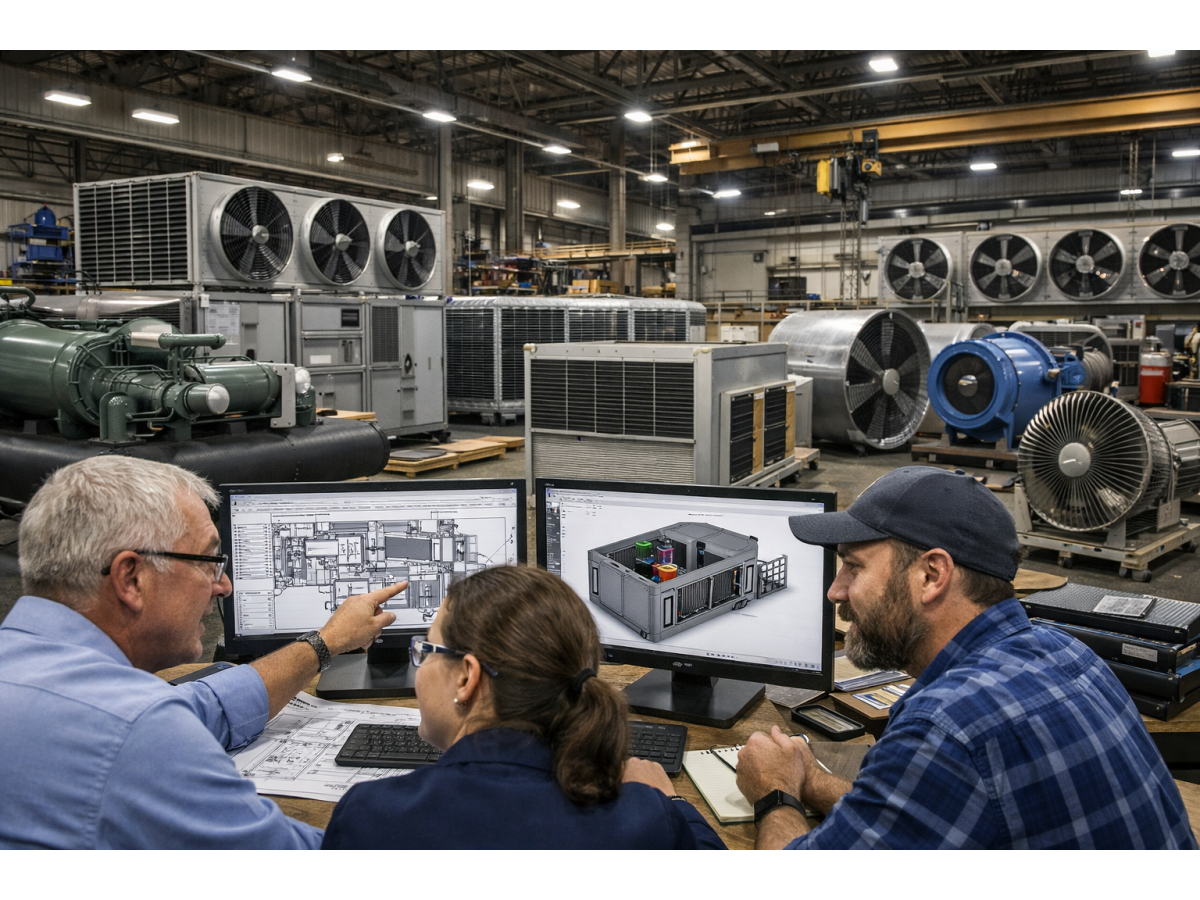
That load must be transferred through the:
cover;
fasteners;
flange;
cabinet structure.
Therefore the fastener should not be selected only by screw diameter.
Panel size and stiffness matter.
A standard clip-on nut does not independently prevent air leakage.
Leakage performance can depend on:
gasket;
sealant;
panel flatness;
flange flatness;
fastener spacing;
screw clamp;
cover stiffness;
assembly process.
Therefore:
Mechanical Attachment ≠ Airtightness
Fastener spacing can influence how uniformly a cover compresses a gasket.
If fasteners are spaced too far apart relative to panel stiffness and gasket behavior, the cover may deflect between fastening points.
This can reduce local gasket compression.
However, there is no universal “HVAC clip nut spacing” that guarantees airtightness.
Spacing must be engineered for the actual assembly.
For a gasketed HVAC panel, think in terms of:
Fastener Clamp → Cover Stiffness → Gasket Compression → Flange Contact
rather than:
Clip Nut → Air Seal
This separates the mechanical fastener from the sealing function.
A specified screw torque does not directly equal a known gasket compression.
The result can depend on:
screw preload;
friction;
thread condition;
fastener spacing;
cover stiffness;
flange stiffness;
gasket stiffness;
gasket thickness;
compression stops where present.
Therefore:
More Tightening Torque ≠ Automatically Lower Leakage
Overtightening can potentially cause:
thread damage;
clip deformation;
sheet-metal deformation;
cover distortion;
gasket over-compression.
A distorted panel can actually make sealing behavior worse.
Where duct or equipment leakage performance is specified, testing should follow the applicable equipment, duct-system or customer requirement.
A clip-on nut does not independently carry a leakage class.
The relevant leakage performance belongs to the assembled system.
These components should not be conflated.
Provides the threaded mechanical anchor.
Generates joint clamp.
Provides a compressible sealing interface.
Can close designated leakage paths depending on system design.
The assembly works only when these functions are coordinated.
HVAC equipment can encounter moisture from:
humid air;
condensation;
cooling-coil environments;
outdoor exposure;
washdown or cleaning in some applications.
The actual environment varies significantly by fastener location.
Fasteners may see relatively mild exposure.
Fasteners may encounter recurring moisture.
Fasteners may see:
rain;
humidity;
temperature cycling;
atmospheric contaminants.
Chloride exposure may require additional corrosion evaluation.
Therefore:
One AHU ≠ One Corrosion Environment
Specification-controlled carbon spring steel can provide the elastic behavior required for many HVAC clip-on nut designs.
Final performance depends on:
material condition;
thickness;
forming;
heat treatment;
geometry.
Material name alone does not establish performance.
Stainless spring materials can be considered where their mechanical and environmental characteristics suit the application.
However:
Stainless ≠ Corrosion-Proof
and:
Stainless ≠ Automatically Best for Every HVAC Environment
The actual environment should drive material selection.
Where stainless steel is appropriate, selection can depend on:
humidity;
chloride exposure;
cleaning chemicals;
outdoor environment;
cost.
For more detail, see 304 vs 316 Stainless Clip-On Nuts.
Electroplated carbon spring-steel clip nuts can provide corrosion protection while retaining the mechanical characteristics required for many spring-fastener applications.
Where applicable, coating systems can be specified according to relevant international fastener requirements.
The final coating requirement should come from the customer or application specification.
For susceptible hardened or high-strength spring-steel clips, manufacturing and electroplating can require hydrogen-embrittlement risk controls.
Risk depends on:
material;
strength/hardness;
processing;
coating route;
applied stress.
No universal baking procedure should be applied to every HVAC clip-on nut.
Where laboratory salt-spray testing is specified, the test method, exposure duration and acceptance criteria should be defined by the applicable product or customer specification.
A request such as:
“Need 500-hour HVAC clip nut”
is incomplete without defining:
test method;
coating;
acceptance criteria.
Salt-spray results should not be directly translated into:
outdoor service years;
rooftop equipment lifetime;
corrosion-free operating life.
Actual service exposure can include:
condensation;
wet/dry cycling;
temperature changes;
chlorides;
industrial contaminants;
coating damage.
Some HVAC assemblies use spring clips designed for mating tapping screws rather than conventional machine-screw threads.
These can be useful in appropriate:
covers;
guards;
light sheet-metal assemblies.
The clip and screw must be selected as a compatible system.
For related designs, see Strong-Grip Clip-On Nuts for Tapping Screws.
These should not be treated as interchangeable.
Uses a defined internal thread intended for a compatible machine screw.
Uses geometry designed to interact with the specified tapping screw.
Therefore:
Similar Clip Shape ≠ Same Thread System
HVAC equipment can be manufactured for global markets.
Metric programs may specify ISO metric threads.
North American equipment can also use Unified inch threads.
RFQs should clearly identify:
thread diameter;
pitch or TPI;
mating screw.
See Metric Clip-On Nuts Selection Guide and Inch Clip-On Nuts Selection Guide.
AHU access panels can provide service access to:
filters;
coils;
fans;
dampers;
sensors;
controls.
Clip-on nuts can be useful where the panel architecture uses screw-fastened removable covers and accessible edges.
Frequent filter service makes maintainability particularly important.
The fastening system should support the intended:
opening frequency;
technician access;
replacement strategy.
If a gasket is used, its compression requirement must also be considered.
Clip-on nuts may be suitable for appropriate removable blower covers, guards and auxiliary panels.
They should not automatically be selected for primary:
motor mounts;
fan-bearing structures;
high-load rotating-equipment supports.
Those applications require dedicated mechanical analysis.
Fan filter units and similar equipment can contain serviceable:
covers;
electrical panels;
filter-related access points.
Clip-on nuts may provide useful captive attachment where the geometry permits.
Clip-on nuts may be useful on appropriate factory-built equipment transitions and service assemblies.
However, the fastener should not be promoted as a universal substitute for engineered duct flange systems.
Modern data centers can use extensive HVAC and liquid-cooling infrastructure.
Potential clip-on nut applications can include appropriate mechanical:
control enclosures;
service panels;
fan sections;
cooling equipment covers.
Clip-on nuts should not automatically be described as providing:
liquid sealing;
pressure sealing;
leak prevention.
Potential failure modes include:
clip migration;
cross-threading;
thread stripping;
panel-edge deformation;
coating damage;
screw loosening;
corrosion;
gasket under-compression;
cover distortion.
For detailed troubleshooting, see Clip-On Nut Failure Analysis.
Potential contributors include:
incorrect grip range;
panel thickness variation;
wrong throat depth;
unsuitable spring geometry;
installation error.
Possible causes include:
hole setback error;
clip misalignment;
driver misalignment;
incorrect mating screw.
Possible contributors include:
excessive tightening;
insufficient thread engagement;
wrong screw;
cross-threading.
Possible contributors include:
insufficient joint clamp;
flexible panel;
vibration;
large unsupported span;
gasket deterioration.
Do not automatically increase clip grip force.
Investigate the complete sealing architecture:
gasket;
sealant;
cover flatness;
flange flatness;
fastener spacing;
screw clamp;
assembly process.
Do not assume the clip itself is the leakage source.
Investigate:
moisture exposure;
condensation;
coating;
coating damage;
contaminants;
material combination.
| Engineering Requirement | Selection Consideration |
|---|---|
| Folded sheet-metal flange | Clip-on nut may be suitable |
| Accessible edge | Suitable for conventional edge clip |
| No backside wrench access | Captive clip can simplify assembly |
| Mid-panel blind thread | Consider another fastener architecture |
| Frequent filter/service access | Define lifecycle removal requirement |
| Gasketed access panel | Evaluate complete sealing architecture |
| Air-pressure differential | Evaluate panel load and clamp distribution |
| Blower vibration | Validate complete threaded joint |
| Condensing environment | Define corrosion requirement |
| Outdoor HVAC equipment | Evaluate coating/material for actual environment |
| Primary motor/fan mount | Dedicated structural analysis required |
| Tapping-screw assembly | Match clip to specified screw |
| Metric/inch production | Define exact thread system |
Is the fastener used in:
AHU;
fan-filter unit;
blower housing;
ventilation equipment;
rooftop unit;
cooling equipment;
another HVAC assembly?
Is the clip retaining:
service panel;
inspection cover;
guard;
auxiliary bracket;
housing cover?
If yes, define:
pressure differential;
gasket;
sealant;
panel dimensions;
fastener spacing.
Specify:
galvanized steel;
coated carbon steel;
stainless steel;
aluminum;
other material.
Include applicable:
coating;
paint;
galvanizing;
multi-layer flange stack.
Specify:
flange width;
bend radius;
hem or return geometry;
hole setback;
throat depth.
Specify:
metric machine screw;
Unified inch machine screw;
tapping screw;
exact size and pitch/TPI.
Include where applicable:
fan/blower vibration;
transportation loads;
panel movement.
Specify:
indoor/outdoor;
condensation;
humidity;
chlorides;
cleaning chemicals.
Specify:
expected access frequency;
removal/reinstallation cycles;
replacement policy.
Evaluate:
Production Clip + Production Screw + Finished Flange + Cover + Gasket / Sealant Where Applicable + Production Assembly Process
A clip fitting one prototype AHU panel demonstrates only initial geometric compatibility.
Production introduces:
sheet-thickness variation;
bend variation;
coating variation;
hole-position variation;
clip-lot variation;
screw-lot variation;
assembly variation.
Validation should represent the production system.
Two suppliers may both offer:
M6 HVAC U-Nut
while their parts differ in:
grip range;
throat depth;
hole setback;
spring geometry;
thread geometry;
material condition;
coating.
Therefore:
Same Commercial Description ≠ Same Assembly Behavior
Supplier changes should be evaluated against the controlled application specification.
Procurement should consider more than fastener unit price.
A useful model is:
Fastener Cost + Installation Cost + Rework Risk + Service Cost + Replacement Cost + Leakage/Reassembly Risk
This is especially important for serviceable HVAC equipment.
HVAC and mechanical engineers may search:
HVAC clip-on nuts;
AHU spring nuts;
air handling unit fasteners;
HVAC service panel fasteners;
blower housing clip nuts;
duct equipment clip nuts;
HVAC flange U-nuts;
filter access panel fasteners.
These searches indicate engineering-selection intent.
Sourcing teams may search:
HVAC clip nut supplier;
AHU fastener manufacturer;
air handling unit spring nut supplier;
HVAC U-nut manufacturer;
custom HVAC clip-on nuts;
HVAC enclosure fastener supplier;
metric and inch HVAC clip nuts.
These searches indicate commercial supplier-selection intent.
When requesting engineering and commercial evaluation from JUXIN FASTENERS, provide where applicable:
HVAC equipment type;
application;
component being retained;
2D drawing;
3D model where available;
assembly drawing;
current fastener sample;
current supplier part number;
thread system;
thread size;
pitch or TPI;
mating screw specification;
screw material;
screw finish;
panel material;
nominal sheet thickness;
sheet thickness tolerance;
finished thickness;
coating/galvanizing system;
flange width;
bend radius;
edge geometry;
hem/return geometry;
hole diameter;
hole setback;
throat-depth requirement;
available fastener envelope;
clip-retention requirement where defined;
joint mechanical requirement;
panel dimensions;
pressure differential where applicable;
gasket specification where applicable;
sealant information where applicable;
fastener spacing;
cover stiffness information where relevant;
vibration requirement;
temperature range;
humidity/condensation exposure;
indoor/outdoor environment;
chloride exposure where applicable;
chemical exposure;
corrosion requirement;
coating specification;
corrosion-test method;
exposure duration where specified;
acceptance criteria;
maintenance-access requirement;
expected service cycles;
installation method;
screwdriving method;
automated-feeding requirement;
packaging requirement;
inspection requirement;
documentation requirement;
sample quantity;
prototype quantity;
production quantity;
estimated annual demand;
program timing;
customer-specific requirements.
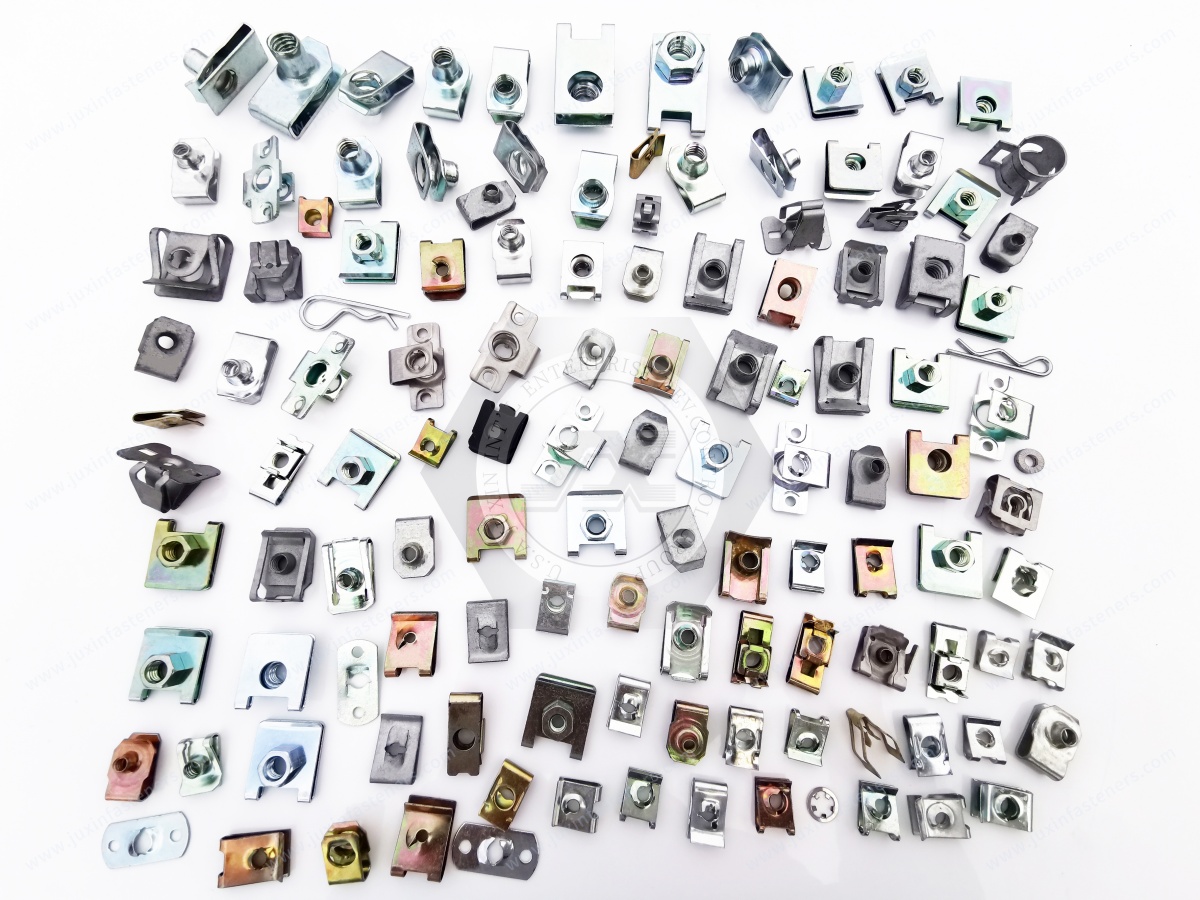
They can provide removable threaded attachment points on suitable sheet-metal flanges for AHU access panels, blower covers, filter inspection panels, guards and auxiliary brackets.
They can be suitable where the panel geometry, mechanical load, service requirement and sealing architecture support their use.
No. A standard clip-on nut is a mechanical fastener, not an air-sealing component.
Yes, they can form part of a screw-fastened gasketed assembly, but gasket compression must be evaluated at assembly level.
Not automatically. Fastener spacing interacts with panel stiffness, flange stiffness, gasket behavior and screw clamp.
Not necessarily. Excessive tightening can damage threads, deform sheet metal or distort the cover and gasket.
No generic clip-on nut should be described as universally vibration-proof. The complete joint should be validated for the actual equipment.
They can be suitable for certain factory-built flanged equipment assemblies, but they are not a universal replacement for engineered duct joint systems.
Potentially, provided the material, coating and complete assembly are selected for the actual moisture and corrosion environment.
No. Material selection depends on environment, mechanical requirements, cost and customer specification.
No. Salt-spray testing is a laboratory corrosion test and should not be directly converted into years of field service.
Potentially, but repeated removal/reinstallation requirements should be defined and validated. Removable does not mean unlimited reuse.
JUXIN FASTENERS can review available drawings, samples, flange geometry, mating screw, pressure/gasket requirements, environmental conditions,
service requirements and production demand to identify candidate clip-on nut configurations for evaluation.
A sourcing request may begin:
“Need M6 clip nut for AHU access panel.”
That description is not enough to control the final assembly.
Engineering should determine:
What HVAC Equipment Is It For?
What Component Is Being Retained?
Is the Panel Part of an Air-Pressure Boundary?
What Is the Pressure Differential?
Is a Gasket Used?
What Is the Fastener Spacing?
What Is the Panel Material?
What Is the Finished Thickness?
What Is the Flange Geometry?
What Is the Hole Setback?
What Screw Is Used?
What Vibration Environment Applies?
Will Condensation Occur?
How Often Will the Panel Be Removed?
The sourcing path becomes:
HVAC Equipment → Panel Function → Pressure/Sealing Boundary → Flange Geometry → Thread / Screw
→ Dynamic Environment → Corrosion Environment → Service Requirement → Clip Architecture → Samples → Assembly Validation → Controlled Specification → Production RFQ
This converts a generic HVAC hardware inquiry into an engineering-controlled sourcing process.
JUXIN FASTENERS supports OEM and industrial sourcing for appropriate HVAC sheet-metal fastening applications, including:
HVAC clip-on nuts;
AHU spring nuts;
U-nuts;
J-nuts;
flanged-edge clip-on nuts;
strong-grip clip-on nuts;
enclosed-thread clip nuts;
tapping-screw spring clips;
metric clip-on nuts;
inch clip-on nuts;
carbon spring-steel clips;
stainless spring clips where appropriate;
drawing-based spring fasteners.
Potential applications include appropriate:
air handling units;
filter-access panels;
blower housings;
fan-filter units;
ventilation equipment;
HVAC control sections;
equipment guards;
auxiliary brackets;
data-center cooling equipment;
industrial HVAC enclosures.
For related engineering guidance, see:
Clip-On Nuts for Flanged Edges
Strong-Grip Clip-On Nuts for Tapping Screws
Strong-Grip Clip-On Enclosed Hex Nuts
Panel Thickness Selection Guide
Sheet-Metal Fastener Selection Guide
Carbon Steel Clip-On Nuts: Material & Coating Guide
304 vs 316 Stainless Clip-On Nuts
Metric Clip-On Nuts Selection Guide
Inch Clip-On Nuts Selection Guide
For an HVAC clip-on nut RFQ or engineering review, send your drawing, equipment application, panel material, finished thickness,
flange geometry, hole setback, mating screw specification, gasket/pressure requirements where applicable, vibration environment,
corrosion requirement, service-cycle requirement, sample quantity and estimated annual demand to:
For HVAC sheet-metal fastening, the correct sourcing question is not simply:
“Which clip nut fits this AHU flange?”
It is:
“Which clip geometry, flange interface, thread, screw, material, coating,
fastener spacing and service requirement match the mechanical assembly without confusing the fastener with the HVAC sealing system?”
 MORE NEWS
Contact Us
Tel.:
+86 020 8621 0320
+86 020 3121 6067
E-mail:
Technical Support:
Navigation
SEND INQUIREY