
Call Us
+86 136 6007 9809
Call Us
+86 136 6007 9809

Sep. 21, 2026
Medical diagnostic systems, laboratory analyzers, clinical equipment carts and scientific instruments often combine sensitive electronics,
optical components, pumps, controls and mechanical assemblies inside compact sheet-metal housings.
These housings may require routine cleaning and repeated maintenance while operating in environments where moisture, disinfectants, laboratory chemicals or cleaning residues can affect exposed hardware.
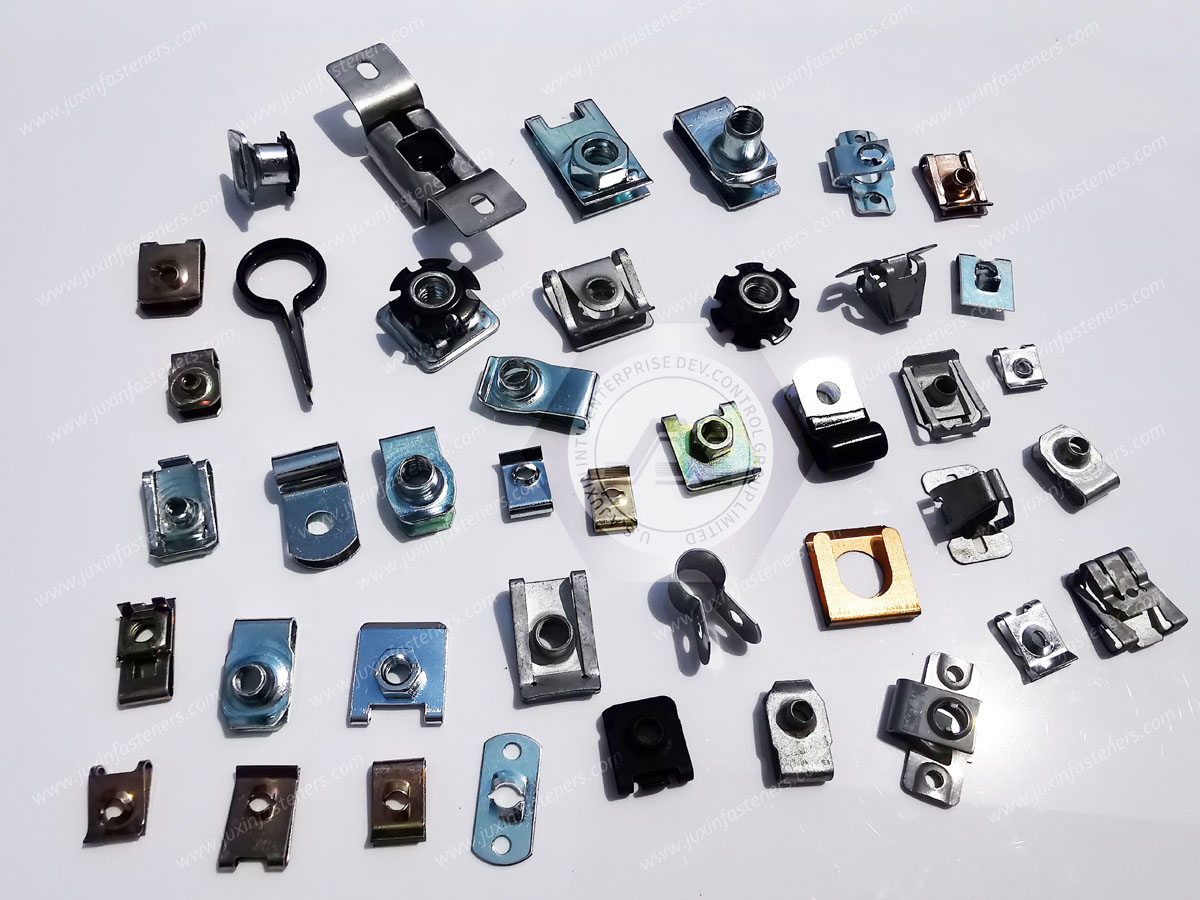
Where a removable threaded attachment point is required near an accessible sheet-metal edge, stainless steel clip-on nuts for medical equipment can provide a practical fastening architecture.
Stainless U-nuts, J-nuts, enclosed-thread clip nuts and other spring fasteners can provide captive threaded attachment points without requiring a conventional loose nut behind the enclosure panel.
However, material selection for medical and laboratory equipment requires an important distinction:
Stainless Steel ≠ Universal Chemical Resistance
and:
Medical Equipment Application ≠ Medical Certification of the Individual Fastener
The complete application should instead be evaluated as:
Clip Nut + Panel + Mating Screw + Cleaning Environment + Service Requirement + Equipment-Level Compliance Requirements
This approach helps engineering and sourcing teams select fastening hardware without assigning functions or certifications to the clip that belong to the complete medical or laboratory equipment system.
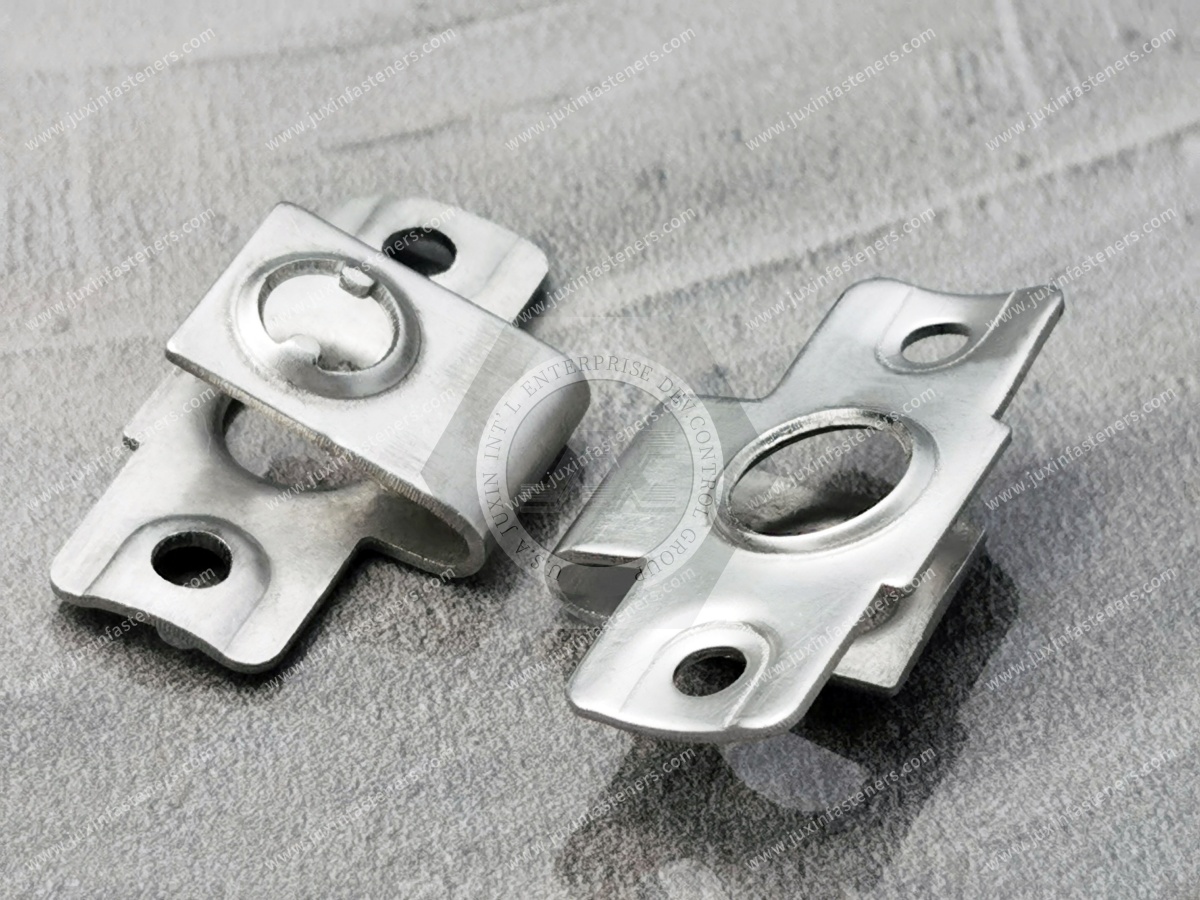
A stainless steel clip-on nut is an edge-mounted spring fastener manufactured from a suitable stainless spring material and selected for an appropriate medical or laboratory equipment assembly.
Possible configurations include:
stainless U-nuts;
stainless J-nuts;
strong-grip stainless clip-on nuts;
enclosed-thread stainless clip nuts;
low-profile spring clips;
drawing-specific stainless spring fasteners.
Their suitability depends on:
panel geometry;
panel material;
clip material;
thread;
mating screw;
cleaning environment;
corrosion exposure;
service cycles;
equipment compliance requirements.
There is no universal “medical-grade clip-on nut” that automatically satisfies every medical equipment requirement.
Potential applications include appropriate:
diagnostic equipment exterior housings;
laboratory analyzer service panels;
clinical equipment carts;
workstation enclosures;
instrument access covers;
auxiliary internal brackets;
laboratory equipment cabinets;
environmental test equipment;
non-patient-contact sheet-metal assemblies.
The actual suitability depends on the equipment design and regulatory context.
Not every fastener inside medical or laboratory equipment has the same risk or compliance role.
A useful engineering approach is to classify the fastener location before selecting the material.
Examples can include:
exterior covers;
equipment side panels;
service covers.
These may be suitable applications for stainless clip-on nuts where geometry and cleaning requirements permit.
Examples may include:
auxiliary brackets;
electronics covers;
internal service panels.
The fastener primarily performs a mechanical function.
These locations can introduce additional material and regulatory requirements.
A generic stainless clip-on nut should not automatically be described as:
biocompatible;
implantable;
patient-contact approved.
These environments may require dedicated:
material controls;
surface controls;
cleaning validation;
sterilization validation;
contamination-control procedures.
A standard stainless clip-on nut should not automatically be promoted as sterile or cleanroom-qualified.
This leads to a fundamental selection rule:
Medical Equipment Location Alone Does Not Establish Fastener Compliance
Medical equipment marketing often mixes these concepts.
They should remain separate.
Removes contamination from surfaces.
Reduces or inactivates microorganisms according to the specified process.
Uses a validated process intended to achieve the required sterility outcome.
A stainless fastener that tolerates routine surface cleaning is not automatically suitable for every disinfection or sterilization process.
Therefore:
Cleanable ≠ Sterilizable
and:
Sterilizable Material ≠ Sterile Finished Assembly
Stainless materials can provide useful corrosion resistance and surface durability in appropriate equipment environments.
Potential benefits include:
corrosion resistance in humid conditions;
reduced dependence on sacrificial metallic coatings;
suitability for selected cleaning environments;
useful mechanical properties for spring-fastener designs.
However, grade selection must reflect the actual chemical and mechanical environment.
304-type and 316-type austenitic stainless steels are both widely used across industrial equipment.
They should not be treated as interchangeable in every environment.
Can be appropriate for many indoor equipment applications where environmental exposure is controlled.
Contains molybdenum and can provide improved resistance in some chloride-containing and chemically aggressive environments.
However:
316 Stainless ≠ Chemically Immune
and:
316 Stainless ≠ Automatically Required for Medical Equipment
Material selection should follow the actual exposure.
For further material comparison, see 304 vs 316 Stainless Clip-On Nuts.
A statement such as:
“Stainless steel is resistant to medical disinfectants”
is too broad.
Compatibility depends on:
stainless grade;
chemical composition;
concentration;
temperature;
contact time;
frequency;
rinsing;
drying;
surface condition;
crevice geometry.
The cleaning protocol should therefore be part of the fastener specification when chemical exposure is significant.
Chloride-containing environments can increase localized corrosion risk for stainless steel.
The actual risk depends on:
chloride concentration;
exposure time;
temperature;
surface condition;
drying behavior;
crevice geometry;
stainless grade.
Do not assume that either 304 or 316 stainless is immune to chloride-related corrosion.
Hydrogen peroxide may be used in certain cleaning, disinfection or decontamination processes.
Compatibility should not be assumed solely from the words “stainless steel.”
The actual:
concentration;
temperature;
exposure method;
contact time;
repeated-cycle requirement
should be reviewed against the specified material and complete assembly.
Some equipment may be cleaned using alcohol-based products.
Again, the complete cleaning formulation matters.
Commercial cleaning agents can contain additional components that affect:
metal surfaces;
coatings;
plastics;
labels;
seals.
The cleaning protocol should therefore be evaluated as a system.
Two products containing the same active chemical can produce different material exposure because of differences in:
concentration;
pH;
additives;
contact time.
Therefore:
Chemical Name Alone ≠ Complete Compatibility Specification
A brief wipe followed by drying is not equivalent to prolonged immersion.
Similarly, occasional cleaning is not equivalent to hundreds or thousands of repeated cleaning cycles.
When chemical compatibility is important, define the real exposure profile.
Clip-on nuts naturally create areas where the clip contacts the panel.
These interfaces can form narrow crevices.
In a wet or chemically aggressive environment, crevices can retain:
moisture;
cleaning solution;
contaminants.
This can create a different corrosion condition from an open stainless surface.
Therefore:
Bulk Stainless Corrosion Resistance ≠ Automatic Crevice Corrosion Resistance
Equipment design can influence whether cleaning liquids remain trapped around the fastener.
Where frequent wet cleaning occurs, engineering should consider:
orientation;
drainage;
liquid traps;
overlapping sheet geometry;
clip-panel crevices.
This is an equipment-level design issue rather than simply a material-grade decision.
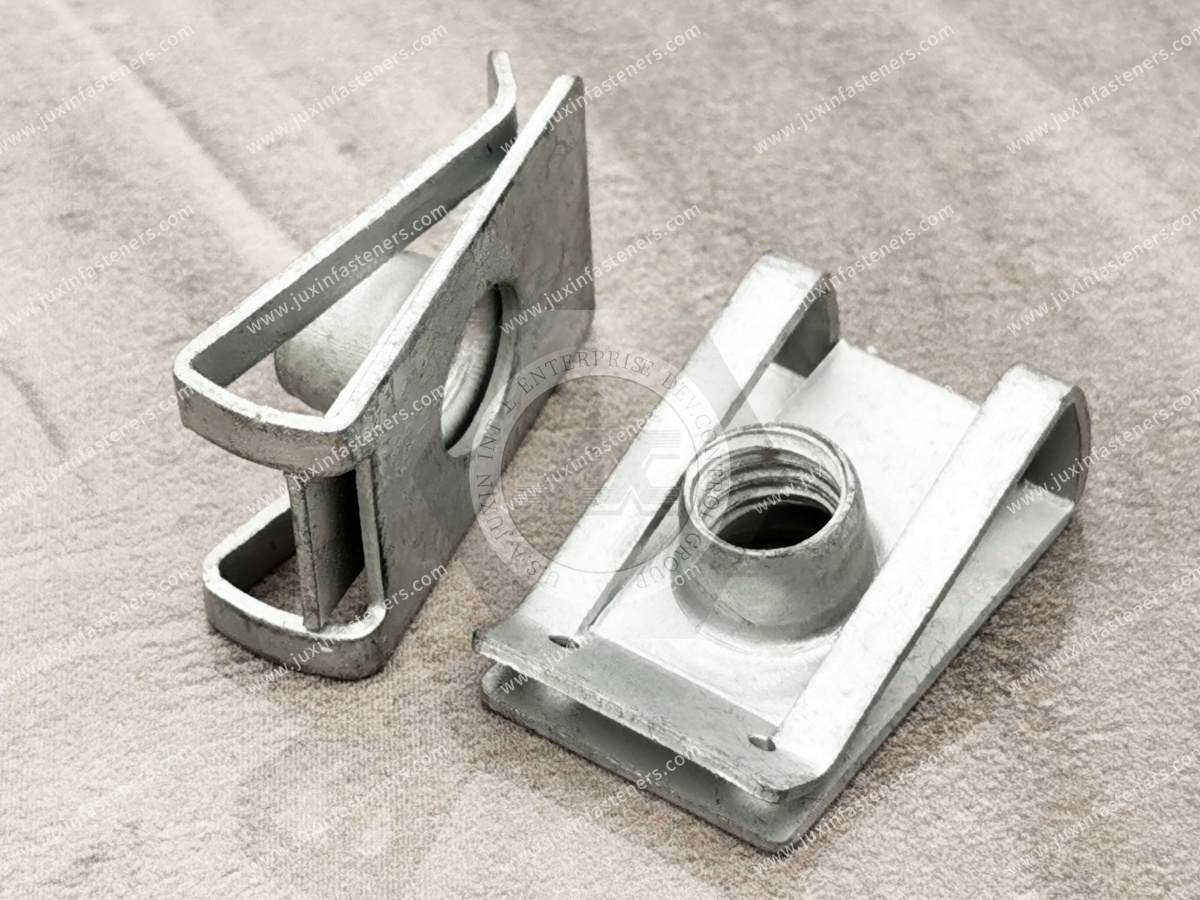
Corrosion performance depends not only on alloy designation but also on surface condition.
Manufacturing operations can introduce:
tooling contamination;
embedded iron;
scale;
fabrication residues;
handling contamination.
Where surface condition is critical, cleaning and passivation requirements can be specified.
Passivation requirements are often misunderstood.
For stainless steel parts, specified chemical passivation treatments can help remove exogenous iron and other surface contamination and support an appropriate passive surface condition.
However:
Passivation ≠ Coating
Passivation ≠ Sterilization
Passivation ≠ Universal Chemical Immunity
Passivation ≠ Automatic Medical Certification
Where required by the customer specification, chemical passivation treatment can be specified according to ASTM A967/A967M.
The required treatment and acceptance criteria should be defined by the purchaser or engineering specification.
Do not simply write:
“ASTM A967 passivated”
without controlling the required treatment and acceptance requirements.
ASTM A380/A380M provides practices related to cleaning, descaling, pickling and passivation of stainless steel parts, equipment and systems.
It can be relevant when engineering teams need broader stainless surface preparation requirements.
The appropriate process should be specified according to the actual component and application.
A stainless clip-on nut should not automatically be passivated simply because it is used in medical or laboratory equipment.
Whether passivation is required depends on:
manufacturing route;
surface contamination risk;
customer specification;
application environment;
documentation requirement.
This distinction avoids unnecessary processing and unsupported claims.
Surface treatment cannot substitute for selecting the appropriate base material.
If the chemical environment requires a different alloy, passivation alone does not solve the material-selection problem.
Diagnostic and laboratory equipment can contain dense internal layouts.
Components may include:
electronics;
pumps;
sensors;
optical systems;
fluidic components;
power supplies.
This can make backside wrench access difficult.
Clip-on nuts can provide captive threaded positions on suitable accessible panel edges.
A clip-on nut can eliminate the need to hold a loose nut behind the panel during final screw installation.
However, a conventional edge clip still needs access to the panel edge during installation.
Therefore:
No Backside Nut Handling ≠ Universal Blind Installation
If the threaded location is away from an accessible edge, another fastening architecture may be more appropriate.
Medical-equipment material requirements do not eliminate basic mechanical design requirements.
The engineer still needs to define:
panel thickness;
thickness tolerance;
edge geometry;
hole diameter;
hole setback;
throat depth;
fastener envelope.
For detailed selection guidance, see Panel Thickness Selection Guide.
The distance from the panel edge to the screw-hole center is critical for clip alignment.
Incorrect setback can contribute to:
difficult screw starting;
cross-threading;
clip migration;
abnormal assembly torque.
Two stainless M4 or M5 clip-on nuts can have the same thread while having different throat depths.
Therefore:
Same Thread Size ≠ Same Medical Equipment Fastener
A common sourcing mistake is to treat strong panel grip as evidence of strong final joint performance.
These are different functions.
Describes how securely the clip remains attached to the panel before and during assembly.
Depends on the complete:
Clip Thread + Screw + Panel + Attached Component
system.
Therefore:
Strong Clip Retention ≠ Automatically High Joint Strength
Material selection must account for both:
corrosion behavior;
mechanical spring behavior.
Changing from a carbon spring-steel clip to a stainless version can change:
elastic behavior;
forming response;
spring force;
geometry requirements.
Therefore:
Carbon Steel Clip Geometry ≠ Automatically Directly Transferable to Stainless
Material substitution should be validated.
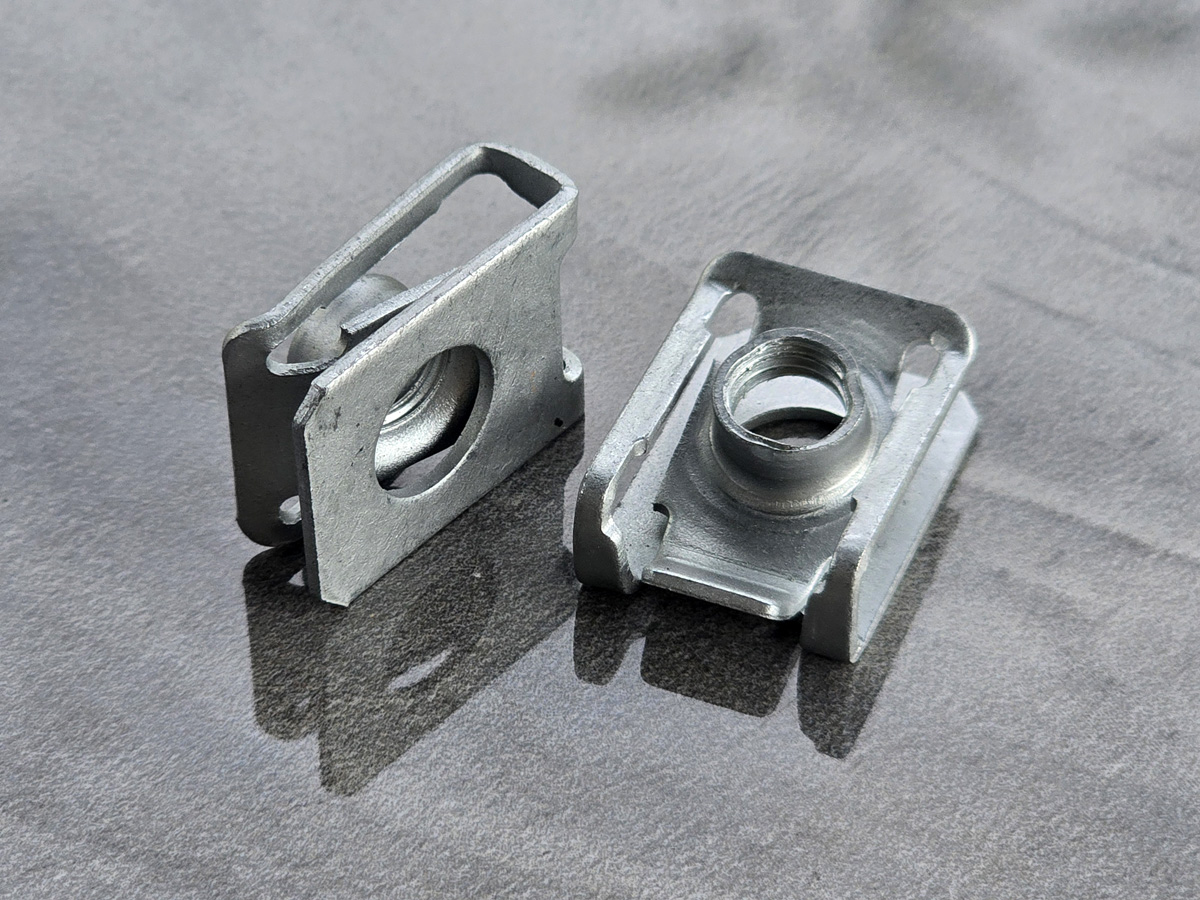
Gemini's assumption that stainless spring clips allow repeated servicing “without thread galling” is too broad.
Stainless threaded interfaces can be susceptible to galling depending on:
material pairing;
surface finish;
thread geometry;
lubrication where permitted;
assembly speed;
installation load.
Therefore:
Stainless ≠ Galling-Proof
The clip cannot be selected independently from the screw.
The engineer should define:
screw material;
screw finish;
thread;
assembly torque;
lubrication condition where applicable.
Stainless clip plus stainless screw may behave differently from stainless clip plus another screw material.
Laboratory and diagnostic equipment can require maintenance involving:
calibration;
filter replacement;
optical component servicing;
pump maintenance;
electronics replacement;
sensor access.
A replaceable clip-on nut can provide a useful service architecture where the enclosure geometry permits it.
Repeated servicing can affect:
clip threads;
screw threads;
panel edge;
spring geometry.
The expected number of service cycles should be defined where lifecycle access is important.
Where frequent access is expected, validation can examine:
screw starting;
installation torque;
removal torque;
thread condition;
clip retention;
panel-edge condition.
The required number of cycles should come from the equipment design requirement.
One of the most important sourcing distinctions is the difference between:
Fastener Material / Mechanical Specification
and
Medical Equipment Regulatory Compliance
A clip-on nut does not independently make the finished equipment medically compliant.
ISO 13485 establishes quality-management-system requirements for organizations involved in medical devices and related activities within its scope.
It is not a material standard for stainless steel clip-on nuts.
Therefore:
Stainless Clip-On Nut ≠ “ISO 13485 Fastener”
A medical-device manufacturer may impose supplier quality and documentation requirements derived from its quality system, but those requirements should be specified contractually.
A mechanical fastener supplied into medical equipment does not automatically become an independently certified medical device.
Its regulatory role depends on:
intended use;
equipment classification;
manufacturer's regulatory strategy;
applicable jurisdiction.
JUXIN FASTENERS should therefore support customer-defined mechanical, material and documentation requirements without making unsupported device-certification claims.
Standard stainless clip-on nuts should not automatically be described as biocompatible.
If a fastener has direct or indirect patient-contact implications, the medical-device manufacturer must determine the applicable biological evaluation requirements.
A standard stainless clip-on nut is not automatically:
sterile;
sterilized;
sterile-packaged;
cleanroom-qualified.
Those characteristics require dedicated processes and controls.
Stainless material alone does not make a component cleanroom compatible.
Cleanroom requirements can involve:
particle control;
cleaning;
packaging;
handling;
contamination controls.
These requirements must be specified by the customer.
Potential applications include suitable:
analyzer exterior panels;
electronics covers;
service-access panels;
auxiliary internal brackets.
If the exterior surface is routinely cleaned, the fastener material and exposed geometry should be evaluated against the actual cleaning protocol.
Laboratory analyzers may require frequent service access.
Clip-on nuts can provide replaceable threaded points where:
panel edges are accessible;
geometry permits clip installation;
mechanical load is appropriate.
Mobile clinical equipment can include:
electronics;
displays;
storage modules;
accessories.
Stainless clip-on nuts can be considered for appropriate enclosure covers and auxiliary brackets.
They should not automatically be represented as suitable for:
patient-support structures;
safety-critical load paths.
Those applications require dedicated engineering.
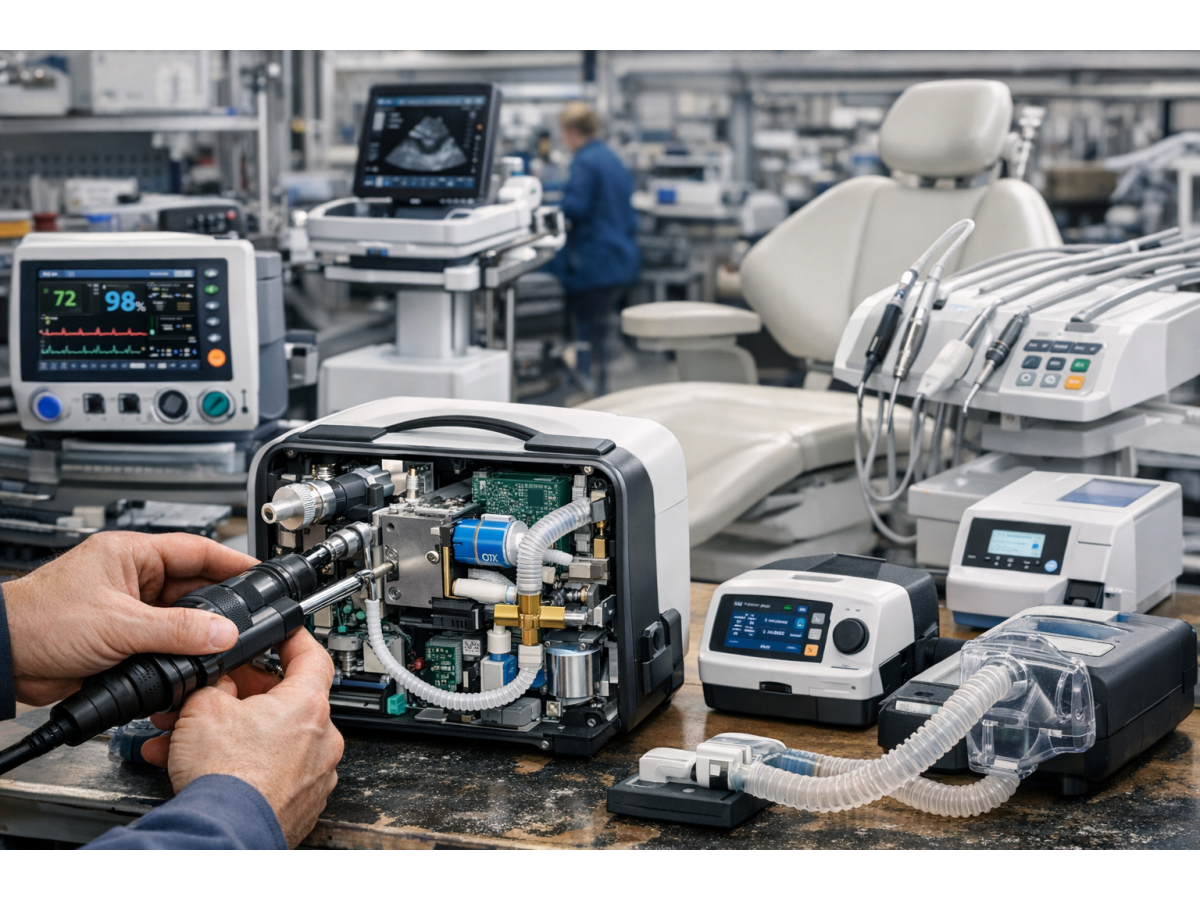
Laboratory chambers and test equipment can expose hardware to:
humidity;
temperature cycling;
controlled atmospheres.
The fastener environment should be evaluated separately from the chamber's nominal operating condition because local condensation and chemical exposure can differ.
Optical, analytical and measurement equipment often requires compact serviceable housings.
Potential clip-on nut applications include appropriate:
access covers;
electronics panels;
auxiliary brackets.
Global medical and laboratory equipment manufacturers may require either metric or inch threads.
Metric applications can use ISO metric thread systems.
North American programs may also specify Unified threads such as:
UNC;
UNF.
The RFQ should explicitly define:
nominal diameter;
pitch or TPI;
mating screw.
For related selection guidance, see Metric Clip-On Nuts Selection Guide and Inch Clip-On Nuts Selection Guide.
ISO 3506-1 addresses specified corrosion-resistant stainless steel bolts, screws and studs within its scope.
A stainless spring clip-on nut is a different product form.
Therefore, engineering teams should not automatically assign ISO 3506-1 bolt/screw property classes to a stainless clip-on nut unless the relevant product and requirement actually fall within the standard's scope.
The clip material and mechanical requirements should instead be controlled through the appropriate drawing and material specification.
Medical and laboratory equipment OEMs may require defined material documentation.
The required level should be stated in the RFQ.
Possible customer requirements can include:
material declaration;
lot identification;
supplier certificate;
material test documentation where specifically required.
Do not assume that every medical equipment fastener automatically requires a particular certificate format.
A generic statement such as:
“Medical fastener requires full MTR”
is not universally correct.
Documentation requirements depend on the customer's:
quality system;
risk classification;
drawing;
purchase specification;
supplier-control process.
JUXIN FASTENERS can review requested documentation during RFQ evaluation.
Where cleaning exposure is critical, the RFQ should identify the actual chemicals rather than simply requesting:
“medical chemical resistance.”
Useful information includes:
chemical name;
commercial formulation where available;
concentration;
pH;
temperature;
contact time;
cleaning frequency;
rinse/dry procedure.
If corrosion testing is required, the customer should define:
test method;
exposure conditions;
duration;
acceptance criteria.
Laboratory corrosion tests should not automatically be converted into service-life claims.
A stainless clip can contact a panel made from:
stainless steel;
carbon steel;
coated steel;
aluminum.
Dissimilar-metal interfaces can require evaluation where moisture or electrolyte is present.
Therefore:
Stainless Clip ≠ Automatic Galvanic Solution
The clip material should not be selected without considering the panel.
A stainless clip on aluminum, for example, creates a different interface from stainless on stainless.
Relevant variables can include:
panel alloy;
surface treatment;
clip material;
contact area;
moisture;
cleaning chemicals.
Material selection, geometry, drainage, surface condition and environment can all influence corrosion.
A good sourcing decision considers the complete interface rather than only specifying a premium material.
Potential issues include:
clip migration;
cross-threading;
thread stripping;
galling;
panel-edge deformation;
surface contamination;
corrosion;
crevice corrosion;
cleaning-chemical attack;
service-cycle wear.
For systematic troubleshooting, see Clip-On Nut Failure Analysis.
Investigate:
stainless grade;
chloride exposure;
chemical concentration;
contact time;
crevice geometry;
contamination;
surface condition.
Do not conclude simply that “stainless failed.”
Visible rust staining can sometimes be associated with surface contamination rather than bulk failure of the stainless alloy.
Investigation can include:
manufacturing contamination;
carbon-steel tooling contact;
embedded iron;
cleaning history.
Surface condition should be evaluated before changing alloy unnecessarily.
Investigate:
material pairing;
surface finish;
assembly speed;
screw condition;
thread geometry;
lubrication policy where permitted.
Do not assume higher tightening force is the solution.
Potential contributors include:
incorrect grip range;
panel thickness variation;
unsuitable spring geometry;
installation error.
Potential contributors include:
hole setback error;
clip misalignment;
driver alignment;
incorrect screw.
| Engineering Requirement | Selection Consideration |
|---|---|
| Serviceable equipment housing | Stainless clip-on nut may be suitable |
| Accessible sheet-metal edge | Suitable for conventional edge clip |
| No backside wrench access | Captive clip can simplify final assembly |
| Mid-panel blind thread | Consider another fastening architecture |
| Routine chemical wipe-down | Define actual chemical exposure |
| Chloride-containing environment | Evaluate alloy and local geometry |
| Repeated maintenance | Define service-cycle requirement |
| Stainless screw interface | Evaluate galling risk |
| Patient-contact application | Dedicated regulatory/material evaluation required |
| Sterile application | Dedicated sterilization validation required |
| Cleanroom environment | Dedicated contamination-control requirements |
| Aluminum housing | Evaluate mechanical and galvanic interface |
| Passivation required | Specify treatment and acceptance requirements |
| Material documentation required | Define documentation in RFQ |
Is the fastener used in:
diagnostic analyzer;
laboratory instrument;
medical cart;
scientific equipment;
environmental chamber;
another device or equipment system?
Is it retaining:
exterior cover;
service panel;
auxiliary bracket;
internal electronics cover?
Determine whether the location involves:
general equipment housing;
patient contact;
sample contact;
sterile area;
cleanroom requirement.
Specify:
cleaning agent;
concentration;
temperature;
contact time;
frequency;
rinse/dry procedure.
Specify:
stainless steel;
coated carbon steel;
aluminum;
other material.
Include:
thickness;
tolerance;
hole setback;
throat depth;
edge geometry.
Evaluate whether:
304-type;
316-type;
another specified stainless spring material
matches the application.
Determine whether the drawing requires:
specific cleaning;
passivation;
surface finish;
contamination control.
Specify:
metric or inch;
thread diameter;
pitch/TPI;
screw material;
screw finish.
Specify:
access frequency;
removal/reinstallation cycles;
replacement strategy.
Specify required:
material documentation;
lot traceability;
inspection records;
customer-specific certificates.
Evaluate:
Production Clip + Production Panel + Production Screw + Cleaning Environment + Assembly Process + Service Cycle
A clip fitting one prototype enclosure establishes initial geometric compatibility.
It does not establish:
chemical compatibility;
long-term corrosion behavior;
service-cycle durability;
regulatory compliance;
sterilization compatibility.
Those requirements must be evaluated separately.
Two suppliers may both offer:
M5 316 Stainless Clip-On Nut
while their parts differ in:
actual material specification;
thickness;
spring geometry;
grip range;
throat depth;
hole setback;
thread geometry;
surface condition.
Therefore:
Same Commercial Description ≠ Same Functional Part
Supplier changes should be evaluated against the controlled drawing and application requirements.
Procurement should evaluate more than piece price.
A useful model is:
Fastener Cost + Assembly Cost + Documentation Cost + Service Cost + Replacement Cost + Failure/Rework Risk
For serviceable laboratory equipment, lifecycle cost can be more meaningful than the lowest initial unit price.
Medical and laboratory equipment engineers may search:
stainless steel clip-on nuts for medical equipment;
medical housing spring fasteners;
laboratory analyzer clip nuts;
stainless equipment enclosure fasteners;
chemical-resistant clip nuts;
diagnostic equipment fasteners;
304 vs 316 spring clips.
These searches indicate engineering and material-selection intent.
Sourcing teams may search:
medical equipment clip nut supplier;
stainless clip nut manufacturer;
laboratory equipment fastener supplier;
316 stainless spring clip supplier;
diagnostic equipment fastener manufacturer;
custom stainless clip-on nuts.
These searches indicate supplier-evaluation and RFQ intent.
When requesting engineering and commercial evaluation from JUXIN FASTENERS, provide where applicable:
equipment type;
fastener application;
fastener function;
2D drawing;
3D model where available;
assembly drawing;
existing fastener sample;
existing supplier part number;
stainless grade requirement;
applicable material specification;
thread size;
metric or inch thread;
pitch or TPI;
mating screw material;
screw finish;
panel material;
panel thickness;
thickness tolerance;
hole diameter;
hole setback;
throat-depth requirement;
edge geometry;
available fastener envelope;
clip-retention requirement where defined;
joint mechanical requirement;
cleaning-agent name;
cleaning-agent concentration;
cleaning temperature;
contact time;
cleaning frequency;
rinse/dry procedure;
humidity/moisture exposure;
chloride exposure where applicable;
corrosion requirement;
passivation requirement where applicable;
passivation specification;
passivation acceptance requirement;
surface-finish requirement;
contamination-control requirement;
patient-contact requirement where applicable;
sample-contact requirement where applicable;
cleanroom requirement where applicable;
sterilization requirement where applicable;
expected service cycles;
installation method;
screwdriving method;
packaging requirement;
lot-traceability requirement;
material-documentation requirement;
inspection requirement;
customer-specific quality requirement;
sample quantity;
prototype quantity;
production quantity;
estimated annual demand;
program timing.
They can provide removable threaded attachment points while offering useful corrosion resistance for appropriate equipment housing environments.
No. Material selection depends on the actual chemical, moisture and mechanical environment.
They may be suitable for some cleaning environments, but compatibility depends on the actual chemical formulation, concentration, temperature, contact time and cleaning frequency.
No. 316 stainless provides useful corrosion resistance but is not chemically immune.
No. Passivation can address surface contamination and surface condition; it does not replace correct alloy selection.
Not automatically. The requirement should come from the application, manufacturing process or customer specification.
ISO 13485 is a quality-management-system standard for medical devices and related organizations within its scope, not a product certification for an individual clip-on nut.
Biocompatibility should not be assumed from the stainless designation alone. Patient-contact applications require dedicated evaluation.
No. Stainless material alone does not make a component sterile.
Potentially, but cleanroom suitability depends on the required cleaning, particle, packaging and contamination-control system.
No. Stainless threaded interfaces can experience galling depending on the material pair, surface condition and assembly process.
Potentially, but repeated removal and installation requirements should be defined and validated. Removable does not mean unlimited reuse.
JUXIN FASTENERS can review available drawings, samples, panel geometry, stainless material requirements, mating screw,
cleaning environment, service requirements, documentation requirements and production demand to identify candidate clip-on nut configurations for evaluation.
A sourcing request may begin:
“Need 316 stainless clip nut for medical analyzer.”
That description is not enough to control the application.
Engineering should determine:
Where Is the Fastener Used?
What Does It Retain?
Does It Have Patient or Sample Contact?
What Cleaning Agent Is Used?
At What Concentration?
How Long Is the Contact Time?
How Often Is It Cleaned?
What Is the Panel Material?
What Is the Panel Thickness?
What Is the Edge Geometry?
What Is the Hole Setback?
What Screw Material Is Used?
Is Passivation Required?
What Documentation Is Required?
How Often Will the Panel Be Removed?
The sourcing path becomes:
Equipment Type → Fastener Function → Regulatory/Contact Boundary → Cleaning Environment → Panel Geometry
→ Stainless Material → Surface Requirement → Thread / Screw → Service Requirement → Documentation → Samples → Assembly Validation → Controlled Specification → Production RFQ
This converts a generic medical fastener request into a controlled engineering and procurement specification.
JUXIN FASTENERS supports OEM sourcing for appropriate medical, laboratory and scientific-equipment fastening applications, including:
stainless steel clip-on nuts;
stainless U-nuts;
stainless J-nuts;
strong-grip stainless spring clips;
enclosed-thread stainless clip nuts;
metric stainless clip nuts;
inch stainless clip nuts;
drawing-based stainless spring fasteners.
Potential applications include appropriate:
diagnostic equipment housings;
laboratory analyzer service panels;
clinical equipment carts;
scientific instrument enclosures;
laboratory equipment cabinets;
environmental test equipment;
electronics access covers;
auxiliary internal brackets.
For related engineering guidance, see:
304 vs 316 Stainless Clip-On Nuts
Clip-On Nuts for Flanged Edges
Panel Thickness Selection Guide
Sheet-Metal Fastener Selection Guide
Metric Clip-On Nuts Selection Guide
Inch Clip-On Nuts Selection Guide
For a stainless steel clip-on nut RFQ or engineering review, send your drawing, equipment application, panel material, panel thickness,
edge geometry, hole setback, stainless material requirement, mating screw specification, cleaning environment, passivation requirement where applicable, service-cycle requirement, documentation requirements, sample quantity and estimated annual demand to:
For medical and laboratory equipment fastening, the correct sourcing question is not simply:
“Should we use 304 or 316 stainless?”
It is:
“Which stainless spring material, clip geometry, panel interface, thread system,
surface condition and documentation requirements match the actual cleaning environment and mechanical function without assigning medical,
sterile or biocompatibility claims that belong to the complete equipment system?”
 MORE NEWS
Contact Us
Tel.:
+86 020 8621 0320
+86 020 3121 6067
E-mail:
Technical Support:
Navigation
SEND INQUIREY