
Call Us
+86 136 6007 9809
Call Us
+86 136 6007 9809

Aug. 21, 2026
HVAC Sheet Metal Fasteners and Self-Clinching Studs for Equipment Manufacturing
HVAC equipment manufacturers rely on reliable sheet metal fastening systems to assemble air handling units, heat pumps, ventilation systems, refrigeration equipment,
electrical control cabinets, and industrial equipment enclosures.
These assemblies require secure fastening points that support efficient manufacturing, mechanical reliability, corrosion protection, and long-term equipment maintenance.
HVAC sheet metal fasteners must be selected according to the actual sheet material, panel thickness, connection loads, assembly sequence, and operating environment.
A fastening method suitable for a removable access cover may not be appropriate for a fan mounting bracket or a vibration-exposed equipment component.
Self-clinching studs for HVAC equipment provide permanently retained threaded attachment points in compatible sheet metal.
They are installed through a controlled pressing operation, eliminating the need for welding or conventional thread tapping at the fastening location.
For OEM manufacturers, this approach can reduce loose hardware handling, simplify assembly operations, and improve consistency when installation conditions are properly controlled.
JUXIN FASTENERS supports drawing-based inquiries for industrial sheet metal fasteners, self-clinching studs, threaded fastening components, and related OEM hardware.
Our focus is helping engineering, manufacturing, and procurement teams evaluate fastening solutions according to their technical and commercial requirements.
HVAC Equipment Applications and Sheet Metal Fastening Requirements
HVAC equipment contains numerous fabricated metal parts, including structural supports, housings, mounting brackets, removable panels, electrical cabinets, and protective covers.
Fastener selection must account for the function of each connection rather than treating every sheet metal assembly as mechanically equivalent.
Air Handling Units (AHUs)
Air handling units contain sheet metal housings, fan compartments, internal supports, access panels, and equipment mounting structures.
Self-clinching studs can provide retained threaded attachment points for suitable brackets, internal components, and serviceable assemblies.
Design engineers should consider panel stiffness, vibration, installation access, and the mechanical loads transferred through the connection.
Where fastening points are located near thin sheet edges or formed sections, sufficient material must be available to develop the required mechanical retention.
Heat Pumps and Outdoor HVAC Equipment
Heat pumps and outdoor condensing units contain sheet metal enclosures, internal brackets, protective panels, and component supports.
Fasteners in these assemblies may be exposed to moisture, temperature variation, vibration, and environmental contaminants.
Corrosion protection, fastener material compatibility, and the condition of coated sheet metal around the installation location are important design considerations.
For outdoor applications, the selected fastening system should be evaluated against the equipment's actual exposure conditions and required service life.
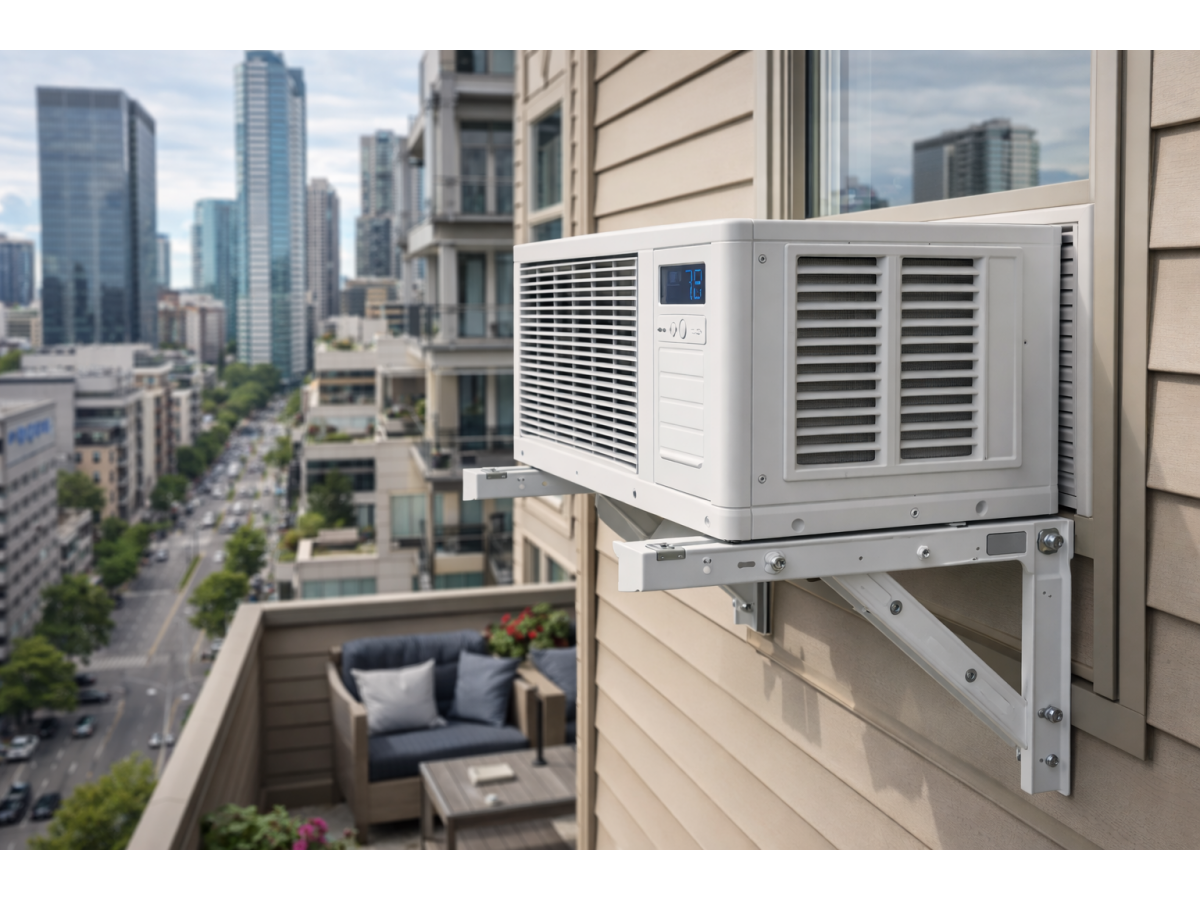
Ventilation Systems and Industrial Air Distribution Equipment
Ventilation equipment uses fabricated sheet metal brackets, fan housings, mounting plates, covers, and mechanical support components.
Self-clinching studs may be appropriate where a permanently retained threaded stud improves factory assembly.
However, the fastener must not be assumed suitable for all ductwork or field-installed connections.
Where installation access is limited or the sheet material cannot support a clinched joint, alternative fastening methods may be necessary.
Refrigeration Equipment and HVAC Control Cabinets
Refrigeration equipment and electrical control enclosures frequently require threaded attachment points for mounting brackets, control components, protective covers, and internal hardware.
Self-clinching studs can reduce the need to handle loose bolts during assembly and provide repeatable mounting locations.
For electrical enclosures, engineers must also consider internal clearance, component accessibility, insulation requirements, and the possibility of interference from projecting stud threads.
How Self-Clinching Studs Work in HVAC Sheet Metal
A self-clinching stud is installed into a correctly prepared mounting hole using a controlled pressing operation.
During installation, the surrounding sheet material plastically deforms and flows into the stud's retention features. This creates a mechanical interlock that retains the stud within the sheet.
The installed stud provides an external threaded attachment point for a mating nut or compatible assembly component.
Unlike conventional welded studs, the installation process does not require welding heat at the attachment point.
Self-clinching installation can also avoid the difficulties associated with tapping threads directly into thin sheet metal, where insufficient material thickness may limit usable thread engagement.
However, successful installation depends on the interaction between the fastener design, sheet material, mounting-hole geometry, and installation equipment.
Important conditions include:
Correct installation-hole diameter and hole quality
Minimum sheet thickness specified for the stud
Compatible sheet hardness and ductility
Suitable fastener material and retention geometry
Adequate edge distance and surrounding sheet support
Proper punch-and-anvil alignment
Controlled installation force
Verification of the installed fastener's retention performance
Self-clinching studs are not universally suitable for every sheet metal material or thickness.
Hard substrates, insufficient sheet thickness, incorrect hole preparation, and inadequate installation support can prevent the material from flowing correctly into the fastener's retention features.
Engineering Selection of HVAC Self-Clinching Studs
Selecting a self-clinching stud requires more than identifying a thread size and overall length.
Engineers must evaluate the substrate, installation process, mechanical loading, and final assembly geometry together.
Sheet Thickness and Substrate Hardness
Sheet thickness directly influences the ability of the fastener to develop sufficient mechanical retention.
If the sheet is thinner than the minimum thickness required by the selected stud design, the retention features may not engage correctly.
Substrate hardness is equally important because the installation process depends on controlled plastic deformation of the sheet material.
A stud designed for relatively ductile sheet metal may not install correctly in a harder stainless steel panel.
For HVAC applications involving galvanized steel, cold-rolled steel, aluminum, or stainless steel, the selected fastener series must be checked against the actual sheet grade, thickness, and hardness.
The material's nominal designation alone is not sufficient to establish installation compatibility.
Thread Size and Stud Length
Thread selection should reflect the joint's functional requirements, mating hardware, available space, and assembly method.
Metric thread sizes such as M3, M4, M5, M6, and M8 may be relevant to HVAC equipment applications where supported by the selected self-clinching stud series.
North American equipment designs may require UNC or UNF inch-series threads.
Metric and inch-series threads must be specified separately. Similar nominal diameters do not make different thread systems interchangeable.
Stud length should account for:
Thickness of the attached component
Washer thickness, where applicable
Required nut engagement
Thread projection beyond the mating component
Clearance around adjacent parts
Access for assembly and maintenance
Excessive stud length may interfere with insulation, wiring, electrical components, airflow paths, or surrounding equipment.
Insufficient thread engagement may reduce the reliability of the completed joint.
Installation-Hole Diameter and Edge Distance
The mounting hole must be prepared according to the applicable fastener installation specification.
An oversized hole may reduce mechanical retention, while an undersized hole can prevent correct seating or create undesirable sheet deformation.
Hole quality also matters. Excessive burrs, distortion, or inconsistent hole geometry can affect installation results.
The distance between the stud and nearby sheet edges, bends, cutouts, or adjacent fastening points must be considered during component design.
Insufficient edge distance may cause localized deformation or reduce retention performance.
For production applications, hole diameter and location should be controlled through the approved sheet metal fabrication drawing.
Pushout and Torque-Out Performance
Two important performance characteristics for self-clinching studs are pushout resistance and torque-out resistance.
Pushout resistance describes the fastener's ability to resist axial displacement from the sheet.
Torque-out resistance describes its ability to resist rotation within the sheet when torque is applied.
These characteristics are influenced by the stud geometry, sheet material, sheet thickness, installation quality, and surrounding sheet support.
Published fastener performance data should not automatically be treated as guaranteed performance in every HVAC assembly.
Where the connection is mechanically important, representative production samples should be evaluated using appropriate test methods and agreed acceptance criteria.
Material and Surface Treatment Options for HVAC Fasteners
Material selection should reflect the fastening method, substrate compatibility, mechanical requirements, and service environment.
HVAC equipment installed indoors may face different corrosion conditions from rooftop units, coastal installations, industrial ventilation equipment, or refrigeration systems.
Carbon Steel Self-Clinching Studs
Carbon steel is used in many industrial fastening applications because it offers practical manufacturing and mechanical properties.
For HVAC sheet metal assemblies, carbon steel self-clinching studs may be suitable when the fastener geometry, hardness, sheet material, and corrosion-protection requirements are compatible.
Carbon steel fasteners should not be selected solely on the basis of cost. Their suitability must also be evaluated against the installation process and environmental exposure.
Heat-Treated Carbon Steel
Certain self-clinching stud designs may use heat-treated carbon steel to obtain the required mechanical characteristics.
Heat treatment must be appropriate for the selected fastener design and installation substrate.
A harder fastener is not automatically a better choice for every sheet metal application. The relationship between fastener hardness and substrate deformation remains critical.
Zinc-Plated Carbon Steel
Zinc plating is commonly used to provide corrosion protection for carbon steel fastening components.
For HVAC applications, coating selection should consider humidity, condensation, exposure conditions, and customer requirements.
Coating thickness and processing must also be compatible with thread tolerances and the fastener's intended installation characteristics.
Where electroplating is used on susceptible high-strength steel components, hydrogen embrittlement risk and applicable process controls should be evaluated.
AISI 304 Stainless Steel
AISI 304 stainless steel may be considered for selected HVAC applications requiring corrosion resistance.
However, stainless steel self-clinching studs are not universally compatible with all stainless steel sheet materials.
The relative hardness of the fastener and substrate, retention geometry, sheet thickness, and installation process must be verified.
For stainless steel enclosures or other hard sheet materials, engineers should select a fastener design specifically intended for the substrate rather than assuming that any stainless steel stud will clinch successfully.
Corrosion Testing and Environmental Requirements
For HVAC equipment exposed to demanding environments, the purchasing specification should define the required corrosion performance and applicable test method.
ISO 9227 and ASTM B117 may be relevant for specified salt-spray testing.
However, salt-spray exposure hours should not be interpreted as a direct prediction of actual outdoor service life.
Corrosion performance depends on coating composition, substrate material, environmental exposure, joint geometry, and maintenance conditions.
Self-Clinching Studs vs. Alternative HVAC Fastening Methods
Selecting the appropriate fastening method requires consideration of installation access, substrate properties, production volume, mechanical loads, and equipment maintenance.
Self-Clinching Studs
Self-clinching studs provide permanently retained external threads in compatible sheet metal.
They are useful where press installation can be integrated into the sheet metal fabrication process and the retained stud simplifies downstream assembly.
Their limitations include minimum sheet thickness, substrate hardness restrictions, installation access, and specific hole preparation requirements.
Weld Studs
Weld studs provide permanent threaded attachment points on suitable weldable materials.
They may be appropriate for certain metal structures or assemblies where the welding process is acceptable.
However, welding introduces additional process requirements and may affect coatings, local material conditions, and surrounding components.
For pre-coated HVAC panels, these effects can influence manufacturing sequence and corrosion protection.
Blind Rivet Nuts
Blind rivet nuts provide internal threaded connections and can be installed from one side of a workpiece.
They may be suitable for assemblies where access to the opposite side is restricted.
Selection requires evaluation of grip range, hole size, substrate properties, and resistance to pullout or rotation.
Blind rivet nuts and self-clinching studs perform different fastening functions and should not be treated as direct replacements without reviewing the complete joint design.
Conventional Bolts and Nuts
Conventional bolts and nuts offer flexibility for many HVAC assemblies.
They may be preferable where components require frequent replacement, higher joint loads, or a fastening arrangement that does not justify a permanently installed stud.
However, conventional hardware can increase loose-part handling and may require access to both sides of the assembly.
Selecting by Total Assembly Cost
The most economical fastening solution is not necessarily the component with the lowest purchase price.
Manufacturers should evaluate the total cost of:
Fastener procurement
Hole preparation
Installation tooling
Assembly labor
Inspection and quality control
Rework and scrap
Maintenance and replacement
For repetitive HVAC cabinet manufacturing, a retained stud may reduce handling and simplify assembly.
For low-volume equipment or field-installed connections, another fastening method may provide better overall value.
The correct decision depends on the actual production process and joint requirements.
Manufacturing Efficiency and HVAC Production Line Integration
HVAC manufacturers often assemble large quantities of sheet metal panels, brackets, housings, and internal equipment components.
Fastener selection therefore affects not only mechanical performance but also production efficiency, process stability, and assembly cost.
Press Installation and Tooling Control
Self-clinching studs require installation tooling capable of applying force in the intended direction while supporting the sheet.
Improper tool alignment can cause incomplete clinching, stud deformation, or sheet distortion.
Installation force should be established according to the selected fastener specification and validated using the actual production material.
Applying excessive force does not necessarily improve retention and may damage the fastener or surrounding sheet.
Assembly Sequence and Fabrication Planning
Stud installation must be considered during the sheet metal manufacturing process.
Engineers should determine whether the fastener will be installed before or after bending, coating, or other fabrication operations.
Installation after forming may be difficult if bends or nearby features prevent adequate tooling access.
Installation before forming may require additional clearance planning to avoid interference or damage during subsequent operations.
These decisions should be reviewed before finalizing fabrication drawings and production tooling.
Galvanized and Pre-Coated Sheet Metal
Many HVAC equipment housings are manufactured from galvanized or pre-coated sheet metal.
Press installation can affect the coating around the fastening location.
Engineers should evaluate whether the installation process causes coating damage that could influence corrosion performance.
If coating is applied after fastener installation, thread condition, dimensional fit, and masking requirements may also need attention.
Production Consistency and Quality Control
For repeated production batches, consistent fastening performance depends on controlled manufacturing conditions.
Important process variables include:
Sheet material and hardness variation
Hole diameter and positional accuracy
Fastener identification and dimensional consistency
Tool alignment and condition
Installation force
Inspection frequency
Handling and storage conditions
Production managers should establish appropriate work instructions and inspection criteria for the fastening process.
Where required, installation trials and retention testing should be performed on representative components before releasing the process for volume production.
Common Self-Clinching Stud Failures in HVAC Assemblies
Understanding common failure mechanisms helps engineers avoid problems before equipment enters production.
Stud Rotation During Tightening
A stud may rotate when the applied assembly torque exceeds the retention capability of the installed fastener.
Possible causes include unsuitable sheet material, incorrect hole dimensions, incomplete clinching, or excessive tightening torque.
Engineers should review the stud's torque-out requirements and validate the actual assembly process.
Stud Pushout
A stud may become displaced when insufficient material has flowed into its retention features or when the joint experiences loads beyond its capability.
Possible contributing factors include inadequate sheet thickness, unsuitable substrate hardness, incorrect installation, and excessive axial loading.
The solution may require changes to the stud design, sheet material, installation process, or overall joint configuration.
Sheet Metal Distortion
Local sheet distortion can occur when installation force is excessive, tooling support is inadequate, or the fastener is positioned too close to a sheet edge.
Thin HVAC enclosure panels may be particularly sensitive to visible deformation.
Proper tool support and installation validation are important for maintaining both fastening reliability and finished-panel quality.
Corrosion Around the Fastening Point
Corrosion may develop where protective coatings are damaged or incompatible materials are exposed to moisture.
This risk is particularly relevant to outdoor HVAC equipment and installations involving condensation.
The corrosion-protection strategy should consider the complete assembled joint rather than evaluating the fastener material in isolation.
Thread Damage and Assembly Problems
Thread damage can result from incorrect mating hardware, cross-threading, misalignment, or excessive tightening.
Thread compatibility must be verified before assembly.
Metric, UNC, UNF, and other thread systems should not be mixed based on approximate dimensional similarity.
International Standards and Technical Specification Requirements
HVAC equipment manufacturers supplying North American, European, Japanese, and other international markets may require different thread systems and technical specifications.
Applicable references depend on the specific fastener and customer requirements.
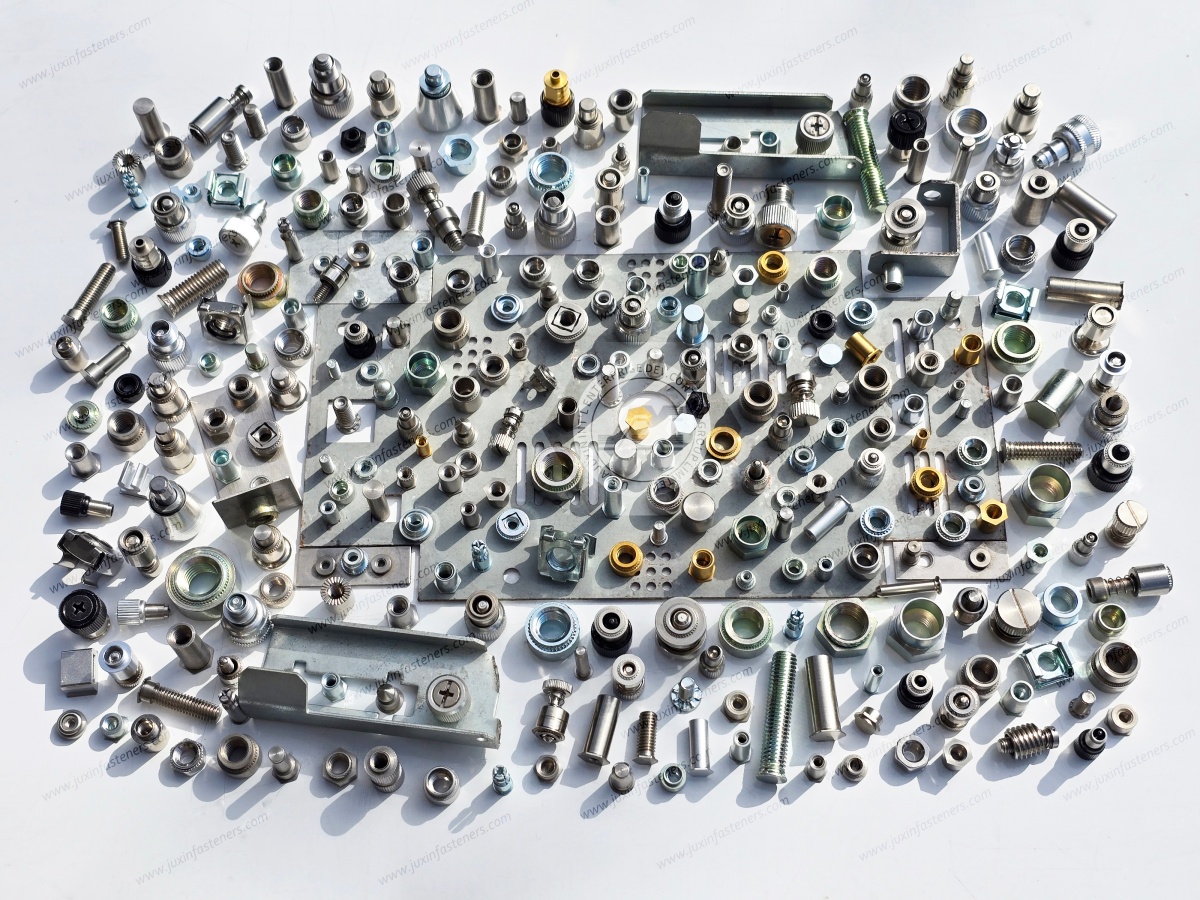
Metric Thread Specifications
ISO 261 provides relevant information for ISO general-purpose metric screw thread series.
ISO 965 addresses metric thread tolerances.
Where applicable, metric thread designation and tolerance requirements should be included in the approved drawing.
Unified Inch Thread Specifications
ASME B1.1 covers Unified inch screw threads, including UNC and UNF series.
North American HVAC equipment designs may specify these thread systems.
An inch-series self-clinching stud should be identified using the correct thread designation and compatible mating hardware.
Metric and Unified inch threads are not directly interchangeable.
Stainless Steel and Corrosion Specifications
ISO 3506 may be relevant to mechanical properties of corrosion-resistant stainless steel fasteners within its defined product scope.
It does not establish universal installation or retention requirements for all self-clinching studs.
ISO 9227 and ASTM B117 may be used where specified for corrosion testing.
Product-Specific Installation Requirements
The most important installation requirements for a self-clinching stud are often defined by the selected fastener series and the approved engineering drawing.
These may include:
Minimum sheet thickness
Compatible substrate hardness
Installation-hole diameter
Minimum edge distance
Installation tooling
Recommended installation conditions
Pushout and torque-out performance requirements
These characteristics should not be inferred from general thread standards alone.
OEM HVAC Fastener Development and Supplier Qualification
For HVAC OEM manufacturers, purchasing a fastening component involves both engineering qualification and supply chain evaluation.
A nominally matching thread size does not establish that a replacement fastener will function correctly in the existing assembly.
Supplier qualification should address technical compatibility, manufacturing consistency, quality expectations, and commercial requirements.
Engineering Drawing Review
A complete drawing-based inquiry should identify the fastener's critical dimensions, thread specification, material, surface treatment, and installation requirements.
Where a component is being replaced, the existing part number, drawing, or sample information can help identify compatibility requirements.
Alternative Fastener Evaluation
An alternative self-clinching stud may differ from the original component in retention geometry, installation-hole requirements, sheet compatibility, or tooling requirements.
These differences may affect production even when the nominal thread size and stud length match.
Before approving a replacement, engineers should verify the relevant dimensions and installation performance.
Quality and Inspection Requirements
OEM procurement specifications may include dimensional inspection, material verification, surface treatment requirements, traceability, and agreed mechanical testing.
The required documentation should be confirmed during quotation and supplier qualification.
Where the customer requires specific quality systems, inspection plans, or approval procedures, these requirements should be communicated before production.
MOQ, Lead Time, and Volume Purchasing
Purchasing teams should evaluate order quantity, annual demand, delivery schedules, packaging, and long-term sourcing requirements.
For drawing-based or custom fastening components, tooling, material selection, and production requirements may influence MOQ and lead time.
JUXIN FASTENERS can review project requirements and confirm commercial feasibility during the RFQ process.
Supply Chain Stability and Cost Optimization
For HVAC manufacturers operating repeated production schedules, fastening components must be available according to agreed purchasing and delivery requirements.
Supplier evaluation should consider total procurement cost, technical compatibility, product consistency, and supply continuity.
Cost optimization should not compromise the installation performance or mechanical reliability of the finished assembly.
Practical RFQ Checklist for HVAC Sheet Metal Fasteners
Providing complete technical information helps suppliers evaluate the requirement accurately and reduces unnecessary clarification during quotation.
For self-clinching studs and related HVAC fastening components, the following information is useful:
2D engineering drawing or 3D model, if available
Fastener type and intended application
Metric or inch thread specification
Thread diameter and stud length
Sheet material, grade, and thickness
Substrate hardness, if known
Installation-hole dimensions
Material and surface treatment
Corrosion and operating environment
Required mechanical retention performance
Installation process and tooling requirements
Estimated order quantity and annual consumption
Sample and inspection requirements
Packaging and delivery requirements
Target delivery schedule
For existing equipment designs, the original fastener drawing or part number may be particularly useful.
For new HVAC equipment development, early review of sheet thickness, installation access, and fastening geometry can help avoid redesign during production preparation.
Why Choose JUXIN FASTENERS for HVAC Fastening Projects?
JUXIN FASTENERS supports industrial fastening requirements involving sheet metal assemblies, equipment manufacturing, threaded components, and drawing-based OEM applications.
Our product-related inquiries include:
Self-clinching studs for HVAC sheet metal
HVAC equipment enclosure fasteners
Air handling unit fastening components
Threaded fasteners for mounting brackets
Industrial bolts, nuts, screws, and related hardware
Drawing-based OEM fastening components
Fastener replacement and alternative sourcing projects
Bulk purchasing requirements for industrial equipment manufacturing
We emphasize clear technical communication and practical evaluation of the customer's drawings, materials, assembly conditions, and purchasing requirements.
For engineering teams, the priority is selecting a fastener compatible with the actual joint design and manufacturing process.
For production teams, the priority includes installation efficiency, process consistency, and reliable assembly performance.
For procurement and supply chain teams, the priority includes technical conformity, commercial feasibility, order planning, and long-term supply requirements.
Product availability, MOQ, lead time, manufacturing feasibility, testing, and documentation requirements are confirmed according to the specific inquiry.
Request a Quote for HVAC Sheet Metal Fasteners and Self-Clinching Studs
Are you developing a new HVAC equipment assembly, evaluating a self-clinching stud replacement, or sourcing sheet metal fastening components for volume production?
JUXIN FASTENERS welcomes inquiries from HVAC equipment manufacturers, OEM engineering teams, production departments, purchasing professionals, and industrial supply chain organizations.
Send us your engineering drawings, thread specifications, sheet material details, installation requirements, and estimated order quantities.
We can review your requirements and discuss suitable fastening options, technical clarification, and quotation arrangements for your project.
JUXIN FASTENERS
Website: https://www.juxinfasteners.com
Email: info@juxinfasteners.com
RFQ: HVAC Sheet Metal Fasteners | Self-Clinching Studs | OEM Fastening Components
Contact Us
Tel.:
+86 020 8621 0320
+86 020 3121 6067
E-mail:
Technical Support:
Navigation
SEND INQUIREY



