
Call Us
+86 136 6007 9809
Call Us
+86 136 6007 9809

Aug. 21, 2026
Medical Equipment Fasteners and Stainless Steel Self-Clinching Studs for OEM Manufacturing
Medical equipment manufacturers use precision sheet metal components to produce diagnostic instrument housings, laboratory equipment enclosures,
medical electronics cabinets, instrument panels, equipment brackets, and internal mounting structures.
These assemblies require reliable fastening points that support dimensional accuracy, efficient production, equipment maintenance, and consistent mechanical performance.
Medical equipment fasteners must be selected according to the actual application, substrate material, sheet thickness, assembly loads, cleaning environment, and customer quality requirements.
Self-clinching studs for medical equipment provide permanently retained external threads in compatible sheet metal.
They are installed using controlled pressing force, allowing threaded attachment points to be incorporated into fabricated panels without welding or conventional tapping at the fastening location.
For OEM equipment manufacturers, this approach can simplify assembly, reduce loose hardware handling,
and support repeatable fastening locations when the selected fastener is compatible with the sheet material and installation process.
JUXIN FASTENERS supports drawing-based inquiries for self-clinching studs, stainless steel fastening components, sheet metal hardware, and related OEM industrial fasteners.
Our focus is helping engineering, manufacturing, and procurement teams evaluate fastening solutions based on actual design requirements, production conditions, and purchasing specifications.
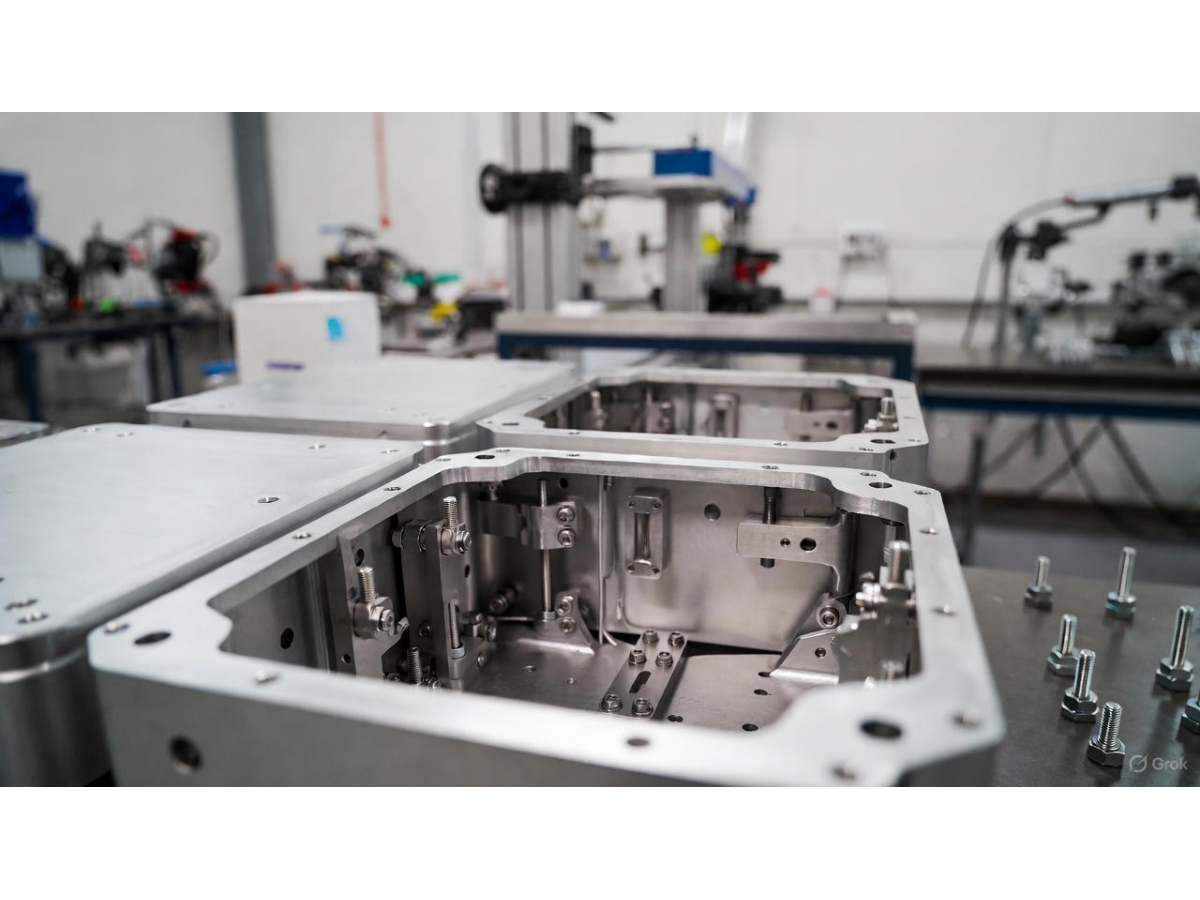
Medical Equipment Applications and Sheet Metal Fastening Requirements
Medical equipment incorporates a wide range of fabricated metal components. Fastening requirements vary according to equipment function, mechanical loading, service accessibility, and environmental exposure.
Self-clinching studs are particularly relevant to applications where a permanently retained threaded stud can simplify subsequent assembly.
Diagnostic Equipment Housings
Diagnostic equipment may incorporate sheet metal housings, removable covers, internal mounting brackets, instrument supports, and electronic enclosures.
Self-clinching studs can provide attachment points for suitable panels and internal components where the substrate and installation geometry permit proper mechanical retention.
Engineers should evaluate stud projection, electrical clearance, panel stiffness, and access for assembly or maintenance.
For equipment exposed to vibration during transportation or operation, the complete joint must be evaluated for loosening, fatigue, and mechanical reliability.
Laboratory Equipment and Analytical Instruments
Laboratory equipment often contains metal enclosures, control panels, instrument brackets, protective covers, and internal mounting structures.
Fastener selection may need to account for repeated cleaning, humidity, chemical exposure, and dimensional stability.
Stainless steel self-clinching studs may be considered where their material properties and installation compatibility meet the application requirements.
However, chemical resistance depends on the specific cleaning agent, concentration, temperature, exposure duration, and surface condition.
Medical Electronics and Control Cabinets
Medical electronics equipment may require retained threaded fastening points for circuit board supports, mounting plates, enclosure panels, and internal hardware.
Self-clinching studs can help reduce loose-part handling during manufacturing and provide repeatable mounting positions.
Design engineers should also consider electrical insulation, grounding, clearance, and the possibility of interference between projecting threads and sensitive components.
A metallic fastener does not automatically provide a validated electrical grounding or bonding connection.
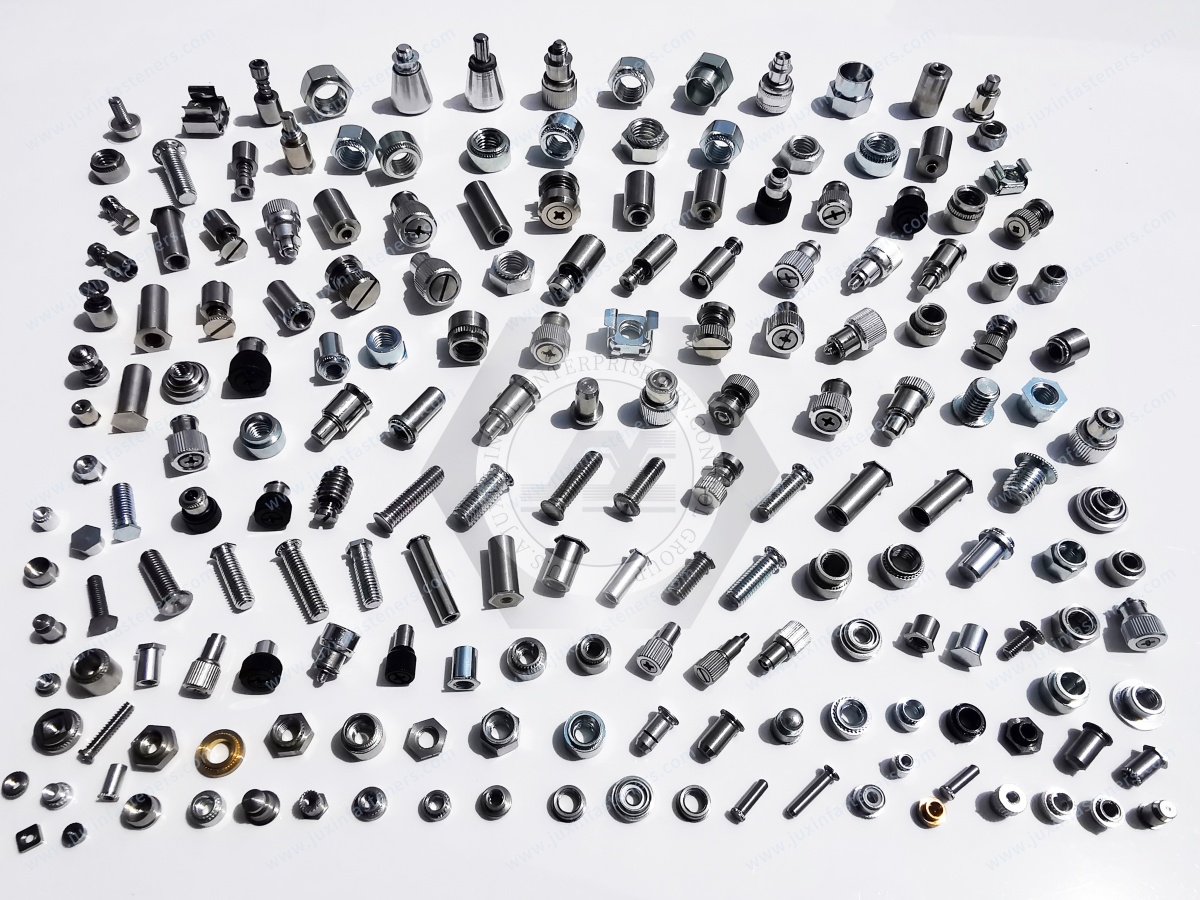
Medical Equipment Carts and Instrument Mounting Structures
Equipment carts, instrument cabinets, and mobile medical equipment may contain sheet metal brackets, covers, supports, and mounting plates.
Self-clinching studs can be suitable for selected attachment points, provided the connection's mechanical loading and substrate conditions are appropriate.
For dynamically loaded or safety-related connections, engineers should verify the complete joint design rather than relying only on the nominal fastener size.
How Self-Clinching Studs Work in Medical Equipment Sheet Metal
A self-clinching stud is installed into a correctly prepared mounting hole using a controlled pressing operation.
During installation, the sheet material plastically deforms and flows into the fastener's retention features, creating a mechanical interlock.
The installed stud provides a permanently retained external threaded connection for compatible mating hardware.
Unlike welded studs, the installation process does not introduce welding heat at the fastening location.
This can be advantageous for fabricated equipment panels where welding could create distortion, additional finishing operations, or undesirable effects on surface coatings.
However, successful self-clinching installation depends on several interacting factors:
Sheet thickness and substrate hardness
Sheet material ductility
Installation-hole diameter and quality
Fastener retention geometry
Stud material and hardness
Minimum edge distance
Installation tooling and alignment
Controlled pressing force
Required mechanical retention performance
A self-clinching stud should not be considered universally compatible with every stainless steel or aluminum sheet.
The selected stud series must be verified against the actual substrate material and manufacturing conditions.
Engineering Selection of Stainless Steel Self-Clinching Studs
Selecting a self-clinching stud for medical equipment requires careful consideration of the connection's functional requirements.
Nominal thread size and stud length alone do not establish installation suitability.
Sheet Thickness and Material Compatibility
Self-clinching installation requires sufficient sheet material to engage the stud's retention features.
If the sheet is too thin, the fastener may not develop the intended retention performance.
If the substrate is too hard or insufficiently ductile, material flow into the retention features may be inadequate.
Medical equipment enclosures may use aluminum, carbon steel, stainless steel, or coated sheet metal.
Each substrate should be evaluated against the selected fastener's installation specification.
For stainless steel panels, particular attention must be given to the relationship between substrate hardness and fastener design.
AISI 304 Stainless Steel and Fastener Compatibility
AISI 304 stainless steel, also commonly designated EN 1.4301, is an austenitic stainless steel widely used in industrial equipment.
Its corrosion resistance and material properties may make it suitable for certain medical equipment fastening applications.
However, the use of AISI 304 does not automatically establish compatibility with a self-clinching installation.
Some stainless steel self-clinching stud designs are intended for softer substrates, while other specially engineered designs may be suitable for harder sheet materials.
The selected product series, substrate hardness, sheet thickness, and retention geometry must be verified together.
Where an AISI 304 stud is requested for installation into an AISI 304 sheet, compatibility should be confirmed through the relevant product specification and representative installation testing.
Material identity alone does not guarantee a successful clinched connection.
Thread Size and Stud Length
Thread selection should reflect the equipment's mechanical requirements, available installation space, and mating hardware.
Metric thread sizes such as M3, M4, M5, and M6 may be relevant to certain medical equipment assemblies where supported by the selected stud series.
North American equipment designs may specify UNC or UNF inch-series threads.
Metric and Unified inch thread systems must be identified separately and are not directly interchangeable.
Stud length should account for the attached component thickness, washers, nut engagement, thread projection, and available internal clearance.
Excessive stud projection may interfere with electronic components, insulation, cables, or service access.
Insufficient thread engagement may compromise the assembled joint.
Installation-Hole Diameter and Edge Distance
The installation hole must follow the selected fastener's technical specification.
An oversized hole can reduce retention performance, while an undersized hole may prevent correct seating or cause sheet deformation.
Hole quality, burr condition, and positional accuracy should be controlled during fabrication.
Fasteners installed too close to a sheet edge, bend, cutout, or adjacent feature may cause localized deformation.
The minimum edge distance must be determined from the applicable product specification and verified against the actual component geometry.
Pushout, Torque-Out, and Joint Reliability
Pushout resistance describes the fastener's ability to resist axial displacement from the sheet.
Torque-out resistance describes its ability to resist rotation within the sheet when torque is applied.
These properties depend on fastener design, sheet thickness, substrate hardness, installation quality, and surrounding material support.
Published performance data should not automatically be treated as guaranteed results for a specific medical equipment assembly.
Where mechanical retention is important, representative samples should be tested using agreed procedures and acceptance criteria.
For vibration-exposed connections, the complete assembled joint should also be evaluated for preload retention, loosening, and fatigue where applicable.
Material Selection, Corrosion Resistance, and Cleaning Exposure
Medical equipment fastening requirements may differ substantially between dry indoor electronics cabinets, laboratory instruments, and equipment subjected to frequent cleaning.
Material selection should be based on the actual service environment rather than a general assumption that stainless steel is always the best choice.
AISI 304 Stainless Steel Fasteners
AISI 304 stainless steel may provide suitable corrosion resistance for selected equipment environments.
Its suitability depends on the exposure conditions, fastener design, and required mechanical performance.
For equipment subjected to cleaning chemicals, the compatibility of the stainless steel with the specific cleaning process should be reviewed.
AISI 304 should not automatically be described as resistant to every disinfectant or cleaning agent.
Chloride-containing chemicals, aggressive cleaning solutions, or prolonged exposure may create corrosion risks under certain conditions.
Carbon Steel and Protective Coatings
Carbon steel fasteners with appropriate protective coatings may be suitable for selected internal or dry-environment equipment assemblies.
Their suitability depends on corrosion exposure, coating requirements, and installation compatibility.
Zinc plating may provide corrosion protection in appropriate environments, but it should not be assumed suitable for all medical equipment cleaning processes.
Where coatings are specified, engineers should consider coating thickness, thread fit, handling damage, and any application-specific restrictions.
Surface Finish and Cleanability
Medical equipment components may require surface finishes that support cleaning and minimize contamination retention.
Fastener geometry can influence accessibility around the mounting point.
Recesses, exposed threads, gaps, and difficult-to-clean interfaces should be considered where cleaning performance is important.
A standard industrial self-clinching stud should not automatically be considered suitable for hygienic, sterile, or patient-contact applications.
Such applications require additional engineering and regulatory evaluation according to the intended use.
Galvanic Compatibility
When dissimilar metals are assembled in the presence of an electrolyte, galvanic corrosion may occur.
For example, stainless steel fastening components installed in aluminum equipment panels may require evaluation of the material combination and environmental exposure.
The risk depends on factors including the contacting materials, exposed surface areas, moisture, and protective finishes.
Material selection should therefore consider the complete joint rather than only the fastener.
Self-Clinching Studs vs. Other Medical Equipment Fastening Methods
Different fastening methods offer different advantages in manufacturing, assembly, maintenance, and mechanical performance.
Self-Clinching Studs
Self-clinching studs provide permanently retained external threads in compatible sheet metal.
They can support repeatable assembly and reduce the handling of loose bolts.
However, they require appropriate sheet material, thickness, hole preparation, and press installation access.
Self-Clinching Nuts
Self-clinching nuts provide retained internal threads in suitable sheet metal.
They may be preferable where the assembly requires a removable bolt rather than a projecting stud.
The selection between studs and nuts should account for assembly direction, component access, available space, and maintenance requirements.
Blind Rivet Nuts
Blind rivet nuts provide internal threads and can be installed from one side of the workpiece.
They may be suitable where access to the opposite side is restricted.
Selection requires evaluation of grip range, hole geometry, substrate properties, and pullout or spinout performance.
Blind rivet nuts are not direct substitutes for self-clinching studs without reviewing the joint design.
Weld Studs
Weld studs can provide permanent threaded attachment points on suitable weldable materials.
However, welding introduces heat and may affect local material properties, surface finishes, or dimensional stability.
For precision equipment enclosures, these factors may influence manufacturing process selection.
Conventional Screws, Bolts, and Nuts
Conventional threaded hardware provides flexibility for many removable assemblies.
It may be appropriate where components require repeated replacement or where retained fasteners are not justified.
However, conventional hardware may require additional handling and assembly access.
The most suitable method should be selected based on joint requirements and total manufacturing cost.
Manufacturing Efficiency and OEM Production Integration
For medical equipment OEMs, fastening performance must be considered alongside manufacturing consistency, assembly efficiency, and process control.
A technically suitable fastener may still create production difficulties if its installation requirements do not match the equipment's fabrication sequence.
Press Installation Process
Self-clinching studs should be installed using properly aligned tooling and sufficient support beneath the sheet.
Incorrect tooling or angled pressing can cause incomplete clinching, sheet distortion, or fastener damage.
Installation force should follow the selected fastener's technical requirements and be validated for the actual substrate.
Excessive force does not necessarily improve retention.
Assembly Sequence
Engineers should determine whether self-clinching studs are installed before or after bending, coating, or other fabrication operations.
Installation after forming may be restricted by tooling access.
Installation before forming may require consideration of stud projection and possible interference during subsequent operations.
The assembly sequence should be reviewed before production tooling is finalized.
Dimensional Consistency
Medical equipment housings and instrument assemblies may contain closely spaced components with limited internal clearance.
Stud position, perpendicularity, thread condition, and surrounding sheet flatness can influence final assembly accuracy.
Critical dimensional requirements should be defined in the engineering drawing and inspection plan.
Production Line Efficiency
Retained threaded studs can reduce loose-part handling and simplify certain assembly operations.
For repeated production, this may improve assembly consistency and reduce manual handling steps.
However, the economic benefit depends on installation cycle time, tooling investment, inspection requirements, and production volume.
Production managers should compare the total assembly cost rather than evaluating fastener purchase price alone.
Common Installation Problems and Engineering Prevention
Understanding potential failure mechanisms helps engineers improve fastening reliability before volume production.
Stud Rotation During Tightening
A stud may rotate when assembly torque exceeds the retention capability of the installed fastener.
Possible causes include incorrect hole dimensions, unsuitable substrate hardness, incomplete installation, or excessive tightening torque.
The fastener selection and assembly process should be reviewed together.
Stud Pushout
Stud pushout may result from insufficient sheet thickness, inadequate material flow, incorrect installation, or excessive axial loading.
The solution may require changes to the stud design, substrate, installation conditions, or joint configuration.
Sheet Distortion
Thin equipment panels may deform when installation force is excessive or support tooling is inadequate.
Distortion may affect appearance, component alignment, or enclosure assembly.
Correct tooling and installation validation are essential.
Corrosion Around the Fastening Point
Corrosion may occur where coatings are damaged, dissimilar metals are exposed to moisture, or cleaning chemicals are incompatible with the selected materials.
The corrosion protection strategy should consider the assembled joint and the actual cleaning environment.
Thread Damage
Cross-threading, incorrect mating hardware, misalignment, and excessive tightening can damage threads.
Thread designation and mating hardware must be verified before assembly.
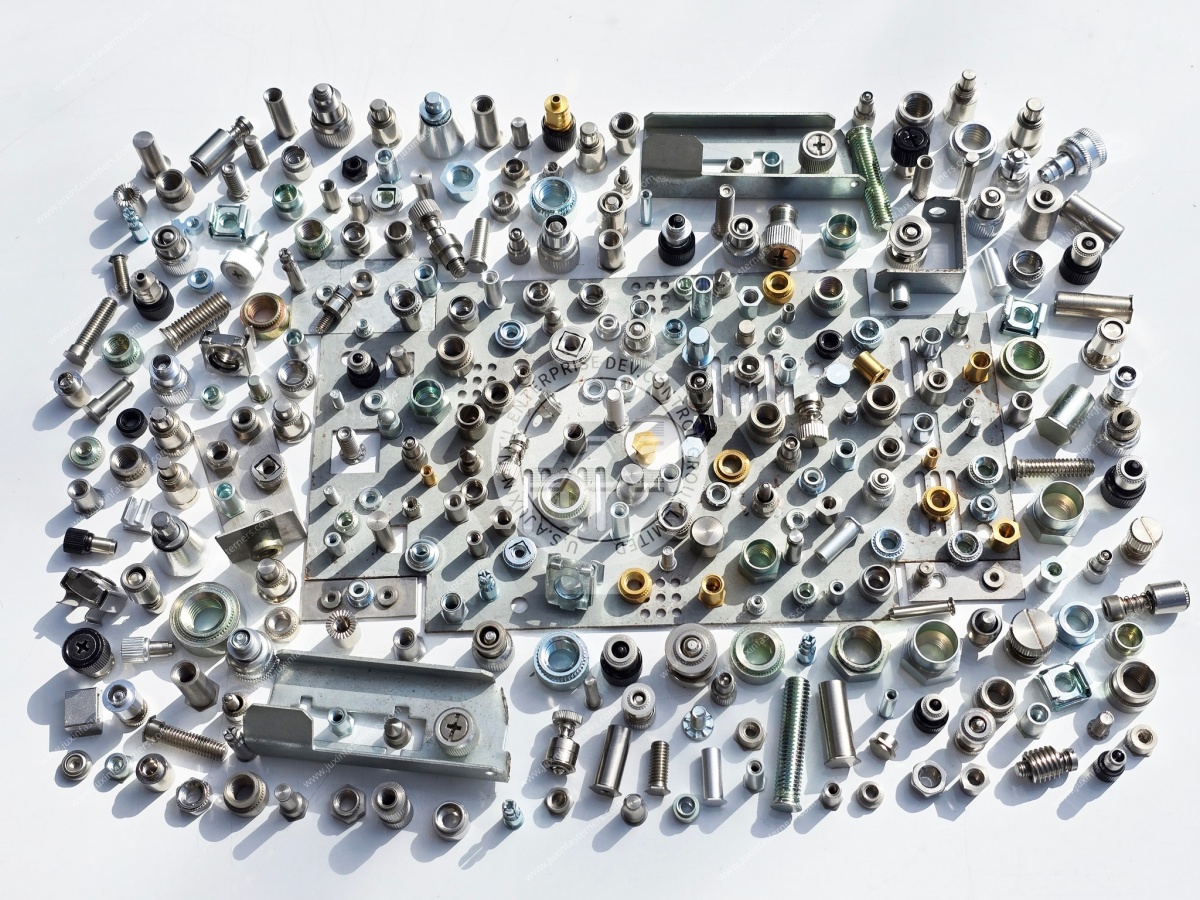
Quality Documentation and Medical Equipment OEM Requirements
Medical equipment manufacturers may apply additional purchasing, inspection, documentation, and traceability requirements to components used in their products.
These requirements vary according to the intended application, customer quality system, and applicable regulatory obligations.
A fastener used in a medical equipment enclosure should not automatically be described as a certified medical-device component.
Material Documentation
Customers may request material specifications, material test documentation, or other agreed records.
The required document type and acceptance criteria should be identified during the RFQ process.
Dimensional Inspection
Critical dimensions may include thread specifications, stud length, retention geometry, installation-related dimensions, and other drawing characteristics.
Inspection requirements should be based on the approved engineering drawing and customer specification.
Traceability
Some OEM projects require lot identification, material traceability, or manufacturing records.
The required traceability level should be agreed upon before order confirmation.
Surface Finish and Packaging
Surface finish and packaging may be important where components must be protected from handling damage, corrosion, or contamination during transportation and storage.
Any special cleanliness, protective packaging, or handling requirements should be explicitly specified.
Customer-Specific Quality Requirements
Medical equipment projects may require supplier qualification, first-article inspection, change control, or other customer-defined approval activities.
Such requirements should be reviewed during supplier development.
JUXIN FASTENERS does not represent a component as medically certified merely because it is intended for medical equipment.
Any applicable certification, regulatory documentation, validation, or special testing must be separately confirmed for the specific project.
International Thread and Technical Standards
Medical equipment fasteners may be specified using internationally recognized thread systems and technical references.
The applicable standards depend on the component design and customer requirements.
ISO Metric Threads
ISO 261 provides relevant metric screw thread series information.
ISO 965 addresses tolerance requirements for ISO general-purpose metric screw threads.
The selected thread designation and tolerance class should be defined in the engineering drawing.
ASME Unified Inch Threads
ASME B1.1 covers Unified inch screw threads, including UNC and UNF series.
These thread systems may be relevant to North American medical equipment designs.
Metric and Unified inch threads are not directly interchangeable.
Stainless Steel Material References
EN 10088 may be relevant to the designation and properties of stainless steel materials within its scope.
ASTM A276 may be applicable to specified stainless steel bar products used as raw material, where appropriate.
These references do not independently establish the performance or suitability of a completed self-clinching stud.
Corrosion Test References
ISO 9227 and ASTM B117 may be relevant where salt-spray testing is specified.
Test requirements, acceptance criteria, and the condition of the tested components must be agreed upon.
Salt-spray exposure duration alone does not establish actual service life.
OEM Supplier Development and Alternative Fastener Sourcing
For medical equipment OEMs, supplier evaluation requires both technical and commercial assessment.
A fastener that appears dimensionally similar to an existing component may not provide equivalent installation or retention performance.
Engineering Drawing Review
The approved drawing should identify critical dimensions, thread requirements, material, finish, tolerances, and installation conditions.
Where an existing component is being replaced, the original part number, drawing, or sample can help identify important compatibility requirements.
Alternative Fastener Qualification
A proposed alternative may differ in retention geometry, hole requirements, substrate compatibility, or installation tooling.
Matching nominal thread size and stud length is not sufficient to establish equivalency.
Engineers should verify installation compatibility and relevant mechanical performance before approving a substitute.
Procurement and Commercial Evaluation
Purchasing and supplier development teams should review:
Technical conformity to the approved drawing
Material and surface treatment requirements
Inspection and documentation expectations
Sample evaluation requirements
Estimated order quantities and annual demand
MOQ and production feasibility
Lead time and delivery planning
Packaging and transportation requirements
Long-term supply consistency
Engineering change and revision control
These factors help determine whether a fastening component is suitable for repeated OEM purchasing.
Cost Optimization Without Compromising Reliability
Fastener cost should be evaluated as part of the complete assembly process.
A lower unit price may not provide savings if the component creates installation difficulties, additional inspection, rework, or production interruptions.
For volume manufacturing, procurement and production teams should evaluate component cost, installation labor, tooling, scrap, quality control, and delivery requirements together.
Practical RFQ Checklist for Medical Equipment Fasteners
A complete RFQ helps suppliers evaluate technical feasibility and prepare a more accurate quotation.
For stainless steel self-clinching studs and related sheet metal fasteners, useful information includes:
2D engineering drawing or 3D model
Fastener type and application
Metric or inch thread specification
Thread diameter and stud length
Sheet material and thickness
Substrate hardness, if available
Installation-hole dimensions
Material grade and surface finish
Operating and cleaning environment
Required pushout or torque-out performance
Critical dimensional tolerances
Inspection and traceability requirements
Packaging and cleanliness requirements
Sample approval requirements
Estimated order quantity and annual demand
Target delivery schedule and destination
For an existing assembly, the original component drawing or part number may help identify compatibility requirements.
For new product development, early confirmation of sheet thickness, substrate hardness, stud geometry, and installation access can help reduce design changes during manufacturing preparation.
Why Work with JUXIN FASTENERS for Medical Equipment Fastening Projects?
JUXIN FASTENERS supports industrial OEM fastening inquiries involving fabricated metal assemblies, equipment enclosures, threaded hardware, and drawing-based components.
Relevant product inquiries include:
Stainless steel self-clinching studs
Self-clinching studs for medical equipment housings
Medical equipment sheet metal fasteners
Diagnostic equipment enclosure fasteners
Laboratory equipment mounting hardware
Threaded fastening components for instrument panels
Related industrial screws, bolts, nuts, and sheet metal hardware
Drawing-based OEM fastener requirements
Alternative fastener sourcing and bulk purchasing projects
Our approach emphasizes technical requirement clarification and communication between engineering, manufacturing, and purchasing teams.
For design and mechanical engineers, the priority is compatibility with the actual substrate, joint geometry, and mechanical requirements.
For manufacturing engineers and production managers, the priority includes installation process stability, assembly efficiency, and consistent production quality.
For procurement and supply chain teams, the priority includes drawing conformity, commercial feasibility, supplier evaluation, purchasing cost, and delivery planning.
Product availability, manufacturing feasibility, MOQ, lead time, testing, and documentation requirements are subject to confirmation during quotation.
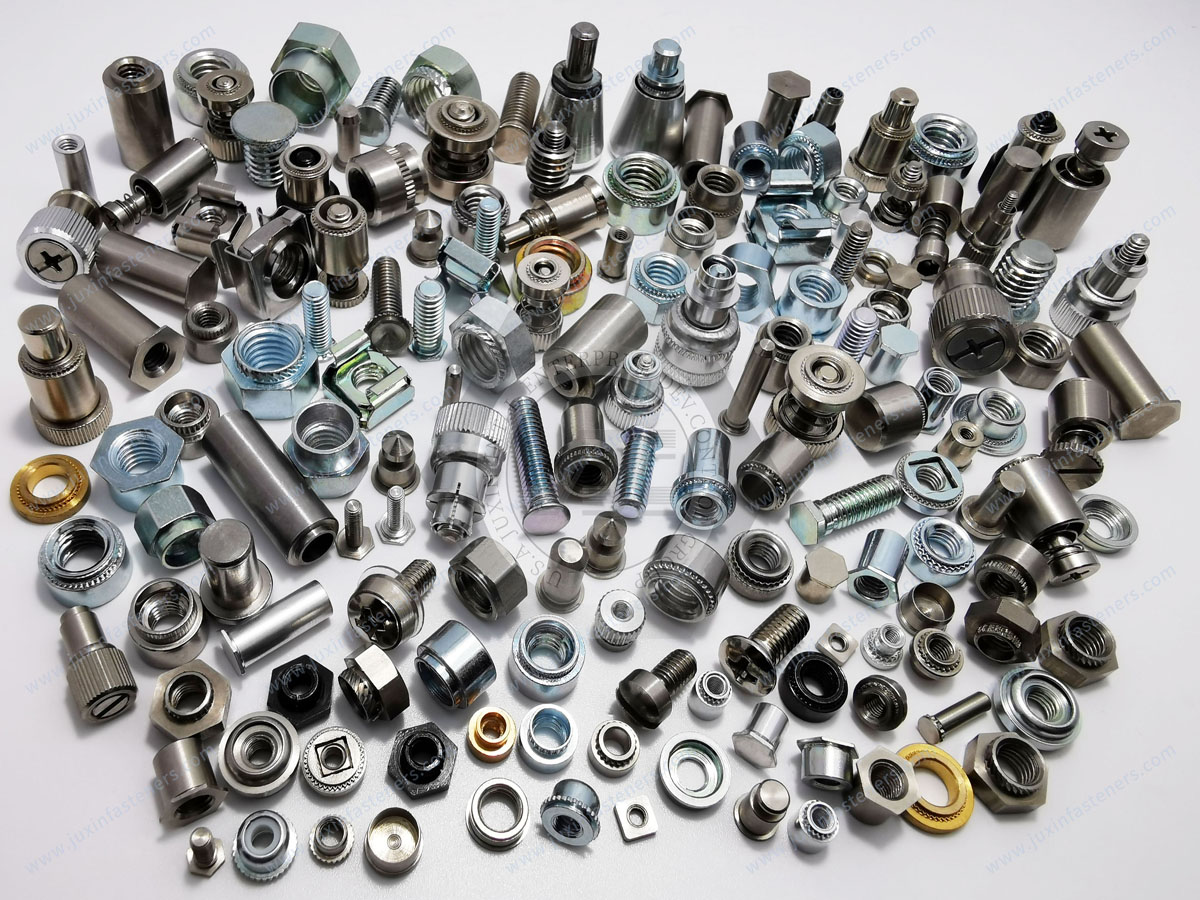
Request a Quote for Medical Equipment Self-Clinching Studs and OEM Fasteners
Are you developing a new medical equipment enclosure, evaluating stainless steel self-clinching studs, or sourcing threaded fastening components for repeated OEM production?
JUXIN FASTENERS welcomes technical and commercial inquiries from medical equipment manufacturers, diagnostic equipment OEMs,
laboratory equipment manufacturers, engineering teams, and industrial procurement organizations.
Send us your engineering drawings, material requirements, thread specifications, sheet thickness, installation conditions, quality requirements, and estimated purchasing quantities.
We can review your project information and discuss suitable fastening options, technical clarification, and RFQ arrangements.
JUXIN FASTENERS
Website: https://www.juxinfasteners.com
Email: info@juxinfasteners.com
RFQ: Medical Equipment Fasteners | Stainless Steel Self-Clinching Studs | OEM Sheet Metal Hardware
Contact Us
Tel.:
+86 020 8621 0320
+86 020 3121 6067
E-mail:
Technical Support:
Navigation
SEND INQUIREY



