
Call Us
+86 136 6007 9809
Call Us
+86 136 6007 9809

Jul. 05, 2022
Selecting an industrial fastener is not simply a matter of matching a thread diameter to a drawing.
The correct fastening technology depends on what is being joined, how the assembly is manufactured, whether one-sided access is required,
whether the connection must be removable, how the load enters the joint, what environmental conditions exist, and how the component will be installed and inspected in production.
JUXIN FASTENERS supplies industrial fasteners and drawing-based components for OEM, Tier-1 and Tier-2 manufacturing applications,
including blind rivet nuts, blind rivets, weld nuts, weld studs, self-clinching fasteners, threaded inserts for plastics,
locking nuts, plastic and nylon fasteners, custom screws and bolts, and selected CNC machined components.
This guide is designed to help design engineers, mechanical engineers,
procurement teams and supplier-development professionals identify the appropriate fastener family before comparing individual part numbers or suppliers.
A useful fastener-selection process begins with the assembly.
Before asking, "Which fastener should we buy?" first define:
What are the parent materials?
What is the material thickness?
Is access available from one side or both sides?
Is a permanent or removable joint required?
Is an internal thread required?
Will the product be assembled manually or automatically?
Is welding acceptable?
Can the component tolerate press installation?
Is the assembly exposed to vibration?
Will the joint experience repeated service?
Are electrical isolation or lightweight materials important?
What temperature, moisture, chemicals or corrosion environment will the joint experience?
What functional failure mode must be prevented?
These questions often eliminate unsuitable fastener technologies before detailed specification begins.
Fastener selection should follow the assembly architecture, not the other way around.
The following framework provides a starting point for engineering evaluation.
| Assembly Requirement | Fastener Technologies to Evaluate | Important Selection Variables |
|---|---|---|
| Thread required in thin sheet with one-sided access | Blind rivet nut | Grip range, hole size, body style, parent material, spin-out, pull-out |
| Permanent blind sheet assembly | Blind rivet | Grip range, joint stack, shear, tensile, hole quality, material combination |
| Thread required in weldable sheet | Weld nut | Parent material, sheet thickness, projection geometry, welding process |
| Threaded attachment welded directly to structure | Weld stud | Stud type, parent material, welding process, alignment, load |
| Thread required in suitable sheet without welding | Self-clinching nut | Sheet material, hardness, thickness, hole geometry, edge distance |
| Stud required in suitable sheet without welding | Self-clinching stud | Sheet properties, installation, push-out, geometry |
| Reusable thread required in thermoplastic | Threaded insert | Polymer, boss geometry, installation method, pull-out, torque-out |
| Lightweight or electrically isolating attachment | Plastic / nylon fastener | Polymer, moisture, creep, temperature, chemicals, load |
| Resistance to rotational loosening required | Lock nut | Joint design, preload, prevailing torque, temperature, reuse requirements |
| Standard fastener cannot meet geometry or assembly requirements | Custom fastener | Drawing, material, tolerance, process, function, annual volume |
This table is a technology-screening tool, not a substitute for application validation.
Two applications that look similar can require different fasteners because the parent material, installation process or failure mode is different.
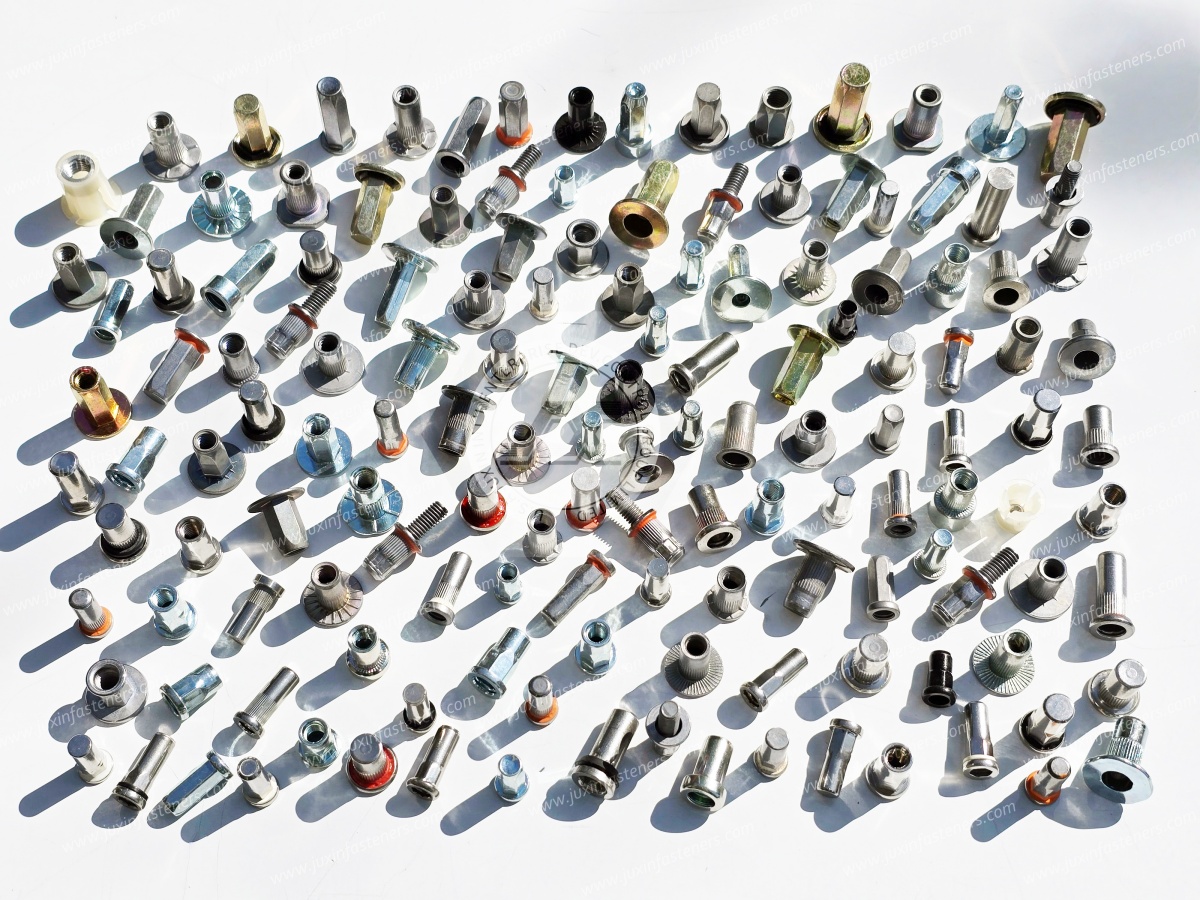
A blind rivet nut creates an internal thread in sheet, tube, extrusion or another suitable structure when installation access is primarily available from one side.
Typical configurations include:
Open-end rivet nuts
Closed-end rivet nuts
Round-body rivet nuts
Knurled rivet nuts
Hex-body rivet nuts
Different flange configurations
Drawing-based rivet nut designs
They are commonly evaluated for electrical enclosures, industrial equipment, automotive assemblies, HVAC equipment, sheet-metal housings and fabricated structures.
Thread size is only one variable.
Engineers should also evaluate:
Grip range:
The rivet nut must be matched to the thickness of the material being clamped.
Hole geometry:
Hole diameter, roundness and preparation influence installation and anti-rotation performance.
Body geometry:
Round, knurled and hex bodies interact differently with the parent material.
Parent material:
A rivet nut installed in thin aluminum does not necessarily behave the same way when installed in steel or another substrate.
Setting process:
Tool condition and installation parameters influence deformation and retention.
Pull-out resistance:
This concerns axial removal of the installed rivet nut from the parent material.
Spin-out resistance:
This concerns rotation of the installed rivet nut relative to the parent material.
Pull-out ≠ Spin-out.
And spin-out of the rivet nut itself should not be confused with self-loosening of the screw installed into it.
A closed-end body can be useful where the end of the internal thread should not remain open to the opposite side of the assembly.
However:
Closed-end rivet nut ≠ automatically waterproof joint.
Sealing depends on the complete interface, including flange design, hole condition, seal features, mating surfaces, installation and assembly validation.
An IP rating should never be inferred from the words "closed-end" alone.
Blind rivets are useful when a permanent mechanical connection is required and the rear side of the assembly is inaccessible or inconvenient to reach.
They can be used in sheet-metal assemblies, enclosures, equipment housings, brackets and selected transportation and industrial applications.
Important selection variables include:
Rivet diameter
Grip range
Total joint stack
Hole size
Hole roundness
Burr condition
Parent sheet properties
Head style
Rivet body material
Mandrel material
Shear requirement
Tensile requirement
Edge distance
Installation tooling
A common sourcing mistake is selecting a rivet from diameter alone.
Correct diameter + wrong grip range = wrong rivet.
Grip range must correspond to the actual joint stack.
Likewise:
Shear strength ≠ tensile strength.
The load direction and joint architecture determine which performance characteristics matter.
Nominal rivet strength also should not be treated as installed assembly strength. Hole quality, sheet deformation, edge distance and installation consistency influence the final joint.
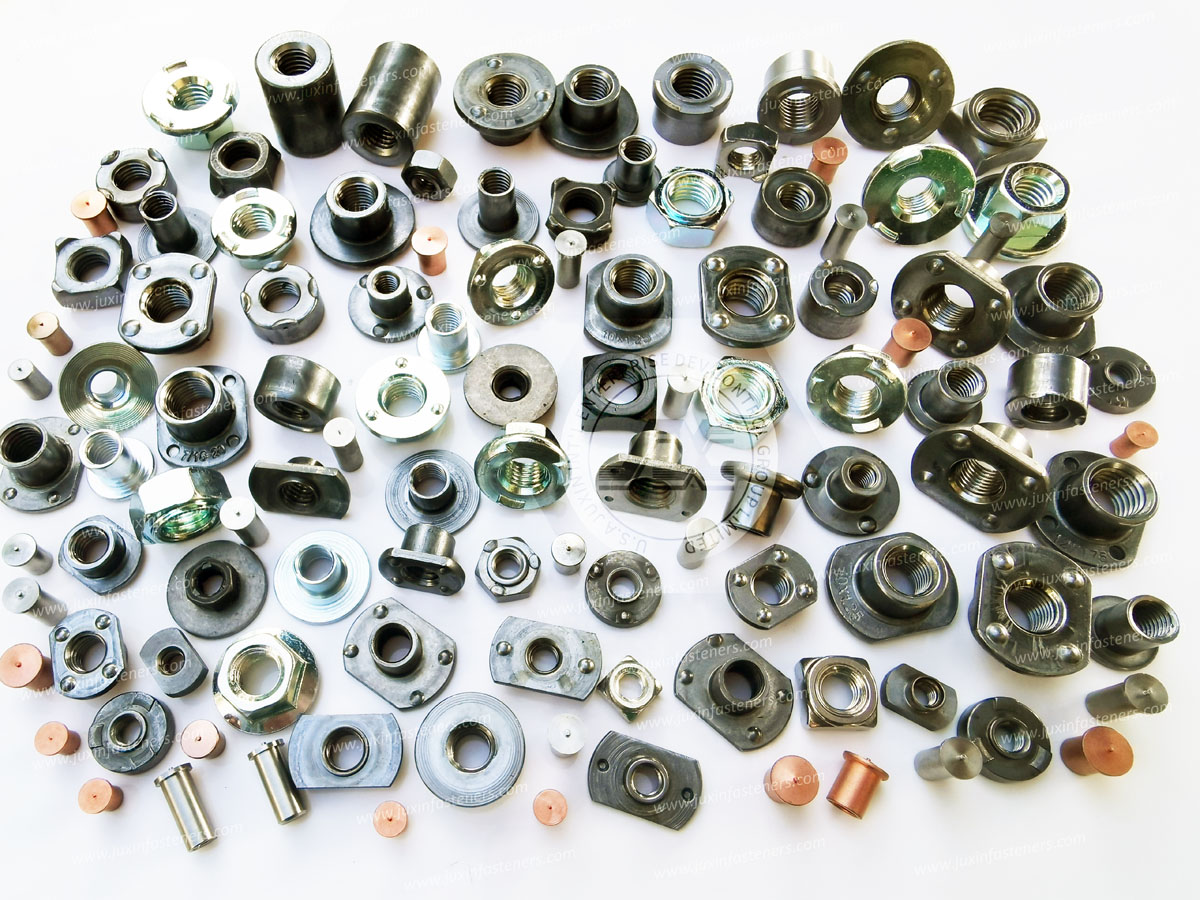
Weld nuts provide a threaded attachment point directly integrated into a weldable parent structure.
JUXIN FASTENERS supplies weld nut families including:
DIN 929 hex weld nuts
DIN 928 square weld nuts
Projection weld nuts
Hex flange weld nuts
Drawing-based weld nuts
Applications can include automotive manufacturing, industrial machinery, equipment structures, fabricated assemblies and other production systems using appropriate welding processes.
A procurement drawing may specify the nut correctly while the final joint still performs poorly.
Why?
Because weld quality can depend on:
Parent material
Sheet thickness
Projection geometry
Surface condition
Welding current
Welding time
Electrode force
Electrode condition
Alignment
Tooling
Thread protection
Production consistency
Strong nut ≠ strong welded joint.
The nut and the welding process must therefore be considered together.
Changing projection geometry, coating or parent sheet conditions may affect the welding process even when the thread and general external dimensions remain unchanged.
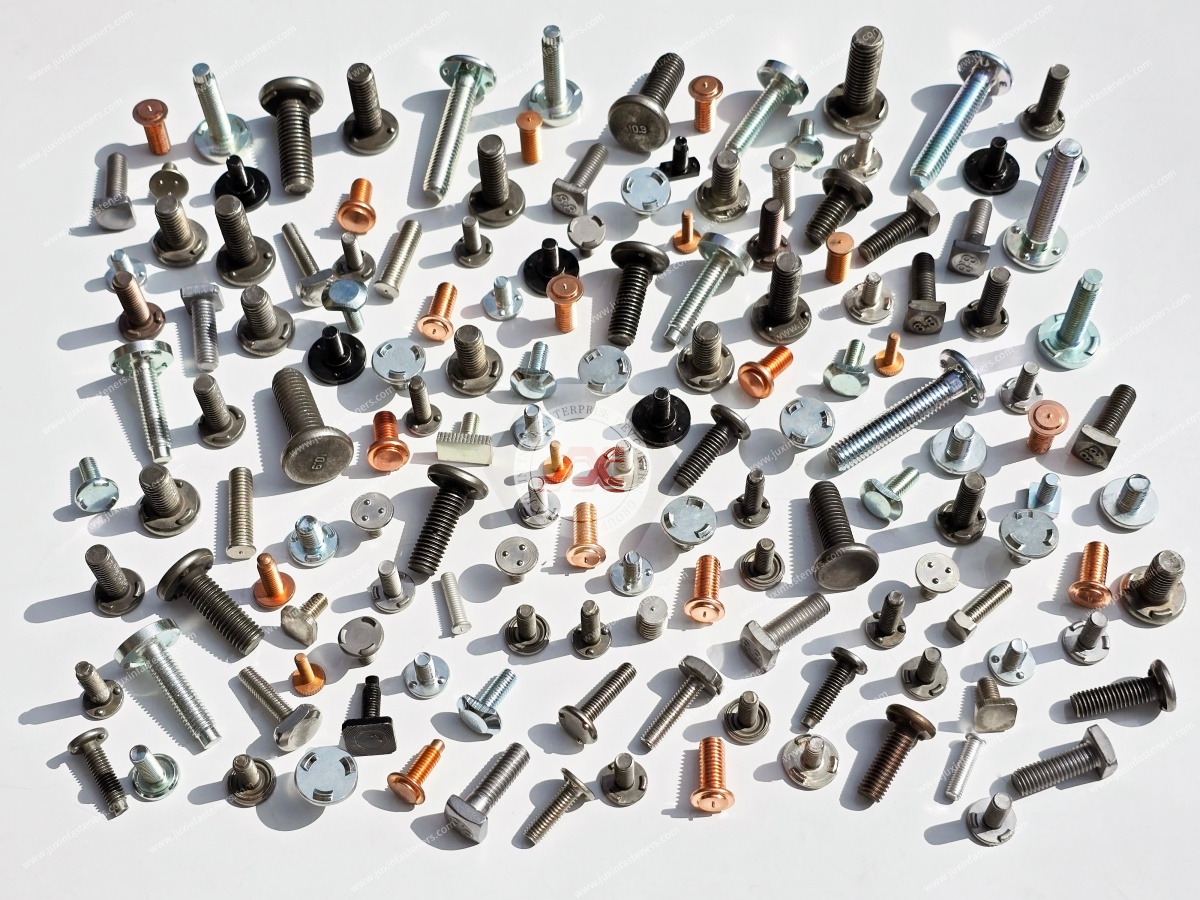
Weld studs provide another method of integrating a threaded or functional attachment point directly into a structure.
Depending on application requirements, JUXIN FASTENERS' weld-fastener range can include:
Threaded weld studs
CD weld studs
Arc weld studs
Projection weld studs
Drawing-based weld studs
The appropriate stud type depends on the welding process, parent material, stud geometry, load requirement and production method.
More welding energy should not be assumed to create a stronger joint.
More welding energy ≠ better weld.
Excessive or poorly controlled energy can introduce other process problems. Weld parameters should be established and validated for the actual fastener, material and production system.
Self-clinching fasteners can create permanent threaded or attachment features in suitable sheet materials without welding.
JUXIN FASTENERS supplies selected:
Self-clinching nuts
Self-clinching studs
Self-clinching standoffs
The technology works through controlled displacement and flow of the parent sheet material into the retention geometry of the fastener.
For that reason, self-clinching should be understood as a:
Controlled material-flow process.
Important variables include:
Sheet material
Sheet hardness
Sheet thickness
Hole diameter
Hole geometry
Edge distance
Fastener geometry
Installation tooling
Press conditions
Push-out performance
Torque-out performance
A common installation error is assuming that insufficient retention can always be corrected with additional press force.
It cannot.
More press force ≠ better installation.
If the sheet is unsuitable, the hole is incorrect or the fastener is mismatched to the application, additional force may damage the sheet or fastener without creating the required retention.
Plastic components often require reusable threads but cannot always support repeated direct screw engagement efficiently.
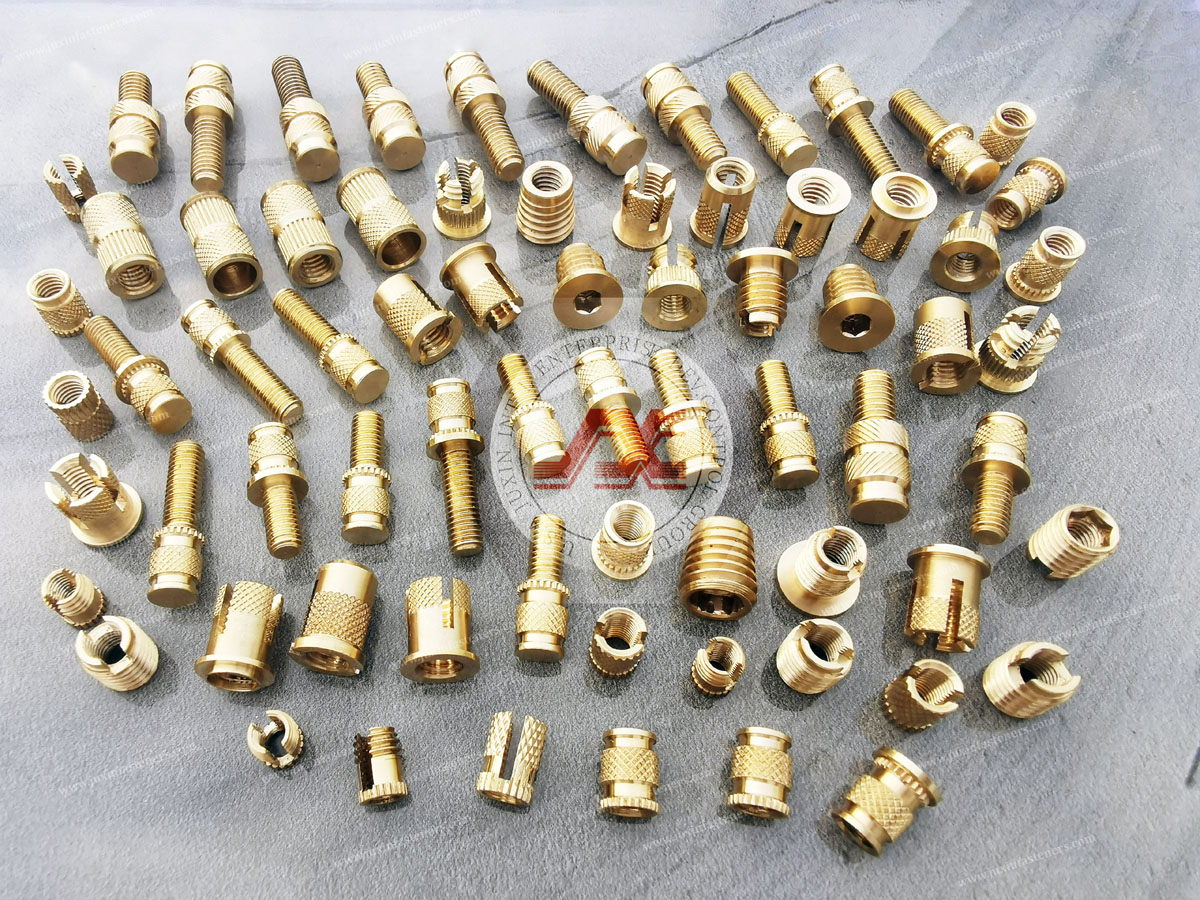
Threaded inserts can provide a metal internal thread within a properly designed thermoplastic boss.
JUXIN FASTENERS supplies selected:
Heat-set inserts
Ultrasonic inserts
Brass threaded inserts for plastic
Application-specific insert geometries
Threaded insert performance depends strongly on the surrounding plastic.
Engineering variables can include:
Polymer type
Polymer grade
Reinforcement
Boss outside diameter
Boss wall thickness
Hole diameter
Hole depth
Insert geometry
Installation method
Installation process settings
Pull-out load
Torque-out resistance
Service temperature
Moisture exposure
Chemical exposure
Repeated assembly
Strong insert ≠ strong plastic joint.
A larger or stronger insert cannot compensate indefinitely for an inadequate boss design or unsuitable polymer.
For heat-set and ultrasonic installation, the process must allow the polymer to flow appropriately around the insert retention features without excessive damage to the boss.
Plastic and nylon fasteners are increasingly relevant in electronics, electrical equipment, automotive interiors, PCB assemblies, telecom equipment,
battery-related systems, industrial controls and other applications where metallic fasteners are not always the preferred solution.
JUXIN FASTENERS supplies selected:
Nylon rivets
Plastic rivets
Plastic screws
Nylon screws
Plastic bolts
Plastic nuts
Plastic washers
Plastic spacers
PCB supports
PCB standoffs
Card guides
Screw grommets
Automotive plastic clips
Possible engineering objectives include:
Lower component mass
Electrical isolation
Reduced risk of scratching sensitive surfaces
Simplified snap or push installation
Corrosion considerations
Reduced metal content
Assembly simplification
However, selecting a plastic fastener by the word "nylon" alone is not sufficient.
Depending on the material and grade, engineers may need to consider:
Moisture absorption
Temperature
Creep
Stress relaxation
Chemical exposure
Thermal cycling
Reinforcement
Installation strain
Long-term load
For example, sustained clamp load can be affected by polymer creep and stress relaxation.
Plastic fastener ≠ metal fastener with lower weight.
It is a different material system and should be designed accordingly.
Likewise:
Plastic fastener ≠ system electrical compliance.
Electrical or safety compliance must be evaluated at system level according to the applicable requirements.
Where resistance to rotational loosening is required, the joint may use an appropriate locking fastener.
JUXIN FASTENERS supplies products including:
Nylon insert lock nuts
Selected all-metal lock nuts
Flange nuts
Application-specific locking nuts
Locking nuts should not be selected by marketing terminology alone.
Engineers should consider:
Bolt thread
Nut thread
Property requirements
Joint preload
Prevailing torque
Operating temperature
Surface treatment
Friction
Reuse requirements
Vibration environment
Assembly method
One important distinction is:
Prevailing torque ≠ preload.
Prevailing torque is the torque required to overcome the locking feature before or independently of clamp generation.
Preload is the tensile force established in the fastener that produces clamp load in the joint.
A locking feature therefore does not replace correct tightening.
Washers are simple components, but their function is often oversimplified.
A flat washer can help provide a bearing surface or distribute contact load under selected joint conditions.
However:
Washer ≠ automatic anti-loosening device.
Adding a conventional washer does not automatically solve vibration loosening.
If loosening is the actual engineering problem, the complete joint should be reviewed for preload, stiffness, embedment, vibration, friction, mating surfaces and the appropriate locking strategy.
This distinction prevents engineers and buyers from treating every supporting washer as a vibration-control component.
Standard ISO, DIN, EN, ASME/ANSI, SAE, ASTM or JIS fasteners can be appropriate when their geometry and properties satisfy the application.
But some OEM assemblies require a component outside standard catalog geometry.
JUXIN FASTENERS supports selected custom:
Screws
Bolts
Nuts
Studs
Special fastening components
CNC machined components
Drawing-based precision parts
Custom manufacturing may be appropriate when an application requires:
Special head geometry
Non-standard length
Shoulder or stepped geometry
Special thread configuration
Captive features
Assembly-specific anti-rotation geometry
Restricted installation envelope
Special material
Application-specific surface treatment
Integration of multiple functions into one component
Exact availability should be confirmed against the drawing and project requirements.
Customization is not automatically better.
A standard fastener generally offers advantages in interchangeability, sourcing flexibility and inventory management.
A custom component becomes commercially justified when it solves a real manufacturing or engineering constraint.
A useful decision is:
| Question | If Yes |
|---|---|
| Can a standard fastener satisfy the functional requirement? | Prefer the standard solution |
| Does standard hardware create assembly interference? | Evaluate custom geometry |
| Is installation unnecessarily complex? | Evaluate a different fastener technology first |
| Are multiple parts performing one simple function? | Evaluate component consolidation |
| Is automation limited by current geometry? | Evaluate feeding and installation-oriented redesign |
| Does the parent material require another fastening principle? | Change technology before customizing dimensions |
| Is customization driven only by appearance? | Recheck commercial justification |
The objective is not to maximize the number of custom parts.
The objective is to create the most appropriate assembly.
One of the most useful early engineering questions is:
What material must hold the fastener?
Potential technologies include:
Rivet nuts
Blind rivets
Self-clinching fasteners
Weld nuts
Weld studs
The correct choice depends on access, material, thickness, welding availability, removability and load.
Potential technologies include:
Threaded inserts
Plastic fasteners
Appropriate direct-threading systems where designed for the application
Polymer, boss design, creep and installation process become important.
Potential technologies may include:
Weld nuts
Weld studs
Standard bolted joints
Drawing-based fasteners
Load, welding process, accessibility and service requirements influence selection.
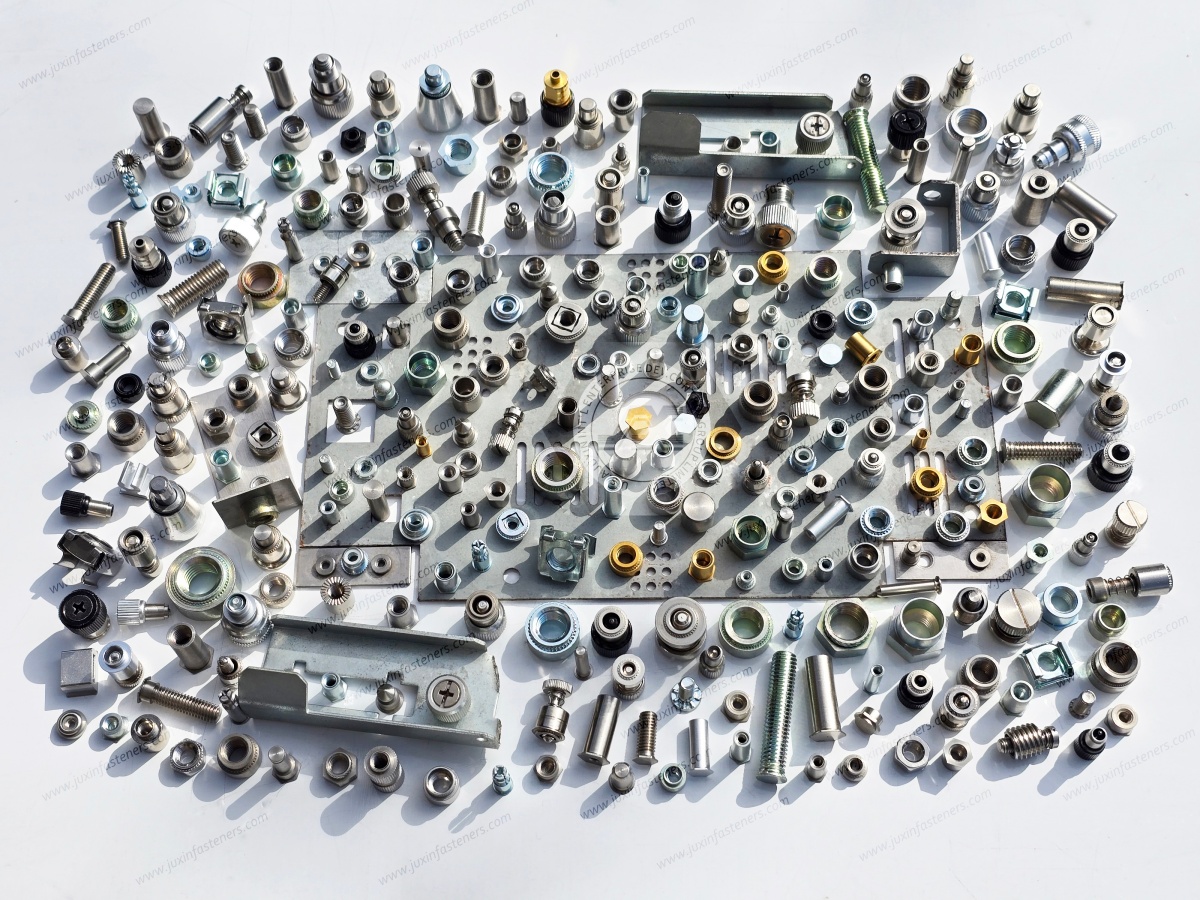
Potential technologies can include:
Self-clinching standoffs
Threaded inserts
Plastic spacers
PCB supports
Plastic screws
Rivet nuts
Custom precision hardware
Mechanical attachment and electrical function should be evaluated separately.
A conductive fastener is not automatically a qualified electrical connection, and an insulating polymer component is not automatically a complete electrical-safety solution.
Automotive and EV assemblies combine sheet metal, polymers, electronics, enclosures, brackets, interior components and battery-related structures.
Relevant JUXIN FASTENERS product families can include:
Weld nuts
Weld studs
Blind rivet nuts
Blind rivets
Lock nuts
Plastic clips
Nylon rivets
Threaded inserts
Custom screws and bolts
Drawing-based fasteners
Selection should be driven by the specific location and OEM requirements.
A fastener appropriate for an interior trim component should not automatically be assumed suitable for a structural or safety-critical assembly.
Energy-storage systems, power-conversion equipment and electrical enclosures can combine:
Sheet-metal cabinets
Busbar support structures
Electronic modules
Thermal-management equipment
Polymer components
Serviceable covers
Cable-management systems
Potential fastening technologies include self-clinching fasteners, rivet nuts, threaded inserts, plastic fasteners and custom components.
Depending on the location, engineers may need to evaluate:
Electrical isolation
Thermal cycling
Galvanic interaction
Service access
Corrosion environment
Clamp retention
Material compatibility
Fastener material alone does not determine system electrical performance.
AI infrastructure and high-density electrical equipment create fastening requirements across racks, cabinets, cooling equipment, power electronics, PCB systems and serviceable modules.
Relevant fastening technologies may include:
Self-clinching nuts and standoffs
Rivet nuts
Threaded inserts
PCB supports
Plastic spacers
Plastic fasteners
Precision screws
Drawing-based components
The sourcing decision may involve more than mechanical strength.
Installation access, serviceability, electrical isolation, automated assembly, thermal environment and supply continuity can also influence the design.
Industrial machinery can contain fabricated frames, guards, electrical cabinets, tooling, sensors, motion systems and serviceable modules.
Relevant product families can include:
High-strength nuts and bolts
Lock nuts
Rivet nuts
Weld nuts
Weld studs
Self-clinching fasteners
Precision components
Custom fasteners
Vibration should not automatically lead to the selection of the "strongest" fastener.
A vibration problem may involve insufficient preload, joint slip, embedding, inappropriate locking strategy or structural flexibility.
Higher strength ≠ automatically better joint performance.
Railway applications require clear separation between ordinary equipment attachment and safety-critical structural systems.
JUXIN FASTENERS can support selected interior, enclosure, equipment and secondary fastening applications based on customer drawings and project specifications.
Examples may include selected:
Interior equipment fasteners
Panel fasteners
Threaded inserts
Rivet nuts
Plastic fastening components
Equipment enclosure hardware
Custom drawing-based components
Fasteners for running gear, bogies, braking systems, crash structures or primary load-bearing structures require the applicable OEM or project specification and formal validation.
A general industrial fastener should not be represented as automatically qualified for a railway safety-critical application.
Surface treatment is frequently handled as a purchasing description such as "zinc," "black," or "zinc-nickel."
For engineered fasteners, that may not be sufficient.
A coating specification can influence:
Corrosion behavior
Coating thickness
Thread fit
Friction
Torque-tension behavior
Appearance
Compatibility with mating materials
Installation
Hydrogen embrittlement risk where relevant
Two coatings with similar appearance may behave differently in production.
Likewise:
Salt spray hours ≠ field service life.
Laboratory corrosion tests can support comparison under defined conditions, but actual service life depends on the assembly environment,
coating damage, contaminants, temperature, drainage and galvanic interactions.
For critical assemblies, coating substitution should be reviewed as a potential engineering change rather than an automatic purchasing substitution.
One of the most important concepts in threaded fastener engineering is the distinction between tightening torque and bolt preload.
Torque ≠ preload.
Torque is the input applied during tightening.
Preload is the tensile force created in the fastener.
Friction at the threads and bearing surfaces strongly influences how much of the applied torque becomes useful preload.
Therefore:
Same torque + different friction ≠ same preload.
Changes in coating, lubricant, topcoat, washer, surface condition or mating material can alter the torque-preload relationship.
This matters when procurement considers substituting one finish or supplier for another.
A component that meets dimensions but has significantly different friction behavior may not be functionally equivalent in a torque-controlled assembly.
For commodity hardware, piece price may dominate the purchasing decision.
For production fasteners, supplier comparison should be broader.
Procurement and supplier-development teams should evaluate:
Drawing control
Material definition
Manufacturing process
Critical dimensions
Mechanical requirements
Surface treatment
Inspection capability
Functional testing
Sample validation
Packaging
Production consistency
Capacity
Lead time
Communication
Change control
Supply continuity
A useful commercial model is:
Total Installed Cost = Part Price + Installation + Tooling + Inspection + Rework + Scrap + Downtime + Logistics + Supply Risk
A component with a slightly lower unit price may be commercially worse if it creates assembly interruptions, excessive inspection or production rework.
OEMs often develop a second fastener source to improve supply continuity, reduce dependency or create commercial competition.
But second-source approval should not be reduced to measuring a few dimensions.
Same dimensions ≠ functional equivalence.
Depending on the product, qualification may require comparison of:
Controlled drawing revision
Material
Mechanical properties
Heat treatment
Thread
Critical geometry
Surface treatment
Friction
Installation behavior
Functional performance
Inspection requirements
Packaging
Assembly validation
The required validation should follow the risk of the application.
For a weld nut, welding behavior matters.
For a rivet nut, installed spin-out and pull-out may matter.
For a threaded insert, the plastic boss and installation process matter.
For a self-clinching fastener, sheet behavior matters.
The qualification test should reproduce the function that the production assembly actually depends on.
An RFQ is more effective when the supplier receives the engineering context needed to evaluate the part.
For drawing-based fasteners, provide where available:
2D drawing
3D model
Part number
Drawing revision
Material
Thread specification
Property class or mechanical requirements
Surface treatment
Critical dimensions
Tolerances
Mating component
Installation method
Load or functional requirements
Operating environment
Inspection requirements
Validation requirements
Annual volume
Sample quantity
Packaging requirements
Production schedule
Additional product-specific information can significantly improve quotation accuracy.
Provide:
Sheet material
Sheet thickness
Hole size
Required grip range
Body style where specified
Installation method
Functional requirements
Provide:
Joint stack
Grip range
Parent materials
Hole size
Shear or tensile requirements where applicable
Provide:
Parent material
Sheet thickness
Welding process
Fastener geometry
Relevant production requirements
Provide:
Sheet material
Sheet thickness
Sheet hardness where known
Hole geometry
Edge distance constraints
Required push-out or torque-out performance where applicable
Provide:
Polymer
Polymer grade where known
Boss geometry
Hole geometry
Installation method
Mating screw
Functional requirements
Better RFQ data reduces assumptions and makes supplier quotations more technically comparable.
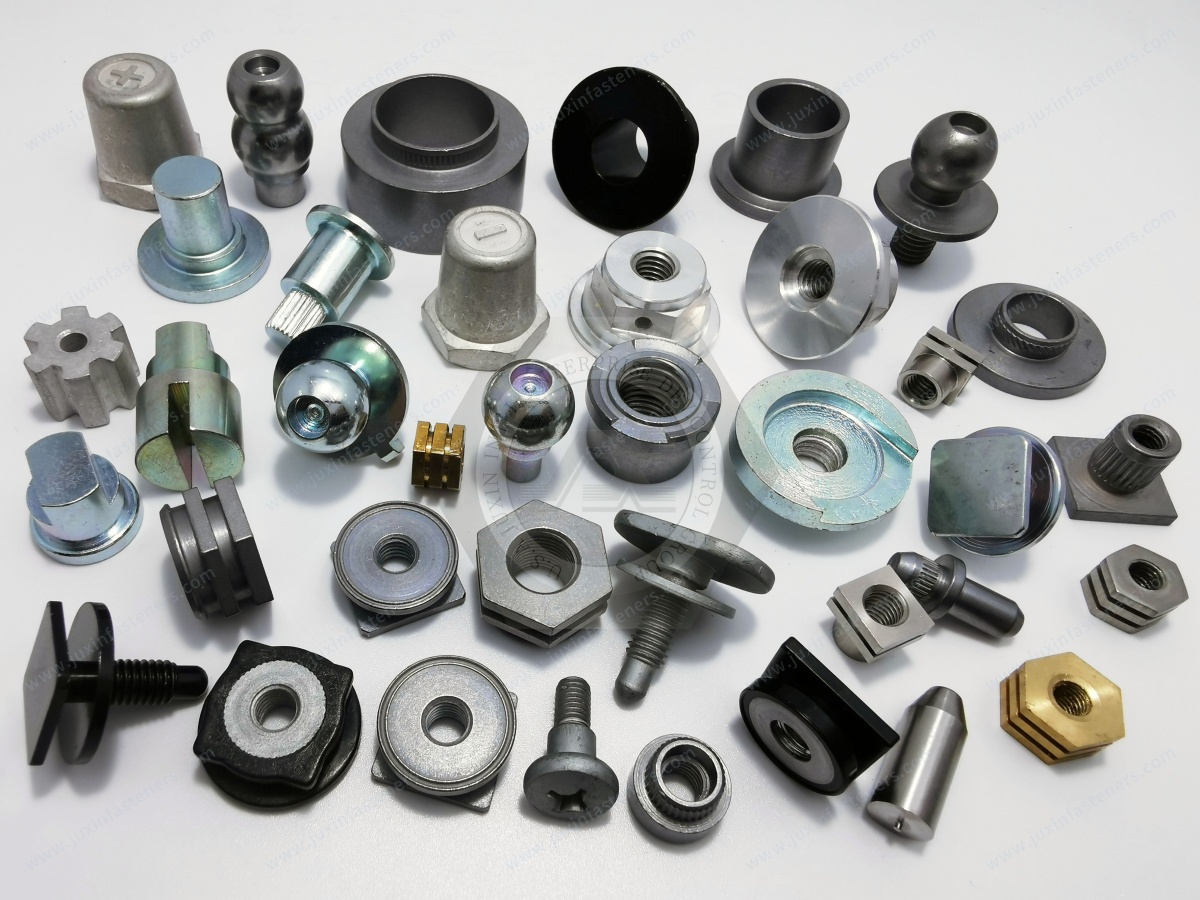
For OEM projects, the commercial path should connect engineering decisions with sourcing decisions.
A typical process can be:
Application Requirement → Fastener Technology Selection → Drawing / Specification Review → Manufacturing Review → Quotation
→ Sample → Customer Validation → Supplier Approval → Production Supply
The exact process depends on the component and project.
Standard catalog-type fasteners may require relatively simple qualification.
Custom, welded, installed or function-critical components may require more detailed validation.
The objective is not to add unnecessary qualification steps.
It is to make sure the level of validation matches the technical and supply risk.
This page is designed as a fastener-technology selection hub. Detailed engineering subjects should be handled by the corresponding product and application pages rather than duplicated here.
Recommended internal-link relationships include:
Blind Rivet Nuts → rivet nut selection, grip range and installation resources
Blind Rivets → blind rivet selection and joint-design resources
Weld Nuts → DIN 929, DIN 928, projection weld nut and welding-process resources
Weld Studs → weld stud product and application resources
Self-Clinching Fasteners → sheet compatibility and installation resources
Threaded Inserts for Plastic → plastic boss design and insert-selection resources
Plastic & Nylon Fasteners → polymer material selection and application resources
Lock Nuts → prevailing torque and vibration-loosening resources
Stainless Steel Fasteners → 304 vs 316 and galling resources
Custom Fasteners → drawing-based manufacturing and RFQ resources
Fastener Failure Modes → joint failure and troubleshooting resources
About JUXIN FASTENERS → company capability and supplier-qualification information
Use the existing indexed JUXIN FASTENERS URL when implementing these internal links.
If a reusable threaded connection is required, a blind rivet nut may be appropriate. If a permanent non-threaded connection is required,
a blind rivet may be considered. Material thickness, hole geometry, load and installation requirements should then be evaluated.
A rivet nut can be useful for blind installation and a wider range of selected structures. A self-clinching nut requires a suitable sheet material,
thickness and installation process that allows controlled material flow. The correct choice depends on sheet properties, access and production architecture.
A weld nut integrates a thread through a welding process, while a self-clinching nut relies on controlled deformation of suitable sheet material.
Welding capability, sheet material, thickness, production rate, corrosion strategy and installed performance should be compared.
The polymer itself may provide electrical-insulation properties, but a nylon fastener does not automatically establish system-level electrical compliance.
Material grade, geometry, voltage environment, temperature and applicable system requirements must be evaluated.
No. A locking feature and correct joint preload perform different functions. Prevailing torque should not be confused with preload,
and the joint still requires an appropriate tightening strategy.
Not always. Coating changes can alter corrosion behavior, thickness, thread fit and friction. In a torque-controlled joint,
changed friction can change preload even if the same tightening torque is used.
JUXIN FASTENERS supports drawing-based custom fasteners and selected precision components.
Manufacturing feasibility depends on the part geometry, material, tolerance, surface treatment, quantity and application requirements and should be confirmed through engineering review.
Start with the controlled drawing and functional requirements.
Compare material, mechanical properties, geometry, surface treatment and relevant manufacturing characteristics,
then validate the component in the actual or representative assembly when installed performance is important.
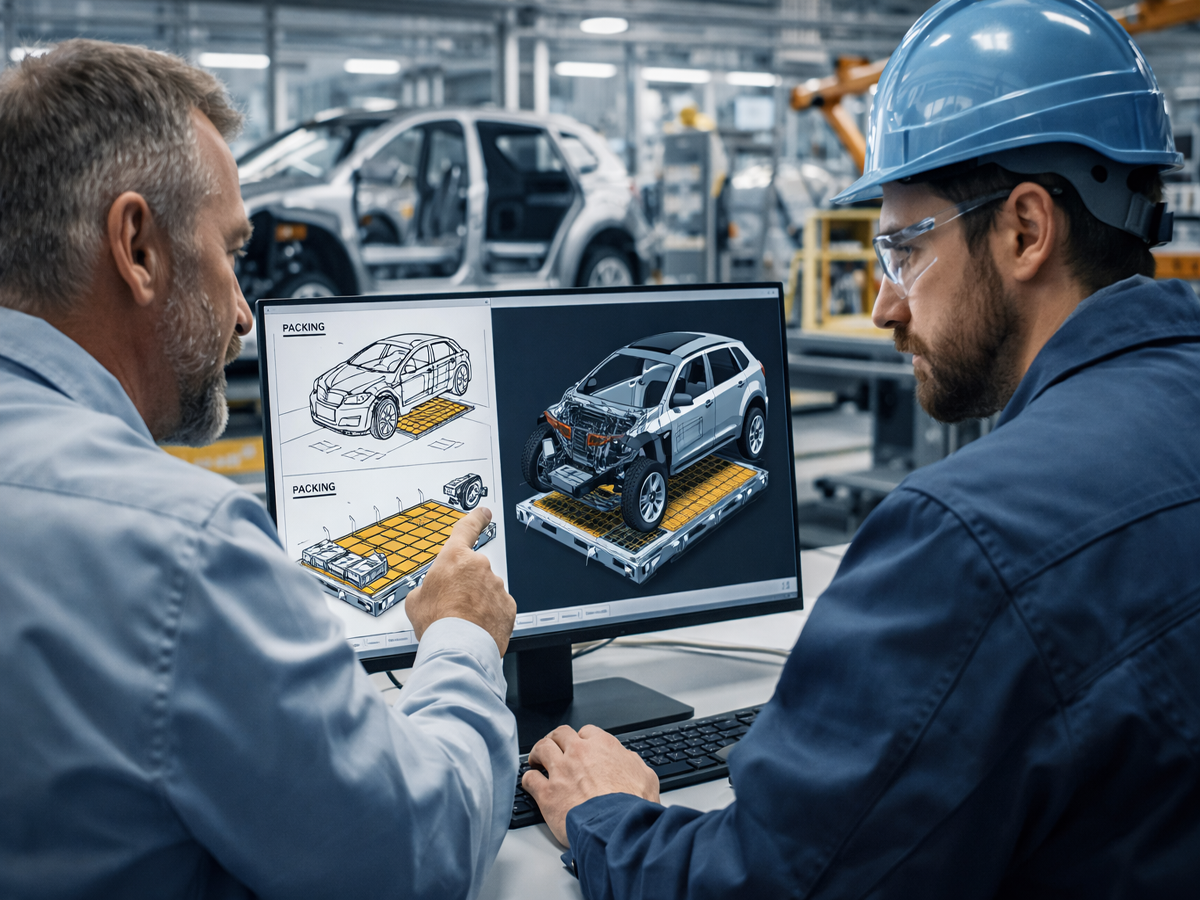
A reliable industrial fastening solution begins by understanding the assembly.
The parent material, installation access, joint function, load, environment, production process and service requirements should determine which fastening technology is evaluated.
Once the correct product family is identified, engineering and procurement can define the detailed geometry, material, surface treatment, validation requirements and commercial conditions.
If your project requires standard industrial fasteners, a drawing-based component, a second source, or an alternative fastening technology,
send JUXIN FASTENERS the available technical information for review.
For custom and OEM projects, provide where possible:
2D Drawing + 3D Model + Part / Revision + Application + Material + Mating Component + Load Requirement + Surface Treatment + Environment + Annual Volume
Depending on the product, also include:
Sheet Thickness + Hole Size + Grip Range + Thread + Property Class + Welding Process + Installation Method + Validation Requirements
This allows the project to move from a generic price inquiry toward a technically meaningful quotation, sample evaluation and supplier-qualification process.
JUXIN FASTENERS
Industrial Fasteners | Custom Fasteners | OEM Fastening Solutions | Drawing-Based Components
Email: info@juxinfasteners.com
Website: www.juxinfasteners.com
Contact Us
Tel.:
+86 020 8621 0320
+86 020 3121 6067
E-mail:
Technical Support:
Navigation
SEND INQUIREY



