
Call Us
+86 136 6007 9809
Call Us
+86 136 6007 9809

Sep. 09, 2026
Industrial OEMs designing electronic enclosures, control panels, PCB assemblies, instrumentation,
and specialized machinery frequently encounter fastening-interface problems involving surface damage, electrical conductivity, uneven load distribution, spacing, and material compatibility.
When steel or brass fasteners are tightened against softer metallic, coated, or polymer substrates, the bearing area under the fastener head or nut can become an important part of the joint design.
Localized contact pressure may contribute to indentation or surface damage, while unintended conductive contact paths may create electrical design concerns in assemblies where isolation is required.
Nylon washers, plastic flat washers, shoulder washers, insulating washers, spacers, and standoffs can address different portions of these engineering problems.
However, they are not interchangeable components, and selecting the correct polymer hardware requires consideration of material grade, geometry, thickness,
dimensional tolerances, loading, temperature, moisture, chemical exposure, electrical requirements, and assembly conditions.
Quick Engineering Answer: Engineers should consider nylon washers when the fastening interface needs a non-metallic bearing surface,
electrical separation, reduced metallic contact, or compatibility with a polymer or coated substrate.
Plastic spacers and standoffs should be selected when the primary requirement is maintaining a defined physical separation or mounting geometry.
The correct component depends on the joint architecture; a washer should not automatically be substituted for a spacer,
and an insulating component should not automatically be treated as a sealing or safety-certified component.
JUXIN FASTENERS supports OEM and industrial customers with plastic and nylon fastening components, custom component manufacturing review,
drawing evaluation, multi-SKU bill of materials (BOM) consolidation, and production sourcing.
This guide explains the engineering principles, material selection criteria, component differences, procurement requirements,
and supplier qualification considerations involved in specifying nylon washers and plastic spacers.
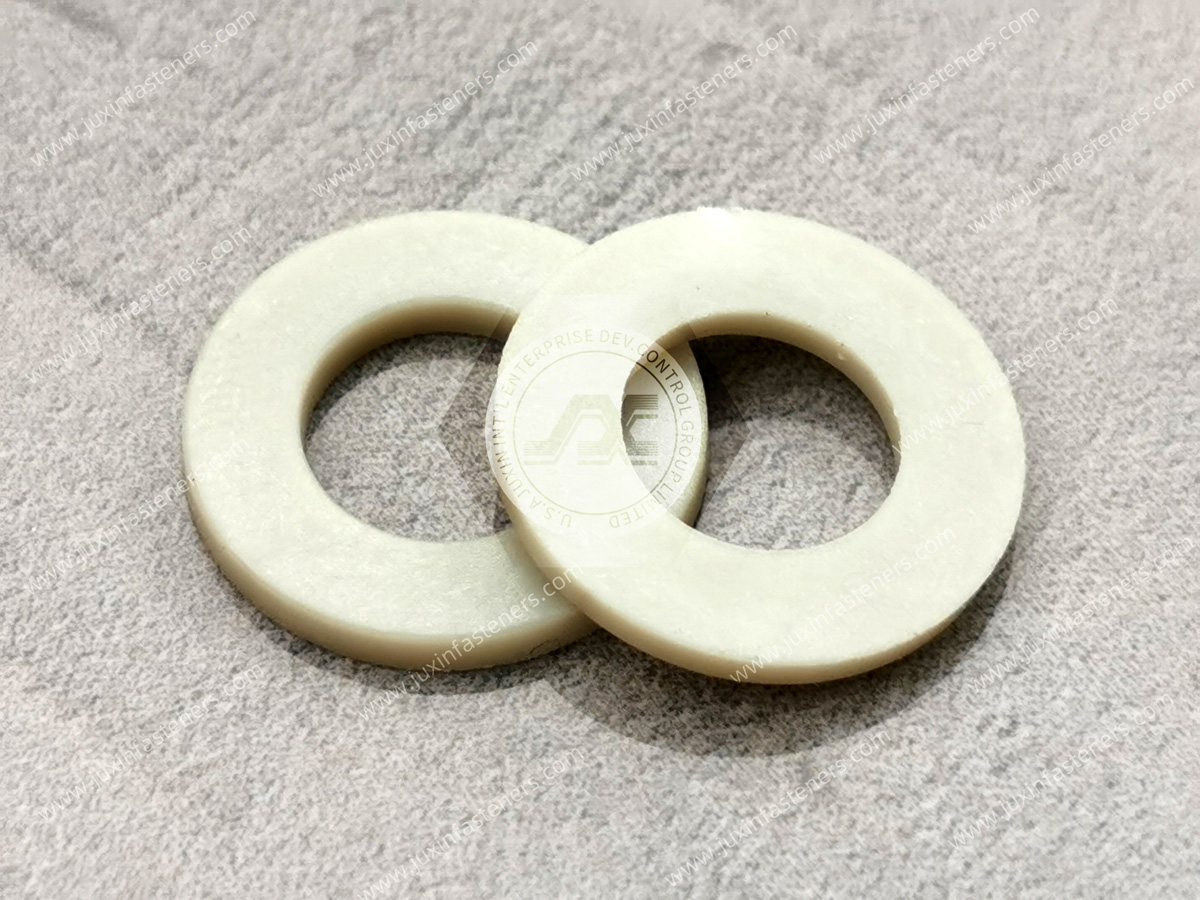
Fastening interfaces experience mechanical and environmental conditions during installation and service.
A washer or spacer may appear to be a simple accessory, but its geometry and material can influence how forces are transferred through the assembly.
A fastener head or nut contacts the mating surface over a relatively limited area.
On softer materials, coatings, plastics, or finished surfaces, the local contact condition may become an important design consideration.
A flat washer increases the effective bearing area between the fastener and substrate. This can help distribute the applied clamping force over a broader area.
The actual effectiveness depends on:
Washer outside diameter
Washer thickness
Fastener size
Substrate material
Substrate thickness
Clamping condition
Joint geometry
Material deformation characteristics
A larger washer is not automatically better. Its dimensions must remain compatible with the available mounting surface and the joint design.
In electronic and electrical assemblies, engineers may need to prevent unintended conductive contact between a fastener and a conductive panel or chassis.
A non-conductive washer or shoulder washer can create physical separation between selected components.
However, the washer itself should not be described as automatically providing complete electrical protection for the entire assembly.
The final electrical behavior depends on the complete joint geometry, surrounding conductive paths, material properties, creepage and clearance requirements where applicable, environmental conditions, and applicable design or compliance requirements.
When dissimilar metals are joined in the presence of an electrolyte, galvanic corrosion can become a design consideration.
A polymer washer may help separate specific metal surfaces and reduce direct conductive contact within the joint.
However, a nylon washer does not automatically eliminate every galvanic corrosion risk in an assembly.
Engineers should evaluate the complete contact configuration, moisture exposure, materials, coatings, and other conductive paths.
Unlike a flat washer, a spacer is primarily used to create a defined physical distance between components.
Typical examples include:
PCB-to-panel spacing
Enclosure component spacing
Mounting plate separation
Air-gap maintenance
Mechanical alignment
Component positioning
For these applications, spacer length, inner diameter, outer diameter, compression behavior, and dimensional tolerance can be more important than the bearing function of a conventional washer.
These components may appear together in industrial BOMs, but they perform different functions.
A flat washer is primarily used between a fastener and a mating surface.
Typical purposes include:
Increasing bearing area
Distributing clamping load
Protecting a mating surface
Providing a non-metallic interface
Supporting electrical isolation where the geometry is appropriate
A shoulder washer combines a flat washer-like flange with an integrated cylindrical shoulder.
The shoulder can locate inside a clearance hole and separate a fastener from the surrounding substrate.
This makes shoulder washers particularly useful where engineers need both:
Radial separation around the fastener shank
Bearing support under the fastener head or nut
The exact isolation provided depends on the component geometry and assembly configuration.
Insulating cup washers are shaped to provide additional coverage around the fastener head or interface.
They may be considered where the design requires more extensive separation between the fastener and surrounding surface.
However, a cup washer should not automatically be described as a waterproofing or sealing component.
Any sealing performance must be established by the actual geometry, mating surfaces, material, installation condition, and verified design requirements.
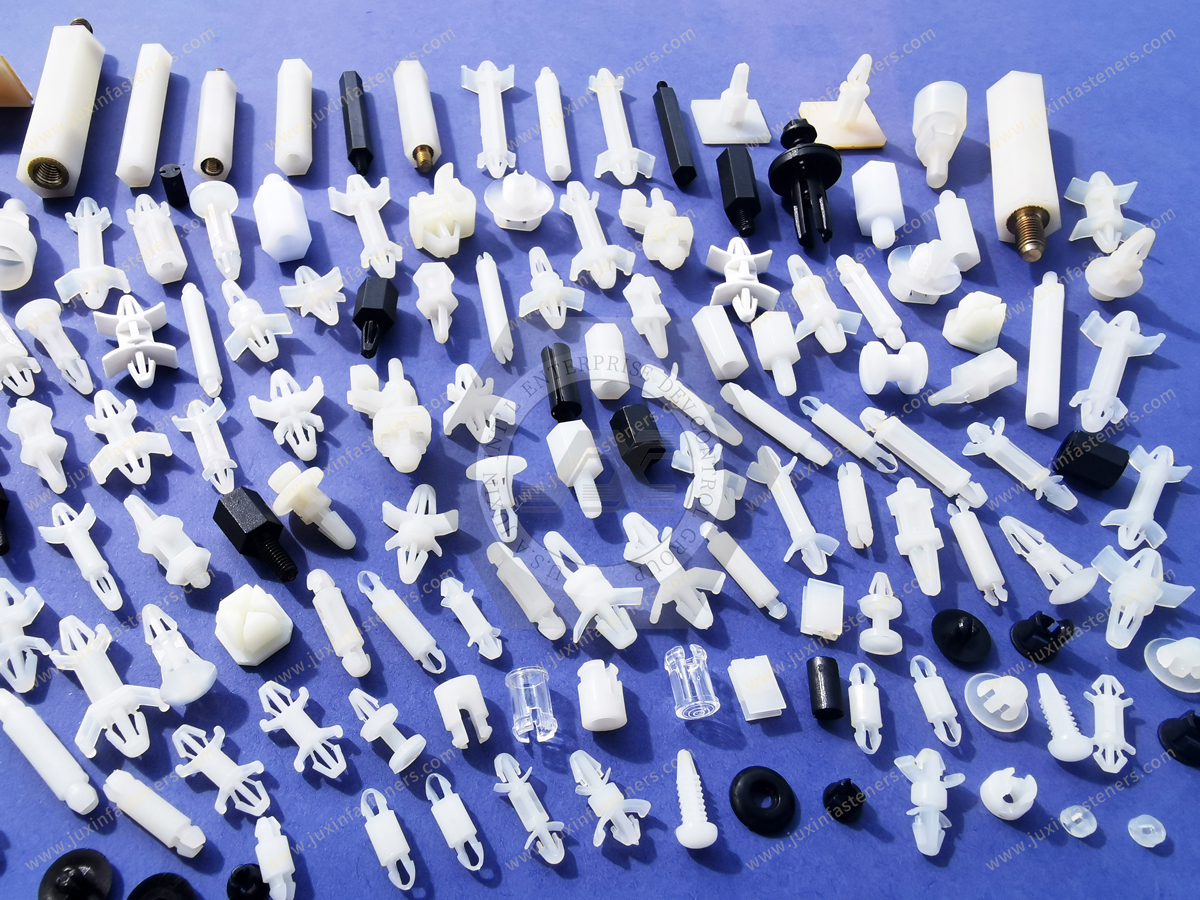
Spacers are generally tubular components used to maintain separation between two components.
They may be:
Unthreaded
Round
Hexagonal
Custom-shaped
Available in different lengths and wall geometries
The fastening screw or bolt normally passes through the spacer to clamp the assembly.
Standoffs combine spacing with a fastening interface.
Depending on configuration, they may be:
Female-to-female
Male-to-female
Male-to-male
Threaded
Custom threaded
They are widely used for PCB mounting, electronic assemblies, panels, and equipment housings.
Engineering Decision: If the primary requirement is distributing load under a fastener, start with a washer concept.
If the primary requirement is maintaining physical separation, start with a spacer.
If the component must both maintain separation and provide a threaded mounting interface, a standoff may be the more appropriate architecture.
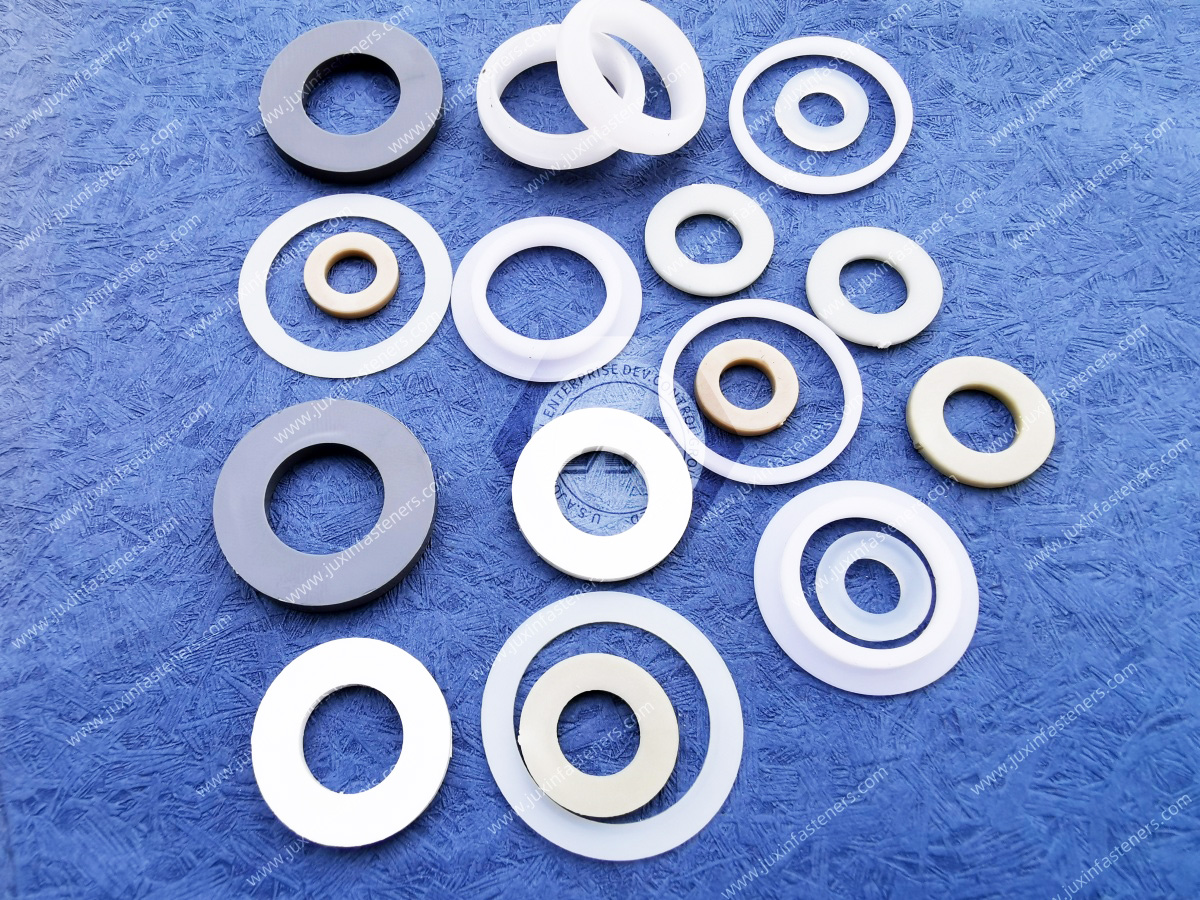
Nylon washers may be considered when one or more of the following requirements exist:
The mating surface is relatively soft or sensitive to metal contact.
A broader bearing interface is needed.
Electrical separation is required between selected components.
A non-metallic contact surface is preferred.
Weight reduction is relevant to the assembly.
Material compatibility with the surrounding components favors a polymer interface.
The assembly requires a plastic or nylon fastening system.
The design uses polymer housings, electrical enclosures, instrumentation, or electronic components.
The final selection should still be based on the actual loading, environment, material grade, and dimensional requirements.
Every polymer has operating boundaries, and nylon is not automatically the best material for every washer or spacer application.
Nylon may require additional engineering review, or another material may be more appropriate, when the application involves:
Long-term compressive loading can result in time-dependent deformation in polymer materials.
If the washer or spacer must maintain a highly stable geometry or clamping condition over an extended period, creep and stress relaxation should be considered.
The actual behavior depends on the material grade, temperature, geometry, loading, and exposure duration.
Polymer performance changes with temperature, and different polymer families and grades can behave differently.
Do not assign a universal operating-temperature limit to all nylon washers.
Instead, engineers should verify the selected PA6 or PA66 grade against:
Actual operating temperature
Exposure duration
Mechanical loading
Required dimensional stability
Thermal cycling
Mating material
Polyamide materials can absorb moisture, which may affect dimensional and mechanical behavior.
This can become important for:
Tight tolerance assemblies
Precision spacers
Electrical assemblies
Outdoor equipment
High-humidity environments
Applications with prolonged water exposure
Where moisture stability is critical, another polymer family may warrant evaluation.
Nylon should not be assumed to resist every chemical environment.
For applications involving strong chemicals, solvents, acids, oxidizing agents, or elevated temperatures, engineers should evaluate the specific polymer grade against the actual chemical concentration, temperature, exposure time, and mechanical condition.
Materials such as PVDF or PEEK may be considered for certain demanding environments, but suitability must still be verified for the actual application.
If a spacer, washer, or standoff is part of a precision tolerance stack, engineers should evaluate dimensional stability over the expected environmental range.
Material selection, moisture uptake, manufacturing tolerance, thermal expansion, and component geometry can all influence the final assembly.
Engineering Takeaway: Nylon is a widely useful engineering polymer, but “nylon” alone is not a sufficient specification for a demanding washer or spacer application.
Polymer selection influences mechanical behavior, dimensional stability, environmental resistance, and long-term performance.
Different polymers should therefore be evaluated according to the actual application rather than treated as interchangeable plastic materials.
| Polymer Family | Typical Industrial Grades | General Characteristics | Primary Industrial Applications | Engineering & Sourcing Considerations |
|---|---|---|---|---|
| Nylon / Polyamide | PA6, PA66, unfilled or glass-filled grades | Useful strength-to-weight characteristics, electrical insulation, and broad industrial applicability | Electrical enclosures, control panels, electronics, appliances, industrial machinery | Evaluate moisture absorption, dimensional change, creep, temperature, loading, and grade-specific properties |
| POM / Acetal | Homopolymer / copolymer acetal | High stiffness, low friction, and useful dimensional stability in suitable applications | Precision mechanisms, spacers, housings, sliding applications | Evaluate chemical compatibility, temperature, wear, and interaction with mating components |
| PVDF | Polyvinylidene fluoride | Strong chemical resistance in many demanding environments and useful environmental resistance depending on grade | Chemical processing equipment, semiconductor-related equipment, specialized industrial applications | Verify compatibility with the actual chemical, concentration, temperature, and exposure duration |
| PEEK | Polyetheretherketone | High-performance engineering polymer with strong thermal and mechanical characteristics relative to many commodity polymers | Specialized industrial equipment, demanding thermal applications, selected high-performance assemblies | Higher material and manufacturing cost; grade and application suitability should be verified |
PA6 and PA66 are common engineering polymers for plastic washers, spacers, and other fastening components.
However, they should not automatically be treated as identical materials.
Engineers may need to evaluate:
Moisture absorption
Dimensional stability
Mechanical loading
Temperature exposure
Chemical compatibility
Creep
Tolerance requirements
Reinforcement
Glass-filled nylon can behave differently from unfilled nylon and should therefore be explicitly specified when reinforcement is required.
POM can be considered where stiffness, low friction, and dimensional characteristics are important.
It may be useful for precision spacers, mechanisms, bushings, and selected fastening-interface components.
PVDF may be considered when chemical resistance is a major design requirement.
The correct grade should be evaluated against the actual chemical environment rather than relying on a general statement that PVDF is “chemical resistant.”
PEEK is a high-performance polymer that may be considered for applications requiring characteristics beyond those available from standard nylon or other commonly used polymers.
Its higher material and manufacturing cost means that the application should justify the selection.
Washer thickness is not simply a dimensional purchasing detail. It can affect bearing behavior, stack height, clearance, and tolerance relationships within the assembly.
Engineers should consider:
Required bearing area
Fastener head geometry
Substrate thickness
Available clearance
Assembly stack height
Washer compression behavior
Dimensional tolerance
Installation conditions
For precision assemblies, washer thickness tolerance can become part of the overall tolerance stack.
For this reason, an RFQ should define the nominal thickness and required tolerance when the dimension is functionally critical.
A washer changes the interface between the fastener and substrate by increasing the area over which the load is transferred.
This can help reduce localized surface pressure compared with a smaller direct fastener-head interface.
However, engineers should not assume that a nylon washer automatically produces a specific reduction in contact pressure or guarantees against substrate deformation.
The resulting behavior depends on:
Washer dimensions
Washer material
Fastener geometry
Applied load
Substrate material
Substrate thickness
Joint geometry
Temperature
Duration of loading
Engineering Decision: If substrate protection is the main reason for adding a washer, the washer's outside diameter, inside diameter, thickness,
and material should be selected together with the fastener and substrate—not independently.
Insulating washers can separate a fastener from a conductive mounting surface.
For example, a shoulder washer can place a polymer barrier around the screw shank while its flange separates the fastener head from the surrounding surface.
This can be useful in:
Electrical cabinets
Control panels
Electronic enclosures
PCB assemblies
Instrumentation
Telecommunications equipment
Electrical equipment
Transformer-related assemblies
However, the complete electrical design must still be evaluated.
An insulating washer does not automatically establish:
A specific voltage rating
A specific dielectric rating
A specific creepage requirement
A specific clearance requirement
A specific safety certification
An IP rating
Those requirements depend on the complete design and applicable standards.
The distinction becomes important when the primary engineering requirement is dimensional separation.
The main requirement is bearing-area distribution.
The fastener needs surface protection.
Electrical separation is required at the fastener interface.
The assembly does not require a defined component-to-component distance.
A fixed distance must be maintained between two components.
PCB-to-panel clearance is required.
A component stack has a defined height.
A long through-fastener passes through multiple layers.
Mechanical alignment depends on a defined separation.
Separation and threaded attachment are both required.
Individual boards or panels need independent fastening.
The assembly requires modular mounting.
Service access or repeated assembly is part of the design.
This distinction helps prevent a common sourcing mistake: specifying a washer when the actual engineering requirement is a spacer or standoff.
Nylon washers and polymer spacing components can be used in a variety of industrial applications when their material and mechanical characteristics are appropriate.
Potential uses include:
Insulating washers
Shoulder washers
Nylon flat washers
Plastic spacers
Standoffs
Engineering concerns may include electrical separation, substrate protection, mounting clearance, and material compatibility.
Plastic spacers and standoffs can maintain separation between:
PCB and enclosure
PCB and mounting plate
Multiple PCB layers
Electronic modules
The required spacer length, thread configuration, tolerance, and material should be specified according to the assembly design.
Polymer washers, spacers, and standoffs may be considered where electrical isolation, weight, environmental exposure, or non-metallic interfaces are relevant.
Application-specific polymer fastening components may be used in selected electrical, electronic, enclosure, and lightweight assemblies.
The exact material and component architecture should be verified against the application's temperature, vibration, moisture, chemical, and mechanical requirements.
Insulating washers and plastic spacers may be considered where electrical separation and controlled component spacing are part of the assembly design.
The complete battery or energy-storage assembly must be evaluated for its specific environmental, thermal, mechanical, and electrical requirements.
Polymer washers and spacers can support mounting, alignment, insulation, and protection of sensitive components.
Selected plastic fastening accessories may be considered where environmental conditions and loading requirements are compatible with the selected material.
PVDF, PEEK, or other application-specific polymers may be evaluated where chemical compatibility and environmental performance are important.
Material selection should be based on the actual process chemicals, temperatures, exposure conditions, and component requirements.
A well-prepared RFQ allows the supplier to evaluate component geometry, material requirements, manufacturing feasibility, inspection requirements, and production planning.
Identify the required component:
Standard flat washer
Nylon flat washer
Shoulder washer
Insulating washer
Insulating cup washer
Round unthreaded spacer
Hexagonal spacer
PCB spacer
Threaded standoff
Custom polymer component
If an existing standard is being followed, provide the relevant standard reference.
Provide:
2D technical drawing
3D CAD file where available
Inner diameter (ID)
Outer diameter (OD)
Thickness
Overall length
Shoulder dimensions
Thread dimensions where applicable
Critical manufacturing tolerances
Identify:
Polymer family
Resin grade
Unfilled or glass-filled construction
Color
Special material requirements
Any required material documentation
If the material has not been finalized, provide the application conditions so the supplier can participate in the engineering review.
Where relevant, specify:
Operating temperature
Humidity
Chemical exposure
Electrical isolation requirements
Loading conditions
Vibration
Assembly cycles
Dimensional stability requirements
Installation method
Do not request generic performance numbers without defining the actual application conditions.
Provide:
Prototype quantity
Initial production quantity
Annual volume
Forecast
Multi-SKU BOM
Packaging requirements
Labeling requirements
Inspection requirements
Delivery requirements
Target market
This information helps the supplier evaluate both manufacturing feasibility and production planning.
For engineered plastic components, supplier qualification should extend beyond unit price.
The supplier should be able to understand:
Component geometry
Critical dimensions
Tolerances
Material requirements
Thread requirements where applicable
Application-specific requirements
Buyers should determine how the supplier identifies and controls:
Polymer family
Resin grade
Filled versus unfilled material
Color
Material documentation
The supplier should be evaluated for its ability to produce:
Consistent washer thickness
Controlled ID and OD
Shoulder geometry
Spacer lengths
Threaded standoff configurations
Custom component geometries
For critical components, buyers should understand how dimensions are inspected and recorded.
The appropriate inspection approach depends on the drawing and critical characteristics.
A capable supplier should be able to support the transition from prototype requirements to recurring production where applicable.
OEM customers may source several related plastic components at the same time, including:
Screws
Nuts
Washers
Shoulder washers
Spacers
Standoffs
Threaded inserts
A supplier capable of coordinating multiple SKUs can simplify sourcing and supply-chain management.
For international OEM programs, clear communication regarding drawings, materials, quantities, packaging, quality requirements, and delivery expectations is an important part of supplier qualification.
Procurement Takeaway: For engineered nylon washers and plastic spacers, supplier qualification should consider technical interpretation, material control,
dimensional consistency, inspection, production capability, communication, and supply continuity—not only the quoted unit price.
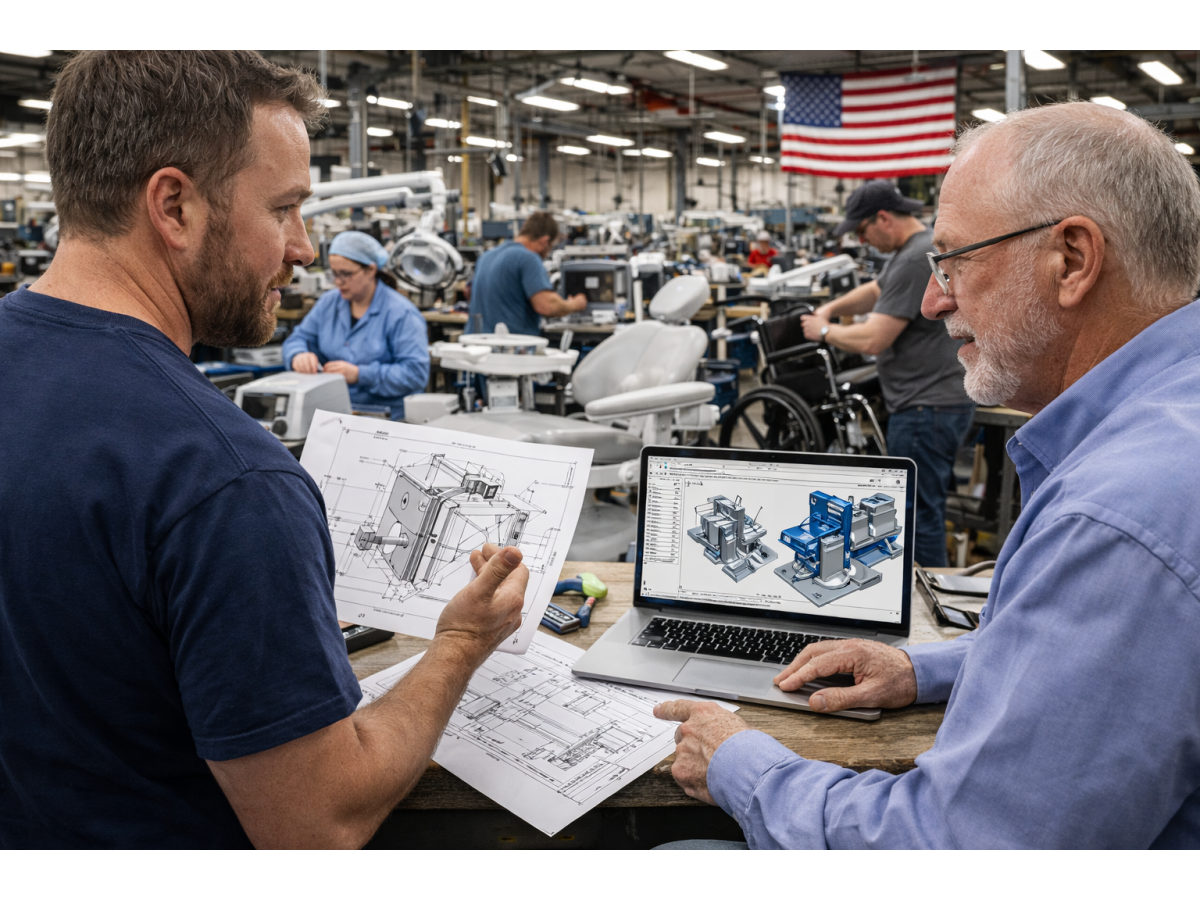
Before a component is released into production, engineers should verify the complete fastening interface.
Confirm:
Polymer family
Resin grade
Filled or unfilled construction
Color
Environmental compatibility
Confirm:
ID
OD
Thickness
Spacer length
Shoulder dimensions
Thread dimensions where applicable
Critical tolerances
Confirm:
Required bearing function
Required spacing
Electrical separation requirements
Fastener compatibility
Substrate compatibility
Assembly sequence
Confirm:
Temperature
Humidity
Chemical exposure
UV exposure where relevant
Vibration
Sustained loading
Repeated assembly requirements
Confirm:
Production method
Critical dimensions
Inspection requirements
Material traceability where required
Packaging requirements
Engineering Takeaway: The washer or spacer should be evaluated as part of the complete assembly rather than as an isolated catalog component.
Nylon washers can provide a non-metallic bearing interface, electrical separation, reduced metallic contact, and lower component mass in suitable applications.
They may also help distribute fastener loads over a broader surface area. The actual benefit depends on the washer geometry, material, substrate, loading, and application environment.
Nylon washers can be supplied in standard or custom dimensions depending on the component design and manufacturing requirements.
Customers should specify the applicable dimensional standard where one exists rather than assuming that every plastic washer follows the same dimensional system.
Shoulder washers incorporate a cylindrical shoulder that can separate a fastener shank from the surrounding clearance-hole surface while the flange provides a bearing interface.
The degree of electrical isolation depends on the complete assembly geometry and material selection.
Temperature suitability depends on the specific polymer family, material grade, geometry, loading condition, and exposure duration.
Nylon should not be assigned one universal operating-temperature limit. For demanding thermal environments, engineers may evaluate alternative engineering polymers such as PEEK or other application-specific materials.
A flat washer primarily provides a bearing interface and can distribute load over a broader area.
An insulating cup washer has a more enveloping geometry intended to provide additional separation around the fastener head or interface.
Neither component should automatically be treated as a sealing component without verified sealing performance.
A nylon shoulder washer may be considered when the design requires both a bearing flange and radial separation around a fastener passing through a clearance hole.
It is particularly relevant to electrical or electronic assemblies where isolation between a fastener and conductive mounting surface is required.
A spacer should be considered when maintaining a defined physical distance between two components is the primary requirement.
A washer is primarily an interface and bearing component, while a spacer establishes separation or stack height.
Procurement teams should provide the 2D drawing, 3D CAD model where available, material grade, dimensions, tolerances, environmental requirements,
quantities, inspection requirements, packaging requirements, and any relevant assembly information. Providing the application context can help the supplier evaluate material and manufacturing options.
Selecting the right nylon washer, insulating washer, shoulder washer, spacer, or standoff requires more than choosing a nominal size.
Material grade, geometry, thickness, dimensional tolerance, electrical requirements, loading, environment, and assembly conditions can all influence the final component selection.
JUXIN FASTENERS supports OEM customers with nylon washers, plastic insulating components, spacers, standoffs, plastic fastening components, custom manufacturing review, drawing evaluation, and multi-SKU sourcing.
For a custom nylon washer, shoulder washer, insulating component, plastic spacer, or standoff project, provide your available 2D drawing, 3D CAD file, material specification, application requirements, and expected quantities.
Send your technical requirements to info@juxinfasteners.com for an engineering review and OEM quotation.
Contact Us
Tel.:
+86 020 8621 0320
+86 020 3121 6067
E-mail:
Technical Support:
Navigation
SEND INQUIREY


