
Call Us
+86 136 6007 9809
Call Us
+86 136 6007 9809

Sep. 09, 2026
Plastic screws and nylon bolts are used in industrial assemblies where electrical insulation, corrosion considerations, low weight, material compatibility, or non-metallic construction are important design requirements.
They can be found in electrical enclosures, electronic equipment, control panels, PCB assemblies, instrumentation, machinery,
HVAC equipment, telecommunications equipment, and other applications where conventional metallic fasteners may not be the preferred solution.
However, selecting a polymer fastener is not simply a matter of replacing a metal screw with a nylon equivalent.
Polymer fasteners respond differently to preload, temperature, moisture, sustained loading, installation torque, and repeated assembly.
The appropriate material, thread geometry, head style, dimensions, and installation method therefore need to be evaluated against the actual joint design.
Quick Engineering Answer: Plastic screws and nylon bolts are most appropriate when the joint prioritizes properties such as electrical insulation,
low mass, corrosion resistance, chemical compatibility, or non-metallic contact. They should not be selected solely because they are lighter or less expensive than metal fasteners.
Engineers should verify material grade, thread compatibility, temperature exposure, moisture conditions, sustained loading, installation torque, and the actual mechanical requirements of the joint.
JUXIN FASTENERS supports OEM and industrial customers with plastic and nylon fastening components,
custom manufacturing review, multi-SKU BOM consolidation, drawing evaluation, and production sourcing.
This guide explains how engineers and procurement teams can evaluate plastic screws and nylon bolts from initial design selection through OEM sourcing and supplier qualification.

Plastic screws and nylon bolts are threaded fasteners manufactured from engineering polymers rather than conventional metallic materials.
Nylon or polyamide is one of the most widely used material families, while other engineering plastics such as POM, PVDF,
and PEEK may be considered when the application requires different combinations of mechanical, thermal, chemical, dimensional, or electrical characteristics.
Common product configurations include:
Nylon machine screws: Threaded screws used with nuts, threaded inserts, or compatible internal threads.
Plastic bolts: Larger or application-specific threaded fasteners used where non-metallic construction is required.
Pan head screws: General-purpose head geometry providing a broad bearing surface.
Countersunk or flat head screws: Designed where the screw head needs to sit flush or near-flush with the mating surface.
Socket head designs: Used where a recessed drive and compact head geometry are beneficial.
Hex head plastic bolts: Provide external wrenching features for applications requiring conventional bolt installation.
Custom plastic screws: Designed around customer-specific dimensions, thread forms, head configurations, material grades, or application requirements.
The correct configuration depends on the joint geometry, available installation space, mating material, required preload, environmental conditions, and assembly process.
Unlike metallic fasteners, polymer fasteners generally have different stiffness, strength, thermal expansion, moisture response, and time-dependent deformation characteristics.
These differences can influence joint performance throughout the service life of an assembly.
When designing with plastic screws and nylon bolts, engineers should evaluate several factors.
Polymer fasteners can be more sensitive to excessive installation torque than metallic fasteners.
Over-tightening may contribute to thread deformation, thread stripping, head damage, or other forms of installation failure depending on the material, geometry, mating thread, and assembly conditions.
For this reason, torque should not be copied directly from a metal fastening specification.
A suitable installation process should consider:
Polymer type and grade
Screw diameter and thread geometry
Thread engagement
Mating material
Installation speed
Tool type
Joint configuration
Required clamping condition
Environmental conditions
Engineering Decision: If the joint requires a specific and tightly controlled preload, the fastener supplier and design engineer should evaluate the actual component design rather than applying a generic torque value.
Polyamide materials such as PA6 and PA66 can absorb moisture from the surrounding environment. Moisture uptake can change certain mechanical and dimensional characteristics of nylon.
This is particularly important when tight dimensional tolerances, thread fit, or long-term joint behavior are critical.
Engineers should therefore consider:
Ambient humidity
Storage conditions
Expected operating environment
Dimensional tolerance requirements
Material grade
Duration of environmental exposure
Moisture behavior is one reason why a nylon fastener specification should identify the material rather than simply stating “plastic.”
Engineering polymers generally have different coefficients of thermal expansion from metals. When a plastic screw is assembled with a metal component, temperature changes can therefore influence dimensional relationships within the joint.
For assemblies exposed to substantial temperature cycling, engineers should evaluate:
Fastener material
Mating material
Temperature range
Joint geometry
Dimensional tolerance
Required clamping condition
Potential thermal cycling effects
A plastic fastener that works well in a room-temperature assembly may require additional engineering review when the same design is exposed to significant thermal variation.
Polymer materials can exhibit time-dependent deformation under sustained stress. This behavior is commonly referred to as creep.
For plastic screws and nylon bolts, creep considerations become more important when a fastener is expected to maintain a continuous clamping condition over an extended period.
Engineers should distinguish between:
Short-duration assembly loading
Repeated assembly and disassembly
Long-term static loading
Cyclic loading
Temperature-dependent loading
Applications requiring stable long-term preload
Engineering Decision: If long-term preload retention is a critical design requirement, the polymer fastener should be evaluated as part of the complete joint rather than selected from nominal dimensions alone.
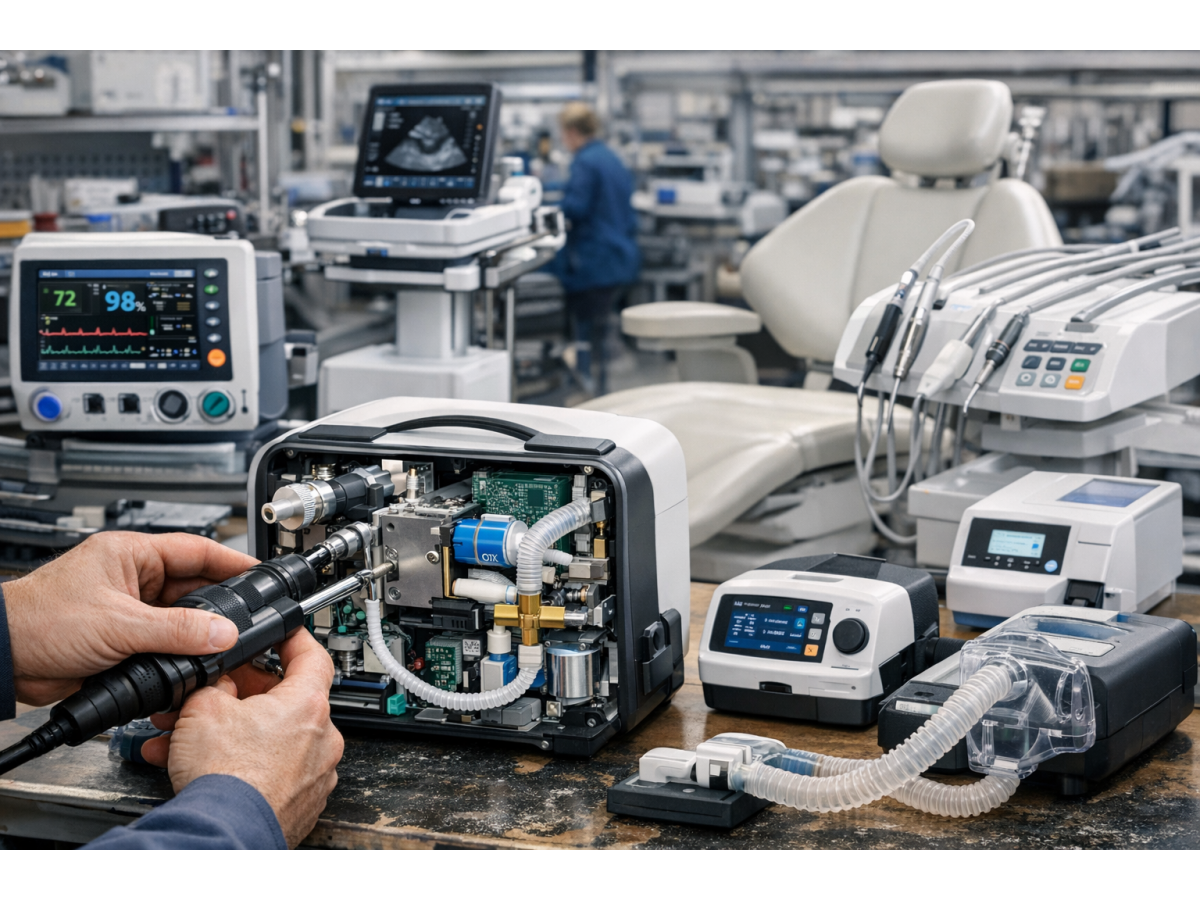
Plastic and nylon fasteners can provide advantages in specific engineering situations.
Non-metallic fasteners can help separate components electrically where the application requires an insulating fastening component.
Typical examples include:
Electrical enclosures
Electronic equipment
PCB assemblies
Control panels
Instrumentation
Telecommunications equipment
Electrical cabinets
However, the presence of a nylon screw does not by itself establish a specific electrical safety rating or certification.
The complete assembly, material specification, geometry, creepage and clearance requirements, and applicable compliance requirements must be evaluated separately.
Polymer fasteners do not behave like conventional steel fasteners in corrosive environments and can be useful where metallic hardware creates compatibility concerns.
They may be considered for applications involving:
Moisture exposure
Certain chemical environments
Sensitive metal surfaces
Dissimilar-material assemblies
Equipment where metallic contamination is undesirable
The exact chemical compatibility must still be checked against the selected polymer grade and actual chemicals, concentration, temperature, and exposure duration.
Polymer fasteners are generally lighter than comparable metallic fasteners. Weight reduction can be useful in equipment where mass is an important design consideration.
Examples may include:
Lightweight electronic equipment
Instrumentation
Portable equipment
Aerospace-related components where material suitability is verified
Transportation equipment
Lightweight housings
Weight reduction, however, should never replace evaluation of the joint's mechanical requirements.
Plastic screws can also be useful when the fastener should not directly contact a sensitive metallic or finished surface.
This can help reduce concerns related to:
Surface scratching
Metallic contact
Electrical conduction
Material compatibility
Cosmetic damage
The suitability depends on the specific assembly design.
A technically responsible selection guide should also define when a product may not be appropriate.
Plastic screws and nylon bolts may require additional engineering review, or another fastening solution may be preferable, when the joint involves:
High mechanical loading
High or tightly controlled preload requirements
Long-term sustained tensile loading
Severe thermal cycling
High operating temperatures beyond the selected polymer's verified capability
Repeated high-cycle assembly and disassembly
Significant thread wear concerns
Severe impact or dynamic loading
Tight dimensional stability requirements in high-humidity environments
Application-specific regulatory or certification requirements that the selected material or component has not been verified to meet
This does not mean that polymer fasteners are unsuitable for these applications in every case. Rather, these conditions increase the need for application-specific engineering evaluation.
Engineering Takeaway: The correct question is not “Are plastic screws stronger or weaker than metal screws?”
The more useful engineering question is whether the selected polymer fastener provides the required mechanical, environmental, electrical, dimensional, and assembly performance for the specific joint.
Thread geometry is a critical part of fastener selection because the screw must properly mate with the corresponding internal thread.
Plastic screws and nylon bolts may be specified using metric or inch-based thread systems depending on the target market and application.
Metric threaded plastic fasteners may be specified using recognized metric thread conventions and applicable ISO standards.
Common industrial designs may include thread sizes such as M3, M4, M5, M6, M8, M10, and M12, depending on product type, geometry, material, and manufacturing capability.
The actual available size range should be confirmed against the supplier's product specifications or drawing.
North American applications may use Unified Thread Standard configurations such as UNC and UNF.
The thread designation should be clearly identified on the drawing or RFQ to prevent mismatching between the plastic screw and mating component.
Thread fit for polymer fasteners requires consideration of more than nominal thread designation.
Engineers should review:
Nominal diameter
Pitch
Thread form
Thread tolerance
Mating material
Thread engagement
Temperature exposure
Moisture exposure
Installation method
Important: A thread standard defines the applicable thread geometry or dimensional framework; it does not automatically establish the mechanical load capacity of a plastic fastener.
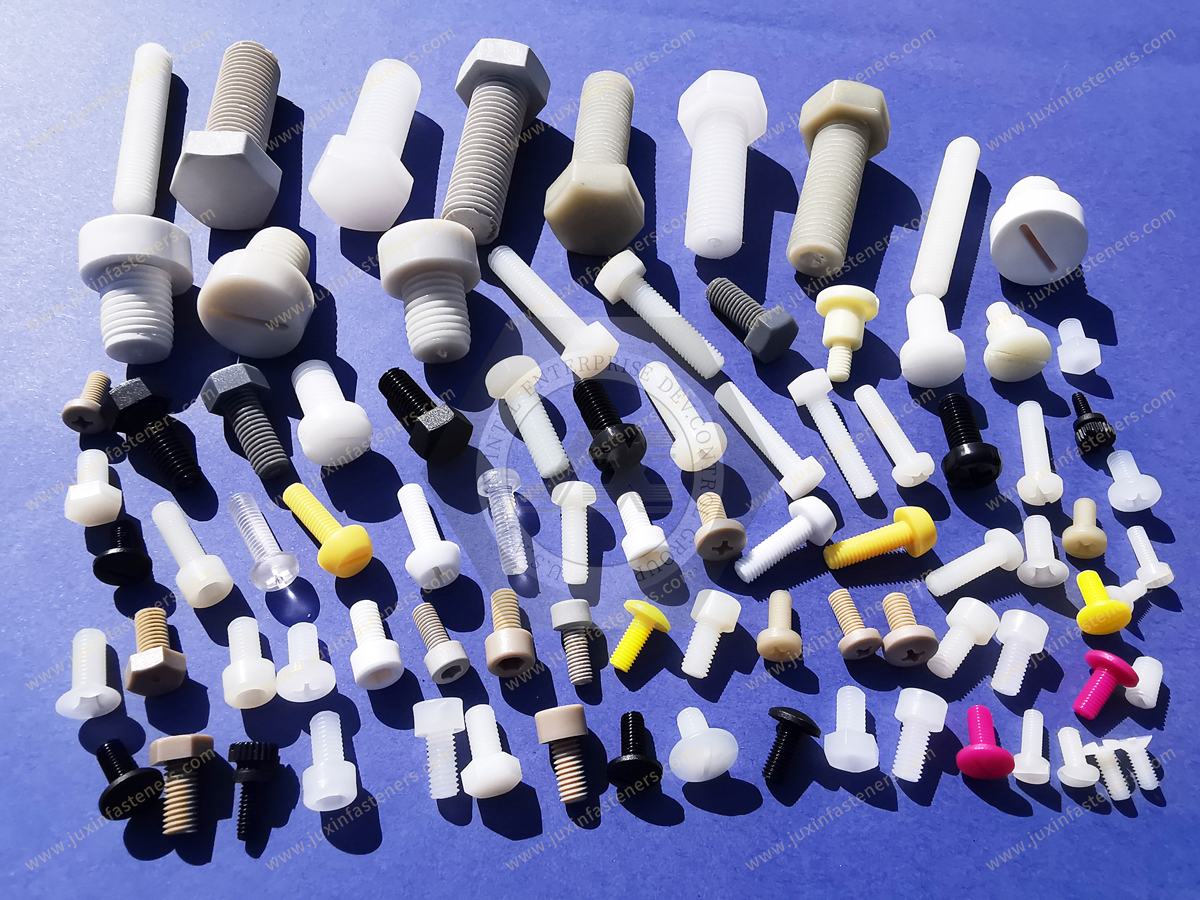
Material selection has a major influence on the behavior of plastic screws and nylon bolts.
Different engineering polymers can have substantially different mechanical, thermal, chemical, dimensional, and electrical characteristics. Therefore, “plastic screw” should not be treated as a single engineering material category.
| Polymer Family | Typical Industrial Grades | General Characteristics | Potential Industrial Applications | Engineering & Sourcing Considerations |
|---|---|---|---|---|
| Nylon / Polyamide | PA6, PA66, unfilled or glass-filled grades | Good strength-to-weight characteristics, electrical insulation, and broad industrial usability | Electrical enclosures, control panels, electronics, appliances, machinery | Evaluate moisture absorption, dimensional change, creep, temperature, and grade-specific properties |
| POM / Acetal | Homopolymer / copolymer acetal | High stiffness, low friction, and useful dimensional stability in suitable applications | Precision components, mechanisms, spacers, housings, sliding applications | Evaluate chemical compatibility, temperature, wear, and interaction with mating threads |
| PVDF | Polyvinylidene fluoride | Strong chemical resistance in many demanding environments and useful environmental resistance depending on grade | Chemical equipment, semiconductor-related equipment, specialized industrial applications | Verify compatibility with the actual chemical, concentration, temperature, and exposure conditions |
| PEEK | Polyetheretherketone | High-performance engineering polymer with strong thermal and mechanical characteristics relative to many commodity polymers | Specialized industrial equipment, high-temperature applications, demanding engineering assemblies | Higher material and manufacturing cost; application-specific grade and processing requirements should be verified |
PA6 and PA66 are widely used engineering polymers, but they should not automatically be treated as interchangeable.
Engineers may need to evaluate:
Moisture absorption
Dimensional stability
Mechanical requirements
Temperature exposure
Chemical compatibility
Creep
Required tolerance
Reinforcement requirements
Glass-filled grades may behave differently from unfilled grades and should therefore be specified explicitly when required.
POM may be considered where stiffness, low friction, and dimensional characteristics are important.
It can be useful for certain precision components and mechanisms, but the suitability of POM for threaded fasteners depends on the actual joint requirements and manufacturing design.
PVDF may be considered for applications where chemical resistance is an important selection criterion.
The statement “chemical resistant” should not be treated as universal. Actual suitability depends on the specific chemical environment, concentration, temperature, exposure time, and material grade.
PEEK is a high-performance engineering polymer that may be considered when the application demands characteristics beyond those of standard nylon or other commonly used plastics.
Because PEEK components can involve higher material and manufacturing costs, they are generally evaluated where their engineering characteristics justify the additional cost.
Head geometry affects installation access, bearing area, clearance, appearance, and compatibility with the mating component.
Common head configurations include:
Pan head screws provide a relatively broad bearing surface and are widely used for general fastening applications.
They may be suitable where a flush head is not required and sufficient clearance is available above the mounting surface.
Countersunk screws are used when the screw head needs to sit flush or near-flush with the mating surface.
The countersink geometry of the mating component must be compatible with the selected screw head.
Socket head configurations can provide a compact external profile while allowing installation with an internal drive.
They may be considered where access and head clearance are important.
Hex head plastic bolts provide external wrenching flats and may be useful where conventional wrench installation is preferred.
OEM applications may require customized head dimensions, drive configurations, low-profile geometries, or other design modifications.
For custom plastic screws, the drawing should clearly define:
Head diameter
Head height
Drive type
Drive dimensions
Thread dimensions
Overall length
Under-head length
Required tolerances
The fastening strategy inside the mating component is as important as the screw material itself.
A plastic screw can be installed into a compatible internal polymer thread when the joint design and expected assembly conditions support direct threading.
This approach may be suitable where:
Loads are relatively moderate
Assembly and disassembly frequency is limited
The polymer housing can provide adequate thread geometry
The design does not require unusually high or stable preload
The joint has been evaluated for the expected service conditions
When a polymer housing requires repeated assembly and disassembly, improved thread durability, or a more robust internal fastening interface, engineers may consider a threaded insert installed into the plastic component.
Depending on the application, insert technologies may include:
Heat-staked threaded inserts
Ultrasonic-installed threaded inserts
Molded-in inserts
Other application-specific insert systems
This can allow a metal screw or bolt to engage a dedicated internal thread rather than relying entirely on a molded or machined polymer thread.
Engineering Decision: The choice between a direct plastic thread and a threaded insert should be based on loading, assembly cycles, substrate material,
installation process, service environment, and required thread durability—not simply on product price.
Plastic screws are often used as part of a broader polymer fastening system rather than as isolated components.
A typical assembly may include:
Plastic Screw / Nylon Bolt → Plastic or Nylon Nut → Washer / Insulating Washer → Substrate
The correct combination can depend on:
Fastener material
Mating thread material
Substrate material
Required electrical isolation
Bearing surface
Joint loading
Environmental exposure
Installation process
For example, a plastic screw used with a metallic enclosure may require a washer or insulating component depending on the electrical and mechanical requirements of the assembly.
Likewise, a nylon screw used with a polymer housing may require a different joint design than one used with sheet metal.
This is why sourcing only one component without considering the mating hardware can create compatibility problems during assembly.
Before releasing a plastic screw or nylon bolt into production, engineers should verify the following.
Confirm:
Polymer family
Resin grade
Filled or unfilled construction
Color requirement
Material documentation where required
Confirm:
Metric or inch thread
Nominal diameter
Pitch
Thread form
Thread tolerance
Mating thread
Thread engagement
Confirm:
Head style
Head diameter
Head height
Overall length
Thread length
Shank geometry
Drive configuration
Critical tolerances
Confirm:
Temperature exposure
Humidity
Chemical exposure
UV exposure where relevant
Outdoor or indoor use
Vibration
Sustained loading
Assembly frequency
Confirm:
Installation tool
Installation torque requirements
Assembly speed
Manual or automated installation
Repeated assembly requirements
Mating component material
Engineering Takeaway: A plastic fastener should be specified as an engineered component with defined material, geometry, thread, environment, and assembly requirements—not simply as “a nylon screw.”
Submitting a clear technical package allows a supplier to evaluate manufacturability, material requirements, tooling, inspection, and commercial conditions more efficiently.
Procurement managers and design engineers should prepare the information that is relevant to the specific project.
Identify the required component, such as:
Nylon machine screw
Plastic bolt
Countersunk screw
Pan head screw
Socket head screw
Hex head plastic bolt
Custom plastic fastener
Where applicable, provide the intended standard reference.
Provide:
2D technical drawing
3D CAD model where available
Overall length
Thread dimensions
Head dimensions
Shank dimensions
Critical tolerances
Special geometry requirements
Identify the required:
Polymer family
Resin grade
Unfilled or reinforced grade
Color
Special material requirements
If the material has not yet been finalized, state the application conditions and engineering priorities so the supplier can review potential options.
Where relevant, provide:
Operating temperature
Chemical exposure
Humidity
Electrical insulation requirements
Loading conditions
Vibration
Assembly cycles
Installation requirements
The more specific the application information, the more meaningful the engineering review can be.
Provide:
Prototype quantity
Initial order quantity
Annual volume
Forecast
Multi-SKU BOM
Packaging requirements
Labeling requirements
Inspection requirements
Delivery requirements
Target market
This information helps suppliers evaluate both technical feasibility and production planning.
Choosing the correct component is only one part of an industrial sourcing project. Supplier capability can affect drawing interpretation, material consistency, dimensional control, production stability, and long-term supply.
OEM buyers should consider whether a supplier can support:
Can the supplier understand the drawing, thread requirements, material specification, tolerances, and critical dimensions before quotation?
Can the supplier identify and control the specified polymer grade and distinguish between unfilled and reinforced materials?
Can the supplier produce the required geometry, thread configuration, head style, and dimensional requirements consistently?
Can the supplier define appropriate inspection methods for critical dimensions and provide the quality documentation required by the project?
Can the supplier support the transition from prototype quantities to recurring production?
For OEM customers purchasing several plastic fastener types, a supplier capable of consolidating multiple SKUs may simplify sourcing, packaging, and supply-chain management.
For international OEM programs, clear communication regarding drawings, specifications, packaging, quantities, and delivery requirements is an important part of supplier qualification.
Procurement Takeaway: The lowest unit price is not necessarily the lowest total sourcing cost.
For engineered plastic fasteners, material consistency, drawing interpretation, production control, inspection, communication, and supply continuity can all influence the real procurement outcome.
Plastic and nylon fasteners can be considered across a wide range of industrial applications when their material and mechanical characteristics are appropriate.
Potential application areas include:
Automotive and EV: Lightweight non-metallic fastening components, electrical isolation components, and selected enclosure applications
Battery and Energy Storage: Insulating and non-metallic fastening components where application requirements permit
Electrical Cabinets and Enclosures: Insulating screws, washers, nuts, spacers, and other polymer hardware
Electronics and PCB Assemblies: Nylon screws, standoffs, spacers, and insulating hardware
Telecommunications and Base Stations: Lightweight and electrically insulating fastening components
HVAC Equipment: Selected polymer fastening components where environmental requirements are compatible
Medical Equipment: Non-metallic fastening components where material and compliance requirements are verified
Semiconductor Equipment: Polymer components selected for appropriate chemical and environmental conditions
Instrumentation: Lightweight and electrically insulating fastening components
Smart Home Equipment: Plastic screws, nuts, spacers, and standoffs for electronic housings
Computer and Equipment Brackets: Nylon hardware for selected lightweight assemblies
Transformers and Electrical Equipment: Insulating fastening components where the design requires non-conductive hardware
Machinery and Industrial Equipment: Selected polymer fastening applications where loading and environmental requirements are appropriate
Rail Transit and Transportation Equipment: Application-specific polymer fastening components where material and compliance requirements are verified
The application should always determine the material and fastening architecture. An industry label alone is not sufficient to establish suitability.
The terms “plastic screw” and “nylon bolt” are sometimes used interchangeably in commercial searches, but they can describe different product configurations.
Plastic screw is a broad term covering threaded polymer fasteners with different head and drive configurations.
Nylon bolt generally refers to a larger threaded fastener configuration, often with an external head such as a hex head, although terminology can vary between markets and suppliers.
For procurement, the safest approach is to specify the exact geometry and thread rather than relying only on the commercial name.
Plastic screws and nylon bolts can provide low mass, electrical insulation, corrosion resistance characteristics, and reduced metallic contact in suitable applications.
Their suitability depends on the required mechanical, environmental, electrical, and dimensional performance of the joint.
Plastic screws and nylon bolts can be manufactured or supplied using metric and inch-based thread configurations.
The exact available sizes, thread standards, tolerances, materials, and production capabilities should be confirmed against the supplier's current specifications and the customer drawing.
Nylon and other polyamides can absorb moisture, which can influence dimensional and mechanical behavior.
Engineers working with tight tolerances or demanding environmental conditions should consider moisture exposure as part of material selection and tolerance analysis.
Temperature capability depends on the polymer family, specific material grade, component geometry, loading condition, exposure duration, and application environment.
Standard nylon should not be assigned a universal maximum temperature without verified material data.
High-performance polymers such as PEEK may be considered for more demanding thermal environments when their specific grade is appropriate.
Common configurations include pan head, countersunk or flat head, socket head, hex head, and other application-specific geometries.
Custom head dimensions and drive configurations may also be developed according to customer drawings and manufacturing feasibility.
Threaded inserts may be considered when a plastic housing requires repeated assembly and disassembly, improved thread durability, or a more robust internal fastening interface.
The correct insert technology depends on the substrate, loading, assembly process, and application requirements.
They can be suitable where electrical insulation is required, but the fastener material alone does not establish the electrical safety or compliance of the complete assembly.
Engineers should evaluate the complete design and applicable requirements.
A useful RFQ should include the technical drawing, CAD model where available, thread specification, dimensions, material requirements, environmental conditions,
expected quantities, inspection requirements, and other project-specific requirements. Providing the actual application conditions can also help the supplier evaluate material and manufacturing options.
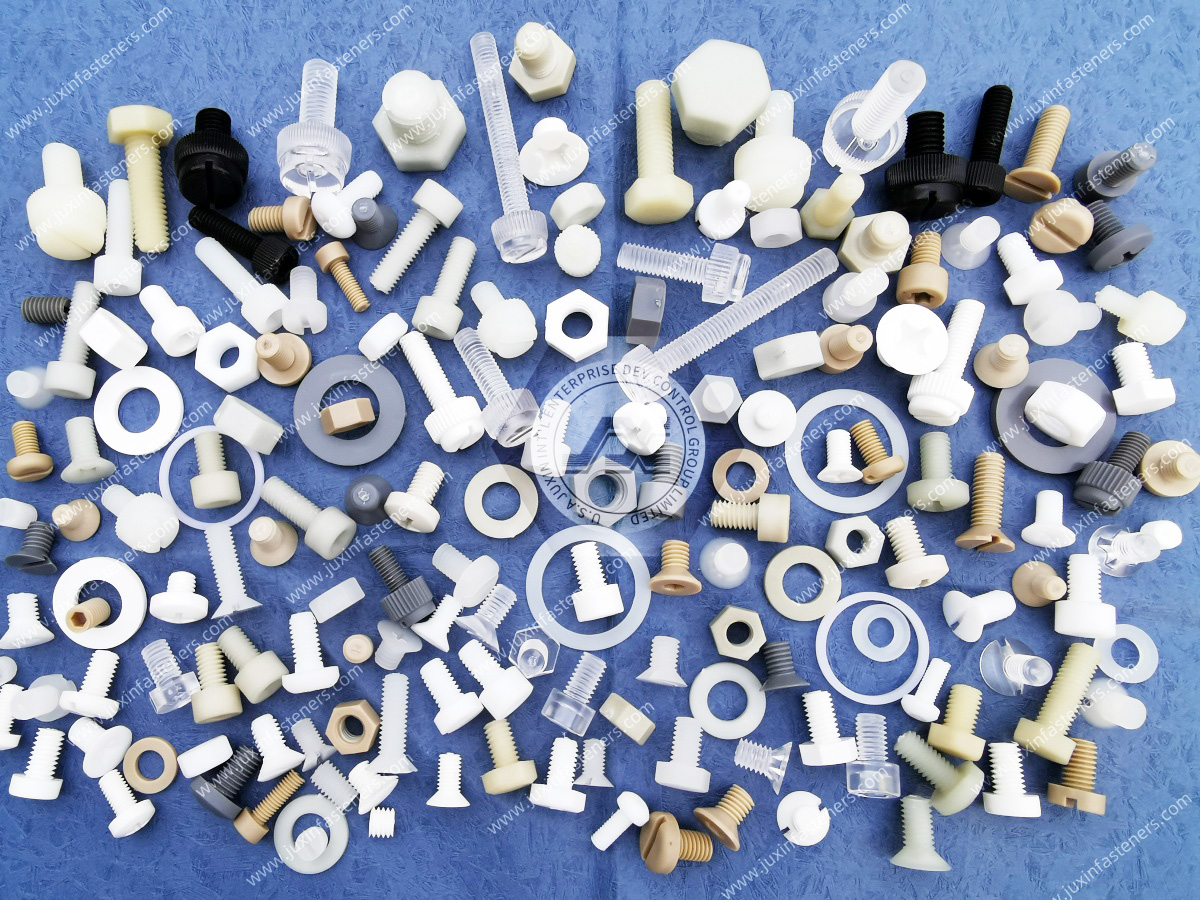
Selecting the right plastic screw or nylon bolt requires more than choosing a nominal size. Material grade, thread configuration, head geometry,
environmental exposure, installation method, loading conditions, and long-term application requirements all influence the final fastening solution.
JUXIN FASTENERS supports OEM customers with plastic and nylon fastening components, custom screw and bolt manufacturing, engineering drawing review, multi-SKU sourcing, and production supply coordination.
For a custom plastic screw, nylon bolt, plastic nut, washer, spacer, or standoff project, provide your available 2D drawing, 3D CAD file, material specification, application requirements, and expected quantities.
Send your technical requirements to info@juxinfasteners.com for an engineering review and OEM quotation.
Contact Us
Tel.:
+86 020 8621 0320
+86 020 3121 6067
E-mail:
Technical Support:
Navigation
SEND INQUIREY


