
Call Us
+86 136 6007 9809
Call Us
+86 136 6007 9809

Sep. 30, 2026
Power-generation equipment places fasteners in operating environments that can be very different from ordinary industrial machinery.
Bolts, studs, nuts, washers, and special threaded components may be exposed to combinations of:
elevated temperature;
pressure;
thermal cycling;
vibration;
oxidation;
moisture or corrosive media;
long continuous operating periods;
repeated startup and shutdown cycles.
Applications can range from boiler and heat-exchanger equipment to turbine auxiliary systems, compressors, pumps, valves, structural equipment, electrical-generation hardware, and other energy-system assemblies.
The engineering question is therefore not simply:
“What bolt strength do we need?”
A more useful question is:
“What happens to the complete bolted joint at its actual operating temperature, load, environment, and service life?”
For procurement and supplier-development teams, another question follows:
“Which material, heat treatment, dimensions, testing, documentation, and traceability requirements must remain equivalent when a power-generation fastener is second-sourced?”
JUXIN FASTENERS supplies standard and drawing-based bolts, studs, nuts, washers, stainless steel fasteners, alloy steel fasteners,
and custom threaded components for industrial and energy-equipment sourcing programs.
For elevated-temperature, pressure-containing, or otherwise specification-controlled applications, material grade, testing, inspection,
documentation, and acceptance requirements should be defined by the customer drawing, applicable specification, and project requirements before production.
A fastener that performs well at room temperature cannot automatically be assumed to provide the same mechanical behavior at elevated temperature.
As temperature changes, engineers may need to consider changes in:
material strength;
yield behavior;
elastic modulus;
oxidation resistance;
creep behavior;
stress relaxation;
thermal expansion;
coating performance;
lubricant behavior;
preload.
The correct fastener therefore depends on the complete service condition rather than nominal diameter and tensile strength alone.
Before selecting material or fastener geometry, define the application.
Important inputs can include:
normal operating temperature;
maximum temperature;
pressure where relevant;
process medium;
startup and shutdown frequency;
steady vs. cyclic operation;
vibration;
corrosion environment;
required design life;
maintenance interval.
Without this information, specifying a “high-temperature bolt” is incomplete.
Two M16 studs operating in different parts of the same power facility may require very different materials and qualification requirements.
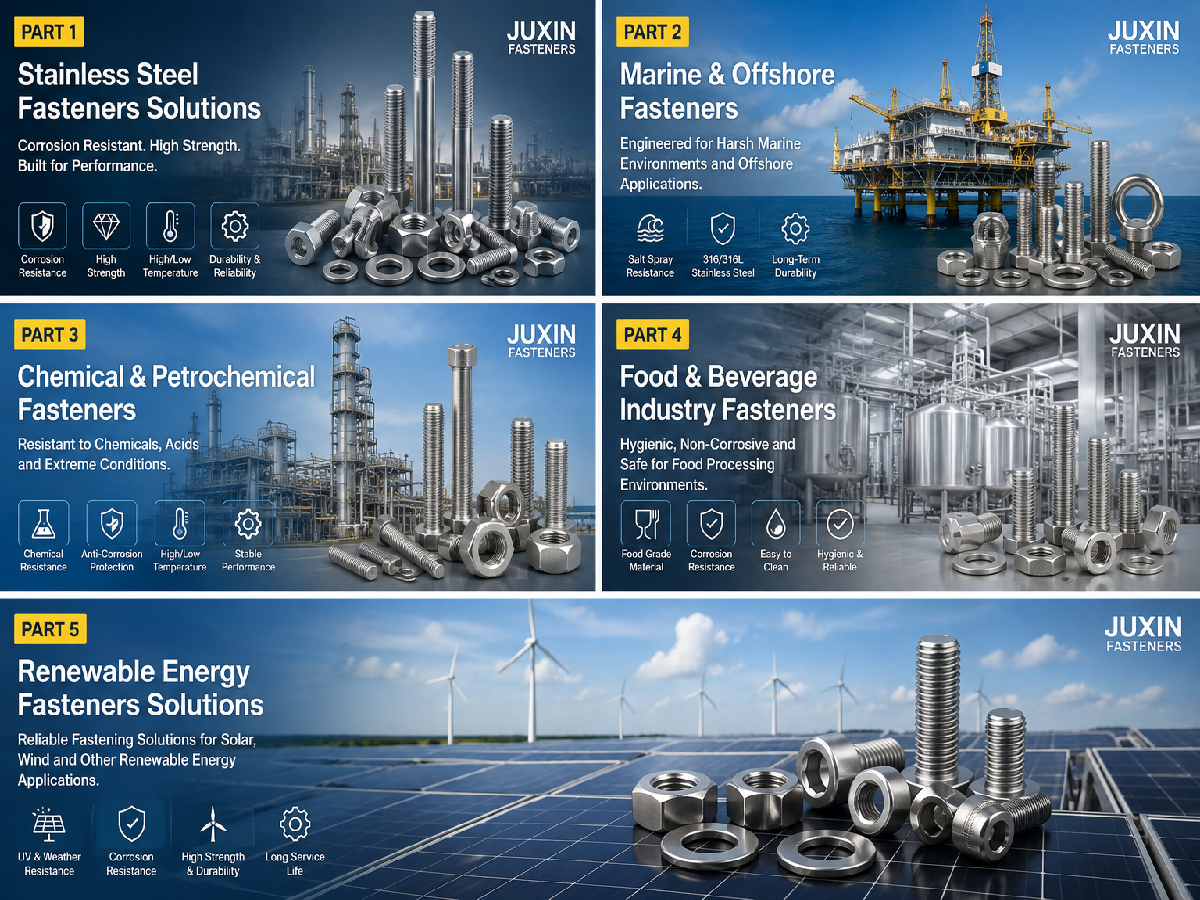
A bolted joint works because tightening stretches the fastener elastically and compresses the clamped components.
This creates preload.
At elevated temperature, both the fastener and the clamped components can change dimension and mechanical behavior.
If their responses are different, bolt load can change.
Depending on the joint, temperature increase can result in:
increased bolt stress;
reduced preload;
additional flange compression;
gasket-load changes;
joint movement.
The direction and magnitude depend on the complete joint.
Therefore:
Temperature alone does not tell engineers whether bolt preload will increase or decrease.
The fastener, flange, gasket, geometry, and temperature distribution must be considered together.
Different materials expand at different rates when heated.
If a steel fastener clamps components made from another material, the relative thermal expansion of the fastener and joint can change bolt tension during heating and cooling.
A simplified engineering relationship is:
Relative Thermal Expansion → Change in Elastic Deformation → Change in Preload
But real assemblies are influenced by:
temperature gradients;
flange stiffness;
bolt length;
gasket behavior;
joint geometry;
material properties.
This is why simply specifying a stronger bolt does not necessarily solve a thermal-joint problem.
Power equipment does not always remain at one constant temperature.
Startup and shutdown cycles can repeatedly heat and cool the joint.
This can introduce:
differential thermal movement;
changing preload;
repeated expansion and contraction;
oxidation;
surface changes;
gasket settlement where gaskets are used.
A fastener selected only from maximum temperature may therefore overlook an important part of the duty cycle.
For cycling applications, provide both operating temperature and expected thermal-cycle conditions where relevant.
At sufficiently demanding combinations of temperature, stress, material, and exposure time, metals can experience time-dependent permanent deformation.
This behavior is generally referred to as creep.
For fasteners, creep can matter because the bolt is intentionally held under tensile stress.
Important variables include:
fastener material;
temperature;
applied stress;
exposure time;
heat treatment.
There is no single temperature at which every fastener material suddenly becomes a “creep problem.”
The relevant temperature range depends on the material and required service life.
Therefore, high-temperature fastener selection should use material data applicable to the intended operating condition rather than a universal temperature rule.
Creep and stress relaxation are related but should not be treated as identical terms.
In a constrained bolted system, time-dependent material deformation can reduce the stress required to maintain the imposed deformation.
From the joint perspective, this can appear as loss of bolt preload.
Potential consequences can include:
reduced clamp load;
increased joint movement;
reduced sealing pressure;
leakage in sealed joints;
fatigue loading if joint separation occurs.
This is why room-temperature tensile strength alone is insufficient for some elevated-temperature applications.
A common procurement shortcut is to compare two fasteners using only:
diameter;
thread;
tensile strength.
For high-temperature service, additional characteristics may matter.
Depending on the specification and application, engineers may need to review:
elevated-temperature mechanical properties;
creep or stress-rupture behavior;
oxidation resistance;
corrosion resistance;
thermal expansion;
heat treatment;
metallurgical stability;
compatibility with the mating nut.
A stronger room-temperature material is not automatically the better high-temperature material.
Alloy steel bolting is widely used across industrial equipment where higher mechanical properties or specified temperature/service performance are required.
For pressure-related equipment, project specifications may reference material standards such as ASTM A193/A193M for alloy-steel and stainless-steel bolting materials for high-temperature or high-pressure service and other special-purpose applications.
However, citing ASTM A193 alone is not enough.
The required grade must also be defined.
Different grades have different:
chemical compositions;
heat treatments;
mechanical properties;
service considerations.
Procurement should therefore work from the complete material designation required by the approved drawing or specification.
The bolt or stud is only one half of a threaded connection.
Nut material, strength, thread, dimensions, heat treatment, and service conditions must also be compatible with the selected bolting system.
Specifications such as ASTM A194/A194M cover carbon, alloy, and stainless steel nuts for specified high-pressure and/or high-temperature applications.
The appropriate nut grade should follow the engineering specification.
Do not second-source the stud while ignoring the nut.
The threaded pair must function as a system.
Material specifications should not be grouped together simply because they involve alloy bolting.
For example, ASTM A320/A320M addresses alloy-steel and stainless-steel bolting materials for low-temperature service.
It should not be presented as a generic high-temperature bolting specification.
This distinction matters for both engineering accuracy and procurement.
The correct specification must follow the actual operating condition.
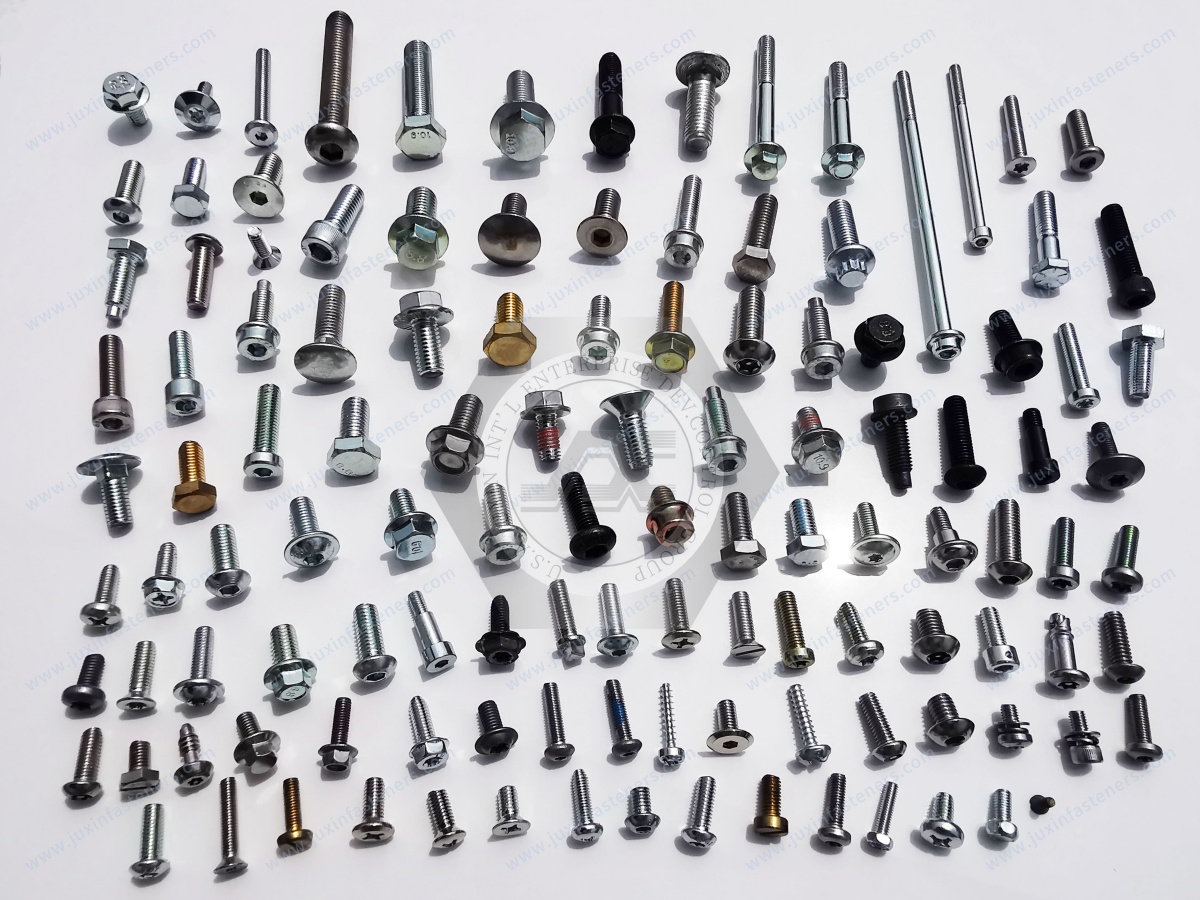
Stainless steels can provide useful corrosion resistance for many power-generation and industrial applications.
But “stainless steel” does not define one universal high-temperature solution.
Selection should consider:
grade;
mechanical properties;
operating temperature;
environment;
oxidation;
chloride exposure where applicable;
mating material;
galling risk.
A stainless fastener should therefore be selected by application and specification rather than simply because corrosion resistance is required.
Some severe-temperature equipment uses nickel-based or other specialized high-temperature alloys.
These materials may be selected where the required combination of:
elevated-temperature strength;
oxidation resistance;
corrosion resistance;
creep resistance
exceeds the capability of more conventional bolting materials.
However, specifying a trade name or alloy family alone is not sufficient for sourcing.
The procurement package should identify the exact material designation, required condition, applicable specification, testing, traceability, and acceptance requirements.
For specialized alloy projects, JUXIN FASTENERS evaluates sourcing and manufacturing feasibility against the customer drawing and specification rather than assuming that every high-temperature alloy is interchangeable or routinely available.
High-temperature corrosion is not identical to ordinary atmospheric corrosion.
At elevated temperature, material surfaces can form oxide scales.
The behavior depends on:
alloy chemistry;
temperature;
atmosphere;
exposure time;
thermal cycling.
In other applications, fasteners may encounter steam, water, industrial chemicals, or outdoor environments.
Therefore, corrosion protection should be selected for the actual medium.
A coating suitable for ambient-temperature machinery should not automatically be assumed suitable for high-temperature service.
Surface finishes can lose functionality when exposed above their intended temperature range.
Potential changes include:
oxidation;
decomposition;
loss of lubricity;
changes in friction;
coating degradation.
For elevated-temperature bolting, engineers should verify whether corrosion protection is expected to come from:
base material;
coating;
plating;
lubricant;
another specified surface system.
The operating temperature should always be included when requesting a finish.
For threaded fasteners, tightening torque is not converted entirely into useful bolt tension.
A large portion is consumed by friction in the threads and under the bearing surface.
Changing lubricant or surface condition can therefore change the preload produced by the same installation torque.
For critical bolting, procurement substitutions involving:
coating;
lubricant;
nut finish;
washer finish
should not automatically be treated as cosmetic changes.
They can affect assembly behavior.
Thread requirements may be metric or Unified depending on the equipment, drawing, market, and governing specification.
Relevant characteristics can include:
nominal diameter;
pitch or threads per inch;
thread series;
tolerance/class;
thread length;
engagement length;
thread manufacturing method where specified.
Do not automatically specify a tighter thread class because the application is “high precision.”
A tighter class is not universally superior.
The correct thread requirement should follow the approved engineering drawing and applicable standard.
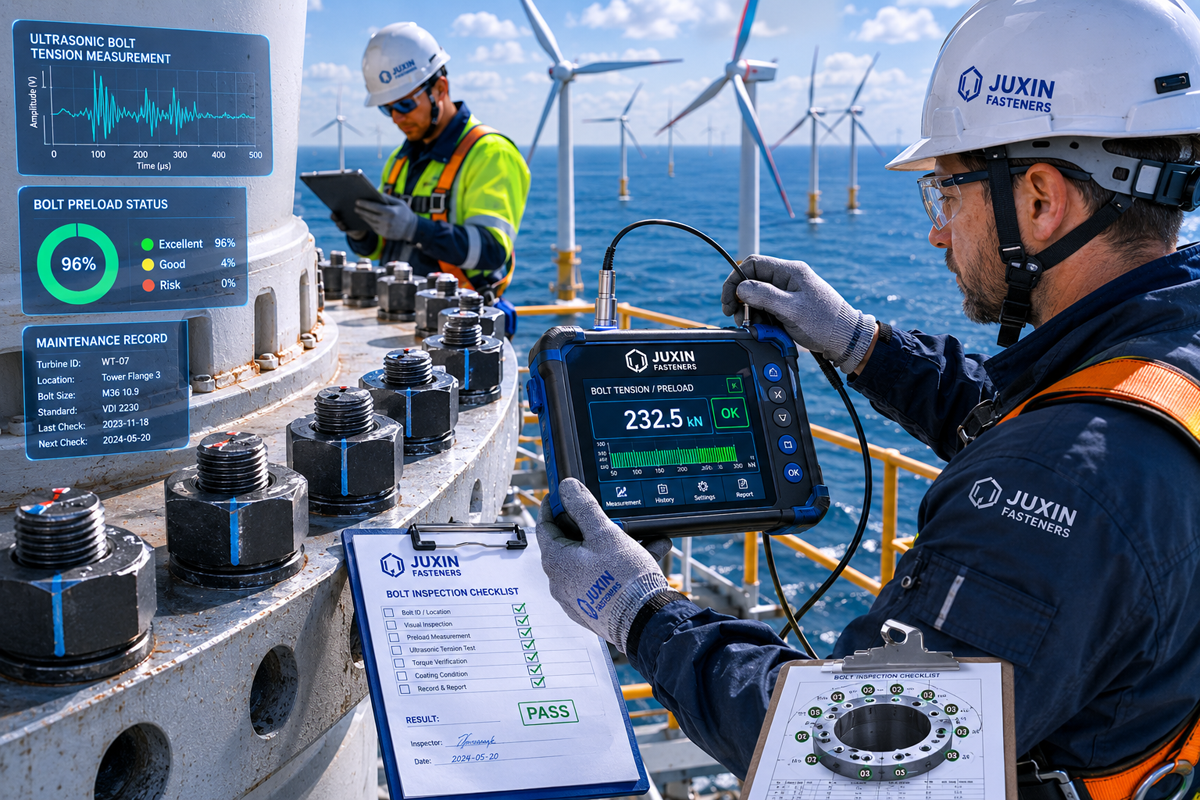
Thread manufacturing method can be important in some fastener applications.
Rolled threads are formed through plastic deformation, while cut threads are machined by material removal.
Depending on fastener material, diameter, geometry, heat-treatment sequence, specification, and application, one process may be required or preferred.
For drawing-based high-temperature studs or bolts, thread-manufacturing requirements should therefore be reviewed rather than assumed.
Studs are widely used where equipment architecture requires threaded engagement or nuts on one or both ends.
Potential applications include:
flanges;
valve assemblies;
heat exchangers;
pressure equipment;
heavy machinery;
maintenance-access joints.
Stud specification can include:
overall length;
thread length;
thread type;
material;
heat treatment;
surface finish;
identification;
testing;
documentation.
For replacement or second-source projects, overall length alone is not enough.
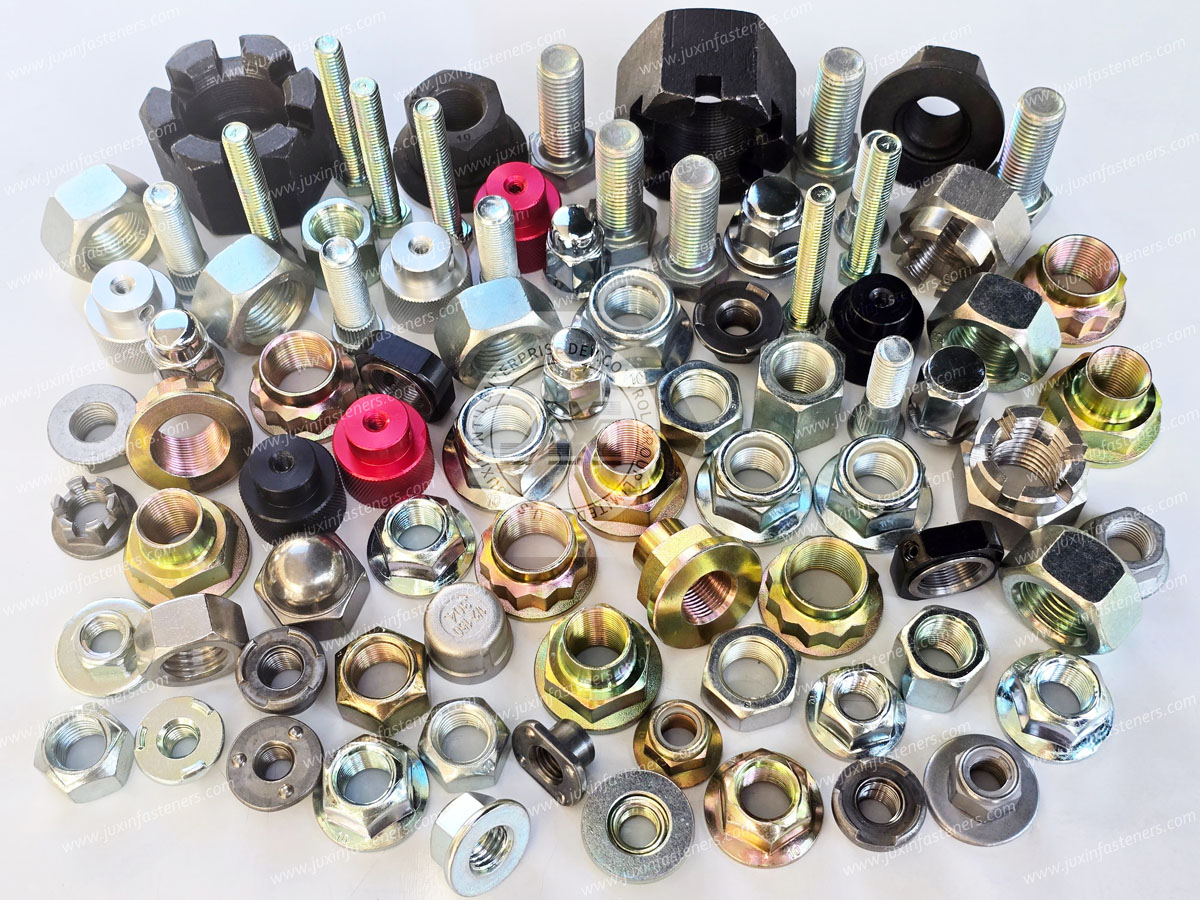
Heavy-pattern nuts may be specified in high-load industrial bolting systems where additional dimensions and thread engagement are required by the applicable specification.
But nut selection should follow the specified bolt/stud system.
Engineers should review:
nut grade;
dimensions;
thread class;
material;
hardness;
finish;
compatibility with the stud.
Substituting a visually similar nut can change the behavior of the threaded assembly.
In gasketed joints, the fastener does not work independently.
The load path can include:
Bolt / Stud → Nut → Washer / Bearing Surface → Flange → Gasket → Opposing Flange
Changes in bolt load can change gasket compression.
At elevated temperature, gasket behavior may also change.
Therefore, a leaking flange should not automatically be diagnosed as a “weak bolt.”
Potential causes can involve:
insufficient initial preload;
uneven tightening;
gasket relaxation;
flange distortion;
thermal expansion;
bolt relaxation;
surface condition.
The complete joint should be investigated.
Power-generation equipment can experience both temperature and vibration.
However:
High-Temperature Resistance ≠ Vibration Locking
A material capable of elevated-temperature service does not automatically prevent threaded self-loosening.
Where vibration is significant, engineers should separately evaluate:
preload;
joint slip;
locking method;
temperature compatibility of the locking system;
maintenance requirements.
This is particularly important because some conventional polymer-based locking technologies may have temperature limitations.
The Gemini draft suggested engineered retorquing schedules based on relaxation curves.
That can be appropriate for certain specified equipment and procedures, but it should not be presented as a universal solution.
Whether a fastener should be retightened depends on:
equipment design;
joint type;
gasket system;
fastener material;
operating procedure;
OEM maintenance instructions;
applicable code.
Unauthorized retightening can be inappropriate in some systems.
Maintenance should therefore follow the approved equipment procedure.
Not every power-generation fastener requires the same documentation package.
The correct level depends on component criticality, governing specification, OEM requirements, and application.
Possible requirements may include:
material certificate;
chemical composition;
mechanical-property results;
heat-treatment records;
dimensional inspection;
hardness testing;
coating certification;
lot identification;
traceability;
non-destructive examination where specified;
additional project-specific testing.
Procurement teams should specify required documents in the RFQ rather than assuming that every fastener needs every test.
For specification-controlled projects, material traceability can be as important as dimensional compliance.
A sourcing package may require the supplier to maintain a relationship between:
Raw Material Heat / Lot → Manufacturing Lot → Heat Treatment → Inspection → Finished Fastener
The exact traceability level should follow customer and project requirements.
This becomes particularly important when qualifying a second source.
Ultrasonic testing, magnetic particle testing, liquid penetrant inspection, or other NDT methods may be required for certain fasteners or projects.
But they are not universal requirements for every power-generation bolt.
The correct NDT method depends on:
material;
geometry;
defect type;
applicable specification;
customer requirements.
The RFQ should state the required method and acceptance criteria where NDT is mandatory.
Impact testing may be required by certain material specifications, grades, service temperatures, or project requirements.
But it should not be listed as a default requirement for all high-temperature fasteners.
Procurement teams should follow the governing material and project specification.
This avoids unnecessary testing while ensuring that required testing is not omitted.
Room-temperature tensile strength does not describe the complete elevated-temperature behavior.
Material grade and service specification matter.
A320/A320M addresses low-temperature bolting applications.
A coating can have a lower temperature capability than the base fastener.
The same torque can generate different preload.
Material, heat treatment, nut compatibility, finish, and documentation may also be critical.
Testing should follow the applicable specification and project requirement.
Appearance and dimensions cannot establish full material or heat-treatment equivalence.
For procurement and supplier-development teams, a useful principle is:
Visual Similarity ≠ Material Equivalence ≠ Thermal Equivalence ≠ Documentation Equivalence ≠ Functional Equivalence
A structured second-source review should include the following.
Verify:
diameter;
thread;
length;
thread length;
head or nut geometry;
chamfers;
radii;
special features;
tolerances.
Verify:
exact material specification;
grade;
heat treatment;
required mechanical properties;
elevated-temperature requirements where applicable.
Verify:
coating or finish;
lubricant;
corrosion requirement;
temperature capability.
Verify required:
certificates;
test reports;
inspection records;
traceability;
NDT;
special documentation.
Confirm:
temperature;
pressure where applicable;
medium;
thermal cycling;
vibration;
design life;
maintenance requirements.
Only after these characteristics are understood should a second-source component be considered functionally equivalent.
A sample can help identify:
dimensions;
thread;
geometry;
finish;
markings.
But it may not reveal:
exact alloy;
material heat;
heat treatment;
elevated-temperature properties;
coating specification;
lubricant;
inspection history;
traceability;
governing specification.
For power-generation fasteners, drawings and specifications are therefore especially important for cross-reference projects.
For technical review and quotation, provide as much of the following information as applicable:
2D drawing;
3D CAD model where available;
existing part number;
applicable ASTM, ASME, ISO, DIN, EN, SAE or customer specification;
bolt, stud, nut or washer type;
thread size;
thread pitch / TPI;
thread class or tolerance where specified;
overall length;
thread length;
required material specification and grade;
heat-treatment requirement;
mechanical-property requirement;
normal operating temperature;
maximum operating temperature;
pressure where applicable;
process medium;
thermal-cycle information;
vibration condition where relevant;
coating or surface finish;
lubricant requirement;
corrosion requirement;
marking requirement;
material certification requirement;
traceability requirement;
NDT requirement where specified;
special testing requirements;
inspection/documentation package;
sample quantity;
production or overhaul quantity;
estimated annual usage.
JUXIN FASTENERS can use this information to evaluate drawing compatibility, material and manufacturing feasibility, specification requirements, sample or cross-reference needs, documentation requirements, and the appropriate sourcing route.
For engineering teams, a useful selection path is:
Application → Temperature / Pressure / Environment → Joint Function → Material Specification
→ Fastener & Nut System → Surface / Lubrication → Preload Strategy → Testing & Validation
For procurement and supplier-development teams:
Approved Drawing & Specification → Critical Characteristics → Material / Heat Treatment → Manufacturing Review
→ Documentation → Sample / Inspection → Second-Source Qualification → Production RFQ
The key principle is:
A power-generation fastener should be selected by its complete service condition and governing specification—not simply by diameter, strength, or the label “high temperature.”
For specification-controlled elevated-temperature applications, successful sourcing requires the engineering and procurement teams to align the
drawing, material grade, heat treatment, threaded interface, operating environment, inspection requirements, and traceability package before production begins.
Email: info@juxinfasteners.com
Website: www.juxinfasteners.com
 MORE NEWS
Sep. 30, 2026
Sep. 30, 2026
Sep. 30, 2026
Contact Us
Tel.:
+86 020 8621 0320
+86 020 3121 6067
E-mail:
Technical Support:
Navigation
SEND INQUIREY