
Call Us
+86 136 6007 9809
Call Us
+86 136 6007 9809

Aug. 29, 2026
Precision CNC Machining for Semiconductor Equipment Components
Custom CNC Machined Parts and Fastening Solutions for Semiconductor Equipment OEMs
Semiconductor manufacturing equipment depends on precision mechanical components to support accurate positioning, structural mounting, automated movement, fastening, and repeatable assembly.
Many of these components cannot be sourced as standard catalog hardware because their geometry is designed around a specific equipment platform.
Custom mounting brackets, threaded blocks, sensor mounts, precision fixtures, standoffs, spacers, alignment components,
and specialized mechanical interfaces may all require CNC machining from approved engineering drawings.
For semiconductor equipment manufacturers, precision CNC machining involves more than producing parts with tight dimensional tolerances.
The manufactured components must also fit correctly within the assembly, maintain the intended relationships between critical features, and support consistent installation across production batches.
JUXIN FASTENERS supplies custom CNC machined components and industrial fastening products for drawing-based OEM applications.
Our product scope includes precision machined brackets, mounting blocks, fixtures, threaded components, pins, shafts, bushings, spacers, standoffs, sensor mounts, and other non-standard mechanical parts.
The appropriate manufacturing process depends on component geometry, material, dimensional tolerances, production quantity, surface requirements, and the intended equipment environment.
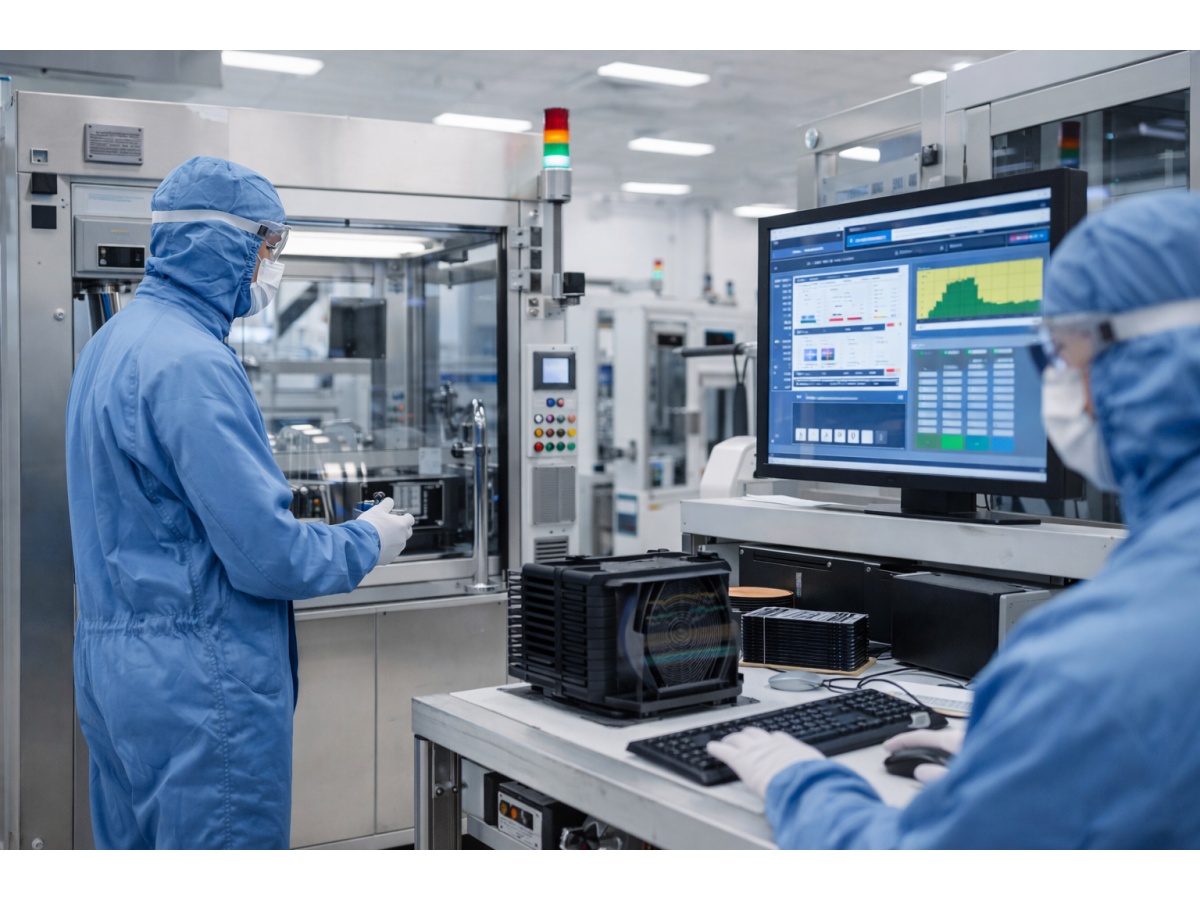
CNC Machined Components for Semiconductor Equipment
Semiconductor equipment manufacturers often require mechanical parts that combine multiple functional features within one component.
These may include mounting holes, precision bores, threaded holes, slots, pockets, locating surfaces, and controlled interfaces.
CNC machining provides flexibility to manufacture such components according to customer drawings.
Typical custom components include:
Precision mounting brackets
CNC machined mounting blocks
Threaded mounting blocks
Custom mechanical fixtures
Sensor mounting components
Precision spacers and standoffs
Alignment and locating components
Bushings and sleeves
Custom threaded parts
Precision pins and shafts
Equipment-specific mechanical interfaces
Although these products may belong to the same equipment assembly, their manufacturing requirements can differ substantially.
A precision mounting bracket may depend on hole position and mounting-face flatness.
A threaded mounting block may require controlled thread depth, positional accuracy, and adequate material around the threaded holes.
A precision fixture may depend on the relationship between multiple locating surfaces and datum features.
A spacer may require controlled length and end-face parallelism.
The manufacturing specification should reflect the actual function of each component.
CNC Milling, Turning and Combined Machining Processes
Different component geometries require different manufacturing methods.
CNC Milling
CNC milling is commonly used for parts containing flat surfaces, pockets, slots, complex profiles, mounting holes, and non-rotational features.
For semiconductor equipment, CNC milling may be appropriate for custom brackets, mounting blocks, fixtures, sensor mounts, and precision mechanical interfaces.
The process can produce multiple features according to a programmed machining sequence.
However, the accuracy of the finished component depends on workholding, tool access, machining strategy, material behavior, and inspection.
CNC Turning
CNC turning is suitable for rotationally symmetric components such as shafts, pins, bushings, sleeves, spacers, and threaded studs.
Where a component primarily contains cylindrical features, turning may provide a practical manufacturing method.
For more detailed engineering considerations relating to cylindrical components, the relevant CNC turning process should be evaluated separately.
Combined Turning and Milling
Some components require both cylindrical and non-rotational features.
For example, a custom shaft may include precision diameters together with flats, cross-holes, or mounting features.
Depending on geometry and production requirements, combined machining may reduce the number of setups.
Secondary Machining Operations
Certain parts may require drilling, tapping, reaming, grinding, polishing, or other finishing operations.
The appropriate process sequence should be determined according to the drawing and functional requirements.
Why CNC Machining Matters for Semiconductor Equipment
CNC machining allows OEM engineers to specify mechanical components around the equipment's actual interfaces rather than being limited to standard hardware dimensions.
However, manufacturing flexibility does not eliminate the need for careful design.
A component can meet individual dimensional tolerances while still creating assembly problems if its critical geometric relationships are not correctly defined.
For example, a mounting block may have the correct overall dimensions but fail to align with mating components because its threaded holes are incorrectly positioned.
A bracket may have accurately machined holes but distort during installation because its mounting surfaces are not sufficiently flat.
A fixture may appear dimensionally correct while producing inconsistent positioning because the functional datums are poorly defined.
These problems demonstrate why machining quality must be evaluated in relation to the complete assembly.
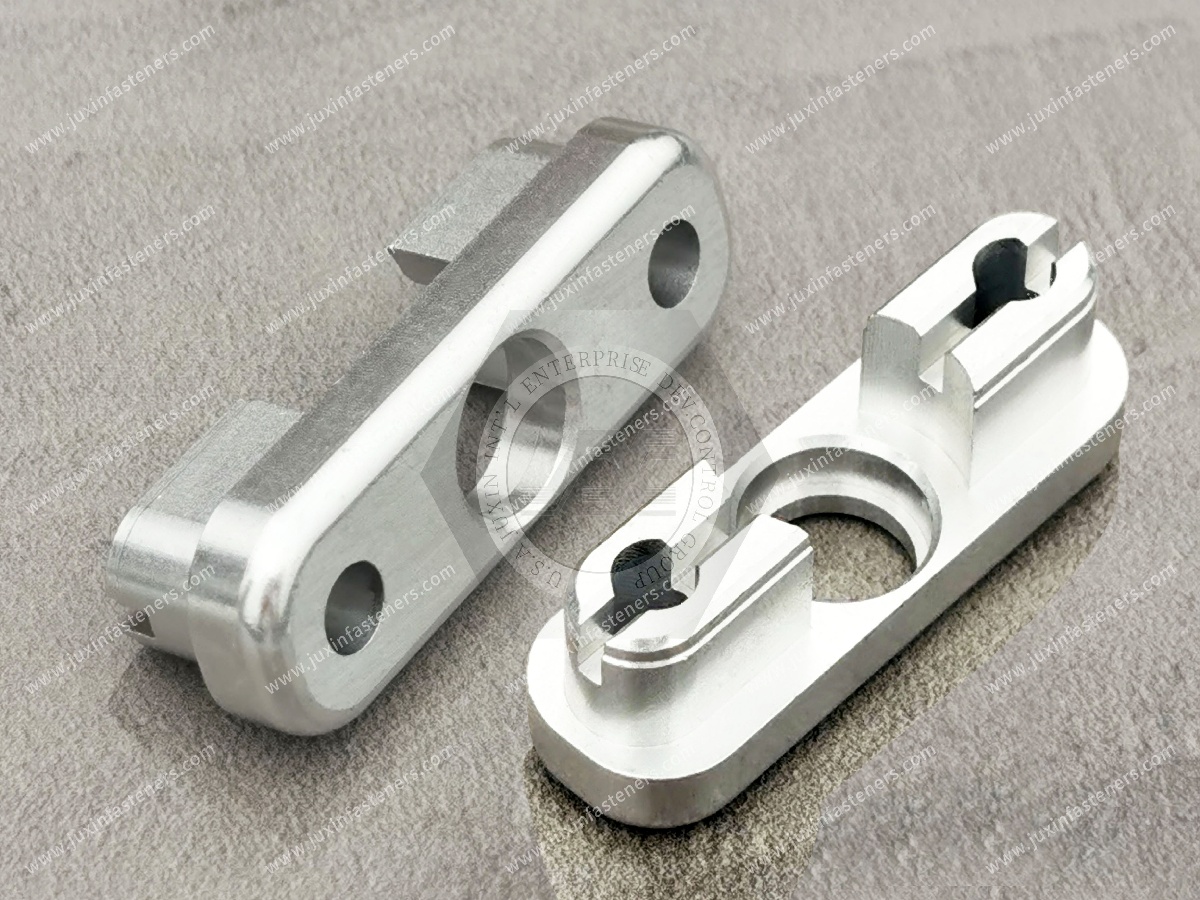
Drawing-Based CNC Manufacturing and Engineering Review
The engineering drawing is the foundation of custom CNC component manufacturing.
Before production, the available technical information should be reviewed to identify the material, geometry, tolerances, surface requirements, and inspection criteria.
Material Specification
The drawing should identify the required material grade and condition where applicable.
Material selection influences machining behavior, mechanical properties, corrosion resistance, dimensional stability, and surface treatment options.
Dimensional Requirements
Overall dimensions and individual feature dimensions should be evaluated for manufacturing feasibility.
Critical dimensions should be distinguished from general dimensions.
Geometric Dimensioning and Tolerancing
GD&T defines geometric relationships between features and helps communicate design intent.
Depending on the component, relevant requirements may include position, flatness, perpendicularity, parallelism, profile, and runout.
ISO 1101 or ASME Y14.5 may be used according to the customer's drawing system.
The applicable standard and datum reference system should be clearly established.
Thread Specifications
Threaded components require accurate identification of thread size, pitch, tolerance class, and mating requirements.
ISO metric threads may be specified according to applicable ISO thread standards, including ISO 261 and ISO 965.
Unified UNC/UNF threads may be specified according to ASME B1.1.
Metric, UNC/UNF, and British Whitworth thread systems are not directly interchangeable.
Surface Finish
Surface roughness requirements should be based on the function of the surface.
A locating face, sliding interface, or sealing-related surface may require different finishing considerations from a nonfunctional exterior surface.
Inspection Requirements
Critical dimensions and geometric relationships should be linked to suitable inspection methods.
The drawing should provide enough information for manufacturing and inspection teams to evaluate the same functional requirements.
Functional GD&T and Datum Selection
One of the most important engineering considerations for precision CNC machined parts is the relationship between datums, critical features, and the actual equipment assembly.
A datum is not simply a convenient surface for machining.
It should represent a meaningful reference for locating or orienting the component within its intended function.
Primary Mounting Surface
For a mounting bracket or equipment block, the primary mounting face may serve as an important datum feature.
Its flatness and relationship to other features can influence how the component seats against the mating structure.
Hole Position
Mounting holes and threaded holes may require positional tolerances relative to functional datums.
A hole can have the correct diameter but still prevent assembly if its location is outside the required positional tolerance.
Perpendicularity
Perpendicularity may be important where a bore, mounting surface, or threaded interface must maintain a defined orientation.
Parallelism
Parallelism can influence spacer assemblies, mounting interfaces, and precision fixtures.
Profile Tolerances
Profile tolerances may be useful for controlling complex surfaces or features that cannot be adequately defined by simple linear dimensions alone.
Runout
Runout requirements may be relevant for cylindrical or rotating features.
However, runout should not be added to non-rotational parts merely to increase the number of tolerances on a drawing.
The appropriate GD&T requirements should follow the component's actual function.
Manufacturing Precision Where It Matters
Precision CNC machining does not mean applying the tightest possible tolerance to every dimension.
Unnecessary tolerance restrictions can increase machining time, setup complexity, inspection effort, and production cost.
A practical approach is:
Equipment Function → Critical Feature → Datum and Tolerance → Manufacturing Process → Inspection Method
For example, a semiconductor equipment mounting bracket may require accurate hole position and a controlled mounting surface.
Its nonfunctional outer profile may permit a more economical tolerance.
A precision threaded mounting block may require controlled thread position and depth, while other external dimensions may be less critical.
This function-driven approach helps engineers balance assembly performance with manufacturing feasibility.
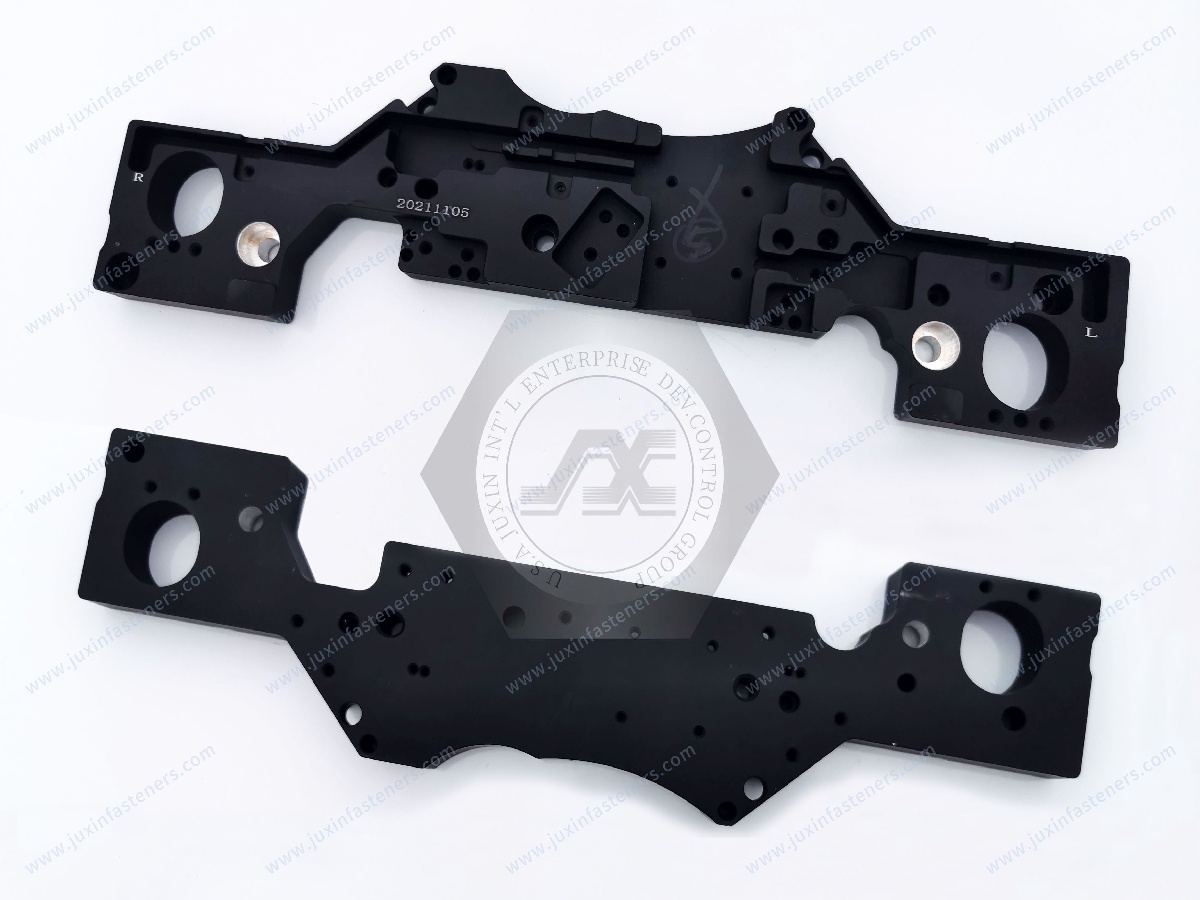
Material Selection for Semiconductor CNC Machined Components
Material selection should be based on the component's mechanical function and operating environment.
Stainless Steel
Stainless steel may be selected for mechanical components requiring suitable corrosion resistance, strength, and dimensional characteristics.
The appropriate grade depends on the application.
316L Stainless Steel
316L stainless steel may be considered where its corrosion behavior and mechanical properties are suitable.
However, 316L should not be assumed compatible with every semiconductor process chemical or cleaning environment.
Carbon Steel
Carbon steel may be appropriate for selected structural components where its mechanical properties and environmental limitations are acceptable.
Alloy Steel
Alloy steel may be selected where specific strength, hardness, or wear performance is required.
Depending on the application, heat treatment or surface protection may be necessary.
Aluminum
Aluminum is commonly considered for lightweight mounting brackets, blocks, fixtures, spacers, and mechanical interfaces.
Its machinability can make it suitable for complex CNC milled components.
However, alloy selection, temper, thread strength, thermal expansion, and surface treatment should be evaluated.
Copper
Copper may be selected where electrical or thermal conductivity is a functional requirement.
Machining behavior and material condition should be considered according to the component design.
Titanium
Titanium may be considered for specialized components requiring particular combinations of density, strength, and corrosion characteristics.
Its machining requirements and cost should be evaluated during process planning.
Engineering Plastics
Engineering plastics may be suitable for selected components requiring electrical insulation, chemical compatibility, or other nonmetallic properties.
However, creep, thermal expansion, moisture absorption, and mechanical strength can influence dimensional and assembly performance.
Process-Exposed Components
Parts installed inside vacuum chambers, chemical-processing systems, or contamination-sensitive areas may require additional material and cleanliness evaluation.
A material suitable for an external equipment frame is not automatically suitable for direct process exposure.
Custom CNC Mounting Brackets and Mechanical Interfaces
Custom brackets are common in semiconductor equipment because they connect equipment structures, automation modules, sensors, covers, and other mechanical assemblies.
A CNC machined bracket may incorporate:
Mounting holes
Threaded holes
Counterbores
Countersinks
Slots
Locating shoulders
Precision mounting faces
Recesses and pockets
Equipment-specific interfaces
Mounting Hole Position
Hole position should be evaluated relative to the mating assembly.
For bolted connections, hole clearance, fastener size, and assembly tolerances influence installation.
Mounting Surface Flatness
Flatness may affect how the bracket contacts the mating component.
Poor surface contact can introduce local distortion when fasteners are tightened.
Bracket Stiffness
A bracket may be dimensionally accurate but insufficiently stiff for its intended mechanical load.
Material selection, wall thickness, geometry, and fastening arrangement influence stiffness.
Thermal Expansion
Where brackets connect dissimilar materials or operate across changing temperatures, differential thermal expansion may affect alignment or joint loading.
Installation Access
The design should provide appropriate access for screws, tools, and maintenance.
A difficult-to-access fastener can increase assembly time and complicate service operations.
Custom Threaded Mounting Blocks
Threaded mounting blocks combine mechanical support with fastening interfaces.
They may include tapped holes, locating surfaces, precision bores, counterbores, and other machined features.
The design should consider thread engagement, base material strength, hole spacing, edge distance, and installation requirements.
Thread Depth
Blind threaded holes should provide sufficient usable thread engagement without causing the fastener to bottom out.
The drawing should distinguish between drilled depth and full-thread depth where necessary.
Edge Distance
Threaded holes positioned too close to an edge may reduce the strength of the surrounding material.
The required edge distance depends on the base material, load, geometry, and thread size.
Threaded Inserts
Where repeated assembly or soft base materials create thread durability concerns, threaded inserts may be considered.
The insert design must be compatible with the component geometry and installation process.
Mixed-Material Connections
Stainless steel screws installed into aluminum blocks may require attention to galvanic corrosion, thread strength, and installation torque.
The complete joint should be evaluated rather than considering the machined block independently.
Precision Fixtures and Locating Components
Precision fixtures support positioning, assembly, inspection, and mechanical alignment.
A custom fixture may incorporate multiple locating surfaces, dowel holes, threaded interfaces, and mounting features.
The functional datum scheme should reflect how the fixture locates the equipment component.
For example, using a flat reference surface together with suitable locating features can establish repeatable positioning.
However, excessive constraints can make assembly difficult or introduce unwanted stresses.
Fixture design should consider accessibility, repeatability, wear, and maintenance requirements.
Sensor Mounts and Equipment-Specific Components
Sensor mounts may require controlled bores, threaded interfaces, locating surfaces, and mounting geometry.
The appropriate tolerance depends on the sensor's function and required position.
For some designs, mounting-face orientation may be more important than the external dimensions of the component.
CNC machining allows these features to be integrated into custom mechanical parts according to the approved equipment design.
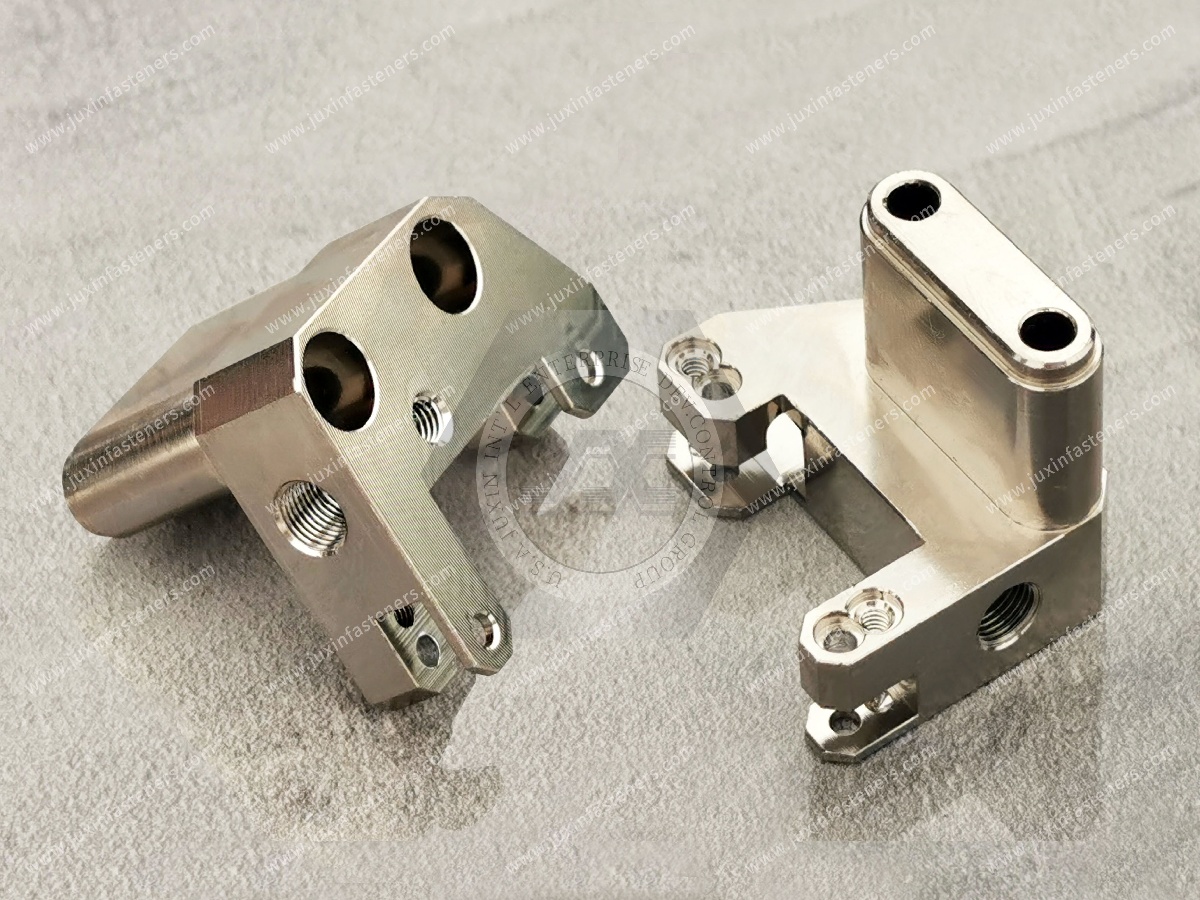
Precision Pins, Bushings, Spacers and Standoffs
Small cylindrical components frequently form part of larger CNC machined assemblies.
Precision Pins
Alignment and locating pins may establish repeatable positioning between mating components.
Diameter, fit, straightness, and positional requirements should be determined from the assembly.
Bushings
Bushings can provide controlled interfaces for shafts, pins, and mounting features.
Critical characteristics may include inside diameter, outside diameter, length, and geometric relationships.
Spacers
Precision spacers establish controlled separation distances.
Length tolerance and end-face parallelism may be important where the spacer influences assembly alignment.
Standoffs
Standoffs can support panels, electronic assemblies, covers, and other structures requiring a defined separation distance.
Thread specifications, length, material, and mounting arrangement should be selected according to the design.
Design for Manufacturability of CNC Machined Parts
Design for manufacturability helps identify machining challenges before production.
For semiconductor equipment components, early DFM review can reduce unnecessary cost while preserving critical engineering requirements.
Thin-Wall Distortion
Thin-walled brackets, housings, and mounting blocks may deform under machining or clamping forces.
Material removal can also release internal stresses.
The machining sequence and workholding strategy should be considered where flatness or dimensional stability is critical.
Deep Pockets
Deep pockets can increase tool deflection and machining time.
Where possible, pocket depth, corner radii, and tool access should be evaluated during design.
Small Internal Radii
CNC milling tools have finite diameters.
Very small internal corner radii may require smaller tools, longer machining time, or additional operations.
Where function permits, larger radii can improve manufacturability.
Deep Threaded Holes
Deep threaded holes may require special tooling or machining strategies.
The drawing should define the required usable thread depth and any functional constraints.
Multiple Setups
Components requiring machining from several orientations may introduce additional setup operations.
Where critical features are related, process planning should consider how datum transfer and workholding affect accuracy.
Burr Control
Drilled holes, milled slots, and threaded features may produce burrs.
Burr removal should be considered where sharp edges could interfere with assembly or generate unwanted particles.
Surface Treatment Allowances
Anodizing, plating, and other surface treatments may affect finished dimensions.
Where the treatment changes a critical fit or threaded interface, the drawing and manufacturing plan should account for the specified coating requirements.
Surface Finish, Surface Treatment and Cleanliness
The appropriate surface finish depends on the component's function and operating environment.
Potential requirements include controlled roughness, deburring, polishing, passivation, anodizing, or other customer-specified treatments.
For suitable stainless steel components, ASTM A967/A967M may be relevant where chemical passivation is required.
For suitable aluminum anodizing requirements, ISO 7599 may be relevant.
However, surface treatment alone does not establish semiconductor process compatibility.
Cleaning and Handling
Machining oils, loose particles, and other manufacturing residues may require removal according to the customer's cleanliness specifications.
Specialized cleaning procedures should be defined before production.
Packaging
Packaging should protect critical dimensions, machined surfaces, and threaded features during transportation.
Where controlled cleanliness is required, packaging materials and handling procedures should be evaluated against the customer specification.
Inspection After Surface Treatment
For dimensions affected by coating or finishing, inspection may need to consider the finished condition rather than only the as-machined geometry.
The drawing should clearly identify whether specified dimensions apply before or after surface treatment.
CNC Machining for Semiconductor Equipment Assemblies
Custom machined components may support several types of semiconductor equipment.
Wafer Handling Systems
Precision brackets, mounting blocks, pins, shafts, and locating components may support transfer and positioning mechanisms.
Inspection and Metrology Equipment
Precision fixtures, sensor mounts, and mechanical interfaces may support inspection systems and measurement equipment.
Semiconductor Process Equipment
Custom threaded components, spacers, mounting brackets, and mechanical interfaces may support process-related assemblies.
Vacuum Equipment
Custom machined parts may be used in mechanical assemblies associated with vacuum systems.
Specialized material, outgassing, cleanliness, and vacuum compatibility requirements must be evaluated separately.
Industrial Automation
Shafts, bushings, pins, brackets, and other precision parts may support motion and positioning systems.
Equipment Frames and Enclosures
Mounting brackets, standoffs, spacers, and custom blocks may support equipment structures, covers, and protective assemblies.
CNC Machining and Custom Fastener Manufacturing
Semiconductor equipment manufacturers frequently require both custom machined components and industrial fasteners.
A typical assembly may include a CNC machined bracket, threaded mounting block, precision spacer, alignment pin, and several screws or studs.
These parts should be evaluated as an interconnected mechanical system.
For example, a threaded mounting block must provide the correct thread engagement for its mating fastener.
A precision spacer must maintain the intended separation between connected components.
A locating pin must fit the mating holes without introducing unwanted assembly stress.
Coordinating these requirements during drawing review can help identify potential interface problems before production.
JUXIN FASTENERS supplies custom fasteners and CNC machined components for drawing-based OEM applications.
For procurement teams, consolidating suitable mechanical components through one sourcing channel may simplify technical communication and purchasing administration.
However, each part must still satisfy its approved drawing and inspection requirements.
Prototype Development and Production Manufacturing
Custom CNC machining can support different stages of semiconductor equipment development.
Prototype Manufacturing
Prototype components allow engineers to evaluate geometry, assembly fit, and functional requirements.
Design revisions may be required after initial testing.
Sample Approval
Where required, samples can be manufactured according to the approved drawing for customer evaluation.
Production Planning
Once the component design is approved, production planning should consider tooling, workholding, machining sequence, inspection, and material supply.
Repeat Production
Repeat manufacturing should follow the approved specification and drawing revision.
Changes to critical dimensions, materials, surface treatment, or inspection requirements should be controlled.
The transition from prototype to production should consider whether the manufacturing process can consistently reproduce the required characteristics.
Quality Control and Inspection for Precision CNC Components
Inspection should focus on the characteristics that determine the component's function.
Depending on the drawing, inspection may include:
Overall dimensions
Hole diameters
Hole position
Thread dimensions
Flatness
Perpendicularity
Parallelism
Profile tolerances
Runout where applicable
Surface roughness
Visual condition
Material verification
Other customer-specified characteristics
Dimensional Inspection
Suitable measurement methods should be selected according to the feature and tolerance.
GD&T Inspection
Geometric requirements should be evaluated using the specified datum reference system.
For complex components, coordinate measuring equipment may be appropriate where available and justified by the inspection requirement.
Thread Inspection
Threaded features may require functional gauges or other suitable measurement methods.
Surface Inspection
Surface finish and edge condition may require visual inspection or appropriate measurement.
Material and Documentation Requirements
Customers may require material documentation or other project-specific records.
The required inspection scope and documentation should be agreed before production.
Manufacturing Repeatability
A component that passes inspection during prototyping may still require additional process planning for consistent production.
Repeatability depends on material condition, tooling, workholding, machining strategy, inspection methods, and process control.
Production Assembly Efficiency
Production managers and manufacturing engineers evaluate custom CNC components not only for dimensional accuracy but also for their effect on assembly efficiency.
A component may meet its drawing requirements while still being difficult to install if the design does not provide adequate tool access or assembly clearance.
Practical considerations include:
Fastener accessibility
Hole alignment
Locating features
Thread engagement
Spacer consistency
Surface contact
Installation sequence
Maintenance access
Designing these features into the component can reduce assembly adjustments and improve production consistency.
OEM Procurement and Supplier Development
Purchasing managers, supplier development teams, and supply chain professionals should evaluate custom CNC machining suppliers according to both technical and commercial requirements.
Manufacturing Capability
The supplier should be able to evaluate the required geometry, material, tolerances, and machining process.
Material Sourcing
Material grade, condition, availability, and documentation requirements may influence cost and lead time.
Drawing Revision Control
Approved drawing revisions should govern manufacturing and repeat orders.
Inspection Requirements
Critical characteristics and documentation expectations should be defined before quotation.
Prototype and Production Quantities
Different order quantities may require different manufacturing strategies.
MOQ and Lead Time
Minimum order quantities and production lead times depend on material, geometry, machining operations, finishing, inspection, and volume.
Packaging and Delivery
Packaging should protect precision features and meet the customer's handling requirements.
Total Procurement Cost
The lowest unit price may not represent the lowest total cost if the component creates assembly rework, additional inspection, or production delays.
A practical sourcing strategy considers component quality, manufacturing feasibility, supply continuity, and the cost of maintaining approved specifications.
Industrial Applications Beyond Semiconductor Equipment
Precision CNC machining also supports other industrial OEM sectors.
JUXIN FASTENERS supplies drawing-based mechanical components for applications involving industrial automation, robotics, automotive systems, EV equipment,
electrical equipment, telecommunications, HVAC, industrial machinery, rail transit, solar equipment, and laboratory equipment.
However, material selection, machining process, and tolerances should always follow the component's actual functional requirements.
JUXIN FASTENERS Custom CNC Machining and OEM Components
JUXIN FASTENERS has more than two decades of experience in industrial fasteners and supports international OEM customers with custom fastening and precision machining requirements.
Our product and manufacturing scope includes CNC machining, CNC turning, custom fastener production, and drawing-based mechanical components.
Typical products include:
CNC machined mounting brackets
Custom threaded mounting blocks
Precision fixtures
Sensor mounts
Alignment pins
Shafts and bushings
Spacers and standoffs
Custom screws and studs
Precision sleeves
Non-standard mechanical components
Manufacturing feasibility depends on the component's geometry, material, tolerance requirements, production quantity, and inspection specifications.
Specialized semiconductor process compatibility, cleanliness, vacuum requirements, chemical resistance, and other application-specific conditions must be reviewed separately.
The objective is to support OEM customers with practical manufacturing solutions that connect engineering requirements, machining feasibility, inspection, and repeat production.
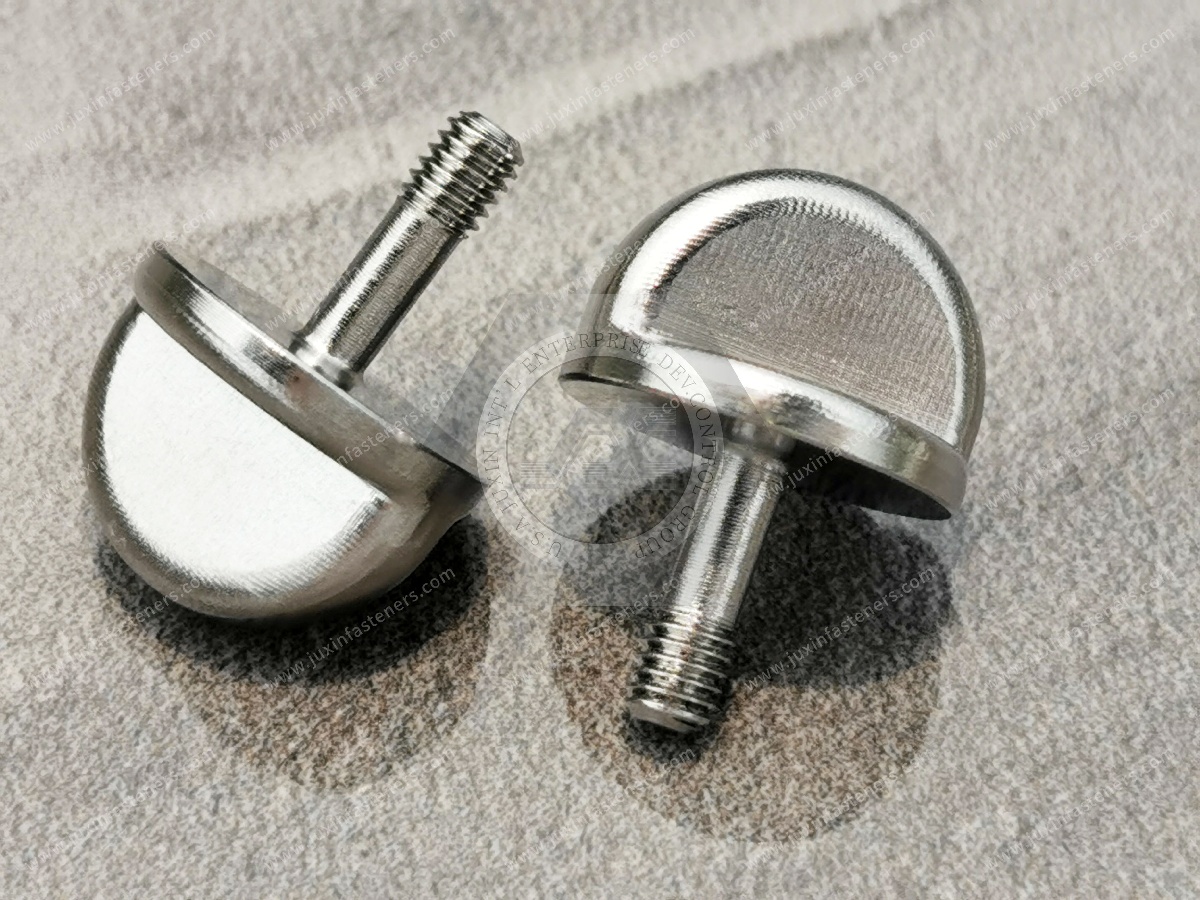
Request a CNC Machining Quote for Semiconductor Equipment Components
If your company is sourcing precision CNC machined parts for semiconductor equipment, custom mounting brackets, threaded blocks, fixtures, sensor mounts, spacers,
standoffs, or other drawing-based mechanical components, contact JUXIN FASTENERS for technical evaluation and quotation.
Please provide your 2D engineering drawings, 3D CAD models, material specifications, critical dimensions, GD&T requirements, thread specifications, surface finish, expected quantities, and inspection criteria.
Where applicable, please also identify the component's operating environment, mating-part requirements, cleaning specifications, and packaging expectations.
Our team can review the manufacturing requirements and discuss suitable machining processes, component specifications, and commercial quotation details.
JUXIN FASTENERS
Website: https://www.juxinfasteners.com/
Email: info@juxinfasteners.com
Precision CNC Machining | Semiconductor Equipment Brackets | Custom Mounting Blocks | Precision Fixtures | Drawing-Based OEM RFQ Support
Contact Us
Tel.:
+86 020 8621 0320
+86 020 3121 6067
E-mail:
Technical Support:
Navigation
SEND INQUIREY



