Call Us
+86 136 6007 9809
Call Us
+86 136 6007 9809

Aug. 14, 2026
Quick-twist concrete anchors are designed to create a mechanical attachment point in concrete without the adhesive injection and curing steps associated with bonded anchoring systems.
They can be particularly useful where contractors must install large numbers of overhead support points for:
Electrical conduit
Pipe supports
Cable supports
Cable tray suspension
Lighting systems
HVAC services
Plumbing services
Mechanical utilities
Threaded-rod suspension systems
Other selected MEP installations
The original application concept uses a wedge-shaped expansion section that is activated during installation to engage the wall of the drilled concrete hole.
But fast installation should never be confused with universal application suitability.
For design engineers, MEP engineers, contractors, procurement managers and supplier-development teams, the correct selection path is:
Supported System → Design Load → Concrete Condition → Anchor Mechanism → Embedment → Edge Distance & Spacing → Installation
→ Corrosion Environment → Technical Qualification → Inspection → Procurement
The most important engineering rule is:
Fast Installation ≠ Automatic Suitability for Every Overhead Load.
A quick-twist anchor is a mechanical expansion anchor for concrete designed around a threaded connection and an expanding anchoring section.
Depending on the specific product geometry, tightening the installation assembly activates the expansion mechanism
so that the anchor develops mechanical engagement with the surrounding concrete.
Unlike an adhesive anchor, this type of anchor does not rely on structural resin curing before the mechanical anchoring mechanism is activated.
That can make it useful for repetitive overhead installations where installation productivity matters.
However:
Mechanical Engagement ≠ Qualified Load Capacity.
The actual allowable application depends on the specific anchor design, concrete, embedment, installation and applicable technical data or approval.
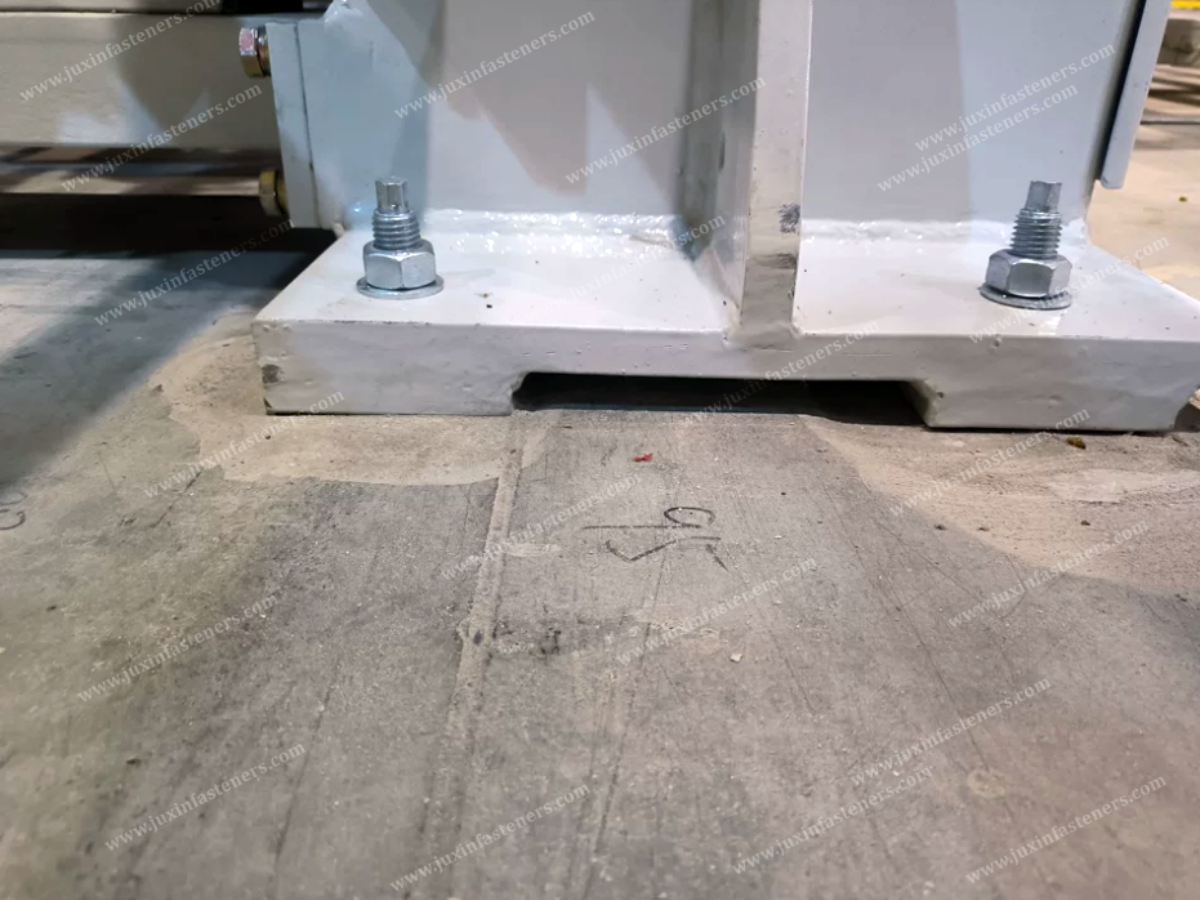
An anchor installed in a wall or machinery foundation and an anchor supporting equipment above occupied space can have very different consequences if the connection fails.
Overhead MEP installations may support:
Pipework
Conduit
Cable tray
Lighting
Duct support systems
Utility lines
Suspended service components
The engineering problem is therefore not simply:
"Will the anchor hold the component?"
A better question is:
"Is the complete anchoring system appropriate for the actual load, concrete condition, installation orientation, service environment and consequence of failure?"
For overhead installations:
Component Weight ≠ Complete Design Load.
The anchor may also experience effects from installation geometry, service movement, vibration or other project-specific loading.
A typical quick-twist concept can include:
Threaded anchoring interface
Expansion body
Wedge-shaped or tapered activation geometry
Expansion clips or segments
Nut and washer
Threaded rod or suspension component
During installation, activation of the threaded assembly causes the expansion section to engage the wall of the drilled hole.
The load-transfer chain becomes:
Supported Component → Threaded Connection → Anchor Body → Expansion Interface → Concrete
This immediately reveals an important engineering principle:
Thread Strength Alone ≠ Anchor Capacity.
A stronger threaded rod cannot compensate for inadequate concrete engagement.
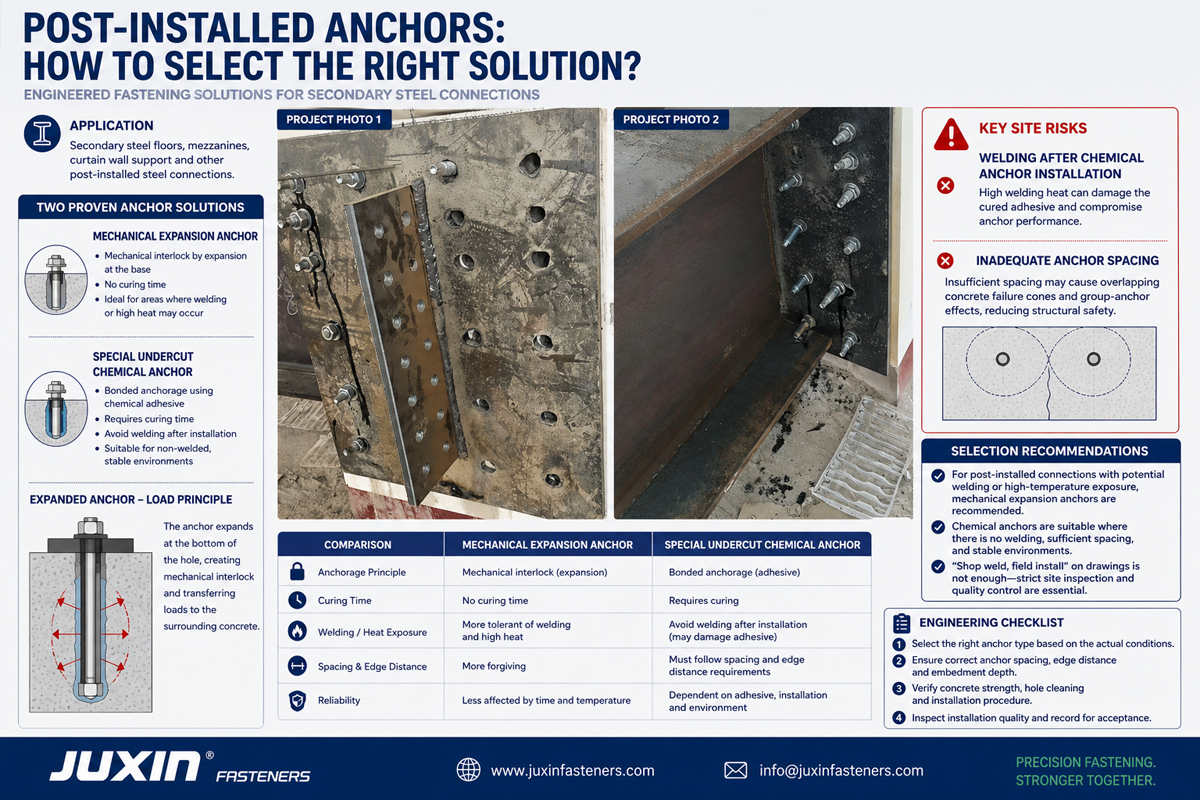
Quick-twist anchors and chemical anchors solve different installation problems.
| Engineering Factor | Quick-Twist Mechanical Anchor | Bonded / Chemical Anchor |
|---|---|---|
| Primary anchoring mechanism | Mechanical expansion | Adhesive bonding/system-specific load transfer |
| Structural adhesive | Not normally required | Required |
| Adhesive cure time | None | Product/temperature dependent |
| Installation speed | Potentially fast | More process steps |
| Hole preparation | Still important | Critical and system-specific |
| Expansion force into concrete | Present | Depends on bonded system |
| Edge/spacing sensitivity | Must be evaluated | Must be evaluated |
| Overhead repetitive supports | Can be attractive where qualified | Can be used where qualified |
| Heavy structural application | Product-specific | Product-specific |
| Cracked concrete | Qualification required | Qualification required |
| Seismic use | Qualification required | Qualification required |
Neither system is universally superior.
The correct choice depends on the application.
These products should not automatically be treated as interchangeable simply because all three can create attachments to concrete.
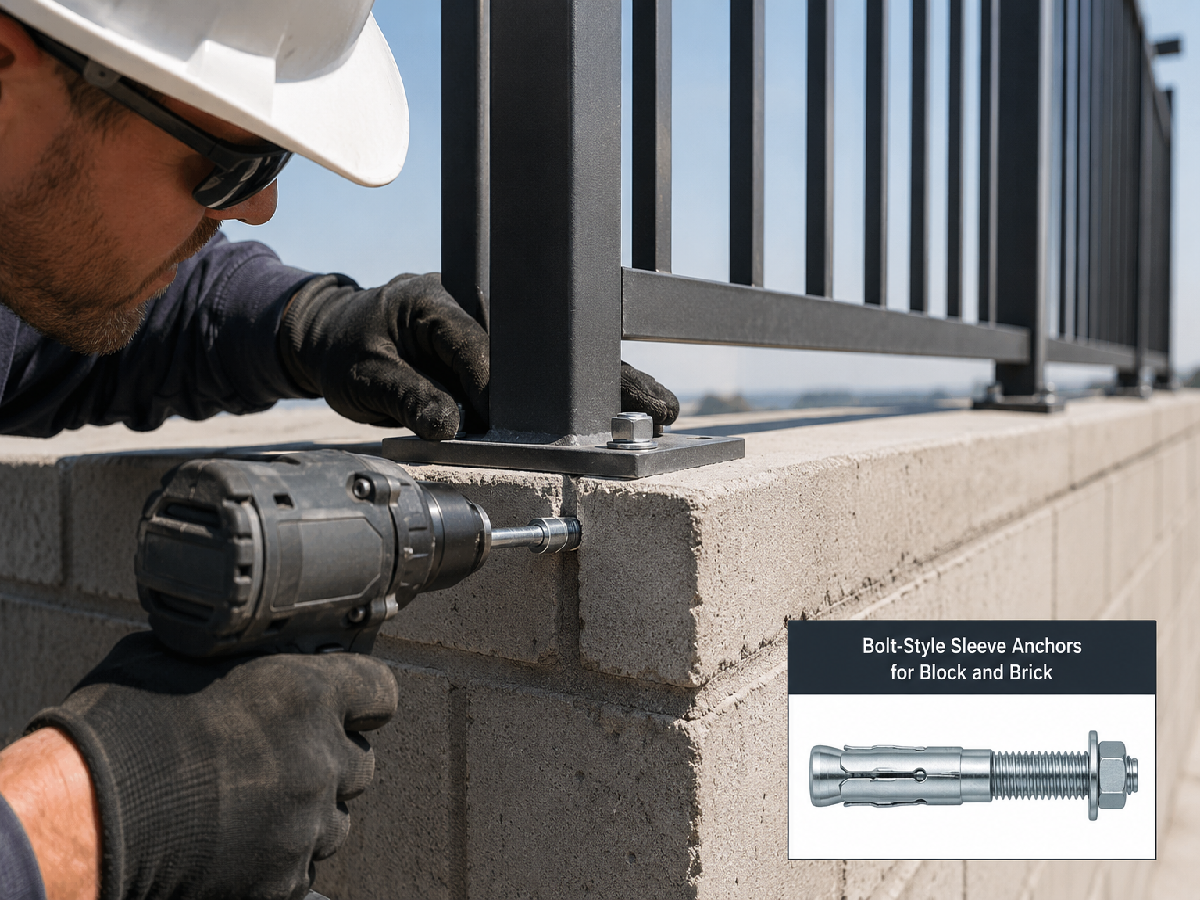
Uses a mechanical expansion mechanism within the drilled hole.
Uses expansion against the concrete through its own product-specific wedge mechanism.
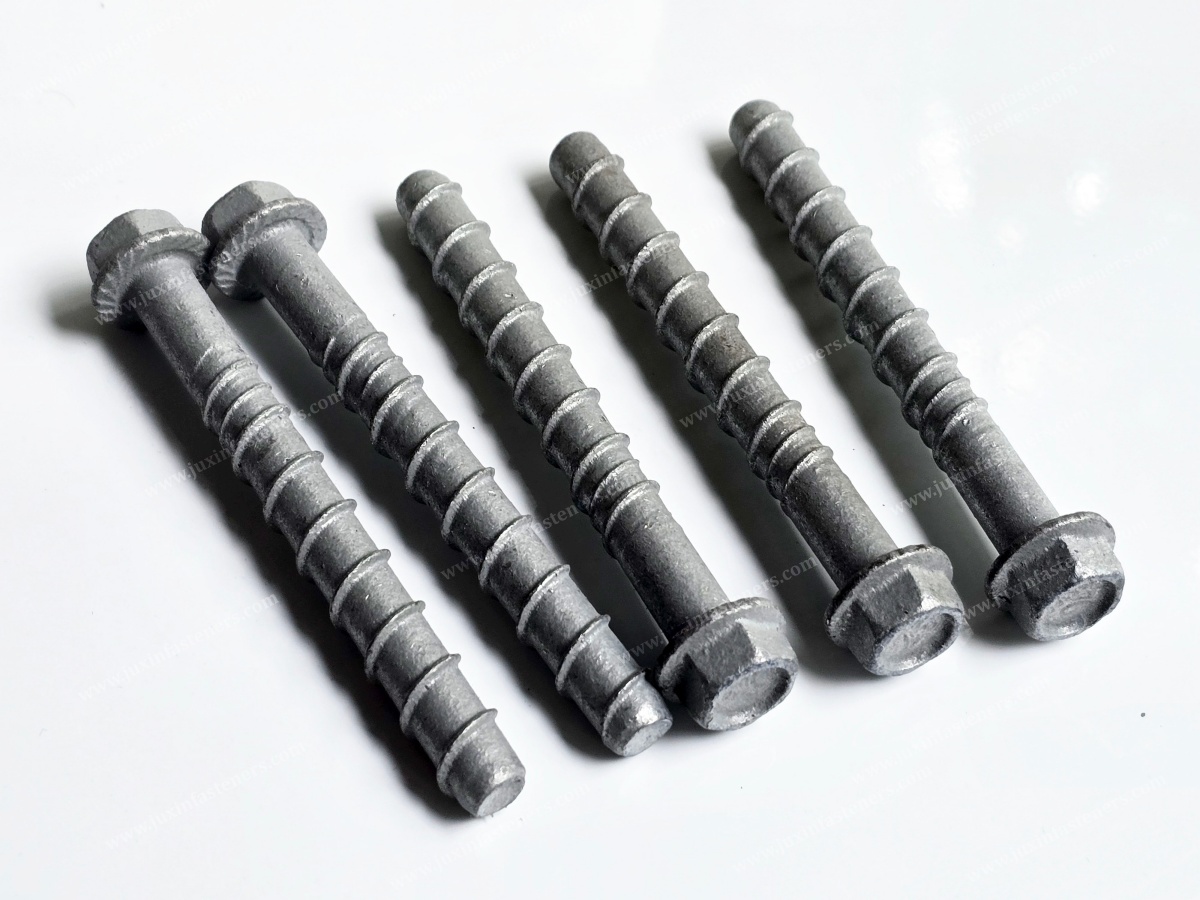
Uses a hardened threaded profile designed to engage directly with the concrete substrate.
These systems can differ in:
Installation
Hole requirements
Expansion forces
Removal behavior
Edge-distance requirements
Load performance
Technical qualification
Therefore:
Same Diameter ≠ Same Concrete Anchor Performance.
A commercial or industrial building may require many overhead attachment points.
Even a small difference in installation time per anchor can affect:
Labor hours
Access-equipment usage
Project schedule
Installation productivity
Total installed cost
Quick-twist mechanical anchors can eliminate several adhesive-related steps, such as:
Resin preparation
Adhesive injection
Adhesive dispensing equipment
Adhesive cure waiting
This creates genuine commercial value.
But procurement should evaluate installation efficiency together with structural suitability.
Faster Installation ≠ Lower Total Cost If Rework or Failure Risk Increases.
Before selecting an overhead anchor, classify the supported system.
Examples include:
May involve relatively repetitive suspension points, but the engineer still needs to understand:
Conduit size
Support spacing
Bracket configuration
Threaded-rod size
Applicable project requirements
Cable tray loading depends on the installed cable system, support arrangement and span.
A small light fixture and a large suspended lighting assembly are not the same anchoring problem.
Pipe support loading can include:
Pipe self-weight
Fluid weight
Insulation
Valves
Fittings
Support geometry
Ducts, piping and mechanical services can introduce different load paths.
Therefore:
Application Name ≠ Design Load.
For an overhead support, engineers may need to consider:
Tension
Shear
Combined tension and shear
Eccentricity
Vibration
Service movement
Installation orientation
A catalogue load value should never be applied blindly without understanding its test and design conditions.
Published Test Load ≠ Automatically Allowable Design Load.
Mechanical expansion anchors rely on the surrounding concrete.
Concrete properties can therefore influence anchor behavior.
Relevant questions include:
Concrete compressive strength
Concrete condition
Member thickness
Cracking condition
Reinforcement location
Edge proximity
A mechanical anchor should not be treated as an independent steel component.
Strong Anchor Steel ≠ Strong Concrete Connection.
Concrete may crack because of:
Structural loading
Shrinkage
Thermal movement
Long-term structural behavior
Seismic effects
An anchor that performs acceptably in uncracked concrete should not automatically be assumed to provide equivalent performance in cracked concrete.
Therefore:
Uncracked-Concrete Performance ≠ Cracked-Concrete Qualification.
If the project requires cracked-concrete performance, use an anchor system with appropriate technical qualification and design data for that condition.
Depending on project location and application, engineers may encounter frameworks such as:
EN 1992-4 for design of fastenings for use in concrete
Applicable European Assessment Documents and European Technical Assessments
ACI 318 Chapter 17 for anchoring to concrete
Applicable ICC-ES evaluation criteria and reports
Project-specific structural specifications
Manufacturer technical data and installation instructions
But:
Reference to a Standard ≠ Product Approval.
A supplier should not claim structural, cracked-concrete, seismic or overhead qualification merely because a standard exists.
For anchors supporting components overhead, procurement teams should verify whether the selected anchor is appropriate for that specific use.
Do not assume that:
Anchor Works in Concrete → Anchor Is Automatically Approved for Every Ceiling Application
Depending on the project, requirements may come from:
Structural engineer
MEP specification
Building code
Fire-protection requirements
Local authority
Anchor technical assessment
System manufacturer
For safety-related overhead installations, use the project-approved anchor system.
Mechanical expansion requires sufficient engagement with the concrete.
Embedment affects:
Available concrete volume
Load-transfer region
Anchor behavior
However:
Deeper Embedment ≠ Unlimited Increase in Capacity.
Other failure modes can become governing.
The specified embedment should come from the selected anchor system's technical requirements rather than installer judgment.
Hole diameter directly affects expansion-anchor installation.
A hole that is:
Too small
Too large
Out of round
Damaged
can change the interaction between anchor and concrete.
Therefore:
Correct Anchor Diameter + Incorrect Hole Diameter = Incorrect Installation.
Drill size and hole preparation are part of the anchoring system.
Insufficient hole depth can prevent correct seating.
Excessive depth should not be used as a substitute for following the specified installation procedure.
The required hole depth should account for the actual anchor design and installation method.
Mechanical anchors do not rely on adhesive bonding, so hole-cleaning requirements differ from bonded anchors.
But loose drilling debris can still interfere with:
Seating
Installation depth
Expansion
Inspection
Follow the anchor manufacturer's installation requirements.
The correct distinction is:
Mechanical Anchor Hole Cleaning ≠ Bonded Anchor Hole Cleaning
but not:
Mechanical Anchor = Hole Condition Does Not Matter.
Expansion anchors generate forces within the surrounding concrete.
If an anchor is installed too close to an edge, the available concrete volume can become insufficient.
Potential consequences include:
Reduced resistance
Concrete cracking
Edge breakout
Therefore:
Anchor Capacity ≠ Independent of Edge Distance.
Closely spaced anchors can interact through the concrete.
This means:
Four Anchors ≠ Automatically Four Times the Capacity of One Anchor.
The group should be evaluated according to the applicable design method and product data.
This is especially important for:
Multi-point trapeze supports
Equipment brackets
Cable tray frames
Pipe support assemblies
An overhead anchor is installed into a slab or other concrete member of finite thickness.
The design must consider:
Anchor embedment
Hole depth
Concrete thickness
Opposite surface
Reinforcement
Structural requirements
A longer anchor is not automatically safer in a thin slab.
Concrete slabs may contain:
Reinforcing steel
Prestressing tendons
Embedded services
Drilling location must therefore be coordinated with project requirements.
A fastener supplier should not imply that anchor selection alone resolves safe drilling location.
Correct Anchor ≠ Permission to Drill Anywhere in the Structure.
If the anchor is activated by tightening a nut, torque influences the expansion process.
But:
More Installation Torque ≠ Better Anchor.
Excessive tightening can potentially:
Damage components
Overstress threads
Alter expansion behavior
Affect the concrete interface
Insufficient activation can also be problematic.
Use the installation requirements specified for the actual anchor system.
A common misunderstanding is to connect installation torque directly with supported load.
These are different concepts.
Installation torque helps activate or assemble the anchoring mechanism.
Anchor resistance depends on the complete interaction of:
Steel
Anchor geometry
Concrete
Embedment
Edge distance
Spacing
Installation
Therefore:
Installation Torque ≠ Allowable Anchor Load.
The exact installation procedure must follow the specific product instructions.
A typical mechanical quick-twist concept may involve:
Verify the specified anchor and threaded component.
Drill the specified hole diameter and depth.
Prepare the hole according to installation requirements.
Assemble the anchor with the appropriate threaded rod, nut and washer where applicable.
Insert the anchor to the specified position.
Activate the expansion mechanism according to the required procedure.
Verify installation.
Install the supported component.
This sequence is explanatory only.
Generic Article Instructions ≠ Product-Specific Installation Instructions.
Some quick-twist anchor designs are installed below the concrete surface.
Where this applies, the installation depth should follow the product-specific technical requirements.
Do not create a generic rule such as:
"Install as deep as possible."
Too little embedment can be inadequate.
Uncontrolled additional depth does not automatically improve performance.
Many overhead support systems use threaded rod.
The rod should be selected according to:
Thread size
Material
Mechanical properties
Corrosion environment
Supported load
Applicable support-system requirements
A higher-strength rod does not automatically increase the capacity of the concrete anchor.
Stronger Threaded Rod ≠ Stronger Concrete Anchorage.
The weakest governing component or failure mechanism controls the system.
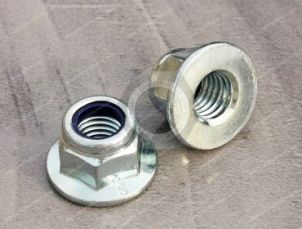
Nuts and washers are also part of the support assembly.
Relevant considerations include:
Thread compatibility
Nut mechanical properties
Washer dimensions
Bearing surface
Corrosion protection
JUXIN FASTENERS supplies multiple nut, lock-nut and washer categories that may be relevant to engineered support assemblies where the applicable design permits them.
However:
Locking Feature ≠ Anchor Qualification.
A lock nut cannot compensate for an incorrectly selected concrete anchor.
Some overhead systems can experience vibration from:
Mechanical equipment
Fans
Pumps
Building services
Nearby machinery
Two separate problems should be distinguished:
Concrete-anchor performance
Threaded-joint loosening
These are not the same failure mechanism.
Anchor Movement ≠ Nut Self-Loosening.
And:
Lock Nut ≠ Higher Concrete Pull-Out Capacity.
Where vibration matters, evaluate both interfaces separately.
Zinc-plated carbon steel may be appropriate for selected indoor applications where the specified corrosion requirement can be satisfied.
But:
Zinc Plating ≠ Universal Outdoor Corrosion Protection.
The required surface treatment should consider:
Humidity
Condensation
Water exposure
Chlorides
Chemicals
Service life
And:
Coating Name ≠ Complete Coating Specification.
Where corrosion protection matters, define the applicable coating system, thickness, passivation/topcoat where relevant and required performance.
Where corrosion testing is specified:
Salt Spray Hours ≠ Field Service Life.
Laboratory corrosion tests can support coating comparison and quality control, but they do not directly predict years of service in a real building or industrial environment.
Stainless steel anchor components may be considered where the environment requires greater corrosion resistance.
But:
Stainless Steel ≠ Corrosion-Proof.
Material selection should consider:
Chlorides
Chemicals
Temperature
Moisture
Crevice conditions
Galvanic interaction
And:
316 Stainless ≠ Automatically the Correct Material for Every Environment.
An overhead suspension system can include:
Anchor
Threaded rod
Nut
Washer
Bracket
Clamp
Pipe or cable tray
Using a corrosion-resistant anchor does not automatically protect the remaining components.
Therefore:
Corrosion Protection Must Be Evaluated at Assembly Level.
Electrical conduit support can be a strong application fit where:
Concrete substrate is appropriate
Loads are within qualified limits
Support spacing is correct
Anchor system is approved for the application
Mechanical fastening, however, does not establish electrical bonding or grounding.
Mechanical Attachment ≠ Electrical Bonding Qualification.
Electrical requirements must be addressed separately.
Potential applications can include selected:
Suspended lighting
Lighting support frames
Utility lighting
Industrial lighting
But lighting systems vary widely in weight and configuration.
A lightweight fixture and a large suspended industrial lighting assembly should not be treated as the same anchor application.
Pipe support loading can be more complex than pipe weight alone.
Engineers may need to consider:
Pipe weight
Fluid
Insulation
Valves
Support spacing
Thermal movement
Dynamic effects
Therefore:
Pipe Diameter ≠ Anchor Load.
The actual support reaction should determine anchor selection.
Potential HVAC applications can include selected support systems for:
Ductwork
Piping
Utility services
Mechanical service supports
But equipment with significant vibration may require additional engineering consideration.
Do not select the anchor simply because the application is labeled "HVAC."
Cable trays can become substantially heavier after cables are installed.
The design load should therefore reflect the completed system rather than the empty tray.
Empty Cable Tray Weight ≠ Installed Cable Tray Load.
This is particularly important for procurement substitutions made late in a project.
Overhead anchoring associated with fire-protection or other life-safety systems may be governed by additional code, listing, approval and project requirements.
A generic concrete anchor should not automatically be substituted into such systems.
Concrete Anchor Capability ≠ Fire-Protection System Approval.
Use the anchor system specified or approved for the project.
Nonstructural does not mean consequence-free.
Suspended systems may still require:
Seismic restraint
Project-specific support spacing
Code-defined attachment
Approved anchor types
The applicable building and system requirements should control selection.
Large warehouses can require extensive overhead:
Lighting
Conduit
Cable
Utility piping
Mechanical services
In these projects, installation productivity can become commercially significant because anchor quantities may be high.
This is where quick mechanical installation can provide a meaningful sourcing advantage—provided the selected anchor meets the technical requirements.
Manufacturing facilities may require overhead support for:
Electrical infrastructure
Pneumatic lines
Utility piping
Cable systems
Facility services
Where vibration or aggressive chemicals are present, both anchor performance and corrosion resistance require additional review.
Commercial projects can include thousands of MEP attachment points.
Procurement should therefore evaluate not just anchor price but:
Installation speed
Tool requirements
Inspection
Rework
Product consistency
Packaging
Site logistics
Supply continuity
This creates a more meaningful commercial comparison.
Quick installation should not be the main selection criterion for heavy structural connections.
For applications such as:
Heavy machinery
Structural steel base plates
High-load brackets
Severe dynamic loading
Critical structural connections
another mechanical or bonded anchoring system may be more appropriate.
The correct principle is:
Installation Convenience ≠ Structural Selection Criterion.
These two products serve different engineering priorities.
A quick-twist mechanical anchor may prioritize:
Mechanical installation
No adhesive cure time
Repetitive overhead support
Installation efficiency
An inverted-cone chemical anchoring system may be evaluated where:
Adhesive anchoring is appropriate
Different load-transfer behavior is required
The system's qualified performance provides a design advantage
Neither should be substituted for the other based only on diameter.
| Observed Problem | Possible Cause | Engineering Review |
|---|---|---|
| Anchor pulls out | Inadequate engagement, concrete or installation | Embedment, hole, substrate, product data |
| Concrete cracking near anchor | Expansion force, edge distance, spacing | Concrete geometry and anchor location |
| Anchor rotates during installation | Hole/anchor/installation issue | Drill diameter, substrate, anchor geometry |
| Thread damage | Incorrect nut/rod or excessive torque | Thread compatibility and installation |
| Support loosens | Threaded-joint issue or movement | Joint locking and system vibration |
| Corrosion appears | Coating/environment mismatch | Surface treatment and service environment |
| Anchor does not seat | Hole depth, debris or geometry | Hole preparation and dimensions |
| Multiple anchors underperform | Group interaction | Spacing and load distribution |
| Failure occurs after supplier substitution | Functional mismatch | Second-source qualification |
The failure mode should be identified before changing anchor size or material.
Quick-twist anchors should not be second-sourced by comparing only:
Diameter
Thread
Length
Appearance
Price
Two products can look almost identical while having different:
Expansion geometry
Material
Hardness
Clip geometry
Surface treatment
Installation behavior
Embedment
Technical performance
Therefore:
Same Dimensions ≠ Functional Equivalence.
A robust second-source comparison may include:
Drawing + Revision + Material + Mechanical Properties + Thread + Expansion Geometry + Surface Treatment
+ Installation Torque + Hole Requirement + Embedment + Concrete Condition + Load Data + Qualification + Documentation + Change Control
A small change in the concealed expansion section can alter installation behavior.
Procurement photographs may not reveal:
Wedge angle
Clip geometry
Material hardness
Expansion travel
Manufacturing tolerances
Therefore:
Same Appearance ≠ Same Anchor Performance.
Procurement and supplier-development teams should ask:
What is the exact anchor design?
Which concrete condition is intended?
What anchor diameter is available?
What threaded connection is required?
What material is used?
What surface treatment is specified?
What hole diameter is required?
What embedment is required?
What installation method is specified?
Is installation torque controlled?
What load data are available?
What technical qualification applies?
Is cracked-concrete performance required?
Is overhead use covered by the applicable technical documentation?
Are seismic requirements relevant?
How are dimensions inspected?
How is expansion geometry controlled?
How are production changes managed?
This is far more useful than asking only:
"What is your price per anchor?"
For high-volume overhead installation:
Total Installed Cost = Anchor Price + Drilling + Installation Labor + Tools + Access Equipment + Inspection + Rework + Downtime + Logistics + Supply Risk
Compared with bonded anchoring, the absence of adhesive and cure time can reduce some installation steps.
But:
Lowest Installation Time ≠ Lowest Installed Cost If the Anchor Is Wrong for the Application.
Engineering suitability comes first.
For projects using thousands of anchors, packaging can affect:
Site handling
Installer productivity
Part identification
Inventory control
Damage prevention
Procurement teams may therefore specify:
Box quantity
Lot identification
Labels
Thread protection
Project-specific packaging
These details can be valuable for distributors and large MEP contractors.
Engineers and contractors commonly search:
What is a quick-twist concrete anchor?
Best concrete anchor for threaded rod
Concrete ceiling anchor for conduit
Overhead concrete anchor for pipe support
Mechanical anchor for MEP support
Quick concrete anchor without adhesive
Concrete anchor for suspended lighting
How deep should an overhead concrete anchor be?
Does anchor edge distance matter?
Mechanical anchor vs. chemical anchor
Concrete screw vs. expansion anchor
Can expansion anchors be used in cracked concrete?
A useful supplier page should answer these questions before asking for an RFQ.
Commercial searches may include:
Quick twist anchor manufacturer
Concrete ceiling anchor supplier
Overhead concrete anchor manufacturer
MEP anchor supplier
Expansion anchor manufacturer
Threaded rod anchor supplier
Concrete anchor OEM supplier
Bulk concrete anchor supplier
Second-source expansion anchor manufacturer
Procurement needs to evaluate both:
Product Cost
and:
Installation + Qualification + Supply Reliability
JUXIN FASTENERS can evaluate concrete anchoring and fastening components for construction, MEP, industrial and OEM sourcing applications.
Relevant categories include:
Quick-twist concrete anchors
Concrete ceiling anchors
Mechanical concrete anchors
Concrete screw anchors
Concrete self-tapping anchors
Chemical anchoring components
Anchor rods
Nuts and lock nuts
Washers
Custom drawing-based fastening components
Projects can be reviewed according to requirements for:
Dimensions
Thread
Material
Mechanical properties
Surface treatment
Installation
Corrosion protection
Inspection
Packaging
Production volume
For overhead, structural, cracked-concrete, seismic, fire-protection or other safety-related applications,
the applicable product/system qualification and project specification must be separately verified.
Manufacturing Capability ≠ Application Qualification.
It is a mechanical expansion anchor designed to create an attachment point in concrete by activating an expansion mechanism inside a drilled hole.
The mechanical quick-twist design described here does not rely on structural adhesive for anchoring.
They can be considered for selected threaded-rod and overhead MEP support applications when the specific anchor is technically suitable and qualified for the required load and concrete condition.
They may be used for selected pipe-support systems, but anchor selection should be based on the actual support reaction rather than pipe diameter alone.
They can be considered for selected cable-support systems. The design should account for the loaded cable tray, support geometry and project requirements.
They may be suitable for selected lighting support applications where the actual load and applicable project requirements are satisfied.
Only when the specific anchor has appropriate technical data or qualification for cracked concrete.
Do not assume seismic suitability from anchor geometry. The specific anchor system must have the required qualification.
Do not automatically substitute a concrete expansion anchor into masonry. The specific product must be designed and qualified for the intended substrate.
Not universally. Corrosion protection should be selected from the actual environment and required service conditions.
Not necessarily. The concrete anchorage or another system component may govern before the threaded rod.
Depending on the specific assembly, the threaded connection or fixture may be removable while the installed anchor body remains in the concrete.
Confirm the actual product design.
Provide anchor size, thread, concrete condition, required load, embedment, edge distance, spacing, corrosion requirement,
installation requirement, technical qualification and project quantity.
For high-volume sourcing, provide the project quantity, packaging requirements, delivery schedule and technical specification together with the application requirements.
Not without qualification. Similar dimensions and appearance do not prove equivalent expansion behavior or load performance.
The component price alone does not answer this. Compare installation labor, tools, cure time, inspection and technical suitability.
Drawing-based concrete anchoring components can be evaluated according to material, dimensions, thread, surface treatment, manufacturing and inspection requirements.
Application qualification should be addressed separately where required.
For efficient engineering and commercial review, provide:
2D drawing
Existing approved sample where available
Part number
Revision
Anchor type
Anchor diameter
Thread specification
Threaded-rod size
Overall length
Expansion geometry
Material
Mechanical property requirement
Surface treatment
Corrosion requirement
Concrete compressive strength
Cracked or uncracked concrete
Concrete member thickness
Hole diameter
Hole depth
Required embedment
Edge distance
Anchor spacing
Number of anchors
Supported component
Tension load
Shear load
Combined load
Installation orientation
Static or dynamic loading
Vibration condition
Installation torque where applicable
Installation method
Indoor or outdoor environment
Temperature
Moisture exposure
Applicable design standard
Required technical approval or assessment
Inspection requirement
Packaging
Lot traceability requirement
Project quantity
Annual volume
Delivery schedule
For second-source projects, also provide the approved product specification and applicable technical documentation where permitted.
This allows the project to be evaluated as:
Product Manufacturing + Installation Requirement + Application Requirement + Qualification Requirement
rather than simply:
Anchor Diameter + Price
This article should connect internally with existing JUXIN FASTENERS resources covering:
Inverted Cone Chemical Anchors vs. Straight Bonded Anchors
Concrete Screw Anchors
Mechanical Concrete Anchors
Chemical Anchoring Components
Custom Anchor Rods
Bolt and Nut Strength Classes
ISO Metric Thread Tolerances and Inspection
Fastener Surface Finish Selection
Zinc Plating vs. Zinc-Nickel Coating
Stainless Steel Fastener Material Selection
Lock Nuts and Anti-Loosening Solutions
HVAC Fastening Solutions
Electrical Equipment Fastening Solutions
Industrial Machinery Fastening Solutions
Construction and Infrastructure Fastening Solutions
Supplier Qualification and Second-Source Development
Use the existing indexed JUXIN FASTENERS URL when implementing each internal link.
The intended internal content path is:
Concrete Anchors → Quick-Twist Anchor → Overhead MEP Application → Load & Concrete → Installation → Corrosion → Qualification → Supplier Selection → RFQ
This keeps this page focused on quick-install overhead MEP concrete anchoring rather than competing directly with the broader chemical-anchor and heavy-duty structural-anchor pages.
Quick-twist concrete anchors can provide a practical installation advantage for selected overhead MEP support systems.
But anchor selection should never begin and end with installation speed.
The correct engineering chain is:
Supported System + Load + Concrete + Anchor Geometry + Embedment + Edge Distance + Spacing + Installation + Environment + Qualification
Remember:
Fast Installation ≠ Automatic Suitability for Every Overhead Load.
Mechanical Engagement ≠ Qualified Load Capacity.
Thread Strength ≠ Anchor Capacity.
Strong Anchor Steel ≠ Strong Concrete Connection.
Application Name ≠ Design Load.
Uncracked-Concrete Performance ≠ Cracked-Concrete Qualification.
More Installation Torque ≠ Better Anchor.
Installation Torque ≠ Allowable Anchor Load.
Stronger Threaded Rod ≠ Stronger Concrete Anchorage.
Anchor Movement ≠ Nut Self-Loosening.
Corrosion-Resistant Anchor ≠ Corrosion-Resistant Support System.
Same Appearance ≠ Same Anchor Performance.
Same Dimensions ≠ Functional Equivalence.
Manufacturing Capability ≠ Application Qualification.
For engineers and MEP designers, this framework helps select anchors from the actual support system rather than installation convenience alone.
For contractors, it helps balance installation productivity with technical requirements.
For procurement and supplier-development teams, it provides a stronger basis for comparing quick-twist anchor manufacturers, qualifying second sources and calculating total installed cost.
JUXIN FASTENERS supports OEMs, distributors, contractors and industrial purchasing teams with quick-twist concrete anchors, concrete ceiling anchors,
mechanical anchoring components, concrete screw anchors, chemical anchoring components, anchor rods, nuts, washers and custom drawing-based fastening components.
For a new project, bulk sourcing requirement or second-source evaluation, send your drawing, approved sample or anchor specification together with concrete condition,
supported application, load requirement, surface treatment, qualification requirements, packaging and project quantity for review.
JUXIN FASTENERS
Email: info@juxinfasteners.com
Website: www.juxinfasteners.com
Contact Us
Tel.:
+86 020 8621 0320
+86 020 3121 6067
E-mail:
Technical Support:
Navigation
SEND INQUIREY