
Call Us
+86 136 6007 9809
Call Us
+86 136 6007 9809

May. 24, 2026
Railway equipment can expose threaded joints to vibration, shock, cyclic loading, temperature variation, corrosion and repeated maintenance.
When a connection requires additional resistance to rotational loosening, engineers have multiple anti-loosening technologies available.
But there is no universal “best railway lock nut” or “best anti-vibration washer.”
A prevailing-torque nut, wedge-locking washer system, Belleville washer, serrated locking component and thread-locking compound solve different engineering problems.
The correct selection process is:
Failure Mechanism → Joint Function → Required Preload → Parent Material → Temperature → Vibration → Surface Condition → Corrosion
→ Maintenance Strategy → Locking Technology → Validation
For procurement and supplier-development teams, another question becomes equally important:
Can an alternative locking fastener from a second supplier provide equivalent functional behavior—not merely the same dimensions?
The central engineering principle is:
Anti-Loosening Fastener ≠ Vibration-Proof Joint.
JUXIN FASTENERS supports standard and drawing-based nuts, lock nuts, bolts, washers and other fastening components for selected railway interiors,
electrical equipment, fabricated assemblies and rolling-stock equipment applications.
For bogies, braking systems, running gear, primary load-bearing structures, crash-critical connections and other safety-critical railway locations,
the vehicle OEM and applicable project specification must control fastener selection, assembly and validation.
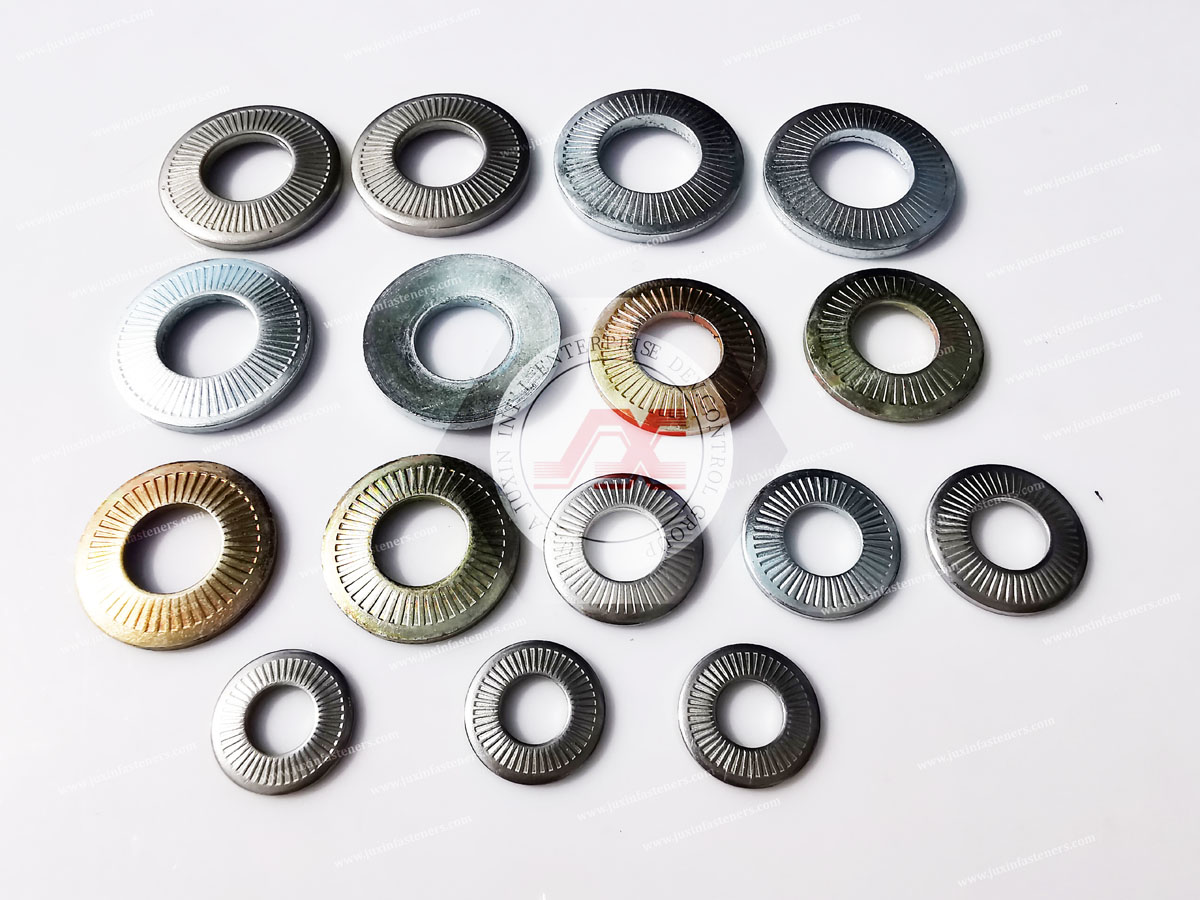
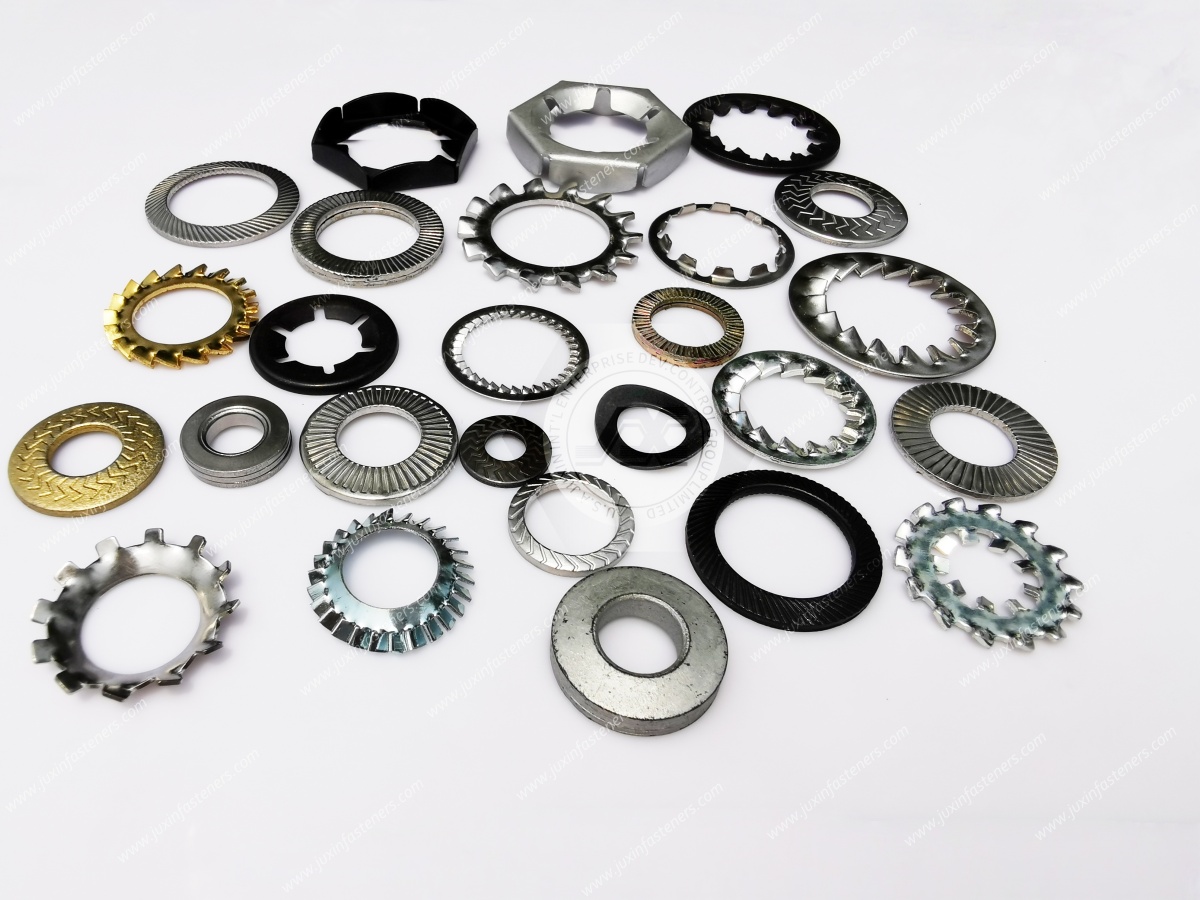
An anti-loosening fastener incorporates or works with a feature intended to resist unwanted rotational movement or support clamp-force stability under defined operating conditions.
Common technologies include:
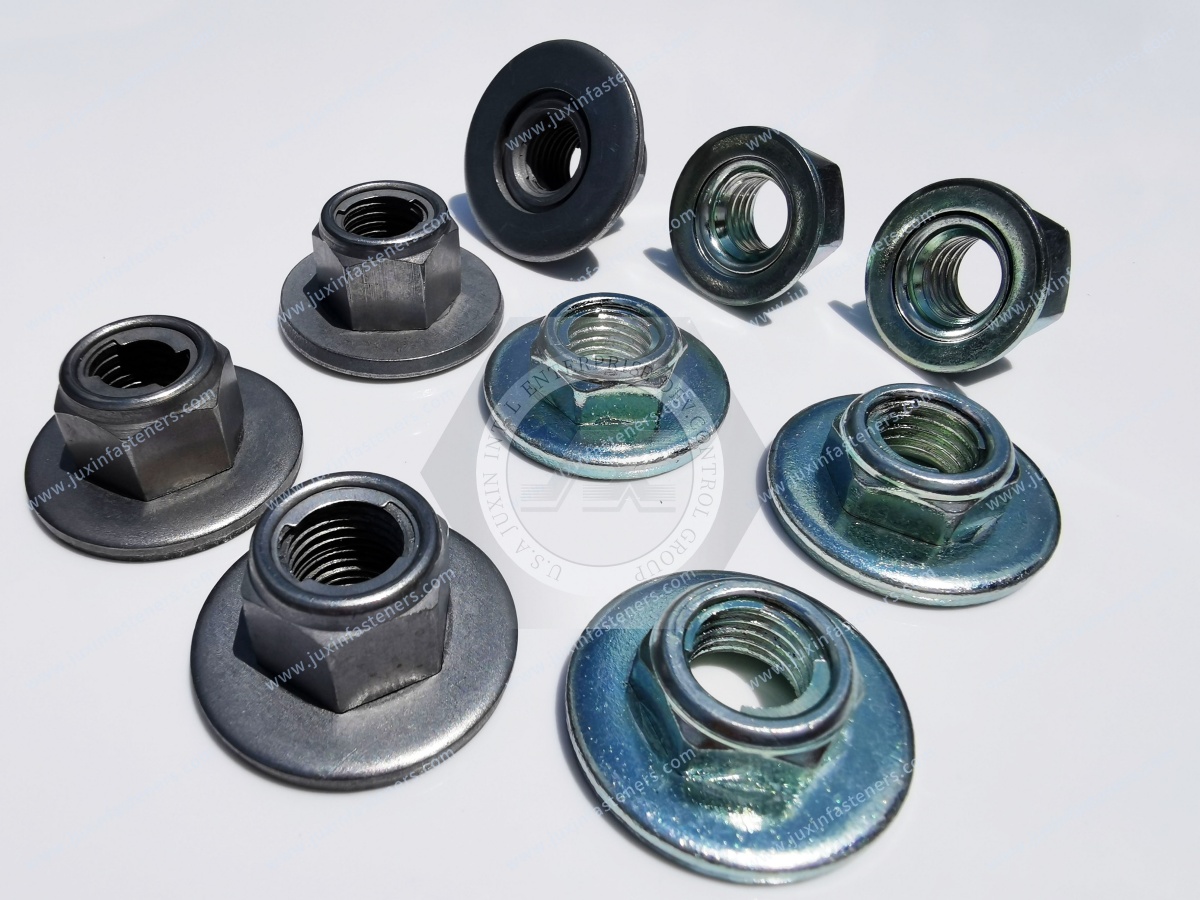
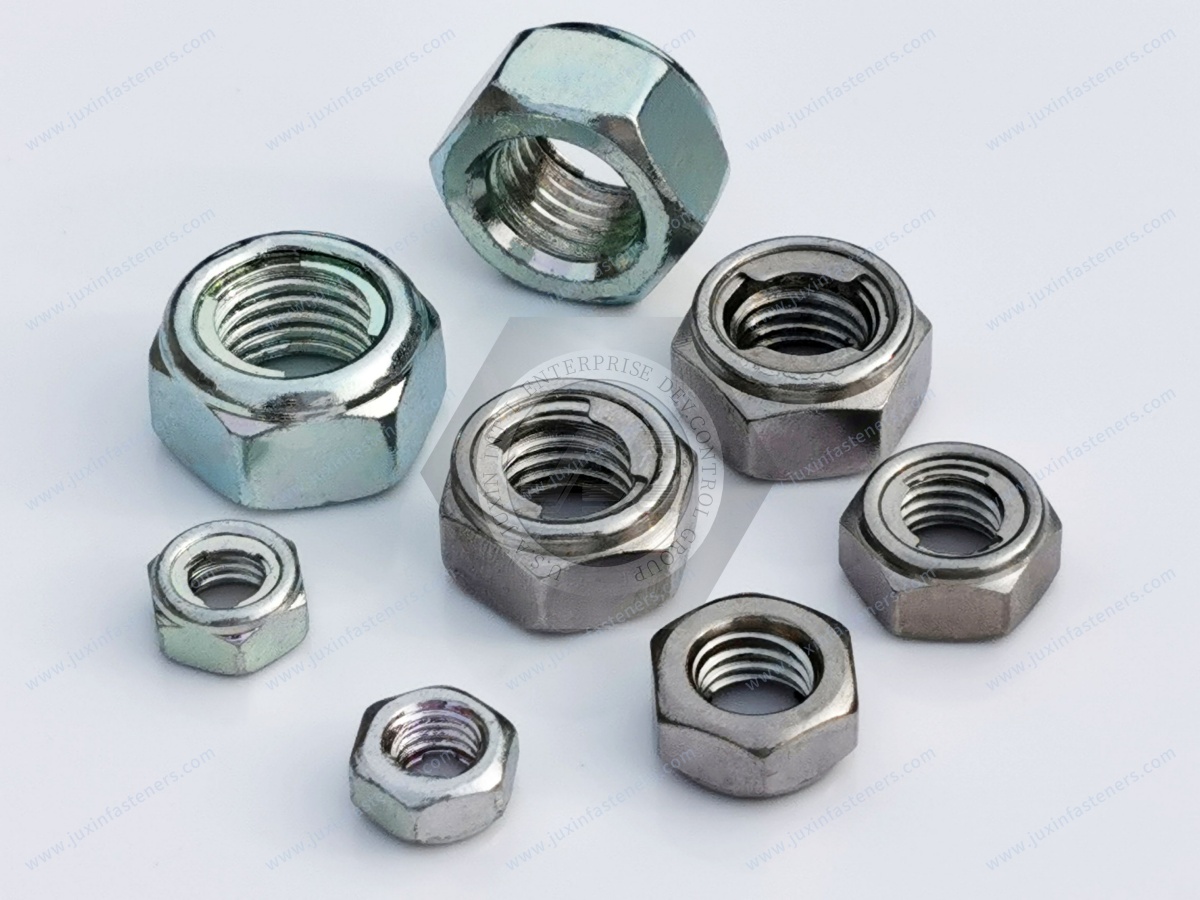
All-metal prevailing-torque lock nuts
Nylon-insert lock nuts
Slotted or deformed-thread lock nuts
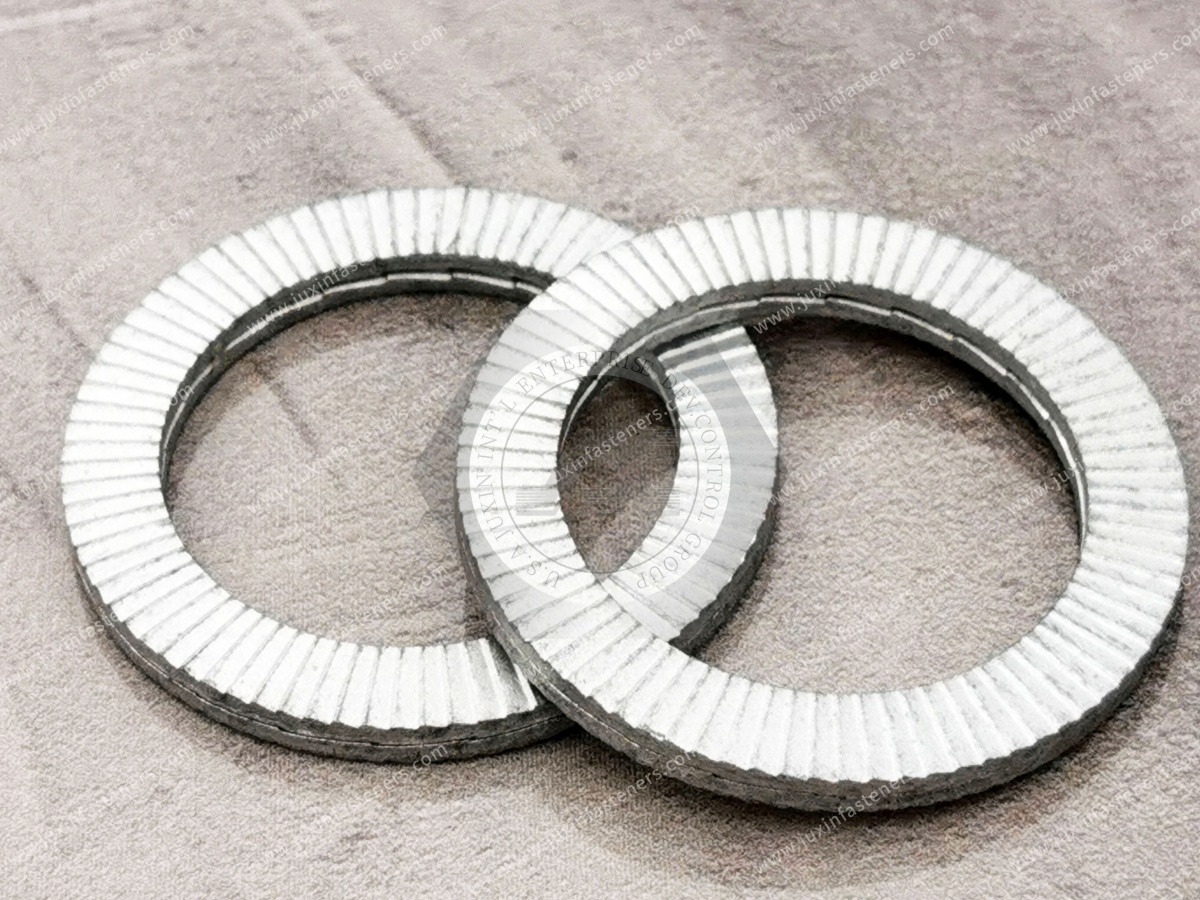
Wedge-locking washer systems
Serrated locking nuts and washers
Belleville or disc spring washers
Other spring elements
Mechanical locking devices
Thread-locking compounds
Application-specific locking geometries
These products should not all be placed into one category simply because they are marketed as “locking fasteners.”
Before selecting a locking technology, determine whether the observed problem is actually rotational self-loosening.
A reduction in clamp force can result from:
Self-loosening
Embedment
Settlement
Creep
Plastic deformation
Thermal effects
Gasket relaxation
Parent-material deformation
Thread damage
Therefore:
Loose Joint ≠ Automatically Rotated Fastener.
A locking device designed to resist rotation may not solve preload loss caused by material relaxation.
This distinction determines which anti-loosening technology is appropriate.
Preload loss means clamp force decreases.
Self-loosening involves relative rotational movement within the threaded connection.
A polymer panel can relax without the screw rotating.
A bolted steel joint can rotate loose under transverse movement even though neither material exhibits significant creep.
The countermeasures are different.
| Technology | Primary Function | Temperature Consideration | Repeated Service | Key Engineering Variable |
|---|---|---|---|---|
| All-metal prevailing-torque nut | Resist nut rotation | Suitable range depends on material/coating/design | Application-specific | Prevailing torque |
| Nylon-insert lock nut | Polymer-generated prevailing torque | Polymer temperature limits matter | Reuse must be controlled | Insert condition |
| Deformed-thread / slotted lock nut | Mechanical prevailing torque | Design-specific | Reuse requires validation | Thread deformation |
| Wedge-locking washer system | Resist rotational loosening through locking geometry | Material/system dependent | Can support serviceable joints when approved | Preload, bearing interface |
| Serrated nut / washer | Increase rotational resistance at interface | Material/coating dependent | Surface damage may affect reuse | Mating-surface interaction |
| Belleville washer | Provide spring behavior in axial direction | Material and spring properties matter | Application-specific | Load-deflection behavior |
| Conventional flat washer | Load distribution / bearing support | Usually not a locking device | Generally serviceable | Bearing area |
| Thread-locking compound | Chemical resistance to rotation | Chemistry-dependent | Disassembly characteristics vary | Surface, cure, gap |
| Mechanical positive locking | Physically restrict rotation | Design-specific | Depends on locking method | Geometry and installation |
This table is a starting point—not a substitute for joint validation.
Prevailing-torque nuts create resistance to rotation through an intentional locking feature.
Unlike a standard free-running nut, they generate torque before full bearing contact or independently of the final clamp load.
Common approaches include:
All-metal deformation
Slotted or distorted sections
Polymer inserts
Other controlled thread-interference geometries
The critical distinction is:
Prevailing Torque ≠ Preload.
When tightening a prevailing-torque nut, part of the applied torque is required to overcome the locking feature.
The remainder contributes to developing the clamped joint.
Therefore, engineers should not assume that:
Installation Torque = Clamp-Generating Torque
This becomes particularly important when comparing a conventional nut with a prevailing-torque lock nut.
All-metal lock nuts can be useful where an application requires mechanical prevailing torque without a polymer insert.
Potential advantages can include:
Mechanical locking behavior
No polymer locking element
Suitability for selected elevated-temperature applications
Compact integration of locking function into the nut
However, actual performance depends on:
Locking geometry
Mating bolt
Thread
Material
Heat treatment
Coating
Lubrication
Temperature
Installation
Reuse policy
Therefore:
All-Metal Lock Nut ≠ Universal Railway Lock Nut.
Some all-metal locking nuts generate prevailing torque by controlled deformation of part of the nut or thread.
These products should be sourced by their functional specification rather than appearance alone.
Two nuts can have:
Same thread
Same height
Similar slots
Similar material
and still produce different prevailing-torque behavior.
Therefore:
Same Lock Nut Dimensions ≠ Same Locking Performance.
It is tempting to assume that greater rotational resistance means better anti-loosening performance.
But excessive prevailing torque can affect:
Installation
Tooling
Assembly consistency
Bolt torsional stress
Serviceability
Therefore:
Higher Prevailing Torque ≠ Automatically Better Joint.
The required range should follow the applicable product, customer or joint specification.
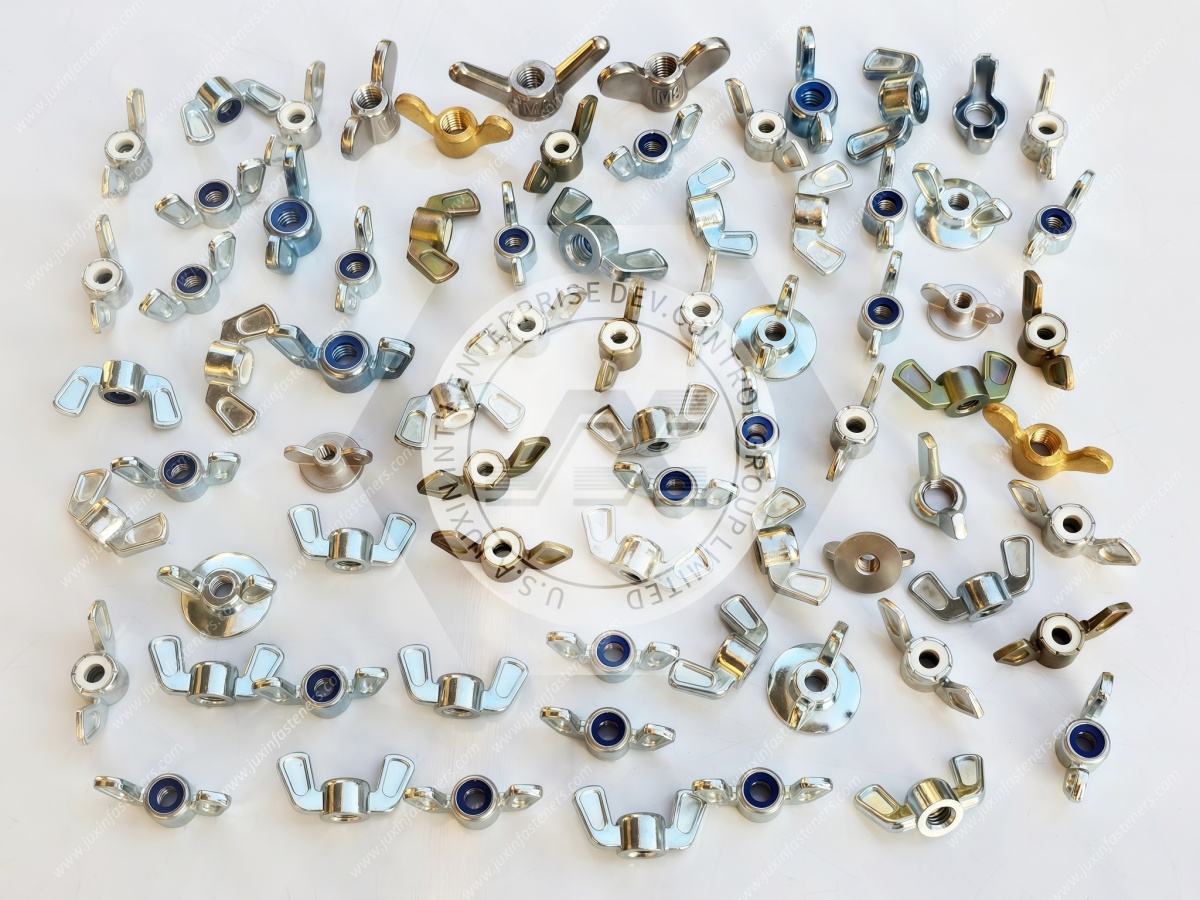
Nylon-insert lock nuts use a polymer insert to create interference with the mating thread.
They are widely used in many industrial assemblies where the temperature and environment are compatible with the insert material.
Engineering variables include:
Temperature
Chemical exposure
Mating thread
Installation cycles
Coating
Reuse requirement
These technologies should not be substituted solely because they have the same thread.
Temperature behavior, prevailing torque and service characteristics differ.
Therefore:
Same Thread ≠ Same Locking Technology.
Prevailing-torque behavior can change after repeated installation and removal.
For maintenance-intensive railway equipment, procurement should ask:
Is reuse permitted?
How many cycles are relevant?
What functional acceptance criteria apply after reuse?
Is replacement required after removal?
Do not assume indefinite reuse.
Wedge-locking systems use engineered geometry to resist rotational loosening in appropriately designed joints.
They can be considered where the application and approved design call for this type of locking technology.
But their performance still depends on the complete joint.
Relevant variables include:
Preload
Bolt and nut
Washer orientation
Bearing surface
Parent material
Surface hardness
coating
installation
service environment
Therefore:
Wedge-Locking Washer ≠ Automatic Vibration-Proof Joint.
These technologies act differently.
A prevailing-torque nut introduces rotational resistance in the nut-to-thread interface.
A wedge-locking washer system acts at the bearing interface through its locking geometry.
The choice can depend on:
Available space
Serviceability
joint geometry
surface condition
temperature
assembly process
customer specification
Neither should automatically replace the other.
A flat washer can perform important functions such as:
Distributing bearing load
Protecting a surface
Supporting a bolt head or nut
Bridging an appropriate hole geometry
But:
Flat Washer ≠ Anti-Loosening Device.
Its presence does not automatically increase vibration resistance.
Traditional spring lock washers are frequently described as universal anti-loosening components.
That description is too broad.
Their behavior depends on:
Joint geometry
preload
material
washer geometry
bearing surface
external loading
They should not automatically be specified for a railway joint simply because vibration is present.
Therefore:
Spring Washer ≠ Guaranteed Anti-Loosening Solution.
Even where a spring washer contributes elastic behavior, its spring force should not be confused with the preload developed by the bolted joint.
These are different mechanical quantities.
Belleville washers, also called disc springs, can provide significant spring force over a controlled deflection range.
They can be useful where the design requires an elastic element to accommodate:
Deflection
thermal effects
settlement
controlled load variation
But a Belleville washer should not automatically be classified as a self-loosening prevention device.
Its primary engineering value may instead be related to axial load-deflection behavior.
Therefore:
Spring Compensation ≠ Rotational Locking.
Relevant variables include:
Outside diameter
Inside diameter
thickness
free height
material
spring properties
stacking arrangement
working deflection
A generic statement such as “use a Belleville washer for railway vibration” is insufficient.
Serrated nuts, flange nuts and washers can increase resistance to relative rotation by interacting with the mating surface.
But this mechanism creates tradeoffs.
Serrations can affect:
Surface coating
bearing interface
parent material
disassembly
reuse
electrical contact
corrosion behavior
Therefore:
More Aggressive Serration ≠ Automatically Better Joint.
A serrated locking component may intentionally interact with the mating surface.
If the parent component has:
Protective coating
thin sheet
aluminum
decorative surface
that interaction must be considered during design.
If serrations penetrate a protective coating, the corrosion behavior of the complete assembly may change.
Therefore:
Anti-Loosening Selection and Corrosion Selection Cannot Always Be Separated.
Chemical thread-locking products can provide rotational resistance in suitable threaded assemblies.
Selection can depend on:
Thread size
Surface material
Coating
gap
temperature
chemical exposure
curing conditions
required disassembly
They should be evaluated as part of the complete assembly process.
If the underlying problem is insufficient preload or interface slip, adding adhesive may not solve the structural cause.
The correct process is:
Identify Failure Mechanism → Correct Joint Design → Add Locking Technology Where Required
The choice between mechanical and chemical locking can depend on:
Production process
Serviceability
temperature
contamination control
cure time
automation
inspection
maintenance strategy
Procurement should not compare these systems by piece price alone.
Anti-loosening technology does not eliminate the need for controlled tightening.
The relationship remains:
Torque ≠ Preload.
Torque is influenced by friction in:
Threads
Nut bearing surface
Bolt head bearing surface
Washer interface
Changing any of these conditions can change the resulting preload.
Replacing a standard nut with a prevailing-torque nut changes the torque budget.
Replacing one lock nut design with another may also change:
Prevailing torque
thread friction
bearing friction
Therefore, substitution requires functional review.
This is particularly important for railway fasteners using corrosion-protective coatings.
Potential systems include:
Zinc plating
Zinc-nickel
Zinc-flake
Application-specific topcoats
The coating can influence friction as well as corrosion.
Two fasteners described as “zinc-nickel plated” can have different friction behavior depending on:
Topcoat
lubricant
coating process
surface condition
Therefore:
Coating Name ≠ Complete Functional Specification.
A lubricant or topcoat may intentionally control assembly friction.
Do not automatically remove it.
Changing lubrication condition can change the relationship between torque and preload.
Railway equipment may encounter:
Humidity
condensation
rain
cleaning chemicals
industrial contaminants
chlorides
temperature cycling
Locking performance and corrosion performance should be considered together.
The complete assembly includes:
Fastener
washer
parent material
coating
contact interfaces
Mixed materials can introduce galvanic concerns.
Stainless steel can be appropriate in selected corrosion environments.
But:
Stainless Steel ≠ Anti-Loosening Feature.
And:
Stainless Steel ≠ Corrosion-Proof Assembly.
Engineers should also consider:
Galling
friction
mating material
mechanical requirements
temperature
Galling involves adhesive damage or seizure between mating threads.
Self-loosening involves unwanted rotational movement.
These are different failure mechanisms.
A countermeasure for one may not solve the other.
Zinc-nickel can provide a useful corrosion-protection option for selected steel fasteners.
For locking components, engineers should consider both:
Corrosion performance
Functional friction / locking behavior
A coating change may require review of the assembly specification.
Laboratory corrosion testing can support coating evaluation.
But:
Salt Spray Hours ≠ Field Service Life.
Real railway environments can include:
Wet/dry cycling
abrasion
mechanical damage
contaminants
crevices
Temperature can influence:
Polymer lock inserts
adhesives
lubricants
coatings
parent materials
spring components
Therefore:
Temperature Requirement Is Part of the Locking-System Specification.
The original article applied one temperature range broadly to railway fastening.
That should not be done.
Temperature depends on:
Equipment location
vehicle
environment
electrical heat generation
customer requirement
Therefore:
Railway Application ≠ Universal Temperature Specification.
Some railway equipment is designed for repeated service.
Other joints are rarely opened.
The best locking technology can differ significantly.
For a frequently serviced panel, engineers may prioritize:
Repeatable assembly
Easy removal
Captive hardware
Controlled reuse
For a less frequently serviced joint, another locking technology may be more appropriate.
Therefore:
Maintenance Frequency Is a Fastener Design Input.
A locking system that is extremely difficult to remove can increase:
Maintenance time
Tool requirements
component damage
replacement cost
The objective is not maximum locking force.
It is the correct balance between:
Joint Security + Installation + Serviceability + Lifecycle Cost
Interior systems can include:
Ceiling panels
Partitions
Luggage racks
Lighting
Display equipment
Seat-related components
Handrails
Toilet accessories
Service panels
Possible fastening technologies include:
Lock nuts
Rivet nuts
Machine screws
Self-clinching fasteners
Captive fasteners
Threaded inserts
Blind rivets
Anti-loosening requirements should match the actual joint.
Both are installed in the same vehicle.
Their load, risk, maintenance and validation requirements can be completely different.
Therefore:
Same Railway Vehicle ≠ Same Locking Technology.
Railway electrical cabinets can use:
Machine screws
Rivet nuts
Self-clinching fasteners
Captive hardware
Lock nuts
Grounding studs
However:
Mechanical Fastening ≠ Electrical Safety.
A locking fastener can mechanically secure an electrical component without establishing an approved grounding or bonding connection.
Electrical performance may depend on:
Contact surface
coating
oxide layers
clamp force
terminal design
corrosion
electrical validation
Mechanical and electrical functions should be specified separately.
Rivet nuts are commonly useful for creating reusable internal threads in thin sheet.
But:
Rivet Nut ≠ Anti-Loosening Device.
Two interfaces exist:
Rivet Nut ↔ Parent Material
and
Mating Screw ↔ Rivet Nut Thread
The rivet nut can remain securely installed while the mating screw loosens.
Pull-out concerns axial retention.
Spin-out concerns rotational retention of the rivet nut in the parent material.
Neither directly defines the anti-loosening performance of the mating screw.
This distinction is essential when troubleshooting railway equipment.
If the rivet nut spins, review:
Hole
grip range
body geometry
setting process
parent material
If the screw rotates loose, investigate the threaded joint and locking strategy.
Self-clinching nuts can provide permanent threaded attachment points in suitable sheet metal.
Their retention depends on:
Sheet material
hardness
thickness
hole
tooling
installation force
They should not be confused with lock nuts.
A self-clinching nut describes how the nut attaches to the sheet.
A self-locking nut describes behavior of the mating thread.
These are different functions.
Weld nuts can create permanent threaded attachment points in fabricated structures.
Again:
Weld Nut ≠ Lock Nut.
If screw self-loosening is a concern, the mating threaded joint requires its own engineering strategy.
Procurement RFQs sometimes use phrases such as:
Anti-vibration nut
Anti-loose nut
Self-locking nut
Lock washer
Spring washer
These terms may describe multiple different technologies.
A better RFQ specifies the required function.
For example:
M8 all-metal prevailing-torque nut, specified property class, coating, prevailing-torque requirement, temperature range and mating bolt specification
is much more useful than:
M8 anti-vibration nut.
Different locking technologies have different failure modes.
Possible causes:
Locking geometry
manufacturing variation
wear
repeated reuse
mating-thread condition
Possible effects:
Assembly difficulty
high tool load
inconsistent preload
bolt torsional stress
Possible causes:
Orientation
wrong component combination
unsuitable bearing interface
Possible effects:
Coating damage
parent-material damage
changed corrosion behavior
Possible causes:
Temperature
chemical exposure
repeated assembly
Possible causes:
Surface condition
material
contamination
temperature
gap
process variation
The engineering principle is:
Fix the Failure Mechanism, Not the Product Name.
Testing should answer the actual engineering question.
Potential evaluation methods can include:
Prevailing-torque testing
Torque-tension testing
Clamp-load measurement
Transverse-vibration testing
Assembly trials
Reuse-cycle testing
Temperature exposure
Corrosion testing
Application-specific vibration or shock validation
Not every product requires every test.
A corrosion test cannot prove anti-loosening performance.
A prevailing-torque test cannot prove joint fatigue performance.
A transverse-vibration test cannot prove railway system qualification.
Therefore:
Failure Mechanism → Requirement → Test Method → Acceptance Criteria
is the correct sequence.
Transverse-vibration testing can be useful for studying the self-loosening behavior of threaded joints under defined conditions.
It can help compare locking technologies.
But:
Junker Test Result ≠ Complete Railway Qualification.
Actual railway service can include:
Different vibration spectra
Shock
fatigue
corrosion
temperature
maintenance cycles
The test should be treated as one engineering tool.
Railway projects may specify shock and vibration requirements for onboard equipment according to the applicable equipment location and project.
However:
Equipment-Level Requirement ≠ Generic Fastener Certification.
Do not describe an individual nut or washer as railway-qualified solely because a vibration standard exists.
Where required by the project, DIN 25201-2 can be relevant to mechanical bolted-joint engineering in railway vehicles and components.
The key principle is:
Joint Design Requirement ≠ Lock Nut Product Approval.
The complete connection still requires engineering consideration.
Depending on product type and customer requirement, specifications may reference applicable:
ISO
DIN
EN
ASTM
SAE
ASME/ANSI
Customer standards
Railway project specifications
Do not select a locking fastener solely because its dimensions resemble a standardized component.
A lock nut can meet a product standard and still require separate validation for a railway application.
Therefore:
Product Compliance ≠ Installed Joint Validation.
Bogie, braking, running gear, primary structural and other safety-critical connections should not be designed from generic online recommendations.
These applications require controlled:
OEM drawings
Project specifications
Approved fastener systems
Tightening procedures
Inspection
Validation
Change control
Therefore:
Safety-Critical Railway Joint → OEM Specification First.
The original article suggested an industry direction toward maintenance-free fastening systems.
For marketing purposes, that phrase should be used very carefully.
All fastening systems exist within a larger maintenance strategy.
Therefore:
Anti-Loosening Fastener ≠ Maintenance-Free Railway Joint.
Inspection and maintenance requirements are determined by the vehicle, equipment and project.
Sensor-based bolt monitoring and digital maintenance technologies are developing in industrial and transportation applications.
Potential approaches can involve monitoring:
Strain
Bolt elongation
Clamp force
Joint condition
However, these technologies should not be presented as routine JUXIN FASTENERS product capability unless specifically offered and validated.
For most OEM fastener sourcing projects, the immediate engineering priorities remain:
Correct joint design
Controlled fastener specification
Reliable manufacturing
Correct installation
Functional validation
Sensors can detect changes.
They do not correct:
Incorrect preload
wrong fastener
unstable parent material
inappropriate coating
poor installation
Therefore:
Monitoring ≠ Prevention.
Depending on product design, manufacturing can involve:
Cold heading
Forging
Thread rolling
Machining
Stamping
Spring forming
Heat treatment
Surface treatment
Assembly of polymer locking elements
The process should match the locking technology.
For a standard nut, dimensional conformity is important.
For a locking nut, the locking geometry can also directly influence functional performance.
Therefore:
Dimensional Inspection Alone May Not Qualify a Lock Nut.
Functional testing may be required according to the specification.
For alloy-steel locking fasteners and spring components, heat treatment can influence:
Strength
hardness
ductility
spring behavior
Therefore:
Material Name ≠ Finished Locking Performance.
Coating affects more than appearance.
It can influence:
Corrosion
friction
thread fit
prevailing torque
assembly behavior
This is particularly important for second-source qualification.
Procurement and supplier-development teams should evaluate relevant capabilities such as:
Drawing control
Revision control
Material control
Heat-treatment control
Thread manufacturing
Locking-feature process control
Surface-treatment control
Dimensional inspection
Functional testing
Change control
Traceability where required
Packaging
Production capacity
Qualification depth should reflect application risk.
This is one of the most important procurement principles for locking fasteners.
Two M10 nuts can have:
Same thread
Same dimensions
Same material designation
but different:
Prevailing torque
locking geometry
coating
friction
reuse behavior
Therefore:
Same Dimensions ≠ Functional Equivalence.
When qualifying a second source, compare:
Drawing + Revision + Material + Mechanical Properties + Heat Treatment + Thread + Locking Geometry + Prevailing Torque
+ Surface Treatment + Friction + Installation Behavior + Reuse Behavior Where Required + Functional Testing
Do not qualify the second source by dimensions alone.
A superficially similar washer pair may not be functionally equivalent.
Review:
Geometry
material
hardness
surface treatment
mating interface
approved installation
Again:
Similar Appearance ≠ Equivalent Locking System.
Changing from:
Zinc to zinc-nickel
Zinc-nickel to zinc-flake
One topcoat to another
Lubricated to unlubricated condition
can change friction and assembly behavior.
Therefore:
Coating Substitution Can Be an Engineering Change.
Changing from:
Carbon steel to stainless steel
One stainless grade to another
Polymer-insert to all-metal locking
One spring material to another
can change performance.
Therefore:
Material Substitution Can Be an Engineering Change.
Procurement should compare:
Total Installed Cost = Part Price + Installation + Tooling + Inspection + Rework + Scrap + Maintenance + Replacement + Downtime + Logistics + Supply Risk
A lower-cost locking fastener may not be cheaper if it creates assembly or maintenance problems.
For railway equipment, lifecycle factors can be important because vehicles and onboard systems may remain in service for many years.
The commercial decision should consider:
Installation time
Tooling
maintenance
replacement
supplier continuity
functional consistency
For an effective quotation, provide:
2D drawing
3D model where available
Part number
Revision
Railway application
Equipment location
Joint function
Failure mechanism to be controlled
Fastener type
Thread
Mating bolt / nut
Parent material
Material
Mechanical properties
Heat treatment
Surface treatment
Friction requirement where applicable
Lubrication condition
Tightening method
Tightening torque where specified
Target preload where specified
Locking method
Prevailing-torque requirement where applicable
Temperature
Vibration / shock requirement
Corrosion environment
Reuse requirement
Inspection requirement
Functional testing requirement
Traceability requirement
Annual volume
Prototype quantity
Applicable ISO, DIN, EN, ASTM, SAE, ASME/ANSI or customer / project specification
Provide:
Locking technology
Thread
Mating bolt
Bolt property class
Nut property requirement
Initial prevailing-torque requirement
Reuse requirement where applicable
Coating
Temperature
Installation torque requirement
Provide:
Bolt diameter
Bolt property class
Parent material
Bearing surface
Surface treatment
Joint geometry
Tightening requirement
Temperature
Corrosion environment
Reuse requirement
Provide:
Inside diameter
Outside diameter
Thickness
Free height
Material
Required load
Working deflection
Stacking arrangement
Temperature
Surface treatment
Provide:
Parent material
Surface coating
Hardness where relevant
Required locking function
Reuse requirement
Appearance / surface-damage restrictions
For a locking nut:
Application → Failure Mechanism → Thread → Mating Bolt → Locking Technology → Material → Heat Treatment → Coating
→ Prevailing Torque → Sample → Functional Testing → Assembly Validation → Approval → Production
For a wedge-locking system:
Application → Joint Geometry → Parent Material → Bolt → Preload → Bearing Surface → Washer System → Sample → Vibration / Functional Validation → Approval
For a second source:
Approved Drawing → Revision → Material → Locking Geometry → Mechanical Properties → Heat Treatment → Coating
→ Friction → Functional Locking Performance → Sample → Comparison → Approval
Before specifying a railway anti-loosening fastener, answer these questions.
If not, a rotational locking device may not address the root cause.
If yes, investigate joint stiffness, material behavior and spring compensation.
If yes, serviceability and reuse become important.
This can affect polymer inserts, adhesives, coatings and spring behavior.
Locking performance must survive the required environment.
This matters for serrated systems.
This matters whenever torque is used to generate preload.
If yes, compare functional characteristics—not dimensions alone.
If yes, follow the controlled OEM and project specification.
This page should function as the dedicated Railway Anti-Loosening Fastener Technology Selection resource.
Recommended internal links include:
Railway Fastener Engineering: Vibration, Preload & Anti-Loosening Design Guide → why railway joints loosen and how preload/joint mechanics control the problem
Railway Fasteners: Rolling Stock Applications, Joint Design & OEM Sourcing Guide → overall railway fastener application hub
Railway Electrical Equipment Fasteners → electrical cabinets, power equipment and grounding applications
Automotive Threaded Fasteners → threaded-joint preload and locking fundamentals
High-Strength Bolts & Washers → bolt strength, washer hardness and preload
Fastener Surface Treatment & Coating Selection → friction and coating engineering
Zinc-Nickel Coated Fasteners → Zn-Ni coating and friction
Stainless Steel Fasteners → stainless corrosion and galling
Automotive Fastener Quality Control → supplier qualification and second sourcing
Custom Fastener Manufacturing → drawing-based custom locking components
Use the existing indexed JUXIN FASTENERS URL when implementing these internal links.
There is no universal best option. Selection depends on the failure mechanism, joint geometry,
preload, temperature, vibration, corrosion, maintenance strategy and project specification.
A prevailing-torque lock nut creates rotational resistance within the nut/thread interface.
A wedge-locking washer system uses locking geometry at the bearing interface. They operate differently.
Not universally. All-metal and polymer-insert lock nuts have different temperature, service, prevailing-torque and reuse characteristics.
They can be considered in suitable applications where temperature, environment and project requirements are compatible with the insert material.
Not automatically. Excessive prevailing torque can affect installation, bolt torsional loading and preload consistency.
Reuse depends on the design and applicable specification. Prevailing torque can change after repeated installation.
They should not be treated as universal anti-loosening solutions. Their suitability depends on the joint and approved design.
A Belleville washer primarily provides spring behavior through a defined load-deflection relationship. It should not automatically be treated as a rotational locking device.
They can increase rotational resistance in suitable applications, but their interaction with the parent surface, coating and corrosion system must be considered.
Safety-critical bogie applications should follow the vehicle OEM and project-controlled specification rather than a generic online recommendation.
No. It evaluates self-loosening behavior under defined transverse-vibration conditions. Complete railway qualification can involve additional requirements.
It relates to shock and vibration requirements for railway equipment. It should not automatically be presented as a generic lock-nut or washer product certification.
Zinc-nickel primarily serves a corrosion-protection function, but the complete coating system can also affect friction. Anti-loosening performance must be evaluated separately.
No. Stainless steel can provide useful corrosion resistance, but galling, friction, mechanical requirements and locking behavior must still be considered.
Not automatically. Locking geometry, prevailing torque, material, heat treatment, coating and reuse behavior may differ.
Provide the drawing, thread, mating bolt, material, mechanical requirement, locking technology, prevailing-torque requirement, coating,
temperature, tightening method, reuse requirement, annual volume and applicable project specification.
The wrong selection process is:
Railway Vibration → Choose the Strongest Lock Nut
The better process is:
Failure Mechanism → Joint Function → Preload → Parent Material → Temperature → Vibration → Friction → Corrosion → Maintenance → Locking Technology → Validation
The key engineering principles are:
Anti-Loosening Fastener ≠ Vibration-Proof Joint
Loose Joint ≠ Automatically Rotated Fastener
Preload Loss ≠ Self-Loosening
Prevailing Torque ≠ Preload
Same Lock Nut Dimensions ≠ Same Locking Performance
Higher Prevailing Torque ≠ Automatically Better Joint
Nylon-Insert Lock Nut ≠ All-Metal Lock Nut
Same Thread ≠ Same Locking Technology
Reusable ≠ Unlimited Reuse
Wedge-Locking Washer ≠ Automatic Vibration-Proof Joint
Flat Washer ≠ Anti-Loosening Device
Spring Washer ≠ Guaranteed Anti-Loosening Solution
Spring Force ≠ Bolt Preload
Spring Compensation ≠ Rotational Locking
More Aggressive Serration ≠ Automatically Better Joint
Thread-Locking Compound ≠ Correction for Poor Joint Design
Torque ≠ Preload
Same Torque + Different Lock Nut ≠ Same Preload
Same Torque + Different Coating ≠ Same Preload
Coating Name ≠ Friction Specification
Dry Torque ≠ Lubricated Torque
Corrosion-Resistant Fastener ≠ Corrosion-Resistant Joint
Stainless Steel ≠ Anti-Loosening Feature
Galling ≠ Self-Loosening
Salt Spray Hours ≠ Railway Service Life
Temperature Requirement Is Part of the Locking-System Specification
Railway Application ≠ Universal Temperature Specification
Maintenance Frequency Is a Fastener Design Input
Permanent Locking ≠ Better Railway Engineering
Same Railway Vehicle ≠ Same Locking Technology
Mechanical Fastening ≠ Electrical Safety
Conductive Locking Fastener ≠ Qualified Electrical Connection
Rivet Nut ≠ Anti-Loosening Device
Pull-Out ≠ Spin-Out
Spin-Out ≠ Screw Self-Loosening
Self-Clinching Nut ≠ Self-Locking Nut
Weld Nut ≠ Lock Nut
Fix the Failure Mechanism, Not the Product Name
Junker Test Result ≠ Complete Railway Qualification
Equipment-Level Requirement ≠ Generic Fastener Certification
Product Compliance ≠ Installed Joint Validation
Anti-Loosening Fastener ≠ Maintenance-Free Railway Joint
Monitoring ≠ Prevention
Dimensional Inspection Alone May Not Qualify a Lock Nut
Material Name ≠ Finished Locking Performance
Same Dimensions ≠ Functional Equivalence
Similar Appearance ≠ Equivalent Locking System
Coating Substitution Can Be an Engineering Change
Material Substitution Can Be an Engineering Change
Lowest Unit Price ≠ Lowest Lifecycle Cost
For engineers, the objective is to choose the locking technology that addresses the actual joint behavior.
For procurement and supplier-development teams, the objective is to preserve that locking function when qualifying suppliers, coatings, materials and second sources.
JUXIN FASTENERS supports selected railway and industrial OEM projects with:
All-metal lock nuts
Nylon-insert lock nuts
Prevailing-torque nuts
Custom locking nuts
High-strength bolts
Machine screws
Washers
Rivet nuts
Self-clinching fasteners
Weld nuts
Stainless steel fasteners
Zinc-nickel coated fasteners
Drawing-based custom fasteners
CNC precision components
For an effective RFQ, provide:
2D Drawing + 3D Model + Part / Revision + Application + Joint Function + Failure Mechanism + Parent Material + Thread
+ Mating Bolt / Nut + Material + Mechanical Properties + Locking Technology + Prevailing-Torque Requirement + Surface Treatment
+ Friction Requirement + Tightening Method + Preload Requirement + Temperature + Vibration / Shock + Corrosion Environment
+ Reuse Requirement + Annual Volume + Validation Requirement
For bogie, braking, running gear, primary structural, crash-critical and other safety-critical railway applications, provide the applicable OEM-controlled drawing,
project specification and qualification requirements.
This enables JUXIN FASTENERS to evaluate the required locking function instead of treating “anti-loosening fastener” as a generic product category.
JUXIN FASTENERS
Railway Anti-Loosening Fasteners | Lock Nuts | High-Strength Bolts | Custom OEM Fasteners
Email: info@juxinfasteners.com
Website: www.juxinfasteners.com
Contact Us
Tel.:
+86 020 8621 0320
+86 020 3121 6067
E-mail:
Technical Support:
Navigation
SEND INQUIREY



