
Call Us
+86 136 6007 9809
Call Us
+86 136 6007 9809

May. 24, 2026
A railway bolt is not correctly installed simply because a torque wrench reaches a specified number.
For many bolted joints, the engineering objective of tightening is to create and maintain an appropriate preload or clamp force between the assembled components.
Torque is only one method used to create that preload.
This distinction is critical for railway vehicles and equipment exposed to vibration, shock, thermal cycling and repeated service.
The correct engineering chain is:
Joint Function → External Load → Fastener → Target Preload → Friction Condition → Tightening Method → Tool → Installation Control → Verification
This leads to the most important principle in fastener installation:
Torque ≠ Preload.
JUXIN FASTENERS supports standard and drawing-based bolts, screws, nuts, lock nuts, washers, rivet nuts, self-clinching fasteners, weld fasteners,
threaded inserts, stainless steel fasteners, coated fasteners and custom fastening components for selected rolling-stock interiors, electrical equipment,
auxiliary structures and other railway equipment applications.
For bogies, braking systems, running gear, crash-critical structures, primary load-bearing connections and other safety-critical railway joints,
the applicable OEM-controlled drawing, bolted-joint calculation, installation specification and formal validation requirements must govern the assembly.

When a bolt and nut or threaded component are tightened, the fastener is stretched elastically.
At the same time, the clamped components are compressed.
This creates the clamping force that holds the joint together.
That initial tensile load in the fastener is commonly referred to as preload.
In a properly engineered joint, preload can help:
Maintain contact between components
Resist joint separation
Reduce relative movement
Improve load distribution
Influence fatigue behavior
Support resistance to vibration-related loosening
The bolt itself should not automatically be treated as a pin carrying every external transverse load directly.
The complete clamped joint matters.
Torque is convenient because it can be applied quickly using production and maintenance tools.
However, tightening torque is distributed through several mechanisms.
A significant portion is consumed by friction at:
Thread interfaces
Nut bearing surfaces
Bolt-head bearing surfaces
Washers
Only part contributes to fastener elongation and preload.
Therefore:
Installation Torque ≠ Clamp Force.
Consider two nominally identical M10 bolts tightened to the same torque.
One is dry.
The other has a lubricated coating.
They may develop substantially different preload because their friction conditions are different.
Therefore:
Same Torque + Different Friction ≠ Same Preload.
This is one of the most important principles for railway fastener engineering and procurement.
Torque-controlled installation cannot be separated from surface condition.
Relevant variables can include:
Coating
Topcoat
Lubrication
Thread finish
Washer
Bearing surface
Mating nut
Surface roughness
If any of these change, the torque-preload relationship may change.
Suppose a railway fastener is changed from one zinc coating to zinc-nickel or zinc-flake for improved corrosion resistance.
The dimensions may remain identical.
The strength class may remain identical.
But friction may change.
If the original torque value remains unchanged, the resulting preload may be different.
Therefore:
Same Dimensions + Same Torque + Different Coating ≠ Same Joint.
Two fasteners described as “zinc-nickel plated” can have different:
Coating thickness
Topcoat
Lubrication
Friction behavior
Therefore, where tightening performance is important, the coating specification may need to include a defined friction requirement.
Lubrication can reduce friction.
Applying the same torque to a lubricated fastener that was originally specified for dry installation can generate a different preload.
Therefore:
Dry Torque ≠ Lubricated Torque.
Lubrication changes should be reviewed rather than introduced casually during production or maintenance.
When a joint has experienced loosening, one common reaction is:
“Increase the torque.”
That may be the wrong corrective action.
Excessive tightening can cause:
Bolt yielding
Thread stripping
Nut damage
Insert failure
Washer embedment
Parent-material deformation
Therefore:
More Torque ≠ More Reliability.
The correct objective is an appropriate preload window for the complete joint.
Insufficient preload can increase the risk of joint movement in some applications.
But a fastener below a specified torque does not automatically rotate loose.
Self-loosening depends on the complete joint, including:
External load
Transverse movement
Joint stiffness
friction
locking strategy
Therefore:
Low Torque ≠ Proof of Self-Loosening.
Excessive preload can create yielding or other damage.
However, it is also incorrect to say that every over-tightened bolt will automatically suffer fatigue failure.
Fatigue depends on:
Load spectrum
preload
geometry
stress concentration
thread location
material
surface condition
Therefore:
Over-Torque ≠ Automatic Fatigue Failure.
A common sourcing mistake is:
“This is Property Class 10.9, so what is the torque?”
That question is incomplete.
A torque recommendation also depends on:
Diameter
Pitch
friction
coating
lubrication
joint design
mating thread
target preload
Therefore:
Property Class ≠ Universal Torque Value.
Increasing bolt strength does not automatically increase joint capacity.
The limiting component may be:
Aluminum thread
Thin sheet
Rivet nut
Threaded insert
Bracket
Washer bearing surface
Parent structure
Therefore:
Stronger Bolt ≠ Stronger Parent Material.
This is particularly important when bolts are assembled into:
Aluminum
Thin-wall inserts
Rivet nuts
Threaded inserts
The screw may have more tensile capacity than the internal thread can support.
Bolted-joint performance depends on the relative stiffness of:
Bolt
Clamped components
Interfaces
A rigid steel-to-steel joint behaves differently from an assembly containing:
Aluminum
Polymer
Composite
Gasket
Multiple soft interfaces
Therefore:
Same Bolt + Different Joint Stack ≠ Same Joint Performance.
A torque specification should not be developed from the bolt alone.
The complete load path includes the parent structure.
For example, a high-strength steel bolt installed into an aluminum threaded component may be limited by the aluminum thread.
Therefore:
Bolt Capacity ≠ Joint Capacity.
Torque-controlled tightening remains one of the most common installation methods because it is:
Practical
Fast
Easy to automate
Suitable for many production environments
But its accuracy in controlling preload depends heavily on friction consistency.
Torque control can be effective when the assembly has well-controlled:
Fastener geometry
Thread
coating
lubrication
bearing surface
mating component
tooling
The tighter these variables are controlled, the more consistent the resulting preload can become.
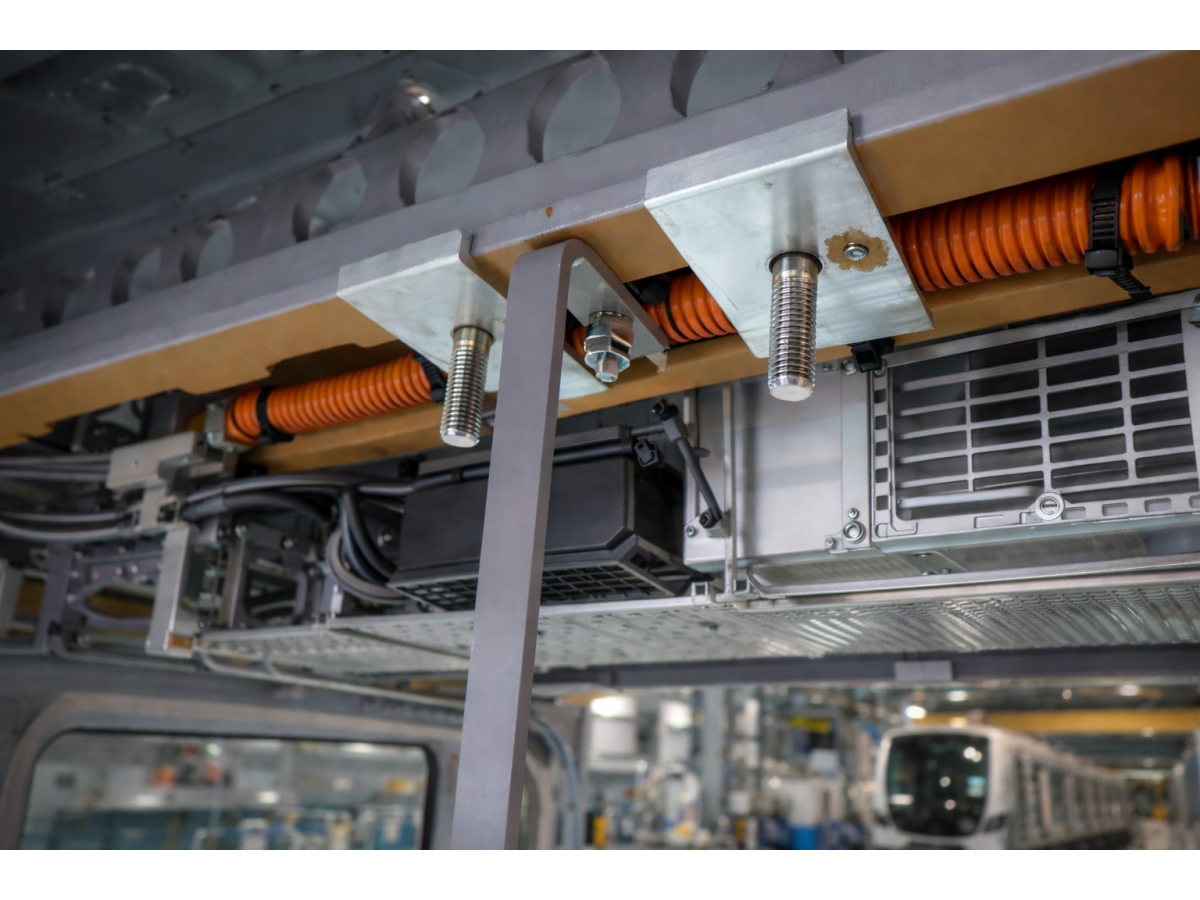
Not every railway fastener requires the same tightening technology.
A useful framework is:
Possible approach:
Defined torque
Calibrated tool
Controlled fastener specification
May require additional control of:
Friction
tightening sequence
tool traceability
process verification
Must follow the applicable:
OEM calculation
drawing
assembly procedure
tool specification
validation plan
inspection plan
Generic supplier torque charts should not override the approved engineering specification.
Torque charts can be useful as engineering references.
But they should not be copied blindly into railway production.
The actual joint may differ in:
Friction
material
thread engagement
washer
locking mechanism
application criticality
Therefore:
Reference Torque ≠ Approved Production Torque.
Assemblies with multiple fasteners can require a controlled tightening sequence.
Examples may include:
Covers
Flanges
Large mounting plates
Equipment interfaces
A cross-pattern or staged tightening sequence may help distribute clamp load more uniformly in appropriate geometries.
But:
Star Pattern ≠ Universal Tightening Sequence.
The correct sequence depends on the joint.
If one fastener is immediately tightened to full torque while adjacent fasteners remain loose, the joint can:
Tilt
distort
seat unevenly
For some assemblies, engineers may specify staged tightening such as:
Initial Seating → Intermediate Tightening → Final Tightening
The actual stages must come from the approved assembly procedure.
Gasketed flanges and sealing joints can have specialized tightening requirements.
These should not be generalized to:
Brackets
Cabinets
Structural joints
Rail interiors
Each joint type requires its own installation logic.
The installation tool should match:
Torque range
Fastener size
Access
production volume
required accuracy
traceability requirement
Possible tools include:
Manual torque wrenches
Digital torque wrenches
Electric nutrunners
Pneumatic tools
Hydraulic torque tools
depending on the application.
A highly accurate torque wrench does not eliminate variation caused by:
Friction
operator technique
thread condition
coating
joint seating
Therefore:
Accurate Tool ≠ Exact Preload.
Torque tools should be controlled according to the applicable quality system, customer procedure and tool manufacturer's requirements.
Calibration programs can include:
Tool identification
Calibration interval
Traceability
Verification
Out-of-calibration response
But the exact interval should not be invented generically.
Calibration frequency should reflect:
Tool usage
Tool type
Stability
Criticality
Customer requirement
A controlled system is more important than an arbitrary calendar interval.
A calibrated tool can still be used incorrectly.
Therefore production control should also consider:
Operator procedure
Socket engagement
Joint condition
correct torque program
part identification
Digital tools can support:
Torque display
Angle measurement
Data logging
Operator feedback
depending on the tool.
These capabilities can improve process traceability.
However:
Digital Tool ≠ Correct Joint Design.
A recorded torque value confirms what the tool measured.
It does not independently prove the actual clamp force in every joint.
Therefore:
Torque Traceability ≠ Direct Preload Measurement.
Some engineered joints use a combination of torque and angle.
A simplified sequence may include:
Initial seating torque
Defined additional rotation
This can reduce some dependence on friction after seating, depending on the joint design.
However:
Torque-Angle ≠ Universal Railway Tightening Method.
It should only be used when defined by the joint engineering specification.
Some specialized applications use tightening strategies designed around fastener behavior near or beyond specific elastic/plastic conditions.
Such methods require controlled engineering and should never be introduced based on a generic fastener supplier recommendation.
Because preload stretches a bolt, elongation can sometimes be used to assess bolt tension.
This can provide a more direct relationship to preload than torque alone.
However, practical use depends on:
Bolt geometry
material
accessibility
reference length
measurement method
Ultrasonic methods can be used in selected engineered applications to estimate bolt elongation or tension.
They can be valuable when preload verification is particularly important.
But:
Ultrasonic Measurement ≠ Universal Railway Requirement.
JUXIN FASTENERS should not present ultrasonic preload measurement as a standard service capability unless specifically offered and validated for the project.
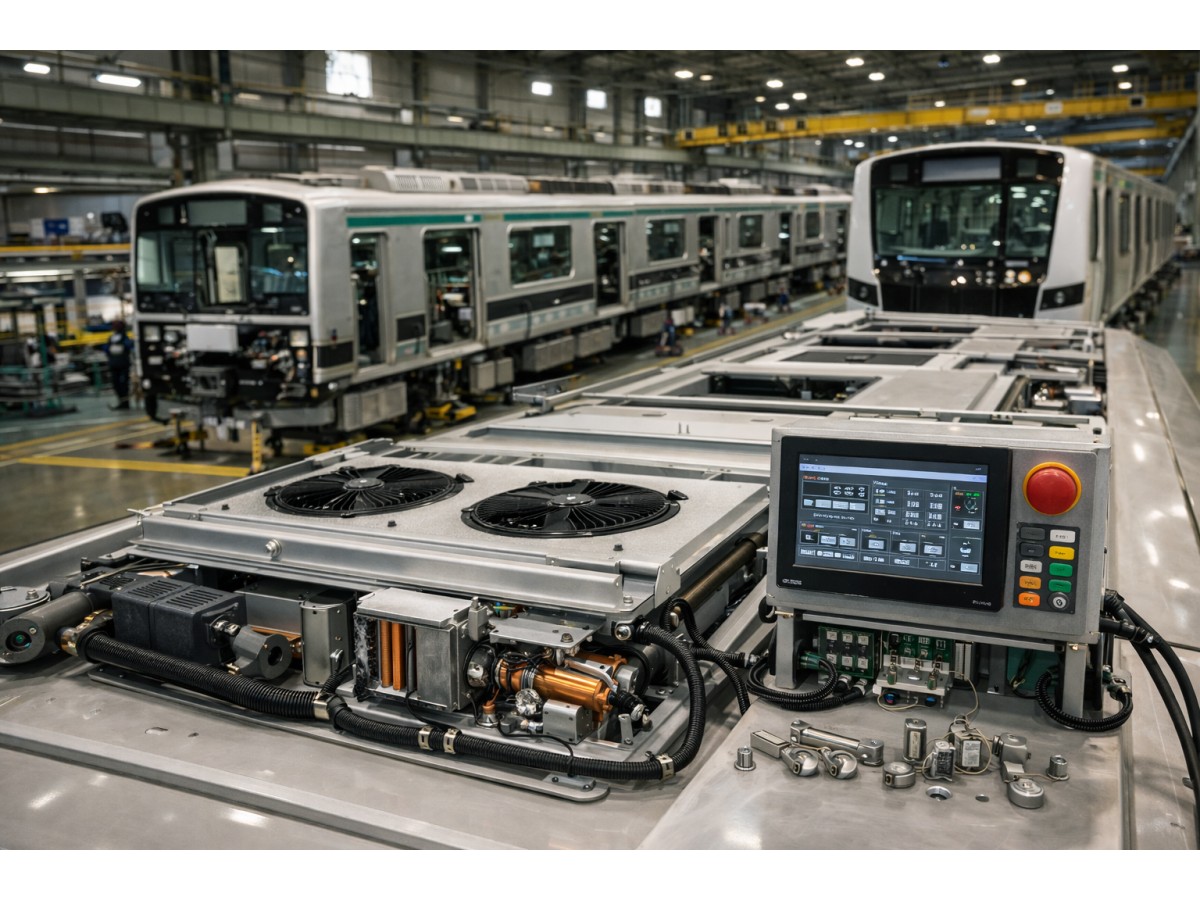
Hydraulic tensioning can be used for certain large bolted joints where the design supports direct axial tensioning.
It can reduce the influence of thread friction during the tensioning phase.
But it is not automatically the preferred method for all:
Railway structures
Bogies
Carbody assemblies
Track components
Therefore:
Hydraulic Tensioning ≠ Universal High-Load Solution.
The joint must be specifically designed for the method.
Large fasteners may require tools that increase available tightening torque.
But increasing tool capacity does not solve:
Incorrect friction assumptions
Weak mating threads
Poor joint design
Therefore:
More Tool Torque ≠ Better Preload Control.
Lock nuts require special consideration.
An all-metal or polymer-insert prevailing-torque nut generates rotational resistance before the joint is fully clamped.
Therefore:
Prevailing Torque ≠ Preload.
The total measured installation torque can include:
Prevailing Torque + Torque Associated With Generating Clamp Load
The approved installation specification should account for the locking system.
Changing from:
Standard nut
All-metal lock nut
Nylon-insert lock nut
can change installation behavior.
Therefore a lock-nut substitution may require engineering review.
Wedge-locking systems can provide resistance to rotational loosening in suitable applications.
But:
Wedge-Lock Washer ≠ Correct Tightening.
The fastener still requires the appropriate preload.
No locking device can compensate for every installation error.
Therefore:
Locking Feature ≠ Correct Preload.
Rivet nuts create a threaded attachment in thin sheet or other suitable parent material.
Their installation depends on controlled setting rather than conventional bolt tightening torque.
Important variables include:
Hole size
Hole shape
Grip range
Parent material
Rivet nut geometry
Tool
Setting stroke / force
Excessive setting can damage:
Rivet nut
Sheet
Thread
Insufficient setting can result in poor retention.
Therefore the installation process requires a controlled window.
After the rivet nut is installed, the mating screw still requires its own tightening specification.
These are two separate processes.
Rivet nut validation should distinguish:
Axial pull-out
Rotational spin-out
And:
Spin-Out ≠ Mating Screw Self-Loosening.
Self-clinching nuts, studs and standoffs depend on controlled displacement of parent-sheet material.
Key variables include:
Sheet material
Sheet hardness
Sheet thickness
Hole
Edge distance
Tooling
Press force
Excessive installation force can damage:
Sheet
Fastener
Clinching feature
Therefore:
Installation Force Must Match the Fastener and Parent Material.
Two sheets with identical thickness but different material or hardness can behave differently.
Therefore:
Parent Material Is Part of the Installation Specification.
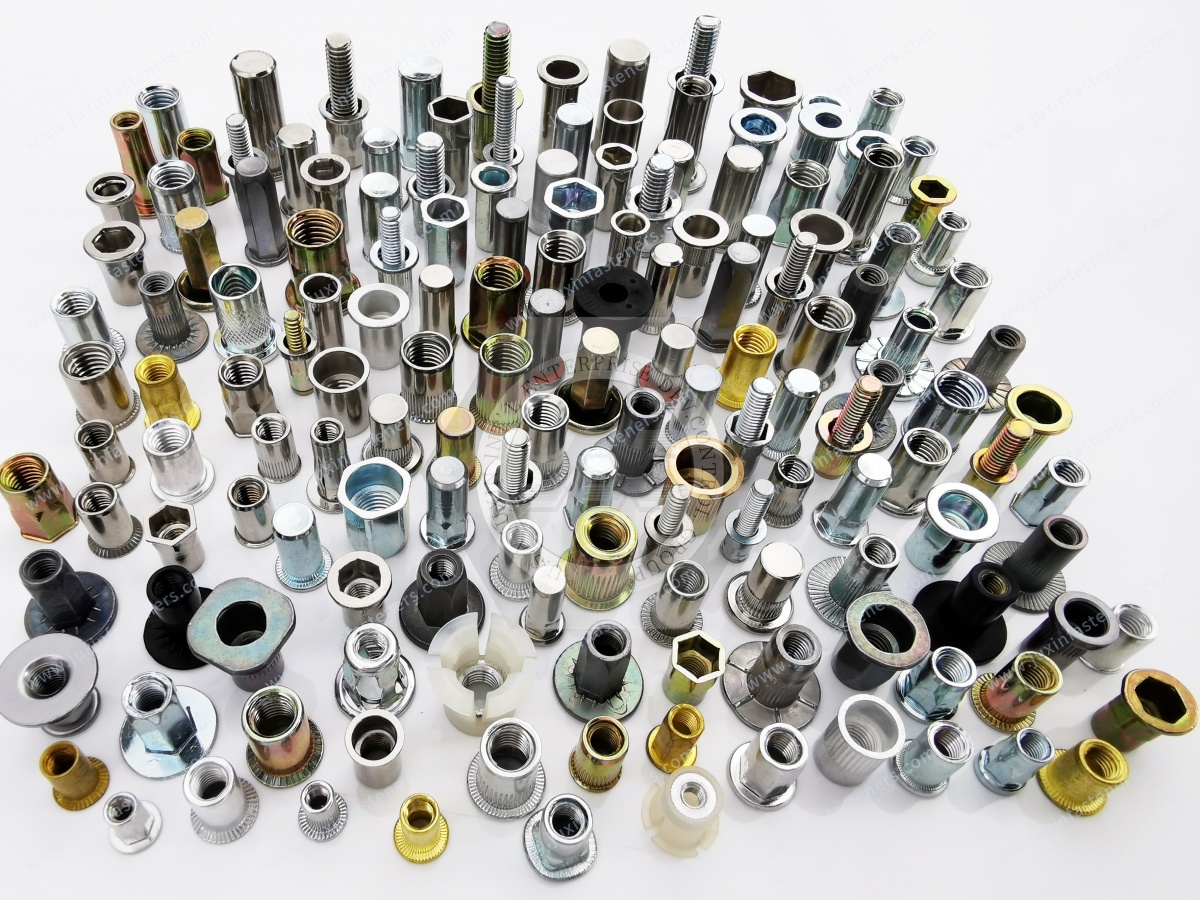
Weld fasteners depend on:
Parent material
Surface condition
Projection geometry
Electrode force
Current
Time
Alignment
depending on the welding process.
Therefore:
Strong Fastener ≠ Strong Welded Joint.
Too little energy can produce an inadequate weld.
Too much can create:
Expulsion
distortion
thread damage
sheet damage
The correct welding window must be established for the actual assembly.
Changing the geometry of a weld nut while maintaining the same thread does not necessarily produce equivalent welding behavior.
Therefore:
Same Thread ≠ Same Weld Fastener.
Stainless steel threaded fasteners require attention to galling.
Galling risk can be affected by:
Material pairing
Thread fit
Surface condition
Lubrication
Installation speed
Therefore:
Stainless Steel ≠ Install Like Carbon Steel by Default.
A stainless fastener can seize during tightening before the intended preload is achieved.
A high measured installation torque may therefore not indicate high clamp force.
This is a particularly important diagnostic principle:
High Torque ≠ High Preload.
Aluminum parent materials require careful consideration because their thread and bearing strength can differ significantly from steel.
A high-strength bolt does not allow unlimited tightening.
Therefore:
Stronger Bolt ≠ Stronger Aluminum Thread.
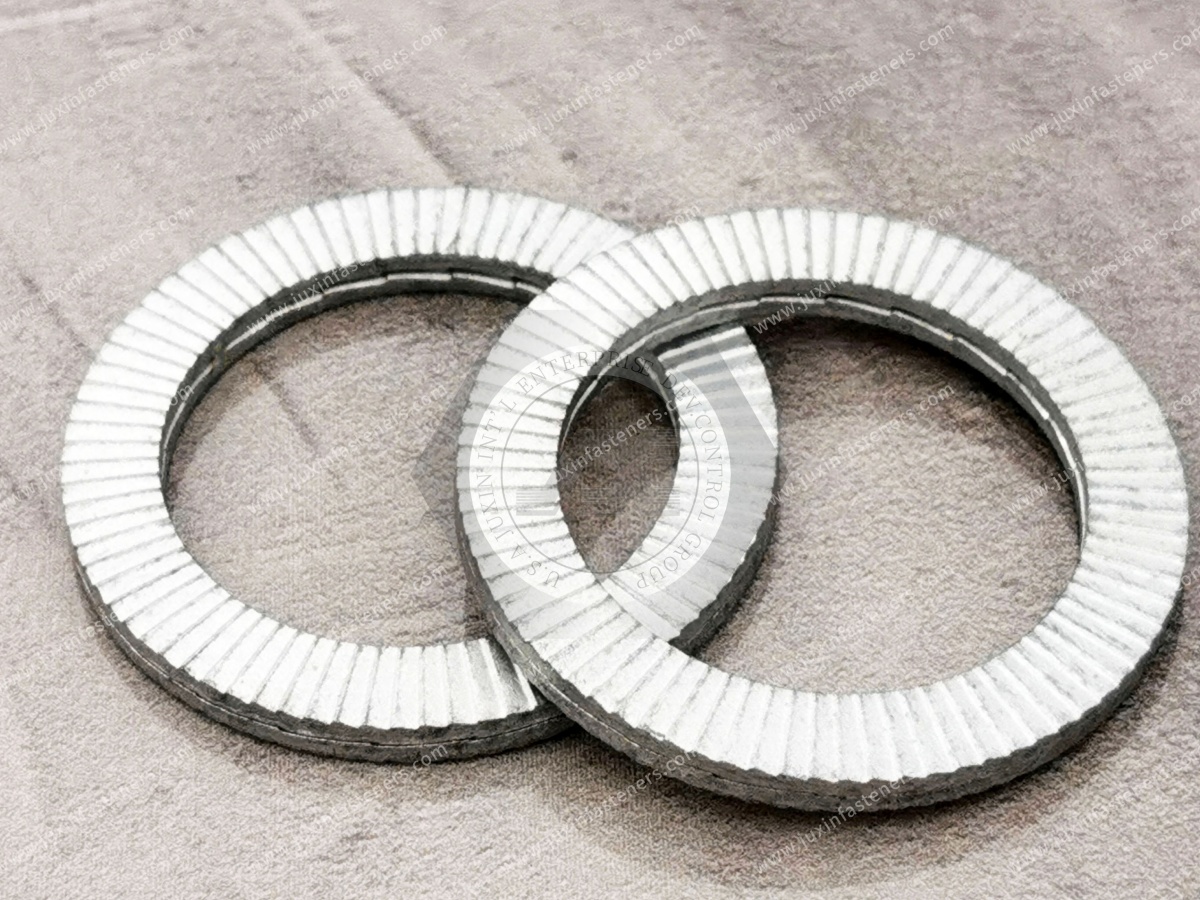
Washers can perform different functions:
Bearing-load distribution
Surface protection
Spring behavior
Locking feature
These functions should not be confused.
A flat washer primarily provides a bearing interface or load distribution function.
A spring washer should not automatically be assumed to prevent transverse self-loosening in every application.
A Belleville washer can provide spring behavior.
But:
Spring Force ≠ Bolt Preload.
The complete joint still requires engineering analysis.
The original article suggested that newly installed railway joints should routinely be re-torqued after initial operation.
That is too broad.
Some assemblies may require:
Retorque
Inspection
Verification
under the approved maintenance procedure.
Others may specifically not require or permit routine retightening.
Therefore:
Initial Service ≠ Automatic Retorque Requirement.
A maintenance technician may not know:
Existing preload
Friction condition
Locking mechanism
whether the fastener has moved
whether reuse is allowed
Applying the original installation torque again does not necessarily restore the original preload.
Breakaway or residual torque can be influenced by:
Static friction
Corrosion
Locking feature
Surface condition
Therefore:
Residual Torque ≠ Remaining Clamp Force.
If torque auditing is used, the method and acceptance criteria should be defined by the engineering or quality procedure.
Reuse can change:
Thread friction
Coating
Locking geometry
prevailing torque
Therefore:
First Installation ≠ Reinstallation.
Where maintenance requires repeated disassembly, reuse limits should follow the applicable specification.
When a joint fails, it is important to distinguish:
Fastener manufacturing defect
Wrong fastener
Wrong coating
Wrong torque
Wrong tool
Installation error
Joint-design problem
Parent-material failure
Replacing the fastener supplier will not solve an assembly-process problem.
Likewise, tightening-process improvement cannot correct a defective fastener.
| Observed Problem | Possible Cause | What to Review |
|---|---|---|
| Bolt rotates loose | Insufficient clamp / joint movement | Preload, locking, vibration |
| Thread strips during tightening | Excess load / weak mating thread | Torque, engagement, material |
| Bolt yields | Excessive preload | Torque method, friction |
| High torque but loose joint | Galling / friction | Surface, thread, lubrication |
| Rivet nut spins | Installation / hole issue | Grip, hole, setting |
| Self-clinching nut loosens | Clinching problem | Sheet, hole, press force |
| Weld nut detaches | Welding problem | Projection, current, force |
| Clamp load varies by batch | Friction variation | Coating, lubricant, process |
Installation validation should answer:
Does the production process consistently create the intended joint condition?
Depending on the application, validation can consider:
Fastener identification
Tool selection
Tool calibration
Torque
Angle
Friction
Preload
Tightening sequence
Operator process
Data traceability
A bolt can fully comply with its mechanical property standard and still be installed incorrectly.
Therefore:
Good Fastener + Bad Installation = Bad Joint.
Likewise:
Good Installation + Wrong Fastener = Bad Joint.
Both product and process matter.
VDI 2230 is widely used as an engineering framework for systematic calculation of highly stressed bolted joints.
It can support engineering analysis involving:
Forces
preload
joint stiffness
bolt loading
where applicable.
However:
VDI 2230 ≠ Railway Fastener Product Certification.
Its relevance is to bolted-joint engineering rather than branding a bolt as “VDI 2230 certified.”
Where specified for the project, DIN 25201-2 can be relevant to bolted-joint design and assembly for railway vehicles and components.
But:
DIN 25201-2 ≠ Generic Bolt Approval.
The complete joint, assembly process and railway project requirements remain important.
Applicable ISO standards may define:
Mechanical properties
Threads
Dimensions
Testing
for relevant fastener families.
But:
ISO Component Compliance ≠ Correct Railway Installation.
The installation process remains application-specific.
For:
Bogies
Braking systems
Running gear
Crash-critical assemblies
Primary structural load paths
the fastener supplier should not independently invent tightening values.
The applicable:
OEM drawing
Joint calculation
Fastener specification
Tightening procedure
Validation requirement
must control the installation.
A supplier can support technical discussions about:
Material
coating
friction
fastener geometry
But the final tightening specification belongs to the joint engineering authority.
A procurement drawing that specifies only:
M10 × 1.5, Property Class 10.9
may be incomplete for a torque-controlled joint.
Additional requirements may include:
Coating
Friction range
Lubrication condition
Washer
Nut
Locking feature
because these affect installation behavior.
When fasteners are purchased from multiple sources, dimensional equivalence alone may not guarantee installation equivalence.
This creates an important second-source issue.
Two suppliers can deliver dimensionally conforming bolts with different friction behavior.
Therefore:
Same Dimensions ≠ Functional Equivalence.
A practical framework includes:
Drawing + Revision + Material + Mechanical Properties + Heat Treatment + Thread + Geometry + Coating
+ Topcoat + Lubrication + Friction + Mating Component + Installation Behavior + Functional Validation
This is more robust than comparing only:
Dimensions
Price
Material certificate
A material certificate can verify specified material information.
It does not establish:
Friction
torque-preload behavior
coating performance
locking function
Even if the nominal coating name remains the same, changes in:
Process
Topcoat
Lubricant
may affect friction.
Where friction is functionally controlled, such changes may require review.
This principle applies particularly to torque-controlled joints.
Engineers searching for railway fastener torque may be asking:
What torque should I use for a railway bolt?
Why does the same torque produce different preload?
How does coating affect bolt tightening?
What is the difference between torque and preload?
Should railway bolts be re-torqued?
How should lock nuts be tightened?
How do I validate a torque-controlled assembly?
This page is designed to answer those questions without pretending that one universal torque table can replace joint engineering.
Procurement and supplier-development teams may search for:
Railway bolt manufacturer
Railway fastener supplier
Torque-controlled fasteners
Friction-controlled fasteners
Coated railway bolts
Railway lock nut supplier
Custom railway fasteners
OEM rolling-stock fastener manufacturer
Their sourcing decision should include the characteristics that influence assembly, not only the nominal part dimensions.
For a torque-controlled joint, engineers and procurement teams should define as applicable:
Part number
Drawing revision
Thread
Diameter
Length
Material
Mechanical properties
Heat treatment
Coating
Coating thickness
Topcoat
Lubrication
Friction requirement
Nut
Washer
Internal thread
Parent material
Thread engagement
Clamped thickness
Joint function
External load
Temperature
Vibration
Corrosion environment
Tightening method
Torque
Angle where applicable
Target preload where specified
Tightening sequence
Tool type
Tool calibration
Process verification
Traceability
Inspection
Functional validation
This turns “tighten the bolt” into a controlled engineering process.
For an engineering quotation, provide:
2D drawing
3D model where available
Part number
Revision
Railway application
Application criticality
Joint function
Parent material
Mating component
Fastener type
Thread
Material
Mechanical properties
Heat treatment
Surface treatment
Coating thickness where applicable
Friction requirement where applicable
Lubrication condition
Nut type
Washer type
Locking mechanism
Tightening method
Installation torque where specified
Target preload where specified
Tightening sequence where applicable
Tool requirement
Vibration / shock requirement
Temperature
Corrosion environment
Reuse requirement
Inspection requirement
Traceability requirement
Prototype quantity
Annual volume
Applicable ISO, DIN, EN, ASTM, SAE, ASME/ANSI or customer/OEM/project specification
Failure photos
Joint drawing
Current fastener specification
Torque setting
Tool type
Calibration status
Coating
Lubrication
Mating component
Parent material
Evidence of thread stripping
Evidence of galling
Evidence of joint movement
Maintenance history
This allows the problem to be separated into:
Fastener / Friction / Tool / Installation / Parent Material / Joint Design
This page should serve as the dedicated Railway Fastener Installation, Torque & Preload Control resource.
Recommended internal links include:
Railway Fastener Engineering → vibration, preload and anti-loosening joint design
Railway Anti-Loosening Fasteners → locking technology selection
Railway Bolt Loosening → failure analysis and corrective action
Railway Anti-Loosening Fastener Validation → testing and supplier qualification
Railway Fasteners → rolling-stock application hub
Railway Electrical Equipment Fasteners → cabinet and electrical equipment fastening
Railway Grounding Studs → electrical bonding fasteners
High-Strength Bolts & Washers → preload and joint design
Fastener Surface Treatment & Coating Selection → friction and corrosion
Zinc-Nickel Coated Fasteners → Zn-Ni coating and friction
Stainless Steel Fasteners → stainless installation and galling
Custom Fastener Manufacturing → drawing-based fasteners and DFM
Use the existing indexed JUXIN FASTENERS URL when implementing these internal links.
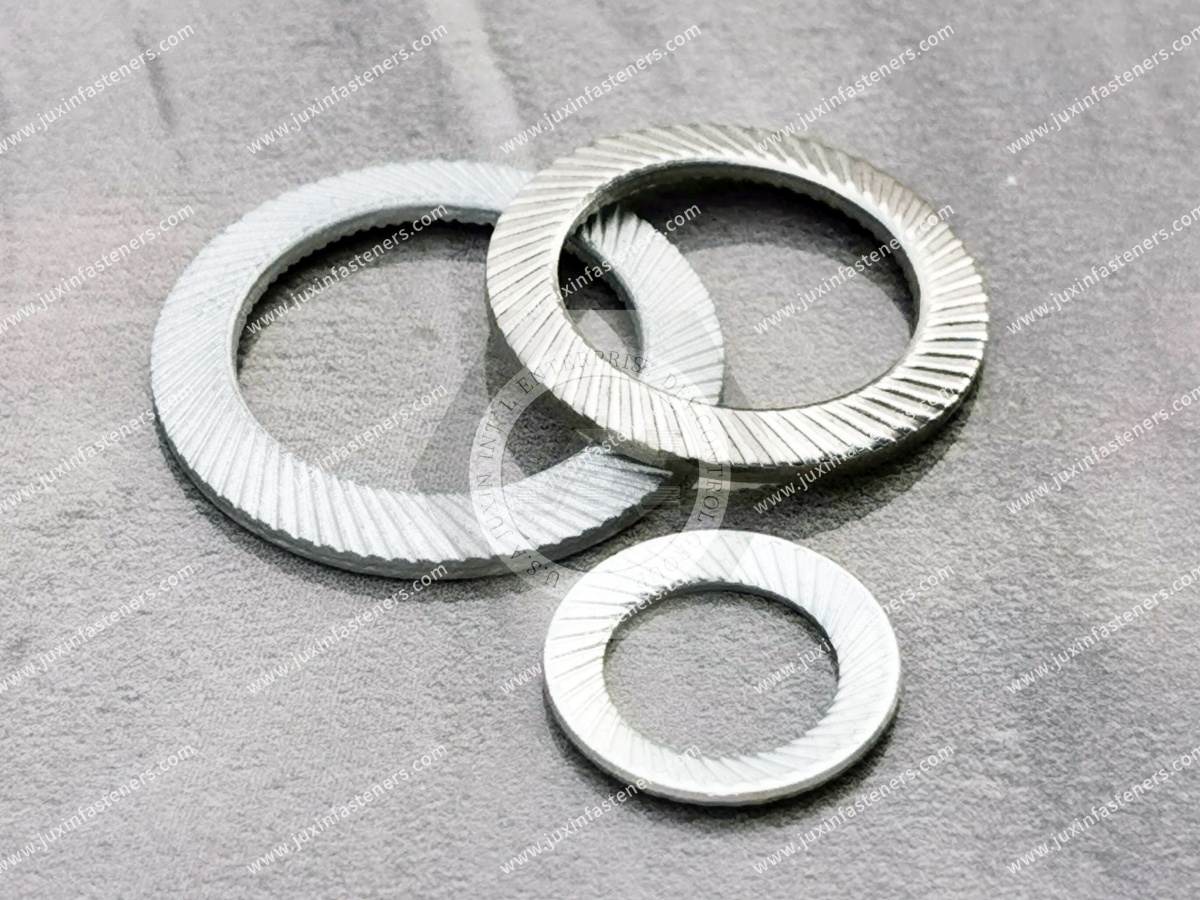
No. Torque is an installation input; preload is the tensile force generated in the fastener.
Differences in thread friction, bearing friction, coating, lubrication and mating surfaces can change the torque-preload relationship.
No. Excessive tightening can cause yielding, thread stripping or parent-material damage.
No. Diameter, pitch, friction, coating, lubrication, mating components and joint design must also be considered.
It can affect friction depending on the complete coating and topcoat system. A coating change should therefore be reviewed for torque-controlled joints.
No. Lubrication changes friction and can change the preload generated by a given torque.
No. Tool accuracy is only one variable. Friction and joint conditions also affect preload.
No. Retorque requirements should follow the approved joint and maintenance procedure.
No. Breakaway torque can be influenced by friction, corrosion and locking features.
The installation specification should account for both the locking resistance and the torque required to generate the intended clamp load.
No. A locking washer does not replace appropriate preload and installation control.
Ultrasonic methods can support bolt-tension assessment in suitable engineered applications, but they are not required or suitable for every railway joint.
Not universally. It is appropriate only for joints designed for that installation method.
No. VDI 2230 is a bolted-joint engineering calculation framework, not a railway fastener product certification.
No. Railway bolted-joint requirements depend on the complete joint and project specification.
In addition to dimensions and material, specify the relevant coating, friction, lubrication, mating components, tightening method and functional requirements.
The weak installation approach is:
Select Bolt → Find Torque Table → Tighten → Assume Joint Is Correct
The stronger engineering approach is:
Define Joint Function → Calculate / Establish Required Preload → Select Fastener → Define Friction Condition
→ Define Tightening Method → Control Tool → Validate Process → Monitor Production
The key engineering principles are:
Torque ≠ Preload
Installation Torque ≠ Clamp Force
Same Torque + Different Friction ≠ Same Preload
Coating Substitution Can Be an Engineering Change
Coating Name ≠ Complete Friction Specification
Dry Torque ≠ Lubricated Torque
More Torque ≠ More Reliability
Low Torque ≠ Proof of Self-Loosening
Over-Torque ≠ Automatic Fatigue Failure
Property Class ≠ Universal Torque Value
Stronger Bolt ≠ Stronger Parent Material
Stronger Mating Screw ≠ Stronger Internal Thread
Same Bolt + Different Joint Stack ≠ Same Joint Performance
Bolt Capacity ≠ Joint Capacity
Reference Torque ≠ Approved Production Torque
Star Pattern ≠ Universal Tightening Sequence
Accurate Tool ≠ Exact Preload
More Frequent Calibration ≠ Automatically Better Process
Tool Calibration ≠ Process Validation
Digital Tool ≠ Correct Joint Design
Torque Traceability ≠ Direct Preload Measurement
Torque-Angle ≠ Universal Railway Tightening Method
Ultrasonic Measurement ≠ Universal Railway Requirement
Hydraulic Tensioning ≠ Universal High-Load Solution
More Tool Torque ≠ Better Preload Control
Prevailing Torque ≠ Preload
Same Torque + Different Lock Nut ≠ Same Preload
Wedge-Lock Washer ≠ Correct Tightening
Locking Feature ≠ Correct Preload
More Setting Force ≠ Better Rivet Nut
Pull-Out ≠ Spin-Out
Spin-Out ≠ Mating Screw Self-Loosening
More Press Force ≠ Better Clinching
Parent Material Is Part of the Installation Specification
Strong Fastener ≠ Strong Welded Joint
More Welding Energy ≠ Better Weld
Same Thread ≠ Same Weld Fastener
Stainless Steel ≠ Install Like Carbon Steel by Default
High Torque ≠ High Preload
Stronger Bolt ≠ Stronger Aluminum Thread
Flat Washer ≠ Anti-Loosening Device
Spring Washer ≠ Guaranteed Anti-Loosening
Spring Force ≠ Bolt Preload
Initial Service ≠ Automatic Retorque Requirement
Residual Torque ≠ Remaining Clamp Force
First Installation ≠ Reinstallation
Reusable ≠ Unlimited Reuse
Good Fastener + Bad Installation = Bad Joint
Good Installation + Wrong Fastener = Bad Joint
VDI 2230 ≠ Railway Fastener Product Certification
DIN 25201-2 ≠ Generic Bolt Approval
ISO Component Compliance ≠ Correct Railway Installation
Supplier Torque Recommendation ≠ OEM Torque Specification
Same Dimensions ≠ Same Torque-Preload Behavior
Same Dimensions ≠ Functional Equivalence
Material Certificate ≠ Installation Equivalence
For railway design engineers, the goal is not to find the largest torque value the fastener can survive.
The goal is to establish the clamp condition required by the joint and then select an installation method capable of producing that condition consistently.
For procurement and supplier-development teams, this means sourcing not only the bolt or nut but also the functional characteristics—especially material,
mechanical properties, coating and friction—that affect the approved assembly process.
JUXIN FASTENERS supports selected railway and industrial equipment projects with:
High-strength bolts
Machine screws
Flange bolts
Nuts and lock nuts
Washers
Rivet nuts
Self-clinching fasteners
Weld nuts and weld studs
Threaded inserts
Stainless steel fasteners
Zinc-nickel coated fasteners
Friction-controlled coated fasteners to customer specification
Drawing-based special fasteners
Custom cold-formed components
CNC precision components
For an engineering RFQ or second-source project, provide:
2D Drawing + 3D Model + Part / Revision + Railway Application + Application Criticality + Joint Function + Parent Material
+ Mating Component + Load Requirement + Fastener Material + Mechanical Properties + Thread + Heat Treatment
+ Surface Treatment + Friction Requirement + Lubrication Condition + Washer / Nut + Locking Method
+ Tightening Method + Installation Torque + Target Preload Where Specified + Tool Requirement + Vibration / Shock
+ Temperature + Corrosion Environment + Validation Requirement + Annual Volume
For safety-critical railway joints, also provide the applicable OEM-controlled drawing, bolted-joint calculation, installation specification, assembly procedure and qualification requirements.
JUXIN FASTENERS
Railway Fasteners | Torque-Controlled Fasteners | Bolts & Lock Nuts | OEM Fastening Solutions
Email: info@juxinfasteners.com
Website: www.juxinfasteners.com
Contact Us
Tel.:
+86 020 8621 0320
+86 020 3121 6067
E-mail:
Technical Support:
Navigation
SEND INQUIREY



