
Call Us
+86 136 6007 9809
Call Us
+86 136 6007 9809

Oct. 13, 2026
Semiconductor Equipment Fasteners & Precision Hardware for Cleanroom and Vacuum Systems
Semiconductor manufacturing equipment requires reliable mechanical connections across precision automation systems, wafer handling modules,
equipment enclosures, vacuum-related assemblies and supporting structures.
These applications present different fastening requirements from conventional industrial machinery.
Depending on the installation location, components may need controlled dimensional accuracy, corrosion resistance, reduced particle generation, r
eliable mounting alignment and compatibility with defined cleaning procedures.
Equipment used inside vacuum chambers or directly exposed to semiconductor process environments may require additional material, surface cleanliness, outgassing and qualification controls.
For design engineers, the primary considerations include fastener geometry, material properties, thread engagement,
tolerance accumulation and installation access.
Manufacturing engineers and production managers must also evaluate assembly repeatability, particle generation during installation, tooling compatibility and production efficiency.
Procurement and supplier development teams must assess drawing conformity, custom manufacturing feasibility, inspection requirements,
packaging specifications, minimum order quantities and long-term supply continuity.
JUXIN FASTENERS supplies industrial screws, bolts, nuts, washers, self-clinching fasteners, threaded standoffs and drawing-based custom metal components for suitable semiconductor equipment applications.
This guide explains how to select fastening components for semiconductor manufacturing equipment while distinguishing general precision
machinery hardware from specialized vacuum-compatible and contamination-controlled fasteners.
Fastening Applications in Semiconductor Manufacturing Equipment
Semiconductor manufacturing systems contain multiple mechanical and electrical assemblies with different fastening requirements.

| Equipment Application | Potential Fastener Solution | Main Engineering Requirement |
|---|---|---|
| Semiconductor equipment frames | Machine screws, bolts and nuts | Structural attachment and dimensional compatibility |
| Wafer handling automation | Precision screws and custom hardware | Mounting alignment and repeatability |
| Cleanroom equipment enclosures | Stainless steel screws and captive hardware | Maintenance access and surface cleanliness |
| Electrical control cabinets | Self-clinching nuts and studs | Efficient sheet metal assembly |
| Sensor and control modules | Threaded standoffs and machine screws | Controlled spacing and component positioning |
| Vacuum equipment external frames | Stainless steel bolts and washers | Mechanical stability and corrosion resistance |
| Vacuum chamber internal fixtures | Specially specified fasteners | Vacuum compatibility and contamination control |
| Custom precision assemblies | Drawing-based machined or formed components | Critical dimensions and installation compatibility |
The correct fastener depends on its actual operating environment.
A stainless steel screw used on the exterior of a semiconductor tool is not automatically suitable for installation inside a high-vacuum chamber.
Semiconductor Equipment Fasteners vs. Vacuum-Compatible Fasteners
One of the most important selection decisions is identifying the location and functional requirements of the fastener.
External Equipment Fasteners
Fasteners installed on machine frames, exterior panels, equipment brackets and supporting structures may be selected according to conventional industrial mechanical requirements.
Depending on the application, standard machine screws, bolts, nuts and self-clinching hardware may be appropriate.
Cleanroom-Exposed Fasteners
Fasteners used in cleanroom equipment may require additional controls for particle generation, surface condition, cleaning and packaging.
The relevant requirements depend on the equipment location and contamination sensitivity.
Vacuum-Exposed Fasteners
Fasteners installed inside vacuum systems may require consideration of:
Material compatibility
Trapped gas volumes
Surface contamination
Outgassing
Temperature exposure
Thread galling
Process gas compatibility
Particle generation
Engineering insight: The same nominal screw specification can require different cleaning, inspection and packaging processes depending on where the screw is installed.
Equipment manufacturers should define the fastener's installation environment before selecting the product and supplier qualification requirements.
Stainless Steel Fasteners for Semiconductor Equipment
Stainless steel fasteners are frequently considered for precision machinery and equipment applications because of their corrosion resistance and availability in established industrial product forms.
Common material families include 304-type and 316-type stainless steels.
304-Type Stainless Steel
304-type stainless steel may be suitable for selected equipment frames, brackets and enclosures where its corrosion resistance and mechanical properties meet the design requirements.
316-Type Stainless Steel
316-type stainless steel contains molybdenum, which generally improves resistance to certain localized corrosion mechanisms compared with common 304-type compositions.
It may be considered for equipment exposed to specified cleaning chemicals or demanding atmospheric conditions.
However, 316 stainless steel is not universally compatible with every semiconductor process chemical.
316L Stainless Steel
316L is a low-carbon stainless steel grade commonly specified in certain fabricated equipment and vacuum-related applications.
Its suitability depends on the actual material specification, processing history and application requirements.
The designation 316L alone does not establish a high-purity, low-outgassing or vacuum-qualified fastener.
ISO 3506 Material Designations
Applicable parts of ISO 3506 define mechanical properties for relevant stainless steel fasteners.
Material group designations such as A2 and A4 are commonly associated with particular stainless steel composition families.
However, an A4 fastener should not automatically be described as a certified 316L vacuum component.
Engineering insight: Material composition, mechanical property class and vacuum cleanliness are three separate specifications.
A procurement drawing should identify each requirement independently when applicable.
Precision Threaded Standoffs for Semiconductor Automation
Threaded standoffs provide controlled spacing between equipment panels, electronic modules and mounting structures.
Potential applications include:
Sensor mounting assemblies
Electronic control modules
Circuit board supports
Automation equipment panels
Inspection system brackets
Important dimensions include:
Thread diameter and pitch
Standoff length
Thread depth
Outside diameter
End-face geometry
Perpendicularity
Mounting alignment
Tolerance Accumulation
When multiple standoffs support a rigid component, variations in standoff height can affect assembly flatness.
The equipment designer should consider tolerance accumulation between the mounting panel, standoffs and attached component.
Engineering insight: A standoff can meet its individual dimensional tolerance while the complete assembly still experiences alignment problems.
For precision equipment, critical mounting dimensions should be defined according to the functional requirements of the assembly.
Self-Clinching Nuts and Studs for Equipment Enclosures
Semiconductor equipment commonly uses sheet metal enclosures, electrical cabinets and auxiliary control panels.
Self-clinching fasteners provide reusable threaded attachment points in suitable sheet metal.
Self-Clinching Nuts
Self-clinching nuts may be used in:
Equipment electrical cabinets
Control panel housings
Auxiliary equipment covers
Internal mounting brackets
They can reduce loose-part handling during assembly.
However, installation performance depends on panel thickness, hardness and hole preparation.
Self-Clinching Studs
Self-clinching studs provide fixed threaded mounting points.
They may simplify component positioning and final assembly.
Engineering insight: Self-clinching fasteners must be selected according to the actual parent sheet material, not only the required thread diameter.
For production applications, installation trials may be necessary to confirm retention performance and dimensional compatibility.
Captive Panel Screws for Semiconductor Equipment Maintenance
Semiconductor manufacturing equipment often requires access to electrical and mechanical components.
Captive panel screws are designed to remain retained in a panel when disengaged from the mating thread.
Potential applications include:
Equipment access covers
Electrical cabinet panels
Inspection system housings
Serviceable automation modules
Retained screws may reduce the risk of misplaced hardware during maintenance.
However, captive screw selection should consider panel thickness, retention method, screw travel and installation access.
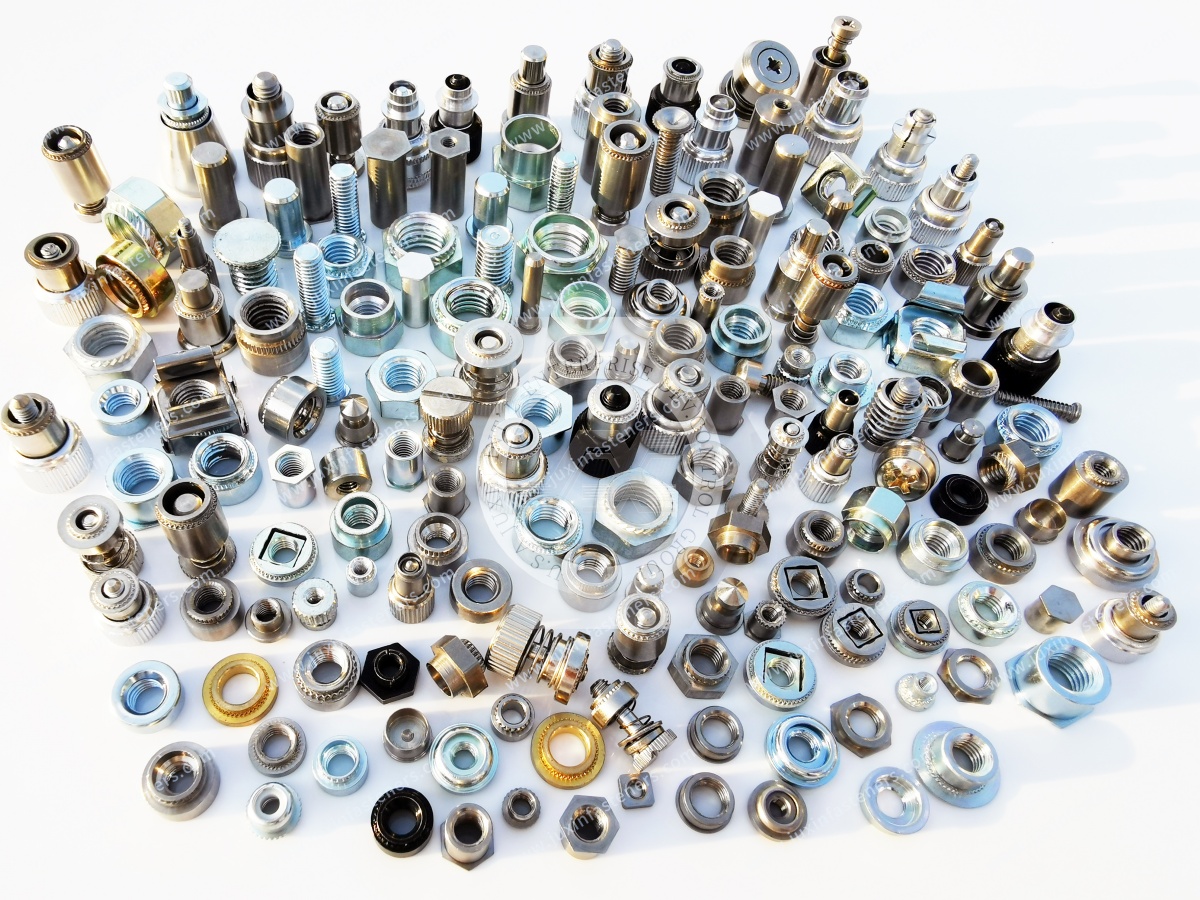
Engineering insight: A captive screw reduces loose-part handling, but it does not automatically meet cleanroom particle requirements.
The retention mechanism, surface condition and installation process may require additional evaluation.
Vacuum-Vented Screws and Virtual Leak Prevention
Vacuum systems may contain blind tapped holes where gas becomes trapped beneath installed screws.
During evacuation, trapped gas can escape slowly through the thread interface.
This phenomenon can contribute to a virtual leak.
A virtual leak is not necessarily a physical opening to the external atmosphere. It can result from gas trapped within an internal volume that releases gradually into the evacuated system.
Vented Screw Design
A vacuum-vented screw may include an axial hole or another defined venting feature to provide a gas evacuation path.
The purpose is to reduce trapped volumes that can interfere with vacuum pump-down.
Engineering Considerations
Vented screw selection should consider:
Vent geometry
Screw diameter
Remaining cross-sectional area
Mechanical loading
Thread engagement
Burr control
Cleaning requirements
Vacuum system compatibility
Engineering insight: Adding a vent hole changes the screw geometry and may affect its mechanical performance.
A vented screw should not be treated as mechanically identical to an unmodified screw without appropriate evaluation.
Blind Hole Geometry
The designer should also evaluate the tapped hole depth, screw length and available clearance.
A venting feature must provide an effective path from the trapped volume to the intended evacuated region.
Application Boundary
JUXIN FASTENERS can review drawing-based inquiries for specialized fastener geometries, including vented designs, subject to technical and manufacturing feasibility.
Vacuum compatibility, outgassing performance and cleanliness requirements must be separately specified and validated.
Outgassing and Surface Contamination in Vacuum Equipment
Outgassing refers to the release of gases or vapors from materials and surfaces under specified conditions.
In vacuum systems, potential sources include:
Residual machining oils
Cleaning agents
Organic surface films
Adsorbed moisture
Lubricants
Certain coatings
Contaminated packaging materials
Outgassing behavior depends on material, surface condition, temperature, pressure and cleaning history.
Cleaning Requirements
Depending on the application, vacuum equipment manufacturers may specify:
Degreasing
Ultrasonic cleaning
Controlled rinsing
Drying procedures
Surface inspection
Clean handling
Protective packaging
These processes must be defined according to the customer's requirements.
Engineering insight: A stainless steel fastener is not automatically low-outgassing simply because it contains no conventional zinc coating.
Residual contaminants and handling history can influence vacuum performance.
Vacuum Qualification
For demanding vacuum applications, equipment manufacturers may require specialized testing or qualification.
Possible methods include residual gas analysis or other application-specific evaluations.
Such testing should be specified contractually and should not be assumed for general industrial fasteners.
Particle Generation During Cleanroom Assembly
Particle generation can occur during fastener manufacturing, handling and installation.
Potential sources include:
Burrs
Thread damage
Surface contamination
Abrasive contact
Coating damage
Packaging debris
Improper handling
Thread Engagement
Thread condition and material pairing can influence particle generation during installation.
Stainless steel fasteners may also experience galling under unfavorable conditions.
Burr Control
Burrs around machined features, including vent holes, may create contamination concerns.
Where relevant, the drawing should define deburring and inspection requirements.
Packaging and Handling
Packaging requirements should reflect the intended cleanliness level.
For contamination-sensitive applications, the OEM may specify controlled cleaning, protective bags or other packaging procedures.
Engineering insight: Cleanroom packaging cannot compensate for contamination already present on the fastener.
Cleaning, inspection, handling and packaging must be considered as a connected process.
Thread Galling in Stainless Steel Precision Assemblies
Stainless steel threaded fasteners may experience adhesive wear or galling during tightening.
Risk can be influenced by:
Material pairing
Thread fit
Surface condition
Installation speed
Lubrication
Applied load
For semiconductor equipment, lubricant selection may be restricted by contamination or vacuum requirements.
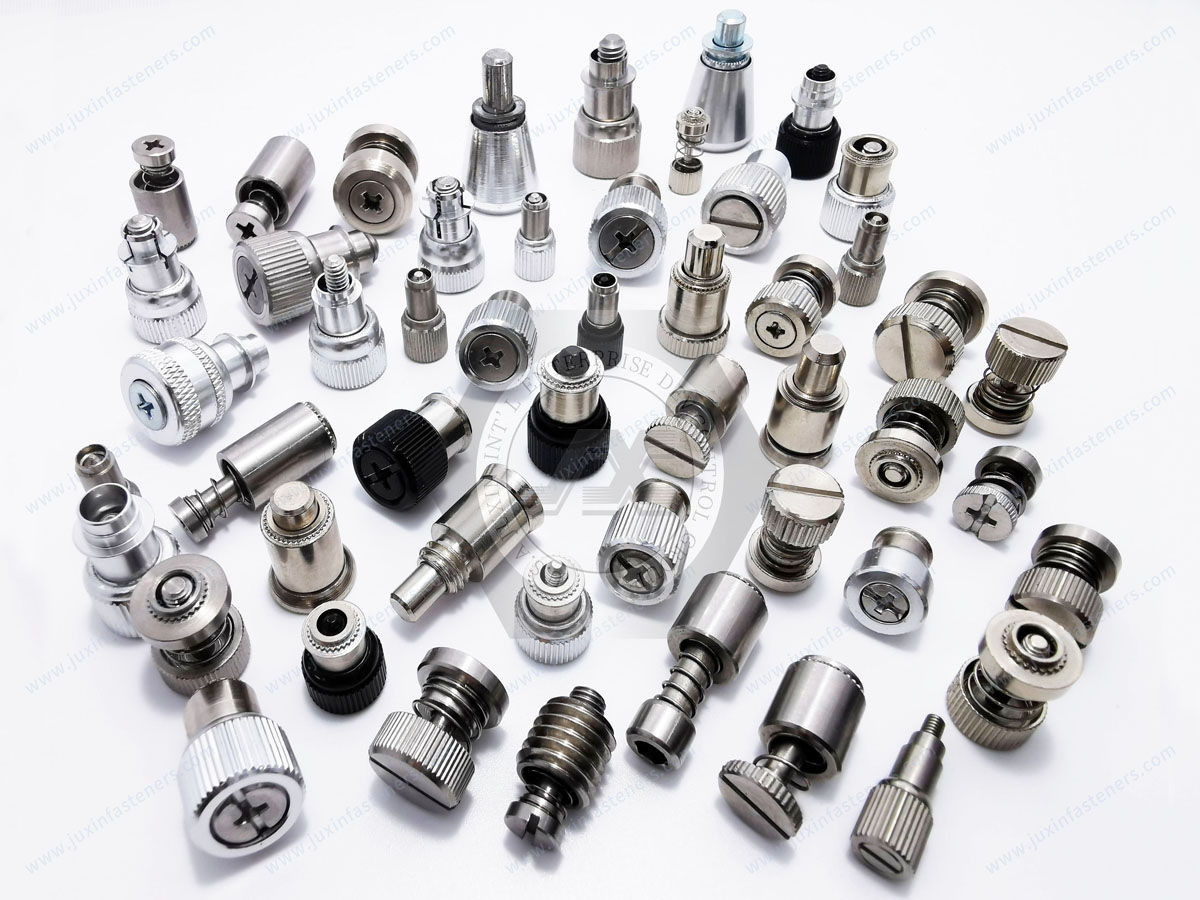
Engineering insight: A lubricant that reduces galling in ordinary machinery may be unsuitable inside a vacuum or contamination-sensitive system.
The equipment manufacturer should define acceptable materials and installation procedures.
Passivation and Surface Finishing
Stainless steel fasteners may require cleaning or passivation depending on the application.
ASTM A967/A967M is a relevant specification for chemical passivation treatments for stainless steel parts.
Passivation can help remove certain surface contaminants and support an appropriate passive surface condition.
However, passivation does not automatically establish low outgassing, particle cleanliness or vacuum compatibility.
Surface Finish
Surface finish may influence cleanability, particle retention and assembly behavior.
Where critical, the required finish should be specified in the drawing.
Engineering insight: Surface finish requirements should be linked to functional performance rather than using general descriptions such as “high purity” without measurable acceptance criteria.
Custom Precision Fasteners for Semiconductor Equipment OEMs
Standard catalog fasteners may not satisfy every semiconductor equipment design.
Drawing-based custom components may be required for:
Special screw lengths
Modified head geometry
Precision shoulders
Custom threaded studs
Nonstandard spacers
Special nuts
Vented screw configurations
Drawing-specific mounting components
JUXIN FASTENERS supports drawing-based inquiry review for industrial fastening components.
Manufacturing feasibility depends on material, geometry, tolerances and production quantity.
Cold Forming
Cold forming may be appropriate for selected fastener geometries and production volumes.
CNC Machining
CNC machining may be appropriate for complex geometries, controlled shoulders, precision features and venting holes.
Some components may require a combination of forming and secondary machining.
Engineering insight: A custom fastener drawing should distinguish dimensions that control equipment function from noncritical manufacturing features.
This can help reduce unnecessary manufacturing cost while preserving required precision.
Manufacturing Efficiency in Semiconductor Equipment Assembly
Production managers and manufacturing engineers must balance dimensional precision with assembly efficiency.
Installation Accessibility
Compact equipment modules may restrict tool access.
Fastener head geometry and installation direction should be considered during design.
Assembly Repeatability
Fastener dimensions, thread quality and surface condition can influence installation consistency.
Automation Compatibility
For automated or semi-automated assembly, fastener geometry and feeding characteristics may affect equipment performance.
Maintenance
Serviceable equipment may benefit from retained screws and standardized fastening arrangements.
Contamination Control
Where applicable, handling and assembly procedures should be designed to reduce particle generation and surface contamination.
Total Assembly Cost
Fastener unit price is only one part of total manufacturing cost.
Installation time, inspection, cleaning, packaging, rework and supply continuity should also be considered.
International Standards and Technical Requirements
Applicable standards depend on the specific fastener and equipment application.
| Product or Requirement | Potentially Relevant Standard |
|---|---|
| Stainless steel fastener mechanical properties | Applicable parts of ISO 3506 |
| Hexagon socket head cap screws | ISO 4762 |
| Hexagon head bolts | ISO 4014 / ISO 4017 |
| Hexagon nuts | ISO 4032 |
| Plain washers | ISO 7089 where applicable |
| Metric thread specifications | Applicable ISO metric thread standards |
| Inch-series threaded fasteners | Applicable ASME/ANSI standards |
| Stainless steel chemical passivation | ASTM A967/A967M where specified |
| Cleanroom classification | ISO 14644 series where applicable |
| Material inspection documents | EN 10204 where contractually specified |
Cleanroom classification under ISO 14644 relates to controlled environments and associated requirements.
It does not automatically certify an individual screw as cleanroom-compatible.
Similarly, compliance with a standard screw geometry does not establish vacuum compatibility.
Metric, UNC, UNF and other thread systems must be treated as separate specifications.
OEM Supplier Qualification and Alternative Sourcing
Semiconductor equipment manufacturers may seek alternative suppliers for screws, nuts, washers, standoffs, self-clinching hardware and custom precision components.
Supplier qualification should consider both technical conformity and commercial supply capability.
| Evaluation Area | Key Questions |
|---|---|
| Drawing conformity | Are dimensions, threads and tolerances correct? |
| Material specification | Is the required material grade correctly identified? |
| Mechanical performance | Does the fastener meet the intended joint requirements? |
| Surface condition | Are finish, burr and cleanliness requirements defined? |
| Vacuum exposure | Is specialized vacuum compatibility required? |
| Cleaning and packaging | Are the required processes and acceptance criteria specified? |
| Inspection | Which dimensions and characteristics require verification? |
| Documentation | Which material and inspection records are required? |
| Commercial supply | What are the MOQ, annual demand and delivery expectations? |
Material Traceability and Inspection Documents
Some semiconductor equipment projects require material inspection documentation under EN 10204.
The specific document type should be identified during procurement.
An EN 10204 3.1 inspection certificate should not be assumed for every standard industrial fastener.
Where required, documentation availability and traceability requirements must be confirmed before order acceptance.
Alternative Sourcing: Functional Equivalence Matters
Two fasteners with the same nominal dimensions may differ in:
Material composition
Mechanical properties
Surface finish
Burr condition
Cleaning history
Packaging
Installation behavior
For vacuum-exposed or contamination-sensitive applications, dimensional similarity alone does not establish functional equivalence.
The OEM should define the required qualification and approval procedures.
Request Semiconductor Equipment Fasteners and Precision Hardware
JUXIN FASTENERS supports OEM sourcing and drawing-based technical review for industrial fasteners used in suitable semiconductor manufacturing equipment applications.
For wafer handling automation, semiconductor equipment enclosures, precision mounting brackets and vacuum-related equipment assemblies, please provide:
2D drawings and available 3D models
Fastener type and thread specification
Material and mechanical property requirements
Critical dimensions and tolerances
Installation location and operating environment
Surface finish and burr requirements
Cleaning and packaging specifications
Vacuum compatibility requirements, if applicable
Inspection and documentation requirements
Prototype quantity and annual forecast
For vacuum chamber internal components or contamination-sensitive applications, please identify the applicable qualification and validation requirements.
Our team can review the supplied information to discuss suitable standard and custom fastening options and quotation feasibility.
Website: www.juxinfasteners.com
OEM Technical Review & RFQ: info@juxinfasteners.com
Send your drawings and purchasing requirements to discuss precision fastening solutions for your next semiconductor equipment project.
Related JUXIN FASTENERS Engineering Solutions
Captive Panel Fastening Solutions for Semiconductor Equipment & Robotic Enclosures — retained hardware for serviceable precision equipment.
Self-Clinching Nuts for Power Electronics & Sheet Metal Enclosures — reusable threaded connections for equipment panels.
Self-Clinching Standoffs for Telecom Enclosures & PCB Mounting — threaded support components for electrical equipment.
Custom Cold-Headed Fasteners & Special Formed Parts for Industrial OEMs — drawing-based custom fastener sourcing.
These related topics provide additional guidance on precision hardware, enclosure assembly, custom manufacturing and OEM supplier qualification.
 MORE NEWS


Oct. 13, 2026
Contact Us
Tel.:
+86 020 8621 0320
+86 020 3121 6067
E-mail:
Technical Support:
Navigation
SEND INQUIREY