
Call Us
+86 136 6007 9809
Call Us
+86 136 6007 9809

Aug. 12, 2026
Can a white semiconductor O-ring be replaced with another white O-ring of the same dimensions?
Can an FKM seal be upgraded to FFKM without reviewing the chamber application?
Is FFKM automatically required whenever fluorine-containing chemistry is present?
The engineering answer to all three questions is:
Not necessarily.
In semiconductor manufacturing equipment, O-ring selection cannot be based only on:
Color
Nominal size
Elastomer family
Temperature rating
Generic chemical-resistance charts
Seals used in CVD, PECVD, dry etch, PVD, load-lock and vacuum-transfer equipment can be exposed to combinations of:
Vacuum
Process gases
Plasma-generated species
Elevated temperature
Thermal cycling
Pressure differential
Repeated chamber cleaning
Mechanical compression
Particle-control requirements
A replacement seal may fit perfectly into the groove and still be functionally unsuitable.
The central engineering rule is:
Same Size + Same Color ≠ Same Semiconductor Seal.
A more reliable qualification path is:
OEM Part Number → Application Location → Process Chemistry → Plasma Exposure → Temperature → Vacuum Requirement
→ Elastomer Compound → Contamination Requirement → Gland Geometry → Installation → Functional Validation
For semiconductor OEMs, maintenance organizations, equipment integrators and procurement teams, this distinction can prevent vacuum leaks,
premature seal degradation, contamination and repeated maintenance.
Because the term O-ring describes geometry—not complete functional performance.
Two O-rings with identical dimensions can differ in:
Polymer family
Compound formulation
Filler system
Cure system
Hardness
Compression-set behavior
Chemical resistance
Plasma resistance
Thermal stability
Outgassing behavior
Particle-generation behavior
Extractables
Trace-metal characteristics
Manufacturing cleanliness
Therefore:
Dimensional Interchangeability ≠ Process Compatibility.
This is particularly important when qualifying an alternative source for a semiconductor equipment seal.
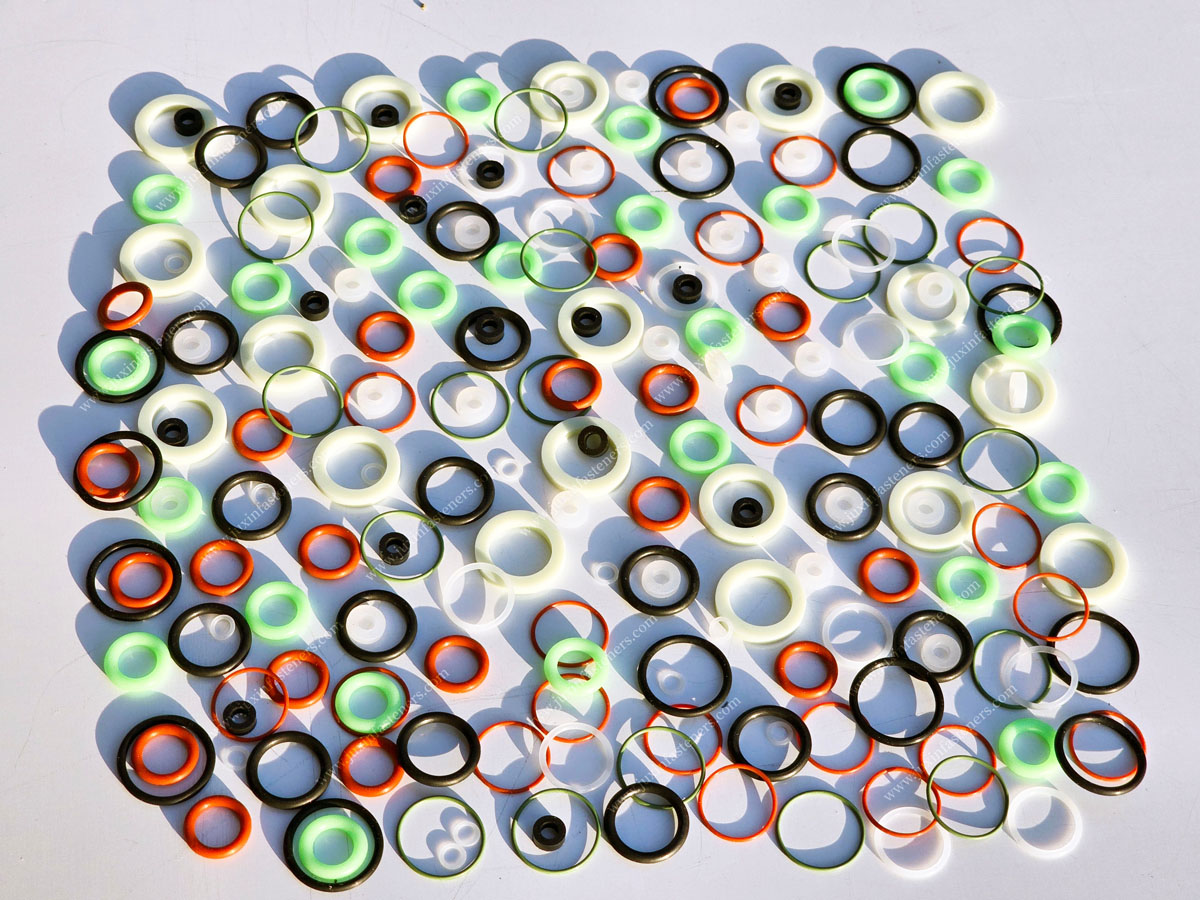
Color should never be used as the primary material-identification method.
A seal's color can result from:
Fillers
Pigments
Reinforcement
Compound formulation
Manufacturer identification strategy
FFKM compounds can have different colors.
FKM compounds can also be supplied in different colors.
Therefore:
White ≠ FFKM.
Black ≠ FKM.
Color ≠ Material Specification.
A maintenance technician should not replace a semiconductor seal simply because the replacement has the same color and dimensions.
Depending on the equipment and qualification system, identification should be based on information such as:
OEM part number
Drawing
Seal dimensions
Manufacturer part number
Polymer family
Compound designation
Material specification
Hardness
Application location
Equipment model
Process chemistry
Approved-source documentation
For critical chamber applications, an existing approved sample can also support dimensional comparison—but appearance alone cannot establish material equivalence.
ISO 3601 provides an international framework for O-ring dimensions, housing dimensions and quality acceptance depending on the applicable part of the standard.
ISO 1629 provides nomenclature for rubber and latex materials and includes familiar elastomer designations such as:
FKM
FFKM
EPDM
VMQ
These standards are useful.
But:
ISO 3601 Compliance ≠ Semiconductor Process Qualification.
And:
ISO 1629 Material Family ≠ Complete Compound Specification.
A dimensionally correct FFKM O-ring is not automatically suitable for every semiconductor chamber.
The actual compound must be evaluated against the application.
A general industrial O-ring may primarily need to contain:
Hydraulic oil
Water
Compressed air
Fuel
Refrigerant
A semiconductor process seal can face a much more complex environment.
The seal may interact with:
Vacuum
Reactive process gases
Plasma
Cleaning chemistry
Elevated temperature
Process by-products
Thermal cycling
In addition, the consequences of seal degradation may extend beyond leakage.
Depending on seal location, degradation can potentially affect:
Chamber vacuum
Process stability
Particle generation
Contamination
Maintenance intervals
Equipment uptime
This changes the engineering question from:
"Will this rubber seal?"
to:
"Will this specific compound remain functionally acceptable in this specific semiconductor process location?"
A useful selection framework is to evaluate five separate gates.
Can the compound tolerate the actual process chemistry?
Can it maintain required properties at continuous and transient temperatures?
Is the seal directly exposed, indirectly exposed or isolated from plasma-generated species?
Are outgassing, particles, extractables or other contamination characteristics controlled?
Does the O-ring work with the actual gland, squeeze, stretch, pressure differential and installation method?
A seal should not be approved from only one gate.
Three elastomer families may appear in semiconductor equipment, but they serve different application spaces.
| Material Family | Potential Strength | Important Limitation | Possible Application Context |
|---|---|---|---|
| FKM | Chemical and thermal resistance for many environments | Not universally suitable for aggressive plasma/process chemistry | Selected vacuum and equipment seals |
| FFKM | Broad chemical and high-temperature capability depending on compound | High cost; compound-specific plasma/contamination performance still matters | Demanding process-chamber and chemical environments |
| EPDM | Useful resistance to water, weathering and selected utility media | Generally unsuitable for oils and many process environments | Selected cooling/water/utility systems |
This is not an approved-material table.
Actual material selection must be application-specific.
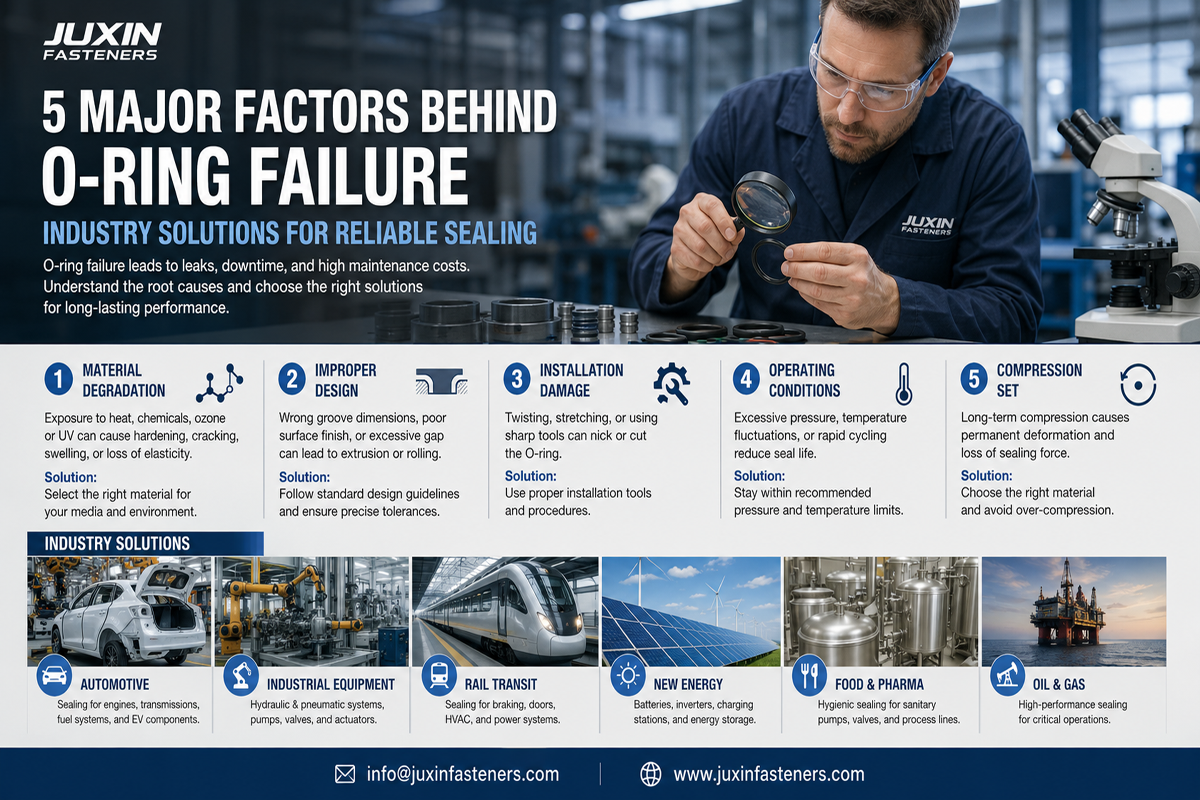
FKM is a fluoroelastomer family widely used across industrial and vacuum applications.
Depending on the compound, FKM can offer useful resistance to:
Oils
Fuels
Many chemicals
Elevated temperatures
This makes FKM relevant to some semiconductor equipment sealing locations.
But the statement:
"FKM is a semiconductor vacuum O-ring."
is incomplete.
Different FKM compounds can behave differently in:
Plasma
Reactive gases
Steam
Amines
Cleaning chemistry
High-temperature service
Therefore:
FKM Family Name ≠ Universal Semiconductor Compatibility.
Failure mechanisms can include:
Chemical attack
Surface erosion
Hardening
Loss of elasticity
Compression set
Cracking
Particle generation
The actual mechanism depends on:
Process chemistry
Plasma exposure
Temperature
Compound formulation
Exposure time
Seal location
This is why a seal that works successfully in a load lock may not automatically be suitable for a process chamber.
FFKM refers to perfluoroelastomer materials.
These compounds are used in demanding chemical and high-temperature applications because their highly fluorinated polymer structures can provide broad chemical resistance.
Semiconductor applications may consider FFKM where seals encounter demanding combinations of:
Reactive chemistry
Elevated temperature
Vacuum
Plasma-related exposure
But one of the most important corrections to common semiconductor sealing advice is:
FFKM ≠ One Universal Material.
There are multiple FFKM compounds engineered for different operating conditions.
Different FFKM compounds can be optimized differently for:
Plasma resistance
High-temperature service
Chemical resistance
Compression set
Particle performance
Metal-ion control
Outgassing
Mechanical properties
Therefore, replacing one approved FFKM compound with another FFKM compound should not automatically be treated as a like-for-like substitution.
Same Polymer Family ≠ Same Finished Performance.
This principle is especially important for second-source qualification.
Not as a universal rule.
The original article's statement:
"Any semiconductor application involving NF₃ / CF₄ / SF₆ plasma requires FFKM."
is too absolute.
The real engineering question is:
What species reaches the seal, at what concentration, at what temperature, with what plasma exposure and for how long?
A seal may be:
Directly exposed to plasma
Exposed to downstream reactive species
Shielded from direct plasma
Located outside the process chamber
Used in a utility subsystem with no meaningful plasma exposure
Therefore:
Process Gas Name Alone ≠ Seal Material Requirement.
Consider two O-rings on the same semiconductor tool.
Located near the process chamber and exposed to reactive plasma-generated species.
Located in a cooling-water connection outside the process environment.
Both belong to the same equipment.
But their material requirements can be completely different.
This is a critical procurement lesson:
Same Equipment ≠ Same Seal Environment.
Fluorine-containing plasma chemistry can create highly reactive species.
These species may attack elastomer surfaces and contribute to:
Surface degradation
Loss of mechanical properties
Erosion
Particle generation
Leakage
But the response depends on the specific compound and exposure conditions.
Therefore, procurement should not qualify seals from generic statements such as:
"FFKM is fluorine resistant."
The actual compound/application combination should be validated.
A data sheet may state that an elastomer can withstand a certain maximum temperature.
That does not automatically mean the seal will provide acceptable long-term performance at that temperature in a semiconductor chamber.
Temperature influences:
Compression set
Elastic recovery
Chemical reaction rate
Plasma degradation
Outgassing
Mechanical strength
And chemical exposure can change practical thermal capability.
Therefore:
Maximum Material Temperature ≠ Qualified Continuous Service Temperature.
Statements such as:
EPDM = 150°C
FKM = 250°C
FFKM = 327°C
are too simplistic for engineering qualification.
Exact limits depend on:
Compound
Duration
Chemical exposure
Pressure
Mechanical deformation
Required remaining properties
Use the actual compound data and equipment requirements.
EPDM can be useful for selected utility applications involving:
Water
Cooling systems
Certain aqueous environments
But it should not be generalized as a semiconductor process-chamber seal.
Potential limitations include compatibility with:
Hydrocarbon oils
Fuels
Many process chemicals
Plasma environments
Its suitability depends on the subsystem.
Again:
Semiconductor Equipment Seal ≠ Process Chamber Seal.
Other elastomer families may also appear in specialized equipment or sealing applications.
For example:
VMQ silicone
FVMQ fluorosilicone
But these materials have different combinations of:
Temperature behavior
Chemical resistance
Tear strength
Compression set
Fuel resistance
Vacuum characteristics
No elastomer should be substituted merely because its nominal temperature range appears adequate.
A semiconductor seal can remain mechanically leak-tight and still be unsuitable for a sensitive process.
Why?
Because semiconductor qualification may include concerns beyond leakage.
Depending on the process and equipment location, engineers may need to evaluate:
Particle generation
Outgassing
Extractables
Trace metals
Surface cleanliness
Process contamination
This creates an important distinction:
Vacuum-Tight ≠ Semiconductor-Compatible.
An O-ring can seal successfully while still being inappropriate for the process.
Under vacuum, volatile constituents can leave elastomer materials.
Potential sources can include:
Processing aids
Residual chemicals
Plasticizers
Additives
Absorbed moisture
Contaminants
The significance depends strongly on:
Vacuum level
Temperature
Chamber location
Process sensitivity
Therefore:
O-Ring Material Family ≠ Defined Outgassing Performance.
If outgassing is critical, it must be addressed through actual compound data or application-specific qualification.
Seal degradation can generate particles through:
Plasma erosion
Thermal degradation
Mechanical abrasion
Cracking
Chemical attack
For sensitive semiconductor processes, this can be as important as gross leakage.
This is one reason maintenance teams should preserve failed seals for inspection rather than immediately discarding them.
Color can result from compound formulation, but it does not tell the maintenance engineer:
Plasma resistance
Outgassing
Trace-metal level
Compression-set behavior
Chemical compatibility
Therefore:
Color Matching ≠ Process Matching.
A very expensive FFKM compound will still fail if the gland is incorrect.
Seal performance depends on:
O-ring cross-section
Groove depth
Groove width
Stretch
Squeeze
Groove fill
Thermal expansion
Surface finish
Installation
This leads to another important rule:
Higher-Performance Elastomer ≠ Higher-Performance Seal System.
The original article recommended:
20–30% compression for semiconductor vacuum seals.
That should not be used as a universal rule.
Required squeeze depends on:
Static or dynamic application
O-ring cross-section
Compound hardness
Temperature
Pressure
Thermal expansion
Groove geometry
Manufacturer recommendations
ISO 3601 housing guidance can support gland design, but actual compound and equipment requirements still control the application.
Semiconductor equipment may cycle between ambient and elevated operating temperatures.
During this cycle:
Metal gland dimensions change
Elastomer volume changes
Elastomer mechanical properties change
The room-temperature gland condition is therefore not necessarily the operating-temperature condition.
Engineers should consider the complete thermal system rather than calculating squeeze at only one temperature.
Repeated high-temperature exposure can reduce elastic recovery.
A seal may therefore:
Look dimensionally acceptable when removed
Have permanently flattened regions
Lose sealing contact after cooling
Leak after repeated process cycles
Preventive-maintenance intervals should therefore be based on:
Equipment experience
OEM requirements
Compound behavior
Process conditions
rather than one universal number of operating hours.
Even the correct approved compound can fail after poor installation.
Common problems include:
Twisting
Stretching
Cutting
Contamination
Incorrect lubricant
Debris remaining in the groove
Damage from sharp edges
Incorrect cross-section
A new seal can therefore cause immediate vacuum problems even though its material specification is correct.
Semiconductor sealing systems may be particularly sensitive to contamination introduced during maintenance.
Depending on equipment requirements, contamination can come from:
Dust
Fibers
Oils
Finger contact
Cleaning residue
Old seal debris
Incorrect lubricant
The correct installation procedure should follow the equipment manufacturer's cleanliness requirements.
Lubrication can help installation in some O-ring systems.
But semiconductor applications may restrict:
Lubricant chemistry
Quantity
Location
Contamination potential
Therefore:
Lubricated Installation ≠ Universal Semiconductor Best Practice.
Follow the approved equipment and compound requirements.
| Observed Failure | Possible Cause | Engineering Investigation |
|---|---|---|
| Vacuum leak after PM | Wrong size, damaged installation, contamination or incorrect seating | Verify part, groove, installation and leak location |
| Seal becomes brittle | Thermal or chemical/plasma degradation | Review compound, temperature and process exposure |
| Seal surface becomes rough or eroded | Plasma/chemical attack | Review seal location and process chemistry |
| O-ring permanently flattened | Compression set | Review compound, temperature, squeeze and service interval |
| Seal swells | Chemical absorption or incompatibility | Review exact chemistry and compound |
| Particles near seal | Elastomer degradation, abrasion or contamination | Perform failure analysis and cleanliness review |
| Repeated leak after replacement | Root cause is gland/process rather than seal | Inspect groove, surface and operating conditions |
| Correct-size replacement fails rapidly | Compound not functionally equivalent | Review approved material specification |
| White replacement performs differently from white original | Color used as material identifier | Verify compound and OEM part number |
This approach turns seal replacement into root-cause engineering.
Chemical vapor deposition equipment can expose seals to combinations of:
Elevated temperature
Reactive precursors
Chamber cleaning chemistry
Vacuum
Plasma in PECVD processes
The correct seal depends on its actual location.
An O-ring used near a process chamber may have different requirements from one used in:
Load lock
Gas-delivery support hardware
Cooling system
Vacuum support equipment
Do not qualify the material from the label "CVD O-ring" alone.
Dry etch environments can present demanding combinations of:
Plasma
Reactive species
Vacuum
Temperature
Repeated cleaning
Seal selection should consider:
Direct plasma exposure
Downstream exposure
Process chemistry
Cleaning chemistry
Temperature
Contamination sensitivity
An approved compound for one etch process should not automatically be transferred to another.
PVD equipment may involve different chemical conditions from etch or CVD tools.
Seal requirements can depend on:
Vacuum level
Temperature
Process material
Chamber location
Cleaning process
Therefore:
PVD Seal ≠ Automatically FFKM Seal.
The actual equipment specification should control selection.
Load-lock and transfer systems can have less aggressive chemical exposure than process chambers, but still require reliable vacuum sealing.
Selection may focus more strongly on:
Vacuum performance
Compression set
Particle control
Cycle life
Cleanliness
Again, the seal should be qualified for the actual location.
Semiconductor equipment also contains non-process utility systems such as:
Cooling water
Pneumatic circuits
Temperature-control systems
These may require very different elastomers from process-chamber seals.
This is another reason procurement should not create one universal "semiconductor O-ring" specification.
Use the following sequence before approving a seal.
Determine:
Process chamber
Chamber lid
Gas system
Vacuum line
Load lock
Transfer module
Cooling circuit
Utility system
Identify:
Process gases
Cleaning gases
Liquids
By-products
Concentrations where relevant
Determine whether exposure is:
Direct
Indirect
Downstream
Negligible
Record:
Normal operating temperature
Maximum continuous temperature
Transient temperature
Thermal cycling
Consider:
Operating pressure
Leak-rate requirement
Outgassing sensitivity
Vacuum cycle
Where relevant, specify:
Particle requirements
Extractables
Trace metals
Cleanliness
Outgassing
Specify:
O-ring size
Cross-section
Groove
Squeeze
Stretch
Hardness
Surface condition
Do not approve only:
FKM
or:
FFKM
Verify the required compound or qualified equivalent.
Depending on criticality, qualification may include:
Dimensional inspection
Material documentation
Leak testing
Thermal testing
Chemical exposure
Plasma evaluation
Particle/outgassing assessment
Equipment trial
This is much safer than color-based replacement.
This is particularly important for semiconductor procurement.
Suppose the approved O-ring is:
FFKM, 75 Shore A, white
A second supplier offers:
FFKM, 75 Shore A, white
Are they equivalent?
Not necessarily.
They may differ in:
Polymer architecture
Filler
Cure system
Compression set
Plasma resistance
Thermal behavior
Outgassing
Extractables
Trace metals
Particle generation
Therefore:
Same Material Family + Same Hardness + Same Color ≠ Functional Equivalence.
Compare:
OEM Part Number + Drawing + Dimensions + Compound + Hardness + Physical Properties + Chemical Compatibility
+ Thermal Performance + Compression Set + Plasma Behavior + Vacuum Performance + Contamination Requirements + Functional Testing + Documentation + Change Control
The qualification depth should match the application's criticality.
An approved seal can change performance if the supplier changes:
Compound
Filler
Cure system
Manufacturing process
Raw-material source
For critical applications, procurement should define appropriate change-notification requirements.
Same Part Number ≠ Permission for Uncontrolled Material Change.
Instead of searching only:
"FFKM O-ring supplier"
procurement teams should qualify the requirement more precisely:
Semiconductor FFKM O-ring for CVD equipment
Plasma-resistant O-ring for etch chamber
Vacuum O-ring for semiconductor equipment
FFKM second source for OEM seal
Custom semiconductor sealing component
Semiconductor vacuum fastener with O-ring
Replacement sealing screw for process equipment
This narrows the commercial search toward the actual application.
JUXIN FASTENERS should not be positioned as a generic manufacturer of every semiconductor elastomer compound.
Our relevant capability is precision fastening and drawing-based components used around semiconductor, vacuum, electronic and industrial equipment assemblies.
Relevant product families can include:
Stainless steel fasteners
Custom screws
Custom bolts
Precision nuts
Self-clinching nuts
Self-clinching studs
Self-clinching standoffs
Miniature self-clinching hardware
Threaded inserts
Nylon and engineering-plastic fasteners
PEEK fasteners
PTFE components
CNC machined parts
Custom threaded plugs
Drawing-based sealing screws
Fasteners incorporating specified O-rings
For sealing-related projects, JUXIN FASTENERS can evaluate the metal or engineered-plastic fastening component together with the specified sealing interface.
The exact elastomer compound, cleanliness requirement and semiconductor qualification must be defined by the drawing, OEM specification or project requirement.
Some equipment designs integrate an O-ring directly with a screw or threaded plug.
The complete system becomes:
Fastener Material + Thread + Head Geometry + O-Ring Groove + Seal Compound + Mating Surface + Tightening Condition
In this type of assembly:
Correct O-Ring ≠ Correct Sealing Screw.
And:
Correct Screw ≠ Correct Sealing System.
Both components must work together.
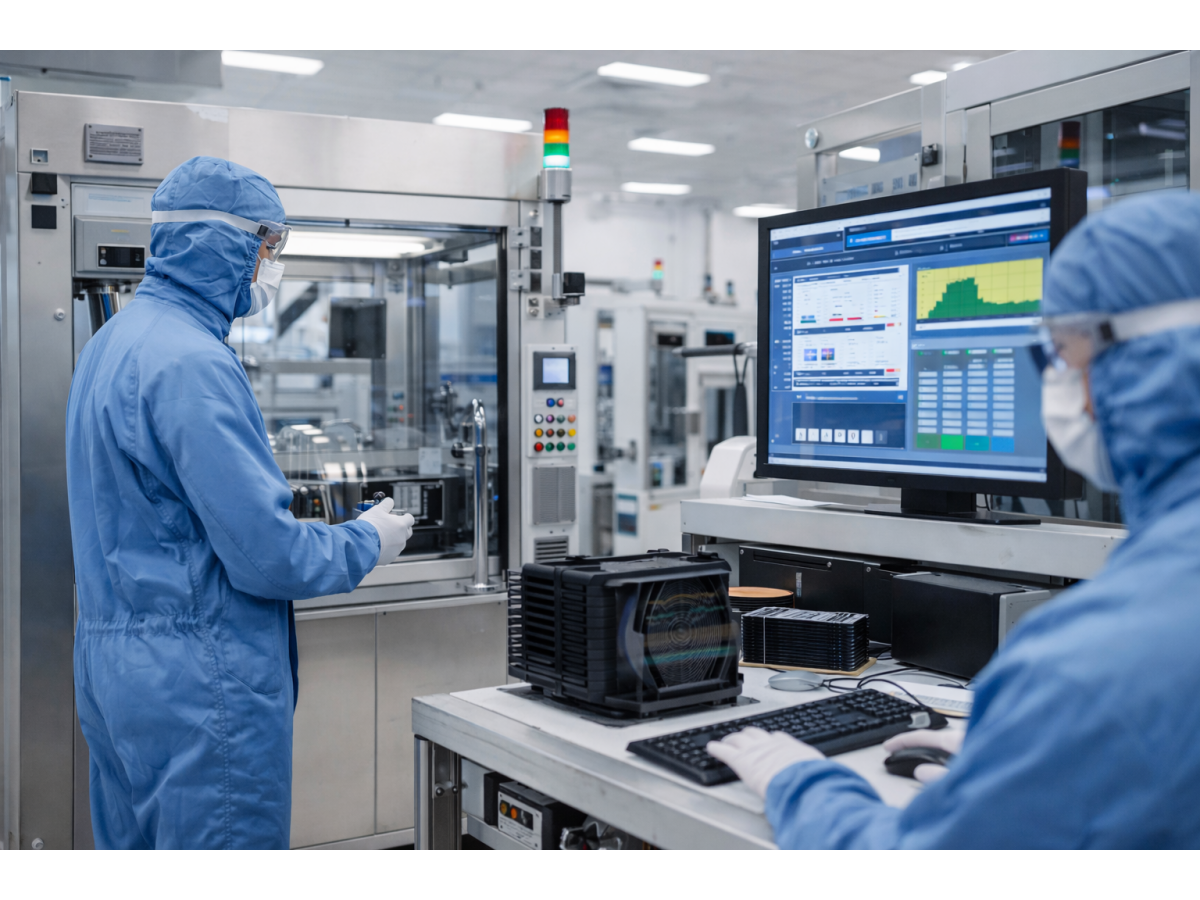
If a sealing screw leaks, applying more torque may:
Over-compress the O-ring
Damage the elastomer
Distort the mating surface
Strip the thread
Overload the fastener
Therefore:
More Installation Torque ≠ Better Vacuum Seal.
The fastener geometry and seal gland should control O-ring deformation correctly at the intended installation condition.
Stainless steel fasteners are commonly considered for equipment requiring:
Corrosion resistance
Cleanability
Controlled material selection
But:
Stainless Steel ≠ Semiconductor Cleanliness Qualification.
The actual requirement may also involve:
Grade
Surface condition
Passivation
Cleanliness
Particle control
Customer-specific documentation
These requirements should be stated on the RFQ or drawing.
Engineering polymers such as:
PEEK
PTFE
PVDF
POM
may be relevant to selected equipment hardware depending on mechanical, chemical, thermal and electrical requirements.
But material names alone do not establish semiconductor process suitability.
For example:
PEEK ≠ Automatic High-Purity Qualification.
The grade and application still matter.
No. Color is not a reliable identifier of polymer family or compound.
No. Multiple elastomer families and compounds can be black.
No universal rule should be used. The exact chemistry, plasma exposure, temperature, seal location and contamination requirements determine the appropriate compound.
No. FFKM can provide advantages in demanding chemical and thermal environments, but suitability is compound- and application-specific.
Cost and other performance requirements also matter.
Yes, in appropriate applications. But its suitability depends on the exact compound, chemistry, temperature and exposure.
It may be appropriate for selected utility or water-related systems, but it should not automatically be used in process-chamber environments.
No. ISO dimensional compliance does not establish chemical, plasma, vacuum or contamination performance.
No. Required squeeze depends on the compound, gland, cross-section, temperature and application.
No. Chemical exposure, plasma, compression set and contamination requirements may dominate performance.
Not automatically. Different FFKM compounds can have substantially different application performance.
Possible causes include incorrect part selection, installation damage, contamination, twisting, incorrect groove seating or a dimensional mismatch.
No. Contamination, particles, outgassing and chemical compatibility may still make it unsuitable.
Request the exact material/compound specification, dimensions, hardness, relevant physical properties,
chemical and thermal data, application documentation and any required contamination or vacuum performance data.
No. These characteristics are insufficient to establish functional equivalence.
For critical semiconductor applications, no. The exact compound and qualification requirements should be defined.
Provide the OEM part number, equipment model, seal location, drawing if available, dimensions, material specification, process chemistry, temperature and qualification requirements.
JUXIN FASTENERS can evaluate drawing-based screws, threaded plugs, CNC machined components and other fasteners incorporating specified sealing features.
The required elastomer compound and semiconductor-specific qualification must be defined for the project.
A sample can support dimensional analysis, but material and process equivalence should not be inferred from appearance.
The OEM specification, compound requirement or other technical documentation is needed for critical qualification.
For accurate engineering and commercial evaluation, provide:
OEM part number
Equipment manufacturer
Equipment model
2D drawing
3D model if available
Drawing revision
Application location
CVD / PECVD / Etch / PVD / Load Lock / Transfer / Utility application
Fastener or component type
Thread size
Thread pitch
Thread tolerance
Fastener material
Mechanical property requirement
Surface treatment
Cleanliness requirement
O-ring nominal size
O-ring cross-section
Elastomer family
Exact compound designation if known
Hardness
Color if identification requires it
Groove dimensions
Mating component
Mating surface finish
Process gases
Cleaning gases
Chemical exposure
Plasma exposure
Direct or indirect plasma exposure
Operating vacuum
Leak-rate requirement
Continuous temperature
Maximum temperature
Thermal cycling
Pressure differential
Outgassing requirement where applicable
Particle requirement where applicable
Extractables requirement where applicable
Trace-metal requirement where applicable
Lubricant restrictions
Installation method
Installation torque for sealing fasteners
Functional testing
Material documentation
Change-control requirement
PPAP or customer-specific documentation where applicable
Annual volume
Existing approved sample for second-source development
For replacement or second-source projects, also provide the currently approved part number and all available material documentation.
This page should connect internally with existing JUXIN FASTENERS resources covering:
O-ring failure analysis and engineering solutions
Custom O-ring sealing screws
CNC machined threaded components
Stainless steel fasteners
PEEK fasteners and engineering-plastic components
PTFE components and material selection
Self-clinching fasteners for electronic equipment
PCB standoffs and supports
ISO metric thread tolerances
Fastener surface finish selection
Corrosion-resistant fastener selection
Electrical and electronic equipment fastening solutions
Semiconductor equipment fasteners
Second-source fastener qualification
Use the existing indexed JUXIN FASTENERS URL when implementing each internal link.
The intended content path is:
Semiconductor Equipment → Seal Location → Process Chemistry → Plasma Exposure → Temperature → Vacuum & Contamination → Compound Selection → Mechanical Seal Design → Validation → Second-Source Qualification → RFQ
The most important lesson is simple:
A semiconductor O-ring is a material-and-process component, not merely a rubber ring of the correct size.
The correct selection chain is:
Application Location → Process Chemistry → Plasma Exposure → Temperature → Vacuum
→ Contamination Requirements → Elastomer Compound → Gland Geometry → Installation → Functional Validation
Remember:
White O-Ring ≠ FFKM.
Black O-Ring ≠ FKM.
Color ≠ Material Specification.
Same Dimensions ≠ Functional Equivalence.
Same Polymer Family ≠ Same Finished Performance.
ISO 3601 Compliance ≠ Semiconductor Process Qualification.
Process Gas Name Alone ≠ Seal Material Requirement.
Higher Temperature Rating ≠ Longer Seal Life.
FFKM ≠ One Universal Semiconductor Compound.
Vacuum-Tight ≠ Semiconductor-Compatible.
For equipment engineers, this framework prevents incorrect material substitutions.
For maintenance and quality teams, it separates visual identification from actual seal qualification.
For procurement and supplier-development teams, it provides a much stronger basis for second-source development than comparing size, color, hardness and generic material names.
JUXIN FASTENERS supports OEM, Tier-1, equipment integrators and industrial manufacturers with stainless steel fasteners, self-clinching hardware,
threaded inserts, engineering-plastic fasteners, PEEK and PTFE components, CNC machined parts, custom threaded plugs and drawing-based sealing fasteners for semiconductor,
vacuum, electronic and industrial equipment applications.
For a semiconductor equipment fastener, sealing screw, threaded plug, precision machined component or second-source project, send your drawing,
revision, approved part information, material requirements, process environment, sealing specification and annual volume for technical review.
JUXIN FASTENERS
Email: info@juxinfasteners.com
Website: www.juxinfasteners.com
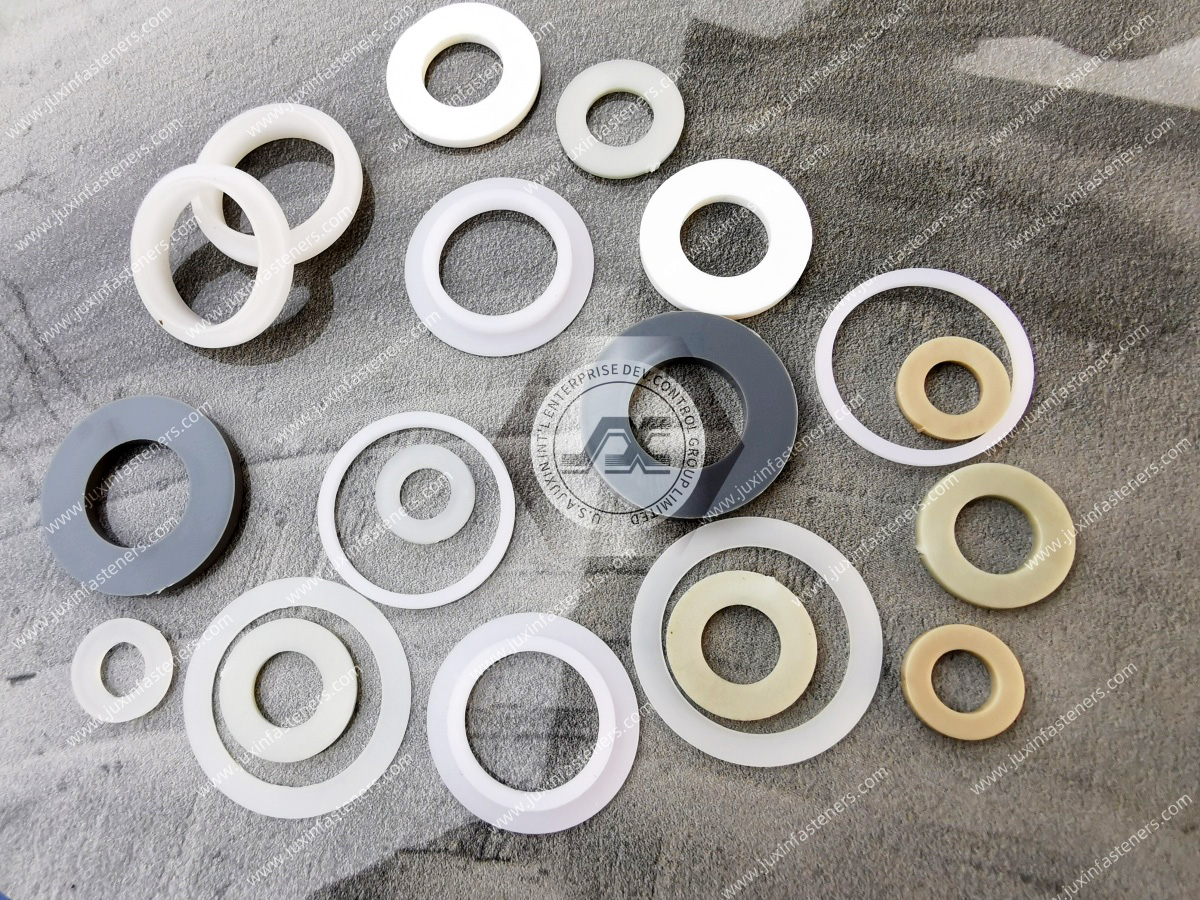
Contact Us
Tel.:
+86 020 8621 0320
+86 020 3121 6067
E-mail:
Technical Support:
Navigation
SEND INQUIREY



