
Call Us
+86 136 6007 9809
Call Us
+86 136 6007 9809

Aug. 14, 2026
Quick-Twist Anchors for Concrete
Fast, Tool-Friendly Concrete Anchoring for Overhead Pipe, Conduit and Lighting Applications
Overhead installations require a dependable anchoring system that installs efficiently while maintaining a secure connection to the concrete substrate.
JUXIN FASTENERS quick-twist anchors for concrete provide a practical mechanical anchoring solution for suspending conduit, pipes, lighting systems,
cable supports, and selected mechanical services.
Designed with a wedge-shaped expansion base, these quick-install concrete anchors expand against the sides of a drilled hole when the nut is tightened.
The result is a mechanical grip that can simplify installation without requiring adhesive or specialized setting equipment.
For contractors, engineers, MEP professionals, OEMs, distributors, and industrial purchasing teams,
quick-twist concrete anchors offer an efficient solution when installation speed, overhead access, and straightforward mechanical fastening matter.
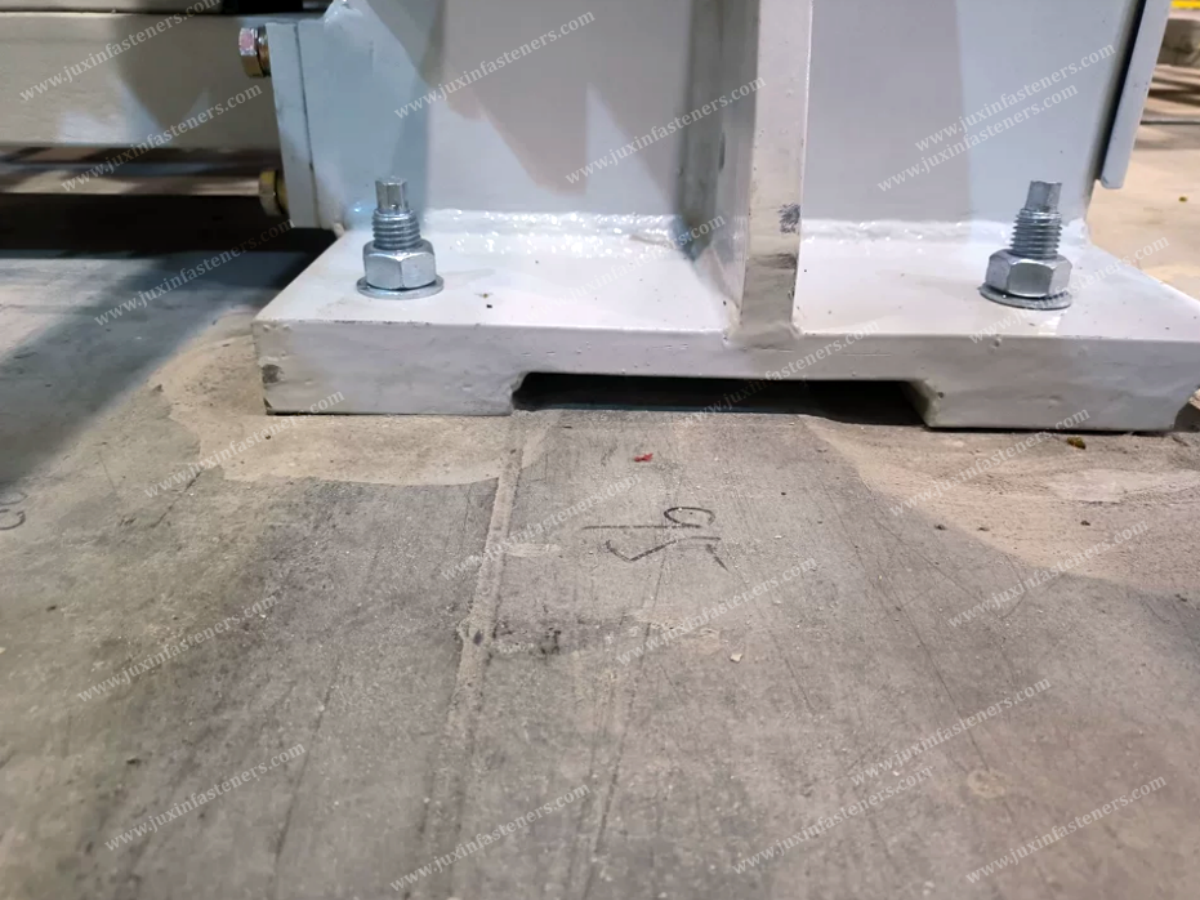
Quick-Twist Concrete Anchors for Overhead Installations
Overhead construction and industrial service installations frequently require hundreds or thousands of individual anchor points.
Installation efficiency can significantly affect project labor and completion time.
Quick-twist anchors simplify this process by using a threaded rod, nut, and washer during installation.
Tightening the nut activates the anchor's expansion mechanism at the base, creating a mechanical grip in the concrete.
These concrete ceiling anchors are particularly useful for selected overhead applications such as:
Electrical conduit
Lighting fixtures and support systems
Pipes and pipe supports
Cable tray supports
HVAC service supports
Mechanical service installations
Utility lines
Suspended equipment
MEP support systems
Industrial overhead installations
How Quick-Twist Anchors Work
The anchor uses a wedge-shaped base with expansion clips designed to expand against the wall of the drilled hole.
During installation:
The anchor is threaded onto the threaded rod with the required nut and washer.
The assembly is positioned at the drilled hole.
The anchor is tapped into the concrete hole.
The nut is rotated to activate the expansion base.
The expansion clips widen against the concrete.
The anchor becomes mechanically engaged inside the concrete.
This installation method eliminates the need for adhesive and can reduce the number of specialized installation steps compared with adhesive anchoring systems.
Fast Installation Without Adhesive
One of the main advantages of quick-install concrete anchors is their straightforward mechanical installation.
Unlike adhesive anchors, these anchors do not require:
Structural adhesive
Adhesive dispensing equipment
Adhesive curing time
Special chemical preparation
This can be particularly beneficial for overhead MEP projects where installers need to establish multiple anchor points efficiently.
For large commercial buildings, industrial facilities, warehouses, factories, and infrastructure projects, reducing installation complexity can help improve productivity.
Concrete Ceiling Anchors for MEP Systems
MEP installations often require extensive overhead support systems. Electrical, mechanical, HVAC,
and plumbing services may all require secure attachment points to concrete ceilings or structural slabs.
Concrete ceiling anchors can be used for selected support applications involving:
Electrical Systems
Secure conduit, electrical support rods, cable supports, and selected lighting systems to concrete.
HVAC Systems
Support selected HVAC service components, ductwork support systems, piping, and mechanical services.
Plumbing & Piping
Create anchoring points for pipe support systems and utility piping installed beneath concrete slabs.
Lighting Systems
Provide support points for suspended lighting fixtures and lighting support structures where the application requirements are appropriate.
Cable Management
Support cable trays, conduit systems, and overhead cable-management infrastructure.
Installation Requirements
Correct installation is essential for achieving reliable performance from a quick-twist concrete anchor.
Drill the Correct Hole
Drill the hole to the specified diameter and depth required for the selected anchor.
Clean the Hole
Remove loose dust and drilling debris from the hole before inserting the anchor. Proper hole preparation helps maintain consistent mechanical engagement.
Assemble the Threaded Rod
Thread the anchor onto the threaded rod together with the appropriate nut and washer.
Insert the Anchor
Tap the anchor into the drilled hole to the required installation position.
Expand the Anchor
Turn the nut to activate the expansion clips and create the mechanical grip inside the concrete.
Verify the Installation
Confirm that the anchor has reached the required installation depth and that the connection is properly secured before attaching the supported component.
Engineering Note: Anchor diameter, minimum embedment, hole diameter, concrete strength, spacing, edge distance,
applied load, and installation torque should be evaluated for each application. Always follow the manufacturer's technical requirements and applicable project specifications.
Recessed Installation for Overhead Applications
Quick-twist anchors are designed to be installed recessed within the concrete rather than simply positioned at the surface.
The installation depth should be greater than the specified minimum installation depth while remaining within the manufacturer's recommended installation parameters.
Proper embedment helps ensure that the expansion mechanism develops the intended contact with the surrounding concrete.
For overhead applications, engineers and installers should pay particular attention to:
Minimum embedment
Concrete thickness
Hole diameter
Anchor spacing
Edge distance
Applied load
Load direction
Concrete strength
Installation torque
Dynamic or vibration loads
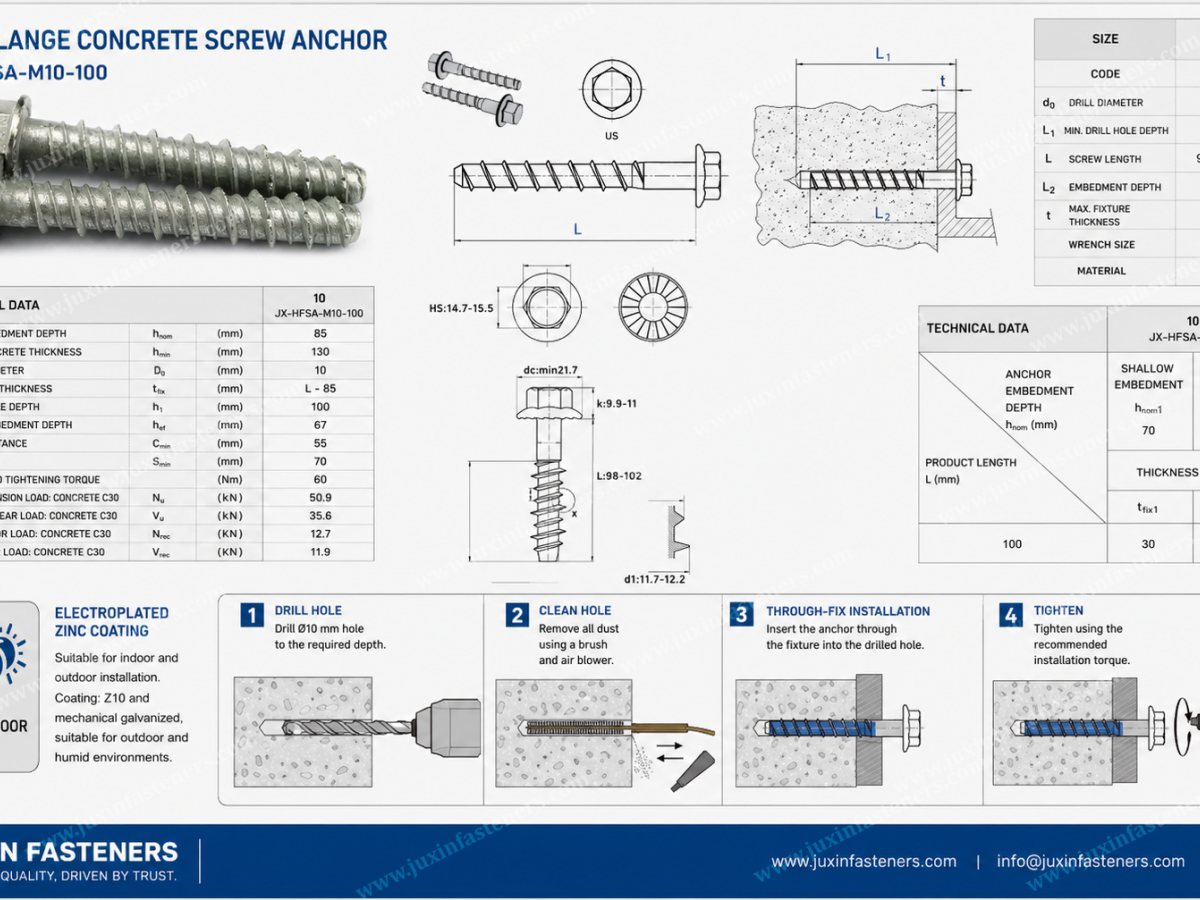
Designed for Concrete Substrates
The expansion grip of a mechanical concrete anchor depends on the strength and integrity of the surrounding substrate.
Quick-twist anchors are primarily intended for concrete, where the substrate can withstand the localized expansion forces generated at the base of the anchor.
They should not automatically be substituted into softer substrates such as lightweight block, brick,
or other masonry materials unless the specific anchor has been designed and approved for that substrate.
Zinc-Plated Steel Quick-Twist Anchors
Zinc-plated steel quick-twist anchors are a common choice for general indoor construction and industrial applications where occasional moisture exposure may occur.
The zinc-plated surface provides basic corrosion protection while maintaining an economical solution for many standard applications.
Typical uses include:
Commercial buildings
Industrial facilities
Warehouses
Manufacturing plants
Electrical installations
HVAC installations
Mechanical service systems
Plumbing support systems
Indoor infrastructure projects
For continuously wet, marine, chemical, or highly corrosive environments, engineers should evaluate whether a higher level of corrosion resistance is required.
Quick-Twist Anchors vs. Other Concrete Anchors
Different concrete anchoring systems are designed for different load requirements and installation conditions.
Quick-twist anchors prioritize simple installation and are particularly useful for selected overhead applications involving conduit, pipes, lighting, and support systems.
Other anchor types may be more appropriate when higher load capacity, heavy machinery anchoring, structural applications, or severe dynamic loading is required.
Therefore, anchor selection should be based on:
Application → Load → Concrete → Environment → Installation Method → Required Performance
For higher-load structural and machinery applications,
engineers should consider an appropriate heavy-duty concrete anchor rather than selecting a quick-twist anchor solely for installation convenience.
Industrial and Commercial Applications
HVAC & Mechanical
Support selected HVAC piping, service systems, mechanical equipment supports, and overhead installations.
Electrical & Electrical Contracting
Install conduit, cable supports, electrical infrastructure, and selected lighting systems.
Plumbing & Piping
Create concrete anchoring points for pipe support and overhead utility systems.
Commercial Construction
Provide efficient anchoring for overhead building services during commercial construction and fit-out projects.
Industrial Facilities
Support utility systems, service infrastructure, pipe networks, conduit, and selected suspended components.
Warehousing & Distribution
Support lighting, electrical conduit, cable systems, and mechanical services within warehouse environments.
Manufacturing Plants
Provide anchoring points for overhead utility and facility-support systems.
MEP Engineering
Offer a practical mechanical anchoring option for selected mechanical, electrical, and plumbing support applications.
Benefits for Contractors and Purchasing Teams
For large-scale construction projects, installation productivity is an important purchasing consideration.
Quick-twist concrete anchors can offer several practical benefits:
Fast mechanical installation
No adhesive required
No adhesive curing time
No specialized adhesive dispensing equipment
Threaded connection
Suitable for selected overhead applications
Easy component removal by unfastening the nut
Consistent installation procedure
Efficient for repetitive anchor-point installation
The anchor itself is generally considered a permanent installation component, while the supported fixture or threaded connection can be removed by loosening the nut.
Engineering Considerations for Overhead Concrete Anchoring
Before specifying overhead concrete anchors, engineering and purchasing teams should review the complete application.
Important factors include:
Concrete compressive strength
Concrete thickness
Anchor diameter
Minimum embedment
Hole diameter
Hole depth
Edge distance
Anchor spacing
Tension load
Shear load
Combined loads
Equipment weight
Dynamic loads
Vibration
Installation orientation
Corrosion environment
Required service life
For overhead installations, the consequences of anchor failure can be significant. The selected anchor should therefore be appropriate for the actual load and application conditions.
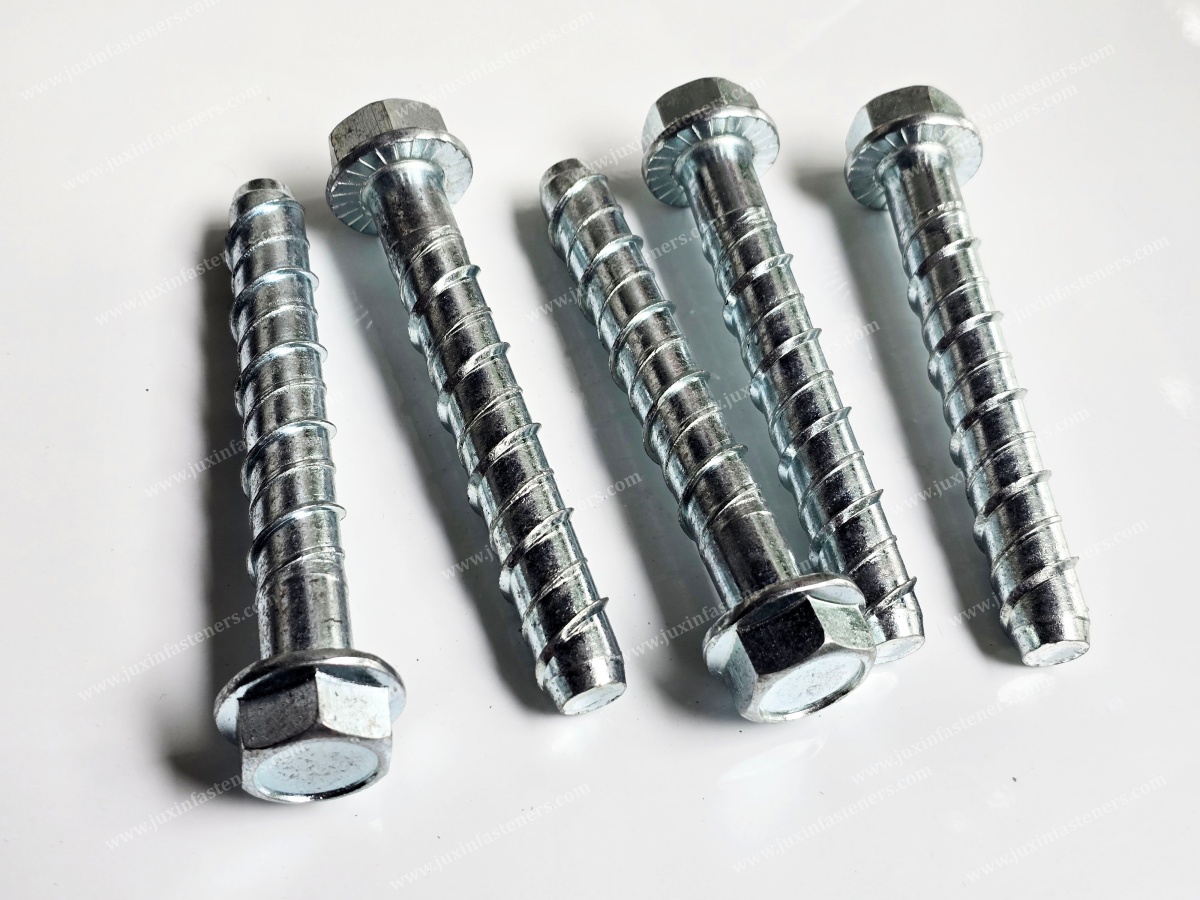
Why Choose JUXIN FASTENERS?
JUXIN FASTENERS supplies industrial fastening solutions for OEMs, distributors, contractors, engineering companies, and industrial purchasing teams.
Our concrete anchoring product range supports applications across:
Construction
HVAC
MEP
Electrical
Plumbing
Manufacturing
Industrial equipment
Infrastructure
Commercial buildings
Warehousing
We focus on consistent product quality, practical installation requirements, application-specific fastening solutions, and reliable B2B supply.
Whether you are sourcing quick-twist concrete anchors, concrete ceiling anchors, mechanical concrete anchors, or other industrial fastening products,
JUXIN FASTENERS can support your application and procurement requirements.
Frequently Asked Questions
What are quick-twist concrete anchors?
Quick-twist concrete anchors are mechanical expansion anchors designed for relatively fast installation in concrete.
Tightening the nut activates the expansion mechanism at the base of the anchor.
Do quick-twist anchors require adhesive?
No. These anchors are mechanically expanded and do not require structural adhesive for installation.
What are quick-twist anchors used for?
They are commonly considered for selected overhead applications such as conduit, pipes, lighting, cable supports, HVAC services, and other suspended building-service systems.
Can the fixture be removed after installation?
Yes. The supported component can generally be removed by unfastening the nut.
The anchor itself is typically considered a permanent component of the concrete installation.
Can quick-twist anchors be used in brick or block?
They are primarily intended for concrete. Softer substrates such as brick and block may not provide the required resistance to the expansion forces unless
the specific anchor is designed and approved for those materials.
Are quick-twist anchors suitable for heavy machinery?
They are generally intended for selected overhead support applications rather than the highest-load machinery anchoring applications.
Heavy machinery, structural, or high-dynamic-load applications may require a higher-capacity concrete anchoring system.
Are zinc-plated quick-twist anchors suitable for indoor applications?
Yes. Zinc-plated steel is a common option for indoor applications and environments with occasional moisture exposure.
More aggressive environments may require a more corrosion-resistant material or coating.
Efficient Concrete Anchoring for Overhead Systems
For contractors and engineers installing overhead electrical, HVAC, plumbing, mechanical, and building-service systems,
installation efficiency can be just as important as fastening performance.
JUXIN FASTENERS quick-twist anchors for concrete provide a straightforward mechanical anchoring solution for selected
overhead applications where fast installation, threaded connections, and reliable concrete engagement are required.
For product specifications, OEM sourcing, distributor inquiries, and industrial fastening requirements:
Email: info@juxinfasteners.com
Website: www.juxinfasteners.com
 MORE NEWS
Sep. 27, 2026
Sep. 27, 2026
Sep. 27, 2026
Contact Us
Tel.:
+86 020 8621 0320
+86 020 3121 6067
E-mail:
Technical Support:
Navigation
SEND INQUIREY