
Call Us
+86 136 6007 9809
Call Us
+86 136 6007 9809

Aug. 24, 2026
Stainless Steel CNC Machining for Sheet Metal Fabrication and OEM Assembly Hardware
Sheet metal fabrication is widely used to manufacture industrial enclosures, machinery housings, equipment cabinets, control panels, structural covers, mounting frames, and fabricated mechanical assemblies.
These products frequently require more than laser cutting, punching, bending, and welding.
Many sheet metal assemblies also need accurate threaded connections, controlled spacing, precision locating features, mounting interfaces, and mechanical components that cannot be produced economically from sheet metal alone.
Custom stainless steel CNC machining provides a manufacturing option for selected components requiring precise geometry, corrosion resistance, controlled dimensions, and application-specific mechanical features.
Typical parts include threaded standoffs, precision spacers, bushings, mounting blocks, threaded adapters, locating pins, custom connectors, and special fastening components.
However, CNC machining should not automatically replace standard sheet metal fastening methods.
Self-clinching nuts, self-clinching studs, rivet nuts, weld nuts, and other established fastening solutions may provide lower installed costs when the sheet material, thickness, joint geometry, and loading conditions are suitable.
The correct solution depends on the complete assembly rather than the isolated component.
JUXIN FASTENERS supports drawing-based inquiries for custom stainless steel CNC machined parts and industrial fastening hardware used in sheet metal fabrication and OEM assemblies.
Depending on component geometry and project requirements, suitable machining processes may include CNC turning, Swiss-type machining, CNC milling, drilling, tapping, threading, grooving, and combined turning-milling operations.
Manufacturing feasibility, material specifications, achievable tolerances, inspection requirements, purchasing quantities, and delivery arrangements are evaluated according to the specific project.
Where CNC Machined Components Add Value to Sheet Metal Assemblies
Sheet metal manufacturing is efficient for producing thin-walled structures, but some functional features require additional precision or mechanical support.
CNC machined components can provide these features without requiring the entire assembly to be machined from solid material.
Industrial Enclosures and Equipment Cabinets
Industrial enclosures may require threaded standoffs, spacers, mounting blocks, and precision adapters to support internal equipment.
These components may provide controlled mounting distances, accurate hole locations, or mechanical interfaces.
Design engineers should consider sheet thickness, material hardness, installation access, vibration, corrosion resistance, and the complete fastening arrangement.
Where standard self-clinching hardware can meet the requirements, it may provide a more economical solution than a custom machined part.
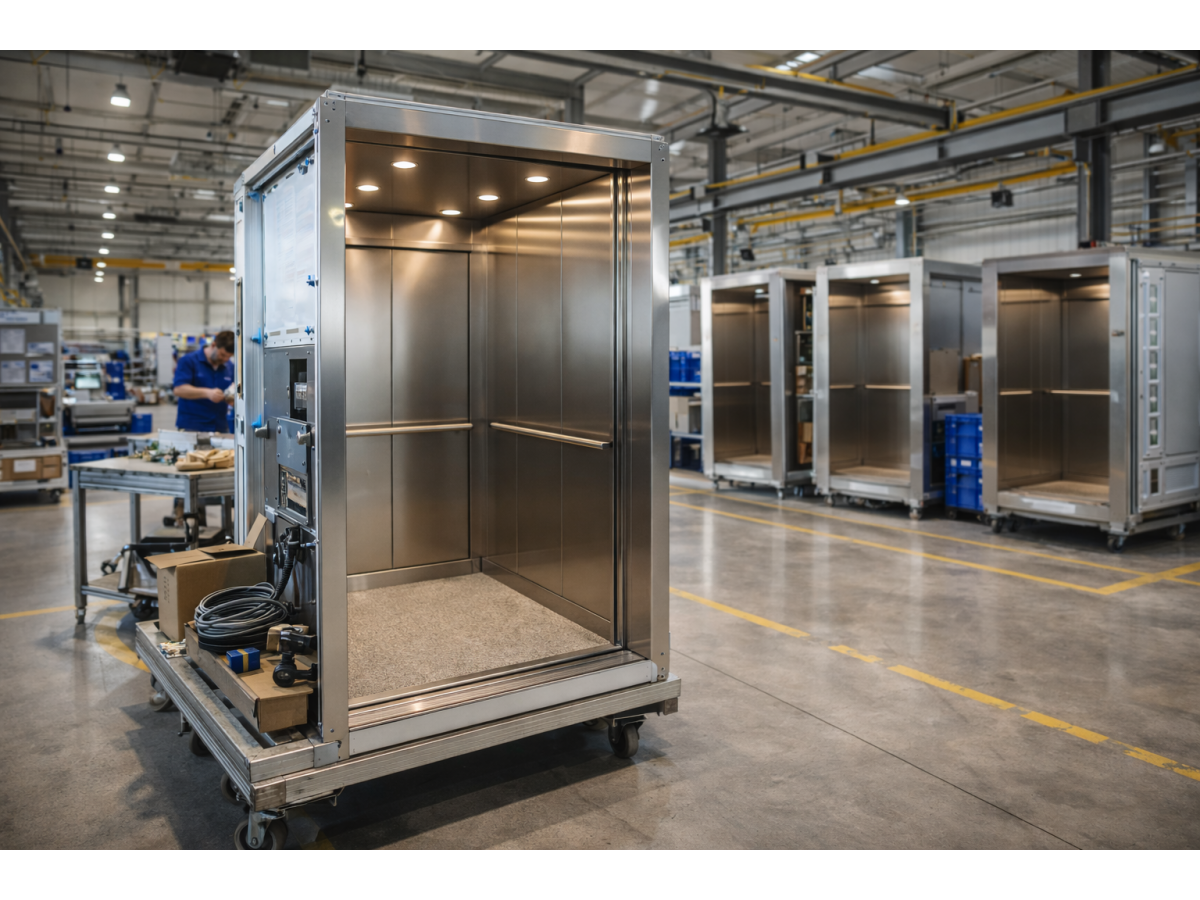
Machinery Housings and Fabricated Frames
Machinery housings and fabricated frames may incorporate precision mounting blocks, threaded sleeves, locating pins, and custom connectors.
CNC machining can provide accurate features that are difficult to maintain through cutting, bending, or welding alone.
However, the final dimensional accuracy of the assembly also depends on fabrication tolerances, welding distortion, and installation methods.
Control Panels and Electrical Equipment Assemblies
Control panels may require threaded spacers, standoffs, mounting blocks, and equipment interfaces.
Where electrical grounding, bonding, or insulation is required, these functions must be evaluated separately from mechanical fastening.
A stainless steel component should not automatically be assumed to provide an acceptable electrical bonding path.
Surface coatings, contact resistance, and the complete electrical design may influence performance.
Industrial Equipment Covers and Access Panels
Removable covers and access panels may require threaded inserts, spacers, special nuts, and other mounting hardware.
The fastening system should support the expected maintenance frequency and assembly requirements.
Repeated removal and installation may influence thread wear, preload retention, and service life.
Precision Locating and Alignment Features
Some sheet metal assemblies require accurately positioned locating pins, sleeves, or mounting interfaces.
CNC machined components can provide controlled reference features.
However, their effectiveness depends on how they are attached to the fabricated structure and how the overall assembly tolerances are managed.
Typical CNC Machined Components for Sheet Metal Fabrication
Different components solve different assembly problems.
Selecting the appropriate part requires understanding the functional requirement rather than simply choosing a familiar fastener.
Custom Threaded Standoffs
Threaded standoffs establish a controlled distance between components while providing a threaded mounting interface.
They may be used to support internal equipment, brackets, or auxiliary assemblies.
Important design characteristics include overall length, thread specification, thread engagement, mounting method, and perpendicularity.
Where the standoff is attached to sheet metal, the installation method must be compatible with the substrate.
A CNC machined standoff is not automatically self-clinching.
Precision Spacers and Sleeves
Machined spacers and sleeves can establish controlled separation between components.
Critical dimensions may include inner diameter, outer diameter, length, and end-face perpendicularity.
Incorrect spacer length may influence assembly alignment or clamping conditions.
Where a spacer is located inside a bolted joint, its stiffness and contact geometry should be considered.
CNC Machined Mounting Blocks
Mounting blocks may incorporate threaded holes, precision bores, slots, locating features, and reference surfaces.
They may be appropriate where multiple mounting functions must be integrated into one component.
CNC milling can support complex geometries that would be difficult to produce using standard sheet metal processes.
However, machining a solid mounting block may increase material consumption and cost.
Engineers should evaluate whether a formed bracket combined with standard fasteners can provide the same function more economically.
Custom Threaded Adapters
Threaded adapters may connect components with different mechanical interface requirements.
They can incorporate shoulders, flats, grooves, internal threads, or external threads.
Thread geometry and compatibility must be defined precisely.
Metric, UNC, UNF, BSW, and BSF thread systems are not directly interchangeable.
Precision Bushings and Locating Sleeves
Bushings and locating sleeves may provide controlled hole geometry or positioning interfaces.
They can be useful where a fabricated sheet metal hole does not provide sufficient dimensional control for the intended function.
However, the installation method and surrounding material must be evaluated to prevent deformation or loosening.
Custom Pins and Mechanical Connectors
Locating pins and custom connectors may support assembly positioning, alignment, or specialized mounting requirements.
Their geometry, material, and fit should be selected according to the complete assembly.
CNC Machined Hardware vs. Standard Sheet Metal Fasteners
One of the most important engineering decisions is determining whether a custom machined component is necessary.
Standard fastening hardware can often reduce part cost, installation time, and assembly complexity.
Self-Clinching Nuts and Studs
Self-clinching fasteners are installed into properly prepared sheet metal holes using controlled pressing forces.
They can provide permanent threaded attachment points without requiring separate loose nuts during final assembly.
However, successful installation depends on suitable sheet thickness, substrate hardness, hole dimensions, edge distance, and installation force.
The fastener manufacturer's installation requirements must be followed.
Self-clinching hardware should not be selected solely by thread size.
Rivet Nuts and Blind Threaded Inserts
Rivet nuts can provide threaded attachment points in sheet metal and other suitable materials.
They may be useful where access is available from only one side.
However, performance depends on the material thickness, hole size, grip range, installation tool, and joint loading.
Spin-out, pull-out, and installation consistency should be evaluated according to the application.
Weld Nuts and Weld Studs
Weld nuts and studs may be appropriate where the assembly design permits welding.
However, welding can introduce heat distortion, coating damage, and additional processing requirements.
The welding process, material compatibility, and inspection requirements must be established.
Custom CNC Machined Components
Custom machining may be justified where the design requires non-standard geometry, precision locating features, special material properties, or multiple integrated functions.
However, the complete installed cost should be compared with standard fastening alternatives.
Practical Selection Logic
A useful engineering decision sequence is:
Identify the mechanical function and applied loads.
Confirm sheet material, thickness, hardness, and access.
Determine whether a standard fastening component meets the requirements.
Evaluate installation equipment and assembly sequence.
Identify any precision geometry that requires CNC machining.
Compare total installed cost, not only component purchase price.
Validate the selected joint under the intended operating conditions.
This approach helps avoid unnecessary custom machining while preserving functional reliability.
Sheet Thickness, Hole Geometry, and Installation Compatibility
Sheet metal thickness and hole preparation are fundamental to fastening reliability.
Sheet Thickness
Different fastening methods have different minimum thickness and grip-range requirements.
A fastener suitable for one sheet thickness may not be suitable for another.
The applicable installation data must be checked for the selected fastener and substrate.
Hole Diameter and Position
Hole diameter and position influence installation quality and assembly alignment.
Oversized or poorly positioned holes may reduce retention performance or create assembly problems.
The correct hole specification depends on the fastening method.
Edge Distance
Fasteners installed too close to a sheet edge may create deformation or reduced retention strength.
The required edge distance depends on the selected fastener, material, and installation method.
Sheet Material Hardness
Self-clinching fasteners depend on controlled deformation of the surrounding sheet material.
If the substrate is too hard for the selected fastener, proper installation may not be achieved.
The fastener and substrate combination must be evaluated according to the manufacturer's requirements.
Installation Access
Press-installed fasteners, rivet nuts, welded components, and loose fasteners have different tooling and access requirements.
Assembly engineers should confirm whether the selected method is compatible with the production equipment and installation sequence.
Material Selection for CNC Machined Sheet Metal Hardware
Stainless steel may be selected where corrosion resistance, strength, durability, or surface condition is important.
However, the material must be compatible with the component function and surrounding assembly.
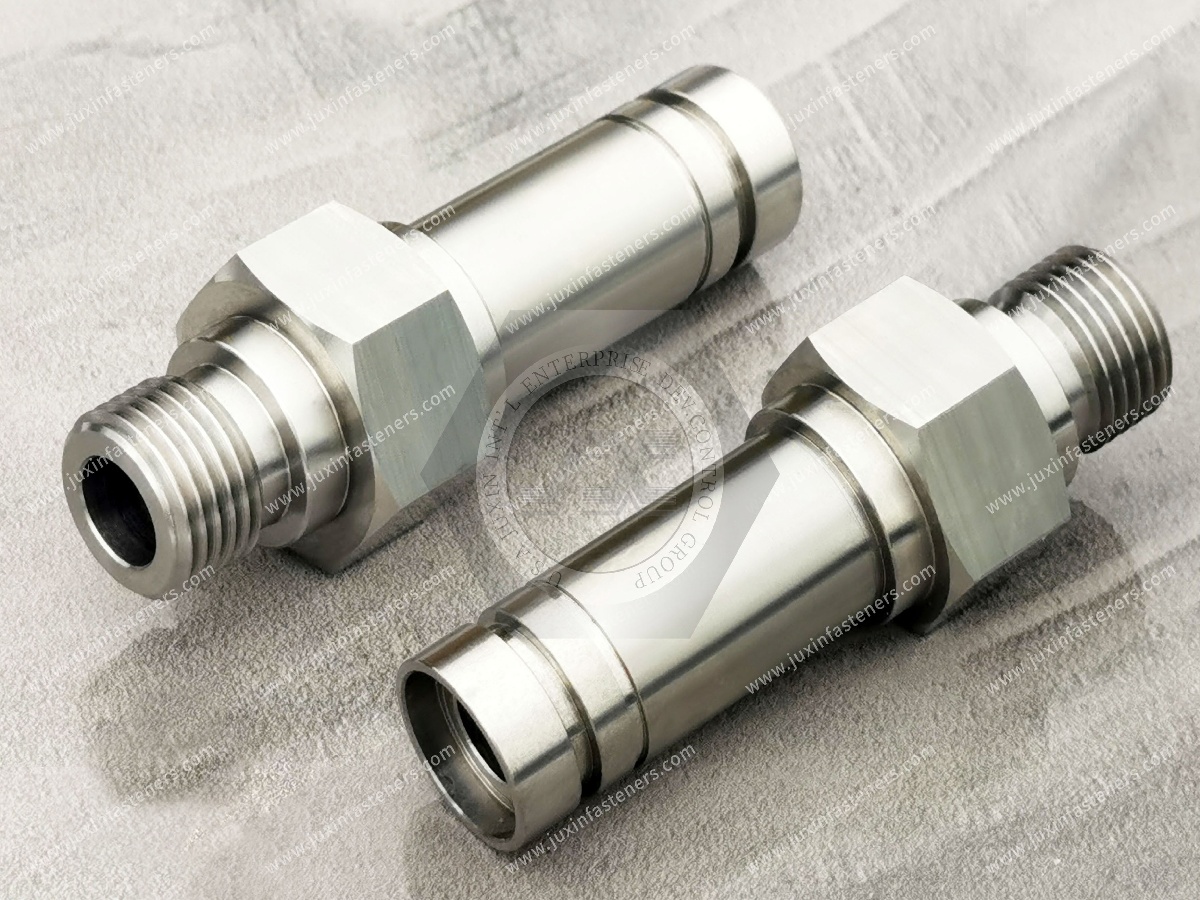
AISI 303 Stainless Steel
AISI 303 may be considered for selected machined spacers, sleeves, threaded adapters, and custom mounting hardware where improved machinability is beneficial.
Compared with AISI 304, AISI 303 generally offers improved machinability but may provide reduced corrosion resistance in certain environments.
Its suitability should be reviewed where welding or demanding corrosion exposure is involved.
AISI 304 Stainless Steel
AISI 304 may be suitable for selected mounting blocks, spacers, sleeves, and threaded components requiring corrosion resistance.
However, AISI 304 can work-harden during machining.
Suitable tooling and process control are important for dimensional consistency.
AISI 316 Stainless Steel
AISI 316 may be considered for components exposed to moisture or more demanding corrosive environments.
It generally offers improved resistance to certain corrosive conditions compared with AISI 304.
However, AISI 316 is not universally resistant to every chemical or chloride exposure condition.
Its suitability should be evaluated according to the actual operating environment.
AISI 410 and 420 Stainless Steels
AISI 410 and AISI 420 are martensitic stainless steels that may be heat-treated to obtain different hardness and strength characteristics.
They may be considered for selected components requiring specific hardness or wear-related properties.
Their corrosion resistance and heat-treatment behavior differ from those of austenitic stainless steels.
17-4 PH Stainless Steel
17-4 PH is a precipitation-hardening stainless steel that may be considered for selected high-strength precision components.
Its properties depend on the specified heat-treatment condition.
The required material specification and condition should be defined in the engineering drawing.
Stainless Steel vs. Carbon Steel and Aluminum
Stainless steel is not always the most economical choice.
Carbon steel may be suitable where corrosion protection can be provided through appropriate surface treatment.
Aluminum may be appropriate where low weight or specific thermal properties are important.
The correct material depends on corrosion exposure, mechanical loading, manufacturing requirements, and cost.
Galvanic Corrosion in Mixed-Material Assemblies
Sheet metal assemblies may combine stainless steel hardware with aluminum, carbon steel, or other materials.
When dissimilar metals are electrically connected in the presence of an electrolyte, galvanic corrosion may occur.
The risk depends on the material combination, exposed surface areas, moisture, and protective coatings.
Design engineers should consider the complete assembly rather than the isolated component.
CNC Machining Processes for Sheet Metal Assembly Components
Different CNC machining processes provide advantages depending on geometry, material, tolerance requirements, and production quantity.
CNC Turning
CNC turning is suitable for rotationally symmetric components such as spacers, sleeves, threaded standoffs, adapters, and cylindrical mounting hardware.
Typical operations include facing, external turning, boring, drilling, grooving, and threading.
Workholding, tool access, cutting conditions, and surface finish requirements influence the process plan.
Swiss-Type CNC Machining
Swiss-type machining may be advantageous for small-diameter, slender precision components.
The guide-bushing arrangement can support the workpiece near the cutting area, helping control deflection in suitable applications.
However, Swiss-type machining is not automatically the most economical choice for every small component.
Part geometry, material, setup complexity, cycle time, and production quantity influence process selection.
CNC Milling
CNC milling may be suitable for mounting blocks, adapters, brackets, and components requiring flats, slots, pockets, or multiple mounting features.
Datum selection and fixture stability are important where positional relationships between features affect assembly.
Drilling, Tapping, and Threading
Machined components may require internal threads, external threads, precision holes, and mounting features.
Thread quality depends on material properties, tooling, cutting conditions, and inspection methods.
For stainless steel, machining plans should account for tool wear and work hardening.
Combined Turning and Milling
Turn-mill machining can combine rotational and non-rotational operations.
For suitable components, reducing the number of setups may improve relationships between critical features and reduce handling.
The benefit depends on machine configuration, tooling, part complexity, and production volume.
Design for Manufacturability in Sheet Metal CNC Components
Design for Manufacturability (DFM) helps align engineering requirements with practical machining processes.
Early DFM evaluation can reduce unnecessary complexity, improve production repeatability, and lower total component cost.
Tolerance Allocation
Not every dimension requires the same tolerance.
Critical-to-function features should receive appropriate dimensional and geometric controls.
Non-critical dimensions may permit more economical tolerances.
Unnecessarily tight tolerances can increase machining time, inspection effort, scrap risk, and cost.
Thin Walls and Machining Stability
Thin-walled components may deform during machining due to cutting forces, clamping pressure, or residual stress.
Special workholding or controlled machining sequences may be required.
The achievable tolerance depends on material, geometry, tooling, and process stability.
Deep Holes and Tool Accessibility
Deep or narrow holes may require specialized tooling and additional machining time.
Engineers should consider tool reach, chip evacuation, coolant access, and measurement requirements.
Where design flexibility exists, simplifying difficult internal features may reduce cost.
Thread Engagement and Assembly Loads
Thread specifications should identify the required standard, size, pitch, tolerance class, and functional engagement.
For sheet metal assembly hardware, engineers should consider joint loads, mating materials, assembly torque, and the risk of thread damage.
Stainless steel threaded components may experience galling under certain assembly conditions.
Suitable mating materials, surface treatments, lubrication, or assembly procedures may be necessary.
Surface Finish and Functional Requirements
Surface finish should be specified according to component function.
A sealing interface, bearing surface, mounting surface, and general fastening feature may require different surface conditions.
Specifying unnecessarily fine surface finish across an entire component can increase machining cost without improving performance.
GD&T and Sheet Metal Assembly Tolerance Stack-Up
Geometric Dimensioning and Tolerancing (GD&T) helps define relationships between critical features.
Depending on the drawing system, ASME Y14.5 or ISO 1101 may be applicable.
Relevant controls may include position, flatness, perpendicularity, parallelism, runout, and profile.
Datum selection should reflect how the component is located and assembled.
However, sheet metal assemblies introduce additional dimensional variation from cutting, bending, forming, and welding.
A precision machined mounting block may meet its drawing requirements while the final assembly remains misaligned because of sheet metal fabrication variation.
Bend Tolerances
Bending operations introduce dimensional variation influenced by material thickness, bend radius, tooling, and springback.
Mounting features located near bends should be evaluated for manufacturability and final assembly position.
Welding Distortion
Welding may introduce heat-related distortion that affects hole alignment and mounting surfaces.
Where precision interfaces are required, the fabrication sequence and inspection plan should consider this risk.
Assembly Datum Strategy
The assembly should use functional reference features that reflect how components are positioned during manufacturing and installation.
A well-defined datum strategy can reduce assembly variation and simplify inspection.
Tolerance Stack-Up Analysis
Tolerance stack-up analysis helps identify how individual component variations influence the final assembly.
It can reveal whether tighter machining tolerances are necessary or whether the assembly design should be modified.
Production Efficiency and Assembly Cost
For OEM sheet metal fabrication, the most economical fastening solution is not necessarily the component with the lowest purchase price.
The total installed cost includes material, processing, installation, inspection, rework, and assembly labor.
Installation Time
A standard fastener installed using a suitable press or automated tool may reduce assembly time.
However, installation equipment, setup, and maintenance costs must also be considered.
Assembly Sequence
Fastening hardware should be selected according to the production sequence.
For example, a fastener that requires access from both sides may be unsuitable after an enclosure has been closed.
Automation Compatibility
Where production uses automated assembly equipment, the selected hardware should be compatible with feeding, positioning, and installation processes.
Component geometry, orientation, and installation consistency may influence automation feasibility.
Rework and Maintenance
A fastening method that is difficult to repair or replace may increase lifecycle cost.
Design engineers should consider service access and replacement requirements.
Precision, Repeatability, and Production Stability
For sheet metal OEM manufacturing, a successful CNC machining process must produce consistent results across the required production quantity.
A dimensionally accurate prototype does not automatically establish production capability.
Important process controls may include:
Approved CNC programs
Controlled workholding
Tool-life management
Material consistency
Cutting parameters
In-process inspection
Final dimensional verification
Documented drawing revisions
Appropriate handling and packaging
Production managers should evaluate machining cycle time, setup requirements, inspection frequency, scrap risk, and process consistency.
The appropriate manufacturing approach depends on component complexity, required tolerances, and purchasing volume.
Quality Control for Custom CNC Sheet Metal Hardware
Inspection planning should follow the approved drawing and the component's functional requirements.
Depending on the project, inspection may include dimensional measurement, thread inspection, material verification, hardness testing, surface-finish measurement, and functional checks.
Dimensional Inspection
Critical dimensions may be verified using suitable micrometers, calipers, bore gauges, height gauges, or coordinate measuring equipment.
The measurement method should provide sufficient capability for the specified tolerance.
Thread Inspection
Threaded components may require appropriate thread gauges or other verification methods.
The inspection method should follow the specified thread standard and customer requirements.
Material Verification
Customers may require material documentation or additional verification of the specified stainless steel grade.
The required documentation should be agreed upon during quotation.
Surface Finish Verification
Where surface finish is functionally important, the drawing should define the relevant parameters and inspection requirements.
The measurement method should be suitable for the specified surface and geometry.
First-Article and Production Inspection
OEM projects may require first-article inspection or other customer-defined approval activities before repeat production.
Inspection frequency, reporting, traceability, and approval requirements should be established according to the purchasing specification.
Any required certification, testing, or documentation must be confirmed for the specific project.
International Standards for Sheet Metal CNC Components
The applicable standards depend on the component function, fastening method, and customer specification.
ISO Metric Threads
ISO 261 provides relevant metric screw thread series information.
ISO 965 addresses tolerance requirements for ISO general-purpose metric screw threads.
Metric thread designations and tolerance classes should be defined in the approved drawing.
ASME Unified Inch Threads
ASME B1.1 covers Unified inch screw threads, including UNC and UNF series.
These thread systems may be relevant to North American sheet metal assembly designs.
Metric and Unified inch threads are not directly interchangeable.
GD&T
ASME Y14.5 or ISO 1101 may be applicable where geometric tolerancing is specified.
The selected drawing system should be applied consistently.
Corrosion Testing
ISO 9227 and ASTM B117 may be relevant where salt-spray testing is specified.
The required test method and acceptance criteria should be defined by the customer.
From Prototype Development to Repeat OEM Production
CNC machining can support sheet metal component development because geometry and machining programs can be revised as the design evolves.
However, transitioning from prototypes to repeated production requires additional process planning.
Engineering Drawing and CAD Review
The initial review should identify material, geometry, critical tolerances, functional interfaces, and inspection requirements.
Potential manufacturing risks should be clarified before machining begins.
Material and Process Selection
The material and machining process should be selected according to functional requirements, part geometry, quantity, and cost.
Alternative fastening methods may be considered where technically appropriate.
Prototype and First-Article Machining
Initial parts can be evaluated for dimensional accuracy, assembly fit, surface condition, and manufacturing feasibility.
Any design or process changes should be documented.
Process Optimization
After design approval, machining operations may be optimized for cycle time, tooling, repeatability, and inspection efficiency.
The appropriate optimization depends on the required production quantity.
Repeat Production and Final Inspection
Repeat production should follow the approved drawing revision and agreed quality requirements.
Inspection, packaging, and delivery arrangements should be established according to the customer's purchasing specification.
OEM Supplier Development and Procurement Considerations
For sheet metal fabrication manufacturers, sourcing custom machined components requires both technical qualification and commercial evaluation.
Supplier selection should consider drawing conformity, material compatibility, machining feasibility, process consistency, quality expectations, and supply planning.
Drawing-Based Supplier Evaluation
A technically complete RFQ should include the approved drawing, CAD model, material specification, tolerances, surface finish, and required quantity.
Where an existing component is being transferred from another supplier, the latest drawing revision and critical functional characteristics should be identified.
Alternative Fastening Solutions
A proposed alternative fastening method should be reviewed against the original engineering requirements.
The evaluation should consider sheet thickness, hole geometry, installation method, joint loading, corrosion resistance, and assembly cost.
Any proposed change should be approved by the customer's engineering team.
MOQ, Lead Time, and Volume Purchasing
Purchasing teams should provide estimated order quantities, annual demand, target delivery schedules, and packaging requirements.
For custom CNC components, setup complexity, material availability, tooling, inspection requirements, and production volume can influence MOQ and lead time.
Commercial feasibility should be confirmed for each project.
Total Cost Optimization
The total cost of a machined sheet metal assembly component depends on several factors:
Material grade and stock form
Part geometry
Machining cycle time
Number of setups
Tooling and tool wear
Dimensional tolerances
Surface finish
Secondary operations
Inspection requirements
Installation labor
Scrap and rework
Order quantity
Delivery schedule
Early collaboration between engineering, production, and procurement teams can help identify cost-saving opportunities without compromising functional requirements.
Practical RFQ Checklist for Sheet Metal CNC Components
A complete RFQ helps reduce technical clarification and supports accurate quotation.
Useful information includes:
2D engineering drawing
3D CAD model, if available
Component application and function
Sheet metal material and thickness
Stainless steel grade and material specification
Critical dimensional tolerances
GD&T requirements
Thread specifications
Surface finish requirements
Coating or secondary processing requirements
Installation method and assembly access
Hole geometry and mounting requirements
Mechanical loading and vibration requirements
Corrosion and operating environment
Inspection and documentation requirements
Prototype or sample quantity
Estimated production order quantity
Annual demand forecast
Packaging requirements
Delivery destination and target schedule
Where the component is intended for a safety-critical or heavily loaded assembly, the required qualification, validation, and approval procedures should be explicitly identified.
Why Work with JUXIN FASTENERS for Sheet Metal CNC Machining Projects?
JUXIN FASTENERS supports drawing-based inquiries for precision machined components and industrial fastening hardware used in OEM sheet metal fabrication.
Relevant machining and fastening inquiries include:
Stainless steel CNC turned parts
Custom threaded standoffs
Precision spacers and sleeves
CNC machined mounting blocks
Custom threaded adapters
Precision bushings and locating pins
Sheet metal mounting hardware
Drawing-based mechanical connectors
OEM repeat purchasing requirements
Our approach emphasizes clear technical communication and evaluation of the customer's drawings, materials, tolerances, installation requirements, and purchasing quantities.
For design and mechanical engineers, the priority is functional geometry, material suitability, and assembly compatibility.
For manufacturing engineers and production managers, the priority includes installation efficiency, process repeatability, inspection stability, and consistent production quality.
For procurement and supply chain teams, the priority includes technical conformity, commercial feasibility, cost control, delivery planning, and long-term supplier evaluation.
Manufacturing feasibility, achievable tolerances, MOQ, lead time, testing, and documentation requirements are confirmed according to the specific inquiry.
Request a Quote for Stainless Steel CNC Machining and Sheet Metal Hardware
Are you developing a new sheet metal assembly, sourcing custom stainless steel CNC machined parts, or evaluating an alternative supplier for precision mounting hardware?
JUXIN FASTENERS welcomes technical and commercial inquiries from sheet metal fabricators, enclosure manufacturers, industrial OEMs, engineering teams, production departments, and procurement organizations.
Send us your 2D drawings, 3D CAD models, material specifications, sheet thickness, critical tolerances, installation requirements, and estimated purchasing quantities.
We can review your project requirements and discuss suitable machining approaches, fastening alternatives, technical clarification, and RFQ arrangements.
JUXIN FASTENERS
Website: https://www.juxinfasteners.com
Email: info@juxinfasteners.com
RFQ: Sheet Metal CNC Machining | Custom Stainless Steel Hardware | OEM Precision Components
Contact Us
Tel.:
+86 020 8621 0320
+86 020 3121 6067
E-mail:
Technical Support:
Navigation
SEND INQUIREY



