
Call Us
+86 136 6007 9809
Call Us
+86 136 6007 9809

Aug. 16, 2026
Welded Studs for Rail Transit and Rolling Stock Equipment
Rail vehicles operate under repeated acceleration, braking, vibration, thermal cycling, and demanding service conditions.
High-speed trains, metro vehicles, passenger coaches, freight rolling stock, and railway equipment require fastening systems that support reliable assembly, efficient manufacturing, and long-term maintenance.
Welded studs provide permanent attachment points on compatible metal components.
Depending on the stud geometry and welding process, they may simplify the installation of interior brackets, electrical cabinets, cable supports, HVAC equipment, and selected fabricated rail vehicle components.
However, not all welded studs are suitable for structural railway applications.
A threaded stud used to secure an interior panel is fundamentally different from a connection carrying carbody loads, crash forces, or other safety-critical loads.
For design and structural engineers, the main considerations include joint strength, fatigue, substrate compatibility, fire safety, and service life.
Manufacturing engineers and production managers must also consider welding access, automation, cycle time, dimensional consistency, and process validation.
Purchasing and supplier development teams require clear specifications, suitable alternative products, traceability, project documentation, and reliable delivery planning.
JUXIN FASTENERS supplies industrial threaded projection weld studs, capacitor discharge weld studs, and related fastening products for suitable fabricated metal and OEM applications.
Rail-related inquiries can be evaluated against customer drawings, substrate materials, welding requirements, and expected production quantities.
Where Are Welded Studs Used in Rail Vehicles?
Rail vehicle assemblies contain a combination of structural members, interior panels, electrical systems, mechanical equipment, and serviceable components.
Suitable welded studs may provide attachment points for:
Interior wall and ceiling panels.
Electrical cabinet accessories.
Cable tray and wiring support brackets.
HVAC equipment accessories.
Equipment covers and inspection panels.
Instrument mounting brackets.
Selected underfloor equipment accessories.
Fabricated sheet metal housings.
Secondary metal brackets and supports.
The engineering requirements depend on the application.
For example, a stud used to secure an interior cable clamp may experience modest service loads, while an attachment near underfloor equipment may be exposed to stronger vibration, moisture, debris, and maintenance forces.
The connection should be designed for its actual operating environment rather than selected only by nominal thread diameter.
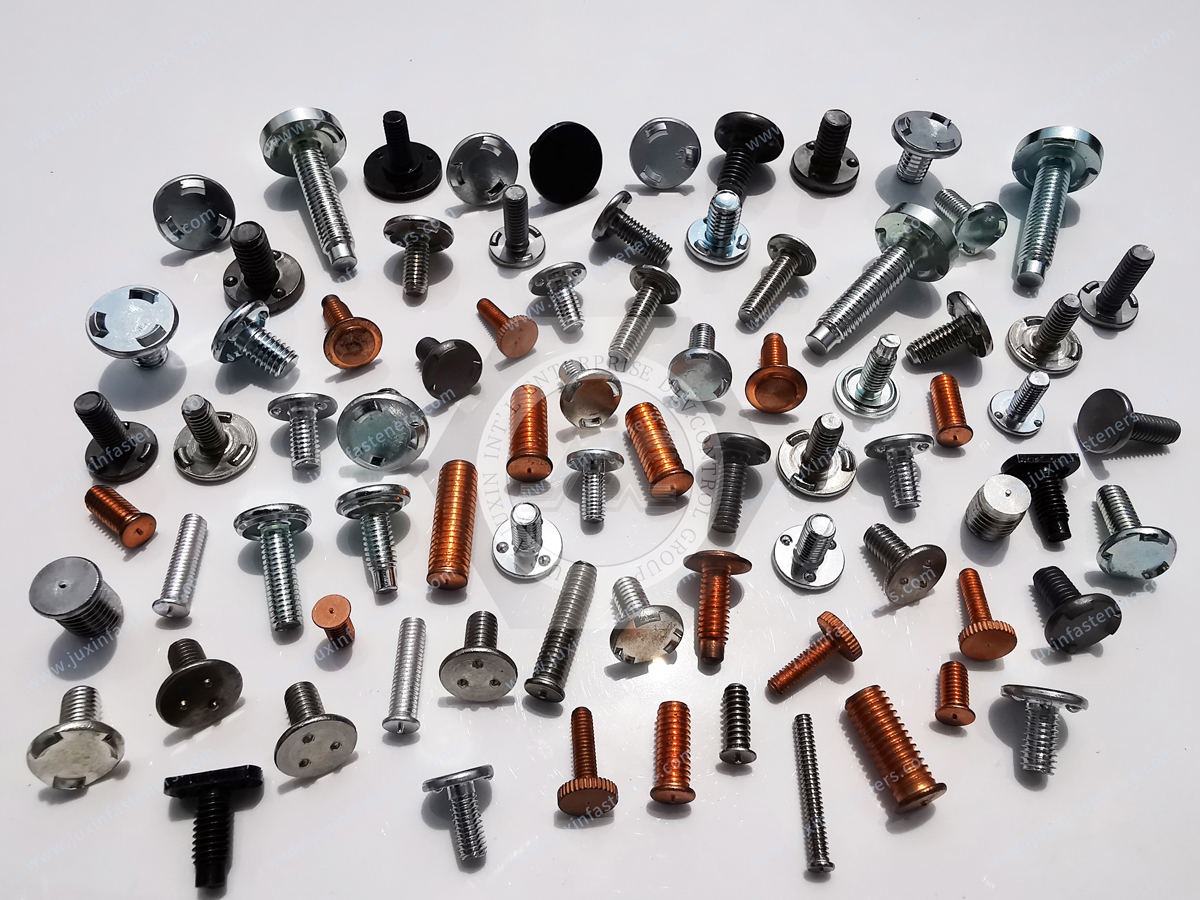
Welded Studs for High-Speed Train Body Components
High-speed trains use engineered carbody structures designed to meet demanding requirements for strength, stiffness, fatigue, weight, and operational reliability.
The carbody may incorporate aluminum alloys, steel, stainless steel, or combinations of materials depending on the vehicle design.
Welded studs can be considered for suitable secondary attachment points, but their installation must not compromise the approved carbody structure.
Secondary Attachments vs. Structural Connections
A key engineering decision is whether the proposed stud supports a secondary component or contributes to the primary structural load path.
Secondary applications may include:
Interior mounting brackets.
Cable routing supports.
Equipment covers.
Lightweight accessories.
Non-primary mounting panels.
Primary structural attachments, crash-load connections, and safety-critical supports require separate engineering qualification.
A general-purpose threaded CD weld stud should not be assumed suitable for a load-bearing carbody connection.
Stud Location and Carbody Fatigue
Rail vehicles experience repeated dynamic loading over long service periods.
Additional welded attachments can introduce local stress concentrations, particularly near existing welds, structural transitions, or highly stressed areas.
Stud positioning should therefore be reviewed against the carbody design.
Where fatigue performance is significant, the complete welded detail must be evaluated under the applicable engineering requirements.
A static pull test alone does not establish long-term fatigue resistance.
Lightweight Aluminum Carbody Considerations
Aluminum carbody structures are widely used where weight reduction is important.
Aluminum weld studs may be suitable for compatible aluminum components when the alloy and welding process have been validated.
However, aluminum welding differs from conventional carbon steel welding in thermal behavior, oxide formation, and material compatibility.
A welding process approved for steel panels should not automatically be transferred to aluminum.
Direct welding of dissimilar aluminum and steel components requires a specifically engineered joining method.
Welded Studs for Metro and Subway Car Interiors
Metro and subway vehicles contain numerous interior panels, brackets, electrical accessories, and serviceable components.
Threaded weld studs may simplify assembly by providing permanent attachment points on suitable metal substrates.
Potential applications include:
Interior wall panels.
Ceiling support accessories.
Electrical equipment brackets.
Cable management components.
HVAC-related mounting panels.
Inspection covers.
Interior service compartments.
Interior Panel Attachment Design
Interior panels may require fastening systems that accommodate vibration, thermal movement, and repeated maintenance access.
Stud selection should consider:
Panel material and thickness.
Stud projection length.
Mating nut engagement.
Bracket geometry.
Installation clearance.
Vibration and fatigue.
Corrosion exposure.
Service and replacement requirements.
A welded stud may reduce loose hardware handling during assembly, but it does not eliminate the need for an appropriate locking method where vibration could loosen the mating nut.
Fire Safety and Interior Material Requirements
Railway interiors are subject to fire safety requirements that depend on the vehicle, market, and component.
EN 45545-2 is an important European reference for fire behavior requirements of materials and components in railway vehicles.
However, it is not a general mechanical performance standard for welded studs.
A metallic weld stud should not be described as EN 45545-2 certified merely because it is intended for railway use.
Where the complete attachment assembly includes coatings, adhesives, insulation, polymer clips, or other nonmetallic components, the relevant fire requirements must be evaluated for those materials and their application.
Welded Studs for Railway Electrical Cabinets and Control Systems
Rail vehicles contain electrical cabinets, control equipment, power distribution systems, communication modules, and monitoring devices.
These systems frequently use fabricated sheet metal housings and internal mounting brackets.
Welded studs may provide threaded attachment points for suitable components.
Potential applications include:
Electrical enclosure brackets.
Cable support accessories.
Control module mounting panels.
Instrumentation hardware.
Equipment covers.
Secondary internal supports.
Electrical Clearance and Grounding
The location of a metallic stud can affect electrical clearance and component accessibility.
Designers should ensure that the installed fastener does not interfere with energized components, insulation systems, or required maintenance space.
Some assemblies may use welded attachment points for protective bonding.
However, a welded stud does not automatically provide a validated electrical connection.
Electrical continuity depends on the stud, weld, substrate, surface coating, mating hardware, and corrosion conditions.
Where grounding or protective bonding is required, the complete connection must meet the equipment manufacturer's electrical requirements.
Enclosure Integrity and Surface Appearance
Surface-mounted weld studs can eliminate certain through-holes.
This may help preserve the exterior appearance of an enclosure and reduce unnecessary penetrations.
However, the presence of a welded stud does not automatically establish a specified ingress protection rating.
The completed enclosure must be evaluated according to its design and environmental requirements.
Welded Studs for Rail Vehicle Cable Management
Modern rail vehicles contain extensive electrical and communication wiring.
Cable routing systems must accommodate vibration, maintenance access, temperature changes, and vehicle movement.
Welded studs may provide attachment points for cable clamps, support brackets, and selected cable tray components.
Cable Support Design
Stud position should be coordinated with the intended cable path.
The attachment should not create sharp edges, excessive cable bending, or interference with adjacent equipment.
Important considerations include:
Cable bundle weight.
Support spacing.
Vibration.
Thermal movement.
Cable protection.
Bracket stiffness.
Stud alignment.
Maintenance accessibility.
The cable support assembly should be evaluated as a complete system.
Vibration and Retention
Rail vehicles experience repeated vibration and dynamic loading.
The welded connection may remain intact while the mating nut gradually loosens.
Where required, the threaded joint should incorporate an appropriate locking method.
The locking solution must be compatible with the stud, nut, service conditions, and maintenance requirements.
Welded Studs for Railway HVAC and Auxiliary Equipment
Rail vehicle HVAC systems and auxiliary equipment may use fabricated brackets, sheet metal covers, and serviceable mounting components.
Welded studs can be considered for suitable secondary attachments.
Applications may include:
HVAC enclosure panels.
Air distribution accessories.
Equipment covers.
Cable support brackets.
Lightweight mounting plates.
Inspection and service panels.
Vibration and Thermal Cycling
HVAC equipment can introduce vibration and temperature changes.
The stud and attached component must accommodate the expected loads.
For heavier equipment, a dedicated engineered mounting system may be required.
A general-purpose welded stud should not automatically be used as a primary equipment anchor.
Serviceability and Maintenance
Rail equipment is often designed for inspection, maintenance, and component replacement.
A welded stud is permanently attached to the substrate, while the mating nut and mounted component may remain removable.
Designers should consider the consequences of stud damage.
Replacing a welded stud may require grinding, repair welding, and reinspection.
Where frequent replacement is expected, an alternative fastening arrangement may provide better serviceability.
Capacitor Discharge Weld Studs for Thin Rail Components
Capacitor discharge (CD) stud welding uses stored electrical energy released during a short welding cycle.
It can be suitable for compatible thin metal panels where localized heat input and controlled surface appearance are important.
Potential applications include:
Interior sheet metal panels.
Electrical cabinet components.
Lightweight brackets.
Equipment housings.
Cable attachment points.
Secondary fabricated metal accessories.
Flanged CD Weld Studs
Flanged CD weld studs have a flange at the welding end.
The flange geometry can influence weld formation, installation clearance, and the interface with the mating component.
JUXIN FASTENERS supplies Flanged CD Weld Studs in Inch and Metric Configurations.
For rail vehicle applications, the stud must be evaluated against the actual panel material, thickness, and required mechanical performance.
Non-Flanged CD Weld Studs
Non-flanged CD weld studs may be considered where the flange of a conventional stud would interfere with an adjacent component.
JUXIN FASTENERS offers Non-Flanged CD Weld Studs for suitable applications.
Removing the flange changes the geometry of the welding interface.
Therefore, a non-flanged stud should not be substituted for a flanged design without reviewing the welding process and connection requirements.
CD Welding Limitations
CD stud welding is not automatically suitable for every rail vehicle component.
Its suitability depends on the stud design, substrate material, thickness, loading, and approved welding procedure.
For primary structural or safety-critical connections, the required qualification may be substantially different from that for secondary sheet metal attachments.
Projection Weld Studs for Railway Equipment Manufacturing
Resistance projection welding uses controlled electrical current and electrode force to form welds at engineered projection features.
Projection weld studs can be suitable for factory-fabricated brackets, enclosures, and other compatible metal components.
Three-Projection Weld Studs
Three-projection weld studs use localized welding features beneath the head.
The projections establish defined contact locations during resistance welding.
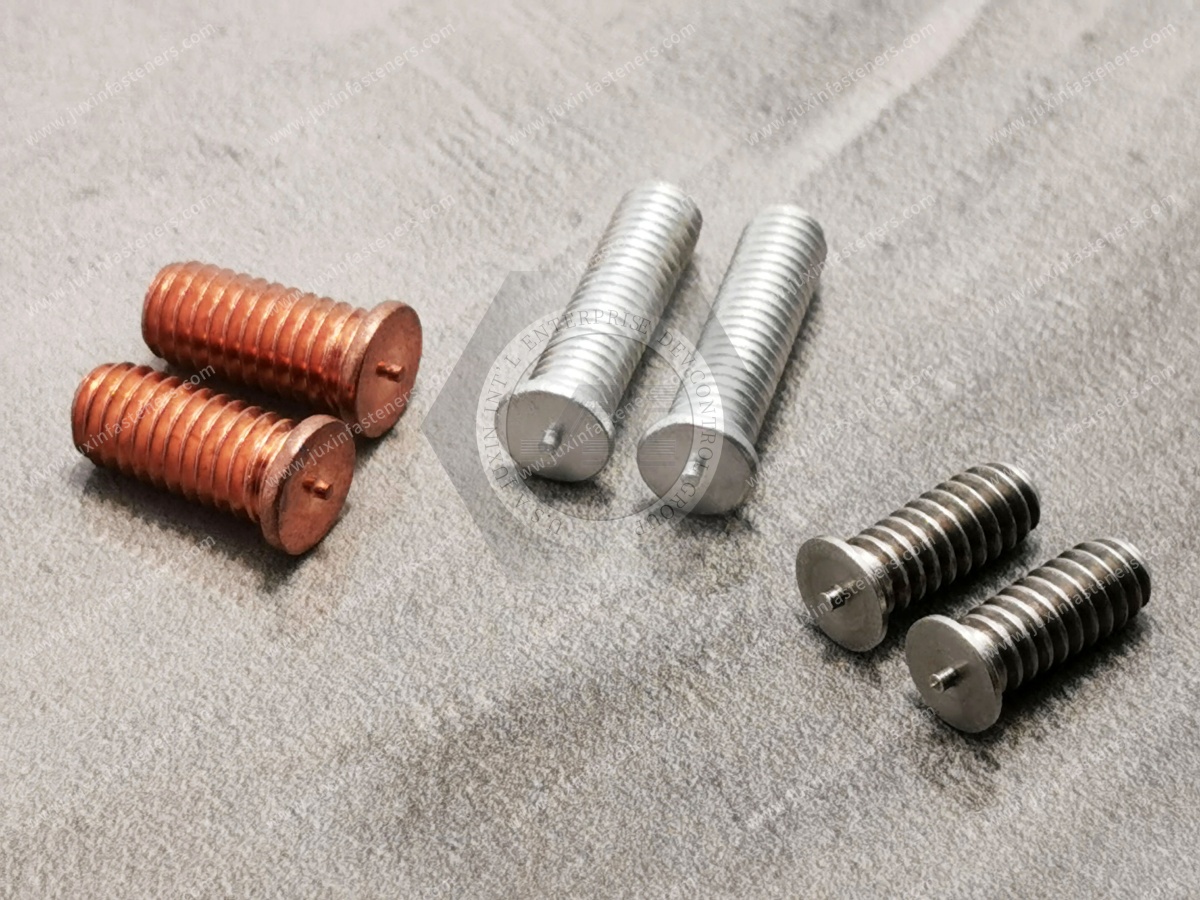
JUXIN FASTENERS supplies Type UC3 Carbon Steel Projection Weld Studs.
This particular configuration is intended for through-hole installation.
The prepared hole is part of the installation design, so the product should not be described as eliminating all drilling or punching operations.
Manufacturing Advantages and Limitations
Projection welding may be integrated into controlled factory production.
Potential benefits include repeatable positioning and compatibility with suitable automation.
However, the process requires appropriate electrode access, welding equipment, and part geometry.
The actual weld performance must be validated using representative production components.
Arc Stud Welding for Heavier Rail Structures
Arc stud welding may be considered for suitable larger studs and heavier steel components.
The process uses an electrical arc to create localized melting between the stud and substrate.
Its suitability depends on the stud design, base material, welding position, procedure, and required mechanical performance.
For rail vehicle structural applications, the welding procedure must comply with the applicable project requirements.
A process suitable for heavy structural steel should not automatically be applied to thin interior panels.
Selecting the Correct Rail Stud Welding Process
| Welding Process | Potential Application | Main Engineering Consideration |
|---|---|---|
| Capacitor discharge welding | Compatible thin panels and secondary attachments | Substrate thickness, heat input and joint loading |
| Resistance projection welding | Factory-fabricated brackets and enclosures | Projection geometry, electrode access and welding parameters |
| Arc stud welding | Selected larger studs and heavier steel attachments | Base material, weld procedure and structural requirements |
These processes are not directly interchangeable.
The correct choice should be based on the fastener geometry and validated production method.
Steel, Stainless Steel and Aluminum Weld Stud Selection
Rail vehicles may use different metals in structural and secondary assemblies.
Material selection must consider weldability, mechanical properties, corrosion exposure, and service conditions.
Carbon Steel Weld Studs
Carbon steel studs may be suitable for compatible steel components.
The selected material should provide the required mechanical properties while remaining suitable for the welding process.
A higher strength grade does not automatically improve weldability.
Stainless Steel Weld Studs
Stainless steel may be selected for suitable corrosion-resistant applications.
However, stainless steel grades differ in corrosion behavior, weldability, and mechanical properties.
JUXIN FASTENERS supplies Stainless Steel Flanged CD Weld Studs.
Material compatibility with the substrate and service environment must be verified.
Aluminum Weld Studs
Aluminum weld studs may be considered for compatible aluminum components.
JUXIN FASTENERS offers Aluminum Flanged CD Weld Studs.
The exact aluminum alloy and welding process must be evaluated.
An aluminum stud should not be assumed suitable for direct welding to steel using a conventional stud welding process.
Mixed-Material Assemblies
Rail vehicles may combine aluminum, carbon steel, stainless steel, polymers, and composite materials.
Dissimilar-metal contact may introduce galvanic corrosion risks where moisture is present.
Welding compatibility and corrosion protection should be evaluated for the complete assembly.
Metric and Inch Thread Specifications
Rail vehicle fasteners may use ISO metric or Unified inch-series threads according to the approved engineering specification.
Relevant references include ISO 261 and ISO 965 for metric threads and ASME B1.1 for Unified threads.
Metric, UNC, UNF, BSW, and BSF thread systems are not directly interchangeable.
For example, M8 × 1.25 and 5/16-18 UNC have different thread geometry and pitch.
A nominally similar diameter does not establish compatibility with the mating nut.
Thread substitutions should be reviewed against the complete assembly drawing.
Mechanical Reliability Under Rail Operating Conditions
Rail vehicle welded attachments may experience vibration, shock, thermal cycling, and repeated service loads.
The complete connection should be evaluated rather than considering the stud in isolation.
Tensile and Shear Resistance
A threaded weld stud may experience axial tension, transverse shear, or combined loading.
The connection includes the stud, weld, substrate, mating nut, and attached component.
The weakest element may govern the assembly's performance.
Bending and Eccentric Loading
A bracket mounted away from the substrate surface can introduce bending moments at the stud.
This is especially relevant for offset equipment supports.
The distance between the applied load and substrate should be considered during design.
Fatigue Performance
Repeated loading may cause fatigue damage in welded details.
Fatigue performance depends on the stress range, geometry, material, and service conditions.
A static pull test alone does not establish long-term fatigue resistance.
Threaded Joint Loosening
A welded stud provides a permanent attachment to the substrate, but the mating nut may still loosen.
Where required, the assembly should incorporate a validated locking method.
Corrosion and Environmental Exposure
Underfloor equipment and exterior components may be exposed to water, dirt, cleaning chemicals, and other contaminants.
Material and coating selection should reflect the actual environment.
Welding may damage protective coatings, requiring appropriate restoration.
Railway Welding Standards and Supplier Requirements
Railway projects may require compliance with specific design, welding, and quality management standards.
The applicable requirements depend on the vehicle, component, customer, and project.
EN 15085 and Railway Welding
EN 15085 addresses welding of railway vehicles and components within its scope.
The applicable requirements depend on the welded component, safety significance, and project specification.
A supplier's general weld stud product listing does not establish EN 15085 compliance.
Where railway welding certification or qualification is required, the relevant scope and documentation must be verified.
EN ISO 14555 for Arc Stud Welding
EN ISO 14555 addresses arc stud welding of metallic materials.
It may be relevant where specified for the particular welding process and application.
The standard should not be presented as a blanket certification for all welded studs or all railway applications.
IRIS / ISO 22163 Supplier Quality Requirements
Some railway customers require supplier quality management systems aligned with ISO 22163 or other customer-specific requirements.
Such requirements relate to organizational processes and supplier qualification.
They do not automatically establish the suitability of a particular welded stud.
Any claimed certification must be supported by current, applicable documentation.
Customer-Specific Qualification
Rail OEMs may require drawings, inspection records, material documentation, process validation, first article inspection, or other project-specific approvals.
The exact requirements should be agreed before production and shipment.
Rail Weld Stud Quality Control and Production Validation
Quality assurance should reflect the stud type, welding process, and application.
Incoming Product Inspection
Typical checks may include:
Stud dimensions.
Thread size and pitch.
Material identification.
Welding-end geometry.
Surface condition.
Required documentation.
Lot identification.
Stud Position and Alignment
Incorrect stud positioning can interfere with mating brackets or prevent efficient assembly.
Inspection should verify the installed location and orientation against the approved drawing.
Weld Appearance and Mechanical Testing
Visual inspection can identify certain installation defects.
Depending on the application, mechanical testing may include pull testing, torque testing, bend testing, or destructive examination.
The appropriate test method and acceptance criteria must be established by the approved specification.
These tests are not universally interchangeable.
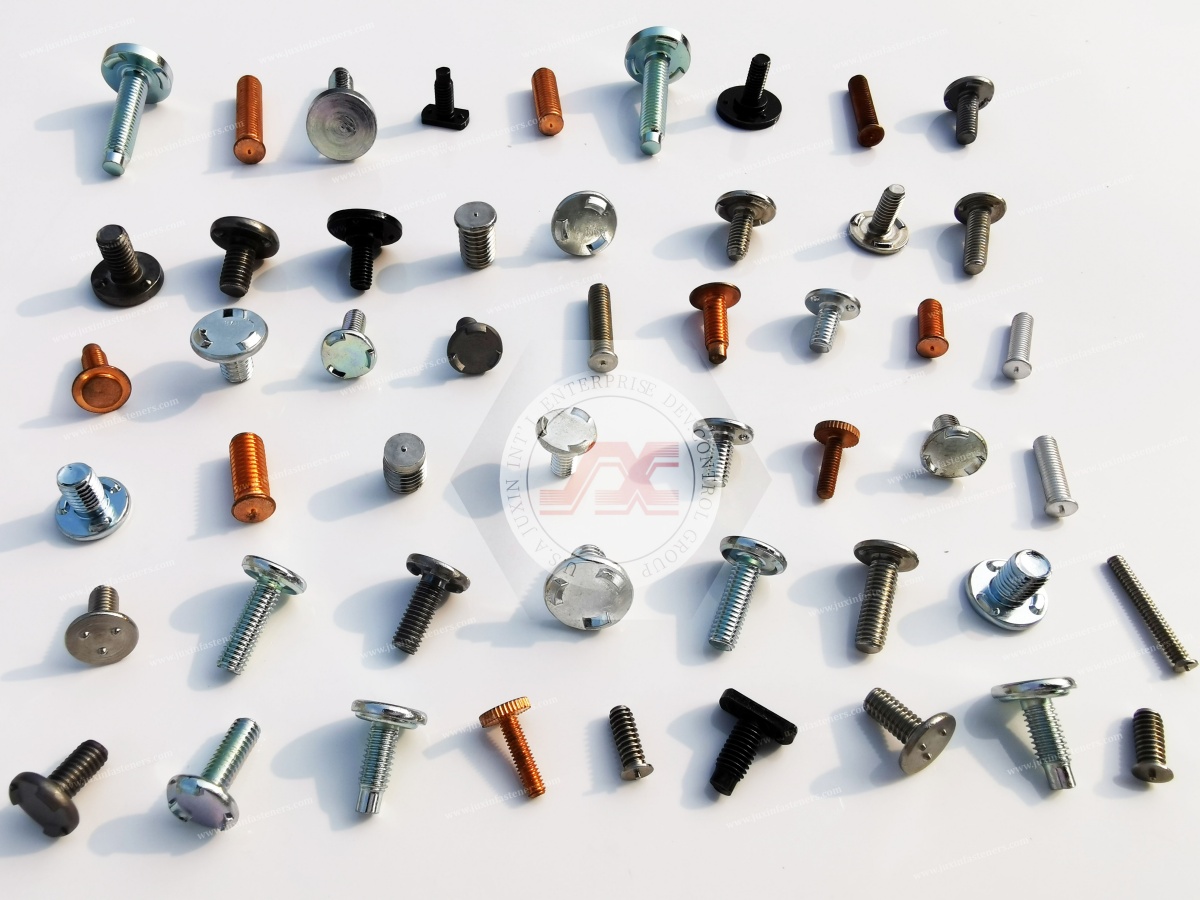
Process Monitoring
Automated welding equipment may monitor electrical and mechanical process variables.
Process monitoring can help identify variation, but it does not automatically prove that every completed weld meets its mechanical requirements.
A suitable control plan should combine monitoring with appropriate validation and inspection.
Traceability and Nonconformance Control
Rail customers may require traceability between delivered fastener lots, material records, inspection results, and production documentation.
Where defects occur, corrective actions should follow the customer's approved quality procedures.
Uncontrolled rewelding or replacement may damage the substrate or introduce new defects.
Manufacturing Efficiency and Production Planning
Rail vehicle production involves complex assembly sequences and long project schedules.
Stud welding can support efficient manufacturing when integrated into a controlled fabrication process.
Welding Before or After Surface Treatment
Welding is often coordinated with coating and finishing operations.
The correct sequence depends on the substrate, coating, and equipment design.
Welding through coatings may affect weld formation and should only be performed when permitted by the approved procedure.
Where welding damages protective coatings, restoration may be required.
Automated Stud Feeding and Positioning
Suitable studs may be installed using automated or semi-automated equipment.
Automation feasibility depends on stud geometry, feeding characteristics, part positioning, and welding access.
Production managers should evaluate the complete station cycle time rather than only the nominal welding duration.
Fixture Design and Tolerance Control
A stud can have an acceptable weld but still cause assembly problems if its position is incorrect.
Fixtures should control component location and stud alignment.
Tolerance stack-up should include the fabricated panel, installed stud, and mating bracket.
Production Consistency and Rework Reduction
Repeatable welding depends on stable materials, suitable equipment, controlled parameters, and consistent inspection.
For rail vehicle manufacturers, avoiding downstream rework can be especially valuable because access may become restricted after interior equipment and wiring are installed.
Total Installed Cost
The total cost of a welded fastening solution may include:
Fastener unit price.
Welding equipment and consumables.
Tooling and fixtures.
Installation labor.
Inspection and testing.
Coating restoration.
Scrap and rework.
Packaging and logistics.
Maintenance requirements.
The lowest fastener purchase price does not necessarily produce the lowest total assembly cost.
Common Rail Weld Stud Failures and Prevention
Incomplete Weld Formation
Incorrect welding parameters or unsuitable surface conditions may cause insufficient weld formation.
Prevention: Validate the welding process using representative production materials.
Stud Misalignment
Incorrect positioning can interfere with mating components.
Prevention: Use suitable fixtures and dimensional inspection.
Local Sheet Deformation
Excessive heat input may damage thin panels.
Prevention: Match the welding process to the substrate material and thickness.
Thread Damage
Weld spatter or handling damage can interfere with nut installation.
Prevention: Control welding conditions and protect critical thread features.
Stud Rotation During Assembly
Insufficient weld resistance may cause the stud to rotate during tightening.
Prevention: Validate torsional resistance against the assembly requirements.
Fatigue Cracking
Repeated dynamic loading may damage the welded detail.
Prevention: Evaluate fatigue-sensitive applications and the actual service loads.
Corrosion at the Weld Interface
Welding may damage protective coatings.
Prevention: Coordinate welding and corrosion protection.
Unapproved Structural Attachment
Adding welded studs to critical carbody components without engineering approval may affect structural performance.
Prevention: Follow the approved vehicle design and welding requirements.
Rail Weld Stud Procurement and OEM Supplier Development
Railway OEM procurement involves technical performance, production feasibility, quality documentation, and long-term supply planning.
Purchasing teams should establish a complete technical specification before comparing suppliers.
Technical Drawing Review
A rail weld stud RFQ should include:
Product drawing and dimensions.
Stud type and welding process.
Thread specification.
Material and mechanical requirements.
Substrate material and thickness.
Surface coating.
Intended application.
Structural or safety significance.
Inspection and documentation requirements.
Estimated quantity and delivery schedule.
Alternative Fastener Evaluation
A proposed alternative should not be approved solely because it has the same nominal thread size.
Differences in material, welding-end geometry, flange dimensions, thread tolerance, and process compatibility may affect performance.
Substitutions should follow the customer's required engineering and quality approval process.
MOQ, Lead Time and Project Deliveries
Rail vehicle programs may involve prototype quantities, production batches, phased deliveries, and long-term spare parts requirements.
MOQ and lead time depend on the selected product configuration and supply arrangement.
Procurement teams should communicate forecast demand, initial order quantities, project milestones, and packaging requirements.
Supplier Documentation and Traceability
Customers may require material records, dimensional inspection reports, test results, lot traceability, or other specified documentation.
The required scope should be agreed before order placement.
A general product description should not be treated as evidence of railway-specific approval.
Engineering and Procurement Checklist for Rail Weld Studs
| Evaluation Area | Required Information |
|---|---|
| Application | Carbody accessory, interior panel, electrical cabinet or equipment bracket |
| Structural significance | Secondary attachment or safety-critical connection |
| Stud type | CD weld, projection weld or approved arc weld configuration |
| Geometry | Diameter, length, flange and welding-end design |
| Thread | Metric or Unified size, pitch and tolerance |
| Material | Stud grade and substrate compatibility |
| Substrate | Steel or aluminum grade, thickness and coating |
| Mechanical performance | Tension, shear, torque, vibration and fatigue as required |
| Welding | Process, equipment, access and qualification |
| Quality | Inspection, testing, traceability and customer documentation |
| Procurement | Quantity, MOQ, lead time and delivery planning |
This checklist helps engineering, manufacturing, and purchasing teams establish consistent requirements before selecting a supplier.
Rail Weld Stud Supply and OEM Engineering Support – JUXIN FASTENERS
JUXIN FASTENERS supplies industrial weld studs and related fastening products for suitable fabricated metal and OEM equipment applications.
Our relevant product portfolio includes:
Threaded projection weld studs.
Three-projection weld studs.
Flanged capacitor discharge weld studs.
Non-flanged CD weld studs.
Stainless steel CD weld stud options.
Aluminum CD weld stud options.
Metric and Unified inch thread specifications.
Customer-defined stud dimensions and geometries.
Drawing-based OEM fastener evaluation.
Related JUXIN product pages:
Type UC3 Carbon Steel Projection Weld Studs
Flanged CD Weld Studs – Inch and Metric
Stainless Steel Flanged CD Weld Studs
Aluminum Flanged CD Weld Studs
For rail transit projects, JUXIN FASTENERS can review customer drawings, material specifications, welding requirements, and purchasing quantities to evaluate suitable product options.
Railway-specific certification, structural qualification, testing, and customer approval requirements must be confirmed separately where applicable.
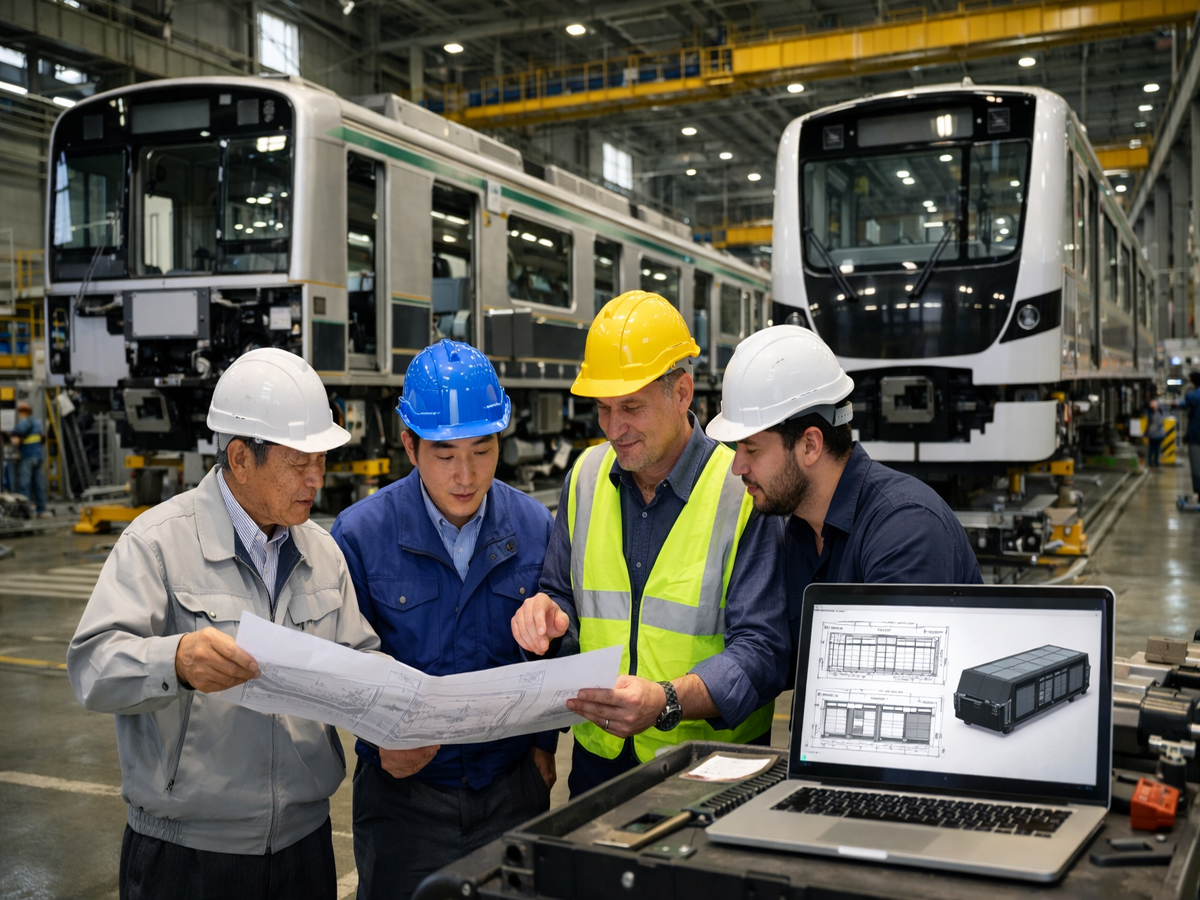
Request a Rail Weld Stud Technical Review or OEM RFQ
Are you sourcing weld studs for rolling stock manufacturing, train body panels, electrical cabinets, cable support systems, HVAC equipment, or fabricated railway components?
JUXIN FASTENERS welcomes inquiries from rail vehicle manufacturers, equipment suppliers, engineering teams, fabrication companies, purchasing departments, and international supplier development professionals.
For an accurate technical review and quotation, please provide:
Available 2D drawings or 3D CAD models.
Required stud type and dimensions.
Thread specification.
Stud material and mechanical requirements.
Substrate material, thickness and coating.
Welding process and installation conditions.
Intended application and structural significance.
Required vibration, fatigue, pull or torque validation criteria.
Railway-specific quality and documentation requirements.
Estimated order quantity and delivery schedule.
If you are evaluating an alternative to an existing railway weld stud, please include the original approved drawing and specification.
Our objective is to help customers identify technically appropriate welded fastening products that support reliable rail vehicle assembly, efficient production, and consistent OEM procurement.
JUXIN FASTENERS
Website: https://www.juxinfasteners.com
Email: info@juxinfasteners.com
Send your technical drawings and RFQ to discuss your rail transit, rolling stock, or industrial welded stud requirements.
Contact Us
Tel.:
+86 020 8621 0320
+86 020 3121 6067
E-mail:
Technical Support:
Navigation
SEND INQUIREY



