
Call Us
+86 136 6007 9809
Call Us
+86 136 6007 9809

Aug. 12, 2026
Why Semiconductor Equipment O-Rings Should NOT Be Arbitrarily Replaced
Material Selection & Failure Prevention Solution for CVD / Etch / PVD Systems | JUXIN FASTENERS
In semiconductor manufacturing equipment such as CVD, PECVD, Etch, and PVD systems, O-rings are critical vacuum sealing components that directly determine chamber stability, process yield, and equipment uptime.
Despite their small size, O-rings are one of the most failure-sensitive consumables in vacuum systems designed under engineering frameworks such as ISO 3601 (O-ring standards) and DIN ISO 1629 (elastomer classification).
A common and dangerous misconception in maintenance environments is:
“White O-rings are FFKM and safe, black ones are not.”
This assumption leads to incorrect replacements during PM (Preventive Maintenance), resulting in chamber contamination, vacuum leakage, and costly downtime.
In reality, O-ring color is not a material identifier—it is determined by fillers and formulation additives.
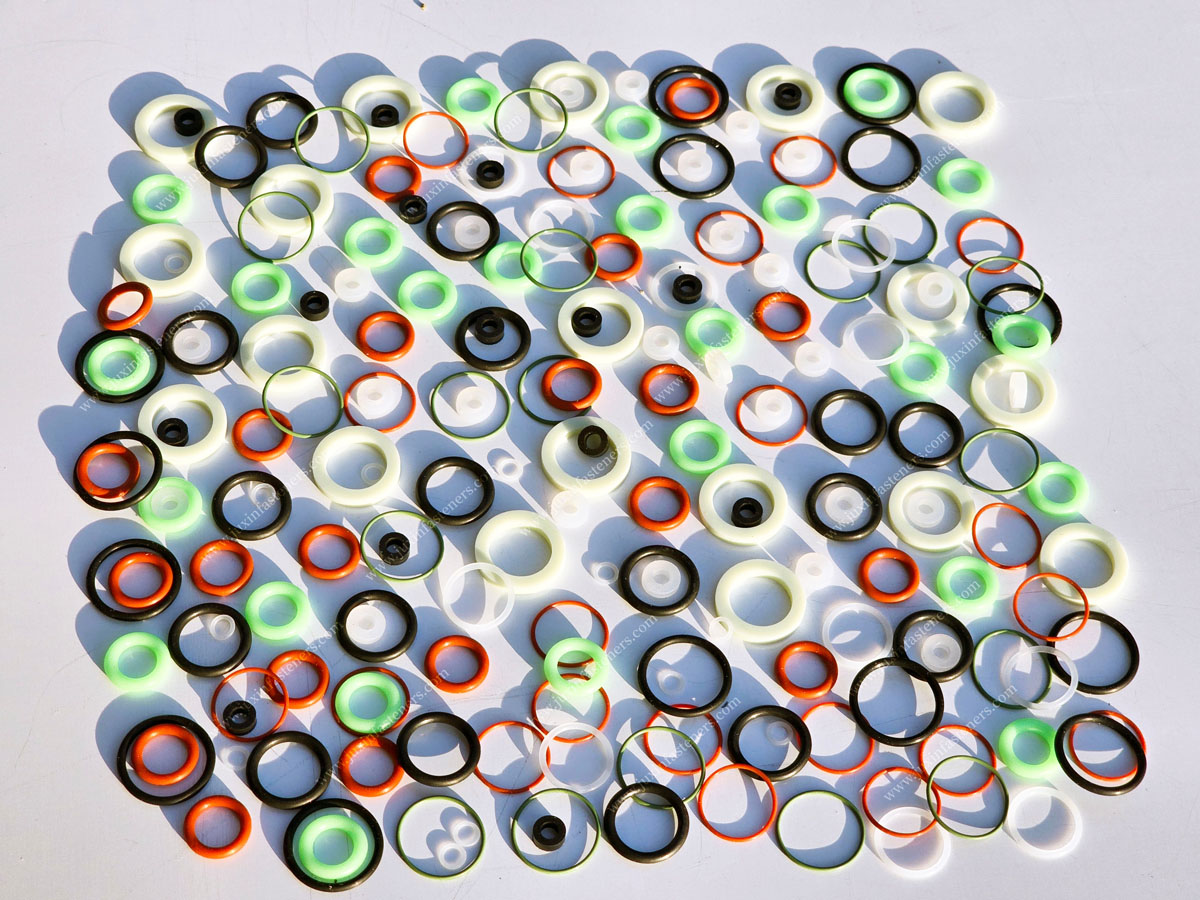
1. Why O-Ring Swapping in Semiconductor Equipment Is High Risk
Semiconductor vacuum systems operate under extremely harsh conditions defined by:
1.1 Vacuum Pressure Differential
Chamber: mTorr level vacuum
External: atmospheric pressure (760 Torr)
Continuous inward leakage risk if sealing fails
1.2 Chemical Plasma Attack (Most Critical Factor)
Process gases include:
NF₃
CF₄
SF₆
SiH₄ / NH₃ / N₂O / TEOS
Under plasma excitation, these gases generate high-energy fluorine radicals (F·) that aggressively attack elastomer chains.
1.3 High Temperature Exposure
Depending on subsystem:
CVD heaters: 200–300°C+
Etch chambers: elevated thermal + plasma coupling
Load lock / transfer modules: moderate temperature cycling
1.4 Plasma Exposure
Direct or indirect ion bombardment
Surface erosion of polymer sealing interface
Accelerated aging of elastomers
Key Engineering Conclusion:
Chemical attack (especially fluorine plasma) + temperature are the two dominant failure drivers.
Pressure and plasma exposure mainly influence design location, not material chemistry.
2. Semiconductor O-Ring Materials (ISO 1629 Classification)
Semiconductor vacuum equipment primarily uses three elastomer families:
FKM (Fluoroelastomer, e.g., Viton® type)
FFKM (Perfluoroelastomer, e.g., Kalrez®, Chemraz®, Perlast®)
EPDM (Ethylene Propylene Diene Monomer)
2.1 FKM (Fluoroelastomer – General Vacuum Sealing Material)
Typical properties:
Temperature range: -20°C to 200–250°C
Good resistance to oils and many process gases
Poor resistance to fluorine plasma
Key limitation:
C–H bonds in polymer backbone are attacked by F radicals
Rapid surface degradation in Etch / NF₃ cleaning environments
Typical color:
Black, brown, green (varies by formulation)
2.2 FFKM (Perfluoroelastomer – Semiconductor Critical Seal Material)
Brands:
DuPont Kalrez®
Greene Tweed Chemraz®
Solvay / other FFKM families
Properties:
Temperature resistance: up to 300–327°C
Nearly universal chemical resistance
Excellent fluorine plasma resistance (key advantage)
Structure advantage:
Fully fluorinated backbone (no C–H bonds)
Strong C–F bonds (~485 kJ/mol)
Typical color:
White, black, or custom (NOT material-identifying)
2.3 EPDM (Non-Fluorinated Elastomer – Utility Sealing Only)
Properties:
Temperature range: -40°C to ~150°C
Good for water vapor systems (PCW, cooling lines)
Poor resistance to oils and fluorine plasma
Use limitation:
Not suitable for semiconductor plasma environments
Critical Engineering Insight:
Color has no engineering meaning in material classification.
FFKM can be white OR black.
FKM can also be black or colored.
Only part number + specification sheet (ISO 3601 / OEM code) can confirm material identity.
3. Why FFKM Is Mandatory in Fluorine Plasma Environments
3.1 Chemical Reaction Mechanism
In plasma environments:
NF₃ + Plasma → N + 3F· (fluorine radicals)
These radicals:
Are highly reactive oxidizers
Attack polymer backbones aggressively
Cause chain scission in elastomers
3.2 FKM vs FFKM Behavior
FKM failure mechanism:
Fluorine radicals attack residual C–H bonds
Surface becomes brittle and powdery
Rapid loss of elasticity
Leakage occurs within days or weeks
FFKM resistance mechanism:
Fully fluorinated structure
No C–H bonds available for attack
C–F bond stability prevents degradation
Long service life in plasma environments
Engineering Rule (Non-negotiable):
Any semiconductor application involving NF₃ / CF₄ / SF₆ plasma requires FFKM O-rings (ISO 3601 compliant).
FKM is NOT acceptable.
4. Temperature vs Chemical Compatibility: Selection Hierarchy
4.1 Temperature Impact on Elastomer Life
Even without chemical attack:
High temperature accelerates oxidation
Increases compression set
Reduces elastic recovery
Causes vacuum leakage over time
4.2 Material Temperature Ranking
FFKM: up to 300°C+
FKM: 200–250°C
EPDM: ~150°C
4.3 Application Mapping
High temperature + fluorine plasma:
→ FFKM ONLY
Moderate temperature + vacuum sealing:
→ FKM (standard semiconductor vacuum O-rings)
Low temperature + cooling systems (PCW):
→ EPDM or FKM
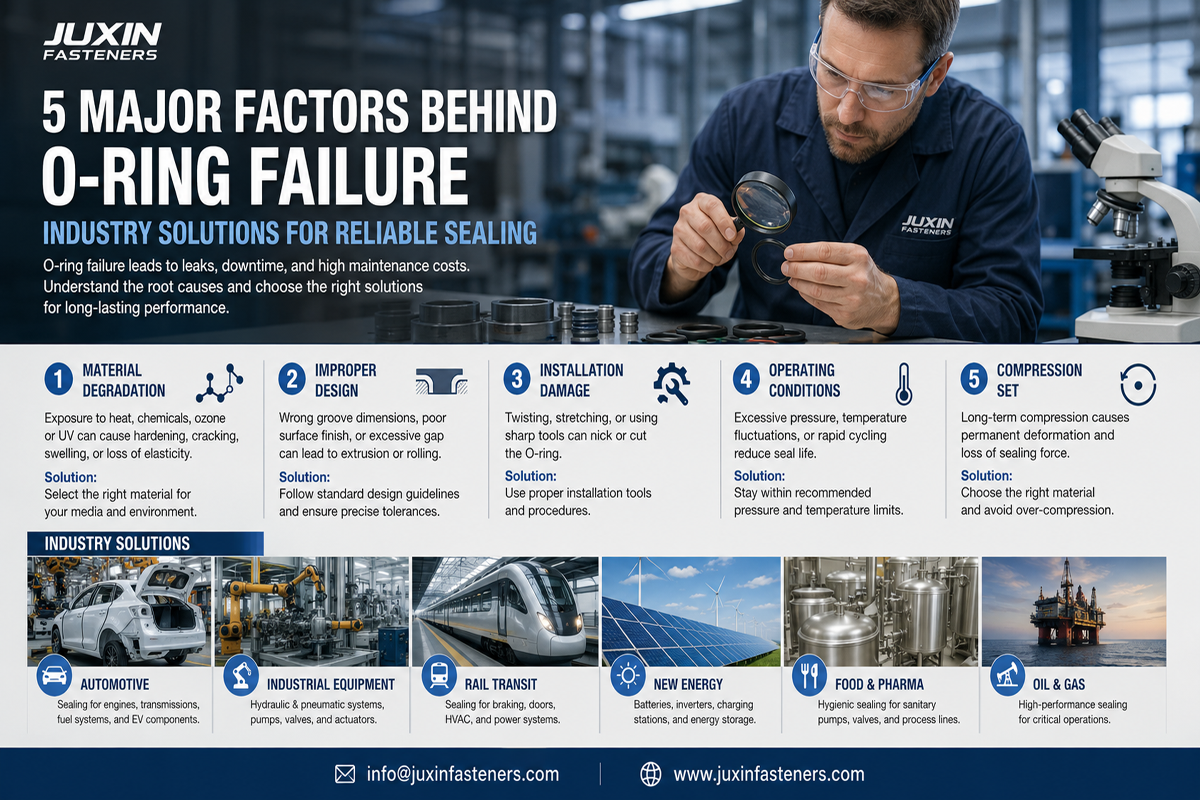
5. Compression Ratio: The Second Critical Failure Factor
Even correct material selection will fail if compression is wrong.
5.1 Engineering Definition (ISO 3601 sealing principle)
Compression ratio:
(Original diameter − compressed height) / original diameter × 100%
5.2 Recommended Compression Range
Semiconductor vacuum seals (PECVD / CVD): 20% – 30%
5.3 Failure Modes
Too low (<15%):
Insufficient sealing force
Micro-leaks
Elevated base pressure
Too high (>35%):
Permanent deformation (compression set)
Cracking under thermal cycling
Accelerated aging
5.4 Common PM Installation Errors
Old O-ring debris in groove
Incorrect cross-section size
Twisted or rolled installation
Surface contamination or particles
6. Engineering Decision Logic for Semiconductor O-Rings
Step 1: Is fluorine plasma present?
YES → Use FFKM (mandatory)
NO → Proceed to Step 2
Step 2: Operating temperature?
200°C → FFKM
150–200°C → FKM
<150°C → FKM or EPDM
Step 3: Verify compression ratio
Target: 20% – 30%
Ensure groove compliance (ISO 3601 design standard)
7. Why Color-Based Selection Is Dangerous in Semiconductor PM
False assumption:
White = FFKM
Black = non-FFKM
Engineering reality:
FFKM exists in white, black, and colored variants
FKM also exists in black, brown, green, etc.
Failure consequence of wrong identification:
Chamber contamination
Plasma instability
Vacuum leakage
Expensive downtime (tool-level impact)
Only valid identification method:
OEM part number
Material specification sheet
ISO 3601 / manufacturer certification

8. Semiconductor Applications
Properly selected O-rings are critical in:
CVD / PECVD chambers
Dry etch systems
PVD sputtering systems
Load lock modules
Vacuum transfer systems
9. Conclusion: Material Discipline Defines Semiconductor Yield
In semiconductor manufacturing, O-ring selection is not a maintenance routine—it is a process reliability decision.
The correct engineering logic is:
Chemical exposure (fluorine plasma = FFKM mandatory)
Temperature compatibility
Compression ratio control (20–30%)
Verified material specification (NOT color)
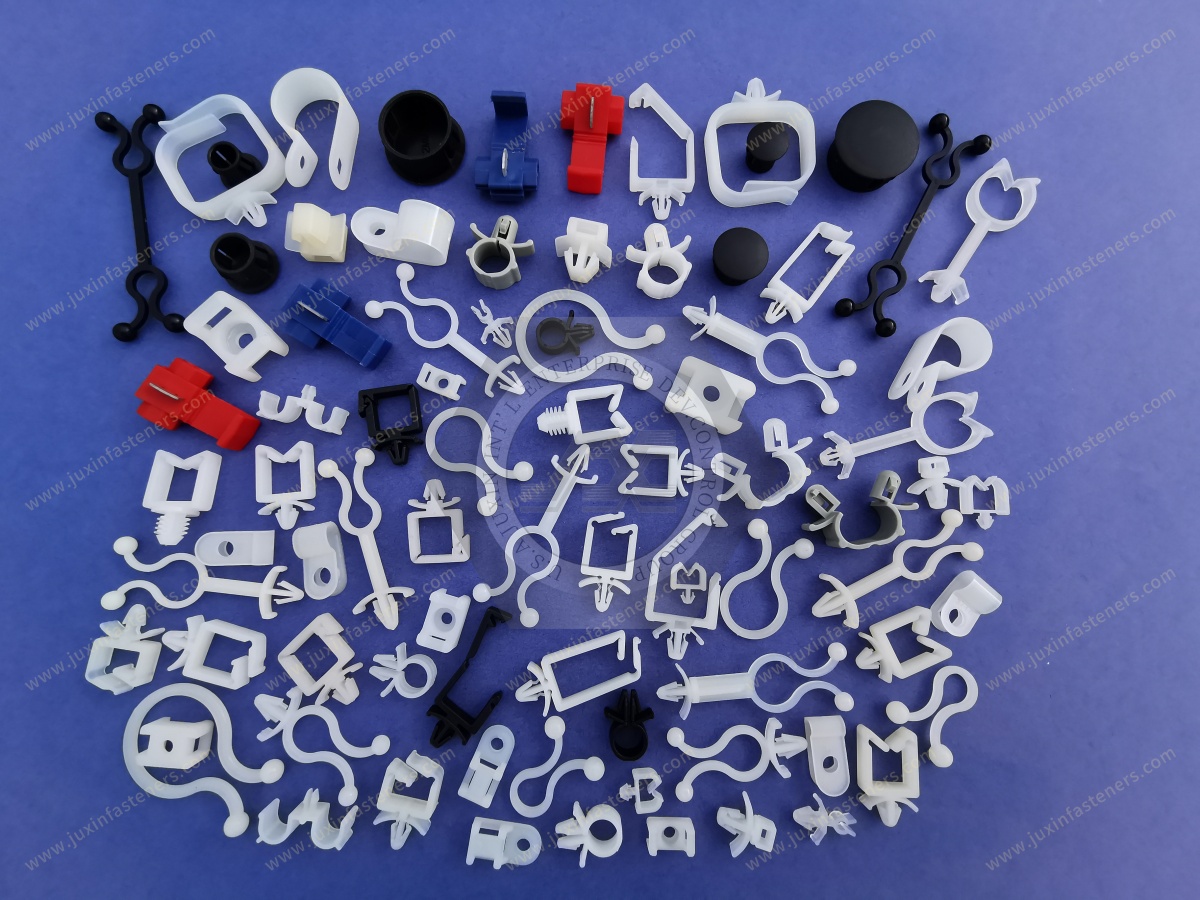
JUXIN FASTENERS Semiconductor Sealing Solutions
JUXIN FASTENERS provides high-performance sealing and fastening solutions for semiconductor OEM equipment:
FFKM / FKM / EPDM O-rings (ISO 3601 compliant)
Semiconductor vacuum sealing components
High-purity elastomer sealing solutions
OEM chamber maintenance support components
https://www.juxinfasteners.com
info@juxinfasteners.com
 MORE NEWS
Sep. 27, 2026
Sep. 27, 2026
Sep. 27, 2026
Contact Us
Tel.:
+86 020 8621 0320
+86 020 3121 6067
E-mail:
Technical Support:
Navigation
SEND INQUIREY