
Call Us
+86 136 6007 9809
Call Us
+86 136 6007 9809

Oct. 29, 2023
Zinc-nickel coated fasteners are widely considered when conventional zinc plating does not provide the required combination of corrosion performance, dimensional compatibility and production functionality.
But specifying "Zn-Ni" alone is not enough.
For an OEM engineer, procurement manager or supplier-development team, the important questions are:
What zinc-nickel system is required? What corrosion test must it pass? What friction range is needed? How will coating thickness affect the thread?
Is the base fastener susceptible to hydrogen embrittlement? And will a second-source coating behave the same during assembly?
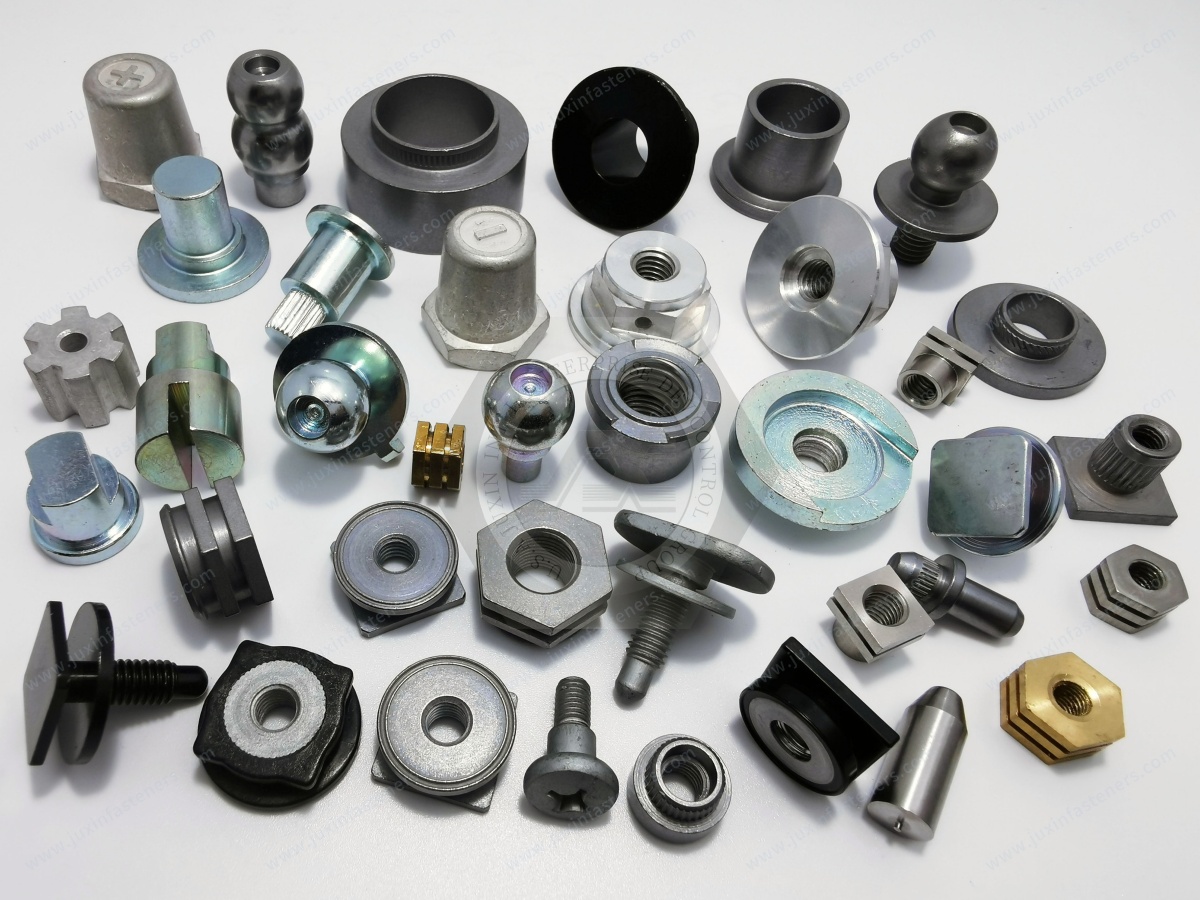
JUXIN FASTENERS supplies selected zinc-nickel coated industrial fasteners according to customer drawings and project requirements, including:
Bolts
Screws
Nuts
Lock nuts
Rivet nuts
Weld fasteners where the coating is compatible with the welding process
Threaded components
Custom fasteners
Drawing-based precision components
Applications can include selected automotive, EV, industrial machinery, electrical equipment, outdoor equipment and other corrosion-sensitive assemblies.
The correct zinc-nickel specification should be based on the complete fastener and joint requirement rather than coating appearance alone.
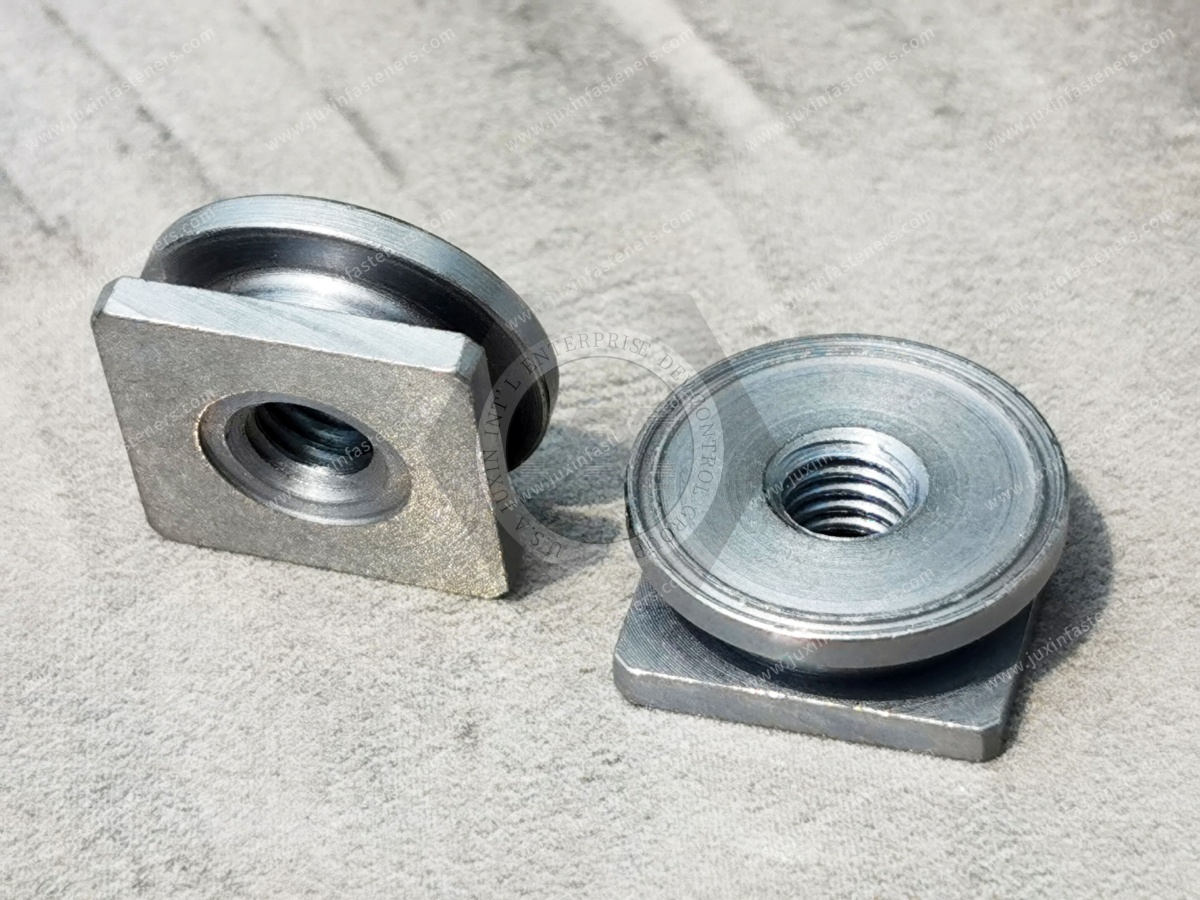
Zinc-nickel, commonly abbreviated as Zn-Ni, is an alloy electroplating system in which zinc and nickel are deposited onto a metallic substrate.
For steel fasteners, zinc remains the more active component and contributes sacrificial corrosion protection.
Nickel modifies the properties of the deposited alloy and, when the process is appropriately controlled,
zinc-nickel systems can provide substantially improved corrosion performance compared with conventional zinc electroplating.
A finished zinc-nickel system may include more than the alloy deposit itself.
Depending on the specification, it can consist of:
Steel Fastener → Surface Preparation → Zn-Ni Alloy Deposit → Passivation → Sealer / Topcoat / Lubricant
Each layer can influence final performance.
Therefore:
Zn-Ni alloy deposit ≠ complete Zn-Ni coating system.
This distinction is essential when comparing suppliers.
Zinc-nickel is commonly evaluated when an application needs a combination of:
Higher corrosion protection than conventional zinc plating
Controlled coating thickness
Compatibility with threaded components
Specific friction behavior
Black or silver appearance options
Automotive or industrial coating requirements
Repeatable production performance
However, zinc-nickel should not automatically be specified simply because it is considered a "higher-performance" finish.
If conventional zinc already satisfies the technical requirement, a more complex coating may add unnecessary cost.
The correct engineering principle is:
Specify the coating required by the application, not the highest coating performance available.
The difference between conventional zinc and zinc-nickel is more meaningful than color.
| Engineering Factor | Zinc Electroplating | Zinc-Nickel Electroplating |
|---|---|---|
| Coating chemistry | Primarily zinc | Zinc-nickel alloy |
| Corrosion capability | Suitable for many general industrial requirements | Often selected for higher corrosion requirements |
| Passivation / topcoat | Can be applied | Can be applied |
| Friction control | Depends on complete finish | Depends on complete finish |
| Thread fit | Thickness must be controlled | Thickness must be controlled |
| High-strength steel considerations | Hydrogen embrittlement risk must be evaluated | Hydrogen embrittlement risk must still be evaluated |
| Appearance | Multiple finish options | Multiple finish options |
| Cost | Generally lower | Generally higher |
| Typical sourcing decision | General corrosion protection | More demanding corrosion specification |
This comparison should not be converted into a universal statement such as:
"Zn-Ni lasts X times longer than zinc."
Performance depends on the exact coating system and test conditions.
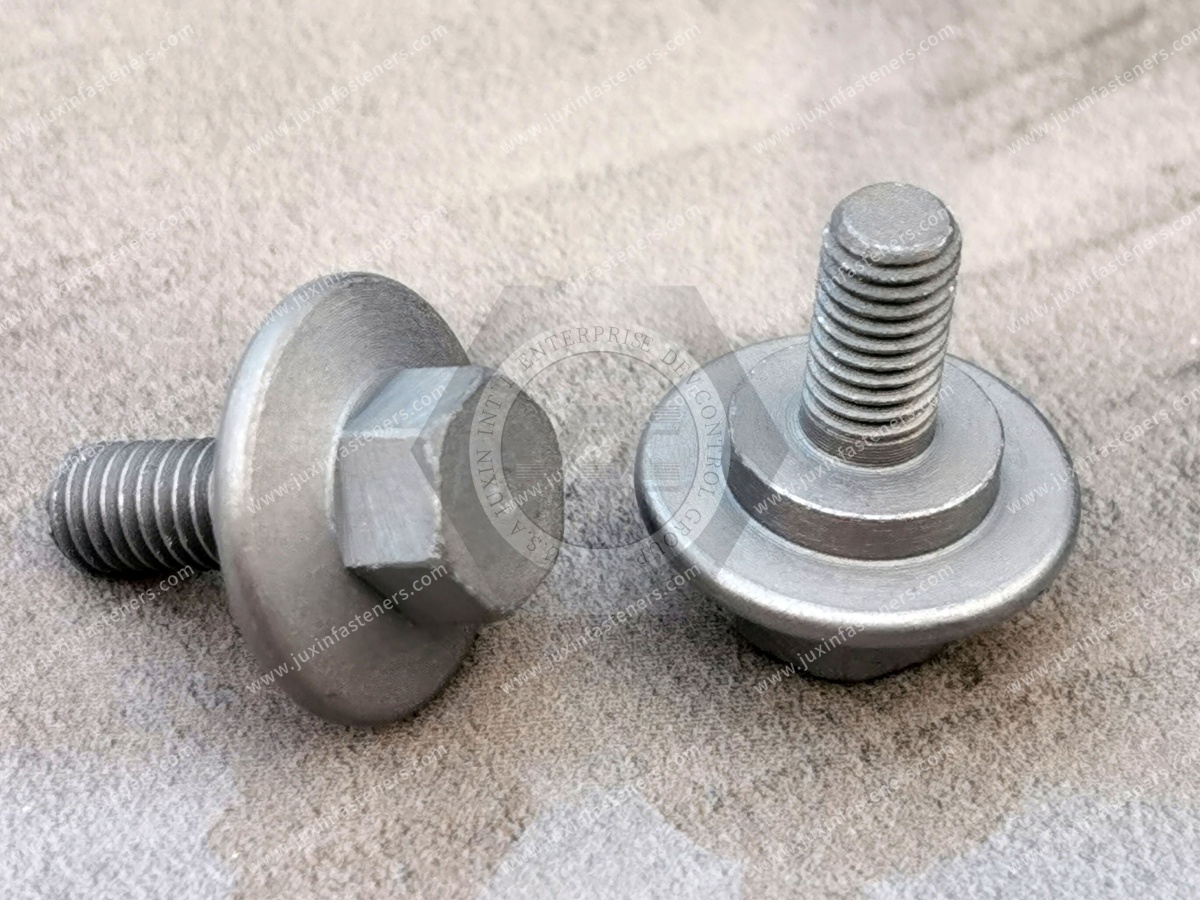
A common mistake in fastener sourcing is to assume that all zinc-nickel coatings have the same corrosion resistance.
They do not.
Performance can be influenced by:
Base material
Surface preparation
Alloy composition
Deposit thickness
Passivation
Sealer
Topcoat
Process control
Part geometry
Handling
Installation damage
Test method
Acceptance criteria
This means two suppliers can both quote "Zn-Ni" while proposing different finished coating systems.
For an OEM RFQ, the coating should therefore be defined by the required specification and functional performance rather than by the words "zinc nickel" alone.
The nickel content of the deposited Zn-Ni alloy is an important process characteristic.
High-performance alkaline zinc-nickel systems are commonly associated with an alloy composition in the range around the low-to-mid teens percentage of nickel by weight, depending on the specified process.
However, engineers and buyers should avoid converting this into a simplistic rule that one exact nickel percentage automatically guarantees a specific corrosion result.
Final performance also depends on:
Deposit structure
Thickness
Passivation
Topcoat
Surface preparation
Process stability
Test conditions
Therefore:
Nickel percentage alone ≠ corrosion specification.
When an OEM coating specification defines alloy composition, the supplier should manufacture to that requirement rather than substituting a generic Zn-Ni process.
Zinc-nickel coating adds material to the surface of the fastener.
That matters particularly on threaded components.
Coating thickness can influence:
External thread dimensions
Internal thread clearance
Thread engagement
Gauging
Assembly
Mating-part compatibility
For this reason:
More coating thickness ≠ automatically better fastener performance.
A thicker coating may increase protection in some coating systems, but excessive buildup can create thread interference or dimensional problems.
The correct coating thickness should follow the applicable drawing, coating specification and functional requirements.
Internal threads in nuts, rivet nuts and other female-threaded components can be particularly sensitive to coating buildup.
If the pre-coating thread condition and final coating thickness are not compatible, the finished part may become difficult to assemble or fail final gauging requirements.
For internally threaded Zn-Ni components, engineers should consider:
Thread tolerance before coating
Required final thread condition
Coating distribution
Mating bolt
Gauging method
Functional assembly requirement
A coating system is successful only when the finished fastener still performs its mechanical function.
After Zn-Ni deposition, a passivation process can be used as part of the finished corrosion-protection system.
Depending on the specification and coating technology, appearances may include:
Silver / clear
Black
Other specified appearances
But appearance should not be used as a shortcut for performance.
Passivation color ≠ guaranteed corrosion performance.
A black Zn-Ni system should not automatically be assumed to have higher or lower corrosion resistance than another Zn-Ni system merely because of its color.
The complete coating specification must be compared.
Black zinc-nickel is increasingly requested in automotive, machinery and appearance-sensitive industrial projects.
However, the term "black zinc nickel" still leaves several engineering questions unanswered:
What Zn-Ni system?
What alloy requirement?
What thickness?
What black passivation?
Is a sealer required?
Is a topcoat required?
What corrosion test?
What friction requirement?
What appearance criteria?
What final thread requirement?
This is especially important because several unrelated coating technologies can all produce a black fastener.
For example:
Black zinc
Black zinc-nickel
Black zinc-flake
Black phosphate
Black oxide
Black electrophoretic coating
They are not functionally equivalent.
Black color ≠ coating specification.
Corrosion resistance is only one reason to control a Zn-Ni system.
For torque-controlled threaded joints, friction can be equally important.
The tightening relationship can be simplified conceptually as:
Applied Torque → Friction Losses + Fastener Tension
A significant portion of tightening torque is influenced by friction in the threads and under the bearing surface.
Therefore:
Torque ≠ Preload.
Changing the surface system can change friction.
And:
Same torque + different friction ≠ same preload.
This is one of the most important reasons why a zinc-nickel coating change should not automatically be treated as a cosmetic purchasing substitution.
A zinc-nickel coating may include a sealer, topcoat or lubricant that changes surface behavior.
These additions can influence:
Coefficient of friction
Tightening consistency
Corrosion performance
Appearance
Handling
Assembly behavior
Therefore, two Zn-Ni fasteners with similar alloy deposits can behave differently if their topcoats are different.
For relevant OEM joints, friction requirements should be controlled according to the applicable specification rather than assumed from the coating name.
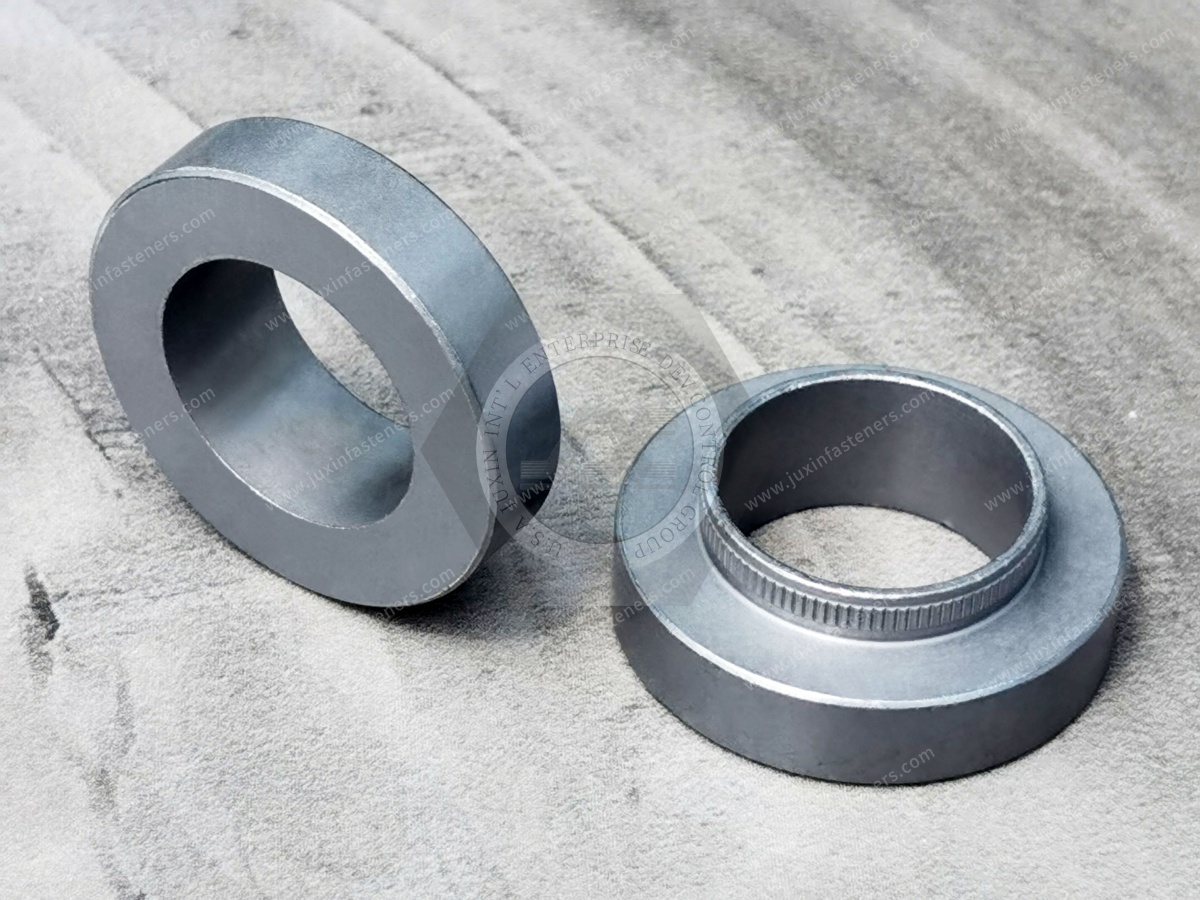
Consider a production bolt originally approved with:
Defined material
Defined property class
Defined Zn-Ni system
Controlled friction
Established tightening torque
A second supplier offers a dimensionally identical bolt with another Zn-Ni coating.
The new component may have:
The same thread
The same dimensions
The same mechanical property class
Similar corrosion performance
But if the friction differs, the same tightening torque may create a different preload.
Therefore:
Same dimensions ≠ functional equivalence.
And:
Coating substitution can be an engineering change.
This matters to procurement, supplier development and manufacturing engineering.
Hydrogen embrittlement requires careful treatment because Zn-Ni is an electroplated coating.
Hydrogen can potentially be introduced during manufacturing stages such as:
Acid cleaning
Pickling
Electrocleaning
Electroplating
Other chemical processing
Susceptibility depends strongly on factors including:
Base material
Strength level
Hardness
Residual stress
Applied stress
Manufacturing history
Surface preparation
Plating process
Post-treatment controls
Therefore it is incorrect to assign a universal percentage such as:
"Zn-Ni has a 1.5% hydrogen embrittlement risk."
Hydrogen embrittlement is not specified meaningfully as one universal coating-risk percentage.
Another dangerous simplification is:
"Zinc-nickel is safe for high-strength fasteners because it has low hydrogen embrittlement risk."
Zn-Ni may be specified successfully on selected high-strength steel components when the complete manufacturing and plating process is appropriately controlled.
But:
Zn-Ni electroplating ≠ hydrogen-embrittlement-free process.
For susceptible high-strength fasteners, engineering should review:
Material hardness
Property requirements
Pretreatment
Acid exposure
Electroplating process
Time between plating and post-treatment
Baking requirements where applicable
Verification requirements
Customer/OEM specification
Relevant ISO, ASTM or customer-specific requirements should govern the project where applicable.
Post-plating baking may be required for susceptible fasteners under applicable specifications.
Its purpose can include reducing diffusible hydrogen following plating.
However:
Baking ≠ guaranteed elimination of hydrogen embrittlement.
The effectiveness of risk control depends on the complete process.
A poor pretreatment or inappropriate plating route should not be justified simply by adding a baking step afterward.
For critical high-strength components, hydrogen embrittlement control begins before plating.
Zinc-nickel and zinc-flake are both used in demanding fastener applications, but they are fundamentally different coating technologies.
| Engineering Factor | Zinc-Nickel | Zinc-Flake |
|---|---|---|
| Process family | Electroplating | Non-electrolytic coating system |
| Corrosion performance | Can support demanding corrosion requirements | Can support demanding corrosion requirements |
| High-strength fastener consideration | Electroplating route requires hydrogen-risk control | Avoids electrolytic deposition, but total process still requires review |
| Thickness | Relatively thin engineered deposit | Depends on basecoat/topcoat system |
| Friction | Controlled through complete surface system | Controlled through complete surface system |
| Thread fit | Must be evaluated | Must be evaluated |
| Appearance | Silver, black and other specified finishes | Commonly silver/gray or black depending on system |
| Best choice | Application-specific | Application-specific |
Neither technology is universally superior.
Selection should follow:
Fastener material
Strength
Geometry
Corrosion requirement
Friction requirement
Installation
Customer specification
Cost
Process compatibility
Procurement teams sometimes compare Zn-Ni coated carbon-steel fasteners with stainless steel because both may be considered for corrosion-sensitive environments.
But they are different material strategies.
A Zn-Ni coated steel fastener combines:
Steel Mechanical Properties + Sacrificial Surface Protection
A stainless fastener relies primarily on:
Stainless Alloy Composition + Passive Surface Behavior
The decision should consider:
Required mechanical properties
Environment
Chlorides
Mating material
Galvanic interaction
Galling
Friction
Cost
Availability
Joint design
Stainless steel ≠ automatically better corrosion solution.
And:
Zn-Ni ≠ universal substitute for stainless steel.
Zn-Ni coatings are frequently marketed using large salt-spray-hour numbers.
These numbers can be useful only when tied to a defined test.
A meaningful corrosion requirement should identify, as applicable:
Test method
Duration
Coating system
Coating thickness
Passivation
Topcoat
White corrosion criterion
Red corrosion criterion
Acceptance criteria
Without this information, statements such as:
"2,500-hour Zn-Ni"
are incomplete.
This principle is especially important for zinc-nickel marketing.
Salt spray hours ≠ field service life.
A laboratory test result cannot be directly converted into statements such as:
"15 years of atmospheric corrosion protection."
Real-world exposure can include:
Wet/dry cycles
Temperature cycling
Chlorides
Road contaminants
Chemicals
Abrasion
Stone impact
Coating damage
Joint crevices
Galvanic interaction
Laboratory testing and field durability are related engineering topics, but they are not interchangeable units.
Zn-Ni coating systems can be used in applications involving elevated or varying temperatures,
but a universal temperature range should not be published without reference to the specific coating system and performance requirement.
Temperature can affect:
Passivation
Topcoat
Lubricant
Friction
Corrosion behavior
Appearance
Therefore, a statement such as:
"-60°C to +250°C with unchanged corrosion resistance"
should not be treated as a universal property of every zinc-nickel coated fastener.
For temperature-sensitive projects, the actual coating system and customer specification should control the selection.
The Zn-Ni alloy deposit may provide different surface characteristics from conventional zinc, but installation durability depends on the complete surface system.
Relevant factors can include:
Alloy deposit
Thickness
Passivation
Topcoat
Lubricant
Fastener geometry
Drive system
Installation tool
Contact surfaces
A coating that performs well in corrosion testing can still be damaged by an unsuitable installation process.
Therefore:
Corrosion performance ≠ installation damage resistance.
Both may need to be evaluated.
Zn-Ni coated bolts may be considered for selected applications where higher corrosion performance and controlled assembly characteristics are required.
Engineering should define:
Bolt material
Property class
Thread
Coating specification
Coating thickness
Friction requirement
Mating nut
Tightening method
Environment
Corrosion test
Hydrogen embrittlement controls where applicable
For torque-controlled joints, friction should be treated as a functional characteristic.
The purchasing description should therefore be more complete than:
"M10 bolt, black Zn-Ni."
For screws, coating selection can affect both corrosion and installation.
Depending on the screw type, engineers should consider:
Drive geometry
Thread type
Mating material
Thread-forming behavior where applicable
Installation torque
Coating damage during driving
Friction
Appearance
If the screw forms or cuts a mating thread during installation, the coating must also be evaluated under the actual installation process.
For internally threaded nuts, Zn-Ni coating thickness must remain compatible with final thread requirements.
For lock nuts, another variable appears:
Prevailing torque.
Prevailing torque is not the same as joint preload.
Therefore:
Prevailing Torque ≠ Preload.
Coating and lubricant can influence the torque measured during assembly.
For prevailing-torque lock nuts, the finished surface system should be evaluated together with the locking feature and mating bolt.
Rivet nuts introduce a different challenge because the component is mechanically deformed during installation.
Relevant variables include:
Rivet nut material
Zn-Ni system
Coating thickness
Grip range
Parent sheet
Hole geometry
Body style
Setting process
Coating behavior during deformation
Pull-out
Spin-out
The finished rivet nut should not be evaluated only in its uninstalled condition.
Where required, installed-joint testing can determine whether the coating and fastener geometry remain compatible with the setting process.
Weld nuts and weld studs require particular caution.
Surface condition can influence electrical contact and welding behavior.
Therefore:
A Zn-Ni finish should not automatically be added to a weld fastener without process review.
For weld nuts and studs, engineering may need to evaluate:
Parent sheet
Fastener material
Coating
Projection geometry
Welding process
Electrical resistance
Electrode conditions
Weld parameters
Thread condition after welding
If a coating changes, the welding process may require validation.
Automotive applications are one of the most important commercial search areas for Zn-Ni coated fasteners.
But "automotive" does not represent one corrosion environment.
Requirements differ between:
Interior assemblies
Body components
Underbody equipment
Engine-compartment equipment
Electrical systems
EV equipment
Exterior hardware
Zn-Ni may be evaluated for selected components where the applicable OEM specification requires its combination of corrosion and assembly characteristics.
Potential JUXIN FASTENERS products can include selected:
Bolts
Screws
Nuts
Lock nuts
Rivet nuts
Drawing-based automotive fasteners
For safety-critical or function-critical vehicle components, the applicable OEM drawing, approved process and formal validation must govern the sourcing decision.
A generic Zn-Ni specification does not establish automotive qualification.
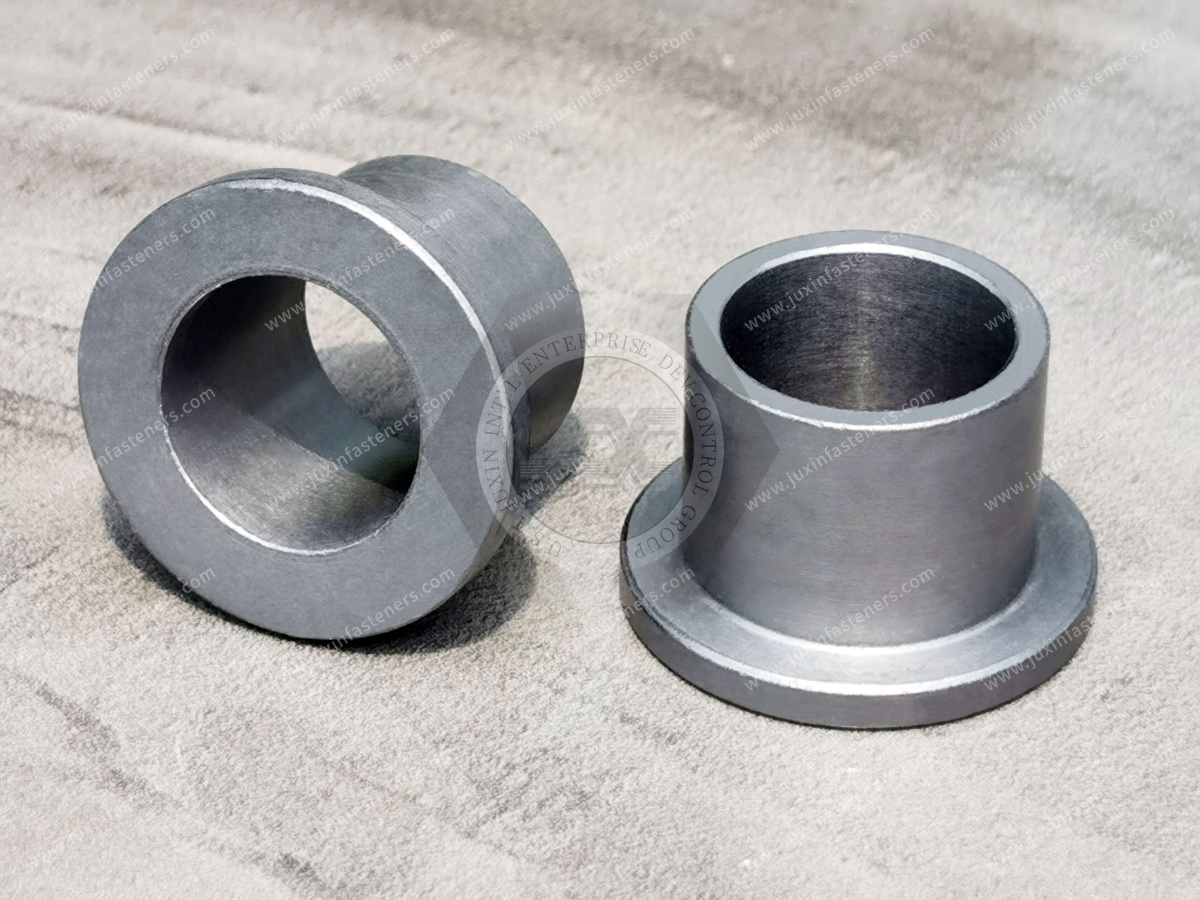
EV platforms introduce additional mixed-material, electrical and thermal environments.
Zn-Ni coated fasteners may be considered for selected:
Battery-related enclosures
Brackets
Power-electronic equipment
Cooling equipment
Electrical housings
Serviceable covers
Auxiliary structures
Engineering considerations can include:
Parent material
Galvanic compatibility
Thermal cycling
Corrosion
Friction
Electrical contact strategy
Sealing interfaces
Service requirements
A Zn-Ni coating alone does not establish electrical, sealing or battery-system compliance.
Industrial machinery can expose fasteners to:
Humidity
Oils
Cleaning agents
Outdoor weather
Repeated maintenance
Temperature changes
Zn-Ni may be appropriate when the corrosion requirement exceeds what a conventional finish can economically provide.
Potential applications can include selected:
Automation equipment
Production machinery
Outdoor machinery
Material-handling equipment
Industrial enclosures
Selection should still be based on the actual environment and assembly requirements.
Zn-Ni coated fasteners may be used in selected:
Electrical cabinets
Power electronics
Telecom equipment
Energy-storage equipment
Cooling systems
Industrial electrical enclosures
But mechanical coating performance should not be confused with electrical qualification.
Conductive metallic coating ≠ qualified electrical connection.
If the fastener is part of a grounding or current path, contact resistance and system-level electrical performance require separate engineering consideration.
Zn-Ni can be evaluated for selected coastal or salt-exposed industrial equipment, but a generic Zn-Ni coating should not automatically be marketed as a universal marine solution.
Marine and coastal environments can involve:
Chlorides
Persistent moisture
Crevices
Dissimilar metals
Coating damage
Long service intervals
The complete assembly should therefore be evaluated.
Corrosion-resistant fastener ≠ corrosion-resistant assembly.
A Zn-Ni coating may protect a steel fastener, but the finished joint can contain other metals such as:
Aluminum
Stainless steel
Carbon steel
Copper alloys
When dissimilar metals are electrically connected in the presence of an electrolyte, galvanic effects may become relevant.
Risk depends on:
Material combination
Surface-area relationship
Coating integrity
Electrical contact
Environment
Joint geometry
The fastener coating should therefore be selected as part of the complete assembly.
A strong Zn-Ni specification should answer more than "zinc nickel required."
Depending on the application, specify:
Base fastener material
Mechanical property requirement
Heat-treatment condition
Zn-Ni coating requirement
Applicable ISO, ASTM, EN, SAE or OEM specification
Alloy requirement where specified
Coating thickness
Passivation
Sealer
Topcoat
Color
Friction requirement
Corrosion test
Test method
Acceptance criteria
Thread requirement after coating
Hydrogen embrittlement controls where applicable
The drawing should distinguish between mandatory engineering characteristics and cosmetic preferences.
When comparing Zn-Ni quotations, purchasing and supplier-development teams should ask:
| Sourcing Question | Why It Matters |
|---|---|
| What is the exact Zn-Ni system? | "Zn-Ni" alone does not define the finished coating |
| What is the base fastener material? | Affects mechanical and plating requirements |
| What coating thickness is proposed? | Influences corrosion and thread fit |
| What passivation is used? | Part of the finished coating system |
| Is there a topcoat or lubricant? | Can affect friction and corrosion |
| What corrosion test applies? | Allows meaningful performance comparison |
| What are the acceptance criteria? | Test hours alone are incomplete |
| Is friction controlled? | Important for torque-controlled joints |
| How is final thread fit verified? | Coating can affect assembly |
| Is hydrogen embrittlement relevant? | Important for susceptible high-strength steels |
| Is this an approved production process? | Critical for OEM change control |
| How will coating changes be controlled? | Prevents unapproved substitutions |
This makes quotations more technically comparable.
Zn-Ni fasteners are particularly important to control during second-source development because the coating can change assembly behavior even when the base fastener looks identical.
Same dimensions + same black appearance ≠ functional equivalence.
Second-source qualification may need to compare:
Drawing revision
Base material
Mechanical properties
Heat treatment
Thread
Zn-Ni system
Coating thickness
Alloy requirement
Passivation
Topcoat
Friction
Corrosion test
Hydrogen embrittlement controls
Installation behavior
Final assembly performance
For torque-controlled joints, friction comparison may be essential.
For rivet nuts, installed deformation and retention may matter.
For weld fasteners, welding compatibility may matter.
Qualification should follow the actual function.
The complete coating system remains undefined.
Color does not establish coating performance.
Laboratory hours do not translate directly into years in the field.
The same tightening torque may produce a different preload.
Coating thickness can interfere with mating threads.
It is still an electroplating process and must be controlled appropriately for susceptible materials.
Additional thickness can create dimensional problems.
Two black Zn-Ni fasteners may use different coating systems.
For a meaningful technical and commercial quotation, provide:
2D drawing
3D model where relevant
Part number
Drawing revision
Fastener type
Base material
Property class or mechanical requirement
Heat treatment
Thread specification
Zn-Ni specification
Coating thickness
Passivation
Topcoat / sealer
Color
Friction requirement where applicable
Corrosion test method
Acceptance criteria
Mating component
Installation method
Operating environment
Annual volume
Sample quantity
Validation requirement
Applicable OEM or international specification
If your engineering team has not yet finalized the coating, provide the functional requirements instead:
Base fastener material
Strength level
Required corrosion test
Environment
Mating material
Tightening method
Friction requirement
Temperature
Appearance
Annual volume
This allows the proposed surface system to be reviewed against the actual application.
Zn-Ni generally represents a more demanding coating decision than basic zinc plating.
But procurement should avoid evaluating the coating only by price per piece.
A more complete model is:
Total Installed Cost = Fastener Price + Coating + Installation + Inspection + Rework + Scrap + Downtime + Logistics + Supply Risk
A cheaper alternative can become more expensive if it creates:
Thread interference
Tightening variation
Coating damage
Corrosion failures
Assembly rework
Additional inspection
Supplier requalification
Production disruption
The commercially correct coating is the one that satisfies the required function at an appropriate total production cost.
Depending on application risk, a zinc-nickel fastener program may follow:
Drawing Review → Base Material Review → Zn-Ni Specification → Thread / Friction Review → Quotation → Sample Coating
→ Inspection → Corrosion / Functional Testing → Assembly Validation → Approval → Production Supply
Not every component requires the same validation depth.
A general industrial screw and a high-strength torque-controlled automotive bolt should not be qualified using the same assumptions.
This page should function as the dedicated zinc-nickel technical cluster page.
Recommended internal links include:
Fastener Surface Treatment & Coating Selection → overall coating-selection hub
Zinc-Plated Fasteners → conventional zinc coating resources
Zinc-Flake Coated Fasteners → non-electrolytic corrosion-protection resources
High-Strength Fasteners → property class, preload and hydrogen embrittlement considerations
Automotive Sheet Metal Fastening → automotive corrosion and assembly engineering
Rivet Nuts → coating, grip range and installed-performance resources
Weld Nuts → surface condition and welding-process compatibility
Lock Nuts → prevailing torque, friction and tightening behavior
Custom Fastener Manufacturing → manufacturing, heat treatment and DFM
Fastener Failure Modes → corrosion, loosening and failure analysis
Use the existing indexed JUXIN FASTENERS URL when implementing these internal links.
They are fasteners protected with an electroplated zinc-nickel alloy coating system.
The complete finish may also include passivation, sealer, topcoat or lubricant depending on the specification.
Zn-Ni can be appropriate for more demanding corrosion requirements, but it is not automatically the better commercial choice for every application.
Conventional zinc may be sufficient where the environment and specification are less demanding.
There is no single universal value for every Zn-Ni fastener. Performance depends on the coating system, thickness, passivation, topcoat, substrate, test method and acceptance criteria.
The project specification should define the required test.
Color alone does not determine corrosion performance. The complete passivation and topcoat system must be evaluated.
No. Zn-Ni is an electroplating process. Susceptible high-strength steel fasteners require appropriate control of pretreatment, plating and post-treatment processes according to the applicable specification.
It may be used on selected high-strength fasteners when the coating and hydrogen embrittlement controls are appropriate for the material, hardness,
application and governing specification. The property class alone is not enough to approve the coating route.
It can. The complete surface system, including passivation, topcoat and lubricant, can affect friction.
Since torque is not preload, a friction change can alter clamp load at the same tightening torque.
Not automatically. They are different coating technologies with different process characteristics.
Selection should consider fastener strength, corrosion requirement, friction, thread fit, installation and customer specification.
Not as a universal substitution. Zn-Ni coated steel and stainless steel use different corrosion-protection strategies and can have different mechanical, galvanic, friction and cost characteristics.
Specify more than the color. Include the fastener drawing, material, mechanical requirements,
Zn-Ni coating specification, thickness, passivation, topcoat, friction requirement where applicable, corrosion test, acceptance criteria and final thread requirements.
A zinc-nickel coated fastener should be treated as a complete engineered component:
Fastener Geometry + Base Material + Mechanical Properties + Heat Treatment + Thread + Zn-Ni System + Passivation + Topcoat + Friction + Installation + Environment
Changing one part of this system can affect the finished assembly.
JUXIN FASTENERS supports selected zinc-nickel coated bolts, screws, nuts, rivet nuts and drawing-based fasteners for OEM and industrial sourcing projects.
If you are developing a new Zn-Ni coated fastener, qualifying a second source or replacing an existing coating system, send the available technical package for review.
For the most effective RFQ, provide:
2D Drawing + 3D Model + Part / Revision + Fastener Material + Property Requirement + Thread + Zn-Ni Requirement + Mating Component + Installation Method + Environment + Annual Volume
Where applicable, also include:
Coating Thickness + Alloy Requirement + Passivation + Topcoat + Friction Requirement + Corrosion Test Method + Acceptance Criteria + Hydrogen Embrittlement Requirements + OEM Specification
This provides a stronger basis for quotation, sample evaluation, engineering approval and production sourcing than requesting "black zinc-nickel" or a salt-spray-hour number alone.
JUXIN FASTENERS
Zinc-Nickel Coated Fasteners | Zn-Ni Bolts | Zn-Ni Screws | Zn-Ni Nuts | Custom Coated Fasteners
Email: info@juxinfasteners.com
Website: www.juxinfasteners.com
Contact Us
Tel.:
+86 020 8621 0320
+86 020 3121 6067
E-mail:
Technical Support:
Navigation
SEND INQUIREY



