
Call Us
+86 136 6007 9809
Call Us
+86 136 6007 9809

Apr. 12, 2026
200 HV vs. 300 HV Hardened Flat Washers: Engineering Selection for High-Strength Bolted Joints
In a highly preloaded bolted joint, a flat washer is more than a simple spacer between a bolt head or nut and the connected material.
The washer provides a bearing interface that must withstand the compressive loading generated during tightening and subsequent operation.
If the washer has insufficient hardness, thickness or structural stiffness for the application, it may deform under the fastener bearing surface.
Such deformation can contribute to joint settlement and a reduction in bolt preload.
For this reason, washer hardness selection is an important part of high-strength bolted joint design.
Two common engineering designations are:
200 HV flat washers
300 HV flat washers
These designations are frequently associated with hardened washer requirements in metric fastening systems.
However, washer selection cannot be reduced to a universal rule based only on bolt property class.
Engineers must also consider the applicable product standard, washer geometry, material properties, joint configuration and actual assembly conditions.
This guide examines the differences between 200 HV and 300 HV washers and provides practical selection guidance for OEM engineers,
production managers and industrial procurement teams.
What Does HV Mean in Washer Hardness?
HV stands for Vickers Hardness, a hardness measurement based on the resistance of a material to indentation under a specified test force.
The Vickers hardness test uses a diamond indenter and evaluates the resulting indentation.
The measurement is commonly used to assess metallic materials and components, including hardened washers.
For washer specifications, the stated hardness class or hardness requirement must be interpreted according to the applicable standard.
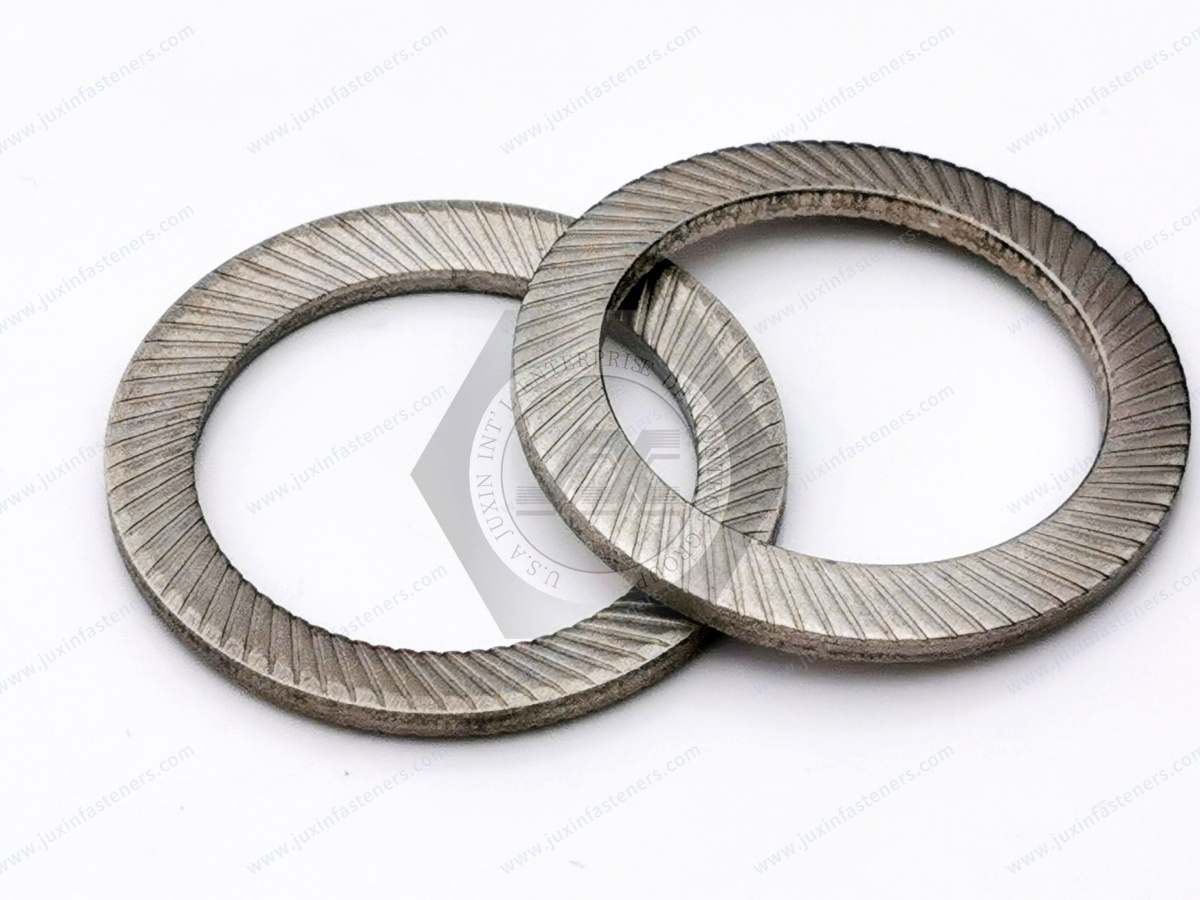
Understanding 200 HV and 300 HV
In simplified terms:
A 200 HV designation indicates a lower nominal hardness category than 300 HV.
A 300 HV designation indicates a higher nominal hardness category and generally greater resistance to localized indentation.
However, the actual permissible hardness range depends on the relevant specification.
The numbers should not be treated as exact single-point hardness values for every washer.
Engineering Information Gain: Hardness Is Not the Same as Tensile Strength
Vickers hardness provides information about indentation resistance.
It is not a direct substitute for measuring every mechanical property of the washer material.
Hardness does not independently establish:
Tensile strength
Yield strength
Fatigue resistance
Fracture toughness
Coating performance
Complete washer load capacity
These characteristics depend on the material, heat treatment, geometry and manufacturing process.
Engineering Recommendation
Use hardness requirements together with the applicable washer specification and joint design requirements.
Why Washer Hardness Matters in Bolted Connections
When a bolt or nut is tightened, the fastener bearing surface applies compressive force to the washer.
The washer transfers that force into the clamped component.
The mechanical response depends on:
Washer hardness
Washer thickness
Outside diameter
Inside diameter
Fastener bearing geometry
Contact surface condition
Clamped material properties
Applied preload
If the washer is unsuitable for the contact loading, it may undergo permanent deformation.
Potential consequences include:
Local indentation
Washer cupping
Reduced effective thickness
Joint settlement
Loss of bolt preload
Changes in load distribution
Engineering Information Gain: Hardness Alone Does Not Determine Washer Performance
A washer with higher hardness may resist indentation better than a lower-hardness washer of similar geometry.
However, a thin washer may still bend or cup under load even if its material hardness is relatively high.
Similarly, a hard washer placed against a soft joint material does not eliminate the risk of deformation in the underlying component.
Engineering Recommendation
Evaluate the complete bearing interface rather than considering washer hardness in isolation.
What Are 200 HV Hardened Flat Washers?
A 200 HV flat washer is associated with a specified hardness category used in certain metric washer systems.
These washers may be appropriate for general industrial fastening applications when permitted by the relevant standard and joint design.
Potential Engineering Characteristics
Depending on the product specification, a 200 HV washer may offer:
A defined bearing surface
Controlled dimensional characteristics
Specified hardness requirements
Compatibility with selected metric fastener assemblies
Typical Application Considerations
Potential applications include:
General machinery
Equipment brackets
Industrial enclosures
Mechanical frames
Selected production equipment
General-purpose bolted assemblies
However, the application itself does not establish whether 200 HV is sufficient.
Can 200 HV Washers Be Used With Property Class 8.8 Bolts?
In some standardized metric fastening arrangements, 200 HV washers may be specified with bolts up to particular property classes, including 8.8.
However, suitability depends on the relevant washer standard, dimensions and assembly requirements.
Engineering Recommendation
Confirm the applicable standard and joint conditions before specifying a 200 HV washer.
Do not use the bolt grade alone as the final selection criterion.
What Are 300 HV Hardened Flat Washers?
A 300 HV flat washer is associated with a higher nominal hardness category.
These washers are commonly considered where higher bearing loads or higher-strength fastener assemblies require increased resistance to indentation.
Potential Engineering Characteristics
Depending on the applicable standard and washer geometry, a 300 HV washer may provide:
Higher indentation resistance
Improved resistance to certain forms of local plastic deformation
A bearing interface suitable for specified higher-strength fastening systems
Potential Applications
Heavy machinery
Industrial equipment frames
Selected high-strength mechanical joints
Automotive manufacturing equipment
Construction machinery
Wind energy equipment
Other engineered bolted assemblies
Actual suitability must be confirmed for the specific application.
Can 300 HV Washers Be Used With Property Class 10.9 or 12.9 Bolts?
Higher-strength bolts can generate substantial preload.
A 300 HV washer may be required or specified in certain high-strength metric fastening arrangements.
However, the correct washer specification depends on the applicable standard and the complete joint design.
Engineering Recommendation
For property class 10.9 or 12.9 bolts, verify the washer requirements stated by the governing standard, OEM drawing or engineering specification.
Do not assume that every commercially described 300 HV washer is automatically suitable.
200 HV vs. 300 HV Washers: Engineering Comparison
| Selection factor | 200 HV washer | 300 HV washer |
|---|---|---|
| Nominal hardness category | Lower | Higher |
| Indentation resistance | Lower than 300 HV, all else equal | Higher than 200 HV, all else equal |
| Typical engineering consideration | General specified washer applications | Applications requiring higher specified hardness |
| Washer deformation risk | Depends on load and geometry | Also depends on load and geometry |
| Bolt property class compatibility | Must follow the applicable standard | Must follow the applicable standard |
| Thickness and stiffness | Must be verified | Must be verified |
| Surface treatment | According to specification | According to specification |
| Preload retention | Depends on the complete joint | Depends on the complete joint |
| Vibration resistance | No inherent locking function | No inherent locking function |
Engineering Information Gain: 300 HV Is Not Automatically the Better Choice
Higher hardness may improve indentation resistance, but it can also introduce other design considerations.
For example:
Material and heat treatment requirements may differ.
Manufacturing cost may change.
The mating surface may be softer than the washer.
Excessive hardness may be inappropriate for certain applications.
Washer geometry may be more important than hardness alone.
Engineering Recommendation
Specify the washer hardness required by the design rather than selecting the highest available value without justification.
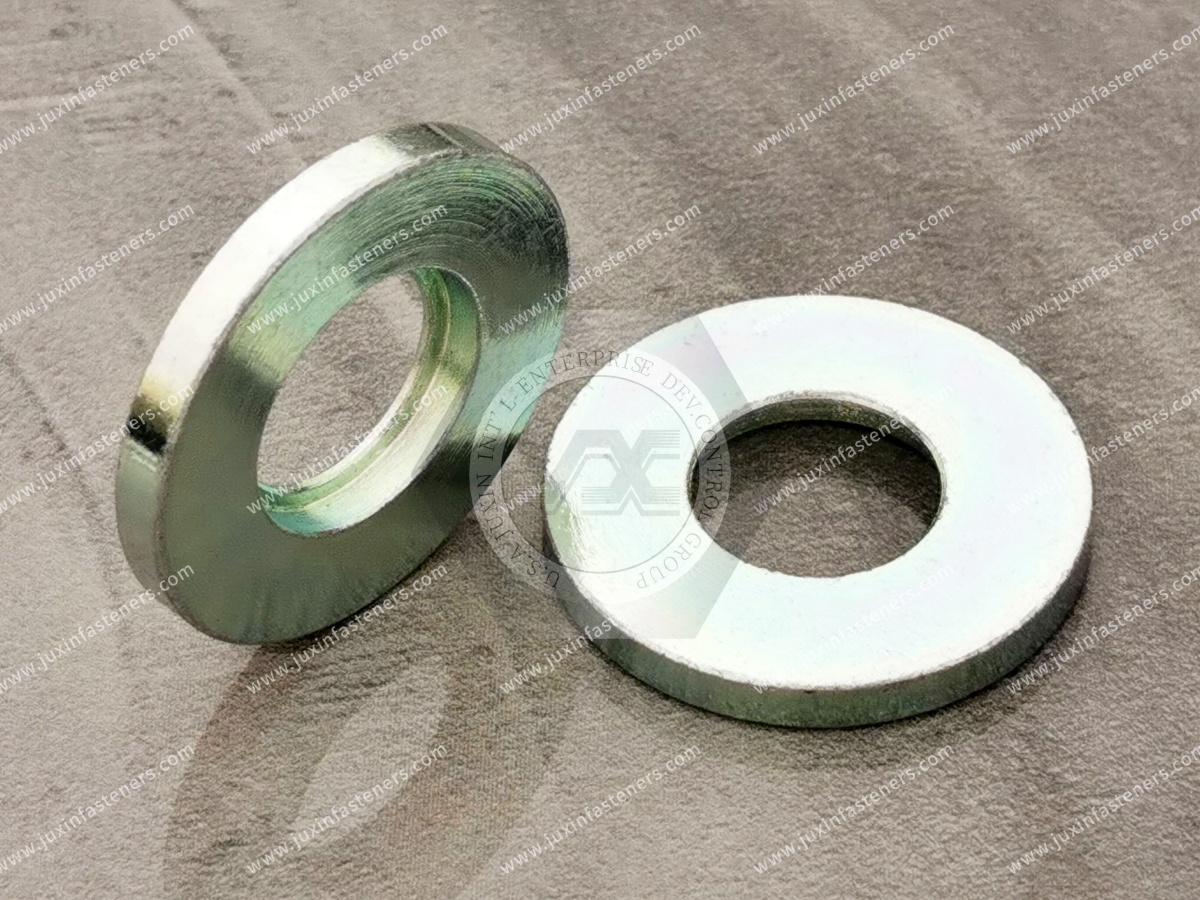
How Washer Hardness Affects Bolt Preload
Bolt preload is the tensile force developed in a bolt during tightening.
The corresponding clamping force holds the connected components together.
Preload is important for:
Joint separation resistance
Frictional load transfer
Fatigue performance
Resistance to relative movement
Joint reliability
A washer can influence the bearing interface and the amount of permanent deformation that occurs during and after tightening.
What Happens When a Washer Deforms?
If the washer plastically deforms under load, the effective thickness of the compressed joint stack may decrease.
This can contribute to preload loss.
However, the amount of preload loss depends on the stiffness of the bolt and the joint, not only on the washer deformation.
Engineering Recommendation
When preload is critical, validate the complete assembly under representative tightening and service conditions.
Washer Bearing Stress and Contact Pressure
A simplified nominal bearing stress can be expressed as:
Nominal Bearing Stress = Compressive Force / Effective Bearing Area
This relationship is useful for initial engineering reasoning.
However, real contact pressure is not necessarily uniform across the washer surface.
Actual stress distribution depends on:
Bolt head or nut geometry
Washer dimensions
Washer stiffness
Joint material
Surface flatness
Local contact conditions
Engineering Information Gain: Nominal Area Can Be Misleading
The full annular area of a washer may not carry uniform contact pressure.
Local stresses can be concentrated near the fastener bearing surface or the edge of a clearance hole.
Engineering Recommendation
For highly loaded or critical joints, use appropriate engineering analysis and validation rather than relying only on nominal washer area.
Washer Thickness, Outside Diameter and Cupping
Washer thickness influences bending stiffness.
A washer that is too thin relative to its loading and unsupported span may deform into a cupped shape.
Potential causes include:
High bolt preload
Large clearance holes
Thin washer geometry
Insufficient material stiffness
Uneven bearing support
Engineering Information Gain: A Hard Washer Can Still Cup
Hardness and bending stiffness are different properties.
A washer may resist indentation yet still bend under unfavorable loading conditions.
Engineering Recommendation
Evaluate thickness, diameter and support geometry together with hardness.
Washer Hardness vs. Joint Material Hardness
The washer is only one component of the bearing system.
The clamped material may be:
Carbon steel
Stainless steel
Aluminum alloy
Cast iron
Engineering plastic
Composite material
A hard washer does not automatically prevent deformation of a softer joint material.
For example, an aluminum component may experience local indentation even when a hardened steel washer remains dimensionally stable.
Engineering Recommendation
Assess the bearing strength of the clamped material and consider whether a larger bearing surface or alternative joint design is required.
Joint Settlement and Preload Loss
Joint settlement occurs when contact surfaces experience small permanent changes after tightening.
Potential sources include:
Washer deformation
Surface roughness
Coating compression
Joint material indentation
Gasket relaxation
Interface embedment
These effects can reduce the effective joint stack thickness and contribute to preload loss.
Engineering Information Gain: A Harder Washer Cannot Eliminate All Settlement
Even if the washer remains stable, settlement may occur at other interfaces.
Therefore, changing from a 200 HV washer to a 300 HV washer does not guarantee that preload loss will be eliminated.
Engineering Recommendation
Identify the source of settlement before changing washer specifications.
Torque, Friction and Washer Surface Finish
Tightening torque is influenced by friction in the threads and at the fastener bearing surface.
Washer material, coating and surface finish can influence that friction.
As a result, two otherwise similar assemblies may develop different preload under the same tightening torque.
Engineering Considerations
Thread friction
Bearing surface friction
Coating
Lubrication
Washer surface condition
Fastener geometry
Engineering Recommendation
When tightening accuracy matters, validate the torque-preload relationship using the actual production components.
Do 300 HV Washers Prevent Bolt Loosening?
No washer hardness category should be treated as an inherent anti-loosening mechanism.
A hardened flat washer primarily provides a specified bearing interface.
It does not independently prevent fastener rotation under severe vibration.
Vibration-induced loosening depends on:
Preload
Joint slip
Transverse movement
Friction
Joint stiffness
Fastener engagement
Engineering Recommendation
If vibration loosening is a concern, evaluate a validated locking method separately from the flat washer hardness requirement.
Potential options may include:
Nylon-insert lock nuts
All-metal prevailing-torque lock nuts
Wedge-locking washer systems
Suitable thread-locking adhesives
Other application-specific locking arrangements
The correct method depends on temperature, service conditions, maintenance requirements and joint validation.
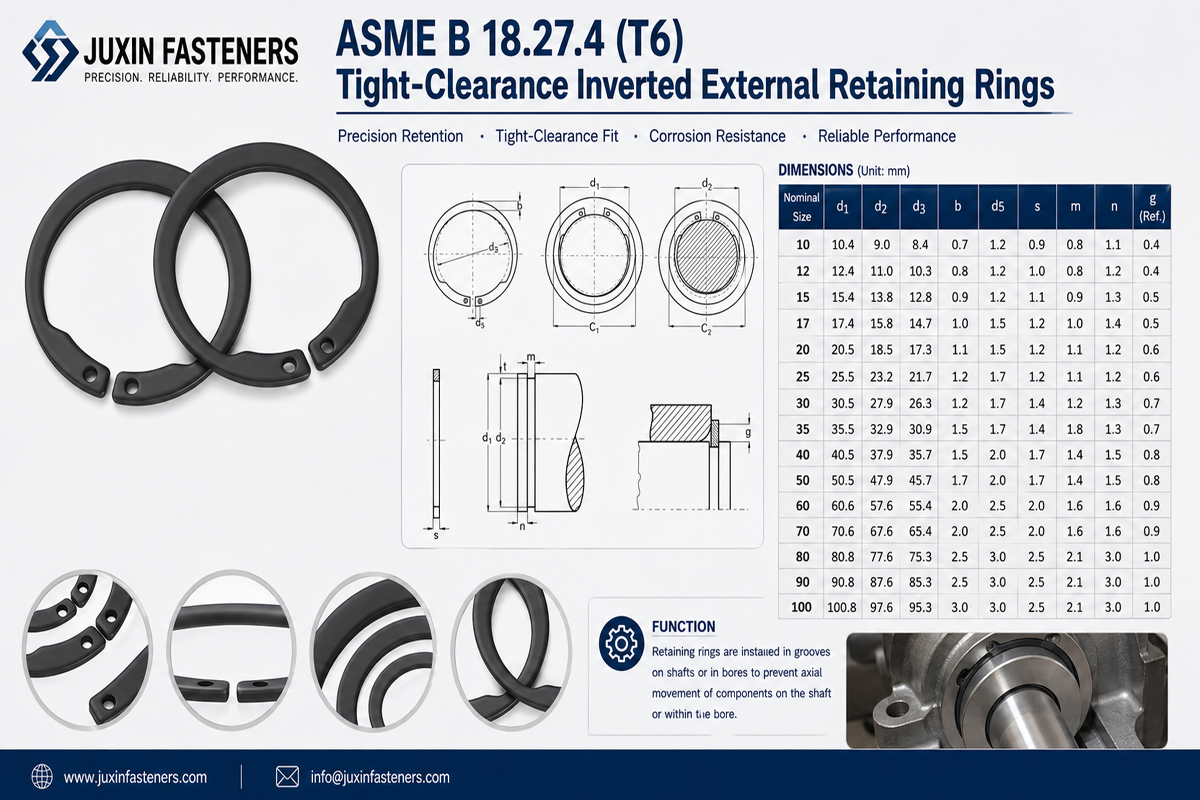
Relevant International Standards for Hardened Washers
Washer standards may specify dimensions, material properties, hardness and other requirements.
The correct standard depends on the product type.
ISO 898-3
ISO 898-3 addresses mechanical properties of flat washers made of carbon steel and alloy steel for specified bolt, screw and stud assemblies.
It provides an important reference for understanding washer property requirements in metric fastening systems.
However, the standard should be consulted directly for the applicable scope, hardness requirements and compatibility conditions.
ISO 7089
ISO 7089 specifies plain washers of the normal series, product grade A.
It is commonly referenced for metric flat washer dimensions.
ISO 7090
ISO 7090 specifies chamfered plain washers of the normal series, product grade A.
The chamfered configuration may be relevant where the fastener bearing geometry requires appropriate clearance.
Other Washer Standards
Additional standards may apply depending on washer diameter series, product grade or joint requirements.
The applicable standard must be identified from the engineering drawing or purchasing specification.
DIN 125
DIN 125 is a familiar legacy designation for certain plain washer configurations.
When sourcing washers for modern OEM projects, confirm whether the drawing specifies the legacy designation or an applicable ISO specification.
American Hardened Washer Specifications
For U.S. projects, hardened washers may be specified using applicable ASTM or ASME requirements.
For example, ASTM F436/F436M is associated with hardened steel washers for specified structural bolting applications.
However, ASTM F436/F436M washers should not be described as direct equivalents of generic 200 HV or 300 HV metric washers.
Their requirements and intended applications differ.
Engineering Recommendation
Do not substitute between ISO, DIN, ASTM or ASME washer specifications without checking dimensions, mechanical requirements and joint suitability.
Metric vs. Inch Washer Selection
Metric and inch-series washers may differ in:
Inside diameter
Outside diameter
Thickness
Tolerances
Material requirements
Hardness requirements
Similarly, metric threads and UNC/UNF threads are distinct systems.
A washer that physically fits over a bolt is not automatically a compliant substitute.
Engineering Recommendation
Specify the exact washer standard and dimensions for each project.
Industrial Applications of 200 HV and 300 HV Washers
Automotive Manufacturing
Hardened flat washers may be used in selected automotive manufacturing equipment and engineered vehicle assemblies.
Potential considerations include:
High-strength bolts
Controlled preload
Bearing surface requirements
Corrosion exposure
Vibration
Production consistency
Safety-critical vehicle joints require approved specifications and validation.
Heavy Machinery
Industrial machinery may use hardened washers in:
Equipment frames
Gearbox mounting
Hydraulic equipment brackets
Industrial structures
Maintenance assemblies
The correct washer hardness depends on the fastening design and service loads.
Construction Equipment
Construction machinery may require robust fastening systems for:
Structural brackets
Equipment housings
Mechanical supports
Heavy-duty mounting assemblies
Washer selection should account for dynamic loading, corrosion and maintenance conditions.
Structural Steel Connections
Structural bolting systems may require specific hardened washers as part of an approved fastener assembly.
Important Engineering Limitation
A generic 300 HV washer should not be substituted for a specified structural washer without verifying the governing structural bolting requirements.
Wind Energy Equipment
Wind energy equipment may contain highly loaded bolted connections.
Washer selection can influence the bearing interface and assembly consistency.
However, critical wind turbine joints require application-specific engineering validation.
Electrical and Industrial Power Equipment
Hardened washers may be considered for selected mechanical mounting applications in:
Power distribution equipment
Industrial enclosures
Equipment frames
Machinery support structures
Electrical current-carrying connections may impose additional requirements that cannot be determined by washer hardness alone.
Manufacturing and Production-Line Considerations
Production managers and manufacturing engineers must evaluate more than nominal washer hardness.
A washer may meet a hardness requirement but still create assembly problems if its dimensions or surface condition are inconsistent.
Dimensional Consistency
Important characteristics may include:
Inside diameter
Outside diameter
Thickness
Flatness
Chamfer
Burr condition
Automated Feeding
Washers used in automated assembly may require consistent geometry for reliable feeding and positioning.
Potential problems include:
Washer stacking
Incorrect orientation
Feeding jams
Dimensional mismatch
Surface damage
Torque Control
Changes in washer coating or bearing surface condition may affect tightening behavior.
Engineering Recommendation
Include washer geometry, finish and assembly process requirements in the production specification.
Quality Inspection for 200 HV and 300 HV Washers
Inspection should be based on the applicable product standard and customer drawing.
Hardness Testing
Vickers hardness testing may be used to verify specified hardness requirements.
The test method, location, preparation and acceptance criteria must follow the applicable specification.
Dimensional Inspection
Potential inspection characteristics include:
Inside diameter
Outside diameter
Thickness
Flatness
Chamfer geometry
Material Verification
Depending on the project, requirements may include:
Material grade
Heat treatment requirements
Material documentation
Surface treatment
Visual Inspection
Potential defects include:
Cracks
Burrs
Deformation
Corrosion
Coating defects
Functional Evaluation
For critical joints, washer inspection alone may be insufficient.
Joint-level validation may be needed to assess:
Preload
Settlement
Tightening behavior
Vibration
Fatigue
Environmental exposure
Engineering Recommendation
Define acceptance criteria before production approval.
Common Washer Hardness Selection Mistakes
| Mistake | Potential consequence | Better engineering approach |
|---|---|---|
| Selecting hardness by bolt grade alone | Incorrect washer specification | Follow the applicable standard and joint design |
| Using an insufficiently hard washer | Indentation or plastic deformation | Verify hardness and bearing requirements |
| Ignoring washer thickness | Cupping or bending | Review geometry and stiffness |
| Assuming 300 HV always performs better | Unnecessary cost or unsuitable selection | Match hardness to actual requirements |
| Ignoring joint material hardness | Deformation of the clamped component | Evaluate the full bearing interface |
| Treating hardness as an anti-loosening feature | Inadequate vibration protection | Validate the locking method separately |
| Substituting ASTM and ISO washers by appearance | Specification mismatch | Verify all dimensional and mechanical requirements |
| Ignoring coating effects | Torque-preload variation | Validate the production tightening process |
OEM Hardened Washer Supplier Qualification
For procurement development and supplier qualification, washer selection should include both engineering and commercial requirements.
Technical Review
Applicable standard
Washer dimensions
Hardness requirement
Material
Surface finish
Inspection criteria
Approved drawing
Manufacturing Review
Production feasibility
Material control
Heat treatment requirements
Dimensional consistency
Surface treatment
Inspection documentation
Commercial Review
Prototype requirements
MOQ
Annual demand
Unit price
Lead time
Packaging
Delivery schedule
Supply continuity
Engineering Recommendation
Request quotations using a complete specification rather than only the description 200 HV washer or 300 HV washer.
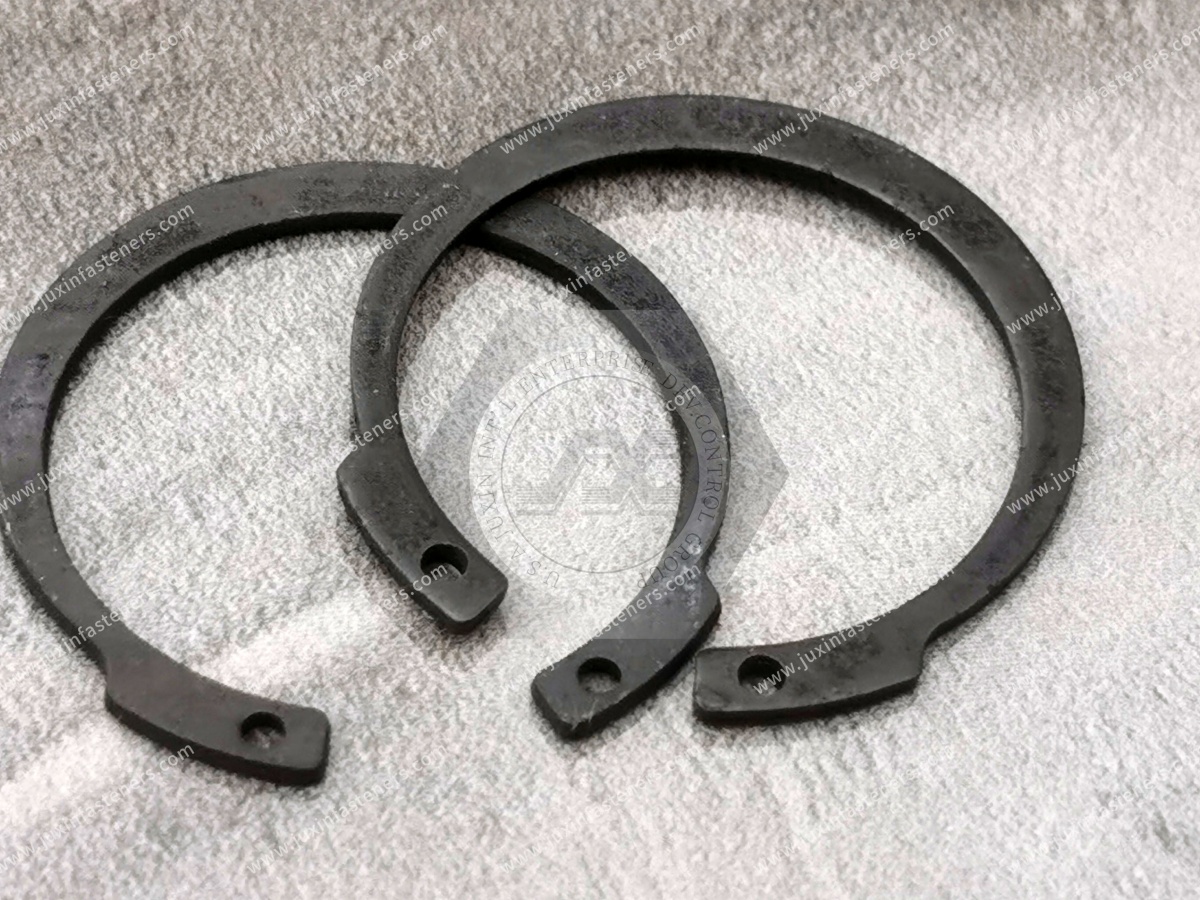
OEM RFQ Checklist for Hardened Flat Washers
| RFQ requirement | Information to provide |
|---|---|
| Washer type | Plain flat washer, chamfered washer or custom design |
| Standard | ISO, DIN, ASTM, ASME or customer drawing |
| Hardness | Required HV category or hardness range |
| Dimensions | Inside diameter, outside diameter and thickness |
| Material | Required carbon steel or alloy steel grade |
| Heat treatment | Applicable requirements |
| Surface finish | Coating or treatment |
| Bolt specification | Diameter, thread and property class |
| Joint material | Steel, aluminum, cast iron or other |
| Application | Mechanical, structural or equipment assembly |
| Loading | Required preload and service conditions |
| Environment | Temperature, moisture, corrosion or chemicals |
| Inspection | Hardness, dimensions and other requirements |
| Documentation | Required material and inspection records |
| Samples | Prototype quantity |
| Annual demand | Estimated purchasing volume |
| Packaging | OEM labeling and packing requirements |
| Delivery | Required schedule |
Frequently Asked Questions
What is the difference between 200 HV and 300 HV washers?
They represent different nominal hardness categories. A 300 HV washer generally has higher indentation resistance than a comparable 200 HV washer,
but actual performance depends on the complete washer specification.
Can 200 HV washers be used with property class 8.8 bolts?
They may be suitable in certain standardized metric assemblies, but the applicable standard and joint design must be checked.
Are 300 HV washers required for property class 10.9 bolts?
Some high-strength metric fastening systems specify higher-hardness washers.
The exact requirement depends on the applicable standard and assembly design.
Can 300 HV washers be used with property class 12.9 bolts?
Suitability must be verified against the relevant standard and joint requirements.
A generic 300 HV description alone is not sufficient.
Does a harder washer prevent bolt loosening?
No. Hardness primarily affects indentation and deformation resistance.
Vibration loosening requires separate engineering consideration.
Can a 300 HV washer deform under load?
Yes. Washer geometry, thickness, loading and support conditions can still cause deformation.
Is washer hardness more important than thickness?
Both matter. Hardness influences indentation resistance, while thickness and geometry influence bending stiffness.
Are ASTM F436 washers equivalent to ISO 300 HV washers?
Not automatically. They are governed by different specifications and must be compared before substitution.
What causes washer-related preload loss?
Potential causes include plastic deformation, cupping, embedment, coating compression and settlement at joint interfaces.
Can Juxin Fasteners review custom hardened washer requirements?
Juxin Fasteners welcomes drawing-based industrial fastening inquiries for technical and commercial feasibility review.
Why Work With Juxin Fasteners?
Juxin Fasteners has more than 20 years of experience serving international industrial fastener customers.
Our broader industrial fastening portfolio includes:
Nylon-insert lock nuts
All-metal prevailing-torque lock nuts
Industrial bolts and nuts
Threaded fastening components
Custom OEM fasteners
Drawing-based fastening solutions
For 200 HV washers, 300 HV washers and other hardened washer requirements, specific product availability, material options, hardness capability,
MOQ, lead times and quality documentation must be confirmed during inquiry review.
Request a Quotation for Hardened Flat Washers
Are you sourcing 200 HV washers, 300 HV washers or custom hardened flat washers for high-strength bolted assemblies?
Juxin Fasteners welcomes inquiries from mechanical engineers, structural engineers, design engineers, manufacturing engineers,
production managers, purchasing specialists, procurement managers, supplier development teams and supply chain professionals.
For efficient technical review and quotation, please provide:
2D/3D drawings, applicable standard, washer dimensions, material, hardness requirement, heat treatment, surface finish,
mating bolt specification, joint material, preload or loading requirements, operating environment, inspection criteria, prototype quantity, annual demand, packaging and delivery schedule.
Our team can review your requirements and confirm relevant product options, technical feasibility and commercial quotation conditions.
Company: Juxin Fasteners
Website: https://www.juxinfasteners.com/
Email: info@juxinfasteners.com
Send your hardened washer drawings, material requirements and OEM RFQ to Juxin Fasteners for technical review and quotation.
Contact Us
Tel.:
+86 020 8621 0320
+86 020 3121 6067
E-mail:
Technical Support:
Navigation
SEND INQUIREY



