
Call Us
+86 136 6007 9809
Call Us
+86 136 6007 9809

Apr. 12, 2026
Flat Washer vs Spring Washer: Understanding the Difference
In industrial fastening systems, washers play a critical role in improving the reliability and performance of bolted connections. Among the most commonly used types are flat washers and spring washers.
Although both are used with bolts and nuts, their functions, structural designs, and applications differ significantly. Selecting the correct washer type is essential for achieving optimal load distribution, surface protection, and anti-loosening performance.
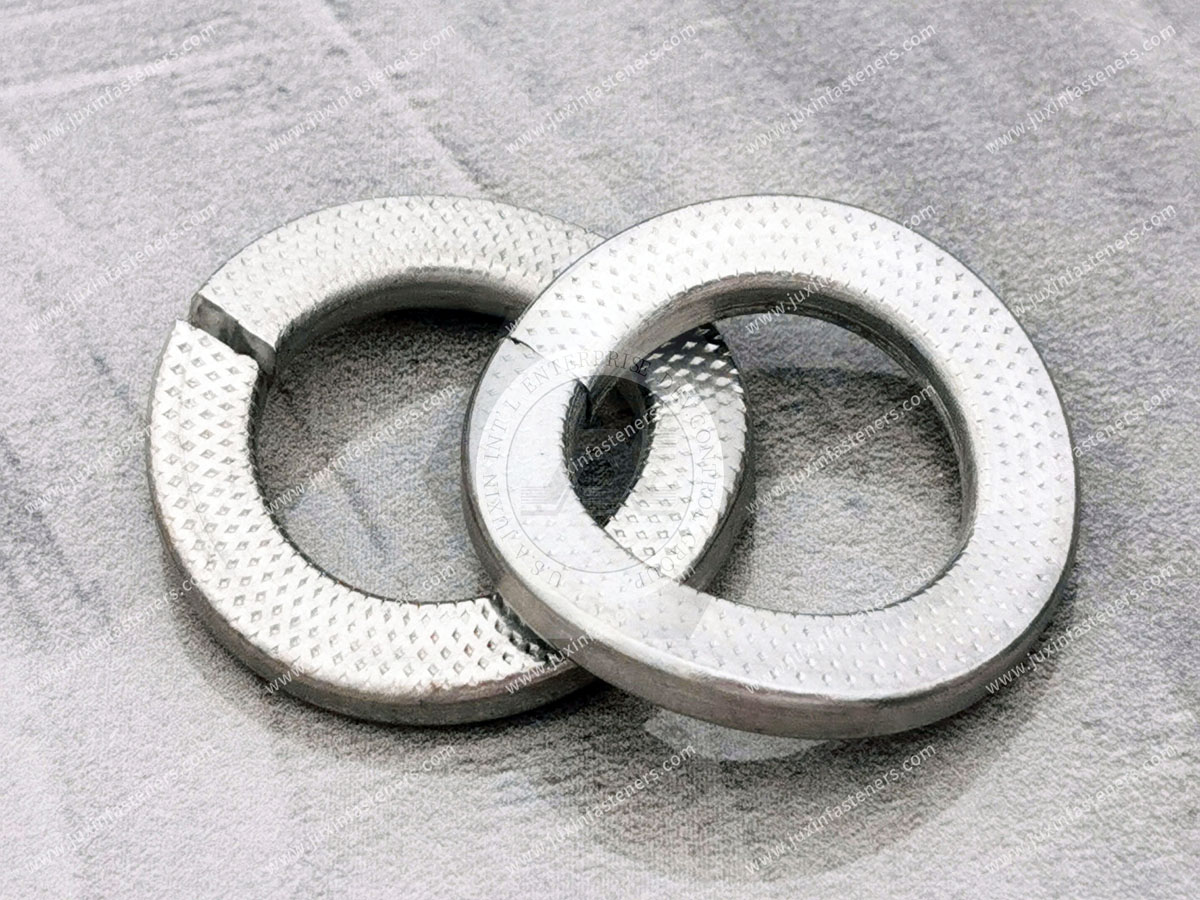
What Is a Flat Washer?
A flat washer is a thin, flat ring placed between the bolt head or nut and the surface of the material being connected.
Key Functions
Distribute the load from the bolt or nut over a larger surface area
Reduce friction during tightening
Protect surfaces from damage or scratching
Prevent crushing of softer materials
Flat washers are widely used in structural connections and general mechanical assemblies, where even pressure distribution is required.
Installation Method
Insert the bolt through the washer.
Place the washer between the bolt head or nut and the surface of the component.
Tighten the bolt according to the specified torque.
What Is a Spring Washer?
A spring washer (also known as a lock washer) is designed with a split ring and a slightly twisted shape that provides elastic tension.
Key Functions
Prevent bolt loosening caused by vibration
Maintain constant tension in threaded connections
Increase friction between mating surfaces
When the bolt is tightened, the spring washer is compressed, generating a continuous elastic force that helps maintain clamping pressure in dynamic environments.
Installation Method
Place the spring washer between the bolt head or nut and the flat washer or surface.
Tighten the bolt until the washer is compressed.
The washer’s sharp edges slightly embed into the surface to resist rotation.
Main Differences Between Flat Washers and Spring Washers
Feature | Flat Washer | Spring Washer |
Structure | Smooth flat ring | Split ring with elastic deformation |
Main Function | Load distribution and surface protection | Anti-loosening under vibration |
Installation | Directly under bolt head or nut | Under bolt head or nut for locking |
Typical Use | Structural and load-bearing connections | Dynamic or vibration environments |
In many applications, flat washers and spring washers are used together to combine load distribution and anti-loosening performance.
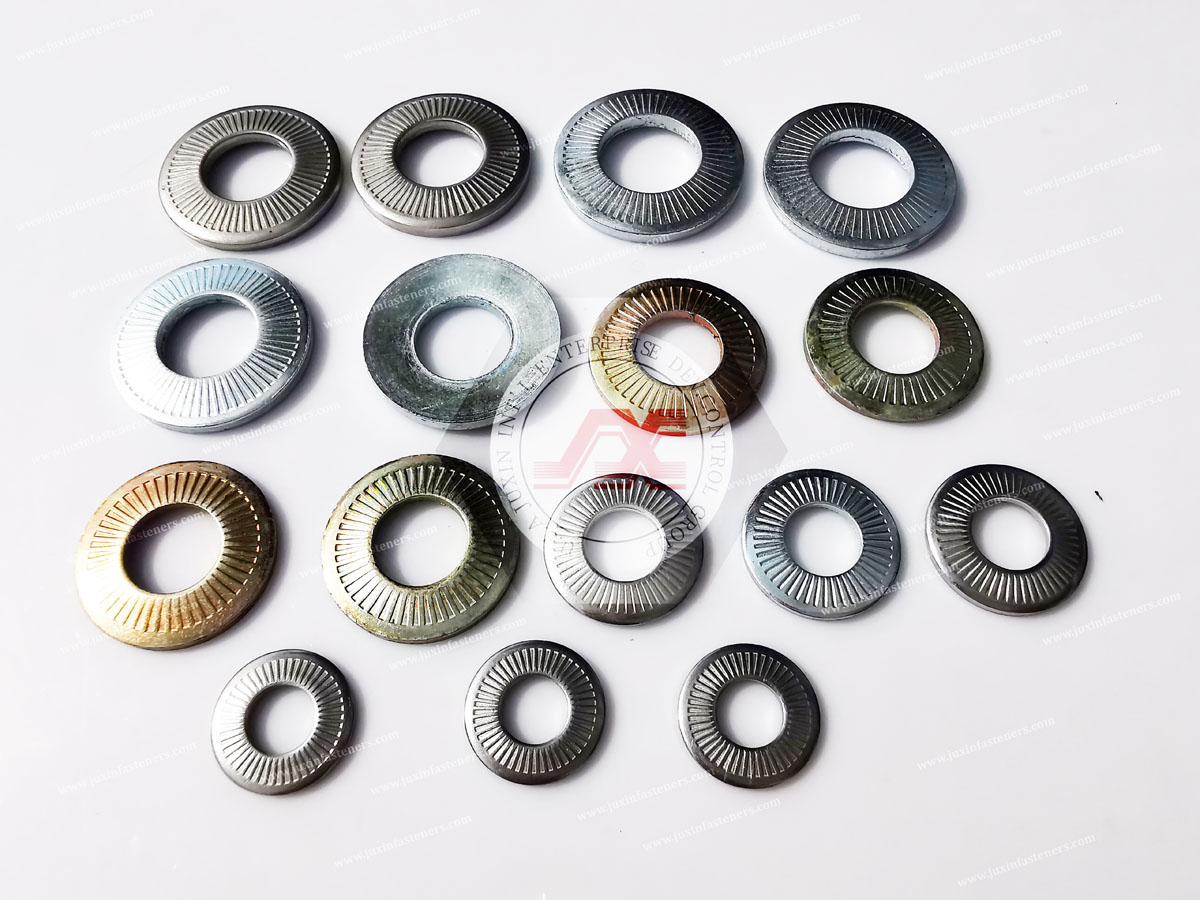
Industrial Applications
Automotive Industry
Flat and spring washers are widely used in:
engine assemblies
suspension systems
chassis components
structural body connections
These applications require high preload stability and vibration resistance.
Machinery Manufacturing
In industrial equipment such as:
gearboxes
heavy machinery
production equipment
conveyor systems
Washers help ensure secure fastening and long-term operational reliability.
Electrical and Electronics Equipment
Washers are also used for mounting:
electrical panels
equipment enclosures
control systems
They help protect surfaces and maintain stable connections in sensitive equipment.
Construction and Structural Engineering
In steel structures and mechanical installations, washers:
distribute bolt load
protect structural surfaces
improve connection durability
Choosing the Right Washer for Your Application
When selecting washers for fastening systems, engineers should consider:
bolt strength grade
material hardness of washers
operating load conditions
vibration or dynamic stress
surface material of connected parts
Choosing the correct washer ensures long-term safety, stability, and fastening efficiency.

For high-quality washers, bolts, nuts, and industrial fastening solutions, please contact us:
Email: sales@jxfastener.cn
Website: https://www.juxinfasteners.com
 MORE NEWS
Sep. 27, 2026
Sep. 27, 2026
Sep. 27, 2026
Contact Us
Tel.:
+86 020 8621 0320
+86 020 3121 6067
E-mail:
Technical Support:
Navigation
SEND INQUIREY