
Call Us
+86 136 6007 9809
Call Us
+86 136 6007 9809

Jul. 29, 2022
When a threaded connection is required in thin sheet metal, aluminum panels, closed profiles, or assemblies accessible from only one side,
aluminum blind rivet nuts provide a practical alternative to welding, tapping, and conventional nuts.
Juxin Fasteners manufactures aluminum blind rivet nuts and OEM rivet nut solutions for industrial applications where lightweight construction,
reliable threads, corrosion resistance, and efficient installation are important.
Also known as blind rivet nuts, rivet nuts, threaded inserts, or Rivnuts, these fasteners create a permanent internal thread in sheet metal without requiring access to the rear side of the panel.
This makes them particularly suitable for modern manufacturing where assemblies must be lightweight, serviceable, and designed for efficient production.
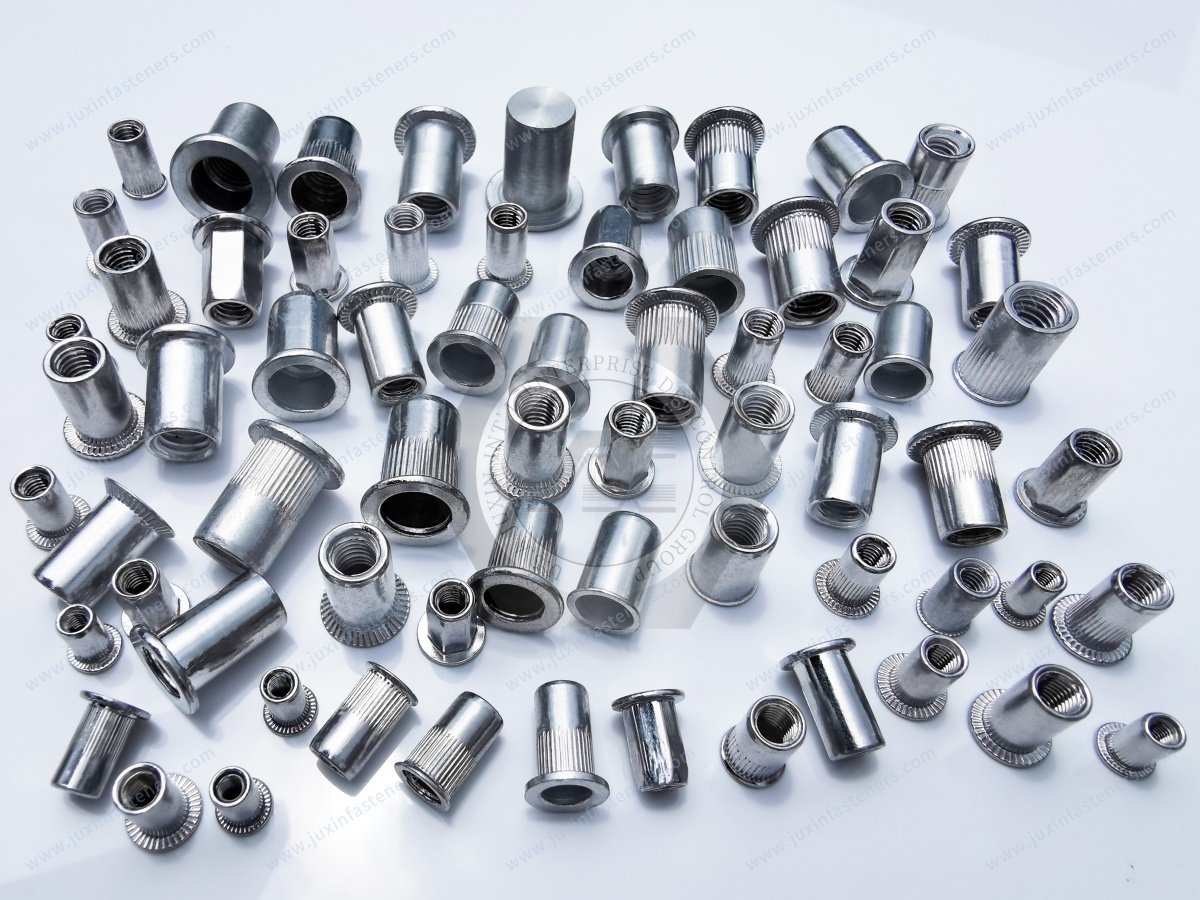
What Are Aluminum Blind Rivet Nuts?
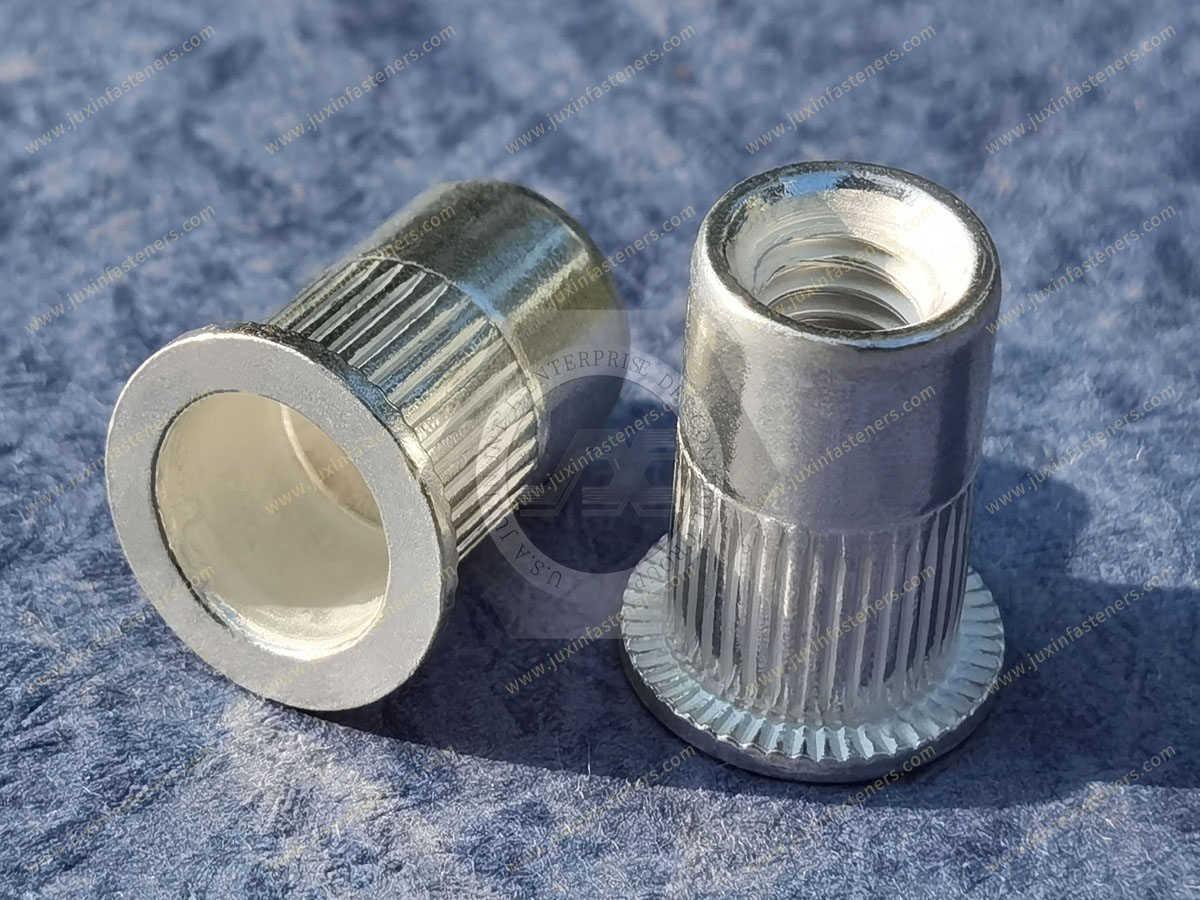
An aluminum blind rivet nut is a tubular threaded insert that is installed into a pre-drilled hole using a dedicated rivet nut installation tool.
During installation, the unthreaded portion of the rivet nut collapses behind the sheet and forms a mechanical bulge.
This locks the insert into the panel and provides a reusable threaded connection for a screw or bolt.
Unlike welding or conventional nut-and-bolt assembly, the installation can be completed from one accessible side of the workpiece.
This makes aluminum rivet nuts especially useful for:
Thin sheet metal panels
Aluminum alloy components
Enclosed profiles
Tubular structures
Sheet metal cabinets
Equipment housings
Automotive interior components
Electrical enclosures
HVAC equipment
Industrial machinery
For engineering teams, the main benefit is not simply the weight of the fastener.
The larger advantage is the ability to create a reliable threaded fastening point where conventional nut installation is difficult or impossible.
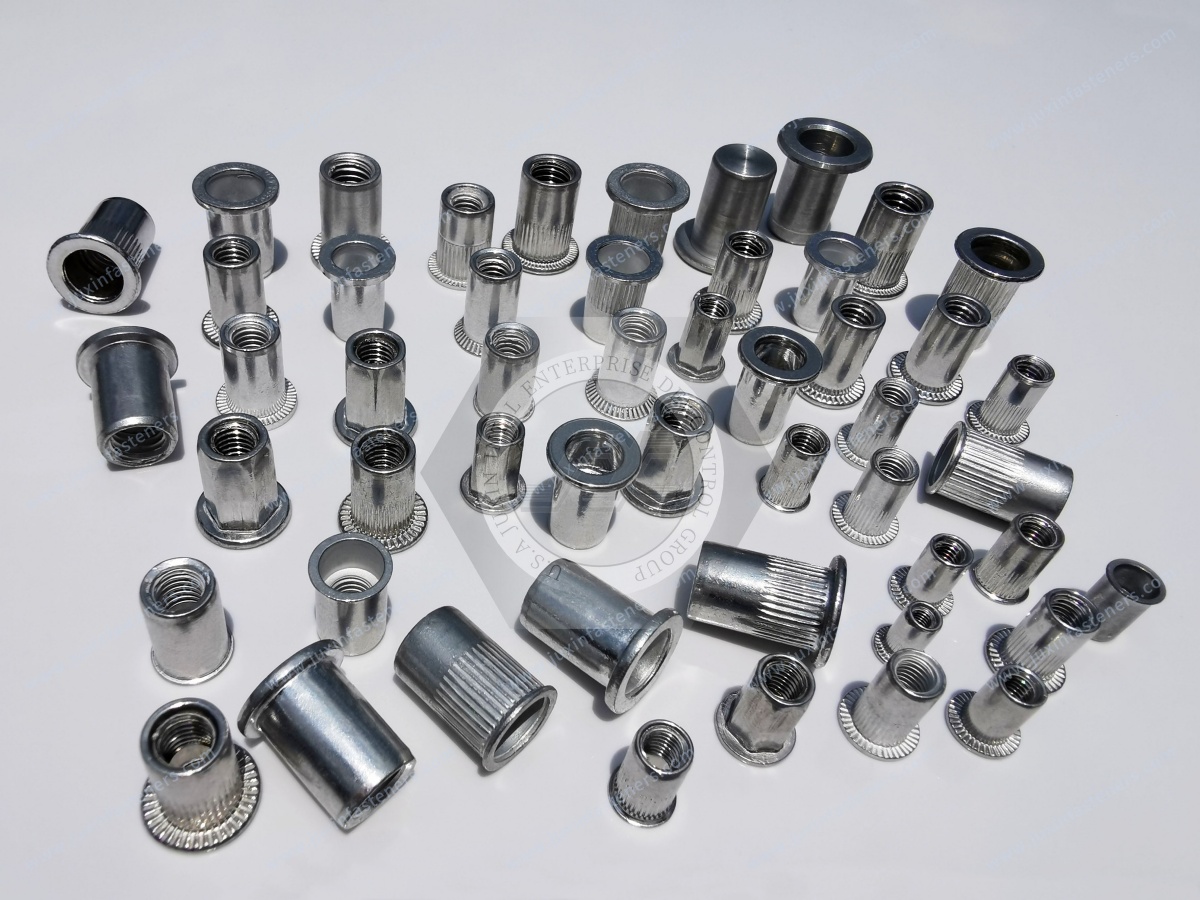
The fastening method should be selected according to the material, sheet thickness, assembly access, required strength, production process, and service environment.
A blind rivet nut can be installed from one side of the panel. This is particularly valuable for closed sections, assembled housings, and components where the rear side cannot be reached.
Aluminum rivet nuts can eliminate the need for welding a nut onto the sheet.
This helps avoid:
Heat distortion
Weld discoloration
Local thermal damage
Additional welding operations
Post-weld finishing
For painted, coated, anodized, or precision sheet metal components, this can simplify the manufacturing process.
Tapping threads directly into thin sheet metal can provide insufficient thread engagement. An aluminum blind rivet nut creates a dedicated threaded insert without requiring a thick parent material.
This makes rivet nuts particularly useful for thin-wall sheet metal assemblies.
Aluminum is significantly lighter than many steel fastening materials, making aluminum rivet nuts attractive for applications where weight reduction is part of the product design strategy.
This is particularly relevant to:
Electric vehicles
Automotive components
Rail vehicles
Aerospace-related assemblies
Lightweight equipment
Portable industrial systems
Unlike some permanent joining methods, a rivet nut provides a conventional internal thread for installing and removing screws during assembly, maintenance, or service.
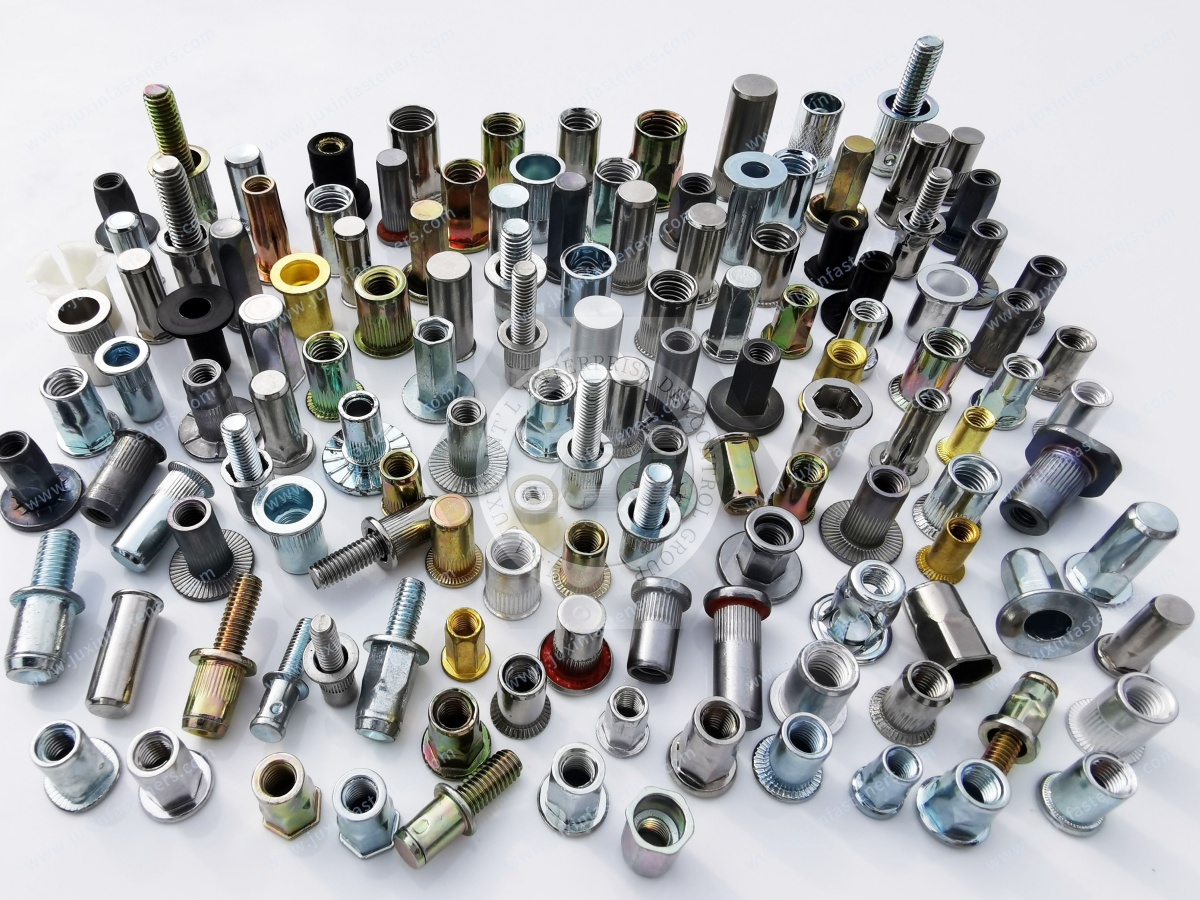
Different applications require different rivet nut geometries and installation characteristics.
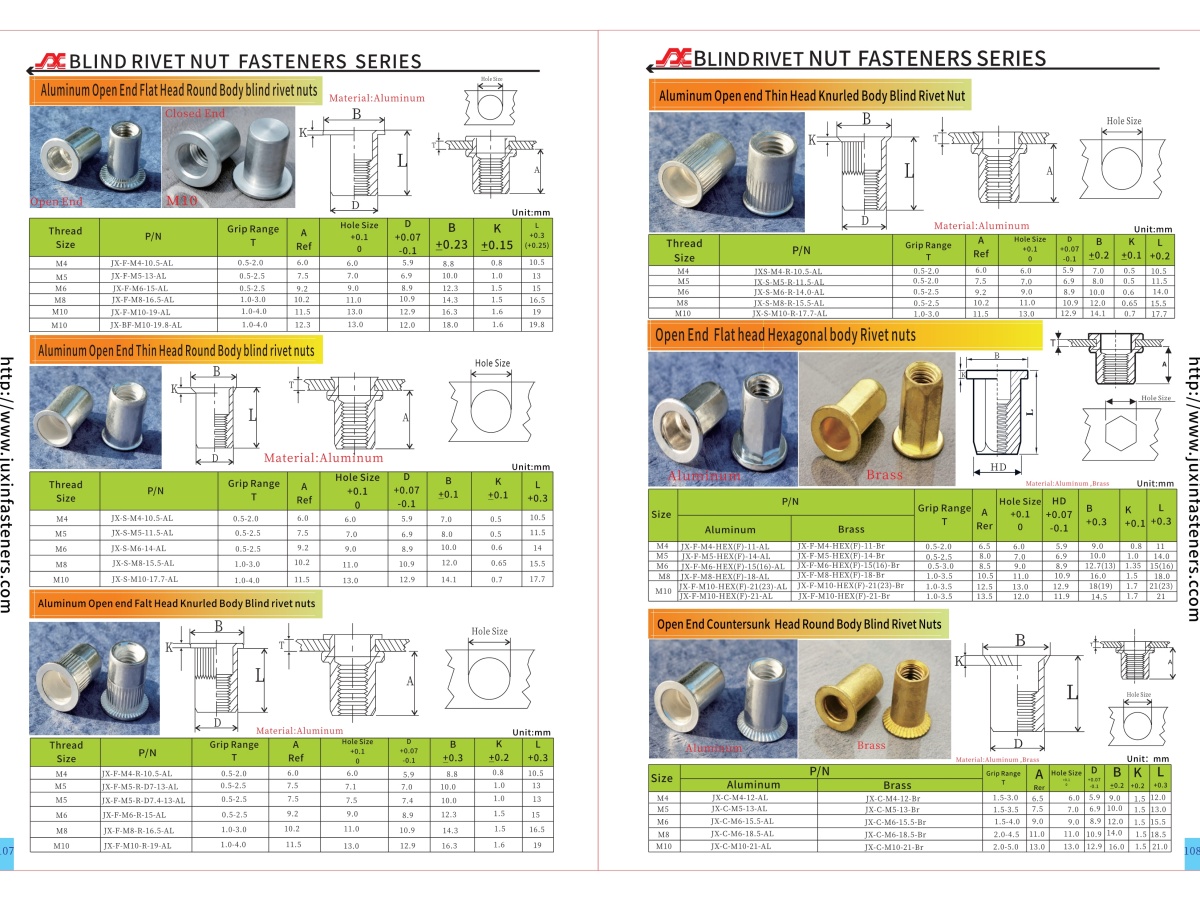
Juxin Fasteners can provide OEM rivet nut solutions according to application requirements, including different body configurations, head styles, thread specifications, lengths, and materials.
Round-body designs are widely used for general sheet metal fastening applications where standard installation and reliable thread formation are required.
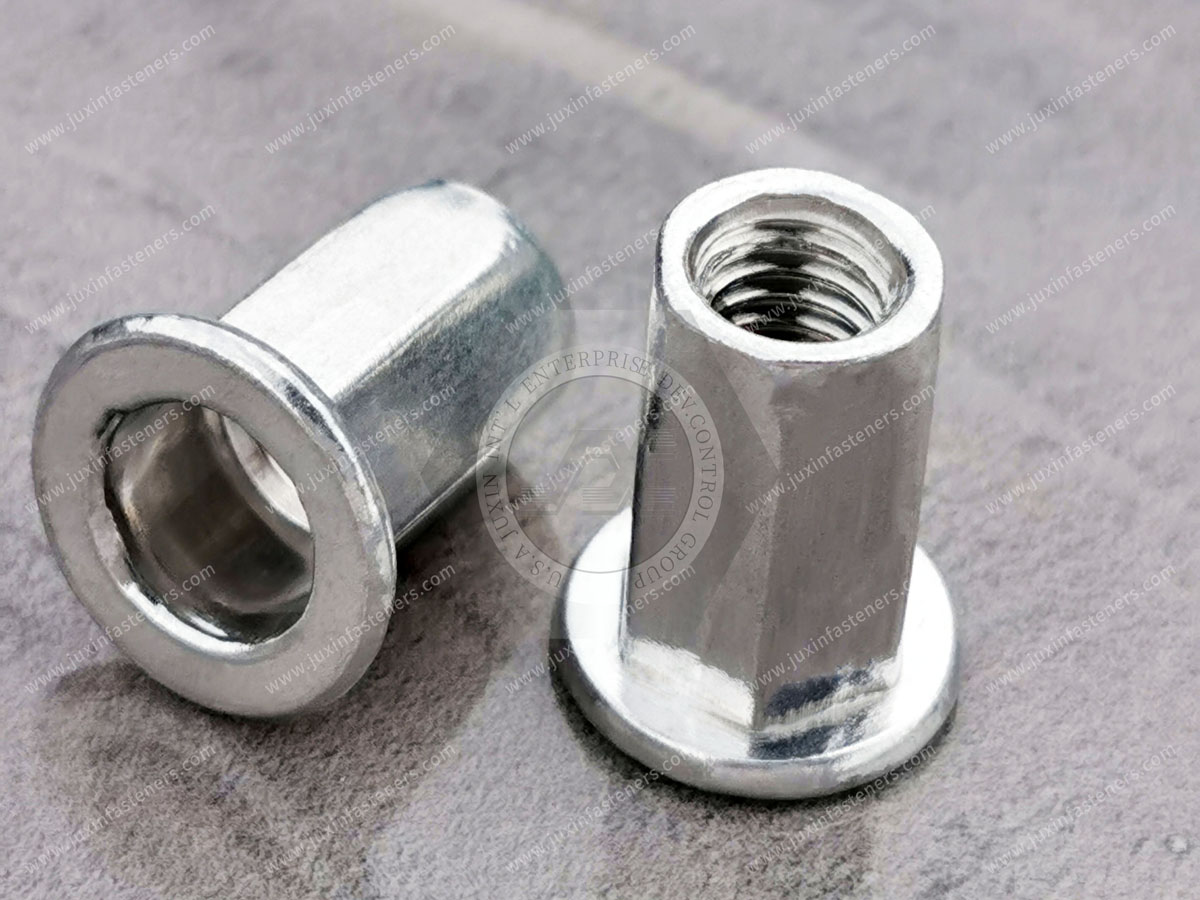
Hexagonal aluminum rivet nuts provide increased resistance to rotation after installation and can be considered where higher resistance to rotational forces is required.
They are commonly evaluated for equipment housings, brackets, automotive components, and sheet metal assemblies.
Knurled or serrated body designs can provide additional mechanical engagement with the parent material.
The appropriate design depends on the material, hole condition, sheet thickness, installation method, and required resistance to rotation and pull-out.
Open-end rivet nuts provide access through the threaded insert, while closed-end designs can be considered where the application requires a closed rear end.
For applications involving moisture, dust, fluids, or environmental exposure,
the complete assembly design should be evaluated rather than assuming that a closed-end rivet nut alone provides a waterproof connection.
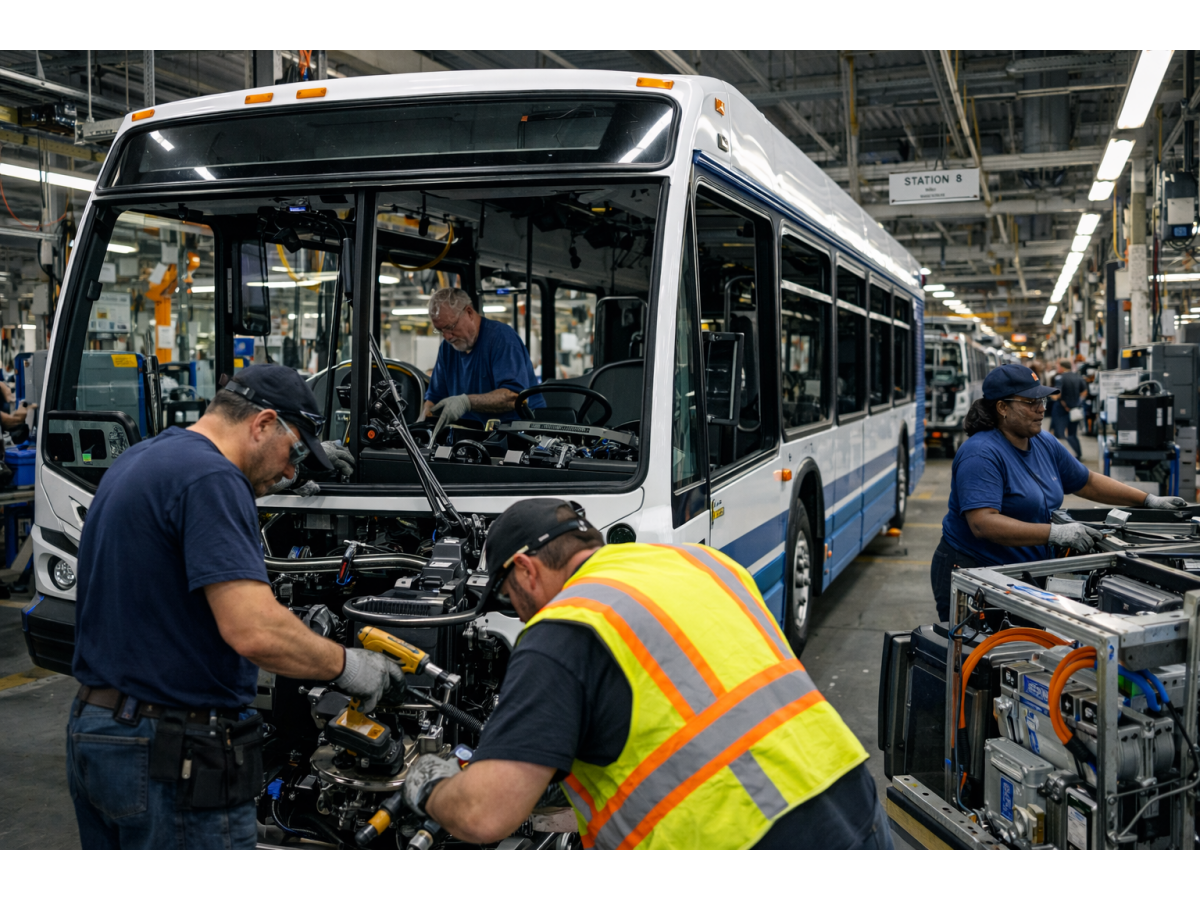
The automotive industry continues to increase the use of aluminum alloys, lightweight sheet metal, and modular assemblies.
Aluminum blind rivet nuts can provide threaded fastening points in components where welding or conventional nut installation is not practical.
Typical applications include:
Interior panels
Body components
Instrument panel assemblies
Seat and trim components
Battery enclosure components
Electrical system brackets
Wiring and cable management
HVAC components
Lightweight structural accessories
For EV battery and electrical systems, engineers should evaluate the complete fastening system, including electrical isolation,
corrosion compatibility, temperature exposure, vibration, torque requirements, and installation tooling.
Automotive Solution:
Use aluminum rivet nuts where lightweight sheet metal components require a serviceable threaded connection and one-sided installation.
Electric vehicle battery systems place additional requirements on fastening components.
Battery trays, covers, brackets, protective panels, and associated electrical components may use aluminum alloys and thin-gauge sheet metal to reduce overall vehicle weight.
Aluminum blind rivet nuts can be considered for:
Battery enclosure covers
Cable and harness brackets
Cooling system components
Electrical component mounting
Protective covers
Service-access panels
Auxiliary brackets
For battery-related applications, rivet nut selection should consider material compatibility, corrosion resistance, thermal conditions,
vibration, electrical requirements, thread strength, and installation consistency.
EV Battery Solution:
Juxin Fasteners supports OEM fastening requirements for lightweight battery enclosure and electrical component assemblies.
Rail vehicles use extensive sheet metal and aluminum alloy structures in interior equipment, panels, equipment housings, brackets, and passenger-area components.
Aluminum rivet nuts can provide efficient threaded attachment points while supporting lightweight construction.
Typical applications include:
Interior panels
Equipment covers
HVAC components
Electrical cabinets
Cable management brackets
Seat and interior fittings
Equipment mounting plates
For rail applications, engineers should define the required vibration resistance, corrosion protection, thread performance, installation requirements,
and applicable industry specifications before selecting the fastener.
Rail Transit Solution:
Aluminum blind rivet nuts can simplify one-sided installation in rail vehicle interiors and equipment assemblies.
Sheet metal fabrication is one of the most common applications for blind rivet nuts.
HVAC equipment, air-conditioning systems, refrigeration units, ventilation equipment, and industrial enclosures often contain
thin-gauge panels where directly tapping threads is not practical.
Applications include:
HVAC housings
Ventilation equipment
Refrigeration cabinets
Air-conditioning units
Ductwork components
Control panels
Equipment brackets
Access covers
Because the rivet nut can be installed after the sheet metal component has been formed, it can also simplify assembly where access to the rear side of the panel is restricted.
Sheet Metal Solution:
Aluminum rivet nuts provide a practical threaded fastening method for thin sheet metal housings and equipment assemblies.
Electrical cabinets, control boxes, electronic equipment housings, and instrumentation systems often require multiple threaded mounting points.
Blind rivet nuts are useful where:
The panel is too thin for sufficient tapped threads
The rear side of the panel is inaccessible
Welding could damage the component
Repeated screw installation and removal is required
A clean and controlled assembly process is preferred
Applications include:
Electrical cabinets
Switchgear enclosures
Control panels
Electronics housings
Instrumentation
Communication equipment
Power distribution equipment
For electrical applications, engineers should also consider galvanic corrosion when combining aluminum rivet nuts with dissimilar metals.

Industrial machinery often combines sheet metal covers, frames, brackets, access panels, and equipment housings.
Aluminum blind rivet nuts can provide efficient fastening points for:
Machine guards
Equipment covers
Control panels
Mounting brackets
Access doors
Protective enclosures
Automation equipment
They are particularly useful when machine panels need to be removed for maintenance while maintaining a repeatable threaded connection.
Industrial Machinery Solution:
Rivet nuts support modular equipment design and simplify assembly and maintenance of sheet metal components.

Weight reduction is a major consideration in aerospace-related and advanced lightweight equipment applications.
Aluminum rivet nuts can offer a combination of:
Low component weight
Corrosion resistance
One-sided installation
Threaded fastening capability
Compatibility with lightweight aluminum assemblies
However, aerospace and safety-critical applications require strict engineering validation.
Fastener selection should be based on the applicable design standards, qualification requirements, material specifications,
load calculations, environmental conditions, and customer approval procedures.
Juxin Fasteners can support OEM development requirements by reviewing the drawing, thread specification, material,
dimensions, installation conditions, and application environment.
Aluminum is attractive for lightweight applications, but material selection should not be based on weight alone.
The required material and surface treatment depend on:
Parent material
Required thread strength
Corrosion environment
Temperature
Vibration
Installation torque
Pull-out requirements
Shear requirements
Exposure to chemicals or moisture
Galvanic compatibility
For applications involving aluminum components and steel fasteners, engineers should consider the possibility of galvanic corrosion
and select compatible materials or protective treatments where necessary.
Juxin Fasteners can also evaluate alternative materials and coatings when aluminum is not the best choice for the application.
For procurement teams and mechanical engineers, selecting the correct rivet nut requires more than specifying the thread size.
The following information should be confirmed before ordering:
Common metric thread options include:
M3
M4
M5
M6
M8
M10
Other thread standards and customized specifications can be evaluated according to project requirements.
The rivet nut must match the actual material thickness range.
Typical applications may involve sheet thicknesses from approximately 0.5 mm to 6 mm, depending on the specific rivet nut design.
The exact grip range should always be confirmed against the manufacturer's technical specification.
Correct hole preparation is essential for installation quality.
An oversized hole can reduce mechanical retention, while an undersized hole can interfere with installation or damage the component.
Round, hexagonal, knurled, and other body configurations should be selected according to the required resistance to rotation and the parent material.
Flat-head, reduced-head, countersunk, and other configurations may be available depending on the required panel finish and installation space.
The fastener should be compatible with the selected manual, pneumatic, hydraulic, or battery-powered rivet nut installation tool.
For high-volume production, controlled installation tooling can improve consistency and reduce variation between operators.
A rivet nut is only as reliable as the complete joint design.
Before approving an aluminum blind rivet nut for production, engineers should evaluate:
Thread stripping:
The internal thread must provide sufficient resistance for the specified screw torque and service load.
Pull-out resistance:
The joint must withstand the expected axial load without the insert pulling through the sheet.
Rotational resistance:
The body geometry and parent material must provide adequate resistance to spinning during screw installation.
Sheet deformation:
Thin or soft materials may require specific rivet nut geometries and controlled installation conditions.
Corrosion compatibility:
Dissimilar metals should be evaluated for galvanic corrosion, particularly in humid, outdoor, marine, and automotive environments.
Installation consistency:
Production tools and installation parameters should be controlled to achieve repeatable deformation of the rivet nut.
For critical applications, prototype testing and application-specific validation should be completed before mass production.
For OEM fastening applications, dimensional consistency and installation performance are essential.
Juxin Fasteners can support quality requirements covering:
Thread dimensions
Outside diameter
Overall length
Head diameter
Head thickness
Grip range
Material verification
Surface condition
Thread gauge inspection
Visual inspection
Installation testing
Pull-out testing
Torque testing
Batch traceability
For production programs with defined inspection requirements, inspection plans can be developed according to customer drawings, specifications, and quality standards.
Juxin Fasteners works with OEM manufacturers, engineering teams, sourcing departments, and industrial distributors requiring application-specific fastening solutions.
Instead of selecting a rivet nut only by nominal thread size, our engineering team can review the complete application, including:
Component material
Sheet thickness
Hole diameter
Thread specification
Available installation space
Required installation method
Environmental conditions
Corrosion requirements
Expected load
Annual volume
Packaging requirements
This application-based approach helps customers select the appropriate aluminum blind rivet nut for production rather than relying solely on catalog dimensions.
Why Choose Juxin Fasteners for Aluminum Blind Rivet Nuts?
Juxin Fasteners provides OEM fastening solutions for manufacturers requiring reliable threaded connections in sheet metal and lightweight assemblies.
We evaluate the fastening requirement from the perspective of the complete assembly, not just the fastener.
Custom dimensions, materials, finishes, packaging, and production requirements can be developed according to customer drawings and specifications.
Our fastening solutions support automotive, EV, rail transit, sheet metal, HVAC, electrical, electronics, machinery, aerospace-related, marine, and other industrial applications.
Dimensional inspection, thread inspection, visual inspection, and application-specific testing can be incorporated into the quality control process according to project requirements.
Juxin Fasteners supports international OEM customers, engineering teams, and procurement departments with technical communication, quotation, sampling, production, inspection, and export packaging.
Choosing an aluminum blind rivet nut should start with the application and joint requirements, rather than simply the thread size.
Send Juxin Fasteners your drawing, thread specification, sheet thickness, material, required quantity, application environment, and installation method.
Our engineering team can review the requirement and recommend a suitable rivet nut configuration for your assembly.
Juxin Fasteners
OEM Industrial Fastening Solutions
Email: info@juxinfasteners.com
Recommended internal solution links:
Automotive Fastening Solutions
EV Battery Pack Fastening Solutions
Rail Transit Fastening Solutions
Sheet Metal Fastening Solutions
Electrical Enclosure Fastening Solutions
HVAC Fastening Solutions
Industrial Machinery Fastening Solutions
Rivet Nuts
Self-Clinching Nuts
Blind Rivet Nuts
Aluminum Fasteners
 MORE NEWS
Sep. 25, 2026
Sep. 25, 2026
Sep. 25, 2026
Contact Us
Tel.:
+86 020 8621 0320
+86 020 3121 6067
E-mail:
Technical Support:
Navigation
SEND INQUIREY