
Call Us
+86 136 6007 9809
Call Us
+86 136 6007 9809

Nov. 05, 2024
Anti-Loosening Fasteners for High-Vibration Assemblies: Locking Methods, Joint Design and OEM Supply
Vibration-resistant fastening requires more than selecting a nut or bolt described as self-locking.
A threaded joint can lose clamping force through several mechanisms, including rotational self-loosening, surface settlement, material relaxation, thermal cycling and unfavorable joint loading.
These mechanisms are related, but they are not identical.
A prevailing torque locknut may resist relative thread rotation without preventing preload loss caused by joint settlement.
A serrated flange fastener may increase resistance to rotation while damaging a sensitive mating surface.
A thread-forming screw may improve manufacturing efficiency, but it does not automatically provide adequate thread engagement or fatigue resistance in every base material.
For mechanical and design engineers, the central question is therefore not simply “Which fastener locks best?”
It is:
Which fastening mechanism is compatible with the joint materials, loading conditions, assembly process and required service life?
For manufacturing engineers and production managers, installation repeatability, tool access, torque control, coating friction, assembly cycle time and rework are equally important.
For purchasing managers and supplier development teams, reliable sourcing requires verification of the locking mechanism,
dimensional standard, material specification, performance requirements and production consistency.
Juxin Fasteners supplies locking nuts, serrated flange fasteners, thread-forming screws and drawing-specific industrial fastening components for suitable OEM applications.
Why Threaded Fasteners Loosen Under Vibration
Bolted joints rely on an appropriate clamping force to maintain contact between the connected components.
When the joint experiences repeated transverse movement, impact or other unfavorable loading, relative movement can develop at the bearing surfaces and threads.
Under certain conditions, this movement can cause rotational self-loosening.
Common Contributing Factors
Insufficient initial preload
Transverse joint movement
Low or unstable friction
Joint settlement
Surface embedment
Repeated impact
Thermal expansion differences
Inappropriate joint geometry
Incorrect installation procedures
Important Distinction
Not every reduction in clamp load is caused by a nut rotating loose.
Identifying the actual mechanism is essential before selecting a corrective fastening product.
Rotational Self-Loosening Versus Preload Loss
Rotational Self-Loosening
Occurs when the threaded components rotate relative to each other under operating conditions.
Non-Rotational Preload Loss
May occur through:
Surface embedding
Gasket compression
Joint settlement
Material creep
Relaxation
Thermal effects
Engineering Recommendation
A locking fastener should be selected to address the identified failure mechanism.
Do not assume that additional rotational resistance will solve every preload-loss problem.
Why Transverse Vibration Matters
Transverse vibration acts across the bolt axis.
When the connected components experience sufficient relative movement, frictional resistance at the bearing and threaded interfaces may be overcome.
This can create conditions for rotational loosening.
Engineering Considerations
Initial clamp load
Joint stiffness
Surface friction
Applied transverse displacement
Number of load cycles
Bolt and nut geometry
Locking mechanism
Engineering Recommendation
For vibration-sensitive joints, evaluate the complete assembly rather than relying only on a static tightening torque value.
Anti-Loosening Fastener Selection Matrix
Different locking fasteners use different physical mechanisms.
| Fastener type | Primary locking mechanism | Main selection consideration |
|---|---|---|
| Serrated flange bolt | Serrations engage the bearing surface | Surface compatibility and coating damage |
| Serrated flange nut | Serrations increase resistance at the nut bearing face | Surface hardness and allowable marking |
| Nylon insert lock nut | Polymer insert produces prevailing torque | Temperature, chemicals and reuse |
| Distorted-thread all-metal locknut | Controlled metal thread interference produces prevailing torque | Mating-thread compatibility and installation torque |
| Spring-action locking nut | Design-specific elastic metal interference | Exact product geometry and performance specification |
| Thread-forming screw | Forms a mating internal thread in suitable material | Base material, pilot hole and thread engagement |
| Strip-resistant sheet metal screw | Drive and/or thread design selected to reduce installation damage | Driver engagement, strip torque and substrate thickness |
Important Distinction
Thread-forming screws and strip-resistant screws are not automatically equivalent to prevailing torque locking nuts.
Their selection depends on the substrate and joint design.
Serrated Flange Bolts
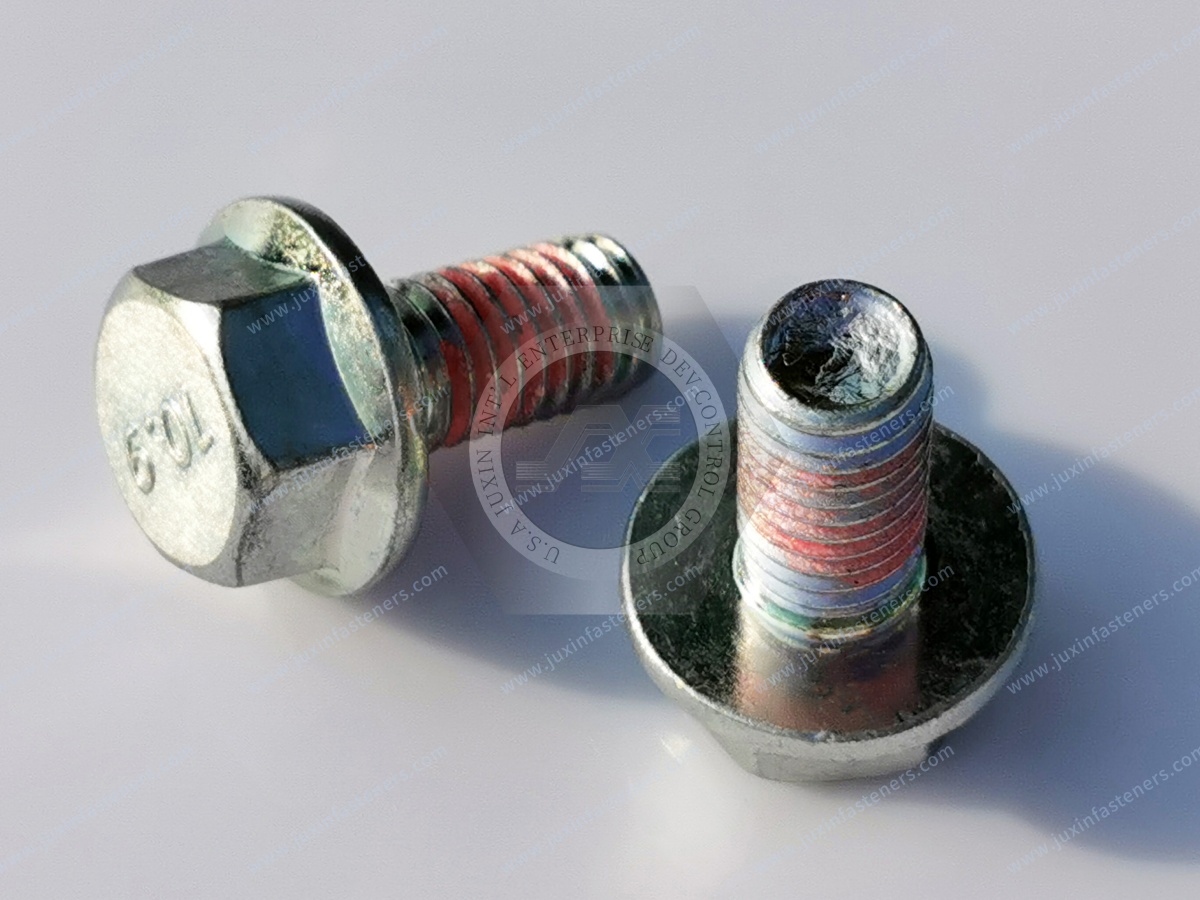
Serrated flange bolts combine an integral flange with serrations on the bearing surface.
The serrations may increase resistance to relative rotation by engaging the connected surface.
Potential Advantages
Integrated bearing flange
Fewer separate components in some assemblies
Increased rotational resistance under suitable conditions
Potential assembly simplification
Engineering Limitations
Serrations may:
Damage painted surfaces
Remove protective coatings
Mark softer materials
Affect friction and preload
Be unsuitable for sensitive bearing surfaces
Production Recommendation
Validate tightening behavior and mating-surface condition using the actual components.
DIN 6921 and Serrated Flange Bolt Specifications
DIN 6921 is associated with hexagon flange bolts.
However, the presence and geometry of serrations must be verified against the actual product drawing and specification.
Important Distinction
Do not assume that every DIN 6921 flange bolt has the same serration design or locking performance.
Serrated Flange Bolt Applications
Potential applications include suitable:
Industrial machinery
Equipment brackets
Agricultural machinery
Motor mounting components
Mechanical guards
Fabricated assemblies
Safety-critical automotive or structural applications require separate engineering approval.
Serrated Flange Nuts
Serrated flange nuts incorporate serrations on the nut's bearing surface.
When tightened against a compatible surface, the serrations may resist relative rotation.
Potential Advantages
Integral flange
Reduced need for a separate washer in suitable designs
Increased bearing-surface resistance to rotation
Potential assembly simplification
Engineering Considerations
Surface hardness
Coating condition
Mating material
Installation torque
Surface damage
Reuse requirements
Important Limitation
A serrated flange nut should not automatically be described as reusable.
The serrations and mating surface may change after installation or removal.
Serrated Flange Nuts Versus Prevailing Torque Nuts
A serrated flange nut primarily acts at the bearing surface.
A prevailing torque locknut produces rotational resistance through an interference mechanism associated with the threads.
These are different locking approaches.
Engineering Recommendation
Select the mechanism based on the actual joint movement and surface conditions.
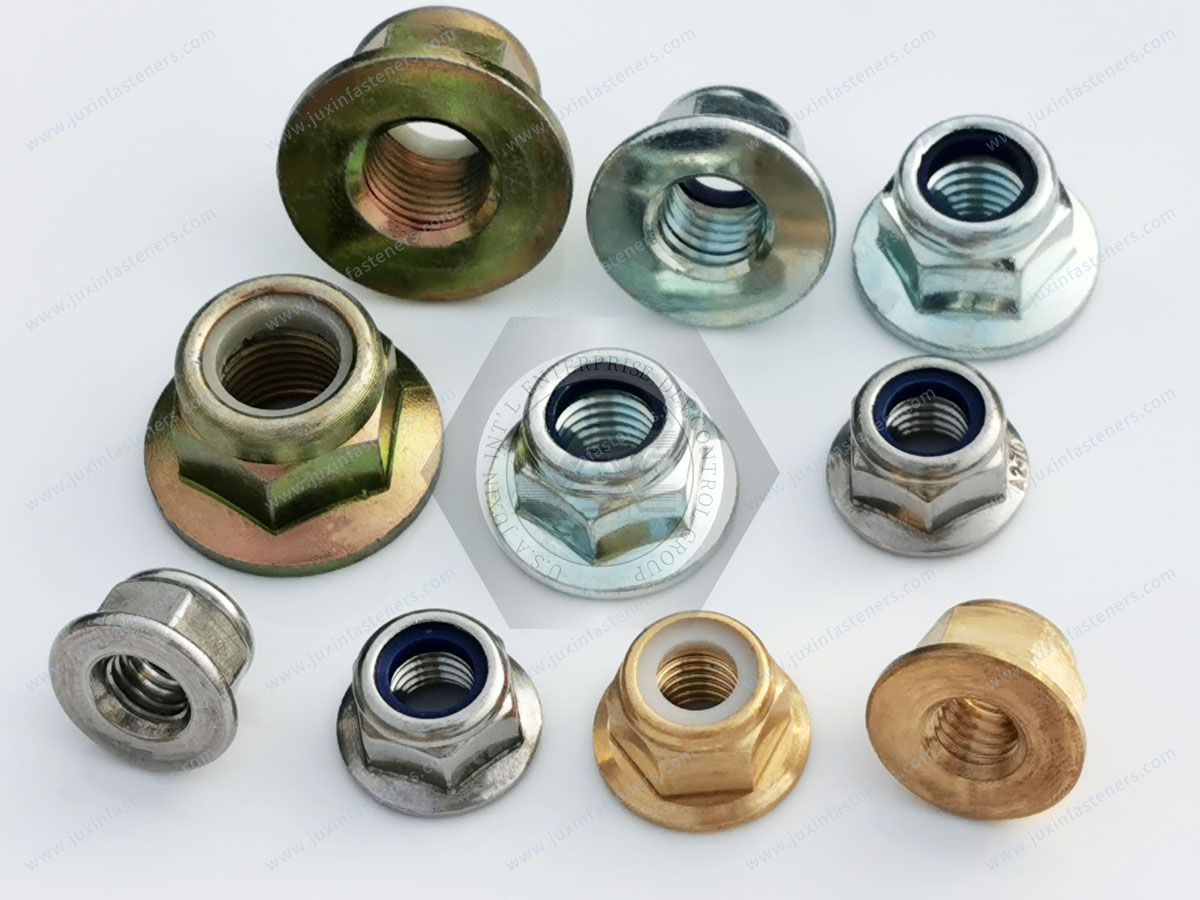
Nylon Insert Lock Nuts
Nylon insert lock nuts use a polymer insert to generate prevailing torque when engaged with a compatible male thread.
The insert creates rotational resistance that remains present even when the nut is not fully seated against the joint.
Potential Advantages
Familiar locking mechanism
Suitable for many general industrial assemblies
No need for serrations to bite into the mating surface
Potentially convenient installation in appropriate environments
Engineering Limitations
Performance depends on:
Polymer temperature capability
Chemical exposure
Thread dimensions
Installation conditions
Reuse
Storage and aging requirements
Important Limitation
A nylon insert lock nut is not automatically suitable for high-temperature engine or exhaust applications.
Nylon Insert Lock Nut Reuse
Repeated installation and removal can change prevailing torque.
Engineering Recommendation
Reuse should be permitted only when the applicable specification and inspection requirements allow it.
Do not assume unlimited reuse.
Relevant Standards
Depending on the exact product, applicable specifications may include ISO 10511, ISO 10512 or ISO 7040-series requirements for particular prevailing torque nut configurations.
The correct standard must match the actual nut design and mechanical property class.
Distorted-Thread All-Metal Locknuts
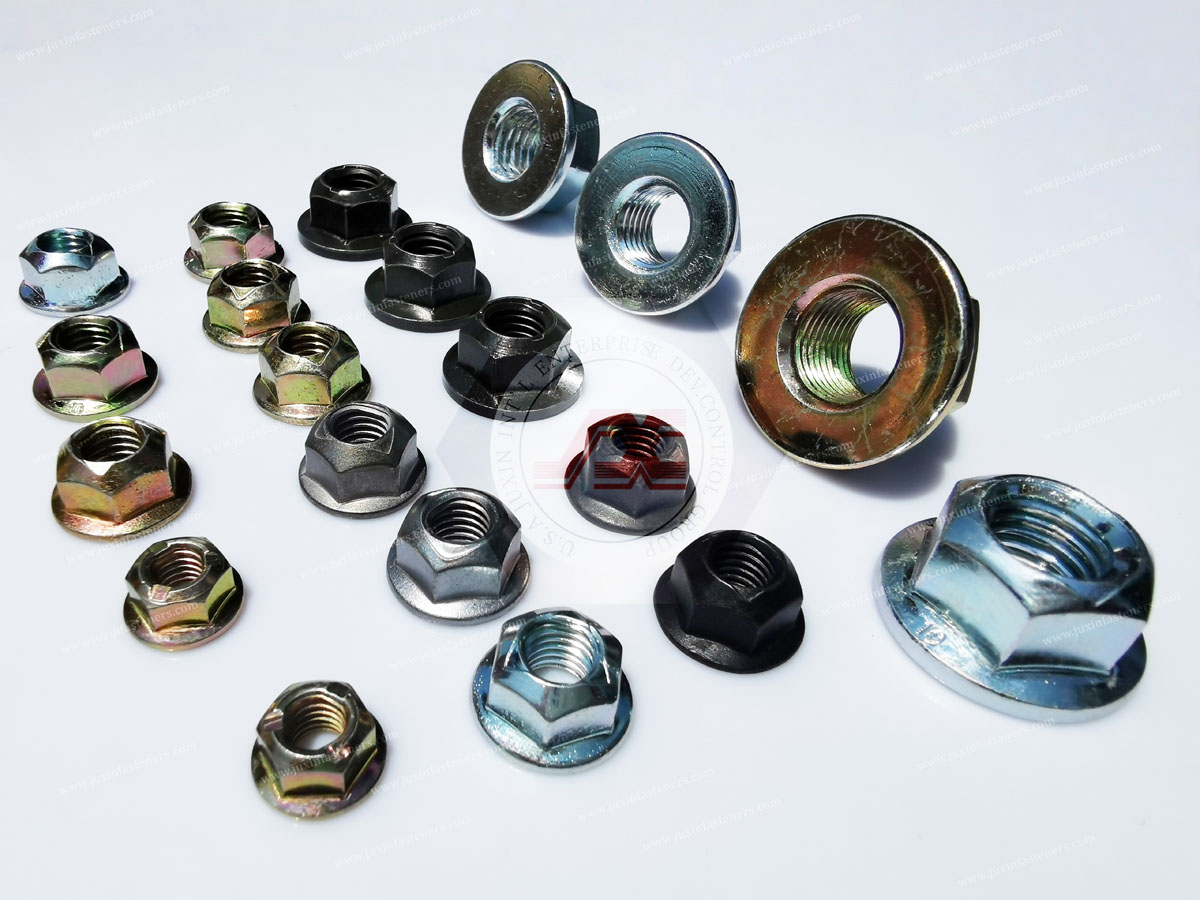
Distorted-thread locknuts generate prevailing torque through controlled interference in the metal thread structure.
They do not rely on a polymer insert.
Potential Advantages
No nylon locking element
Suitability for certain elevated-temperature applications
Prevailing torque generated through metal thread interference
Compatibility with selected high-vibration assemblies
Engineering Considerations
Thread deformation geometry
Mating bolt properties
Installation torque
Coating and lubrication
Prevailing torque requirements
Reuse limitations
Important Limitation
All-metal construction does not mean unlimited temperature capability or guaranteed locking under every vibration condition.
Distorted-Thread Locknut Installation Torque
The installation torque includes the torque required to overcome the locking mechanism.
Important Distinction
Prevailing torque is not the same as torque used to generate clamp load.
Engineering Recommendation
Use an installation specification that accounts for the prevailing torque mechanism.
Mating Bolt Compatibility
The locknut's thread interference must be compatible with the male thread.
Potential concerns include:
Thread damage
Excessive installation torque
Galling
Coating damage
Incorrect thread engagement
Engineering Recommendation
Verify the nut and bolt as a matched assembly.
Spring-Action and Spring-Stop Locknuts
Some locking nut designs use an elastic metal feature to generate resistance to rotation.
The term “spring-stop locknut” may describe different proprietary or drawing-specific geometries.
Important Distinction
The locking mechanism must be identified from the actual product drawing.
It should not be assumed to be identical to every distorted-thread or all-metal prevailing torque design.
Engineering Considerations
Locking feature geometry
Material and heat treatment
Operating temperature
Installation torque
Reuse
Mating-thread compatibility
Engineering Recommendation
Request the relevant dimensional and functional requirements before approving an alternative spring-action locking nut.
Thread-Forming Screws for Metal
Thread-forming screws create a mating internal thread by plastically deforming suitable base material during installation.
Certain designs may eliminate a separate tapping operation.
Potential Advantages
Reduced tapping operations
Potential assembly simplification
Compatibility with selected automated fastening processes
Application-specific thread engagement
Engineering Limitations
Performance depends on:
Base material
Pilot hole size
Material thickness
Thread profile
Installation torque
Strip torque
Reuse requirements
DIN 7500 Thread-Forming Screws
DIN 7500 is associated with thread-forming screws for suitable metallic materials.
Important Distinction
DIN 7500 thread-forming screws should not be treated as interchangeable with ordinary self-tapping sheet metal screws.
Engineering Recommendation
Confirm the actual screw geometry and substrate requirements.
Thread-Forming Screws in Aluminum
Thread-forming screws may be used in suitable aluminum components.
Engineering Considerations
Alloy and temper
Pilot hole diameter
Thread engagement
Installation torque
Strip torque
Repeated assembly
Important Limitation
Thread formation does not guarantee greater pull-out strength than every alternative threaded connection.
Strip-Resistant Screws for Sheet Metal
Strip resistance can refer to different failure mechanisms.
Drive Recess Stripping
Occurs when the driver damages the screw recess.
Internal Thread Stripping
Occurs when the formed or engaged thread fails in the base material.
These problems require different corrective actions.
Engineering Recommendation
Identify whether the application requires improved drive engagement, higher substrate strip torque or both.
Thin Sheet Metal Assembly Considerations
Thin sheet metal may provide limited thread engagement.
Potential Risks
Internal thread stripping
Hole enlargement
Local deformation
Loss of clamp load
Repeated installation damage
Engineering Recommendation
Evaluate sheet thickness, screw geometry and installation torque together.
Production Recommendation
For automated assembly, establish acceptable installation and strip-torque limits based on the actual substrate.
How to Select the Correct Anti-Loosening Fastener
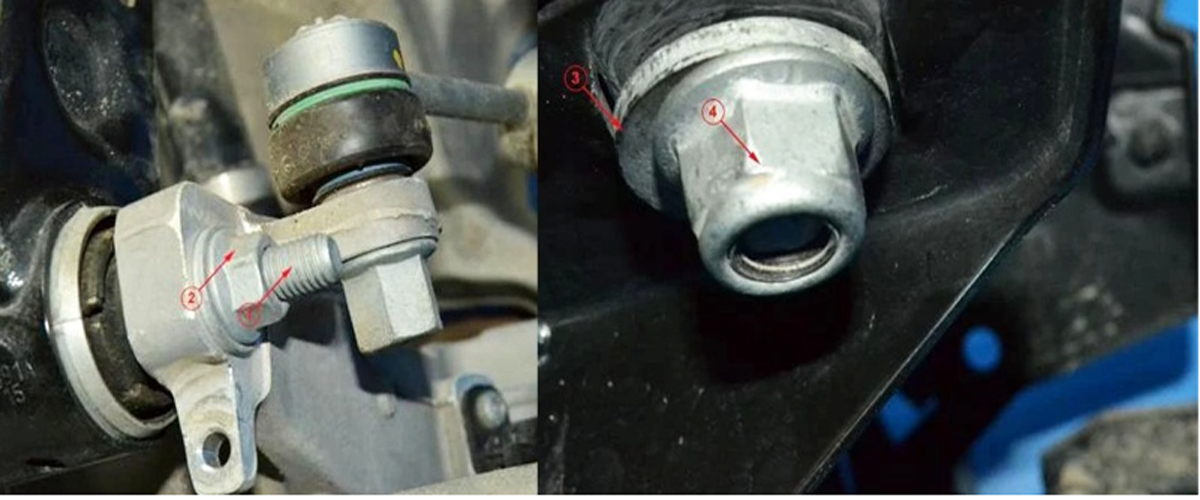
The selection process should begin with the joint rather than the fastener catalog.
Step 1: Identify the Failure Mechanism
Determine whether the problem involves:
Rotational self-loosening
Joint settlement
Thermal relaxation
Thread stripping
Fatigue
Corrosion
Installation inconsistency
Step 2: Evaluate Joint Materials
Consider:
Steel
Stainless steel
Aluminum
Coated sheet metal
Other engineering materials
Step 3: Evaluate Operating Conditions
Consider:
Vibration
Temperature
Corrosion exposure
Shock
Maintenance requirements
Step 4: Select the Locking Mechanism
Choose a mechanism compatible with the actual joint.
Step 5: Validate the Assembly
Confirm performance using appropriate installation and functional testing.
Torque, Friction and Clamp Load
Tightening torque does not convert into clamp load with perfect consistency.
A significant portion of applied torque is consumed by friction.
Relevant Variables
Thread friction
Bearing-surface friction
Coating
Lubrication
Thread geometry
Installation speed
Tool calibration
Engineering Recommendation
Do not assume that two locking fasteners tightened to the same torque produce identical clamp loads.
Why Coatings Affect Locking Fastener Performance
Surface coatings can influence:
Friction
Installation torque
Prevailing torque
Corrosion resistance
Thread fit
Bearing-surface behavior
Engineering Recommendation
A coating change should trigger review of installation requirements and functional performance.
Stainless Steel Thread Galling
Stainless steel threaded fasteners may experience adhesive thread damage during installation.
Potential Contributing Factors
Material pairing
Surface condition
Installation speed
Contact pressure
Lubrication
Important Limitation
A locking feature that increases installation resistance may require additional attention to galling risk.
Engineering Recommendation
Evaluate the complete threaded assembly.
Prevailing Torque Versus Clamp Load
Prevailing torque is rotational resistance generated by a locking mechanism before or independently of full joint seating.
Clamp load is the compressive force applied to the joint.
Important Distinction
A high prevailing torque reading does not prove that the joint has adequate clamp load.
Engineering Recommendation
Define both locking performance and installation requirements where relevant.
Vibration Testing and Functional Validation
Vibration-sensitive fastening systems may require assembly-level validation.
Depending on the application, testing may consider:
Transverse vibration
Rotational movement
Clamp load reduction
Repeated installation
Temperature exposure
Corrosion
Fatigue
DIN 65151 and Transverse Vibration Testing
DIN 65151 is associated with transverse vibration testing of bolted joints.
Important Limitation
A test result applies to the tested assembly configuration and conditions.
It does not establish universal performance for every bolt, nut, coating or joint geometry.
Engineering Recommendation
Specify test conditions and acceptance criteria before comparing locking fasteners.
Automotive and Electric Vehicle Applications
Potential applications include suitable:
Equipment brackets
Auxiliary mounting components
Electrical enclosures
Production fixtures
Noncritical mechanical assemblies
Engineering Considerations
Vibration
Temperature
Coating friction
Installation repeatability
Joint stiffness
Important Limitation
Braking, steering, suspension, chassis and battery structural joints require application-specific engineering approval and validation.
Industrial Machinery and Automation
Potential applications include:
CNC equipment
Conveyors
Packaging machinery
Industrial robots
Motor mounting components
Production equipment
Engineering Considerations
Repeated vibration
Assembly access
Maintenance frequency
Tooling
Downtime
Production Recommendation
Select fasteners that meet both locking requirements and assembly efficiency targets.
Agricultural and Construction Equipment
Potential applications include:
Equipment guards
Brackets
Auxiliary mechanical assemblies
Fabricated components
Engineering Considerations
Shock loading
Vibration
Dust
Corrosion
Maintenance
Important Limitation
Highly loaded structural or safety-critical connections require dedicated engineering review.
Railway Equipment Applications
Potential applications include selected:
Interior assemblies
Electrical cabinets
Equipment covers
Auxiliary brackets
Important Limitation
Bogies, braking systems and other safety-critical railway connections require specific qualification and approval.
Renewable Energy Equipment
Potential applications include:
Solar tracker equipment
Electrical cabinets
Auxiliary wind equipment
Energy storage enclosures
Maintenance assemblies
Engineering Considerations
Vibration
Thermal cycling
Outdoor corrosion
Installation access
Maintenance
Important Limitation
Wind turbine blade, tower and other critical structural connections require project-specific fastening systems and validation.
Mining and Heavy Equipment
Potential applications include suitable:
Guards
Equipment covers
Auxiliary brackets
Mechanical accessories
Maintenance components
Engineering Considerations
Impact loading
Vibration
Abrasion
Contamination
Service access
Engineering Recommendation
Select locking fasteners according to the actual operating loads and maintenance requirements.
Production-Line Assembly Efficiency
A locking fastener may improve assembly efficiency when it reduces the number of separate components or simplifies installation.
However, the locking mechanism can also introduce additional installation requirements.
Key Production Factors
Fastener feeding
Driver access
Installation torque
Prevailing torque
Tool wear
Thread engagement
Coating condition
Inspection
Rework
Production Recommendation
Compare the complete installed cost rather than only the fastener unit price.
Automated Fastening Considerations
Automated assembly requires repeatable fastener behavior.
Potential Concerns
Variation in prevailing torque
Thread starting problems
Cross-threading
Driver cam-out
Thread stripping
Inconsistent clamp load
Engineering Recommendation
Validate the fastener with the actual production equipment and mating components.
Quality Inspection of Locking Fasteners
Inspection should follow the applicable standard and customer drawing.
Dimensional Inspection
Potential checks include:
Thread diameter
Thread pitch
Nut height
Flange diameter
Serration geometry
Locking feature dimensions
Material Verification
Depending on the specification:
Material identification
Mechanical property verification
Hardness testing
Heat treatment requirements
Functional Inspection
Depending on the locking mechanism:
Prevailing torque
Installation torque
Reuse performance
Thread engagement
Strip torque
Vibration performance where specified
Surface Finish Inspection
Potential checks include:
Coating type
Coating thickness
Appearance
Thread fit
Corrosion testing where specified
Important Limitation
Not every inspection applies to every locking fastener.
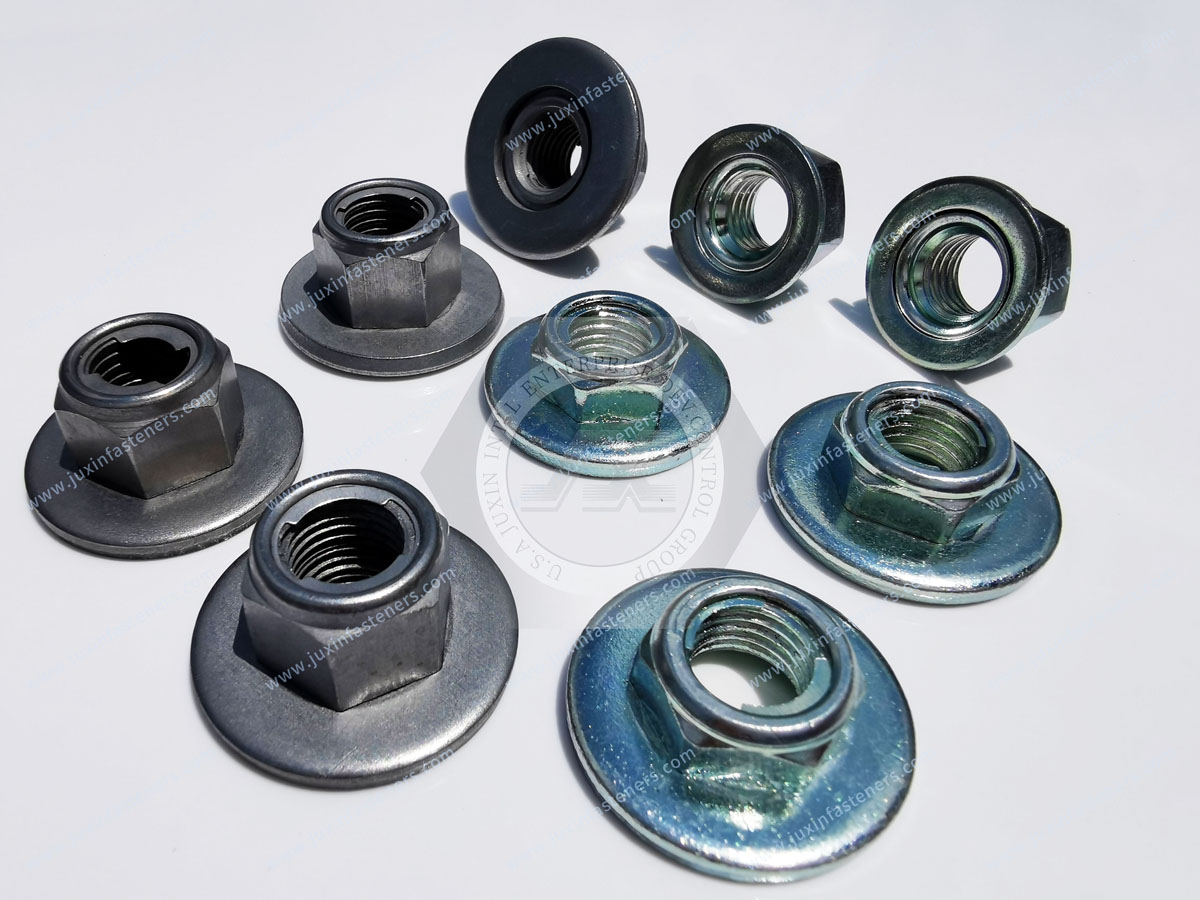
OEM Custom Locking Fasteners
Juxin Fasteners welcomes drawing-specific inquiries for:
Serrated flange bolts
Serrated flange nuts
Nylon insert lock nuts
Distorted-thread locknuts
Spring-action locking nuts
Thread-forming screws
Strip-resistant sheet metal screws
Other drawing-specific locking components
Potential customization requirements include:
Dimensions
Thread specifications
Material
Mechanical property class
Locking feature geometry
Surface treatment
Functional requirements
Packaging
Manufacturing feasibility depends on the actual specification and production volume.
Metric and Inch Thread Compatibility
Locking fasteners may be specified in different thread systems.
Metric Threads
ISO metric threads use metric diameter and pitch designations.
Unified Threads
UNC and UNF threads use separate inch-series dimensional requirements.
British Threads
BSW and BSF threads may be encountered in certain legacy equipment.
Important Distinction
Metric, UNC, UNF, BSW and BSF threads are not directly interchangeable.
Engineering Recommendation
Verify the actual thread designation and tolerance before approving a replacement locking nut or screw.
Supplier Qualification for Anti-Loosening Fasteners
Purchasing managers and supplier development teams should evaluate:
Applicable product standard
Locking mechanism
Drawing conformity
Material grade
Mechanical property class
Thread compatibility
Surface treatment
Functional performance
Inspection documentation
Sample approval
MOQ
Lead time
Annual demand
Packaging
Change control
Alternative Supplier Validation
A replacement locking fastener should be evaluated for more than nominal dimensions.
Potential Differences
Locking feature geometry
Prevailing torque
Coating friction
Thread fit
Surface damage
Reuse behavior
Installation compatibility
Engineering Recommendation
Validate the replacement fastener using the actual mating components and assembly process.
Common Anti-Loosening Fastener Problems
| Problem | Possible cause | Recommended investigation |
|---|---|---|
| Nut rotates loose | Joint movement or insufficient locking resistance | Review preload and locking mechanism |
| Clamp load decreases without rotation | Settlement, relaxation or thermal effects | Review joint materials and stiffness |
| Excessive installation torque | Locking interference, friction or thread damage | Check mating threads and coating |
| Coating damage | Serration engagement or installation friction | Review bearing surface and corrosion protection |
| Nylon insert degradation | Temperature or chemical exposure | Review polymer limits |
| Thread galling | Material pairing and installation conditions | Review lubrication and thread compatibility |
| Thin-sheet thread stripping | Insufficient engagement or excessive torque | Review substrate and screw geometry |
| Inconsistent assembly results | Tooling or fastener variation | Review process controls and inspection |
Engineering Recommendation
Correct the root cause rather than automatically selecting a stronger fastener.
Frequently Asked Questions
What is an anti-loosening fastener?
A fastener designed to resist rotational loosening or support a fastening strategy intended to maintain joint reliability.
Do locking nuts prevent all preload loss?
No. They may resist rotation, but settlement, relaxation and thermal effects can still reduce clamp load.
Are serrated flange nuts better than nylon insert lock nuts?
Neither is universally better. They use different locking mechanisms and suit different joint conditions.
Can nylon insert lock nuts be reused?
Only when permitted by the applicable specification and functional requirements.
Are all-metal locknuts suitable for high temperatures?
They may be suitable for certain elevated-temperature applications, but the exact material and design must be verified.
Do thread-forming screws prevent vibration loosening?
Not automatically. Their performance depends on the thread design, substrate and joint conditions.
What causes bolt loosening under transverse vibration?
Relative movement in the joint can overcome frictional resistance and permit threaded components to rotate.
Does higher tightening torque always improve vibration resistance?
No. Excessive torque can damage threads, overload the fastener or deform the connected components.
Can locking fasteners be used in safety-critical automotive assemblies?
Only when the complete fastening system has been approved and validated for the application.
Can Juxin Fasteners supply custom locking fasteners?
Juxin Fasteners welcomes drawing-specific inquiries. Materials, dimensions, locking performance, inspection requirements and commercial terms require confirmation.
Juxin Fasteners: Anti-Loosening Fasteners and OEM Supply
Juxin Fasteners supplies industrial locking fasteners and drawing-specific fastening components.
Relevant product categories include:
Serrated flange bolts
Serrated flange nuts
Nylon insert lock nuts
Distorted-thread all-metal locknuts
Spring-action locking nuts
Thread-forming screws
Strip-resistant sheet metal screws
Custom industrial locking fasteners
Exact materials, dimensions, performance requirements, inspection scope, MOQ and lead times are subject to technical and commercial confirmation.
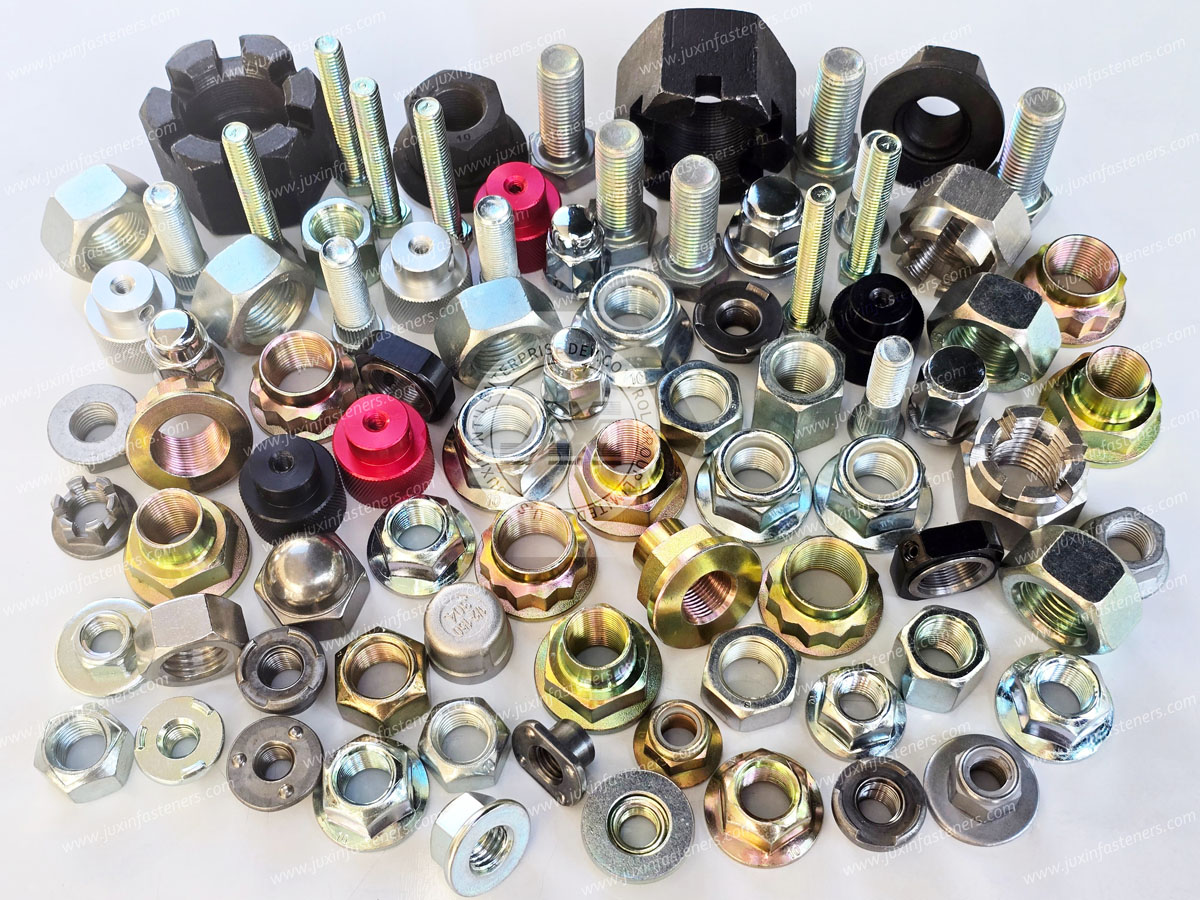
Request a Quote for Anti-Loosening Fasteners
Are you sourcing vibration-resistant locking nuts, serrated flange bolts, thread-forming screws or drawing-specific fastening components for an OEM project?
Juxin Fasteners welcomes inquiries from mechanical engineers, design engineers, manufacturing engineers, production managers, purchasing specialists and supplier development teams.
For technical review and quotation, please provide:
Fastener drawing and revision + applicable standard + metric or inch thread designation + material grade and mechanical property class
+ locking mechanism + coating + mating bolt or substrate details + joint loading and vibration conditions + installation torque or preload requirements
+ prevailing torque or strip torque requirements where applicable + temperature and corrosion exposure + reuse requirements + inspection documentation + prototype quantity + annual demand
+ packaging + target delivery schedule.
Company: Juxin Fasteners
Website: https://www.juxinfasteners.com/
Email: info@juxinfasteners.com
Send your locking fastener drawings and OEM RFQ to Juxin Fasteners for technical confirmation, product selection and quotation.
Contact Us
Tel.:
+86 020 8621 0320
+86 020 3121 6067
E-mail:
Technical Support:
Navigation
SEND INQUIREY



