
Call Us
+86 136 6007 9809
Call Us
+86 136 6007 9809

Aug. 14, 2026
ATM Cabinet Anchoring Solutions: M20 Anchor Screws for Secure Equipment Installation
Engineering Guide to ATM Floor Fixing, M20 Threaded Fasteners, Concrete Anchoring and OEM Equipment Mounting Hardware
ATM cabinets, cash-handling equipment and self-service terminals must be installed using fastening systems suited to the equipment, supporting structure and intended service environment.
Although an M20 anchor screw may appear to be a simple mechanical component, the performance of an equipment anchoring system depends on more than nominal thread diameter.
A reliable installation requires consideration of the complete connection:
Equipment weight and center of gravity
Cabinet mounting geometry
Base plate material and thickness
Anchor type and load-transfer mechanism
Supporting structure and concrete condition
Tensile, shear and overturning loads
Anchor spacing and edge distance
Effective embedment
Installation procedure
Corrosion protection
Maintenance requirements
Applicable structural and security standards
OEM production and quality requirements
Juxin Fasteners supplies industrial fastening components and supports drawing-based inquiries for M20 threaded fasteners, special mounting bolts,
CNC machined components and other OEM equipment fastening hardware.
This guide explains how engineers, production teams and industrial buyers can evaluate fastening solutions for ATM cabinets and related equipment installations.
Why ATM Cabinet Fastening Requires More Than a Standard Screw
An ATM may contain a combination of electronic equipment, cash-handling mechanisms, displays, service doors, security components and mechanical structures.
The mounting system must work with the complete cabinet design.
Depending on the equipment and installation site, engineers may need to account for:
Static equipment weight
Forces associated with opening service doors
Accidental impact
Vibration
Overturning effects
Supporting-floor characteristics
Outdoor exposure
Installation accessibility
Security-related requirements
The correct fastening system is not necessarily the one with the largest bolt diameter.
The appropriate solution is the one whose complete load path, installation method and required performance have been established.

ATM Cabinet Mounting vs ATM Safe Anchoring
General ATM cabinet mounting and security-rated ATM safe anchoring are related but different engineering applications.
General ATM Cabinet Mounting
This may involve securing the outer enclosure, equipment frame, accessory structure or mounting base.
The relevant requirements depend on equipment geometry, mechanical loading and site conditions.
ATM Safe Anchoring
An ATM safe is a security-related component that may be subject to burglary-resistance requirements.
Where a particular ATM safe has been tested and certified with a specified anchoring arrangement, the approved installation configuration must be followed.
An ordinary M20 threaded fastener should not be assumed to provide the same security performance as an approved anchoring system.
Engineering Insight
The security rating of an ATM safe cannot be inferred from the diameter or material grade of one bolt.
The complete safe, base, anchoring arrangement and applicable certification conditions matter.
Understanding M20 Anchor Screws and Anchor Bolts
The term M20 anchor screw is used in industrial purchasing, but it does not identify one universal anchor design.
M20 specifies a nominal metric thread diameter of 20 mm.
A common ISO metric coarse-thread designation is M20 × 2.5.
However, the M20 designation alone does not define:
Anchor mechanism
Overall length
Threaded length
Head geometry
Drilled-hole diameter
Effective embedment depth
Installation torque
Steel strength
Concrete resistance
Corrosion protection
Approval status
For accurate sourcing, the buyer must identify the exact component type and drawing.
Anchor Bolt
A broad term that may describe cast-in or post-installed anchoring components.
Concrete Screw Anchor
A specially designed anchor that develops resistance through thread engagement with concrete.
Mechanical Expansion Anchor
An anchor that transfers load into the supporting material through a mechanical expansion mechanism.
Bonded Anchor Rod
A threaded element forming part of a specified adhesive anchoring system.
Conventional Threaded Bolt
A bolt intended to connect mechanical components through compatible threads, nuts or tapped holes.
A conventional M20 bolt is not automatically a qualified concrete anchor.
Why the Distinction Matters
Two products may both have M20 threads while requiring completely different installation procedures and providing different anchoring performance.
A substitution must therefore be evaluated against the actual application requirements.
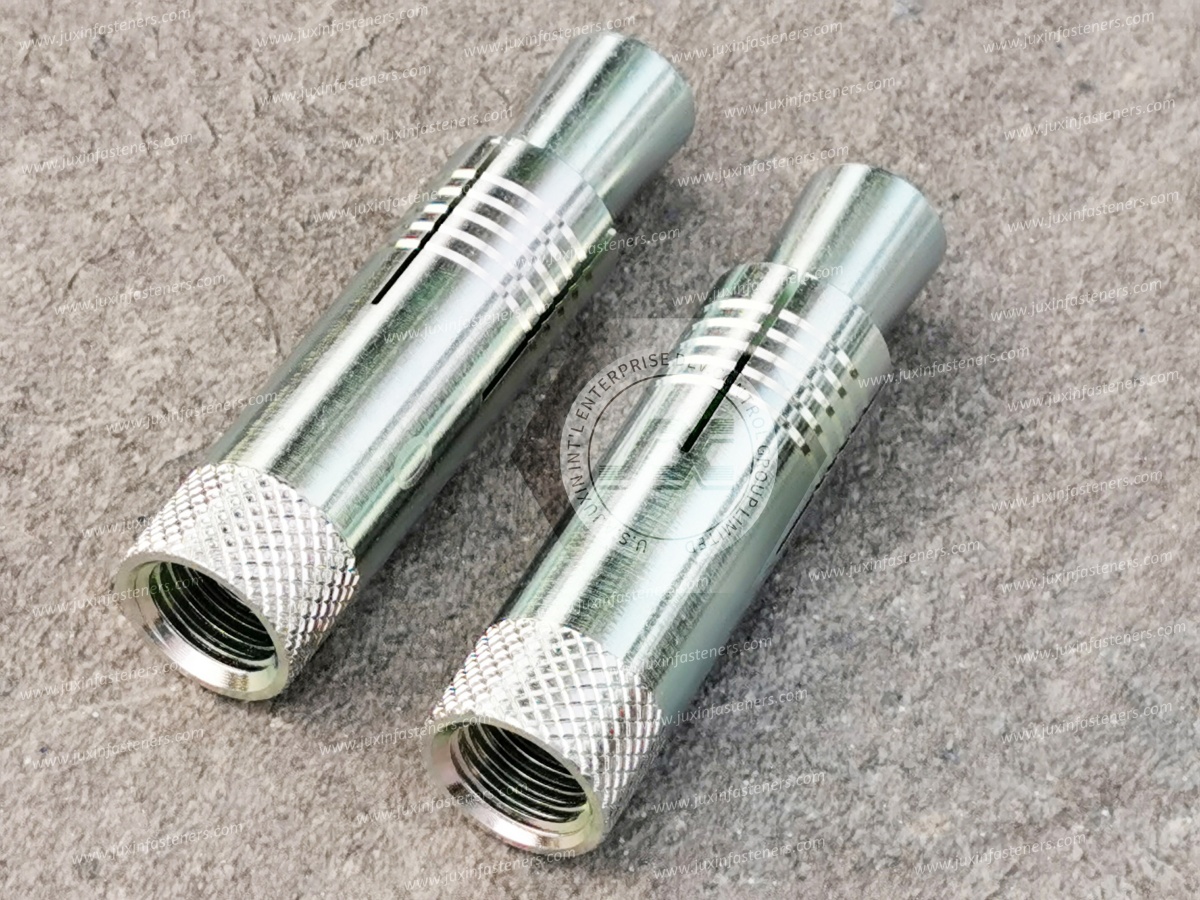
M20 Thread Specifications and OEM Drawing Requirements
For a drawing-based M20 component, engineers should specify the relevant geometry and material requirements.
Typical drawing information includes:
Thread designation and pitch
Thread tolerance
Overall length
Threaded length
Shank diameter
Head or drive configuration
Washer arrangement
Material
Mechanical property requirements
Surface treatment
Dimensional tolerances
Inspection requirements
Metric and Inch Thread Systems
Metric and Unified inch threads must be treated as separate systems.
For example, M20 × 2.5 is not interchangeable with a similar-diameter UNC or UNF threaded component.
BSW and BSF threads also have different thread characteristics.
Any proposed substitution must be reviewed against the mating components and engineering drawing.
Thread Engagement
Adequate thread engagement depends on the materials, strength requirements and connection geometry.
Where a threaded bolt is used with a nut, the nut and bolt properties must be compatible.
Where the component forms part of an approved concrete anchoring system, the complete anchor assembly and its installation instructions govern.
Types of Anchoring Systems Used in Industrial Equipment
Mechanical Expansion Anchors
Mechanical expansion anchors use an expansion mechanism to develop resistance within the supporting material.
Important selection factors include:
Concrete condition
Approved anchor dimensions
Edge distance
Anchor spacing
Concrete thickness
Installation procedure
Applied loads
Concrete Screw Anchors
Concrete screw anchors use specially designed threads to engage with concrete.
Their geometry, drilling requirements and installation procedures must be taken from the specific product documentation.
Bonded Anchoring Systems
Bonded anchors combine an approved adhesive system with a compatible threaded rod or other anchoring element.
Performance depends on factors such as:
Base material
Hole preparation
Adhesive system
Installation temperature
Curing conditions
Embedment depth
Cast-In Anchors
Cast-in anchor bolts are positioned before concrete placement.
Their installation and design requirements differ from those of post-installed anchors.
Custom Threaded Mounting Components
Special bolts, threaded studs, nuts and machined mounting components may form part of an equipment installation.
Juxin Fasteners can review such components against customer drawings.
However, manufacturing a custom threaded component does not automatically establish that it has been qualified as a concrete anchor.
Concrete Anchoring Design: What Engineers Must Check
The supporting structure is a critical part of the fastening system.
For concrete installations, engineers may need to evaluate:
Concrete compressive strength
Cracked or uncracked concrete
Slab thickness
Anchor embedment
Edge distance
Anchor spacing
Reinforcement arrangement
Loading direction
Anchor group behavior
Cracked Concrete
Concrete cracking can influence anchor resistance.
An anchor intended only for uncracked concrete should not automatically be specified for applications requiring cracked-concrete performance.
Edge Distance
Anchors positioned near a concrete edge may experience reduced resistance or increased risk of splitting and breakout.
Anchor Spacing
Closely spaced anchors may have interacting concrete failure zones.
Concrete Thickness
The supporting member must be thick enough for the selected anchor and its required installation conditions.
Effective Embedment
Embedment depth influences load transfer into the supporting material.
It is not determined by M20 thread diameter alone.
Important Design Rule
Minimum edge distance, spacing, concrete thickness and installation dimensions must come from the specific anchor's approved technical data and the applicable engineering design.
Understanding Tension, Shear and Overturning Loads
Tension
Tensile loading acts along the anchor axis and may arise from overturning or other uplift effects.
Shear
Shear loading acts across the anchor and may arise from lateral forces.
Combined Loading
Real equipment installations may experience tension and shear simultaneously.
Overturning Moment
Equipment geometry and applied forces can produce overturning moments that increase tension in certain anchors.
Anchor Group Effects
Where several anchors support a cabinet, the load may not be distributed equally.
The distribution depends on:
Anchor positions
Base plate stiffness
Equipment geometry
Load direction
Supporting material behavior
Engineering Insight
A cabinet with four mounting holes does not necessarily place one-quarter of every load on each anchor.
The anchor group must be evaluated according to the actual connection design.
Common Anchor Failure Modes
Possible failure modes include:
Steel failure
Concrete breakout
Pullout
Concrete splitting
Concrete edge failure
Pryout under shear
Mounting plate deformation
Thread failure
The governing failure mode may be associated with the concrete or mounting plate rather than the steel bolt itself.
Base Plate Design for ATM Cabinets
The cabinet base plate transfers equipment forces into the anchor system.
Engineers should review:
Plate thickness
Material grade
Hole dimensions
Hole positioning
Local reinforcement
Bearing surfaces
Washer geometry
Welded connections
Tool access
Oversized Mounting Holes
Oversized holes may help accommodate installation tolerances, but they can also affect bearing and load transfer.
Suitable washers, plates or other approved details may be necessary.
Thin Sheet-Metal Bases
Thin cabinet structures may deform around mounting holes.
A stronger anchor does not automatically prevent local sheet-metal failure.
Mounting Hole Alignment
Poor alignment can increase installation time, cause rework and create unwanted assembly stresses.
Production Engineering Insight
A well-designed mounting arrangement should balance mechanical requirements with repeatable installation.
For OEM manufacturers, hole location tolerance and tool access can be as important as the fastener's nominal size.
Installation Torque: Why There Is No Universal M20 Value
Different anchor designs use different installation mechanisms.
A torque-controlled expansion anchor may rely on tightening to activate its expansion system.
A concrete screw anchor may have a different installation procedure.
A bonded anchor system requires control of its adhesive installation and curing process.
Therefore, no single installation torque can be recommended for every M20 anchor screw or bolt.
Drilled-Hole Diameter
The required drilled-hole diameter must be taken from the actual anchor's installation documentation.
It cannot be determined solely from the nominal M20 thread designation.
Hole Preparation
Improper drilling or cleaning may reduce the performance of certain anchoring systems.
Installation Inspection
Depending on the product and project, inspection may include:
Product identification
Hole location
Installation depth
Correct setting procedure
Tightening verification
Visual inspection
Installation documentation
Important Limitation
Inspection methods and acceptance criteria must follow the actual product specification and project requirements.
International Standards for Equipment Anchoring
EN 1992-4: Design of Fastenings for Use in Concrete
EN 1992-4 provides European design rules for fastening systems used in concrete.
Relevant engineering considerations include:
Tension resistance
Shear resistance
Concrete failure modes
Anchor groups
Edge distance
Spacing
Combined loading
The design must use performance information appropriate to the selected anchoring product.
European Technical Assessment
For products covered by an applicable European Technical Assessment, the ETA provides product-specific assessed characteristics and conditions of use.
A conventional M20 threaded component should not be described as ETA-approved unless that status has been established for the actual product.
ACI 318 Chapter 17
ACI 318 Chapter 17 addresses anchoring to concrete in applicable North American structural design.
It includes design provisions for relevant anchor types and failure mechanisms.
The governing edition depends on the adopted building code and project requirements.
ACI 355.2
ACI 355.2 addresses qualification of post-installed mechanical anchors in concrete.
Where required, the selected product must have the relevant qualification evidence.
EN 1143-1: ATM Safe Security Requirements
EN 1143-1 addresses burglary resistance of specified secure storage units, including ATM safes.
Where applicable, the anchoring arrangement forms part of the security-related equipment requirements.
The relevant edition and certified installation configuration must be confirmed.
Engineering Boundary
Conformity to a metric thread standard does not establish compliance with a concrete anchor qualification standard or an ATM safe security standard.
These requirements address different aspects of performance.
ATM Installation and Security Considerations
ATM equipment may be installed in:
Bank branches
Retail premises
Transportation facilities
Commercial buildings
Outdoor banking locations
Self-service banking areas
The anchoring requirements depend on the equipment model, site conditions and applicable specifications.
Security-Rated ATM Safes
Where an ATM safe has an approved anchoring configuration, installers should follow the manufacturer's instructions.
Substituting a different anchor solely because it has the same M20 thread may compromise the approved installation.
Installation Records
Depending on the project, records may include:
Approved mounting drawing
Anchor product identification
Supporting structure information
Installation procedure
Inspection records
Site acceptance documentation
Engineering Insight
For security-sensitive equipment, traceability of the installed anchoring system may be as important as the traceability of the individual fastener batch.
Corrosion Protection for Indoor and Outdoor ATM Equipment
Environmental exposure can affect fastener performance over time.
Outdoor equipment may experience:
Rainwater
Condensation
Atmospheric pollutants
Temperature cycling
Deicing salts
Coastal exposure
Carbon Steel
Carbon steel fasteners may use suitable protective coatings, depending on the product and environment.
Examples include:
Zinc plating
Zinc-nickel plating
Other specified coating systems
Stainless Steel
Stainless steel may be appropriate for selected corrosive environments.
However, stainless steel should not automatically replace a specified high-strength carbon steel anchor.
Mechanical properties, corrosion requirements and product qualification must be considered.
Dissimilar Metals
Galvanic corrosion may occur where dissimilar metals are in electrical contact in the presence of an electrolyte.
The complete mounting assembly should be reviewed.
Coating and Installation Compatibility
Surface treatment may affect:
Thread friction
Installation torque
Thread fit
Corrosion protection
Assembly consistency
For a qualified anchoring system, component or coating changes must be evaluated against its approval conditions.
Hydrogen Embrittlement
Certain high-strength steel components may be susceptible to hydrogen embrittlement.
Where relevant, material hardness, manufacturing processes, coating methods and service conditions require evaluation.
Common ATM Cabinet Anchoring Problems
| Problem | Potential cause | Engineering response |
|---|---|---|
| Cabinet movement | Inadequate joint stiffness or installation | Review complete mounting system |
| Anchor pullout | Unsuitable anchor or incorrect installation | Verify product qualification and procedure |
| Concrete cracking | Edge distance, spacing or installation effects | Review concrete geometry and design |
| Bolt fracture | Excessive steel stress | Review mechanical loads and material |
| Base plate bending | Insufficient plate stiffness | Review cabinet mounting design |
| Corrosion | Unsuitable material or coating | Review environmental exposure |
| Installation delay | Poor tool access or hole alignment | Improve mounting layout and production tolerances |
| Security approval issue | Unapproved component substitution | Review certified ATM safe configuration |
| Inconsistent installation | Product or process variation | Establish controlled installation and inspection |
Industrial Equipment Anchoring Beyond ATM Cabinets
The same engineering principles apply to other equipment categories, although the required fastening systems may differ.
Self-Service Kiosks and Payment Terminals
Potential applications include:
Payment kiosks
Ticketing machines
Vending machines
Access-control terminals
Automated service equipment
Important considerations include equipment stability, service access and installation consistency.
Electrical Cabinets and Control Equipment
Potential applications include:
Electrical enclosures
Control cabinets
Power distribution equipment
UPS systems
Auxiliary mounting frames
Suitable fasteners may include mounting bolts, nuts, spacers and other cabinet hardware.
Concrete anchors must be selected separately according to the supporting structure and design.
Industrial Machinery
Machines and production equipment may require floor anchoring.
Important considerations include:
Dynamic loads
Vibration
Alignment
Foundation stiffness
Maintenance access
Rail and Transportation Equipment
Auxiliary equipment, cabinets and station installations may require project-specific fastening systems.
Safety-critical applications require the applicable industry and project approvals.
Automotive Manufacturing Equipment
Production fixtures, machine bases and automation equipment may use engineered mounting components.
Production repeatability, alignment and installation efficiency are important.
Infrastructure Equipment
Outdoor control cabinets and auxiliary infrastructure equipment may require anchoring systems designed for structural loads and environmental exposure.
AI Data Center and Power Equipment
Selected UPS units, cooling equipment and auxiliary electrical installations may use floor-mounted fastening systems.
Not every data center cabinet requires M20 anchoring.
The correct specification depends on the equipment and project design.
Equipment Fastening Application Matrix
| Application | Typical concern | Potential fastening approach |
|---|---|---|
| ATM cabinet | Mechanical stability | Application-approved mounting system |
| ATM safe | Security-rated anchoring | Certified equipment configuration |
| Payment kiosk | Equipment mounting and service access | Suitable anchor and mounting hardware |
| Electrical cabinet | Panel assembly and support | Cabinet fasteners and mounting bolts |
| Industrial machine | Vibration and alignment | Engineered equipment anchoring |
| Rail auxiliary cabinet | Environmental and service requirements | Project-specified fastening system |
| Outdoor control enclosure | Corrosion and structural loading | Environment-compatible anchor system |
| UPS and cooling equipment | Mechanical stability and maintenance | Drawing-specified mounting components |
OEM Fastening Solutions for ATM Manufacturers
An ATM manufacturer may require several categories of fasteners within the same equipment platform.
These can include:
Equipment mounting bolts
M20 threaded components
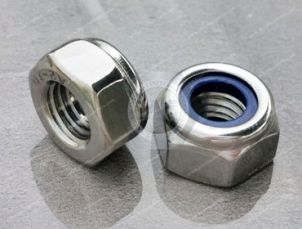
Hex nuts and locking nuts
CNC machined spacers
Self-clinching nuts
Self-clinching studs
Self-clinching standoffs
Blind rivet nuts
Cage nuts
Custom threaded components
Each product serves a different purpose.
For example, a self-clinching nut may provide an internal threaded attachment point in sheet metal, but it is not automatically a qualified floor anchor.
Custom M20 Threaded Components
Juxin Fasteners can review customer drawings for:
Special overall lengths
Threaded length requirements
Custom shank geometry
Special head designs
Drawing-specified materials
Surface treatments
CNC machined details
Inspection requirements
Specific manufacturing feasibility must be confirmed for the requested design.
Why OEM Drawings Matter
A drawing provides the basis for:
Dimensional conformity
Material specification
Production planning
Inspection
Quality documentation
Repeat ordering
For anchoring-related components, the drawing should also identify the intended function and any required product approval.
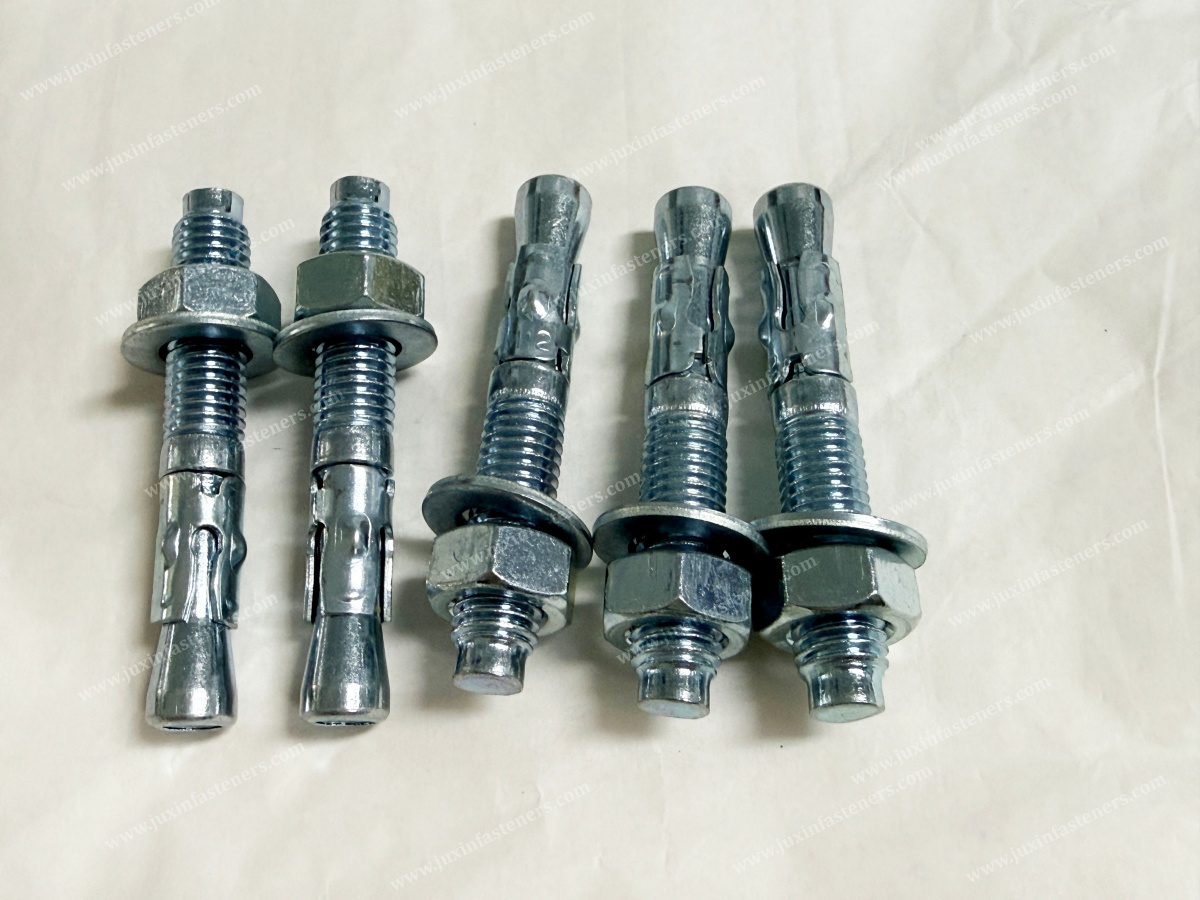
Manufacturing and Production Considerations
Depending on the component, the manufacturing route may include:
Material preparation
Forming or machining
Thread production
Secondary processing
Heat treatment where specified
Surface treatment
Inspection
Packaging
The actual process depends on the product design.
Production Consistency
Manufacturing and production managers should consider:
Thread accuracy
Critical dimensional tolerances
Part identification
Installation compatibility
Packaging consistency
Inspection requirements
Rework prevention
Installation-Kit Planning
For repeated equipment installations, a project-specific hardware kit may simplify picking and assembly.
Such a kit could contain the approved quantity of identified bolts, nuts, washers or related mounting components.
The contents must match the approved installation design.
Commercial Insight
A slightly higher component cost may be justified if it reduces installation errors, rework or assembly time.
The evaluation should consider total installed cost rather than unit price alone.
Quality Control for OEM Fasteners
Quality requirements should be established according to the drawing and customer specification.
Dimensional Inspection
Potential checks include:
Overall length
Thread dimensions
Critical diameters
Head geometry
Drawing tolerances
Material Verification
Material documentation or testing may be required by the customer.
Mechanical Properties
Where specified, mechanical testing may address relevant strength or hardness requirements.
Surface Inspection
Potential checks include coating condition, appearance and specified surface characteristics.
Thread Gauging
Suitable thread gauges help verify compatibility with the intended mating component.
Traceability
OEM projects may require lot identification and associated quality records.
Important Distinction
Passing dimensional and mechanical inspection does not, by itself, qualify a component as an approved concrete anchor.
Anchoring performance requires the relevant system-level evidence.
Supplier Development and Procurement Evaluation
Supplier qualification should include technical, quality and commercial considerations.
Technical Scope
Confirm whether the required product is:
A conventional threaded fastener
A custom mounting component
A mechanical concrete anchor
A concrete screw anchor
Part of a qualified anchoring assembly
Specification Control
Confirm the drawing, material, coating, thread and inspection requirements.
Qualification Evidence
Where applicable, request the required ETA, evaluation report, test documentation or OEM approval.
Manufacturing Feasibility
Confirm whether the supplier can produce the requested geometry and quantity.
Quality Requirements
Agree on inspection criteria, documentation and traceability.
Commercial Requirements
Review:
MOQ
Sample quantity
Initial production volume
Annual forecast
Lead time
Packaging
Delivery destination
Change-control requirements
Supply Chain Continuity
For repeated OEM orders, consistency of product definition and approved specifications is important.
An alternative supplier should not introduce unapproved changes to a qualified anchoring system.
Why Work with Juxin Fasteners?
Juxin Fasteners has more than 20 years of experience serving industrial and OEM fastener customers.
Our product portfolio includes threaded fasteners, locking nuts, sheet-metal fastening components and custom machined parts.
For ATM cabinet manufacturers and industrial equipment suppliers, relevant support may include:
Drawing-based M20 threaded components
Custom mounting bolts
Special nuts and related hardware
CNC machined spacers and standoffs
Sheet-metal fastening components
Material and coating selection review
Customer-specified inspection requirements
OEM packaging and bulk supply inquiries
Our role is to help customers source components that match their engineering and purchasing specifications.
Where a project requires certified concrete anchors or security-rated ATM safe anchoring, the relevant product approval and installation configuration must be established separately.
Frequently Asked Questions
What is an M20 anchor screw?
It is a term used for certain anchoring-related components with a nominal 20 mm metric thread.
The exact anchor design must be identified separately.
Is M20 × 2.5 a standard metric thread?
Yes. It is a common ISO metric coarse-thread designation, but it does not define the anchor's capacity or installation requirements.
Can any M20 bolt secure an ATM cabinet to concrete?
No. The fastener must be appropriate for the supporting structure, load conditions and specified anchoring system.
What is the difference between an anchor bolt and a concrete screw anchor?
They may transfer loads through different mechanisms.
A concrete screw anchor uses specially designed thread engagement with concrete, while other anchors may use expansion, bonding or cast-in anchorage.
How much load can an M20 anchor carry?
There is no universal capacity based on thread diameter alone.
The capacity depends on the anchor system, material, concrete conditions, geometry and design requirements.
What is the required embedment depth for an M20 anchor?
It depends on the selected anchor and its approved technical documentation.
What tightening torque should be used?
Use the installation procedure specified for the actual anchoring product.
Can M20 anchors be used in cracked concrete?
Only where the selected system is suitable for the specified cracked-concrete conditions.
What is EN 1992-4?
It provides European design rules for fastenings used in concrete.
What is ACI 318 Chapter 17?
It provides anchoring-to-concrete design provisions for applicable North American projects.
What is EN 1143-1?
It addresses burglary resistance for specified secure storage units, including ATM safes.
Does a larger M20 fastener automatically provide better ATM security?
No. Security depends on the approved equipment and anchoring configuration.
Can stainless steel replace a carbon steel anchor?
Not without evaluating mechanical properties, corrosion behavior and the relevant approval requirements.
Can Juxin Fasteners support custom M20 fasteners?
Juxin Fasteners accepts customer drawings for technical and manufacturing feasibility review.
What should purchasing teams include in an ATM fastener RFQ?
They should provide the product drawing, application, dimensions, material, coating, required quantity, quality requirements and any applicable anchor qualification documents.
ATM Cabinet Anchoring and M20 Fastener RFQ Checklist
Equipment Details
ATM or equipment model
Cabinet dimensions
Equipment weight
Mounting configuration
Base plate drawing
Mounting-hole positions
Fastener Details
Product type
M20 thread specification
2D drawing
3D model if available
Overall length
Threaded length
Head configuration
Material
Mechanical requirements
Surface treatment
Supporting Structure
Base material
Concrete strength where applicable
Concrete condition
Slab thickness
Edge distance
Anchor spacing
Engineering Requirements
Design tension
Design shear
Overturning loads
Environmental conditions
Applicable design standard
Required product qualification
Installation Requirements
Installation method
Embedment requirements
Drilling specifications
Setting procedure
Tooling access
Inspection requirements
Quality and Documentation
Dimensional inspection
Thread gauging
Material documentation
Mechanical testing where required
Coating requirements
Traceability
Installation records
Commercial Requirements
Sample quantity
Initial order quantity
Annual demand
MOQ expectations
Delivery schedule
Packaging
Destination
Request a Custom M20 Fastener or ATM Cabinet Mounting Hardware Quotation
Juxin Fasteners welcomes inquiries from:
ATM and banking equipment manufacturers
Self-service kiosk manufacturers
Industrial enclosure OEMs
Mechanical and structural engineers
Manufacturing engineers
Production managers
Procurement and purchasing specialists
Supplier development teams
Supply chain managers
If your project requires M20 threaded fasteners, special mounting bolts, machined spacers, locking nuts or other OEM equipment fastening components,
send us your drawing and application requirements.
For concrete anchoring or security-rated ATM safe installations, include the required approved anchor specification and relevant installation documentation.
Our team can review the component requirements and discuss manufacturing feasibility, material selection, inspection and quotation.
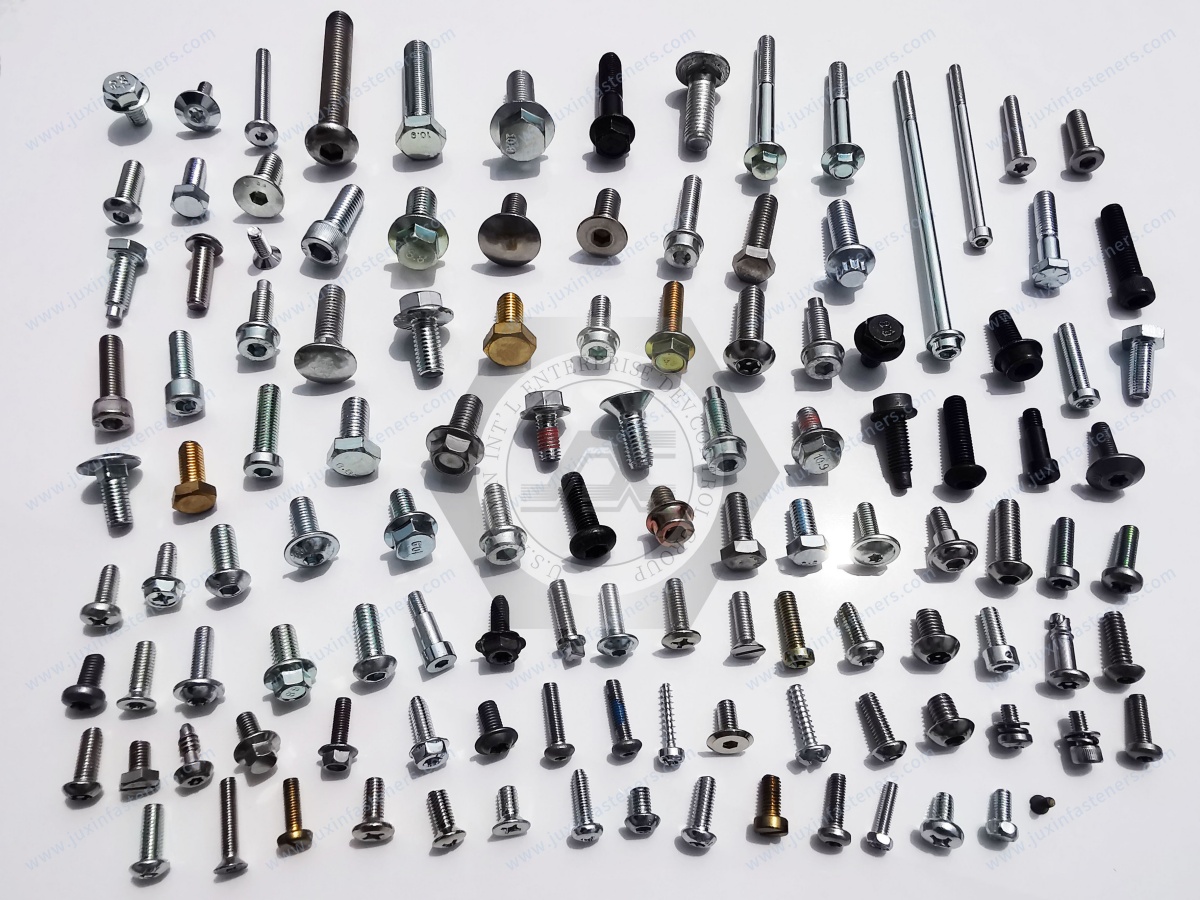
Company: Juxin Fasteners
Website: https://www.juxinfasteners.com/
Email: info@juxinfasteners.com
Reliable ATM equipment installation begins with the complete connection: the cabinet, mounting plate, fastener,
anchoring system, supporting structure and controlled installation process.
 MORE NEWS


Oct. 13, 2026
Contact Us
Tel.:
+86 020 8621 0320
+86 020 3121 6067
E-mail:
Technical Support:
Navigation
SEND INQUIREY