
Call Us
+86 136 6007 9809
Call Us
+86 136 6007 9809

Jun. 21, 2024
Automotive fasteners are small but essential components that directly affect vehicle safety, structural strength, and long-term reliability. Although they represent only a small part of the vehicle assembly, fasteners connect thousands of components and maintain the integrity of critical systems.
From wheel assemblies and suspension systems to engines, transmissions, and EV battery structures, automotive fasteners must withstand extreme mechanical and environmental conditions.
A failure of a safety-critical fastener may result in:
Structural damage
Component separation
Vehicle malfunction
Serious safety risks
Therefore, global automotive manufacturers require professional automotive fastener suppliers with advanced manufacturing capabilities and strict quality control systems.
Juxin Fasteners specializes in OEM automotive fasteners, providing high-strength bolts, screws, nuts, threaded inserts, and customized fastening solutions for automotive and new energy vehicle applications.
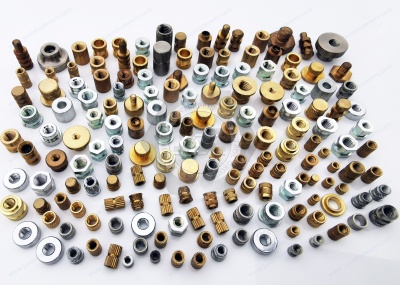
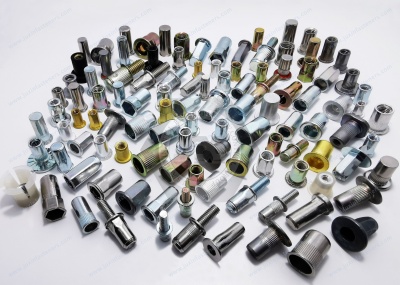
Automotive fasteners have unique characteristics compared with general industrial fasteners.
They require:
High mechanical strength
Excellent fatigue resistance
Precise dimensional accuracy
Stable torque performance
Superior corrosion resistance
Long-term reliability
Depending on their importance in vehicle safety, automotive fasteners can be divided into three categories:
Safety fasteners are components whose failure may directly cause serious vehicle accidents.
Typical examples include:
Wheel bolts
Axle bolts
Steering system bolts
Brake system fasteners
Suspension U-bolts
Key quality requirements:
Material strength
Hardness control
Tensile performance
Thread accuracy
Surface integrity
These fasteners require the highest level of manufacturing control and inspection.
Critical fasteners influence vehicle reliability and performance.
Applications include:
Engine mounting systems
Transmission assemblies
Chassis connections
Battery pack structures
Requirements:
Stable preload force
High fatigue strength
Accurate torque-tension relationship
General fasteners are used in non-safety-critical vehicle areas but still require reliable quality.
Examples:
Interior components
Covers
Brackets
Electrical components
Professional automotive fastener production requires strict control from raw material selection to final shipment.
The typical manufacturing process includes:
High-quality steel is the foundation of reliable automotive fasteners.
Common materials:
Carbon steel
Alloy steel
Stainless steel
Boron steel
Material inspection includes:
Chemical composition analysis
Mechanical property verification
Material certificate review
Before cold heading, steel wire is processed to achieve:
Accurate diameter
Improved surface quality
Stable forming performance
Proper material preparation helps prevent:
Cracks
Surface defects
Forming failures
Cold heading is widely used for automotive fastener production.
Advantages:
High production efficiency
Excellent material utilization
Improved fiber structure
Better mechanical performance
Applications:
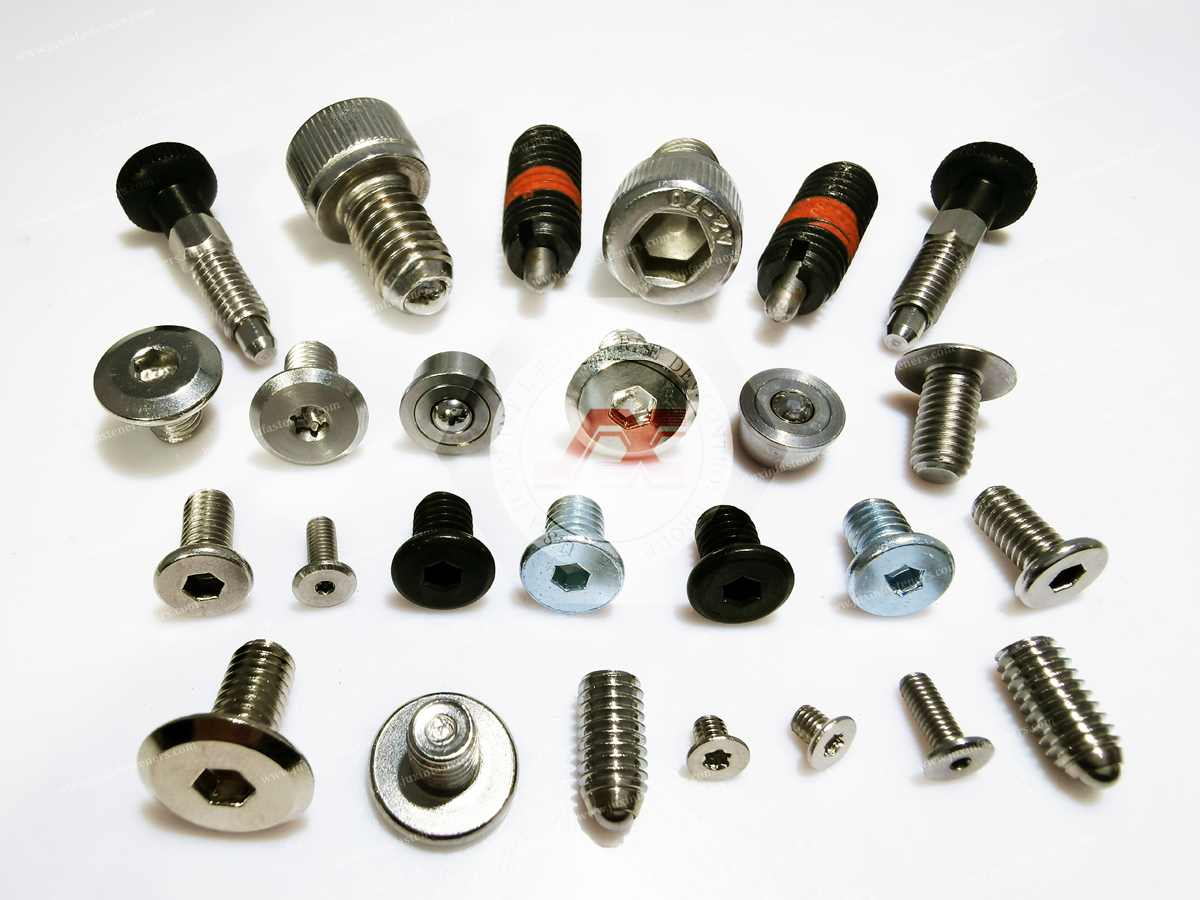
Hex bolts
Flange bolts
Socket head screws
Automotive special fasteners
Heat treatment determines the final mechanical performance of automotive fasteners.
Typical processes:
Quenching
Tempering
Carburizing
Benefits:
Higher tensile strength
Improved hardness
Better fatigue resistance
Enhanced toughness
Common automotive grades:
8.8
10.9
12.9
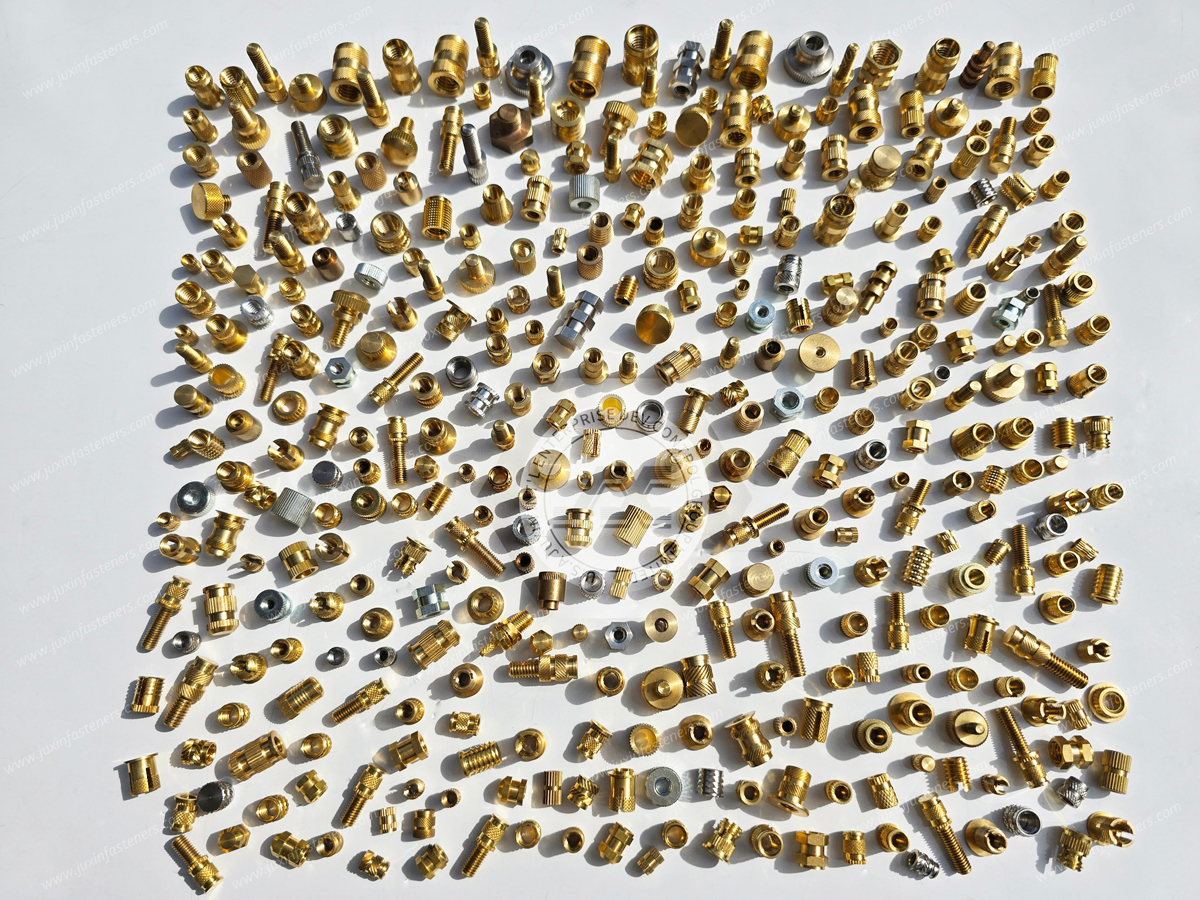
Thread accuracy directly affects assembly reliability.
Juxin Fasteners uses precision thread processing methods:
Advantages:
Higher thread strength
Improved fatigue performance
Better surface finish
Important controls:
Thread pitch
Thread diameter
Profile accuracy
Surface defects
Automotive fasteners often operate in harsh environments.
Common surface treatments include:
Zinc plating
Zinc-nickel coating
Zinc flake coating
Dacromet/Geomet coating
Black oxide
Phosphate coating
Benefits:
Improved corrosion resistance
Stable friction coefficient
Longer service life
For EV applications, zinc-nickel coated fasteners provide excellent corrosion protection for battery and aluminum structures.
Because automotive fasteners are safety-related components, quality must be controlled throughout the entire manufacturing process.
Juxin Fasteners establishes complete process control from:
Raw material → Forming → Heat treatment → Thread processing → Surface treatment → Inspection → Packaging
Each batch of automotive fasteners is controlled with complete traceability records.
Quality records include:
Material supplier
Heat number
Steel grade
Production batch
Manufacturing date
Inspection results
This ensures fast and accurate quality tracking.
Controls:
Length
Diameter
Head dimensions
Thread specifications
Assembly dimensions
Includes:
Verifies:
Tensile strength
Yield strength
Elongation
Controls:
Rockwell hardness
Vickers hardness
Surface hardness
Evaluates:
Torque coefficient
Clamp load consistency
Advanced metallographic inspection evaluates:
Grain structure
Heat treatment quality
Decarburization
Microstructure uniformity
This is critical for high-strength automotive bolts.
Testing includes:
Coating thickness measurement
Salt spray testing
Adhesion testing
Corrosion resistance evaluation
Juxin Fasteners has established a comprehensive testing system to support automotive OEM customers.
Our laboratory capabilities include:
✔ Material analysis equipment
✔ Tensile testing machines
✔ Hardness testers
✔ Torque testing equipment
✔ Coating thickness testers
✔ Metallographic analysis instruments
✔ Salt spray testing equipment
✔ Flaw detection instruments
These inspection capabilities ensure stable product quality and compliance with customer requirements.
Products:
High-strength bolts
Flange bolts
U-bolts
Wheel fasteners
Applications:
Suspension systems
Steering systems
Brake systems
Applications:
Engine mounting
Cylinder head connections
Transmission systems
Requirements:
High temperature resistance
Fatigue durability
Stable preload
EV manufacturers require:
Lightweight fastening solutions
High corrosion resistance
Long service reliability
Applications:
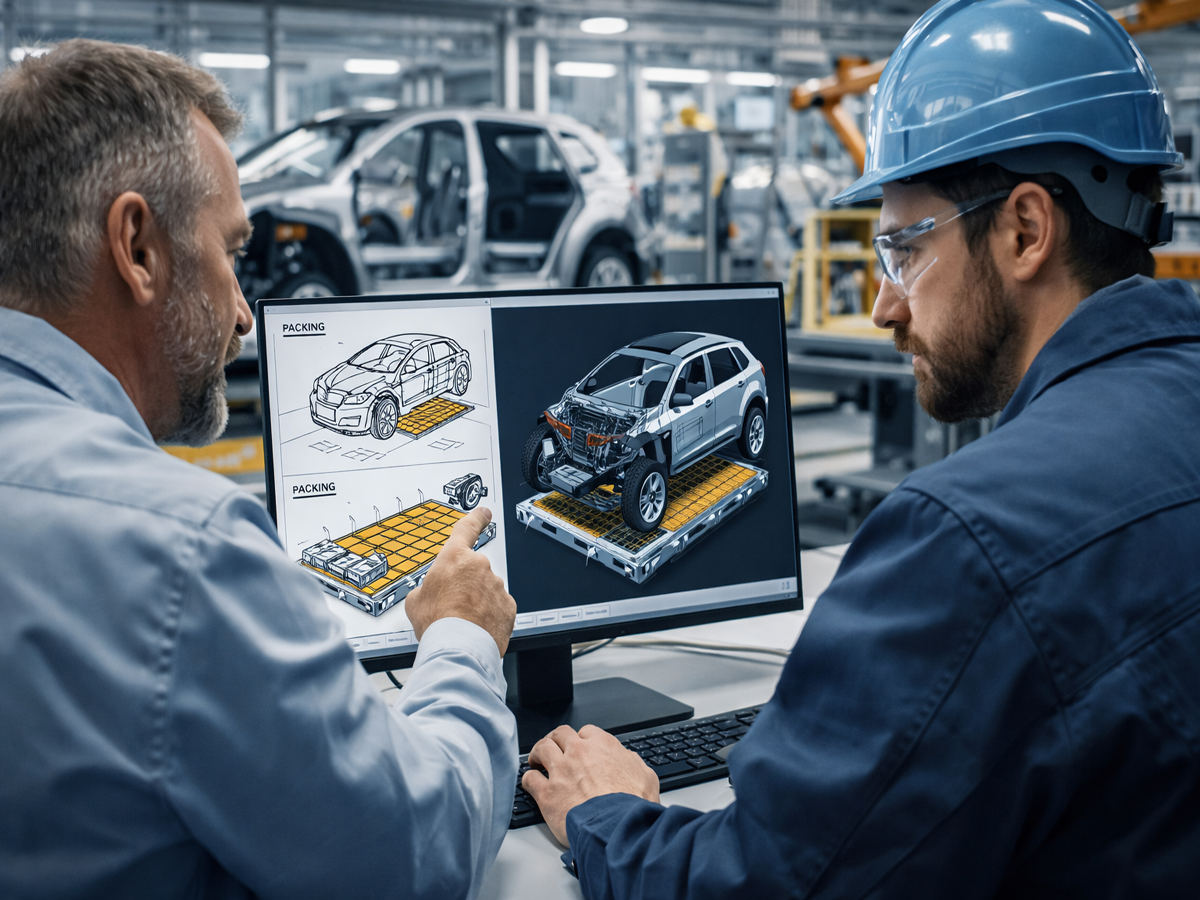
Battery trays
Battery modules
Aluminum frame structures
Solutions:
Zinc-nickel coated bolts
Stainless steel screws
Customized threaded inserts
Juxin Fasteners provides professional OEM fastening solutions for global automotive manufacturers.
Our advantages:
✔ Automotive fastener manufacturing experience
✔ Complete quality inspection system
✔ Advanced testing laboratory
✔ Strict process control
✔ Customized OEM capability
✔ Batch traceability management
We support customers from prototype development to mass production with reliable fastening solutions.
For automotive OEM fasteners, high-strength bolts, customized screws, and quality inspection solutions:
Email: info@juxinfasteners.com
Website:
https://www.juxinfasteners.com
 MORE NEWS
Sep. 27, 2026
Sep. 27, 2026
Sep. 27, 2026
Contact Us
Tel.:
+86 020 8621 0320
+86 020 3121 6067
E-mail:
Technical Support:
Navigation
SEND INQUIREY