
Call Us
+86 136 6007 9809
Call Us
+86 136 6007 9809

Aug. 13, 2024
Automotive Fastener Quality Assurance: High-Strength Bolts, Precision Shoulder Screws and OEM Supply
Automotive fastener quality assurance is essential for maintaining reliable mechanical connections and consistent production performance.
Bolts, screws, shoulder fasteners and other threaded components are used in vehicle assemblies, manufacturing equipment, precision mechanisms and electrical systems.
A fastener may appear dimensionally correct yet fail to meet the mechanical, surface or functional requirements of its intended application.
For automotive OEMs and industrial manufacturers, effective quality assurance must therefore extend from material identification and manufacturing control to finished-part inspection,
assembly validation and supplier traceability.
This is particularly important for high-strength steel fasteners, precision shoulder screws and custom components that must perform consistently in automated production environments.
Juxin Fasteners supplies industrial and automotive fastening components, including high-strength bolts,
alloy steel screws, stainless steel fasteners, precision shoulder screws, thread-locking components and drawing-specific OEM parts.
This guide focuses on how fastener quality is specified, verified and maintained—and how the correct product selection supports reliable assembly and long-term sourcing.
What Automotive Fastener Quality Assurance Must Cover
Automotive fasteners can be subjected to axial tension, cyclic loading, transverse vibration, temperature changes and environmental exposure.
Depending on the joint design, failure may result in loss of preload, damaged threads, fatigue fracture, component movement or assembly malfunction.
An effective quality assurance plan should address the characteristics that are critical to the specific product.
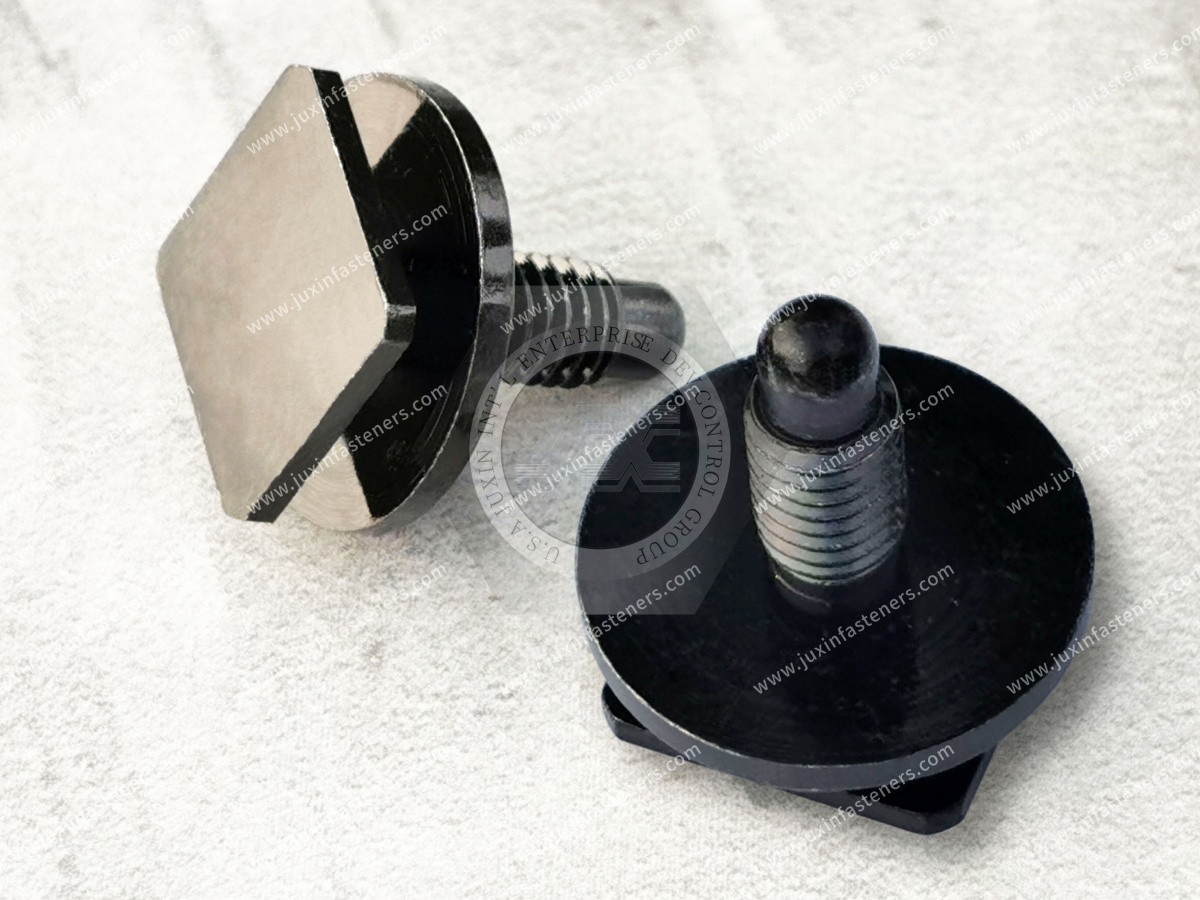
These may include:
Material composition and identification
Mechanical-property requirements
Heat-treatment conformity
Dimensions and thread tolerances
Surface condition
Coating and friction requirements
Functional locking performance
Inspection records
Lot identification
Change control
Not every fastener requires the same inspection or testing program.
The inspection plan should be based on the approved drawing, applicable standards, customer requirements and consequences of failure.
Material Quality Assurance for High-Strength Automotive Fasteners
Material selection establishes the foundation for fastener manufacturing, but the finished fastener must also satisfy its specified mechanical and dimensional requirements.
Carbon Steel and Alloy Steel
Carbon steel and alloy steel are commonly used for suitable automotive and industrial bolts.
Material controls may address chemical composition, wire quality, processing suitability and traceability.
Elements such as carbon, chromium, molybdenum, boron, sulfur and phosphorus can influence steel behavior, depending on their concentrations and the overall material specification.
Why Chemical Composition Matters
Material chemistry can affect:
Hardenability
Formability
Strength
Toughness
Heat-treatment response
Susceptibility to certain cracking mechanisms
However, no individual element determines the performance of the finished fastener by itself.
Engineering Recommendation
For critical components, verify the material specification and relevant finished-product requirements rather than relying only on a general description such as “alloy steel.”
High-Strength Bolt Property Classes: 8.8, 10.9 and 12.9
Metric steel fasteners may be specified according to ISO 898-1 where applicable.
Common property classes include 8.8, 10.9 and 12.9.
| Property class | Nominal tensile-strength designation | Typical selection consideration |
|---|---|---|
| 8.8 | 800 MPa | Suitable for selected general and mechanical fastening requirements |
| 10.9 | 1,000 MPa | Higher-strength applications requiring appropriate joint design |
| 12.9 | 1,200 MPa | Specialized high-strength applications requiring careful specification |
These designations do not mean that every product in the same class has identical geometry, fatigue behavior or suitability for a particular automotive connection.
Why Higher Strength Is Not Automatically Safer
Selecting a stronger bolt does not necessarily improve the complete joint.
A higher property class may introduce different requirements concerning material processing, coating selection, assembly preload and environmental exposure.
For example, a high-strength steel screw installed into a lower-strength aluminum component may be limited by the internal thread rather than by the screw's tensile capacity.
Engineering Recommendation
Select the property class according to the approved joint design, not solely by the highest available tensile-strength designation.
Heat Treatment Quality Control
Many high-strength carbon steel and alloy steel fasteners require controlled heat treatment.
Quenching and tempering are commonly used to achieve specified mechanical properties in suitable materials.
Important process variables may include:
Temperature
Process duration
Quenching conditions
Tempering conditions
Material hardenability
Component dimensions
What Should Be Verified?
Depending on the specification, verification may involve hardness, tensile properties, proof-load behavior, microstructure or other relevant characteristics.
Hardness testing is useful, but hardness alone does not establish full conformity with a fastener's mechanical-property requirements.
Potential Heat-Treatment Problems
Inadequate processing may contribute to:
Insufficient strength
Excessive hardness
Distortion
Undesirable microstructure
Increased cracking susceptibility
Engineering Recommendation
Use the specified material and finished-product acceptance requirements to determine the appropriate heat-treatment verification plan.
Hydrogen Embrittlement Risk and Surface Processing
Hydrogen-assisted cracking is an important concern for susceptible high-strength steel fasteners.
Hydrogen may be introduced during certain manufacturing or surface-treatment operations, including acid cleaning and electroplating.
Under particular combinations of material susceptibility, tensile stress and hydrogen exposure, delayed cracking may occur.
Quality Assurance Considerations
A suitable risk assessment may consider:
Steel strength and hardness
Heat-treatment condition
Surface-processing route
Coating method
Applied and residual stresses
Relevant mitigation procedures
Customer qualification requirements
Is Post-Plating Baking Always Sufficient?
No.
Baking may be required for certain fastener and coating combinations, but it does not guarantee elimination of hydrogen-embrittlement risk.
The appropriate controls depend on the product specification and process.
Engineering Recommendation
For susceptible high-strength steel fasteners, coating selection and process qualification should be reviewed together.
Dimensional and Thread Inspection
Dimensional conformity is essential for both assembly compatibility and functional performance.
Important characteristics may include:
Thread diameter and pitch
Thread tolerance
Head dimensions
Shank diameter
Overall length
Shoulder diameter
Shoulder length
Bearing surface geometry
Surface defects
For precision shoulder screws, shoulder dimensions may be more functionally important than the nominal thread diameter.
Example: Precision Shoulder Screw Inspection
A shoulder screw used as a pivot or locating element may require controlled shoulder diameter, length, concentricity and surface finish.
A screw that passes a basic thread gauge may still be unsuitable if its shoulder geometry does not meet the approved drawing.
Production Recommendation
Inspection planning should identify the dimensions that directly affect assembly function rather than treating every drawing dimension as equally critical.
Mechanical and Functional Testing
Fastener quality assurance may involve mechanical testing, but the required tests vary by product.
Potential verification methods include:
Tensile testing
Hardness testing
Proof-load testing
Torque/clamp force testing
Prevailing torque testing
Coating verification
Functional assembly testing
Fatigue testing may be required for selected applications, but it should not be presented as a universal test for every automotive screw.
Torque Versus Preload
Tightening torque is not a direct measurement of bolt preload.
Friction at the threads and bearing surfaces influences the torque-to-clamp-load relationship.
A coating change may therefore alter assembly behavior even when the bolt dimensions and mechanical-property class remain unchanged.
Engineering Recommendation
For joints requiring controlled preload, verify the applicable tightening procedure and friction-related requirements.
Precision Shoulder Screws: Quality Requirements and Product Selection
Shoulder screws are designed with a defined unthreaded shoulder that can provide a locating, guiding or bearing function.
They differ from conventional fully threaded screws because the shoulder geometry may control the movement or position of an assembled component.
Depending on the application, shoulder screws may be used in:
Automotive manufacturing equipment
Robotics
Precision machinery
Assembly fixtures
Punch and die systems
Pivot mechanisms
Positioning devices
Low-Profile Metric Shoulder Screws
Low-profile shoulder screws may be suitable where installation height is limited.
Potential benefits include compact assembly geometry and reduced head projection.
However, reduced head height may affect drive engagement and tightening capability.
Quality Requirements
Confirm:
Shoulder diameter and tolerance
Shoulder length
Head height
Drive geometry
Thread specification
Material and mechanical properties
Important Limitation
A low-profile shoulder screw should not automatically be assumed to have the same load capacity or tightening capability as a standard-height shoulder screw.
Alloy Steel Thread-Locking Shoulder Screws
These components combine a precision shoulder with a specified locking feature.
Depending on the design, the locking element may help resist unwanted rotation.
Potential applications include:
Automotive tooling
Machinery pivots
Precision assemblies
Industrial automation equipment
Quality Considerations
Verify the shoulder dimensions, locking feature, prevailing torque requirements where applicable, and intended installation conditions.
Engineering Recommendation
The locking feature must be compatible with the mating thread and expected assembly or reuse requirements.
18-8 Stainless Steel Thread-Locking Shoulder Screws
Stainless steel shoulder screws may be selected for suitable corrosion-sensitive equipment.
A thread-locking feature can be incorporated where required.
Potential applications include:
Electrical equipment
Precision devices
Laboratory equipment
Industrial machinery
Material Limitation
18-8 stainless steel should not be assumed to provide the same mechanical properties as a high-strength heat-treated alloy steel fastener.
Flat Head Shoulder Screws
Flat head shoulder screws combine a shoulder section with a countersunk head.
They may be useful where a flush or recessed head is required.
Design Considerations
The countersink geometry, head seating, shoulder dimensions and loading must be verified.
A flush head does not automatically establish suitability for structural or safety-critical applications.
Thumb-Grip Stainless Steel Shoulder Screws
Thumb-grip shoulder screws may be suitable for equipment requiring convenient manual adjustment or removable positioning components.
Potential applications include:
Measuring instruments
Inspection fixtures
Laboratory equipment
Precision mechanisms
Quality Considerations
Evaluate grip geometry, shoulder dimensions, thread engagement and intended operating load.
For repeated manual adjustment, wear and usability may be important design factors.
Engineering Recommendation
Select shoulder screws according to their positioning, guiding or pivot function—not merely by thread size or material.
Set Screws for Precision Positioning
Set screws are used for positioning or securing components in suitable mechanical assemblies.
Their functional requirements differ from those of conventional clamp-load bolts.
Half Dog-Point Set Screws
Half dog-point set screws have a projecting cylindrical tip that may engage a mating recess or locating feature.
Potential applications include:
Shaft positioning
Mechanical alignment
Guided adjustment
Equipment assemblies
Quality Requirements
Tip diameter, projection length, thread geometry and mating-hole dimensions can affect positioning performance.
Cone-Point Set Screws
Cone-point set screws use a pointed tip that can engage or indent a mating surface.
Potential applications include:
Machinery positioning
Shaft-related components
Adjustment mechanisms
Design Limitation
The pointed tip may damage or mark the mating surface.
This can be unacceptable where the component requires repeated adjustment or must remain free from indentation.
Surface Treatment
Black oxide may be selected for appearance or limited protection, but it is not equivalent to a qualified high-corrosion-resistance coating.
Engineering Recommendation
Select set screw point geometry according to the mating component, positioning requirements and acceptable surface damage.
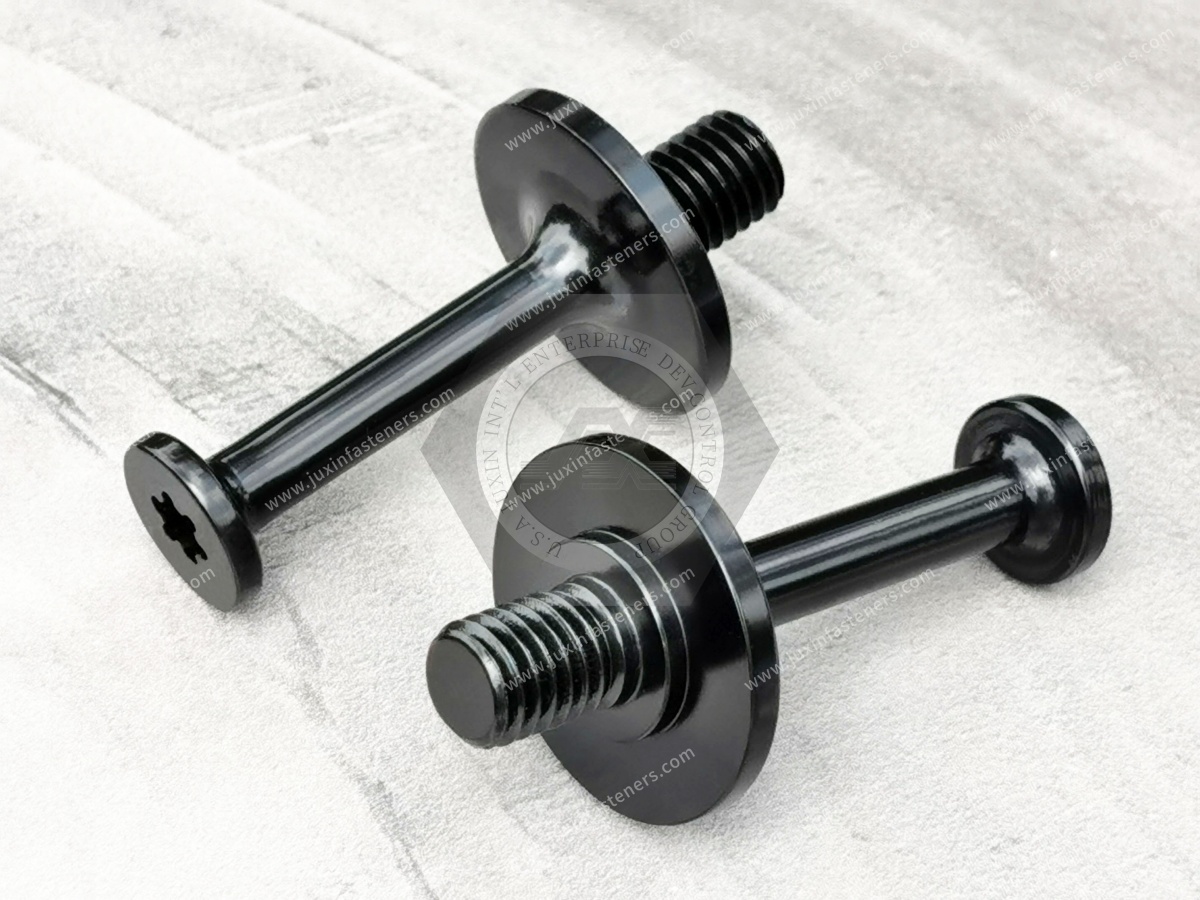
Automotive and Industrial Applications
Automotive Mechanical Assemblies
High-strength bolts and precision screws may be used in selected automotive mechanical connections.
The required strength, fatigue behavior and installation controls depend on the approved design.
Specialized safety-critical fasteners require dedicated engineering specifications and qualification.
EV Battery Pack and Electrical Equipment
Potential fastening applications include:
Battery-related enclosures
Electrical modules
Mechanical mounting systems
Thermal-management equipment
Selection should consider mechanical loading, corrosion exposure, thermal conditions and electrical safety requirements.
A fastener suitable for a general equipment enclosure should not automatically be approved for a safety-critical battery structure.
Rail Equipment and Transportation Machinery
Selected fastening components may be used in rail-related equipment, interiors and electrical enclosures.
Application-specific standards, approvals and performance requirements must be confirmed before use.
Aerospace-Related Equipment
Precision fasteners may be relevant to certain aerospace-related equipment or manufacturing machinery.
However, aircraft flight-critical applications require dedicated specifications, material controls and qualification procedures.
General industrial fasteners should not be presented as aerospace-approved without evidence.
Robotics and Industrial Automation
Precision shoulder screws and set screws may be useful in:
Robot mechanisms
Assembly fixtures
Positioning systems
Machinery pivots
Production equipment
For these applications, repeatable geometry, wear behavior and maintenance accessibility may be more important than maximum tensile strength.
Electrical Cabinets and HVAC Equipment
Depending on the design, stainless steel screws, locking screws and other industrial fasteners may be used in:
Control cabinets
Sheet-metal enclosures
HVAC equipment
Electrical mounting systems
Selection should consider corrosion exposure, sheet thickness, thread engagement and assembly requirements.
Medical and Laboratory Equipment
Precision stainless steel fasteners may be considered for suitable equipment assemblies.
Medical-device applications can involve additional material, cleanliness, regulatory and traceability requirements.
Such requirements must be confirmed separately and cannot be inferred from a general stainless steel product description.
Quality Assurance for Production-Line Consistency
Automotive manufacturing requires consistent parts across repeated deliveries.
For production managers, the practical concerns include:
Assembly tool compatibility
Fastener identification
Thread-starting reliability
Drive engagement
Coating friction consistency
Automated feeding
Installation repeatability
Rework control
Lot identification
Example: Shoulder Screw Assembly
A shoulder screw may meet its thread specification but cause assembly problems if the shoulder length or diameter varies outside the approved tolerance.
In an automated fixture, this can lead to positioning errors, interference or unexpected maintenance.
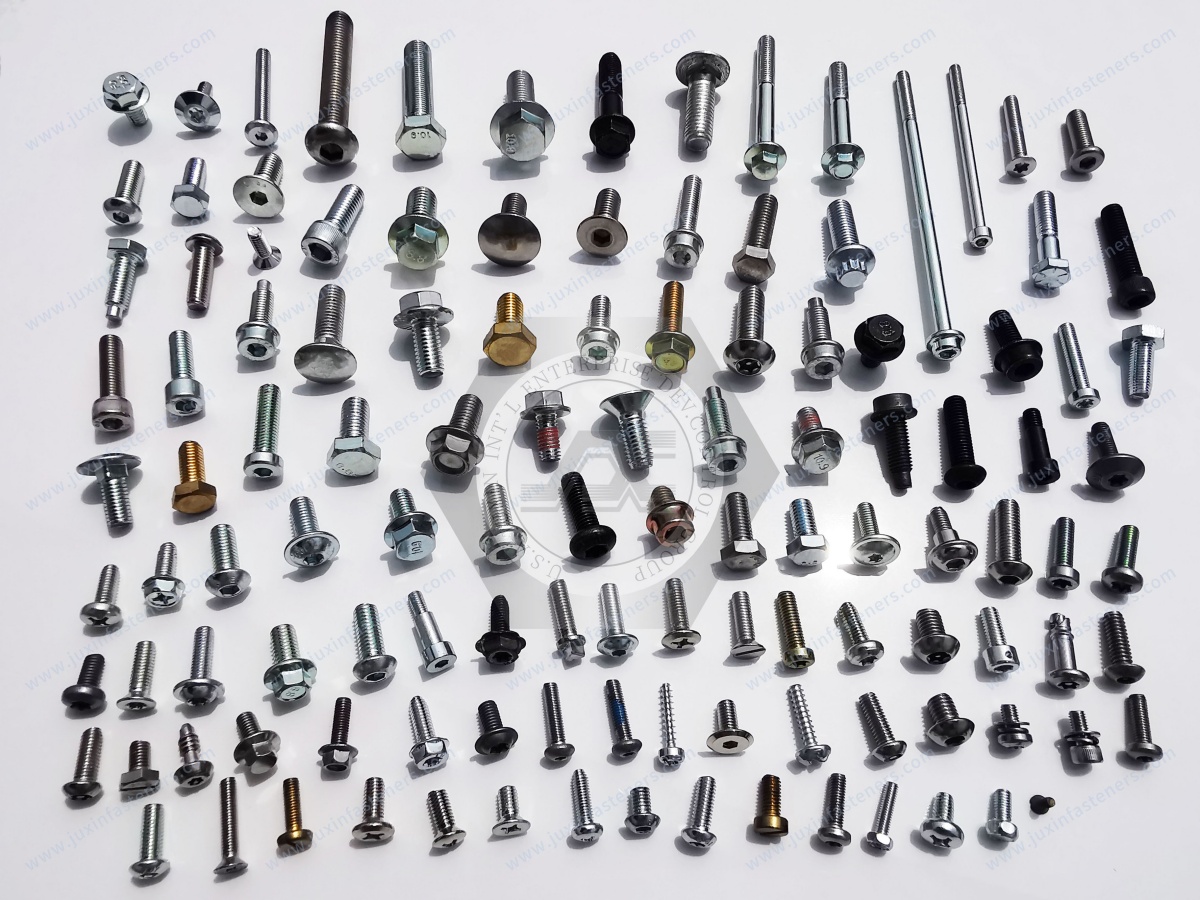
Example: Locking Feature Variation
A thread-locking screw may fit the mating thread but require a different installation torque if the locking element changes.
This can affect assembly-tool settings and production consistency.
Production Recommendation
Evaluate the characteristics that influence actual assembly performance, not only the finished part's appearance.
Supplier Qualification and Automotive OEM Procurement
For purchasing and supplier development teams, fastener quality assurance must extend beyond initial samples.
A practical qualification process may include:
Drawing and Specification Review
Confirm part number, revision, material, mechanical properties, dimensions, coating and functional requirements.
Manufacturing Feasibility
Evaluate whether the required geometry, tolerance and production volume can be supported by the proposed manufacturing process.
Inspection Planning
Identify critical characteristics, required test methods and acceptance criteria.
Sample Approval
Verify representative samples against the approved requirements.
Production and Traceability
Establish agreed controls for lot identification, inspection documentation and engineering changes.
Commercial Review
Confirm MOQ, tooling requirements, production quantity, packaging, lead time and repeat-order arrangements.
Important Procurement Principle
A lower quotation does not necessarily mean a lower total cost if the alternative fastener increases inspection, assembly, rework or production interruption costs.
Relevant International Standards
The following standards may be relevant depending on the specific fastener and customer specification.
ISO 898-1
Mechanical properties of applicable carbon steel and alloy steel bolts, screws and studs.
ISO 3506-1
Mechanical properties of applicable corrosion-resistant stainless steel bolts, screws and studs.
ISO 965 Series
Tolerances for ISO general-purpose metric screw threads.
ISO 4762
Dimensional characteristics of applicable hexagon socket head cap screws.
ISO 16047
Torque/clamp force testing for threaded fasteners within its scope.
ISO 4042
Electroplated coating systems for fasteners within its scope.
ISO 10683
Non-electrolytically applied zinc-flake coating systems for fasteners within its scope.
IATF 16949
An automotive quality management system standard that may be relevant to certain supplier qualification requirements.
Reference to IATF 16949 does not imply that Juxin Fasteners holds this certification.
Metric and Inch-Series Thread Compatibility
Metric, UNC, UNF, BSW and BSF thread systems are distinct and must not be treated as directly interchangeable.
Approximate dimensional conversions are reference values only.
For alternative sourcing, confirm the complete thread designation, tolerance, geometry and mating-part requirements.
Frequently Asked Questions
What is automotive fastener quality assurance?
It is the process of defining and verifying fastener requirements, including materials, mechanical properties,
dimensions, surface condition, functional performance and relevant production controls.
Are Class 12.9 bolts always better than Class 10.9 bolts?
No. The correct property class depends on the approved joint design, service conditions and material-processing requirements.
What should be inspected on a precision shoulder screw?
Important characteristics may include shoulder diameter, shoulder length, concentricity, thread geometry, head dimensions and surface finish.
Can a thread-locking shoulder screw replace a standard shoulder screw?
Only after verifying the locking feature, mating thread, installation process and approved application requirements.
What is the difference between a half dog-point and cone-point set screw?
A half dog-point screw has a cylindrical locating tip, while a cone-point screw has a pointed tip that may indent the mating surface.
Does black oxide provide strong corrosion protection?
Not by itself. Black oxide generally provides limited corrosion protection compared with qualified protective coating systems.
How should automotive fastener suppliers be qualified?
Supplier qualification should consider approved drawings, material and process requirements,
inspection methods, traceability, sample approval and commercial supply conditions.
Does every automotive fastener require fatigue testing?
No. Testing requirements depend on the product, application criticality, customer specification and applicable standards.
Juxin Fasteners: Precision Automotive and Industrial Fastening Components
Juxin Fasteners supplies industrial and automotive fastening products for OEM and manufacturing applications.
Relevant product categories include:
High-strength alloy steel bolts
Socket head screws
Precision shoulder screws
Low-profile shoulder screws
Thread-locking shoulder screws
Stainless steel shoulder screws
Flat head shoulder screws
Thumb-grip shoulder screws
Half dog-point set screws
Cone-point set screws
Drawing-specific custom fasteners
Specific configurations, materials, coatings, manufacturing methods, testing, inspection documentation,
MOQ and lead times require technical and commercial confirmation.
For safety-critical automotive applications, the approved OEM specification and applicable qualification procedures take precedence over general product recommendations.
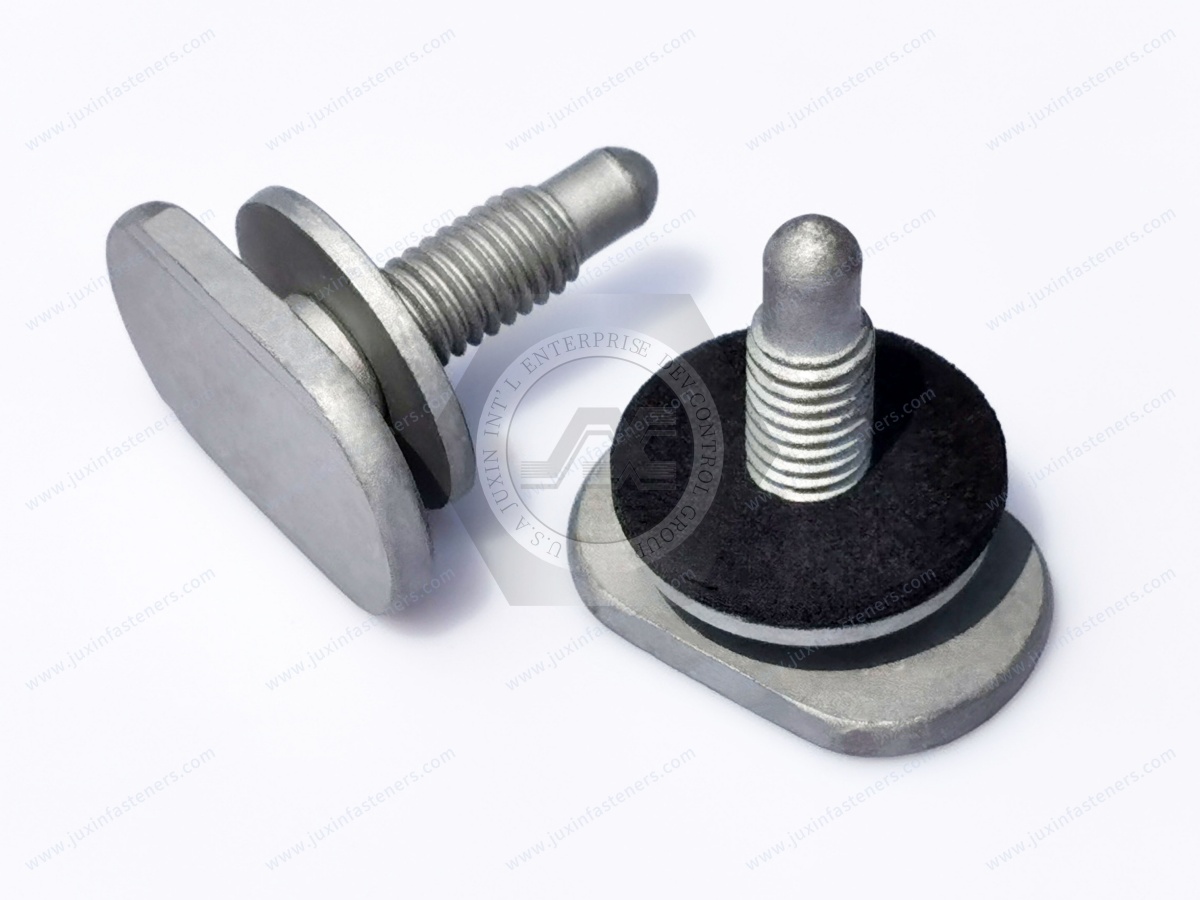
Request an Automotive Fastener Quality Review or OEM RFQ
Are you qualifying a new fastener supplier, sourcing precision shoulder screws or evaluating high-strength bolts for an OEM assembly?
Juxin Fasteners welcomes drawing-based inquiries from automotive manufacturers, Tier-1 and Tier-2 suppliers, engineering teams,
production managers, purchasing specialists and supplier development professionals.
For an effective review and quotation, please provide:
Approved drawing and revision + part number + dimensions and tolerances + thread designation + material + mechanical-property requirements
+ coating + locking or positioning requirements + application + inspection criteria + prototype quantity + annual demand + batch size + packaging + target delivery schedule.
Company: Juxin Fasteners
Website: https://www.juxinfasteners.com/
Email: info@juxinfasteners.com
Send your drawings and OEM fastener RFQ to Juxin Fasteners for technical confirmation, supplier evaluation and quotation.
Contact Us
Tel.:
+86 020 8621 0320
+86 020 3121 6067
E-mail:
Technical Support:
Navigation
SEND INQUIREY



