
Call Us
+86 136 6007 9809
Call Us
+86 136 6007 9809

Aug. 13, 2024
Automotive Fastener Material Selection and Safety: Steel, Stainless Steel, Coatings and OEM Joint Reliability
Automotive fasteners are small components with a significant influence on vehicle assembly quality, mechanical reliability and serviceability.
Bolts, screws, nuts and other fastening components connect engine-related equipment, chassis structures, body assemblies, battery enclosures and electronic systems.
The correct fastener must satisfy more than a nominal diameter and thread specification. Material strength, corrosion resistance,
fatigue behavior, joint geometry, coating friction and installation conditions can all affect performance.
A high-strength alloy steel bolt may be appropriate for a mechanically demanding connection, while a stainless steel screw may be preferred for a corrosion-sensitive enclosure.
A nylon patch locking screw may be useful where a validated prevailing torque feature is required.
These products solve different engineering problems and should not be treated as universal substitutes.
For design engineers, material selection determines the mechanical and environmental limits of a joint.
For manufacturing engineers and production managers, it also influences tightening consistency, tool selection, rework and production efficiency.
Procurement teams must evaluate technical conformity alongside pricing, lead time, MOQ and supply continuity.
Juxin Fasteners supplies industrial and automotive fastening components, including high-strength steel bolts,
alloy steel screws, stainless steel screws, locking fasteners and drawing-specific OEM components.
Materials, finishes, manufacturing processes and qualification requirements are subject to technical confirmation.
This guide explains how to select automotive fastener materials and fastening solutions while reducing engineering, assembly and sourcing risks.
Why Automotive Fastener Material Selection Matters
Vehicle fastening systems experience different combinations of mechanical and environmental loading.
Relevant conditions may include:
Static tensile and shear loading
Cyclic loading and fatigue
Vibration and impact
Thermal expansion
Humidity and salt exposure
Chemical exposure
Repeated installation or maintenance
Contact with dissimilar materials
A fastener that performs adequately in a dry interior assembly may not be suitable for an exposed chassis location.
Likewise, a corrosion-resistant screw may not have the mechanical strength required for a safety-critical connection.
The selection process should therefore begin with the actual application rather than a general preference for the strongest or most corrosion-resistant material.
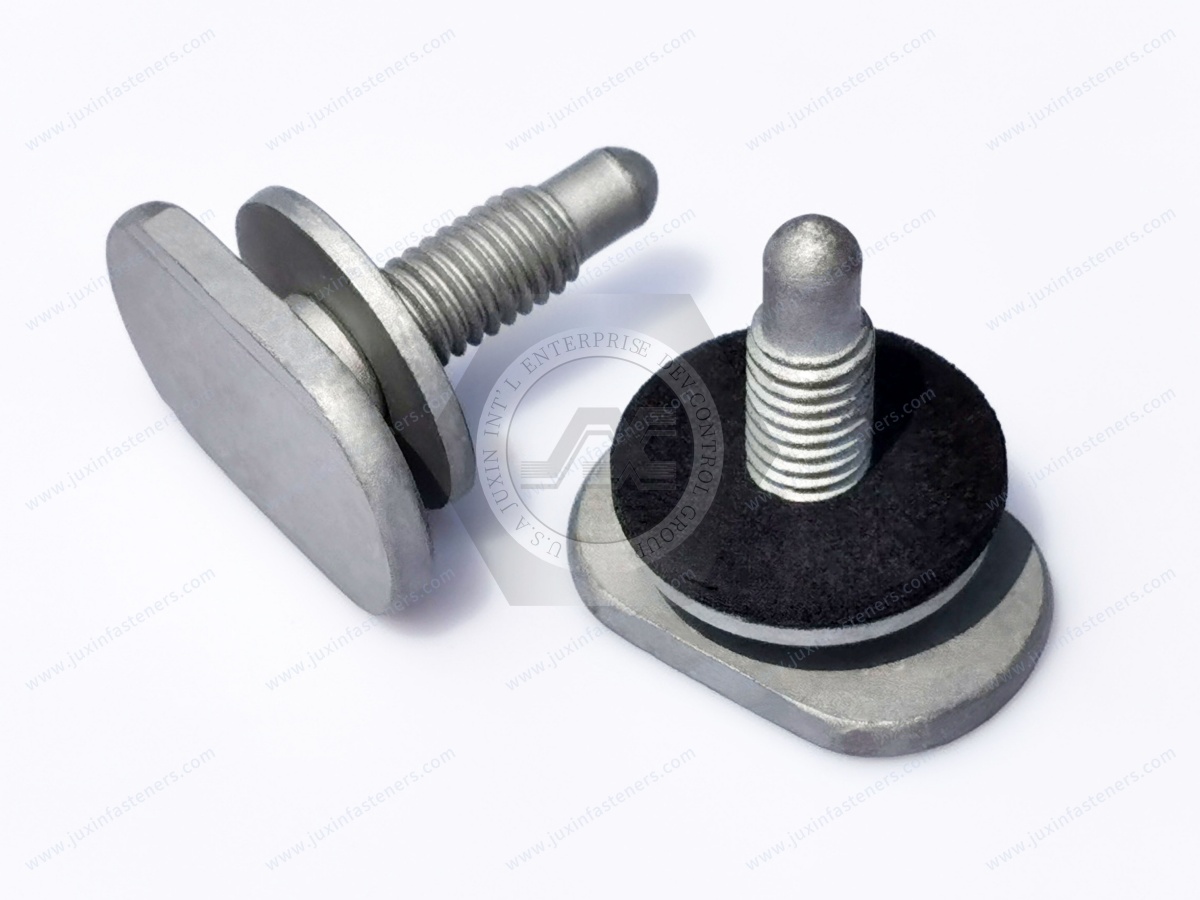
Carbon Steel Fasteners for Automotive Manufacturing
Carbon steel fasteners are widely used in mechanical and industrial assemblies because they can provide a practical balance of cost, manufacturability and mechanical performance.
Depending on the product specification, carbon steel screws and bolts may be suitable for:
Interior equipment
Body-related assemblies
Mechanical brackets
General mounting components
Selected noncritical structural connections
Carbon steel fasteners often require a protective surface treatment when exposed to moisture or corrosive environments.
The appropriate coating depends on the required corrosion performance, assembly friction and operating conditions.
Engineering Consideration
Do not select a carbon steel screw based only on its low purchase price.
The installed cost may also depend on coating requirements, assembly efficiency and expected service conditions.
Alloy Steel Fasteners for Higher-Strength Connections
Heat-treated alloy steel fasteners are commonly considered for applications requiring higher specified mechanical strength.
Potential automotive applications include selected:
Chassis connections
Suspension-related assemblies
Engine accessory structures
Transmission-related components
Mechanical mounting systems
Commercial vehicle equipment
Their suitability depends on the approved joint design.
For applicable metric bolts, screws and studs, ISO 898-1 defines mechanical-property requirements for specified property classes.
| Metric property class | Nominal tensile-strength designation | Selection consideration |
|---|---|---|
| 8.8 | 800 MPa | Suitable where the approved joint design permits |
| 10.9 | 1,000 MPa | Higher-strength applications requiring verified preload and joint capacity |
| 12.9 | 1,200 MPa | Specialized applications requiring additional attention to material and processing conditions |
These values describe nominal property-class designations, not universal guarantees of joint performance.
Higher Strength Does Not Automatically Mean Higher Safety
A higher-strength bolt may provide increased tensile capacity, but it does not automatically improve:
Fatigue life
Corrosion resistance
Vibration resistance
Mating-thread strength
Joint stiffness
Installation consistency
In some designs, the limiting component is the internal thread, clamped material or joint geometry rather than the bolt itself.
Engineering Recommendation
Select the required property class only after evaluating the complete joint, including the mating components and installation method.
Alloy Steel Torx Drive Screws
Alloy steel screws with internal six-lobe drives are used in various mechanical and automotive-related assemblies.
A suitable six-lobe drive can provide positive tool engagement and support efficient installation when the correct tool is used.
Potential benefits include:
Reliable drive engagement
Compatibility with suitable powered tools
Reduced risk of certain drive-related installation problems
Compact installation options depending on head geometry
However, the drive type does not establish the fastener's tensile strength.
Torx and Torx Plus are distinct drive geometries, and tool compatibility must be confirmed.
Important Standards Distinction
ISO 4762 specifies hexagon socket head cap screws within its scope. It should not be used as a blanket dimensional standard for Torx drive screws.
ASTM A574 covers specified alloy steel socket-head cap screws within its scope. Its requirements should not be automatically assigned to every six-lobe-drive screw.
For a custom Torx screw, the approved drawing must define the head, recess, material, mechanical properties and applicable standards.
Engineering Recommendation
Verify the actual mechanical-property specification and drive geometry instead of relying on an unsupported universal strength claim.
Stainless Steel Fasteners for Corrosion-Sensitive Applications
Stainless steel screws may be suitable for selected automotive components where corrosion resistance and environmental compatibility are important.
Applications may include:
Electrical equipment enclosures
Selected EV battery-related housings
Automotive electronics
Exterior equipment
Interior mechanical components
Certain nonstructural brackets
Common austenitic stainless steel fastener materials include grades associated with A2 and A4 designations under applicable ISO 3506 requirements.
The commercial term 18-8 generally refers to a family of chromium-nickel stainless steels.
It does not, by itself, fully define a fastener's mechanical properties, manufacturing condition or corrosion performance.
18-8 Stainless Steel Socket Head Screws
These screws may be selected for suitable mechanical assemblies requiring stainless steel material and socket-drive installation.
Important selection parameters include:
Thread diameter and pitch
Head dimensions
Socket dimensions
Stainless steel grade
Mechanical-property designation
Thread tolerance
Surface condition
Mating material
Engineering Limitation
An 18-8 stainless steel socket head screw is not automatically equivalent to a heat-treated Class 10.9 or 12.9 alloy steel screw.
The actual mechanical-property requirements must be checked.
A2 Versus A4 Stainless Steel
A2 stainless steel is commonly considered for general corrosion-resistant fastening applications.
A4 stainless steel may offer improved resistance in certain chloride-containing environments because of its alloy composition.
However, neither designation guarantees immunity to corrosion.
Temperature, chloride concentration, crevice geometry and exposure conditions remain important.
Stainless Steel Galling
Austenitic stainless steel threaded connections can be susceptible to galling under certain conditions.
Relevant factors include:
Contact pressure
Surface condition
Material pairing
Installation speed
Lubrication
Thread geometry
Engineering Recommendation
Consider galling risk when specifying stainless steel screws for repeated assembly or high-contact-pressure connections.
Comparing Carbon Steel, Alloy Steel and Stainless Steel
| Material family | Main engineering advantage | Important limitation |
|---|---|---|
| Carbon steel | Cost-effective mechanical fastening | Corrosion protection may be required |
| Heat-treated alloy steel | Higher specified mechanical strength | Strength does not automatically ensure corrosion or fatigue performance |
| Stainless steel | Corrosion resistance in suitable environments | Mechanical properties and galling behavior require review |
The correct choice depends on the complete application.
For example, replacing a coated alloy steel bolt with a stainless steel bolt may improve certain corrosion characteristics while reducing available mechanical strength.
Conversely, replacing a stainless steel screw with a high-strength steel screw may increase mechanical capacity but introduce additional coating and corrosion considerations.
Engineering Recommendation
Treat material substitution as a technical change requiring verification, not simply a purchasing alternative.
Automotive Fastener Safety Begins With Joint Design
Material selection is only one element of fastening reliability.
A properly designed bolted joint must also address:
Applied loads
Bolt preload
Joint stiffness
Thread engagement
Bearing conditions
Fatigue
Environmental exposure
Installation method
For a critical connection, a material specification alone is insufficient to establish safety.
Bolt Preload and Tightening Torque
Preload is the tensile force developed in a bolt during tightening.
It produces compression in the clamped components.
Appropriate preload can help maintain joint contact and limit unwanted relative movement.
However, tightening torque is not a direct measurement of preload.
The relationship between torque and clamp load is strongly influenced by friction at the threads and bearing surfaces.
Why Coating Friction Matters
Two bolts with the same diameter and mechanical-property class may develop different clamp loads when tightened to the same torque if their coatings or lubricants differ.
A coating substitution can therefore affect joint behavior even when the fastener dimensions remain unchanged.
Production Recommendation
Where clamp-load consistency is important, validate the fastener, coating, mating component and tightening process together.
ISO 16047 provides relevant torque/clamp force testing methods within its scope.
Under-Tightening and Over-Tightening Risks
Insufficient tightening may contribute to:
Joint separation
Relative movement
Leakage in relevant assemblies
Fatigue damage
Loosening
Excessive tightening may cause:
Bolt yielding
Thread stripping
Local deformation
Component damage
Engineering Recommendation
Use the approved assembly specification rather than selecting torque values solely from generic fastener tables.
Anti-Loosening Solutions for Automotive Vibration
Vehicles experience repeated vibration and dynamic loading.
However, not all vibration causes rotational loosening, and not all locking features work in the same way.
Common solutions include:
Pre-applied adhesive thread-locking screws
Nylon patch locking screws
Prevailing torque nuts
Selected mechanical locking features
Properly designed preloaded joints
Nylon Patch Locking Screws
A nylon patch is a polymer feature applied to a portion of the screw thread to create prevailing torque during assembly.
Potential applications include suitable automotive mechanical and electronic assemblies.
Important Engineering Distinction
Prevailing torque is the torque required to overcome a locking feature during rotation. It is not the same as the clamp load developed in the joint.
The patch can influence the total tightening torque required to achieve the intended preload.
Pre-Applied Adhesive Thread-Locking Screws
These products use an adhesive system intended to develop locking resistance under specified conditions.
Their performance depends on:
Adhesive chemistry
Surface condition
Mating materials
Operating temperature
Installation procedure
Curing conditions where applicable
Flange Head Screws and Lock Nuts
Flange head screws can provide a wider bearing surface and may reduce separate washer handling in suitable designs.
However, a plain flange does not automatically prevent vibration loosening.
Serrated flange designs may provide additional rotational resistance in certain applications but can damage coatings or mating surfaces.
Lock nuts must be selected according to their specific locking mechanism, temperature capability and installation requirements.
Engineering Recommendation
Choose anti-loosening features according to actual joint movement, temperature, surface conditions and maintenance requirements.
Fatigue Failure and Automotive Fastener Reliability
Fatigue damage may occur when a fastener experiences repeated stress cycles.
Fatigue performance depends on more than tensile strength.
Relevant factors include:
Joint stiffness
Bolt preload
Load amplitude
Thread-root geometry
Surface condition
Material processing
Corrosion
Stress concentration
A higher-strength bolt may still fail prematurely if the joint is poorly designed or improperly tightened.
Engineering Recommendation
For dynamically loaded automotive connections, evaluate the actual joint configuration rather than assuming a higher property class provides greater fatigue life.
Thread Engagement and Parent-Material Strength
A steel bolt may have sufficient tensile strength while the mating internal thread lacks adequate load capacity.
This is particularly important in aluminum components and thin-walled structures.
Important variables include:
Internal thread material
Thread engagement length
Bolt diameter
Thread pitch
Hole geometry
Parent-material thickness
Installation load
Engineering Recommendation
Verify the capacity of both the bolt and the mating thread before approving a fastener change.
Automotive Fastener Corrosion and Surface Treatments
Corrosion protection must be matched to the service environment and the fastener material.
Common surface treatment options include zinc electroplating, zinc-nickel coating, zinc-flake systems and black oxide.
Their suitability depends on the approved specification.
Zinc Plating
Zinc electroplating may provide appropriate corrosion protection for selected steel fasteners.
Relevant considerations include coating thickness, environmental exposure, friction and processing requirements.
Zinc-Nickel Coating
Zinc-nickel coatings may be specified where defined corrosion performance is required.
They are used in selected automotive fastening applications, subject to the complete coating and installation specification.
Black Oxide
Black oxide may be selected for appearance or specific surface requirements.
By itself, it generally provides limited corrosion protection compared with qualified zinc-based protective coating systems.
Its friction behavior depends on the complete surface condition and any associated oil or lubricant.
Zinc-Flake Coatings
Non-electrolytically applied zinc-flake systems may be considered for suitable automotive fasteners requiring defined corrosion performance.
ISO 10683 addresses such coating systems within its scope.
Stainless Steel Passivation
Passivation is relevant to suitable stainless steel components.
It is not a replacement for zinc plating or other protective coatings on ordinary carbon steel.
Engineering Recommendation
Specify coating type, thickness or system requirements, friction characteristics and corrosion acceptance criteria together.
Hydrogen Embrittlement in High-Strength Steel Fasteners
Certain high-strength steel fasteners may be susceptible to hydrogen embrittlement.
Hydrogen introduced during particular manufacturing, cleaning or coating processes can contribute to delayed cracking under susceptible conditions.
Risk depends on:
Material strength and hardness
Processing history
Hydrogen exposure
Applied tensile stress
Service environment
Engineering Recommendation
Review the applicable processing controls and hydrogen-embrittlement requirements when sourcing susceptible high-strength fasteners.
Galvanic Corrosion in Mixed-Material Automotive Assemblies
Automotive assemblies may combine steel, stainless steel, aluminum and coated components.
When dissimilar metals are electrically connected in the presence of an electrolyte, galvanic corrosion may occur.
The severity depends on the materials, exposed surface areas, environmental conditions and joint design.
For example, a stainless steel fastener installed in aluminum does not automatically create an unacceptable joint, but the material combination may require corrosion evaluation.
Engineering Recommendation
Consider isolation methods, protective coatings, drainage and environmental exposure when specifying fasteners for mixed-material assemblies.
Automotive Engine and Powertrain Applications
Engine-related fastening systems may experience temperature changes, vibration and cyclic loading.
Relevant applications include:
Engine accessory brackets
Mechanical covers
Transmission housings
Mounting components
Selected powertrain equipment
Specialized cylinder head, connecting rod and other critical engine bolts require dedicated OEM specifications and qualification.
Important Application Limitation
Do not substitute general-purpose alloy steel screws for specialized engine bolts without complete engineering approval.
Chassis and Suspension Applications
Chassis-related fasteners may require high mechanical strength, controlled preload and environmental protection.
Potential applications include:
Structural brackets
Frame connections
Selected suspension assemblies
Commercial vehicle mechanical equipment
Class 10.9 fasteners may be appropriate for certain approved designs, but they are not universally required or suitable.
Engineering Recommendation
Confirm joint loads, bolt geometry, material requirements and the approved tightening procedure.
Automotive Body Assembly Applications
Body structures and interior assemblies may prioritize:
Efficient installation
Corrosion resistance
Appropriate bearing area
Appearance
Serviceability
Controlled assembly cost
Potential fastening products include:
Zinc-plated steel screws
Stainless steel screws
Flange screws
Socket head screws
Locking screws
Custom OEM fasteners
The required strength and surface treatment depend on the actual joint.

Electric Vehicle Battery and Electrical System Fasteners
EV battery-related assemblies, charging equipment and electronic enclosures can introduce additional material-selection requirements.
Important considerations may include:
Corrosion resistance
Mechanical retention
Dissimilar-material compatibility
Electrical clearance
Temperature exposure
Assembly accessibility
Maintenance requirements
A metallic fastener does not inherently provide electrical insulation.
Battery-related structural connections and safety-critical electrical assemblies require the relevant OEM design and validation requirements.
Engineering Recommendation
Confirm whether the fastener performs a mechanical, electrical or combined function before selecting the material and coating.
Manufacturing and Production-Line Considerations
Fastener performance must remain consistent during production assembly.
Manufacturing engineers and production managers should consider:
Head and drive geometry
Automated feeding
Tool access
Thread starting
Tightening parameters
Coating friction
Locking feature consistency
Component identification
Rework procedures
Inspection
For example, a material or coating change may appear acceptable from a dimensional perspective but affect tightening behavior on an automated assembly line.
Production Recommendation
Validate proposed fastener changes using representative production components and the intended tightening equipment.
OEM Automotive Fastener Quality Verification
Quality requirements should be established according to the product, application and approved customer specification.
Potential verification activities include:
Material identification
Dimensional inspection
Thread inspection
Mechanical-property testing
Hardness testing
Coating inspection
Torque/clamp force testing
Prevailing torque testing for applicable locking products
Documentation and traceability review
Not every test applies to every fastener.
Specific inspection plans, reports, certificates and customer approval requirements must be confirmed for each project.
Relevant International Standards
Applicable standards should be selected according to the actual product.
ISO 898-1
Mechanical properties of applicable carbon steel and alloy steel bolts, screws and studs.
ISO 3506-1
Mechanical properties of applicable corrosion-resistant stainless steel bolts, screws and studs.
ISO 965 Series
Tolerances for ISO general-purpose metric screw threads.
ISO 16047
Torque/clamp force testing methods for threaded fasteners within its scope.
ISO 4042
Electroplated coating systems for fasteners within its scope.
ISO 10683
Non-electrolytically applied zinc-flake coating systems for fasteners within its scope.
ASTM A574
Requirements for specified alloy steel socket-head cap screws within its scope.
Important Standards Distinction
Dimensional standards, mechanical-property standards and coating standards serve different purposes.
Customer-specific OEM drawings may establish additional requirements.
Metric and Inch-Series Thread Compatibility
Metric, UNC, UNF, BSW and BSF thread systems must be distinguished.
They are not directly interchangeable.
Approximate inch conversions are reference values only.
Engineering Recommendation
Confirm the complete thread designation, tolerance and mating-component requirements before approving any substitution.
Automotive Fastener Supplier Qualification
Procurement and supplier development teams should assess technical conformity alongside commercial performance.
Important considerations include:
Approved drawings and revisions
Material specifications
Mechanical-property requirements
Surface treatments
Locking features
Inspection criteria
Production feasibility
Sample requirements
MOQ
Pricing
Lead time
Packaging
Annual demand
Change control
Supply continuity
Why Material Substitution Requires Engineering Approval
Two fasteners may share the same diameter, thread pitch and head geometry while differing in material strength, corrosion behavior or coating friction.
An alternative supplier's screw may therefore require additional verification even when its basic dimensions match.
Procurement Recommendation
Evaluate alternatives against the complete approved specification rather than comparing only nominal dimensions and unit prices.
Reducing Total Installed Fastener Cost
The lowest-priced fastener is not necessarily the most economical choice.
Total installed cost can be affected by:
Material and coating cost
Tooling requirements
Assembly cycle time
Separate washer handling
Installation defects
Inspection effort
Rework
Packaging
Delivery reliability
For suitable applications, simplifying the fastener configuration may reduce assembly steps.
However, any change must preserve the required joint performance.
Engineering and Procurement Recommendation
Evaluate the technical and commercial impact together before approving cost-reduction proposals.
Frequently Asked Questions
Which material is best for automotive fasteners?
There is no universal best material.
The correct choice depends on mechanical loading, corrosion exposure, temperature, mating components and installation requirements.
What is the difference between carbon steel and alloy steel automotive bolts?
Their composition and processing can support different mechanical-property requirements.
Suitability depends on the specified fastener and joint.
Are stainless steel screws stronger than Class 10.9 bolts?
Not generally. Stainless steel and heat-treated alloy steel fasteners have different mechanical-property designations and must be compared using the applicable specifications.
Can a Class 12.9 bolt replace a Class 10.9 bolt?
Not automatically.
The change may affect preload, joint behavior, coating requirements and other application conditions.
Why do automotive bolts loosen under vibration?
Loosening may occur when joint conditions permit relative movement and rotation.
Preload, joint design and locking features must be considered together.
Does a nylon patch increase bolt strength?
No. A nylon patch primarily provides a prevailing torque locking feature and does not increase the steel bolt's tensile-strength class.
Is zinc-nickel coating always better than zinc plating?
Not universally. Selection depends on the specified corrosion performance, cost, friction behavior and service environment.
Can black oxide protect automotive fasteners from severe corrosion?
Black oxide alone generally offers limited corrosion protection and should not be assumed suitable for severe exposure.
What should an OEM automotive fastener RFQ include?
Include the drawing, material, mechanical-property requirements, dimensions, thread designation, coating,
locking features, inspection requirements and expected purchasing quantities.
Juxin Fasteners: Automotive Material Selection and OEM Fastener Supply
Juxin Fasteners supplies industrial and automotive fastening components for engineering and manufacturing applications.
Relevant product categories include:
Carbon steel screws and bolts
High-strength alloy steel fasteners
Hex head bolts
Socket head screws
Alloy steel Torx drive screws
Stainless steel screws
18-8 stainless steel socket head screws
Nylon patch locking screws
Thread-locking fasteners
Flange screws and nuts
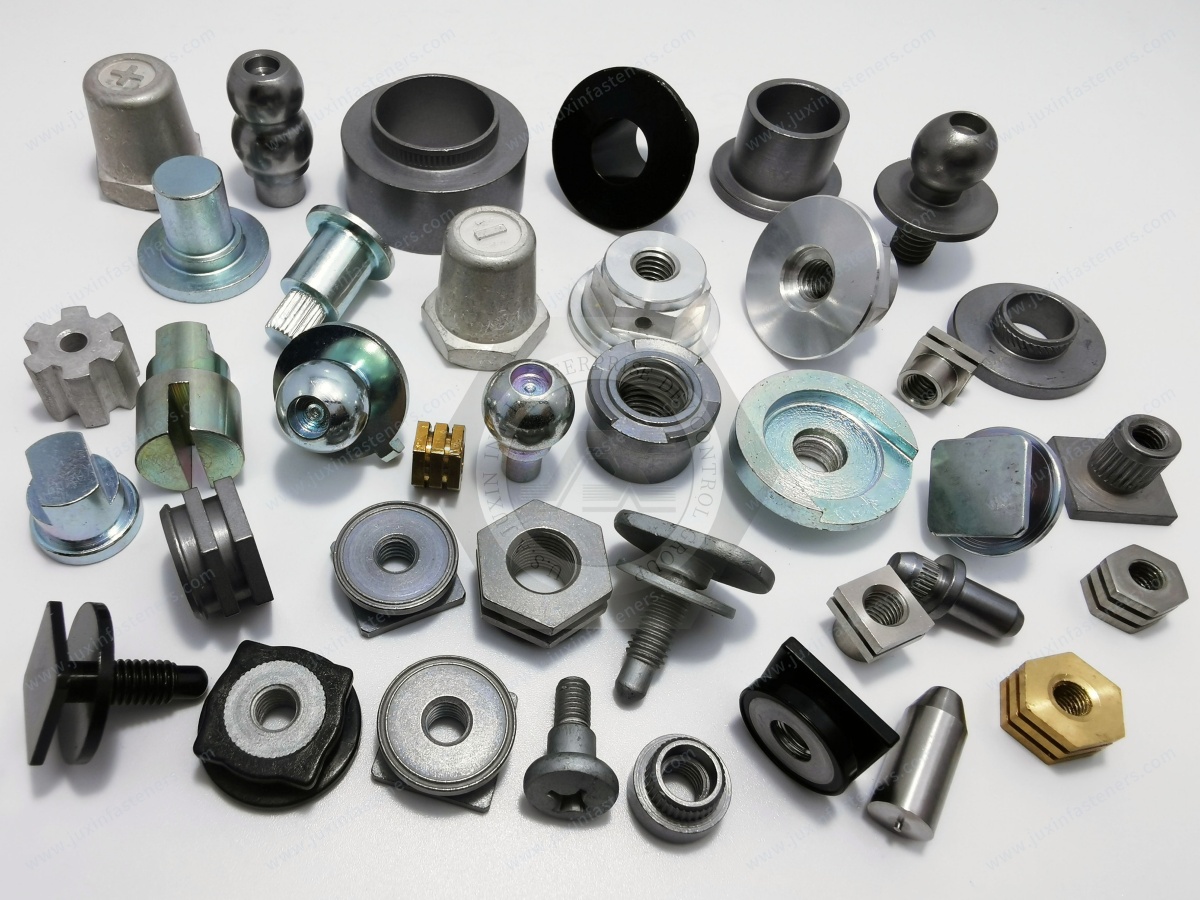
Custom drawing-specific OEM fasteners
Specific materials, mechanical-property classes, coatings, manufacturing methods, testing, documentation,
MOQ and delivery arrangements are subject to technical and commercial confirmation.
Safety-critical automotive applications require approval against the relevant OEM specification and qualification requirements.
Request an Automotive Fastener Material Review and OEM RFQ
Are you selecting fastener materials for a new vehicle assembly, reviewing corrosion-resistant alternatives or sourcing high-strength automotive bolts and screws?
Juxin Fasteners welcomes drawing-based inquiries from automotive OEMs, Tier-1 and Tier-2 suppliers, design engineers, mechanical engineers,
manufacturing engineers, production managers, purchasing managers and supplier development teams.
For technical evaluation and quotation, please provide:
Approved drawing or standard + part number and revision + application + thread designation + dimensions and tolerances
+ material specification + mechanical-property requirements + coating or passivation + locking feature + installation requirements
+ inspection criteria + prototype quantity + annual demand + batch size + packaging + target delivery schedule.
Company: Juxin Fasteners
Website: https://www.juxinfasteners.com/
Email: info@juxinfasteners.com
Send your automotive fastener drawings and OEM RFQ to Juxin Fasteners for material review, technical confirmation and quotation.
Contact Us
Tel.:
+86 020 8621 0320
+86 020 3121 6067
E-mail:
Technical Support:
Navigation
SEND INQUIREY



