
Call Us
+86 136 6007 9809
Call Us
+86 136 6007 9809

Jul. 17, 2024
Automotive Fastener Materials and Manufacturing Processes: OEM Engineering Guide
Automotive fastener performance depends on much more than the nominal diameter, thread size or external appearance of a screw or bolt.
For automotive OEMs, Tier-1 suppliers and Tier-2 manufacturers, material selection, forming technology, heat treatment,
thread manufacturing and surface coatings all influence the final fastener's mechanical properties, corrosion behavior, dimensional consistency and assembly performance.
A carbon steel bolt, an alloy steel bolt and a stainless steel screw may have similar dimensions but substantially different mechanical and environmental characteristics.
Likewise, two fasteners made from similar steel can behave differently when their heat treatment, thread manufacturing, coating or tightening conditions are not equivalent.
The central engineering principle is that automotive fastener reliability must be evaluated as a combination of material, manufacturing process, surface condition and joint design.
This guide examines the materials and production processes used for automotive screws, high-strength bolts, flange bolts, Torx screws and custom fastening components.
It also explains how design engineers, manufacturing engineers, production managers and procurement teams can use these considerations when developing new products,
qualifying suppliers or sourcing drawing-based OEM fasteners.
Juxin Fasteners supplies industrial screws, bolts and custom fastening components and welcomes technical inquiries involving automotive-related applications.
Why Automotive Fastener Material Selection Matters
The correct material must satisfy the intended joint requirements.
Important selection factors include tensile and proof properties, ductility, toughness, fatigue behavior, corrosion resistance, operating temperature, mating materials and manufacturing feasibility.
Material cost also matters, but the lowest-cost material is not necessarily the most economical choice when installation, inspection, coating and replacement costs are considered.
For a mechanical bracket, strength and joint preload may dominate the selection process.
For an exterior accessory, corrosion exposure and appearance may be more important.
For an electrical connection, conductivity, contact resistance and thermal behavior may be critical.
For a production manager, the material must also be compatible with repeatable manufacturing and assembly.
Carbon Steel Automotive Fasteners
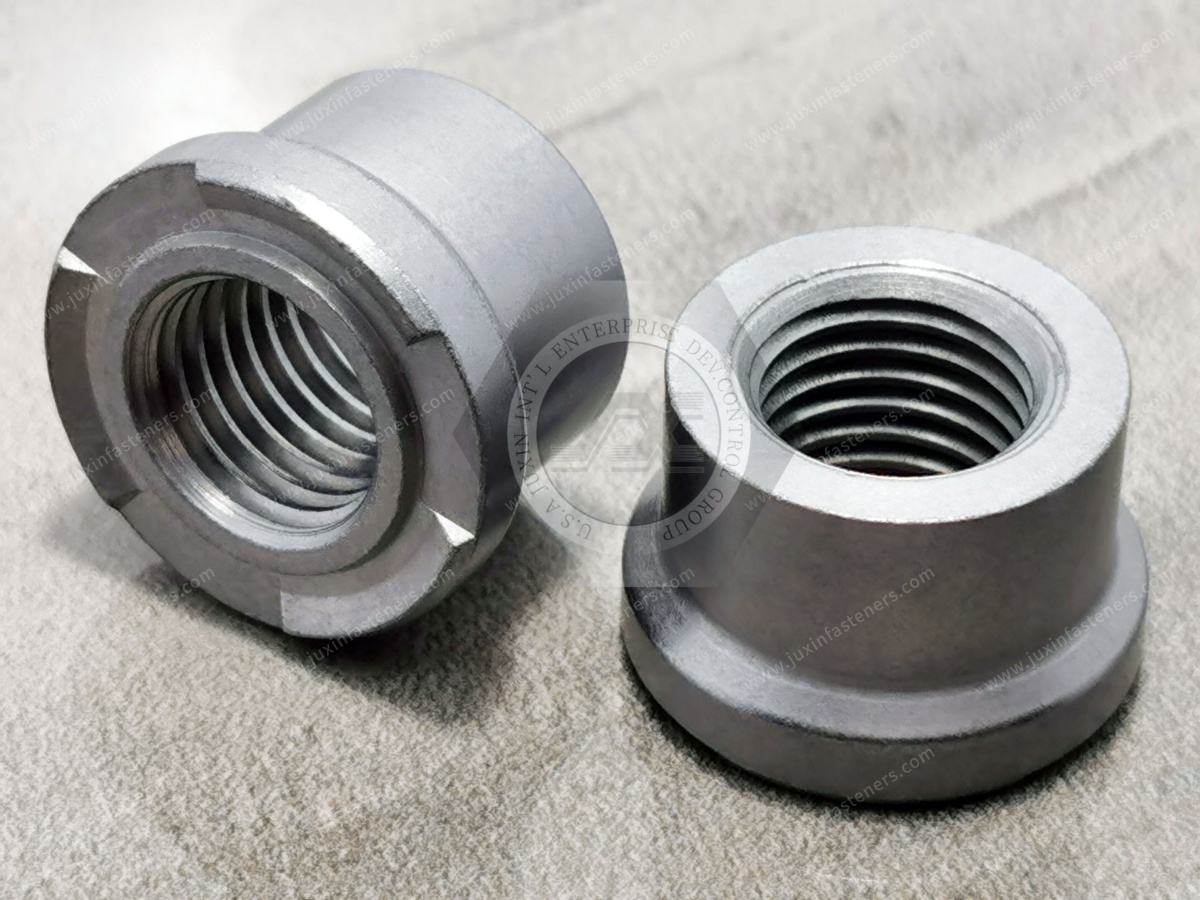
Carbon steel is widely used for screws and bolts because suitable grades can provide a practical balance of mechanical properties, formability and cost.
Depending on composition and processing, carbon steel may be suitable for cold forming, threading, heat treatment and protective coating.
Potential Applications
Mechanical brackets
Equipment mounting
Selected vehicle body attachments
Interior mechanical assemblies
Auxiliary equipment connections
Engineering Advantages
Carbon steel can provide economical production and suitable mechanical performance when the grade and processing route are matched to the specification.
Important Limitations
Unprotected carbon steel is generally susceptible to atmospheric corrosion.
Its mechanical performance cannot be established from the term carbon steel alone.
Engineering Recommendation
Specify the actual material and mechanical-property requirements rather than relying on a generic carbon steel description.
Alloy Steel Fasteners for Higher Mechanical Requirements
Alloy steels may incorporate controlled additions of elements such as manganese, chromium, molybdenum, nickel or boron, depending on the steel specification.
These elements can influence hardenability, microstructure and mechanical performance.
Potential Applications
Higher-load mechanical assemblies
Customer-approved powertrain accessories
High-strength threaded connections
Specialized automotive components
Engineering Advantages
Properly selected alloy steels can support specified combinations of strength, toughness and hardenability.
Important Limitations
Alloy composition alone does not guarantee fatigue resistance, impact performance or suitability for a safety-critical connection.
The finished fastener must meet the required mechanical properties after the relevant manufacturing and heat-treatment processes.
Material Selection Insight
Higher alloy content is not automatically better.
The correct material depends on the finished fastener requirements, manufacturing process and cost objectives.
Stainless Steel Automotive Fasteners
Stainless steel fasteners may be considered where corrosion resistance is an important design requirement.
Common material options include 304-type and 316-type austenitic stainless steels.
304 Stainless Steel
304 is widely used in industrial fastening applications where its corrosion resistance and mechanical properties are suitable.
Potential applications include selected automotive exterior accessories, electronic housings and auxiliary equipment.
316 Stainless Steel
316 generally offers improved resistance to certain localized corrosion mechanisms compared with 304.
It may be considered for more demanding chloride-containing environments.
Engineering Considerations
Actual stainless steel grade
Mechanical-property class
Corrosion exposure
Temperature
Mating material
Galling risk
Surface condition
Important Limitation
Austenitic stainless steel fasteners are not automatically interchangeable with high-strength carbon or alloy steel bolts.
Engineering Recommendation
Evaluate mechanical strength and corrosion resistance together.
Aluminum Alloy Fasteners
Aluminum alloy fasteners may be considered where low mass or other specific material characteristics are important.
Potential Engineering Advantages
Lower density than steel
Potential weight reduction
Suitability for certain lightweight assemblies
Important Limitations
Lower stiffness than steel
Alloy-dependent strength
Thread damage risk
Galvanic corrosion concerns
Temperature-dependent behavior
Application Considerations
Aluminum fasteners require joint-specific evaluation, especially when installed into dissimilar metals.
Engineering Recommendation
Do not substitute an aluminum bolt for a steel bolt based solely on matching dimensions.
Copper and Copper Alloy Fasteners
Copper and selected copper alloys may be used in applications where electrical or thermal characteristics are relevant.
Potential Applications
Selected electrical equipment
Conductive hardware
Specialized electrical assemblies
Customer-designed electrical components
Engineering Considerations
Electrical conductivity
Contact resistance
Mechanical strength
Thermal cycling
Surface condition
Corrosion compatibility
Important Limitation
A copper alloy fastener is not automatically suitable for a high-current electrical connection.
The complete electrical and mechanical assembly must be validated.
Automotive Fastener Manufacturing: From Material to Finished Component
Fastener manufacturing may involve several distinct operations:
Material preparation
Cold forming or another suitable shaping process
Thread manufacturing
Heat treatment, where required
Surface treatment
Inspection
Packaging and identification
The sequence depends on the fastener design, material and approved production route.
Not every fastener uses every process.
Cold Heading and Cold Forming
Cold heading is an important manufacturing method for producing screws, bolts and other formed fasteners.
In a typical process, prepared wire is formed into the required geometry through controlled deformation.
Potential Advantages
Efficient production for suitable volumes
Good material utilization
Repeatable forming geometry
Reduced material removal compared with some machining routes
Engineering Considerations
Wire material
Material condition
Forming reduction
Head geometry
Tooling design
Surface defects
Dimensional tolerances
Important Technical Distinction
Cold working can introduce work hardening, but it does not automatically establish the final mechanical-property class of the fastener.
For fasteners requiring specified heat-treated properties, the complete production route must be considered.
Cold Heading vs. Machining
| Selection factor | Cold heading | Machining |
|---|---|---|
| Material utilization | Often favorable for suitable geometries | Depends on stock and material removal |
| Production economics | Often favorable for repeat volumes | May suit prototypes or specialized quantities |
| Geometry | Requires forming feasibility | Can accommodate certain complex features |
| Tooling | Forming tools may be required | Cutting tools and fixtures required |
| Process qualification | Forming and dimensional controls | Machining and dimensional controls |
Production Manager's Perspective
The most economical manufacturing process depends on annual volume, geometry, tooling investment, tolerances and inspection requirements.
Thread Rolling and Thread Manufacturing
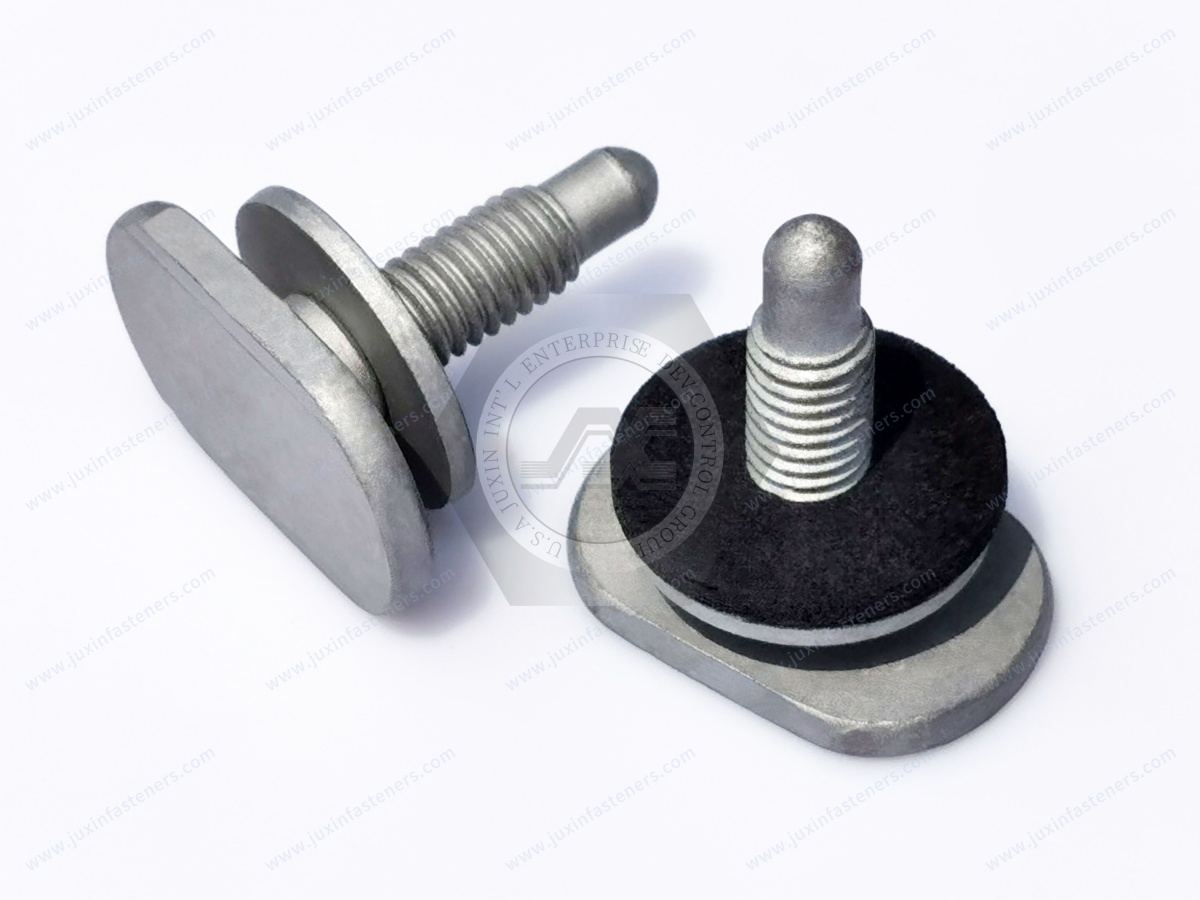
Thread rolling forms threads by plastically deforming material with suitable tooling.
It is commonly used for many externally threaded fasteners.
Potential Advantages
Efficient thread production
Good surface finish when properly controlled
Repeatable thread geometry
Favorable material utilization
Engineering Considerations
Material condition
Thread profile
Pitch diameter
Root geometry
Tool wear
Process sequence
Important Limitation
Thread rolling does not automatically guarantee superior fatigue performance.
The final result depends on the material, thread geometry, processing sequence, residual stress condition and application.
Rolled vs. Cut Threads
Cut threads are produced by material removal.
Rolled threads are formed through deformation.
Both methods can be appropriate when the finished threads satisfy the approved specification.
Engineering Recommendation
Where thread fatigue or other critical characteristics matter, specify the required finished properties and qualification criteria rather than assuming one manufacturing process is universally superior.
Heat Treatment for Automotive Fasteners
Heat treatment changes material microstructure and mechanical properties through controlled heating and cooling.
The correct treatment depends on the material and required finished properties.
Quenching and Tempering
Quenching and tempering are used for many heat-treated carbon and alloy steel fasteners.
The process is intended to achieve a specified combination of mechanical properties.
Engineering Considerations
Material composition
Hardenability
Heat-treatment parameters
Finished hardness
Tensile properties
Ductility
Toughness
Decarburization
Microstructural requirements
Important Limitation
Higher hardness does not automatically mean better fastening performance.
Excessive hardness or inadequate toughness can create additional failure risks.
Property Classes 8.8 and 10.9
ISO metric property classes 8.8 and 10.9 define specified mechanical characteristics for relevant steel fasteners.
Class 8.8
May be appropriate for applications whose approved requirements are satisfied by this property class.
Class 10.9
Provides higher specified mechanical strength than class 8.8.
Critical Engineering Principle
The correct property class must be selected through joint design.
A higher property class should not be substituted without approval.
Selective Surface Hardening and Case Hardening
Certain screws and specialized fastening components may require a hard surface with different core characteristics.
Processes such as carburizing or other suitable surface-hardening treatments may be used where specified.
Potential Applications
Certain thread-forming screws
Specialized wear-related fastening components
Customer-specified hardened products
Engineering Considerations
Surface hardness
Core properties
Case depth
Material suitability
Dimensional changes
Brittle fracture risk
Important Limitation
Case hardening is not a universal process for all automotive bolts.
It must be selected for the specific fastener design and required performance.
Information Gain: Manufacturing Sequence Can Change Fastener Performance
Two fasteners with similar final dimensions may not be equivalent if their production sequences differ.
Examples include:
Threads rolled before or after heat treatment
Different heat-treatment parameters
Different surface coating processes
Different lubrication conditions
Different inspection methods
Engineering Recommendation
For controlled OEM applications, manufacturing process changes should be evaluated against the approved product requirements.
Surface Treatment for Automotive Fasteners
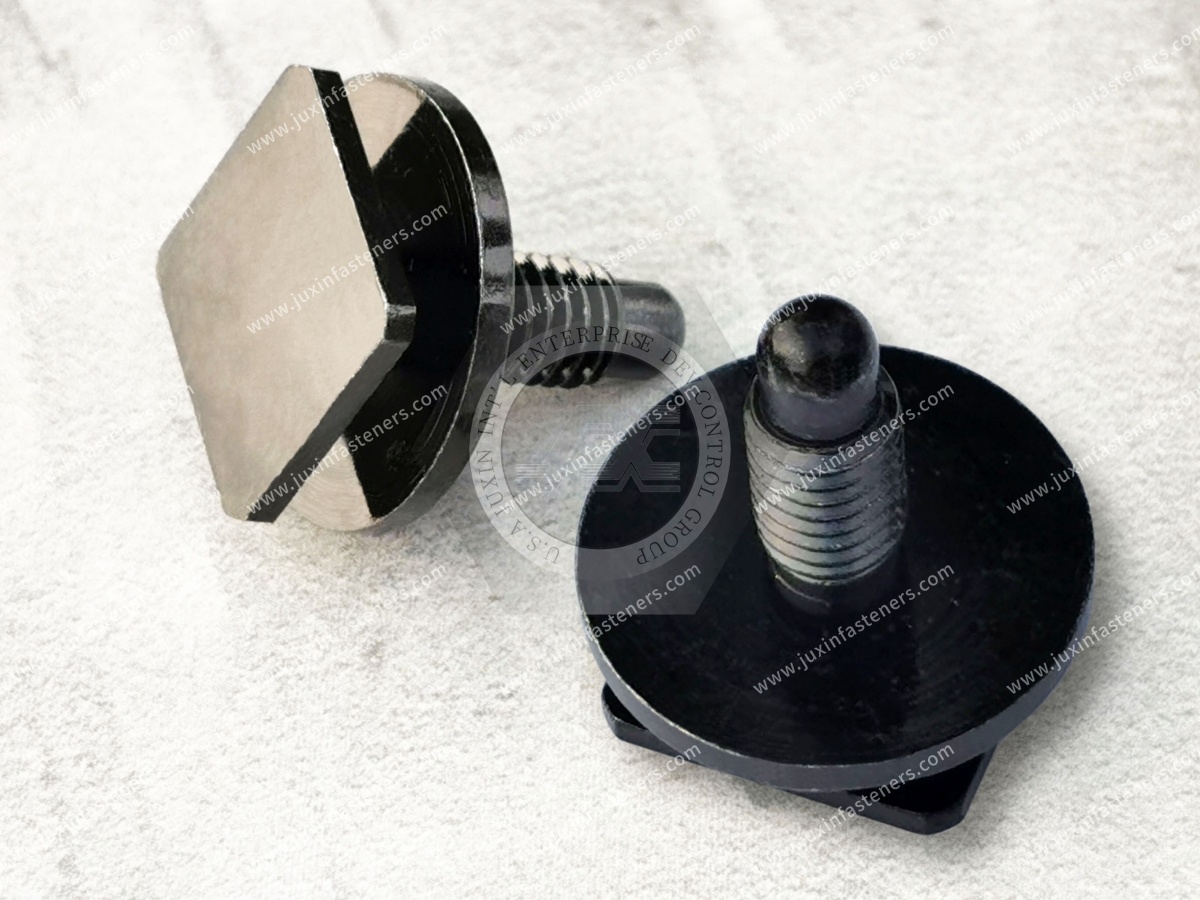
Surface treatment is often necessary to achieve corrosion, appearance or functional requirements.
Common options include zinc electroplating, zinc-nickel coatings, black oxide treatments and zinc-flake systems.
The correct selection depends on the application.
Zinc Electroplating
Zinc electroplating is used to provide corrosion protection to suitable steel fasteners.
Engineering Considerations
Coating thickness
Thread fit
Corrosion requirements
Surface appearance
Friction behavior
Hydrogen embrittlement risk
Important Limitation
Zinc plating does not provide unlimited corrosion protection.
Its suitability depends on the coating system and actual service environment.
Zinc-Nickel Coatings
Zinc-nickel coatings may be specified for applications requiring particular corrosion and coating performance.
Engineering Considerations
Coating composition
Thickness
Passivation or supplementary treatments
Thread tolerance
Friction requirements
Customer specification
Important Limitation
Zinc-nickel coating performance must be evaluated against the specified process and acceptance requirements.
It should not be treated as universally superior in every environment.
Black Oxide Coatings
Black oxide treatments are often selected for appearance and certain functional requirements.
Potential Applications
Selected indoor equipment
Interior mechanical components
Customer-specified black fasteners
Important Limitation
Black oxide alone generally provides limited corrosion protection compared with many dedicated protective coating systems.
Its corrosion performance may depend on supplementary oil or other treatments.
Engineering Recommendation
Do not specify black oxide solely because a fastener must withstand outdoor exposure.
Zinc-Flake Coatings
Non-electrolytically applied zinc-flake coatings may be used for fasteners requiring defined corrosion protection and other specified coating characteristics.
Potential Applications
Exterior automotive components
Mechanical brackets
Customer-approved chassis-related hardware
Outdoor equipment
Engineering Considerations
Coating thickness
Corrosion requirements
Thread fit
Friction coefficient
Curing process
Temperature exposure
Application-specific performance
Geomet and Dacromet Terminology
GEOMET and DACROMET are associated with particular commercial coating technologies.
They should not be used as generic guarantees of identical composition, performance or compliance.
Engineering Recommendation
Specify the approved coating system and its requirements rather than relying only on a commercial coating name.
Hydrogen Embrittlement in High-Strength Fasteners
Hydrogen embrittlement is an important consideration for susceptible high-strength steel fasteners.
Hydrogen may be introduced during certain manufacturing or surface-treatment operations.
Potential Risk Factors
Material strength and hardness
Hydrogen-generating processing steps
Applied tensile stress
Manufacturing conditions
Coating process
Engineering Recommendation
Evaluate material selection and surface treatment together.
Where relevant, define appropriate prevention, control and verification requirements.
Important Limitation
Post-treatment baking is not a universal guarantee that hydrogen embrittlement risk has been eliminated.
Coating Friction and Installation Torque
Coatings can affect friction at the thread and bearing surfaces.
This matters because tightening torque is not directly equivalent to bolt preload.
Engineering Implications
Two bolts with identical nominal dimensions and strength classes may develop different clamp loads at the same applied torque if their friction conditions differ.
Relevant Factors
Coating type
Lubrication
Thread condition
Bearing surface
Mating material
Installation method
Production Manager's Perspective
Changing the coating supplier or coating process may require tightening-process review.
Engineering Recommendation
Treat coating friction characteristics as part of the approved assembly specification when they influence joint performance.
High-Strength Automotive Screws and Flange Bolts
High-strength automotive bolts require coordination between material, heat treatment, thread geometry, coating and tightening.
Class 8.8 Hex Head Screws
May be used in suitable customer-approved mechanical assemblies.
Class 10.9 Flange Bolts
May be used where higher specified mechanical properties are required.
Flange Design Considerations
A flange provides an integrated bearing surface.
However, a plain flange does not automatically prevent loosening.
Important Distinction
Fastener strength, flange geometry and vibration resistance are separate engineering characteristics.
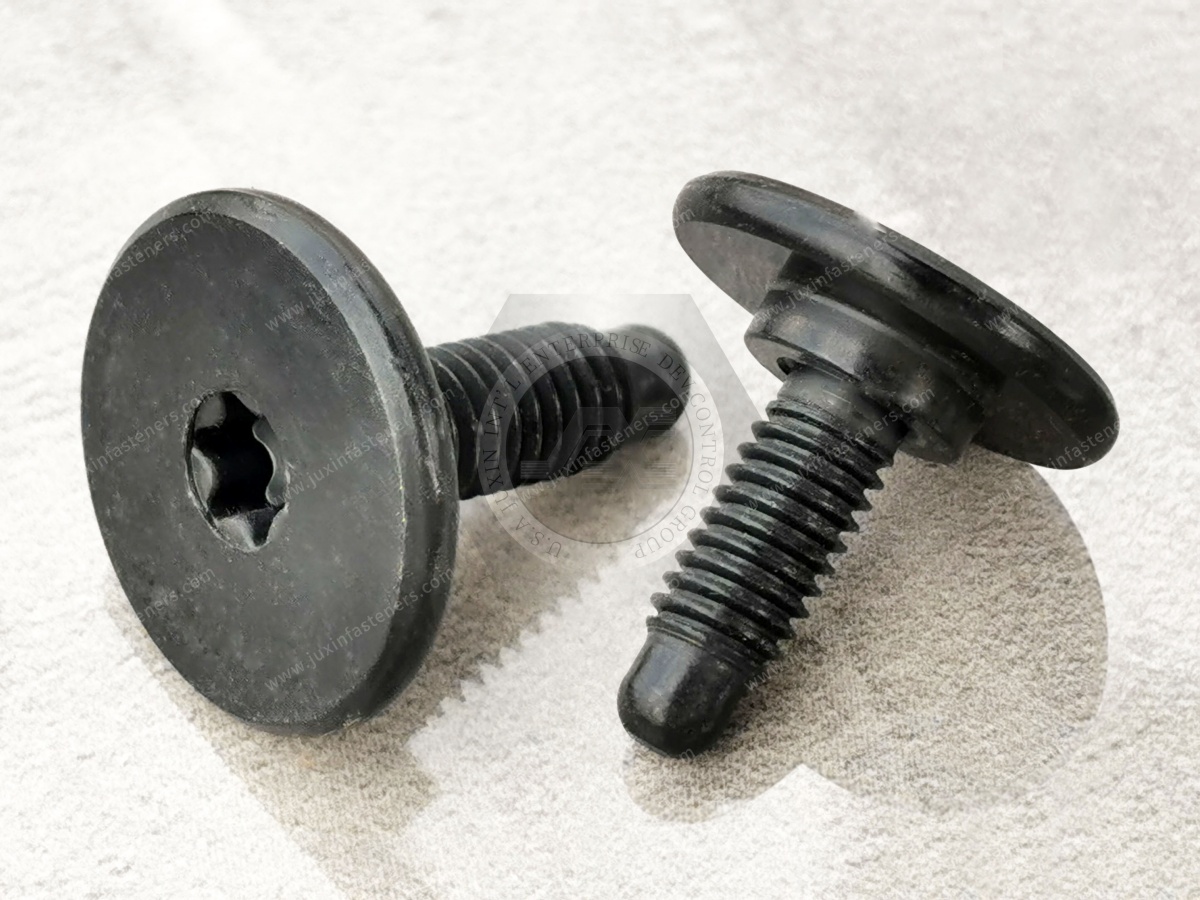
Automotive Torx Drive Screws
Six-lobe drive systems are commonly used in selected industrial and automotive assembly applications.
Potential Applications
Interior equipment
Electronic housings
Vehicle accessory panels
Auxiliary mechanical components
Engineering Considerations
Recess geometry
Driver compatibility
Head strength
Installation torque
Tool access
Production repeatability
Potential Manufacturing Benefit
A suitable six-lobe drive may provide effective tool engagement for the intended tightening process.
Important Limitation
Drive performance depends on actual screw and driver geometry.
A Torx-style drive does not automatically establish a particular torque capacity.
Tamper-Resistant Torx Screws
Pin-in Torx screws incorporate a security feature intended to discourage convenient removal with ordinary tools.
Potential Applications
Selected electronic covers
Service-restricted panels
Outdoor charging equipment housings
Important Limitation
Tamper resistance is not equivalent to vibration resistance or guaranteed protection against theft.
Sealing Security Screws
Some security screws incorporate sealing features.
Potential Applications
Outdoor equipment cabinets
Selected electronic housings
Service-access panels
Critical Sealing Principle
An O-ring-equipped screw does not automatically establish the ingress protection rating of the complete enclosure.
Assembly-level sealing performance must be validated.
Automotive Fastener Applications by Assembly Type
Different assemblies place different demands on fastener materials and production processes.
Vehicle Body and Mechanical Brackets
Potential requirements include:
Suitable strength
Corrosion protection
Weldability where relevant
Dimensional consistency
Repeatable assembly
Powertrain and Auxiliary Mechanical Components
Potential requirements include:
Mechanical loading
Temperature exposure
Fatigue behavior
Tightening control
Material compatibility
Automotive Interior Assemblies
Potential requirements include:
Small screw dimensions
Driver engagement
Plastic or metal thread compatibility
Appearance
Assembly speed
Automotive Electronics
Potential requirements include:
Compact fastening
Corrosion resistance
Electrical considerations
Serviceability
Controlled tightening
Important Application Limitation
Safety-critical vehicle systems require customer-approved fasteners and application-specific validation.
General industrial fasteners should not be substituted into such connections without engineering approval.
Electric Vehicle and EV Auxiliary Equipment
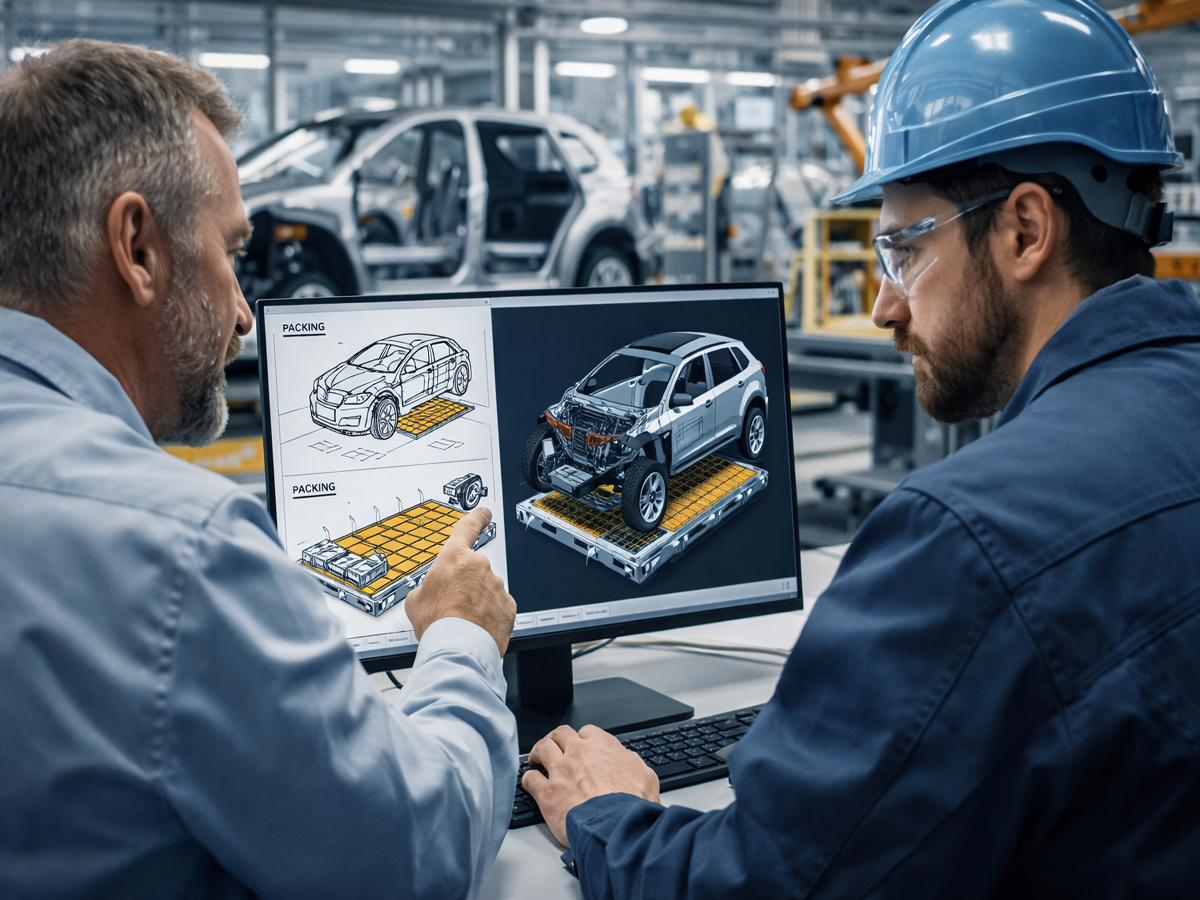
EV applications may involve additional electrical, thermal and environmental requirements.
Potential Applications
Auxiliary electronics housings
Charging equipment cabinets
Nonstructural battery equipment covers
Thermal-management equipment accessories
Electrical control enclosures
Engineering Considerations
Material compatibility
Corrosion exposure
Electrical isolation
Thermal cycling
Joint loading
Assembly requirements
Important EV Safety Limitation
High-voltage connections, structural battery retention and safety-related battery joints require separately approved fastening systems.
A general-purpose automotive screw or bolt must not be substituted into these applications without authorization.
Industrial Machinery and Automation Equipment
Fastener manufacturing technologies used in automotive supply chains may also be relevant to industrial machinery.
Potential applications include:
Automation equipment
Mechanical brackets
Equipment housings
Industrial control systems
Machinery assemblies
Engineering Recommendation
Evaluate the actual product specification rather than assuming an automotive-style fastener is automatically suitable for every industrial application.
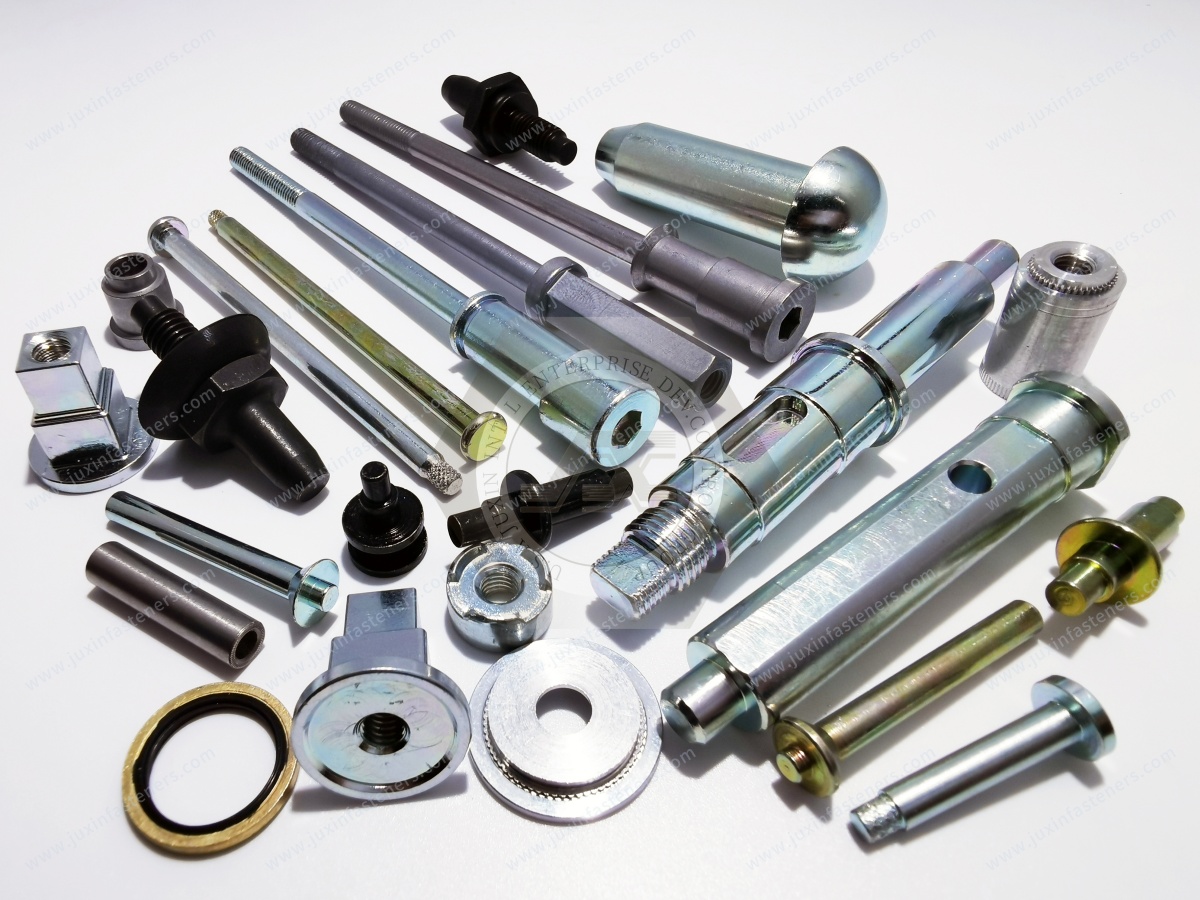
Design for Manufacturing: Material and Process Selection
The selected manufacturing process should support both the engineering requirements and production volume.
Material Formability
The material must be compatible with the selected forming route.
Head Geometry
Complex head features may require specialized tooling or additional operations.
Thread Manufacturing
Thread profile and tolerance requirements influence process selection.
Heat Treatment
Required mechanical properties may determine material and processing choices.
Surface Coating
Coating thickness and friction behavior may influence thread fit and assembly.
Inspection
Critical characteristics should be measurable and repeatable.
Production Manager's Perspective
A design that appears simple on a drawing may create avoidable production cost if its material, tolerances or coating requirements are unnecessarily restrictive.
Information Gain: Total Manufacturing and Installed Cost
Fastener sourcing should consider the total cost of obtaining and installing an approved component.
Relevant factors include:
Raw material
Forming or machining
Thread manufacturing
Heat treatment
Coating
Inspection
Packaging
Tooling
Installation labor
Rework
Supply continuity
Engineering and Procurement Recommendation
Evaluate cost reduction opportunities without changing approved critical characteristics.
Custom Automotive Fastener Manufacturing
Some OEM projects require special fastener configurations.
Potential requirements include:
Custom screw dimensions
Special head geometry
Nonstandard thread specifications
Specific material requirements
Controlled heat treatment
Customer-defined coatings
Critical tolerances
Special inspection characteristics
Technical Review
Custom projects should consider:
Material availability
Forming feasibility
Tooling requirements
Mechanical properties
Coating compatibility
Production volume
Inspection requirements
Commercial Review
Samples, MOQ, tooling costs and delivery schedules should be confirmed during quotation.
Important Limitation
Custom production does not automatically establish automotive customer approval or certification.
International Standards for Automotive Fastener Materials and Processes
Relevant standards depend on the product and manufacturing requirements.
ISO 898-1
Specifies mechanical properties of carbon and alloy steel bolts, screws and studs within its scope.
ISO 3506-1
Specifies mechanical properties of corrosion-resistant stainless steel bolts, screws and studs within its scope.
ISO 965
Addresses ISO metric screw-thread tolerances.
ISO 4042
Addresses electroplated coating systems for fasteners within its scope.
ISO 10683
Addresses non-electrolytically applied zinc-flake coating systems for fasteners within its scope.
Important Standards Principle
A fastener's dimensional standard, mechanical-property standard, coating specification and customer approval requirements are separate considerations.
Quality Inspection and Process Control
Automotive fastener inspection should follow the approved drawing and application requirements.
Potential Inspection Characteristics
Material identification
Chemical composition, where specified
Dimensions
Thread geometry
Hardness
Mechanical properties
Surface coating
Appearance
Process-Specific Evaluation
Where required, additional controls may address:
Cold-forming defects
Heat-treatment consistency
Decarburization
Thread quality
Coating characteristics
Hydrogen embrittlement risk
Installation performance
Important Distinction
Not every fastener requires the same testing program.
Inspection and validation should follow the approved product and customer specifications.
Supplier Qualification for Automotive Fastener Materials and Manufacturing
Procurement and supplier development teams should evaluate whether the proposed product matches the approved requirements.
Material Specification
Confirm the material grade and mechanical properties.
Manufacturing Process
Identify any controlled forming, threading or heat-treatment requirements.
Surface Treatment
Confirm the approved coating specification and functional requirements.
Dimensional Requirements
Verify critical dimensions and tolerances.
Inspection Documentation
Define required inspection reports and material records.
Change Control
Review proposed changes to material, processing or coating against customer approval requirements.
Commercial Evaluation
Review:
Sample quantity
MOQ
Annual demand
Production volume
Packaging
Delivery schedule
Supply continuity
Automotive Qualification Requirements
Customer programs may specify requirements such as PPAP, APQP, traceability or particular quality management systems.
These requirements must be confirmed for the actual sourcing program.
They should not be assumed from a supplier's general fastener manufacturing experience.
Preparing an Automotive Fastener Materials and Process RFQ
A complete RFQ should include the technical and commercial requirements.
Product Definition
Approved drawing or standard
Part number and revision
Fastener type
Dimensions
Thread designation
Critical characteristics
Material and Processing
Material specification
Mechanical-property class
Heat-treatment requirements
Thread manufacturing requirements, if controlled
Surface coating specification
Functional requirements
Application Information
Mating material
Joint loading
Tightening requirements
Operating environment
Corrosion requirements
Temperature exposure
Quality and Commercial Requirements
Inspection criteria
Required documentation
Customer approval requirements
Sample quantity
Annual demand
Production quantity
Packaging
Target delivery schedule
Practical Procurement Recommendation
For supplier replacement projects, provide the approved drawing and identify any manufacturing processes,
coatings or inspection characteristics that cannot be changed without customer approval.
Frequently Asked Questions
What materials are commonly used for automotive screws and bolts?
Carbon steel, alloy steel and stainless steel are common choices. Aluminum and copper alloys may be used in selected specialized applications.
Why is cold heading used for automotive fasteners?
Cold heading can provide efficient material utilization and repeatable production for suitable screw and bolt geometries.
Does cold heading automatically increase bolt strength?
No. Final mechanical properties depend on material selection and the complete manufacturing process.
What is the difference between property classes 8.8 and 10.9?
Class 10.9 has higher specified mechanical strength, but selection must follow the approved joint requirements.
Why are automotive bolts heat-treated?
Heat treatment may be used to achieve specified combinations of strength, hardness, ductility and toughness.
What is the difference between zinc plating and zinc-flake coating?
They are different coating processes with different characteristics and qualification requirements.
Does black oxide provide strong corrosion protection?
Black oxide alone generally provides limited corrosion protection. Supplementary treatments and application conditions matter.
Can changing the coating affect bolt tightening?
Yes. Coating-related friction changes can affect the relationship between applied torque and clamp load.
Are stainless steel screws stronger than class 10.9 bolts?
Not automatically. Their mechanical properties are different and must be compared using the actual specifications.
What should an OEM buyer provide for a custom automotive fastener RFQ?
The approved drawing, material, mechanical properties, manufacturing requirements, coating, inspection criteria and purchasing quantities.
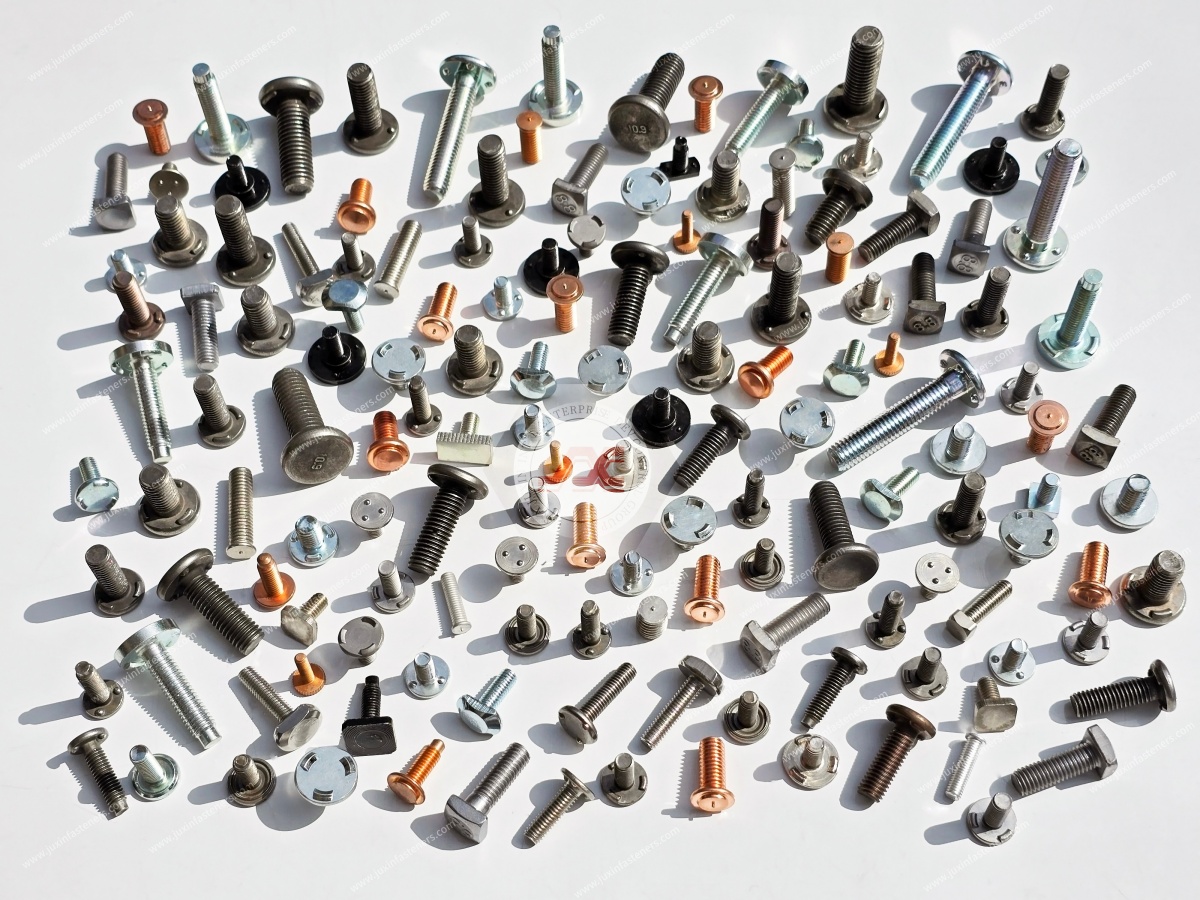
Juxin Fasteners: Automotive Screws, Bolts and Custom Manufacturing Solutions
Juxin Fasteners supplies industrial fastening components and welcomes drawing-based inquiries involving automotive screws, bolts and special fasteners.
Relevant product categories include:
Carbon steel screws
Alloy steel bolts
High-strength metric bolts
Stainless steel screws
Hex head bolts
Flange bolts
Torx drive screws
Security screws
Custom OEM fasteners
Specific material grades, forming processes, heat treatments, coatings, mechanical properties, inspection requirements, samples,
MOQ and delivery schedules are subject to technical and commercial confirmation.
Request an Automotive Fastener Material and Manufacturing RFQ
Are you sourcing automotive screws, high-strength bolts, stainless steel fasteners or custom OEM fastening components?
Do you need to review a material specification, qualify an alternative coating, evaluate a manufacturing process or develop a drawing-based fastening component for recurring production?
Juxin Fasteners welcomes inquiries from design engineers, structural engineers, mechanical engineers, manufacturing engineers, production managers,
procurement specialists, purchasing managers, supplier development teams and supply chain managers.
For technical review and quotation, please provide:
Approved drawing or standard + part number and revision + fastener type + dimensions + thread specification + material grade
+ mechanical-property requirements + controlled manufacturing processes + heat treatment + surface coating + mating material + joint loading
+ installation requirements + environmental conditions + inspection criteria + customer approval requirements + sample quantity
+ annual demand + production quantity + packaging requirements + target delivery schedule.
For replacement projects, include the existing approved specification and any proposed material, process or coating changes.
Company: Juxin Fasteners
Website: https://www.juxinfasteners.com/
Email: info@juxinfasteners.com
Send your automotive fastener drawings, material specifications and OEM RFQ to Juxin Fasteners for technical review and quotation.
Contact Us
Tel.:
+86 020 8621 0320
+86 020 3121 6067
E-mail:
Technical Support:
Navigation
SEND INQUIREY



