Call Us
+86 136 6007 9809
Call Us
+86 136 6007 9809

Jul. 18, 2024
Automotive Wheel Lock Bolts and Tamper-Resistant Screws: OEM Selection and Security Guide
Automotive security fasteners are used to discourage unauthorized removal of vehicle components, protect service-restricted assemblies and improve access control for selected equipment.
However, not all security fasteners perform the same mechanical function.
Wheel lock bolts and locking wheel nuts are specialized wheel-retention components. General-purpose tamper-resistant screws are intended for different fastening applications.
This distinction is essential for vehicle safety, engineering design, production assembly and OEM procurement.
Wheel-retention hardware must maintain the required wheel clamping function while incorporating a compatible security drive or locking arrangement.
Tamper-resistant screws used in vehicle accessories, electrical enclosures or equipment covers are generally selected for controlled access, corrosion resistance and assembly compatibility.
The two categories require different design reviews, installation procedures and supplier qualification requirements.
This guide explains how engineers, automotive component manufacturers, production managers and procurement teams can evaluate wheel lock bolts,
security screws, material choices, drive designs and installation requirements.
Juxin Fasteners supplies industrial security screws and custom fastening components and welcomes drawing-based automotive fastening inquiries.
Wheel-retention projects require separate confirmation of technical capability, specifications and customer approval requirements.
What Are Automotive Wheel Lock Bolts?
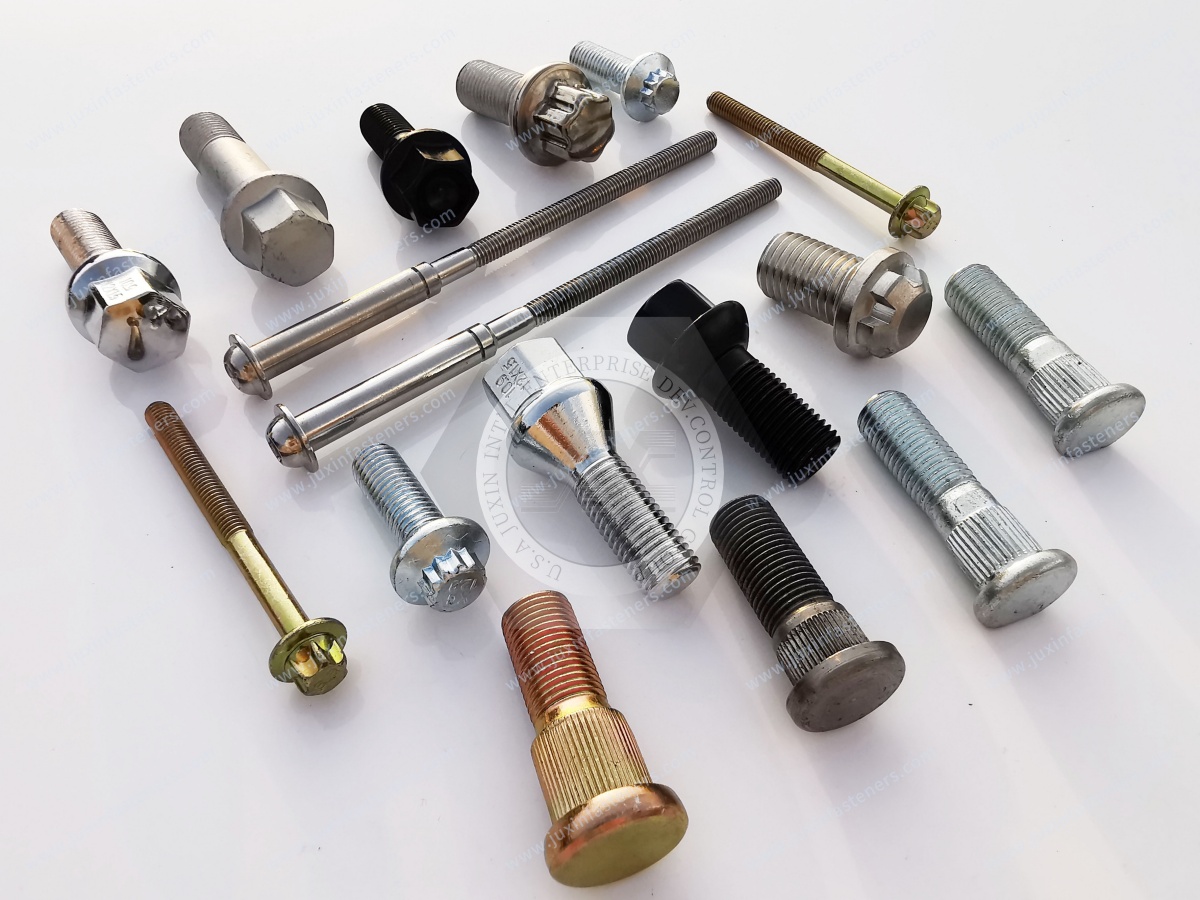
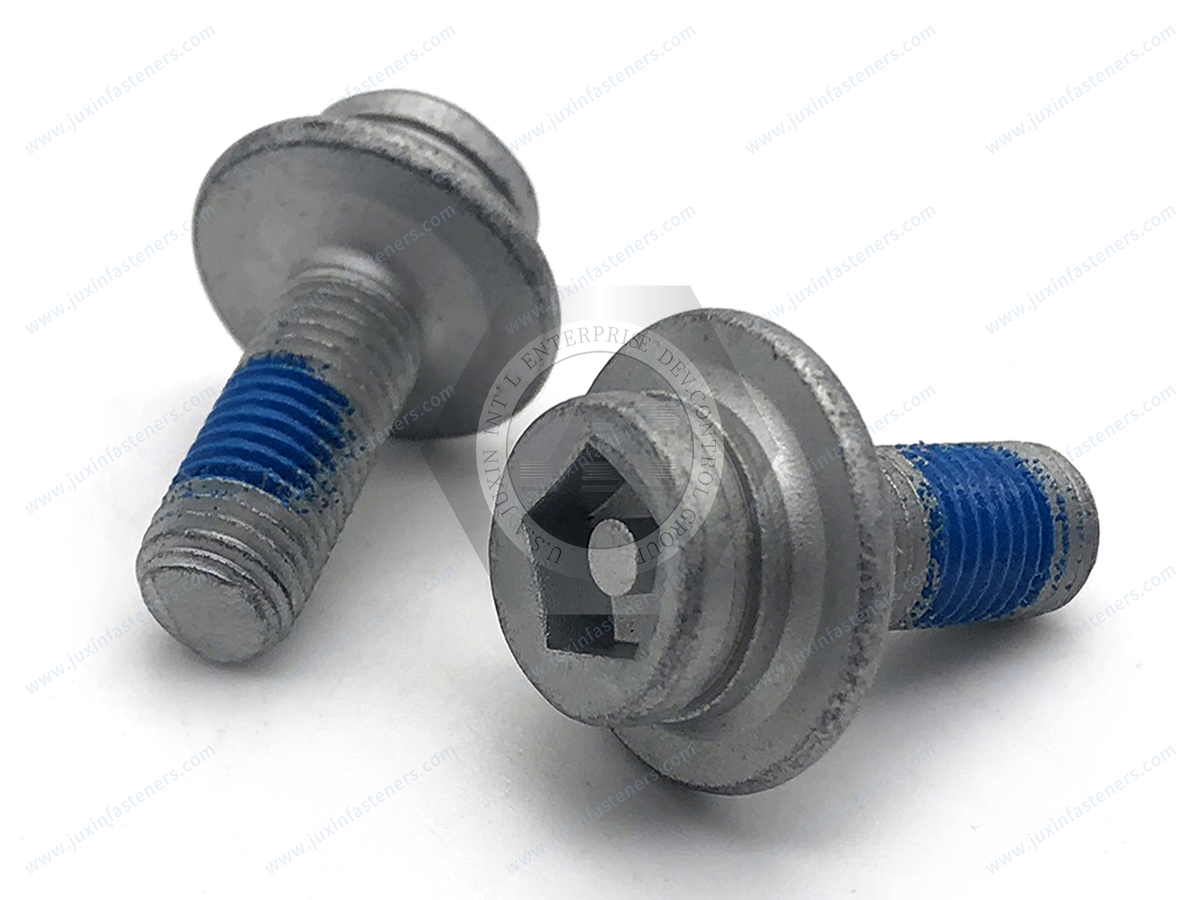
Wheel lock bolts are specialized wheel-retention fasteners that incorporate a security feature intended to discourage removal with ordinary tools.
They are commonly associated with vehicles that use bolts to secure wheels to the hub.
Vehicles using wheel studs and nuts may instead use locking wheel nuts.
Important Terminology
Wheel lock bolt: A wheel-retention bolt incorporating a security drive or locking feature.
Locking wheel nut: A wheel-retention nut incorporating a security feature.
Wheel lock key: A matching tool or adapter used to operate a particular wheel lock design.
Tamper-resistant screw: A screw with a drive feature intended to discourage removal using common tools.
The term tire anti-theft screw is sometimes used in commercial searches, but the fastener acts on the wheel attachment, not on the tire itself.
Why Wheel Security Requires More Than a Special Drive
A wheel lock bolt must satisfy the requirements of the wheel attachment system.
Its security feature is only one part of the design.
The complete assembly must also account for:
Thread compatibility
Correct seating geometry
Required engagement
Mechanical properties
Approved tightening procedure
Wheel and hub compatibility
Corrosion behavior
Service accessibility
Critical Engineering Principle
A security drive cannot compensate for incorrect wheel bolt geometry, inadequate engagement or unsuitable mechanical properties.
Wheel Lock Bolt Compatibility: What Engineers Must Verify
Wheel lock bolts should be selected against the vehicle manufacturer's approved wheel-retention specification.
Thread Diameter and Pitch
The nominal diameter and pitch must match the intended threaded connection.
A bolt that begins threading into the hub is not necessarily compatible.
Incorrect pitch or thread form can damage the mating threads.
Bolt Length and Thread Engagement
Bolt length affects the available thread engagement and potential interference with surrounding components.
The correct dimension must be confirmed against the approved wheel and hub configuration.
Wheel Seat Geometry
Wheel bolts may use different bearing-seat geometries.
Common examples include:
Conical seats
Spherical or ball seats
Other manufacturer-specific seating arrangements
Critical Limitation
A conical-seat wheel bolt and a ball-seat wheel bolt are not interchangeable merely because they share the same thread diameter and pitch.
The wrong seat geometry can produce improper contact and unacceptable wheel-retention performance.
Head and Security Key Geometry
The wheel lock's external dimensions and key engagement must allow the specified tightening and removal procedure.
Mechanical Properties
Material and mechanical characteristics must meet the approved wheel-retention requirements.
Engineering Recommendation
For any wheel lock replacement or OEM development project, verify the complete approved specification rather than relying on a generic catalog description.
Wheel Lock Bolts vs. Ordinary Stainless Steel Security Screws
Ordinary security screws and wheel lock bolts should not be substituted for one another.
| Engineering factor | Wheel lock bolt | General-purpose security screw |
|---|---|---|
| Primary function | Wheel retention with theft deterrence | Controlled access or theft deterrence |
| Joint loading | Vehicle-specific wheel-retention requirements | Application-dependent |
| Seat geometry | Must match wheel design | Depends on head and mating surface |
| Material properties | Must meet approved wheel specification | Selected for the intended equipment |
| Installation | Approved wheel tightening procedure | Application-specific procedure |
| Service tooling | Matching wheel lock key | Matching security driver |
| Substitution | Requires vehicle-specific approval | Requires joint-specific approval |
Important Safety Warning
An ordinary 18-8 stainless steel pin-in Torx screw must not be presented as a direct replacement for an approved automotive wheel bolt.
Matching thread dimensions alone do not establish safe compatibility.
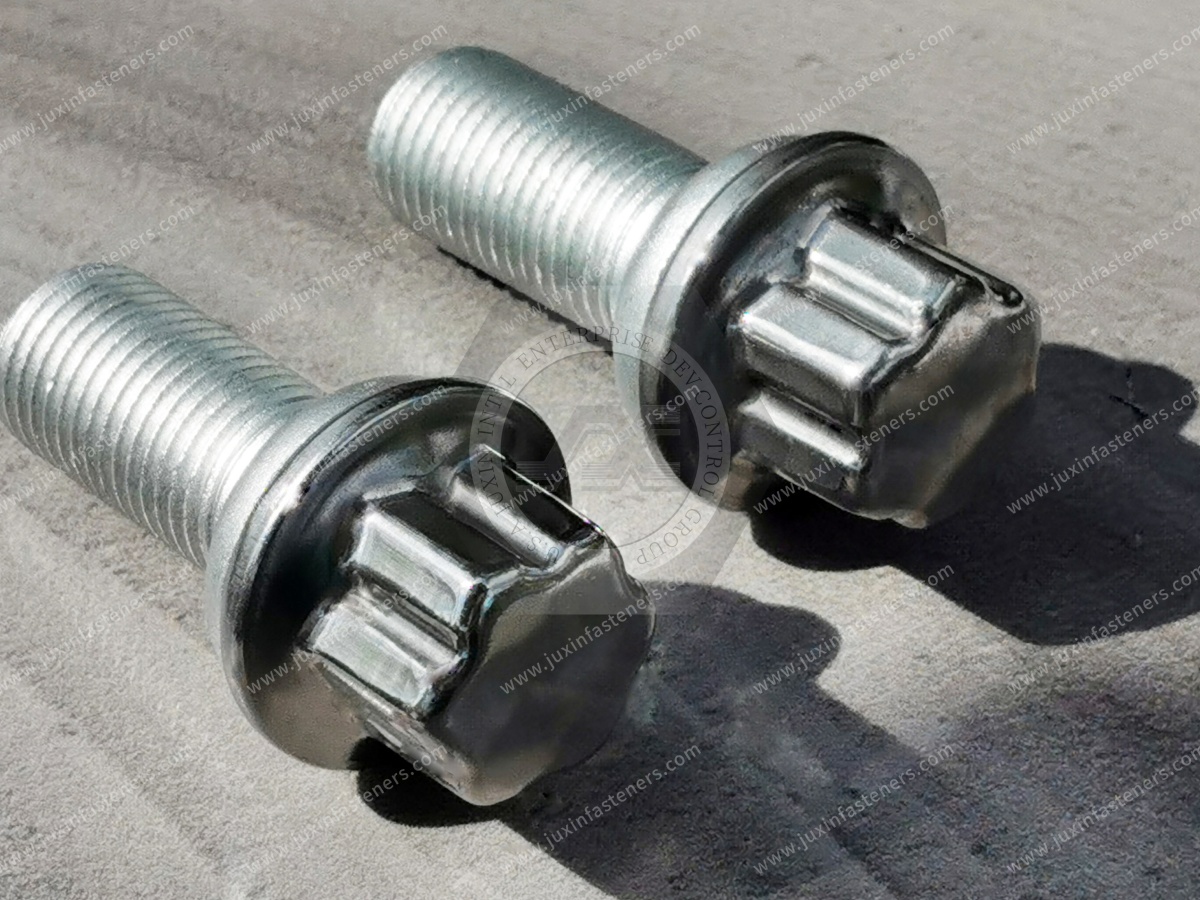
Wheel Lock Bolt Materials and Mechanical Requirements
Wheel-retention fasteners require materials and mechanical properties appropriate to their approved design.
Alloy Steel Wheel Lock Bolts
Suitable steel grades and processing routes may be used to achieve the required mechanical properties for approved wheel-retention applications.
Relevant factors include:
Material specification
Mechanical-property requirements
Heat treatment
Fatigue behavior
Surface coating
Thread geometry
Installation loading
Stainless Steel Security Screws
Austenitic stainless steel security screws are useful in selected automotive accessory and equipment applications where corrosion resistance is important.
Common materials include 304-type and 316-type stainless steels.
Important Distinction
Corrosion resistance and mechanical strength are separate selection criteria.
A stainless steel security screw is not automatically suitable for wheel retention.
Engineering Recommendation
Evaluate the material against the actual application and approved drawing.
Wheel Lock Bolt Surface Treatments
Wheel lock bolts may require corrosion protection compatible with the approved material and assembly requirements.
Possible systems include:
Zinc electroplating
Zinc-nickel coatings
Zinc-flake coatings
Customer-specified protective systems
Engineering Considerations
Corrosion requirements
Coating thickness
Thread fit
Friction characteristics
Material strength
Hydrogen embrittlement risk
Customer approval
Important Limitation
Changing a coating may change friction and the relationship between tightening torque and clamp load.
An alternative coating should not be approved solely because it provides a similar appearance.
Wheel Lock Bolt Installation Torque
Correct tightening is essential for wheel-retention performance.
Approved Torque Requirements
Use the vehicle or wheel manufacturer's approved tightening specification and procedure.
Matching Security Key
The correct wheel lock key must be used.
Tool Engagement
The security key and fastener must engage correctly to avoid damage.
Installation Procedure
Follow the approved wheel installation sequence and tightening method.
Important Limitation
There is no universal tightening torque applicable to all wheel lock bolts.
The correct torque depends on the approved vehicle and wheel-retention system.
Production and Service Considerations
A wheel lock system must be practical to install and remove using the intended service tools.
Engineering Recommendation
Do not use a general security screw torque chart to establish wheel bolt tightening requirements.
Security Key Compatibility and Management
A wheel lock system relies on the relationship between the locking fastener and its matching key.
Important Design Considerations
Drive pattern compatibility
Tool engagement
Torque capacity
Key durability
Manufacturing tolerances
Service accessibility
Production Considerations
For vehicle or accessory assembly operations, the correct key must be available and identifiable.
Aftermarket Considerations
Vehicle owners and service providers need access to the correct removal key.
Procurement Considerations
If a supplier changes the security pattern or key design, the compatibility and service implications must be reviewed.
Information Gain: Security Design Creates a Serviceability Trade-Off
Increasing removal difficulty can also increase service complexity.
A security system should balance theft deterrence with legitimate maintenance access.
Engineering Recommendation
Evaluate security level, installation time, removal tooling and spare-key availability together.
Types of Tamper-Resistant Screws for Automotive Accessories
Many vehicle accessories and industrial assemblies use tamper-resistant screws rather than wheel lock bolts.
These screws are appropriate only when their mechanical and environmental properties meet the intended application.
Pin-in Torx Security Screws
Pin-in Torx screws use a six-lobe recess with a central security pin.
They require a compatible driver.
Potential Applications
Vehicle accessory covers
Electronic housings
Exterior equipment panels
Service-restricted enclosures
Engineering Advantages
A suitable six-lobe drive may provide effective tool engagement while discouraging removal with ordinary tools.
Important Limitation
Pin-in Torx security screws are tamper-resistant, not tamper-proof.
They also do not automatically prevent vibration loosening.
Rounded-Head Security Screws
Rounded-head designs may be used where a raised head is acceptable.
Engineering Considerations
Head height
Bearing surface
Driver accessibility
Tool engagement
Appearance
Corrosion resistance
Potential Applications
Vehicle accessories
Security covers
Equipment panels
Industrial housings
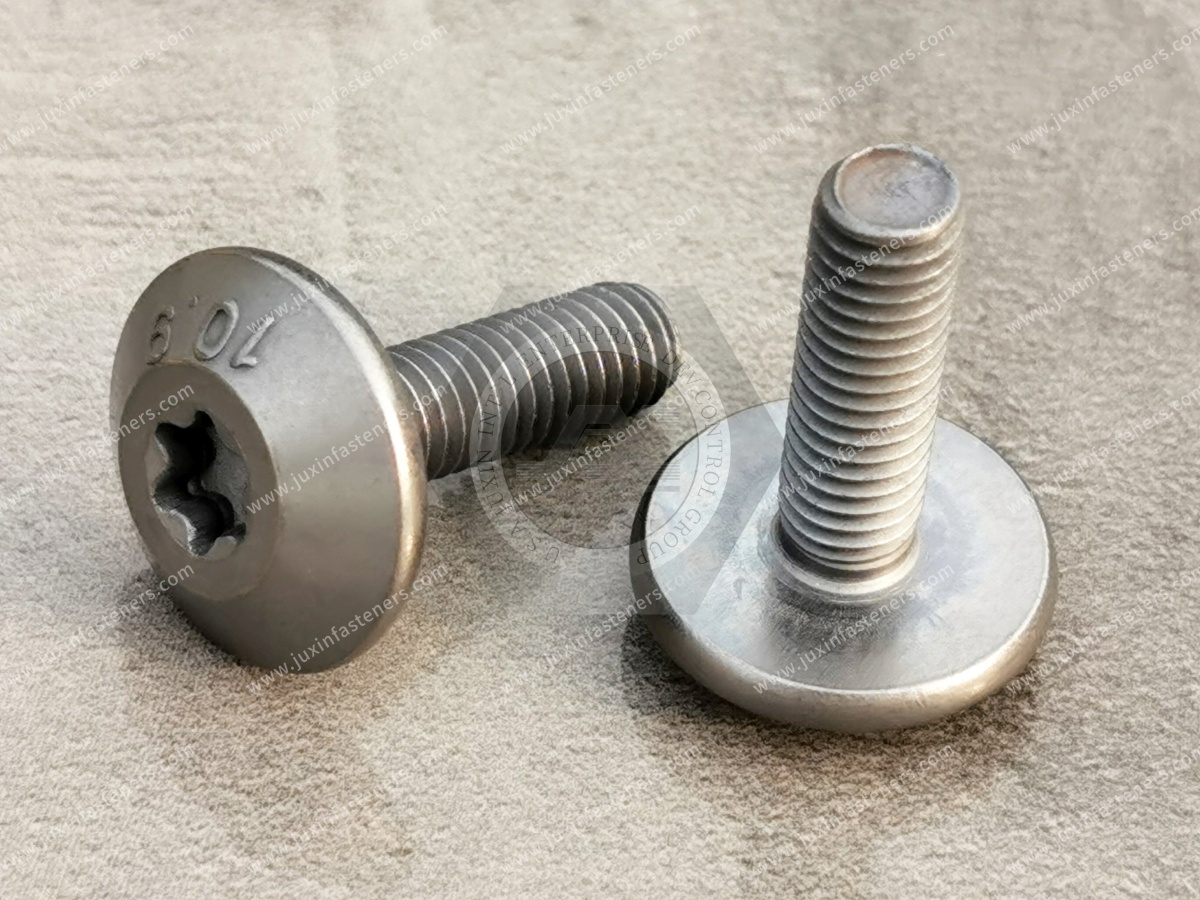
Metric Tamper-Resistant Torx Flat Head Screws
Flat head security screws are designed for countersunk installations.
They may be selected where a flush or nearly flush surface is required.
Potential Applications
Automotive interior covers
Equipment access panels
Electronic housings
Decorative assemblies
Engineering Considerations
Countersink angle
Head dimensions
Mating material
Available thickness
Bearing contact
Thread engagement
Important Limitation
A countersunk head does not automatically distribute load more effectively than every other head style.
Countersink geometry and the mating component must be compatible.
Stainless Steel Pan Head Torx Screws
Pan head Torx screws may be appropriate where a raised head and suitable bearing surface are acceptable.
Potential Applications
Automotive electronic housings
Interior accessories
Equipment covers
Industrial control assemblies
Engineering Considerations
Drive compatibility
Head clearance
Mating material
Corrosion exposure
Installation requirements
Important Distinction
A standard Torx pan head screw is not necessarily tamper-resistant.
A security feature must be specified separately.
Sealing Tamper-Resistant Screws
Some security screws incorporate sealing features such as an elastomeric sealing element.
Potential Applications
Outdoor charging equipment
Electrical cabinets
Selected electronic enclosures
Equipment access panels
Engineering Considerations
Sealing element material
Compression requirements
Mating surface
Temperature exposure
Chemical compatibility
Repeated service
Critical Limitation
A sealing screw alone does not establish the ingress protection rating of the complete enclosure.
The finished assembly must be validated.
Security Screws for Automotive Exterior Components
Exterior accessories may require corrosion-resistant security fasteners.
Potential Applications
License plate mounting
Exterior trim
Auxiliary equipment brackets
Accessory panels
Customer-approved protective covers
Engineering Considerations
Moisture exposure
Road contaminants
Material compatibility
Fastener accessibility
Service requirements
Vibration
Important Limitation
A security drive does not replace a properly designed vibration-resistant joint.
EV Charging and Electrical Equipment Security
Tamper-resistant screws may be considered for selected electric vehicle charging and auxiliary electrical equipment.
Potential Applications
Charging equipment housings
Outdoor electrical cabinets
Auxiliary control enclosures
Service-restricted access panels
Engineering Considerations
Corrosion exposure
Electrical safety
Environmental sealing
Tool accessibility
Maintenance requirements
Applicable equipment approvals
Critical Safety Limitation
High-voltage electrical connections and safety-critical battery assemblies require separately approved fastening systems.
A general-purpose security screw should not be substituted into these applications without engineering authorization.

Automotive Electronics and Communication Equipment
Security screws may be useful where controlled access is required.
Potential Applications
Electronic control housings
Communication equipment
Monitoring equipment
Selected sensor covers
Engineering Considerations
Thread engagement
Mating material
Installation torque
Electrical compatibility
Serviceability
Environmental exposure
Production Manager's Perspective
The selected security drive must be compatible with assembly tools and maintenance procedures.
Industrial Equipment and Public Infrastructure
Tamper-resistant screws are also used outside automotive applications.
Potential Applications
Industrial control cabinets
Public equipment enclosures
Transportation infrastructure
Machinery covers
Outdoor equipment
Engineering Considerations
Required security level
Corrosion exposure
Installation accessibility
Maintenance frequency
Mechanical loading
Installation Guidelines for Automotive Security Screws
Correct installation is important for both fastening reliability and the intended security function.
Use the Correct Driver
The driver must match the security recess.
Confirm Thread Compatibility
Verify the complete thread designation.
Check Mating Material
The screw must be compatible with the threaded component or prepared hole.
Use the Approved Tightening Procedure
Apply the specified installation method and torque requirements.
Avoid Recess Damage
Damaged security recesses can create assembly and service problems.
Confirm Access
The installation tool must have adequate clearance.
Important Production Principle
A security screw that cannot be installed consistently may increase assembly defects and maintenance cost.
Maintenance and Inspection
Security fasteners should be inspected according to the relevant equipment or vehicle maintenance requirements.
Potential inspection points include:
Corrosion
Recess damage
Tool engagement
Visible mechanical damage
Loosening indications
Sealing condition, where applicable
Important Limitation
Wheel-retention inspection and replacement must follow vehicle manufacturer requirements.
Do not apply general equipment screw maintenance instructions as a substitute for wheel-service procedures.
Surface Treatment for Stainless Steel Security Screws
Passivation
Passivation may be specified to improve the corrosion resistance of suitable stainless steel fasteners by removing certain surface contaminants and supporting the passive surface condition.
Engineering Considerations
Stainless steel grade
Surface condition
Processing specification
Cleaning
Verification requirements
Important Limitation
Passivation does not make stainless steel immune to corrosion.
Zinc Plating
Zinc plating may be used for suitable carbon steel security screws.
Engineering Considerations
Coating thickness
Corrosion requirements
Thread fit
Friction
Hydrogen embrittlement risk
Black Oxide
Black oxide may be selected for appearance and certain functional requirements.
Important Limitation
Black oxide alone generally provides limited corrosion protection compared with dedicated protective coating systems.
Information Gain: Security, Corrosion and Assembly Are Separate Requirements
A security fastener may satisfy one requirement but fail another.
For example:
A special drive may discourage removal but provide no additional vibration resistance.
Stainless steel may resist corrosion but not meet the required strength.
A sealing element may improve local sealing but not guarantee enclosure protection.
A hard coating may alter friction and tightening behavior.
A complex security pattern may increase service-tool management costs.
Engineering Recommendation
Define security, mechanical performance, corrosion resistance and assembly requirements separately.
Custom Automotive Security Screw Development
Standard security screws may not satisfy every OEM requirement.
Potential customization features include:
Special head geometry
Custom security drive
Thread specifications
Material selection
Surface treatments
Defined critical dimensions
OEM packaging
Matching tool requirements
Technical Review
Custom projects should consider:
Intended application
Joint loading
Mating material
Installation process
Security objective
Environmental exposure
Inspection requirements
Commercial Review
Tooling requirements, samples, MOQ, annual demand and delivery schedules should be confirmed during quotation.
Important Limitation
Custom security screw production does not automatically establish approval for wheel-retention applications.
International Standards and Technical Specifications
Relevant standards depend on the fastener design.
ISO 965
Addresses ISO metric screw-thread tolerances.
ISO 3506-1
Addresses mechanical properties of corrosion-resistant stainless steel bolts, screws and studs within its scope.
ISO 898-1
Addresses mechanical properties of carbon and alloy steel bolts, screws and studs within its scope.
ISO 4042
Addresses electroplated coating systems for fasteners within its scope.
ISO 10683
Addresses non-electrolytically applied zinc-flake coating systems for fasteners within its scope.
Important Standards Principle
General fastener standards do not automatically establish wheel-retention suitability.
Wheel lock bolts must meet the applicable vehicle, wheel and customer-specific requirements.
Thread System Compatibility
Metric, UNC, UNF, BSW and BSF threads are distinct systems.
They are not directly interchangeable.
Approximate inch equivalents should be treated as dimensional references only.
Quality Requirements for Automotive Security Fasteners
Inspection should be based on the approved drawing and application requirements.
Potential Inspection Characteristics
Material identification
Dimensions
Thread geometry
Head dimensions
Security recess geometry
Surface coating
Mechanical properties
Appearance
Application-Specific Evaluation
Where required, additional evaluation may include:
Driver engagement
Installation performance
Corrosion testing
Sealing performance
Functional assembly validation
Important Limitation
Not every security screw requires the same test program.
Testing must follow the applicable product and customer requirements.
Supplier Qualification for OEM Security Fasteners
Purchasing and supplier development teams should review both product compatibility and sourcing requirements.
Technical Specification
Confirm the approved drawing, revision and functional requirements.
Security Design
Identify the required drive pattern and tool compatibility.
Material and Coating
Specify the approved material and surface treatment.
Assembly
Define installation and service requirements.
Inspection
Identify critical characteristics and acceptance criteria.
Change Control
Review any proposed changes to material, geometry, coating or drive design.
Commercial Requirements
Confirm:
Sample quantity
MOQ
Annual demand
Packaging
Delivery schedule
Tool supply requirements
Supply continuity
Wheel Lock Procurement: Additional Requirements
For wheel-retention projects, the sourcing package should also address:
Vehicle and wheel compatibility
Approved seat geometry
Thread engagement
Mechanical-property requirements
Wheel lock key system
Installation procedure
Customer approval and validation requirements
Important Procurement Principle
A general security screw supplier should not automatically be treated as a qualified wheel lock bolt supplier.
Preparing a Drawing-Based Automotive Security Fastener RFQ
A complete RFQ helps reduce technical clarification and quotation delays.
Product Information
Drawing or applicable standard
Part number and revision
Screw or bolt type
Dimensions
Thread designation
Head style
Security drive geometry
Material and Surface Treatment
Material specification
Mechanical-property requirements
Coating
Corrosion requirements
Application Information
Mating material
Joint loading
Installation procedure
Service access
Environmental conditions
Quality and Commercial Information
Inspection criteria
Required documentation
Sample quantity
Annual demand
Production quantity
Packaging
Target delivery schedule
Additional Wheel Lock Information
If the inquiry concerns wheel-retention hardware, include the approved vehicle-specific wheel fastener specification, seat geometry,
security key requirements and customer qualification criteria.
Frequently Asked Questions
Are tire tamper-resistant screws the same as wheel lock bolts?
Not necessarily. The term is sometimes used commercially, but wheel lock bolts are specialized wheel-retention fasteners.
General-purpose security screws are different products.
Can ordinary stainless steel security screws replace wheel bolts?
No. Matching dimensions do not establish wheel-retention suitability. Only approved wheel fasteners should be used.
What is the difference between wheel lock bolts and locking wheel nuts?
Wheel lock bolts are used in compatible bolt-based wheel attachment systems, while locking wheel nuts are used with compatible wheel studs.
Why is wheel bolt seat geometry important?
The seat geometry must match the approved wheel design to provide the intended contact and clamping behavior.
Can a conical-seat wheel bolt replace a ball-seat bolt?
Not without specific engineering approval. Different seating geometries are not automatically interchangeable.
Are pin-in Torx screws suitable for automotive applications?
They may be suitable for selected accessory and equipment applications when the complete screw specification meets the requirements.
Do tamper-resistant screws prevent vibration loosening?
Not automatically. Tamper resistance and vibration resistance are separate functions.
Can security screws include sealing features?
Yes. Some designs incorporate sealing elements, but enclosure-level sealing performance must be validated.
What should OEM buyers provide for a custom security screw RFQ?
The drawing, material, thread, head geometry, security drive, coating, installation requirements, inspection criteria and purchasing quantities.
Juxin Fasteners: Automotive Security Screws and Custom Fastening Components
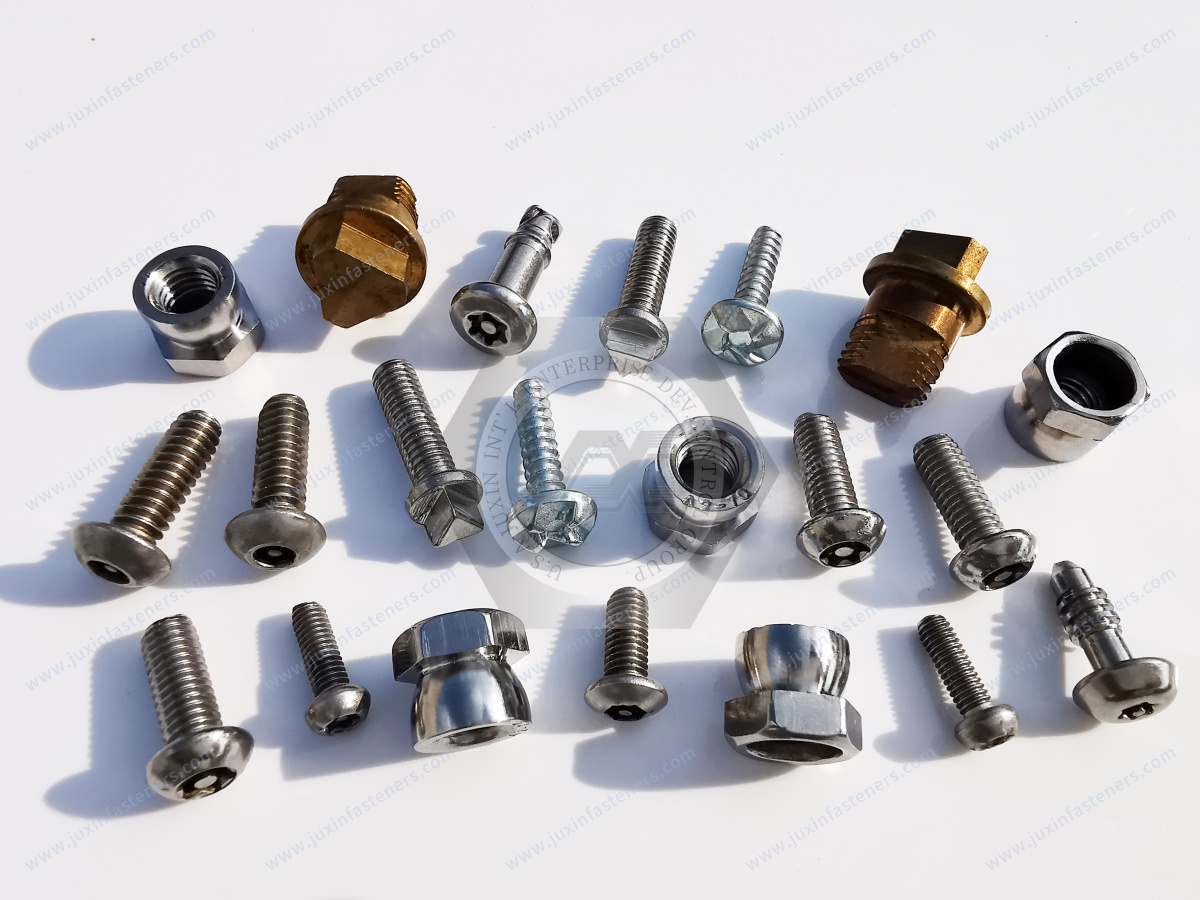
Juxin Fasteners supplies industrial security screws and custom fastening components for applications requiring controlled access, corrosion resistance and suitable mechanical performance.
Relevant product categories include:
Stainless steel security screws
Pin-in Torx screws
Tamper-resistant flat head screws
Rounded-head security screws
Pan head Torx screws
Sealing security screws
Custom OEM fastening components
Specific dimensions, materials, coatings, security drive designs, samples, MOQ, inspection requirements and delivery schedules are subject to technical and commercial confirmation.
Wheel lock bolts and locking wheel nuts involve additional wheel-retention requirements and must be reviewed separately before any supply capability or application suitability is confirmed.
Request an Automotive Security Fastener RFQ
Are you sourcing tamper-resistant screws, stainless steel security screws or custom fastening components for automotive accessories,
EV charging equipment, electronic enclosures or industrial equipment?
Do you need a drawing-based security fastener, a replacement supplier or a fastening solution compatible with your production and service requirements?
Juxin Fasteners welcomes inquiries from mechanical engineers, structural engineers, design engineers, manufacturing engineers, production managers, procurement specialists,
purchasing managers, supplier development teams and supply chain managers.
For technical review and quotation, please provide:
Approved drawing or standard + part number and revision + fastener type + dimensions + thread specification + head geometry + security drive
+ material + mechanical-property requirements + coating + mating component + joint loading + installation requirements
+ environmental exposure + inspection criteria + sample quantity + annual demand + production quantity + packaging + target delivery schedule.
For wheel lock bolt or locking wheel nut inquiries, also include the approved vehicle-specific wheel-retention specification and qualification requirements.
Company: Juxin Fasteners
Website: https://www.juxinfasteners.com/
Email: info@juxinfasteners.com
Send your automotive security screw drawings and OEM RFQ to Juxin Fasteners for technical review and quotation.
Contact Us
Tel.:
+86 020 8621 0320
+86 020 3121 6067
E-mail:
Technical Support:
Navigation
SEND INQUIREY