
Call Us
+86 136 6007 9809
Call Us
+86 136 6007 9809

Jul. 17, 2024
Automotive OEM Fasteners: Small Screws, High-Strength Bolts and Assembly Solutions
Automotive OEM fasteners are essential components in vehicle manufacturing, supporting the assembly of brackets,
housings, interior equipment, mechanical components and selected electrical systems.
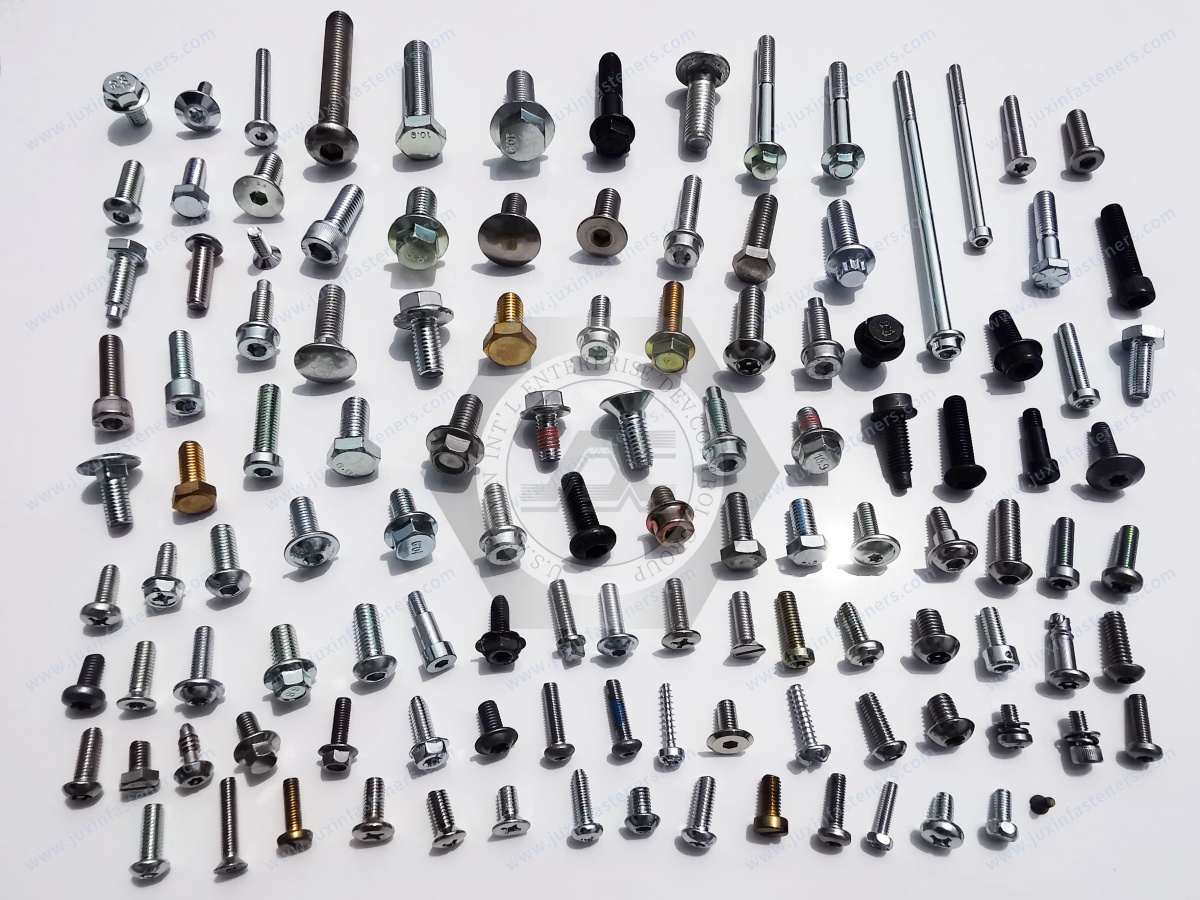
A modern vehicle uses many types of threaded and permanently attached fasteners, including small machine screws, self-tapping screws,
hex head bolts, flange bolts, projection weld bolts and custom-designed fastening components.
Although these parts may represent a small portion of the overall vehicle cost, their selection can significantly affect assembly efficiency, joint reliability, serviceability and manufacturing consistency.
For automotive OEMs and Tier-1/Tier-2 suppliers, choosing a fastener involves more than matching its nominal diameter and length.
The fastener must be compatible with the joint design, material requirements, installation process, operating environment and approved customer specification.
Mechanical and design engineers focus on load paths, thread engagement, mechanical properties, fatigue behavior and component geometry.
Manufacturing engineers and production managers evaluate installation time, welding or tightening processes, tool accessibility, defect prevention and assembly repeatability.
Purchasing managers, procurement development teams and supply chain managers need clear specifications,
supplier qualification procedures, reliable change control and commercially practical sourcing arrangements.
This guide explains the main categories of automotive screws and bolts, their engineering considerations and the information required for OEM sourcing.
Juxin Fasteners supplies industrial screws, bolts and special fastening components and welcomes drawing-based automotive fastener inquiries.
Main Types of Automotive OEM Fasteners
Different automotive assemblies require different fastening methods.
Common product categories include:
Small automotive machine screws
Hex head screws and bolts
Hex flange bolts
Projection weld bolts
Self-tapping and thread-forming screws
Stainless steel screws
High-strength metric bolts
Drawing-based custom fasteners
The correct selection depends on the intended function rather than the general description automotive fastener.
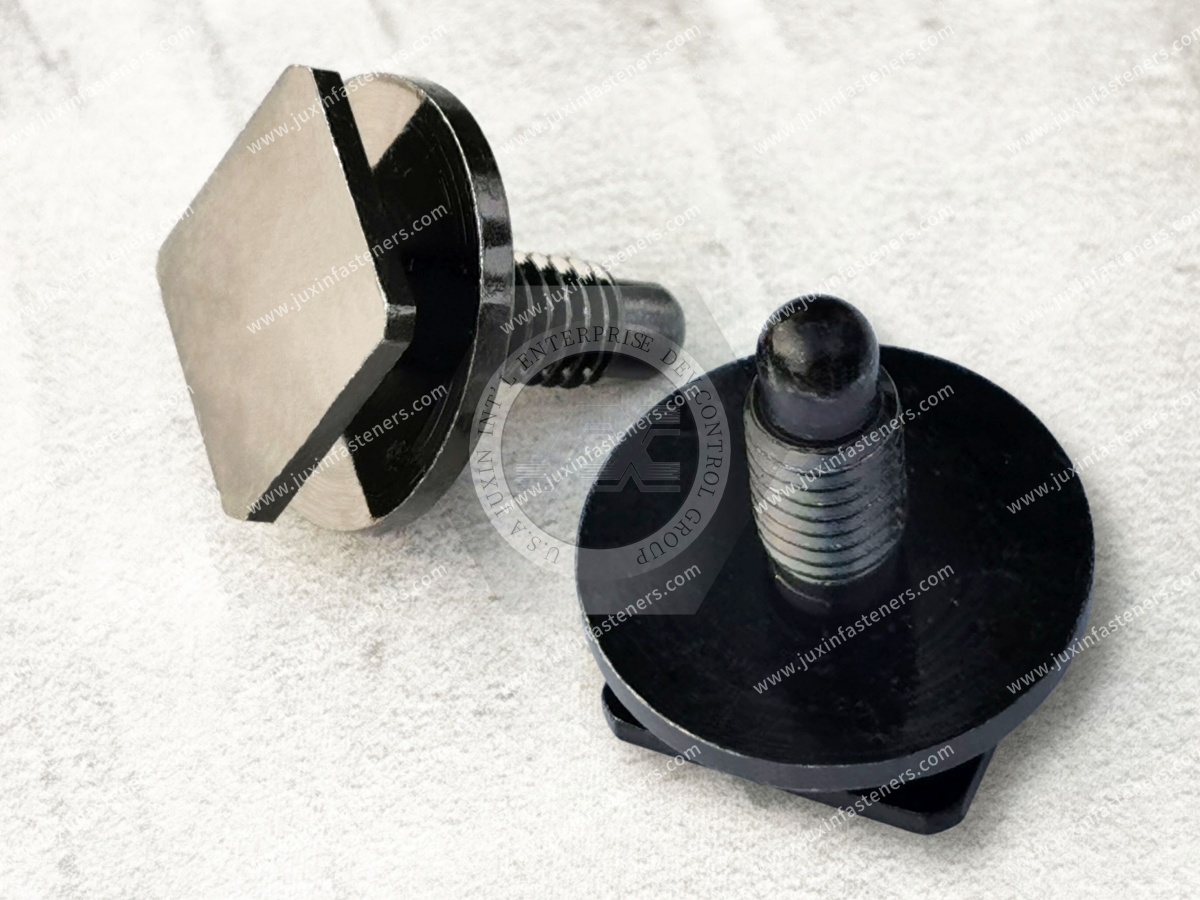
Automotive Small Screws
Small screws are commonly used in selected low- and moderate-load vehicle assemblies.
Potential applications include:
Interior equipment housings
Instrument panels
Electronic module covers
Access panels
Small brackets
Auxiliary mounting components
Engineering Selection Factors
Thread diameter and pitch
Screw length
Head style
Drive system
Mating material
Thread engagement
Assembly access
Required clamp load
Design Consideration
A small screw may be adequate for a lightweight cover but unsuitable for a heavily loaded structural connection.
Production Consideration
For repetitive assembly, screw head geometry and drive type should be compatible with the intended installation tools.
Three-Projection Weld Bolts for Automotive Components
Projection weld bolts incorporate specially formed projections intended to concentrate welding current and pressure at defined contact areas.
These fasteners may be used to create an attached threaded mounting point on a compatible metal component.
Potential Applications
Vehicle body brackets
Sheet metal assemblies
Equipment mounting points
Seat-related brackets where approved
Customer-specified welded components
Engineering Considerations
Base material compatibility
Sheet thickness
Weld projection geometry
Welding process parameters
Fastener positioning
Required joint performance
Access for welding equipment
Important Welding Principle
The presence of three welding projections does not automatically guarantee weld strength or fatigue performance.
The complete welding process must be developed and validated for the actual materials and joint requirements.
Weld Bolt vs. Conventional Through-Bolt
A projection weld bolt may simplify subsequent assembly by providing a fixed threaded attachment point.
However, it also introduces welding process requirements.
| Selection factor | Projection weld bolt | Conventional through-bolt |
|---|---|---|
| Attachment method | Welded to a compatible component | Installed through mating holes |
| Access requirement | Welding access during component manufacture | Assembly access to the threaded connection |
| Process control | Welding parameters and weld quality | Tightening and joint assembly |
| Service replacement | May require repair of the welded attachment | Often easier to replace |
| Main engineering concern | Weld integrity and sheet compatibility | Clamp load, bearing and thread engagement |
Manufacturing Insight
The most economical fastening method should be evaluated across the full production sequence, not only by comparing individual fastener prices.
High-Strength Automotive Hex Head Bolts
Hex head bolts are widely used in industrial and vehicle-related mechanical assemblies because they offer external wrenching access and standardized threaded connections.
Potential Applications
Mechanical brackets
Equipment mounts
Powertrain auxiliary components
Machinery connections
Customer-approved vehicle assemblies
Engineering Priorities
Strength class
Thread specification
Bolt length
Bearing surface
Required preload
Fatigue loading
Corrosion protection
Important Limitation
A hexagonal head does not establish the bolt's strength or suitability for a particular automotive application.
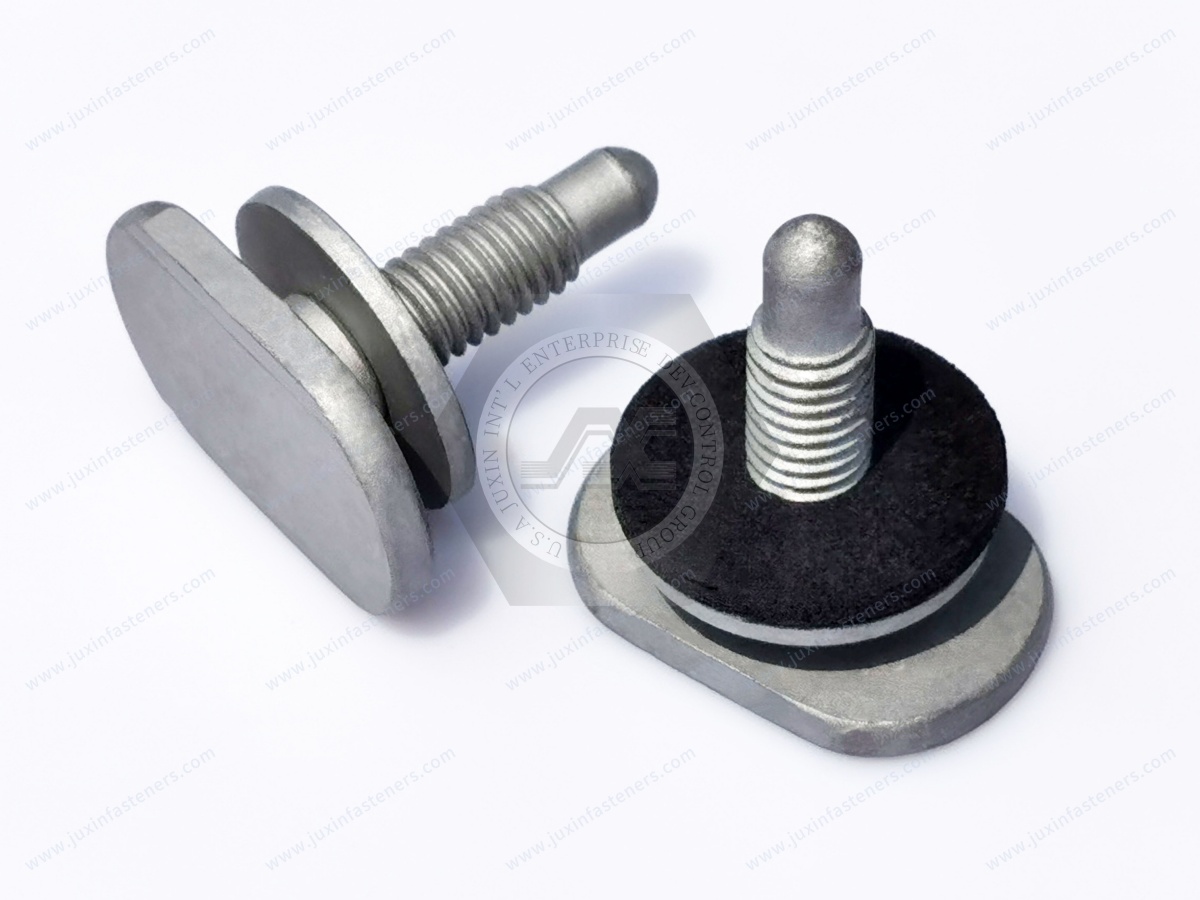
Metric Property Class 8.8 Bolts
Property class 8.8 is a commonly specified mechanical-property class for carbon or alloy steel metric bolts within the scope of applicable standards.
Potential Applications
General mechanical brackets
Selected equipment mounts
Noncritical structural accessories
Customer-approved automotive components
Engineering Considerations
Required tensile and proof properties
Joint loading
Tightening method
Coating system
Mating nut properties
Fatigue conditions
Important Principle
Property class 8.8 should be selected because it satisfies the approved design, not simply because it is commonly available.
Metric Property Class 10.9 Bolts
Property class 10.9 bolts provide higher specified mechanical strength than property class 8.8 bolts within their respective standard requirements.
They may be considered for applications requiring higher mechanical capacity.
Engineering Considerations
Required preload
Fatigue performance
Joint stiffness
Bearing stresses
Coating compatibility
Hydrogen embrittlement risk
Tightening process
Customer approval
Critical Limitation
A higher strength class is not automatically a better fastener.
The complete joint must be designed and validated for the selected property class.
Property Class 8.8 vs. 10.9: Selection Logic
| Engineering factor | Class 8.8 | Class 10.9 |
|---|---|---|
| Specified mechanical strength | Lower than 10.9 | Higher than 8.8 |
| Typical selection basis | Approved general mechanical requirements | Approved higher-strength requirements |
| Tightening requirement | Joint-specific | Joint-specific |
| Coating review | Required | Particularly important for embrittlement-sensitive processes |
| Fatigue performance | Depends on complete joint | Depends on complete joint |
| Interchangeability | Requires approval | Requires approval |
Engineering Recommendation
Do not replace an 8.8 bolt with a 10.9 bolt, or vice versa, without reviewing the approved joint requirements.
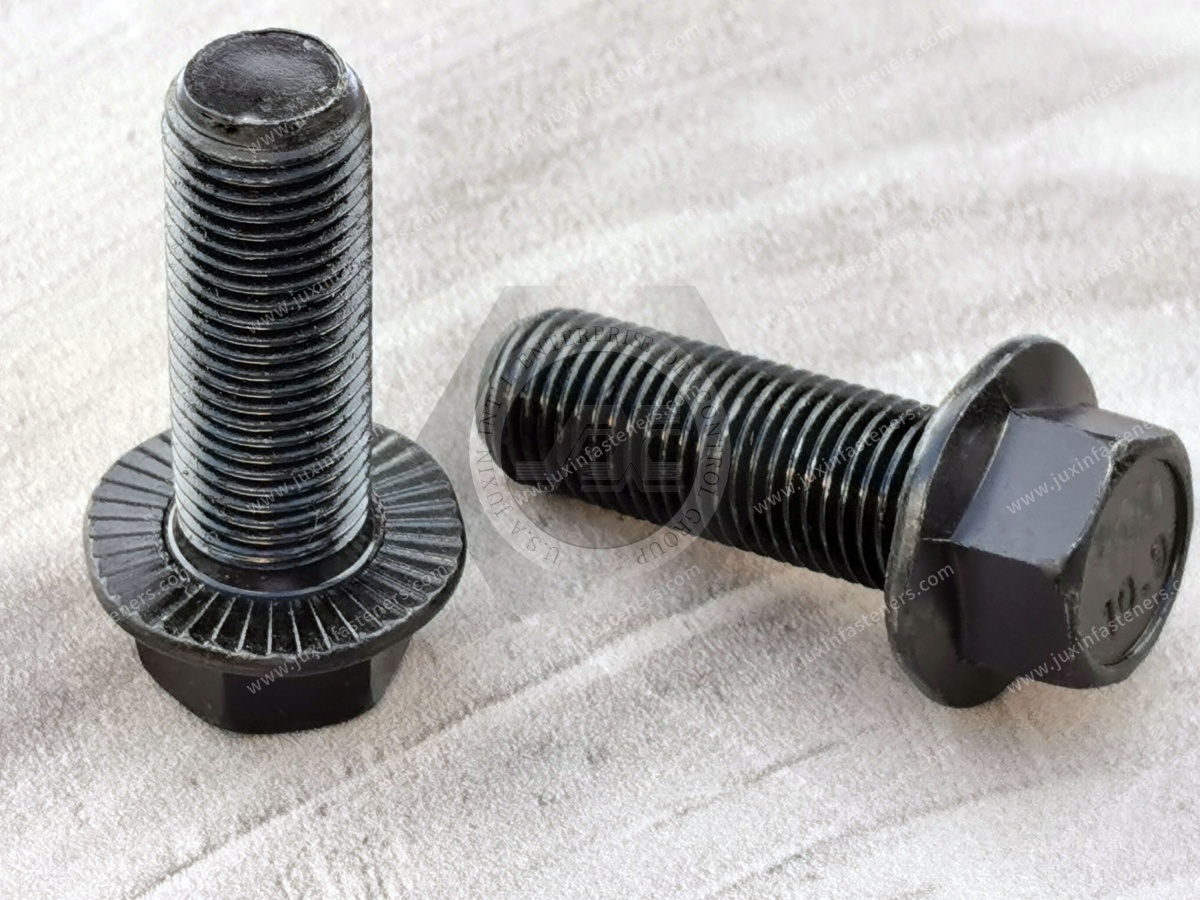
Automotive Hex Flange Bolts
Hex flange bolts incorporate an enlarged bearing surface beneath the head.
The flange may reduce the need for a separate washer in appropriately designed assemblies.
Potential Applications
Mechanical brackets
Equipment mounting
Selected powertrain accessories
Vehicle body attachments
Industrial machinery
Potential Advantages
Integrated bearing surface
Fewer separate assembly components
Convenient installation
Potential reduction in washer-handling operations
Important Limitation
A flange head does not automatically increase bolt strength or prevent vibration loosening.
The performance depends on:
Flange geometry
Mating surface
Friction
Preload
Joint stiffness
External loading
Flange Bolts and Bearing Pressure
A larger bearing area may reduce average contact pressure when other conditions are comparable.
However, local contact stresses and joint behavior depend on the actual geometry and materials.
Engineering Recommendation
Confirm that the flange diameter and bearing surface are compatible with the mating component.
Are Flange Bolts Vibration Resistant?
Not inherently.
Vibration-related loosening can occur when joint conditions permit relative movement and loss of effective clamping.
Relevant Factors
Initial preload
Joint stiffness
Transverse loading
Surface embedding
Friction conditions
Locking features
Assembly quality
Engineering Insight
A serrated flange design, a plain flange design and a separately locked joint are not equivalent.
Each requires its own engineering assessment.
Automotive Self-Tapping and Thread-Forming Screws
Self-tapping and thread-forming screws are used in selected vehicle components where the screw forms or cuts its mating thread during installation.
Potential Applications
Interior trim components
Plastic housings
Lightweight covers
Selected thin-metal components
Auxiliary equipment panels
Important Distinction
Self-tapping is a broad commercial term.
Different thread designs are intended for different materials and hole conditions.
Thread-Forming Screws for Plastics
These screws are designed to form mating threads in suitable plastic components.
Engineering Considerations
Plastic material
Boss diameter
Pilot-hole diameter
Engagement length
Installation torque
Strip-out resistance
Repeated service requirements
Thread-Forming or Thread-Cutting Screws for Metal
These products require separate evaluation of:
Base material
Sheet thickness
Hole preparation
Thread-forming capability
Installation load
Joint strength
Critical Selection Rule
A screw designed for plastic should not automatically be substituted into sheet metal, or vice versa.
Designing Plastic Bosses for Automotive Screws
Plastic components require special attention because their mechanical behavior differs from metal.
Potential Failure Modes
Boss cracking
Thread stripping
Material creep
Reduced clamp load
Damage during repeated assembly
Engineering Recommendation
Coordinate screw geometry, pilot-hole size and boss dimensions with the selected plastic material.
Production Manager's Perspective
An incorrect pilot-hole design may cause high installation torque, cracked bosses, rejected assemblies and inconsistent production cycle times.
Stainless Steel Automotive Screws
Stainless steel screws may be considered for selected automotive applications requiring corrosion resistance.
304 Stainless Steel
May be suitable for general equipment, exterior accessories and other approved applications where its properties meet the requirements.
316 Stainless Steel
May be considered where improved resistance to certain localized corrosion conditions is needed.
Potential Applications
Exterior accessories
Selected trim components
Auxiliary electronic housings
EV charging equipment
Nonstructural outdoor components
Important Material Limitation
Stainless steel is not automatically equivalent in mechanical strength to a high-strength alloy steel bolt.
Engineering Recommendation
Select material according to both corrosion exposure and mechanical requirements.
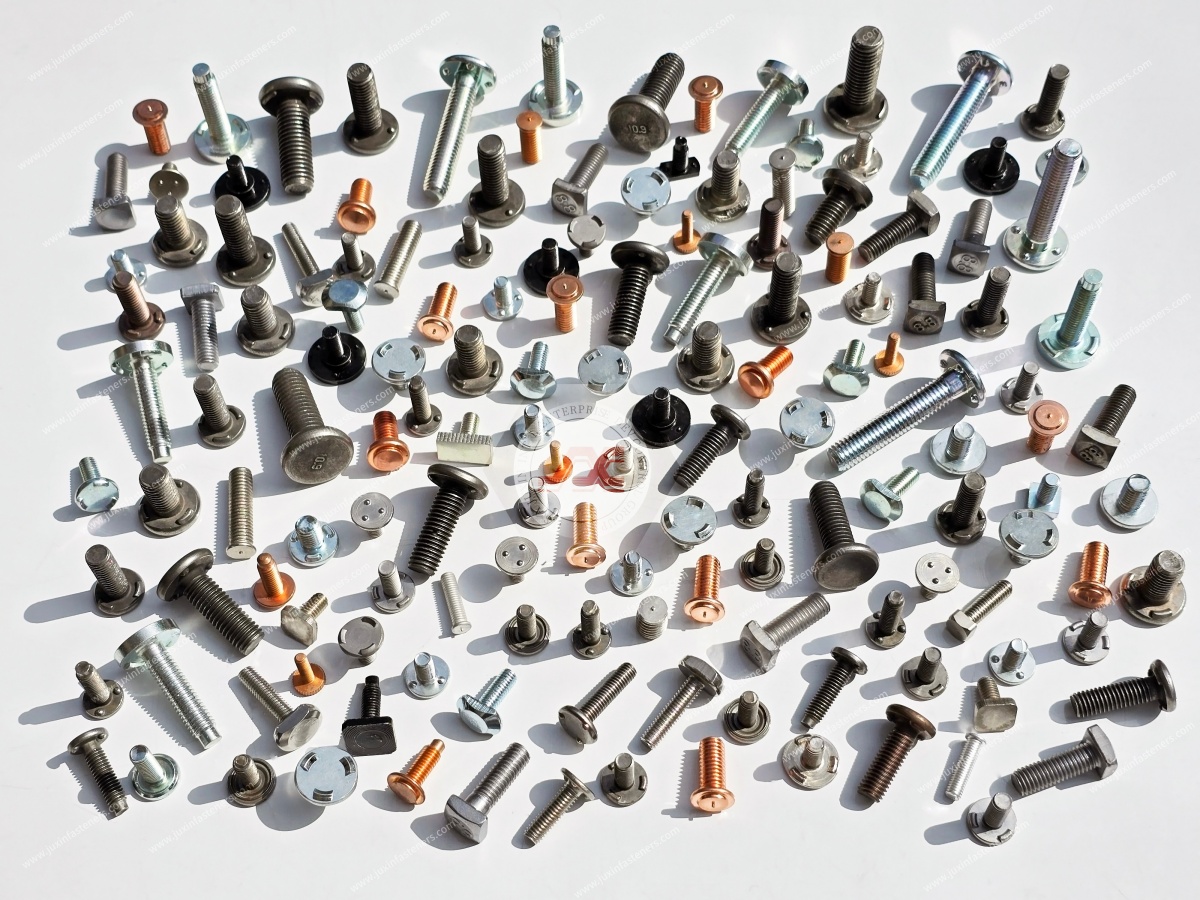
Automotive Corrosion Protection and Surface Treatments
Carbon and alloy steel fasteners often require protective surface treatments.
Possible coating systems include:
Zinc electroplating
Zinc-nickel plating
Zinc-flake coatings
Phosphate-based treatments
Customer-specified protective systems
Coating Selection Factors
Corrosion exposure
Fastener strength
Hydrogen embrittlement risk
Friction requirements
Coating thickness
Thread fit
Electrical requirements
Customer specifications
Important Coating Distinction
Zinc electroplating, zinc-nickel plating, phosphate treatments and zinc-flake coatings are not interchangeable processes.
Each has different characteristics and qualification requirements.
Hydrogen Embrittlement Considerations
Certain high-strength steel fasteners may be susceptible to hydrogen embrittlement associated with manufacturing or surface treatment processes.
Engineering Recommendation
Evaluate the material, strength level and coating process together.
Do not approve a coating substitution based solely on appearance or corrosion claims.
Thread Selection for Automotive Bolts
Automotive metric fasteners may use coarse or fine threads depending on the approved design.
Metric Coarse Threads
Common in general-purpose threaded assemblies.
Metric Fine Threads
May be specified for particular engagement, packaging or mechanical requirements.
Important Limitation
Fine threads do not automatically prevent vibration loosening.
Thread Compatibility
Metric threads are not directly interchangeable with UNC, UNF, BSW or BSF threads.
Approximate inch conversions do not establish thread compatibility.
Engineering Recommendation
Specify the complete thread designation, including nominal diameter, pitch and applicable tolerance requirements.
Automotive Bolt Preload and Tightening
Fastener preload is a major consideration in many bolted joints.
Preload
Preload is the tensile force introduced into a fastener during tightening.
Clamp Load
Clamp load is the compressive force acting between the joined components.
Important Influencing Factors
Thread friction
Bearing-surface friction
Lubrication
Coating
Joint stiffness
Fastener geometry
Tightening method
Engineering Recommendation
Use an approved tightening specification developed for the actual joint.
Critical Limitation
A generic torque value should not be applied to every bolt of the same diameter and strength class.
Torque-Controlled and Torque-Angle Assembly
Different automotive applications may use different tightening methods.
Torque-Controlled Assembly
Uses a defined applied torque under specified conditions.
Torque-Angle Assembly
Uses angular rotation as part of the tightening procedure.
Important Limitation
The correct tightening strategy depends on the joint design and approved engineering requirements.
Production Manager's Perspective
Consistent fastening performance requires appropriate tools, process controls and verification rather than relying only on nominal bolt specifications.
Automotive Fastener Fatigue and Dynamic Loading
Automotive components may experience repeated loading during operation.
Potential Influencing Factors
Joint preload
External load direction
Joint stiffness
Thread geometry
Stress concentration
Surface condition
Material properties
Important Engineering Principle
Higher nominal tensile strength does not automatically establish better fatigue performance.
Fatigue behavior must be assessed at the joint level.
Automotive Body and Bracket Assemblies
Body and bracket assemblies may use a combination of weld bolts, hex bolts, flange bolts and small screws.
Potential Applications
Sheet metal brackets
Equipment mounts
Interior supports
Auxiliary component attachments
Customer-approved body connections
Engineering Priorities
Sheet thickness
Load transfer
Welding or tightening method
Corrosion protection
Production accessibility
Important Structural Limitation
Primary crash structures and safety-critical body connections require customer-approved designs and qualification.
Automotive Interior and Electronic Assemblies
Interior equipment and electronic housings often require compact fastening solutions.
Potential Applications
Instrument housings
Interior brackets
Display mounting components
Electronic control unit covers
Service-access panels
Engineering Priorities
Small screw dimensions
Thread engagement
Plastic boss design
Installation access
Vibration
Serviceability
Production Priorities
Automated screw feeding
Correct driver engagement
Controlled tightening
Reduced rework
Consistent assembly cycle time
EV and Electric Vehicle Auxiliary Fastening
Electric vehicles introduce additional packaging, electrical and thermal-management requirements.
Potential Applications
Auxiliary electronics housings
Nonstructural battery equipment covers
Charging equipment cabinets
Electrical control enclosures
Thermal-management equipment accessories
Engineering Priorities
Material compatibility
Corrosion exposure
Electrical isolation
Thermal cycling
Assembly accessibility
Maintenance requirements
Important EV Safety Limitation
High-voltage electrical connections, structural battery retention and safety-critical battery assemblies require separately qualified fastening systems.
A general-purpose automotive screw or bolt should not be substituted into these connections without approval.
Automotive Aftermarket and Vehicle Accessories
Selected aftermarket applications may use standard or customized fastening components.
Potential Applications
License plate mounting
Auxiliary brackets
Trailer accessories
Nonstructural exterior equipment
Customer-approved mounting hardware
Engineering Considerations
Vehicle compatibility
Thread designation
Corrosion resistance
Vibration exposure
Service requirements
Important Limitation
Wheel retention, braking, steering, suspension and other safety-critical vehicle systems require approved components.
Automotive Fasteners for Industrial Machinery
Some automotive-style fastener designs may also be useful in industrial equipment.
Potential Applications
Automation machinery
Equipment brackets
Mechanical housings
Production equipment
Industrial fixtures
Engineering Recommendation
Evaluate the actual joint requirements rather than assuming that a fastener described as automotive-grade is automatically suitable for every industrial application.
Design for Manufacturing and Assembly
Fastener selection should be integrated into the manufacturing process.
Tool Access
The assembly must allow proper engagement of the selected driver or wrench.
Fastener Feeding
Automated production may require evaluation of screw and bolt presentation.
Weld Fastener Positioning
Projection weld bolts require appropriate location and welding access.
Tightening Consistency
The installation process must match the approved joint requirements.
Error Prevention
Similar-looking fasteners with different lengths or strength classes may require identification and process controls.
Inspection
Critical dimensions and assembly characteristics should be measurable.
Production Manager's Perspective
A technically suitable fastener may still be a poor production choice if it introduces excessive installation time, frequent tool changes or difficult rework.
Information Gain: Total Installed Fastener Cost
Fastener procurement should consider more than the unit price.
Relevant costs may include:
Fastener price
Washers or additional components
Welding or tightening operations
Tooling
Installation labor
Inspection
Scrap
Rework
Maintenance
Engineering and Procurement Recommendation
Evaluate fastening alternatives at the complete assembly level.
Custom Automotive Screws and Bolts
Some automotive projects require nonstandard dimensions or configurations.
Potential requirements include:
Special bolt length
Custom flange geometry
Special head design
Nonstandard thread pitch
Defined welding projections
Specific mechanical properties
Customer-specified coatings
Critical dimensional tolerances
Engineering Review
Custom projects should evaluate:
Joint function
Mechanical loading
Material requirements
Installation process
Corrosion exposure
Manufacturing feasibility
Inspection requirements
Commercial Review
Sample quantities, MOQ, tooling considerations and delivery schedules should be confirmed during quotation.
Important Limitation
Custom manufacturing does not automatically establish compliance with an automotive OEM's approval system or a safety-critical application.
International Standards for Automotive Fasteners
Relevant standards depend on the actual product and application.
ISO 898-1
Covers specified mechanical properties of carbon and alloy steel bolts, screws and studs within its scope.
ISO 4017
Specifies dimensions for certain hexagon head screws.
ISO 4162
Specifies dimensions for certain hexagon flange bolts.
ISO 965
Provides requirements for ISO metric screw-thread tolerances.
ISO 4042
Addresses electroplated coating systems for fasteners within its scope.
ISO 10683
Addresses non-electrolytically applied zinc-flake coating systems for fasteners within its scope.
Important Standards Principle
Dimensional compliance, mechanical-property compliance, coating compliance and automotive customer approval are separate requirements.
A fastener should not be described as automotive-qualified solely because it meets one general international standard.
Quality Requirements for Automotive OEM Fasteners
Inspection requirements should be based on the approved drawing, specification and application.
Potential Inspection Characteristics
Material verification
Thread dimensions
Overall dimensions
Head geometry
Mechanical properties
Coating characteristics
Appearance
Application-Specific Evaluation
Where required, additional evaluation may address:
Tightening behavior
Weld performance
Joint fatigue
Corrosion exposure
Functional assembly performance
Important Distinction
Not every automotive fastener requires the same tests.
Testing and documentation should follow the applicable customer and product requirements.
Supplier Qualification for Automotive OEM and Tier Suppliers
Automotive sourcing teams should evaluate both the fastener and the supplier's ability to meet the approved requirements.
Product Definition
Confirm the drawing, standard and revision.
Material and Mechanical Properties
Specify the required material and strength class.
Manufacturing Requirements
Identify any special forming, threading or welding features.
Surface Treatment
Define the approved coating and related requirements.
Inspection
Identify critical characteristics and acceptance criteria.
Traceability
Determine the required batch identification and documentation.
Change Control
Changes to material, dimensions, coating or manufacturing process should be reviewed against customer approval requirements.
Commercial Evaluation
Review:
Sample quantity
MOQ
Production volume
Packaging
Delivery schedule
Supply continuity
Total installed cost
Important Automotive Procurement Principle
Requirements such as IATF 16949, PPAP, APQP or customer-specific approval procedures must be confirmed for the actual sourcing program.
They should not be assumed from a supplier's general industrial fastener experience.
Preparing an Automotive Fastener RFQ
A complete RFQ helps reduce technical clarification and sourcing delays.
Product Information
Approved drawing or standard
Part number and revision
Fastener type
Thread designation
Dimensions
Head geometry
Special features
Material and Mechanical Requirements
Material specification
Property class
Heat-treatment requirements, where applicable
Coating specification
Corrosion requirements
Assembly Information
Mating material
Joint loading
Tightening procedure
Welding requirements, if applicable
Operating environment
Functional acceptance criteria
Quality Requirements
Inspection plan
Material documentation
Traceability
Customer-specific approval requirements
Sample evaluation
Commercial Information
Prototype or sample quantity
Annual demand
Production quantity
Packaging
Target delivery schedule
Practical Procurement Recommendation
For supplier replacement projects, provide the currently approved drawing and identify any customer-controlled characteristics.
A matching nominal diameter and length are not sufficient to establish interchangeability.
Frequently Asked Questions
What types of fasteners are used in automotive manufacturing?
Common types include small machine screws, self-tapping screws, hex bolts, flange bolts, projection weld bolts and custom fastening components.
What is the difference between class 8.8 and 10.9 bolts?
Class 10.9 has higher specified mechanical strength, but selection must follow the approved joint design and application requirements.
Do flange bolts prevent vibration loosening?
Not automatically. Vibration resistance depends on preload, joint design, friction and any specified locking features.
Are fine-thread bolts better for vibration resistance?
Fine threads do not automatically prevent loosening. Thread pitch and locking strategy must be evaluated separately.
Can stainless steel screws replace class 10.9 steel bolts?
Not automatically. Mechanical properties and joint requirements must be reviewed.
What are three-projection weld bolts used for?
They may provide welded threaded mounting points on compatible metal components, subject to validated welding procedures.
Can automotive self-tapping screws be used in plastic?
Only where the screw design, plastic material and pilot-hole geometry are compatible.
Are automotive fasteners suitable for EV battery assemblies?
Suitability depends on the exact application. Safety-critical battery connections require separately approved designs.
What should OEM buyers provide for a custom automotive fastener RFQ?
The approved drawing, material, strength class, coating, joint requirements, inspection criteria and purchasing quantities.
Juxin Fasteners: Automotive Screws, Bolts and OEM Fastening Components
Juxin Fasteners supplies industrial fastening components and welcomes drawing-based inquiries for automotive screws, bolts and related custom fasteners.
Relevant product categories include:
Automotive small screws
Metric hex head bolts
Metric flange bolts
Projection weld bolts
Self-tapping screws
Stainless steel screws
High-strength metric bolts
Custom OEM fastening components
Specific dimensions, materials, mechanical properties, coatings, samples, MOQ, inspection requirements, customer approvals and delivery schedules are subject to technical and commercial confirmation.
Request an Automotive OEM Fastener RFQ
Are you sourcing small automotive screws, high-strength metric bolts, flange bolts, projection weld bolts or custom fastening components for vehicle manufacturing and related industrial assemblies?
Do you need to qualify a replacement supplier, evaluate a drawing-based fastener or improve assembly efficiency for recurring production?
Juxin Fasteners welcomes inquiries from mechanical engineers, structural engineers, design engineers, manufacturing engineers, production managers,
purchasing specialists, procurement managers, supplier development teams and supply chain managers.
For technical review and quotation, please provide:
Approved drawing or standard + part number and revision + fastener type + thread designation + dimensions + material
+ property class + coating requirements + special features + mating component information + joint loading + installation or welding requirements
+ inspection criteria + customer approval requirements + sample quantity + annual demand + production quantity + packaging requirements + target delivery schedule.
For replacement projects, include the existing approved part specification and any proposed changes.
Company: Juxin Fasteners
Website: https://www.juxinfasteners.com/
Email: info@juxinfasteners.com
Send your automotive screws, bolts and custom fastener drawings to Juxin Fasteners for technical review and OEM quotation.
Contact Us
Tel.:
+86 020 8621 0320
+86 020 3121 6067
E-mail:
Technical Support:
Navigation
SEND INQUIREY



