
Call Us
+86 136 6007 9809
Call Us
+86 136 6007 9809

Jul. 17, 2024
Stainless Steel Tamper-Resistant Screws: Security Drive Selection and OEM Applications
Stainless steel tamper-resistant screws are specialized threaded fasteners designed to discourage unauthorized or casual removal of equipment components by requiring a less common or dedicated drive tool.
Also known as stainless steel security screws, tamper-resistant fasteners or, in some commercial markets, tamper-proof screws,
these components are used in selected automotive accessories, industrial equipment, electrical enclosures, EV charging infrastructure, telecommunications cabinets and public facilities.
Common configurations include pin-in Torx screws, pin-in hex socket screws, one-way screws, countersunk security screws and button head security screws.
Unlike ordinary machine screws, security screws introduce an additional design consideration:
the fastening system must provide the required mechanical connection while controlling who can conveniently access or remove it.
For design and mechanical engineers, this involves selecting the correct drive geometry, head style, material, thread and installation arrangement.
For manufacturing engineers and production managers, the challenge is maintaining assembly efficiency, tool compatibility and consistent tightening despite the specialized drive.
For procurement and supplier development teams, the objective is to source a repeatable product that matches the approved drawing and remains serviceable throughout the equipment lifecycle.
This guide explains how to select stainless steel tamper-resistant screws for industrial OEM applications, including their security limitations, engineering requirements and purchasing considerations.
Juxin Fasteners supplies industrial security screws and welcomes drawing-based inquiries for standard and custom tamper-resistant fastening components.
What Are Stainless Steel Tamper-Resistant Screws?
A tamper-resistant screw uses a drive geometry or installation feature intended to make removal more difficult with ordinary tools.
Depending on the design, the screw may require a matching security bit, a dedicated removal tool or a specialized service procedure.
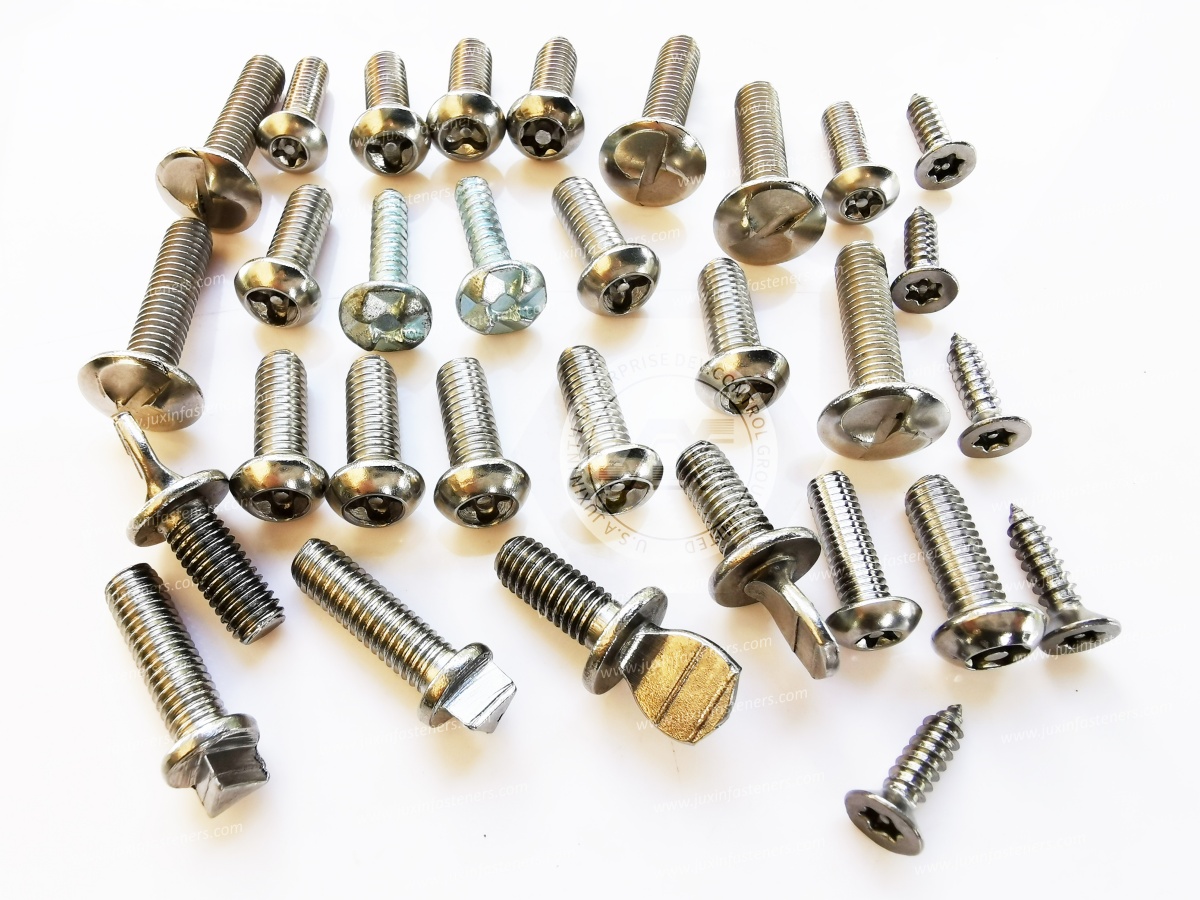
Common Product Types
Pin-in Torx security screws
Pin-in hex socket security screws
One-way security screws
Security button head screws
Security flat head screws
Sealing security screws
Custom OEM security screws
Important Terminology Distinction
The term tamper-proof is widely used in commercial searches.
However, no conventional security screw should be assumed to be impossible to remove.
Tamper-resistant is generally the more technically appropriate description.
How Do Security Screws Improve Access Control?
Ordinary screws can often be removed with widely available screwdrivers or hex keys.
Tamper-resistant designs introduce a less common drive interface or a geometry that restricts ordinary removal.
Potential Benefits
Discouraging casual removal
Increasing the effort required for unauthorized access
Reducing opportunistic interference
Supporting controlled maintenance procedures
Protecting selected access panels and equipment covers
Important Security Limitation
Specialized drive bits may be commercially available.
Security screws therefore provide a deterrent, not guaranteed protection against deliberate theft, vandalism or forced access.
Engineering Recommendation
Where equipment security is critical, evaluate the entire access-control design, including enclosure construction,
locks, hinges, mounting accessibility and the required maintenance procedure.
Tamper Resistance Is Not the Same as Vibration Resistance
This distinction is essential for automotive and industrial applications.
Tamper Resistance
Describes resistance to convenient or unauthorized removal.
Vibration Resistance
Describes the fastening system's ability to resist unintended loosening or functional deterioration under vibration.
Joint Preload
Describes the clamping force developed through the approved tightening process.
A specialized security drive does not automatically provide a locking feature.
Engineering Recommendation
Where vibration resistance is required, evaluate the complete joint design and any separately specified locking method.
Pin-in Torx Stainless Steel Security Screws
Pin-in Torx security screws use a six-lobe drive recess with a central security pin.
The matching driver bit includes a corresponding opening.
Potential Applications
Electrical cabinet covers
Industrial equipment panels
Telecommunications housings
Automotive accessory panels
Public infrastructure hardware
Potential Advantages
Specialized tool requirement
Defined drive engagement
Availability in different head styles
Compatibility with selected serviceable assemblies
Engineering Considerations
Correct security drive size
Central pin geometry
Driver fit
Recess depth
Head strength
Installation torque
Tool access
Important Limitation
The central pin reduces the space available within the drive recess.
The drive geometry and installation requirements must therefore be validated rather than assuming the same torque capacity as a conventional six-lobe screw.
Pin-in Hex Socket Security Screws
Pin-in hex screws use an internal hexagonal drive with a central security pin.
A matching security hex driver is required.
Potential Applications
Machinery access covers
Industrial control equipment
Electrical panels
Serviceable equipment housings
Selection Considerations
Socket dimensions
Pin dimensions
Driver compatibility
Head geometry
Installation torque
Repeated service requirements
Important Limitation
A pin-in hex design does not automatically provide greater torque capacity than a standard hex socket.
Actual performance depends on the screw geometry, material and mating tool.
One-Way Stainless Steel Security Screws
One-way security screws use a drive geometry that permits relatively straightforward tightening while making ordinary reverse rotation more difficult.
Potential Applications
Public signage
Outdoor fixtures
Transportation equipment
Access-restricted panels
Anti-vandal installations
Engineering Advantages
Reduced convenience of unauthorized removal
Simple installation with the specified tool
Suitability for selected low-service applications
Serviceability Limitation
One-way screws may be difficult to remove without a specialized method.
Removal may damage the screw or surrounding component.
Design Recommendation
Avoid selecting one-way screws solely for their security appearance when regular maintenance or component replacement is expected.
Pin-in Torx vs. Pin-in Hex vs. One-Way Screws
| Selection factor | Pin-in Torx | Pin-in hex | One-way |
|---|---|---|---|
| Access control | Requires matching security bit | Requires matching security bit | Discourages ordinary reverse removal |
| Routine maintenance | Generally possible with correct tool | Generally possible with correct tool | May be difficult |
| Drive engagement | Depends on recess and tool geometry | Depends on socket and tool geometry | Depends on one-way design |
| Automated assembly | Requires tool compatibility evaluation | Requires tool compatibility evaluation | Requires process evaluation |
| Typical selection focus | Serviceable equipment security | Serviceable industrial panels | Low-service access restriction |
Engineering Insight
The best security drive is not necessarily the most difficult to remove.
It is the design that provides sufficient access deterrence while remaining compatible with production assembly and authorized service.
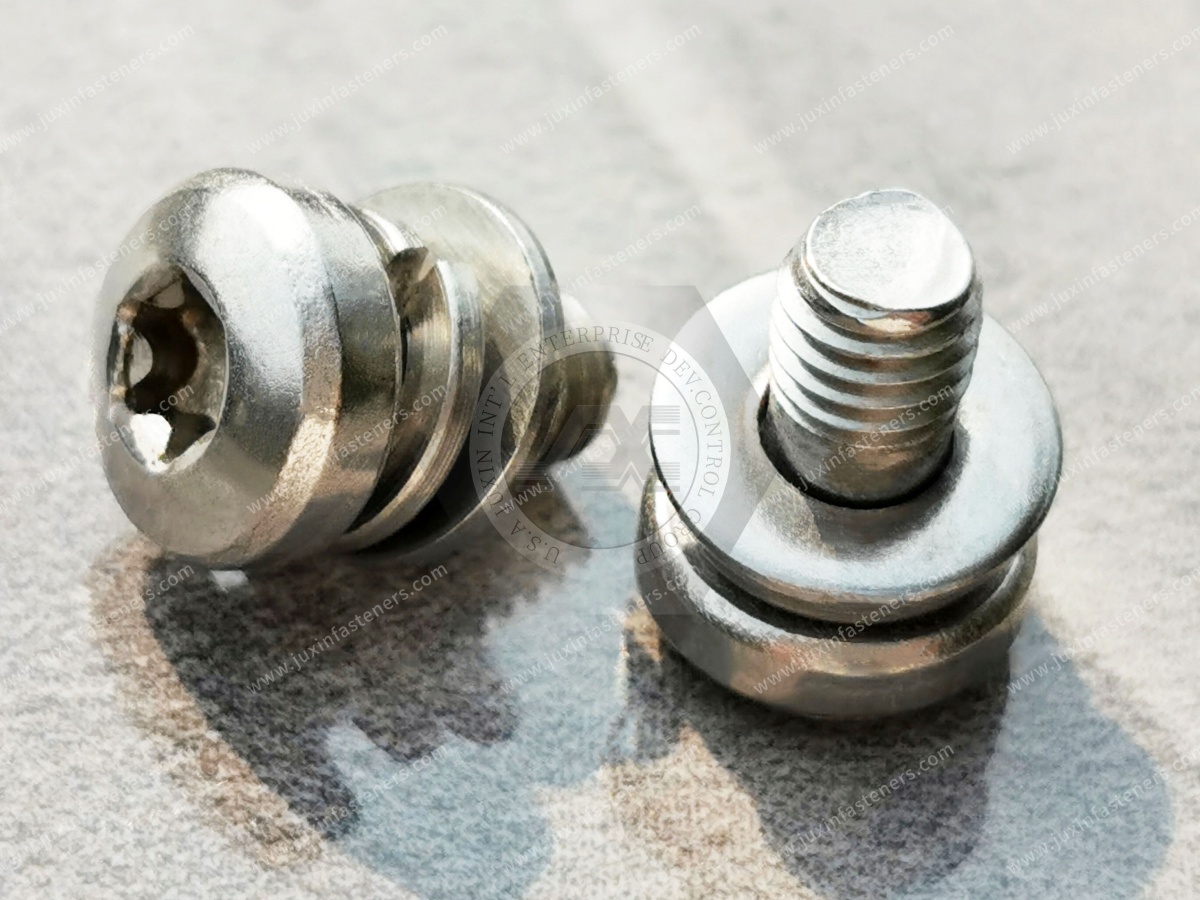
Button Head vs. Flat Head Security Screws
Head geometry affects installation, appearance, access and load distribution.
Button Head Security Screws
Button head designs have a rounded, low-profile head that sits above the mounting surface.
They may be suitable for:
Equipment covers
Exterior accessories
Cabinet panels
Industrial housings
Engineering Considerations
Bearing surface
Head clearance
Drive recess geometry
Available installation space
Flat Head Security Screws
Flat head security screws use a countersunk head intended to sit flush with a compatible countersink.
They may be suitable for:
Flush equipment panels
Selected trim components
Enclosure covers
Surfaces where protruding heads are undesirable
Engineering Considerations
Countersink angle
Countersink diameter
Countersink depth
Panel thickness
Head strength
Driver engagement
Important Limitation
Flat head security screws should not automatically be used in thin panels.
Countersinking removes material and may reduce the remaining bearing thickness.
Thin-Panel Design and Countersunk Security Screws
Thin sheet metal and lightweight panels present additional fastening challenges.
Potential Risks
Insufficient countersink depth
Reduced remaining panel thickness
Localized deformation
Poor head seating
Enlarged mounting holes
Surface distortion
Possible Design Alternatives
Depending on the application:
Button head security screws
Reinforced mounting areas
Formed countersinks
Threaded inserts
Alternative panel retention designs
Engineering Recommendation
Evaluate the screw and mating panel as a complete assembly.
A flush appearance should not be achieved at the expense of the required joint strength.
Sealing Stainless Steel Security Screws
Some security screws incorporate an O-ring or another sealing feature.
These designs may be considered where the fastener penetration is a potential path for moisture or contaminants.
Potential Applications
Outdoor electrical enclosures
Telecommunications equipment
Selected EV charging equipment
Industrial control cabinets
Instrument housings
Important Design Considerations
Seal material
O-ring geometry
Compression
Mating surface finish
Hole geometry
Installation torque
Temperature
Chemical exposure
Critical Sealing Distinction
An O-ring-equipped security screw does not automatically make the entire enclosure waterproof.
Ingress protection depends on the complete assembly, including:
Enclosure gaskets
Panel joints
Cable entries
Fastener penetrations
Sealing surfaces
Assembly conditions
Engineering Recommendation
Where an IP rating or another ingress-protection requirement applies, validate the complete enclosure to the applicable specification.
Stainless Steel Material Selection
Material selection should reflect the environment and mechanical requirements.
18-8 Stainless Steel
18-8 is a broad commercial designation commonly associated with chromium-nickel austenitic stainless steels, including certain 304-type materials.
It should not be treated as a complete material specification.
304 Stainless Steel
304 may be suitable for general industrial equipment and selected outdoor applications where its corrosion resistance and mechanical properties satisfy the design.
316 Stainless Steel
316 generally provides improved resistance to certain localized corrosion mechanisms compared with 304.
It may be considered for more demanding moisture or chloride exposure.
A2 and A4 Stainless Steel
A2 and A4 are stainless steel material groups used in relevant ISO fastener specifications.
The mechanical-property class must be identified separately.
Important Material Limitation
Stainless steel grade alone does not establish:
Required strength
Drive strength
Vibration resistance
Tamper resistance
Safety-critical suitability
Product certification
Corrosion Resistance and Surface Treatments
Security screws used outdoors may experience:
Rain
Humidity
Road salt
Industrial contaminants
Cleaning chemicals
Temperature cycling
Passivation
Passivation may be specified to address certain surface contaminants and support the passive condition of stainless steel.
Black Finishes
Black surface treatments may be specified for appearance or application requirements.
However, their corrosion performance must be evaluated rather than assumed.
Mixed-Metal Assemblies
Stainless steel screws installed into aluminum or other metals may require galvanic-corrosion evaluation.
Engineering Recommendation
Specify corrosion requirements for the complete fastening system rather than relying only on the stainless steel designation.
Thread Engagement and Installation Reliability
A security screw must still provide a mechanically suitable threaded connection.
Important Parameters
Thread diameter
Thread pitch
Thread tolerance
Screw length
Engagement length
Mating material
Applied load
Potential Mating Components
Tapped metal housings
Threaded inserts
Compatible nuts
Approved threaded mounting features
Important Limitation
Thread engagement requirements differ depending on the mating material and joint loading.
A screw suitable for a steel tapped hole may not provide the same performance in aluminum or another softer material.
Metric and Inch Security Screws
Security screws may be specified in metric or inch-series thread systems.
Metric Threads
ISO metric threads use metric nominal dimensions and pitch designations.
UNC and UNF Threads
Unified coarse and fine threads are distinct inch-series systems.
BSW and BSF Threads
Whitworth and British Standard Fine threads are separate legacy thread systems.
Critical Compatibility Rule
Metric, UNC, UNF, BSW and BSF threads are not directly interchangeable.
Approximate diameter conversions do not establish thread compatibility.
Installation Torque and Drive Damage
Security screw installation requires the correct tool and an approved tightening process.
Potential Risks
Incorrect security bit
Incomplete tool engagement
Central pin damage
Drive recess stripping
Cross-threading
Excessive tightening
Tool misalignment
Production Manager's Perspective
Specialized drives can introduce additional production considerations:
Driver bit availability
Tool changeovers
Bit wear
Operator training
Assembly cycle time
Rework procedures
Practical Manufacturing Recommendation
Validate the actual screw, driver and mating joint before releasing the assembly process for recurring production.
Stainless Steel Galling
Stainless steel threaded fasteners may experience galling under certain conditions.
Potential Contributing Factors
Material pairing
Thread surface condition
High contact pressure
Installation speed
Misalignment
Inappropriate lubrication
Engineering Recommendation
Where galling is a concern, evaluate the actual screw and mating thread combination.
Lubricants or coatings must be reviewed for their effect on tightening behavior and any sealing or cleanliness requirements.
Automotive Exterior Trim and Accessories
Selected automotive assemblies may use tamper-resistant screws where access restriction is useful.
Potential Applications
License plate mounting
Exterior accessory brackets
Selected trim panels
Nonstructural equipment housings
Commercial vehicle accessories
Engineering Priorities
Corrosion exposure
Vibration
Service access
Head geometry
Driver compatibility
Important Limitation
Security screws do not automatically provide vibration resistance or structural retention.
Wheel Security Bolts Are a Separate Product Category
Wheel locking bolts and wheel locking nuts are designed for specific vehicle wheel-retention systems.
They must satisfy application-specific requirements for:
Thread geometry
Seat geometry
Mechanical properties
Installation conditions
Vehicle compatibility
Wheel retention
Critical Safety Rule
A general-purpose stainless steel tamper-resistant screw must never be substituted for a vehicle wheel bolt or wheel locking bolt.
Wheel-retention components require separately engineered and approved products.
EV Charging Stations and Outdoor Charging Equipment
EV charging infrastructure may require restricted access to certain equipment covers.
Potential Applications
Charging station housings
Service-access panels
Outdoor equipment cabinets
Auxiliary mounting hardware
Engineering Priorities
Corrosion resistance
Authorized maintenance
Ingress protection
Electrical safety
Assembly consistency
Important Electrical Limitation
Tamper-resistant screws do not establish electrical safety, grounding compliance or enclosure ingress protection.
The complete charging equipment design must satisfy the applicable requirements.
EV Battery and Energy Storage Equipment
Selected nonstructural equipment housings may use security screws where authorized access control is required.
Potential Applications
Auxiliary electronics covers
Service-access panels
Nonstructural enclosure hardware
External equipment cabinets
Important Safety Limitation
High-voltage battery connections, structural battery retention and safety-related battery enclosure joints require separately approved fastening systems.
A general-purpose stainless steel security screw should not be substituted into these applications without engineering authorization.
Industrial Machinery and Automation Equipment
Potential applications include:
Machine access panels
Control equipment covers
Instrument housings
Industrial electronics
Selected protective panels
Engineering Priorities
Maintenance requirements
Tool access
Installation torque
Corrosion exposure
Mechanical loading
Important Machinery Safety Limitation
Safety guards and interlocked access systems require appropriate machine-safety engineering.
A tamper-resistant screw alone does not establish compliance with machine guarding requirements.
Telecommunications and Electrical Cabinets
Potential applications include:
Outdoor telecom cabinets
Network equipment enclosures
Control panels
Electrical boxes
Instrumentation housings
Engineering Priorities
Restricted access
Environmental exposure
Enclosure sealing
Serviceability
Panel thickness
Practical Design Insight
A highly restrictive screw drive may create unnecessary maintenance difficulties if the equipment requires frequent authorized servicing.
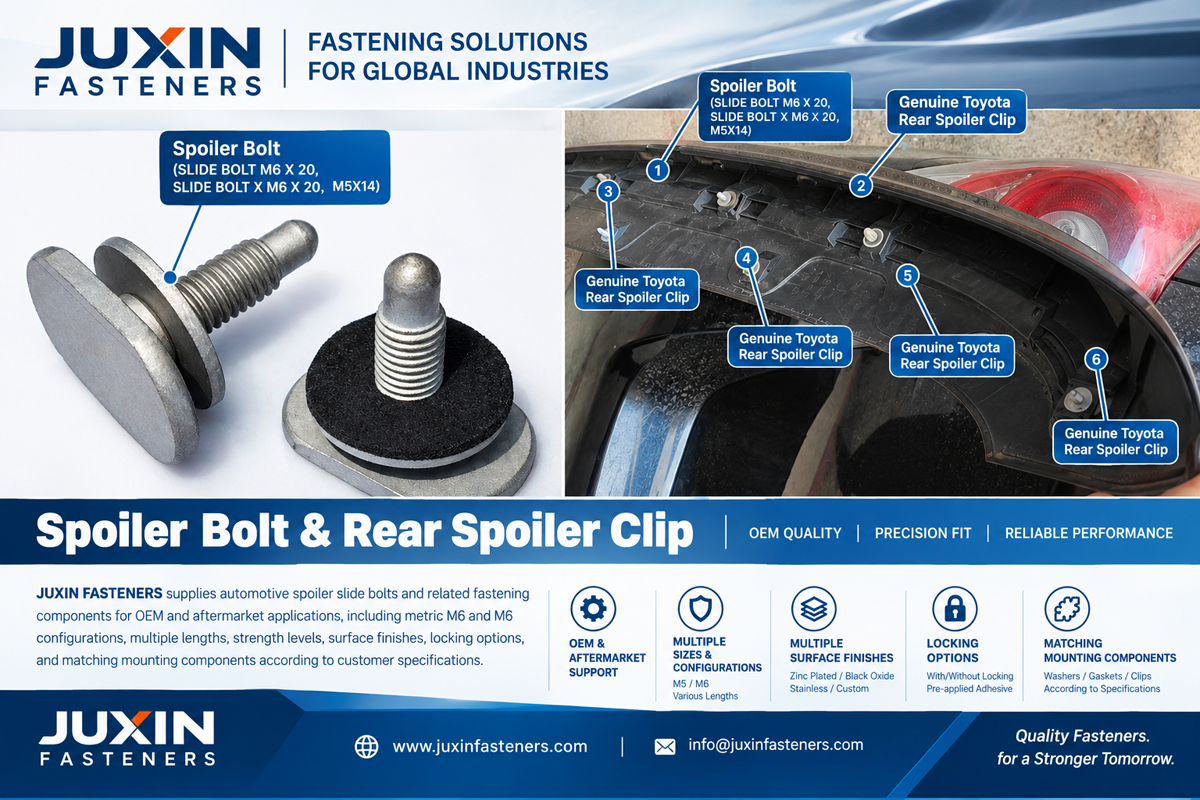
Public Infrastructure and Anti-Vandal Applications
Tamper-resistant screws may be considered for:
Public signage
Transportation equipment
Outdoor fixtures
Public equipment housings
Selected access-restricted panels
Engineering Priorities
Tamper deterrence
Corrosion resistance
Installation accessibility
Replacement procedures
Long-term maintenance
Important Limitation
Security screws should be considered one part of the overall physical security design.
Medical and Laboratory Equipment Housings
Selected equipment housings may use tamper-resistant screws to discourage unauthorized opening.
Potential Applications
Diagnostic equipment covers
Laboratory instrument housings
Service-restricted panels
Non-patient-contact equipment
Engineering Priorities
Cleaning compatibility
Corrosion resistance
Authorized service access
Material requirements
Inspection
Important Limitation
Stainless steel security screws do not automatically establish medical-device compliance, sterilization compatibility or hygienic suitability.
Design for Manufacturing and Assembly
Security screw selection should account for production requirements from the beginning.
Driver Compatibility
The production tool must match the exact security drive geometry.
Screw Feeding
Automated or semi-automated systems may require evaluation of head shape and screw presentation.
Tool Wear
Security bits may require monitoring and replacement.
Tightening Control
The assembly process must be compatible with the specified joint requirements.
Rework
Authorized removal and replacement procedures should be defined.
Inspection
Critical drive, thread and head dimensions should be measurable.
Production Manager's Perspective
A security screw that is difficult to install consistently may increase:
Assembly cycle time
Tooling cost
Scrap
Rework
Maintenance delays
Engineering Recommendation
Select the security level and drive design in conjunction with the intended production and service process.
Custom Stainless Steel Security Screws
Some OEM projects require configurations that differ from standard catalog products.
Potential customization requirements include:
Special security drive geometry
Custom head dimensions
Nonstandard screw length
Special thread requirements
Specific stainless steel material
Surface treatment
Sealing features
Critical tolerances
Engineering Review
Custom projects should evaluate:
Required access deterrence
Driver availability
Joint loading
Installation process
Corrosion exposure
Serviceability
Manufacturing feasibility
Inspection requirements
Commercial Review
Sample requirements, MOQ, tooling considerations and production schedules should be confirmed during quotation.
Important Limitation
Custom manufacturing does not automatically establish a particular security rating, ingress protection rating or industry certification.
Quality Inspection for Tamper-Resistant Screws
Inspection should reflect the approved product specification.
Potential Inspection Characteristics
Thread dimensions
Screw length
Head geometry
Security recess dimensions
Central pin geometry
Material requirements
Surface finish
Appearance
Functional Evaluation
Where specified, testing may include:
Driver engagement
Installation behavior
Torque-related performance
Thread compatibility
Sealing performance at the assembly level
Important Distinction
Not every security screw requires the same inspection or functional tests.
Requirements should be defined by the customer drawing and application.
Supplier Qualification for OEM Security Screws
Procurement and supplier development teams should evaluate more than nominal screw size.
Drive Specification
Confirm the exact security drive geometry.
Head Geometry
Verify head style, dimensions and mating surface requirements.
Material
Specify the stainless steel grade and mechanical properties.
Thread Compatibility
Confirm the thread designation and mating component.
Serviceability
Identify the required installation and removal tools.
Corrosion Requirements
Define the actual operating environment.
Inspection
Specify critical dimensional and functional acceptance criteria.
Change Control
Review changes to drive geometry, material, coating or sealing components against customer approval requirements.
Commercial Evaluation
Review:
Sample quantity
MOQ
Production volume
Packaging
Delivery schedule
Supply continuity
Tooling requirements
Total assembly cost
Supplier Development Insight
A proposed replacement security screw may have the same thread and head dimensions but use a different security recess.
This can create tool compatibility problems across production and field service.
Preparing a Stainless Steel Security Screw RFQ
A complete RFQ should identify the engineering and commercial requirements.
Product Specification
Approved drawing or standard
Security drive type
Head style
Thread designation
Screw length
Critical dimensions
Material and Surface
Stainless steel grade
Mechanical-property requirements
Surface treatment
Appearance requirements
Application Information
Mating material
Panel thickness
Joint loading
Installation torque requirements
Operating environment
Serviceability requirements
Sealing Requirements, If Applicable
Seal material
Seal geometry
Mating surface
Required assembly-level sealing performance
Quality and Commercial Requirements
Inspection criteria
Sample quantity
Annual demand
Production quantity
Packaging
Target delivery schedule
Practical Procurement Recommendation
For replacement projects, provide the existing screw drawing and identify the security driver used in production and service.
This helps avoid drive compatibility problems during supplier changes.
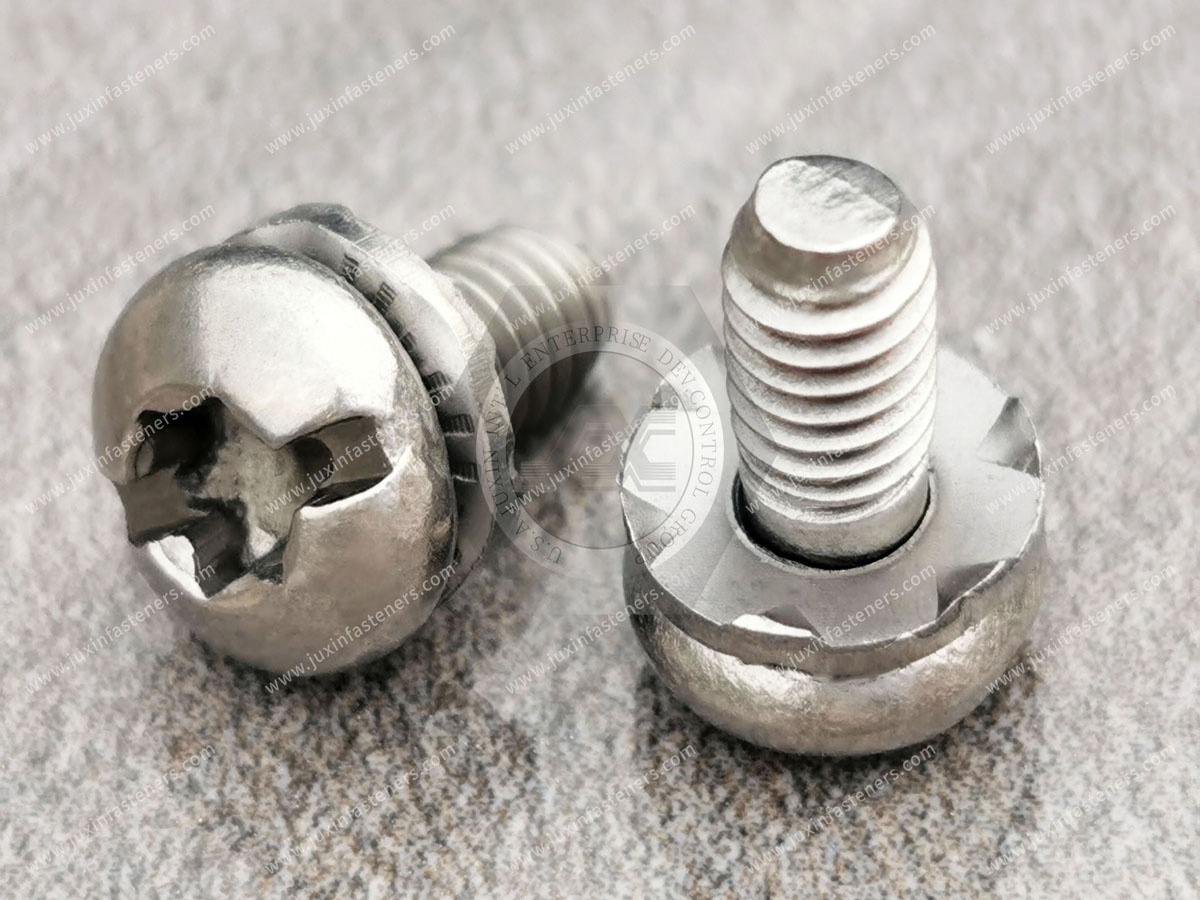
Frequently Asked Questions
What is a stainless steel tamper-resistant screw?
It is a stainless steel screw with a drive or installation feature intended to discourage convenient unauthorized removal.
Are tamper-resistant screws completely theft-proof?
No. They provide a deterrent, not guaranteed protection against deliberate removal.
What is the difference between pin-in Torx and pin-in hex security screws?
They use different security recess geometries and require matching driver tools.
Are security screws vibration resistant?
Not automatically. Vibration performance depends on the complete fastening system.
Can tamper-resistant screws be used for automotive wheels?
General-purpose security screws must not replace approved wheel-retention fasteners. Wheel locking bolts are a separate engineered product category.
Do sealing security screws make an enclosure waterproof?
Not automatically. Ingress protection must be validated for the complete enclosure assembly.
Can stainless steel security screws be used in aluminum?
Potentially, but thread engagement, bearing conditions and galvanic corrosion must be evaluated.
Are one-way screws suitable for frequently serviced equipment?
They may be inconvenient for repeated maintenance because removal can be difficult.
Can metric security screws replace UNC or UNF screws?
No. These thread systems are not directly interchangeable.
What should OEM buyers provide for a custom security screw quotation?
The approved drawing, security drive type, head geometry, thread specification, material, installation requirements, operating environment, inspection criteria and purchasing quantities.
Juxin Fasteners: Stainless Steel Tamper-Resistant Screws and OEM Security Fasteners
Juxin Fasteners supplies industrial fastening components and welcomes inquiries for stainless steel tamper-resistant screws and drawing-based OEM security fasteners.
Relevant product categories include:
Stainless steel pin-in Torx security screws
Stainless steel pin-in hex socket screws
Stainless steel one-way screws
Stainless steel security button head screws
Stainless steel security flat head screws
Custom stainless steel security screws
Specific drive configurations, materials, dimensions, finishes, sealing features, samples, MOQ, inspection requirements and delivery schedules are subject to technical and commercial confirmation.
Request a Stainless Steel Tamper-Resistant Screw RFQ
Are you sourcing stainless steel security screws for automotive accessories, EV charging equipment, industrial machinery, electrical cabinets, telecommunications enclosures or public infrastructure?
Do you need to qualify a replacement supplier, develop a custom security drive or evaluate a serviceable fastening solution for recurring OEM production?
Juxin Fasteners welcomes inquiries from design engineers, mechanical engineers, structural engineers, manufacturing engineers, production managers,
purchasing specialists, procurement managers, supplier development teams and supply chain managers.
For technical review and quotation, please provide:
Approved screw drawing or standard + security drive type + head style + thread designation + screw length + material and mechanical-property requirements
+ surface finish + mating component material + panel thickness + installation requirements + environmental conditions
+ serviceability requirements + sealing requirements, if applicable + inspection criteria + sample quantity + annual demand + production quantity + packaging requirements + target delivery schedule.
For replacement projects, include the existing approved screw specification and security driver requirements.
Company: Juxin Fasteners
Website: https://www.juxinfasteners.com/
Email: info@juxinfasteners.com
Send your stainless steel tamper-resistant screw drawings and OEM RFQ to Juxin Fasteners for technical review and quotation.
Contact Us
Tel.:
+86 020 8621 0320
+86 020 3121 6067
E-mail:
Technical Support:
Navigation
SEND INQUIREY



