
Call Us
+86 136 6007 9809
Call Us
+86 136 6007 9809

Jun. 23, 2024
DIN 6921 Hex Flange Bolts: Bearing Surface Design, Joint Reliability and OEM Applications
Hexagonal flange face bolts, commonly called hex flange bolts or flange head bolts, combine an external hexagonal drive head with an integrated flange beneath the head.
This design provides a defined bearing surface and can simplify certain industrial assemblies by reducing the need for a separate washer when the approved joint design permits.
Hex flange bolts are used in suitable automotive equipment, industrial machinery, electric vehicle components, pumps, motors, construction machinery and other OEM mechanical assemblies.
However, the presence of an integrated flange does not automatically make a bolt stronger, more vibration-resistant or capable of producing greater preload.
The performance of a flange bolt depends on the complete bolted joint, including fastener material, property class, thread engagement,
flange geometry, bearing-surface condition, tightening procedure and operating environment.
For design engineers, the main question is whether the flange geometry provides the required bearing conditions and assembly compatibility.
For manufacturing engineers and production managers, the potential value includes fewer loose components,
simpler parts handling and more repeatable assembly when the fastening process is properly controlled.
For purchasing managers and supplier development teams, DIN 6921 flange bolts offer a recognizable product designation,
but the complete drawing and technical specification remain essential for qualified sourcing.
JUXIN FASTENERS supplies industrial threaded fasteners and drawing-based custom fastening components for international OEM applications.
This guide examines the engineering principles, design limitations, industrial applications and procurement considerations of hexagonal flange face bolts.
What Is a Hexagonal Flange Face Bolt?
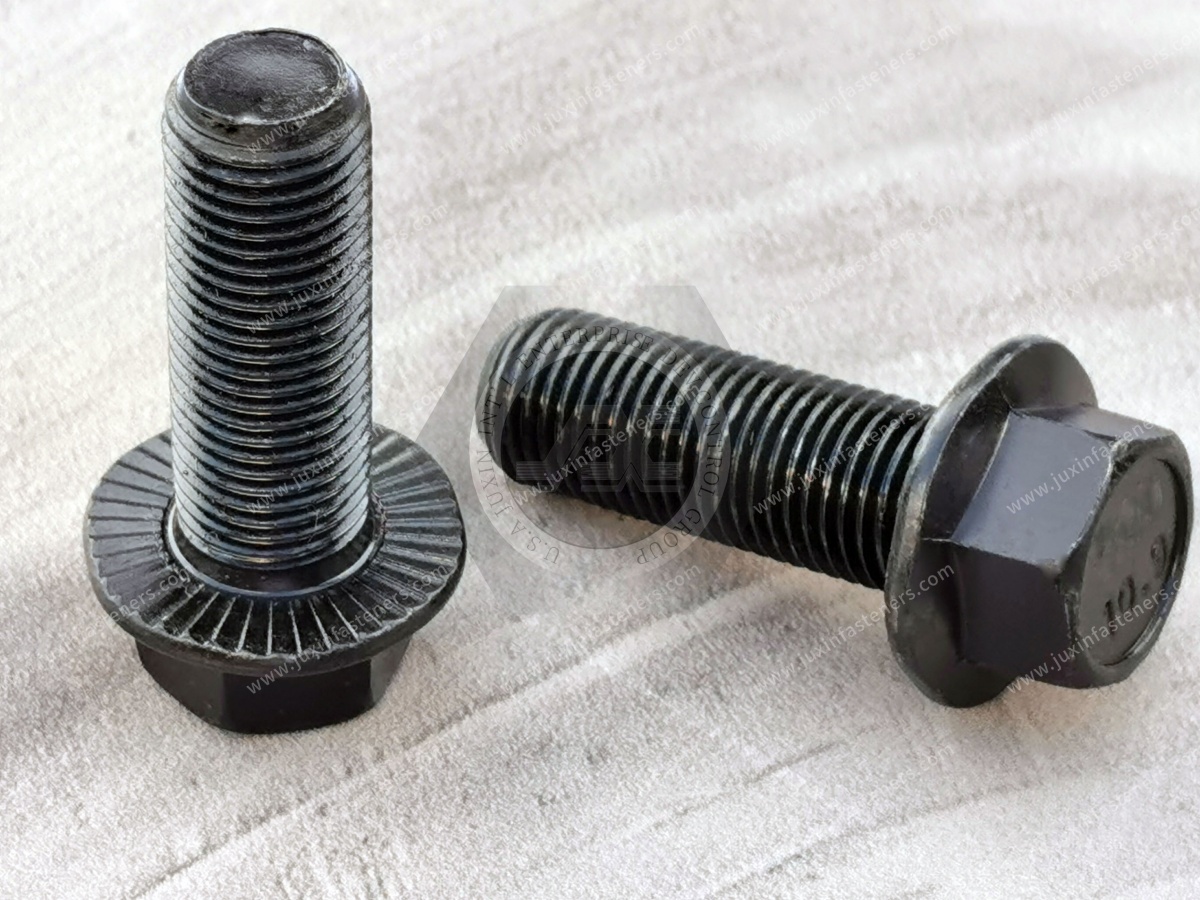
A hexagonal flange face bolt is an externally threaded fastener with a six-sided head and an integrated flange beneath the head.
The flange provides a bearing surface that contacts the clamped component.
Depending on the product design, the flange surface may be smooth or serrated.
These two configurations have different contact characteristics and should not be treated as interchangeable.
Common Product Names
Hex flange bolt
Hexagon flange bolt
Hexagonal flange head bolt
Flange head screw
DIN 6921 flange bolt
Smooth flange bolt
Serrated flange bolt
Non-serrated flange bolt
Custom flange head bolt
The correct terminology should reflect the actual product geometry and applicable standard.
DIN 6921 and Related Dimensional Standards
DIN 6921 is a recognized designation for metric hexagon flange bolts.
ISO 4162 may be relevant to specified hexagon flange bolts with a small series flange.
However, these standards should not automatically be treated as dimensionally interchangeable.
The approved drawing must define the applicable head dimensions, flange geometry, thread configuration and other requirements.
Metric and Inch-Series Flange Bolts
Metric flange bolts may be specified with ISO metric threads.
Inch-series flange bolts may use UNC or UNF threads and applicable ASME or SAE specifications.
Metric, UNC, UNF, BSW and BSF thread systems are not interchangeable.
A similar nominal diameter does not establish compatibility.
Hex Flange Bolt Structure and Design Features
A typical hex flange bolt includes:
External hexagonal drive head
Integrated flange
Underhead bearing surface
Threaded shank
Optional unthreaded grip section
Defined thread end
The exact dimensions depend on the applicable standard or customer drawing.
External Hexagonal Head
The hexagonal head provides wrenching surfaces for a suitable socket or wrench.
Tool access must be considered during equipment design.
Integrated Flange
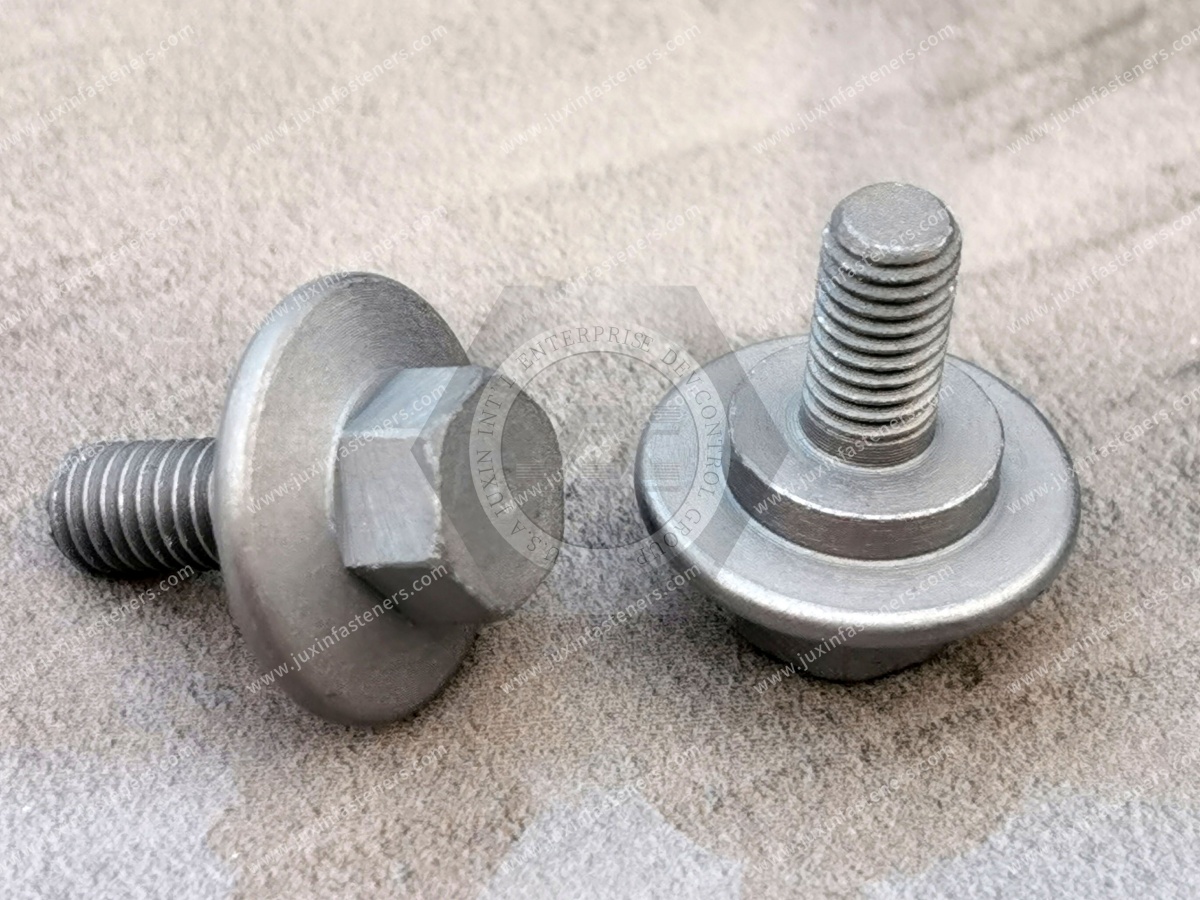
The flange increases the available underhead bearing area relative to certain conventional head geometries.
This can be useful where contact pressure on the clamped component must be controlled.
Threaded Shank
The bolt may have a specified full-thread or partial-thread configuration.
The thread pitch and length must match the joint design.
Smooth Flange vs. Serrated Flange Bolts
One of the most important distinctions is the condition of the flange bearing surface.
Smooth Flange Bolts
A smooth flange provides a comparatively continuous contact surface beneath the head.
Potential applications include:
Machinery brackets
Equipment frames
Automotive auxiliary assemblies
Removable industrial connections
The flange geometry must be compatible with the bearing material and tightening process.
Serrated Flange Bolts
A serrated flange includes teeth or serrations on the bearing surface.
These features may be designed to increase resistance to rotation at the underhead interface.
However, the actual locking performance depends on the mating material, surface condition and joint design.
Important Limitations of Serrated Flanges
Serrations may:
Mark or damage the mating surface
Disturb protective coatings
Affect tightening friction
Be unsuitable for some soft materials
Require application-specific validation
A serrated flange bolt should not be substituted for a smooth flange bolt without engineering review.
Smooth vs. Serrated Flange Comparison
| Feature | Smooth flange bolt | Serrated flange bolt |
|---|---|---|
| Bearing surface | Continuous flange contact | Serrated contact geometry |
| Surface marking | Depends on load and material | May produce localized marking |
| Rotation resistance | Depends on joint and preload | May provide additional underhead resistance |
| Coating interaction | Requires compatibility review | Serrations may disturb coatings |
| Soft material compatibility | Requires bearing-stress review | Requires additional surface-damage review |
| Tightening behavior | Depends on friction | Depends on serration and friction conditions |
| Interchangeability | Not automatic | Not automatic |
The correct design should be selected according to the complete assembly.
How Does the Integrated Flange Affect Bearing Stress?
The flange creates a bearing interface between the bolt head and the clamped component.
A larger effective contact area can reduce average contact pressure when the same compressive load is distributed over that area.
However, the actual pressure distribution may not be uniform.
Basic Engineering Relationship
Average bearing pressure can be expressed conceptually as:
p = F / A
Where:
p = average bearing pressure
F = compressive force acting through the bearing interface
A = effective bearing contact area
This simplified relationship is useful for preliminary reasoning.
Actual contact conditions depend on flange geometry, component flatness, surface stiffness and joint deformation.
Why This Matters for Thin or Soft Components
A component made from aluminum or another relatively soft material may experience localized deformation under a small bearing surface.
A suitably designed flange can help distribute the load.
However, a larger flange does not eliminate the need to verify bearing strength and joint behavior.
Flange Diameter Is Not the Only Important Dimension
Engineers should also review:
Flange thickness
Underhead radius
Bearing surface flatness
Clearance-hole diameter
Edge distance
Mating surface geometry
Contact with adjacent features
A flange that interferes with a nearby fillet or raised surface may not seat correctly.
Can a Hex Flange Bolt Replace a Hex Bolt and Washer?
Sometimes, but not automatically.
A flange bolt may reduce the number of components where the approved design permits omission of a separate washer.
However, a conventional hex bolt with a washer and a hex flange bolt can have different:
Bearing areas
Contact geometries
Friction characteristics
Installation behavior
Surface protection
Assembly clearances
Engineering Decision
Before replacing a bolt-and-washer assembly with a flange bolt, verify the complete joint.
This is particularly important where the washer performs a specific function beyond load distribution.
Potential Production Benefit
Eliminating a loose washer may reduce component handling and assembly steps.
However, the benefit should be confirmed through the actual production process.
Hex Flange Bolts, Preload and Clamping Force
The principal function of many bolted joints is to generate and maintain clamping force.
When a flange bolt is tightened, the bolt elongates elastically within its intended operating range, generating preload in the joint.
However, the flange does not independently determine the preload.
The actual clamp load depends on:
Bolt stiffness
Joint stiffness
Thread geometry
Bearing-surface friction
Thread friction
Material properties
Tightening procedure
Does a Larger Flange Produce More Clamping Force?
Not inherently.
A larger bearing surface can change the friction conditions and pressure distribution.
At the same applied torque, a different bearing geometry may produce a different clamp load.
Therefore, a flange bolt should not automatically be tightened using the same torque as a conventional bolt-and-washer assembly.
Torque and Preload
Applied torque is influenced by friction.
The relationship between tightening torque and bolt preload must be evaluated for the actual fastener and joint.
Production Implication
When changing flange geometry, coating or lubrication, the tightening process may require validation.
Do Hex Flange Bolts Prevent Vibration Loosening?
No.
A smooth flange bolt does not inherently prevent self-loosening.
Vibration resistance depends on the complete joint.
Important factors include:
Initial preload
Joint stiffness
Transverse loading
Relative movement
Thread friction
Bearing-surface friction
Locking features where specified
Serrated Flanges and Vibration
Serrations may contribute resistance to rotation at the bearing interface.
However, they do not guarantee retained preload or eliminate all loosening mechanisms.
When Additional Locking May Be Needed
Depending on the application, an approved design may incorporate:
Prevailing-torque nuts
Threadlocking systems
Mechanical locking arrangements
Other engineered retention methods
The correct locking method must be selected for the actual joint.
Mechanical Property Classes and Material Selection
Hex flange bolts may be specified with different materials and mechanical properties.
For applicable metric carbon steel and alloy steel fasteners, ISO 898-1 defines mechanical property requirements.
Examples include:
Property class 8.8
Property class 10.9
Property class 12.9
For applicable stainless steel fasteners, ISO 3506-1 provides a different classification system.
Carbon Steel
Carbon steel may be suitable for general industrial fastening applications.
The required property class and surface treatment should be specified.
Alloy Steel
Suitable alloy steels may be selected where higher mechanical properties are required.
Material and heat treatment must support the specified finished-fastener requirements.
Stainless Steel
Stainless steel may be considered for corrosion-resistant applications.
The actual stainless grade and property class must be defined.
Special Materials
Selected titanium, aluminum or other materials may be considered for drawing-based applications.
Manufacturing feasibility and mechanical suitability must be confirmed.
Metric Property Class vs. SAE Grade
Metric property classes and SAE grades belong to different specification systems.
For example, SAE Grade 8 is not equivalent to metric property class 8.8.
The actual specification must be used when evaluating a fastener.
Does Higher Strength Always Improve Joint Reliability?
No.
A higher-strength bolt may not improve performance where the limiting factor is:
Internal thread stripping
Bearing-surface deformation
Joint separation
Fatigue loading
Corrosion
Incorrect tightening
The complete joint must be evaluated.
Full Thread vs. Partial Thread Hex Flange Bolts
Hex flange bolts may be specified with full or partial threading, depending on the applicable standard and drawing.
Fully Threaded Designs
These provide threading along the specified shank length.
They may be useful where the assembly requires a suitable threaded engagement range.
Partially Threaded Designs
These include a defined unthreaded section.
They may be useful where the joint design requires a particular grip geometry.
Selection Considerations
Grip thickness
Thread engagement
Position of threads relative to loaded interfaces
Joint stiffness
Fatigue loading
Installation access
Coarse vs. Fine Threads
Coarse and fine threads have different geometry.
Selection should reflect:
Mating thread compatibility
Engagement requirements
Material
Assembly conditions
Load and fatigue considerations
Fine threads do not inherently eliminate vibration loosening.
Corrosion Protection for Hex Flange Bolts
Surface treatment should be selected according to the application environment and customer specification.
Zinc-Plated Flange Bolts
Zinc plating may provide suitable corrosion protection for selected general industrial applications.
The performance depends on the coating specification and exposure conditions.
Zinc-Nickel-Coated Flange Bolts
Zinc-nickel coatings may be considered for projects requiring a specified corrosion protection system.
Zinc-Flake-Coated Flange Bolts
Zinc-flake coatings may be relevant to selected industrial applications.
The coating process should be compatible with the required mechanical properties and tightening conditions.
Black Oxide
Black oxide may be used where specified.
It should not automatically be treated as equivalent to a qualified zinc-based corrosion protection system.
Stainless Steel Flange Bolts
Stainless steel may be appropriate for selected corrosive environments.
However, material selection should consider chloride exposure, galling and galvanic compatibility.
Coating Standards
ISO 4042 may apply to specified electroplated fasteners.
ISO 10683 may apply to specified non-electrolytically applied zinc-flake coatings.
Hydrogen Embrittlement
Certain high-strength steel fasteners may be susceptible to hydrogen embrittlement under particular processing and service conditions.
Coating and processing requirements should be reviewed accordingly.
Corrosion Protection and Flange Contact
The flange bearing surface is part of the tightening interface.
A coating change may affect both corrosion protection and friction.
For OEM production, the approved coating specification should be controlled.
Automotive Manufacturing Applications
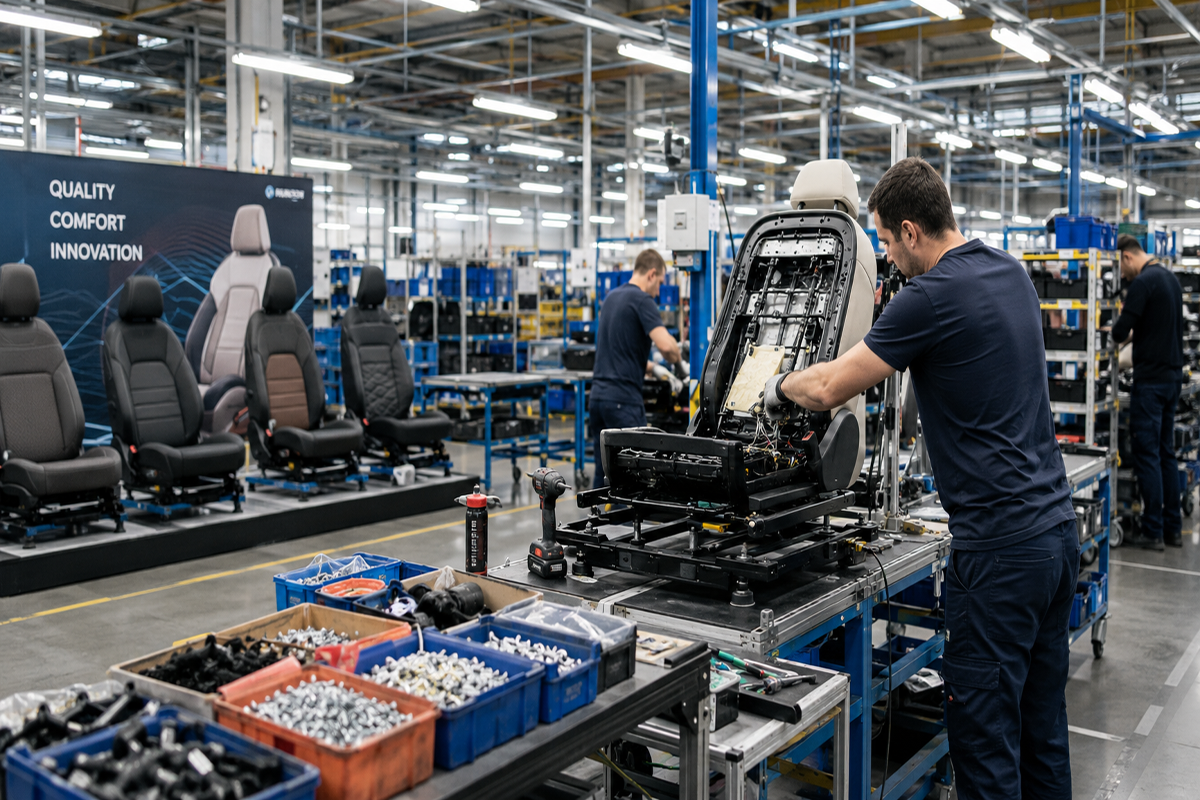
Hex flange bolts are used in suitable automotive equipment assemblies.
Potential applications include:
Engine-related brackets
Transmission-related equipment
Auxiliary chassis components
Equipment mounting structures
Production fixtures
Selected vehicle assemblies
Engineering Considerations
Automotive applications may involve vibration, cyclic loading, temperature changes and corrosion exposure.
The joint should be designed for the actual operating conditions.
Why Flange Geometry May Help
An integrated flange can provide a defined bearing surface and may simplify assembly where a separate washer is unnecessary.
Safety-Critical Applications
Braking, steering, suspension and other safety-critical systems require application-specific engineering validation.
A general industrial DIN 6921 bolt is not automatically suitable.
EV Battery and Electric Vehicle Equipment
Potential applications include:
Battery equipment frames
Battery tray brackets
Electric motor mounting
Charging equipment
Power electronics structures
Auxiliary mechanical assemblies
Thermal Expansion
EV equipment may combine materials with different thermal expansion characteristics.
Temperature changes can influence joint loading.
Electrical Considerations
Metal flange bolts are electrically conductive.
Where electrical isolation is required, the complete fastening arrangement must be designed accordingly.
Production Efficiency
An integrated flange may reduce loose component handling in suitable high-volume assemblies.
Important Limitation
A flange bolt does not independently establish compliance with EV battery safety requirements.
Industrial Machinery and Automation Equipment
Hex flange bolts may be used in suitable mechanical connections for:
CNC machines
Industrial automation equipment
Conveyors
Robotics systems
Packaging machinery
Production equipment frames
Potential Benefits
Defined bearing surface
Conventional external hex tooling
Reduced loose washer handling where approved
Removable mechanical connections
Engineering Limitations
The flange must fit within the available installation space.
The joint must also satisfy preload, bearing and fatigue requirements.
Pumps, Motors and Valve Equipment
Hex flange bolts may be used in selected mechanical mounting and support assemblies.
Potential applications include:
Pump mounting brackets
Motor frames
Auxiliary valve equipment supports
Hydraulic machinery structures
Vibration and Alignment
The joint should maintain the required clamping and positioning conditions.
Pressure Equipment Limitation
A general flange head bolt should not automatically be treated as suitable for pressure-containing flange joints.
Those applications require the applicable bolting and joint specifications.
Construction Equipment and Heavy Machinery
Heavy equipment may experience shock loading, vibration and demanding environmental conditions.
Potential applications include:
Excavators
Loaders
Agricultural machinery
Mining equipment
Industrial gearboxes
Mechanical support structures
Engineering Selection
The bolt must be evaluated for:
Applied loading
Joint stiffness
Bearing pressure
Thread engagement
Corrosion exposure
Maintenance access
Structural Steel Limitation
A DIN 6921 industrial flange bolt is not automatically an approved structural bolting assembly.
Structural steel connections may require dedicated standards and installation procedures.
Electrical Equipment and Industrial Enclosures
Hex flange bolts may be useful for suitable mechanical connections in:
Electrical cabinets
Equipment mounting brackets
Power distribution enclosures
UPS equipment
Industrial support frames
Thin Sheet Metal Considerations
The flange may distribute load over a larger contact area.
However, the panel must still provide sufficient mechanical support.
Where rear access or thread engagement is limited, self-clinching nuts, weld studs or rivet nuts may be more appropriate.
Fastener Selection Matrix by Industry
| Application | Potential benefit of flange bolt | Main engineering concern |
|---|---|---|
| Automotive equipment | Integrated bearing surface | Vibration and tightening validation |
| EV battery equipment | Assembly simplification | Thermal expansion and electrical requirements |
| Industrial machinery | Serviceable mechanical connection | Joint preload and tool access |
| Pump and motor mounting | Defined underhead bearing surface | Vibration and alignment |
| Heavy equipment | Suitable load distribution | Shock loading and fatigue |
| Electrical enclosures | Reduced loose washer handling | Thin panel strength and access |
| Outdoor machinery | Coating options | Corrosion and tightening compatibility |
Production Engineering: How Flange Bolts Can Affect Assembly Cost
For production managers, the most useful question is whether a flange bolt improves the complete assembly process.
Component Count
An integrated flange may eliminate a separate washer where the design permits.
Parts Handling
Fewer loose components may simplify manual or automated assembly.
Tool Access
The flange diameter and head geometry must fit within the available installation space.
Tightening Control
The flange bearing surface may change friction conditions.
Inspection
The inspection plan should include relevant flange dimensions and bearing-surface requirements.
Rework
The procedure should define how damaged flange surfaces, threads or coatings are handled.
Total Installed Cost
The installed cost may include:
Bolt purchase price
Washer cost where applicable
Assembly labor
Tooling
Inspection
Rework
Inventory
Maintenance
A flange bolt may offer a cost advantage in one assembly but not another.
Production Decision Matrix
| Production issue | Potential consequence | Recommended review |
|---|---|---|
| Separate washer handling | Additional assembly step | Evaluate approved integrated flange |
| Flange interference | Improper seating | Check clearance and flange geometry |
| Inconsistent coating friction | Variable clamp load | Control coating and tightening process |
| Soft bearing material | Surface deformation | Review bearing pressure |
| Serration damage | Coating or surface damage | Review flange type |
| Incorrect bolt length | Bottoming or poor engagement | Verify assembly stack |
| Mixed bolt specifications | Assembly defects | Improve identification and purchasing control |
Common Hex Flange Bolt Failure Risks
Bearing-Surface Deformation
May occur when the mating material cannot support the local contact pressure.
Preload Loss
May result from joint settlement, relaxation or unsuitable tightening.
Vibration Loosening
May occur where the joint experiences relative movement.
Thread Stripping
May result from insufficient engagement or unsuitable mating materials.
Fatigue Failure
May occur under cyclic loading and unfavorable joint conditions.
Corrosion
May affect mechanical performance and serviceability.
Flange Interference
A flange may fail to seat correctly against an irregular or obstructed surface.
Serration-Related Surface Damage
Serrated flanges may mark or damage certain mating surfaces.
Engineering Recommendation
Investigate the complete joint before changing bolt property class, flange diameter or locking features.
DIN 6921 Hex Flange Bolt Dimensional and Quality Requirements
A drawing-based inspection plan may include:
| Characteristic | Engineering purpose |
|---|---|
| Head dimensions | Tool compatibility |
| Flange diameter | Bearing geometry |
| Flange thickness | Structural and dimensional conformity |
| Underhead radius | Seating compatibility |
| Bearing-surface condition | Contact behavior |
| Thread dimensions | Mating-thread compatibility |
| Bolt length | Assembly geometry |
| Material | Mechanical suitability |
| Property class | Required strength characteristics |
| Surface treatment | Corrosion and friction requirements |
| Identification | Lot and purchasing control where specified |
Inspection methods and documentation should be defined by the applicable standard, drawing and purchase order.
OEM Custom Hex Flange Bolt Requirements
JUXIN FASTENERS supports drawing-based inquiries for industrial hex flange bolts and custom fastening components.
Possible requirements include:
Special flange diameter
Custom flange thickness
Smooth or serrated flange configuration
Special bolt length
Custom thread length
Metric coarse or fine threads
Selected materials
Specified mechanical property classes
Drawing-defined coatings
Special packaging
Project-specific inspection requirements
Manufacturing feasibility, tooling, MOQ, lead time and documentation depend on the individual project.
Supplier Qualification for Hex Flange Bolts
Procurement teams should evaluate the complete product specification rather than unit price alone.
Recommended Supplier Questions
Does the product match the approved flange geometry?
Is the flange smooth or serrated?
Is the required property class specified?
Is the thread designation complete?
Is the coating approved for the application?
Are bearing-surface requirements defined?
Are samples required before production?
What inspection documentation is needed?
What MOQ and lead time apply?
Can the required annual volume be supported?
Alternative Supplier Approval
A proposed alternative should be reviewed against the complete drawing.
Similar appearance does not establish interchangeability.
RFQ Specification Checklist
For an accurate quotation, provide:
Approved 2D drawing or applicable standard
Thread designation and pitch
Nominal diameter
Bolt length
Full or partial thread requirement
Flange diameter
Smooth or serrated flange requirement
Material
Mechanical property class or grade
Surface treatment
Assembly application
Inspection requirements
Sample quantity
Annual purchasing volume
Target delivery schedule
Frequently Asked Questions
What is a DIN 6921 hex flange bolt?
It is a metric hexagon flange bolt identified by the DIN 6921 dimensional designation, featuring an external hexagonal head and integrated flange.
What is the main advantage of a hex flange bolt?
The integrated flange provides a defined bearing surface and may reduce the need for a separate washer where the approved joint design permits.
Does a flange bolt produce more clamping force than a standard hex bolt?
Not inherently. Clamp load depends on the complete joint and tightening conditions.
Are hex flange bolts vibration-resistant?
A flange bolt does not automatically prevent vibration loosening. Smooth and serrated flange designs have different contact characteristics.
Can a flange bolt replace a bolt and washer?
Sometimes, but the bearing geometry, friction and assembly requirements must be reviewed.
What is the difference between smooth and serrated flange bolts?
A smooth flange provides a continuous bearing surface, while a serrated flange incorporates teeth that may increase resistance to rotation at the contact interface.
Are DIN 6921 and ISO 4162 bolts interchangeable?
Not automatically. The applicable dimensional requirements and complete product specification must be compared.
Can flange bolts be used in EV battery equipment?
Yes, in suitable mechanical assemblies, subject to the approved engineering and electrical requirements.
Are class 10.9 flange bolts equivalent to SAE Grade 8 bolts?
No. They belong to different specification systems.
Can JUXIN FASTENERS review custom flange bolt drawings?
Yes. Drawing-based inquiries can be reviewed for dimensions, materials, flange geometry, surface treatments, manufacturing feasibility and quotation.
JUXIN FASTENERS: DIN 6921 Hex Flange Bolts and OEM Fastening Solutions
JUXIN FASTENERS supplies industrial threaded fasteners and drawing-based custom fastening components for international OEM customers.
Relevant products include:
DIN 6921 hex flange bolts
Smooth flange bolts
Drawing-specific serrated flange bolts
High-strength industrial bolts
Custom hex head bolts
CNC-machined threaded components
Industrial locking nuts
Other drawing-based fastening products
Specific flange configurations, dimensions, materials, coatings, inspection requirements and manufacturing feasibility are confirmed during project review.
Request a Custom Hex Flange Bolt RFQ
Are you developing an automotive assembly, EV equipment structure, industrial machine, pump mounting system, heavy equipment connection or another OEM mechanical assembly?
JUXIN FASTENERS welcomes inquiries from design engineers, structural engineers, mechanical engineers, manufacturing engineers, production managers,
purchasing managers, procurement specialists and supplier development teams.
For an efficient technical review, please provide:
2D drawing or standard + thread designation + diameter + length + flange geometry + smooth/serrated requirement + material
+ property class + coating + application + inspection requirements + sample quantity + annual purchasing volume + target delivery date
Our team can review the drawing, discuss suitable product options, confirm sample arrangements and provide MOQ, lead-time and quotation information.
Company: JUXIN FASTENERS
Website: https://www.juxinfasteners.com/
Email: info@juxinfasteners.com
Send your DIN 6921 hex flange bolt drawings and RFQ to JUXIN FASTENERS for technical evaluation and quotation.
Contact Us
Tel.:
+86 020 8621 0320
+86 020 3121 6067
E-mail:
Technical Support:
Navigation
SEND INQUIREY



