Call Us
+86 136 6007 9809
Call Us
+86 136 6007 9809

Jun. 23, 2024
DIN 933 / ISO 4017 Hex Bolts for Electrical Equipment: Design, Assembly and OEM Sourcing
Electrical equipment manufacturers require fastening systems that support reliable mechanical assembly, controlled installation and long-term serviceability.
DIN 933 fully threaded hexagon head bolts are widely recognized industrial fasteners used in suitable mechanical connections for electrical cabinets,
transformer support structures, switchgear enclosures, power distribution equipment and industrial machinery.
The DIN 933 designation remains common in international purchasing documents,
while ISO 4017 provides the corresponding international dimensional standard for fully threaded metric hexagon head screws.
However, choosing a DIN 933 hex bolt involves more than specifying its diameter and length.
Electrical equipment assemblies may combine sheet metal, structural steel, aluminum, insulating materials and electrically active components.
Each material introduces different requirements for thread engagement, joint stiffness, tightening, corrosion protection and temperature-related movement.
For OEM engineers, the key challenge is selecting a fastener that maintains the intended mechanical connection without compromising electrical clearances or equipment functionality.
For production managers, the fastener must also support repeatable installation, efficient assembly and consistent inspection.
For purchasing and supplier development teams, the approved specification must be complete enough to support qualified sourcing and reliable repeat orders.
JUXIN FASTENERS supplies industrial threaded fasteners and drawing-based custom fastening components for international electrical equipment manufacturers.
This guide explains how to evaluate DIN 933 / ISO 4017 hex bolts for electrical equipment applications,
with particular attention to mechanical design, production assembly and OEM procurement.
What Are DIN 933 Hex Head Bolts?
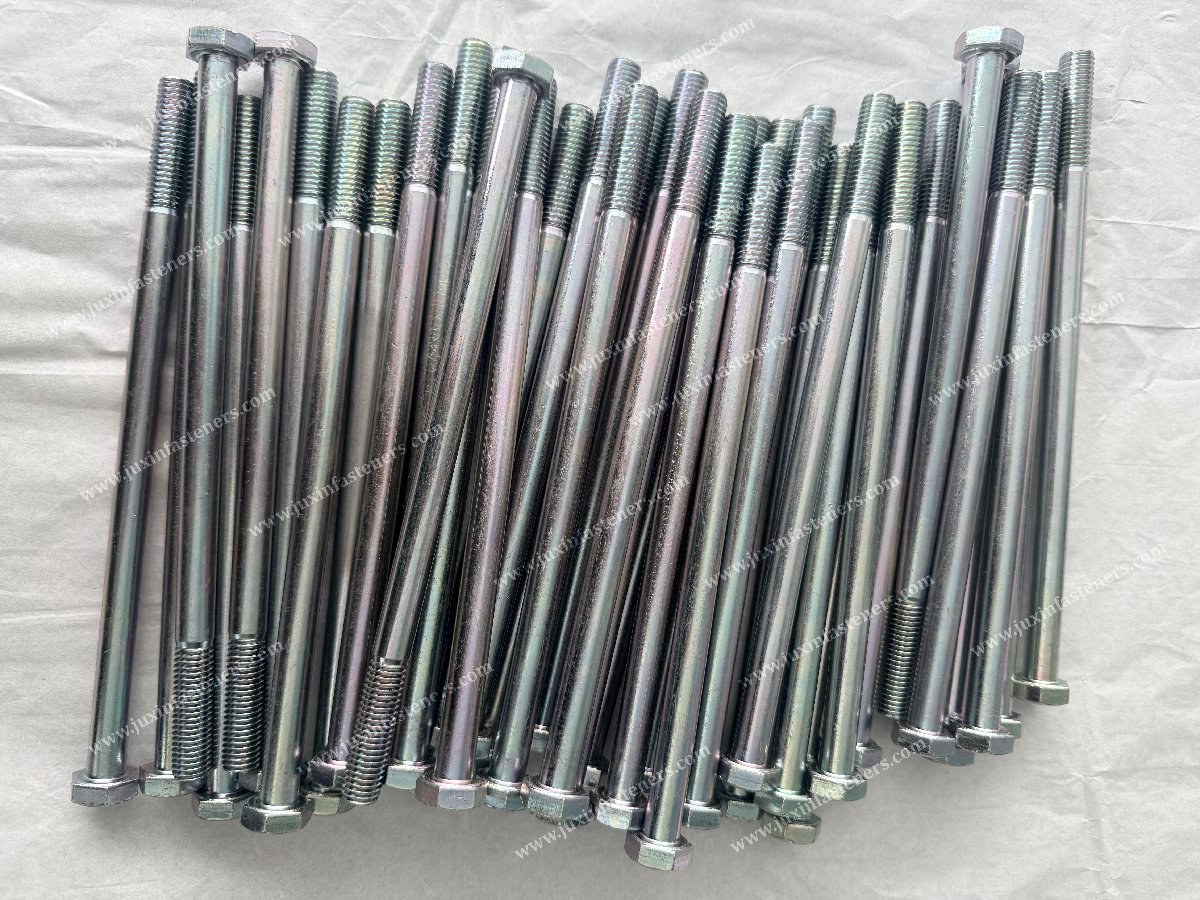
DIN 933 identifies a traditional dimensional specification for fully threaded metric hexagon head bolts and screws.
The corresponding international dimensional reference is ISO 4017.
These fasteners have an external six-sided head and a threaded shank with a defined full-thread configuration.
They can be installed using suitable wrenches or sockets.
Depending on the joint design, they may be used with a compatible nut or installed into a tapped component.
Typical Product Characteristics
External hexagonal head
Metric screw thread
Fully threaded shank configuration
Standardized dimensional requirements
Removable mechanical fastening
Compatibility with suitable nuts and tapped holes
DIN 933 vs. ISO 4017
DIN 933 remains a familiar commercial and engineering designation.
ISO 4017 is commonly used for the corresponding internationally standardized fully threaded hexagon head screw geometry.
However, an old DIN 933 drawing should not automatically be replaced with an ISO 4017 designation without reviewing the applicable standard editions,
dimensions and other purchasing requirements.
For OEM procurement, the approved drawing and specified standard take precedence.
Full Thread Does Not Mean Unlimited Thread Engagement
A fully threaded bolt provides threading along the specified shank length.
However, the effective engagement depends on the mating nut or tapped hole.
Additional exposed thread length does not automatically increase joint strength.
Relevant International Standards
The following standards may be relevant, depending on the specified product.
| Standard | Application |
|---|---|
| DIN 933 | Traditional fully threaded metric hexagon head fastener designation |
| ISO 4017 | Fully threaded metric hexagon head screw dimensions |
| ISO 898-1 | Mechanical properties of applicable carbon steel and alloy steel fasteners |
| ISO 3506-1 | Mechanical properties of applicable stainless steel fasteners |
| ISO 261 | General-purpose metric thread plan |
| ISO 965 | Metric thread tolerances |
| ISO 4042 | Electroplated fastener coating requirements within its scope |
| ISO 10683 | Non-electrolytically applied zinc-flake coatings within its scope |
These standards address different aspects of the fastener and should not be treated as interchangeable.
DIN 933 / ISO 4017 Hex Bolts in Electrical Equipment
Electrical equipment uses mechanical fasteners in many locations.
Examples include:
Electrical cabinet frames
Switchgear enclosures
Transformer support brackets
Motor and generator mounting structures
Cable management supports
Power distribution equipment
UPS cabinets
Energy storage equipment
Industrial electrical control systems
However, the requirements for a cabinet frame connection may differ substantially from those for a busbar electrical joint.
The fastening system must be selected according to its actual function.
Mechanical Fastening vs. Electrical Connections
This distinction is essential in electrical equipment engineering.
Mechanical Connections
Mechanical connections secure components, brackets, covers, frames or mounting structures.
Their primary requirements may include:
Mechanical strength
Joint preload
Vibration resistance
Dimensional stability
Corrosion protection
Maintenance access
Current-Carrying Electrical Connections
A current-carrying connection has additional requirements.
These may include:
Electrical contact resistance
Contact pressure
Temperature rise
Conductive surface compatibility
Thermal cycling
Electrical fault conditions
Applicable equipment qualification
A standard DIN 933 bolt does not automatically establish a qualified electrical connection.
The complete electrical joint must be designed and validated under the applicable equipment requirements.
Why Fully Threaded Hex Bolts Are Useful in Electrical Assemblies
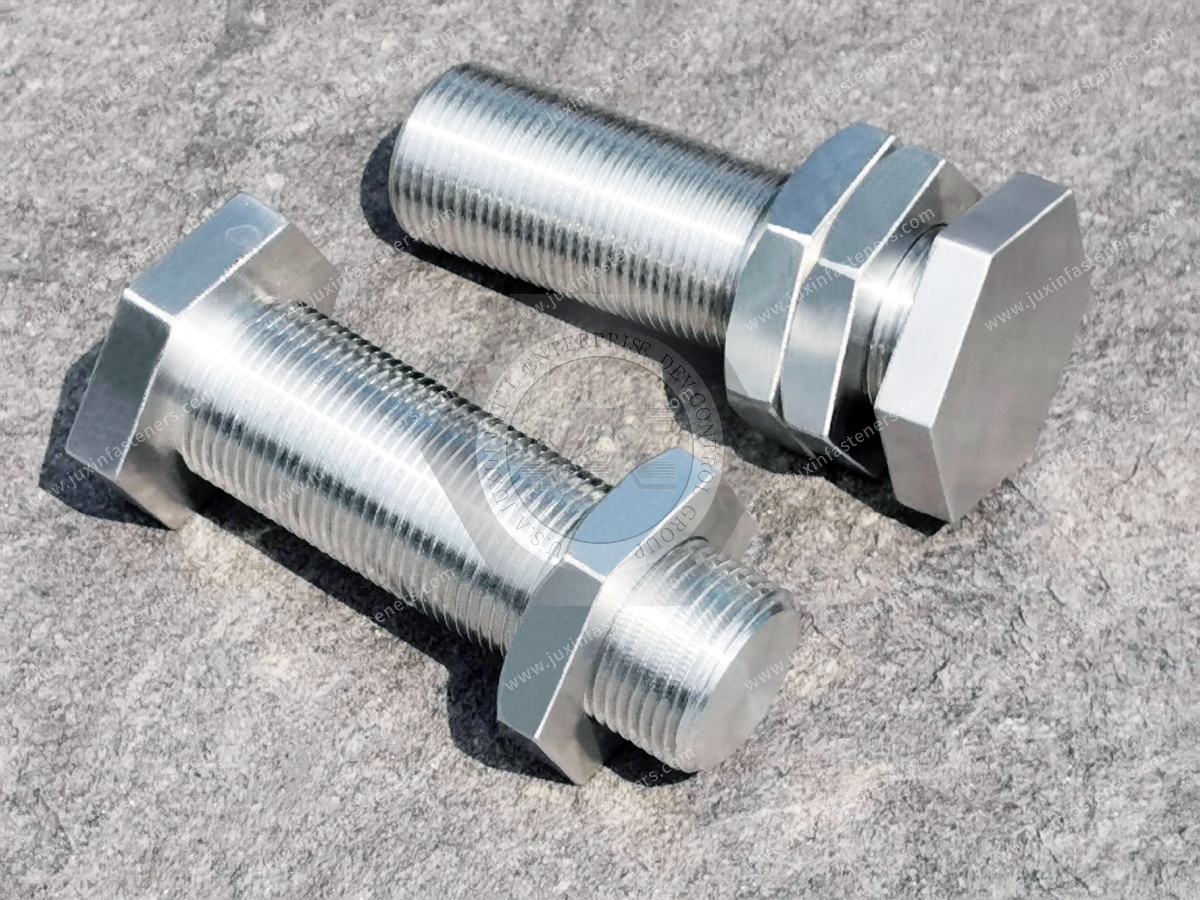
Fully threaded bolts can be practical where the joint requires a suitable threaded fastening range.
Flexible Assembly Geometry
A fully threaded configuration can accommodate different approved assembly stacks, provided the selected bolt length and engagement remain suitable.
Tapped-Hole Installation
The bolt may be installed directly into a tapped component.
The internal thread material and engagement length must be evaluated.
Conventional Tooling
The external hexagonal head allows installation using suitable standard tools.
Maintenance Access
A removable threaded connection may simplify service where sufficient access is provided.
Standardized Purchasing
A clearly specified DIN 933 / ISO 4017 fastener can support repeatable sourcing.
Engineering Limitation
Full threading does not inherently improve vibration resistance, fatigue life or clamp-load retention.
These characteristics depend on the complete joint.
Electrical Panel and Control Cabinet Assembly
Electrical panels and control cabinets are among the most relevant applications for industrial hex bolts.
Potential fastening locations include:
Cabinet frame connections
Equipment mounting brackets
Internal support structures
Removable mechanical covers
Base mounting components
Structural accessories
Design Consideration: Sheet Metal Thickness
Electrical cabinets often use relatively thin sheet metal.
A DIN 933 bolt may be suitable when the assembly includes an appropriate nut, threaded insert or another designed mating feature.
However, directly tapping thin sheet metal may provide insufficient thread engagement for some load requirements.
The suitability depends on:
Sheet thickness
Material strength
Thread size
Applied load
Required preload
Installation method
Alternative Fastening Solutions
Where conventional nuts are difficult to access, other industrial fastening products may be more suitable.
These include:
Self-clinching nuts
Self-clinching studs
Weld studs
Blind rivet nuts
Cage nuts
Clip-on nuts
JUXIN FASTENERS supplies these types of industrial fastening products for suitable OEM applications.
Engineering Selection Example
Consider a control cabinet bracket attached to a thin steel panel.
A conventional DIN 933 bolt and nut may be appropriate where both sides are accessible.
If rear access is unavailable, a suitable blind rivet nut or another engineered threaded attachment may provide a more practical assembly solution.
The final selection depends on panel material, thickness, hole geometry and required mechanical performance.
Production Considerations
For high-volume cabinet manufacturing, engineers should review:
Tool access
Fastener feeding
Assembly sequence
Tightening procedure
Inspection
Rework
Packaging and handling
The lowest unit-price fastener may not provide the lowest installed cost.
Transformer Mounting and Support Structures
Transformers require suitable mechanical support and mounting arrangements.
DIN 933 / ISO 4017 hex bolts may be used in selected auxiliary mechanical assemblies, depending on the approved design.
Potential applications include:
Support brackets
Equipment frames
Mounting accessories
Noncritical mechanical connections
Serviceable equipment structures
Vibration Considerations
Some transformers experience operational vibration.
The joint should be designed for the actual vibration environment rather than assuming that a fully threaded bolt is inherently vibration-resistant.
Thermal Expansion
Transformers and associated equipment may experience temperature changes.
Differences in thermal expansion between connected materials can influence joint behavior.
Corrosion Exposure
Outdoor installations may require specified corrosion-resistant materials or coatings.
Electrical Clearance
Fastener placement must not compromise required electrical clearances or insulation arrangements.
Important Limitation
Primary transformer mounting and other safety-critical connections must comply with the applicable equipment design and project specifications.
Switchgear Cabinet and Power Distribution Equipment
Switchgear assemblies often combine sheet metal structures, internal supports, electrical components and busbar systems.
DIN 933 bolts may be used for suitable mechanical connections within these assemblies.
Typical Mechanical Applications
Enclosure frame assembly
Mounting brackets
Support rails
Equipment base structures
Internal mechanical supports
Busbar Support Structures
A hex bolt may secure a mechanical busbar support bracket or an insulating support assembly.
However, the fastening design must preserve required electrical clearances and the integrity of the insulation system.
Busbar Electrical Joints
Bolted busbar joints require separate electrical and thermal evaluation.
The choice of bolt, washer and tightening method must be compatible with the approved electrical connection design.
Electrical Equipment Standards
For relevant equipment, standards such as the IEC 61439 series may govern low-voltage switchgear and controlgear assemblies.
These equipment requirements are separate from the dimensional standard for an individual hex bolt.
A DIN 933 bolt does not independently establish equipment compliance.
Cable Tray and Cable Management Systems
DIN 933 fully threaded hex bolts may be used in suitable cable tray and cable support assemblies.
Applications can include:
Cable tray brackets
Support frames
Conduit mounting accessories
Mechanical cable management structures
Load Requirements
The bolt and complete support system must be selected for the specified load.
Corrosion Exposure
Outdoor or industrial environments may require suitable corrosion protection.
Maintenance
Removable connections can support inspection and adjustment where the design permits.
Important Design Consideration
Cable support assemblies must be evaluated as complete systems.
Bolt strength alone does not establish the allowable load of a cable tray or bracket.
Motor and Generator Mounting
Electric motors and generators may experience vibration, torque reaction and repeated mechanical loading.
DIN 933 hex bolts may be used in suitable mounting and support assemblies.
Potential applications include:
Motor mounting brackets
Auxiliary support frames
Generator equipment structures
Removable mechanical covers
Maintaining Alignment
The joint design must provide the required positioning and clamping behavior.
Vibration and Fatigue
The fastener should be evaluated for cyclic loading and joint movement.
Preload Control
Correct tightening is important where the connection relies on clamping force.
Why Bolt Strength Alone Is Insufficient
A high-strength bolt may not prevent movement if the joint geometry, mating components or tightening procedure are unsuitable.
Industrial Automation Equipment
Industrial automation systems frequently use standardized threaded fasteners for removable mechanical connections.
Applications may include:
Equipment frames
Mounting brackets
Control cabinets
Machine guards
Auxiliary support structures
Production Engineering
For automated assembly, the fastener must be compatible with:
Installation tools
Feeding equipment
Assembly access
Tightening control
Inspection procedures
Alternative Products
Where space is restricted or sheet metal is thin, self-clinching studs, standoffs or other captive fastening elements may provide a more efficient solution.
Renewable Energy and Energy Storage Equipment
DIN 933 / ISO 4017 fasteners may be used in suitable auxiliary equipment associated with:
Solar equipment
Energy storage cabinets
Power conversion equipment
Electrical enclosures
Industrial energy infrastructure
Outdoor Exposure
Material and coating selection should reflect humidity, temperature and corrosion conditions.
Thermal Cycling
Equipment temperature changes may affect clamping behavior.
Structural Limitations
Primary wind turbine structural connections and other safety-critical assemblies require project-specific bolting specifications.
Ordinary DIN 933 bolts should not automatically be substituted.
HVAC and Industrial Cooling Equipment
HVAC equipment may use fully threaded hex bolts in:
Equipment frames
Fan mounting brackets
Compressor support structures
Cooling equipment enclosures
Mechanical support assemblies
Engineering Considerations
Vibration
Moisture
Temperature changes
Service access
Corrosion protection
For liquid-cooling systems, the bolt's suitability for a mechanical support does not automatically qualify it for pressure-containing connections.
Telecommunications and Data Center Equipment
DIN 933 hex bolts may be used in suitable mechanical connections for:
Telecommunications cabinets
Network equipment frames
Data center support structures
UPS enclosures
Electrical equipment brackets
Why Installation Access Matters
Dense equipment layouts may limit wrench or socket access.
The design should verify available clearance before selecting the head geometry.
Alternative Fastening Options
Cage nuts, captive nuts, self-clinching standoffs and other threaded hardware may be more suitable for some rack and enclosure applications.
Application Selection Matrix
| Electrical equipment application | Main design concern | Potential fastening approach |
|---|---|---|
| Cabinet frame | Mechanical rigidity and service access | DIN 933 bolt with suitable nut or tapped component |
| Thin sheet metal panel | Limited thread engagement | Self-clinching nut or suitable threaded insert |
| Transformer support | Vibration and mounting loads | Approved hex bolt assembly |
| Switchgear enclosure | Access and electrical clearance | Suitable hex bolt or captive fastener |
| Busbar support | Mechanical retention and insulation | Approved mechanical support fastening |
| Current-carrying busbar joint | Electrical contact and thermal performance | Qualified electrical bolted connection |
| Cable tray bracket | Support loads and corrosion | Specified bolt and support assembly |
| Motor mounting | Vibration and alignment | Approved bolt and mounting arrangement |
| UPS enclosure | Serviceability and assembly consistency | Hex bolt or captive threaded hardware |
| Outdoor telecom cabinet | Corrosion and maintenance | Suitable coated or stainless fastener |
The matrix is intended for preliminary engineering selection.
Final approval must follow the equipment specification.
DIN 933 Hex Bolt Materials for Electrical Equipment
Material selection depends on the mechanical load, operating environment and compatibility with adjacent components.
Carbon Steel DIN 933 Bolts
Carbon steel may be suitable for general indoor electrical equipment applications.
The required property class and surface treatment should be specified.
Alloy Steel DIN 933 Bolts
Suitable alloy steels may be selected where higher mechanical properties are required.
The finished fastener must satisfy the specified property class and manufacturing requirements.
Stainless Steel DIN 933 Bolts
Stainless steel may be considered for humid or corrosion-sensitive applications.
A2 and A4 are common stainless fastener material groups.
The actual stainless material and mechanical property class must be defined.
Material and Property Class Are Different
For applicable metric carbon steel and alloy steel fasteners, ISO 898-1 defines mechanical property requirements.
Examples include property classes 8.8, 10.9 and 12.9.
For applicable stainless steel fasteners, ISO 3506-1 uses a different classification system.
A stainless fastener designated A2-70 is not automatically interchangeable with a carbon steel fastener designated 10.9.
Material Selection Matrix
| Requirement | Potential material approach | Main verification |
|---|---|---|
| Indoor cabinet assembly | Suitable carbon steel | Property class and coating |
| Outdoor enclosure | Coated steel or suitable stainless steel | Corrosion exposure |
| Higher mechanical load | Qualified carbon or alloy steel | Mechanical properties and joint design |
| Humid equipment room | Suitable corrosion-resistant material | Environmental compatibility |
| Mixed-metal assembly | Compatible material and coating | Galvanic corrosion |
| Repeated maintenance | Suitable threaded material combination | Wear and galling |
Surface Treatments for DIN 933 Hex Bolts
Surface treatment may influence corrosion resistance, thread fit and tightening behavior.
Zinc Plating
Zinc plating may provide suitable corrosion protection for selected industrial applications.
Performance depends on coating specification and exposure conditions.
Zinc-Nickel Coating
Zinc-nickel coatings may be considered where a specified corrosion protection system is required.
Zinc-Flake Coating
Zinc-flake coatings may be suitable for certain industrial fasteners.
The selected process must be compatible with the mechanical properties and customer requirements.
Black Oxide
Black oxide may be used for specified appearance or surface requirements.
It should not automatically be treated as equivalent to a qualified zinc-based corrosion protection system.
Coating Selection Considerations
Exposure environment
Coating thickness
Thread fit
Friction conditions
Material compatibility
Hydrogen embrittlement risk
Inspection requirements
Coating and Tightening Torque
Coating changes can alter the relationship between applied torque and clamp load.
For OEM production, a coating substitution may require assembly validation.
Hydrogen Embrittlement
Certain high-strength steel fasteners may be susceptible to hydrogen embrittlement under particular processing and service conditions.
The material and coating process must be evaluated accordingly.
DIN 933 Bolt Thread Engagement in Electrical Equipment
Thread engagement is an important design consideration.
Bolt and Nut Assemblies
The selected nut must be compatible with the bolt's thread designation and mechanical requirements.
Tapped Steel Components
The required engagement depends on the material, thread size and joint loading.
Tapped Aluminum Components
Aluminum internal threads may require additional engagement or another engineered solution.
Thin Sheet Metal
Direct tapping may be unsuitable where the panel cannot provide adequate thread engagement.
Blind Tapped Holes
The bolt must not bottom out before achieving the intended clamping condition.
Engineering Principle
Full threading does not eliminate the need to calculate or verify effective thread engagement.
DIN 933 Bolt Length Selection
Bolt length should be selected from the actual assembly stack.
For a nut-and-bolt connection, consider:
Component thickness
Washer thickness
Nut height
Required thread projection
For a tapped-hole connection, consider:
Effective thread engagement
Hole depth
Thread runout
Bottoming clearance
A bolt that is too short may provide insufficient engagement.
A bolt that is too long may interfere with adjacent equipment or bottom in a blind hole.
Electrical Clearance and Fastener Positioning
Electrical equipment introduces additional constraints beyond mechanical strength.
Fastener heads, washers and threaded ends may reduce the available clearance between conductive components.
Design engineers should verify:
Electrical clearance
Creepage distance where applicable
Insulation integrity
Accessibility
Component movement
Thermal expansion
The applicable equipment standard and approved electrical design govern the required distances.
Galvanic Corrosion in Electrical Equipment
Electrical cabinets and power equipment may combine steel, stainless steel, aluminum and copper-based components.
Where dissimilar metals are electrically connected in the presence of moisture or another electrolyte, galvanic corrosion may occur.
The complete assembly should be reviewed.
Mechanical vs. Electrical Contact
A coating suitable for corrosion protection may not be appropriate for a current-carrying electrical interface.
Electrical contact requirements must be evaluated separately.
DIN 933 Hex Bolt Installation Guidelines
A reliable installation process begins with the approved drawing and assembly procedure.
Verify the Fastener Specification
Confirm:
Thread designation
Diameter
Length
Material
Property class
Surface finish
Inspect the Mating Components
Check that the nut or tapped hole is compatible.
Confirm Tool Access
Ensure that the installation tool can properly engage the hex head.
Apply the Approved Tightening Procedure
Use the specified tightening method and suitable tools.
Verify the Assembly
Inspection requirements may include bolt identification, tightening confirmation and visual checks.
Important Limitation
A generic tightening torque should not be assigned solely from the DIN 933 designation.
The required tightening procedure depends on the complete joint.
Production Manager's Guide: Improving Electrical Cabinet Assembly
For high-volume electrical equipment manufacturing, fastening efficiency depends on the entire production process.
Fastener Standardization
Reducing unnecessary variations may simplify inventory and assembly.
Installation Accessibility
Fastener locations should permit the intended tool to operate without interference.
Threaded Attachment Selection
Thin sheet metal may benefit from self-clinching or other captive fastening elements.
Tightening Consistency
Approved coatings and lubrication conditions should be controlled.
Inspection
The inspection plan should reflect the functional requirements of the connection.
Rework
Procedures should address damaged threads, incorrect fasteners and unsuitable tightening.
Production Decision Table
| Production issue | Potential consequence | Engineering response |
|---|---|---|
| Insufficient thread engagement | Thread stripping | Review panel thickness and attachment method |
| Limited socket clearance | Slow or impossible assembly | Review head geometry and tool access |
| Wrong bolt length | Bottoming or interference | Verify assembly stack |
| Mixed property classes | Incorrect joint performance | Improve part identification |
| Coating variation | Inconsistent tightening | Control coating and assembly process |
| Rear access unavailable | Difficult nut installation | Evaluate captive or self-clinching fasteners |
| Incorrect fastener near live parts | Electrical clearance risk | Review equipment layout |
DIN 933 Bolts vs. Other Electrical Cabinet Fasteners
DIN 933 bolts are not the best solution for every electrical equipment connection.
| Fastener type | Potential application | Main selection consideration |
|---|---|---|
| DIN 933 / ISO 4017 hex bolt | Accessible mechanical joints | Tool clearance and thread engagement |
| Self-clinching nut | Suitable thin sheet metal panels | Panel hardness and thickness |
| Self-clinching stud | Permanent threaded attachment point | Installation force and panel requirements |
| Weld stud | Weldable metal assemblies | Welding process and material compatibility |
| Blind rivet nut | Limited rear access | Grip range and hole geometry |
| Cage nut | Rack and cabinet mounting | Cage geometry and panel compatibility |
| Clip-on nut | Sheet metal edges | Panel thickness and retention |
When to Choose a Conventional Hex Bolt
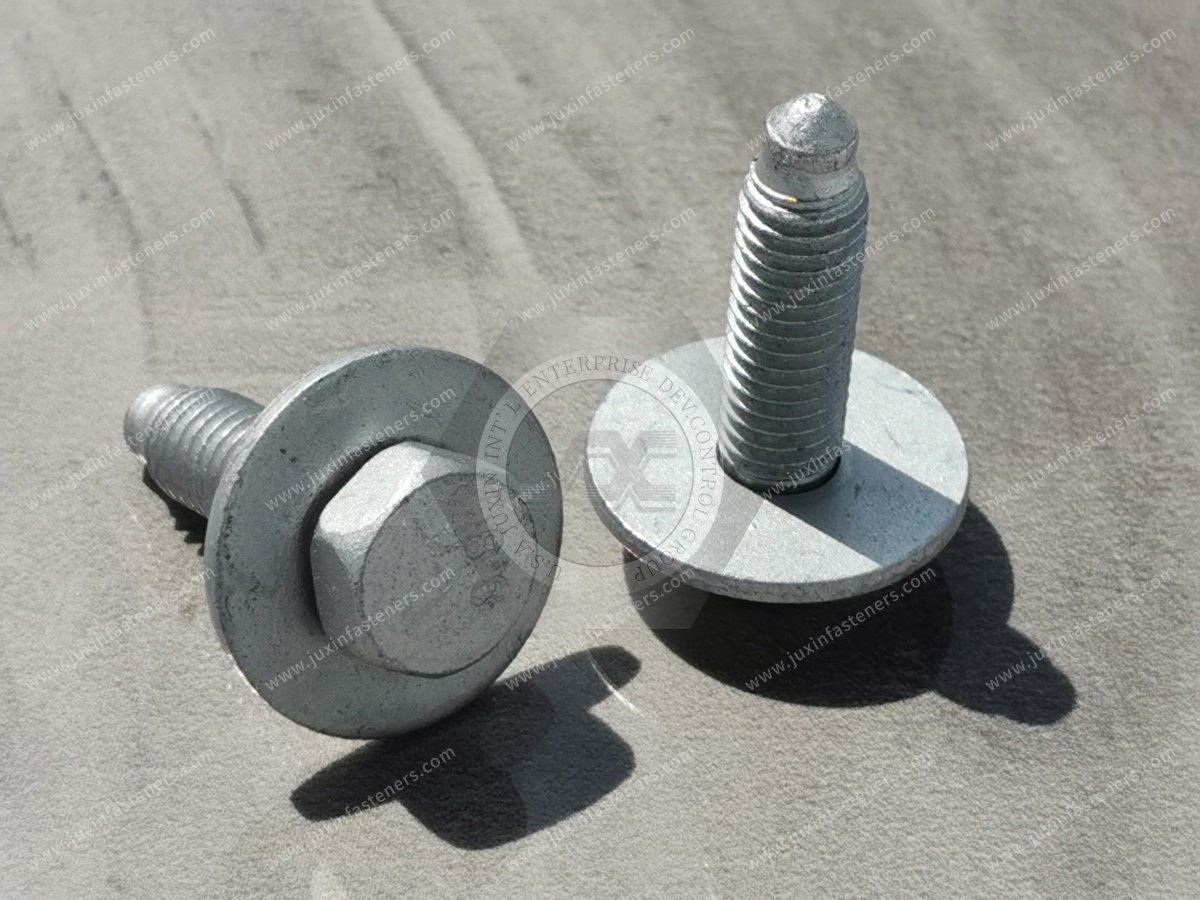
A conventional DIN 933 bolt may be appropriate when:
The joint is accessible
A compatible nut or tapped hole is available
The required engagement can be achieved
The bolt satisfies the mechanical requirements
The installation process is practical
When to Consider an Alternative
A different fastening method may be preferable when:
Rear access is unavailable
Sheet metal is too thin for direct tapping
Captive hardware is required
Automated assembly favors a preinstalled threaded element
Maintenance access is restricted
Common DIN 933 Fastening Problems in Electrical Equipment
Thread Stripping
May result from insufficient engagement, unsuitable mating material or excessive installation load.
Preload Loss
May result from settlement, relaxation or other joint-related mechanisms.
Vibration Loosening
May occur where the joint design and tightening conditions are unsuitable.
Corrosion
May affect serviceability and mechanical performance.
Galling
May occur in certain threaded material combinations.
Electrical Clearance Interference
An incorrectly positioned fastener may compromise the approved equipment layout.
Assembly Bottoming
A bolt may contact the bottom of a blind hole before generating the intended clamp load.
Coating-Related Tightening Variation
Changes in surface condition may affect the relationship between torque and preload.
Engineering Recommendation
Investigate the complete joint and installation process before changing the fastener specification.
OEM Procurement and Supplier Qualification
For electrical equipment manufacturers, purchasing requirements should be sufficiently detailed to prevent unsuitable substitutions.
Recommended Technical Specification
| RFQ field | Required information |
|---|---|
| Product standard | DIN 933 or ISO 4017, as specified |
| Thread | Exact metric designation and pitch |
| Diameter | Nominal diameter |
| Length | Required bolt length |
| Material | Approved material specification |
| Property class | Required mechanical properties |
| Coating | Approved surface treatment |
| Application | Cabinet, switchgear, transformer support or other assembly |
| Inspection | Required acceptance criteria |
| Samples | Prototype or approval quantity |
| Volume | Annual or batch demand |
| Delivery | Target schedule |
Supplier Substitution
An alternative fastener should be evaluated against the complete drawing and purchasing specification.
Similar dimensions alone do not establish interchangeability.
Cost Considerations
The purchasing decision should consider:
Unit price
Assembly labor
Inspection requirements
Rework risk
Packaging
Inventory
Delivery reliability
Long-term maintenance
Custom DIN 933 / ISO 4017 Hex Bolts for OEM Projects
JUXIN FASTENERS supports inquiries for standard industrial hex bolts and drawing-based custom fastening components.
Possible project requirements include:
Custom bolt lengths
Special thread lengths
Selected materials
Specified mechanical properties
Drawing-defined coatings
Custom packaging
Project-specific inspection requirements
Manufacturing feasibility, material availability, MOQ, lead time and documentation are confirmed according to each project.
Frequently Asked Questions
What is the difference between DIN 933 and ISO 4017?
DIN 933 is a traditional fully threaded metric hexagon head fastener designation.
ISO 4017 provides the corresponding international dimensional standard.
Existing drawings should be reviewed before changing the specified reference.
Are DIN 933 bolts fully threaded?
They have a standardized full-thread configuration, subject to the applicable dimensional requirements.
Can DIN 933 bolts be used in electrical cabinets?
Yes, in suitable mechanical connections where the fastener meets the approved design requirements.
Can DIN 933 bolts be used for busbar connections?
A DIN 933 bolt may form part of an approved electrical connection, but the complete busbar joint requires electrical and thermal evaluation.
Are DIN 933 bolts vibration-resistant?
Not inherently. Vibration resistance depends on the joint design, tightening conditions and any specified locking method.
Are stainless steel DIN 933 bolts better for outdoor equipment?
They may be appropriate in certain environments, but the exact stainless grade and exposure conditions must be evaluated.
Can a class 10.9 bolt replace a class 8.8 bolt?
Not automatically. The complete joint, mating components and approved specification must be reviewed.
Can DIN 933 bolts be installed directly into thin sheet metal?
Only where sufficient thread engagement and mechanical performance can be demonstrated.
Other threaded attachment methods may be preferable.
Are metric and UNC hex bolts interchangeable?
No. They use different thread systems.
Can JUXIN FASTENERS review custom DIN 933 bolt drawings?
Yes. Drawing-based inquiries can be reviewed for dimensions, materials, surface treatment, manufacturing feasibility and quotation.
What information is required for an OEM electrical equipment fastener RFQ?
Provide the drawing or standard, thread, diameter, length, material, property class, coating, application, quantity and delivery requirements.
JUXIN FASTENERS: DIN 933 Hex Bolts and Electrical Equipment Fastening Solutions
JUXIN FASTENERS supplies industrial threaded fasteners and drawing-based custom fastening components for international OEM customers.
Relevant products include:
DIN 933 / ISO 4017 fully threaded hex bolts
High-strength industrial hex bolts
Stainless steel hex bolts
Custom hex head bolts
Self-clinching nuts and studs
Weld studs
Blind rivet nuts
Cage nuts
Clip-on nuts
CNC-machined threaded components
Specific dimensions, materials, coatings, inspection requirements, sample arrangements and production feasibility are reviewed during quotation.
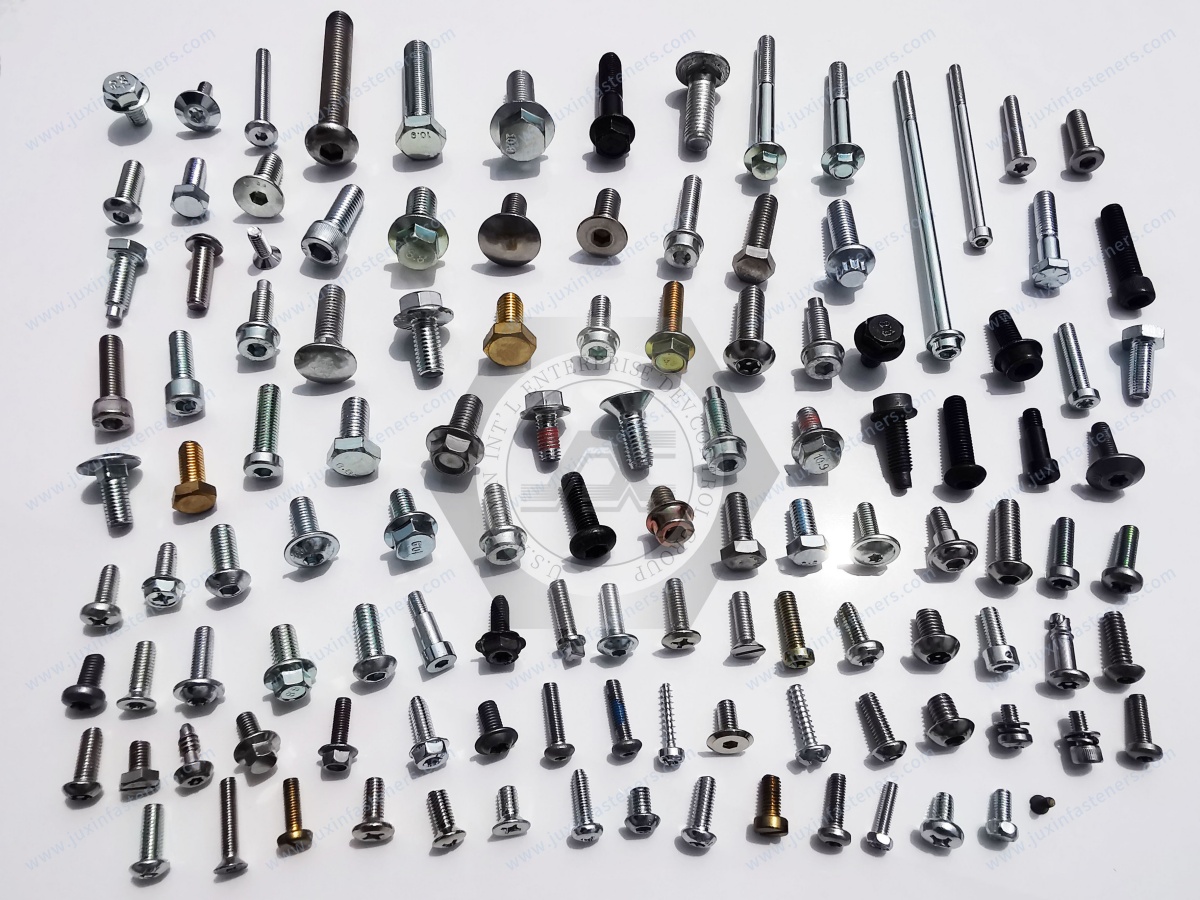
Request a DIN 933 Hex Bolt RFQ for Electrical Equipment
Are you developing an electrical cabinet, transformer support assembly, switchgear enclosure, UPS system, energy storage cabinet or industrial power equipment project?
JUXIN FASTENERS welcomes inquiries from design engineers, mechanical engineers, manufacturing engineers, production managers, procurement specialists, purchasing managers,
supplier development teams and supply chain managers.
For an efficient technical review, please provide:
2D drawing or standard + metric thread designation + diameter + length + material + property class + coating + equipment application + installation requirements
+ inspection requirements + sample quantity + annual purchasing volume + target delivery date
Our team can review the drawing, discuss suitable fastening options, confirm sample arrangements and provide MOQ, lead-time and quotation information.
Company: JUXIN FASTENERS
Website: https://www.juxinfasteners.com/
Email: info@juxinfasteners.com
Send your DIN 933 / ISO 4017 hex bolt drawings and RFQ to JUXIN FASTENERS for technical evaluation and quotation.
Contact Us
Tel.:
+86 020 8621 0320
+86 020 3121 6067
E-mail:
Technical Support:
Navigation
SEND INQUIREY