
Call Us
+86 136 6007 9809
Call Us
+86 136 6007 9809

Apr. 08, 2026
Automotive High-Strength Bolts and Nuts: Grades, Preload, Locking and OEM Sourcing
Modern vehicles depend on thousands of mechanical connections to maintain structural integrity, assembly accuracy, operational reliability and serviceability.
Among these connections, automotive high-strength bolts and nuts are used in selected powertrain, chassis, suspension,
transmission and electric vehicle structures where mechanical loading and joint performance require careful engineering evaluation.
Automotive fasteners may experience:
High tensile and clamp loads
Repeated dynamic loading
Road-induced vibration
Mechanical shock
Thermal expansion and contraction
Corrosive environments
Fatigue loading
Repeated maintenance or service operations
However, selecting an automotive fastener involves more than choosing a high tensile strength grade.
A reliable bolted joint depends on the relationship between the fastener, mating components, tightening process, friction conditions, loading environment and production controls.
For design and structural engineers, the main concerns include strength, joint stiffness, fatigue, thread engagement and preload retention.
For manufacturing engineers and production managers, the priorities include tightening consistency, assembly efficiency, error prevention, traceability and process stability.
For purchasing managers, procurement development teams and supply chain managers, the decision also involves drawing compliance, supplier qualification,
material and coating specifications, annual production demand, MOQ, delivery planning and long-term supply continuity.
Juxin Fasteners welcomes OEM inquiries for high-strength automotive bolts, nuts, flange fasteners, locking nuts and drawing-specific industrial fastening components.
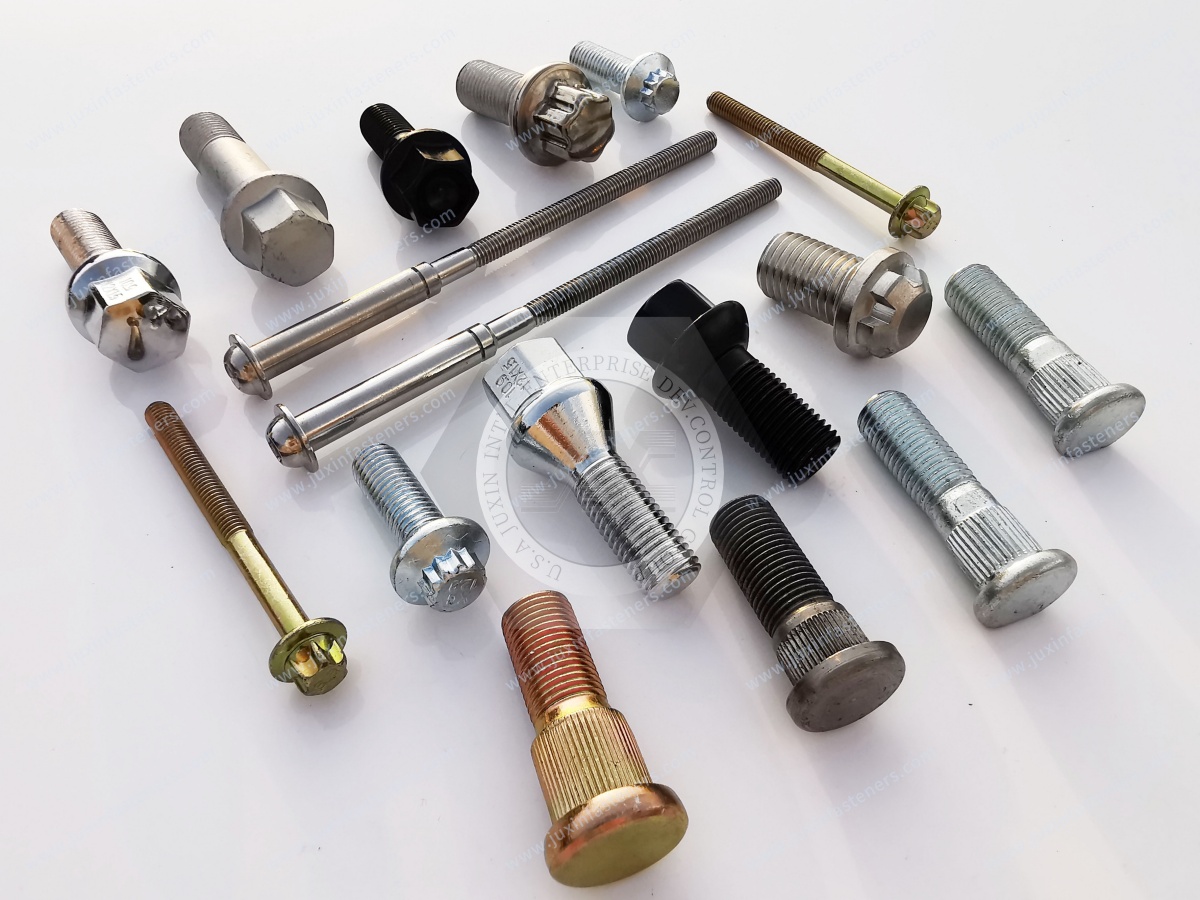
What Are Automotive High-Strength Bolts?
Automotive high-strength bolts are threaded fasteners selected to meet defined mechanical property and joint performance requirements.
For metric carbon steel and alloy steel bolts, ISO 898-1 specifies mechanical properties for applicable property classes.
Common metric bolt property classes include:
8.8
10.9
12.9
These classifications describe mechanical properties under the applicable standard.
They do not independently define fatigue life, corrosion resistance, tightening performance or suitability for a particular vehicle assembly.
Metric Property Class Comparison
| Property class | Nominal tensile strength designation | Typical engineering consideration |
|---|---|---|
| 8.8 | 800 MPa | General high-strength applications |
| 10.9 | 1,000 MPa | Higher-strength applications requiring engineering validation |
| 12.9 | 1,200 MPa | Selected high-strength applications with additional design and process considerations |
The values above describe nominal property-class designations. Actual specified mechanical requirements, including minimum tensile strength, depend on the applicable standard and nominal diameter.
Important Engineering Clarification
A property class 12.9 bolt is not automatically a better choice than a class 10.9 or 8.8 bolt.
Higher strength may introduce additional considerations involving ductility, toughness, coating processes, hydrogen embrittlement and joint design.
Engineering Recommendation
Select the property class based on calculated joint loads, required preload, fatigue conditions, material compatibility and the approved vehicle engineering specification.
High Strength Does Not Automatically Mean High Fatigue Resistance
Bolted joint fatigue performance depends on more than the bolt's ultimate tensile strength.
Relevant factors include:
Preload
Joint stiffness
External load distribution
Thread geometry
Stress concentration
Manufacturing process
Surface condition
Loading cycles
A properly preloaded joint may reduce the cyclic load variation experienced by the bolt, depending on the joint configuration.
However, excessive preload can also damage threads, overstress the bolt or crush the clamped components.
Engineering Recommendation
Evaluate fatigue behavior at the complete joint level rather than assuming a higher bolt property class guarantees a longer service life.
Automotive Engine and Powertrain Fastening Applications
Engine and powertrain assemblies operate under combinations of mechanical loading, vibration and temperature changes.
Potential high-strength fastening applications include:
Engine mounting structures
Selected engine block connections
Cylinder head assemblies
Crankshaft-related connections
Turbocharger mounting
Powertrain support structures
Cylinder Head Bolts
Cylinder head connections require carefully controlled clamping conditions to maintain gasket compression and accommodate thermal behavior.
Some applications use torque-angle tightening or torque-to-yield fasteners.
These fasteners must be selected and installed according to the specific engine design.
Important Limitation
Torque-to-yield bolts may have restrictions on reuse.
A conventional high-strength bolt should not be substituted for a specified torque-to-yield design without engineering approval.
Turbocharger and High-Temperature Assemblies
Elevated temperatures may affect:
Material strength
Coating suitability
Joint relaxation
Thermal expansion
Thread friction
Corrosion behavior
Engineering Recommendation
High-temperature applications require material and joint evaluation beyond ordinary room-temperature bolt property classification.
Automotive Chassis and Suspension Fasteners
Chassis and suspension assemblies are exposed to road-induced loading, impact and vibration.
Potential applications include:
Suspension arm connections
Subframe mounting
Steering system attachments
Selected brake system components
Vehicle frame structures
Wheel mounting assemblies
Engineering Priorities
Static and dynamic loading
Joint slip resistance
Fatigue
Clamp load retention
Corrosion
Installation accuracy
Maintenance requirements
Important Safety Consideration
Suspension, steering, braking and wheel-related fasteners may be safety-critical.
These applications require vehicle-specific engineering approval, validated installation procedures and applicable quality requirements.
A generic property class or fastener catalog description is not sufficient to establish suitability.
Automotive Transmission and Drivetrain Fasteners
Transmission and drivetrain assemblies require stable mechanical connections under changing torque and operating conditions.
Potential applications include:
Gearbox housings
Differential assemblies
Motor mounting structures
Drivetrain supports
Selected shaft coupling components
Engineering Considerations
Torque transmission
Joint stiffness
Dynamic loading
Vibration
Alignment
Thermal effects
Maintenance access
Engineering Recommendation
Determine whether the joint transfers loads primarily through friction, direct bearing, fitted features or another mechanical mechanism.
The load-transfer mechanism influences bolt selection and preload requirements.
Electric Vehicle Battery and Structural Fastening
Electric vehicle platforms introduce additional fastening requirements associated with battery mass, lightweight structures and electrical system integration.
Potential applications include:
Battery pack mounting structures
Battery enclosure attachments
Electric motor supports
Aluminum chassis structures
Underbody assemblies
Auxiliary EV equipment
Engineering Priorities
Structural loading
Joint stiffness
Dissimilar material compatibility
Corrosion
Thermal expansion
Assembly access
Serviceability
Important Electrical Safety Clarification
A high-strength bolt does not automatically provide electrical isolation, protective bonding or battery enclosure sealing.
These functions must be addressed separately through the complete EV system design.
Aluminum Joint Considerations
Lightweight aluminum structures may require special attention to:
Thread engagement
Local bearing pressure
Joint settlement
Differential thermal expansion
Galvanic corrosion
Clamp load retention
Engineering Recommendation
Do not simply replace a steel joint's bolt with a higher-strength bolt when redesigning the joint for aluminum.
The host material, bearing geometry, preload and environmental conditions must be evaluated together.
Bolt Preload: The Foundation of Automotive Joint Performance
Preload is the tensile force introduced into a bolt during tightening.
The resulting clamping force helps maintain contact between the joint members.
Appropriate preload may improve:
Resistance to joint separation
Friction-based load transfer
Joint stiffness
Fatigue performance
Resistance to relative movement
However, the target preload must remain within the limits of the bolt and clamped materials.
Torque and Preload Are Not the Same Quantity
Tightening torque is the rotational moment applied during assembly.
Bolt preload is the resulting tensile force.
The relationship is strongly influenced by friction.
A commonly used simplified engineering expression is:
T = K × F × d
Where:
T = tightening torque
K = empirical nut factor
F = target preload
d = nominal bolt diameter
This expression is a simplified approximation and should not replace application-specific torque-tension validation.
Why the Torque-to-Preload Relationship Varies
Factors include:
Thread friction
Under-head or nut bearing friction
Coating
Lubrication
Surface roughness
Material pairing
Thread geometry
Installation speed
Engineering Clarification on Friction
A substantial portion of tightening torque is typically consumed by friction rather than directly producing useful bolt elongation.
The often-quoted 90% friction and 10% tightening-work explanation is only a rough illustration.
It is not a universal distribution and should not be used as a design calculation.
Engineering Recommendation
For production joints requiring controlled preload, determine tightening specifications using validated joint and friction data.
Torque-Controlled vs Torque-Angle Tightening
Torque-Controlled Tightening
The assembly tool tightens the fastener to a specified torque.
Advantages may include relatively straightforward equipment and process monitoring.
However, preload scatter can occur because of friction variation.
Torque-Angle Tightening
The process may include an initial snugging stage followed by a defined rotation angle.
This can reduce sensitivity to some friction variations under suitable conditions.
Important Limitation
Torque-angle tightening is not automatically more accurate for every joint.
The tightening strategy must match the joint stiffness, fastener behavior and production requirements.
Torque-to-Yield Tightening
Some automotive joints intentionally tighten the fastener into a controlled plastic deformation range.
This requires dedicated design and process validation.
Engineering Recommendation
Never apply torque-to-yield tightening instructions to an ordinary fastener without a specific approved engineering requirement.
Joint Stiffness and Load Distribution
A bolted joint contains elastic elements.
The bolt stretches during tightening, while the clamped components compress.
The relative stiffness of these elements affects how external loads are distributed.
Why Joint Stiffness Matters
A joint with unfavorable stiffness or insufficient preload may experience:
Separation
Joint slip
Increased bolt load variation
Fatigue damage
Loss of sealing
Loosening
Engineering Recommendation
For demanding automotive applications, evaluate the bolt and clamped members as a combined mechanical system.
Thread Engagement and Nut Compatibility
The mating thread is as important as the bolt.
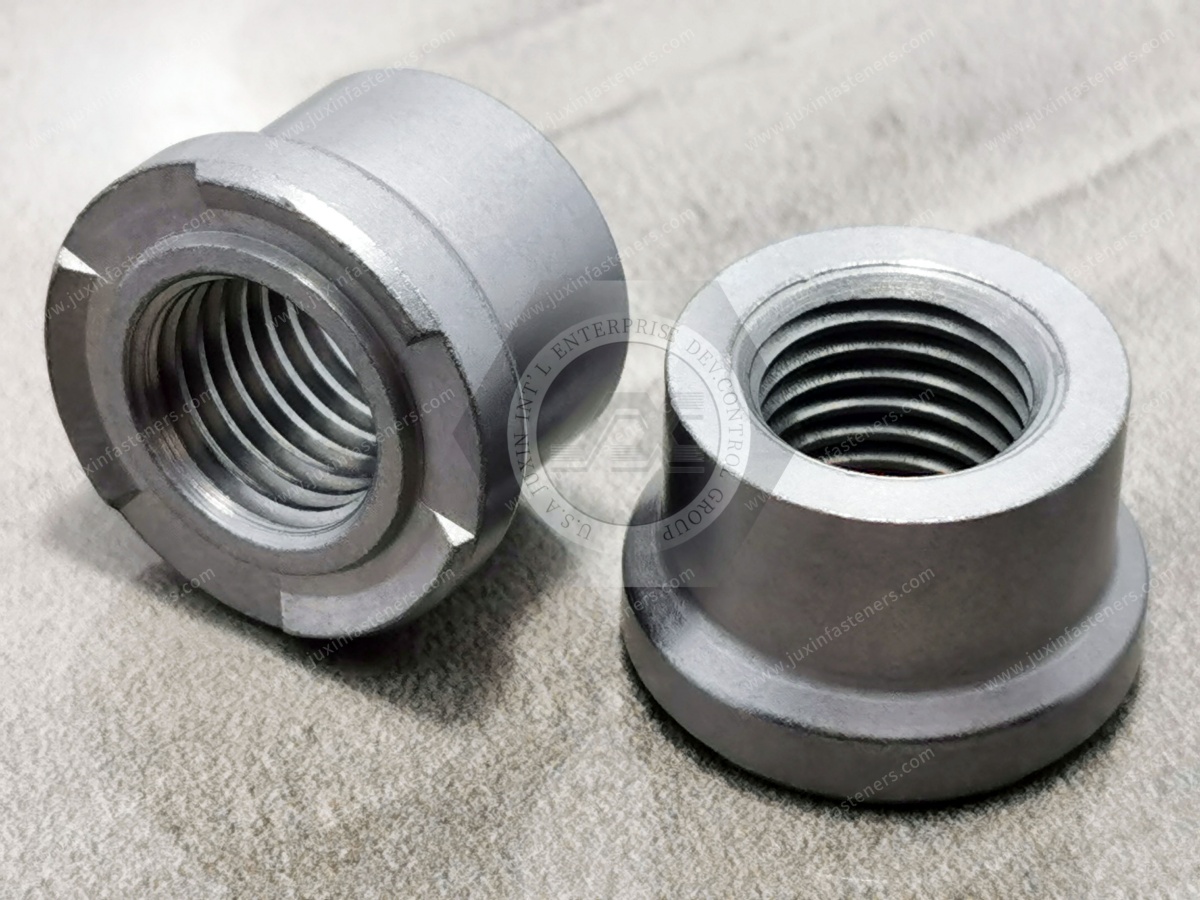
For applicable metric carbon steel and alloy steel nuts, ISO 898-2 specifies mechanical property requirements.
Engineering Considerations
Nut property class
Bolt property class
Thread engagement
Thread tolerance
Coating thickness
Mating material
Proof load
Installation conditions
Important Clarification
A high-strength bolt paired with an unsuitable nut may fail through thread stripping before the intended bolt capacity is reached.
Engineering Recommendation
Verify bolt and nut compatibility using the applicable standard and approved joint specification.
Metric and Inch Thread Systems
Metric threads are commonly specified using ISO 261 and the ISO 965 series.
Unified inch threads, including UNC and UNF, are covered by ASME B1.1.
Metric-to-Inch Nominal Diameter References
| Metric size | Approximate nominal diameter |
|---|---|
| M6 | 0.236 in |
| M8 | 0.315 in |
| M10 | 0.394 in |
| M12 | 0.472 in |
| M14 | 0.551 in |
| M16 | 0.630 in |
These are diameter conversions only.
Metric, UNC, UNF, BSW and BSF threads are not directly interchangeable.
Inch-thread and special-thread availability must be confirmed against the drawing.
Automotive Flange Bolts and Load Distribution
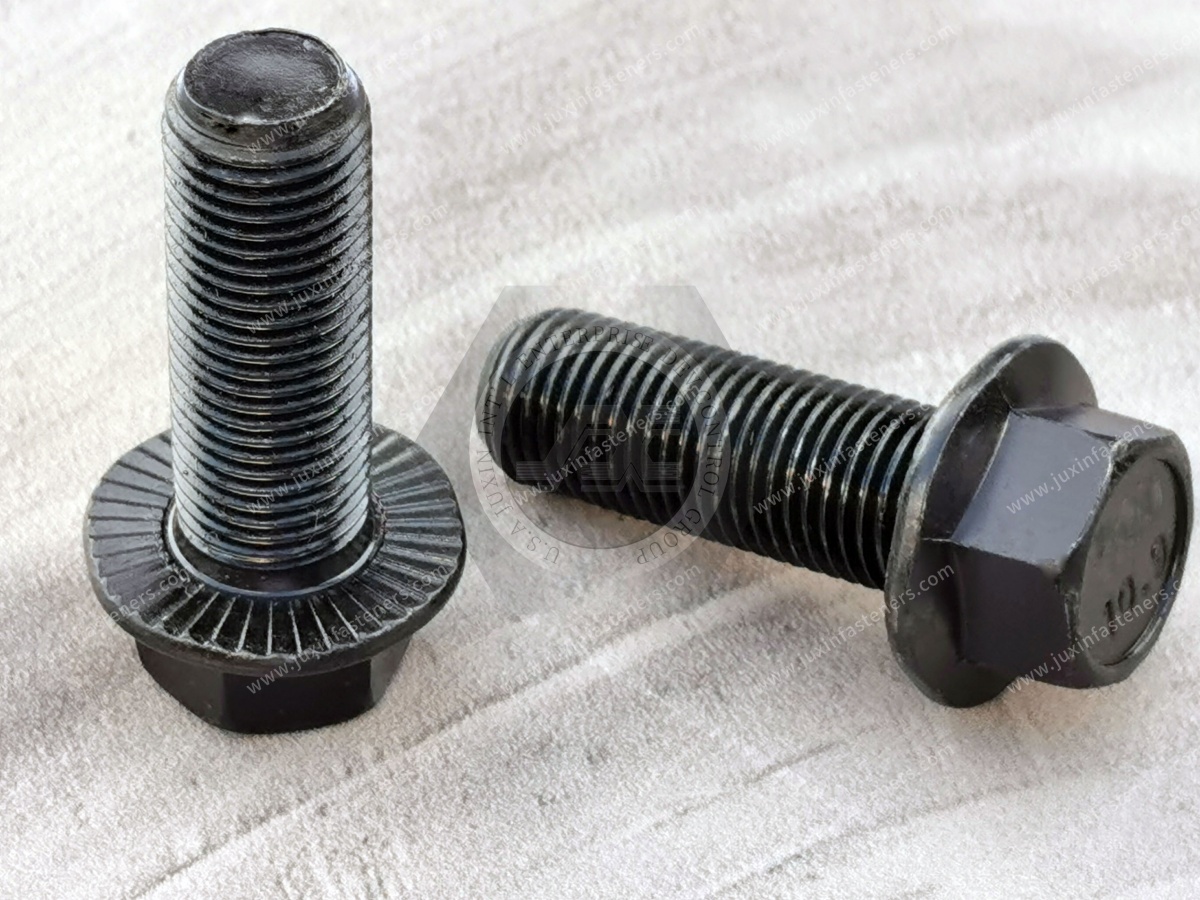
Hex flange bolts combine a hexagonal driving head with an integrated flange.
Depending on the design, the flange may provide a larger bearing area than a conventional hex head without a washer.
Potential Advantages
Integrated bearing surface
Reduced need for a separate washer in suitable joints
Simplified assembly handling
Potential reduction in loose components
Compatibility with automated tightening
Engineering Limitations
Flange geometry must match the joint
Bearing pressure must be evaluated
Surface finish affects friction
Flange dimensions affect tool access
Joint loosening behavior remains application-dependent
Important Clarification
A flange bolt is not automatically vibration-resistant simply because it has a larger bearing surface.
Engineering Recommendation
Select flange geometry and surface condition according to the approved joint design.
Serrated Flange Bolts and Nuts
Serrated flange fasteners use teeth or serrations beneath the bearing surface to increase resistance to relative rotation in suitable assemblies.
Potential Advantages
Additional rotational resistance
Integrated bearing feature
Reduced need for some separate locking components
Engineering Limitations
Serrations may damage protective coatings
Contact surfaces may become marked
Reuse performance may change
Corrosion protection may be affected
The design may be unsuitable for soft materials
Engineering Recommendation
Do not use serrated flange fasteners as a universal solution for aluminum structures, coated components or safety-critical joints.
The complete interface must be validated.
Automotive Lock Nuts and Prevailing-Torque Fasteners
Prevailing-torque nuts create resistance to rotation through a locking feature.
Common categories include:
Nylon insert lock nuts
All-metal prevailing-torque nuts
Certain deformed-thread locking nuts
Application-specific flange locking nuts
Nylon Insert Lock Nuts
A polymer insert provides prevailing torque through interference with the mating thread.
Engineering Considerations
Operating temperature
Polymer compatibility
Reuse restrictions
Installation torque
Prevailing torque
Environmental exposure
Important Limitation
Nylon insert lock nuts may be unsuitable for elevated-temperature applications.
All-Metal Prevailing-Torque Nuts
These nuts create prevailing torque through a metallic locking feature.
They may be considered where temperature or application requirements make polymer inserts unsuitable.
Engineering Considerations
Prevailing torque range
Thread condition
Coating
Reuse
Installation tool capability
Mating bolt compatibility
Important Clarification
Prevailing torque is not the same as clamp load.
The installation process must account for the locking resistance when determining the final tightening procedure.
Relevant Standards
ISO 2320 may be relevant to applicable prevailing-torque type steel nuts.
The exact standard and product configuration must be confirmed.
Engineering Recommendation
Select the locking method based on vibration conditions, operating temperature, reuse requirements and joint validation.
Vibration-Induced Loosening in Automotive Assemblies
Vehicle joints may experience transverse loading, cyclic stress and dynamic movement.
Potential contributors to loosening include:
Insufficient preload
Joint settlement
Surface embedding
Transverse slip
Material creep
Thermal cycling
Inadequate joint stiffness
Important Engineering Clarification
A high-strength bolt does not inherently prevent vibration loosening.
Likewise, a locking nut does not eliminate the need for appropriate preload and joint design.
Engineering Recommendation
Where loosening is a significant risk, evaluate the complete joint under representative loading conditions.
Corrosion Protection for Automotive Bolts and Nuts
Automotive fasteners may be exposed to:
Water
Humidity
Road salt
Cleaning chemicals
Temperature changes
Dissimilar metals
Coating selection affects corrosion protection and may also influence tightening friction.
Zinc Electroplating
Zinc plating may provide sacrificial corrosion protection in suitable environments.
Engineering Considerations
Coating thickness
Passivation
Corrosion requirements
Thread fit
Friction
Hydrogen embrittlement risk
Zinc-Nickel Coating
Zinc-nickel systems may be selected for demanding automotive corrosion requirements.
Engineering Considerations
Alloy composition
Coating thickness
Passivation
Topcoat
Friction characteristics
Process compatibility
Zinc-Flake Coating
Zinc-flake systems may be considered for selected high-strength automotive fasteners.
Depending on the process, they can offer corrosion protection without conventional electrolytic deposition.
Engineering Considerations
Coating specification
Application process
Curing conditions
Thread fit
Friction coefficient
Corrosion performance
Chromium-Free Coating Systems
Chromium-free coating technologies may be specified to meet particular environmental or customer requirements.
However, the term chromium-free does not independently define corrosion performance or friction behavior.
Coating Comparison
| Coating type | Potential benefit | Main consideration |
|---|---|---|
| Zinc plating | Established corrosion protection | Hydrogen embrittlement and friction |
| Zinc-nickel | Corrosion performance in suitable systems | Process control and coating specification |
| Zinc-flake | Selected automotive corrosion requirements | Friction, curing and coating geometry |
| Chromium-free systems | Compliance with specified chemistry requirements | Performance must be verified |
Engineering Recommendation
Specify coating performance, friction requirements and applicable testing methods rather than relying only on a commercial coating name.
Hydrogen Embrittlement in High-Strength Fasteners
Hydrogen embrittlement is an important consideration for certain high-strength steel fasteners.
Hydrogen may enter steel during material processing, cleaning, pickling, electroplating or other operations.
Under unfavorable conditions, susceptible components may experience delayed brittle failure.
Risk Factors
High material strength
Susceptible microstructure
Hydrogen exposure
Applied tensile stress
Processing conditions
Important Clarification
Not every coated high-strength bolt will experience hydrogen embrittlement.
Risk depends on the complete material and manufacturing process.
Engineering Recommendation
For susceptible high-strength fasteners, evaluate the selected material, coating process and applicable hydrogen embrittlement prevention requirements.
Automotive Fastener Surface Friction and Coating Control
A coating may meet corrosion requirements but still produce unacceptable tightening variation if friction is not controlled.
Key Variables
Thread friction
Bearing friction
Coating thickness
Topcoat
Lubrication
Surface condition
Assembly speed
ISO 16047
ISO 16047 provides a framework for torque/clamp force testing of threaded fasteners under defined conditions.
It may be relevant when evaluating torque-tension characteristics.
Engineering Recommendation
Use a controlled and documented test configuration when comparing coating or lubrication alternatives.
Information Gain: A Coating Change Can Be a Joint Design Change
Changing a fastener coating can alter the friction conditions during tightening.
If the same torque is applied, the resulting preload may change.
This means a coating substitution can affect:
Joint clamp load
Bolt stress
Assembly variation
Fatigue behavior
Risk of loosening
Thread damage
Engineering Recommendation
Do not approve coating substitutions based only on equivalent corrosion resistance.
Review friction characteristics and tightening performance as part of engineering change control.

Automotive Fastener Manufacturing and Dimensional Control
High-strength automotive bolts and nuts require controlled manufacturing processes appropriate to their specifications.
Potential processes include:
Cold forming
Thread rolling
Heat treatment
Machining
Surface finishing
Inspection
Cold Forming
Cold forming may support efficient production of suitable fastener geometries.
Thread Rolling
Thread rolling is commonly used for many externally threaded fasteners.
The resulting thread geometry and surface condition depend on the manufacturing process and tooling.
Heat Treatment
Heat treatment may be required to achieve specified mechanical properties.
Engineering Considerations
Material chemistry
Hardness
Microstructure
Decarburization
Mechanical properties
Process consistency
Important Clarification
Manufacturing process suitability must be assessed for the specific product geometry, material and mechanical property requirements.
Automotive Production-Line Tightening Control
For manufacturing engineers and production managers, fastening performance must be repeatable at production scale.
Potential Process Controls
Tool calibration
Tightening program verification
Torque monitoring
Angle monitoring
Fastener identification
Joint preparation
Error-proofing
Traceability where required
Common Assembly Risks
Wrong bolt grade
Incorrect screw length
Incorrect nut
Missing washer
Wrong coating
Cross-threading
Insufficient tightening
Excessive tightening
Incorrect tool program
Engineering Recommendation
Establish a controlled tightening process appropriate to the joint's risk classification.
Information Gain: Production Repeatability Depends on the Complete Fastening System
Even when bolts meet the approved drawing, assembly results may vary because of:
Changes in coating friction
Tool wear
Mating component variation
Thread contamination
Operator handling
Joint settlement
Engineering Recommendation
Validate the complete production assembly process rather than relying only on incoming bolt inspection.
Automotive Fastener Quality Requirements
Automotive OEMs and Tier suppliers may require additional quality controls beyond general industrial fastener inspection.
Potential requirements include:
Approved drawings
Material specifications
Mechanical property verification
Dimensional inspection
Thread inspection
Surface coating inspection
Traceability
Process documentation
Production part approval documentation where specified
IATF 16949 and Customer-Specific Requirements
IATF 16949 is a quality management system standard used in the automotive supply chain.
However, supplying automotive fasteners does not automatically establish IATF 16949 certification.
Certification status and customer-specific compliance must be verified independently.
APQP and PPAP
Advanced Product Quality Planning and Production Part Approval Process requirements may apply depending on the customer and project.
Their applicability and submission level must be agreed upon.
Important Supplier Qualification Principle
Do not assume a supplier holds a particular certification or can provide a specified PPAP package without confirmation.
Quality Inspection Considerations
Material Verification
Material grade
Chemical composition where specified
Material identification
Heat treatment requirements
Dimensional Verification
Thread dimensions
Head geometry
Length
Flange dimensions
Nut dimensions
Surface condition
Mechanical Verification
Depending on the product and specification:
Tensile testing
Proof load testing
Hardness testing
Wedge loading where applicable
Decarburization evaluation
Coating Verification
Coating thickness
Surface appearance
Corrosion testing
Friction characteristics
Coating adhesion where specified
Functional Verification
Tightening behavior
Prevailing torque
Thread compatibility
Joint-specific testing
Engineering Recommendation
Define the inspection plan according to the product specification, application risk and customer requirements.
Custom Automotive Bolts and Nuts
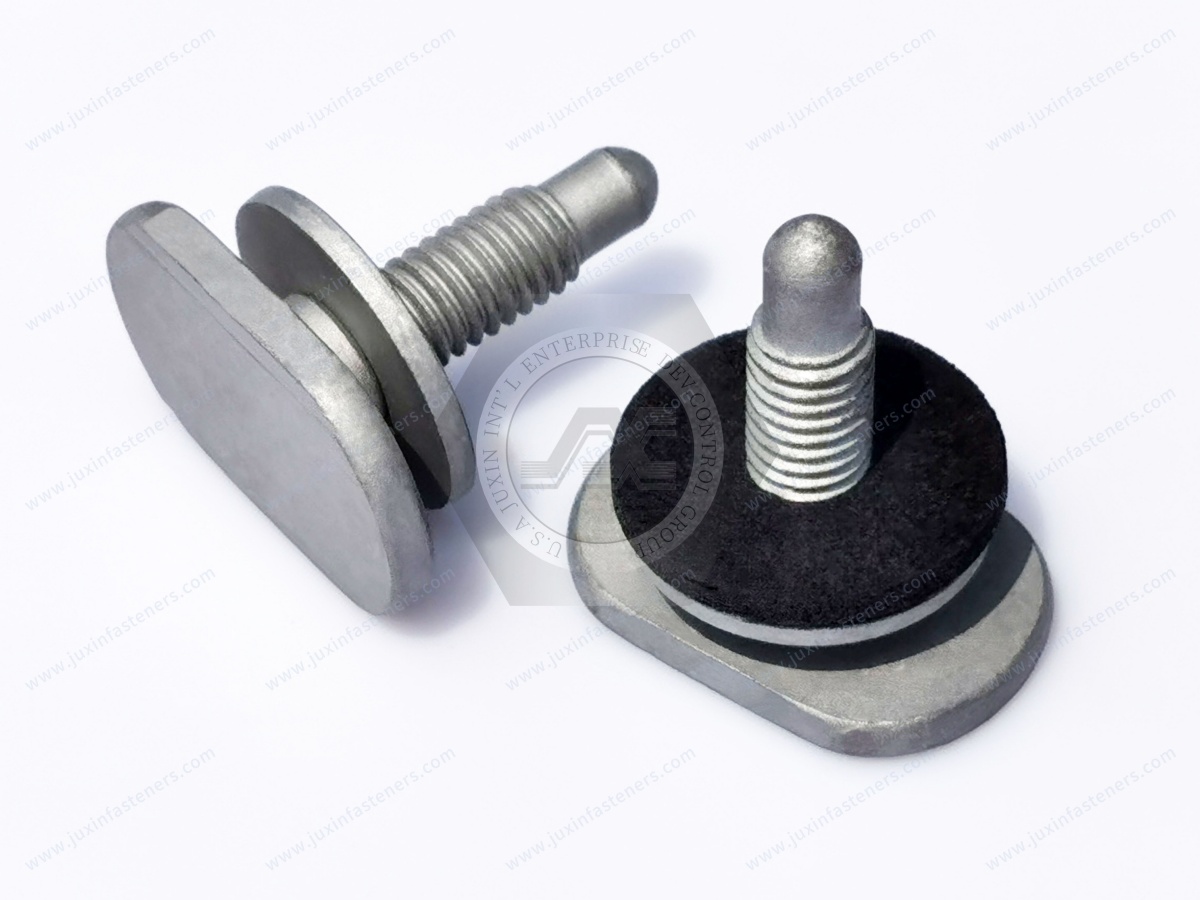
Automotive OEMs and Tier suppliers may require drawing-specific fasteners.
Potential custom requirements include:
Special head geometry
Hex flange design
Shoulder dimensions
Nonstandard lengths
Special thread configurations
Defined mechanical property class
Material grade
Coating specification
Friction requirements
Locking features
Packaging
Traceability
Engineering Recommendation
Provide the complete drawing and applicable engineering specifications.
Custom feasibility, tooling, MOQ and delivery schedules must be confirmed before quotation.
Supplier Development and Procurement Considerations
Purchasing teams should evaluate both technical compliance and supply-chain performance.
Technical Evaluation
Drawing compliance
Material specification
Mechanical property class
Thread accuracy
Coating
Friction requirements
Inspection documentation
Quality system requirements
Manufacturing Evaluation
Process feasibility
Tooling requirements
Production consistency
Capacity planning
Change management
Traceability where required
Commercial Evaluation
Prototype quantity
MOQ
Annual demand
Unit price
Tooling cost
Lead time
Packaging
Delivery schedule
Supply continuity
Important Commercial Clarification
MOQ, lead time, manufacturing capability and quality documentation availability are project-specific and require confirmation.
Total Installed Cost for Automotive Fasteners
The lowest unit price does not always produce the lowest production cost.
Relevant cost elements include:
Bolt and nut purchase price
Coating
Tooling
Installation time
Washer handling
Inspection
Scrap
Rework
Line interruptions
Maintenance
Warranty exposure
Information Gain: Compare Cost per Accepted Joint
A useful production metric is:
Total relevant fastener, installation, inspection and rework costs ÷ accepted joint quantity
For a valid comparison, use the same production period and consistent cost definitions.
Engineering Recommendation
Compare alternative fastening designs using total installed cost and validated joint performance.
Automotive Fastener Substitution and Engineering Change Control
Fastener substitutions may be proposed because of cost, availability or supplier changes.
However, seemingly similar bolts may differ in:
Material
Property class
Head geometry
Bearing area
Thread tolerance
Coating
Friction
Locking characteristics
Manufacturing process
Important Engineering Clarification
A bolt with the same nominal thread diameter and property class is not automatically interchangeable with an existing automotive fastener.
Engineering Recommendation
Review substitutions against the complete approved drawing, joint requirements and production process.
OEM RFQ Checklist for Automotive High-Strength Bolts and Nuts
| RFQ item | Information to provide |
|---|---|
| Product drawing | Part number and revision |
| Fastener type | Hex bolt, flange bolt, lock nut or specified |
| Thread | Metric or inch designation |
| Dimensions | Diameter, pitch, length and geometry |
| Material | Steel grade or specified alloy |
| Property class | 8.8, 10.9, 12.9 or specified |
| Nut compatibility | Required nut class and design |
| Coating | Type, thickness and performance |
| Friction | Required friction characteristics |
| Tightening | Torque, angle or approved procedure |
| Joint materials | Steel, aluminum or other |
| Loading | Static, dynamic and fatigue |
| Environment | Temperature, corrosion and vibration |
| Quality | Inspection and documentation requirements |
| PPAP | Required submission level, if applicable |
| Traceability | Customer-specific requirements |
| Samples | Prototype quantity |
| Annual demand | Volume forecast |
| MOQ | Commercial confirmation |
| Lead time | Required schedule |
| Packaging | Bulk, labeled or line-side |
Frequently Asked Questions
What are automotive high-strength bolts?
They are bolts selected to meet specified mechanical property and joint performance requirements for vehicle assemblies.
What is the difference between property classes 8.8, 10.9 and 12.9?
They represent different mechanical property classifications under applicable metric fastener standards.
Is a 12.9 bolt always better than a 10.9 bolt?
No. The appropriate grade depends on joint design, loading, fatigue, coating and environmental requirements.
Do high-strength bolts prevent vibration loosening?
No. Vibration resistance depends on preload, joint design and any specified locking features.
Are flange bolts better than ordinary hex bolts?
They may simplify assembly and provide an integrated bearing surface, but suitability depends on the joint.
What is the difference between a nylon insert lock nut and an all-metal lock nut?
They use different prevailing-torque mechanisms and have different operating considerations, including temperature and reuse.
Can zinc-nickel and zinc-flake coatings be substituted directly?
Not automatically. Corrosion performance, friction, coating thickness and installation requirements must be reviewed.
Why is torque-preload testing important?
It helps characterize the relationship between applied tightening torque and resulting clamp force under defined conditions.
Can automotive bolts use UNC or UNF threads?
Drawing-specific inch-thread requirements can be reviewed. Availability must be confirmed, and metric and inch threads are not interchangeable.
Does Juxin Fasteners provide IATF 16949 or PPAP documentation?
Any required certification or project documentation must be confirmed during supplier qualification and RFQ review.
What information is needed for a bulk automotive fastener quotation?
Provide the drawing, material, property class, coating, friction requirements, quality specifications, annual demand and delivery schedule.
Juxin Fasteners: Automotive High-Strength Bolts and Nuts
Juxin Fasteners welcomes inquiries for automotive and industrial fastening components.
Relevant product categories include:
High-strength metric bolts
Automotive hex bolts
Hex flange bolts
Automotive nuts
Flange nuts
Nylon insert lock nuts
All-metal prevailing-torque nuts
Custom cold-formed fasteners
CNC machined fastening components
Drawing-specific OEM fasteners
Specific dimensions, grades, coatings, manufacturing feasibility, quality requirements, MOQ and lead times require confirmation.
Request an Automotive High-Strength Bolt and Nut Quotation
Are you developing automotive powertrain assemblies, chassis systems, suspension components, transmission structures,
EV battery mounting systems or other OEM applications requiring high-strength fasteners?
Juxin Fasteners welcomes technical inquiries from:
Automotive design engineers
Structural engineers
Mechanical engineers
Manufacturing engineers
Production managers
Purchasing specialists
Procurement managers
Supplier development teams
Supply chain managers
For technical review, please provide:
Product drawing + thread specification + bolt or nut geometry + material grade + property class + coating requirements
+ friction specification + mating components + tightening method + loading conditions + operating environment
+ inspection requirements + PPAP or traceability requirements if applicable + prototype quantity + annual demand + packaging + delivery schedule.
Our team can review the requirements and confirm suitable product options, technical feasibility and quotation conditions.
Company: Juxin Fasteners
Website: https://www.juxinfasteners.com/
Email: info@juxinfasteners.com
Send your automotive high-strength bolt and nut drawings and OEM RFQ to Juxin Fasteners for technical confirmation and quotation.
Contact Us
Tel.:
+86 020 8621 0320
+86 020 3121 6067
E-mail:
Technical Support:
Navigation
SEND INQUIREY



