
Call Us
+86 136 6007 9809
Call Us
+86 136 6007 9809

Jul. 06, 2023
Automotive seating systems combine structural strength, occupant safety, adjustment mechanisms, comfort, ergonomics, and high-volume manufacturing requirements in a single assembly.
From conventional passenger-vehicle seats to electrically adjustable seats and EV platforms,
seat structures contain numerous mechanical joints, stamped components, brackets, rails, recliner mechanisms, headrest systems, and mounting interfaces.
The fastening system must therefore do more than simply connect two components.
A correctly selected automotive seat fastener can influence joint preload, shear resistance, assembly consistency, serviceability, vibration behavior, and long-term joint reliability.
For safety-relevant seating structures, fastener selection must also be evaluated as part of the complete seat assembly and validated according to the applicable vehicle, seating, customer, and regulatory requirements.
With more than 20 years of fastener manufacturing experience, JUXIN FASTENERS supplies industrial fastening components including high-strength screws and bolts,
weld nuts, weld studs, self-clinching fasteners, locking fasteners, retaining components, custom screws, and CNC-machined components for OEM applications.
This guide explains the engineering considerations behind automotive seat fasteners and precision components, with a focus on seat frames, seat rails, recliner mechanisms, brackets, adjustment systems, and EV seating applications.
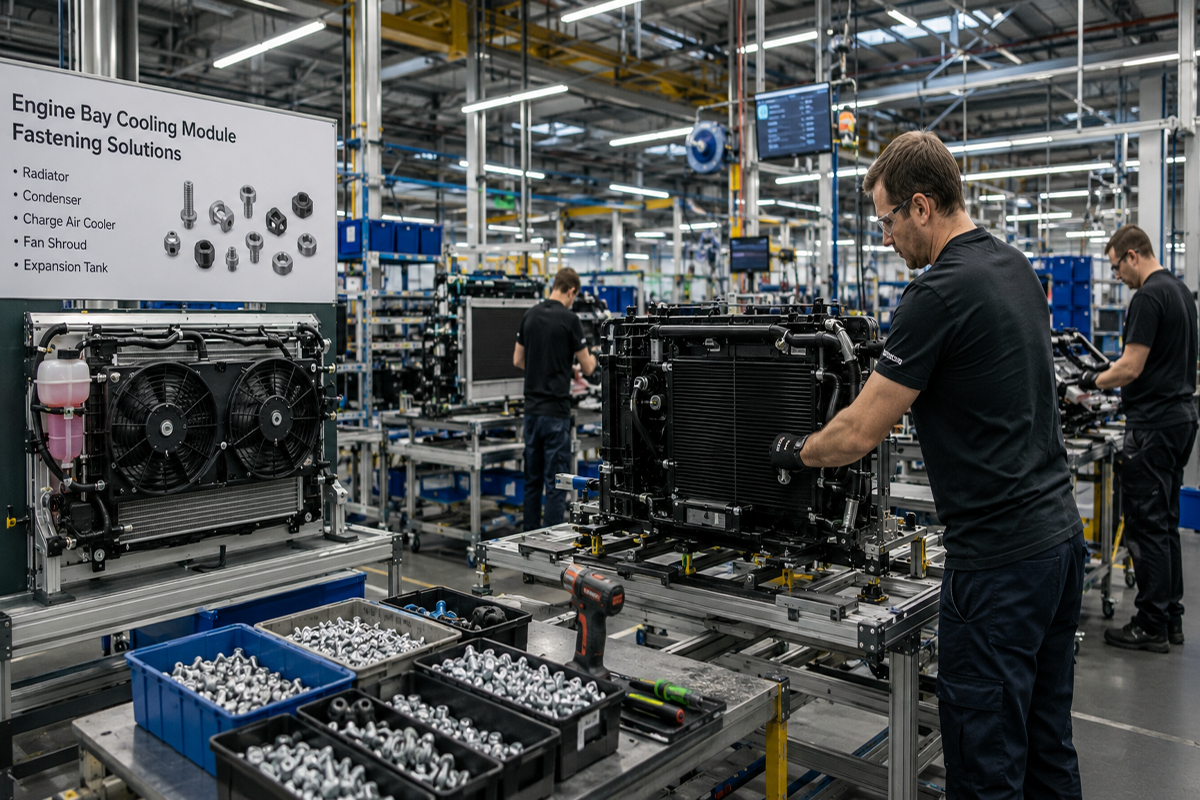
An automotive seat is exposed to a combination of static and dynamic loading.
Depending on the seat architecture, fastening joints can experience:
Tensile loading
Shear loading
Bending
Cyclic loading
Vibration
Impact loading
Repeated adjustment cycles
Temperature changes
Corrosion exposure
Assembly torque variation
The fastening method must therefore match the mechanical function of the joint.
A structural seat-to-floor attachment has different requirements from a cable bracket.
A recliner mechanism has different requirements from an interior trim panel.
A headrest mechanism has different requirements from a seat-cover attachment.
This is why automotive seat fastener selection should begin with:
Joint Function → Load → Environment → Assembly Method → Fastener Specification
rather than simply selecting a bolt based on nominal diameter.
Automotive seating systems must integrate structural requirements with highly automated manufacturing processes.
Key engineering challenges include:
High dynamic loads
Crash-related loading
Cyclic fatigue
Seat adjustment mechanisms
Limited packaging space
Automated tightening
Welded seat-frame structures
Tolerance stack-up
Vibration and NVH
Corrosion exposure
High production volumes
Applicable vehicle and seating requirements can include regulations and standards such as FMVSS 207, FMVSS 210, and UNECE R17,
depending on the vehicle market and the specific seat function being evaluated.
These regulations establish requirements for vehicle seating systems and seat-belt-related anchorage performance.
They should not be interpreted as a blanket material or fastener specification.
The fastener, joint, seat structure, and complete assembly must be validated according to the applicable requirements.
Seat frames can experience significant dynamic forces during sudden vehicle deceleration and other severe loading events.
Fasteners may be used in:
Seat-to-floor attachments
Seat rail assemblies
Recliner mechanisms
Bracket connections
Cross-member joints
Headrest mechanisms
Adjustment mechanisms
For these applications, engineers should evaluate:
Tensile strength
Yield strength
Shear performance
Thread engagement
Joint preload
Fatigue behavior
Friction
Installation torque
Material compatibility
Failure mode
For metric structural applications, high-strength steel fasteners can be specified using property classes such as 10.9 or 12.9, where appropriate to the applicable product standard and engineering design.
ISO 898-1 provides mechanical and physical property requirements for carbon steel and alloy steel bolts, screws, and studs.
However, a higher property class is not automatically a better solution.
For a safety-relevant seat joint, the engineer must consider the complete load path.
For example, increasing fastener tensile strength does not eliminate the possibility of:
Parent-metal failure
Thread stripping
Hole deformation
Bracket yielding
Joint separation
Fatigue failure
The fastener must therefore be designed together with the surrounding seat structure.
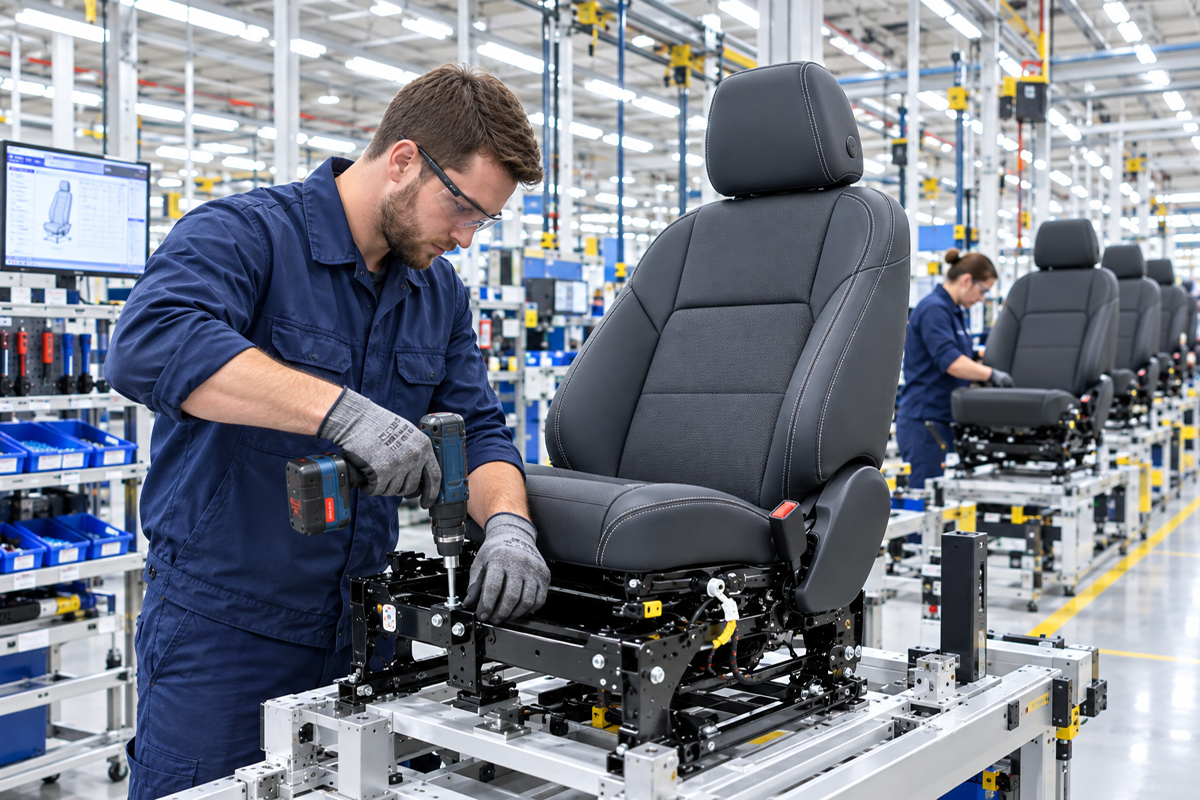
Automotive seat structures commonly use stamped steel components.
Where a permanent fastening point is required, weld nuts and weld studs can integrate directly into the metal structure.
Potential applications include:
Seat frame channels
Seat brackets
Mounting points
Adjustment mechanisms
Wire harness brackets
Accessory mounting points
Internal support structures
A projection weld nut can be resistance-welded to an appropriate metal component to create a permanent threaded mounting point.
Potential benefits include:
No loose nut during final assembly
Reduced rear-side access requirements
Repeatable threaded location
Compatibility with automated assembly
Simplified installation of mating screws
The actual weld design depends on:
Parent material
Material thickness
Nut geometry
Projection design
Welding equipment
Welding current
Weld time
Electrode configuration
Required weld strength
Therefore, weld performance must be validated using the actual production materials and process.
Weld studs can provide permanent threaded or mounting points on seat-frame structures and brackets.
They can also be used for mounting secondary components such as:
Cable brackets
Shields
Covers
Electrical components
Support brackets
For production automotive applications, weld integrity and positional accuracy are important because downstream assembly depends on the location and orientation of the welded component.
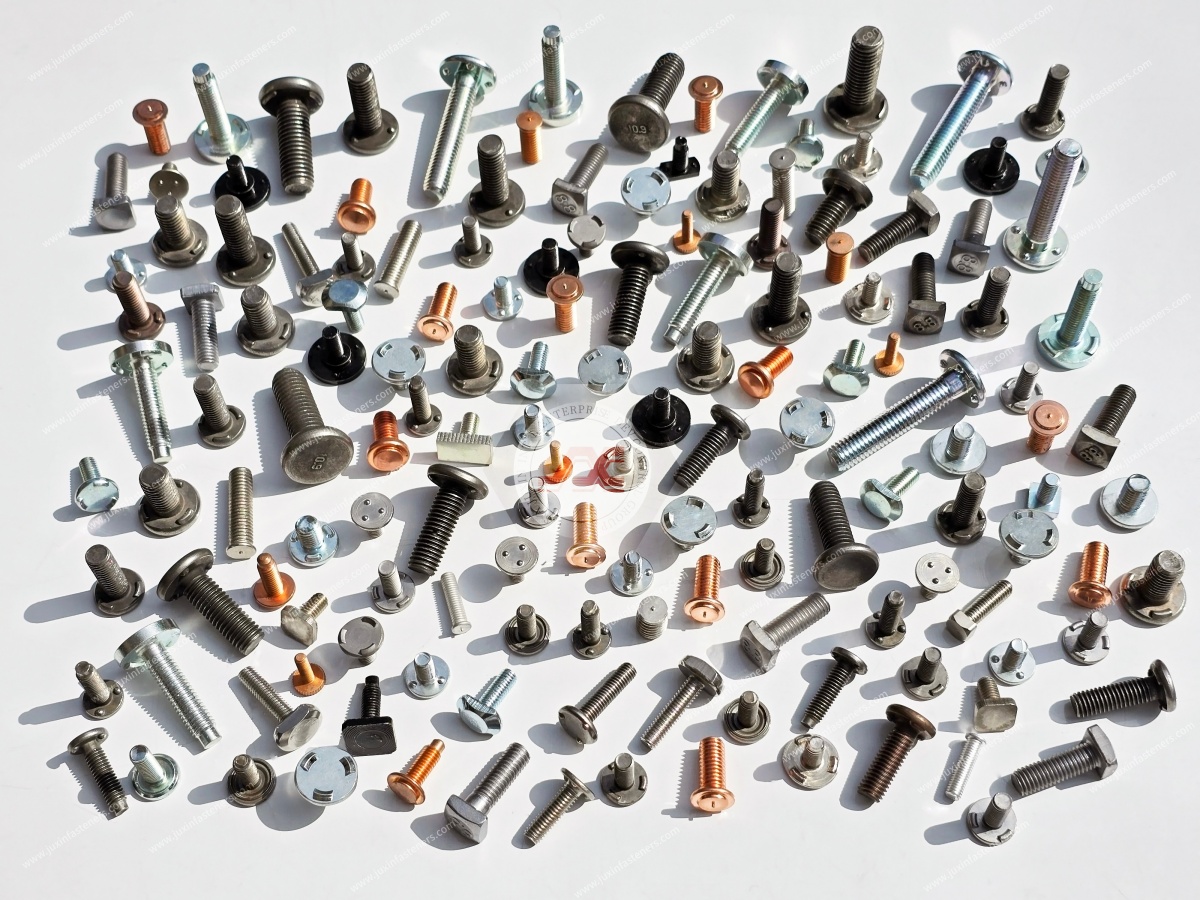
Not every seat component can be solved with a standard catalog fastener.
Automotive seating systems may require custom precision components such as:
Pins
Shafts
Spindles
Bushings
Adjustment components
Retaining components
Special screws
Custom brackets
Mechanical interfaces
CNC machining can provide a practical manufacturing route for complex components where geometry, dimensional control, or customization is important.
Potential materials include, depending on the application:
Carbon and alloy steels
Stainless steels
Aluminum alloys
Engineering plastics
The material should be selected from the actual mechanical and environmental requirements.
A useful CNC component drawing should define:
Material
Critical dimensions
General tolerances
Critical tolerances
Thread specifications
Surface finish
Heat treatment where applicable
Surface treatment where applicable
Inspection requirements
Quantity
The more clearly the functional requirements are defined, the easier it is for the supplier to evaluate manufacturability.
| Product Category | Primary Application | Typical Material Options | Key Engineering Function |
|---|---|---|---|
| High-Strength Screws & Bolts | Seat frames, rails, brackets, structural joints | Alloy steel and other specified steels | Structural clamping |
| Weld Nuts | Seat-frame stampings and brackets | Weldable steel / stainless steel where applicable | Permanent threaded attachment |
| Weld Studs | Seat structures, brackets and secondary mounting | Weldable steel / stainless steel where applicable | Permanent mounting point |
| Self-Clinching Fasteners | Sheet-metal seat components | Steel, stainless steel and other specified materials | Permanent threaded attachment |
| Rivet Nuts | Panels and brackets with limited rear access | Steel, stainless steel, aluminum | One-sided threaded installation |
| Precision CNC Pins | Pivot and locating mechanisms | Alloy steel, stainless steel and other specified materials | Location and mechanical retention |
| CNC-Machined Shafts & Spindles | Adjustment mechanisms | Steel, stainless steel, aluminum | Precision mechanical motion |
| Retaining Rings | Shafts and pivot assemblies | Spring steel / stainless steel where applicable | Axial retention |
| Washers & Spring Components | Joint support and retention | Spring steel, stainless steel and other specified materials | Load distribution / elastic retention |
| Custom Fasteners | OEM-specific seating assemblies | Application-specific | Integrated fastening function |
The final material, dimensions, coating, and mechanical requirements should always follow the approved engineering drawing and customer specification.
One important issue in seat assemblies is joint relaxation.
A bolted joint does not exist in isolation.
If the joint contains:
Foam
Polymer components
Coatings
Thin sheet metal
Compressible trim
Washers
Flexible brackets
the initial joint condition can change after assembly.
Soft materials may settle.
Polymer components can exhibit creep or stress relaxation.
Coatings can influence friction and embedment.
Sheet-metal surfaces can experience local deformation.
These effects can reduce the effective clamp load even when the fastener itself has not yielded.
A common mistake is to assume:
Specified tightening torque = permanent clamp load
In reality, the resulting preload depends on the complete torque-tension relationship.
A simplified relationship is often expressed as:
T = K × F × d
where:
T = tightening torque
K = torque coefficient representing friction-related effects
F = target preload
d = nominal fastener diameter
This illustrates why torque alone cannot fully define joint performance.
If friction changes, the same tightening torque can generate a different preload.
For joints where long-term preload stability is important, engineers may evaluate:
Joint stiffness
Fastener stiffness
Washer configuration
Surface condition
Friction
Embedment
Material relaxation
Tightening strategy
Spring elements such as suitable disc springs or other elastic components may be considered for selected applications, but they should only be used when they provide a measurable benefit to the actual joint design.
Modern automotive production lines increasingly rely on automated or semi-automated tightening equipment.
The relationship between torque and preload is affected by friction at:
Thread interfaces
Bearing surfaces
Coatings
Washers
Mating surfaces
If friction changes from one production batch to another, the resulting preload can change even when the tightening torque remains constant.
This can create two opposite problems:
Excessive preload
Potential consequences include:
Fastener yielding
Thread damage
Bracket deformation
Component distortion
Insufficient preload
Potential consequences include:
Joint movement
Loosening risk
Fretting
Noise
Reduced joint stiffness
Surface coatings and lubricants can be selected to achieve more predictable friction behavior.
For example, ISO 10683 covers non-electrolytically applied zinc flake coatings for fasteners and includes requirements relevant to coating systems and friction behavior.
However, a coating should not be specified simply because it is marketed as “low friction.”
The actual torque-tension behavior must be established for the selected fastener, coating, lubricant, mating material, and tightening process.
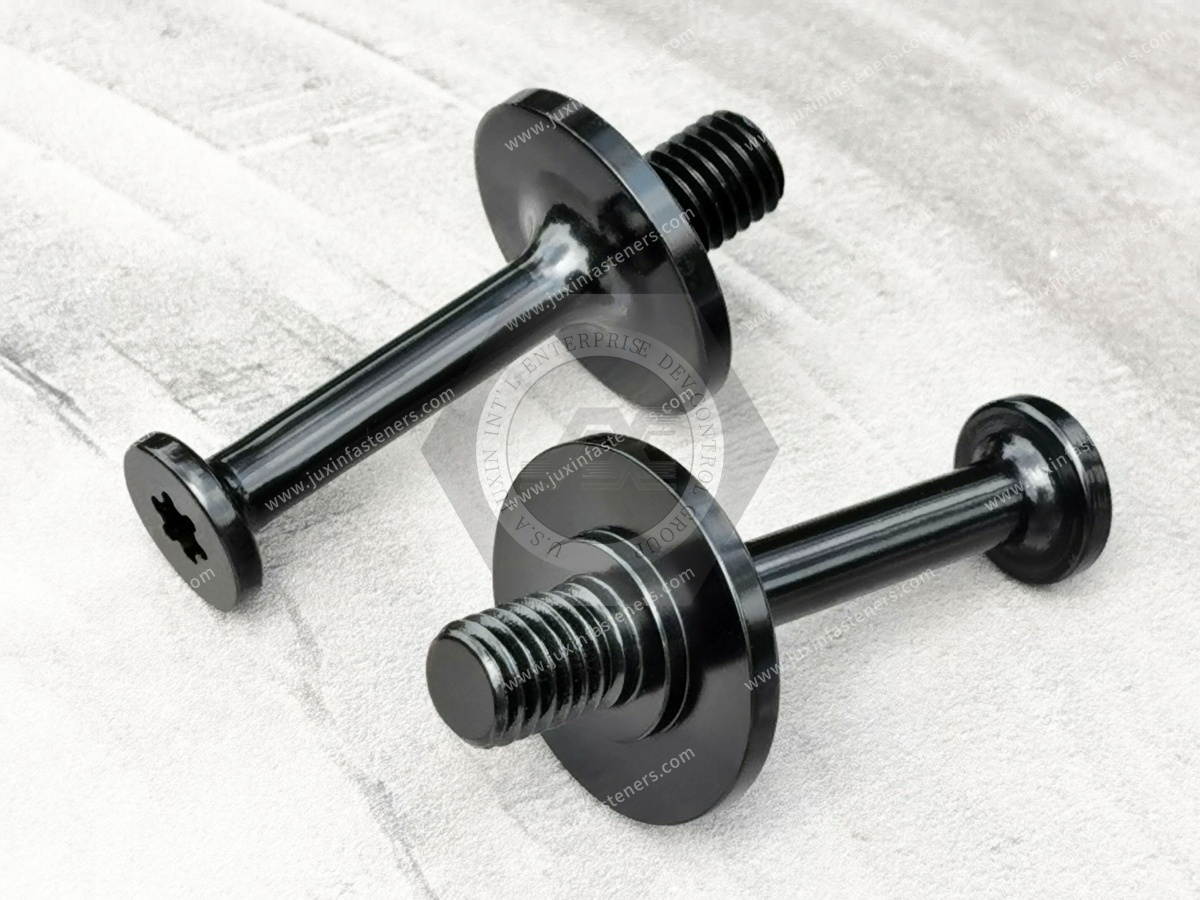
In automated assembly, engineers often focus on tightening torque.
But the deeper engineering issue is preload variation.
Suppose two identical fasteners are tightened to the same nominal torque.
If one has a significantly different friction coefficient, the resulting clamp load can differ.
This means that a production line can show apparently stable torque data while actual joint preload varies.
Therefore, for critical joints, a better validation approach may include:
Torque → Preload → Joint Response
rather than relying on torque measurement alone.
This is especially relevant when fasteners receive:
Different coatings
Different lubricants
Different surface finishes
Different washer combinations
For OEM programs, friction and tightening requirements should be established as part of the validated assembly process.
For seat frames, the location of a welded fastener can be just as important as the fastener's mechanical strength.
A weld nut that is mechanically strong but positioned incorrectly can create downstream assembly problems.
Potential issues include:
Screw misalignment
Difficult automated rundown
Thread engagement problems
Bracket interference
Assembly variation
Increased rework
Therefore, the engineering specification should consider:
Weld nut position
Orientation
Perpendicularity where applicable
Hole alignment
Weld distortion
Parent-sheet thickness
Access for welding equipment
For high-volume production, controlling the relationship between the welded fastener and the surrounding seat-frame geometry is an important part of manufacturability.
Threaded seat joints should be evaluated according to the actual load path.
Possible failure modes include:
Bolt tensile failure
Bolt shear failure
Thread stripping
Nut stripping
Parent-metal pull-out
Hole elongation
Bracket deformation
Joint separation
Increasing thread engagement may improve thread load distribution, but it does not automatically solve every failure mode.
The required engagement depends on:
Fastener material
Nut or tapped-hole material
Thread diameter
Thread pitch
Strength of the parent material
Load direction
Preload
Temperature
Manufacturing tolerances
For safety-relevant applications, engineers should validate the complete joint rather than relying on a generic thread-engagement rule.
Seat adjustment mechanisms contain moving and rotating components.
Potential components include:
Guide pins
Pivot pins
Shafts
Spindles
Bushings
Retaining rings
Washers
Custom screws
Locking components
These parts must be considered as a mechanical system.
For example, a precision pin may provide location and pivot support, while a retaining ring provides axial retention.
This division of functions can be preferable to forcing a threaded fastener to perform both locating and retention functions.
CNC-machined pins can be produced according to specified:
Diameter
Length
Chamfers
Grooves
Retention features
Surface finish
Material
Heat treatment requirements
For applications involving repeated movement, surface finish and dimensional consistency can be particularly important.
Retaining rings can provide axial retention for shafts, pins, and rotating components.
Depending on the geometry, engineers may reference standards such as:
DIN 471 for retaining rings for shafts
DIN 472 for retaining rings for bores
The retaining ring groove, shaft or bore dimensions, axial loads, and assembly method must be designed together.
A retaining ring should not be treated as an independent component.
Its performance depends on the geometry of the entire retaining system.
Spring washers and wave washers can provide elastic force in selected mechanical assemblies.
Potential functions include:
Axial preload
Compensation for dimensional variation
Reduction of clearance
Rattle control
Maintaining contact between components
For automotive seating mechanisms, the spring element must be selected according to:
Required spring force
Deflection
Available space
Cycle count
Temperature
Material
Fatigue requirements
A spring washer should not be added simply to “prevent loosening.”
The actual reason for joint movement should first be identified.
Seat systems are closely associated with vehicle noise, vibration, and harshness (NVH) performance.
Loose or poorly controlled joints can contribute to:
Rattles
Squeaks
Buzzing
Mechanical play
Unwanted movement
Potential causes include:
Insufficient preload
Tolerance stack-up
Component deformation
Friction variation
Insufficient retention
Material relaxation
Improper interface design
Increasing fastener torque is not necessarily the correct solution.
Excessive torque can create other problems, including thread damage or component deformation.
A better engineering approach is to identify the source of relative movement and then determine whether the solution is:
Fastener selection
Joint preload
Tolerance improvement
Washer design
Surface treatment
Bracket stiffness
Locating feature
Retention feature
Electric vehicles are changing the architecture of many vehicle systems.
Seat systems may incorporate additional:
Motors
Sensors
Wiring
Electronic modules
Heating systems
Ventilation systems
Memory functions
Communication interfaces
This increases the number of secondary mounting and cable-management requirements within the seat assembly.
Fastening components may therefore be required for:
Wire harness brackets
Cable clamps
Sensor mounts
Electronic modules
Motor brackets
Protective covers
Structural components
Plastic and nylon hardware may also be considered for selected non-structural applications where electrical isolation, low weight, or corrosion resistance is beneficial.
The material must still be evaluated against the actual temperature, chemical, mechanical, and electrical requirements.
| Seat Function | Potential Fastening Solution | Main Design Considerations |
|---|---|---|
| Seat-to-floor attachment | High-strength bolt / screw | Preload, load path, structural validation |
| Seat rail assembly | Structural fastener / custom hardware | Shear, tensile load, alignment |
| Recliner mechanism | Precision fastener / pin / retaining component | Cyclic loading, movement, retention |
| Seat-frame mounting | Weld nut / weld stud | Weld strength, position, parent material |
| Bracket attachment | Weld nut / self-clinching fastener / screw | Accessibility, load, assembly |
| Cable management | Plastic clip / cable clamp | Retention, abrasion, electrical isolation |
| Pivot location | CNC precision pin | Diameter, tolerance, surface condition |
| Shaft retention | Retaining ring | Groove geometry, axial load |
| Clearance compensation | Wave washer / spring element | Force, deflection, fatigue |
| Custom mechanism | CNC-machined component | Geometry, tolerance, material |
The final component should be selected according to the approved engineering design.
A clear RFQ is particularly important for safety-related automotive components.
Procurement teams should provide as much of the following information as possible:
Part number
Drawing number
Drawing revision
2D drawing
3D CAD file
Material grade
Mechanical property requirements
Heat treatment where applicable
Thread diameter
Pitch
Thread class
Thread length
Thread location
Coating
Plating
Passivation where applicable
Lubrication
Friction requirement
Tensile requirement
Shear requirement
Torque requirement
Preload requirement
Retention requirement
Weld requirement where applicable
Prototype quantity
PPAP or customer-specific submission requirements where applicable
Annual quantity
Packaging
Delivery location
Production schedule
This information helps suppliers evaluate the actual manufacturing and quality requirements before quoting.
The same automotive seat fastener can be evaluated differently by engineering and procurement teams.
The primary questions are:
What load does the joint carry?
Is the fastener part of the primary load path?
What failure mode must be prevented?
How much preload is required?
Is the thread engagement sufficient?
What friction conditions are expected?
Is the fastener compatible with the parent material?
Does the fastening method support automated assembly?
What validation testing is required?
The questions are often:
Can the supplier consistently manufacture the part?
Can the material and coating be controlled?
Can critical dimensions be inspected?
Can production quantities be supported?
Can required documentation be provided?
Is packaging suitable for automated assembly?
Can drawing revisions be controlled?
Can supply remain stable throughout the vehicle program?
The strongest supplier relationship connects both sides.
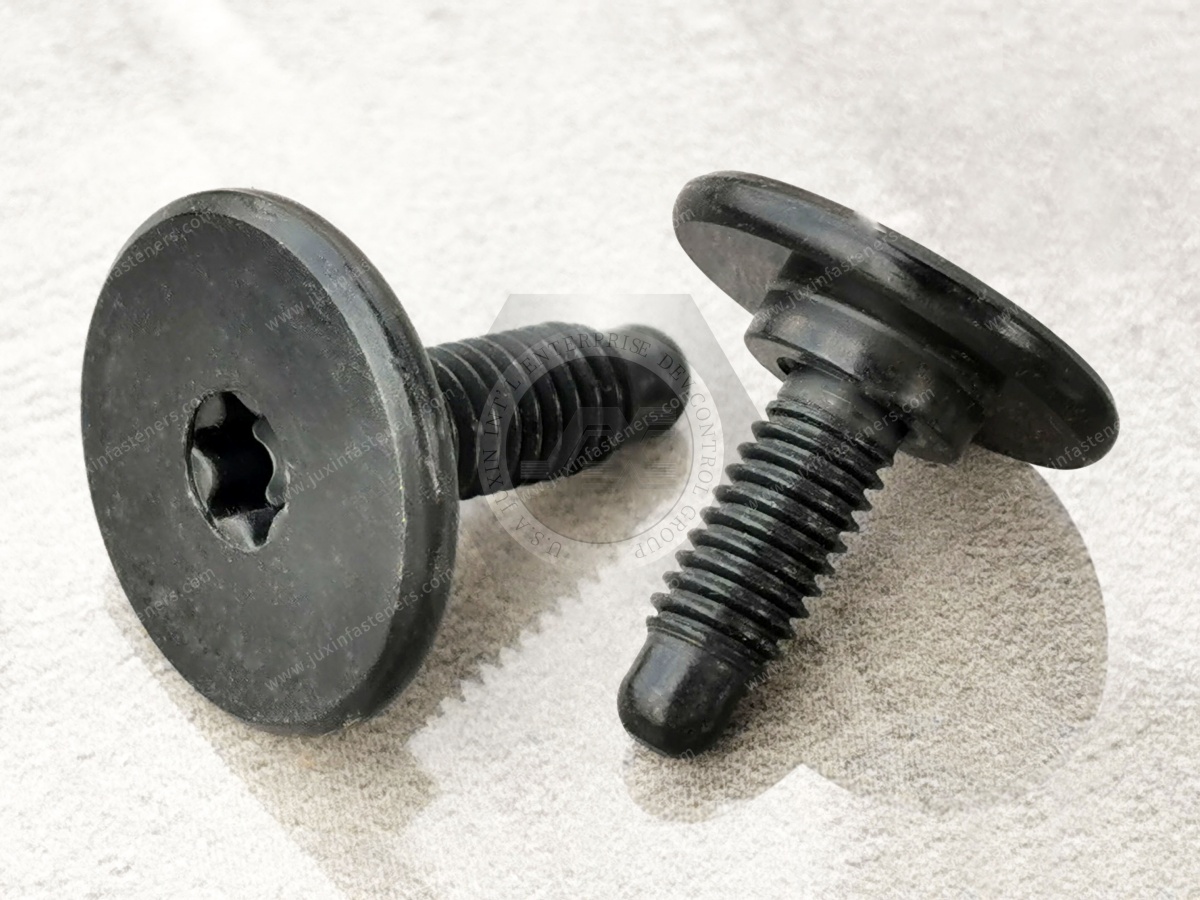
Seat fasteners may be used in high-volume automotive production, making supplier consistency critical.
A supplier evaluation can include:
Can the supplier produce the required fastener geometry and tolerances?
Can the specified material be identified and controlled by production lot?
Can critical dimensions and threads be inspected using appropriate equipment?
Can coating or plating requirements be maintained consistently?
Where weld nuts or studs are required, can the supplier control the relevant weldable geometry and provide agreed test documentation?
Can production lots and inspection records be linked to the relevant purchase order or part number?
Can the supplier communicate and control material, tooling, process, or specification changes?
These questions help procurement teams reduce supply-chain risk before production begins.
Documentation requirements should be defined by the OEM or Tier 1 customer.
Depending on the project, documentation may include:
Certificate of Conformance
Material certificates
Dimensional inspection reports
Mechanical test reports
Surface-treatment documentation
Weld test results
Lot traceability
Customer-specific quality records
EN 10204 provides internationally recognized definitions for inspection documents such as 3.1 certificates.
However, a certificate should only be supplied when the material and production process support the required documentation.
The supplier should not promise documentation that has not been defined or validated for the project.
Depending on the component, relevant international standards may include:
ISO 898-1 for mechanical properties of carbon steel and alloy steel fasteners
ISO 4014 / ISO 4017 for applicable hexagon head bolts and screws
DIN standards for relevant fastener dimensions and mechanical components
ASME B18 standards for applicable inch-series fasteners
EN standards for applicable European fastener requirements
SAE standards for relevant automotive and mechanical components
ASTM standards for applicable materials and test methods
ISO 10683 for non-electrolytically applied zinc flake coatings on fasteners
The correct standard depends on the component.
A standard reference should therefore always be matched to the actual fastener type and customer specification.
Fastener sourcing should not focus only on unit price.
Total assembly cost can also include:
Installation time
Tool changes
Manual handling
Welding operations
Inventory
Inspection
Rework
Service
Packaging
Line stoppage risk
A weld nut may cost more than a loose nut on a piece-price basis but can eliminate a separate nut-handling operation.
A self-clinching fastener may reduce the need for rear-side access.
A custom CNC component may consolidate several individual parts.
A standardized thread may reduce tool and inventory complexity.
Therefore, the best cost-reduction opportunity is often found in the fastening architecture, not simply in reducing the quoted unit price.
Automotive seat manufacturers frequently develop components around specific seat architectures.
This can create requirements for:
Custom bolts
Special screws
Weld nuts
Weld studs
Precision pins
Custom shafts
Retaining components
CNC-machined parts
Application-specific washers
Special locking hardware
A custom component can integrate several mechanical functions into one part.
For example, a CNC-machined pin may combine:
Locating diameter
Retaining groove
Chamfer
Shoulder
Axial stop
This can simplify an assembly compared with multiple standard components.
The decision should be based on the complete cost and performance of the assembly.
A structured development process can reduce engineering and sourcing risk.
Determine whether the fastener is responsible for:
Clamping
Locating
Retaining
Pivoting
Structural attachment
Secondary mounting
Identify:
Tensile
Shear
Bending
Cyclic
Impact
Vibration
Evaluate:
Temperature
Humidity
Road exposure
Corrosion
Cleaning
Vehicle interior conditions
Identify:
Manual installation
Automated tightening
Resistance welding
Press installation
One-sided installation
Compare:
Bolts and screws
Weld nuts
Weld studs
Self-clinching fasteners
Rivet nuts
Pins
Retaining rings
Custom CNC components
Evaluate the complete assembly rather than the fastener alone.
Define:
Material
Dimensions
Tolerances
Surface treatment
Inspection
Packaging
Documentation
Manufacture according to the approved drawing and customer requirements.
This process creates a direct connection between engineering design and procurement execution.
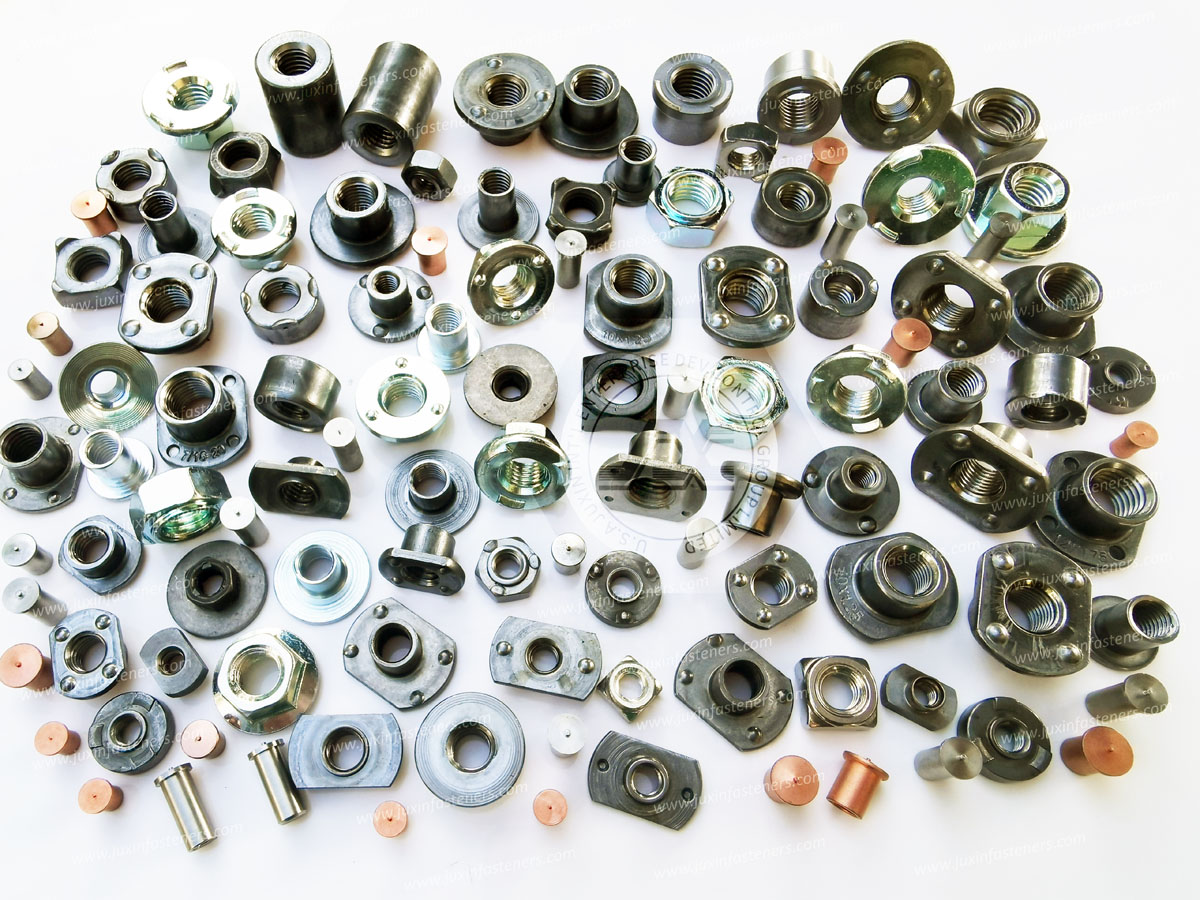
JUXIN FASTENERS provides industrial fastening and precision component solutions for OEM applications.
Relevant product categories include:
High-Strength Screws & Bolts
Weld Nuts
Weld Studs
Self-Clinching Fasteners
Rivet Nuts
Locking Fasteners
Stainless Steel Fasteners
Custom Screws and Bolts
Precision Pins
Retaining Rings
Washers
CNC-Machined Fasteners and Components
Plastic & Nylon Hardware for Secondary Applications
These products can support:
Automotive seat frames
Seat rails
Recliner mechanisms
Adjustment systems
Seat brackets
Headrest mechanisms
Cable-management systems
Electronic seat components
EV seating systems
Other automotive structural and mechanical assemblies
Final material, strength class, coating, dimensional tolerance, testing, and documentation requirements should be established from the customer's approved engineering specification.
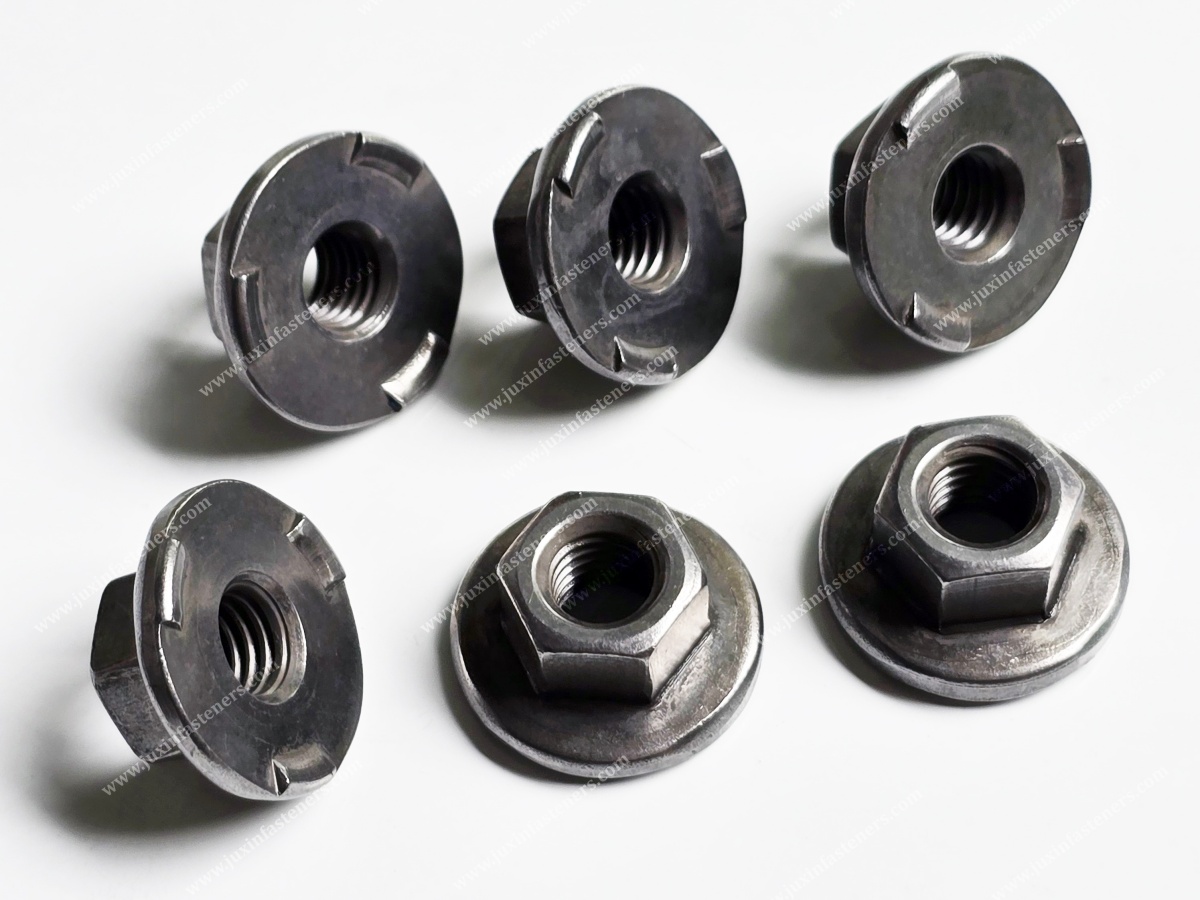
For the fastest and most accurate technical review, provide:
2D engineering drawing
3D CAD model where available
Part number
Drawing revision
Material requirement
Thread specification
Surface treatment
Critical tolerances
Application
Load requirements where available
Assembly method
Annual quantity
Prototype quantity
Inspection requirements
Documentation requirements
Packaging requirements
For weld nuts or weld studs, also provide information about:
Parent material
Sheet thickness
Weld location
Welding process
Functional load
Positional requirements
For CNC-machined components, provide the complete drawing and identify critical dimensions and functional surfaces.
If your seating program requires automotive seat fasteners, seat frame fasteners, weld nuts, weld studs, high-strength screws, seat rail hardware,
precision pins, retaining components, or custom CNC-machined parts, JUXIN FASTENERS can review your engineering drawings and sourcing requirements.
For OEM and Tier 1/Tier 2 sourcing projects, send:
2D drawing
3D CAD file where available
Material specification
Surface-treatment requirements
Application information
Quantity
Quality documentation requirements
Packaging requirements
Our engineering and sourcing team can review the supplied specification and evaluate the manufacturing requirements for quotation.
Email: info@juxinfasteners.com
JUXIN FASTENERS
Automotive Fasteners & Precision CNC Components for OEM Applications
Website: juxinfasteners.com
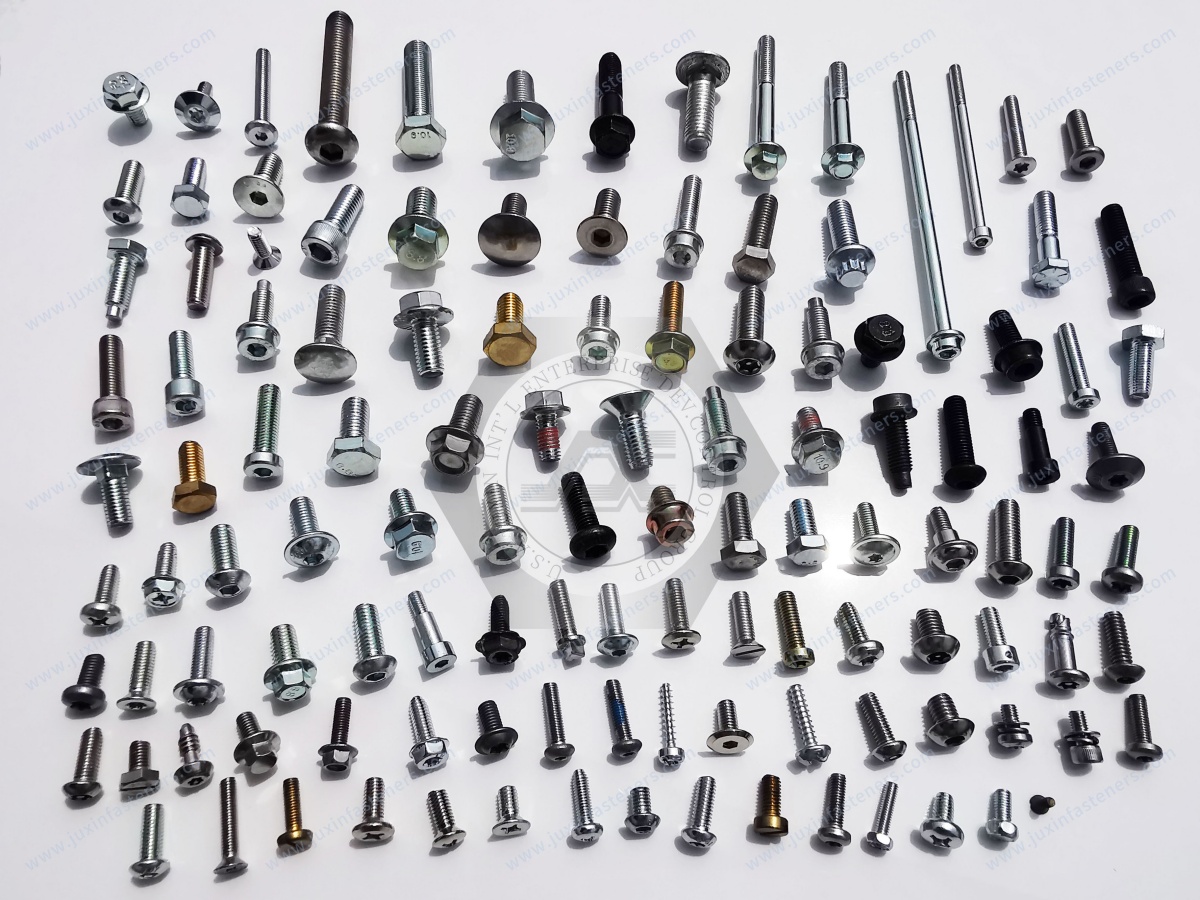
 MORE NEWS
Sep. 25, 2026
Sep. 25, 2026
Sep. 25, 2026
Contact Us
Tel.:
+86 020 8621 0320
+86 020 3121 6067
E-mail:
Technical Support:
Navigation
SEND INQUIREY