
Call Us
+86 136 6007 9809
Call Us
+86 136 6007 9809

Jul. 18, 2024
Automotive Threaded Connectors: Joint Design, Vibration Resistance and OEM Assembly Solutions
Threaded connections are fundamental to automotive manufacturing because they allow components to be assembled, clamped, inspected and, where the design permits, removed for maintenance.
Automotive threaded connectors include bolts, screws, nuts, weld nuts, locking fasteners, threaded inserts and custom threaded components.
They are used across vehicle body assemblies, powertrain equipment, chassis-related systems, electronic modules and electric vehicle components.
However, reliable fastening depends on more than choosing a strong bolt.
The performance of a threaded joint is influenced by fastener material, thread geometry, joint stiffness, clamp load, tightening conditions, mating materials, corrosion exposure and service loading.
A fastener that meets its dimensional specification may still perform poorly if the joint design or installation process is unsuitable.
Juxin Fasteners supplies automotive bolts, screws, nuts, locking fasteners and custom OEM threaded components for industrial and automotive-related applications,
subject to product-specific technical confirmation.
This guide focuses on automotive threaded joint engineering, production assembly and supplier qualification,
helping design engineers, manufacturing teams and procurement professionals select appropriate fastening solutions.
What Are Automotive Threaded Connectors?
Automotive threaded connectors are fastening components that use compatible external and internal threads to create a mechanical connection.
Common products include:
Hex head bolts
Hex flange bolts
Machine screws
Thread-forming screws
Hex nuts
Nylon-insert lock nuts
All-metal prevailing-torque nuts
Weld nuts
Threaded inserts
Custom OEM threaded components
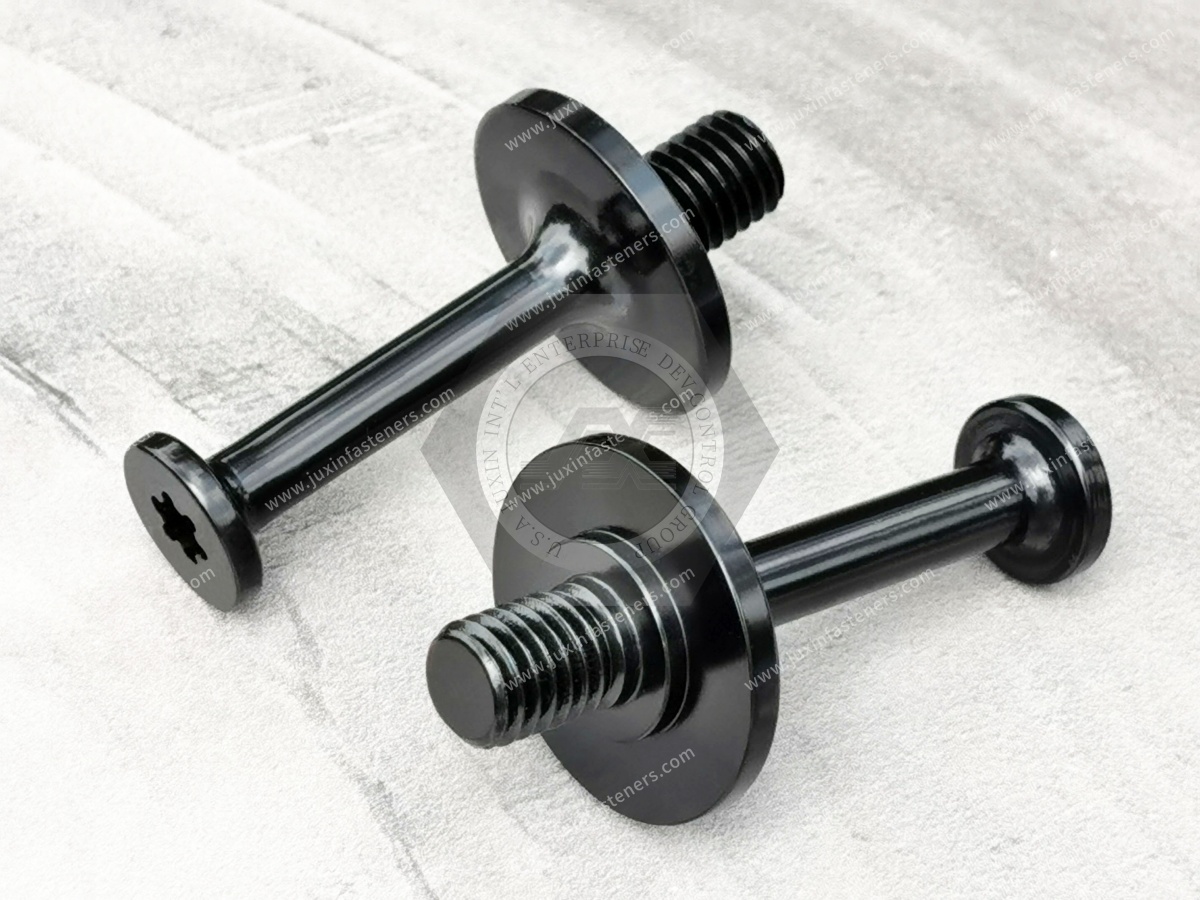
Threaded connections can be designed for removable assembly, controlled clamping and service access.
Important Engineering Principle
Thread engagement alone does not guarantee reliable joint performance.
The connection must be designed to withstand the intended loading and environmental conditions.
How Automotive Threaded Joints Work
Most preloaded automotive bolted joints rely on a clamping force generated during tightening.
As the fastener is tightened, it elongates elastically while the clamped components compress.
This creates a preload that holds the joint together.
Key Joint Parameters
Fastener tensile properties
Effective grip length
Joint stiffness
Mating component stiffness
Thread engagement
Bearing surface condition
Tightening method
External loading
Why Preload Matters
Sufficient preload can help maintain joint contact and reduce relative movement under service loads.
However, excessive preload may damage the fastener or clamped components.
Important Limitation
The correct preload depends on the complete joint design.
There is no universal tightening torque suitable for every bolt of the same nominal diameter.
Torque and Clamp Load Are Not the Same
A common misunderstanding is that applying a specified tightening torque always produces a predictable clamping force.
In reality, a significant portion of applied torque is consumed by friction at the threads and bearing surfaces.
Factors Affecting the Torque–Tension Relationship
Thread friction
Under-head friction
Surface coating
Lubrication
Thread condition
Fastener geometry
Mating material
Installation speed
Information Gain: Why a Coating Change Can Affect Joint Reliability
Two bolts with identical dimensions and mechanical-property classes may generate different clamp loads when tightened to the same torque if their friction characteristics differ.
A coating change can therefore alter assembly behavior even when the drawing dimensions remain unchanged.
Engineering Recommendation
For preload-sensitive joints, validate the tightening strategy using the actual fastener, coating, mating components and assembly process.
Joint Relaxation and Loss of Clamp Load
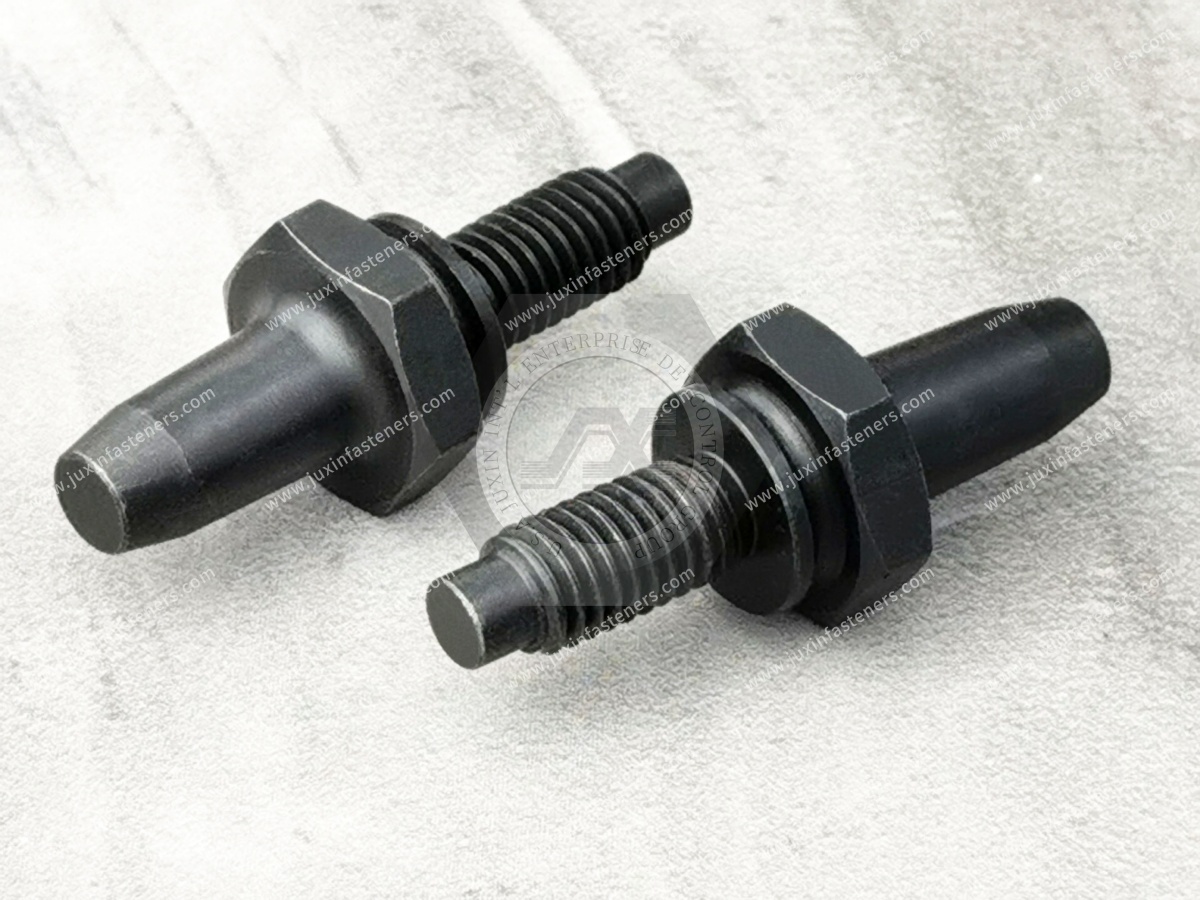
Preload may decrease after installation because of settling or deformation in the clamped joint.
Potential Causes
Surface embedding
Soft gasket compression
Plastic creep
Coating deformation
Thermal cycling
Localized material yielding
Engineering Implications
Loss of clamp load may allow increased joint movement or separation.
Engineering Recommendation
Consider relaxation during joint design, particularly where plastic, coatings, soft materials or compressible layers are present.
Automotive Threaded Fasteners by Product Type
Different threaded connector designs address different assembly and performance requirements.
High-Strength Hex Head Bolts
Hex head bolts are used in many industrial and automotive-related assemblies.
Potential Applications
Mechanical brackets
Equipment mounting
Selected powertrain-related components
Industrial machinery
Engineering Considerations
Mechanical-property class
Thread designation
Head dimensions
Joint loading
Tightening strategy
Corrosion protection
Common Metric Property Classes
ISO metric steel bolts may be specified in property classes such as 8.8 or 10.9, depending on the application.
Relevant Standard
ISO 898-1 addresses mechanical properties of specified carbon steel and alloy steel bolts, screws and studs within its scope.
Important Limitation
Property class alone does not establish suitability for a safety-critical automotive joint.
Hex Flange Bolts for Automotive Assemblies
Hex flange bolts combine a hexagonal drive head with an integrated bearing flange.
Potential Advantages
Larger bearing surface
Reduced need for a separate washer in suitable designs
Convenient assembly
Potentially improved load distribution
Typical Applications
Mounting brackets
Mechanical housings
Selected engine-adjacent equipment
Industrial assemblies
Critical Engineering Distinction
A flange bolt is not automatically vibration-resistant.
The flange increases the bearing area, but resistance to self-loosening depends on preload retention, joint movement, friction conditions and any validated locking features.
Information Gain: Larger Bearing Area Does Not Always Mean Better Joint Performance
A larger flange may reduce local bearing pressure, but it can also change under-head friction and tightening behavior.
Engineering Recommendation
Evaluate flange geometry and tightening performance as part of the complete joint.
Automotive Weld Nuts and Welded Threaded Components
Weld nuts provide an internally threaded attachment point on suitable metal structures.
Potential Applications
Vehicle body panels
Brackets
Seat-related structures
Equipment mounting interfaces
Engineering Considerations
Base material
Sheet thickness
Weld geometry
Welding process
Thread alignment
Coating compatibility
Access for installation
Production Considerations
Weld nut positioning and weld consistency can influence downstream assembly performance.
Information Gain: Thread Alignment Is a Production Quality Issue
A weld nut may meet its thread specification but still create assembly problems if its location or angular alignment is incorrect.
Engineering Recommendation
Control the threaded attachment point relative to functional assembly datums.
Automotive Body and Structural Fastening Applications
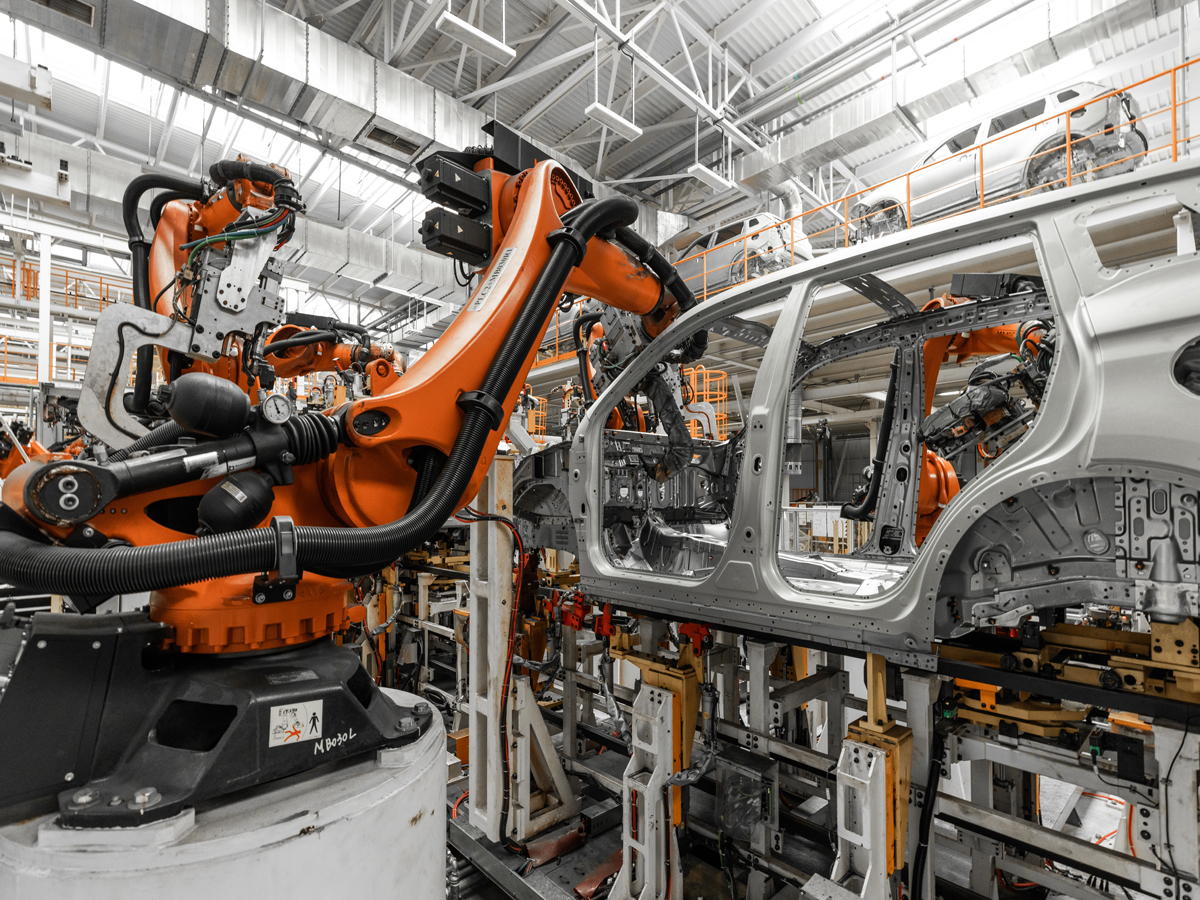
Vehicle body assemblies may use threaded connectors in removable panels, brackets, interior structures and other components.
Potential Products
Flange screws
Weld nuts
Machine screws
Thread-forming screws
Custom mounting bolts
Engineering Considerations
Sheet thickness
Access to both sides of the joint
Corrosion exposure
Assembly sequence
Service requirements
Joint stiffness
Important Limitation
Structural body connections require application-specific design and validation.
General-purpose fasteners must not be substituted into safety-critical body joints without approval.
Automotive Chassis and Suspension Threaded Connections
Chassis and suspension systems experience variable loading, vibration and environmental exposure.
Potential Fastener Categories
High-strength bolts
Hex flange bolts
Prevailing-torque nuts
Specialized threaded components
Engineering Requirements
Defined mechanical properties
Fatigue performance
Joint preload
Corrosion resistance
Installation control
Traceability where required
Critical Safety Limitation
Chassis, steering, suspension, brake and wheel-retention connections may be safety-critical.
Their fasteners must meet the specific vehicle design, validation and customer approval requirements.
A standard 8.8 or 10.9 bolt must not be assumed suitable solely because of its property class.
Engine and Powertrain Threaded Connections
Engine-related assemblies can experience thermal cycling, vibration and complex mechanical loading.
Potential Applications
Auxiliary mounting brackets
Equipment housings
Intake-related hardware
Selected exhaust mounting components
Cooling system mounting hardware
Engineering Considerations
Service temperature
Thermal expansion
Joint stiffness
Mechanical loading
Corrosion
Fastener relaxation
Assembly access
Important Limitation
Cylinder-head bolts and other highly loaded engine fasteners may require specialized designs and tightening procedures.
General-purpose bolts are not substitutes for application-specific engine fasteners.
Automotive Electronics and Control Module Fasteners
Electronic modules often require compact fastening systems.
Potential Applications
Electronic control unit housings
Sensor mounting components
Communication equipment
Battery management equipment housings
Protective covers
Potential Fastener Products
Machine screws
Stainless steel screws
Thread-forming screws
Threaded inserts
Custom miniature fasteners
Engineering Considerations
Thread engagement
Installation torque
Plastic or metal mating material
Environmental exposure
Service access
Electrical compatibility
Important Limitation
A metal fastener does not automatically provide electrical insulation or enclosure sealing.
These requirements must be addressed separately.
Threaded Connectors for Electric Vehicles
EV equipment uses threaded fasteners in many mechanical assemblies.
Potential Applications
Battery enclosure covers
Auxiliary mounting components
Charging equipment housings
Electrical control cabinets
Thermal management equipment
Noncritical structural accessories
Engineering Considerations
Mechanical loading
Corrosion exposure
Thermal cycling
Electrical isolation
Sealing requirements
Installation access
Maintenance
Critical Safety Limitation
High-voltage electrical connections and battery structural joints require application-specific engineering approval.
Fasteners selected for general enclosure hardware must not be assumed suitable for electrical current-carrying or safety-critical connections.
Locking Threaded Connectors for Vibration Resistance
Automotive equipment is exposed to vibration and dynamic loading.
However, vibration does not automatically cause every properly designed bolted joint to loosen.
Self-loosening risk depends on the joint design, clamp load and relative movement between components.
Locking fasteners may be selected where additional resistance to rotation is required.
Nylon-Insert Lock Nuts
Nylon-insert lock nuts create prevailing torque through interaction between the insert and mating thread.
Potential Applications
Selected equipment brackets
Accessory assemblies
Industrial machinery
Engineering Considerations
Operating temperature
Reuse requirements
Prevailing torque
Installation method
Chemical exposure
Important Limitation
Nylon inserts have temperature and environmental limitations.
They are not automatically suitable for high-temperature or safety-critical joints.
All-Metal Prevailing-Torque Nuts
All-metal prevailing-torque nuts generate resistance to rotation through controlled thread deformation or another specified metal locking geometry.
Potential Advantages
No polymer insert
Suitability for certain elevated-temperature applications, depending on design
Defined prevailing-torque behavior when correctly specified
Engineering Considerations
Locking geometry
Thread compatibility
Prevailing-torque requirements
Installation and removal
Reuse limits
Mating bolt condition
Important Limitation
All-metal locking nuts are not universally reusable and may affect thread wear.
Thread-Locking Screws
Thread-locking screws may use a specified locking feature or pre-applied locking material.
Engineering Considerations
Locking mechanism
Installation torque
Thread engagement
Temperature
Reuse
Compatibility with coatings and lubricants
Important Limitation
Thread-locking features should not be treated as substitutes for proper joint preload or validation.
Information Gain: Locking Torque and Clamp Load Must Be Distinguished
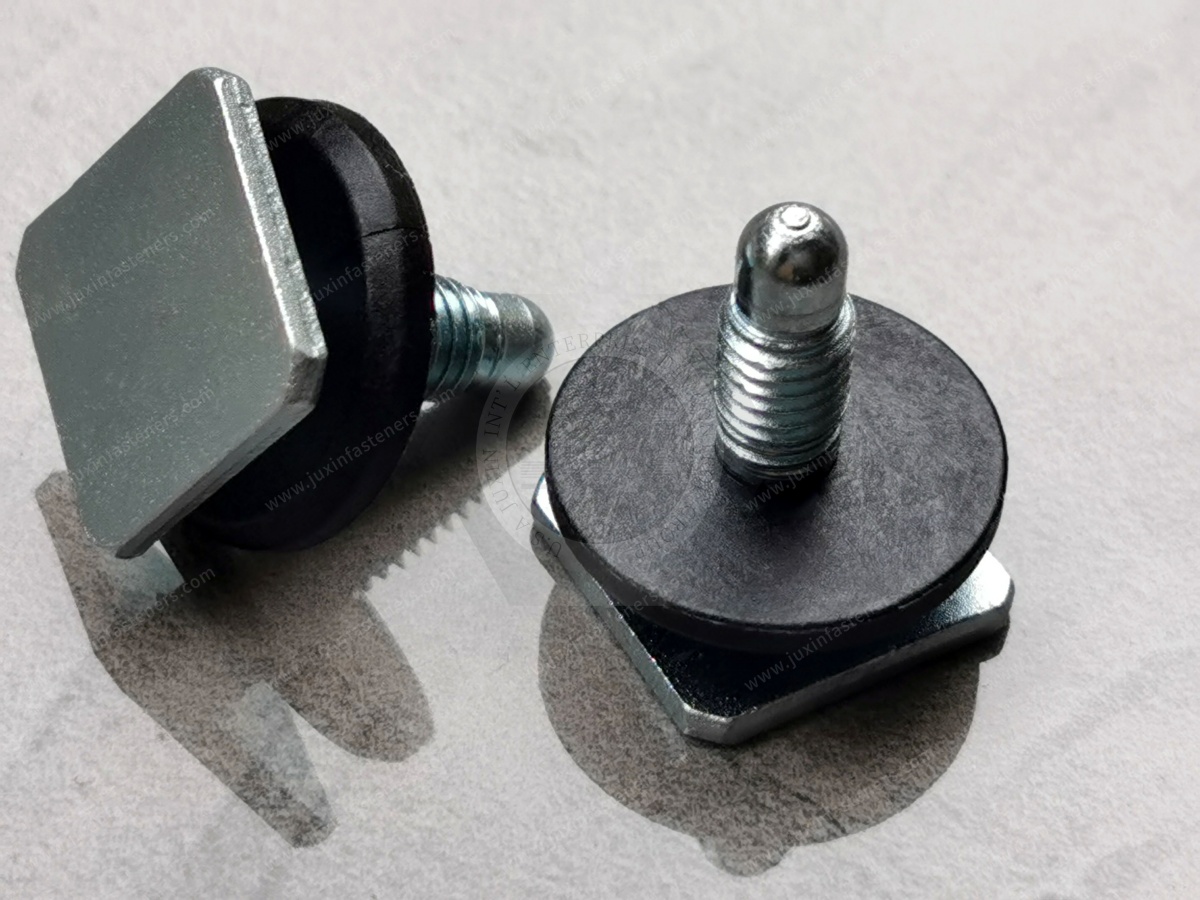
A prevailing-torque fastener can require additional installation torque before the joint is fully clamped.
For torque-controlled assembly, this behavior must be considered when developing the tightening strategy.
Engineering Recommendation
Validate the actual tightening process rather than applying the same torque setting used for a standard free-spinning nut.
Threaded Inserts for Automotive Plastic Components
Plastic components are widely used in automotive interiors, electronics and auxiliary equipment.
Threaded inserts provide a metal internal thread within a suitable plastic component.
Potential Applications
Interior trim assemblies
Electronic housings
Equipment covers
Selected EV enclosure components
Serviceable plastic assemblies
Common Installation Approaches
Depending on the insert and plastic design, installation may involve:
Heat insertion
Ultrasonic insertion
Press-fit installation
Mold-in placement
Engineering Considerations
Plastic material
Boss diameter
Wall thickness
Insert geometry
Installation method
Pull-out resistance
Torque resistance
Thermal cycling
Repeated assembly
Important Limitation
A metal insert does not automatically prevent plastic boss cracking, pull-out or creep.
Information Gain: The Plastic Boss May Control Joint Strength
Even when the metal insert has sufficient thread strength, the surrounding plastic can become the limiting component.
Engineering Recommendation
Validate the insert and plastic geometry together.
Thread-Forming Screws for Automotive Plastics
Thread-forming screws can create mating threads in suitable plastic components during installation.
Potential Applications
Interior trim components
Electronic housings
Plastic equipment covers
Selected accessory assemblies
Engineering Considerations
Screw thread profile
Pilot hole geometry
Plastic material
Boss design
Installation torque
Strip-out torque
Repeated assembly requirements
Threaded Insert vs. Thread-Forming Screw
| Selection factor | Threaded insert | Thread-forming screw |
|---|---|---|
| Internal thread | Metal thread | Formed in plastic |
| Assembly steps | Insert installation plus screw assembly | Direct screw installation |
| Repeated service | May offer advantages when correctly designed | Depends on plastic and thread design |
| Cost factors | Insert and installation process | Screw and plastic boss design |
| Main failure concerns | Insert rotation, pull-out, boss damage | Thread stripping, boss cracking, creep |
Engineering Recommendation
Compare total assembly cost, service requirements and validated joint performance.
Automotive Fastener Material Selection
Different automotive threaded joints require different material properties.
Carbon Steel Fasteners
Carbon steel fasteners may be suitable for many general mechanical applications.
Engineering Considerations
Required mechanical-property class
Corrosion protection
Temperature
Joint loading
Cost
Alloy Steel Fasteners
Alloy steel may be selected for higher-strength threaded components.
Engineering Considerations
Heat-treatment condition
Mechanical properties
Fatigue requirements
Coating compatibility
Hydrogen embrittlement risk
Stainless Steel Fasteners
Stainless steel may be selected where corrosion resistance is important.
Engineering Considerations
Alloy grade
Mechanical-property class
Galling
Galvanic compatibility
Environmental exposure
Cost
Important Limitation
Stainless steel is not automatically stronger than carbon or alloy steel.
Surface Treatment and Coating Selection
Coatings can influence corrosion protection, friction behavior and assembly performance.
Zinc Plating
Zinc plating is used for corrosion protection on suitable steel fasteners.
Engineering Considerations
Coating thickness
Thread fit
Corrosion requirements
Hydrogen embrittlement precautions
Friction characteristics
Zinc-Nickel Coatings
Zinc-nickel systems may be selected for demanding corrosion requirements.
Engineering Considerations
Coating specification
Surface preparation
Corrosion performance
Friction control
Compatibility with the mating joint
Zinc-Flake Coatings
Non-electrolytic zinc-flake coating systems may be specified for selected automotive fasteners.
Engineering Considerations
Coating thickness
Thread fit
Friction characteristics
Corrosion requirements
Process compatibility
Important Limitation
A coating name alone does not establish a universal corrosion-resistance level.
Information Gain: Coating Performance and Tightening Performance Are Linked
A coating may provide suitable corrosion protection but change the torque–tension relationship.
Engineering Recommendation
Specify both corrosion requirements and relevant friction or tightening characteristics where the joint design requires them.
Hydrogen Embrittlement Risk in High-Strength Fasteners
Certain high-strength steel fasteners can be susceptible to hydrogen embrittlement.
Potential sources of hydrogen include some manufacturing and surface-treatment processes.
Engineering Considerations
Material strength
Heat-treatment condition
Surface preparation
Coating process
Relevant process controls
Important Limitation
Post-process baking may reduce risk in certain situations but does not universally eliminate hydrogen embrittlement.
Engineering Recommendation
Review the material and coating specification together, especially for high-strength steel fasteners.
Thread Selection for Automotive Fastening
Thread geometry affects engagement, installation and joint performance.
ISO Metric Threads
ISO metric threads are widely used in automotive and industrial applications.
UNC and UNF Threads
Unified inch threads are used in some equipment and market-specific applications.
BSW and BSF Threads
British Whitworth-based thread systems may appear in legacy or specialized equipment.
Critical Compatibility Rule
Metric, UNC, UNF, BSW and BSF thread systems are not directly interchangeable.
Coarse vs. Fine Threads
Fine threads can offer different engagement and adjustment characteristics, but they do not automatically prevent vibration loosening.
Engineering Recommendation
Select thread geometry according to the approved design, mating material and service requirements.
International Standards for Automotive Threaded Connectors
Relevant standards depend on the product and application.
ISO 898-1
Mechanical properties of specified carbon steel and alloy steel bolts, screws and studs.
ISO 898-2
Mechanical properties of specified carbon steel and alloy steel nuts.
ISO 3506 Series
Mechanical properties of corrosion-resistant stainless steel fasteners within the relevant parts of the series.
ISO 965 Series
Tolerances for ISO general-purpose metric screw threads.
ISO 16047
Torque/clamp force testing for threaded fasteners.
ISO 2320
Mechanical and performance requirements for prevailing-torque steel nuts within its scope.
Important Standards Principle
Not every standard applies to every product.
The approved drawing and purchasing specification must identify the relevant requirements.
Manufacturing Engineering: Automotive Assembly Efficiency
Fastener selection can influence assembly efficiency.
Automated Feeding
Fastener geometry affects feeding and orientation.
Drive Engagement
Head and drive geometry influence tool engagement.
Installation Access
Limited access can increase assembly time and error risk.
Torque Monitoring
Tightening systems may monitor torque, angle or other process parameters according to the assembly strategy.
Traceability
Selected applications may require recording installation or inspection data.
Information Gain: A Fastener That Is Cheaper to Purchase May Be More Expensive to Install
A low-cost fastener may create higher production costs if it causes:
Feeding interruptions
Driver slippage
Cross-threading
Installation rework
Damaged mating threads
Excessive inspection
Production Manager's Perspective
Evaluate the total installed cost of the fastening solution, not only the unit purchase price.
Common Automotive Threaded Joint Failure Modes
Self-Loosening
May occur when joint movement and preload conditions allow rotation.
Joint Relaxation
Can reduce clamp load over time.
Thread Stripping
May result from insufficient engagement or excessive installation load.
Fastener Fracture
May result from excessive loading, incorrect material selection or other failure mechanisms.
Corrosion
Can reduce serviceability and, in severe cases, mechanical integrity.
Galling
Can occur in susceptible threaded material combinations, including some stainless steel joints.
Cross-Threading
Can damage threads and disrupt production.
Engineering Recommendation
Investigate the actual failure mechanism before changing fastener strength, coating or locking design.
Custom Automotive Threaded Connectors and OEM Development
Standard fasteners may not meet every automotive assembly requirement.
Custom solutions may involve:
Special bolt dimensions
Custom head geometry
Nonstandard grip lengths
Specialized thread features
Custom locking designs
Welded threaded components
Threaded inserts
Application-specific surface requirements
Juxin Fasteners welcomes drawing-based inquiries for custom automotive threaded components.
Specific product availability, material grades, surface treatments, tooling, MOQ and production schedules are subject to technical and commercial confirmation.
Quality Control and Supplier Qualification
Automotive fastening components require quality controls appropriate to their application.
Potential Inspection Requirements
Material verification
Dimensional inspection
Thread inspection
Mechanical-property verification
Surface-treatment inspection
Prevailing-torque testing where applicable
Torque/clamp force testing where required
Supplier Qualification Considerations
Drawing revision control
Material traceability
Critical-characteristic identification
Sample approval
Inspection documentation
Change control
Production consistency
Delivery planning
Important Limitation
Automotive-specific documentation and approval processes must be agreed according to the customer and project requirements.
Information Gain: Supplier Change Control Is a Joint Reliability Requirement
A change in coating, material, heat treatment or locking feature may affect fastening performance even when the nominal dimensions remain unchanged.
Procurement Recommendation
Require review and approval of controlled changes before recurring production shipments.
Preparing an Automotive Threaded Connector RFQ
A complete RFQ should include:
Product Information
2D drawing or applicable standard
Part number and revision
Product type
Dimensions
Thread designation
Head and drive geometry
Mechanical Requirements
Material
Property class
Joint loading
Preload requirements, if defined
Locking feature
Temperature conditions
Surface Requirements
Coating specification
Corrosion requirements
Friction requirements, if applicable
Appearance requirements
Assembly Requirements
Mating material
Installation method
Tightening strategy
Tool access
Reuse requirements
Quality and Commercial Requirements
Critical characteristics
Inspection criteria
Required documentation
Prototype quantity
Annual demand
Production batch size
Packaging
Delivery schedule
Frequently Asked Questions
What are automotive threaded connectors?
They are threaded fastening components such as bolts, screws, nuts and inserts used to create mechanical connections in automotive assemblies.
Are hex flange bolts vibration-resistant?
Not automatically. A flange increases bearing area, but joint preload and movement determine self-loosening risk.
Do high-strength bolts always provide better automotive joint reliability?
No. Strength must be matched to the joint design, mating materials, installation conditions and service loads.
Can nylon-insert lock nuts be used in high-temperature automotive applications?
Only where the insert material and complete joint meet the specified temperature and application requirements.
What is the difference between a threaded insert and a thread-forming screw?
An insert provides a metal internal thread in a suitable component, while a thread-forming screw forms a mating thread directly in the base material.
Does tightening torque equal clamp load?
No. Friction and other conditions affect the relationship between applied torque and achieved preload.
Can metric and UNC threads be interchanged?
No. They are different thread systems and require compatible mating components.
Why do automotive fastener coatings matter?
Coatings can affect corrosion resistance, thread fit and tightening friction.
What should an OEM buyer include in an automotive fastener RFQ?
Provide the approved drawing, material and property class, thread requirements, coating, installation conditions, inspection requirements, quantities and delivery schedule.
Juxin Fasteners: Automotive Threaded Connectors and OEM Fastening Solutions
Juxin Fasteners supplies industrial and automotive-related threaded fastening components, including:
Hex bolts
Hex flange bolts
Screws
Hex nuts
Locking nuts
Threaded inserts
Custom threaded components
Product selection should be based on the approved engineering requirements, manufacturing conditions and commercial needs.
Request an Automotive Threaded Connector RFQ
Are you sourcing automotive bolts, locking nuts, threaded inserts or custom threaded fastening components?
Do you need to evaluate a joint design, qualify an alternative supplier or source fasteners for recurring OEM production?
Juxin Fasteners welcomes inquiries from design engineers, mechanical engineers, structural engineers, manufacturing engineers, production managers,
procurement specialists, purchasing managers, supplier development teams and supply chain managers.
For technical review and quotation, please provide:
Approved drawing or standard + part number and revision + product type + dimensions + thread designation + material + mechanical-property class
+ coating + joint loading + installation method + locking requirements + mating materials + inspection criteria + prototype quantity
+ annual demand + production batch size + packaging + target delivery schedule.
Company: Juxin Fasteners
Website: https://www.juxinfasteners.com/
Email: info@juxinfasteners.com
Send your automotive threaded connector drawings and OEM RFQ to Juxin Fasteners for technical review and quotation.
Contact Us
Tel.:
+86 020 8621 0320
+86 020 3121 6067
E-mail:
Technical Support:
Navigation
SEND INQUIREY



