
Call Us
+86 136 6007 9809
Call Us
+86 136 6007 9809

Jul. 18, 2024
Precision Stainless Steel CNC Machined Parts for Automotive OEM Applications
Automotive manufacturers and Tier-1/Tier-2 suppliers require precision components that fit correctly, assemble consistently and perform reliably under defined operating conditions.
For selected automotive and electric vehicle applications, stainless steel CNC machined parts provide a combination of corrosion resistance, dimensional control and design flexibility.
Typical custom components may include precision bushings, threaded fittings, spacers, mounting hardware, locating components, shafts and other drawing-based mechanical parts.
However, selecting stainless steel does not automatically guarantee high strength, fatigue resistance, dimensional stability or suitability for elevated temperatures.
Performance depends on the selected alloy, material condition, part geometry, manufacturing process and actual service environment.
Juxin Fasteners supplies custom fastening-related components and precision stainless steel CNC machined parts for industrial and OEM applications, subject to drawing review and technical confirmation.
This guide explains how automotive engineers, manufacturing teams and procurement professionals can evaluate material selection,
CNC machining processes, tolerances, assembly requirements, inspection and long-term sourcing.
What Are Precision Stainless Steel CNC Machined Parts?
Precision stainless steel CNC machined parts are components produced through computer-controlled material removal processes to achieve specified dimensions, geometries and surface conditions.
Depending on the component design, manufacturing may involve:
CNC turning
CNC milling
Drilling and boring
Internal and external threading
Reaming
Precision grinding
Deburring
Surface finishing
These processes are suitable for many custom parts requiring controlled features or interfaces.
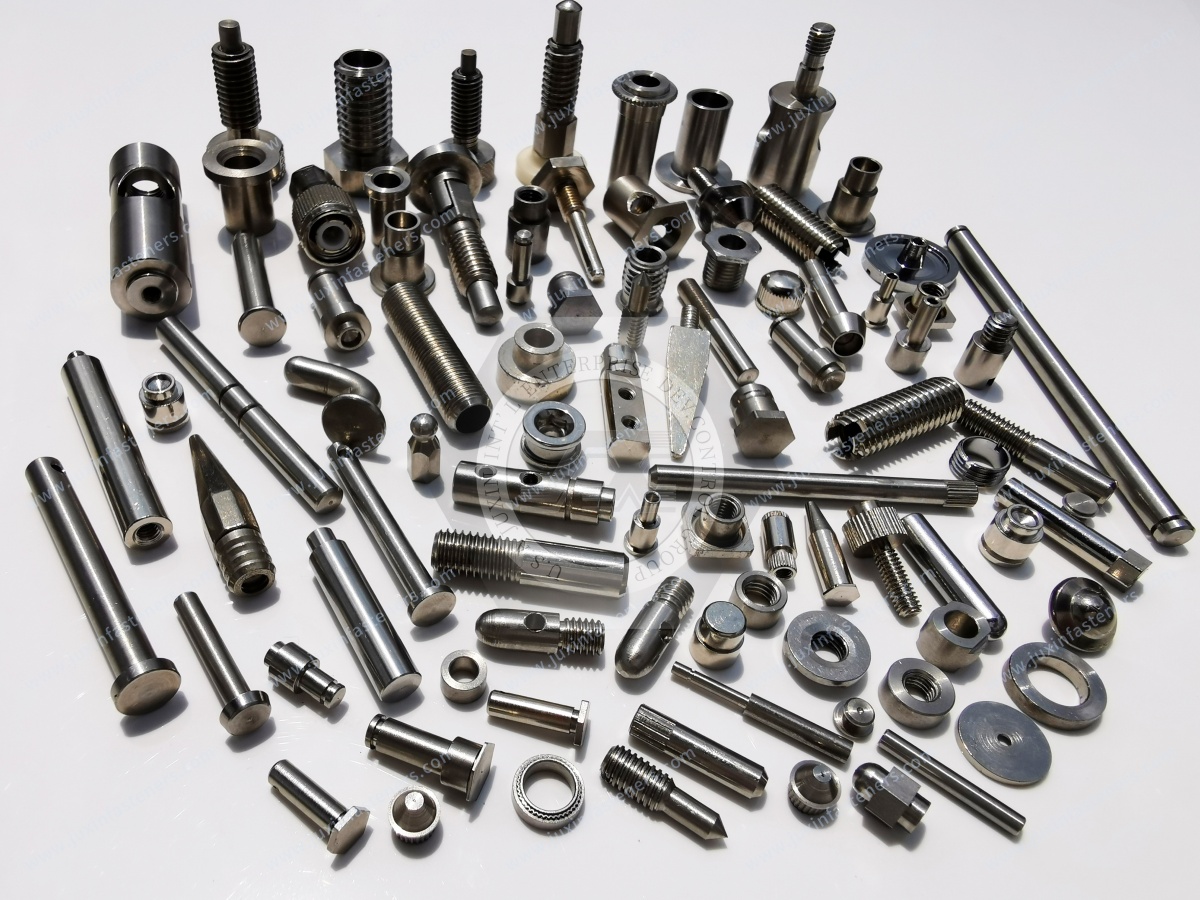
Typical Automotive-Related Components
Precision spacers
Threaded bushings
Custom mounting studs
Stainless steel fittings
Locating pins
Machined sleeves
Sensor mounting components
Precision connector bodies
Custom fastener-related components
Production fixtures and tooling components
The suitability of a particular process depends on geometry, tolerance, material, quantity and inspection requirements.
Why Use Stainless Steel for Automotive CNC Components?
Stainless steel may be selected where the application requires a combination of mechanical performance and corrosion resistance.
Corrosion Resistance
Suitable stainless steel alloys can resist corrosion in many automotive and industrial environments.
However, resistance varies significantly by alloy and exposure conditions.
Dimensional Control
CNC machining allows defined geometric features to be produced and inspected against an approved drawing.
Achievable tolerances depend on part design, equipment, tooling, setup and process control.
Mechanical Performance
Some stainless steel alloys provide useful strength and toughness for selected mechanical applications.
Others are chosen primarily for corrosion resistance or machinability.
Manufacturing Flexibility
CNC machining can support complex features, prototypes and production components where the process is economically appropriate.
Important Engineering Principle
Material selection and machining precision must be evaluated separately.
A highly accurate component manufactured from an unsuitable alloy may still fail in service.
Stainless Steel Material Selection for Automotive CNC Machining
Selecting the correct alloy is one of the most important decisions in precision component development.
304 Stainless Steel CNC Machined Parts
304 is a widely used austenitic stainless steel.
Potential Advantages
Good general corrosion resistance
Broad industrial familiarity
Useful formability
Suitability for many mechanical and equipment applications
Potential Applications
Equipment mounting components
Precision spacers
Electronic housing hardware
Selected automotive accessory components
Custom threaded parts
Machining Considerations
304 can work-harden during machining and may generate difficult chips.
Tooling, cutting conditions and chip control require attention.
Important Limitation
304 is not automatically suitable for severe chloride exposure, high-temperature loading or safety-critical automotive structures.
316 Stainless Steel CNC Machined Parts
316 contains molybdenum, which can improve resistance to certain forms of localized corrosion.
Potential Applications
Corrosion-sensitive fittings
Outdoor equipment
Selected fluid-handling hardware
Equipment exposed to certain cleaning chemicals
Engineering Considerations
Actual chemical exposure
Chloride concentration
Operating temperature
Crevice conditions
Mechanical requirements
Machining cost
Important Limitation
316 is not immune to corrosion and should not be selected solely because it is commonly described as marine grade.
303 Stainless Steel CNC Machined Parts
303 is a free-machining austenitic stainless steel designed to improve machinability relative to certain other austenitic grades.
Potential Advantages
Improved chip breaking
Easier machining in suitable operations
Potential production efficiency advantages
Engineering Trade-Offs
303 generally provides less favorable corrosion resistance and has application limitations associated with its free-machining chemistry.
Important Limitation
303 should not automatically replace 304 or 316 where corrosion, welding or other application requirements are critical.
17-4 PH Stainless Steel CNC Machined Parts
17-4 PH is a precipitation-hardening stainless steel used where a combination of strength and corrosion resistance is required.
Potential Applications
Selected high-strength mechanical components
Precision shafts
Custom structural hardware
Specialized industrial equipment parts
Engineering Considerations
Required heat-treatment condition
Strength and hardness
Toughness
Corrosion exposure
Dimensional change during processing
Important Limitation
17-4 PH is not a universal replacement for austenitic stainless steels.
Its suitability depends on the specified condition and operating environment.
Material Selection Comparison
| Material | Primary selection consideration | Machining consideration | Important limitation |
|---|---|---|---|
| 304 | General corrosion resistance | Work hardening and chip control | Not immune to chloride corrosion |
| 316 | Improved resistance in selected corrosive environments | Similar machining challenges to many austenitic grades | Higher cost and environment-dependent performance |
| 303 | Machinability | Often favorable for turning | Corrosion and application limitations |
| 17-4 PH | Higher strength in specified conditions | Condition and heat treatment matter | Requires careful property and process specification |
Engineering Recommendation
Select the material against the approved drawing and functional requirements rather than using a generic stainless steel designation.
CNC Turning for Stainless Steel Automotive Components
CNC turning is commonly used for rotational components.
Typical Parts
Bushings
Sleeves
Threaded fittings
Precision spacers
Custom studs
Cylindrical connectors
Small shafts
Engineering Advantages
Turning can efficiently produce concentric cylindrical features and controlled diameters.
Design Considerations
Diameter-to-length ratio
Tool accessibility
Thread relief
Shoulder geometry
Concentricity requirements
Surface finish
Burr control
Production Considerations
Bar stock selection, workholding, tool wear and chip management affect cycle time and dimensional repeatability.
Information Gain: Concentricity Depends on Datum Strategy
A drawing may specify multiple coaxial features, but the manufacturing and inspection strategy must establish which feature controls the functional alignment.
Where practical, related critical diameters should be machined with a setup strategy that minimizes unnecessary repositioning.
Engineering Recommendation
Define functional datums and geometric tolerances rather than relying only on independent diameter tolerances.
CNC Milling for Custom Automotive Stainless Steel Parts
CNC milling is suitable for many nonrotational or multi-feature components.
Typical Parts
Mounting blocks
Custom brackets
Precision locating components
Equipment interfaces
Sensor mounting hardware
Fixture components
Engineering Considerations
Pocket geometry
Wall thickness
Corner radii
Tool accessibility
Hole positioning
Clamping surfaces
Surface finish
Production Considerations
Excessively deep pockets, thin walls and unnecessary tight tolerances can increase machining time and inspection cost.
Information Gain: Design for Machining and Assembly Together
A part may be easy to machine but difficult to assemble if mounting holes, locating features and mating surfaces are not dimensioned from a consistent datum system.
Engineering Recommendation
Review the part in its assembled condition before finalizing the machining drawing.
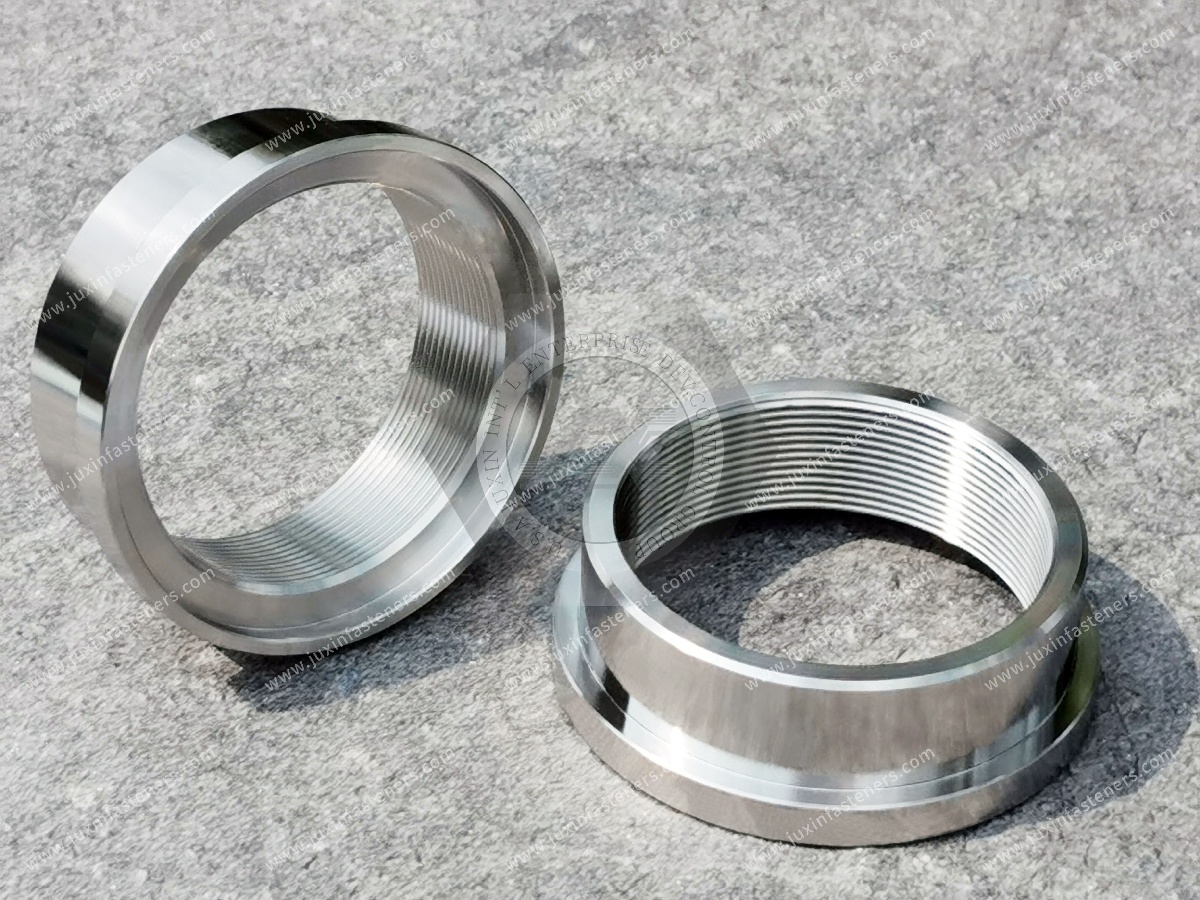
Precision Thread Machining for Automotive OEM Components
Threaded features are common in custom machined components.
Typical Applications
Threaded bushings
Custom fittings
Mounting studs
Precision connectors
Fastener-related components
Thread Manufacturing Processes
Depending on the geometry and material, threads may be produced by:
Tapping
Single-point thread cutting
Thread milling
External threading operations
Engineering Considerations
Thread designation
Pitch
Tolerance class
Engagement length
Mating material
Surface condition
Installation requirements
Metric and Inch Threads
ISO metric, UNC, UNF, BSW and BSF threads are distinct systems.
They are not directly interchangeable.
Approximate inch conversions should be treated as dimensional references only.
Engineering Recommendation
Specify the complete thread designation and applicable tolerance requirements.
Precision Drilling, Boring and Reaming
Hole quality is important for many automotive components.
Potential Applications
Locating holes
Bearing interfaces
Fastener clearance holes
Precision sleeves
Equipment mounting features
Engineering Considerations
Hole diameter
Positional tolerance
Surface finish
Hole depth
Entry and exit burrs
Alignment with mating features
Important Limitation
A nominal hole diameter alone may not adequately define a functional precision interface.
Engineering Recommendation
Specify the required dimensional and geometric characteristics according to the function of the hole.
Precision Grinding and Finishing
Grinding may be considered where the required surface finish or dimensional characteristics justify an additional finishing operation.
Potential Applications
Precision shafts
Locating surfaces
Cylindrical interfaces
Specialized mechanical components
Engineering Considerations
Surface integrity
Dimensional control
Material condition
Finishing allowance
Inspection method
Important Limitation
Grinding should not be specified automatically for every precision component.
It adds processing steps and cost.
Automotive CNC Machining Tolerances and GD&T
Precision machining should be defined by functional requirements, not by a general claim of high accuracy.
Dimensional Tolerances
Dimensional tolerances define acceptable variation in features such as diameter, length and width.
Geometric Dimensioning and Tolerancing
GD&T helps define functional relationships between features.
Common controls may include:
Position
Flatness
Perpendicularity
Parallelism
Profile
Runout
Relevant Standard
ASME Y14.5 provides a framework for geometric dimensioning and tolerancing.
ISO GPS standards may also apply depending on the drawing system.
Important Engineering Principle
The drawing must use a consistent interpretation system.
Information Gain: Tight Tolerances Should Be Applied to Functional Features
Applying unnecessarily tight tolerances to every feature can increase machining time, scrap risk and inspection cost without improving assembly performance.
Engineering Recommendation
Identify critical-to-function characteristics and allow practical tolerances for noncritical features.
Datum Selection and Tolerance Stack-Up
A CNC machined part may meet individual dimensional tolerances yet still cause assembly problems.
This can happen when the functional relationship between features has not been adequately controlled.
Example: Mounting Component
A machined bracket may have acceptable hole diameters but incorrect hole positions relative to the locating surface.
Potential Consequences
Difficult assembly
Misalignment
Additional rework
Excessive installation force
Reduced repeatability
Engineering Recommendation
Use functional datums and perform tolerance stack-up analysis where required.
Surface Roughness and Functional Performance
Surface roughness can affect:
Sealing interfaces
Sliding contact
Bearing surfaces
Appearance
Assembly friction
Important Limitation
A smoother surface is not automatically better for every application.
The required surface texture depends on function.
Engineering Recommendation
Specify roughness only where it contributes to performance.
Burr Control and Edge Conditions
Burrs can create assembly and quality problems.
Potential Risks
Interference during installation
Damage to seals
Thread contamination
Handling hazards
Electrical equipment contamination
Engineering Recommendation
Identify critical edges and define appropriate burr and edge requirements.
Important Production Principle
Deburring is a manufacturing requirement that should be considered during design and quotation, not only during final inspection.
Automotive Engine-Adjacent CNC Machined Components
Precision machined stainless steel parts may be used in selected engine-adjacent or auxiliary assemblies.
Potential Applications
Custom mounting hardware
Precision spacers
Auxiliary fittings
Equipment brackets
Sensor mounting components
Engineering Considerations
Operating temperature
Vibration
Mechanical loading
Corrosion exposure
Mating materials
Service accessibility
Important Limitation
General-purpose stainless steel CNC parts should not be assumed suitable for critical engine or powertrain applications without the required validation.
Automotive Body and Mounting Components
Custom CNC machined parts may support selected body, trim and mounting applications.
Potential Components
Mounting blocks
Precision locating pins
Custom threaded hardware
Accessory brackets
Connector interfaces
Engineering Considerations
Installation sequence
Joint loading
Surface protection
Mating materials
Dimensional stack-up
Production Manager's Perspective
A component that locates consistently can reduce adjustment and rework during assembly.
Automotive Electronics and Sensor Mounting
Modern vehicles contain numerous electronic modules and sensor assemblies.
Precision machined components may be used in selected mounting and enclosure interfaces.
Potential Applications
Sensor mounting hardware
Electronic enclosure components
Connector bodies
Precision spacers
Equipment locating parts
Engineering Considerations
Hole position
Alignment
Corrosion resistance
Electrical compatibility
Assembly accessibility
Environmental sealing
Important Limitation
A machined metal component does not automatically provide electrical insulation, electromagnetic compatibility or enclosure sealing.
These functions require separate design and validation.
Automotive Welding Fixtures and Assembly Tooling
CNC machining is also used to produce precision tooling for automotive manufacturing.
Potential Components
Locating pins
Positioning blocks
Fixture spacers
Custom mounting hardware
Tooling interfaces
Engineering Advantages
Accurate locating features can support repeatable assembly and inspection processes.
Production Considerations
Wear
Replacement intervals
Setup repeatability
Accessibility
Maintenance
Information Gain: Fixture Components Should Be Designed for Replacement
For frequently serviced production tooling, replaceable locating elements can reduce downtime compared with designs requiring complete fixture replacement.
Engineering Recommendation
Consider maintenance and spare-part interchangeability during tooling design.
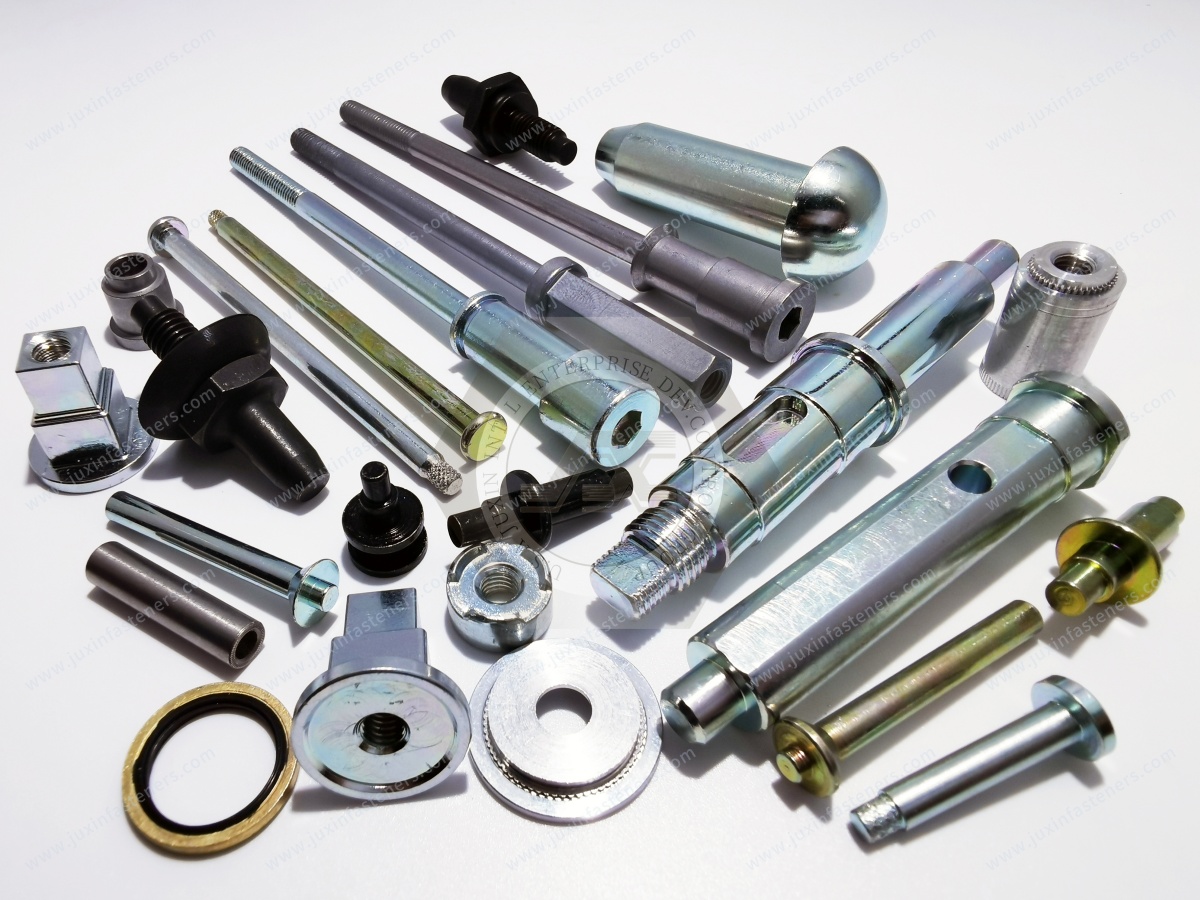
Stainless Steel CNC Parts for Automotive Exhaust Systems
Exhaust-related applications may require materials that tolerate elevated temperatures and corrosive environments.
Potential Components
Mounting hardware
Custom connectors
Precision fittings
Selected support components
Engineering Considerations
Maximum service temperature
Thermal cycling
Oxidation resistance
Mechanical loading
Corrosion exposure
Material condition
Important Limitation
Not all stainless steel grades provide the same elevated-temperature performance.
304 or 316 should not be selected for a high-temperature exhaust component without evaluating the actual service requirements.
Automotive Fuel and Fluid Systems
Custom stainless steel machined parts may be considered for selected fluid-handling applications.
Potential Components
Threaded fittings
Connector bodies
Precision adapters
Custom mounting components
Engineering Considerations
Fluid compatibility
Operating pressure
Sealing geometry
Surface finish
Cleanliness
Inspection requirements
Critical Limitation
Fuel-system and pressure-containing components require application-specific design, material selection and validation.
A machined stainless steel fitting is not automatically suitable for fuel or pressure service.
Automotive Structural Components
Precision machining may be used for selected structural interfaces or support hardware.
Engineering Considerations
Load paths
Fatigue
Mechanical properties
Joint design
Corrosion
Weight
Inspection
Critical Safety Limitation
Safety-critical automotive structural parts require the applicable customer approval and validation.
General CNC machining capability alone does not establish structural suitability.
Decorative and Exterior Automotive Components
Stainless steel CNC machined components may also be used for selected appearance-related applications.
Potential Applications
Custom trim hardware
Exterior accessory fittings
Decorative mounting components
Precision attachment parts
Engineering Considerations
Surface finish
Corrosion resistance
Visible defects
Edge quality
Mating materials
Procurement Recommendation
Specify cosmetic acceptance criteria separately from dimensional requirements.
Precision CNC Machined Parts for Electric Vehicles
Electric vehicles introduce additional requirements related to electrical systems, battery equipment and thermal management.
Potential Applications
Auxiliary battery enclosure hardware
Charging equipment components
Precision mounting parts
Selected thermal management fittings
Equipment locating components
Engineering Considerations
Electrical isolation
Corrosion resistance
Mechanical loading
Thermal expansion
Sealing requirements
Installation access
Important Limitation
High-voltage electrical connections, battery structural components and pressure-containing cooling interfaces require separate engineering approval and validation.
EV Thermal Management Components
Precision machined parts may be used in selected cooling and fluid-routing assemblies.
Potential Components
Custom fittings
Connector bodies
Precision adapters
Mounting hardware
Engineering Considerations
Coolant compatibility
Pressure
Leakage
Thermal cycling
Galvanic interaction
Cleanliness
Surface finish
Information Gain: Material Compatibility Extends Beyond the Machined Part
A stainless steel fitting may be corrosion-resistant by itself but still create compatibility concerns when connected to aluminum housings, copper alloys or other materials in a coolant system.
Engineering Recommendation
Evaluate the complete fluid circuit and mating materials.
CNC Machining Challenges of Stainless Steel
Stainless steel machining requires process planning because different alloys respond differently to cutting.
Work Hardening
Some stainless steels, particularly austenitic grades, can work-harden during machining.
Potential Consequences
Increased cutting forces
Tool wear
Surface quality problems
Dimensional variation
Process Considerations
Suitable cutting parameters
Appropriate tooling
Controlled tool engagement
Effective chip evacuation
Heat Generation
Heat generated during machining can affect tool life and dimensional stability.
Process Considerations
Cutting speed
Tool geometry
Coolant strategy
Workholding
Inspection timing
Chip Control
Poor chip control can interrupt machining and damage surfaces.
Process Considerations
Tool selection
Feed conditions
Material grade
Chip evacuation
Tool Wear
Tool wear may affect dimensions, burr formation and surface finish.
Production Manager's Perspective
Tool-life monitoring and process consistency can be more important to recurring production cost than the fastest possible individual cutting cycle.
Dimensional Stability
Temperature, residual stress and machining sequence may influence finished dimensions.
Engineering Recommendation
For precision components, establish a suitable machining and inspection process rather than relying only on nominal CNC equipment accuracy.
Design for Manufacturability: Reducing CNC Part Cost
Cost reduction should begin during the design stage.
Simplify Unnecessary Features
Avoid complex geometry that does not contribute to function.
Use Functional Tolerances
Apply tight tolerances only where required.
Review Tool Accessibility
Ensure cutting tools can reach critical features.
Avoid Unnecessary Deep Cavities
Deep cavities can increase machining time and tooling complexity.
Optimize Material Selection
Do not specify a more expensive alloy unless its properties are required.
Review Surface Finish Requirements
Unnecessary finishing operations add cost.
Consider Production Volume
The most economical manufacturing route may change with annual demand.
Information Gain: A Small Drawing Change Can Affect Total Production Cost
A minor change in hole position, internal radius, thread relief or surface finish may reduce setup complexity or eliminate a secondary operation.
Engineering Recommendation
Review the drawing for manufacturability before tooling and production planning.
Prototype Machining vs. Recurring OEM Production
Prototype and production machining have different priorities.
Prototype Stage
The main objectives may include:
Design verification
Assembly fit
Functional testing
Material evaluation
Drawing revision
Recurring Production Stage
The priorities expand to:
Process repeatability
Stable tooling
Inspection efficiency
Batch consistency
Delivery reliability
Cost control
Important Production Principle
A successful prototype does not automatically establish a capable recurring production process.
Engineering Recommendation
Confirm critical characteristics and production controls before scaling.
CNC Machined Parts for Industrial Automation
Custom stainless steel machined components are also used in industrial equipment.
Potential Applications
Automation fixtures
Precision locating parts
Threaded components
Equipment spacers
Mounting interfaces
Engineering Considerations
Repeated loading
Wear
Corrosion
Dimensional consistency
Maintenance access
Medical and Laboratory Equipment
Precision stainless steel components may be considered for selected laboratory and medical equipment assemblies.
Potential Applications
Equipment housings
Instrument mounting components
Precision hardware
Laboratory fixtures
Engineering Considerations
Material compatibility
Surface finish
Cleaning
Corrosion resistance
Traceability
Applicable equipment requirements
Important Limitation
General stainless steel machining does not automatically establish medical-device compliance or suitability for patient-contact applications.
Electrical and Communication Equipment
Custom machined stainless steel parts may be used in selected electrical and communication equipment.
Potential Applications
Connector hardware
Equipment mounting components
Enclosure fittings
Precision mechanical interfaces
Engineering Considerations
Electrical conductivity
Grounding requirements
Corrosion
Installation access
Surface condition
Quality Control for Precision Stainless Steel CNC Machined Parts
Inspection requirements should be defined by the approved drawing and intended application.
Material Verification
Confirm the specified alloy and material condition.
Dimensional Inspection
Verify critical dimensions and tolerances.
Thread Inspection
Confirm thread geometry and applicable tolerance requirements.
Geometric Inspection
Inspect functional relationships between features where specified.
Surface Inspection
Review surface finish, burrs and other relevant conditions.
Functional Inspection
Where required, validate fit or performance in the intended assembly.
Documentation
Define material certificates, inspection reports and traceability requirements as appropriate.
Important Limitation
Not every CNC machined component requires the same inspection or test program.
Automotive Supplier Qualification
Automotive procurement teams may require additional supplier qualification activities.
Depending on the customer and project, these may include:
Drawing and specification review
Material traceability
Process capability evaluation
Inspection planning
Sample approval
Change control
Production documentation
Important Distinction
Automotive-specific requirements such as PPAP or customer quality-system approvals apply when specified by the customer.
They should not be assumed or claimed without confirmation.
Information Gain: Define Critical Characteristics Before Quotation
If a supplier does not know which features control assembly performance, the quotation may underestimate inspection, tooling or process requirements.
Procurement Recommendation
Identify critical dimensions and functional characteristics in the RFQ package.
Custom Stainless Steel CNC Machined Parts from Juxin Fasteners
Juxin Fasteners welcomes inquiries for drawing-based precision components and fastening-related CNC machined parts.
Potential product categories include:
Custom stainless steel turned parts
Precision bushings
Threaded fittings
Stainless steel spacers
Custom mounting hardware
Precision connector components
Custom studs and fastening-related parts
OEM machined mechanical components
Specific alloy grades, tolerances, finishing processes, samples, MOQ, inspection documentation and delivery schedules are subject to technical and commercial confirmation.
Preparing an OEM CNC Machining RFQ
A complete RFQ allows engineering and procurement teams to evaluate the component more efficiently.
Drawing and Design Information
2D drawing
3D model, if available
Part number and revision
Critical dimensions
GD&T requirements
Thread specifications
Surface finish requirements
Material Information
Stainless steel grade
Applicable material specification
Material condition
Heat-treatment requirements, if any
Application Information
Intended assembly
Mating components
Operating environment
Mechanical loading
Corrosion requirements
Temperature requirements
Quality Requirements
Inspection criteria
Critical characteristics
Material documentation
Traceability requirements
Sample approval requirements
Commercial Requirements
Prototype quantity
MOQ expectations
Annual demand
Production batch size
Packaging
Target delivery schedule
Information Gain: Separate Functional Requirements From Preferred Manufacturing Methods
When appropriate, allow the supplier to review alternative machining sequences or manufacturing approaches while keeping the approved functional requirements unchanged.
This can support more efficient production without compromising design intent.
Frequently Asked Questions
What stainless steel grades are commonly used for CNC machining?
304, 316, 303 and 17-4 PH are examples of grades considered for different machining applications.
Selection depends on corrosion, strength, machinability and other requirements.
Is 304 stainless steel suitable for precision CNC machining?
Yes, for many applications. However, its work-hardening behavior and chip-control requirements must be considered.
Is 316 stainless steel always better than 304?
No. 316 may provide improved corrosion resistance in selected environments, but cost, machinability and actual service requirements must also be considered.
What is the advantage of 303 stainless steel for machining?
303 is designed for improved machinability, but its corrosion and application limitations must be reviewed.
Can CNC machined stainless steel parts be used in automotive safety-critical systems?
Only when the complete material, design, manufacturing and validation requirements are satisfied and approved.
How should CNC machining tolerances be specified?
Tolerances should be based on functional requirements, mating interfaces and the applicable drawing standard.
What causes dimensional variation during stainless steel machining?
Potential factors include temperature, tool wear, workholding, residual stress, machining sequence and inspection conditions.
Can Juxin Fasteners review custom CNC machining drawings?
Juxin Fasteners welcomes drawing-based inquiries for custom stainless steel machined components, subject to technical review.
What should an automotive OEM buyer include in an RFQ?
Include drawings, material specifications, critical tolerances, finishing requirements, inspection criteria, quantities and delivery requirements.
Juxin Fasteners: Precision Stainless Steel CNC Machined Parts for OEM Applications
Juxin Fasteners supports industrial and automotive-related sourcing requirements for custom fastening components and precision stainless steel machined parts.
Our focus is on reviewing customer drawings, understanding functional requirements and evaluating suitable manufacturing and supply solutions.
For automotive OEM, EV equipment, industrial automation and other precision mechanical applications,
the correct component should be selected based on material suitability, geometry, tolerances, assembly conditions and quality requirements.
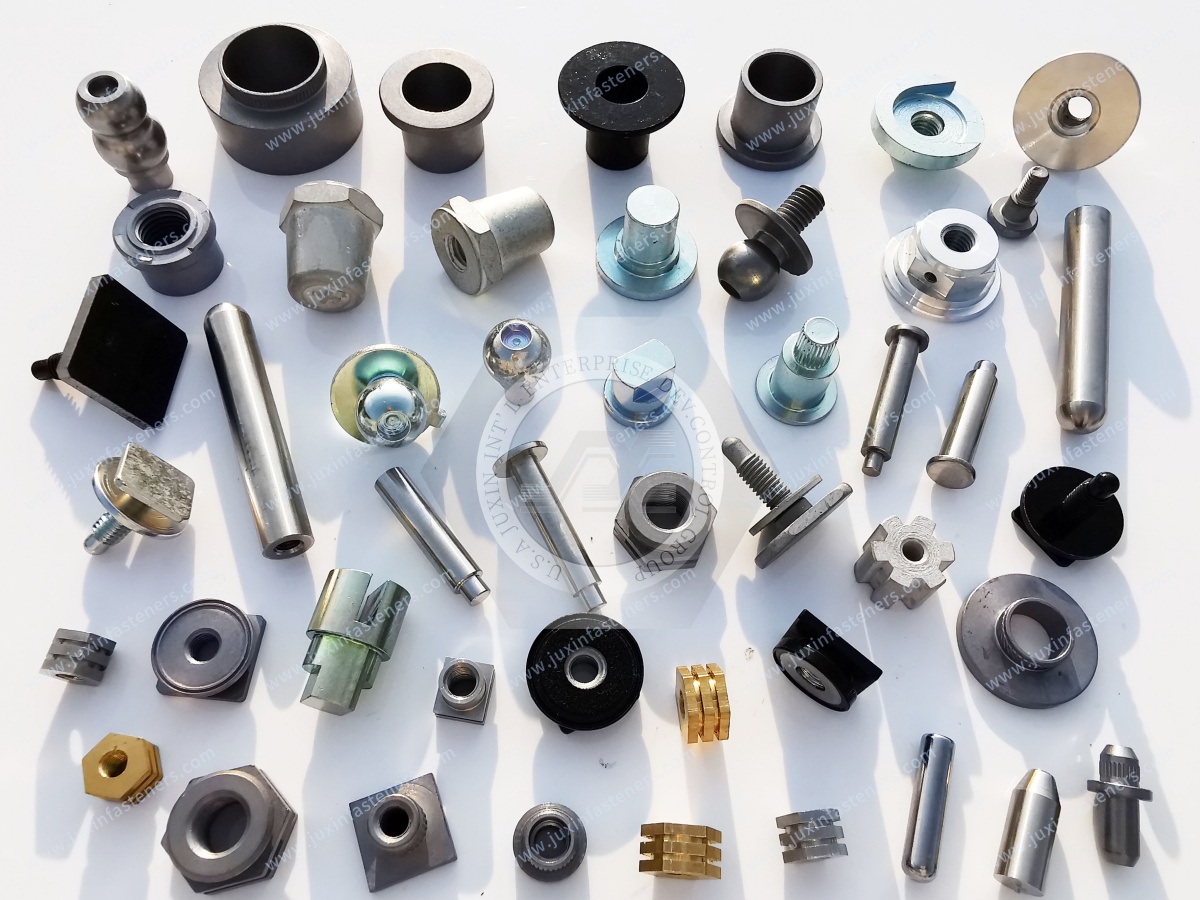
Request a Custom Stainless Steel CNC Machining RFQ
Are you sourcing custom stainless steel CNC machined parts for automotive or industrial equipment?
Do you need precision threaded components, bushings, spacers, fittings or custom fastening-related parts?
Are you developing a new component or evaluating an alternative supplier for recurring production?
Juxin Fasteners welcomes inquiries from design engineers, mechanical engineers, structural engineers, manufacturing engineers, production managers,
procurement specialists, purchasing managers, supplier development teams and supply chain managers.
For technical review and quotation, please provide:
2D drawing + 3D model if available + part number and revision + stainless steel grade + material condition + critical dimensions + GD&T
+ thread specifications + surface finish + heat treatment if applicable + operating environment + functional requirements + inspection criteria
+ prototype quantity + annual demand + production batch size + packaging + target delivery schedule.
Company: Juxin Fasteners
Website: https://www.juxinfasteners.com/
Email: info@juxinfasteners.com
Send your precision CNC machining drawings and OEM RFQ to Juxin Fasteners for technical review and quotation.
Contact Us
Tel.:
+86 020 8621 0320
+86 020 3121 6067
E-mail:
Technical Support:
Navigation
SEND INQUIREY



