Call Us
+86 136 6007 9809
Call Us
+86 136 6007 9809

Aug. 08, 2024
Automotive Wheel Bolts and Wheel Screws: Seat Types, Torque, Preload and OEM Fastening Solutions
Automotive wheel bolts and wheel screws are safety-critical fastening components used to secure vehicle wheels to their hubs.
Unlike general-purpose industrial screws, wheel fasteners must function as part of a carefully engineered assembly involving the wheel,
hub, seating surfaces, mating threads and controlled installation preload.
Passenger cars, SUVs, electric vehicles, commercial vehicles and industrial transportation equipment may use different wheel-fastening architectures.
Some vehicles use threaded wheel bolts that engage directly with the hub. Others use fixed wheel studs with separate lug nuts.
The correct choice depends on vehicle design, wheel geometry, loading conditions and the original equipment manufacturer's specifications.
Wheel-fastener reliability is determined by the complete wheel-to-hub connection—not simply by bolt strength or tightening torque.
For automotive design and mechanical engineers, the primary concerns are seating geometry, thread engagement, clamp load, fatigue, joint stiffness and service loading.
For manufacturing engineers and production managers, the priorities include repeatable tightening, accurate wheel seating, tool control, production traceability and prevention of assembly errors.
For procurement and supplier development teams, reliable sourcing requires approved drawings, material and coating specifications, dimensional conformity, validation requirements and controlled long-term supply.
This guide explains the engineering and purchasing considerations involved in selecting automotive wheel bolts, wheel screws and related high-strength fastening components.
What Are Automotive Wheel Bolts and Wheel Screws?
Automotive wheel bolts are threaded fasteners used to attach a vehicle wheel to the hub assembly.
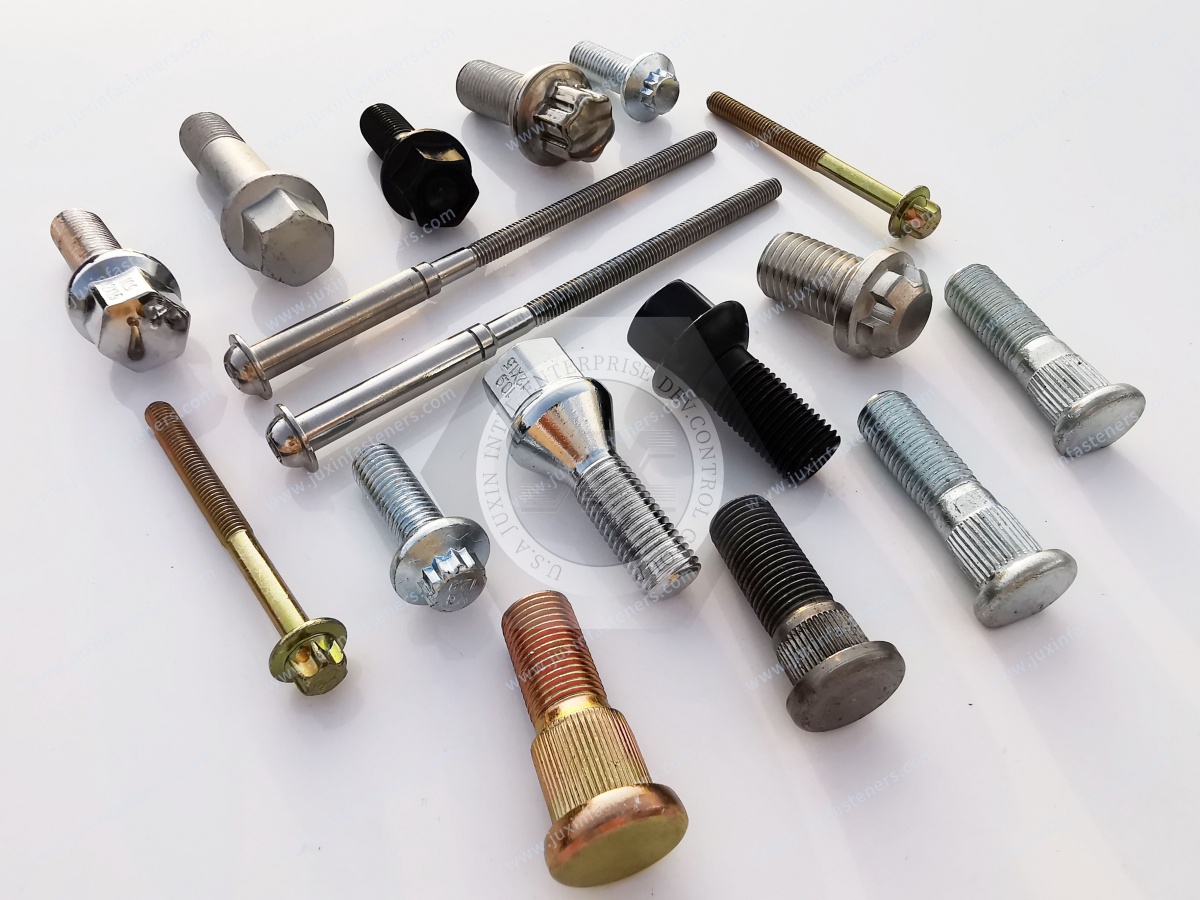
The term wheel bolt is commonly used in European automotive applications, while lug bolt is also used in North American markets.
Tire bolt appears in some commercial searches, but the fastener normally secures the wheel rather than the tire itself.
A typical wheel-bolt system includes:
Wheel bolt
Wheel mounting hole
Wheel seating surface
Hub threaded hole
Wheel-to-hub contact interface
The bolt is tightened to develop the required clamp load between the wheel and hub.
Important Engineering Distinction
Wheel bolts, wheel studs and lug nuts are different fastening components.
They should not be treated as directly interchangeable without an approved wheel-hub design.
Wheel Bolts vs Wheel Studs and Lug Nuts
Two common wheel-fastening architectures are used in automotive applications.
| Fastening system | Main components | Typical engineering consideration |
|---|---|---|
| Wheel bolt system | Wheel bolt and threaded hub | Bolt length, seat geometry and hub thread engagement |
| Wheel stud and lug nut system | Fixed stud and separate nut | Stud protrusion, nut seat geometry and thread engagement |
| Specialized commercial vehicle system | Application-specific studs, nuts and mounting components | Approved wheel-end design and installation procedure |
Wheel Bolt System
A wheel bolt passes through the wheel mounting hole and engages the threaded hub.
Wheel Stud and Lug Nut System
A wheel stud remains installed in the hub, and a lug nut secures the wheel.
Engineering Recommendation
Select replacement fasteners according to the approved vehicle and wheel specifications.
How Automotive Wheel Bolts Secure the Wheel
Wheel bolts are tightened to develop tensile preload in the fastener.
This preload creates clamp force between the wheel and hub.
Under a properly designed and maintained joint, clamp force helps maintain contact between the wheel and hub and supports the intended transfer of driving, braking and cornering loads.
Important Engineering Distinction
The wheel bolt does not simply act as a pin carrying all vehicle loads directly in shear.
The wheel-hub interface, contact friction, hub geometry and joint design all influence load transfer.
Engineering Recommendation
Evaluate the complete wheel-end connection rather than assigning all load-bearing responsibility to the wheel bolt alone.
Wheel Bolt Seat Types: Conical, Ball and Flat
The seating surface is one of the most important geometric features of an automotive wheel bolt.
Different wheel designs require different seat geometries.
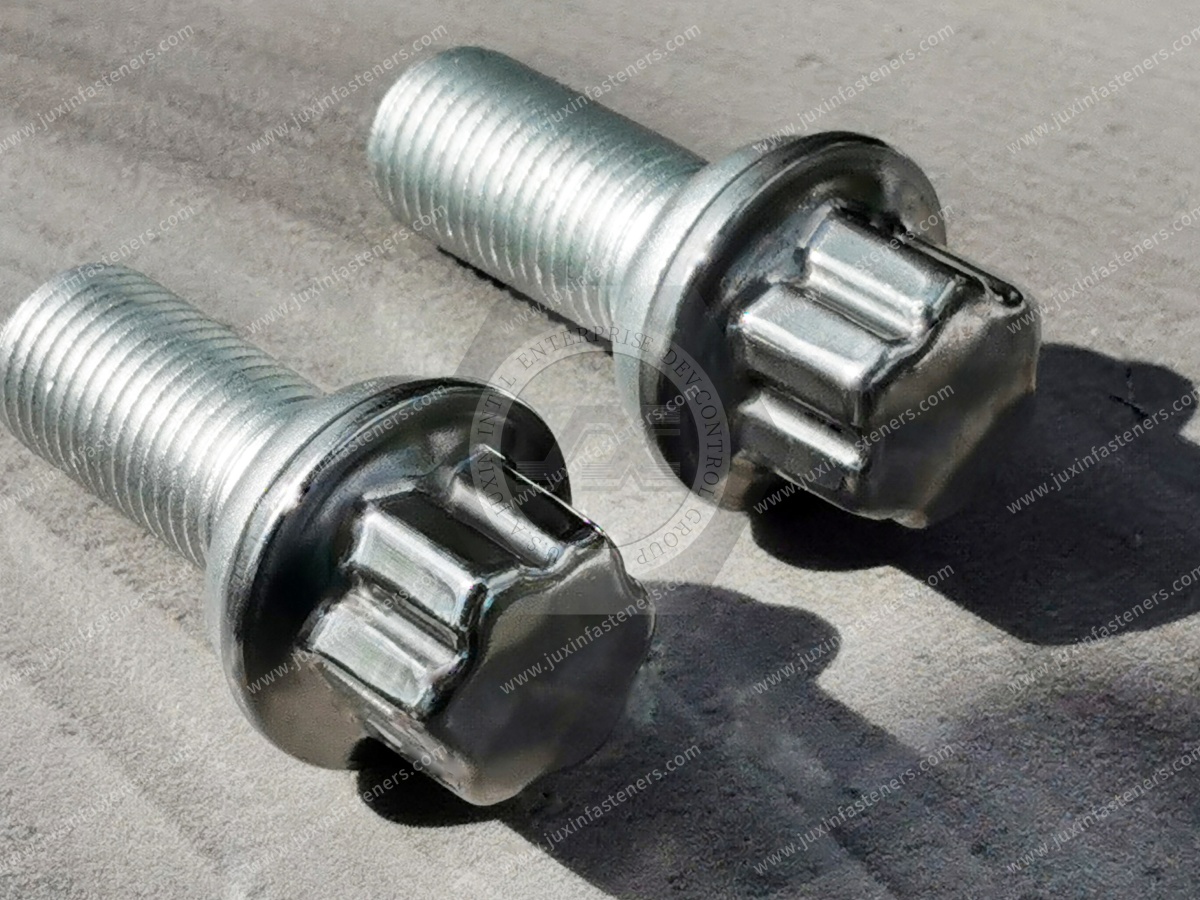
Conical Seat Wheel Bolts
Conical seat bolts use a tapered bearing surface that mates with a corresponding wheel seat.
They are also commonly described as cone-seat or tapered-seat wheel bolts.
Ball Seat or Spherical Seat Wheel Bolts
Ball-seat bolts use a curved seating surface designed to match the specified wheel geometry.
These are common in selected European vehicle applications.
Flat Seat Wheel Bolts
Flat-seat systems use a defined flat bearing arrangement, sometimes incorporating a washer or other application-specific components.
Critical Safety Requirement
Conical-seat, ball-seat and flat-seat wheel bolts must not be substituted for one another solely because the thread diameter and pitch match.
Incorrect seating geometry can cause:
Incomplete bearing contact
Uneven clamp-load distribution
Damage to the wheel seat
Incorrect tightening behavior
Joint relaxation
Loss of fastening reliability
Engineering Recommendation
Confirm the seat profile, dimensions and approved wheel application before selecting a replacement.
Why Ball Seat Radius and Cone Angle Matter
Even when two wheel bolts are both described as ball-seat or cone-seat products, their seating dimensions may differ.
Important Parameters
Ball-seat radius
Cone angle
Bearing diameter
Seat depth
Contact geometry
Wheel material
Information Gain: Matching the Seat Category Is Not Enough
Two spherical-seat bolts may have different radii.
Two conical-seat bolts may have different angles or bearing dimensions.
Engineering Recommendation
Use the OEM drawing or approved wheel-fastener specification to confirm exact seating geometry.
Wheel Bolt Thread Size and Pitch
Wheel bolts are commonly specified using metric thread designations.
Examples encountered in automotive applications include:
M12 × 1.25
M12 × 1.5
M14 × 1.25
M14 × 1.5
These are examples of thread designations, not universal fitment recommendations.
Important Engineering Limitation
The correct thread depends on the vehicle and hub specification.
Engineering Recommendation
Confirm nominal diameter, pitch, tolerance and mating-thread condition before approving the fastener.
Metric vs UNC, UNF and Other Thread Systems
Metric threads and Unified inch-series threads are different systems.
UNC, UNF, BSW and BSF threads are not directly interchangeable with ISO metric threads.
Approximate inch conversions are reference values only.
Engineering Recommendation
Never approve wheel-bolt interchangeability based only on approximate diameter measurements.
Wheel Bolt Length and Thread Engagement
Wheel-bolt length must provide sufficient thread engagement without creating interference.
Important Dimensions
Overall length
Under-head or seat-to-end length, as defined by the drawing
Threaded length
Wheel thickness
Seat geometry
Hub thread depth
Available clearance
Potential Problems With an Incorrectly Short Bolt
Insufficient thread engagement
Reduced resistance to thread stripping
Inadequate fastening reliability
Potential Problems With an Incorrectly Long Bolt
Bottoming in a blind threaded hole
Interference with internal hub or brake components
Incorrect seating or clamp load
Information Gain: Overall Bolt Length Alone Does Not Determine Fitment
Seat geometry and wheel thickness affect how much of the bolt actually engages the hub.
Engineering Recommendation
Verify effective engagement and internal clearance using the complete wheel-hub assembly.
Wheel Bolt Strength Classes
Automotive wheel bolts may be manufactured from high-strength steel according to approved OEM specifications.
Mechanical-property requirements depend on the actual fastener design and applicable standard.
ISO Property Class 8.8
Used in many industrial fastening applications, but not automatically suitable for a particular wheel connection.
ISO Property Class 10.9
A high-strength metric property class commonly relevant to demanding automotive fastening applications.
ISO Property Class 12.9
A higher-strength class used in selected industrial applications, but not automatically a better or safer wheel-bolt choice.
Important Engineering Distinction
The mechanical-property class must be selected according to the approved wheel-end design.
Engineering Recommendation
Do not substitute a higher or lower property class without formal engineering review.
Why Class 10.9 May Be Specified for Wheel Bolts
Class 10.9 provides defined high-strength mechanical properties under ISO 898-1 within the applicable standard scope.
Potential design considerations include:
Tensile-strength requirements
Proof-load requirements
Preload capability
Joint geometry
Mating-thread strength
Fatigue loading
Important Limitation
A Class 10.9 marking does not establish the correct wheel-bolt geometry, coating friction or installation torque.
Engineering Recommendation
Treat property class as one element of the complete OEM fastener specification.
Preload and Clamp Load in Wheel Fastening
Preload is the tensile force generated in a wheel bolt during tightening.
The corresponding clamp force helps maintain contact between the wheel and hub.
Why Preload Matters
Appropriate preload helps:
Maintain wheel-hub contact
Reduce joint separation
Support load transfer
Limit excessive relative movement
Improve connection reliability
Important Limitation
Excessive preload can damage the bolt, hub threads or wheel seating surfaces.
Insufficient preload can allow movement and contribute to loosening or fatigue.
Engineering Recommendation
Use the vehicle manufacturer's approved tightening specification and procedure.
Wheel Bolt Torque: Why One Universal Value Is Unsafe
Wheel-bolt tightening torque depends on the complete wheel-fastening system.
Important factors include:
Bolt diameter and pitch
Fastener material and property class
Thread friction
Seat friction
Surface coating
Wheel material
Hub material
Joint geometry
OEM tightening procedure
Critical Safety Requirement
There is no single universal tightening torque suitable for all automotive wheel bolts.
Engineering Recommendation
Use only the approved vehicle and wheel manufacturer's torque specification.
Torque-Tension Relationship
Tightening torque is commonly used to generate clamp load.
However, torque is not a direct measurement of preload.
Friction at the threads and seating surfaces influences the relationship between applied torque and resulting clamp force.
Information Gain: Two Dimensionally Identical Wheel Bolts Can Produce Different Clamp Loads at the Same Torque
Differences in coating, lubrication or seat condition can change friction.
Engineering Recommendation
For OEM development, validate the torque-tension relationship using the actual bolt, wheel, hub and approved surface conditions.
Should Wheel Bolts Be Lubricated?
Lubrication can change thread and seating friction.
This may significantly affect preload at a given tightening torque.
Critical Safety Requirement
Do not apply oil, grease, anti-seize compounds or thread-locking chemicals to wheel bolts unless specifically required by the approved vehicle or wheel manufacturer.
Engineering Recommendation
Follow the OEM installation specification for thread and seating surface condition.
Fine-Thread Wheel Bolts and Vibration Resistance
Some automotive wheel bolts use fine-pitch metric threads.
Fine threads may be selected for geometric, engagement or application-specific reasons.
Important Engineering Limitation
Fine threads are not inherently vibration-proof.
Vibration resistance depends on the complete joint, including preload, seating geometry, friction and service loading.
Engineering Recommendation
Do not select a wheel-bolt thread pitch solely because it is described as having better anti-loosening performance.
Why Wheel Bolts Can Loosen
Wheel-bolt loosening may result from several interacting factors.
Potential Causes
Insufficient initial preload
Incorrect seating geometry
Contamination between wheel and hub
Incorrect tightening procedure
Joint settlement or embedding
Damaged threads
Incompatible replacement fasteners
Excessive service loading
Information Gain: A Loosening Problem May Originate From the Wheel Interface Rather Than the Bolt
A wheel that is not fully seated against the hub may experience joint relaxation even when the bolt initially appears tight.
Engineering Recommendation
Investigate the complete mounting interface before attributing loosening to the screw material or thread design.
Why Serrated Flange Screws Are Not Universal Wheel-Bolt Replacements
Serrated flange screws are used in some industrial fastening applications.
However, automotive wheel bolts typically require application-specific seating geometry.
Critical Safety Requirement
A serrated flange screw should not be substituted for an approved conical-seat, ball-seat or flat-seat wheel bolt without OEM engineering approval.
Serrations may damage wheel seating surfaces or alter the intended contact behavior.
Lock Washers and Thread-Locking Compounds
Lock washers and thread-locking compounds may be appropriate for selected industrial joints.
They are not universal solutions for automotive wheel fastening.
Important Engineering Limitation
Adding an unapproved washer or thread-locking product can alter seat geometry, friction or clamp-load behavior.
Engineering Recommendation
Use only the locking and installation features specified by the vehicle or wheel manufacturer.
Wheel Bolt Fatigue and Dynamic Loading
Automotive wheel fasteners experience dynamic service conditions.
Important loading influences include:
Braking
Acceleration
Cornering
Road impact
Wheel vibration
Thermal cycling
Important Engineering Distinction
High tensile strength does not automatically guarantee fatigue resistance.
Fatigue performance depends on stress amplitude, preload, joint stiffness, thread geometry and load transfer.
Engineering Recommendation
For safety-critical OEM applications, validate the complete wheel-fastening system under the required service conditions.
Wheel Bolt Corrosion Protection
Wheel bolts may be exposed to water, road salt, humidity and temperature variation.
Suitable surface protection depends on the OEM specification.
Potential Coating Systems
Zinc-based electroplated coatings
Zinc-nickel coating systems
Zinc-flake coating systems
Application-specific black protective finishes
Important Engineering Limitation
The corrosion performance of a coating depends on the complete coating system, including thickness, passivation, topcoat and test conditions.
Engineering Recommendation
Specify the approved coating and performance criteria rather than relying only on a generic coating name.
Zinc-Nickel Coated Wheel Bolts
Zinc-nickel coatings are used in selected automotive fastening applications.
Engineering Considerations
Corrosion performance
Coating thickness
Thread fit
Seating friction
Surface appearance
OEM acceptance requirements
Important Limitation
Zinc-nickel coating does not automatically provide the same friction or corrosion performance across all suppliers.
Production Recommendation
Revalidate tightening behavior when changing coating systems.
Zinc-Flake Coated Wheel Bolts
Zinc-flake coatings may be used in selected automotive fastening applications.
Engineering Considerations
Corrosion resistance
Coating thickness
Thread fit
Friction control
Process compatibility
Important Limitation
Not every zinc-flake system has identical characteristics.
Engineering Recommendation
Confirm the exact coating specification and required validation.
Hydrogen Embrittlement Considerations
High-strength steel fasteners may be susceptible to hydrogen embrittlement under certain manufacturing, coating or service conditions.
Potential Risk Factors
High material strength or hardness
Hydrogen-generating processes
Certain electroplating operations
Sustained tensile stress
Aggressive service environments
Important Engineering Limitation
Not every wheel bolt will experience hydrogen embrittlement.
Engineering Recommendation
For susceptible high-strength fasteners, review material, manufacturing and coating-process controls according to the applicable requirements.
Passenger Car and SUV Wheel Fastening
Passenger vehicles and SUVs may use wheel bolts or wheel stud-and-nut systems.
Engineering Considerations
Wheel material
Seat geometry
Thread specification
Bolt length
Clamp load
Corrosion exposure
Maintenance
Important Limitation
Aftermarket wheels may require different approved fasteners from the original wheels.
Engineering Recommendation
Verify wheel and vehicle compatibility before approving replacement wheel bolts.
Electric Vehicle Wheel Fastening
Electric vehicles use wheel-fastening systems subject to the same fundamental joint-design principles as other vehicles.
Some EV platforms may introduce additional considerations related to vehicle mass, torque delivery, thermal conditions and packaging.
Potential Applications
EV passenger vehicle wheels
Electric commercial vehicle wheel assemblies
Vehicle platform-specific wheel hubs
Engineering Considerations
Vehicle-specific loading
Wheel geometry
Clamp load
Fatigue
Corrosion
Production tightening control
Important Engineering Limitation
Not every EV requires a higher-strength wheel bolt than a comparable conventional vehicle.
Engineering Recommendation
Select the fastener according to the approved EV platform specification.
Commercial Vehicle and Heavy Truck Wheel Fastening
Commercial vehicles may use specialized wheel stud-and-nut systems.
Potential Applications
Trucks
Buses
Trailers
Construction vehicles
Industrial transportation equipment
Engineering Considerations
Wheel-end architecture
High service loads
Fatigue
Joint settlement
Installation procedures
Maintenance requirements
Critical Limitation
Commercial vehicle wheel-fastening components are not necessarily interchangeable with passenger-car wheel bolts.
Engineering Recommendation
Follow the applicable vehicle and wheel-end manufacturer's specifications.
Manufacturing Engineering: Wheel Bolt Assembly Consistency
For automotive OEM production, installation consistency is essential.
Critical Production Variables
Approved bolt geometry
Thread specification
Seat geometry
Coating condition
Wheel seating
Hub thread condition
Tightening tool
Tightening sequence
Torque or angle control
Assembly traceability
Potential Production Problems
Incorrect fastener selection
Cross-threading
Incomplete seating
Insufficient preload
Excessive preload
Damaged threads
Rework
Information Gain: Correct Bolt Torque Does Not Prove Correct Wheel Seating
A tightening tool may reach its programmed torque even when the wheel is not properly seated.
Production Recommendation
Validate the installation process using representative wheel and hub assemblies.
Torque-Controlled and Torque-Angle Installation
Different tightening strategies may be used in automotive manufacturing.
Torque-Controlled Tightening
Uses a specified tightening torque.
Torque-Angle Tightening
Uses a defined torque and angular displacement strategy.
Important Engineering Limitation
Neither method should be selected without considering the approved wheel-fastening design.
Engineering Recommendation
Use the OEM-approved tightening procedure and validate the process accordingly.
Wheel Bolt Installation and Maintenance
Correct installation is essential for vehicle safety.
Recommended Principles
Use only approved wheel fasteners.
Confirm seat geometry and thread compatibility.
Inspect threads and seating surfaces.
Ensure the wheel and hub contact surfaces are prepared as specified.
Follow the approved tightening sequence.
Use the specified tightening torque and procedure.
Follow vehicle-specific inspection or rechecking instructions.
Critical Safety Requirement
Do not use a generic online torque chart as a substitute for the vehicle manufacturer's specifications.
Common Wheel Bolt Failure Modes
Thread Stripping
May result from incorrect thread engagement, damaged threads or excessive installation load.
Bolt Fracture
May result from overload, fatigue, material defects or other contributing conditions.
Preload Loss
May result from joint settlement, incorrect installation or incompatible seating geometry.
Corrosion Damage
May affect thread condition, removal and long-term reliability.
Wheel Seat Damage
May result from incorrect fastener geometry or installation conditions.
Engineering Recommendation
Investigate failures using the complete wheel-fastening system and available production records.
International Standards and OEM Specifications
Wheel-fastener specifications depend on the product geometry, material and vehicle application.
ISO 898-1
Mechanical properties of applicable carbon steel and alloy steel bolts, screws and studs.
ISO 965 Series
Tolerances for ISO general-purpose metric screw threads.
ISO 16047
Torque/clamp force testing for threaded fasteners within its applicable scope.
ISO 4042
Electroplated coating systems for fasteners within its applicable scope.
ISO 10683
Non-electrolytically applied zinc-flake coating systems for fasteners within its applicable scope.
Important Standards Distinction
General fastener standards do not automatically establish complete wheel-bolt suitability.
OEM drawings and vehicle-specific engineering specifications remain essential.
Engineering Recommendation
Confirm all applicable product, material, coating, testing and approval requirements for the intended vehicle platform.
OEM Wheel Bolt Supplier Qualification
Automotive procurement and supplier development teams should qualify wheel-bolt suppliers against complete approved specifications.
Product Definition
Approved OEM drawing
Part number and revision
Seat geometry
Thread designation
Bolt length
Head and drive geometry
Material specification
Mechanical-property class
Surface Requirements
Coating specification
Coating thickness
Corrosion requirements
Friction requirements
Appearance criteria
Quality Requirements
Dimensional inspection
Mechanical-property verification
Coating verification
Functional testing where specified
Material documentation
Traceability
Change control
Production Approval Requirements
Depending on customer requirements, qualification may include:
Sample approval
Dimensional reports
Material and performance testing
Process documentation
PPAP or equivalent customer-specific approval requirements
Important Limitation
The availability and scope of documentation must be confirmed for the actual project.
Commercial Requirements
Prototype quantity
MOQ
Annual demand
Production batch size
Packaging
Delivery schedule
Long-term supply expectations
Information Gain: Wheel Bolt Supplier Substitution Requires More Than Dimensional Matching
Two wheel bolts may share the same thread size and length but differ in seat geometry, coating friction or mechanical performance.
Procurement Recommendation
Do not approve an alternative supplier based only on nominal dimensions and unit price.
Total Cost of Ownership in Automotive Wheel Fastening
Wheel-fastener procurement decisions should consider:
Material and manufacturing cost
Heat treatment
Surface coating
Inspection
Production approval
Packaging
Assembly efficiency
Rework
Supply continuity
Information Gain: The Lowest-Priced Wheel Bolt May Create Higher System Costs
A fastener with inconsistent seating geometry or coating friction can increase assembly variation and qualification risk.
Procurement Recommendation
Compare suppliers using approved technical conformity, assembly performance and total supply cost.
Frequently Asked Questions
What is the difference between a wheel bolt and a lug nut?
A wheel bolt engages a threaded hub, while a lug nut engages a fixed wheel stud.
Are wheel bolts and tire bolts the same thing?
Tire bolt is a commercial search term sometimes used for wheel bolts. The fastener secures the wheel, not the tire itself.
Are conical-seat and ball-seat wheel bolts interchangeable?
No. Seat geometry must match the approved wheel design.
Can I use a longer wheel bolt?
Only if the approved design permits it and thread engagement and internal clearance are verified.
Are Class 10.9 wheel bolts suitable for every vehicle?
No. Property class must match the approved vehicle and wheel specification.
Do fine-thread wheel bolts prevent loosening?
Not automatically. Loosening resistance depends on the complete joint.
Should wheel bolts be lubricated before tightening?
Only when required by the vehicle or wheel manufacturer's approved procedure.
Can I use thread-locking adhesive on wheel bolts?
Do not apply thread-locking products unless specifically approved by the vehicle or wheel manufacturer.
What causes wheel bolts to loosen?
Potential causes include insufficient preload, incorrect seating geometry, contamination, joint settlement or incorrect installation.
Can aftermarket wheels use the original wheel bolts?
Not always. Aftermarket wheels may require different approved seat geometry or bolt length.
What should be included in an OEM wheel bolt RFQ?
Provide the approved drawing, seat geometry, thread designation, bolt length, property class,
coating requirements, installation specification and purchasing quantities.
Juxin Fasteners: Automotive Wheel Bolts and OEM High Strength Fastening Solutions
Juxin Fasteners supplies industrial and automotive fastening components for OEM manufacturing applications.
Relevant product categories include:
Automotive wheel bolts
Automotive wheel screws
High-strength metric bolts
Class 10.9 steel screws
Hex head screws
Flange head screws
Custom automotive fasteners
Drawing-specific high-strength fastening components
Specific wheel-bolt designs, material grades, manufacturing processes, coatings, inspection documentation, production approval requirements, samples,
MOQ and delivery schedules are subject to technical and commercial confirmation.
Because wheel bolts are safety-critical components, proposed products and supplier substitutions must undergo
the customer's required engineering approval and application-specific validation before production use.
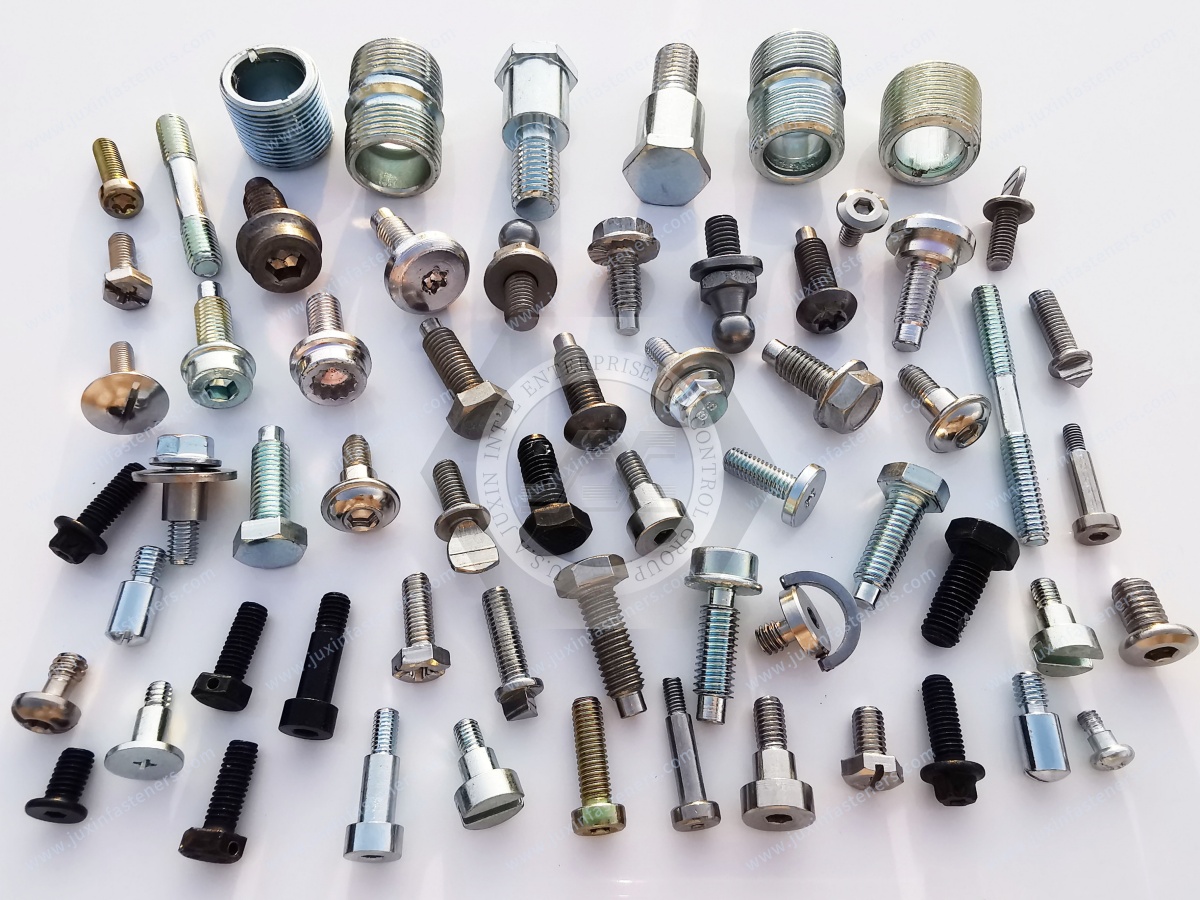
Request an Automotive Wheel Bolt or Wheel Screw RFQ
Are you developing a new wheel-fastening system or qualifying an alternative automotive wheel-bolt supplier?
Do you need drawing-specific conical-seat, ball-seat or other approved wheel-fastener geometries?
Juxin Fasteners welcomes technical inquiries and drawing-based RFQs from automotive engineers,
Tier suppliers, manufacturing teams, production managers and procurement specialists.
For technical review and quotation, please provide:
Approved OEM drawing + part number and revision + vehicle or wheel application + seat type and dimensions + thread diameter and pitch
+ bolt length and engagement requirements + head and drive geometry + material specification + mechanical-property class
+ surface coating + friction requirements + approved tightening procedure + inspection and validation criteria
+ prototype quantity + annual demand + production batch size + packaging + target delivery schedule.
Company: Juxin Fasteners
Website: https://www.juxinfasteners.com/
Email: info@juxinfasteners.com
Send your automotive wheel bolt drawings and OEM RFQ to Juxin Fasteners for technical review, specification confirmation and quotation.
Contact Us
Tel.:
+86 020 8621 0320
+86 020 3121 6067
E-mail:
Technical Support:
Navigation
SEND INQUIREY