
Call Us
+86 136 6007 9809
Call Us
+86 136 6007 9809

Aug. 08, 2024
Metric Class 10.9 High Strength Steel Screws: Joint Design, Industrial Applications and OEM Supply
Metric Class 10.9 high strength steel screws are widely specified in automotive equipment, industrial machinery, hydraulic assemblies, construction equipment and demanding mechanical applications.
They offer higher specified mechanical strength than common Class 8.8 fasteners and can support higher preload in appropriately designed joints.
However, selecting a Class 10.9 screw does not automatically guarantee better fatigue resistance, vibration performance or assembly reliability.
The performance of a Class 10.9 screw depends on the complete bolted joint—not only the strength of the fastener.
Joint stiffness, mating materials, thread engagement, coating friction, installation control and service conditions all influence fastening performance.
For mechanical and design engineers, the key questions involve strength requirements, load transfer, fastener geometry and joint reliability.
For manufacturing engineers and production managers, the priorities include repeatable clamp load, installation efficiency, tooling, process variation and production quality.
For procurement and supplier development teams, successful sourcing requires clear mechanical-property specifications,
approved coatings, dimensional conformity, inspection requirements and reliable recurring supply.
This guide explains how to select, install and source Metric Class 10.9 steel screws for industrial OEM applications.
What Are Metric Class 10.9 Steel Screws?
Class 10.9 is a mechanical-property designation used for applicable metric carbon steel and alloy steel bolts, screws and studs under ISO 898-1.
The designation indicates a high-strength property class.
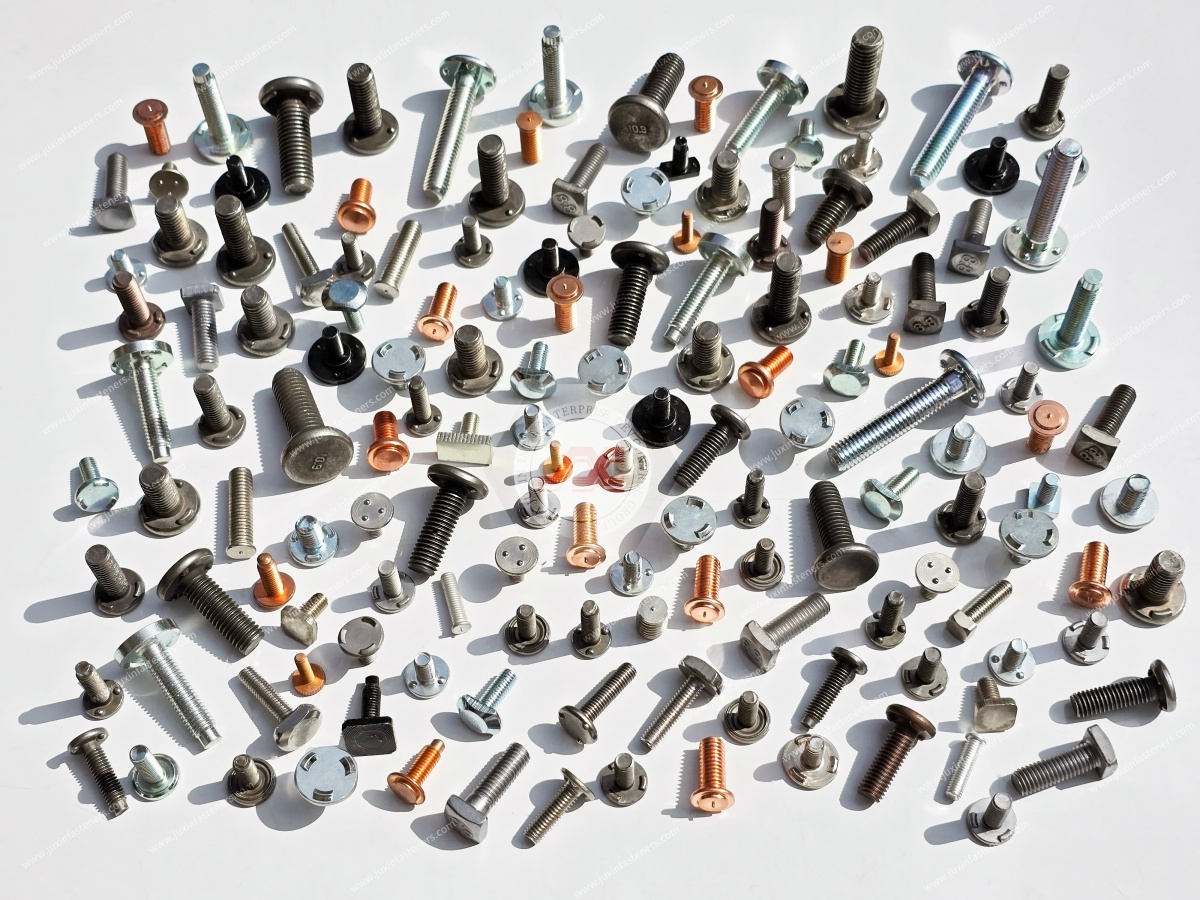
Understanding the 10.9 Designation
The first number, 10, corresponds to a nominal tensile-strength designation of 1,000 MPa.
The second number, 9, indicates a nominal yield-strength relationship of 0.9.
Important Engineering Distinction
These numbers explain the designation system.
The actual specified minimum tensile strength, yield-related properties, proof stress and test requirements must be taken from the applicable edition of ISO 898-1.
They may vary according to nominal diameter and other conditions.
Class 10.9 Is Not a Steel Grade
The property class does not identify one specific steel composition.
Material selection and heat treatment must achieve the required mechanical properties.
Engineering Recommendation
Specify the applicable mechanical-property standard and property class rather than relying only on the commercial description “high tensile steel.”
Why Choose Class 10.9 Instead of Class 8.8?
Class 10.9 is commonly considered when a joint requires greater fastener strength than Class 8.8 can provide.
Potential Engineering Advantages
Higher specified mechanical-strength capability
Potential for increased preload
Suitability for selected high-load assemblies
Compatibility with a range of standard metric fastener geometries
Important Limitation
Higher strength does not automatically mean that Class 10.9 is more economical or reliable in every application.
Information Gain: Strength Upgrading Can Shift Failure Into the Mating Components
A Class 10.9 screw may withstand a higher tensile load, while a lower-strength nut, tapped hole or clamped component becomes the limiting element.
Engineering Recommendation
Evaluate the screw and its mating components as a complete joint before upgrading the property class.
Class 10.9 Tensile Strength, Proof Load and Preload
Three concepts are especially important in high-strength bolted-joint design.
Tensile Strength
The stress associated with failure during a specified tensile test.
Proof Load
A specified test load used to verify compliance with relevant mechanical requirements.
Preload
The tensile force developed in the screw during tightening.
Preload creates clamp force between the joined components.
Important Engineering Distinction
Proof load, ultimate tensile load and installation preload are different quantities.
Engineering Recommendation
Use standard-based mechanical-property values and the applicable tensile stress area when performing calculations.
How Class 10.9 Screws Carry External Loads
A properly preloaded joint can transfer external loads through contact between the clamped components.
Depending on the design, external shear may be resisted by friction between the joint members, direct bearing, or another defined load path.
Important Engineering Limitation
A Class 10.9 screw does not automatically provide a particular shear capacity for every joint configuration.
Shear performance depends on the applicable design method, fastener geometry, thread location and load conditions.
Engineering Recommendation
Determine whether the joint is intended to be slip-resistant, bearing-type or another connection arrangement.
Joint Stiffness and Fatigue Performance
Fatigue behavior depends strongly on the relationship between fastener stiffness and clamped-member stiffness.
Important factors include:
Initial preload
Joint geometry
External load direction
Load amplitude
Fastener stiffness
Clamped-member stiffness
Thread stress concentration
Joint separation
Information Gain: Higher Tensile Strength Does Not Automatically Produce Longer Fatigue Life
A joint that separates under cyclic loading may experience high alternating stress even when a Class 10.9 fastener is used.
Engineering Recommendation
Review preload retention and joint stiffness before relying on a stronger screw as the primary fatigue solution.
Class 10.9 Hex Head Screws
Class 10.9 hex head screws are used in industrial assemblies requiring external wrench or socket installation.
Potential Applications
Industrial machinery
Gearboxes
Mechanical brackets
Equipment frames
Pump and motor assemblies
Heavy mechanical equipment
Engineering Considerations
Head dimensions
Thread length
Tool clearance
Bearing surface
Mechanical-property class
Installation requirements
Important Limitation
A fully threaded hex head screw and a partially threaded hex bolt may have different behavior when the shear plane passes through the threaded or unthreaded section.
Engineering Recommendation
Specify the required geometry and thread length according to the joint design.
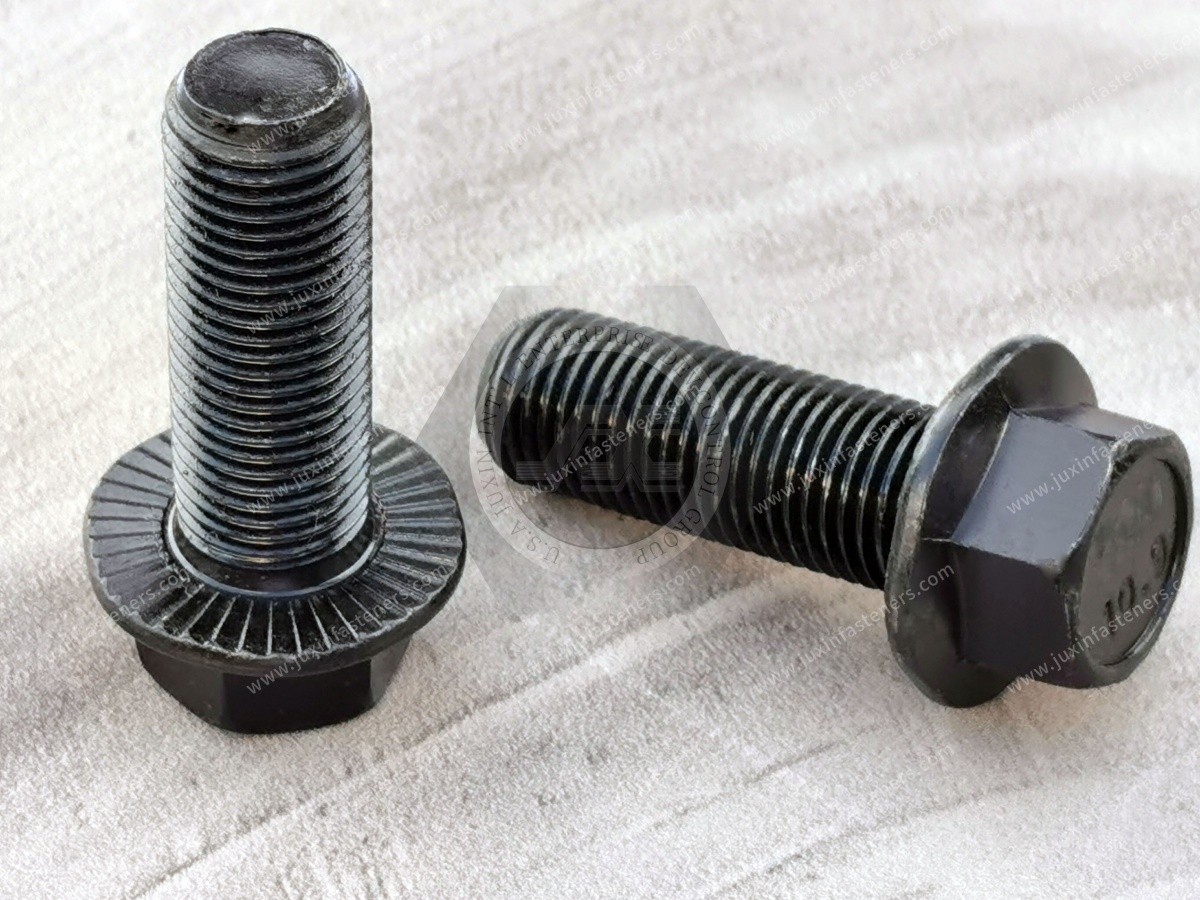
Class 10.9 Flange Head Screws
Class 10.9 hex flange screws incorporate a flange beneath the head.
The integrated flange can provide a larger bearing surface than certain conventional head configurations.
Potential Advantages
Integrated bearing surface
Reduced separate-part handling
Potentially improved assembly efficiency
Simplified fastening operations
More consistent component count
Important Engineering Limitation
A flange does not automatically eliminate the need for a washer.
Its suitability depends on bearing pressure, mating material, surface finish and joint requirements.
Information Gain: Flange Geometry Affects Both Assembly Cost and Joint Behavior
Removing a separate washer may reduce handling time, but the resulting bearing surface and torque-tension relationship must be evaluated.
Engineering Recommendation
Validate flange geometry and tightening behavior using representative production components.
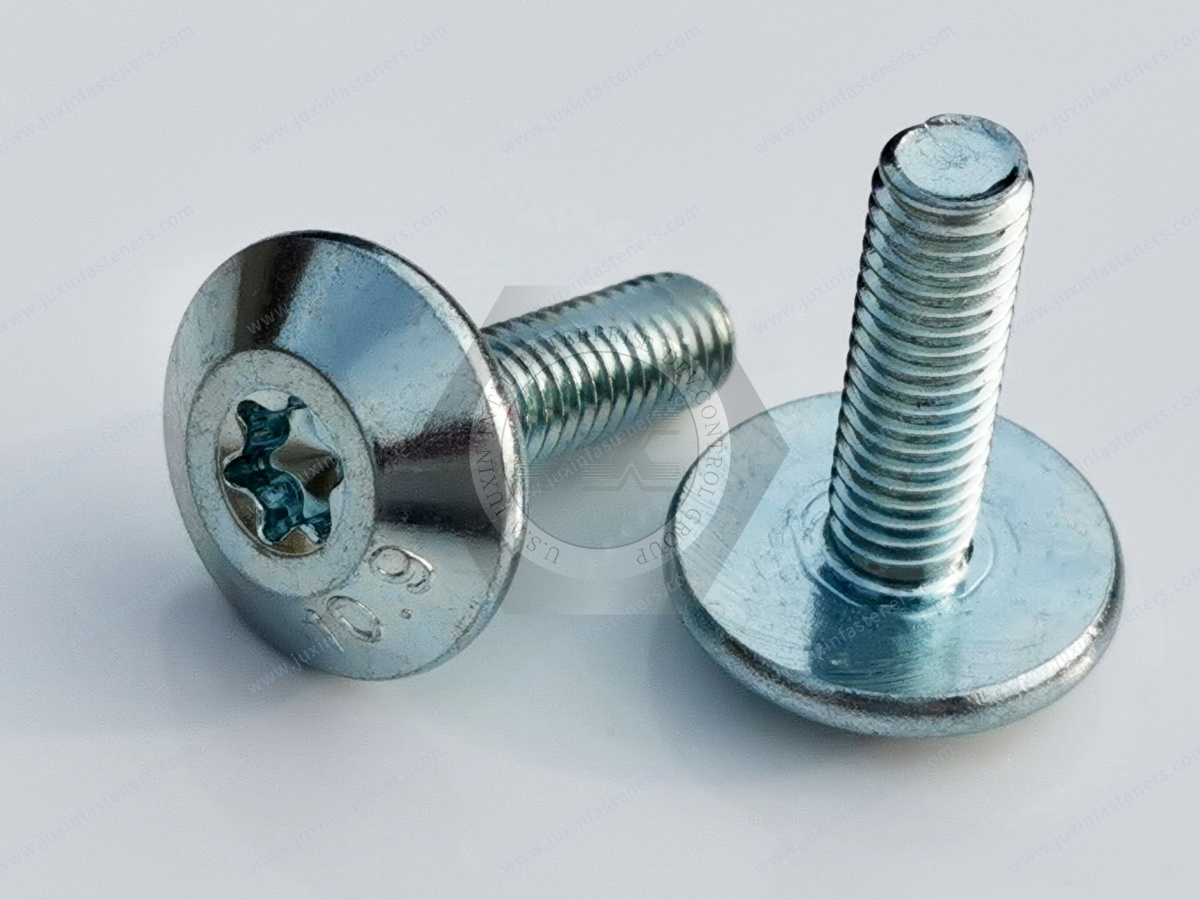
Class 10.9 Button Head and Torx Drive Screws
Button head and internal Torx-drive screws may be considered where compact head geometry, appearance or installation access is important.
Potential Applications
Precision machinery
Industrial enclosures
Automation equipment
Mechanical housings
Engineering Considerations
Head height
Drive engagement
Installation torque
Head strength
Tool accessibility
Mechanical-property requirements
Important Engineering Limitation
Not every button head or Torx-drive screw is available or standardized in Class 10.9.
Some head geometries may have reduced loadability compared with conventional fasteners.
Engineering Recommendation
Confirm the applicable standard or approved drawing and verify whether the selected head geometry can meet the required mechanical-property class.
Thread Engagement: A Critical Design Requirement
The internal thread must support the required joint load.
Potential failure modes include:
Internal thread stripping
External thread stripping
Pull-out
Local deformation
Joint loosening
Information Gain: Stronger Screws Can Increase the Risk of Mating-Thread Failure
A Class 10.9 screw installed in a relatively soft aluminum or low-strength steel tapped hole may be limited by the internal thread.
Engineering Recommendation
Evaluate effective thread engagement, mating material strength, thread geometry and installation preload.
Metric Coarse vs Fine Threads
Class 10.9 screws may be specified with metric coarse or fine threads where applicable.
Coarse Threads
Often selected for general industrial fastening.
Fine Threads
May be useful for specific geometric, adjustment or engagement requirements.
Important Engineering Limitation
Fine threads are not inherently vibration-proof.
Engineering Recommendation
Select thread pitch according to the complete joint requirements rather than assuming that a finer pitch automatically prevents loosening.
Vibration Loosening in Class 10.9 Bolted Joints
Vibration-related loosening can occur even when Class 10.9 screws are used.
Important factors include:
Preload
Transverse displacement
Joint stiffness
Friction
Surface embedding
Thermal cycling
Joint geometry
Potential Locking Solutions
Prevailing torque nuts
All-metal locking nuts
Nylon insert lock nuts where temperature permits
Serrated flange fasteners where appropriate
Thread-locking systems
Mechanical locking devices
Important Engineering Limitation
Class 10.9 is a strength designation, not an anti-loosening feature.
Engineering Recommendation
Validate the selected locking method under representative service conditions.
Torque-Tension Relationship and Installation Control
Tightening torque is commonly used to generate preload.
However, torque is not a direct measurement of clamp load.
The torque-tension relationship depends on friction and joint geometry.
Important Variables
Thread friction
Bearing surface friction
Coating
Lubrication
Washer condition
Installation speed
Tool accuracy
Joint seating behavior
Information Gain: Identical Class 10.9 Screws Can Produce Different Clamp Loads at the Same Torque
A coating change or lubrication difference can alter friction and therefore change preload.
Production Recommendation
Validate tightening parameters using the actual fastener, coating, mating components and assembly method.
ISO 16047 Torque/Clamp Force Testing
ISO 16047 provides a framework for torque/clamp force testing of threaded fasteners within its applicable scope.
It can support the evaluation of tightening behavior.
Important Limitation
A torque-tension test on one configuration does not automatically qualify every coating, lubricant or joint design.
Engineering Recommendation
Define the required testing conditions during OEM fastener qualification.
Hydrogen Embrittlement Risk in Class 10.9 Screws
Hydrogen embrittlement is an important consideration for susceptible high-strength steel fasteners.
Hydrogen may enter the material during certain manufacturing, coating or service processes.
Under unfavorable conditions, delayed cracking or fracture may occur.
Potential Risk Factors
High material strength or hardness
Hydrogen-generating surface treatments
Certain electroplating processes
Sustained tensile stress
Aggressive environments
Important Engineering Limitation
Not every Class 10.9 screw will experience hydrogen embrittlement.
Risk depends on material, process and service conditions.
Information Gain: Corrosion Protection Must Be Evaluated Together With Mechanical Reliability
A coating process may improve corrosion resistance while introducing other risks if the process is not properly controlled.
Engineering Recommendation
Review coating-process suitability, applicable safeguards and validation requirements before approving a surface treatment.
Zinc-Plated Class 10.9 Screws
Zinc electroplating is used for corrosion protection in many industrial fastening applications.
Potential Applications
General machinery
Indoor industrial equipment
Selected automotive components
Engineering Considerations
Coating thickness
Thread fit
Corrosion requirements
Friction behavior
Hydrogen embrittlement controls
Important Limitation
Zinc electroplating is not automatically appropriate for every Class 10.9 fastener application.
Engineering Recommendation
Confirm the coating specification and process-related risk controls.
Zinc-Nickel Coated Class 10.9 Screws
Zinc-nickel coating systems may be selected for applications requiring defined corrosion performance.
Potential Applications
Automotive equipment
EV-related mechanical assemblies
Industrial machinery
Outdoor equipment
Important Engineering Considerations
Coating composition
Coating thickness
Passivation
Topcoat
Thread fit
Friction behavior
Important Limitation
The term zinc-nickel alone does not establish a specific corrosion-performance level.
Engineering Recommendation
Specify the complete coating system and acceptance requirements.
Zinc-Flake Coated Class 10.9 Bolts
Zinc-flake coating systems are used in selected automotive and industrial fastening applications.
They may be considered where corrosion resistance and coating-process characteristics are important.
Potential Applications
Automotive fasteners
Heavy equipment
Industrial machinery
Outdoor mechanical assemblies
Important Engineering Limitation
Not every zinc-flake coating provides the same corrosion or friction performance.
Engineering Recommendation
Confirm coating-process compatibility, thickness, thread fit and tightening behavior.
Black Oxide and Black Coated Class 10.9 Screws
Black oxide and other black finishes are used in selected industrial applications.
Potential Benefits
Controlled appearance
Reduced surface reflectivity
Compatibility with certain lubrication systems
Important Limitation
Black oxide alone generally provides limited corrosion protection compared with appropriately specified protective coating systems.
Engineering Recommendation
Do not select a black finish solely on appearance when corrosion resistance is a critical requirement.
Surface Treatment Comparison
| Surface treatment | Primary consideration | Qualification focus |
|---|---|---|
| Zinc electroplating | General corrosion protection | Hydrogen embrittlement, thread fit and friction |
| Zinc-nickel coating | Defined corrosion protection | Coating specification and torque behavior |
| Zinc-flake coating | Selected industrial corrosion protection | Coating process and friction requirements |
| Black oxide | Appearance and surface condition | Corrosion limitations |
| Other black protective coatings | Application-specific protection | Exact coating system and acceptance criteria |
Information Gain: Coating Changes Can Require Assembly Requalification
A replacement screw with the same dimensions and property class may produce a different preload if its coating friction differs.
Production Recommendation
Revalidate tightening parameters when changing coating systems or approved suppliers.
Automotive and EV Applications
Class 10.9 fasteners are used in selected automotive and EV mechanical assemblies requiring defined strength and installation performance.
Potential Applications
Powertrain-related assemblies
Mechanical brackets
Motor housings
Selected chassis structures
EV equipment frames
Battery-related mechanical assemblies
Engineering Considerations
Cyclic loading
Vibration
Preload
Corrosion
Thermal cycling
Installation traceability
Critical Limitation
Safety-critical automotive joints, suspension components and battery structural connections require approved OEM specifications and application-specific validation.
Engineering Recommendation
Do not substitute Class 10.9 fasteners into safety-critical joints without formal engineering approval.
Industrial Machinery and Automation Equipment
Class 10.9 screws may be used in machinery requiring reliable mechanical connections.
Potential Applications
CNC machines
Robotic systems
Production equipment
Hydraulic machinery
Industrial automation systems
Engineering Considerations
Joint stiffness
Installation access
Service loads
Maintenance requirements
Preload retention
Production Recommendation
Standardize approved screw specifications and installation procedures.
Pumps, Valves and Fluid Control Equipment
Class 10.9 screws may be used in selected pump, valve and fluid-control equipment assemblies.
Potential Applications
Industrial pumps
Valve housings
Mechanical flanges
Hydraulic equipment
Energy systems
Engineering Considerations
Internal pressure
Cyclic loading
Sealing interfaces
Joint separation
Corrosion exposure
Important Engineering Limitation
A Class 10.9 screw does not automatically establish the suitability of a pressure-retaining joint.
Engineering Recommendation
Evaluate the fastener together with the flange, gasket, sealing system and applicable equipment requirements.
Construction Equipment and Heavy Machinery
Class 10.9 screws are used in selected heavy-duty mechanical assemblies.
Potential Applications
Excavators
Agricultural machinery
Mining equipment
Industrial lifting equipment
Construction machinery
Engineering Considerations
Shock loading
Fatigue
Vibration
Corrosion
Maintenance access
Critical Limitation
Safety-critical lifting and structural applications require applicable engineering approval and validation.
Electrical and Electronic Equipment
Class 10.9 screws may be appropriate for selected structural assemblies in electrical and electronic equipment.
Potential Applications
Equipment frames
Industrial cabinets
Communication equipment structures
Power conversion equipment housings
Engineering Considerations
Joint loading
Installation access
Corrosion
Thermal cycling
Electrical clearance
Important Limitation
Mechanical strength does not establish electrical bonding or high-voltage safety compliance.
Manufacturing Engineering: Production-Line Assembly Consistency
Reliable Class 10.9 fastening requires repeatable control of the complete assembly process.
Important Production Variables
Fastener property class
Thread dimensions
Coating condition
Lubrication
Mating components
Tightening tool
Installation speed
Torque or angle control
Joint seating behavior
Potential Production Problems
Insufficient preload
Excessive preload
Thread stripping
Fastener fracture
Damaged drive features
Rework
Joint separation
Information Gain: Fastener Conformity Does Not Guarantee Assembly Consistency
A screw may meet ISO mechanical requirements but still produce inconsistent clamp load if friction or joint conditions vary.
Production Recommendation
Validate installation parameters using representative production components.
Torque-Controlled vs Torque-Angle Tightening
Different tightening methods may be suitable for Class 10.9 joints.
Torque-Controlled Tightening
Uses a specified tightening torque.
Torque-Angle Tightening
Uses a defined torque and angular displacement strategy.
Important Engineering Limitation
Neither method is universally superior.
The appropriate strategy depends on the joint, friction variation and required preload.
Engineering Recommendation
Select the tightening strategy through application-specific testing and validation.
Class 10.9 Screw Inspection and Quality Requirements
OEM qualification should address product conformity and assembly performance.
Dimensional Inspection
Diameter
Thread pitch
Thread tolerance
Length
Head geometry
Drive dimensions
Mechanical Verification
Applicable property class
Tensile requirements
Proof-load requirements
Hardness requirements
Other tests required by the standard or drawing
Surface Inspection
Coating specification
Coating thickness
Surface condition
Thread fit
Corrosion requirements
Assembly Verification
Torque-tension behavior
Installation process
Mating components
Joint performance
Important Limitation
Not every test applies to every fastener size or geometry.
Engineering Recommendation
Define the required inspection and documentation package in the approved drawing and purchase specification.
International Standards for Class 10.9 Screws
ISO 898-1
Mechanical properties of applicable carbon steel and alloy steel bolts, screws and studs.
ISO 4017
Hexagon head screws.
ISO 4014
Hexagon head bolts.
ISO 4162
Hexagon flange bolts, small series.
ISO 16047
Torque/clamp force testing for threaded fasteners.
Important Standards Principle
Dimensional requirements, mechanical-property requirements and coating requirements are separate specification elements.
Engineering Recommendation
Identify the relevant standards for the actual fastener geometry and application.
Metric vs Inch-Series High Strength Fasteners
Class 10.9 belongs to the ISO metric mechanical-property system.
SAE grades belong to a different specification system.
Important Engineering Limitation
ISO Class 10.9 is not an SAE grade designation.
Metric threads, UNC threads, UNF threads and British thread systems are also distinct.
They are not directly interchangeable.
Engineering Recommendation
Confirm thread designation, pitch, tolerance, head geometry and mechanical requirements before approving a replacement.
Supplier Qualification for Class 10.9 Screws
Supplier development and procurement teams should evaluate both technical conformity and commercial suitability.
Product Definition
Approved drawing or standard
Part number and revision
Screw geometry
Thread designation
Property class
Material requirements
Surface treatment
Quality Requirements
Dimensional inspection
Mechanical-property verification
Coating requirements
Functional testing where specified
Documentation
Change control
Production Requirements
Prototype quantity
Batch quantity
Annual demand
Packaging
Traceability where required
Delivery schedule
Commercial Requirements
MOQ
Lead time
Pricing structure
Supply continuity
Approved substitutions
Information Gain: Supplier Qualification Must Consider Joint-Level Performance
A supplier may provide a Class 10.9 screw that meets mechanical and dimensional requirements,
but the final assembly may still perform differently if coating friction or mating-thread conditions change.
Procurement Recommendation
Evaluate fastener conformity and assembly performance separately.
Total Cost of Ownership for Class 10.9 Fasteners
Purchasing decisions should consider more than unit price.
Potential Cost Drivers
Material and heat treatment
Manufacturing process
Surface coating
Inspection
Packaging
Assembly cycle time
Rework
Maintenance
Supply reliability
Information Gain: The Lowest Unit Price May Not Produce the Lowest Assembly Cost
Inconsistent coating friction or dimensional variation may increase assembly problems and rework.
Procurement Recommendation
Compare qualified suppliers using total installed cost and long-term supply performance.
Frequently Asked Questions
What does Class 10.9 mean on a metric screw?
It identifies a high-strength ISO mechanical-property class. The complete requirements are defined by the applicable standard.
Is Class 10.9 stronger than Class 8.8?
Class 10.9 has higher specified strength requirements, but the correct selection depends on the joint design.
Does Class 10.9 prevent vibration loosening?
No. Vibration resistance depends on preload, joint stiffness, friction and locking strategy.
Are Class 10.9 flange screws better than standard hex head screws?
They may simplify assembly or provide a different bearing surface, but suitability depends on the application.
Can Class 10.9 screws be zinc plated?
Coating suitability requires evaluation of hydrogen embrittlement risk, applicable specifications and process controls.
Are fine-thread Class 10.9 screws more vibration-resistant?
Not automatically. Thread pitch alone does not guarantee resistance to loosening.
How should tightening torque be selected?
Torque should be validated using the actual screw, coating, mating components and joint requirements.
Can Class 10.9 screws be used outdoors?
Yes, in suitable applications with appropriate corrosion protection and environmental qualification.
What should be included in a Class 10.9 OEM screw RFQ?
Provide the approved drawing, property class, dimensions, thread designation, coating requirements, installation conditions and purchasing quantities.
Juxin Fasteners: Metric Class 10.9 Screws and OEM High Strength Fasteners
Juxin Fasteners supplies industrial fastening components for OEM manufacturing and mechanical assemblies.
Relevant product categories include:
Class 10.9 hex head screws
Class 10.9 hex bolts
Class 10.9 flange head screws
High strength metric screws
Drawing-specific internal-drive screws
Automotive fastening components
Custom OEM high strength fasteners
Specific dimensions, materials, mechanical-property classes, manufacturing methods, coatings, inspection requirements,
samples, MOQ and delivery schedules are subject to technical and commercial confirmation.
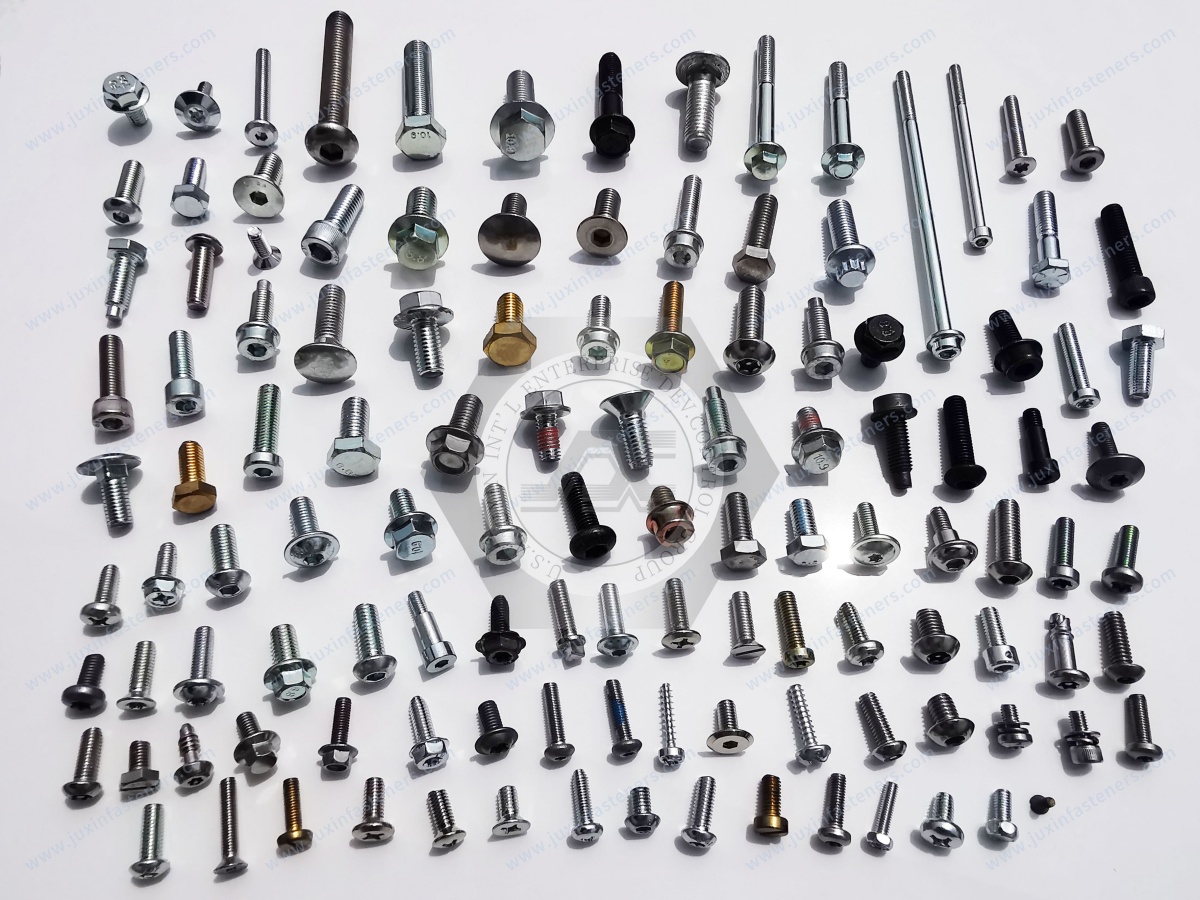
Request a Metric Class 10.9 Screw RFQ
Are you developing a new high-load mechanical assembly?
Do you need to qualify Class 10.9 hex screws, flange bolts or drawing-specific high-strength fasteners?
Juxin Fasteners welcomes drawing-based inquiries from mechanical engineers, manufacturing teams, production managers, procurement specialists and supplier development teams.
For technical review and quotation, please provide:
Approved drawing or standard + part number and revision + screw geometry + nominal diameter and length + thread designation and tolerance
+ property class + material requirements + surface coating + mating components + installation method + preload or torque requirements
+ corrosion environment + inspection criteria + prototype quantity + annual demand + batch size + packaging + target delivery schedule.
Company: Juxin Fasteners
Website: https://www.juxinfasteners.com/
Email: info@juxinfasteners.com
Send your Class 10.9 high strength screw drawings and OEM RFQ to Juxin Fasteners for technical review and quotation.
Contact Us
Tel.:
+86 020 8621 0320
+86 020 3121 6067
E-mail:
Technical Support:
Navigation
SEND INQUIREY



