
Call Us
+86 136 6007 9809
Call Us
+86 136 6007 9809

Nov. 01, 2023
Modern vehicles depend on increasingly complex electrical architectures. Wire harnesses connect sensors, lighting, control modules,
power distribution systems, infotainment equipment, HVAC systems, safety systems and other electrical components throughout the vehicle.
Securing those harnesses is not simply a matter of keeping wires in place.
An automotive wire harness clip or cable tie must work as part of the complete routing system. Its performance depends on the cable bundle,
attachment point, mounting hole or panel edge, operating temperature, vibration, nearby components, assembly process and service requirements.
For engineers and sourcing teams, the selection path should therefore be:
harness geometry → routing location → mounting interface → fastener type → material → environment → installation → retention → validation
This article explains how to select and source automotive wire harness clips, cable ties, push-mount ties,
fir tree mounts, edge clips and related cable-management fasteners for OEM and Tier supplier applications.
Automotive wire harness clips are fastening components designed to locate, support and route electrical wiring within a vehicle assembly.
Common configurations include:
Push-in wire harness clips
Fir tree harness clips
Cable tie mounts
Push-mount cable ties
Fir tree cable ties
Edge clips
Panel-mounted cable retainers
Stud-mounted cable retainers
Routing clips
Hose-and-wire combination clips
Plastic cable clamps
Nylon cable ties
Custom molded harness retainers
The correct component depends on both sides of the interface:
What must be retained?
and
Where will it be attached?
A visually similar clip is not necessarily a functional replacement.
Vehicle wiring operates in an environment involving vibration, temperature changes, assembly movement and interaction with surrounding structures.
Poor harness routing can contribute to:
Excessive cable movement
Abrasion against nearby surfaces
Localized stress
Contact with moving components
Noise and rattling
Difficult assembly
Difficult service access
Connector loading
Uncontrolled routing variation
A correctly selected harness fastener helps maintain the intended routing path and separation from surrounding components.
However, a clip cannot compensate for a fundamentally poor harness layout.
Fastener selection should be considered together with cable routing, bend radius, connector location, movement and service access.
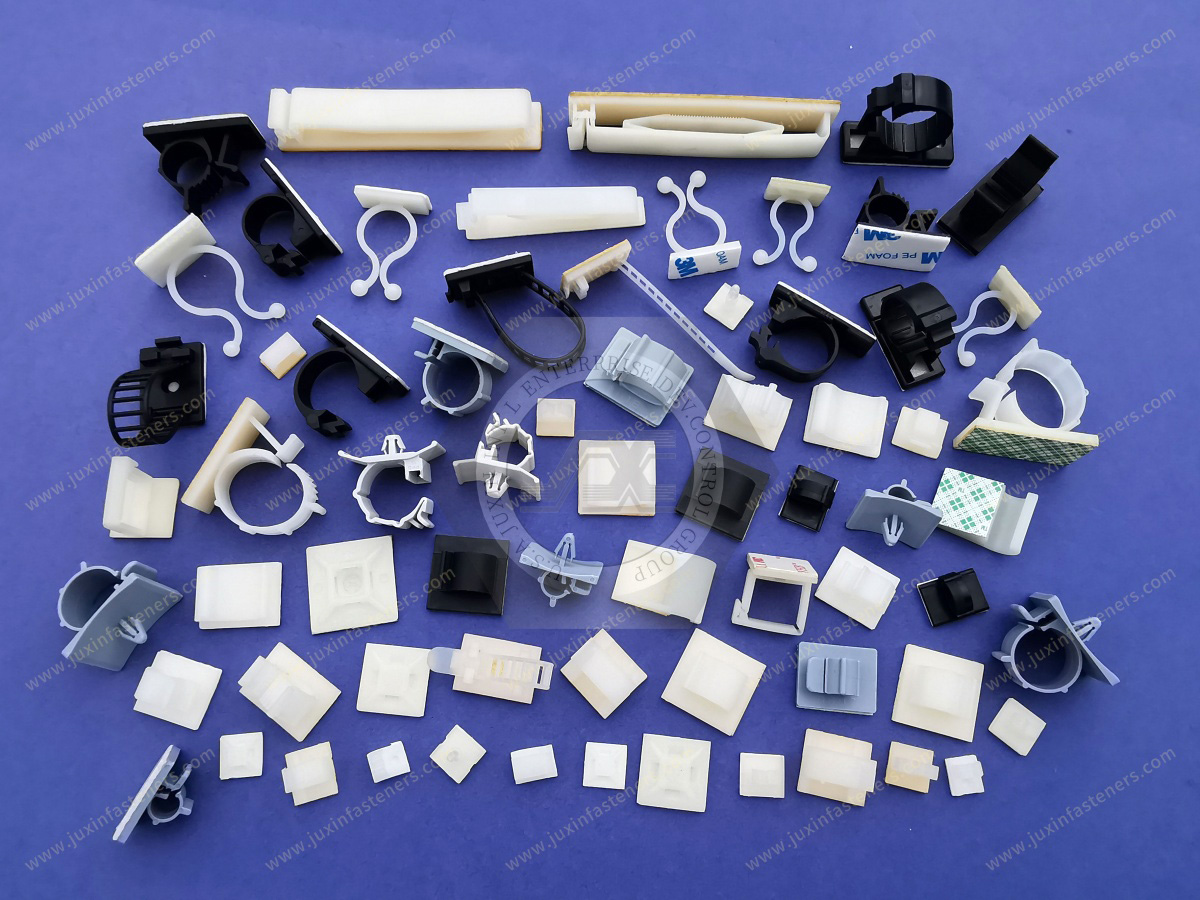
Cable ties and dedicated harness clips solve related but different fastening problems.
A cable tie primarily wraps around and retains a cable or bundle.
It can be useful where engineers need:
Bundle organization
Adjustable bundle diameter
Simple installation
Secondary cable retention
Flexible routing
Some automotive cable ties integrate mounting features so the tie can also attach the bundle to the vehicle.
A dedicated harness clip typically incorporates a predefined mounting and retention geometry.
Depending on the design, it may:
Snap into a panel hole
Attach to a panel edge
Fit over a stud
Retain a specific cable diameter
Position a harness at a defined distance from the substrate
Control routing direction
Where repeatable harness position is important, a dedicated clip may provide better geometric control than a conventional cable tie alone.
Push-mount cable ties combine a cable tie with a push-in mounting feature.
They allow the harness to be bundled and attached to a prepared mounting hole with one component.
Potential applications include:
Main vehicle harnesses
Dashboard wiring
Door wiring
Sensor cables
HVAC wiring
Lighting harnesses
Engine-compartment routing
Electrical equipment
Important selection parameters include:
Bundle diameter
Tie length
Tie width
Mounting-hole diameter
Panel thickness
Mounting material
Required routing direction
Installation accessibility
The mounting feature and tie section should be evaluated as one fastening system.
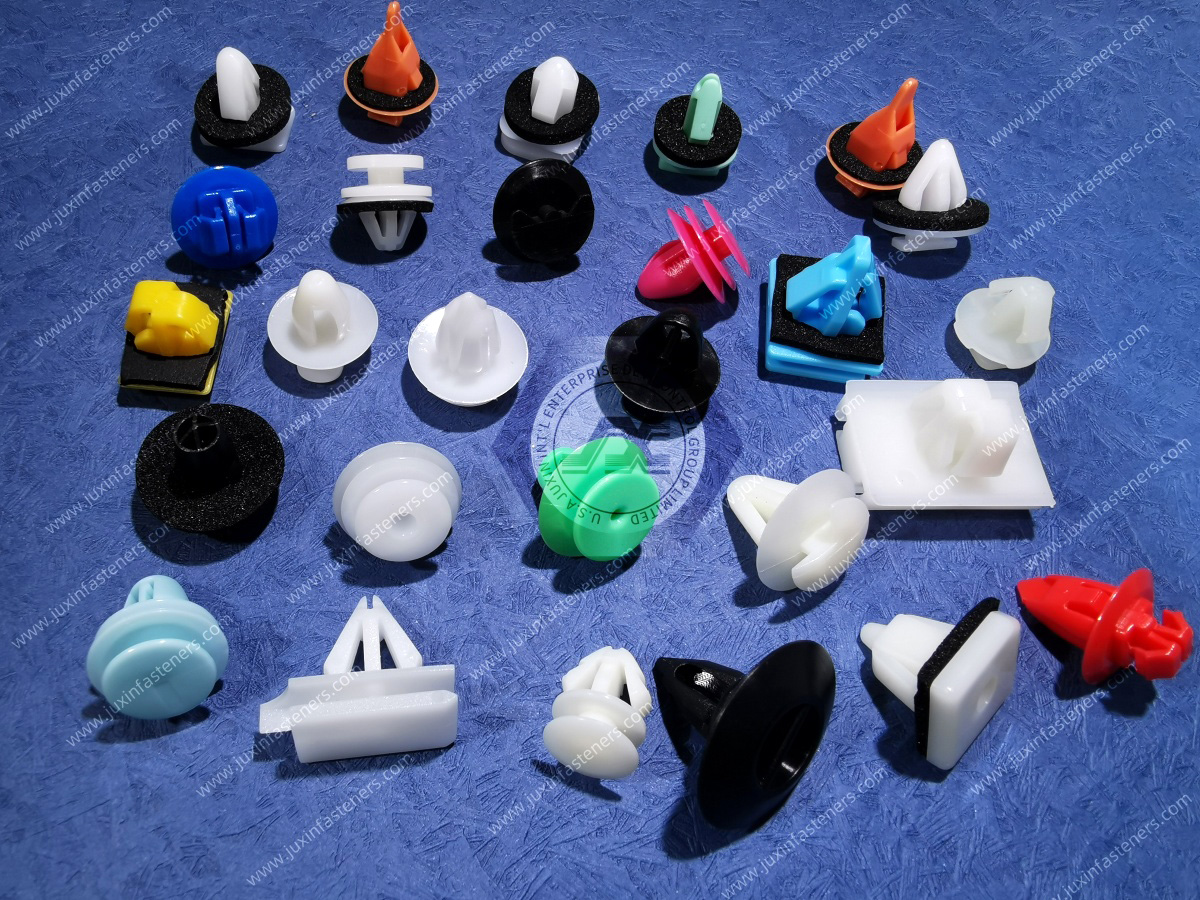
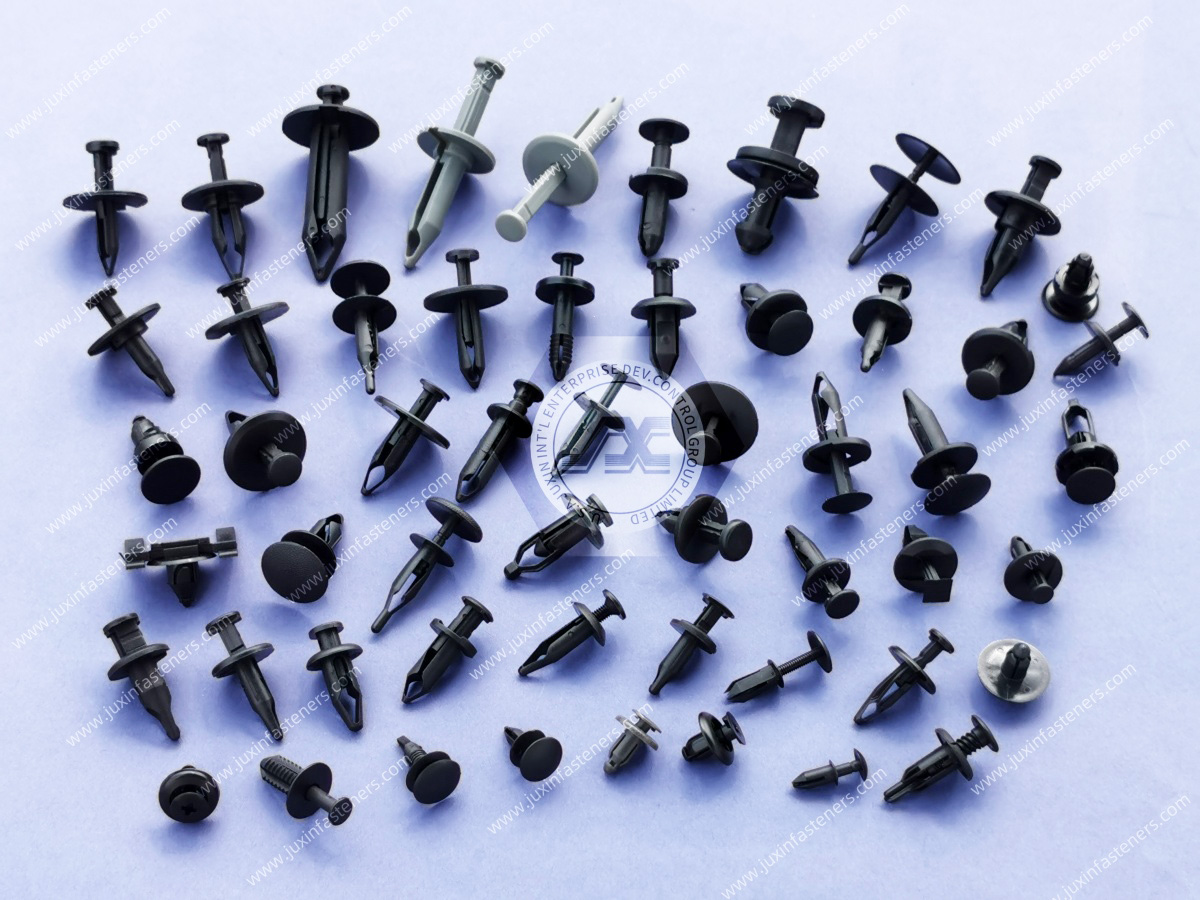
Fir tree or Christmas tree mounting features use flexible ribs that deform during insertion and engage the mounting hole.
They are widely used because a single fastener can accommodate efficient push-in assembly.
For a fir tree harness clip, engineers should evaluate:
Hole diameter
Panel thickness
Stem geometry
Rib geometry
Material stiffness
Installation force
Retention requirement
Temperature
Moisture condition where relevant
Serviceability
A fir tree fastener that fits the nominal hole does not automatically have the correct retention behavior.
Edge clips attach directly to the edge of a sheet-metal or plastic panel.
This can eliminate the need for a dedicated mounting hole in some designs.
An edge clip may be combined with:
Cable ties
Harness retainers
Tube clips
Cable clamps
Routing features
Important design inputs include:
Panel thickness
Edge geometry
Clip engagement depth
Installation direction
Required removal behavior
Surface coating
Nearby components
For coated sheet metal, the interaction between the clip and finished surface should also be considered.
Panel-mounted clips are frequently used when the vehicle structure already provides a dedicated hole.
Mounting holes may be:
Round
Square
Rectangular
Slotted
Application-specific
The mounting-hole geometry is a functional part of the fastening system.
Small changes in hole size, panel thickness or clip geometry can change insertion and retention behavior.
For replacement and second-source projects, always provide the mating-hole dimensions whenever available.
Some vehicle structures use studs as attachment points.
A harness retainer can be designed to engage the stud while supporting a cable bundle, hose or other routed component.
When evaluating stud-mounted retainers, define:
Stud diameter
Stud thread or surface geometry
Available engagement length
Installation direction
Harness diameter
Required stand-off
Removal requirement
Surrounding clearance
Do not select the retainer solely from the nominal stud diameter.
One of the most important engineering principles in automotive harness fastening is that the clip should not be evaluated independently.
There are at least three interfaces:
clip ↔ harness
clip ↔ vehicle structure
harness ↔ surrounding environment
All three affect performance.
For example, a clip may remain securely attached to the panel but still be unsuitable if the harness can move enough to contact a sharp bracket.
Similarly, an extremely tight harness clip can create unwanted local compression or restrict necessary movement.
The correct objective is controlled routing, not simply maximum retention.
Wire-harness abrasion can occur when cables repeatedly contact:
Sheet-metal edges
Brackets
Covers
Moving components
Adjacent harnesses
Tubes or hoses
Harness clips help maintain clearance, but engineers should evaluate the complete routing path.
Questions to ask include:
Can the harness contact another component under vibration?
Is there sufficient clearance throughout the assembly tolerance range?
Does the harness move during vehicle operation?
Can installation variation change the routing path?
Is a protective sleeve or additional routing point required?
This is a better design approach than relying solely on a stronger clip.
A harness should not be routed so tightly that the fastener forces an undesirable bend near a connector.
The clip position can affect:
Bend radius
Connector loading
Cable strain
Assembly access
Serviceability
When defining a custom harness clip, provide the surrounding geometry where possible—not just the clip dimensions.
Polymer selection should be based on the actual service environment.
Potential materials for plastic fastening components can include:
PA6
PA66
POM
PP
Heat-stabilized polymer grades
Higher-temperature engineering polymers where appropriate
The correct choice depends on factors such as:
Temperature
Mechanical load
Required flexibility
Moisture
Chemical exposure
Dimensional requirements
Installation behavior
Service life expectations
A polymer family name alone does not establish final application performance.
PA66 is commonly considered for cable ties, clips and other plastic fastening components because it can provide a useful balance of mechanical properties, flexibility and manufacturability.
However, nylon is moisture-sensitive.
Moisture absorption can affect:
Dimensions
Stiffness
Flexibility
Installation behavior
Retention behavior
For applications where these characteristics are critical, material condition should be considered during testing and qualification.
The term “automotive grade” should not be treated as a universal temperature specification.
Different vehicle locations have different thermal environments.
Compare:
Passenger compartment
Door cavity
Instrument panel
Underbody
Engine compartment
HVAC assembly
EV thermal-management area
Power-electronics vicinity
The required polymer and validation conditions may differ substantially between these locations.
Engineers should define both normal operating conditions and relevant temperature extremes for the specific application.
Harness clips and cable ties can encounter chemicals depending on their vehicle location.
Potential exposures include:
Oils
Greases
Coolants
Cleaning agents
Road contaminants
Washer fluids
Other application-specific fluids
Material compatibility should be evaluated for the actual chemical, concentration, temperature and exposure duration where relevant.
“Chemical resistant” should not be used as a universal material claim.
Plastic fasteners can exhibit time-dependent behavior under sustained load.
Two important considerations are:
Creep — gradual deformation under sustained stress.
Stress relaxation — reduction in stress while a component remains under deformation.
These behaviors can matter in:
Cable ties
Snap-fit retainers
Edge clips
Harness clamps
Hose clips
Other continuously loaded plastic components
A component that has adequate retention immediately after assembly should not automatically be assumed to provide identical behavior after extended thermal and mechanical exposure.
Where long-term retention is critical, validation should reflect actual service conditions.
Interior electrical systems may use harness clips for:
Instrument panels
Center consoles
Door systems
Seats
Roof wiring
Lighting
Infotainment
Sensors
Interior control modules
Important factors can include:
Low installation effort
Controlled routing
Noise reduction
Limited packaging space
Service access
Appearance where visible
Fastener geometry should support the assembly process as well as final vehicle performance.
Door assemblies create specific cable-management challenges because wiring may serve:
Window controls
Locks
Speakers
Lighting
Mirrors
Sensors
Harness routing must account for limited packaging space and the movement of door-related components.
The correct fastener position can be as important as the fastener itself.
Engine-compartment cable management may involve:
Sensor wiring
Control wiring
Electrical connectors
Cooling-system-related wiring
Other routed electrical components
Compared with many interior applications, engineers may need to consider higher temperatures, vibration and fluid exposure.
Material selection should therefore be based on the actual installation location rather than simply specifying a generic nylon clip.
Electric vehicles introduce additional electrical and thermal-management systems.
Potential fastening applications include:
Battery-management-system wiring
Sensor harnesses
Low-voltage wiring
Thermal-management control wiring
Power-electronics peripheral wiring
Charging-system peripheral assemblies
Electrical enclosure wiring
High-voltage cable systems require application-specific electrical, mechanical and safety engineering.
A plastic clip should not automatically be assumed to satisfy an insulation, dielectric, flame or high-voltage safety requirement merely because the component is non-metallic.
Those requirements should be defined and validated as part of the customer's system specification.
Harness fasteners can also support electrical routing around:
HVAC modules
Blower assemblies
Temperature sensors
Actuators
Cooling-system controls
Thermal-management equipment
Where electrical cables are routed near fluid lines, engineers should consider the interaction between both systems, including clearance and possible movement.
Plastic cable ties are not appropriate for every environment.
Metal cable ties may be considered where the application involves conditions such as:
Higher temperature exposure
Different mechanical retention requirements
Harsh environmental conditions
Application-specific durability requirements
However, stainless steel cable ties and nylon cable ties are different fastening technologies.
They should not be treated as direct substitutes without evaluating:
Cable protection
Edge condition
Installation method
Required tension
Electrical considerations
Environmental conditions
Understanding failure modes provides more useful engineering information than simply describing product features.
Possible causes include:
Incorrect mounting-hole size
Wrong panel thickness
Insufficient engagement
Material behavior
Damaged retention geometry
Incorrect installation
Possible causes include:
Mounting hole too small
Excessive interference
Incorrect clip geometry
Material stiffness
Panel variation
Misalignment during assembly
Possible considerations include:
Material condition
Installation method
Excessive tension
Temperature
Storage or environmental effects
Incorrect tie selection
Possible causes include:
Incorrect bundle diameter
Insufficient retention
Incorrect clip spacing
Excessive unsupported harness length
Poor routing geometry
The fastener may not have been designed for repeated removal.
Service-cycle requirements should therefore be defined during component selection.
There is no single insertion-force requirement applicable to every automotive harness clip.
Insertion behavior depends on:
Clip geometry
Material
Mounting-hole size
Panel thickness
Installation direction
Temperature
Moisture condition
Assembly equipment
If an OEM drawing specifies insertion-force limits, those values should be treated as part of the component specification.
Otherwise, the required assembly behavior should be established and validated for the actual application.
Maximum pull-out force is not always the correct design objective.
A serviceable interior component may require controlled removal.
A harness clip in another location may require stronger retention.
The design requirement should therefore reflect:
function + environment + service strategy
rather than a universal retention number.
Supplier-development teams frequently need an alternative source for an existing clip or cable tie.
The process should go beyond visual matching.
A more reliable second-source workflow is:
existing sample → application → critical dimensions → mounting interface → material → functional requirements → sample validation → assembly approval → production sourcing
Important comparison points include:
Head geometry
Stem geometry
Clip orientation
Hole fit
Panel thickness
Bundle diameter
Material
Installation behavior
Retention behavior
Temperature/environment
Removal requirements
A physical sample is extremely useful, but the mating panel or mounting information can make qualification substantially more reliable.
When no complete drawing is available, provide:
Existing fastener sample
Vehicle-side mounting information
Mounting-hole dimensions
Panel thickness
Cable or harness diameter
Photos of the installed component
Material information if known
Required functional behavior
Annual demand
For custom projects, a 2D drawing or 3D model can further define critical geometry.
A good drawing should define the dimensions that actually control function.
Depending on the product, these can include:
Overall dimensions
Stem diameter
Head diameter
Mounting feature
Clip opening
Cable diameter range
Panel thickness range
Hole size
Stand-off distance
Orientation
Critical tolerances
Material
Color
Functional requirements
Not every dimension requires the same tolerance.
Critical interface dimensions should receive the greatest attention.
For an existing automotive component, a practical qualification path is:
sample comparison → dimensional review → mating-part installation → functional check → environmental/application validation → approval
For a new design:
application requirements → concept/drawing → sample → assembly evaluation → design adjustment if required → validation → production
This reduces the risk of approving a component solely from dimensional inspection.
For an existing part, provide:
2D drawing if available
3D model if available
Physical sample
Part number
Material if known
Color
Mounting-hole dimensions
Panel thickness
Cable or bundle diameter
Annual volume
For a new design, provide:
Application
Harness or cable dimensions
Mounting interface
Panel material
Panel thickness
Available mounting hole
Routing direction
Temperature environment
Chemical exposure where relevant
Required installation behavior
Required retention behavior
Removal/service requirement
Estimated annual demand
For second-source development, also provide the existing component and mating-part information wherever possible.
Engineers and sourcing teams working with automotive electrical and cable-management systems may also need:
Automotive Plastic Fasteners & Clips
Custom Plastic & Nylon Fasteners
Nylon Fasteners
Plastic Push Rivets
Automotive Custom Fasteners
Stainless Steel Cable Ties
Hose Clamps
Custom Fasteners
Each technology should be selected according to its actual joint and routing function.
JUXIN FASTENERS supports standard and custom fastening components for automotive OEM, Tier supplier and industrial sourcing projects.
Relevant fastening solutions include:
Automotive wire harness clips
Automotive cable ties
Push-mount cable ties
Fir tree mounting clips
Edge clips
Cable retainers
Plastic push rivets
Automotive plastic clips
Nylon fasteners
Plastic fasteners
Hose and tube retaining components
Stainless steel fasteners
Custom metal fasteners
CNC machined components
Projects can begin from:
Existing sample
2D drawing
3D model
Application requirements
Existing production component
Second-source development project
For engineers:
routing requirement → cable geometry → mounting interface → environment → fastener concept → sample → assembly validation
For procurement teams:
drawing/sample → specification → annual demand → quotation → sample qualification → approved source → production sourcing
For supplier-development teams:
existing component → sample + mating interface → critical dimensions → functional comparison → validation → second-source qualification
If you are sourcing automotive wire harness clips, nylon cable ties, push-mount cable ties, fir tree clips, edge clips,
cable retainers or custom automotive cable-management fasteners, send JUXIN FASTENERS your drawing, sample or application requirements.
For faster technical evaluation, include the mounting-hole dimensions, panel thickness, harness or cable diameter,
material requirements, operating environment and annual volume whenever available.
Email: info@juxinfasteners.com
Website: www.juxinfasteners.com
Previous: high-strength-screws-bolts
 MORE NEWS
Sep. 27, 2026
Sep. 27, 2026
Sep. 27, 2026
Contact Us
Tel.:
+86 020 8621 0320
+86 020 3121 6067
E-mail:
Technical Support:
Navigation
SEND INQUIREY