
Call Us
+86 136 6007 9809
Call Us
+86 136 6007 9809

Nov. 01, 2023
High-strength screws and bolts are used where a threaded joint must carry significant mechanical loads while maintaining reliable clamping performance under defined operating conditions.
For automotive systems, industrial machinery, heavy equipment, power equipment and other engineered assemblies, selecting a high-strength fastener involves much more than choosing a higher property class.
Engineers and procurement teams must evaluate the complete fastening system:
joint load → fastener geometry → property class → thread → material and heat treatment → surface finish → assembly method → operating environment → validation
JUXIN FASTENERS supplies standard and custom high-strength screws, bolts and drawing-based fasteners for OEM and industrial applications,
including property classes 8.8, 10.9 and 12.9 where specified by the applicable design and fastener standard.
For carbon and alloy steel bolts, screws and studs covered by ISO 898-1, mechanical properties are designated using property classes such as:
8.8
10.9
12.9
These designations provide engineers with standardized mechanical-property information for applicable fasteners.
The property class should not be treated simply as a marketing description such as “stronger steel.”
It forms part of a complete specification that can also include:
Product standard
Thread specification
Dimensions and tolerances
Material and heat treatment
Surface finish
Coating specification
Assembly requirements
Inspection requirements
Application-specific validation
A fastener with the correct nominal diameter but the wrong property class, coating, thread tolerance or geometry may not be an acceptable substitute.
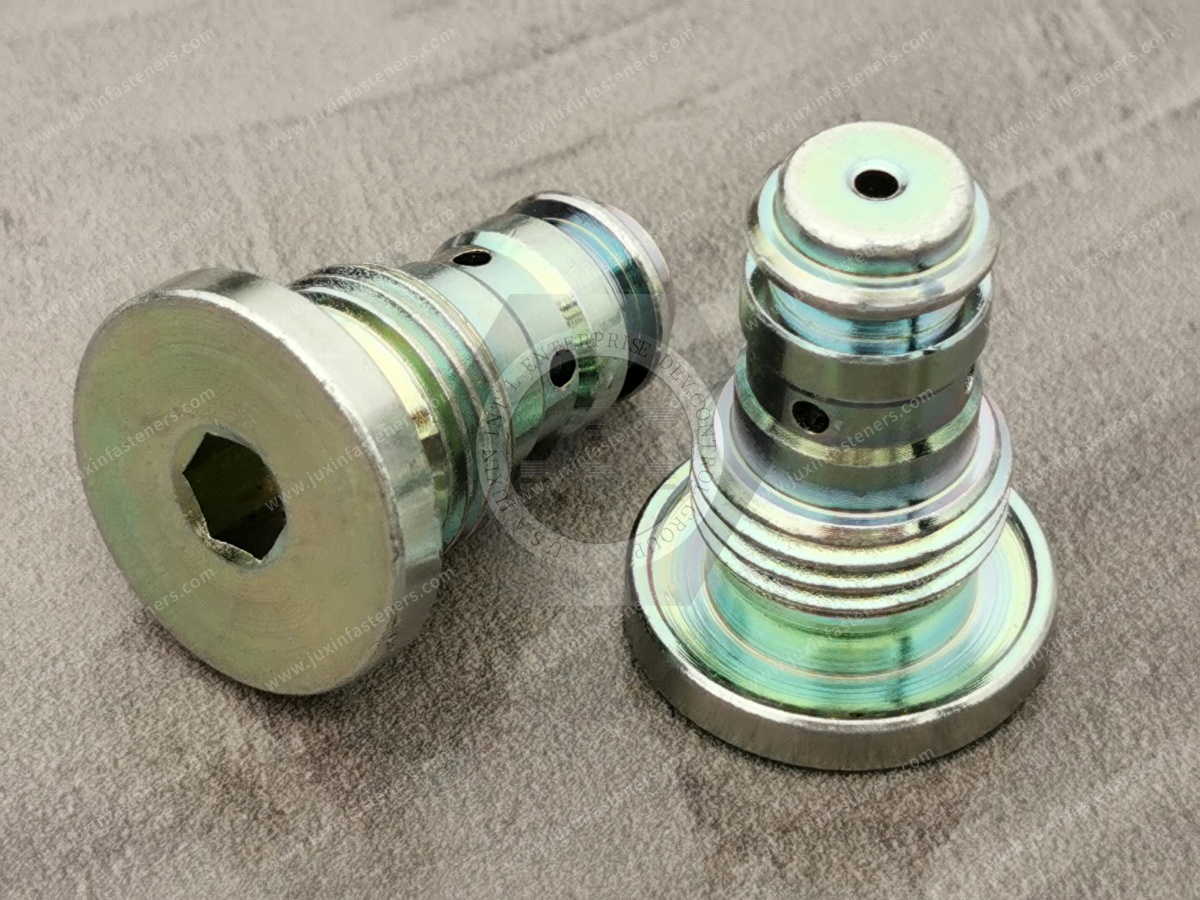
Property classes provide a standardized way to classify the mechanical performance of applicable carbon and alloy steel fasteners.
Property class 8.8 fasteners are widely used in engineered mechanical assemblies where higher strength is required than ordinary low-strength commercial fasteners.
Typical applications can include:
Industrial machinery
Equipment frames
Automotive assemblies
Agricultural machinery
Material handling equipment
General mechanical systems
Property class 10.9 bolts and screws are frequently specified for more highly loaded mechanical joints.
Potential applications include:
Automotive chassis assemblies
Suspension-related systems
Industrial machinery
Heavy equipment
Powertrain-related assemblies
Structural mechanical equipment
The application still determines the required geometry, coating, tightening method and validation.
Property class 12.9 is commonly associated with high-strength alloy-steel fasteners such as certain socket head cap screws and specialized mechanical fasteners.
Applications may include:
Machine tools
Molds and dies
Industrial automation
Robotics
Precision machinery
Highly loaded mechanical assemblies
Selecting 12.9 simply because it has a higher strength classification is not always the correct engineering decision.
The entire joint must be evaluated.
No.
This is one of the most important distinctions when selecting high-strength fasteners.
Moving from 8.8 to 10.9 or 12.9 changes more than the nominal strength capability of the fastener.
Engineers may also need to consider:
Joint stiffness
Required preload
Mating thread strength
Installation torque
Surface coating
Friction conditions
Fatigue loading
Ductility requirements
Hydrogen embrittlement risk
Service temperature
Corrosion environment
A higher-strength fastener cannot compensate for poor joint design.
For example, increasing bolt strength does not automatically solve problems caused by inadequate thread engagement, insufficient bearing area, unsuitable mating materials or uncontrolled tightening.
High-strength fasteners can be manufactured in many configurations depending on the application.
Common product families include:
Hex bolts are widely used in machinery, automotive equipment, structural mechanical assemblies and industrial systems.
Depending on the required product standard, applicable references can include ISO and DIN dimensional standards.
Socket head cap screws are widely used where compact head geometry and internal wrenching are beneficial.
Typical applications include:
Machinery
Tooling
Molds
Automation equipment
Robotics
Precision assemblies
ISO 4762 is one commonly referenced dimensional standard for metric hexagon socket head cap screws.
Flange bolts incorporate a larger bearing surface beneath the head.
Depending on the design, the flange may help distribute bearing load and can simplify assemblies that would otherwise require a separate washer.
They are commonly found in:
Automotive assemblies
Engines and mechanical systems
Industrial equipment
Heavy machinery
Flange geometry, serrations where applicable, coating and tightening behavior should all be considered during specification.
Standard fasteners cannot solve every OEM assembly requirement.
Custom high-strength fasteners may incorporate:
Special head geometry
Shoulder sections
Reduced or increased shank diameters
Special thread lengths
Fine threads
Captive features
Dog points
Pilot points
Special flange geometry
Application-specific drive systems
These components should normally be sourced from a controlled drawing rather than only a commercial description.
High-strength fastener projects may involve either metric or inch thread systems.
Metric projects commonly reference ISO/DIN specifications.
North American projects may involve ASME/ANSI dimensional requirements together with ASTM or SAE mechanical/material specifications depending on the application.
These systems should not be treated as automatically interchangeable.
When converting an existing design between metric and inch fasteners, engineers should review the complete joint rather than simply selecting the nearest nominal diameter.
High-strength carbon and alloy steel fasteners achieve their required mechanical properties through a controlled combination of:
Material selection
Forming
Thread production
Heat treatment
Surface processing
For higher property classes, alloy steel and controlled heat treatment may be required depending on fastener size, specification and manufacturing route.
Material chemistry alone does not establish the final fastener property class.
The finished fastener must satisfy the applicable mechanical requirements.
Heat treatment influences characteristics such as:
Tensile properties
Yield-related behavior
Hardness
Toughness
Ductility
Fatigue performance
Improper heat treatment can produce a component that meets dimensional requirements but does not provide the required mechanical behavior.
For critical applications, procurement specifications should therefore identify the applicable mechanical-property standard rather than requesting only a generic material grade.
Thread manufacturing method can be important in high-strength fastener production.
Thread rolling forms the thread through plastic deformation rather than removing material.
Depending on the component geometry and manufacturing sequence, rolled threads can provide benefits such as efficient production and favorable surface characteristics.
However, engineers should not assume that every custom high-strength component can or should use the same thread-forming process.
Factors include:
Material
Diameter
Thread geometry
Production volume
Component shape
Heat-treatment sequence
Drawing requirements
For machined special fasteners, alternative thread-production methods may be appropriate.
Surface finish affects corrosion protection, friction behavior, assembly and sometimes the risk profile of the manufacturing process.
There is no universal “best coating” for a high-strength bolt.
Selection should begin with the application environment and assembly requirements.
Electroplated zinc is widely used for carbon-steel fasteners.
Potential advantages include:
Economical corrosion protection
Established industrial availability
Multiple passivation systems
Controlled appearance
However, electroplating high-strength steel fasteners requires careful consideration of hydrogen embrittlement.
The coating specification should therefore consider the fastener's strength level, processing route and applicable requirements.
Zinc-nickel coatings are widely considered for demanding corrosion environments, particularly in automotive and transportation applications.
Potential applications include:
Automotive fasteners
EV components
Chassis systems
Industrial equipment
Outdoor equipment
Coating performance depends on the complete coating system, including:
Alloy composition
Coating thickness
Passivation
Sealer or topcoat where specified
Substrate
Geometry
Test method
Assembly conditions
A generic statement such as “zinc-nickel equals a specific number of salt-spray hours” should therefore be avoided unless the exact coating specification and acceptance criteria are defined.
Zinc-flake coating systems are widely used for high-strength fasteners where corrosion protection and process considerations make them appropriate.
Commercial coating families can include systems commonly known by names such as GEOMET or related zinc-flake technologies.
Potential applications include:
Automotive fasteners
Chassis components
Heavy equipment
Industrial machinery
Outdoor assemblies
Coating selection should be based on the required specification rather than only a trade name.
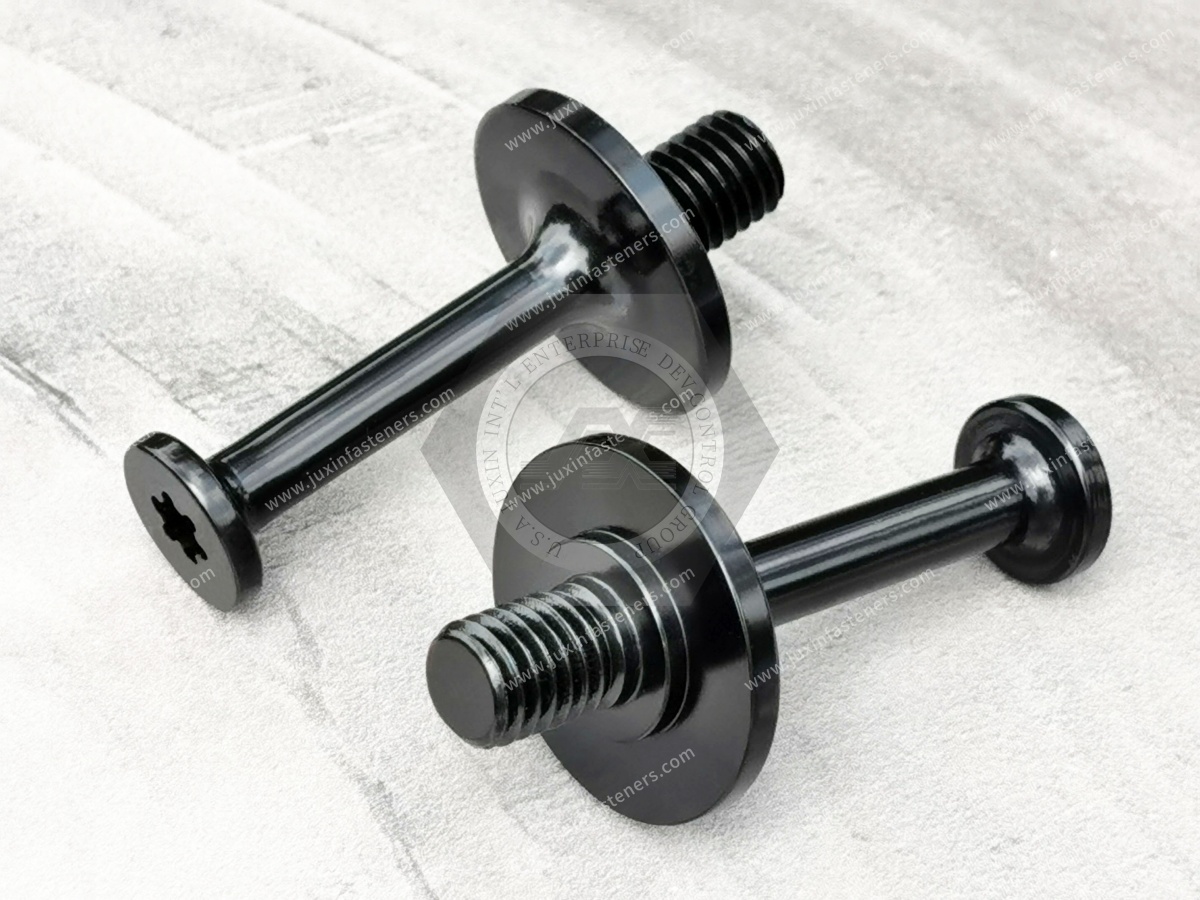
Black oxide can provide a dark appearance with relatively limited dimensional change.
It may be considered for:
Machinery
Tooling
Indoor equipment
Precision mechanical components
Black oxide should not be assumed to provide the same corrosion protection as engineered zinc, zinc-nickel or zinc-flake coating systems.
The actual environment must determine whether it is appropriate.
Phosphate-and-oil systems are used for certain industrial fasteners where the application requires a specific surface condition, friction behavior or temporary corrosion protection.
They are commonly encountered in mechanical and automotive fastening applications.
As with other finishes, suitability depends on the assembly specification.
Hydrogen embrittlement deserves special attention when sourcing high-strength steel fasteners.
Hydrogen can be introduced during processes such as:
Acid cleaning
Pickling
Electrocleaning
Electroplating
Under certain combinations of material strength, hydrogen concentration and applied stress, delayed brittle failure can occur.
This means a fastener can appear acceptable during dimensional inspection and installation but subsequently fail after being placed under load.
As steel strength and hardness increase, susceptibility to hydrogen-related failure can become more important.
Therefore, coating selection for high-strength screws should not be made solely according to:
color + price + corrosion resistance
A better decision path is:
strength level → manufacturing process → coating process → hydrogen risk → corrosion requirement → friction requirement → validation
Applicable standards and customer specifications should define the required controls.
Post-plating baking may be specified as part of hydrogen-embrittlement risk management for certain electroplated high-strength fasteners.
However, baking should not be described as an absolute guarantee that every hydrogen-related risk has been eliminated.
Risk management should consider:
Material
Hardness
Cleaning process
Plating process
Time before baking
Baking specification
Fastener geometry
Applied stress
Applicable customer or industry requirements
This is particularly important for safety-critical OEM applications.
One of the most overlooked issues in fastener sourcing is friction.
A bolt's tightening behavior depends not only on its property class but also on factors such as:
Coating
Lubricant
Topcoat
Thread condition
Bearing surface
Mating component
Therefore:
same bolt geometry + different coating ≠ automatically identical assembly behavior
Changing from zinc plating to zinc-nickel or zinc-flake may require review of the tightening specification.
For torque-controlled assembly, friction characteristics can directly affect the relationship between applied torque and resulting preload.
A common sourcing mistake is asking:
“What is the torque for an M10 10.9 bolt?”
There is no single universal installation torque based only on diameter and property class.
Required tightening depends on the joint system, including:
Target preload
Friction coefficient
Coating
Lubrication
Thread pitch
Bearing geometry
Joint stiffness
Mating material
Reuse policy
Assembly method
Torque should therefore be established from the joint design and validated assembly process.
The required thread engagement is also not a universal multiple of bolt diameter.
It depends on:
Fastener strength
Internal thread material
Thread geometry
Engagement length
Load
Failure mode
Joint design
A high-strength 12.9 screw installed into a relatively weak internally threaded material does not automatically create a high-strength joint.
The mating thread can become the limiting component.
A high static tensile strength does not automatically mean superior fatigue performance in every assembly.
For cyclically loaded joints, engineers should consider:
Preload
External load variation
Joint stiffness
Thread geometry
Stress concentration
Surface condition
Fastener geometry
Assembly consistency
Maintaining an appropriate and controlled preload can be critical in preventing excessive cyclic load variation in the fastener.
Automotive applications commonly require high-strength fasteners in mechanically demanding assemblies.
Potential applications include:
Chassis systems
Suspension-related assemblies
Powertrain systems
Seat structures
Steering-related mechanical assemblies
Battery-pack structural assemblies
Thermal-management equipment
Electric drive systems
Different locations can require different combinations of:
Property class
Coating
Corrosion resistance
Friction control
Geometry
Traceability
Validation
An “automotive bolt” is therefore not one universal specification.
Electric vehicles create fastening requirements across:
Battery structures
Cooling systems
Power electronics
Electric drive equipment
Structural enclosures
Brackets and frames
The correct fastener depends on the specific joint.
Electrical insulation, sealing, corrosion, galvanic interaction and thermal requirements should be treated separately
where relevant rather than assuming that a high-strength steel fastener automatically satisfies them.
High-strength socket screws, hex bolts, flange bolts and custom screws are widely used in:
Machine tools
Robotics
Production equipment
Conveyors
Industrial automation
Hydraulic equipment
Gearboxes
Heavy machinery
Procurement teams should consider not only purchase price but also:
Assembly reliability
Availability
Consistency
Coating specification
Mechanical-property documentation
Lot control
Replacement compatibility
Heavy equipment can expose fasteners to combinations of:
Shock loading
Vibration
Dirt
Moisture
Outdoor corrosion
Repeated mechanical loading
Selecting a higher property class alone does not address all these conditions.
The complete fastening system should be evaluated.
Use a standard fastener where an established ISO, DIN, ASME/ANSI, ASTM or SAE specification satisfies the application.
Consider a custom fastener when the assembly requires:
Special geometry
Non-standard length
Special shoulder
Unique flange
Controlled unthreaded shank
Special point
Application-specific drive
Special coating
Drawing-controlled tolerances
Integrated assembly features
The decision should be driven by the joint requirement, not by a preference for customization.
Procurement and supplier-development teams often need an alternative supplier for an existing high-strength fastener.
A reliable second-source process should compare more than the dimensions.
Recommended comparison path:
drawing → applicable standard → material/property class → heat treatment → thread → coating → friction requirements → inspection → sample validation → approval
Important documents can include:
Customer drawing
Applicable product standard
Mechanical-property specification
Coating specification
Material requirements
Inspection requirements
Existing sample
Assembly requirements
A visually identical fastener may not be technically equivalent.
Inspection requirements should be determined by the drawing, standard and application.
Depending on the project, evaluation may include:
Dimensional inspection
Thread inspection
Mechanical-property testing
Hardness testing
Surface-finish verification
Coating-thickness verification
Corrosion testing where specified
Functional testing
Torque-tension or friction testing where specified
Material documentation
Lot traceability requirements
Not every project requires every test.
The correct inspection plan should follow the component's technical and commercial risk.
For faster engineering review and quotation, provide as much of the following information as possible:
Product type
Diameter
Thread pitch
Length
Head style
Drive style
Thread length
Special geometry
Critical tolerances
Property class
Applicable ISO/DIN/ASME/ASTM/SAE specification
Material requirement if controlled
Hardness or mechanical requirements if drawing-controlled
Coating type
Coating specification
Coating thickness if specified
Color
Corrosion requirement
Friction requirement
Lubricant/topcoat requirement
Industry
Joint application
Operating environment
Temperature
Vibration or cyclic loading
Mating material
Safety-critical status if applicable
Prototype/sample quantity
Production quantity
Annual volume
Packaging requirement
Documentation requirement
Target delivery schedule
For an existing component, send the drawing and sample whenever possible.
JUXIN FASTENERS supports high-strength and custom fastening projects based on:
2D drawings
3D models
Existing samples
Customer specifications
Standard part requirements
Second-source projects
Relevant manufacturing processes can include, depending on component design and project requirements:
Cold forming
Thread rolling
CNC machining
Precision turning
Heat treatment
Surface finishing
Product families include:
High-strength screws
High-tensile bolts
Hex bolts
Socket head cap screws
Flange bolts
Automotive fasteners
Custom screws
Special bolts
CNC machined fasteners
For design engineers:
joint requirement → load → geometry → property class → mating thread → coating → assembly method → validation
For procurement:
drawing/specification → quantity → supplier review → quotation → sample → qualification → production
For supplier development:
existing component → drawing + sample → specification comparison → process review → validation → second-source approval
This workflow helps prevent a high-strength fastener from being reduced to a simple commodity defined only by diameter, length and price.
If you are sourcing property class 8.8 bolts, 10.9 high-strength bolts, 12.9 socket head cap screws, high-tensile screws,
automotive fasteners or custom high-strength fasteners, send us your drawing, specification or existing sample.
For faster technical review, include the property class, dimensions, thread, coating specification, application, annual volume and required documentation.
JUXIN FASTENERS supports both standard fastener sourcing and drawing-based OEM projects for global industrial customers.
Email: info@juxinfasteners.com
Website: www.juxinfasteners.com
 MORE NEWS
Sep. 27, 2026
Sep. 27, 2026
Sep. 27, 2026
Contact Us
Tel.:
+86 020 8621 0320
+86 020 3121 6067
E-mail:
Technical Support:
Navigation
SEND INQUIREY