
Call Us
+86 136 6007 9809
Call Us
+86 136 6007 9809

Oct. 25, 2023
Spring nut, leaf spring nut, U-nut, clip nut, speed nut, push nut, and sheet metal nut are terms frequently encountered when engineers and purchasing teams search for compact fastening solutions.
The difficulty is that these names are not always used consistently across manufacturers, catalogs, industries, or regions.
A supplier may describe an edge-mounted threaded fastener as a U-nut, while another may call a similar product a clip nut or spring nut.
The term speed nut may describe a different stamped fastener designed to engage a tapping screw rather than a conventional machine-thread interface.
This creates a practical sourcing problem:
Two fasteners can have similar names but use different fastening principles.
They may also look similar in photographs while differing in panel engagement, screw compatibility, thread location, installation method, and service behavior.
For engineering selection, replacement sourcing, and second-source qualification, the correct approach is therefore:
identify the fastening interface first and the product name second.
This guide explains the differences among spring nuts, U-nuts, clip nuts, and speed nuts and shows what engineers and procurement teams should define before requesting a quotation.
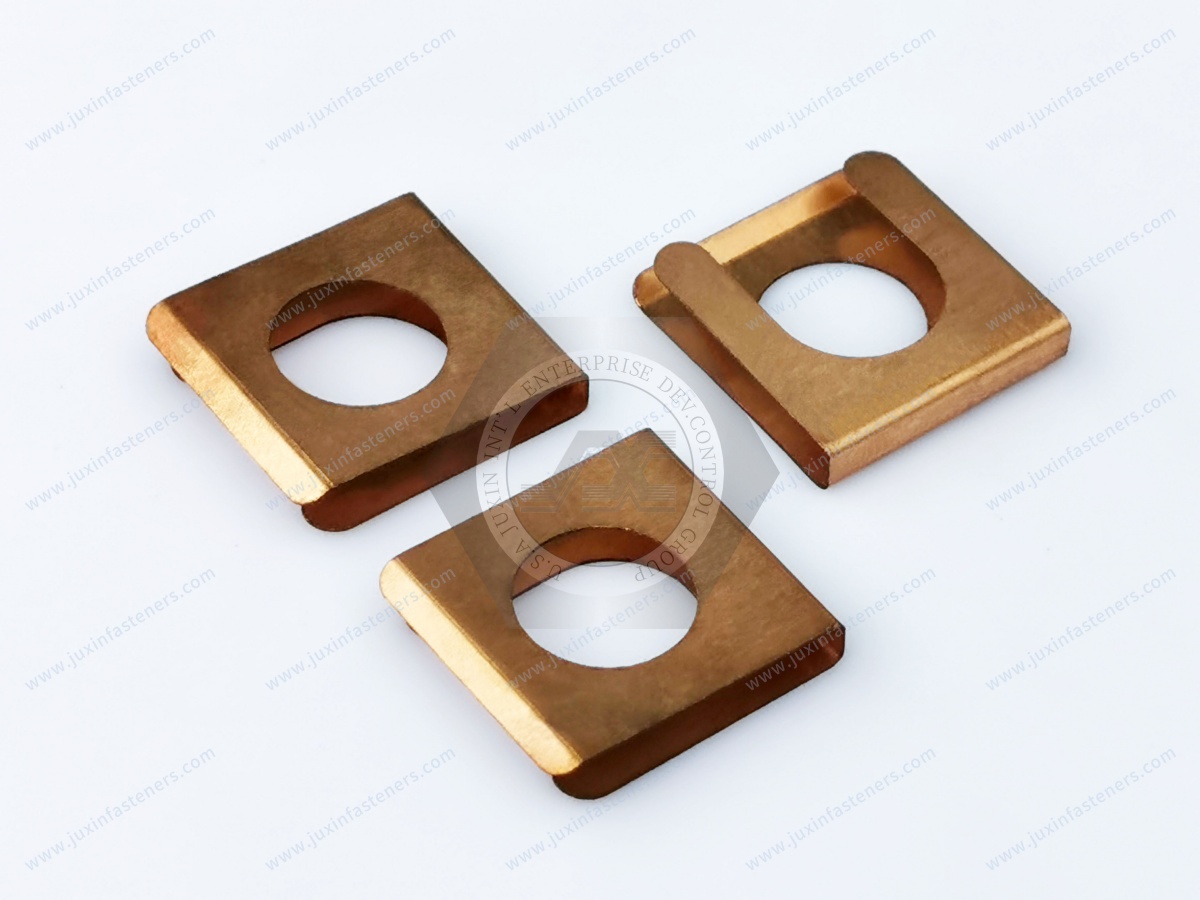
“Spring nut” is a broad commercial term rather than a sufficiently precise engineering specification by itself.
Depending on the product family, the term can refer to a formed sheet-metal fastener that uses elastic features to:
Retain itself on a panel
Position a threaded feature
Engage a mating screw
Provide installation retention
Accommodate a particular sheet-metal interface
Some spring nuts clip over a panel edge. Others use stamped spring features to interact with a tapping screw.
Because the geometry varies, a request for:
“M6 spring nut”
may not contain enough information to identify the required component.
At minimum, engineers and buyers should also determine the fastener geometry, mating screw, mounting interface, material, finish, and application.
“Leaf spring nut” or “plate spring nut” is another term that may be used for formed spring-steel fasteners.
The name describes the presence of spring-like sheet-metal geometry, but it does not define one universal fastening architecture.
A leaf spring nut should not automatically be assumed to:
Prevent vibration loosening
Maintain a universal preload
Carry structural loads
Operate at any temperature
Withstand any corrosive environment
Fit any screw of the same nominal diameter
Its performance depends on the actual geometry and complete assembly.
For sourcing purposes, leaf spring nut should therefore be treated as a product-family description that requires additional dimensional definition.
A U-nut typically has a U-shaped body that clips over the edge of a panel or bracket.
Depending on the design, one side of the fastener contains a threaded feature or formed screw-engagement feature aligned with a hole in the mating panel.
Typical advantages of this architecture can include:
Edge installation
Pre-positioning before screw assembly
Reduced loose hardware
No separate loose nut behind the panel
Efficient installation in suitable sheet-metal assemblies
Serviceable threaded attachment
The U-shaped body gives this fastener its common name.
However, U-nuts are available in many different configurations, so panel thickness, reach, thread position, and mating screw must still be specified.
“Clip nut” is another broad commercial term.
A clip nut generally describes a nut or screw-engagement feature retained to a panel by a clip-style body.
Many U-nuts can therefore be described as clip nuts.
But not every product called a clip nut necessarily has the same U-shaped geometry.
This means:
U-nut may describe a specific geometry, while clip nut often describes the broader fastening concept.
In real procurement markets, however, terminology overlaps.
Engineers should therefore use drawings and interface dimensions rather than relying on terminology alone.
A speed nut is generally a stamped sheet-metal fastener designed for rapid assembly with a compatible screw.
Depending on the design, formed spring features engage the mating screw.
This can be fundamentally different from a clip nut containing a conventional machine-thread feature.
A speed-nut style fastener may therefore need to be selected as a matched interface with its mating tapping or thread-forming screw.
Important variables include:
Screw diameter
Screw thread form
Fastener opening
Spring-tab geometry
Fastener material
Material thickness
Surface finish
Assembly orientation
The fact that two screws share a similar nominal diameter does not automatically make them interchangeable in the same speed nut.
The term push nut can describe multiple fastener geometries.
Some push nuts are pushed onto a shaft or stud and retain themselves through formed teeth or spring features.
Other products marketed as rectangular push nuts may interact with tapping screws.
Because the term covers different products, the actual application should always be confirmed.
When requesting a push nut, provide a drawing, sample, mating component, or clear dimensional information wherever possible.
The main difference is that spring nut is often a broader category or market term, while U-nut more specifically describes a U-shaped clip geometry.
A U-nut can therefore belong to the broader family of spring-style sheet-metal fasteners.
But a spring nut does not necessarily have to be a U-nut.
When evaluating the component, ask:
Does it clip over a panel edge?
What is the panel thickness?
Where is the screw hole relative to the edge?
Does it contain a machine thread?
Does it use formed features to engage a tapping screw?
How is it retained before screw installation?
These questions are more useful than debating the product name.
In many commercial searches, the terms overlap significantly.
A U-nut is commonly a type of clip nut.
However, suppliers may use “clip nut” for other geometries as well.
For an existing component, a purchasing team should therefore avoid replacing a part simply because both suppliers call their products “clip nuts.”
Compare:
Overall geometry
Panel grip condition
Clip reach
Thread center
Mating screw
Material
Finish
Installation direction
Functional equivalence depends on the assembly interface.
This comparison is more important because the screw interface may be fundamentally different.
A U-nut may incorporate a defined machine-thread feature for a mating machine screw.
A speed nut may use formed spring features designed to interact directly with a compatible tapping screw.
The practical sourcing question is:
Does the fastener contain a conventional internal thread, or does its stamped geometry create the screw engagement?
That distinction influences:
Screw selection
Installation behavior
Reassembly
Supplier qualification
Failure analysis
Drawing requirements
Do not substitute one architecture for another without reviewing the joint.
A clip nut typically clips onto a panel or related structure.
A push nut may be installed onto a stud, shaft, panel feature, or used with a screw depending on the design.
The installation direction and retention mechanism are therefore important identifiers.
If the product name is unclear, photographs can help establish the general family, but dimensions and mating-component information should control final identification.
This is one of the fastest ways to narrow the fastener family.
If the fastener contains a conventional internal machine thread, define:
Thread designation
Pitch
Mating screw
Required engagement
Thread location
If stamped spring features interact directly with a tapping or thread-forming screw, define:
Screw type
Diameter
Thread geometry
Point style where relevant
Fastener engagement geometry
Material and finish
Do not source a tapping-screw fastener using only a machine-thread designation.
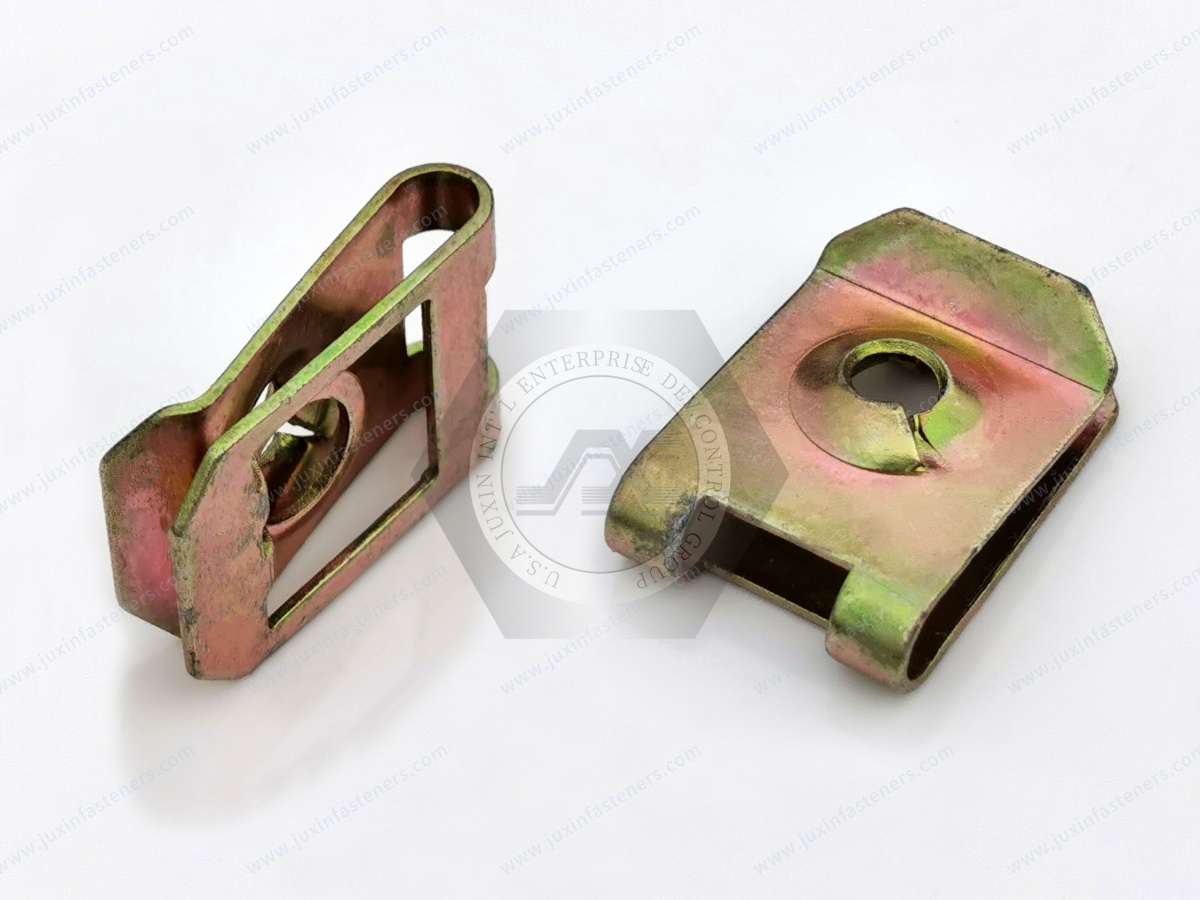
Consider a procurement team searching for an alternative supplier for an existing “spring nut.”
Supplier A may interpret that term as an edge-mounted U-nut.
Supplier B may quote a speed-nut style stamped fastener.
Supplier C may identify an entirely different spring-nut family.
All three products may legitimately be marketed using related terminology.
This is why product name alone is weak sourcing data.
For second-source development, the strongest information is:
drawing + approved sample + mating screw + panel/interface geometry + material + finish.
When the exact product name is uncertain, answer these five questions.
Does it:
Clip over an edge?
Push onto a feature?
Sit behind a panel?
Engage through an opening?
Is the mating component:
Machine screw?
Tapping screw?
Thread-forming screw?
Stud?
Does the fastener contain:
A conventional internal thread?
Formed spring tabs?
Teeth or retaining features?
Define:
Panel thickness
Panel edge
Hole
Slot
Bracket
Stud or shaft
Identify:
Edge-to-hole distance
Clip reach
Screw center
Opening dimensions
Available envelope
Answering these questions often provides more useful sourcing information than the commercial product name.
For U-nuts and many clip nuts, the fastener must match the panel it clips onto.
The relevant interface can include:
Nominal panel thickness
Thickness tolerance
Paint
Coating
Multiple sheet layers
Local formed features
Edge burrs
A replacement fastener can have the correct thread and still fail because its panel grip geometry differs from the original.
For edge-mounted fasteners, clip reach controls the relationship between the panel edge and screw center.
If the reach is incorrect:
Thread and panel hole may not align
Screw starting can become difficult
Angled entry may occur
Cross-threading risk can increase
Production rework may increase
For second-source projects, always compare the reach and thread-center location of the existing and proposed components.
For speed nuts and other tapping-screw fasteners, the screw is part of the functional system.
A replacement fastener should be evaluated using the actual production screw where possible.
Changing the screw can change:
Engagement
Installation behavior
Strip-out behavior
Removal behavior
Spring-feature deformation
Therefore:
Do not qualify a speed nut in isolation when the mating screw is available.
Spring-style sheet-metal fasteners rely on formed geometry and material behavior.
Depending on the product design and customer specification, materials may include suitable spring steels, carbon steels, stainless steels, or other specified materials.
Selection should consider:
Formability
Elastic behavior
Strength
Material thickness
Corrosion environment
Surface finish
Mating screw
Panel material
Service conditions
Material substitutions should be evaluated rather than assumed equivalent.
Surface finish may be selected for:
Corrosion protection
Appearance
Customer specification
Compatibility with the assembly environment
But finish can also influence dimensions and assembly behavior.
For edge-mounted clips, coating buildup can affect the grip interface.
For tapping-screw fasteners, surface condition can influence screw engagement and installation behavior.
The finished fastener should therefore be evaluated as part of the final assembly.
No spring nut family should automatically be described as universally vibration-proof.
Joint behavior under vibration depends on:
Fastener geometry
Mating screw
Joint clamp conditions
Materials
Mating surfaces
Load direction
Assembly process
Service vibration
If resistance to loosening is critical, the complete joint should be validated under representative service conditions.
The presence of a spring feature alone does not establish universal anti-loosening performance.
Some spring-style fasteners may be removed and reassembled depending on their design.
However, unlimited reuse should not be assumed.
Repeated assembly can change:
Spring geometry
Retention
Screw engagement
Surface condition
Thread condition
If serviceability is an important requirement, the intended maintenance cycle should be considered during component selection and validation.
Automotive assemblies use many sheet-metal fastening architectures, making U-nuts, clip nuts, speed nuts, and other spring-style fasteners relevant to suitable applications.
Potential uses can include:
Body-related panel assemblies
Interior structures
Trim mounting
Covers
Brackets
Equipment mounting points
Sheet-metal subassemblies
The correct product family depends on the specific joint.
For example, an edge-mounted body-panel attachment may favor a U-nut architecture, while another light-duty stamped assembly may use a tapping-screw speed nut.
Product selection should follow the assembly requirements rather than an industry label.
Sheet-metal enclosures are common in:
Electrical cabinets
Power distribution equipment
Control systems
Equipment housings
Power electronics
Industrial automation
Spring-style fasteners can provide efficient attachment points for suitable covers, panels, brackets, and internal structures.
Engineers should consider:
Panel geometry
Service access
Screw type
Corrosion environment
Assembly volume
Equipment-specific electrical requirements
Where grounding or bonding is required, it should be addressed by the complete equipment design rather than assumed from the fastener name.
Data center and AI/HPC infrastructure contains racks, power systems, cooling equipment, enclosures, control systems, and other sheet-metal assemblies.
Depending on the equipment architecture, engineers may evaluate:
U-nuts
Clip nuts
Cage nuts
Rivet nuts
Self-clinching fasteners
Tapping-screw fasteners
These technologies should not be treated as interchangeable.
The correct choice depends on panel access, hole geometry, serviceability, thread requirements, manufacturing process, and load conditions.
HVAC equipment often includes:
Sheet-metal housings
Fan enclosures
Access panels
Covers
Control compartments
Internal brackets
Spring-style fasteners can support efficient assembly in suitable locations.
Because HVAC environments can include moisture, condensation, outdoor exposure, and temperature variation,
material and finish requirements should be defined according to the actual equipment environment.
Machinery covers, guards, housings, control cabinets, and service panels can use spring-style sheet-metal fasteners where their geometry and load capability are appropriate.
They should not automatically be selected for major structural joints simply because they provide convenient installation.
Structural load requirements must be evaluated independently.
Consider a U-nut or related clip nut when:
A suitable panel edge is accessible
The fastener needs to remain positioned before screw installation
A threaded attachment is required
A loose rear nut would complicate assembly
The clip geometry fits the panel architecture
Then define the panel thickness, reach, thread, screw, material, and finish.
Consider a speed-nut style fastener when:
A compatible tapping-screw architecture is appropriate
A compact stamped fastener suits the assembly
Production efficiency is important
The joint requirements are compatible with that fastening principle
The mating screw and fastener should be evaluated together.
Spring-style nuts are only one family of sheet-metal fastening solutions.
Consider when the panel architecture uses a designed opening and captive nut arrangement, particularly where positional movement or serviceability is useful.
Consider when a permanently retained threaded feature is required in suitable sheet material and press installation fits the manufacturing process.
Consider when a machine-threaded attachment must be installed through a prepared hole, particularly where installation access is available from one side.
Consider when a welded threaded attachment is appropriate to the material and manufacturing sequence.
The selection should follow the assembly architecture rather than forcing one fastener family into every application.
Legacy equipment can create a special sourcing problem.
The original drawing may be missing, the part number may be obsolete, or the component may only be described internally as a “spring nut.”
In this situation, collect:
Unused physical sample
Photographs
Mating screw
Panel or bracket
Key dimensions
Material information if known
Finish
Application
Expected quantity
An unused sample is preferable because installed spring components may have been permanently altered during service.
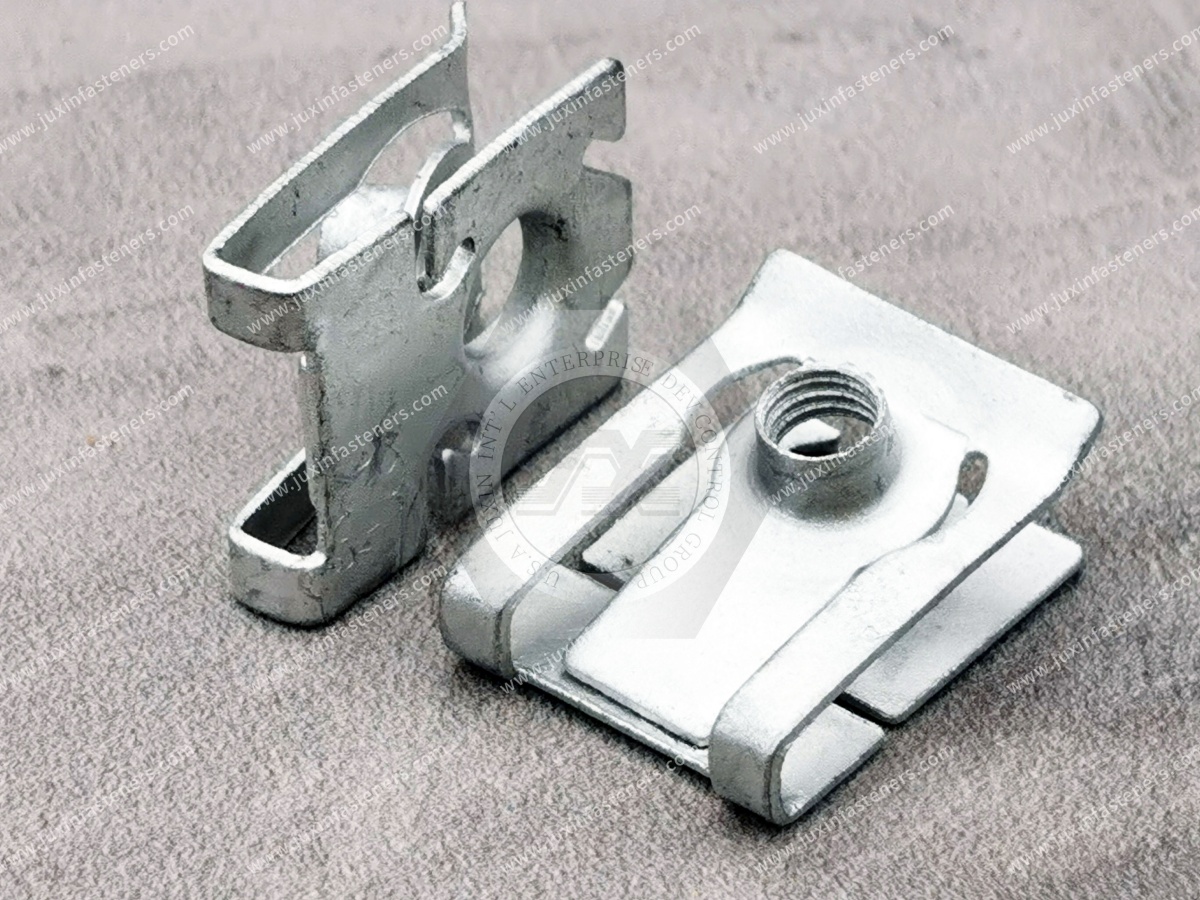
For an existing production fastener:
Determine whether it is:
Edge-mounted clip
Machine-thread clip nut
Tapping-screw speed nut
Push-on retainer
Another spring-style fastener
Identify:
Screw
Panel
Bracket
Hole or slot
Measure or define:
Overall dimensions
Material thickness
Grip condition
Reach
Screw center
Engagement features
Do not assume that visually similar materials or coatings are equivalent.
Where practical, assemble the proposed replacement with representative production components.
The goal is functional equivalence according to the customer's requirements, not visual similarity.
If requesting a U-nut, clip nut, spring nut, or speed nut, provide:
Product type
Drawing
Thread or mating screw specification
Material
Finish
Panel/interface dimensions
Application
Quantity or annual demand
You do not need to identify the exact commercial name before contacting a supplier.
Instead, provide:
Clear photographs
Unused sample
Mating screw
Panel or bracket information
Overall dimensions
Application
Material or finish information if known
Required quantity
This often provides a better technical starting point than guessing a product name.
For an existing OEM component, the strongest package is:
drawing + approved unused sample + mating screw + mating panel/interface + material + finish + annual demand.
If there is an existing assembly problem, also explain the failure mode.
For example:
Clip falls off panel
Screw does not align
Installation force is excessive
Screw spins
Fastener deforms
Corrosion occurs
Existing supplier availability is limited
This allows the supplier to evaluate both the component and the reason for the sourcing project.
Some OEM applications require geometry that cannot be matched by a standard catalog part.
Custom development may be appropriate when the assembly has a specific:
Panel thickness
Clip reach
Screw location
Engagement geometry
Installation envelope
Material
Finish
Legacy interface
JUXIN FASTENERS supports standard and custom industrial fasteners, spring nuts, U-nuts, clip nuts, push nuts, speed-nut style stamped components, and other drawing-controlled parts.
Projects can begin from customer drawings, samples, mating components, and application requirements.
For further engineering selection, related topics include:
Clip-On Nuts Selection Guide
Clip Nut Installation Problems
U-Nut Applications
Rectangular Push Nuts
Sheet Metal Fasteners
Tapping Screws
Cage Nuts
Self-Clinching Fasteners
Rivet Nuts
Custom Stamped Components
These technologies should be linked according to the actual fastening problem the engineer is trying to solve.
The most useful conclusion for both engineering and procurement teams is simple:
The product name identifies the search category. The interface identifies the actual fastener.
Instead of sourcing only:
“spring nut”
define:
installation method + panel/interface + mating screw + engagement type + critical geometry + material + finish + application + volume.
For engineers, this creates a more controlled fastening specification.
For procurement and supplier-development teams, it reduces the risk of receiving quotations for products that share the same commercial name but are not functionally equivalent.
JUXIN FASTENERS supports standard, custom, drawing-controlled, sample-matching, and second-source fastener projects for global industrial applications.
If you know the exact part, send us the drawing and specification.
If you do not know whether your component is a spring nut, U-nut, clip nut, speed nut, or another stamped fastener,
send us the sample, photographs, mating screw, and panel/interface information for review.
Email: info@juxinfasteners.com
Website: www.juxinfasteners.com
 MORE NEWS
Sep. 27, 2026
Sep. 27, 2026
Sep. 27, 2026
Contact Us
Tel.:
+86 020 8621 0320
+86 020 3121 6067
E-mail:
Technical Support:
Navigation
SEND INQUIREY