
Call Us
+86 136 6007 9809
Call Us
+86 136 6007 9809

Mar. 29, 2026
In modern manufacturing, creating strong threaded connections in thin sheet materials can be challenging.
Traditional fastening methods such as:
Welding nuts
Tapping threads directly into thin metal
Using conventional nuts and bolts
may not always be practical due to:
Limited access to the backside of components
Material thickness limitations
Heat distortion risks
Complex assembly requirements
Blind rivet nuts, also known as threaded inserts, rivet nuts, or nutserts, provide an efficient solution by creating strong internal threads in thin materials from only one side of the workpiece.
These fasteners are widely used in:
Automotive manufacturing
EV battery systems
Sheet metal fabrication
Electrical cabinets
Aerospace structures
Machinery equipment
Industrial enclosures
For engineers and purchasing teams, selecting the correct blind rivet nut for sheet metal applications is critical to achieving:
High pull-out strength
Reliable torque performance
Long service life
Efficient assembly processes
This guide explains the key factors engineers should consider when choosing the right blind rivet nut solution.
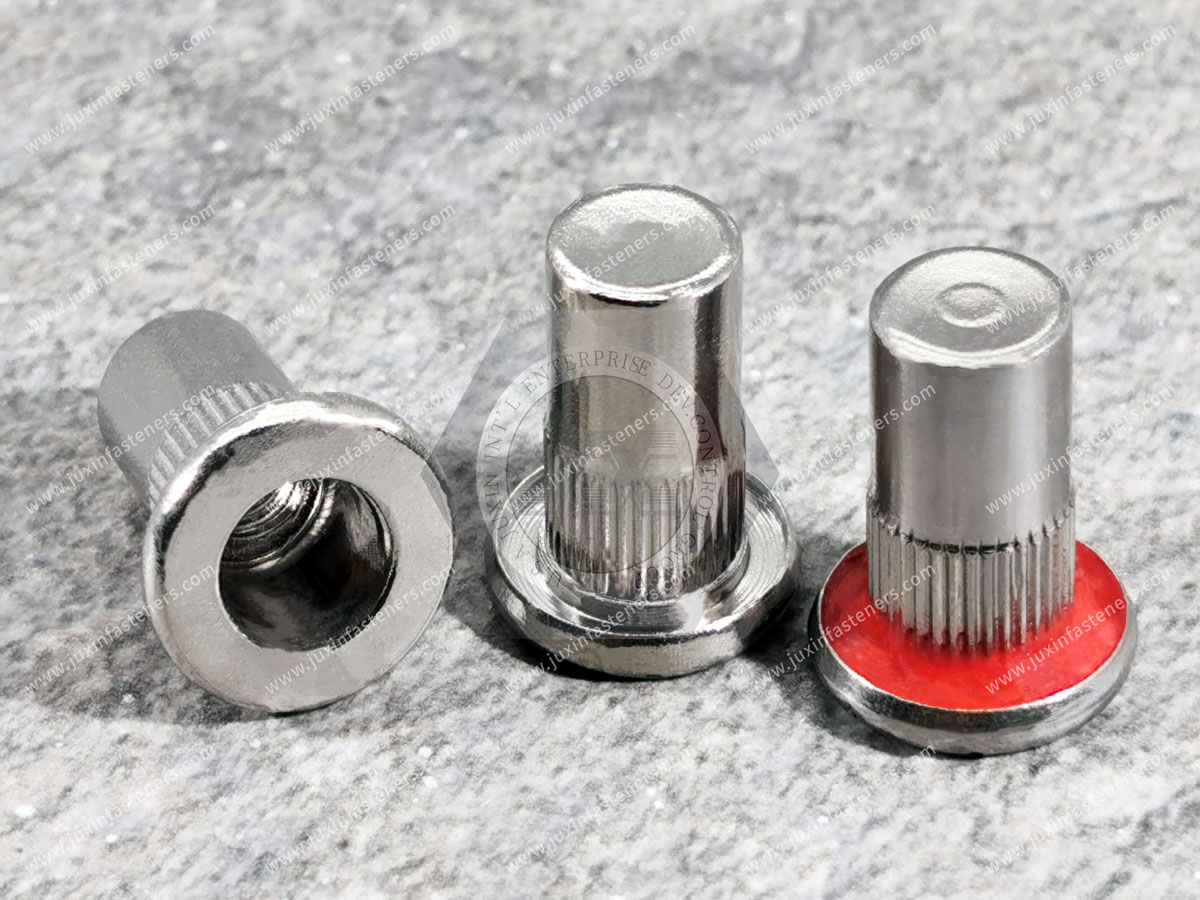
A blind rivet nut is an internally threaded fastener installed from one side of a component.
During installation:
The rivet nut is inserted into a prepared hole.
A rivet nut tool pulls the threaded mandrel.
The unthreaded shank collapses and expands behind the material.
The expanded section clamps securely against the backside.
A permanent threaded connection is created.
This allows manufacturers to install machine threads in locations where traditional nuts or welding processes are not possible.
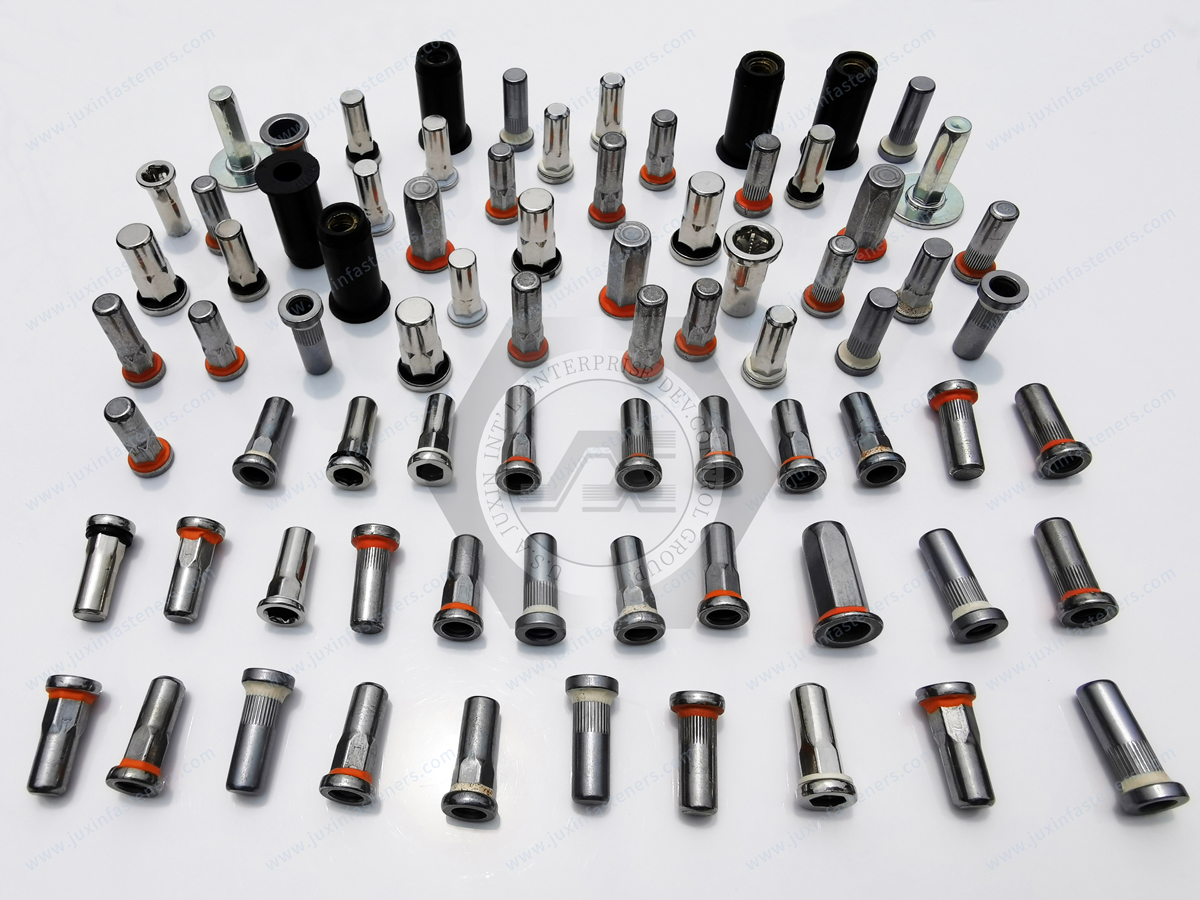
Blind rivet nuts are ideal for:
Closed profiles
Hollow structures
Sheet metal assemblies
where backside access is unavailable.
They provide reliable internal threads in:
Thin steel panels
Aluminum sheets
Stainless steel components
Plastic housings
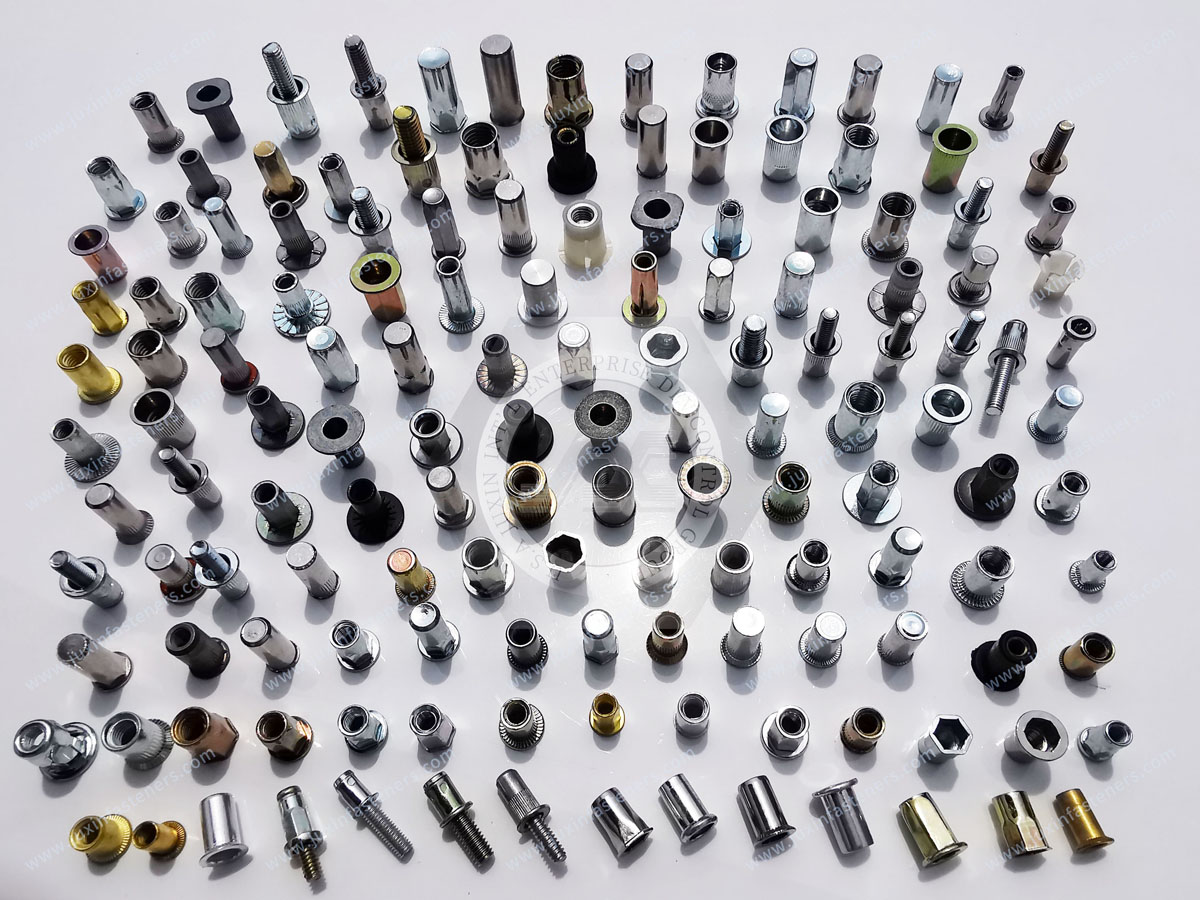
Compared with weld nuts, blind rivet nuts eliminate:
Welding equipment
Heat distortion
Coating damage
Additional production processes
Blind rivet nuts can be installed using:
Manual tools
Pneumatic tools
Electric installation systems
Automated assembly equipment
Selecting the right rivet nut requires evaluating several engineering factors:
Parent material thickness
Grip range
Material type
Thread size
Installation environment
Required strength
Sealing requirements
The first step in selecting a blind rivet nut is measuring the thickness of the base material.
This thickness is called the parent material thickness.
Each rivet nut has a specific grip range, which defines the minimum and maximum thickness it can securely clamp.
If the material thickness is outside the recommended range:
Problems may occur:
Insufficient clamping force
Insert spinning
Reduced pull-out strength
Incorrect deformation during installation
| Rivet Nut Size | Typical Grip Range |
|---|---|
| M4 | 0.5 – 2.5 mm |
| M6 | 1.0 – 4.0 mm |
| M8 | 1.5 – 5.0 mm |
Engineers should always confirm the actual material thickness before selecting the rivet nut.
Sometimes multiple rivet nut designs may fit the same material thickness.
In these situations, the shorter grip version is often preferred.
Benefits include:
Easier installation
Lower deformation stress
Reduced risk of material distortion
Better compatibility with automated equipment
For soft or lightweight materials, a longer grip range may provide:
Larger contact area
Improved load distribution
Higher pull-out resistance
Examples:
Aluminum sheets
Plastic panels
Composite materials
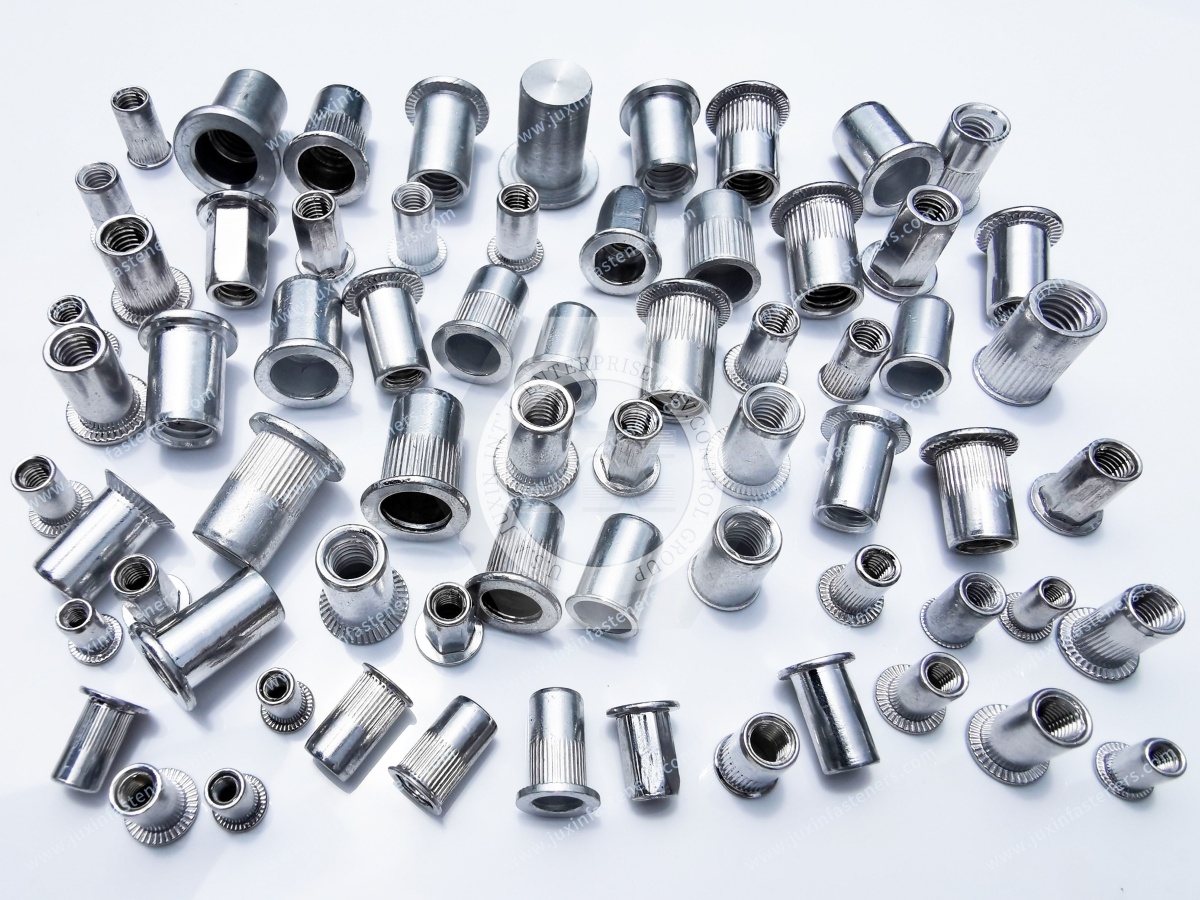
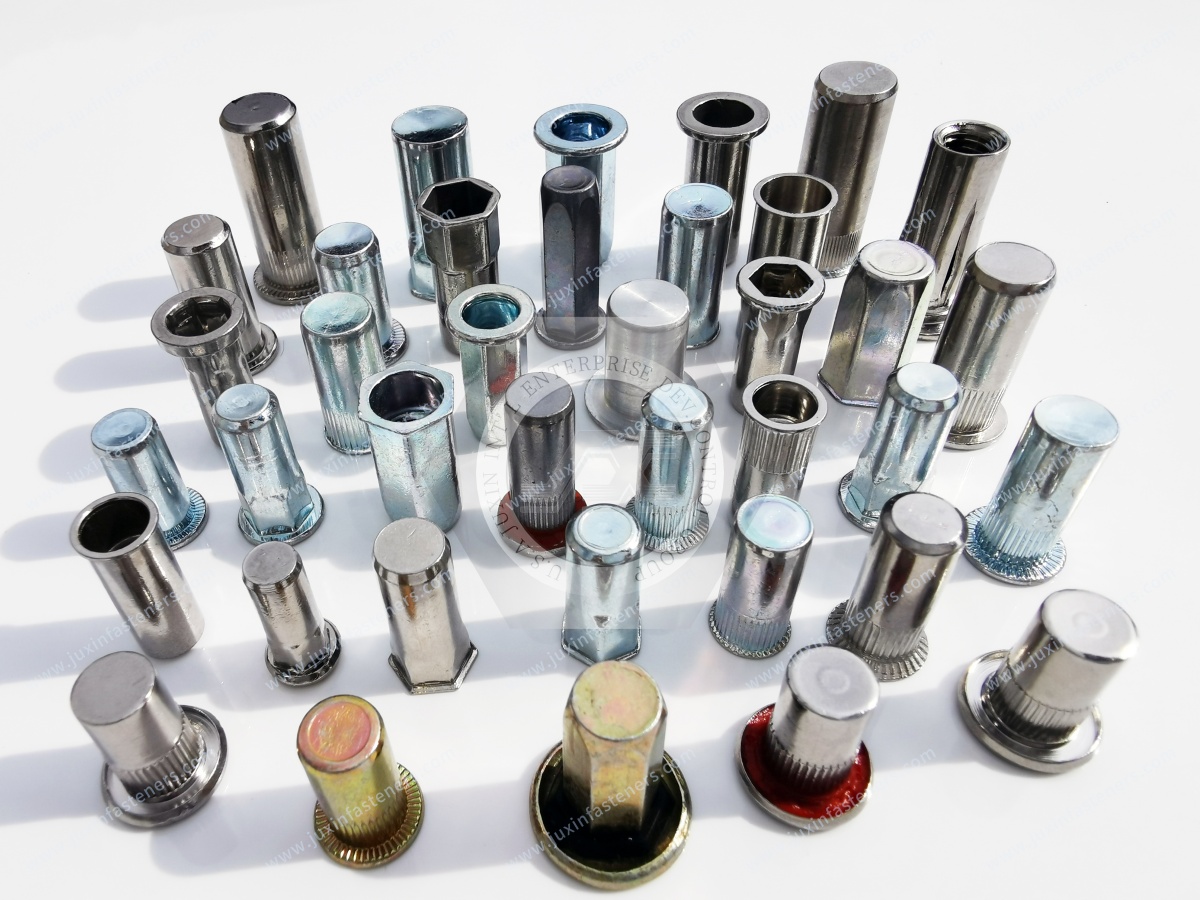
Blind rivet nuts are commonly manufactured from:
Carbon steel
Aluminum
Stainless steel
Material selection depends on:
Strength requirements
Weight limitations
Corrosion environment
Application conditions
Steel blind rivet nuts provide excellent mechanical performance.
Advantages:
High load capacity
Strong thread engagement
Excellent structural performance
Cost-effective solution
Common applications:
Automotive body structures
Machinery frames
Sheet metal fabrication
Electrical cabinets
Typical surface treatments include:
Zinc plating
Zinc-nickel coating
Black oxide
Aluminum rivet nuts are ideal where weight reduction is important.
Advantages:
Lightweight design
Corrosion resistance
Lower installation force
Applications:
Aerospace components
Electronics housings
Lightweight transportation systems
Stainless steel rivet nuts are designed for harsh environments.
Advantages:
Excellent corrosion resistance
Long service life
High durability
Applications:
Marine equipment
Food processing machinery
Medical equipment
Outdoor electrical enclosures
Common grades:
Stainless Steel 304
Stainless Steel 316
For applications involving:
Plastic components
Thin sheet metal
Hollow profiles
slotted body rivet nuts provide excellent performance.
During installation, the slotted shank expands into multiple sections, forming a petal-like structure behind the material.
This creates a larger contact area and distributes the load more effectively.
Benefits include:
Higher pull-out resistance
Increased clamping area
Reduced stress concentration
Improved stability in soft materials
Typical applications:
Automotive interior plastics
Lightweight structures
Equipment housings
Composite panels
In environments requiring sealing protection, standard rivet nuts may not be sufficient.
Sealed blind rivet nuts provide additional protection by preventing:
Water penetration
Dust intrusion
Fluid leakage
Common applications include:
Used for:
Battery covers
Cooling system brackets
Electrical mounting components
Used for:
Waterproof cabinets
Control enclosures
Outdoor equipment
Sealed rivet nuts help manufacturers achieve environmental protection requirements such as:
IP67 protection performance
where protection against dust and temporary water immersion is required.
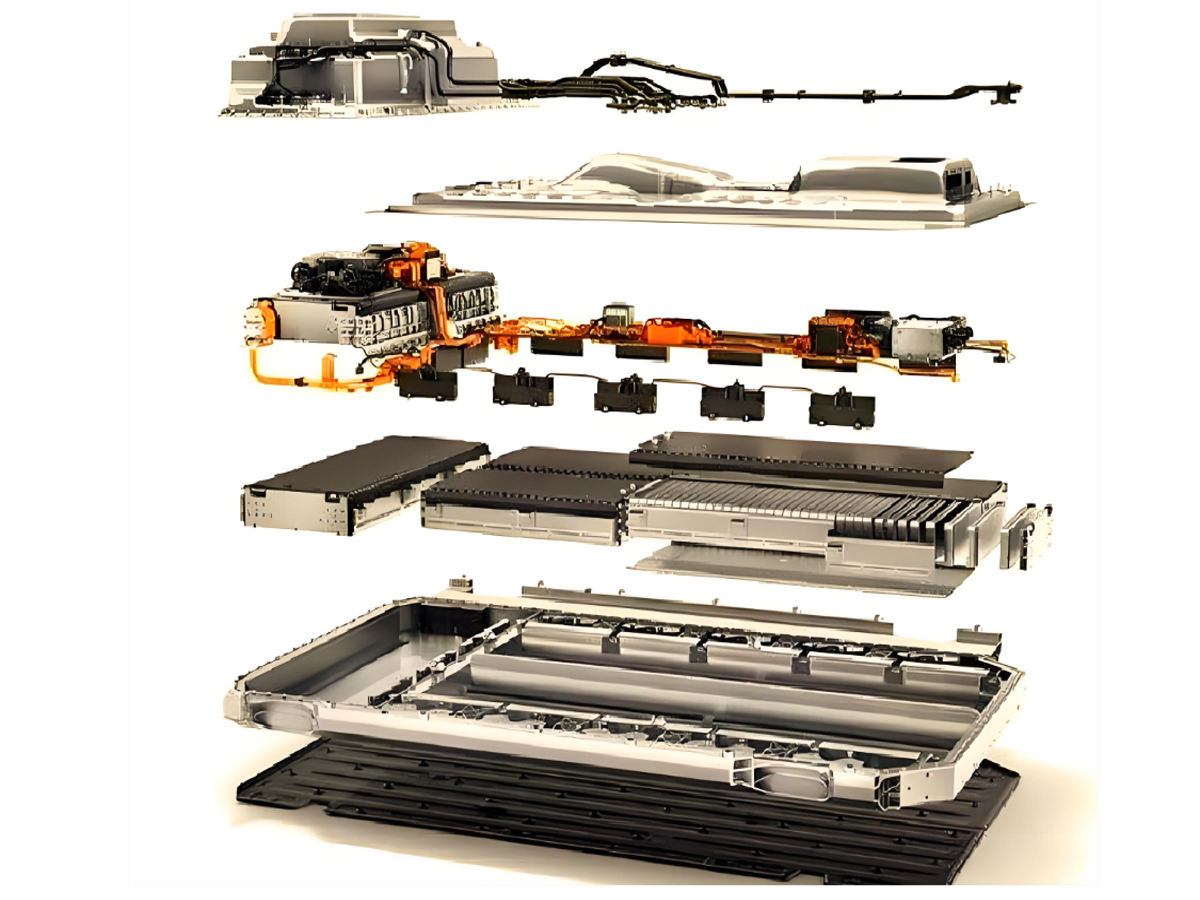
Electric vehicles require lightweight, strong, and sealed fastening solutions.
Battery systems commonly use aluminum housings and thin-wall structures, making traditional welding or tapping difficult.
Blind rivet nuts provide:
Strong threaded connections
One-side installation
Lightweight compatibility
Sealing options
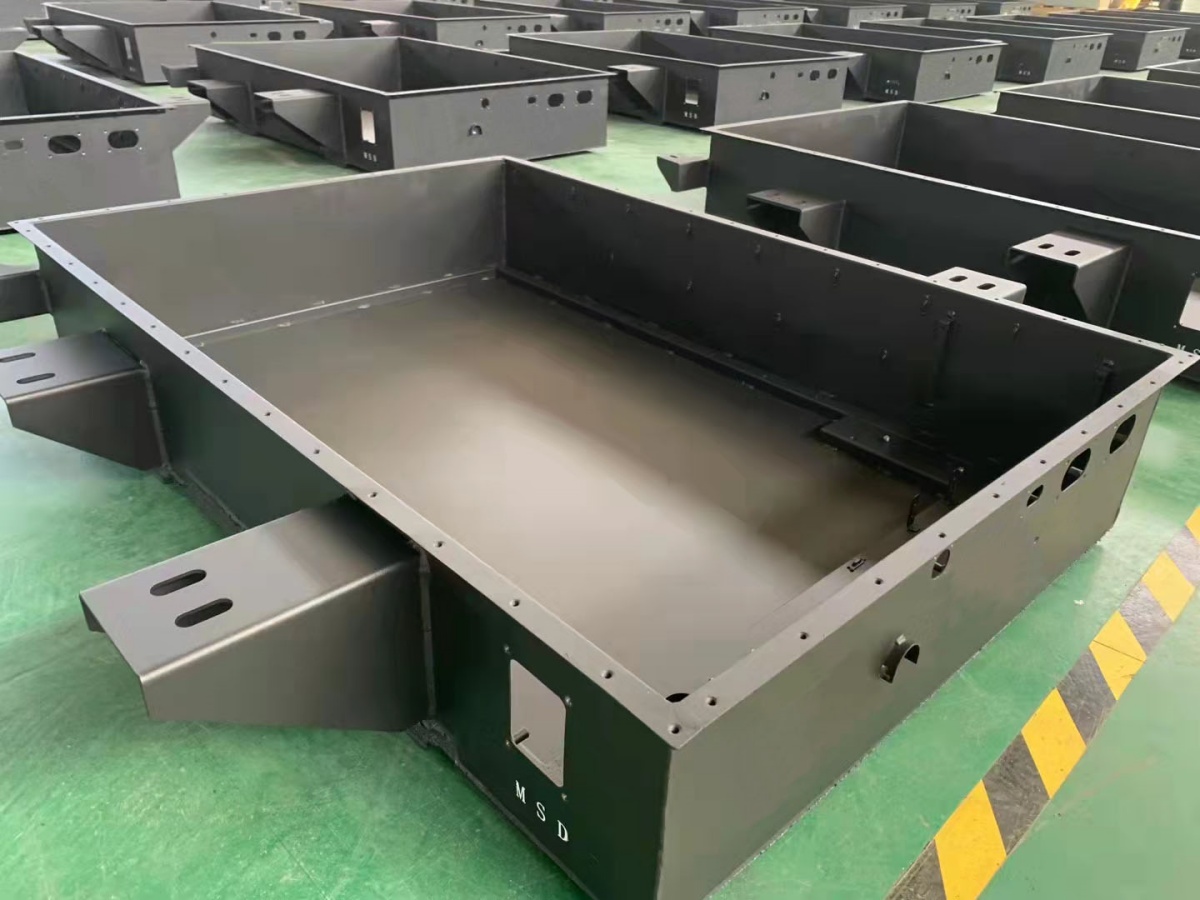
Blind rivet nuts are used for:
Battery module frames
Cooling system components
Protective covers
Structural brackets
Electrical mounting points
For battery applications, manufacturers often require:
Pull-out testing
Torque testing
Leak testing
to ensure long-term reliability.
Proper installation is essential for achieving maximum rivet nut performance.
Important factors include:
Incorrect hole size may cause:
Reduced retention
Poor expansion
Material damage
Selection depends on production requirements:
Hand tools for low volume
Pneumatic tools for production lines
Automated systems for high-volume manufacturing
Excessive installation force may cause:
Material deformation
Thread damage
Component distortion
Manufacturers commonly perform:
Torque testing
Pull-out testing
Dimensional inspection
to ensure consistent performance.

Blind rivet nuts are widely used across multiple industries:
Applications:
Body panels
Interior assemblies
Structural brackets
Chassis components
Applications:
Battery housings
Cooling systems
Electrical mounting structures
Applications:
Lightweight panels
Interior structures
Equipment mounting systems
Applications:
Lightweight assemblies
Composite structures
Aircraft interior components
Applications:
Control cabinets
Sheet metal enclosures
Industrial panels
Applications:
Equipment housings
Sheet metal assemblies
Applications:
Equipment covers
Precision assemblies
Applications:
Machine guards
Automation equipment
Robot structures
Juxin Fasteners provides high-quality blind rivet nuts and threaded insert solutions for global OEM manufacturers.
Our product range includes:
Standard blind rivet nuts
Hex body rivet nuts
Knurled rivet nuts
Slotted body rivet nuts
Sealed rivet nuts
Custom rivet nut solutions
Our manufacturing capabilities include:
Cold forming
CNC machining
Thread processing
Surface treatment
OEM customization
Quality inspection
We support industries including:
Automotive / EV / Battery Pack / Rail Transit / Aerospace / Electrical Cabinets / HVAC / Medical Equipment / Construction / Machinery / Robotics / Sheet Metal Fabrication
Our engineering team provides:
Fastener selection support
Material recommendations
Grip range analysis
Installation guidance
Customized solutions
Blind rivet nuts provide an efficient and reliable fastening solution for modern sheet metal applications.
By selecting the correct:
Grip range
Material
Insert design
Installation method
engineers can achieve durable threaded connections for demanding industrial environments.
From automotive manufacturing to EV battery systems, blind rivet nuts continue to play an essential role in lightweight, efficient, and reliable product designs.

For blind rivet nut selection support, OEM quotation, drawings review, or customized fastening solutions:
Email: info@juxinfasteners.com
Juxin Fasteners — Your Reliable OEM Partner for Industrial Fastening Solutions Worldwide
 MORE NEWS
Sep. 27, 2026
Sep. 27, 2026
Sep. 27, 2026
Contact Us
Tel.:
+86 020 8621 0320
+86 020 3121 6067
E-mail:
Technical Support:
Navigation
SEND INQUIREY