
Call Us
+86 136 6007 9809
Call Us
+86 136 6007 9809

Aug. 21, 2026
Blind Rivets for Reliable One-Sided Industrial Assembly
When two components need to be permanently joined, but the rear side of the assembly is inaccessible, conventional bolts and nuts may not be practical.
Blind rivets provide an efficient solution.
Also commonly known as pull rivets or pop rivets, blind rivets are mechanical fasteners designed for installation from one side of the workpiece. During installation, a rivet tool pulls the internal mandrel, causing the rivet body to deform and clamp the workpieces together.
This simple installation principle makes blind rivets particularly suitable for:
Thin sheet metal
Enclosed structures
Hollow profiles
Electrical enclosures
Automotive components
HVAC equipment
Aerospace assemblies
Railway equipment
Industrial machinery
Appliances and electronics
Juxin Fasteners supplies blind rivets, pull rivets, pop rivets, and structural blind rivets for OEM manufacturers, industrial distributors, and engineering applications.
What Is a Blind Rivet?
A blind rivet is a two-piece mechanical fastener consisting primarily of a rivet body (sleeve) and a mandrel (stem).
Unlike a conventional solid rivet, a blind rivet can be installed when only one side of the workpiece is accessible.
The basic installation process is:
1. Prepare the Hole
Drill or otherwise prepare the components to the specified hole diameter.
2. Insert the Blind Rivet
Insert the rivet body through the assembled workpieces.
3. Engage the Mandrel
A suitable blind-rivet tool grips the rivet mandrel.
4. Pull the Mandrel
The tool pulls the mandrel through the rivet body.
5. Form the Blind Head
The rivet sleeve expands on the inaccessible side of the workpieces.
6. Break or Lock the Mandrel
Depending on the rivet design, the mandrel breaks at a predetermined point or remains mechanically locked within the rivet.
The resulting deformation clamps the components together and creates a permanent mechanical joint.
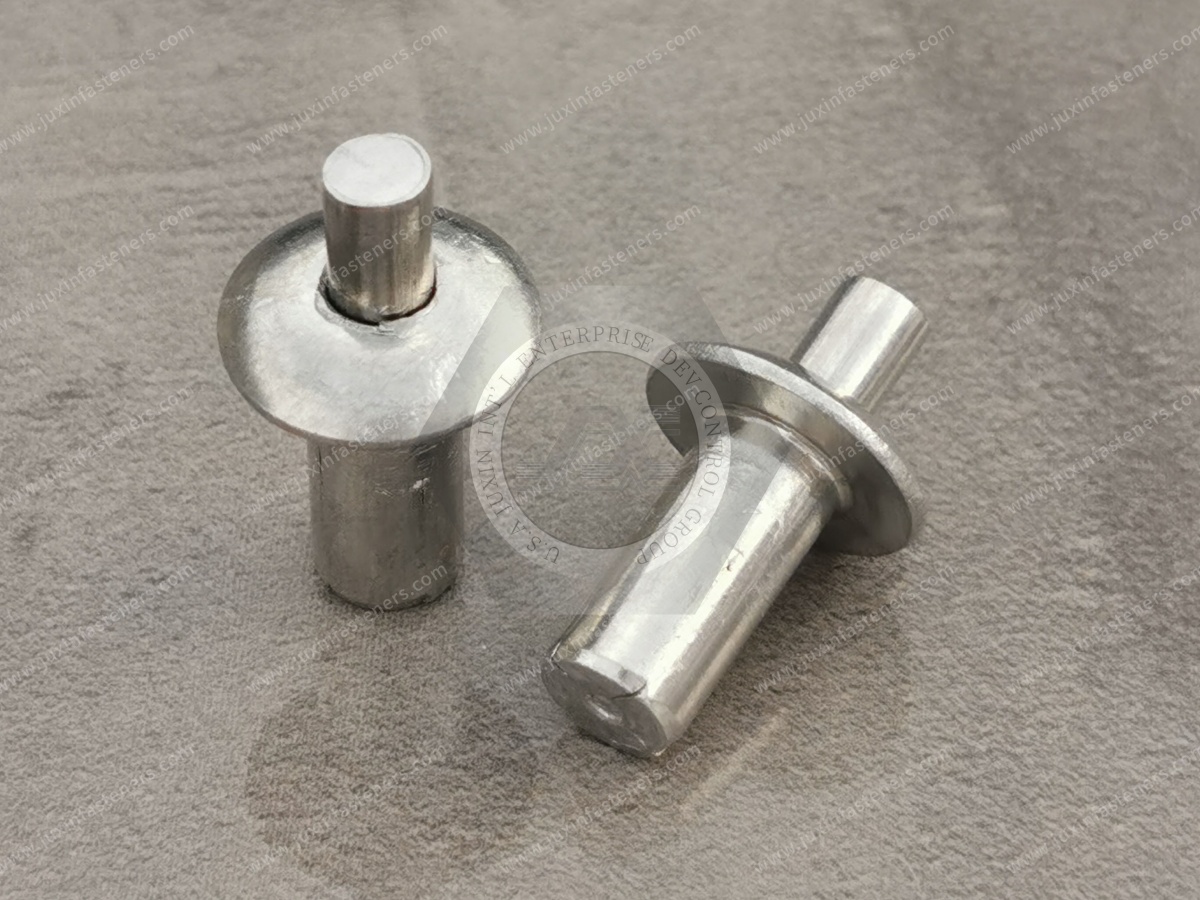
Blind Rivets vs Pull Rivets vs Pop Rivets
These terms are often used interchangeably in industrial purchasing and engineering discussions, but there is an important distinction.
Blind Rivets
Blind rivet is the broad technical category describing rivets that can be installed from one side.
Pull Rivets
Pull rivet describes the installation principle: the rivet mandrel is pulled to deform the rivet body.
Pop Rivets
Pop rivet is a commonly used industry term for a type of mandrel-break blind rivet.
Therefore:
Pop rivet → Pull rivet → Blind rivet family
In many purchasing searches, customers may use any of these terms when looking for the same general fastening solution.
For SEO and commercial search visibility, the website should therefore naturally cover all three terms without treating them as completely unrelated products.
Why Use Blind Rivets?
Blind rivets offer several practical advantages for industrial assembly.
One-Sided Installation
The primary advantage is that installation requires access to only one side.
This makes blind rivets useful for:
Enclosed panels
Tubes
Box sections
Vehicle structures
Cabinets
Equipment housings
HVAC assemblies
No conventional nut is required on the rear side.
Fast Installation
Blind rivets can be installed rapidly using:
Manual rivet guns
Pneumatic rivet tools
Battery-powered rivet tools
Automated riveting equipment
This makes them suitable for repetitive production assembly.
No Welding Required
Blind rivets provide a mechanical joining method without introducing welding heat.
This can be beneficial when joining:
Coated sheet metal
Aluminum components
Dissimilar materials
Finished assemblies
Heat-sensitive components
Suitable for Thin Sheet Metal
Blind rivets are widely used in sheet-metal assembly where welding or bolted connections may be inconvenient.
Depending on the rivet design, diameter and grip range, different blind rivets can accommodate different material thicknesses.
Lightweight Permanent Connection
Blind rivets provide a compact permanent joint without a separate nut-and-bolt assembly.
This can help reduce component count and simplify assembly.
Open-End Blind Rivets
Open-end blind rivets are one of the most widely used general-purpose blind rivet designs.
They are suitable for many sheet-metal applications where a standard blind fastening solution is required.
Typical applications include:
Electrical enclosures
HVAC equipment
Automotive components
Appliances
Machinery
Metal cabinets
General fabrication
Open-end rivets are available in different materials, diameters, lengths, and grip ranges.
Closed-End Blind Rivets
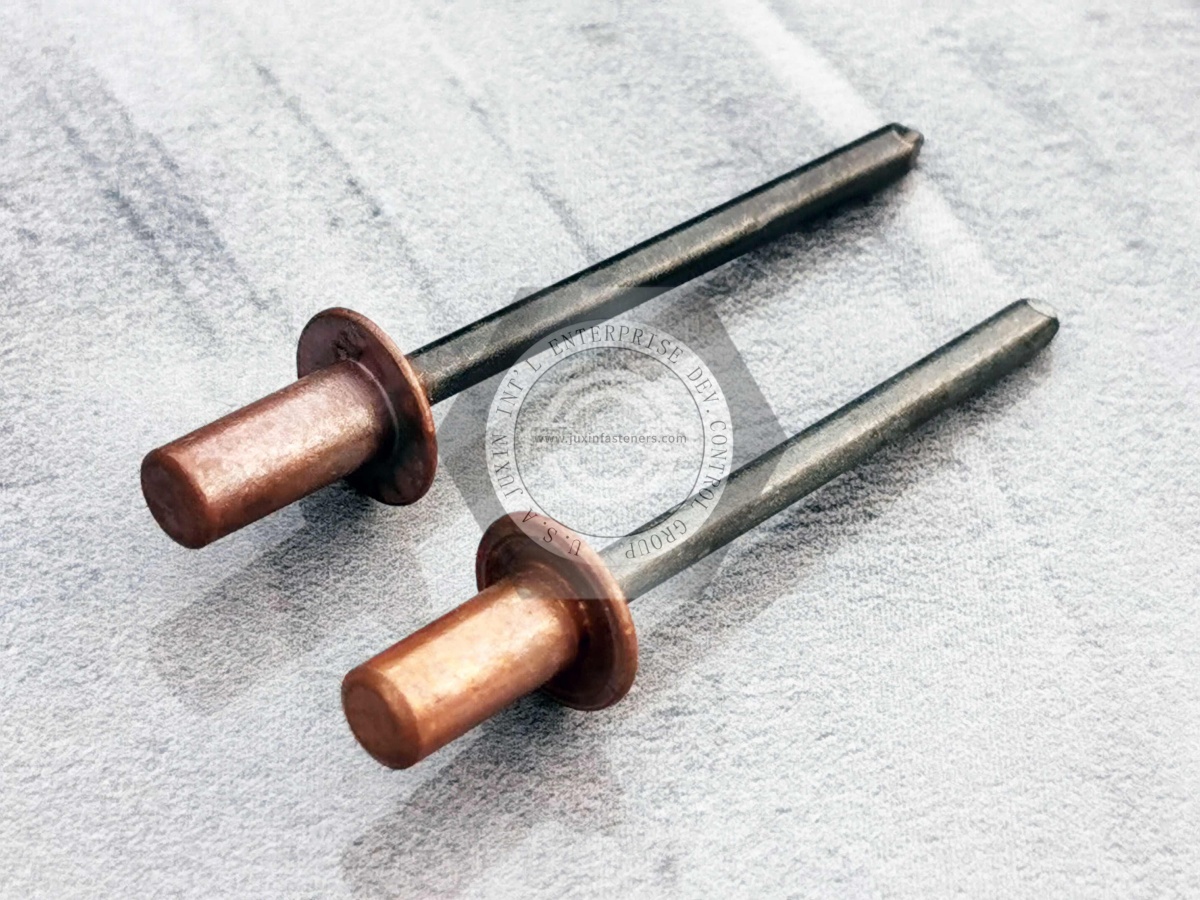
Closed-end blind rivets feature a closed rivet body that can help prevent the passage of air, water and other contaminants through the fastener.
They are often selected when improved sealing or containment is required.
Potential applications include:
Electrical enclosures
Outdoor equipment
Automotive components
Marine equipment
HVAC systems
Refrigeration equipment
Weather-exposed assemblies
Actual sealing performance depends on rivet design, installation and the complete joint configuration.
Structural Blind Rivets
When an application requires higher mechanical performance than a conventional general-purpose blind rivet, structural blind rivets can be considered.
Structural blind rivets are designed for demanding applications where joint strength, vibration resistance and retention are important.
Depending on the design, structural blind rivets can include:
Internal-lock structural rivets
External-lock structural rivets
Multi-grip structural rivets
Multi-bulb rivets
Single-bulb rivets
Other high-performance blind rivet designs
These products are particularly relevant to automotive, transportation, heavy equipment and industrial applications.
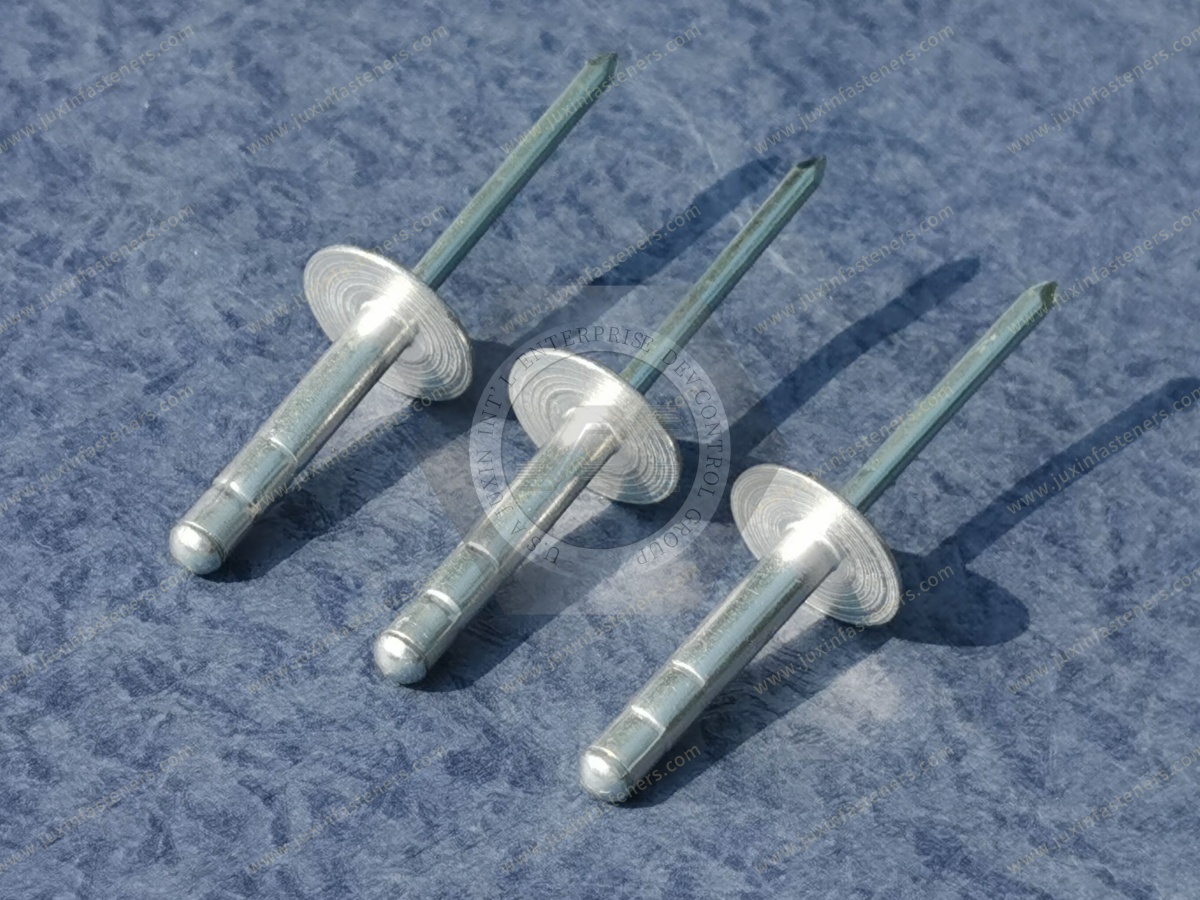
Large-Flange Blind Rivets
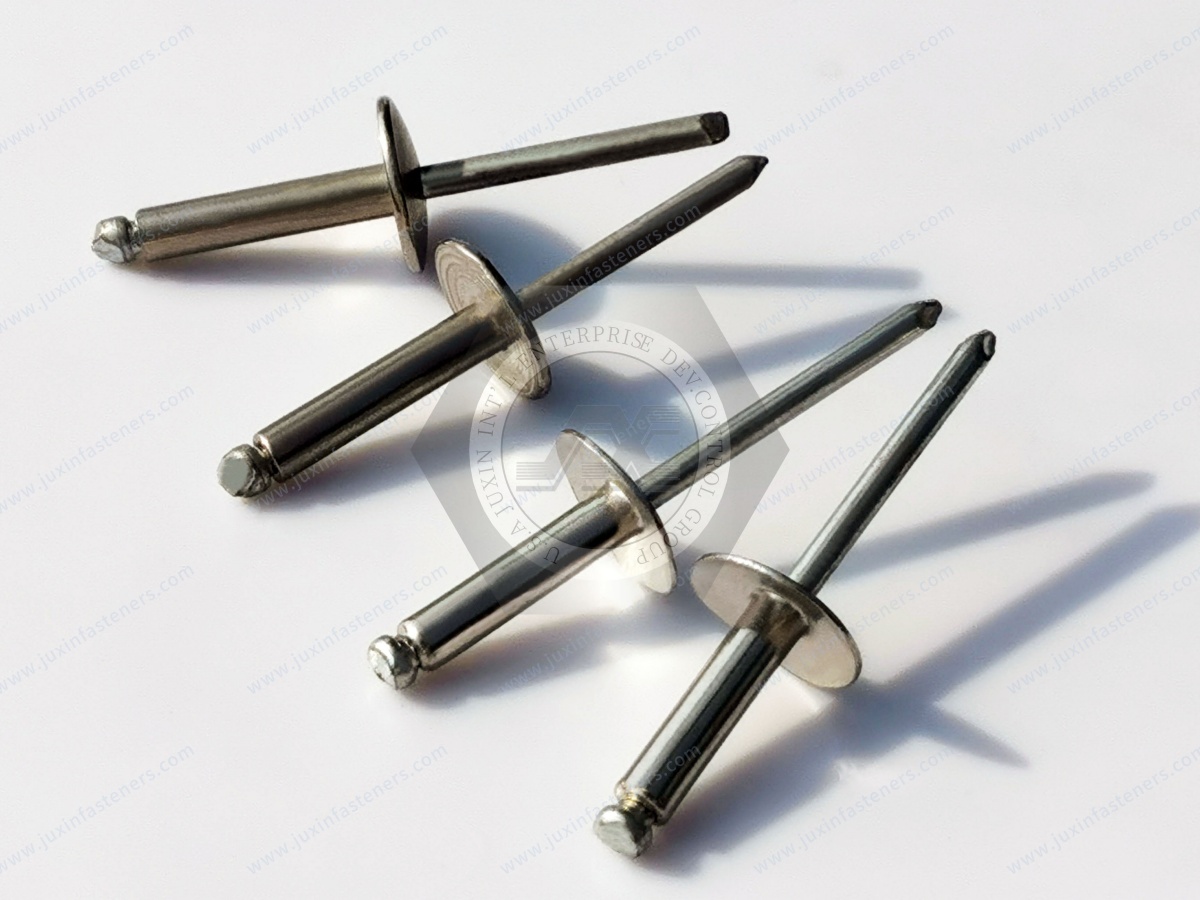
Large-flange blind rivets provide a larger bearing surface under the rivet head.
They can be useful when joining softer materials or when the load needs to be distributed over a larger area.
Potential applications include:
Plastic panels
Composite materials
Thin sheet metal
Automotive trim
Signage
Decorative panels
Roofing and building products
Blind Rivet Materials
Material selection affects strength, corrosion resistance, weight and compatibility with the workpieces.
Aluminum Blind Rivets
Aluminum blind rivets are lightweight and widely used in applications where weight reduction and corrosion resistance are important.
Typical applications include:
Automotive
HVAC
Electronics
Appliances
Aerospace-related equipment
General sheet metal
Steel Blind Rivets
Steel blind rivets provide a robust mechanical fastening solution for industrial applications.
They can be supplied with suitable protective coatings to improve corrosion resistance.
Typical applications include:
Machinery
Automotive
Construction equipment
Electrical cabinets
Industrial equipment
Stainless Steel Blind Rivets
Stainless steel blind rivets are suitable for applications requiring enhanced corrosion resistance.
Common stainless steel options include:
Stainless steel 304
Stainless steel 316
Potential applications include:
Marine equipment
Outdoor equipment
Food equipment
Chemical environments
Refrigeration
Stainless steel assemblies
Material selection should consider the parent material and risk of galvanic corrosion.
Blind Rivets for Aluminum Sheet Metal
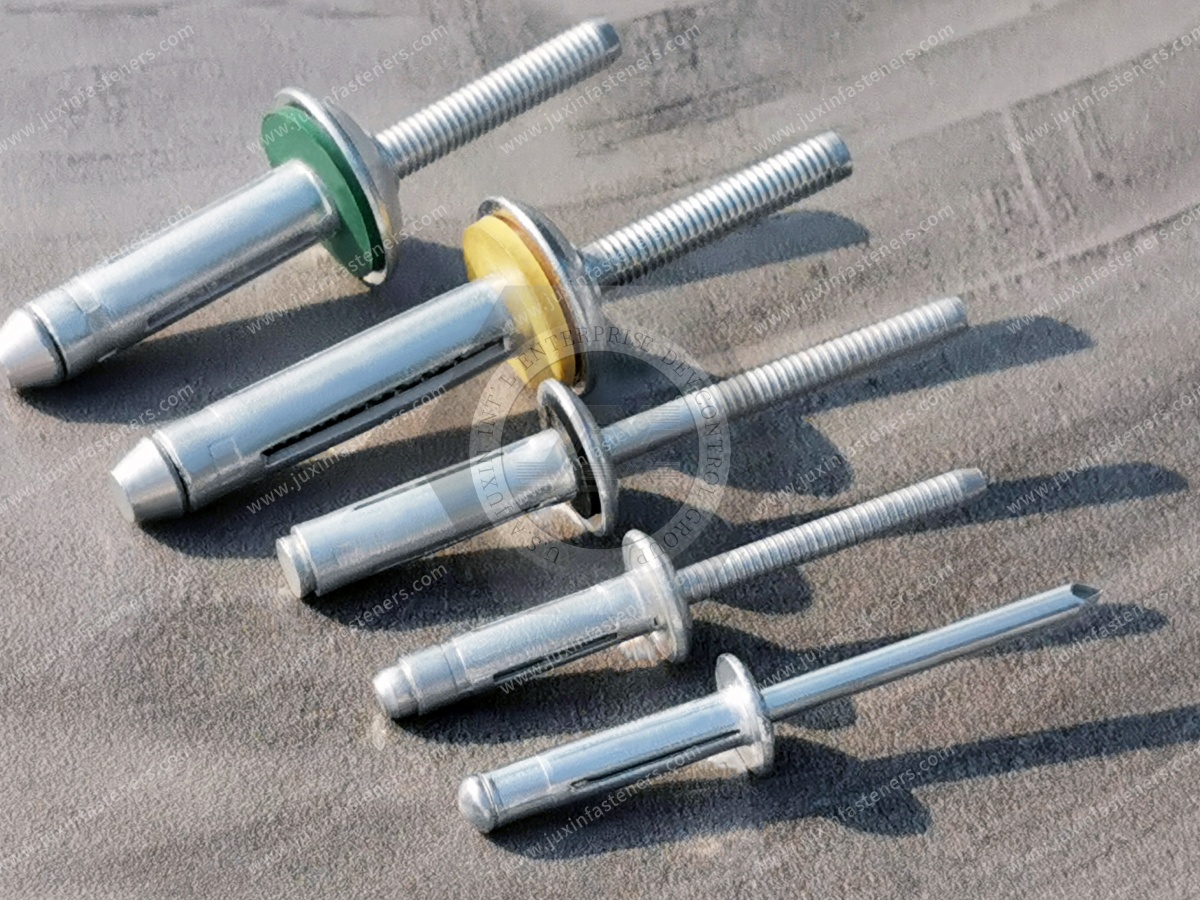
Aluminum sheet is widely used in transportation, HVAC, automotive and equipment manufacturing.
Blind rivets can provide an efficient mechanical joining method without welding the aluminum components.
Engineers should consider:
Rivet material
Aluminum alloy
Sheet thickness
Hole diameter
Grip range
Shear load
Tensile load
Corrosion compatibility
For lightweight structures, aluminum blind rivets can provide a practical balance between weight and fastening performance.

Blind Rivets for Automotive Manufacturing
The automotive industry is one of the major application areas for blind rivets.
Automotive blind rivets can be used in:
Body panels
Interior trim
Rocker panels
Brackets
Chassis-related components
Underbody components
Battery-related structures
Electrical components
Heat shields
Engine-area components
Blind rivets are especially useful where a component can only be accessed from one side during assembly.
Blind Rivets for EV and Battery Applications
The growth of electric vehicle manufacturing has increased demand for lightweight and efficient joining solutions.
Blind rivets may be considered for selected applications involving:
Battery enclosure components
Battery tray structures
Electrical housings
Thermal-management components
Cable brackets
Underbody components
Interior structures
For EV applications, engineers should evaluate:
Electrical conductivity requirements
Material compatibility
Corrosion
Vibration
Thermal exposure
Sealing requirements
Mechanical loading
Where a sealed joint is required, an appropriate closed-end or sealing rivet design should be evaluated.

Blind Rivets for Aerospace Applications
Aerospace manufacturing places significant emphasis on weight, structural integrity and fatigue performance.
Aerospace blind rivets can be considered for suitable:
Aircraft interior components
Lightweight panels
Equipment housings
Brackets
Avionics-related equipment
Composite assemblies
Maintenance components
Structural applications require careful engineering evaluation of rivet material, diameter, grip range, installation process and joint performance.
For aerospace production, customer and regulatory specifications should always govern final fastener selection.
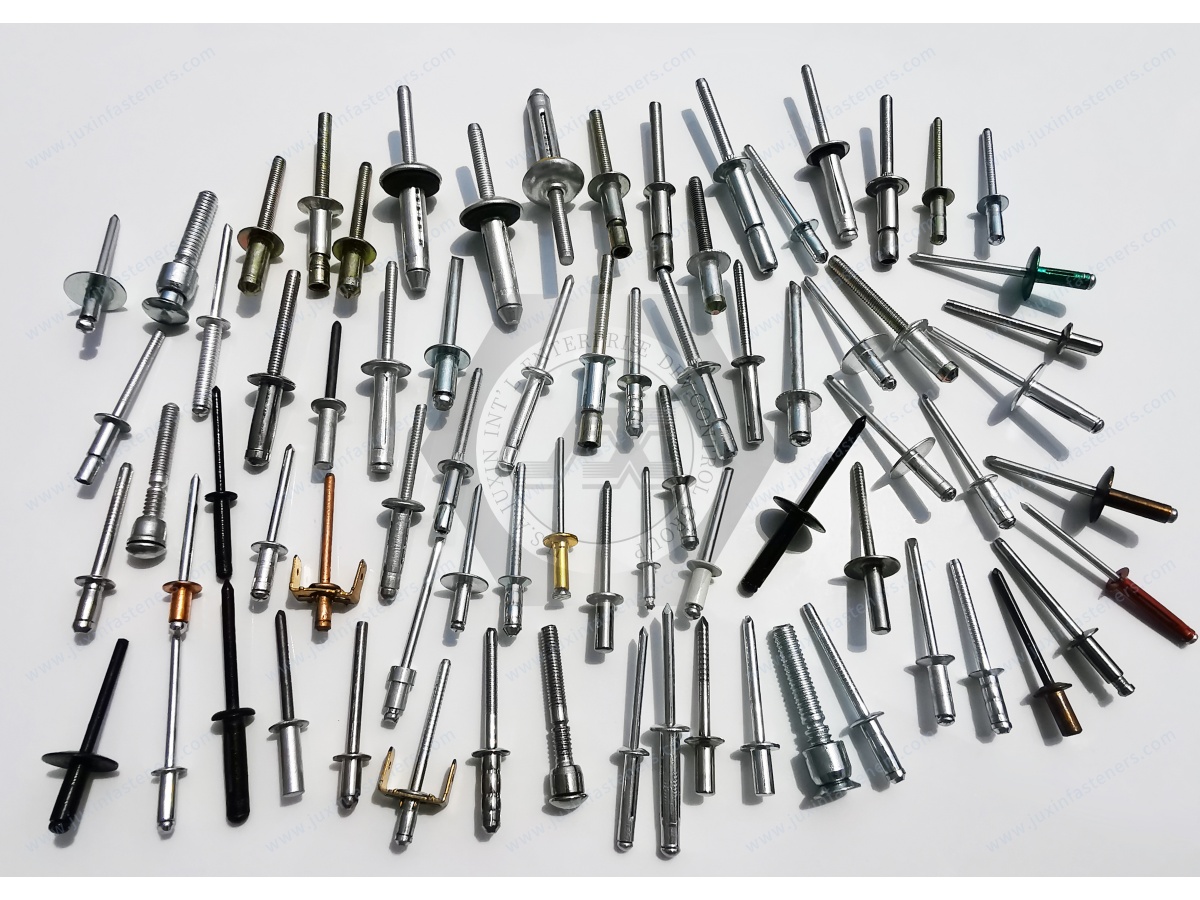
Blind Rivets for Railway and Mass Transit
Rail vehicles combine aluminum, steel, composite and interior materials.
Blind rivets can be used for:
Train interior panels
Passenger compartments
Equipment cabinets
Electrical enclosures
HVAC systems
Cable management
Interior fixtures
Lightweight body components
Rail applications may require careful consideration of:
Vibration
Fatigue
Fire-performance requirements
Corrosion
Joint strength
Material compatibility
Blind Rivets for Curtain Walls and Architectural Applications
Building façades and architectural structures often use aluminum panels and lightweight metal components.
Blind rivets can provide efficient one-sided fastening for:
Aluminum composite panels
Curtain-wall components
Signage
Decorative panels
Outdoor structures
Architectural metalwork
For exterior applications, engineers should consider:
Wind loads
Weather exposure
Corrosion
Joint movement
Sealing
Aesthetic requirements
Sealed blind rivets can be considered where limiting water penetration through the fastener is important.
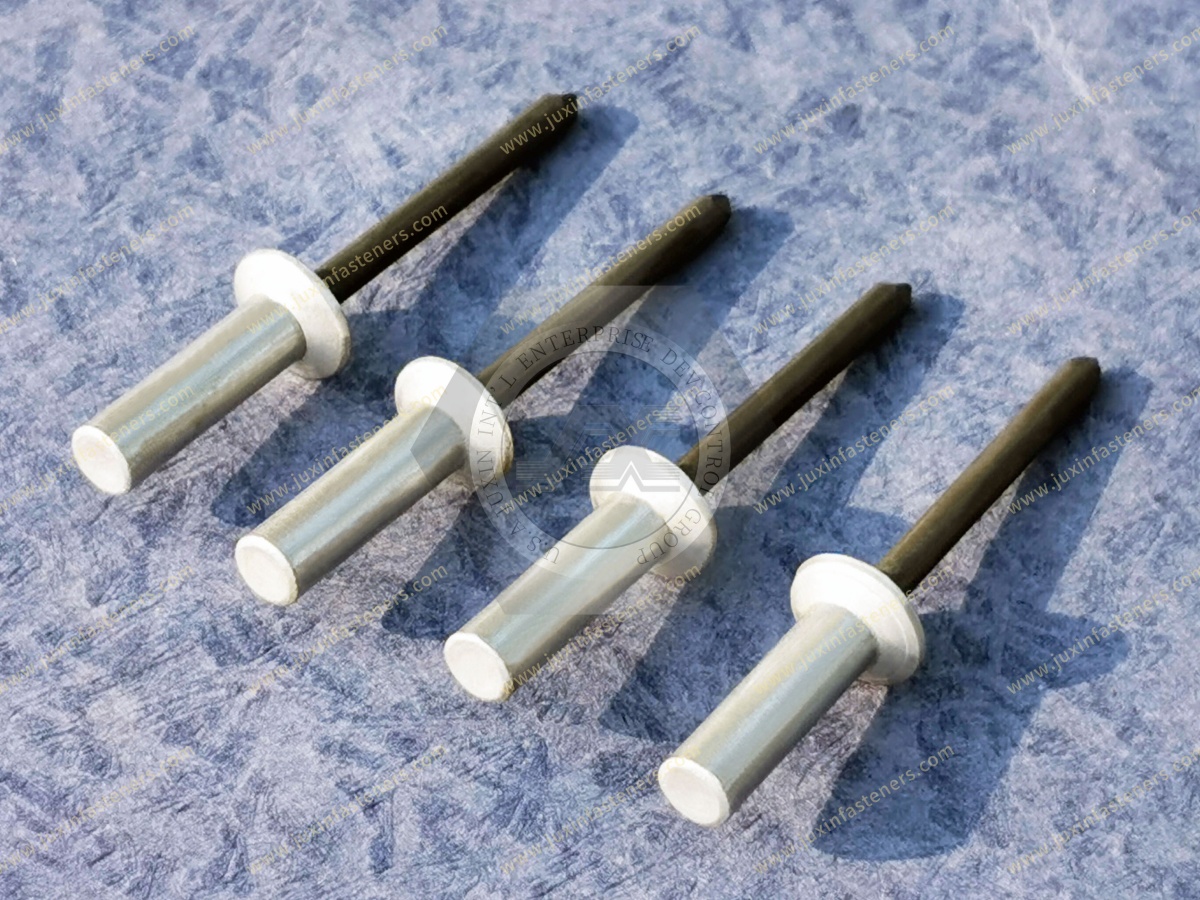
Blind Rivets for Electrical Enclosures
Electrical cabinets and switchgear frequently use thin-gauge sheet metal.
Blind rivets provide a fast method of permanently joining:
Cabinet panels
Mounting brackets
Covers
Cable-management components
Electrical housings
Distribution boxes
The single-sided installation method is particularly useful for enclosed cabinet structures.
Blind Rivets for HVAC and Refrigeration
HVAC and refrigeration equipment uses extensive sheet-metal construction.
Applications include:
Air-conditioning units
Refrigeration cabinets
Ventilation equipment
Ductwork
Fan housings
Compressor equipment
Control panels
Equipment covers
Blind rivets provide fast assembly without requiring access to the rear side of the panel.
For condensation and outdoor exposure, appropriate corrosion-resistant or sealed rivet configurations should be selected.
Blind Rivets for Machinery and Industrial Equipment
Industrial machinery often contains guards, covers, housings and fabricated sheet-metal components.
Blind rivets can be used for:
Machine guards
Equipment housings
Conveyor equipment
Control cabinets
Protective panels
Brackets
Sheet-metal covers
Industrial enclosures
They are especially useful when fast assembly and permanent joining are required.
Blind Rivets for Electronics and Appliances
Electronics and appliances frequently require compact fastening solutions for metal housings.
Applications include:
Computer cases
Electronic equipment
Instrument housings
Household appliances
Control panels
Consumer equipment
Metal furniture
Small-diameter blind rivets can provide compact fastening for relatively light-duty assemblies.
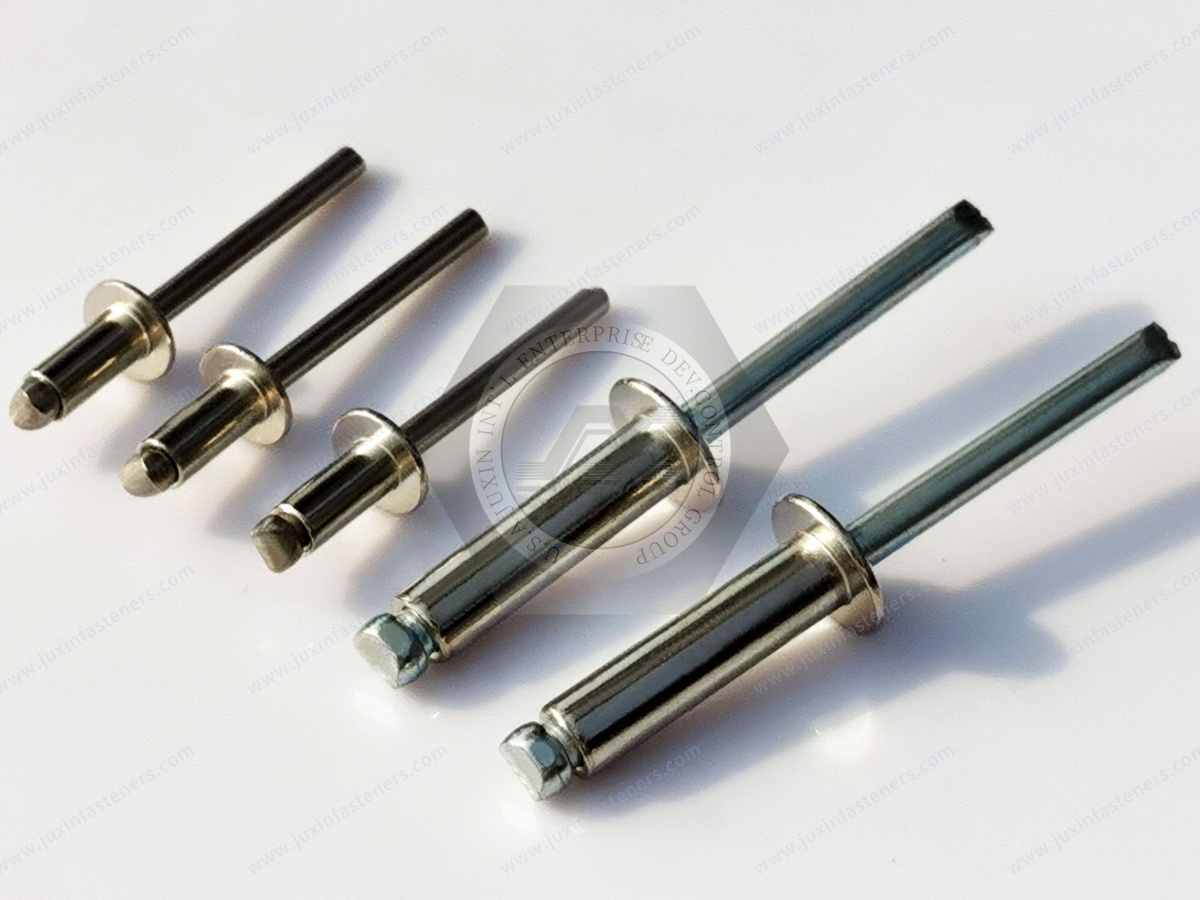
Blind Rivets for Marine and Shipbuilding
Marine environments create demanding corrosion conditions.
Stainless steel blind rivets, particularly suitable grades such as 304 or 316 depending on the application, can be considered for:
Marine equipment
Ship interiors
Electrical cabinets
HVAC systems
Equipment panels
Non-welded assemblies
Maintenance components
Engineers should consider salt exposure, moisture, material compatibility and galvanic corrosion.
Blind Rivets for Signage and Advertising
Blind rivets are widely applicable to signs, light boxes and decorative metalwork.
Special configurations may include:
Large-flange rivets
Decorative rivets
Colored rivets
Aluminum rivets
Stainless steel rivets
They provide a clean permanent connection without requiring access behind the sign.
Blind Rivet Selection Guide
Choosing the correct blind rivet requires consideration of the complete joint.
1. Rivet Diameter
Common diameters include:
2.4 mm
3.0 mm
3.2 mm
4.0 mm
4.8 mm
6.0 mm
6.4 mm
Actual availability depends on the specific rivet design.
2. Grip Range
The grip range is one of the most important specifications.
The selected rivet must accommodate the combined thickness of the materials being joined.
3. Rivet Material
Consider:
Aluminum
Steel
Stainless steel
4. Mandrel Material
The mandrel design influences installation and mechanical performance.
5. Head Style
Common configurations include:
Dome head
Large-flange head
Countersunk head
6. Rivet Type
Choose between:
Open-end
Closed-end
Structural
Multi-grip
Multi-bulb
Locking designs
7. Application Environment
Consider:
Moisture
Salt spray
Temperature
Vibration
Chemical exposure
UV exposure
Corrosion
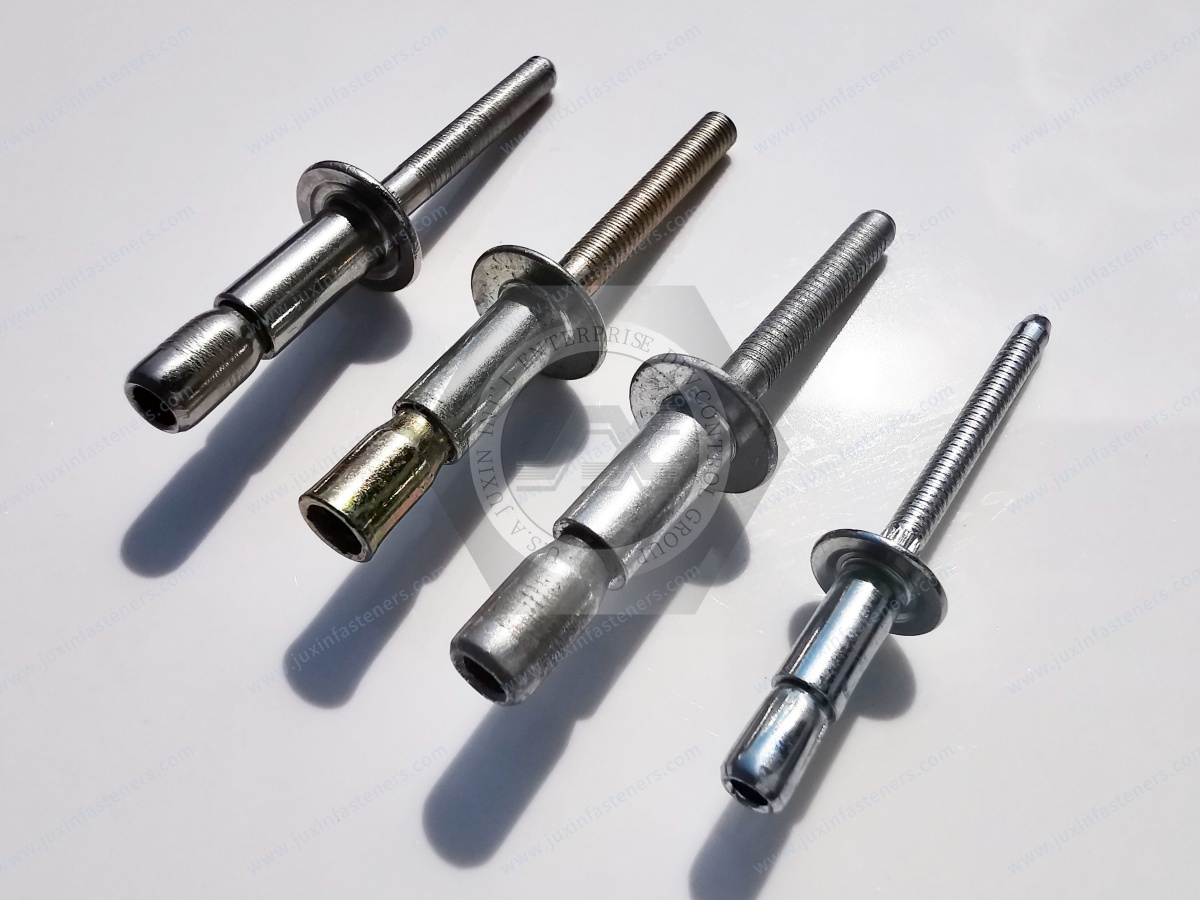
Blind Rivet vs Screw and Nut
Feature | Blind Rivet | Screw + Nut |
One-sided installation | Yes | Usually no |
Installation speed | High | Moderate |
Permanent connection | Yes | No |
Loose nut required | No | Yes |
Enclosed structures | Excellent | Difficult |
Repeated removal | Limited | Excellent |
Assembly weight | Low | Higher |
Suitable for thin sheet | Excellent | Good |
Welding required | No | No |
Blind rivets are particularly attractive when fast permanent assembly and one-sided access are more important than future disassembly.
Blind Rivet vs Welded Joint
Blind riveting can be an alternative to welding for certain non-structural or appropriately engineered sheet-metal joints.
Blind Rivets
No heat input
Fast installation
Suitable for coated components
Easy field installation
One-sided access
Welding
Permanent joint
Suitable for many structural applications
Requires welding equipment
Introduces heat
May require post-weld finishing
The correct solution depends on the material, load requirements, production process and engineering specifications.
Blind Rivet Installation
Correct installation is critical to joint performance.
The installation process should control:
Hole diameter → Material thickness → Rivet grip → Tool nosepiece → Mandrel pull → Rivet deformation
Incorrect hole size or grip selection can result in:
Loose joints
Insufficient clamp force
Poor rivet formation
Mandrel failure
Reduced joint strength
For production applications, installation parameters should be validated with representative materials and joint configurations.
Quality Control for Blind Rivets
For OEM and industrial applications, blind rivets can be inspected for:
Rivet body dimensions
Mandrel dimensions
Head diameter
Overall length
Grip range
Thread or structural geometry where applicable
Material
Plating or coating
Appearance
Installation performance
Shear strength
Tensile strength
Mandrel retention
Inspection requirements can be established according to customer drawings and technical specifications.
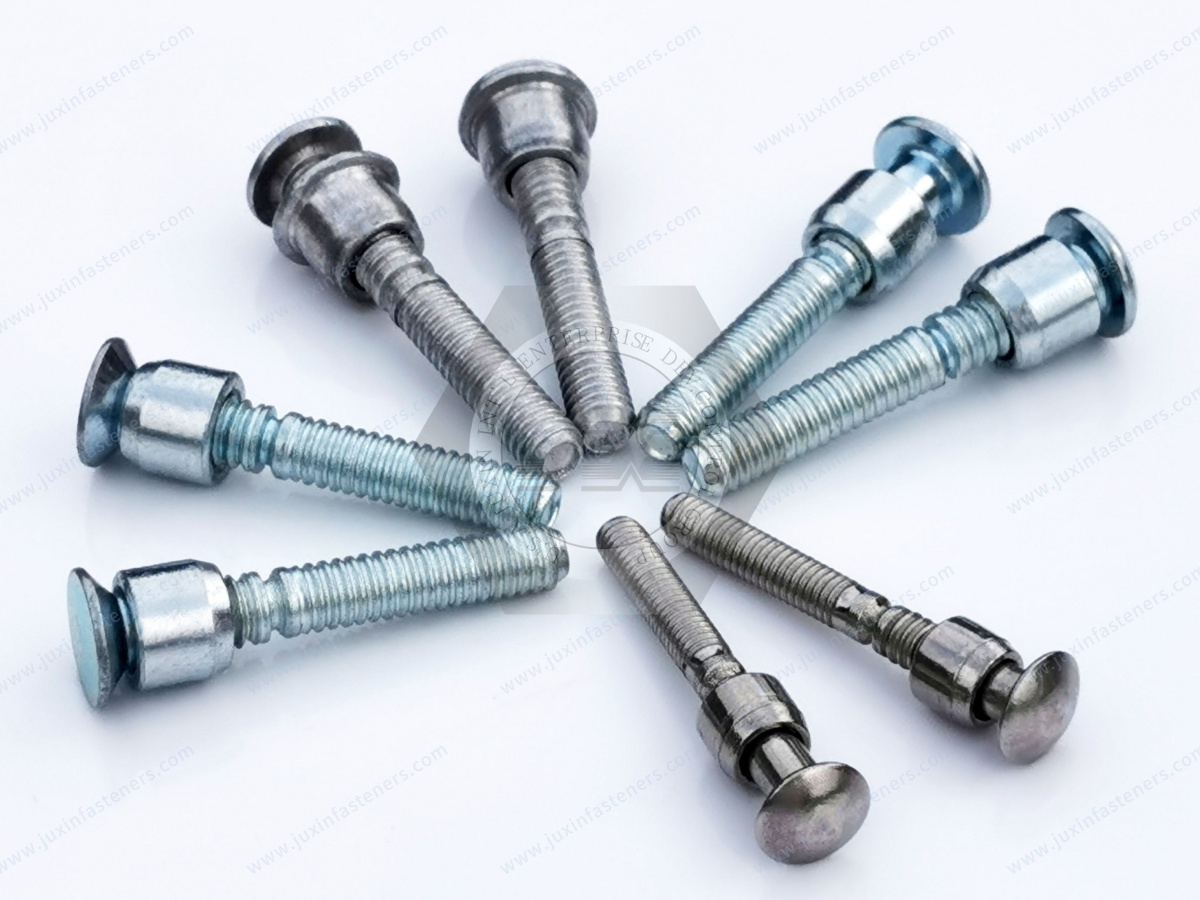
Custom Blind Rivet Manufacturing
Juxin Fasteners provides custom blind rivets for OEM and industrial applications.
Customers can provide:
Engineering drawings
CAD files
Samples
Rivet diameter
Grip range
Material requirements
Head configuration
Surface treatment
Mechanical requirements
Packaging requirements
We can support customized blind rivet configurations for applications that cannot be met by standard catalog products.
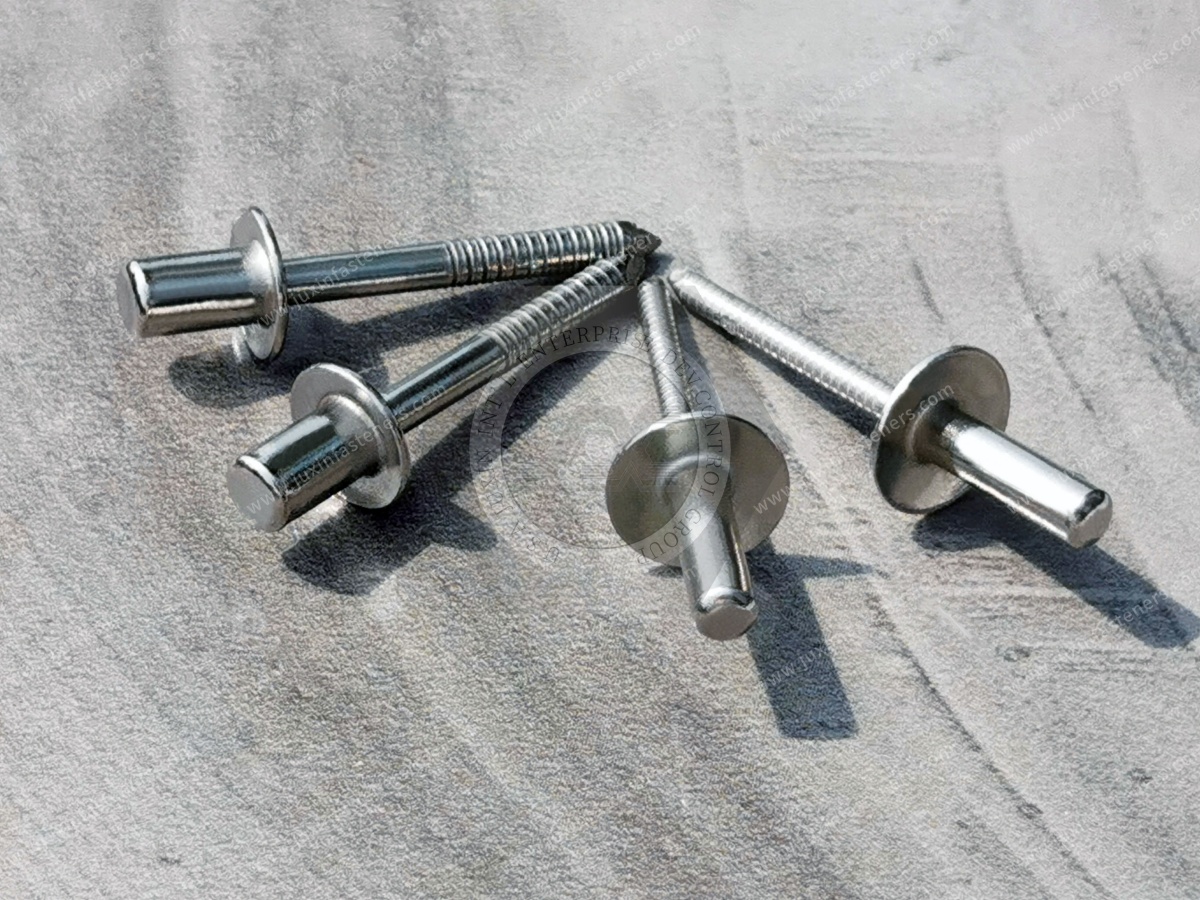
Why Choose Juxin Fasteners for Blind Rivets?
Juxin Fasteners supplies industrial fastening components for manufacturers, engineering companies and international distributors.
Our blind rivet solutions include:
Open-end blind rivets
Closed-end blind rivets
Pop rivets
Pull rivets
Structural blind rivets
Locking blind rivets
Multi-grip rivets
Multi-bulb rivets
Large-flange blind rivets
Aluminum blind rivets
Steel blind rivets
Stainless steel blind rivets
Custom blind rivets
Our OEM process can support drawing review, sample development, production, inspection and packaging.
Frequently Asked Questions About Blind Rivets
What is a blind rivet?
A blind rivet is a mechanical fastener designed to permanently join two or more components when access is available from only one side.
Are blind rivets and pop rivets the same?
Pop rivets are a common type of mandrel-break blind rivet. “Blind rivet” is the broader technical term.
What is a pull rivet?
A pull rivet is installed by pulling its internal mandrel with a riveting tool, causing the rivet body to deform and clamp the workpieces.
Can blind rivets be installed from one side?
Yes. One-sided installation is the defining advantage of blind rivets.
Are blind rivets suitable for sheet metal?
Yes. Blind rivets are widely used for thin sheet-metal assembly.
What materials are blind rivets available in?
Common materials include aluminum, steel and stainless steel.
Are stainless steel blind rivets available?
Yes. Stainless steel blind rivets are available for applications requiring higher corrosion resistance.
What is a closed-end blind rivet?
A closed-end blind rivet has a closed body design that can help limit passage through the rivet and may provide improved sealing characteristics compared with standard open-end designs.
What are structural blind rivets?
Structural blind rivets are engineered for applications requiring higher joint performance, retention and resistance to demanding service conditions.
Can you manufacture custom blind rivets?
Yes. Juxin Fasteners can manufacture custom blind rivets based on drawings, samples and application requirements.
Related Blind Rivet Solutions
For engineers and purchasing teams evaluating permanent mechanical fastening options, related products include:
Blind Rivets
Structural Blind Rivets
Closed-End Blind Rivets
Large-Flange Blind Rivets
Stainless Steel Blind Rivets
Aluminum Blind Rivets
Rivet Nuts
Weld Nuts
Weld Screws
Threaded Inserts
CNC Machined Components
Request a Blind Rivet Quote
Whether you require standard blind pop rivets for high-volume sheet-metal production or a custom structural blind rivet for an engineered assembly,
Juxin Fasteners can support your fastening requirements.
Send us your drawing, sample, material specification, rivet diameter, grip range or application details for evaluation.
Email: info@juxinfasteners.com
Juxin Fasteners — Reliable Blind Rivet Solutions for Industrial OEM Assembly.
 MORE NEWS
Oct. 13, 2026
Contact Us
Tel.:
+86 020 8621 0320
+86 020 3121 6067
E-mail:
Technical Support:
Navigation
SEND INQUIREY