
Call Us
+86 136 6007 9809
Call Us
+86 136 6007 9809

Dec. 08, 2024
In mechanical design, selecting the correct bolt length is a critical factor that directly affects fastening reliability, structural performance, vibration resistance, and product durability.
Although bolt length may appear to be a simple dimensional requirement, improper bolt length selection can lead to:
Insufficient clamping force
Thread stripping
Bolt loosening
False torque during assembly
Reduced fatigue performance
Connection failure under dynamic loads
For industrial applications, engineers must consider multiple factors including:
Clamping length
Bolt stiffness
Joint stiffness
Thread engagement length
Nut height
Washer thickness
Blind hole depth
Material properties
External loading conditions
Juxin Fasteners provides customized industrial bolt and screw solutions based on mechanical design requirements, supporting global OEM customers in:
Automotive Manufacturing
Electric Vehicle (EV)
Battery Pack Assembly
Rail Transit
Aerospace
Electrical Cabinets
HVAC Equipment
Medical Equipment
Construction
Machinery Manufacturing
Robotics
Sheet Metal Fabrication
During the transition from free condition to the fully tightened condition, a bolt connection experiences:
Preload generation
Elastic deformation
Load distribution
Stress relaxation
A simplified mechanical spring model can describe bolt behavior.
In this model:
The bolt behaves as a tension spring
The connected components behave as compression springs
The bolt stiffness and connected-part stiffness determine how the preload is distributed.
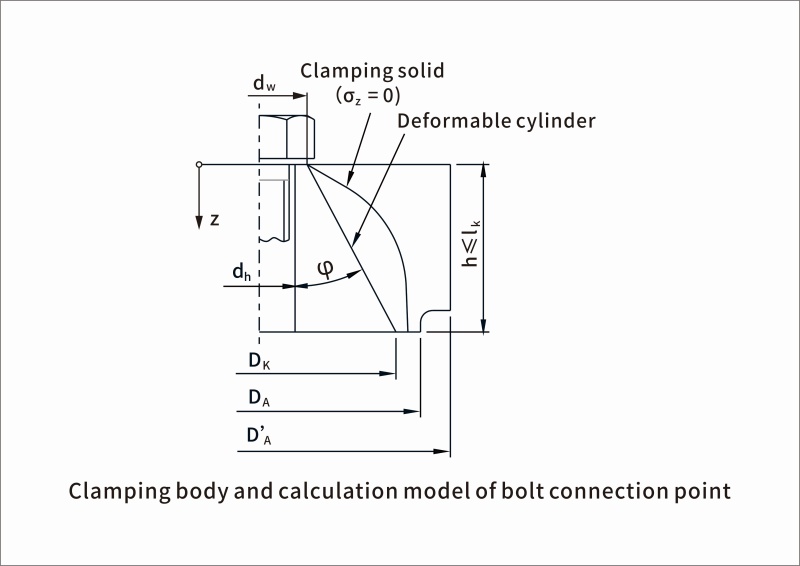
The effective spring length depends on the clamping length (Lk), which includes the thickness of all compressed components.
The final bolt length is determined by:
Bolt Length = Clamping Length + Nut Height + Required Thread Engagement + Allowance
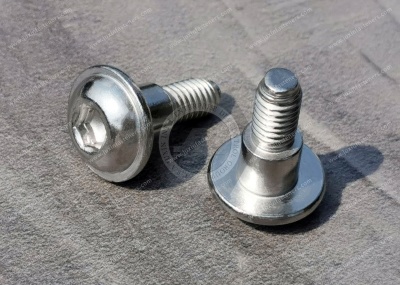
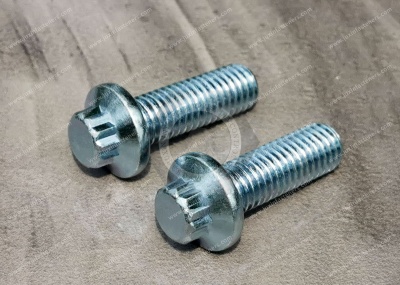
The first consideration in bolt length design is the thickness of the assembled components.
The clamping length refers to the total thickness of all parts compressed between the bolt head and nut.
A proper clamping length ensures:
Stable preload
Uniform load distribution
Improved fatigue resistance
Reduced loosening risk
For example:
A bolt connecting multiple metal plates requires sufficient length to generate the designed preload without bottoming out or losing thread engagement.
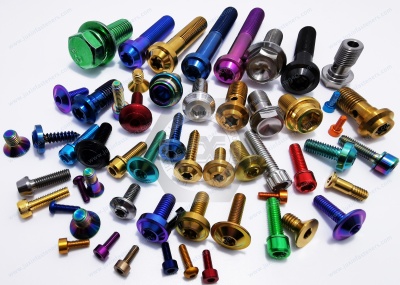
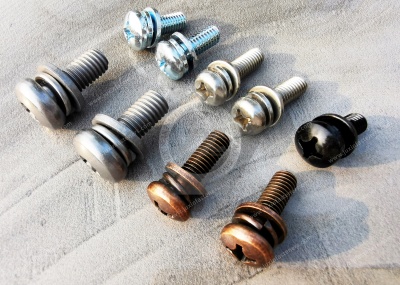
The total bolt length must include:
Nut thickness
Washer thickness
Additional spacing components
Different applications may require:
Standard hex nuts
Flange nuts
Lock nuts
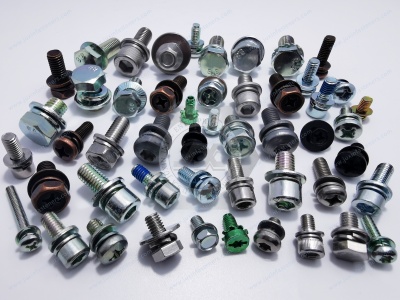
Captive washer assemblies
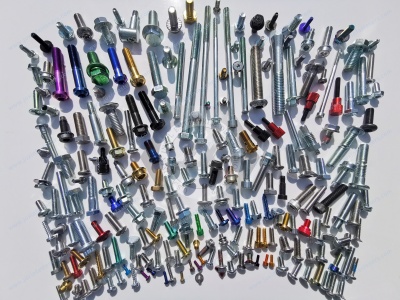
Juxin Fasteners supplies customized:
Hex bolts
Flange bolts
Locking screws
Weld screws
Special OEM fasteners
for different assembly requirements.
The exposed thread length after tightening is another important design factor.
Typical engineering requirements:
At least:
2 exposed threads
are commonly recommended.
For applications requiring higher reliability:
2–3 exposed threads
are commonly used.
Insufficient exposed thread length may reduce:
Nut engagement
Thread load capacity
Connection reliability
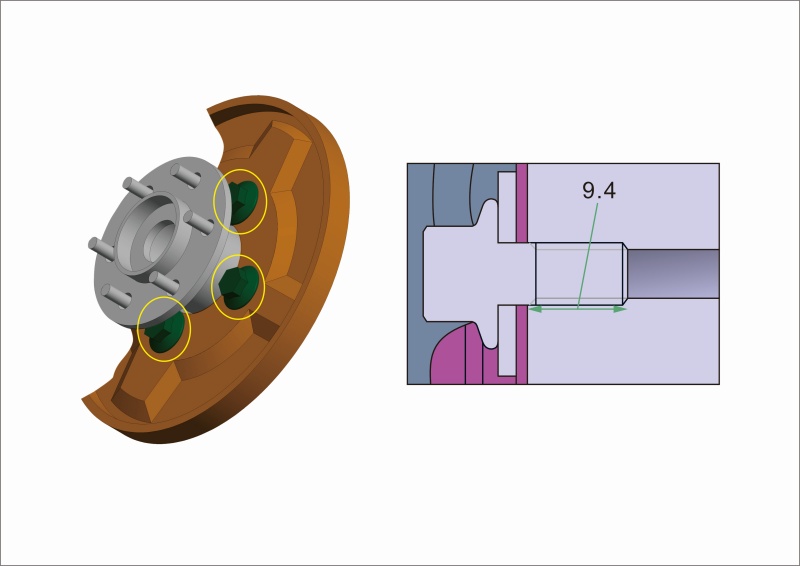
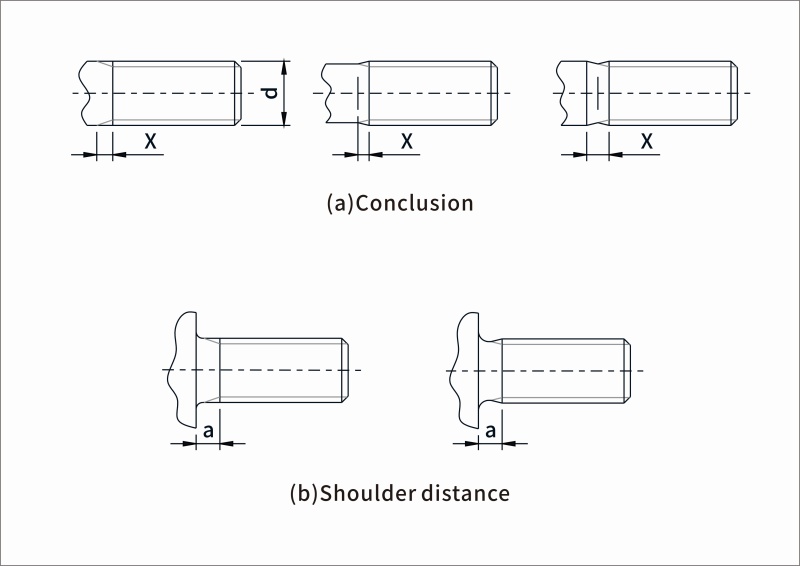
Bolt geometry includes several areas that influence effective clamping length:
Thread run-out
Shoulder distance
Relief groove
Chamfer
Thread end section
These areas may not provide full thread engagement.
When designing bolt length, engineers must consider the ineffective thread area to prevent:
False torque
Insufficient clamping force
Improper tightening results
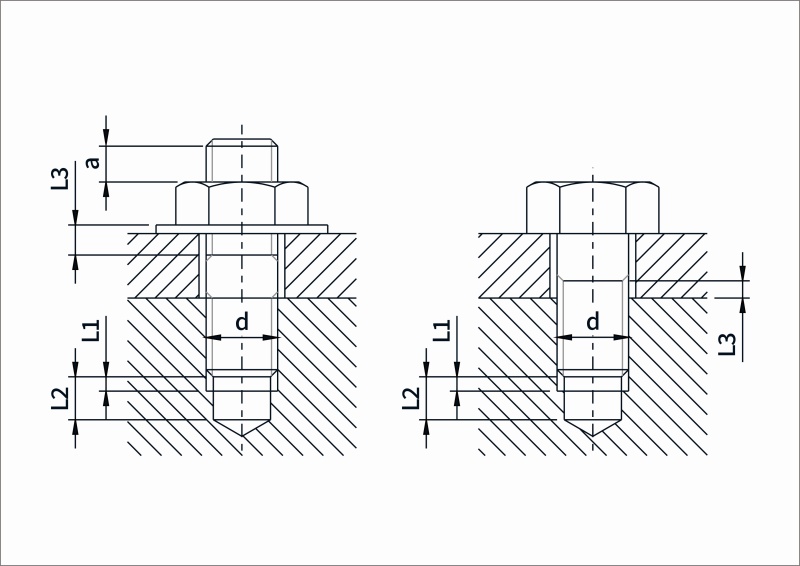
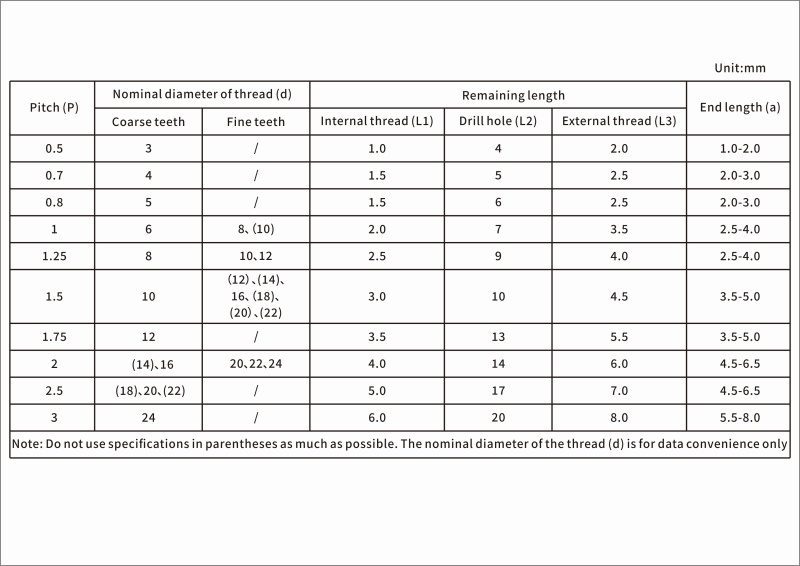
Blind hole applications require special attention.
Common problems include:
Bolt bottoming out before achieving preload
False torque readings
Insufficient thread engagement
Internal thread damage
Engineers should verify:
Hole depth
Thread depth
Effective engagement length
Bolt penetration depth
before selecting the final bolt length.
Juxin Fasteners provides customized solutions for:
Threaded blind holes
Rivet nut assemblies
Sheet metal applications
Aluminum structures
Automotive components
Different connected materials require different thread engagement designs.
Steel structures generally require standard thread engagement.
Because aluminum has lower strength than steel, engineers often require:
Longer thread engagement
Thread inserts
Rivet nuts
Special fastener solutions
Materials such as:
Cast iron
Plastic components
Composite structures
may require increased engagement length to maintain connection strength.
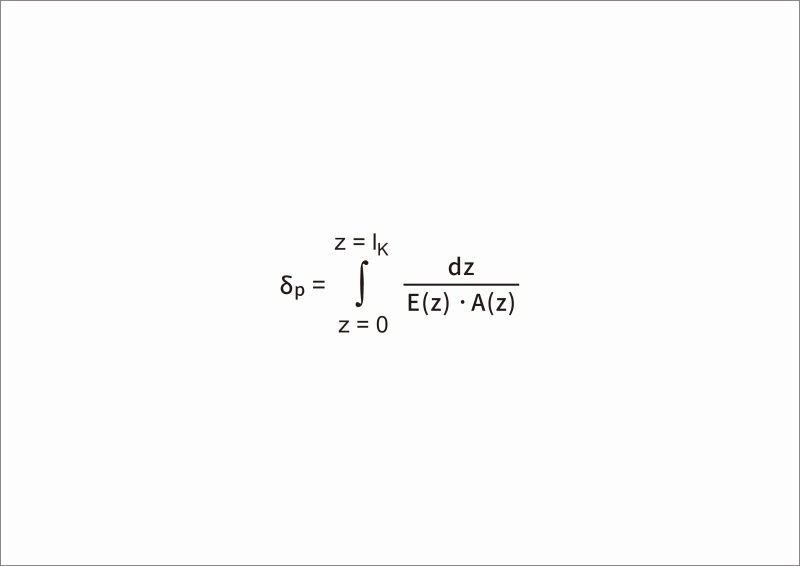
A reliable bolt connection must maintain sufficient clamping force under:
External loads
Vibration
Thermal expansion
Friction variation
Dynamic loading
The preload force should remain higher than the separating force generated during operation.
Proper bolt length selection helps prevent:
Joint separation
Fatigue failure
Loosening
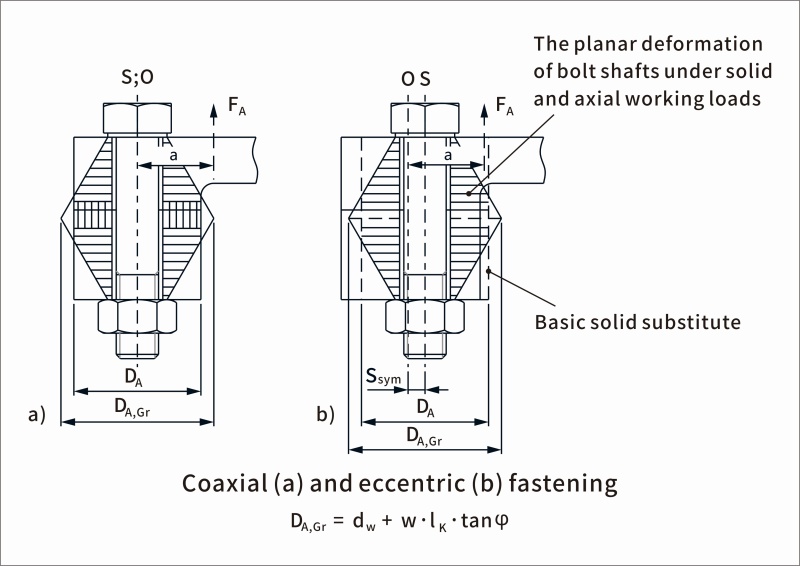
The clamping length should provide sufficient elastic deformation capability.
A longer clamping length improves:
Elastic flexibility
Load distribution
Fatigue performance
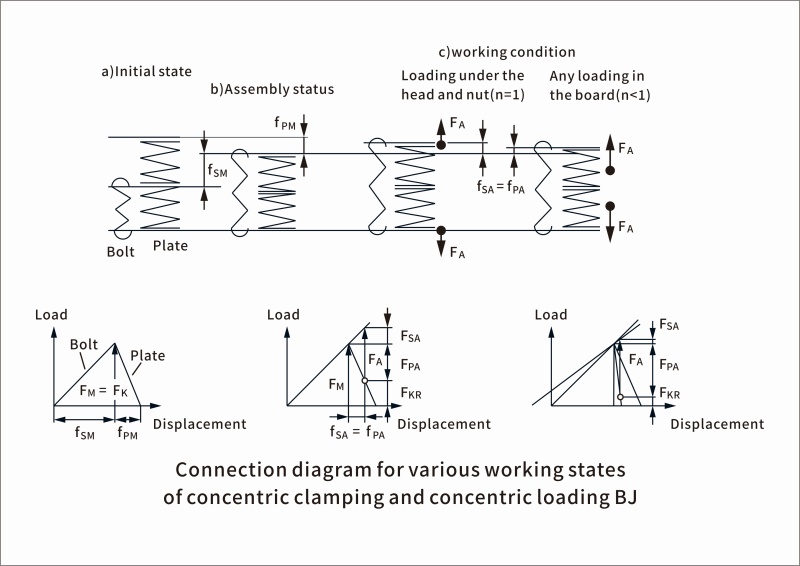
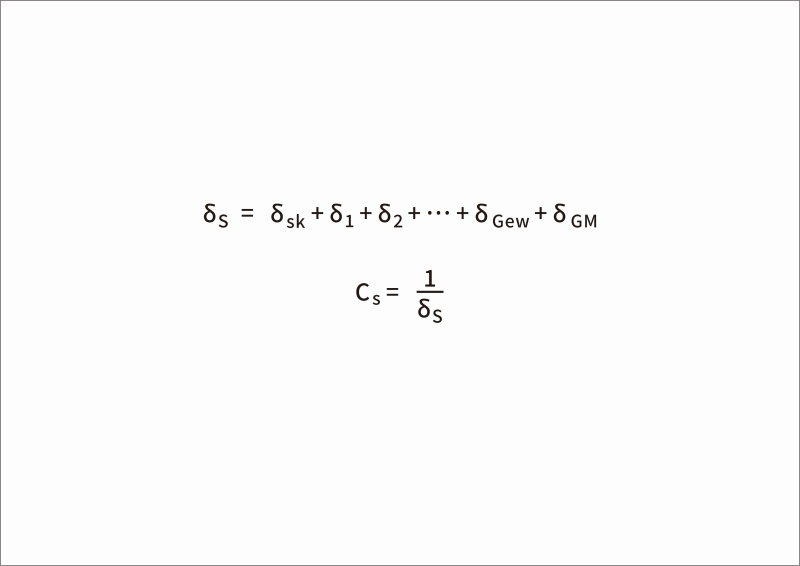
The bolt and connected parts work together as a spring system.
During operation:
The bolt stretches under tension
The connected components compress
The relationship between bolt stiffness and joint stiffness determines connection stability.
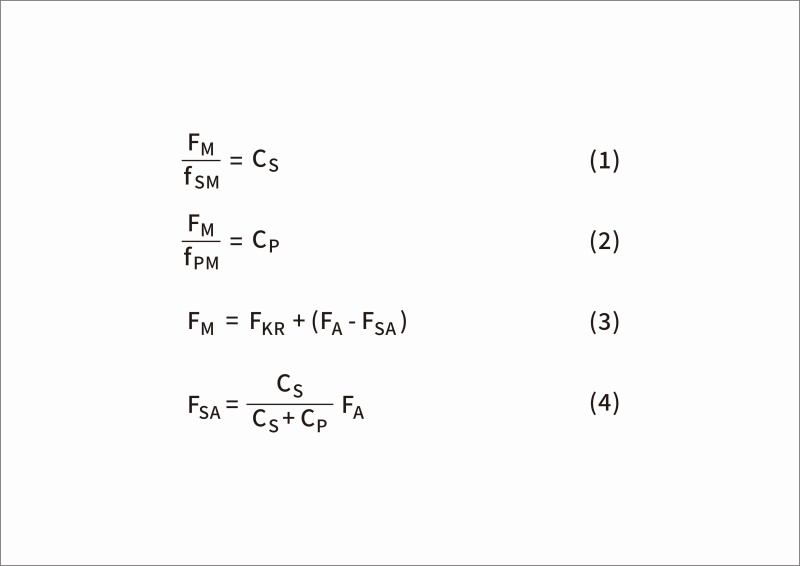
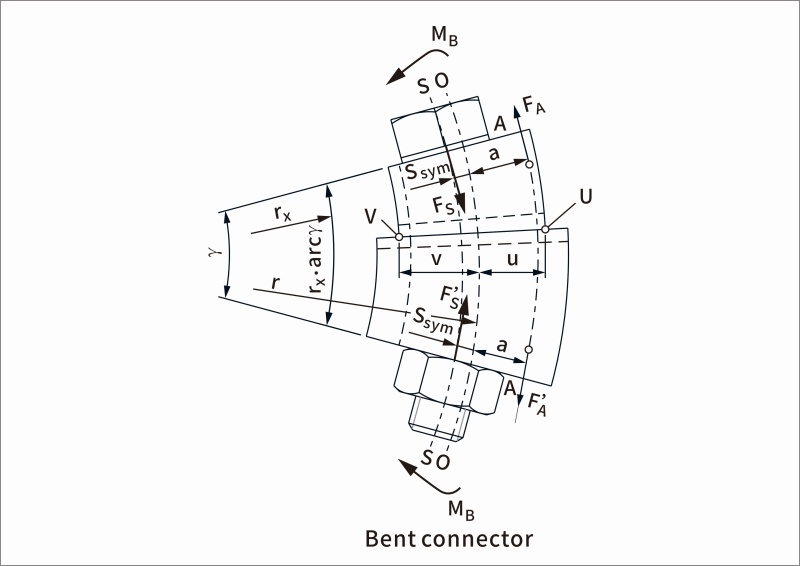
Bolt stiffness:
Cb
depends on:
Bolt material
Effective cross-sectional area
Bolt length
Elastic modulus
Joint stiffness:
Cm
depends on:
Connected material
Contact area
Component thickness
The stiffness ratio:
Cb / (Cb + Cm)
affects how external loads are distributed between:
Bolt tension
Joint compression
A properly designed connection reduces:
Bolt overload
Clamp force loss
Fatigue damage
The clamping length directly influences deformation behavior.
Short clamping length:
Lower elastic energy storage
Higher sensitivity to surface deformation
Greater risk of preload loss
Longer clamping length:
Better deformation compensation
Improved vibration resistance
Higher connection reliability
Surface conditions such as:
Coatings
Surface roughness
Material deformation
must also be considered.
Recommended:
Clamping length > 2 × bolt diameter
Optimal:
Approximately 4 × bolt diameter
For materials with higher deformation:
Recommended:
5–8 × bolt diameter
Recommended:
Clamping length ≥ 6 × thread pitch
and:
Greater than bolt diameter
Applications:
Vehicle chassis
Body structures
Powertrain systems
Requirements:
High preload stability
Fatigue resistance
Vibration resistance
Applications:
Battery enclosure
Aluminum structures
Cooling systems
Requirements:
Lightweight fastening
Corrosion resistance
Long service life
Requirements:
High vibration resistance
Long-term reliability
Safety-critical performance
Requirements:
High strength-to-weight ratio
Precision manufacturing
Strict dimensional control
Solutions:
Self-clinching screws
Rivet nuts
Thread inserts
Weld fasteners
for thin sheet metal assembly.
Precision bolt length design improves:
Assembly accuracy
Structural rigidity
Equipment lifetime
Juxin Fasteners provides:
✔ OEM customized bolts and screws
✔ Special length fasteners
✔ High strength fastening solutions
✔ Automotive and EV fasteners
✔ Thread engagement optimization
✔ Engineering design support
✔ ISO standard manufacturing
✔ Global industrial supply capability
From prototype development to mass production, we help engineers select the correct fastening solution for demanding applications.
For customized bolts, screws, and engineering fastening solutions:
Email: info@juxinfasteners.com
Website:
https://www.juxinfasteners.com/
 MORE NEWS
Sep. 27, 2026
Sep. 27, 2026
Sep. 27, 2026
Contact Us
Tel.:
+86 020 8621 0320
+86 020 3121 6067
E-mail:
Technical Support:
Navigation
SEND INQUIREY