
Call Us
+86 136 6007 9809
Call Us
+86 136 6007 9809

Aug. 12, 2026
Bolt vs Screw: Understanding the Difference and Choosing the Right Industrial Fastener
Engineering Guide for Selecting Bolts, Screws and Custom Fastening Solutions
Bolts and screws are two of the most commonly used mechanical fasteners in industrial manufacturing. Although they appear similar and both use threaded structures, their applications, installation methods, and engineering requirements are different.
Selecting the correct fastener is essential for achieving:
Reliable mechanical connections
Proper clamping force
Long service life
Reduced maintenance costs
Improved product performance
Juxin Fasteners provides professional industrial fastening solutions, including:
Hex Bolts
Machine Screws
Stainless Steel Screws
Flange Bolts
Thread Locking Screws
Custom OEM Fasteners
Our fastening products are widely used in:
Automotive manufacturing
EV systems
Industrial machinery
Electronics equipment
Electrical cabinets
Construction applications
For engineering support and customized fastener solutions:
Email: info@juxinfasteners.com
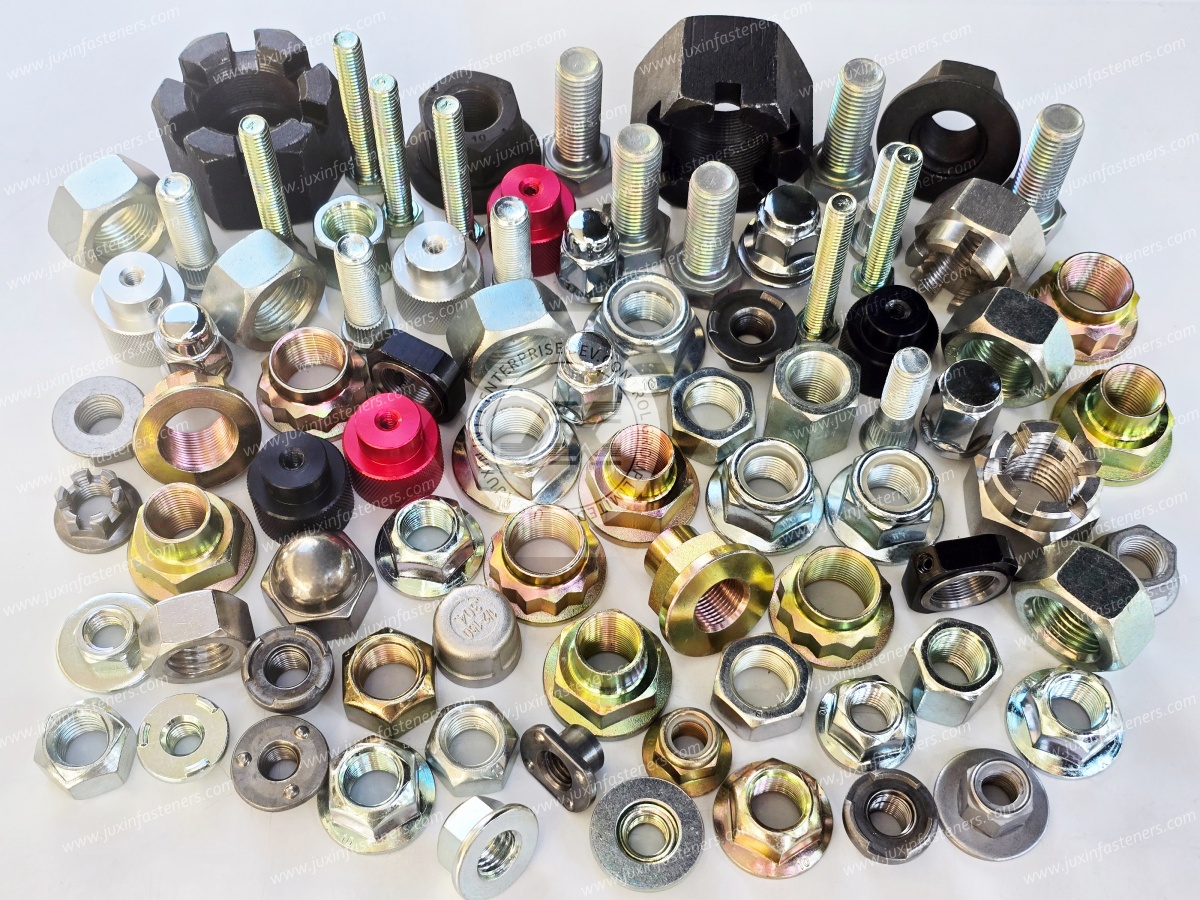
What Is the Difference Between a Bolt and a Screw?
The main difference between bolts and screws is not simply the appearance, but how they create a mechanical connection.
Bolts
A bolt is generally designed to work together with a nut or threaded component.
The typical assembly includes:
Bolt
Nut
Washer
The bolt passes through clearance holes in assembled components, and tightening the nut creates the required clamping force.
Common bolt applications:
Structural assemblies
Automotive components
Heavy machinery
Industrial equipment
Examples:
Hex bolts
Flange bolts
High strength bolts
Carriage bolts
Screws
A screw typically engages directly with a threaded hole or creates its own thread during installation.
Common screw applications:
Sheet metal assemblies
Electronic products
Equipment housings
Precision machinery
Examples:
Machine screws
Self-tapping screws
Socket screws
Stainless steel screws
Bolt vs Screw: Key Differences
Feature | Bolt | Screw |
Main Function | Clamping components together | Direct fastening |
Installation | Usually used with nuts | Usually installed directly |
Load Capacity | Higher structural loads | Wide range of applications |
Common Use | Machinery and structures | Electronics and assemblies |
Maintenance | Easy replacement | Depends on application |
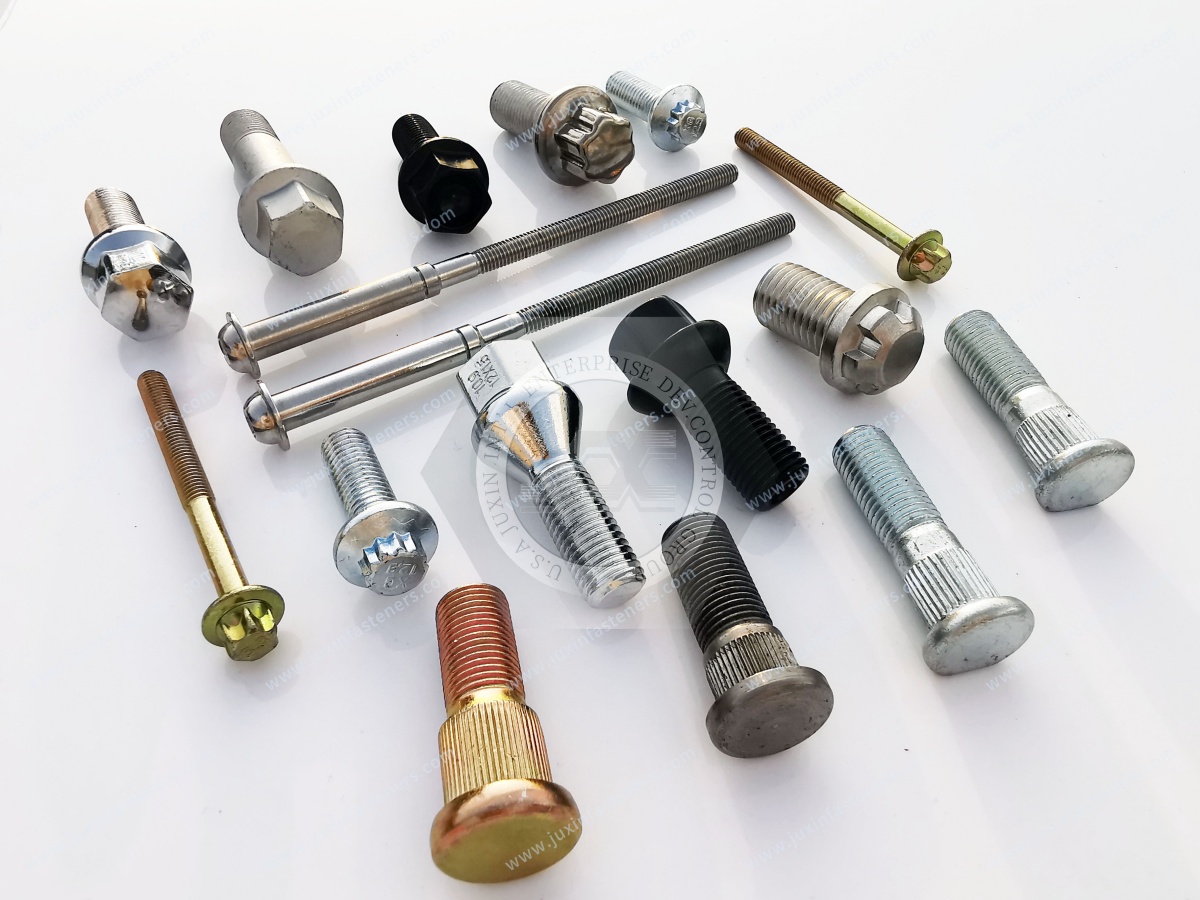
How to Choose Between Bolts and Screws?
The correct selection depends on several engineering factors.
1. Load Requirements
The first consideration is the force applied to the connection.
Engineers should evaluate:
Tensile load
Shear load
Vibration
Impact force
Fatigue conditions
High Load Applications
For heavy-duty applications, bolts are usually preferred.
Examples:
Construction machinery
Automotive suspension
Industrial equipment
Recommended solutions:
Grade 8 bolts
Class 10.9 bolts
High strength hex bolts
Medium and Light Load Applications
For compact assemblies, screws are often more suitable.
Examples:
Electronic housings
Electrical equipment
Precision instruments
Recommended:
Stainless steel screws
Machine screws
Socket screws
2. Working Environment
Environmental conditions directly affect fastener performance.
Corrosive Environments
Applications exposed to:
Moisture
Salt water
Chemicals
Outdoor conditions
require corrosion-resistant solutions.
Recommended materials:
Stainless Steel Fasteners
Including:
304 stainless steel
316 stainless steel
Advantages:
Excellent corrosion resistance
Long service life
Clean appearance
Applications:
Marine equipment
Food machinery
Medical equipment
Outdoor structures
Industrial Environments
For machinery and automotive applications, coated steel fasteners are commonly selected.
Available coatings:
Zinc plating
Zinc-Nickel plating
Black oxide
PTFE coating
Benefits:
Improved corrosion protection
Reduced friction
Better durability
3. Assembly Method Requirements
Production requirements also influence fastener selection.
Bolted Connections
Advantages:
High strength
Easy inspection
Easy replacement
Suitable for:
Heavy machinery
Automotive frames
Industrial structures
Screw Connections
Advantages:
Faster installation
Lower component count
Compact design
Suitable for:
Electronics
Sheet metal
Consumer products
4. Vibration and Loosening Resistance
Industrial equipment often experiences vibration.
Without proper design, fasteners may loosen during operation.
Solutions include:
Thread Locking Screws
Thread-locking screws use nylon patches or special coatings to increase resistance against loosening.
Applications:
Motors
Pumps
Automotive systems
Industrial machinery
Lock Nuts and Flange Fasteners
Additional solutions include:
Nylon insert lock nuts
All-metal lock nuts
Serrated flange nuts
Flange bolts
These improve connection stability under vibration.
Common Industrial Bolt Solutions
Hex Head Bolts
Hex bolts are one of the most widely used industrial fasteners.
Advantages:
High torque installation
Reliable strength
Easy maintenance
Applications:
Machinery
Automotive
Construction equipment
Flange Bolts
Flange bolts integrate a washer design into the head.
Benefits:
Larger bearing surface
Reduced surface damage
Faster assembly
Applications:
Automotive components
Sheet metal assemblies
Industrial equipment
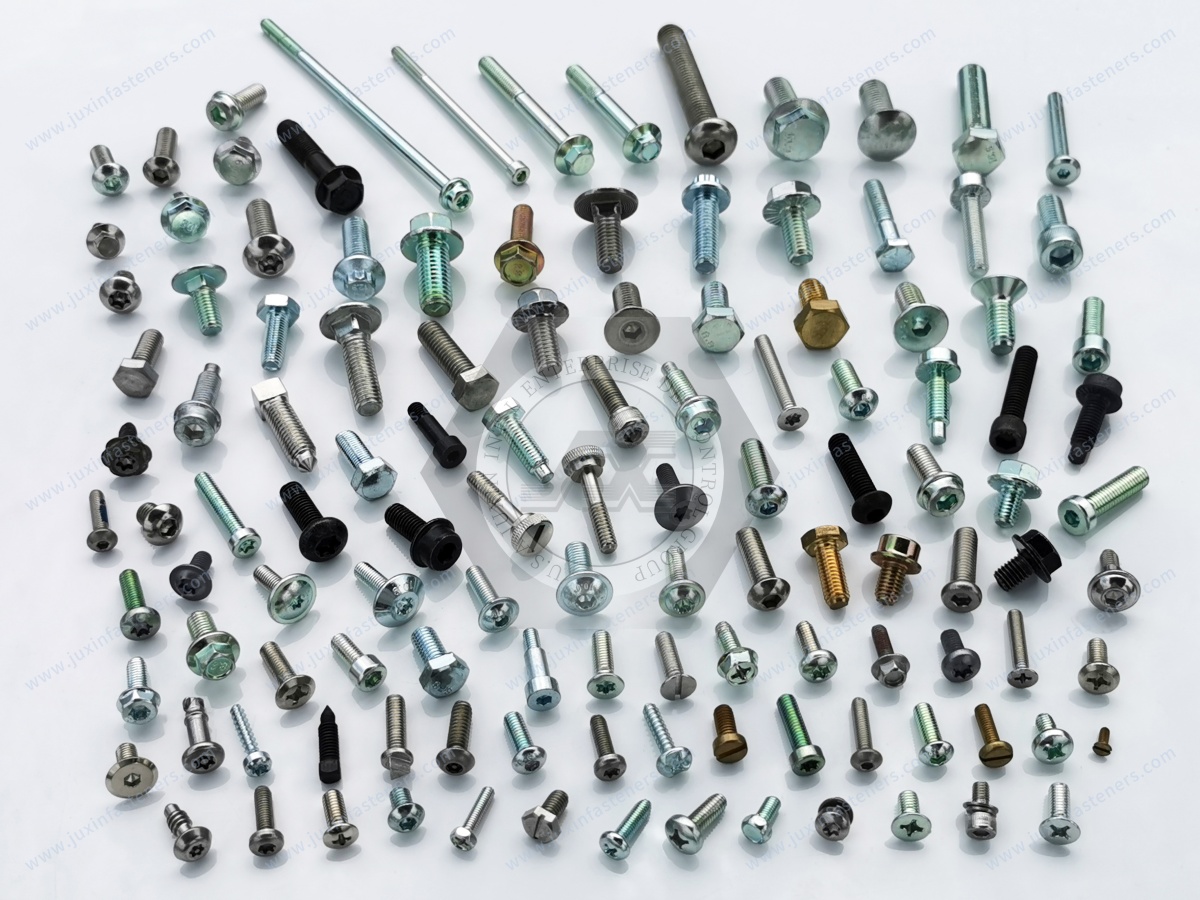
High Strength Bolts
High-strength bolts are designed for demanding applications.
Common grades:
Grade 8
Class 10.9
Applications:
Heavy equipment
Structural assemblies
Automotive systems
Common Industrial Screw Solutions
Stainless Steel Screws
Stainless steel screws are widely used where corrosion resistance is required.
Applications:
Electronics
Medical equipment
Outdoor products
Materials:
18-8 stainless steel
304 stainless steel
316 stainless steel
Machine Screws
Machine screws are designed for threaded holes or inserts.
Applications:
Electrical equipment
Control panels
Precision machinery
Socket Head Screws
Socket screws provide:
High torque capability
Compact installation
Clean appearance
Applications:
Automation equipment
Machinery
Precision devices
Industry Applications of Bolts and Screws
Automotive and EV Manufacturing
Fasteners are essential for:
Battery systems
Vehicle structures
Electronic modules
Interior components
Recommended:
High strength bolts
Stainless steel screws
Thread locking fasteners
Electrical and Electronics Industry
Applications:
Control cabinets
Telecom equipment
Electronic housings
Recommended:
Stainless steel screws
Machine screws
Self-clinching fasteners
Industrial Machinery
Requirements:
High load capacity
Vibration resistance
Long service life
Recommended:
Hex bolts
Flange bolts
Locking fasteners
Medical Equipment
Requirements:
Corrosion resistance
Clean appearance
Reliable assembly
Recommended:
Stainless steel screws
Precision fasteners
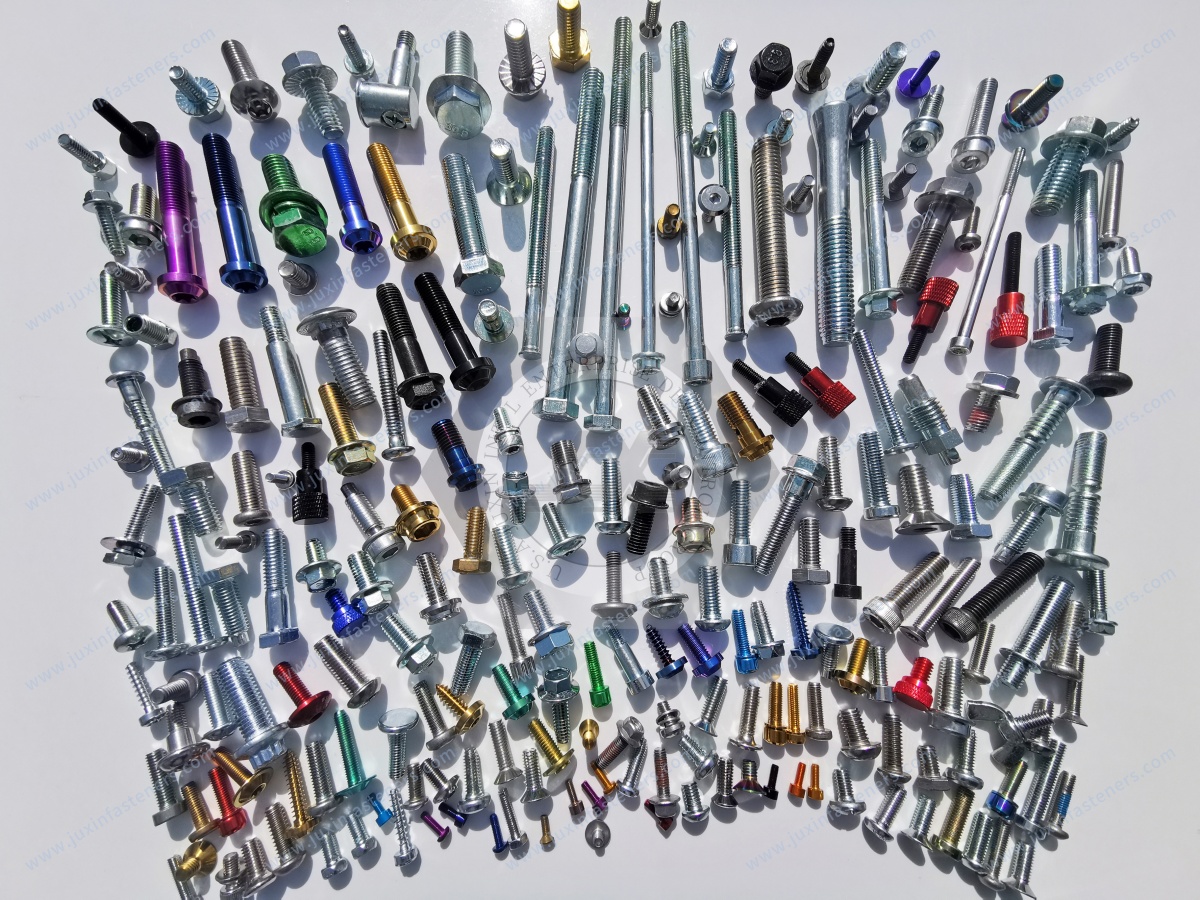
Why Choose Juxin Fasteners?
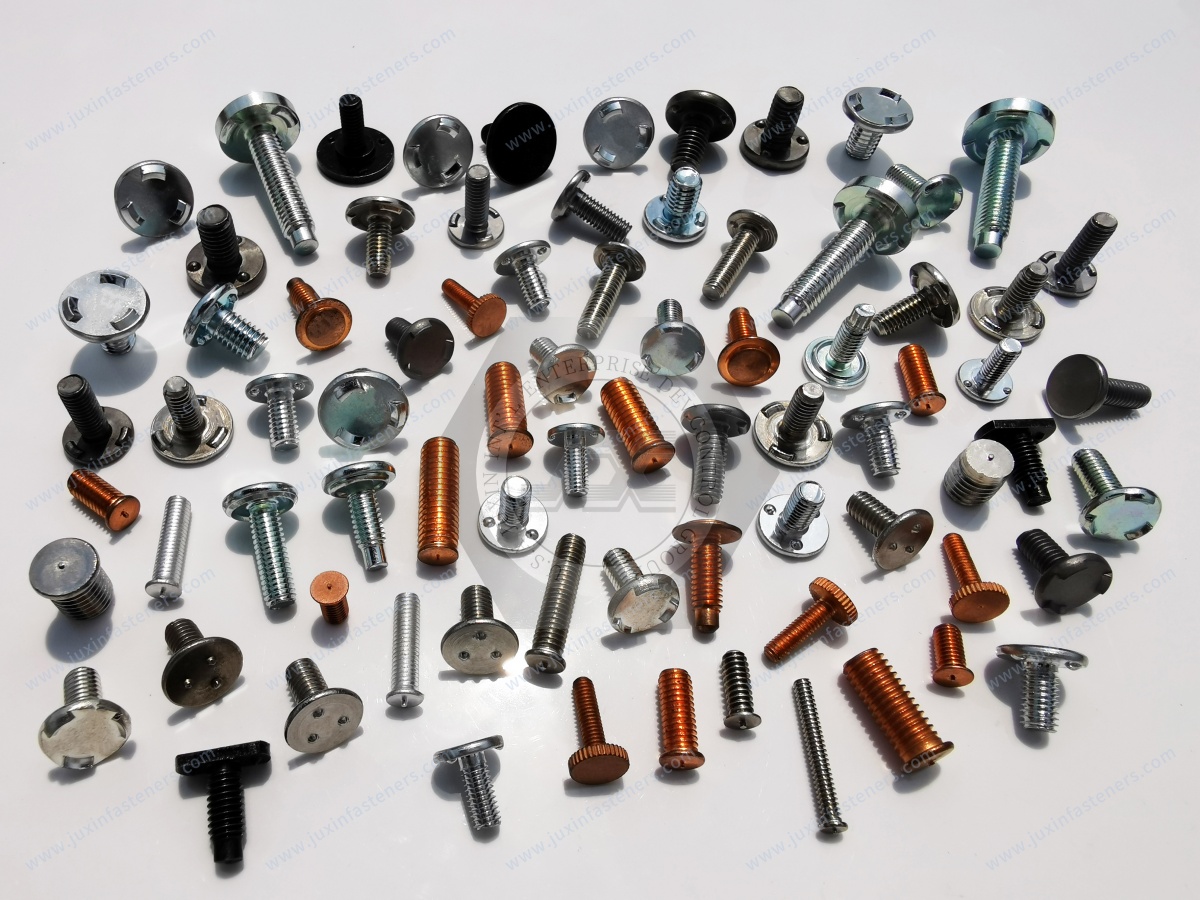
Juxin Fasteners specializes in manufacturing customized industrial fastening solutions for global OEM customers.
Our capabilities include:
Custom Manufacturing
Supporting:
Customer drawings
Special dimensions
OEM requirements
Material Options
Available materials:
Carbon steel
Stainless steel
Alloy steel
Brass
Surface Treatment
Options include:
Zinc plating
Nickel plating
Black oxide
PTFE coating
Passivation
Quality Control
Inspection includes:
Dimensional inspection
Thread inspection
Mechanical testing
Surface inspection
Conclusion
Understanding the difference between bolts and screws helps engineers select the correct fastening solution for each application.
Bolts are commonly used for high-strength structural connections, while screws provide flexible solutions for industrial assembly, electronics, and precision equipment.
The correct choice depends on:
Load requirements
Material compatibility
Environment
Installation method
Service conditions
Juxin Fasteners provides professional OEM bolts, industrial screws, stainless steel fasteners, and customized fastening solutions for manufacturers worldwide.
Contact our engineering team for your next fastening project.
Email: info@juxinfasteners.com
 MORE NEWS
Sep. 27, 2026
Sep. 27, 2026
Sep. 27, 2026
Contact Us
Tel.:
+86 020 8621 0320
+86 020 3121 6067
E-mail:
Technical Support:
Navigation
SEND INQUIREY