
Call Us
+86 136 6007 9809
Call Us
+86 136 6007 9809

Aug. 12, 2026
DIN 985 Nylon Lock Nut vs ISO 7041: OEM Engineering FAQ, Supplier Qualification and Industrial Applications
Practical Answers for Design Engineers, Manufacturing Teams, Purchasing Managers and Global OEM Supply Chains
Selecting a nylon insert lock nut is not simply a matter of matching the nominal thread diameter or choosing the lowest available unit price.
Industrial OEMs need fastening components that meet the drawing requirements, work correctly with the mating bolt,
support the intended mechanical load and maintain the specified locking function during assembly and service.
Procurement teams also need confidence that the approved product can be supplied consistently, inspected appropriately and integrated into the customer's manufacturing process.
For existing drawings specifying DIN 985, another important question arises: should the purchasing team continue sourcing the legacy DIN configuration,
investigate ISO 10511 or consider a different ISO nut geometry?
The answer depends on the actual engineering requirements.
Juxin Fasteners supports industrial customers with nylon insert locking nuts, all-metal prevailing torque nuts,
flange locking nuts and drawing-based fastening inquiries.
This guide addresses common engineering and purchasing questions about DIN 985 nylon lock nuts, ISO 7041 high locking nuts, industrial applications,
quality requirements, customized production and international supplier qualification.
DIN 985, ISO 10511 and ISO 7041: An Important Standard Distinction
Before reviewing supplier options, engineers should identify the correct product standard.
DIN 985 is a withdrawn German standard commonly associated with low-profile hexagon nuts incorporating a non-metallic locking element.
The current ISO product families distinguish between several nut configurations:
| Standard | Nut configuration | Engineering significance |
|---|---|---|
| DIN 985 | Legacy low-profile nylon insert nut | Existing drawing and replacement requirements |
| ISO 10511:2025 | Thin prevailing torque hexagon nut | Reduced loadability relative to regular or high nuts |
| ISO 7040:2025 | Regular prevailing torque hexagon nut | Regular-height configuration |
| ISO 7041:2025 | High prevailing torque hexagon nut | High nut geometry |
All three current ISO product standards address non-metallic insert locking nuts, but their dimensions and mechanical characteristics are not identical.
Important OEM Selection Rule
A supplier should not approve an ISO 7041 high nut as a direct replacement for a DIN 985 low-profile nut solely because the thread size is the same.
The replacement must be evaluated against the drawing, nut height, wrenching dimensions, thread engagement, loadability and assembly requirements.
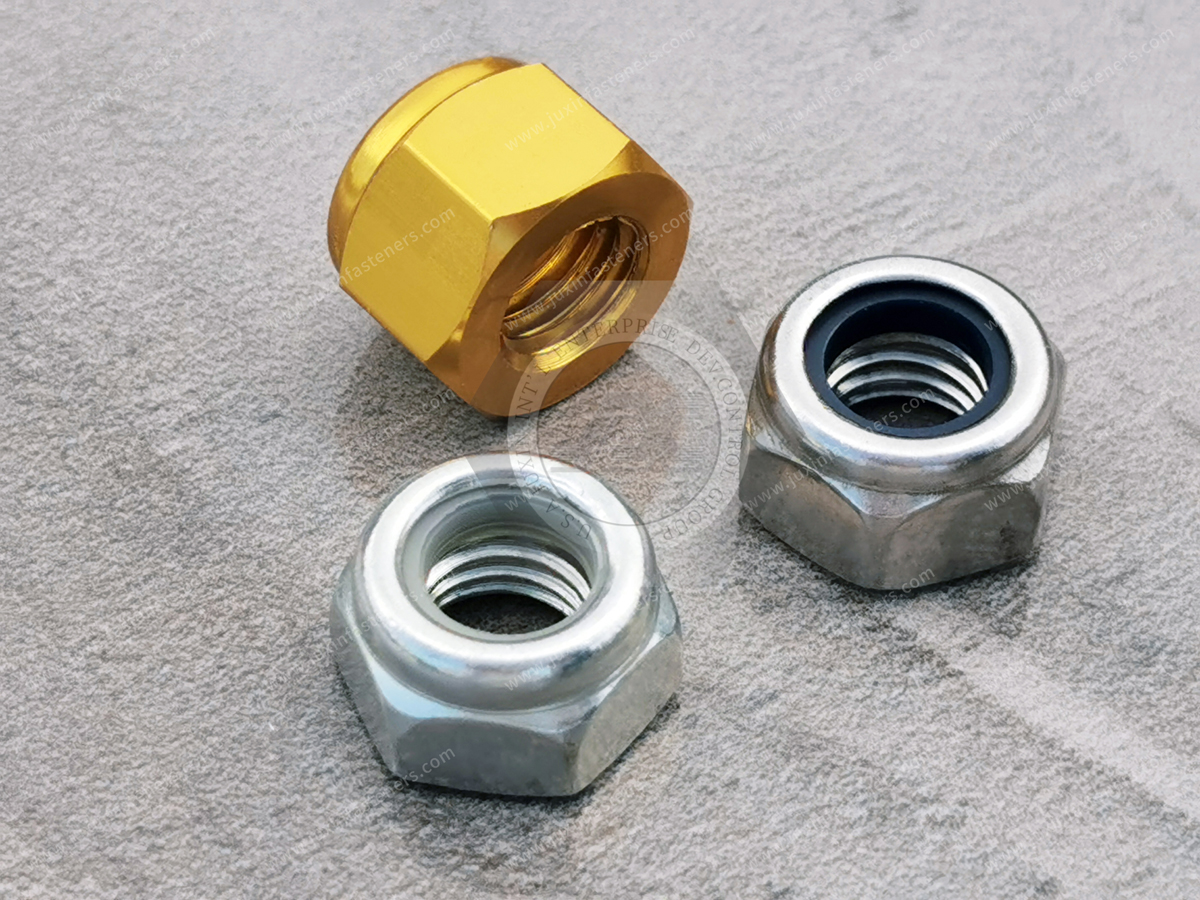
FAQ: What Industries Commonly Use DIN 985 Nylon Insert Lock Nuts?
Nylon insert lock nuts are considered in many industrial applications where resistance to unintended nut rotation is required.
However, suitability depends on the specific connection rather than the industry name alone.
Automotive Manufacturing
Potential applications include:
Auxiliary equipment brackets
Noncritical interior mechanical supports
Accessory mounting components
Protected equipment housings
Selected serviceable mechanical assemblies
Important considerations include vibration, temperature, coating, tightening procedures and production traceability.
Seat, restraint, steering, braking, suspension and other safety-critical applications require the relevant OEM's approved fastening design.
Electric Vehicles and E-Mobility
Potential applications include:
Noncritical battery enclosure accessories
Cable-management brackets
Auxiliary equipment supports
Charging equipment housings
Protective mechanical covers
Engineering teams must consider corrosion, temperature, electrical clearances, material compatibility and service requirements.
A nylon insert lock nut does not electrically insulate the complete metal fastening assembly.
Industrial Machinery
Potential applications include:
Machine guards
Conveyor accessories
Sensor brackets
Equipment covers
Auxiliary machine frames
Selection should consider cyclic loading, vibration, assembly access and maintenance frequency.
Electrical Equipment and Power Distribution
Potential applications include:
Mechanical cabinet brackets
Auxiliary equipment supports
Protective covers
Noncritical mounting hardware
The design must account for grounding, electrical clearance, corrosion and service access.
Railway Equipment
Potential applications include approved auxiliary cabinet hardware, interior accessory brackets and noncritical mechanical supports.
Primary bogie, wheelset, braking and other safety-critical connections require specific engineering approval.
Medical and Laboratory Equipment
Potential applications include noncritical instrument frames, protective housings and mechanical accessories.
Material selection must consider cleaning chemicals, corrosion, particle generation and equipment-specific requirements.
A stainless steel lock nut is not automatically approved for medical use.
Solar and Renewable Energy Equipment
Potential applications include auxiliary outdoor brackets, electrical cabinet accessories and selected mechanical attachments.
Corrosion, temperature cycling, wind loading and joint design must be evaluated.
Primary structural mounting connections require project-specific structural approval.
HVAC Equipment
Potential applications include fan accessory brackets, protective covers and ventilation equipment supports.
Continuous vibration, condensation and maintenance access are important selection factors.
Agricultural Machinery
Potential applications include equipment guards, sensor brackets and noncritical accessory assemblies.
Moisture, fertilizer exposure, dust, vibration and field maintenance influence material and coating selection.
Food-Processing Equipment
Potential applications include external machine frames, packaging equipment and non-product-contact mechanical supports.
Material and insert compatibility with cleaning chemicals must be evaluated.
Marine-Related Equipment
Potential applications include auxiliary cabinets, protective housings and selected noncritical brackets.
Chloride exposure, galvanic corrosion and crevice corrosion require particular attention.
Telecommunications Infrastructure
Potential applications include outdoor cabinet accessories and auxiliary equipment brackets.
Primary structural tower connections require a separately approved structural fastening system.
AI Data Centers and Industrial Computing
Potential applications include noncritical fan brackets, equipment covers and rack accessories.
However, frequently serviced rack connections may be better served by cage nuts, self-clinching nuts or captive fastening systems.
Application Engineering Insight
The same M6 nylon insert lock nut may be suitable for one auxiliary bracket and unsuitable for another because the loading, temperature, corrosion environment or maintenance requirements differ.
FAQ: What Is the Difference Between a Nylon Lock Nut and a Standard Hex Nut?
The primary difference is the incorporated prevailing torque locking feature.
A conventional hex nut does not contain an integrated nylon locking element.
A nylon insert lock nut generates resistance to rotation as the mating bolt engages the non-metallic insert.
| Feature | Standard hex nut | Nylon insert lock nut |
|---|---|---|
| Integrated prevailing torque feature | No | Yes |
| Main joint function | Develop and maintain the designed bolted connection | Develop the joint condition while adding rotational resistance |
| Temperature limitations | Determined by material and joint | Also limited by locking insert |
| Installation resistance | Depends on threads, bearing surfaces and lubrication | Also includes insert-generated prevailing torque |
| Reuse | Depends on condition and application | Depends on insert condition and functional requirements |
| Assembly speed | Process-dependent | Polymer heating may require additional control |
| Vibration performance | Depends on joint design | Depends on joint design and locking function |
Important Engineering Distinction
A nylon insert lock nut does not automatically provide greater clamp load than a conventional hex nut.
The locking feature provides rotational resistance.
The required bolt preload must still be achieved through the correct joint design and tightening process.
When a Standard Hex Nut May Be Appropriate
A conventional hex nut may be suitable when the joint design, preload and service conditions provide adequate security without an additional locking feature.
When a Nylon Insert Lock Nut May Be Appropriate
A nylon insert nut may be considered where a specified prevailing torque locking function is beneficial and the temperature, chemical and mechanical requirements are compatible.
When Another Locking System May Be Required
Severe transverse vibration, elevated temperature, critical preload retention or special maintenance requirements may justify evaluating an approved all-metal prevailing torque nut or another engineered locking method.
FAQ: Can DIN 985 Nylon Lock Nuts Be Used with Stainless Steel Bolts?
Yes, suitable nylon insert lock nuts can be paired with stainless steel bolts, provided the complete assembly is compatible.
However, the material combination must be evaluated.
Thread Compatibility
The nut and bolt must use the same thread system, diameter, pitch and compatible tolerances.
Mechanical Compatibility
The nut must have adequate mechanical properties for the intended bolt and joint.
Corrosion Compatibility
Dissimilar metals may create galvanic corrosion risks under certain environmental conditions.
Thread Galling
Stainless steel threads can gall during tightening, particularly under unfavorable friction and assembly conditions.
Coating and Lubrication
The surface condition affects installation torque and clamp load.
Typical Material Choices
A2 stainless steel nylon insert nuts
A4 stainless steel nylon insert nuts
Carbon steel nylon insert nuts with suitable corrosion protection
The correct combination depends on the application.
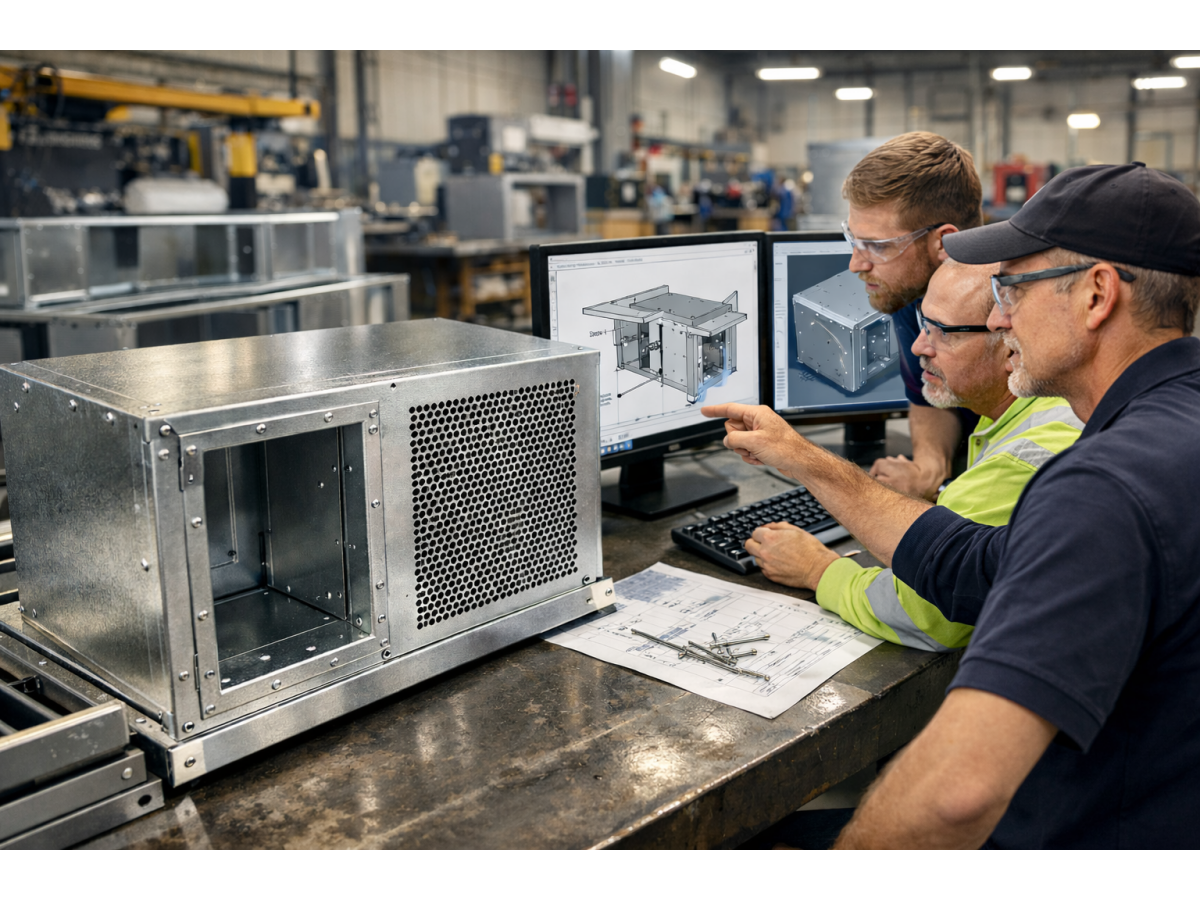
Engineering Example
An A4 stainless steel bolt used in a marine-related assembly does not automatically make a zinc-plated carbon steel nut suitable for the same environment.
Likewise, pairing stainless steel nuts and bolts does not eliminate galling risk.
OEM Recommendation
Validate the actual nut, bolt, coating, tightening procedure and environmental conditions as an assembly.
FAQ: What Quality Standards Should an OEM Request for Nylon Insert Lock Nuts?
Quality requirements should be defined by the applicable product standard, mechanical property standard, functional test requirements and customer drawing.
Relevant standards may include:
ISO 10511:2025
Thin prevailing torque hexagon nuts with non-metallic inserts.
ISO 7040:2025
Regular prevailing torque hexagon nuts with non-metallic inserts.
ISO 7041:2025
High prevailing torque hexagon nuts with non-metallic inserts.
ISO 2320:2015
Functional properties of prevailing torque steel nuts within its defined scope.
ISO 898-2
Mechanical properties of applicable carbon steel and alloy steel nuts.
ISO 3506-2
Mechanical properties of applicable corrosion-resistant stainless steel nuts.
ISO 4042
Electroplated coating systems for fasteners.
The required standards depend on the actual product.
Incoming Material Verification
An OEM may require:
Material identification
Material certificates
Chemical composition information
Mechanical property documentation
Lot traceability
Dimensional Inspection
Potential inspection characteristics include:
Thread size and pitch
Thread tolerance
Nut height
Across-flats dimension
Wrenching geometry
Insert position
Critical drawing dimensions
Functional Inspection
Potential requirements include:
First installation prevailing torque
Removal prevailing torque
Repeated installation behavior
Torque/clamp-force characteristics
Surface Inspection
Potential requirements include:
Coating thickness
Coating appearance
Surface defects
Corrosion test results
Customer-specific finish requirements
Final Product Inspection
Acceptance should be based on the approved drawing, product standard and agreed inspection plan.
Important Supplier Qualification Principle
A supplier's general statement that it follows ISO or DIN standards does not replace product-specific inspection evidence.
The customer should identify which reports, certificates and acceptance criteria are required for the particular order.
FAQ: Can Juxin Fasteners Support OEM and Customized Nylon Lock Nuts?
Juxin Fasteners accepts industrial OEM inquiries for standard and drawing-based locking nut requirements.
Potential project requirements include:
Special dimensions
Non-standard nut geometry
Selected metric or Unified inch threads
Carbon steel or stainless steel material
Aluminum or brass specialty designs
Custom surface treatment
Specific prevailing torque requirements
Customer packaging and labeling
Drawing-based inspection criteria
Availability and production feasibility depend on the exact specification.
Custom Engineering Review
A custom locking nut project should begin with:
Drawing evaluation
Material selection
Thread and tolerance review
Locking feature requirements
Coating compatibility
Functional testing requirements
Estimated purchasing volume
Prototype and Sample Evaluation
Sample production and testing requirements should be agreed before order confirmation.
Production Approval
Where required, the customer should approve the product through its own engineering and manufacturing qualification process.
Important Distinction
A customized nut with a different material or geometry should not automatically be described as conforming to a standard whose scope does not include that configuration.
FAQ: What Information Is Required for a Nylon Lock Nut Quotation?
An accurate RFQ should contain enough information to identify the exact product and assess production feasibility.
Basic Product Information
DIN, ISO, ASME or customer drawing designation
Standard edition
Nominal thread diameter
Pitch or threads per inch
Nut configuration
Material
Mechanical property requirements
Surface Treatment
Coating type
Coating thickness
Passivation or sealer
Corrosion requirements
Appearance requirements
Functional Requirements
Prevailing torque
Mating bolt specification
Installation method
Operating temperature
Vibration
Chemical exposure
Reuse requirements
Quality Requirements
Dimensional inspection
Mechanical testing
Functional testing
Material documentation
Lot traceability
Customer-specific reports
Commercial Requirements
Sample quantity
Initial order quantity
Annual forecast
MOQ expectations
Target lead time
Packaging
Destination market
Procurement Insight
A request for “M8 nylon lock nut, stainless steel, best price” is usually insufficient for reliable OEM sourcing.
An RFQ that includes the actual drawing, material, nut geometry, locking performance and purchasing forecast can reduce technical clarification and quotation delays.
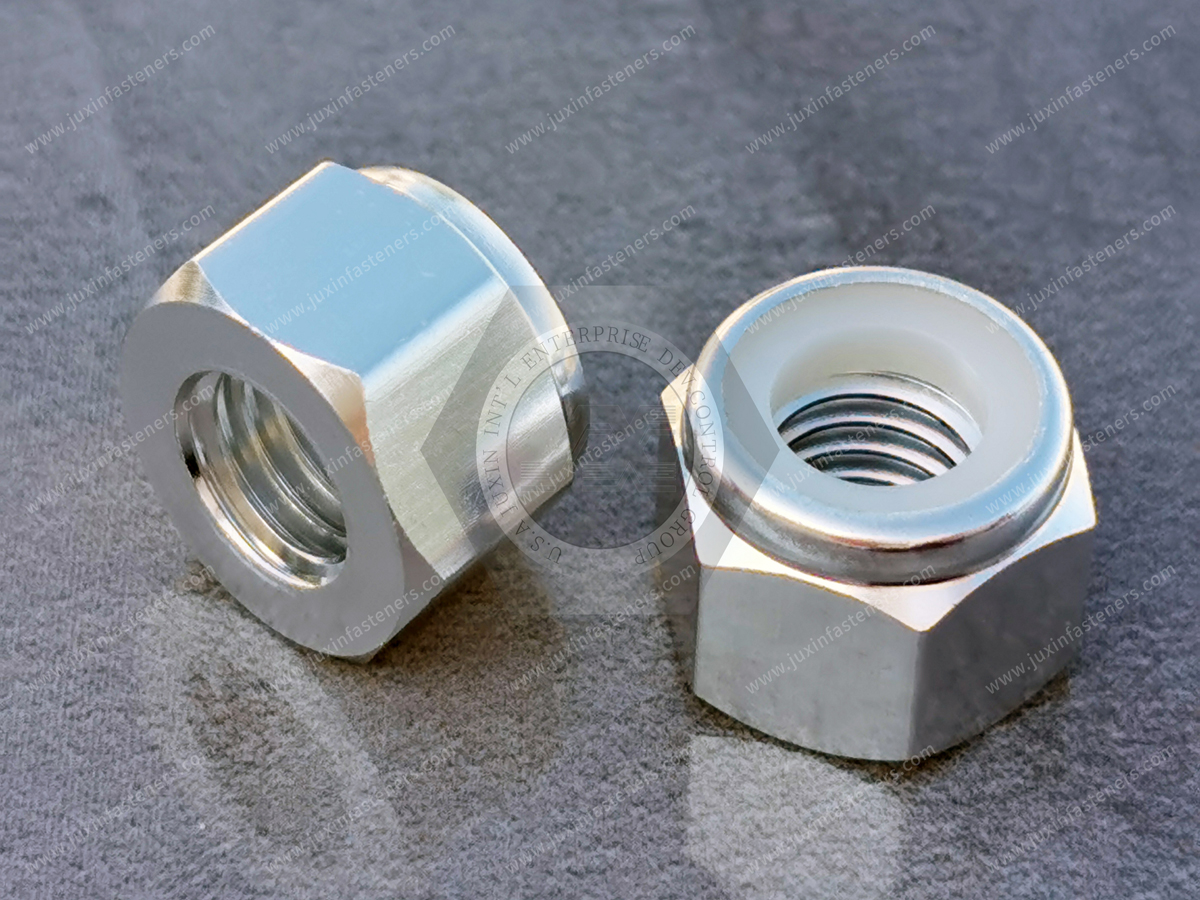
FAQ: How Should Procurement Teams Evaluate a Nylon Lock Nut Supplier?
A reliable supplier should be evaluated on technical suitability, quality consistency and commercial performance.
Technical Capability
Can the supplier interpret the drawing and identify the correct nut configuration?
Can it distinguish DIN 985 from ISO 10511, ISO 7040 and ISO 7041?
Can it explain material, thread and coating compatibility?
Quality Evidence
Can the supplier provide the required inspection and test documentation?
Are the acceptance criteria clear?
Can product lots be identified and traced where required?
Manufacturing Consistency
Can the supplier demonstrate that the approved product can be supplied consistently?
Are dimensional and functional characteristics controlled?
Engineering Communication
Can technical questions be resolved before production?
Can proposed substitutions be submitted for customer approval?
Commercial Reliability
Does the supplier provide clear quotations covering:
MOQ
Unit price
Volume price breaks
Tooling or development costs where applicable
Sample lead time
Production lead time
Packaging
Delivery terms
Supply Chain Development
For long-term OEM projects, the purchasing team should also consider:
Forecast planning
Second-source qualification
Product change notification
Batch consistency
Replenishment requirements
Documentation continuity
Supplier Selection Principle
The lowest quoted unit price is not necessarily the lowest total installed cost.
Assembly rejects, inconsistent prevailing torque, coating failures, rework and supply interruptions can outweigh small unit-price differences.
FAQ: Where Can Industrial OEMs Source DIN 985 Nylon Insert Lock Nuts?
Juxin Fasteners supplies industrial locking nut products and accepts inquiries from international manufacturers, engineering teams and procurement departments.
Relevant product families include:
DIN 985 nylon insert lock nuts
Carbon steel nylon locking nuts
Stainless steel nylon insert lock nuts
All-metal prevailing torque nuts
Flange locking nuts
Drawing-based customized locking nuts
For ISO 10511, ISO 7040 or ISO 7041 requirements, customers should provide the exact standard designation and edition so that product availability and conformity requirements can be reviewed.
Engineering and Procurement Support from Juxin Fasteners
Juxin Fasteners works with industrial customers seeking standard and customized fastening components.
The objective is to help customers identify the appropriate product specification, clarify technical requirements and prepare an accurate quotation.
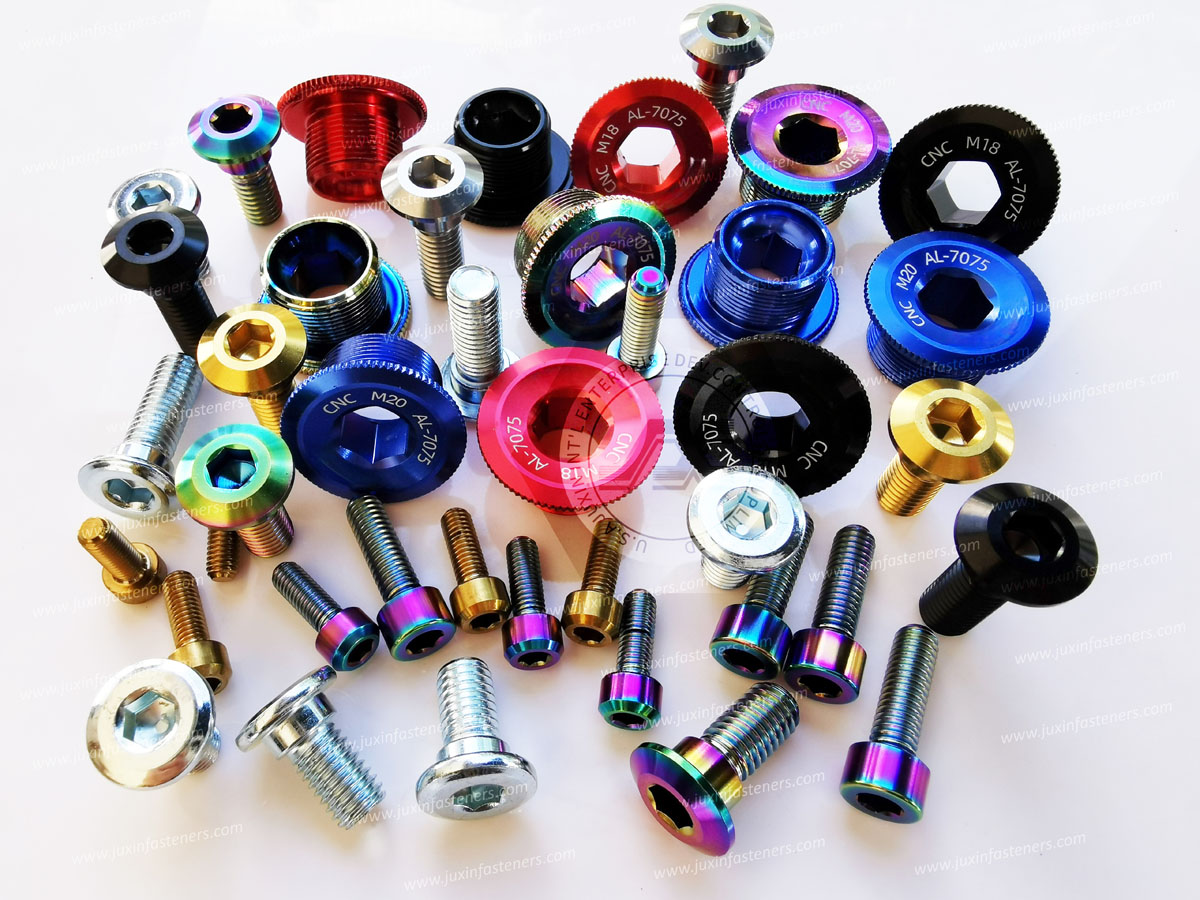
Standard Selection and Drawing Review
Customers can submit existing DIN drawings, ISO specifications or custom component drawings.
A technical review may consider:
Nut geometry
Thread compatibility
Material
Mechanical properties
Surface treatment
Locking function
Application conditions
Material and Surface Treatment Discussion
Material and coating options should be selected according to corrosion, temperature, mechanical loading and cost requirements.
Specific coating systems and performance targets require feasibility confirmation.
Sample and Qualification Planning
Customers may request samples for dimensional, functional or assembly evaluation.
Sample feasibility, inspection requirements and delivery schedules should be confirmed for the project.
OEM Volume Purchasing
For recurring industrial requirements, purchasing teams can discuss:
Annual forecasts
MOQ
Volume price breaks
Delivery schedules
Packaging
Long-term sourcing arrangements
Related Juxin Fasteners Product Families
Some applications require a different fastening mechanism.
Juxin Fasteners also supplies related industrial fasteners such as:
Weld nuts
Weld studs
Self-clinching nuts
Self-clinching studs
Self-clinching standoffs
Blind rivet nuts
Cage nuts
Clip-on nuts
Threaded inserts
Custom machined fastening components
These products are not automatic substitutes for nylon insert lock nuts.
They serve different joint designs, installation methods and accessibility requirements.
Second-Source Qualification: A Practical OEM Checklist
When replacing an existing locking nut supplier, procurement and engineering teams should compare more than catalog descriptions.
Drawing Equivalence
Confirm that the proposed product matches the approved drawing.
Standard Equivalence
Check the exact standard and edition.
Material Equivalence
Confirm the specified material and mechanical properties.
Coating Equivalence
Compare coating thickness, corrosion performance and friction requirements.
Functional Equivalence
Compare prevailing torque and other applicable performance requirements.
Assembly Equivalence
Verify compatibility with the actual bolt, tightening equipment and production process.
Documentation Equivalence
Confirm that the required inspection and traceability records are available.
Commercial Equivalence
Compare MOQ, lead time, packaging and supply arrangements.
Important Approval Rule
A proposed second-source product should not be introduced into an approved OEM assembly without the customer's required qualification and change-control process.
Engineering Summary: Choosing the Correct Nylon Insert Lock Nut
The most reliable selection process begins with the joint requirements.
Product Standard
Determine whether the drawing specifies legacy DIN 985, ISO 10511, ISO 7040, ISO 7041 or a customer-specific design.
Thread
Confirm metric, UNC, UNF or another specified thread system.
Material
Select according to mechanical loadability and environmental conditions.
Coating
Specify corrosion protection and any relevant friction requirements.
Locking Performance
Define prevailing torque and the applicable test conditions.
Installation
Validate tightening method, mating bolt and assembly equipment.
Operating Environment
Review temperature, vibration, moisture and chemical exposure.
Quality
Define inspection, documentation and traceability requirements.
Procurement
Confirm sample approval, MOQ, volume pricing, lead time and supply continuity.
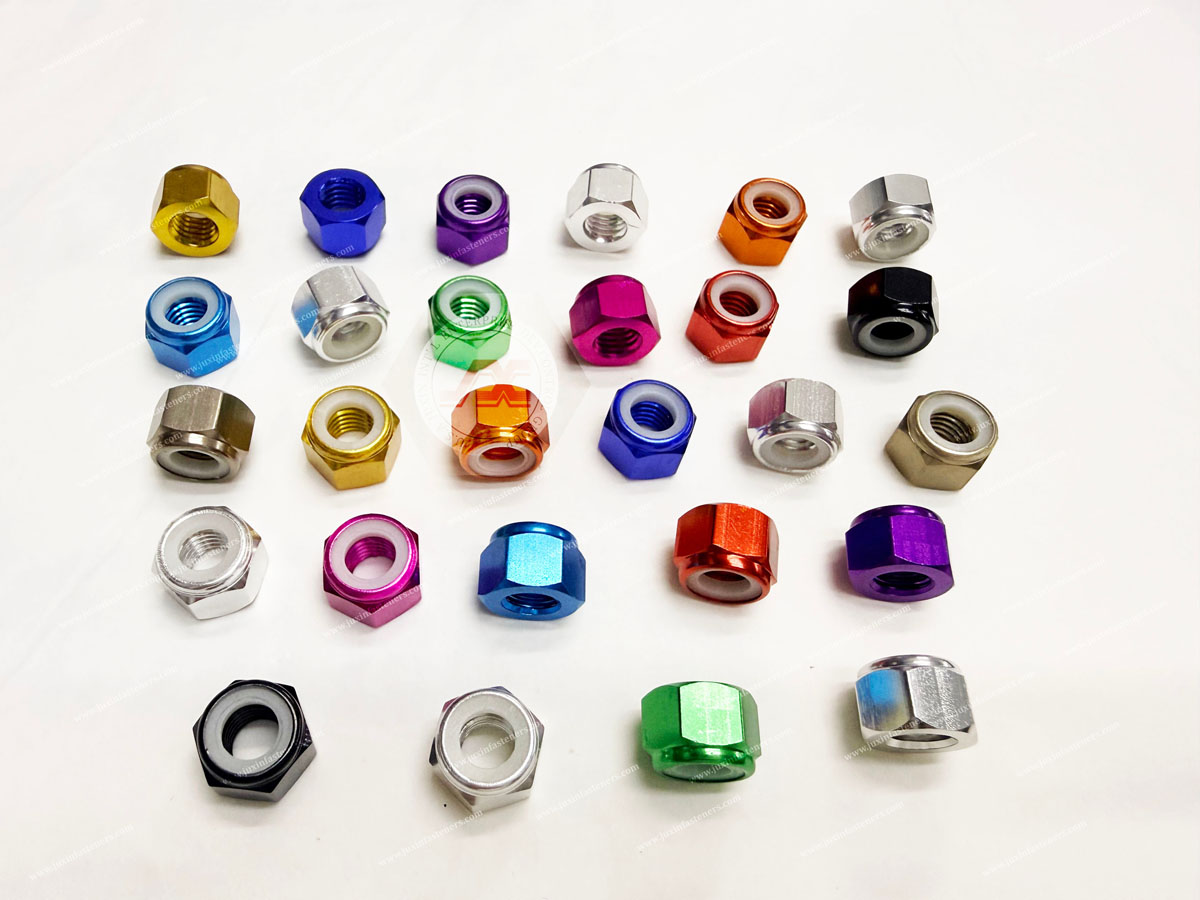
Request an OEM DIN 985 Nylon Lock Nut Quotation
Juxin Fasteners welcomes inquiries from OEM manufacturers, purchasing managers, supplier development teams, mechanical engineers,
manufacturing engineers and production managers seeking industrial locking nut solutions.
Whether your requirement involves a legacy DIN 985 drawing, an ISO-standard nylon insert nut, a stainless steel locking nut,
a corrosion-resistant finish or a custom OEM component, the correct solution begins with a clear technical specification.
Send your drawing, material requirements, thread designation, coating specification, operating conditions and estimated purchasing quantity for review.
Company: Juxin Fasteners
Website: https://www.juxinfasteners.com/
Email: info@juxinfasteners.com
Reliable industrial fastening requires the right nut specification, the right mating components,
validated assembly conditions and a supplier capable of meeting the agreed technical and commercial requirements.
Contact Us
Tel.:
+86 020 8621 0320
+86 020 3121 6067
E-mail:
Technical Support:
Navigation
SEND INQUIREY



