Call Us
+86 136 6007 9809
Call Us
+86 136 6007 9809

Jan. 22, 2024
Automotive interior and exterior fastening is not simply a matter of selecting a clip that fits a hole.
A fastener must work as part of the complete vehicle assembly system, including the trim material, body panel, hole geometry, panel stack thickness, installation direction,
retention requirement, vibration environment, temperature, moisture exposure, serviceability, appearance, and assembly process.
Modern vehicles use a wide range of automotive fasteners, including:
automotive trim clips;
plastic panel retainers;
push-type retainers;
plastic push rivets;
snap rivets;
fir tree clips;
screw grommets and plastic insert nuts;
spring clips;
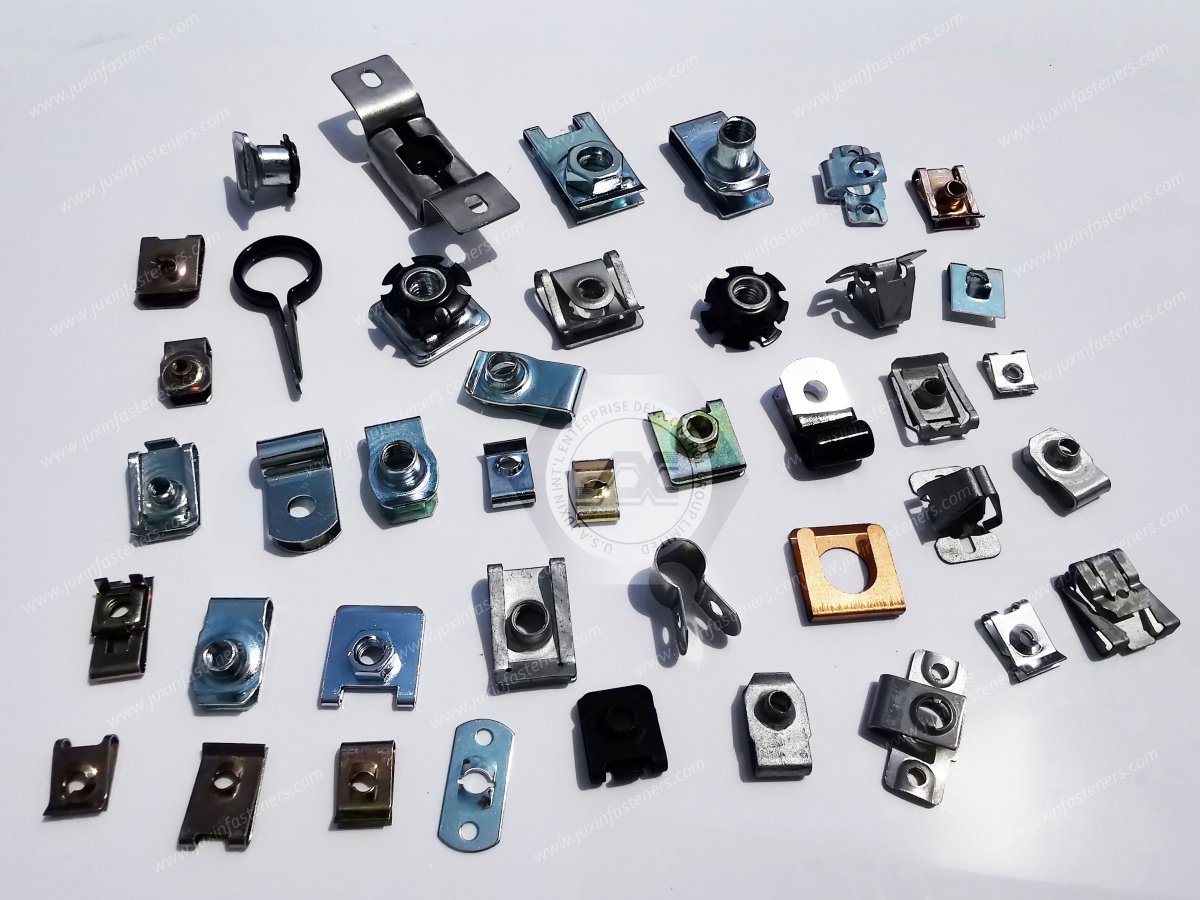
U-nuts and speed nuts;
clip nuts;
rivet nuts;
weld nuts;
self-clinching fasteners;
threaded inserts;
custom stamped fasteners;
drawing-based plastic and metal components.
JUXIN FASTENERS supplies automotive fastening solutions for suitable interior, exterior, body, electrical, thermal-management, equipment, and assembly applications.
For automotive OEM, Tier-1/Tier-2, engineering, purchasing, and supplier-development programs, the correct selection process should begin with the vehicle assembly—not with a generic fastener catalog.
This guide explains how to select automotive interior and exterior fasteners by function, geometry, material, installation process, service requirement, and sourcing specification.
A useful first decision path is:
Vehicle Zone → Components Being Joined → Substrate → Hole Geometry → Panel Stack → Installation Access
→ Required Retention → Serviceability → Environment → Fastener Type → Validation
Typical examples:
| Assembly Requirement | Fastener Family to Evaluate |
|---|---|
| Quick plastic trim attachment | Trim clip / panel retainer |
| Tool-free removable panel | Push-type retainer |
| Two-piece plastic panel fastening | Plastic push rivet |
| Hidden attachment in trim | Fir tree / Christmas tree clip |
| Screw into plastic trim interface | Screw grommet / plastic insert nut |
| Screw attachment to sheet edge | U-nut / speed nut / clip nut |
| Elastic trim retention | Spring clip |
| Blind threaded attachment in sheet | Rivet nut |
| Permanent threaded body attachment | Weld nut |
| Press-installed threaded sheet attachment | Self-clinching fastener |
| Reusable thread in polymer | Heat-set / threaded insert |
| Nonstandard geometry | Custom stamped, molded or machined fastener |
This matrix is a starting point. Final selection requires the actual component geometry and service conditions.
Interior and exterior fasteners can experience very different operating conditions.
Typical applications include:
door trim;
instrument panels;
center consoles;
A-, B- and C-pillar trim;
carpets;
headliners;
seat-related trim;
interior decorative panels;
HVAC trim;
electronic housings.
Important design considerations can include:
appearance;
low insertion force;
retention;
squeak and rattle control;
repeated service removal;
concealed installation;
dimensional consistency;
polymer compatibility.
Typical applications include:
wheel arch liners;
splash shields;
underbody panels;
bumper-related trim;
exterior molding;
aerodynamic covers;
engine compartment covers;
exterior decorative components.
These locations can introduce additional requirements involving:
moisture;
road contaminants;
temperature cycling;
corrosion;
dirt and debris;
vibration;
impact;
UV exposure for exposed polymers;
service accessibility.
An interior clip should therefore not automatically be specified for an exterior location simply because the geometry appears similar.
Automotive trim clips are used to locate and retain trim components to sheet metal, molded plastic structures, or other vehicle substrates.
Applications can include:
door trim panels;
pillar covers;
dashboard trim;
center-console panels;
interior decorative components;
exterior moldings.
A trim clip may need to perform several functions simultaneously:
guide the trim into position;
accommodate manufacturing tolerance;
generate sufficient retention force;
limit visible panel movement;
allow service removal where required;
reduce undesirable noise at the interface.
This is why a clip should be selected from assembly requirements rather than appearance alone.
Automotive push-type retainers and plastic push rivets are widely used where rapid assembly is required.
Typical applications include:
wheel arch liners;
splash shields;
underbody covers;
carpet;
trim panels;
engine covers;
plastic shields;
interior panels.
A common two-piece push rivet contains:
a retainer body;
an expanding pin.
When the pin is actuated, the body expands behind or within the mounting hole to create retention.
Depending on design, removal may be possible by releasing or extracting the center pin.
Important variables include:
mounting-hole diameter;
hole tolerance;
panel thickness;
total grip range;
retainer body diameter;
pin geometry;
flange diameter;
polymer;
insertion force;
extraction force;
temperature;
repeated removal requirements.
A push rivet that works correctly in a 1.0 mm panel stack may not perform identically in a substantially thicker assembly.
For sourcing, hole size and grip range should always be supplied together.
Fir tree clips use multiple flexible ribs or barbs along the shank.
They are commonly used in suitable:
trim panels;
carpet;
insulation;
acoustic materials;
interior panels;
lightweight covers.
The ribs deform during insertion and engage the mounting hole.
Key design variables include:
stem diameter;
rib diameter;
hole diameter;
panel thickness;
substrate hardness;
insertion force;
pull-out force;
removal requirement.
Fir tree clips are particularly useful where the assembly requires tolerance accommodation across the engagement region.
However, they should not automatically be considered reusable. Repeated removal can deform the ribs or reduce retention depending on the material and geometry.
Plastic screw grommets or insert nuts create a receiving feature for a screw within sheet, plastic trim, or another component.
Typical applications include:
dashboard components;
center consoles;
interior trim;
electronic housings;
decorative panels;
lightweight covers.
Depending on design, the mating fastener may be:
a self-tapping screw;
another specified screw type;
a machine screw where the insert is designed with an appropriate internal thread.
Do not assume all plastic insert nuts accept the same screw architecture.
The mating screw and insert should be selected as a system.
Automotive spring clips use elastic deformation to create retention.
They can be manufactured from:
engineering polymers;
spring steel;
stainless steel where appropriate.
Potential applications include:
instrument panels;
decorative trim;
control panels;
covers;
interior connection systems.
The spring element can help accommodate:
dimensional variation;
assembly tolerance;
component movement.
However, spring force must be balanced.
Too little force may produce loose trim.
Too much force may:
increase assembly effort;
damage plastic components;
complicate service removal;
distort the trim.
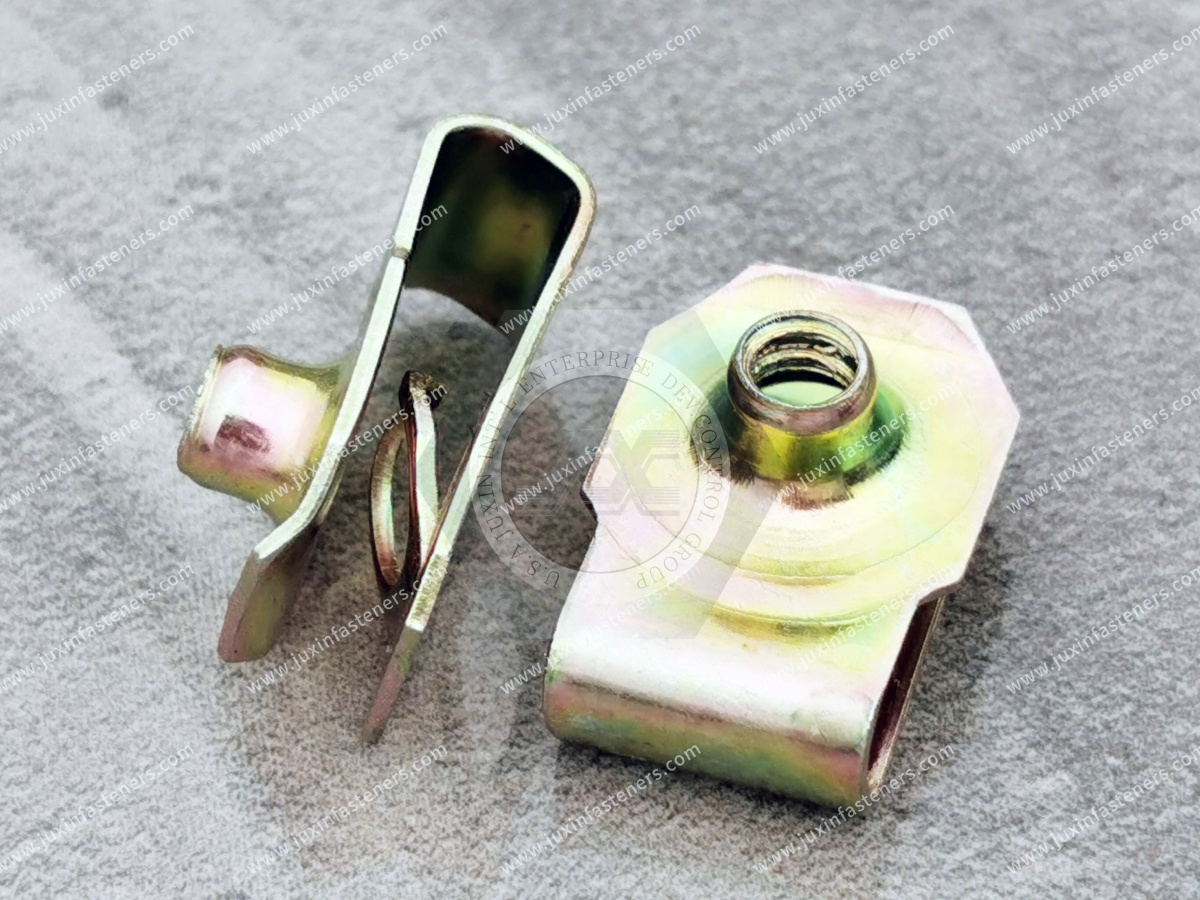
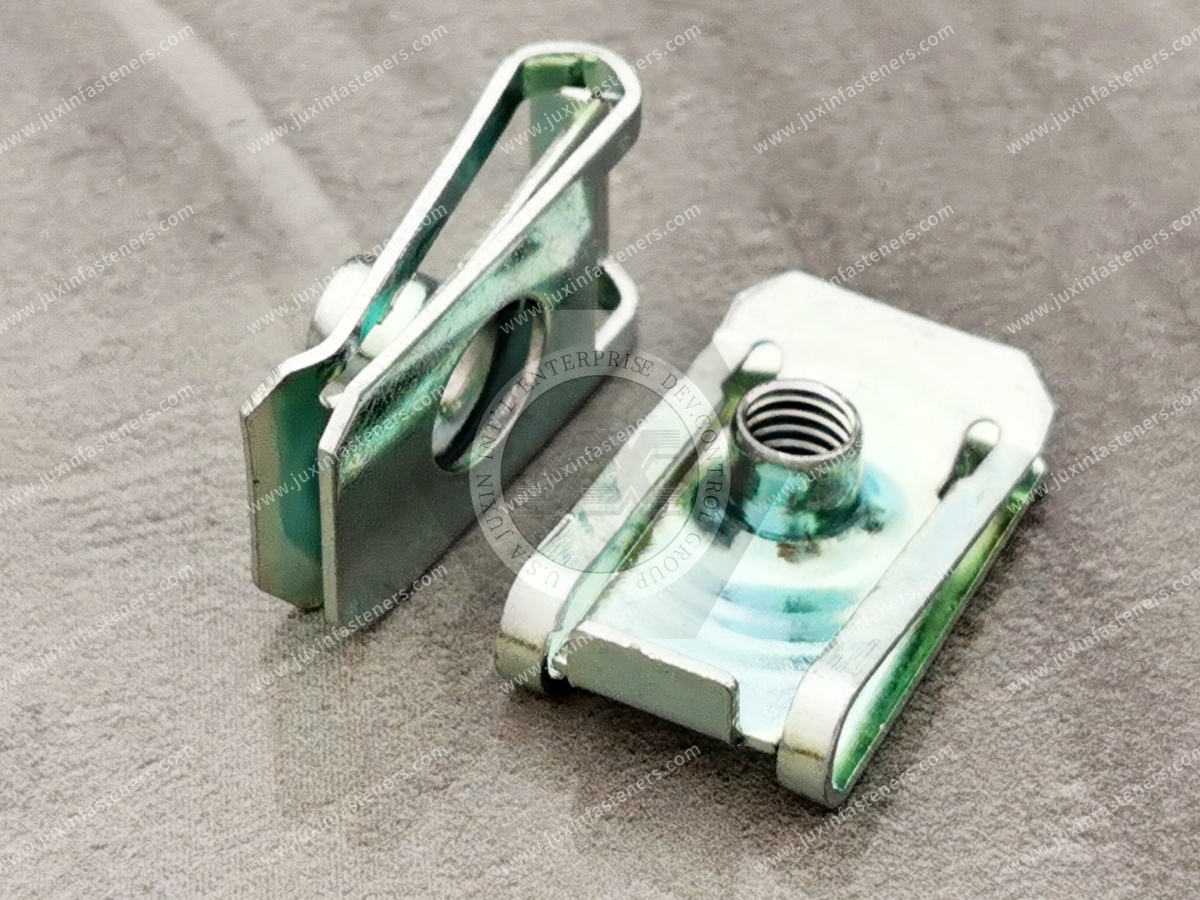
Metal U-nuts, speed nuts, spring nuts, and clip nuts are widely used where a threaded or screw-receiving feature must be attached to a sheet edge or panel.
Typical applications can include:
instrument panel structures;
interior brackets;
body panels;
plastic-to-metal assemblies;
covers;
electrical equipment;
underbody assemblies.
The fastener clips over the panel edge and provides a screw-receiving feature without requiring a permanently machined thread in the sheet.
Depending on design, the mating fastener may be:
machine screw;
tapping screw;
thread-forming screw.
For correct selection, specify:
screw size;
panel thickness;
edge distance;
installation direction;
clip depth;
mounting-hole geometry where applicable;
material;
finish;
required corrosion performance;
assembly torque;
service environment.
A common sourcing error is specifying only the screw size.
Two M6 U-nuts can be completely incompatible if their panel-thickness range and clip geometry differ.
Material selection should follow the function.
Potential advantages include:
low mass;
corrosion resistance of the polymer itself;
electrical insulation;
flexible snap geometry;
low part complexity for molded features;
reduced risk of scratching adjacent finishes in suitable designs.
Typical materials can include:
PA6;
PA66;
POM;
PP;
PE;
other engineering polymers according to application.
Potential advantages include:
higher stiffness;
spring properties;
higher temperature capability depending on material;
compact load-bearing geometry;
durable threaded features.
Potential materials include:
carbon steel;
spring steel;
stainless steel;
other specified alloys.
The correct material depends on the complete application.
PA6 and PA66 are widely used engineering polyamides, but they should not be treated as interchangeable labels.
Relevant engineering factors include:
moisture absorption;
stiffness;
toughness;
temperature;
molding condition;
reinforcement;
environmental exposure.
Polyamide properties can change as moisture condition changes.
Therefore, retention and insertion behavior should be evaluated using the specified material and representative conditioning where this matters to the application.
POM can be useful in suitable precision plastic fastening applications because of its dimensional characteristics, wear behavior, and low friction.
Potential applications include:
clips;
retainers;
moving interfaces;
precision molded fastening components.
However, polymer selection should always consider the actual:
temperature;
chemical environment;
UV exposure;
load;
flammability requirement;
vehicle location.
No single plastic is optimal for every automotive clip.
For exterior plastic fasteners, polymer grade can be more important than the generic resin name.
An exposed exterior fastener may require consideration of:
UV stability;
thermal aging;
moisture;
road chemicals;
cleaning chemicals;
salt exposure;
low-temperature impact;
long-term embrittlement.
Specifying only “PA66 black” does not fully define exterior durability.
Where long-term outdoor exposure is critical, the resin grade and environmental validation should be part of the specification.
One of the most important automotive fastener parameters is the thickness of the material stack being retained.
This may include:
trim panel;
insulation;
body sheet;
washer or spacer;
adhesive layer;
acoustic material.
The relevant dimension is therefore sometimes the total stack-up, not simply one sheet thickness.
A fastener with insufficient grip can fail to engage correctly.
A fastener with excessive grip range may allow movement or fail to generate the intended clamp condition.
For many automotive clips and push retainers, mounting-hole diameter directly affects:
insertion force;
retention force;
panel movement;
service removal;
risk of fastener damage.
Possible consequences:
excessive insertion force;
clip damage;
panel deformation;
incomplete seating.
Possible consequences:
low retention;
rattling;
fastener movement;
pull-out;
inconsistent positioning.
For critical assemblies, both nominal hole diameter and tolerance should be specified.
Hole shape can provide important functions.
A round-hole fastener may allow rotational freedom.
A square or rectangular interface can provide:
anti-rotation;
orientation control;
assembly poka-yoke;
defined component positioning.
When cross-referencing an automotive clip, hole shape should therefore be treated as a critical feature.
A useful automotive clip must balance two opposing requirements:
easy enough to install + strong enough to retain
Very high retention is not automatically desirable if the operator or automated assembly system cannot install the fastener consistently.
Similarly, very low insertion force can indicate inadequate engagement.
Engineering validation should therefore consider both:
insertion force;
extraction/retention force.
Where the part is serviceable, removal force may also matter.
Automotive fasteners can be designed for:
permanent installation;
limited service removal;
repeated removal and reinstallation.
This distinction matters.
Some plastic retainers lose holding force after removal because:
barbs deform;
locking legs take a permanent set;
center pins become damaged;
polymer features wear.
For serviceable panels, engineers should verify whether the clip is intended for reuse or replacement after removal.
Automotive NVH — noise, vibration and harshness — is not only a structural issue.
Small relative movements between trim components can create:
squeak;
buzz;
rattle;
clicking.
Fastener selection can influence these behaviors through:
clamp condition;
interface stiffness;
clearance;
material pairing;
tolerance compensation;
preload;
component movement.
A clip that passes static pull-out testing may still produce an unacceptable trim interface if it allows movement during vehicle vibration.
Therefore, retention testing and NVH evaluation answer different questions.
The phrase should be used carefully.
A clip may maintain engagement under specified vibration conditions, but vibration performance depends on:
fastener geometry;
retention force;
component mass;
panel stiffness;
mounting location;
clearance;
temperature;
vibration spectrum.
For OEM programs, vibration performance should be validated at the assembly level under the customer's applicable test requirements.
Metal clips, spring nuts, U-nuts, rivet nuts, weld nuts, and other metal fasteners may require corrosion protection depending on location.
Possible finish systems can include:
zinc-based coatings;
zinc-nickel systems;
other customer-specified automotive coatings.
Finish selection should consider:
vehicle location;
salt exposure;
moisture;
temperature;
mating materials;
coating damage during installation;
customer specification.
A corrosion requirement should be defined by the applicable test specification and acceptance criteria rather than simply requesting “high corrosion resistance.”
Modern vehicles increasingly combine:
steel;
aluminum;
magnesium;
composites;
engineering plastics.
Where dissimilar conductive materials are connected and exposed to an electrolyte, galvanic corrosion may become relevant.
Engineers should consider:
fastener material;
panel material;
coating;
contact area;
environmental exposure;
drainage;
isolation.
This is particularly important as vehicle lightweighting increases the use of mixed-material structures.
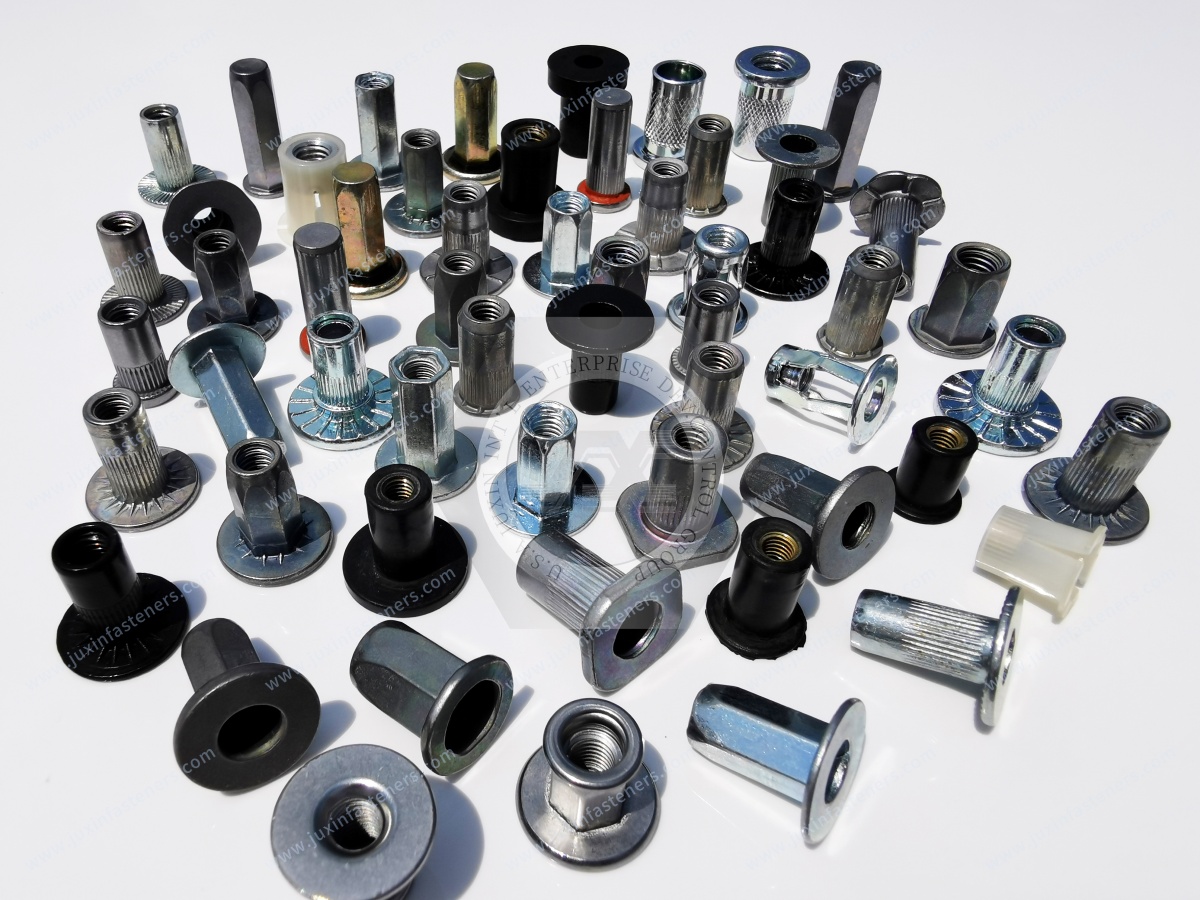
Where a reusable machine thread is required in thin sheet or a hollow section with one-side installation access, a blind rivet nut may be appropriate.
Automotive rivet nut options can include:
round body;
knurled body;
half-hex body;
full-hex body;
open-end;
closed-end;
flat head;
reduced head;
countersunk configurations.
Materials can include:
carbon steel;
stainless steel;
aluminum.
Important selection parameters include:
thread size;
grip range;
sheet thickness;
hole geometry;
anti-rotation requirement;
head style;
corrosion requirement;
installation access.
Related Product: Automotive Blind Rivet Nuts
For applications with higher rotational requirements, a hexagonal body installed into a corresponding hexagonal hole can provide mechanical anti-rotation through geometry.
This can be useful where the mating screw applies significant assembly torque.
However, hole manufacturing becomes part of the system.
The correct comparison is therefore not simply:
round rivet nut vs hex rivet nut
but:
required torque resistance + hole manufacturing capability + assembly process + service requirement.
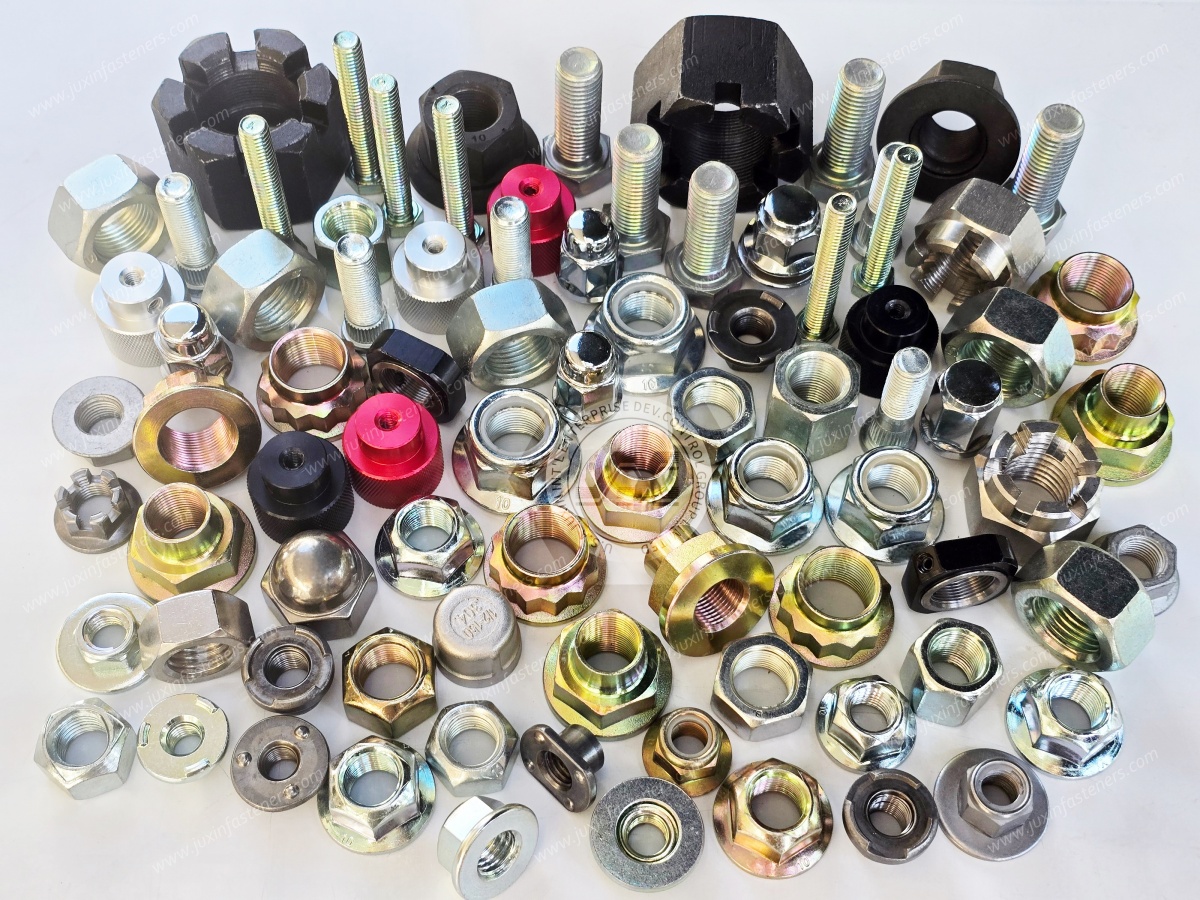
Weld nuts remain important in automotive body and structural assemblies where a permanent threaded attachment can be welded to sheet.
Relevant product families can include:
projection weld nuts;
hex weld nuts;
square weld nuts;
flange weld nuts;
drawing-based automotive weld nuts.
Selection considerations include:
thread;
sheet material;
nut material;
projection geometry;
welding process;
access;
position tolerance;
coating;
corrosion requirements.
Related Product: Automotive Projection Weld Nuts
Self-clinching nuts, studs, and standoffs can provide permanent threaded features in suitable ductile sheet.
They require access for press installation and depend on:
sheet thickness;
sheet hardness;
mounting-hole dimensions;
installation force;
edge distance.
They should not be treated as interchangeable with rivet nuts.
Related Guide: Rivet Nut vs Self-Clinching Fastener
Plastic vehicle components may require reusable metal machine threads.
Depending on polymer and assembly process, engineers may evaluate:
heat-set inserts;
ultrasonic inserts;
self-tapping inserts;
molded-in inserts.
Applications can include:
electronic housings;
interior modules;
control systems;
thermal-management components;
plastic covers.
Related Engineering Guide: Heat Set Inserts for Plastic
Electric vehicles and increasingly electronic vehicle architectures create additional fastening requirements around:
battery-related equipment;
power electronics;
inverters;
converters;
electronic control units;
thermal-management systems;
electrical distribution;
sensors and communication modules.
Fastener selection may need to consider:
electrical conductivity;
electrical isolation;
corrosion;
temperature;
service access;
vibration;
compact packaging.
The correct fastener should be selected according to the actual component architecture rather than applying a generic “EV fastener” label.
For OEM and Tier engineering organizations, a structured fastener library can reduce repeated component selection work.
A useful fastener library can contain:
validated part number;
fastener family;
2D drawing;
3D CAD model;
material;
finish;
mating hole;
panel thickness or grip range;
installation direction;
assembly tool;
approved application;
supplier information;
revision level.
The goal is not simply to create a folder containing CAD models.
A useful library connects geometry + application + validation + sourcing data.
Automotive fastener libraries can support engineering systems such as:
CATIA;
Siemens NX;
Creo;
SolidWorks;
other customer CAD/PLM environments.
A standardized model can reduce the risk of engineers repeatedly redrawing common fastening components.
However, CAD geometry should be linked to the controlled part specification and revision.
A 3D model without the correct:
material;
finish;
hole requirement;
grip range;
revision;
is not a complete fastening specification.
Consider a dashboard trim panel requiring concealed attachment to a supporting structure.
The engineering process might be:
Identify:
trim material;
supporting substrate;
panel thickness;
mounting-hole geometry.
Determine:
installation direction;
access;
allowable insertion force;
required retention;
service-removal requirement.
Candidate technologies might include:
trim clip;
spring clip;
push retainer;
screw grommet;
U-nut and screw assembly.
Check:
hole position;
panel stack;
clip compliance;
trim gap;
surrounding features.
Evaluate:
installation;
seating;
retention;
removal where required;
NVH;
environmental requirements.
This is more reliable than selecting a clip because it resembles an existing component.
A wheel arch liner sees a very different environment.
Selection should consider:
liner thickness;
body hole;
splash exposure;
dirt;
temperature;
vibration;
impact;
service removal.
Candidate fasteners can include:
plastic push rivets;
push-type retainers;
screws with clip nuts;
other drawing-specific retainers.
The same interior trim clip used behind a dashboard may not be appropriate.
Possible causes:
oversized hole;
incorrect grip range;
insufficient engagement;
damaged clip;
incorrect fastener geometry.
Possible causes:
hole too small;
brittle polymer;
low-temperature installation;
excessive insertion force;
misalignment.
Possible causes:
insufficient clamp;
tolerance stack;
excessive clearance;
fastener relaxation;
incorrect retention geometry.
Possible causes:
one-time-use design;
excessive retention;
inaccessible release feature;
wrong fastener selection.
Possible causes:
unsuitable material;
inadequate coating;
aggressive vehicle location;
coating damage;
galvanic interaction.
Possible causes:
damaged thread;
wrong screw;
excessive assembly torque;
insufficient anti-rotation;
incorrect U-nut or insert selection.
Automotive procurement teams often need to qualify a second source for an existing clip or fastener.
Visual similarity is not enough.
For plastic clips and retainers, compare:
overall dimensions;
stem diameter;
flange diameter;
barb geometry;
head geometry;
panel hole;
grip range;
material;
installation force;
retention force;
removal behavior.
For metal spring nuts or U-nuts, compare:
screw interface;
panel range;
clip depth;
material thickness;
spring geometry;
material;
hardness where specified;
finish.
For threaded automotive fasteners, also compare:
thread;
mechanical property requirements;
dimensions;
surface treatment;
assembly torque;
applicable customer specification.
A second-source component should be qualified against the application, not only against a photograph.
Changing from one polymer to another can affect:
stiffness;
flexibility;
insertion force;
retention;
temperature behavior;
moisture sensitivity;
long-term aging.
Similarly, changing:
steel grade;
coating;
material thickness;
can change the behavior of a spring clip.
A material substitution should therefore be treated as an engineering change where the application requires controlled performance.
Depending on the product, the drawing or specification may include:
critical dimensions;
mounting-hole size;
grip range;
panel thickness;
material;
resin grade where required;
metal grade;
finish;
thread;
hardness where relevant;
installation direction;
insertion-force requirement;
retention-force requirement;
pull-out requirement;
corrosion requirement;
appearance requirement;
marking where applicable;
packaging requirement;
revision.
For custom components, 2D drawings and 3D models should be revision-controlled.
A practical automotive fastener qualification path can include:
Application and drawing review.
Material confirmation.
Prototype or sample preparation.
Dimensional inspection.
Trial installation into representative components.
Insertion and retention evaluation where required.
Environmental or corrosion testing where specified.
Assembly-level validation.
Customer approval.
Approved sample or Golden Sample retention where required.
Controlled transition to production.
This process is particularly valuable for replacement clips and second-source development.
Automotive procurement and supplier-development teams should evaluate:
technical drawing capability;
material control;
tooling capability;
injection molding or stamping process control;
dimensional inspection;
thread inspection where applicable;
coating control;
sample qualification;
lot traceability where required;
change control;
packaging;
capacity;
prototype-to-production consistency.
The lowest unit price is not necessarily the lowest total assembly cost if a fastener creates:
installation difficulty;
line stoppage;
trim damage;
service problems;
field failures.
For efficient engineering review and quotation, provide:
fastener type;
existing part number if applicable;
2D drawing;
3D model where available;
application location;
vehicle assembly or component;
mating materials;
mounting-hole diameter and tolerance;
hole shape;
panel thickness;
total grip range;
installation direction;
installation method;
material requirement;
resin grade where specified;
metal grade where specified;
surface finish;
corrosion requirement;
operating temperature;
insertion-force requirement if specified;
retention/pull-out requirement if specified;
service-removal requirement;
environmental requirements;
sample quantity;
production quantity;
estimated annual demand;
documentation requirements;
traceability requirements;
packaging requirements.
For second-source development, provide the existing drawing whenever possible.
If no drawing is available, a physical sample plus complete application dimensions is substantially more useful than photographs alone.
Common families include trim clips, panel retainers, push-type retainers, plastic push rivets,
fir tree clips, screw grommets, spring clips, U-nuts, speed nuts and other drawing-specific fasteners.
Depending on the assembly, exterior trim can use push retainers, plastic rivets, trim clips, screws with clip nuts, rivet nuts and other specialized retainers. Environmental exposure must be considered.
Start with the mounting hole, panel stack, substrate materials, installation direction, required retention, service-removal requirement and operating environment.
Ideally provide the original drawing. Otherwise provide a physical sample plus mounting-hole size, panel thickness,
mating component geometry, material, installation method and performance requirements.
Not automatically. Their material behavior differs and the actual resin grade, moisture condition, reinforcement, geometry and operating environment affect clip performance.
Some designs permit limited reuse, while others are intended for replacement after removal. The specific geometry and application should be evaluated.
A U-nut clips onto a panel or sheet edge and provides a screw-receiving feature.
A rivet nut is installed into a hole and mechanically deforms to create a captive machine thread, often with one-side installation access.
“Trim clip” is a broad functional category. A fir tree clip is a specific retainer geometry using multiple flexible ribs along the stem.
Correct fastener selection can help control component movement, clearance and clamp condition, but NVH performance depends on the complete trim assembly and must be validated at assembly level.
Metal fasteners in corrosive vehicle locations may require customer-specified protective finishes. The coating system should be selected according to the actual environmental and validation requirements.
For suitable projects, an existing sample together with application dimensions, material requirements and performance requirements can support technical review and drawing development.
Where an original controlled drawing exists, that remains the preferred basis.
Yes, drawing-based review can be used for suitable plastic molded, stamped, machined and other custom fastening components depending on geometry, material, volume and manufacturing requirements.
Build internal links from this page to relevant existing pages such as:
Automotive Projection Weld Nuts
Automotive Hex Flange Weld Nuts
DIN 929 Weld Nuts
Blind Rivet Nuts for Automotive Sheet Assemblies
Hex Rivet Nuts for Anti-Rotation Applications
Plastic Push Rivets and Snap Rivets
Heat Set Inserts for Plastic Automotive Components
Self Tapping Thread Inserts
Self-Clinching Nuts, Studs and Standoffs
Nylon and Plastic Fasteners
Custom CNC Machined Components
Automotive Fastener Material and Coating Selection
Use the existing indexed JUXIN FASTENERS URLs when implementing the internal links.
Automotive fastener sourcing should connect component geometry, assembly performance, manufacturing process, validation requirements, and supply-chain control.
JUXIN FASTENERS supports suitable automotive projects involving plastic clips, panel retainers, plastic push rivets, snap rivets, screw grommets, spring clips,
U-nuts, clip nuts, rivet nuts, weld nuts, self-clinching fasteners, threaded inserts, nylon fasteners, stamped components, and drawing-based custom parts.
For design and structural engineers, provide the assembly geometry, mounting hole, panel stack, material, installation method, retention requirement, service requirement, and environmental conditions.
For purchasing, strategic sourcing, procurement development, and supplier-development teams, provide the existing drawing or specification,
sample requirements, estimated annual demand, material and finish requirements, inspection requirements, documentation requirements, traceability requirements, packaging requirements, and qualification process.
For second-source projects, provide the current controlled drawing whenever available.
Where no drawing exists, provide a physical sample together with the mating-component and installation dimensions required to reproduce the functional interface.
Email: info@juxinfasteners.com
Website: www.juxinfasteners.com
Contact Us
Tel.:
+86 020 8621 0320
+86 020 3121 6067
E-mail:
Technical Support:
Navigation
SEND INQUIREY